Bad Lawyering Encapsulated In One Tweet

There’s a lot of bad lawyering out there.

Hey, not everyone can topple injustice at the Supreme Court. Someone out there has to argue that toothpaste and soap aren’t necessary for sanitation. More importantly, bad lawyers are needed to keep this website’s stream of content flowing.

But watching the Department of Justice whiff this badly is a sight to behold.

To catch up, the Supreme Court — in the most fractured, indirect way possible — expressed its pronounced lack of confidence in the administration’s stated rationale for including a citizenship question on the 2020 census. This may have something to do with the release of documents that basically said, “so we’re lying about our rationale for this question.”

Faced with this challenge, there are a few acceptable ways out for a lawyer. They could claim that those documents were never seen by the decision-makers. They could argue that even if they were, they were ignored. They could go true YOLO and argue that there’s nothing wrong with those documents.

The point is they can only really say that their stated reasons for pushing the census question are still valid. Instead, they did this:

A new rationale. Just junking the prior explanations and admitting they were just kidding about those all along. Remember, the Court already found those stated reasons facially acceptable so all they need to do to rehabilitate their case is dispel any concern that it’s all a pretext. Rather than go that road, they’re junking everything, along the way confirming that the original rationale was so pretextual that they can’t see any way to rehabilitate it.

Just… wow. Since they’re going to just try some “John Marshall Roberts has made his decision, now let him enforce it” shenanigans, there’s really no reason for the DOJ to have blown up their own case on the way out the door.

In any event, whatever your thoughts on the case, this is how the DOJ is handling it. This is either atrocious lawyering or some intentional act of sabotage by some of DOJ staff who’ve not undergone a consciencectomy.


HeadshotJoe Patrice is a senior editor at Above the Law and co-host of Thinking Like A Lawyer. Feel free to email any tips, questions, or comments. Follow him on Twitter if you’re interested in law, politics, and a healthy dose of college sports news. Joe also serves as a Managing Director at RPN Executive Search.

Zimbabwe’s déjà vu moment – The Zimbabwean

On 24 June, familiar feelings of despair accompanied the shock announcement by Finance Minister Mthuli Ncube that only Zimbabwe’s quasi-currency, the RTGS dollar, would constitute “legal tender”. This prelude to the resurrection of the dreaded Zimbabwe dollar added to the sense of déjà vu brought on by long queues for fuel, inflation over 100%, 18-hour load shedding and failed water reticulation.

The RTGS dollar (from the real-time gross settlement system used to transfer money electronically) exists only in electronic form. In theory, and government pronouncements, RTGS dollars were merely the electronic representation of United States dollars held in depositors’ accounts.

However, after 2016 when government began paying its debts by entering billions of dollars of credit on to the books of banks – unsupported by anything – it became apparent that the RTGS dollar wasn’t what it was held out to be. Its value steadily declined.

In February this year, government finally abandoned the fiction that RTGS dollars were US dollars. Real US dollars were ring-fenced in depositors’ “nostro” accounts and RTGS dollars held under a second, separate account.

This measure was accompanied by another, where government claimed that the exchange rate between US dollar and RTGS dollars would be allowed to float and be determined by interbank trading. Another lie. In practice government tightly controlled the rate of exchange so that the interbank rate for US dollars was generally half that offered by the black market.

As a result, opportunities for arbitrage by the political and business elite abounded. They could procure US dollars from the central bank at the interbank rate and sell them on the black market for twice the amount, raking in millions. Business could also borrow RTGS money from banks, immediately exchanging it for US dollars on the black market, driving the demand for US dollars up and the value of RTGS dollars down.

Once the value of RTGS money had declined significantly, only a fraction of the US dollars acquired needed to be changed back to repay the RTGS debt to the bank, representing millions of dollars of profit. Nice work if you can get it.

Not, however, very nice for workers, civil servants and the lower ranks of the military being paid in RTGS dollars. The real value of their wages plummeted. When the RTGS dollar was set as “sole legal tender” on 24 June, its value to the US dollar had fallen from about 1.4:1 in February to over 13.5:1, and was set to drop further in an accelerated fall.

Services and goods (particularly imported products) were being charged or priced in US dollars. The economy was re-dollarising and civil servants were demanding that they be paid in US dollars.

Ncube introduced Statutory Instrument 142, setting RTGS money as sole legal tender in the midst of negotiations around wages with civil servants. This was done to undermine the argument that, since goods and services were being charged in US dollars, civil servants should be paid in this currency.

It was also an attempt to stop the rapid depreciation of RTGS money. To strengthen the RTGS dollar, the Reserve Bank mopped up RTGS liquidity from banks, returning 1.2-billion of the faux currency to the ether from whence it came.

Hidden in the turmoil that has followed are two other replays of prior events. One is that just as government had tried to defy the market and legislate price controls in the days of record-breaking hyperinflation in 2008, it is now trying to legislate that the incoming tide of re-dollarisation stay out.

The second is more pernicious. It is the sight of Zimbabweans again rushing to the cliff edge like lemmings, on the basis of government fiat, as occurred with government’s now-defunct indigenisation laws introduced in 2010.

Then, Robert Mugabe’s government issued regulations that it said required all foreign-owned business in Zimbabwe to surrender 51% of their shares to “indigenous” Zimbabweans. In fact, the law did not, and could not, provide anything of the sort. Companies do not own their shares, shareholders do.

The government’s claim as to the meaning of its regulations was never challenged – not by the media, as it made a good ‘blood-on-the-floor story’ – and not by affected businesses who knew that government could make life difficult by withholding licences required to do business in Zimbabwe.

Fast-forward to 2019. Government says Statutory Instrument 142criminalises transactions in US dollars. The police have been unleashed to prowl around petrol stations and retail outlets, ready to arrest any hapless person using US dollars. In fact, SI 142 doesn’t ban the use of US dollars for trade. It simply sets RTGS dollars as the sole legal tender.

If someone decides to dispose of their car in exchange for 10 goats, there is no law preventing him or her from doing so, even though goats don’t constitute legal tender. Substitute US dollars for goats, and the point is clear.

Countries that wish to ban transactions in anything other than the local currency enact laws providing that. So why didn’t Zimbabwe’s finance minister do that? Because he has no power under the Reserve Bank Act to prohibit US-dollar transactions.

However, as in the case of the indigenisation regulations, the media happily accepts his interpretation of his own regulations. Once again, government is imposing policy without any legislative underpinning and using extra-legal means to do so.

Enforcing the whims of particular ministers on the threat of arrest, rather than applying statute, is the very antithesis of the rule of law. It reveals a government floundering in policy and governance uncertainty and inconsistency in the face of an economic meltdown.

President Emmerson Mnangagwa repeatedly says Zimbabwe’s door is open to foreign investors. Any company stepping through this door in such a climate will have difficult questions to answer from shareholders. DM

Monetary Policy and the Rule of Law

Post published in: Business

Monetary Policy and the Rule of Law – The Zimbabwean

An illegal foreign currency trader counts notes at a local bus station in the capital Harare, Zimbabwe, November 18, 2016. Picture taken November 18, 2016. To match Insight ZIMBABWE-MUGABE/ REUTERS/Philimon Bulawayo

SI 142 of 2019 [link‒ the Reserve Bank of Zimbabwe (Legal Tender) Regulations, 2019, to give it its full name ‒ declared that the Zimbabwe dollar should be the sole legal tender in Zimbabwe for all transactions.  Other currencies, specifically US dollars, British pounds, South African rand and Botswana pula, are no longer legal tender.

Since SI 142 was published government officials have made it clear that they believe it is now a criminal offence for storekeepers to price their goods in US dollars or any other foreign currency, and for anyone to use foreign currency rather than Zimbabwe dollars in any transaction carried out in this country.  Thus the Governor of the Reserve Bank is reported to have told a parliamentary committee:

“There are many tools of enforcing Statutory Instrument 142 of 2019, including the Bank Use Promotion and Suppression of Money Laundering Act (Chapter 24:24), which was approved by the Parliament of Zimbabwe, the Financial Intelligence Unit (within the central bank), and members of the police force who are already seized with the matter to ensure that at least there is compliance and indeed enforceability of this matter.

“Enforcement is very possible and they have already started doing so to ensure that all local payments are made in the Zimbabwe dollar, and that payments offshore are done in US dollars.”

And the National Police Spokesman is reported as saying:

“The ZRP (Zimbabwe Republic Police) warns all those who are charging commodities in United States dollars that they risk being arrested as the law will be applied without fear or favour.  Members of the public should report such people to any nearest police station.”

Is the Use of Foreign Currency Criminal?

It needs to be asserted strongly that, contrary to what the Governor of the Reserve Bank said, it is not a criminal offence to use foreign currency in transactions within Zimbabwe or to price goods in a foreign currency.  There are several reasons for this assertion:

  1. SI 142 may be invalid

At least two cases have been filed in the High Court challenging SI 142 of 2019 on the ground that it is ultra vires the Reserve Bank of Zimbabwe Act, under which it was purportedly made.  There is substance in these challenges.

The multi-currency system was introduced in 2009 by the Finance (No. 2) Act, 2009, but it was done in rather an odd way.  Section 17 of the Act first amended the Reserve Bank of Zimbabwe Act so as to insert a new section 44A which gave the Minister of Finance power to make regulations prescribing that tenders of payment in specified foreign currencies would be legal tender in Zimbabwe.  However, section 17 of the Finance Act then confused matters by adding a further provision stating that British pounds, US dollars, South African rand and Botswana pula “shall be deemed to be legal tender” as if the new section 44A were already in force and the Minister had made regulations under it.

As a result, the multi-currency system was not introduced by regulations made under section 44A of the Reserve Bank of Zimbabwe Act.  It was introduced by the Finance (No. 2) Act itself, which deemed the Minister to have made the appropriate regulations.  Under our law Ministers cannot make regulations amending or repealing Acts of Parliament, and it is arguable by enacting SI 142 the Minister has repealed the Finance Act’s declaration of foreign currencies as legal tender ‒ which he cannot do.

  1. SI 142 does not ban the use of foreign currency

Even if it is valid, SI 142 does not expressly state that foreign currencies cannot be used in transactions or to price goods.  Instead it provides that the Zimbabwe dollar is the sole legal tender in Zimbabwe for all transactions.  As we said in our Bill Watch 32 of 24th June 2019 [link]:

“Legal tender” means a currency which, if offered in payment of a debt, discharges the debt unless the creditor and the debtor have specifically agreed otherwise.  So if a debtor owes a creditor $20, say, the debtor can normally repay the debt by offering $20 in RTGS dollars (because they are legal tender).  If however the parties have agreed that the debt should be repaid in US dollars, then the debtor must repay it in those dollars. … [SI 142] does not specifically forbid contracts that require payments to be made or calculated in a foreign currency, so if shopkeepers mark their prices in US dollars, for example, or insist on payment in that currency there is nothing to stop them doing so.”

  1. SI 142 does not create any criminal offences

There is no provision in SI 142 of 2019 stating that the use of a foreign currency rather than Zimbabwe dollars is a criminal offence.  There could not be any such provision because sections 44A and 64 of the Reserve Bank of Zimbabwe, under which the SI was made, do not allow the Minister to create criminal offences — or, to put it more precisely, the sections do not provide expressly for criminal offences and, in the absence of such a provision, the Minister cannot create them.

  1. No other law makes it an offence to use foreign currency

If SI 142 of 2019 does not criminalise the use of foreign currency, is there any other law that does?  No, there isn’t.

The Reserve Bank Governor mentioned the Bank Use Promotion and Suppression of Money Laundering Act [actually it was amended extensively six years ago and is now called the Bank Use Promotion Act], but that Act does not deal with foreign currency.  It prohibits traders and other business people from hoarding or trading in cash and provides for the confiscation of cash illegally held.  “Cash” however is defined in the Act as meaning “bank notes and coins of any currency that is … designated as legal tender in Zimbabwe”.  If Zimbabwe dollars are, as the government claims, the sole legal tender in this country then bond notes and coins are the only “cash” to which the Bank Use Promotion Act can apply.

The Rule of Law

The statements made by the Governor of the Reserve Bank and the Police are therefore wrong.  But they are not just wrong ‒ they are dangerously wrong because they may lead to serious violations of the rule of law.

The rule of law is an elastic concept but fundamentally it means that people’s rights and obligations must be determined by laws rather than by individuals or groups of individuals exercising an arbitrary discretion.  From this fundamental concept several principles are derived, among them the following:

  • No one is above the law.  State officials, and even the State itself, are subject to the law and must act in accordance with the law.
  • Laws must be certain, i.e. clear and definite.  People must be able to establish relatively easily the content of a law and the extent of their rights and duties under it.
  • Crimes must be clearly defined and reasonably limited in scope.  People must know what they can and cannot do.

The statements made by the Governor of the Reserve Bank and the Police violate these principles because:

  • They misstate the effect of the law, leading the public to believe that storekeepers and others are committing crimes when they are not.
  • They encourage the Police to arrest people for conduct which is in fact lawful.  Any such arrests will be illegal and may leave the police officers concerned liable to pay heavy damages.

What should be done?

If the Minister of Finance and the Governor of the Reserve Bank want to outlaw the use of foreign currency as a medium of exchange in Zimbabwe, then they must do it properly.  That is to say:

  1. They must work out precisely and in detail what they want to achieve.
  2. With the aid of their legal advisers, they must establish what the existing law says on the subject. This is not as easy as it sounds, because our statute books are littered with old rules and regulations which are still legally in force even though they may have outlived their purpose.
  3. They must then work out which laws need to be enacted, repealed or amended in order to achieve the new policy goals.
  4. Next they must get laws drafted so as to give effect to their new policies while observing the precepts of the rule of law mentioned above.
  5. And finally, the Minister must approach Parliament to enact the new laws.  Why Parliament? Because when laws pass through Parliament they are subjected to scrutiny and debate. Stakeholders, such as businesses and members of the public are given an opportunity to express their views when laws are referred to the appropriate parliamentary committees.  And there is the further point that the Constitution makes Parliament, not the Executive, responsible for enacting laws.  Separation of powers is one of the main principles derived from the rule of law.

Veritas makes every effort to ensure reliable information, but cannot take legal responsibility for information supplied.

Zimbabwe’s déjà vu moment
Zimbabwe gov’t to revive food for work program to alleviate effects of drought

Post published in: Business

Happy Tank Of July — See Also

(Photo by Justin Sullivan/Getty Images)

Ed. note: Above the Law will be off tomorrow, because we don’t work on days when America throws a party styled after tyrannical militarist regimes.

THIS TAX RETURNS CASE COULD BE BAD: We’re gonna burn the whole thing down, instead of just impeaching the president.

ADVERSE POSSESSION FAILURES ARE THE BEST: This one involves a Corvette.

LATHAM COULD BE BOOTED OFF OF AUNT BECKY’S CASE: It’s a… full house of conflicts.

UNNECESSARY COURT APPEARANCES MAKE MONEY: I mean, not for clients. It’s kind of the opposite for clients.

IF YOU COULD GO BACK AND TALK TO YOURSELF AT 14: Brian Cuban has some good advice. I’d tell my 14-year-old self: “You think this Iraq War is stupid, just wait till the next one.”

Thanks A Bunch To Our Awesome ATL Advertisers

Advertising

We truly appreciate all of your support.

We’d like to express gratitude to our fantastic sponsors here at Above the Law:

If you’re interested in advertising on Above the Law or any other site in the Breaking Media network, please download our media kits or email advertising@breakingmedia.com. Thanks!

—ADVERTISEMENT—

From the Above the Law Network

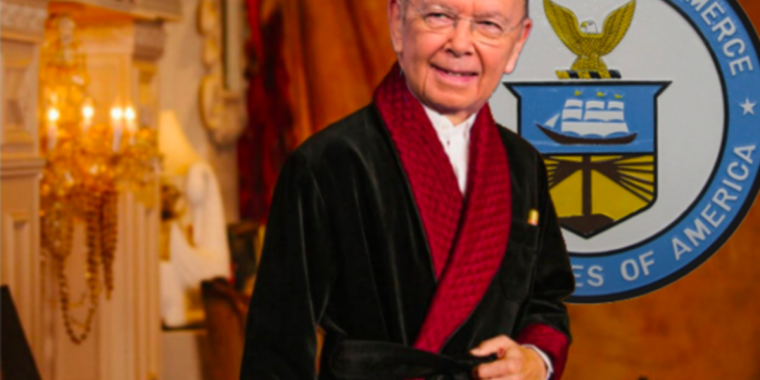
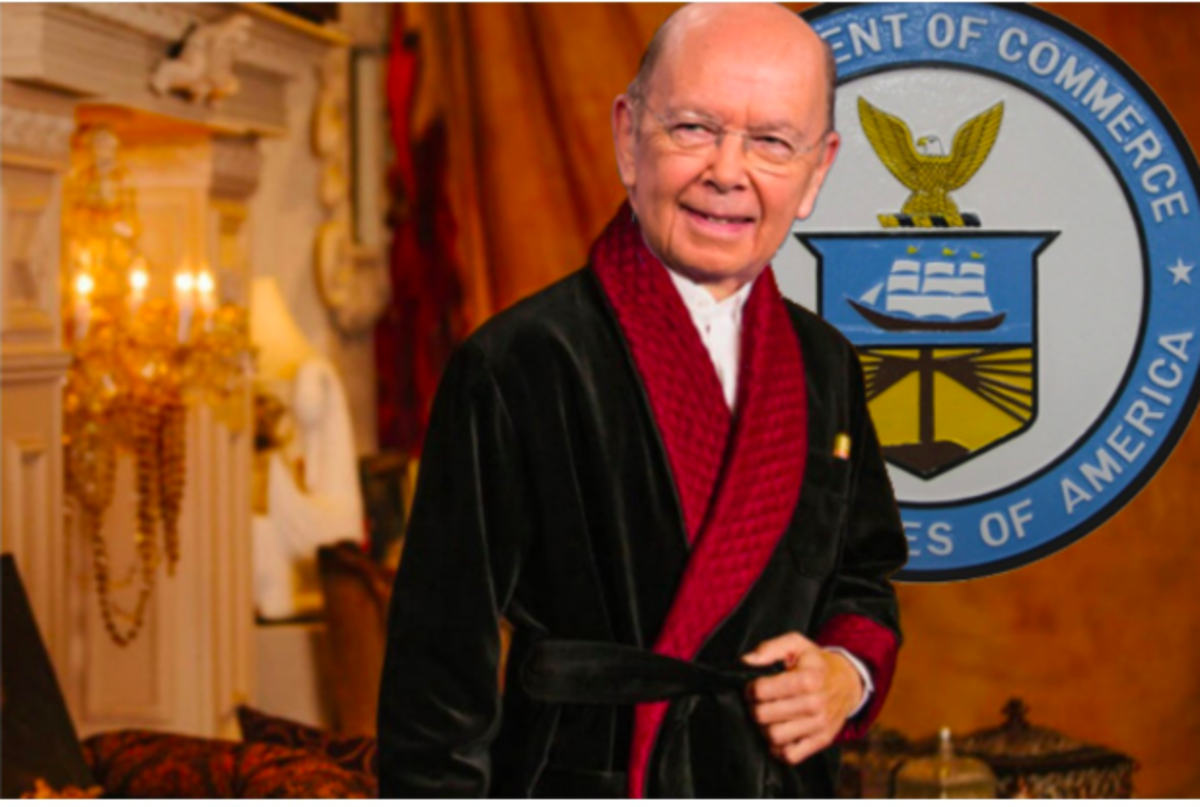
Donald Trump Confirms Via Twitter That Wilbur Ross Is An Inveterate Liar

Happy “About-To-Be-Independence Day” to The Slipper King.

National Treasure Was Right: There Really Is A Message On The Back Of The Declaration Of Independence

As always, Nicolas Cage is the barometer of truth when it comes to America’s legal foundations. While the back of the Declaration of Independence may not provide a treasure map, it does have something to say. What’s written on the back of the Declaration of Independence?

Hint: It might be a lot more practical than a map.

See the answer on the next page.

Private Sperm Donation: Legally Superior? Or Questionable?

Kyle Gordy is a 28-year-old man who lives in Southern California. He is also a “private” sperm donor. That means that Gordy does not go through a sperm bank when he donates his sperm, and instead cuts out the middleman, going directly to people who want to have babies.

Unfortunately, being a private sperm donor often means that the sperm does not undergo the routine screening and testing process that sperm banks have in place. Gordy, however, notes that he does undergo frequent testing for sexually transmitted infections and offers recipients the option of paying for any other testing, such as genetic screening. Why would hopeful parents go this route? Well, unlike sperm banks, Gordy provides his sperm for free! He also has a pretty good marketing campaign going, as he personally promotes his services to intended parents. Gordy explains his motivation — he doesn’t expect to raise children of his own, so this is his way of having kids, while also helping others.

Gordy explains the benefits of choosing his sperm over a sperm bank: “1) I do not charge; and 2) You know what you are getting.” Gordy cites to the infamous Xytex case — which I have previously written on — wherein a sperm bank under-delivered on its promises to numerous hopeful parents. Initially, they were told that the sperm was from a donor with a 160 IQ, a Ph.D. in neuroscience, and proficiency in five languages. Wow. That would be impressive, if it had been true. However, the sperm bank did not verify any of that information. And the recipients later learned that their children were, instead, genetically related to a schizophrenic, college drop-out felon. Not nearly as impressive.

But even granting Gordy’s point that some sperm banks have been unreliable at fulfilling their promises, he faces fundamental legal issues as to the possible responsibility and liability for the children conceived from his donations.

Should I Sign A Fake Name On The Contract?

I spoke with friend-of-the-column Amira Hasenbush, assisted reproductive technology legal specialist and sperm-legal-issues guru (and podcast guest!), about the legal pitfalls of private donation arrangements. Gordy explained that while his practice is to confirm to his satisfaction that recipients are financially able to provide for the child, he does not enter into written contracts with single women, because of his concerns over unknown liability. In fact, he explained, one recipient demanded that he sign a written contract. Fearing that the recipient or the government may one day seek child support, and that the contract would make it easier to find him, he opted to sign a fake name. (This is one of those moments where the lawyer poker face comes in handy to avoid the noticeable eyeroll or groan.)

Hasenbush discussed the statutory protections provided in Gordy’s home state of California. While many states require a sperm donation to take place under the supervision of a licensed physician, since 2016, California Family Code Section 7613 has also provided protections to donors and families who go the at-home route. California law provides for protections in non-clinic donations if (1) there is a signed agreement before conception or (2) if there is no written agreement, but the court can find clear and convincing evidence that there was an oral agreement that the sperm donor was not intended to be a parent.

So Gordy is in luck to live in a state that is protective of non-doctor-supervised oral donor arrangements. But given the burden of providing clear and convincing evidence (to a judge, which means you are involved in expensive litigation) — and the fact that people living in California occasionally overstate or lose their fortunes — he might want to sign a written agreement before conception. With like, his real name.

As for the argument that signing a contract makes him easier to find,the reality is that he will be easy to find no matter what. Even if the recipient hadn’t already been in direct contact with him (which is most often how it works in a private donation arrangement), DNA testing has become prevalent and reliable, unearthing identities and new discoveries every day. Ancestry.com, your help line is ringing.

What If The Recipients Break Up?

Gordy explained that another legal concern he has is when his recipient couples divorce or split up. Does that put him at greater risk of child support? Logically that might increase the chance of one of the parents trying to disclaim themselves or the other parent as having obligations to the child, leading to a parent, or the state, coming after Gordy. However, the same legal analysis would apply in those cases. It would be irrelevant whether the intended parents are together or not when a court makes a determination about whether the donation fell under California statutory protection. The California test turns on the agreement of the parties prior to conception. Of course, in any other jurisdiction, that could be a very different story. Additionally, if Gordy were to act as a parent (by, for example, taking the child into his home and holding him or her out as his own natural child), he could turn himself into a legal parent pursuant to California Family Code Section 7611(d). This was the ruling in the infamous Jason Patric case.

Stop Having Sex With “Recipients”!

Gordy also explained that because some recipients consider it more effective, sometimes he provided his donations to recipients the old fashioned way. That is, cough, through sexual intercourse. Legally speaking, that sexual intercourse would not fall into the purview of assisted reproductive technology. Nor would it be sperm “donation” under California law. It is something else. So even in the Golden State, that kind of Californication could get Gordy into trouble.

Hasenbush warns recipients “buyer beware.” Not all private donors are like Gordy, undergoing frequent STI testing and offering additional testing. Sperm banks provide screening for sexually transmitted infections, as well as serious genetic conditions (although possibly not always to the level promised). Either way, it’s best to carefully confirm what kind of screening should be completed and what has been completed. And if it’s a private donation, maybe check that the donor’s ID matches the named signed on the contract. Remember that there’s no such thing as a free lunch. Or in this case, sperm. Oh, gross. Sorry.


Ellen TrachmanEllen Trachman is the Managing Attorney of Trachman Law Center, LLC, a Denver-based law firm specializing in assisted reproductive technology law, and co-host of the podcast I Want To Put A Baby In You. You can reach her at babies@abovethelaw.com.

Tikkun Olam – Repairing the Legal Profession One Small Act At A Time

Every day, there’s one article or another about big problems with the legal profession.  Depression is rampant and young lawyers are stressed.  Access to justice remains a problem – one that’s heightened in rural areas where clients must often travel hundreds of miles to meet a lawyer.  And students still graduate from law school with six figure debt and mediocre job prospects.  

To its credit, the legal profession is taking notice. Nearly every state bar offers a lawyer’s assistance program to aid lawyers and law students with substance abuse and mental health issues, and many state bars now promote mindfulness programs and workshops.  Meanwhile, technology is offering opportunities to address access to justice, while California has created a Task Force on Access Through Innovation of Law to examine how changes in ethics rules can spur innovation in A2J products and services.

All of these big ideas and systemic changes are integral to moving the profession forward. But sometimes, the thought of pushing a major program through centuries of lawyer inertia and obstinance seems too discouraging- like Sisyphus pushing that rock up the mountain for eternity.  That’s why on days when the thought of change in the legal profession overwhelms me, I return to a lovely little concept from Judaism known as Tikkun Olam or repair of the world. Tikkun Olam calls on each of us to make the world a better place not just through participation in larger campaigns but through individual acts of justice and kindness.

There are plenty of ways that each of us can make the legal profession a better place if we just take the time to think about it. Recently, I came across a wonderful story on an online list serve where a lawyer defending a deposition observed that her young and inexperienced opposing counsel was having trouble questioning the witness.  During a break, the lawyer discovered that her opponent had been thrown into the deposition with no time to prepare. The lawyer recognized that a strong deposition record would serve her client as well, so she offered the young lawyer a few quick deposition tips off the record. The result? The lawyer received a deposition transcript with useful information and the young lawyer gained new skills that she can pay forward.

There are so many other ways for lawyers to support their colleagues – and particularly young lawyers — to make their work just a little easier or less stressful.  Years ago, after I argued my first appeal at the D.C. Circuit an older lawyer in the gallery complimented my performance – and since then, I’ve tried to pay it forward. Scott Greenfield plays janitor, helping lawyers in distress find their way.  When you learn of a lawyer’s victory in a big case or if you think they were robbed, let them know with an email. Did a colleague mentor you long ago but you never said thank you? It’s not too late to send a card or a gift.  Or invite a young lawyer to attend a CLE and pay the cost of admission.  What’s best about these acts of kindness is that they don’t just repair our profession today – but tomorrow as well, as the recipients pay it forward. 

What will you do to repair your corner of the world today?

Image courtesy of Shutterstock

The California State Bar Is Considering Allowing Non-Lawyers (And Skynet) To Practice Law

On June 28, 2019, the Task Force On Access Through Innovation Of Legal Services, a committee appointed by the State Bar of California Board of Trustees, met to discuss proposals to change the rules regarding legal practice to address the access to justice problem.

At the end of the day, the task force made a number of recommendations. Here are some of the more controversial ones:

  • Allowing non-lawyers to deliver legal services.
  • Allowing non-lawyers to have an ownership interest in law firms.
  • Allowing technology-driven legal systems to provide legal advice.

All of the above will be allowed with proper regulation which has not been specified at the meeting.

The debate over letting non-lawyers practice is nothing new. The rationale is to increase access to justice for those who cannot afford to pay an attorney. The assumption is that allowing non-lawyers to enter the legal marketplace will increase supply and will incentivize cost reduction.

In 2013, the ABA Task Force On The Future Of Legal Education in its report recommended that access to justice can be improved by allowing non-lawyer technicians to practice law in certain cases. And Washington state has implemented a limited license legal technician program in 2012.

The task force’s proposed amendments to the rules would not only allow licensed technicians but would also allow “technology-driven legal systems” to practice law. The task force made it a point to state that regulated entities that are permitted to practice law should not be limited or restrained by any concept or definition of artificial intelligence. This seems to suggest that artificial intelligence should be allowed to give legal advice once the technology is available and is properly regulated.

It appears that not many California lawyers know what’s going on. To my knowledge, the California Lawyers Association has not issued a statement about this. When I brought this up to colleagues, most did not know about this meeting. This is unsurprising since most solos and small-firm lawyers do not regularly check the California State Bar website. Most of us go to the state bar website for four reasons: to pay annual dues, look up opposing counsel, check if their law clerk, relative, or friend has been admitted to the bar, or to see who got disbarred and why.

If non-lawyers are allowed to practice, it is very likely to affect solo and small firms the most as they tend to serve the low-income/middle class market. The public will have little sympathy because they think that all lawyers are rich and greedy. What people don’t know is that self-employed lawyers — like any other business -– have to pay bills and because of this, even the most frugal and selfless attorney can only reduce their prices by so much. This includes office overhead, staff, online research access, and bar dues. And lawyers usually pay more these things than others because again, everyone thinks lawyers are rich. And most lawyers have to pay nondischargeable student loans where balances seem to increase with every graduating class.

Proponents of alternative business structures or technology-driven legal systems argue that they are trying to service those who cannot afford an attorney. But I’m sure they wouldn’t mind accessing a much bigger consumer market: those who can afford an attorney but don’t want to pay for one.

If the task force’s proposals pass, I question whether this will result in limited license non-lawyers opening up shop in remote parts of California. Instead, it will open the door for venture-capital-funded startups to set up AI powered legal self-help websites. People can access these sites with their legal questions or issues and artificial intelligence will provide the answers and probably the documents as well.

Or this can result in the creation of “Uberlaw” where a website connects the client with the attorney. But the website will set the price and the terms of the attorney-client relationship. And if the client gives the attorney less than five stars, the lawyer can be removed. Meanwhile, the lawyer will still be responsible for her overhead and will be responsible if something goes wrong.

The proposals can affect the big players as well. The Big 4 accounting firms would love to enter the legal market so they can service their existing Fortune 500 clientele. Their tax departments already hire lawyers for consulting and compliance work. This might be of particular interest to Arthur Andersen. Yes, that Arthur Andersen who had a major role in the Enron scandal although I think their current staff had nothing to do with it. They are now trying to revive the brand by promoting their legal advising services.

Finally, despite assurances of regulation, there may be some who will use this opportunity to scam the public. A well known example is the notario, a nonlawyer who offers legal services in Hispanic community. Hispanic immigrants confuse them with “notario publico,” a person with extensive legal training in most Latin American countries. The California State Bar has warned immigrants to be careful when dealing with unlicensed notaries. Also, during the housing crisis, nonlawyers set up loan modification shops. They promised customers that they can save their homes from foreclosure and can set up loan modification agreements where the principal is reduced. The nonlawyers owners of these companies hired lawyers (usually new graduates) to negotiate with the banks. Most of these shops were shut down and the lawyers involved had their licenses suspended or were disbarred.

The task force’s proposals to expand who is allowed to practice law in California is something that every lawyer should know about. The California State Bar Board of Trustees will meet on July 11, 2019, to review these proposals and they will invite public comment for 60 days. It should not be ignored thinking that it will go away if nobody cares. Even if you don’t live in California, you might want to keep an eye on this because your state might be next. I’m looking at New York in particular. This can result in non-lawyers owners telling the lawyers how to do their job which was the main concern when the ABA prohibited fee-splitting and nonlawyer ownership. Also, most trench lawyers know firsthand how some of their clients have been hurt because they turned to unqualified people. Their stories must be told as a warning.


Steven Chung is a tax attorney in Los Angeles, California. He helps people with basic tax planning and resolve tax disputes. He is also sympathetic to people with large student loans. He can be reached via email at sachimalbe@excite.com. Or you can connect with him on Twitter (@stevenchung) and connect with him on LinkedIn.