32 Undocumented Zimbabweans, Including Infants, Arrested In South Africa

The
stop
formed
part
of
heightened
Easter
weekend
road
safety
operations
by
local
authorities.

Officials
said
the
bus
was
travelling
to
Cape
Town
when
it
was
pulled
over
at
a
roadblock.

Free
State
MEC
for
Community
Safety,
Roads
and
Transport,
Jabu
Mbalula,
confirmed
that
some
of
those
detained
were
babies
as
young
as
four
months
old.

Authorities
also
suspect
possible
human
trafficking.
Some
of
the
adults
were
travelling
with
children
who
had
different
surnames,
while
others
had
valid
passports,
but
their
children
had
no
documentation.

Concerns
have
been
raised
over
why
the
bus
was
only
intercepted
in
the
Free
State
after
passing
through
two
provinces
from
the
Beitbridge
border
post.

Mbalula
said
there
is
a
need
to
strengthen
coordination
between
provinces
to
improve
enforcement.

“What
we
have
discovered
is
that
these
buses,
when
they
cross
at
our
border
gates,
are
compliant.

“But
because
we
interviewed
the
travellers
themselves
who
were
passengers
in
the
bus,
they
told
us—some
of
them
said
they
were
picked
up
in
Louis
Trichardt,
some
said
they
were
picked
up
somewhere
in
Johannesburg.

“Now
you
can
see
when
they
pass
at
the
border
gate,
when
they
are
searched
or
looked
at,
everybody’s
able
to
produce
a
legitimate
travelling
document.
But
along
the
way,
people
get
picked
up”,
explained
Mbalula.

He
added
that
the
driver
was
not
arrested,
as
he
was
cooperative
and
had
both
a
valid
driver’s
licence
and
a
public
driving
permit.
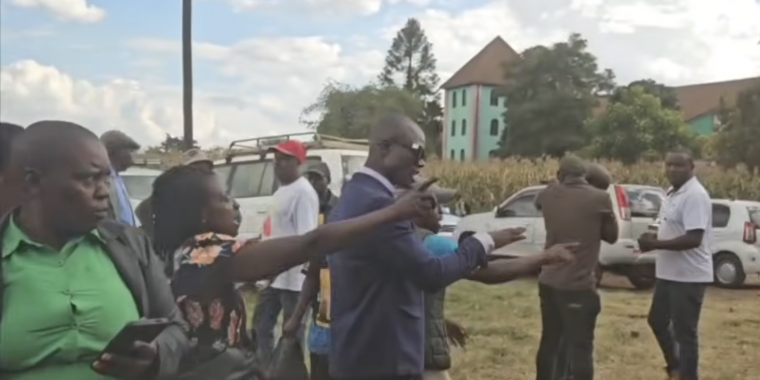
Zimbabwean journalists harassed at hearings to extend president’s term


Suspected
ZANU-PF
supporters
harass
journalists
covering
public
hearings
on
the
Constitutional
Amendment
Bill
on
March
31.
(Screenshot:
YouTube/Dug
Up)

Chaos
has
marred
four
days
of hearings,
hosted
by
Parliament
and
ending
on
April
2,
to debate
the
Constitutional
Amendment
(No.3)
Bill,
which
would
increase
the
president’s
term
from
five
to
seven
years.
The
president
would
also
be elected by
lawmakers,
not
the
public.

On
March
31,
numerous
journalists
were
trapped
inside
the
City
Sports
Center
when
alleged
supporters
of
the
ruling
ZANU-PF stormed the
venue
to
prevent
opposition
figures
from
speaking
and
refused
to
allow
journalists
to
leave
unless
they deleted
their
footage
.

“Blocking
journalists,
harassing
them,
and
forcing
them
to
delete
their
footage
is
a
blatant
attempt
to
censor
their
news
coverage
and
control
what
the
public
can
hear,
read
and
see,”
said
CPJ
Africa
Director
Angela
Quintal.
“Zimbabwean
authorities
must
ensure
those
responsible
are
held
accountable
and
that
journalists
are
free
to
report
on
matters
of
public
interest,
including
this
bill,
which,
if
it
becomes
law,
could
keep
President
Emmerson
Mnangagwa
in
power
until
2030.”

The
Media
Institute
for
Southern
Africa-Zimbabwe called for
journalists
to
be
permitted
to
carry
out
their
work
without
obstruction.

Two
journalists
who
were
at
the
venue
told
CPJ
that
reporters
were
forced
to
delete
footage
of
attacks
on
members
of
the
opposition
and
civil
society.

The
YouTube-based
investigative
channel
Dug
Up
posted
video of
several
people
stopping
journalists
from
reporting.
Its
journalist Ruvimbo
Muchenje
told
CPJ
that
a
man
forced
her
to
switch
off
her
phone
as
she
was
filming.

Another
journalist
told
CPJ,
on
condition
of
anonymity,
citing
fear
of
reprisals,
that
they
saw
journalists
being
harassed
inside
the
sports
center.

“In
the
hall,
from
time
to
time,
some
rowdy
youth
were
approaching
journalists,
intimidating
them,
blocking
cameras,
and
threatening
to
take
away
phones,”
said
the
reporter,
who
then
went
outside
with
three
other
journalists.

“Two
men,
[who]
identified
[themselves]
as
state
security
agents,
came
and
asked
which
media
organizations
we
work
for,”
the
journalist
said,
adding
that
ruling
party
supporters
also
repeatedly
threatened
to
confiscate
their
equipment.
“They
demanded
we
delete
the
footage,
which
they
alleged
was
meant
to
tarnish
the
sovereignty
of
the
country.”

The
independent
news
site
Zim
Live posted
a
photo
 of
an
anonymous
female
journalist
who
said
her
hand
was
injured
and
her
glasses
were
broken
after
“someone
poured
alcohol
on
my
face
and
before
I
knew
it,
I
was
on
the
floor
and
had
people
stepping
on
me
in
the
stampede.”

ZANU-PF’s
information
director,
Farai
Muroiwa
Marapira,
told
CPJ
via
phone
that
the
party
condemns
any
form
of
violence,
and
“will
institute
internal
investigations”
while
police
work
to
ensure
those
at
fault
face
the
law.

Information
permanent
secretary
Nick
Mangwana
did
not
respond
to
CPJ’s
requests
for
comment
via
phone
and
messaging
app.

Post
published
in:

Featured

Zimbabwe expands grass-substrate technology to nine provinces


©
MartinBergsma
|
Dreamstime

The
scaling
up
of
Juncao
technology
signals
a
strategic
shift
towards
low-cost,
climate-smart
agriculture,
with
authorities
positioning
it
as
a
key
tool
in
boosting
rural
incomes,
creating
jobs
and
reducing
reliance
on
traditional
inputs
while
enhancing
national
food
security.

The
Juncao
technology,
supported
by
China
in
partnership
with
the
United
Nations,
has
recorded
progress
in
its
first
year
of
implementation.
The
project
has
expanded
to
nine
provinces,
with
19
training
sessions
benefiting
nearly
900
participants
and
69
demonstration
sites
established
nationwide.

The
four
major
institutions
that
have
implemented
Juncao
technology
are
the
University
of
Zimbabwe,
Zimbabwe
Open
University,
Chinhoyi
University
of
Technology
and
Kushinga/Phikelela
Agricultural
College.

Government
has
also
partnered
the
United
Nations’
Department
of
Economic
and
Social
Affairs
and
the
National
Engineering
Research
Centre
of
Juncao
Technology
at
Fujian
Agriculture
and
Forestry
University
of
China
to
implement
the
programme.


Source:


Zimbabwe
expands
grass-substrate
technology
to
nine
provinces

Post
published
in:

Agriculture

Communities petition Parliament over destructive mining in Boterekwa, Shurugwi

The
CNRG,
a
Zimbabwean
civil
society
organisation
that
promotes
equitable
and
sustainable
management
of
natural
resources,
submitted
the
petition
on
behalf
of
affected
residents.

The
petition
is
grounded
in
Sections
59
and
149
of
the
Constitution
of
Zimbabwe,
which
guarantee
the
right
to
administrative
justice
and
require
the
State
to
ensure
the
protection
of
the
environment.

According
to
the
CNRG,
mining
operations
in
Boterekwa
have
continued
despite
the
presence
of
regulatory
authorities
such
as
the
Ministry
of
Mines
and
Mining
Development
and
the
Environmental
Management
Agency
(EMA).

Communities
report
that
companies
and
artisanal
miners
have
failed
to
comply
with
environmental
and
legal
standards.

In
a
statement,
the
CNRG
Information
Department
outlined
the
key
concerns
raised
by
residents,
which
have
been
affecting
their
wellbeing
and
livelihoods.

These
concerns
include
severe
environmental
degradation
and
loss
of
biodiversity,
hazardous
dust
pollution
causing
respiratory
illnesses,
unsafe
use
of
cyanide
and
other
toxic
chemicals,
contamination
of
water
sources,
including
the
Mutevekwi
River,
with
heavy
metals
and
structural
damage
to
homes
caused
by
mining
blasts

“These
violations
are
not
just
environmental,
they
are
a
direct
assault
on
community
dignity,
health,
and
livelihoods,”
the
CNRG
said.

“The
Constitution
is
clear:
natural
resources
must
benefit
the
people,
not
harm
them.”

The
organisation
said
the
petition
beseeches
Parliament
to
exercise
its
constitutional
oversight
role
over
administrative
bodies
and
ministries
charged
with
monitoring
mining
development
policies,
regulating
environmental
management,
and
protecting
the
environment.

Specifically,
the
petition
calls
on
Parliament
to
investigate
the
reported
violations
and
take
corrective
action,
make
sure
mining
companies
comply
with
environmental
and
cultural
protection
laws,
compel
compensation
for
affected
households,
strengthen
the
regulation
of
artisanal
mining
and
implement
urgent
measures
to
protect
public
health
and
the
environment

The
CNRG
stated
that
the
petition
is
part
of
a
broader
push
for
accountability,
transparency,
and
justice
in
Zimbabwe’s
extractive
sector.

“We
urge
Parliament
to
exercise
its
constitutional
oversight
role
decisively
and
in
the
public
interest,”
the
organisation
said.

The
CNRG
works
to
defend
the
rights
of
communities
affected
by
extractive
industries,
which
the
organisation
says
often
expose
rural
communities
to
land
and
water
grabbing,
pollution,
and
violence
by
a
combination
of
state
and
corporate
power.

Excessive Bank Charges Set To Be Slashed

For
years,
excessive
bank
charges
have
discouraged
small
transactions
and
kept
millions
of
Zimbabweans
outside
the
formal
financial
system.

Speaking
at
a
post-Cabinet
media
briefing
earlier
this
week,
Information,
Publicity
and
Broadcasting
Services
Minister
Zhemu
Soda
said
the
reforms
will
streamline
overlapping
regulations
and
eliminate
unjustifiably
high
charges. 
He
said:

“Cabinet
approved
the
streamlining
of
duplicated
and
overlapping
regulatory
licences
and
permits,
removed
unnecessary
levies
and
fees
and
lowered
unjustifiably
high
levies
and
fees.”

The
measures
include
scrapping
or
reducing
monthly
account
maintenance
fees
for
balances
below
US$100,
lowering
charges
on
transactions
under
US$5,
and
removing
cash
deposit
fees
for
both
US
dollar
and
ZiG
accounts.

Cash
withdrawal
fees
will
be
capped
at
2%,
while
account
opening
fees
are
also
set
to
be
reviewed
downward.

ZERA raises fuel prices minutes after Ncube plays cruel trick on motorists

HARARE

The
Zimbabwe
Energy
Regulatory
Authority
(ZERA)
on
Thursday
announced
a
shock
fuel
price
increase
just
when
motorists
had
been
promised
relief
at
the
pumps.


Diesel
goes
up
to
$2.11
from
$2.05
per
litre
while
the
new
petrol
price
was
set
at
$2.23
from
$2.17.
Fuel
stations
outside
Harare
and
Mutare
can
expect
to
pay
up
to
$0.10
more
after
factoring
in
transport
costs.


The
government
sharply
raised
fuel
prices
last
month
after
the
Iran
war
interrupted
global
supply,
but
with
other
countries
in
the
region
removing
government
taxes
to
keep
fuel
prices
in
check,
officials
had
undertaken
to
carry
out
a
similar
review.


Iran
has
restricted
the
movement
of
oil
shipments
through
the
Strait
of
Hormuz,
a
narrow
waterway
connecting
the
Persian
Gulf
with
the
Gulf
of
Oman
and
the
Arabian
Sea,
serving
as
a
critical
choke
point
for
global
oil
and
gas
shipments.


Finance
Minister
Mthuli
Ncube
raised
hopes
when
he
posted
a
statement
on
his
X
account
at
9.14PM
on
Thursday
announcing
the
suspension
of
all
government
taxes
on
diesel

amounting
to
$0.56
per
litre.


“The
government
of
Zimbabwe
under
the
visionary
leadership
and
guidance
of
His
Excellency,
the
President,
Cde
Dr
E.D.
Mnangagwa,
has
taken
decisive
and
unprecedented
action
to
cushion
citizens
and
industry
from
the
adverse
effects
of
rising
global
fuel
prices,”
Ncube
effused.


He
said
the
government
had
taken
note
of
“long
standing
public
concerns
regarding
the
contribution
of
domestic
fuel
taxes
to
pump
prices”
as
he
announced
a
pause
on
the
collection
of
excise
duty,
ZINARA
road
levy,
carbon
tax
and
strategic
reserve
levy.


Taxes
on
petrol,
adding
up
to
$0.86,
would
remain
unchanged,
he
said,
as
his
focus
was
on
diesel

a
“critical
input
in
agriculture,
mining,
manufacturing
and
logistics.”


Ten
minutes
later,
ZERA
announced
that
fuel
prices
were
going
up

including
diesel.


ZERA
said
the
government
was
keeping
the
price
of
diesel
“lower
than
it
ought
to
be.”


“Without
government
intervention,
the
price
of
diesel
would
have
been
$2.65
per
litre,”
ZERA
said.


Ncube’s
promise
of
“making
deliberate
and
significant
fiscal
sacrifice
in
the
national
interest,
prioritising…
the
welfare
of
citizens
over
short
term
revenue
considerations”
had,
within
minutes,
turned
into
a
cruel
trick
on
motorists.


Fuel
was
selling
for
$1.56
per
litre
of
petrol
and
$1.52
per
litre
of
diesel
before
the
United
States
and
Israel
began
their
bombardment
of
Iran
on
February
28.

It Shouldn’t Be That Hard To Understand This – See Also – Above the Law

Japan
Theft
Hypothetical
Flies
Over
Heads
Of
Right
Wing
Grifters:
Proving
you
can’t
just
steal
abroad
is
a
great
“subject
to
jurisdiction”
example.
Leave
Your
License
At
The
Door:
Don’t
just
take
Bondi’s
job,
take
her
license
too!
Talk
About
Taking
Out
The
Trash:
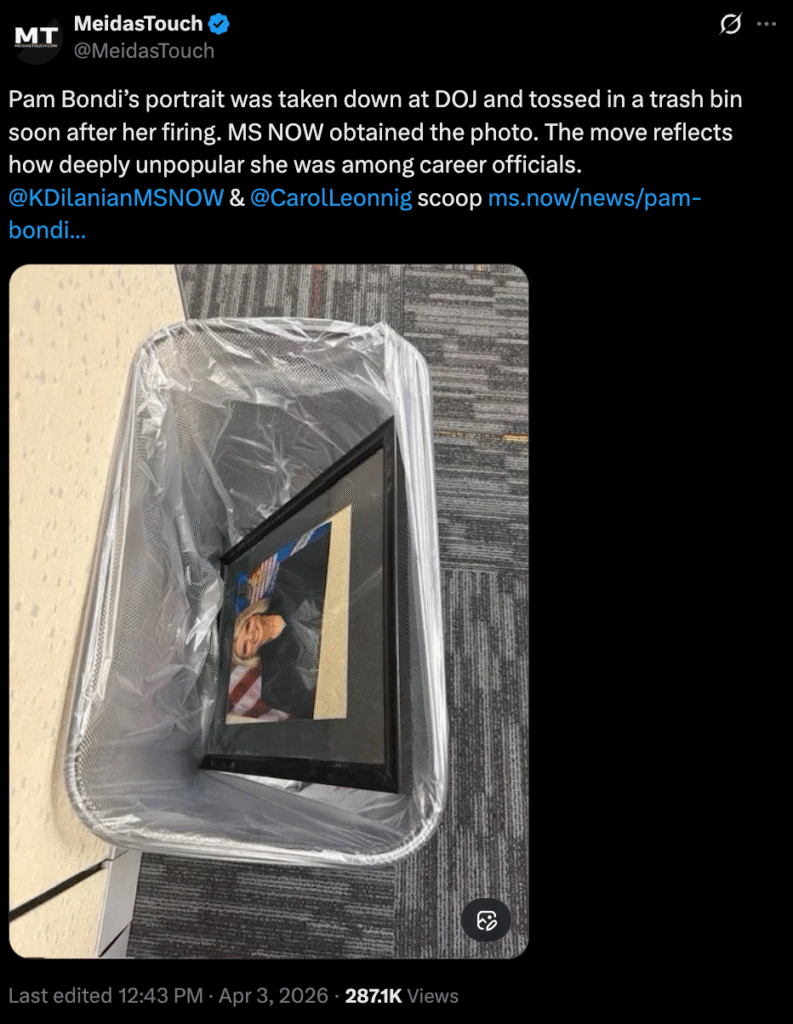
Bondi’s
former
co-workers
IMMEDIATELY
threw
her
work
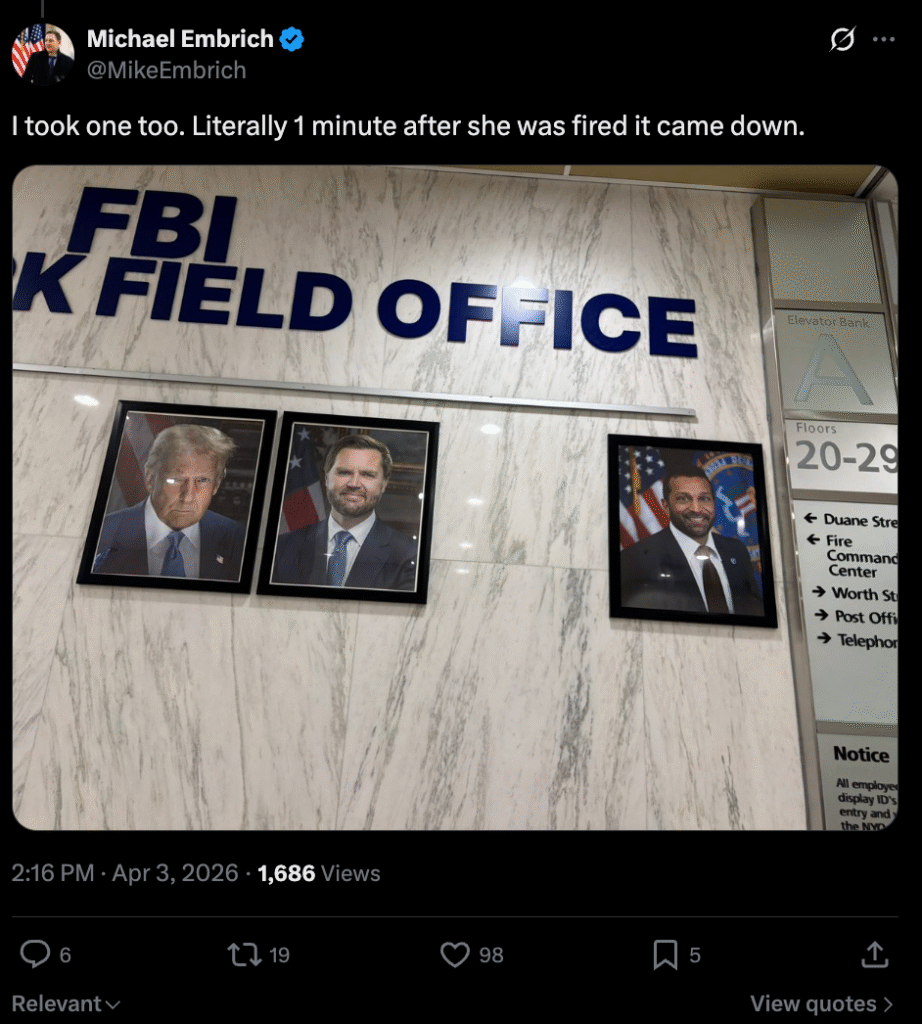
portrait
in
the
trashcan.
Colbert
Joins
In
On
The
Fun:
Lot
of
black
ink
in
the
punchline.
Let
The
Jury
Decide:
DLA
Piper
taken
to
court
in
maternity
leave
discrimination
suit.

That Was Fast: Bondi’s Portrait Already Living At The Dump – Above the Law

(Photo
by
Nathan
Posner/Anadolu
via
Getty
Images)

Pam
Bondi’s
tenure
as
attorney
general
didn’t
just
end
abruptly,
it
ended
curbside.

Because
in
a
bit
of
poetic
efficiency
that
would
make
even
the
most
overworked
line
prosecutor
crack
a
smile,
Bondi’s
official
DOJ
portrait
was
reportedly
spotted
in
the
trash
mere
minutes
after
Donald
Trump
gave
her
the
boot.
Just

straight
to
the
bin
,
like
last
week’s
takeout
and
this
week’s
credibility.

The
fast
portraiture
turnaround
was
something

multiple
peopl
e
noted.

And
look,
there
are
a
lot
of
ways
to
measure
your
impact
as
attorney
general.
But
tracking
it
in
terms
of
how
quickly
does
your
government-issued
pic
become
literal
garbage
is
a
new
one!
And,
in
Bondi’s
case,
that
honestly
tracks.
Her
stint
at
the
DOJ
was
marked
less
by
stewardship
of
the
rule
of
law
and
more
by
an
aggressive
housecleaning
campaign
where
loyalty
was
preferred
over
longevity
or
even
basic
skills.

It’s
also
hilarious
karma.
Early
in
her
tenure
at
the
DOJ,
Bondi

reportedly
demoted
a
career
prosecutor

for
the
unforgivable
offense
of
failing
to
redecorate
quickly
enough.
The
man
had
left
portraits
of
Joe
Biden,
Kamala
Harris,
and
Merrick
Garland
hanging
in
a
front
office
after
Trump’s
inauguration.
A
lag
in
swapping
out
the
wall
art,
and
suddenly
it’s
a
career-limiting
move.
It’s
interior
decorating,
but
make
it
authoritarian

man,
they’ll
put
anything
on
HGTV
these
days.


Kathryn
Rubino
is
a
Senior
Editor
at
Above
the
Law,
host
of

The
Jabot
podcast
,
and
co-host
of

Thinking
Like
A
Lawyer
.
AtL
tipsters
are
the
best,
so
please
connect
with
her.
Feel
free
to
email

her

with
any
tips,
questions,
or
comments
and
follow
her
on
Twitter

@Kathryn1
 or
Mastodon

@[email protected].

This Person Was Real Talky At The Birthright Citizenship Oral Argument – Above the Law


Ed.
Note:

Welcome
to
our
daily
feature

Trivia
Question
of
the
Day!


According
analysis
by
Dr.
Adam
Feldman
of
the
oral
argument
in Trump
v.
Barbara
,
the
challenge
to
Donald
Trump’s
executive
order
ending
birthright
citizenship,
who
spoke
the
most?


Hint:
They
said
7,575
words
at
the
argument.
Second
place
was
a
mere
4,861.


See
the
answer
on
the
next
page.

In-House Counsel Come Out In Support Of Biglaw Firms Fighting The Trump Administration – Above the Law

(Photo
by
Andrew
Harnik/Getty
Images)


Ed.
note
:
Welcome
to
our
daily
feature, Quote
of
the
Day
.


By
targeting
law
firms
because
they
represented
clients
that
took
positions
adverse
to
the
Administration’s
policy
priorities,
the
Orders
have
deterred
both
law
firms
and
companies
from
engaging
with
the
legal
system
in
ways
that
may
displease
the
Administration
out
of
fear
of
federal
retaliation.


— General
Counsels
United,
a
nationwide
non-partisan
collective
of
more
than
800 general
counsels,
in
an

amicus
brief

filed
in
support
of
the
Biglaw
firms
targeted
by
Donald
Trump’s

Executive
Orders
.
“The
Orders
have
already
distorted
the
lens
through
which
general
counsels
must
make
outside-counsel
decisions,
even
before
any
agency
has
implemented
any
part
of
these
Orders,”
the
brief
continues.
“If
allowed
to
take
effect,
the
Orders
would
require
federal
government
contractors
to
report
every
matter
in
which
they
have
engaged
a
targeted
law
firm;
require
federal
agencies
to
review
all
federal
government
contracts
with
companies
that
hired
the
targeted
firms;
limit
all
federal
employees
from
‘engaging’
with
employees
of
the
targeted
firms;
bar
every
employee
of
the
targeted
firms
from
accessing
‘Federal
Government
buildings’
(including,
presumably,
the
federal
courts)
and
suspend
all
security
clearances
for
attorneys
who
work
at
those
law
firms.”