Court orders Securico to pay How Mine $675k for gold lost to armed robbers

BULAWAYO-
Security
firm
DDNS
Security
Operations,
trading
as
Securico,
has
been
ordered
by
the
High
Court
to
pay
How
Mine
$675,000
after
it
lost
11.95kg
of
gold
bullion
it
was
transporting
to
Bulawayo
during
an
armed
robbery
on
October
4,
2022.

How
Mine
argued
that
Securico
failed
to
provide
adequate
and
competent
security
to
protect
the
gold
including
failing
to
utilise
an
armoured
truck
while
security
officers
had
no
panic
buttons
and
some
had
no
airtime
to
raise
the
alarm.

Securico
challenged
How
Mine’s
claim,
arguing
that
the
armed
robbery
was
unforeseen
and
no
human
foresight
could
have
prevented
it.

Justice
Joseph
Chilimbe,
in
a
judgement
delivered
on
July
1,
found
in
favour
of
How
Mine.

The
judge
said:
“I
must
take
due
regard
of
the
fact
that
officially,
both
parties
(How
Mine
and
Securico)
were
alive
to
the
risks
confronting
bullion
runs,
not
least
of
which
was
the
compromise
of
security
arrangements.

“I
must
relate
to
a
paradox
emerging
from
the
law
and
facts
herein
from
that
aspect.
Securico
as
a
public
carrier
was
obliged,
under
the
Praetor’s
Edict’s
strict
liability,
to
deliver
the
consignment
intact.
It
therefore
assumed
risk
when
it
accepted
the
commission
to
ferry
How
Mine’s
bullion
under
security
arrangement
which
by
Securico’s
standards,
were
less
than
adequate.

“But
the
law
extended
a
reprieve
to
Securico
in
the
event
that
loss
of
consignment
was
occasioned
by
superior
force.
The
resultant
anomaly
however
being
that
the
same
insufficient
arrangements
were,
according
to
the
evidence
given
and
arguments
raised
by
Securico,
contributory
to
the
causus
fortuitous.
Does
the
question
not
arise
then
that
defendant
walked
into
a
situation
which
it
knew
very
well
could
arise?
What
then
is
the
effect
of
this
possible
conclusion
on
the
defence
of
vis
major
(unavoidable
event
or
circumstance,
beyond
the
control
of
parties
involved)
tendered
herein?

“In
its
plea,
Securico
averred
that
the
event
was
unforeseeable.
In
evidence,
its
witnesses
accepted
that
robberies
formed
a
well-known
risk.”

Justice
Chilimbe
said
the
failure
to
trigger
alarms
and
the
Securico
crew’s
inexplicable
failure
to
summon
both
the
police
and
its
own
reaction
teams
bordered
on
negligence.

Securico,
the
judge
found,
set
out
to
carry
valuable
cargo
with
“soft
skin”
plated
vans,
instead
of
an
armoured
van.
The
company
was
also
well
aware
of
the
limitations
of
its
fire
power
and
“above
all
else,
it
had
clearly
and
commendably
ordered
its
personnel
to
preserve
life
(by
not
engaging
armed
robbers
in
a
gunfight).”

Reasoned
Justice
Chilimbe:
“That
decision
(to
preserve
life)
was
crucial
to
the
evaluation
of
the
guards’
response
during
and
after
the
robbery.
The
question
being;

where
a
carrier
sets
out
on
a
dangerous
enterprise
involving
the
prospect
of
violent
depredations,
does
it
not
in
fact
assume
the
risk
of
loss
where
it
restrains
its
personnel
from
boldly
engaging
the
despoilers?
And
does
that
risk
not
escalate
where
there
are
known
security
inadequacies?
Including
deployment
of
a
soft
skin
van
which
the
staid
Mr
Marko
Mukazi
(Securico
crew
commander)
condemned
as
clearly
unfit
for
purpose?

“…
I
reach
the
conclusion
that
Securico
failed
to
discharge
the
requisite
onus
of
proving
the
defence
of
vis
major.
How
Mine
succeeds
in
the
main.

“Securico
is
ordered
to
pay
How
Mine
the
sum
of
US$675,000
and
interest
thereon
at
the
rate
of
5
percent
per
annum
with
effect
from
October
4,
2022,
up
to
date
of
payment
in
full.”

Advocate
Thabani
Mpofu
appeared
for
How
Mine
while
Securico
were
represented
by
Romeo
Chatereza.

Ecobank robbery case collapses, security guard now faces money laundering charges

Sibonginkosi
Sibanda,
49,
who
works
for
Safeguard
Security
and
lives
in
Cowdray
Park,
had
initially
been
charged
with
armed
robbery
over
the
2024
raid
on
Ecobank’s
Bulawayo
branch.

However,
prosecutors
have
now
dropped
the
charge
and
replaced
it
with
one
of
money
laundering.

Sibanda
appeared
before
Bulawayo
magistrate
Matthew
Mutiro
on
Friday,
where
he
pleaded
not
guilty
to
the
new
charge.
He
was
remanded
in
custody
until
7
July,
when
a
ruling
on
his
bail
application
is
expected.

The
dramatic
reversal
has
cast
doubt
over
the
credibility
of
the
police
investigation,
which
Sibanda’s
lawyer,
Prince
Butshe,
described
as
“a
reckless
operation
based
entirely
on
speculation.”

“There
was
never
a
credible
link
between
my
client
and
the
robbery,”
said
Butshe.
“When
the
case
started
to
fall
apart,
the
state
changed
the
charge
in
an
attempt
to
save
face.”

The
new
charge
stems
from
anonymous
tips
police
received
in
June,
alleging
that
Sibanda
was
involved
in
illicit
dealings
at
his
workplace.
A
lifestyle
audit
followed,
leading
to
the
discovery
of
assets
allegedly
inconsistent
with
his
known
income.

Prosecutor
Constance
Ncube
told
the
court
that
Sibanda
owns
several
properties,
including
a
six-roomed
house
in
Cowdray
Park
and
two
additional
homes
registered
under
his
daughters’
names.

He
also
reportedly
purchased
a
truck
and
a
Honda
Fit
vehicle,
both
registered
in
his
wife’s
name,
as
well
as
a
homestead
in
Insiza.
He
is
also
listed
as
a
co-director
of
a
private
company
alongside
his
wife
and
daughter.

During
cross-examination,
lead
investigator
Detective
Tawedzerwa
Shiriyapenga
confirmed
that
there
was
no
longer
any
link
between
Sibanda
and
the
armed
robbery.

“The
robbery
case
is
separate
and
still
under
investigation,”
he
said.
“The
accused
is
currently
facing
a
money
laundering
charge
based
on
information
received
from
tip-offs
and
subsequent
financial
investigations.”

However,
Butshe
challenged
the
officer’s
version,
pointing
to
an
affidavit
that
stated
Sibanda
was
initially
picked
up
by
police
for
questioning
over
the
Ecobank
robbery.
It
was
during
those
interviews,
the
affidavit
claims,
that
suspicions
around
his
financial
dealings
first
emerged.

“You
are
misleading
the
court,”
Butshe
said.
“The
police
only
changed
the
charge
after
realising
they
had
no
evidence
to
support
the
original
robbery
allegation.
This
is
a
cover-up
for
a
flawed
investigation.”

Butshe
also
questioned
whether
Shiriyapenga
had
the
training
or
authority
to
investigate
financial
crimes,
arguing
that
such
cases
should
be
handled
by
specialist
units
within
the
police
force.

The
bail
ruling
is
expected
on
Monday.

Bulawayo councillors push for Pit Bull ban as dog attacks surge

The
issue
came
under
scrutiny
during
a
recent
meeting
of
the
Health,
Housing
and
Education
Committee,
where
councillors
warned
that
public
safety
was
at
risk
and
existing
dog
control
by-laws
were
no
longer
sufficient.

The
debate
was
sparked
by
a
disturbing
incident
in
Ward
19,
where
a
stray
dog
bit
five
people
before
fleeing
into
nearby
Robert
Sinyoka
Village.
The
city’s
health
department
confirmed
the
victims
had
received
anti-rabies
treatment,
and
a
search
team
made
up
of
police,
veterinary
services,
and
the
SPCA
was
deployed.

Councillor
Lazarus
Mphadwe
demanded
immediate
action.
“There
are
two
dogs
reportedly
taken
by
the
SPCA
in
Ward
19.
Dangerous
dogs
should
be
eliminated.
Banning
vicious
dog
species
should
be
done
immediately,”
he
said.

His
views
were
shared
by
several
councillors.
Councillor
Adrian
Moyo
called
for
an
outright
ban
“to
protect
the
residents,”
while
Councillor
Royini
Sekete
urged
Council
to
amend
the
city’s
by-laws
to
outlaw
the
breeding
and
keeping
of
aggressive
dogs.

In
Ward
17,
Councillor
Sikhululekile
Moyo
said
stray
dogs
were
not
only
biting
residents
but
also
fouling
public
spaces.
“The
reviewing
of
dog
control
by-laws,
including
a
clause
to
ban
dangerous
species
such
as
Pit
Bulls,
would
be
a
welcome
development,”
she
said.

Committee
chairperson
Councillor
Ntombizodwa
Khumalo
also
supported
the
ban.
She
raised
concerns
over
the
delay
in
implementing
the
city’s
tie-up
order,
a
regulation
requiring
dog
owners
to
keep
their
animals
restrained.

“The
number
of
dog
bites
is
increasing.
There
have
been
suspected
rabies
cases
among
stray
dogs.
If
we
delay
the
tie-up
order
further,
more
residents
will
be
affected,”
she
said.

Town
Clerk
Christopher
Dube
endorsed
the
ban
and
revealed
that
new
dates
were
being
considered
for
the
enforcement
of
the
tie-up
order.
He
cited
a
recent
case
in
Mzilikazi,
where
two
aggressive
dogs
attacked
police
horses,
prompting
the
Zimbabwe
Republic
Police
to
recommend
that
the
animals
be
euthanised.

“All
dangerous
dogs
must
be
euthanised.
The
population
of
stray
dogs
is
growing,
and
Council
must
act
decisively,”
Dube
said.

Chamber
Secretary
Sikhangele
Zhou
confirmed
that
a
national
debate
on
the
ownership
of
Pit
Bulls
is
already
underway.
She
said
Council
would
soon
begin
city-wide
consultations
before
amending
existing
by-laws
to
potentially
ban
not
just
Pit
Bulls
but
other
breeds
deemed
dangerous.

During
a
full
council
meeting
on
Wednesday,
Councillor
Perseverance
Nyathi
asked
about
the
city’s
position
on
breeding
aggressive
dogs.

Councillor
Adrian
Rendani
Moyo
speaking
on
the
proposal
to
ban
the
breeding
of
Pit
Bulls
in
the
city.

In
response,
Councillor
Adrian
Moyo
said
the
committee
had
already
agreed
in
principle
to
ban
Pit
Bulls.

“As
a
committee,
we
have
looked
at
the
issue
and
we
have
unanimously
agreed
that
the
pit
bull
breed
should
not
be
allowed
in
the
city.
However,
we
would
like
to
do
this
in
a
manner
that
is
procedural
and
in
line
with
all
stakeholders
within
the
city.
We
would
therefore
in
the
near
future
want
to
conduct
consultations
on
the
pit
bull
dogs
and
any
other
breed,”
he
said

In
recent
years,
Zimbabwe
has
witnessed
a
surge
in
fatal
dog
attacks,
many
involving
aggressive
breeds
such
as
Pit
Bulls
and
Boerboels.
According
to
official
data,
nearly
26
000
dog
bite
cases
were
recorded
between
January
and
November
2024
alone.
At
least
13
people
have
been
killed
since
2014.
The
most
recent
incident
occurred
in
June
2025,
when
39-year-old
Samuel
Machara
was
mauled
to
death
by
Pit
Bulls
in
New
Bluffhill,
Harare.
Earlier
cases
include
the
deaths
of
a
nine-year-old
girl
and
a
68-year-old
security
guard
in
2023,
both
attacked
by
Pit
Bulls
in
Harare

Nationwide Electricity Blackout Hits Zimbabwe, ZESA Blames “System Disturbance”

The
blackout
struck
at
precisely
2:11
PM
on
3
July,
disrupting
electricity
generation
at
the
country’s
two
main
power
stations

Kariba
and
Hwange.

The
outage
also
triggered
a
regional
ripple
effect,
severing
interconnections
with
South
Africa’s
national
grid,
Zambia’s
ZESCO,
and
Mozambique’s
HCB.
ZESA
said:

ZESA
Holdings
wishes
to
inform
its
valued
stakeholders
of
a
nationwide
power
outage
that
occurred
today,
Thursday
3
July
at
1411
hours
due
to
a
system
disturbance.
This
has
resulted
in
the
loss
of
generation
from
Kariba
and
Hwange
Power
Stations.

Additionally,
the
interconnections
with
National
Transmission
(South
Africa)
and
Zesco
(Zambia),
as
well
as
supplies
from
HCB
(Mozambique),
were
simultaneously
lost.

The
power
utility
assured
the
public
that
restoration
efforts
were
already
in
progress,
with
electricity
already
restored
in
some
areas.

ZESA
said
its
teams
were
working
“tirelessly”
to
reconnect
the
remaining
affected
regions
as
quickly
as
possible.

City Of Harare Dismisses Media Report On 24-Hour Parking As Fabrication

The
City
stressed
that
any
changes
to
parking
regulations
would
be
communicated
transparently
through
official
channels.

In
a
public
notice
issued
on
Thursday,
03
July,
the
local
authority
clarified
that
no
such
policy
has
ever
been
proposed
or
considered.
Part
of
the
notice
reads:

The
City
of
Harare
has
taken
note
of
a
false
and
malicious
story
by
local
media
claiming
that
it
is
planning
a
24
hr
parking
fees
policy.
This
is
untrue
and
has
never
even
been
considered.

The
Council
urged
residents
to
disregard
the
circulating
reports
and
to
rely
solely
on
verified
information
from
the
municipality.

The
statement
appears
to
be
a
direct
response
to
speculative
reports
and
social
media
commentary
that
suggested
the
city
was
preparing
to
extend
parking
fees
beyond
the
current
8
AM
to
4
PM
schedule.

As
of
now,
parking
fees
in
Harare
remain
limited
to
standard
business
hours,
and
no
official
proposal
has
been
tabled
to
alter
that
arrangement.

Chamisa Thanks Zimbabweans, Hints At New Political Vehicle After CCC Exit

In
a
lengthy
message
titled
“An
Appreciation
Post”,
Chamisa
looked
back
on
his
journey
since
first
running
for
president
in
2018,
thanking
the
public
for
their
consistent
backing
over
the
years.

He
praised
Zimbabweans
for
their
resilience
and
bravery,
saying
they
had
“stood
up,
voted
for
change,
and
clearly
picked
a
new
path”
in
both
the
2018
and
2023
elections.

“You
won
in
numbers,”
Chamisa
said,
adding
that
people’s
efforts
hadn’t
gone
to
waste,
even
though
their
will
was
repeatedly
denied
by
what
he
called
a
“tyranny
built
on
abuse
of
power,
repression,
and
fear.”

His
statement
comes
at
a
time
when
many
are
wondering
what’s
next
for
him
politically,
after
he
left
the
CCC
in
early
2024,
claiming
the
party
had
been
compromised
by
infiltration
and
internal
backstabbing.

Chamisa
made
it
clear
that
while
he’s
parted
ways
with
the
CCC,
he
hasn’t
given
up
on
his
dream
of
building
a
“New
Great
Zimbabwe.”
Wrote
Chamisa:

I
left
CCC
but
not
the
mission.
All
because
CCC
was
never
the
destination.
It
was
just
the
vehicle
meant
to
take
us
to
the
New
Zimbabwe.
When
that
vehicle
was
compromised,
it
became
necessary
to
step
out
and
prepare
a
better,
cleaner,
fit-for-purpose
vehicle.

The
former
opposition
leader
acknowledged
the
heavy
sacrifices
made
by
his
supporters,
including
those
who
were
jailed,
assaulted,
or
even
killed
in
politically
motivated
violence.

He
also
paid
tribute
to
Zimbabweans
in
the
diaspora
and
grassroots
campaigners,
praising
their
efforts,
from
online
fundraising
drives
to
door-to-door
mobilisation
on
the
ground.

Looking
ahead,
Chamisa
hinted
at
a
new
strategy
and
team
taking
shape.
He
said
he
was
currently
“consulting,
building,
and
assembling”
a
fresh
citizens’
movement
that
he
believes
will
“carry
and
pivot
this
nation
unto
greatness
and
stardom.”
He
said:

The
hope
is
indestructible.
The
promise
can
never
be
compromised.
The
path
is
clear.
The
plan
is
solid
#Godisinit
The
people
have
already
won
in
spirit.
Now
we
must
complete
the
journey.
Let’s
fix
it.
Let’s
finish
it.

Obert Mpofu kicked off Esidakeni as court rules government’s seizure of farm unlawful

BULAWAYO-
The
government’s
seizure
of
Esidakeni
farm
in
Matabeleland
North
was
unlawful,
the
High
Court
in
Bulawayo
has
ruled.

Offer
letters
for
sections
of
the
farm
given
to
Zanu
PF
secretary
Obert
Mpofu
and
several
Central
Intelligence
Organisation
(CIO)
agents
are
also
null
and
void,
Justice
Bongani
Ndlovu
ordered
in
a
judgement
delivered
on
June
30.

Business
partners,
rights
activist
Siphosami
Malunga,
scientist
Zephaniah
Dlamini
and
miner
Charles
Moyo
bought
the
550-hectare
farm
located
in
Nyamandlovu
in
2017
when
they
acquired
all
the
shares
in
Kershelmer
Farms
(Private)
Limited.

But
in
December
2020,
the
minister
of
lands
and
agriculture
issued
a
notice
in
the
Government
Gazette
that
the
land
had
been
compulsorily
acquired
by
the
state
for
resettlement.
The
minister
went
on
to
issue
offer
letters
to
about
a
dozen
individuals,
including
Mpofu.


Malunga,
Dlamini
and
Moyo
argued
that
they
were
being
punished
at
the
instigation
of
Gatsha
Mazithulela,
the
then
deputy
director
of
the
CIO
who
had
tried
to
elbow
his
way
into
the
partnership
but
had
been
locked
out.

The
High
Court
said
the
seizure
of
a
farm
from
indigenous
farmers
purportedly
to
resettle
other
farmers
was
not
only
unlawful
but
“irrational,
arbitrary,
malicious,
and
capricious.”

“The
farm
owners
are
indigenous
Zimbabweans.
They
are
black
people.
The
liberation
struggle
was
waged
so
that
black
people
could
reclaim
the
land.
They,
however,
purchased
this
farm.
The
fact
that
the
beneficial
ownership
of
this
land
is
in
the
hands
of
black
Zimbabweans
means
that
its
acquisition
is
void.
It
is
illegal.
It
is
irrational
in
that
it
cannot
satisfy
the
constitutional
imperatives.
It
is
contrary
to
the
principle
of
legality,”
Justice
Ndlovu
ruled.

“The
acquisition
is
not
based
on
the
constitution’s
authority;
nothing
can
depend
on
it.
The
farm
was
not
acquired
for
constitutional
purposes.
This
is
not,
and
cannot
be
the
purpose
of
land
redistribution,
and
it
undoubtedly
has
the
effect
of
undermining
Zimbabwe’s
status
as
an
attractive
investment
destination.
That
taints
the
acquisition
and
renders
it
invalid.”

Justice
Ndlovu
said
arguments
that
Malunga,
the
former
executive
director
of
the
Open
Society
Initiative
for
Southern
Africa,
is
“considered
a
government
critic
is
of
no
moment.”

He
added:
“A
policy
that
says
some
Zimbabweans
can
lose
private
property
simply
because
they
are
critics
of
the
ruling
establishment
is
downright
uncouth
and
belongs
to
the
dark
ages.
The
irrationality
inherent
in
the
process
is
unmistakable
and
cannot
go
unnoticed.

“Acquired
land
must
be
given
to
landless
indigenous
Zimbabweans.
How
can
land
be
taken
from
Indigenous
Zimbabweans
and
be
parcelled
out
to
other
Zimbabweans?
Are
those
beneficiaries
more
Zimbabwean
than
Malunga
and
the
two
others
who
jointly
own
the
farm?
The
decision
to
acquire
the
farm
was
arbitrary,
malicious,
and
capricious.
It
cannot
stand
as
a
valid
administrative
decision
and
is
void.”

The
judge
also
found
that
no
notice
was
brought
to
the
attention
of
Malunga,
Moyo
and
Dlamini
before
the
farm’s
acquisition.

“The
failure
to
give
adequate
notice
to
those
who
were
affected
by
the
decision
to
acquire
their
farm
renders
the
decision
of
the
lands
minister
arbitrary
and
in
contravention
of
the
law
as
set
out
in
the
relevant
statutes,”
Justice
Ndlovu
said
as
he
quashed
the
notice
of
acquisition
and
invalidated
offer
letters
given
to
Mpofu
and
others.

Advocate
Thabani
Mpofu
appeared
for
the
Kershelmer
directors
while
Julian
Mugova
represented
Mazithulela.
Moreblessing
Mahaso
was
the
lawyer
for
offer-letter-beneficiary
Dumisani
Madzivanyathi;
Nqobizitha
Ndlovu
appeared
for
Obert
Mpofu,
Reason
Mpofu
and
Mswelangubo
Farm
and
Kossam
Ncube
argued
for
two
other
beneficiaries
Legina
Muchimba
and
Lovemore
Jiyane.

The
court’s
decision
ends
a
bruising
battle
for
control
of
the
prime
farm
which
saw
attempts
by
Mpofu
and
Madzivanyathi,
in
particular,
to
drive
out
the
three
business
partners
by
vandalising
infrastructure
and
destroying
their
crops.

Mpofu
once
deployed
armed
guards
to
prevent
access
to
the
farm
by
Malunga,
Moyo
and
Dlamini
before
the
High
Court
ordered
his
eviction
pending
determination
of
the
farm’s
ownership,
which
has
now
been
made
by
the
High
Court.

How You Disagree Matters Too, Breyer – See Also – Above the Law

Former
Supreme
Court
Justice
Pretends
Sham
Legal
Theory
Is
Used
In
Good
Faith:
You
can
advocate
for
pragmatism
without
pretending
originalism
is
a
real
thing.
Biglaw
Firm
Celebrates
With
Its
Audience
In
Mind:
Their
firework
celebration
comes
with
a
quiet
room
in
case
it
gets
to
be
too
much!
What
IS
Porn,
Really?:
If
it’s
up
to
this
Court,
it
is
whatever
they
and
other
religious
fundamentalists
don’t
(openly)
like.
Alex
Spiro
Sets
His
Sights
Higher
Than
Legal:
What’s
a
bigger
accomplishment
than
defending
Eric
Adams?

Wishing A Happy Independence Day To Our Advertisers

This Law School Has Quite A Bit Of Influence On The Supreme Court – Above the Law

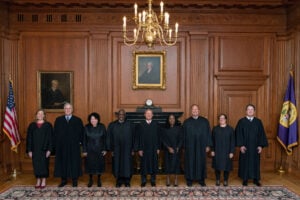
(Photo
by
Collection
of
the
Supreme
Court
of
the
United
States
via
Getty
Images)


Ed.
Note:

Welcome
to
our
daily
feature

Trivia
Question
of
the
Day!


According
to
data
collected
by
Jake
S.
Truscott
and
Adam
Feldman,
in
the
October
2024
term,
which
law
school
had
its
graduates
arguing
the
most
oral
arguments?


Hint:
Alum
from
this
law
school
made
up
25%
of
the
lawyers
arguing
at
the
Court
this
Term.


See
the
answer
on
the
next
page.