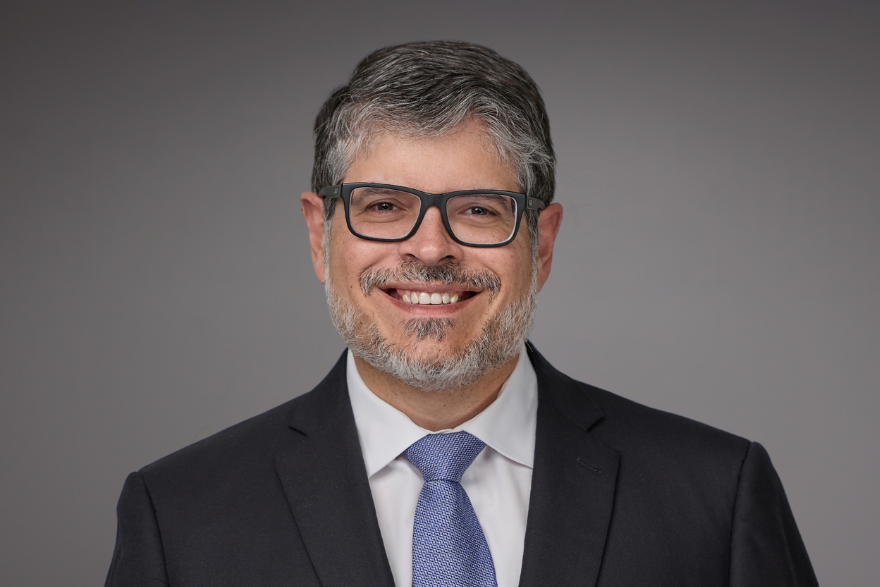
For
years,
the
Swiss
verein
has
been
Biglaw’s
favorite
legal
fiction,
a
way
for
global
firms
to
say
they’re
one
happy
family
while
keeping
the
finances
carefully
separated.
Now
one
of
the
biggest
names
in
the
game
is
preparing
to
change
that.
As
noted
by
the
American
Lawyer,
DLA
Piper
—
a
firm
that
brought
in
$4,239,832,000
gross
revenue
in
2024,
putting
it
at
No.
3
on
the
Am
Law
100
—
is
planning
to
abandon
the
verein
structure
that
has
long
governed
its
international
operations
and
move
to
a
single
global
profit
pool,
bringing
the
firm’s
U.S.
and
non-U.S.
partnerships
together
financially
for
the
first
time
ever.
The
shift
would
mark
a
significant
structural
change
for
one
of
the
world’s
largest
law
firms
and
could
signal
broader
changes
in
how
global
firms
organize
themselves.
If
you’re
wondering
what
the
big
deal
is,
here’s
the
short
version:
under
a
Swiss
verein,
firms
operate
under
one
brand
but
keep
their
finances
separate.
Offices
or
regions
can
technically
“merge”
while
maintaining
independent
profit
pools,
liabilities,
and
partnerships
—
a
structure
that
made
it
much
easier
for
firms
to
grow
rapidly
across
borders
without
forcing
partners
to
share
profits
with
less
profitable
regions.
A
unified
profit
pool
changes
that
equation.
It
aligns
incentives,
encourages
cross-border
collaboration,
and,
at
least
in
theory,
pushes
the
firm
closer
to
operating
as
a
genuinely
integrated
global
partnership
rather
than
a
loose
federation
of
offices.
It’s
not
just
the
firm’s
finances
that
are
coming
together
as
one.
Am
Law
has
additional
details:
Ryan
and
Severs
will
jointly
outline
plans
for
the
new
structure
of
the
firm
to
partners
later
today,
according
to
a
source
with
knowledge
of
the
matter.
The
source
added
that
the
changes
will
include
the
implementation
of
a
new
global
governance
structure
with
a
unified
global
leadership
team.
The
current
CEOs
will
retain
their
leadership
roles
with
[Frank]
Ryan
serving
as
global
chair
and
co-CEO,
and
[Charles]
Severs
as
global
co-CEO.
For
DLA
Piper,
this
shift
suggests
leadership
believes
the
benefits
of
deeper
integration
now
outweigh
the
risks.
In
other
words,
one
of
the
world’s
largest
law
firms
is
betting
that
Biglaw’s
future
looks
less
like
a
network
and
more
like
a
true
global
partnership.
If
the
experiment
works,
don’t
be
surprised
if
other
verein-structured
giants
start
asking
themselves
the
same
question:
why
pretend
to
be
one
firm
when
you
could
actually
become
one?
Staci
Zaretsky is
the
managing
editor
of
Above
the
Law,
where
she’s
worked
since
2011.
She’d
love
to
hear
from
you,
so
please
feel
free
to email her
with
any
tips,
questions,
comments,
or
critiques.
You
can
follow
her
on Bluesky, X/Twitter,
and Threads, or
connect
with
her
on LinkedIn.
Remember
Julie
Le?
If
the
name
rings
a
bell,
it’s
probably
because
she
delivered
one
of
the
most
honest
courtroom
reviews
of
the
unreasonable
work
government
attorneys
are
being
asked
to
do
in
support
of
the
Trumpian
immigration
policy.
Back
in
February,
the
then–Justice
Department
attorney
told
a
federal
judge
exactly
how
she
felt
about
her
workload,
“The
system
sucks,
this
job
sucks.”
And,
in
what
may
be
the
most
damning
line
ever
uttered
in
federal
court,
she
added,
“I
wish
you
would
just
hold
me
in
contempt
…
so
I
can
get
24
hours
of
sleep.”
The
internet
loved
it.
The
Justice
Department…
less
so.
She
was
promptly
shown
the
door.
Which
didn’t
help
with
the
rapidly
depleting
reserve
of
government
attorneys.
And
now?
Well,
Le
has
decided
that
if
you’re
going
to
go
viral,
you
might
as
well
go
all
the
way
to
Congress.
Le
has
officially
launched
a
campaign
for
Congress
in
Minnesota’s
5th
District
as
a
Democrat,
challenging
incumbent
Rep.
Ilhan
Omar.
According
to
her
campaign
messaging,
Le
says
she
“has
witnessed
firsthand
the
complexities
of
our
immigration
and
legal
systems”
and
understands
“how
broken
they
are
—
and
the
reforms
needed
to
improve
them.”
(Which,
admittedly,
is
a
slightly
more
polished
version
of
“the
system
sucks.”)
Le’s
background
is
compelling
as
a
Vietnamese
refugee
who
came
to
the
United
States
in
1993
and
later
worked
as
an
immigration
prosecutor
connected
to
ICE
enforcement
operations,
she
has
a
unique
perspective
that
she’s
taking
to
voters.
The
theory
appears
to
be
that
if
the
system
is
broken,
maybe
the
person
who
said
it
out
loud
should
try
fixing
it.
Kathryn
Rubino
is
a
Senior
Editor
at
Above
the
Law,
host
of
The
Jabot
podcast,
and
co-host
of
Thinking
Like
A
Lawyer.
AtL
tipsters
are
the
best,
so
please
connect
with
her.
Feel
free
to
email
her
with
any
tips,
questions,
or
comments
and
follow
her
on
Twitter
@Kathryn1 or
Mastodon
@[email protected].
A
new
case
usually
involves
a
flood
of
hundreds
or
thousands
of
documents
waiting
to
be
pored
over
and
deciphered.
The
deadline
to
understand
it
all
is
often
yesterday.
For
years,
Opus
2’s
litigation
management
software
has
made
that
process
more
sane,
but
the
company
recently
took
a
more
ambitious
step.
With
last
year’s
acquisition
of
Uncover,
a
Dutch
legal
tech
startup,
Opus
2
has
advanced
its
AI
to
make
the
platform
more
powerful
and
easier
to
use
than
ever.
“Everything
that
Opus
2
has
been
known
for
in
the
litigation
space,
that’s
still
here
as
a
core
part
of
the
platform,”
said
Dana
Morrison,
Product
Marketing
Manager.
“What
we’re
doing
now
is
adding
a
more
streamlined
UI
option,
and
additional
AI
functionality.”
Opus
2
recently
gave
us
a
tour.
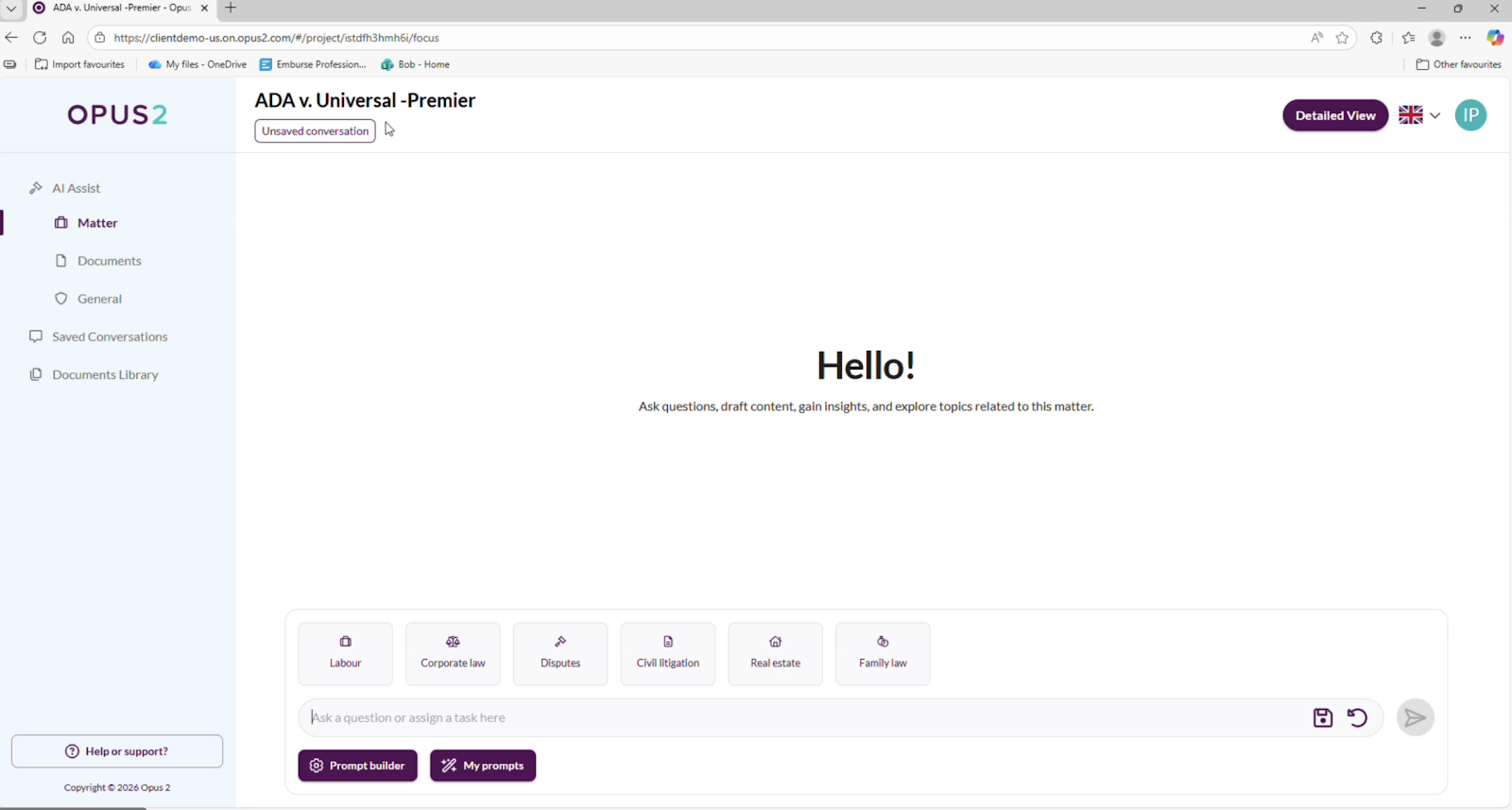
Here
are
the
highlights.
Getting
Started
Opus
2
has
been
known
for
15
years
as
an
industry-leading
case
management
and
case
preparation
solution
where
dispute
teams
organize
documents,
transcripts,
issues,
chronologies
and
key
actors
into
a
structured
case
strategy.
It’s
still
comprehensive
and
configurable,
which
is
why
it
has
long
occupied
the
space
between
eDiscovery
and
trial
presentation,
giving
firms
a
centralized
environment—or
“situation
room”—
for
preparing
complex
matters.
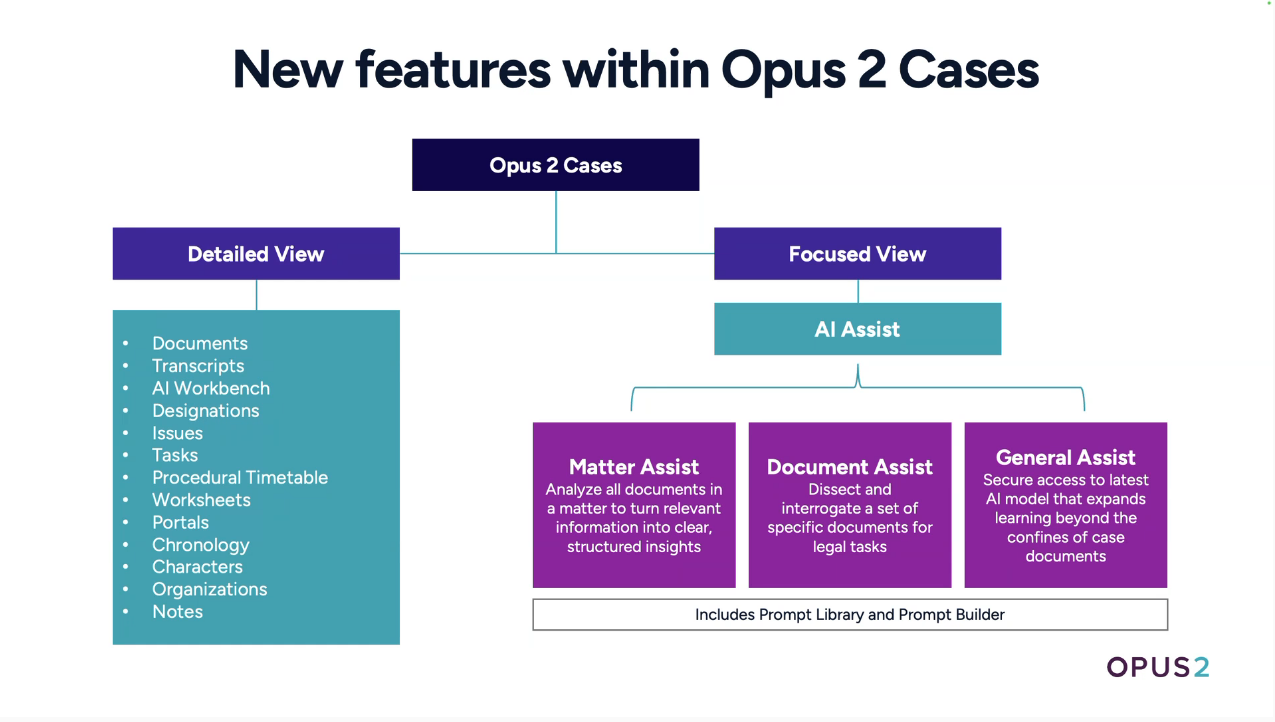
That
foundation
remains
unchanged,
and
the
same
interface
of
the
previous
version
of
the
software
is
available
in
the
Detailed
View
section.
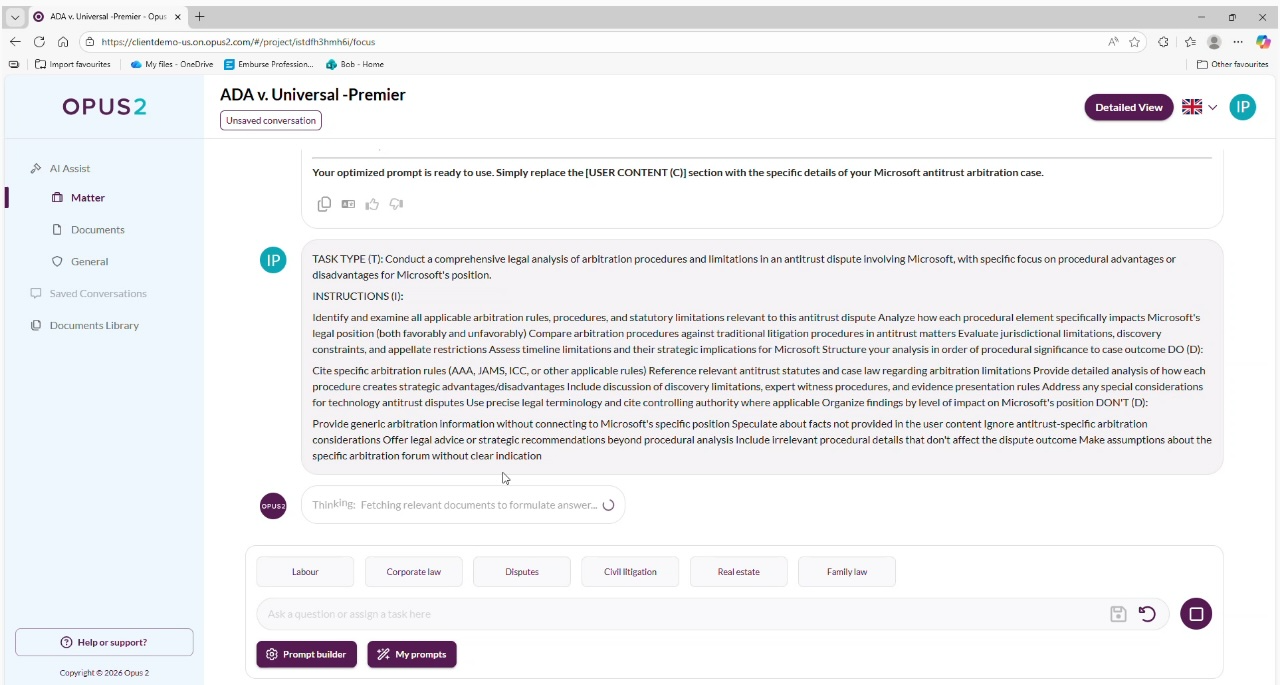
What’s
new
is
the
Focused
View,
which
applies
large-language
model
AI
to
access
the
same
information
in
a
simplified,
chatbot-like
environment.
“As
a
startup,
we
were
able
to
really
differentiate
ourselves,”
said
Ingrid
Van
de
Pol-Mensing,
who
co-founded
Uncover
and
is
now
Opus
2’s
Principal
AI
Solutions
Evangelist.
“Now
together
we
both
had
this
shared
goal
of
bringing
AI-driven
functionality
into
the
hands
of
more
lawyers.”
Users
can
toggle
between
Detailed
View
and
Focused
View
with
one
click.
But
the
intention
with
the
update
was
to
create
an
intuitive
design
that
puts
verifiable
AI
first,
streamlining
how
lawyers
interact
with
their
case
materials.
Lawyers
can
now
query
their
case
files
in
a
conversational
way
to
facilitate
analysis,
without
an
overload
of
information
clouding
their
view.
“We
do
not
want
to
distract
or
bother
people
with
information
that
isn’t
strictly
necessary
for
the
job
that
they
need
to
perform,”
Van
de
Pol-Mensing
said.
Using
Matter
Assist
to
Understand
a
Case
in
Minutes
Opus
2
highlighted
three
new
AI
tools.
Matter
Assist
allows
lawyers
to
get
answers
sourced
from
all
documents
across
a
case.
Document
Assist
enables
specific
queries
on
one
document
or
set
of
documents.
General
Assist
is
an
enterprise
LLM
for
handling
research,
drafting,
and
analysis
not
tied
to
case
documents.
All
of
these
tools
include
access
to
a
prompt
library
and
prompt
builder.
With
Matter
Assist,
the
platform
analyzes
all
documents
within
the
matter
and
generates
structured
summaries,
thematic
insights
and
targeted
answers.
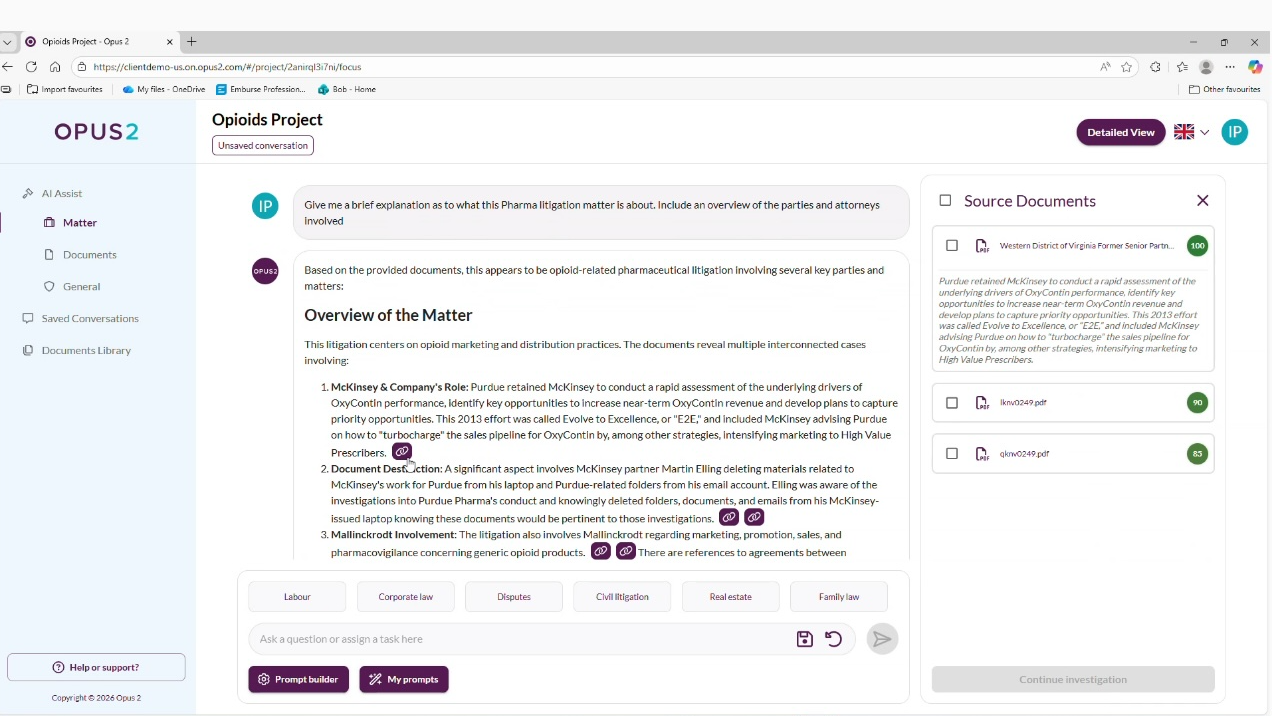
Van
de
Pol-Mensing
offered
the
example
of
a
new
associate
who
needs
to
get
up
to
speed
fast.
“Without
having
read
anything
or
opened
a
document,
you
can
ask,
‘Explain
to
me
what
this
litigation
is
about,
including
an
overview
of
the
parties
and
attorneys
involved.’”
The
system
extracts
relevant
text
and
synthesizes
a
detailed
response,
linking
directly
to
the
location
in
source
documents
that
support
it.
Lawyers
don’t
even
need
to
know
what
documents
they
need
to
search,
she
said.
The
AI
does
already.
Document
Assist
Dives
Deep
Into
Specific
Materials
If
Matter
Assist
provides
the
macro
view,
Document
Assist
handles
the
micro.
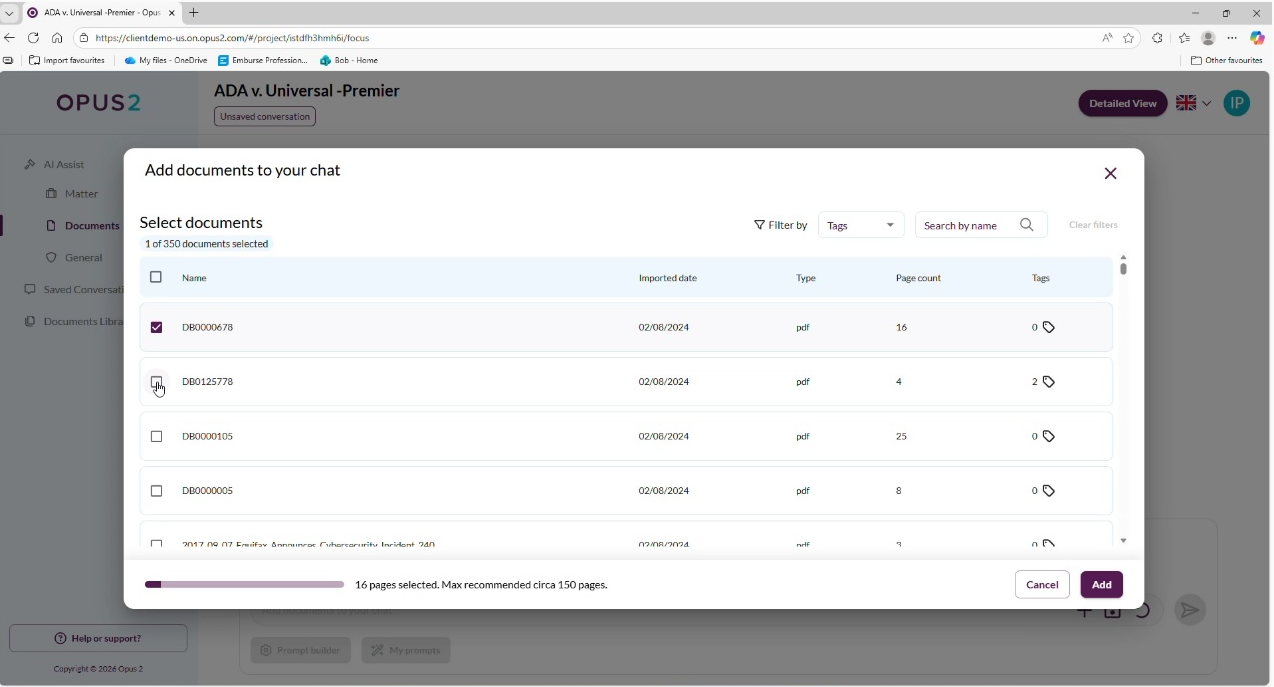
Document
Assist
allows
users
to
run
focused
queries
against
one
or
more
documents.
Lawyers
can
compare
clauses
across
contracts,
identify
inconsistencies
in
testimony,
summarize
complex
arguments,
or
extract
key
facts.
Rather
than
toggling
between
multiple
documents
and
manually
noting
differences,
lawyers
can
ask
questions
in
plain
language.
“For
example,
you
upload
20
employment
agreements
and
say,
‘Which
one
has
a
deviating,
non-compete
clause?’”
Van
de
Pol-Mensing
said.
“Or
you
upload
a
couple
versions
of
testimonies
and
say,
‘What
are
the
inconsistencies?’”
General
Assist
Expands
the
AI
Toolkit
The
third
major
addition,
General
Assist,
is
a
secure
workspace
embedded
within
the
platform
that
goes
beyond
any
particular
case.
It
can
help
draft
emails,
write
internal
memos,
prepare
client
updates,
simplify
research
into
new
industries
and
clarify
procedural
rules.
“It’s
a
really
great
tool
to
focus
on
specific
information
and
to
then
perform
follow-up
actions,”
Van
de
Pol-Mensing
said.
The
advantage
over
doing
the
same
thing
in
Gemini
or
ChatGPT
is
that
here,
it’s
a
closed
system
that
never
compromises
confidential
case
information.
Lawyers
can
generate
summaries
in
Matter
Assist
or
Document
Assist,
then
move
to
General
Assist
to
use
the
output
to
draft
an
email,
outline
arguments
or
prepare
talking
points
without
exposing
it
to
public
AI
tools.
A
Helpful
Prompt
Library
That
Will
Continue
Growing
The
new
prompt
library
offers
pre-built
prompts
tailored
to
specific
practice
areas,
sparing
lawyers
from
having
to
engineer
effective
instructions
from
scratch.
The
prompts
users
will
see
are
quite
short,
but
they
are
much
more
complex
on
the
back
end
to
make
sure
they
will
get
an
answer
that
makes
sense,
Van
de
Pol-Mensing
said.
“So
the
whole
exercise
of
developing
an
effective
prompt,
we
try
to
take
that
burden
away
from
the
lawyer
to
make
it
quicker
and
easier,”
she
said.
The
library
will
also
continuously
evolve
as
more
users
engage
with
the
prompts.
For
those
who
want
more
control,
the
prompt
builder
helps
structure
prompts
for
more
consistent
and
comprehensive
outputs.
“That
prompt
builder
is
a
pretty
big
deal
for
attorneys,”
Morrison
said.
“One
of
the
big
challenges
with
generative
AI
is
figuring
out
how
to
ask
a
question
in
a
way
that
gets
the
information
you
want,
in
the
format
you
want,
and
laid
out
in
a
way
that
makes
sense.”
Security—and
More
to
Come
in
the
Future
For
litigators,
AI
is
only
as
useful
as
it
is
verifiable.
Outputs
generated
through
Matter
Assist
and
Document
Assist
are
tied
back
to
specific
source
documents,
so
lawyers
never
take
it
on
faith
in
the
AI’s
work.
They
can
easily
examine
the
underlying
evidence.
Morrison
acknowledged
that
one
of
the
biggest
hurdles
to
AI
adoption
in
law
is
trust.
Lawyers
often
worry
that
sensitive
client
data
is
being
shared
externally
or
used
to
train
outside
models.
She
emphasized
that
Opus
2
has
made
security
and
compliance
a
central
priority
throughout
its
15
years
in
the
legal
space.
“Because
the
AI
operates
entirely
within
the
Opus
2
platform,
attorneys
can
use
it
without
needing
to
anonymize
data,”
she
said.
“They
can
be
very
confident.”
The
acquisition
of
Uncover
also
bodes
well
for
the
future
of
Opus
2.
Besides
back-end
updates
that
increase
the
software’s
speed
and
power,
the
latest
release
features
only
a
portion
of
the
new
system’s
capability.
That
means
faster,
more
frequent
updates
in
the
future,
Morrison
said.
“It’s
only
step
one
of
many
to
continue
integrating
those
new
AI
features
and
growing
our
roadmap
to
accelerate
that
innovation,”
she
said.
AI
is
not
waiting
for
the
legal
profession
to
get
comfortable.
It
is
moving
fast,
getting
better,
and
reaching
deeper
into
the
work
lawyers
do
every
day.
It
now
helps
with
drafting,
summarizing,
contract
review,
research
support,
document
analysis,
workflow
management,
and
client
service.
It
is
already
part
of
the
practice
whether
lawyers
welcome
it
or
not.
That
creates
the
question
many
lawyers
ask
in
private.
How
far
does
this
go
before
it
starts
to
replace
us?
Not
just
help
us.
Not
just
speed
us
up.
Replace
us.
The
honest
answer
is
that
AI
will
replace
some
tasks,
reshape
many
roles,
and
change
how
legal
services
get
delivered,
but
it
is
far
less
likely
to
replace
the
full
lawyer
function
where
judgment,
strategy,
persuasion,
and
accountability
still
drive
value.
The
easy
prediction
is
that
AI
will
keep
getting
better
at
the
parts
of
legal
work
that
are
structured,
repeatable,
text
heavy,
and
pattern
based.
That
includes
first
drafts,
issue
spotting,
summarizing
records,
comparing
contracts,
organizing
timelines,
flagging
anomalies,
and
generating
alternative
arguments.
That
progress
will
not
slow
down.
The
tools
will
become
faster,
cheaper,
more
integrated,
and
more
natural
to
use.
That
matters
because
for
years
many
lawyers
assumed
AI
would
only
affect
routine
junior
work.
That
view
now
feels
too
narrow.
AI
is
already
moving
beyond
basic
document
tasks
and
into
work
that
requires
more
nuance,
more
comparison,
and
more
legal
framing.
It
is
climbing
the
ladder
faster
than
many
expected.
So
yes,
some
parts
of
law
practice
will
get
displaced.
The
work
most
at
risk
will
be
the
work
clients
see
as
process,
not
judgment.
If
the
task
involves
sorting,
extracting,
summarizing,
classifying,
redlining,
or
producing
a
solid
first
pass
from
known
inputs,
AI
will
continue
to
close
ground.
That
pressure
will
affect
staffing
models,
training
paths,
billing
structures,
and
client
expectations.
But
law
is
not
only
about
producing
text.
It
is
about
deciding
what
matters.
It
is
about
choosing
what
to
say,
what
to
leave
out,
what
risk
to
take,
what
theme
will
carry
the
day,
what
fact
changes
the
case,
what
witness
will
persuade
the
jury,
what
judge
will
respond
to
a
certain
argument,
and
what
settlement
posture
fits
the
moment.
Those
choices
depend
on
context,
timing,
instinct,
human
behavior,
and
consequences
that
go
well
beyond
the
page.
That
is
why
the
right
way
to
think
about
replacement
is
not
lawyer
versus
machine.
It
is
task
versus
function.
AI
can
replace
parts
of
the
task
stack.
It
can
do
that
in
ways
that
surprise
us.
But
the
lawyer’s
function
remains
broader.
The
lawyer
bears
responsibility.
The
lawyer
owes
duties
to
the
client.
The
lawyer
must
protect
confidences,
supervise
the
work,
communicate
clearly,
and
stand
behind
the
advice.
The
machine
does
none
of
that.
Still,
there
is
a
real
danger
here,
and
it
is
not
only
job
loss.
It
is
cognitive
atrophy.
If
lawyers
rely
on
AI
to
do
the
first
read,
the
first
draft,
the
first
outline,
the
first
strategy
pass,
and
the
first
challenge
to
their
own
position,
they
may
slowly
stop
building
the
mental
muscles
that
made
them
good
in
the
first
place.
That
risk
is
especially
acute
for
younger
lawyers
who
may
mistake
fluent
output
for
sound
reasoning.
That
problem
goes
deeper
than
fake
citations
or
wrong
cases.
The
deeper
concern
is
that
lawyers
may
stop
seeing
what
is
missing.
They
may
stop
testing
assumptions.
They
may
stop
asking
the
next
hard
question.
They
may
stop
struggling
with
the
facts
long
enough
to
find
the
insight
that
actually
matters.
And
in
law,
the
struggle
often
produces
the
strategy.
So
where
is
this
headed
over
the
next
few
years.
The
next
major
step
is
not
just
better
chat.
It
is
AI
that
can
carry
out
sequences
of
work
across
tools,
files,
and
decision
points.
In
plain
English,
that
means
systems
that
do
not
merely
answer
prompts
but
perform
parts
of
a
workflow.
They
will
gather
documents,
summarize
them,
compare
them
to
prior
work,
flag
missing
support,
draft
a
first
product,
and
route
it
for
review.
Once
that
happens
at
scale,
the
profession
will
feel
real
pressure.
Firms
that
treat
AI
as
a
novelty
will
lose
time
and
ground.
Firms
that
treat
it
as
magic
will
create
risk.
The
firms
that
win
will
likely
be
the
ones
that
redesign
work
with
discipline.
They
will
identify
the
right
tasks,
build
review
layers,
test
the
tools,
train
their
lawyers,
and
set
clear
limits
on
what
the
machine
can
do
alone.
Will
there
be
a
point
where
we
need
to
prevent
AI
from
supplanting
us?
In
part,
that
question
answers
itself.
The
profession
already
has
brakes
built
in.
Ethics,
client
duties,
malpractice
exposure,
court
scrutiny,
confidentiality
concerns,
and
the
need
for
accountable
advice
all
slow
full
substitution.
Those
limits
are
not
anti
innovation.
They
reflect
the
fact
that
legal
work
carries
real
consequences
for
real
people
and
businesses.
The
stronger
brake,
though,
may
be
practical
rather
than
regulatory.
Clients
hire
lawyers
in
hard
moments.
They
want
judgment
under
uncertainty.
They
want
a
counselor
who
can
absorb
risk,
weigh
business
realities,
read
people,
negotiate
under
pressure,
and
own
the
recommendation.
AI
may
inform
that
work.
It
may
sharpen
that
work.
It
may
outperform
many
lawyers
on
narrow
slices
of
that
work.
But
replacing
the
full
human
role
requires
trust,
accountability,
and
relational
authority
that
technology
still
does
not
carry
on
its
own.
That
does
not
mean
lawyers
should
feel
safe.
It
means
they
should
feel
challenged.
The
profession
will
likely
divide
between
lawyers
who
use
AI
to
extend
judgment
and
lawyers
who
let
AI
flatten
them
into
commodity
reviewers
of
machine
output.
The
first
group
will
rise.
The
second
group
will
struggle.
The
market
will
not
reward
lawyers
for
doing
slowly
what
a
platform
can
do
quickly.
It
will
reward
lawyers
who
know
where
the
machine
helps,
where
it
fails,
and
how
to
turn
speed
into
better
strategy
and
better
service.
Senior
lawyers
need
to
lead
this
shift.
They
know
what
good
work
looks
like.
They
know
when
a
theory
will
work
and
when
it
will
fail.
They
know
that
the
first
AI
output
often
lands
at
50,
60,
or
80
percent
of
what
they
want,
and
that
starting
there
instead
of
at
zero
can
still
be
a
huge
win.
They
also
know
that
bad
instincts
wrapped
in
polished
prose
are
still
bad
instincts.
That
mix
of
patience
and
judgment
is
exactly
what
firms
need
now.
This
is
not
the
moment
for
senior
lawyers
to
stand
back.
It
is
the
moment
for
them
to
teach
younger
lawyers
how
to
use
AI
without
giving
away
the
craft.
That
means
showing
them
how
to
think
before
they
prompt,
how
to
frame
the
issue,
how
to
test
the
answer,
how
to
rewrite
the
output,
and
how
to
separate
helpful
assistance
from
false
confidence.
Senior
lawyers
have
seen
enough
bad
facts,
weak
arguments,
and
failed
strategies
to
know
that
judgment
rarely
comes
from
convenience.
Law
schools
and
firms
should
respond
the
same
way.
Teach
lawyers
to
think
before
they
generate.
Make
them
outline
before
they
draft.
Make
them
compare
their
own
reasoning
to
the
machine’s
reasoning.
Make
them
explain
the
differences.
AI
should
not
end
legal
thinking.
It
should
reveal
whether
legal
thinking
was
ever
strong
enough
to
begin
with.
So
what
does
replacement
look
like
if
it
comes?
It
will
not
begin
with
robots
taking
over
courtrooms
in
one
dramatic
sweep.
It
will
look
quieter
than
that.
Fewer
hours
on
first
drafts.
Leaner
teams
on
routine
matters.
Smaller
classes
of
junior
lawyers
doing
old
style
grind
work.
More
pressure
on
lawyers
whose
value
rests
only
on
information
retrieval
or
document
production.
More
clients
resisting
payment
for
work
that
AI
now
handles
faster.
But
full
supplanting
is
a
different
claim.
For
the
foreseeable
future,
the
lawyer
who
can
reason,
persuade,
counsel,
supervise,
and
own
the
decision
will
still
matter.
The
profession
may
change
shape.
Some
roles
may
shrink.
New
roles
will
emerge.
The
safest
position
is
not
denial.
It
is
adaptation
with
discipline.
Use
AI
hard.
Learn
it
well.
Build
around
it.
But
do
not
give
it
the
one
thing
clients
still
need
most
when
the
stakes
are
real.
Judgment.
That
is
the
line
we
cannot
cross.
That
is
the
line
that
will
define
whether
AI
strengthens
the
profession
or
slowly
hollows
it
out
from
within.
Frank
Ramos
is
a
partner
at
Goldberg
Segalla
in
Miami,
where
he
practices
commercial
litigation,
products,
and
catastrophic
personal
injury. You
can
follow
him
on LinkedIn,
where
he
has
about
80,000
followers.
Donnie
Throws
Temper
Tantrum
Over
Losing
Fight
With
Biglaw:
Tough
time
to
be
a
DOJ
lawyer!
Y’all
Call
This
Supreme?:
The
public
doesn’t
think
too
highly
of
our
highest
court.
DOJ
Attorney
Resigns
To
Protect
His
Colleagues:
The
whole
office
would
have
gotten
sanctioned
with
him
otherwise.
Lawyer
Found
Guilty
Of
Systemic
Sexual
Abuse
Of
Children:
He
was
convicted
of
27
felony
counts
related
to
the
sexual
abuse
of
minors
and
having
CSAM.
Merger
Talks
Are
Heating
Up:
Is
your
firm
next
on
the
list?
War
Costs:
You
—
the
person
reading
this
—
spent
about
$300
funding
the
war
in
Iran
so
far.
The
digital
health
M&A
wave
is
continuing,
this
time
with
Universal
Health
Services’
plan
to
acquire
virtual
behavioral
health
company
Talkspace
for
$835
million.
And
it’s
a
deal
that
makes
a
lot
of
sense
for
both
parties,
experts
say.
Universal
Health
Services
(UHS),
based
in
King
of
Prussia,
Pennsylvania,
is
a
for-profit
health
system
operating
29
inpatient
acute
care
facilities,
346
inpatient
behavioral
health
facilities
and
168
outpatient
and
other
facilities.
New
York
City-based
Talkspace
has
a
network
of
about
6,000
professionals
offering
virtual
therapy,
psychiatry
and
medication
management.
Patients
can
connect
with
their
clinicians
via
video,
audio,
chat
or
asynchronous
text
messaging.
It
serves
both
employers
and
health
plans.
Joining
forces
will
help
“establish
a
truly
national,
end-to-end
platform
for
behavioral
health
that
seamlessly
integrates
virtual
and
in-person
care,”
said
Marc
D.
Miller,
president
and
CEO
of
UHS.
Talkspace
will
become
a
subsidiary
of
the
UHS
Behavioral
Health
Division,
and
UHS
will
bring
on
Talkspace’s
network
of
6,000
therapists.
This
will
expand
the
health
system’s
reach
to
patients
who
prefer
virtual
care,
especially
younger
populations,
Miller
said.
“Talkspace’s
virtual
platform
perfectly
complements
the
high-quality
care
already
provided
at
our
facilities,”
Miller
said
in
an
email.
“This
acquisition
enables
UHS
to
accelerate
our
outpatient
and
telehealth
efforts,
ensuring
smoother
transitions
across
care
settings
and
broadening
access
to
treatment
for
patients
everywhere.”
Talkspace
will
also
be
able
to
refer
patients
who
are
in
need
of
more
intensive
outpatient,
partial
hospitalization
or
inpatient
care
to
UHS’
facilities.
“Integrating
with
UHS,
one
of
the
nation’s
largest
providers
of
inpatient
behavioral
health
services,
was
a
natural
solution
to
the
growing
demand
for
comprehensive
outpatient
care.
By
uniting
our
strengths,
we
are
providing
patients
with
a
full
spectrum
of
care
under
one
umbrella,”
said
Dr.
Jon
Cohen,
CEO
of
Talkspace.
Following
the
acquisition,
Cohen
will
report
to
Matt
Peterson,
executive
vice
president
and
president
of
UHS’
Behavioral
Health
Division.
According
to
one
healthcare
expert,
this
is
a
strategic
move
for
both
companies.
For
UHS,
the
deal
allows
the
company
to
recruit
patients
who
primarily
use
telemedicine
but
may
benefit
from
inpatient
or
outpatient
services,
as
well
as
attract
providers
at
a
time
when
recruiting
therapists
is
costly.
For
Talkspace,
the
acquisition
gives
them
more
stability.
“Think
of
Talkspace
as
a
front
door,
as
well
as
a
mechanism
to
take
advantage
of
its
payer
relationships
across
commercial
and
government
payors.
…
For
Talkspace,
it
provides
stability
in
the
face
of
volatile
markets,”
said
Christina
Farr,
managing
director
at
consulting
firm
Manatt
Health.
“While
this
might
not
have
been
a
deal
that
resembled
the
pandemic
peak,
it
is
still
relatively
healthy
overall
for
a
tech-enabled
services
company.
The
markets
are
aligning
around
the
idea
that
telemedicine
is
here
to
stay,
but
it’s
a
tool
in
the
toolkit.”
Another
analyst
agreed
that
the
transaction
is
beneficial
for
both
UHS
and
Talkspace.
“It’s
mutually
reinforcing
in
that
when
somebody
winds
up
in
inpatient
treatment,
they
sort
of
graduate
to
outpatient
treatment,
and
then
this
gives
the
institution
something
else
to
keep
them
tethered
to
the
organization,”
said
Michael
Abrams,
managing
partner
of
Numerof
&
Associates.
“It
gives
the
organization
a
full
continuum
reach,
if
you
will,
making
it
into
a
full
behavioral
health
continuum.
And
in
the
same
way
that
people
can
move
from
inpatient
to
outpatient
to
digital,
people
that
start
out
on
the
digital
end
can
wind
up
moving
to
inpatient
services.”
The
deal
is
expected
to
close
in
the
third
quarter
of
2026.
The
High
Court
in
Harare
has
overturned
the
conviction
of
three
former
opposition
legislators
and
two
Harare
residents
who
had
been
found
guilty
of
promoting
public
violence
after
their
arrest
three
years
ago
for
allegedly
taking
part
in
an
unsanctioned
gathering.
According
to
the
Zimbabwe
Lawyers
for
Human
Rights
(ZLHR),
the
group
—
Amos
Chibaya,
Costa
Machingauta,
Monica
Mukwada,
Lancelot
Tungwarara
and
Aleta
Virimai
—
were
arrested
in
January
2023
by
officers
from
the
Zimbabwe
Republic
Police
(ZRP).
They
were
charged
with
participating
in
a
gathering
with
the
intent
to
promote
public
violence,
breaches
of
peace,
or
bigotry.
During
the
trial,
prosecutors
alleged
that
Chibaya
and
his
co-accused
had
gathered
at
Machingauta’s
home
in
Budiriro
for
a
meeting
linked
to
the
opposition
Citizens
Coalition
for
Change
(CCC).
The
court
heard
that
they
wore
party
regalia
and
chanted
the
slogan
“Ngaapinde
hake
Mukomana,
2023
Chamisa
chete
chete”,
which
prosecutors
translated
as
“Let
the
boy
get
in,
2023
Chamisa
only.”
In
March
2025,
Harare
magistrate
Sharon
Rakafa-Matsika
convicted
the
five
and
fined
each
of
them
US$500,
with
the
alternative
of
six
months
in
prison
if
they
failed
to
pay.
She
also
imposed
a
12-month
prison
sentence,
wholly
suspended
for
five
years,
on
condition
that
they
did
not
commit
a
similar
offence
during
that
period.
The
five,
represented
by
Chris
Mhike
of
ZLHR,
later
appealed
against
the
conviction,
arguing
that
the
magistrate
had
erred
and
misdirected
herself
in
finding
them
guilty.
On
3
March
2026,
High
Court
judges
Pisirayi
Kwenda
and
Davison
Foroma
upheld
the
appeal,
quashing
both
the
conviction
and
sentence
and
acquitting
the
five.
Former
ZANU
PF
Secretary
for
Legal
Affairs,
Paul
Mangwana,
has
said
that
President
Emmerson
Mnangagwa
will
not
gain
an
extra
term
under
the
current
constitutional
changes,
as
he
is
set
to
serve
only
two
more
years—less
than
a
full
term,
which
the
law
defines
as
between
three
and
five
years.
Speaking
at
a
ZANU
PF
press
conference
at
the
party
headquarters
in
Harare
on
Wednesday,
11
March
2026,
Mangwana,
who
co-chaired
COPAC
during
the
drafting
of
the
2013
constitution,
said
no
referendum
would
be
required
for
the
proposed
constitutional
amendments.
Said
Mangwana:
“The
question
is
whether
the
incumbent
should
benefit
from
the
current
amendment.
Yes,
there
is
that
provision.
If
they
are
a
term
limit
provision,
then
the
current
president
is
not
going
to
benefit
from
an
extension
of
term
limits.
“People
are
failing
to
understand
something
in
the
Constitution.
The
Constitution
provides
that
any
period
below
three
years
is
not
considered
to
be
a
term,
and
I
think
that
is
a
very
important
piece
of
the
law.
“The
current
amendment
is
extending
[the
Presidential
term]
by
two
years,
which
falls
short
of
three
years.
So
if
there
is
an
extension
by
two
years,
in
terms
of
the
Constitution,
it’s
not
a
term.
“The
proposed
amendment
seeks
to
extend
by
two
years,
which
falls
short
of
a
term.
So
he
[Mnangagwa]
is
not
benefiting
from
an
extension
of
a
term
because
a
term
is
three
years.
“I
should
clarify
that
the
proposed
amendment
seeks
to
extend
by
two
years,
which
does
not
make
it
a
term.
“In
the
same
manner,
when
the
current
president
came
into
office,
he
finished
the
term
of
office
of
the
former
president,
[Robert]
Mugabe.
“That
period
of
nine
months,
which
he
served,
is
not
considered
to
be
a
term
because
it’s
less
than
three
years.
“In
the
same
manner,
an
extension
by
two
years
is
also
not
considered
by
law
to
be
a
term.
So,
in
effect,
he
is
not
getting
another
term.
“It’s
not
a
third
term,
and
it’s
not
an
extension
which
requires
an
amendment
to
the
law
as
provided
by
the
same
Constitution.”
The
announcement
was
made
by
Information,
Publicity
and
Broadcasting
Services
Minister
Zhemu
Soda
during
the
fifth
post-Cabinet
media
briefing
in
Harare
on
Tuesday.
Said
Soda:
“Cabinet
considered
and
approved
the
Consumer
Protection
Policy,
which
was
presented
by
the
Minister
of
Finance,
Economic
Development
and
Investment
Promotion
as
the
Chairman
of
the
Cabinet
Committee
on
National
Development
Planning.
“Government
has
developed
the
Consumer
Protection
Policy
(2026–2030)
aimed
at
safeguarding
consumer
rights
in
an
increasingly
complex
and
dynamic
marketplace.
“The
Policy
serves
to
regulate
the
supply
of
goods
and
services,
safeguard
the
rights
of
consumers
and
promote
fair
trading
practices
in
the
marketplace.
T
“The
framework
also
promotes
the
production
of
quality
goods
and
services
in
order
to
meet
the
needs
of
an
empowered
consumer,
ultimately
improving
the
country’s
domestic
and
international
competitiveness.
“The
Consumer
Protection
Policy
closes
the
existing
legislative
and
institutional
gaps,
strengthens
coordination
among
agencies
and
promotes
fair,
transparent
and
accountable
practices
across
all
sectors
of
the
economy.
“The
Consumer
Protection
Policy
is
anchored
on
strategic
pillars,
namely:
Institutional
Architecture
for
Consumer
Protection;
Dispute
Resolution
and
Redress
Mechanism;
Legal
and
Regulatory
Framework;
Product
Safety
and
Quality
of
Goods
and
Services;
Counterfeit
and
Illicit
Trade;
Consumer
Education
and
Awareness;
Regional
Integration
and
International
Cooperation;
and
e-Commerce
and
Digital
Transactions.
“The
pillars
entail,
among
other
objectives,
strengthening
Consumer
Protection
institutions;
intensification
of
ongoing
market
compliance
checks;
enforcement
of
consumer
rights
and
welfare
through
clear
dispute
resolution
guidelines;
the
establishment
of
a
dedicated
Anti-Counterfeiting
Framework;
and
the
rollout
of
comprehensive
consumer
education
programmes.
Other
policy
actions
include
the
review
of
legal
instruments
governing
digital
transactions
and
the
strengthening
of
the
Consignment-Based
Conformity
Assessment
system
in
the
country.
“The
Policy
has
a
robust
monitoring
and
evaluation
framework
for
effective
consumer
participation
and
improved
business
compliance.”




 Kathryn