Assistant
US
attorney
Rudy
Renfer
recently
came
under
fire
for
a
series
of
blunders.
Not
only
did
he
manage
to
file
a
response
that
was
replete
with
AI-generated
quotes
and
faulty
case
holdings,
a
judge
held
that
he
made
false
or
misleading
statements
about
how
they
got
in
there.
The
shoddy
work,
followed
by
a
shoddy
attempt
to
cover
up
the
shoddy
work,
was
so
egregious
that
Renfer
was
taxed
with
explaining
not
only
why
he
shouldn’t
be
sanctioned,
but
why
his
entire
office
shouldn’t
be
held
jointly
responsible.
To
think
the
psychological
torment
of
picking
your
own
switch
ended
with
childhood.
Rather
than
prepare
a
defense
for
why
he
and
his
cohort
shouldn’t
be
punished
for
his
mistakes,
Renfer
opted
to
resign
instead.
Bloomberg
Law
has
coverage:
An
assistant
US
attorney
in
North
Carolina
said
he’s
resigning
over
AI-created
fabricated
quotes
and
erroneous
citations
in
an
AI-produced
court
brief.
Assistant
US
attorney
Rudy
Renfer
said
he’s
made
“a
personal
decision
to
separate
from
the
office”
of
the
US
attorney
for
the
Eastern
District
of
North
Carolina
during
a
Tuesday
afternoon
show-cause
hearing.
Magistrate
Judge
Robert
Numbers
chastised
Renfer’s
“disappointing”
conduct,
including
for
a
lack
of
candor
in
accounting
for
the
errors
when
it
was
discovered.
The
most
refreshing
thing
about
all
of
this
is
Judge
Numbers’s
candor
in
pointing
out
how
dumb
it
was
to
damage
your
career
over
fast
and
foolhearted
AI
use:
[N]umbers
said
that
Renfer
taking
“shortcuts”
on
“basic
work”
made
it
“all
the
more
outrageous.”
He
added
that
filings
by
Renfer
he
reviewed—beyond
the
AI
brief
and
his
explanation—added
“grave
concerns”
over
what
was,
at
best,
“sloppiness.”
“I
don’t
think
it’s
helpful.
It’s
hurtful
to
your
cause,”
Numbers
said.
He
also
pushed
back
on
Renfer’s
characterization
that
his
error
wasn’t
intentional,
saying,
“it
sounds
like
you
intentionally
used
AI,
and
intentionally
filed
it
to
the
court.”
That’s
the
sort
of
telling
it
like
it
is
we
need
to
see
more
of!
None
of
this
fashionable
shifting
blame
onto
machine
“hallucinations.”
Refner
does
blame
some
of
the
incentive
on
using
AI
on
things
that
may
have
been
a
little
out
of
his
control
like
putting
to
much
work
on
himself
at
one
time
and
accidentally
overwriting
a
previous
version
of
the
filing,
but
that
doesn’t
give
you
license
to
make
stuff
up
along
the
way.
A
few
take
away
reminders.
Using
AI
does
not
replace
good
lawyering.
If
you
cite
to
cases,
make
sure
they
say
what
you
say
they
do.
And
while
we’re
here,
remember
to
brush
your
damned
teeth
—
AI
can’t
do
that
for
you
yet
either.
Chris
Williams
became
a
social
media
manager
and
assistant
editor
for
Above
the
Law
in
June
2021.
Prior
to
joining
the
staff,
he
moonlighted
as
a
minor
Memelord™
in
the
Facebook
group Law
School
Memes
for
Edgy
T14s
.
He
endured
Missouri
long
enough
to
graduate
from
Washington
University
in
St.
Louis
School
of
Law.
He
is
a
former
boat
builder
who
is
learning
to
swim
and
is
interested
in
rhetoric,
Spinozists
and
humor.
Getting
back
in
to
cycling
wouldn’t
hurt
either.
You
can
reach
him
by
email
at [email protected]
and
by
tweet
at @WritesForRent.
Bellarmine
Mugabe,
along
with
co-accused
Tobias
Tamirepi
Matonhodze,
made
an
initial
court
appearance
last
month
Bellarmine
Mugabe,
who
appeared
in
court
on
Wednesday
for
a
bail
hearing,
is
accused
of
attempted
murder,
among
other
charges,
after
a
23-year-old
man
was
shot
and
injured
at
a
property
in
an
upmarket
suburb
of
Johannesburg.
He
has
not
commented
on
the
charges
but
in
an
unexpected
move,
he
abandoned
his
request
for
bail
and
agreed
to
plea
negotiations
with
South
African
prosecutors.
He
is
charged
alongside
his
bodyguard.
Their
lawyer
Sinenhlanhla
Mnguni
said
it
was
“premature
to
say…
whether
we
will
plead
guilty
to
anything
at
this
stage”.
The
matter
returns
to
court
next
Tuesday.
His
father
led
Zimbabwe
for
37
years
before
being
forced
out
of
power
at
the
age
of
93
in
2017.
He
died
two
years
later.
The
long-serving
president
and
his
second
wife
Grace
had
three
children
together:
Bona
Mugabe –
now
37
Robert
Mugabe
Jr –
now
33
Bellarmine
Mugabe –
now
28.
Grace
also
had
a
son
from
an
earlier
marriage:
Russell
Goreraza –
now
in
his
early
40s.
Managing
editor
of
Zimbabwean
privately
owned
NewsHawks
website,
Dumisani
Muleya,
told
the
BBC
that
the
Mugabe
family
had
“lived
a
life
of
privilege”
and
that
the
children
“grew
up
in
that
environment
where
they
were
protected
from
the
broader
realities
of
the
Zimbabwean
political
and
socio-economic
situation”.
The
family
had
amassed
a
vast
personal
fortune,
including
$10m
(£7.5m)
in
cash,
four
houses,
10
cars,
a
farm
and
an
orchard
among
other
assets.
These
details
emerged
three
months
after
Robert
Mugabe’s
death
in
a
legal
letter
submitted
to
the
high
court
in
Zimbabwe
by
his
daughter
Bona.
At
the
time,
a
lawyer
for
the
family,
Terrence
Hussein,
told
the
BBC
that
none
of
the
properties
were
under
the
former
leader’s
name.
In
2013,
Grace
denied
that
her
husband
was
accumulating
wealth
while
in
office,
saying
her
husband
did
not
earn
as
much
as
people
thought
as
he
was
a
civil
servant.
“The
allowance
I
get
is
just
a
pittance.
I’m
a
business-minded
person
[and]
I
support
my
husband
[by]
running
our
private
businesses,”
she
said.
Here
is
a
run-down
of
what
has
happened
to
the
family
members:
Bellarmine
Mugabe
Like
his
siblings,
he
grew
up
in
the
public
eye
and
was
subjected
to
scrutiny
from
a
young
age.
But
as
a
teenager
it
was
Bellarmine’s
approach
to
studying
that
appeared
to
have
been
a
concern
for
his
parents.
In
a
wide-ranging
interview
in
2013
on
South
African
television,
they
described
his
playfulness
and
lack
of
focus
on
academics.
Grace
said
she
wanted
him
to
“change
his
ways”
and
“concentrate
on
his
studies”.
“He
should
be
more
serious
than
he
is
at
the
moment,”
his
father
added.
Bellarmine
sheepishly
admitted
to
spending
more
time
on
video
games
than
his
schoolwork.
Gallo
Images/Getty
Images
Bellarmine
(R)
was
pictured
with
his
parents
in
2011
as
they
cut
a
cake
in
celebration
of
Robert
Mugabe’s
87th
birthday
Bellarmine
and
his
older
brother
Robert
Jr
have
made
headlines
over
the
years
for
their
flashy
lifestyles
in
the
face
of
rising
poverty
in
Zimbabwe.
In
2017,
a
few
weeks
before
the
coup
in
which
his
father
was
ousted,
he
posted
a
picture
of
a
$60,000
watch
he
was
wearing
on
Instagram.
A
few
months
earlier,
the
brothers
were
reportedly
kicked
out
of
a
luxury
apartment
block
in
the
affluent
Johannesburg
suburb
of
Sandton
after
complaints
about
the
noise
they
were
making.
There
have
been
also
several
brushes
with
the
law
more
recently.
In
2024
he
was
arrested
for
allegedly
assaulting
a
police
officer
in
the
Zimbabwean
border
town
of
Beitbridge.
He
was
given
bail
but
a
warrant
for
his
arrest
was
then
issued
after
he
failed
to
appear
in
court,
Zimbabwe’s
state-run
Herald
newspaper
reported
at
the
time.
A
year
later
in
June,
he
was
again
arrested
for
assaulting
a
security
guard
at
a
mining
site
in
Mazowe,
an
hour’s
drive
north
of
the
capital,
Harare.
He
was
bailed
and
the
case
has
not
yet
concluded.
The
current
case
in
South
Africa
against
Bellarmine
has
faced
several
delays
since
his
arrest
in
mid-February
and
his
bail
application
hearing
has
already
been
postponed
twice.
Robert
Mugabe
Jr
Also
no
stranger
to
run-ins
with
the
police,
Robert
Jr
was
arrested
in
2023
over
allegations
he
damaged
property
at
a
party
in
Harare.
He
faced
three
counts
of
malicious
damage
to
property
and
two
charges
of
assault
on
a
police
officer,
his
lawyer
said
at
the
time.
He
was
accused
of
smashing
car
windscreens
and
spitting
on
a
police
officer.
He
maintained
his
innocence
and
was
later
freed
after
agreeing
to
an
out-of-court
settlement
with
the
complainant,
who
was
a
friend
of
his.
AFP
via
Getty
Images
Robert
Jr
(L)
and
Bellarmine
were
pictured
together
in
2019
as
they
mourned
their
father
In
2025,
after
pleading
guilty,
Robert
Jr
was
convicted
and
fined
in
Zimbabwe
for
possession
of
cannabis.
Officers
said
they
had
recovered
2g
(0.07
oz)
of
cannabis,
with
a
street
value
of
$30,
but
his
lawyer
said
the
amount
was
0.02g.
Grace
Mugabe
The
former
first
lady,
now
60,
gained
a
reputation,
and
criticism,
over
the
years
for
her
alleged
appetite
for
shopping
and
extravagance,
earning
her
the
moniker
“Gucci
Grace”.
She
denied
the
disparaging
accusations
and
in
the
2013
interview
said
detractors
believed
she
was
a
“soft
target”.
“I’m
not
really
what
they
say
I
am
and
I’m
actually
surprised
by
some
of
the
things
they
say.
I
work
so
hard
and
I
don’t
have
time
to
pamper
myself.
I
make
my
own
clothes
and
tie
my
own
scarf,”
she
said.
In
the
latter
part
of
her
husband’s
presidency
she
began
positioning
herself
as
a
potential
successor.
She
headed
the
women’s
league
of
Zimbabwe’s
ruling
Zanu-PF
partyand
was
instrumental
in
the
sidelining
of
several
rival
candidates.
AFP
via
Getty
Images
Grace
pictured
supporting
Robert
Mugabe,
aged
93,
days
before
he
was
ousted
as
president
in
2017
Her
plans
fell
apart
when
Mugabe
was
deposed
after
he
sacked
then
Vice-President
Emmerson
Mnangagwa
in
November
2017.
Her
business
empire
subsequently
fell
apart
–
and
her
multimillion-dollar
dairy
firm,
Gushungo
Dairy
Estates,
closed
in
2022
reportedly
mired
in
huge
debts.
Some
argued
that
it
only
stayed
afloat
because
of
official
patronage,
which
fell
away
after
Mugabe’s
ousting.
However,
she
continues
to
live
in
the
vast
Blue
Roof
mansion
in
Harare,
which
was
bought
by
Zanu-PF
for
Robert
Mugabe
while
he
was
still
in
power.
The
party
transferred
ownership
of
the
property
to
the
family
after
he
died.
Saving
Grace:
The
cost
of
diplomatic
immunity
Grace
is
unable
to
travel
to
South
Africa,
where
she
faces
a
warrant
of
arrest
relating
to
a
case
that
happened
not
long
before
the
Mugabes
left
power
She
was
accused
in
2017
of
assaulting
a
young
woman,
Gabriella
Engels,
with
an
electric
extension
cord
in
a
hotel
room
in
Johannesburg.
Grace
said
at
the
time
that
she
had
acted
in
self-defence
after
she
was
attacked
in
the
room
where
Bellarmine
and
Robert
Jr
lived.
According
to
Engels,
she
and
her
friend
were
visiting
the
brothers.
An
investigation
was
launched
but
Grace
was
given
diplomatic
immunity,
allowing
her
to
leave
South
Africa
without
answering
questions.
That
immunity
was
annulled
in
July
2018,
eight
months
after
the
coup,
and
the
arrest
warrant
issued.
This
incident
echoed
one
in
2009,
when
the
then
first
lady
was
accused
of
assaulting
a
British
newspaper
photographer
in
Hong
Kong,
where
her
daughter
Bona
was
studying.
Richard
Jones
said
that
Grace
had
punched
him
while
wearing
a
diamond-studded
ring.
She
was
not
charged
as
she
was
given
diplomatic
immunity
by
the
Chinese
government.
Grace
later
said
she
was
pushed
too
far
and
said
she
was
“protecting
my
daughter”.
“I
had
to
[punch
him]
but
I
really
don’t
know
what
happened,
I
had
all
this
energy,”
she
said
in
the
2013
interview.
Bona
Mugabe
While
the
rest
of
the
family’s
exploits
have
made
headlines
over
the
years,
Bona
largely
stayed
out
of
the
spotlight
–
until
a
bitter
divorce
thrust
her
into
the
public
eye.
Mugabe’s
eldest
child
and
only
daughter
filed
for
divorce
from
former
pilot
Simbarashe
Chikore
in
2023,
sparking
a
highly
publicised
legal
battle
between
the
two.
Chikore
wanted
a
share
of
what
he
said
was
$80m
worth
of
residential
properties,
including
a
mansion
in
Dubai
and
21
farms
–
something
that
flies
in
the
face
of
her
father’s
policy
of
“one
household,
one
farm”.
AFP
via
Getty
Images
Details
of
the
family’s
wealth
emerged
during
Bona’s
divorce
proceedings
He
also
detailed
a
list
of
other
assets
she
allegedly
owned,
saying
this
was
just
a
“drop
in
the
ocean”.
Bona
did
not
respond
to
her
estranged
husband’s
allegations
but
a
former
spokesperson
for
her
father
denied
the
couple
owned
21
farms.
They
eventually
opted
to
settle
their
divorce
privately
following
public
scrutiny
and
outrage
over
the
revelations.
Bona
and
Chikore
had
married
at
a
lavish
wedding
in
2014
that
was
attended
by
several
African
heads
of
state
–
and
was
broadcast
live
on
state
television
–
and
have
three
children.
Russell
Goreraza
In
2015,
Grace’s
oldest
son
Russell
Goreraza
was
convicted
of
manslaughter
and
fined
$800
(£595).
This
came
after
he
knocked
down
and
killed
an
unidentified
man
in
his
car
in
Harare
earlier
that
year.
Goreraza
was
speeding
at
the
time
of
the
accident.
Sentencing
for
culpable
homicide
varies
depending
on
the
magistrate
and
their
interpretation
of
the
circumstances,
but
two-year
prison
terms
have
been
handed
down
in
similar
cases.
The
magistrate
presiding
over
this
case
said
he
had
decided
against
jail
because
of
Goreraza’s
remorse
and
the
fact
that
he
was
a
first-time
offender.
Where
are
the
Mugabes
now?
The
family
has
largely
retreated
from
public
life
since
2017.
The
ousted
president
was
bitter
about
the
way
he
was
treated
by
his
Zanu-PF
party
and
campaigned
for
the
opposition
in
the
2018
elections.
But
since
his
death,
his
wife,
daughter
Bona
and
Robert
Jr
have
appeared
to
reconcile
with
the
party,
attending
President
Emmerson
Mnangagwa’s
most
recent
inauguration
in
2023.
The
Mugabes,
except
for
Bellarmine,
are
believed
to
be
living
in
Zimbabwe.
The
BBC
contacted
a
family
spokesperson
for
comment,
but
they
declined
to
confirm
the
family’s
whereabouts.
— President
Donald
Trump,
in
comments
reportedly
given
in
the
Oval
Office
during
an
“angry
outburst,”concerning
the Justice
Department
withdrawing from
its
defense
of
his
executive
orders
targeted
against
Perkins
Coie,
WilmerHale,
Susman
Godfrey,
and
Jenner
&
Block.
Per
White
House
press
secretary
Karoline
Leavitt,
“At
the
president’s
direction,
the
Department
of
Justice
quickly
amended
this
filing,”
which
resulted
in
a flip-flop
less
than
24
hours
later,
with
lawyers
from
Main
Justice
crawling
back
to
withdraw
a
motion
to
voluntarily
dismiss
the
appeals.
Leavitt
later
went
on
to
note
that
Trump
has
“confidence”
in
Attorney
General Pam
Bondi and
Deputy
Attorney
General Todd
Blanche,
as
they
“honorably”
serve.
Staci
Zaretsky is
the
managing
editor
of
Above
the
Law,
where
she’s
worked
since
2011.
She’d
love
to
hear
from
you,
so
please
feel
free
to email her
with
any
tips,
questions,
comments,
or
critiques.
You
can
follow
her
on Bluesky, X/Twitter,
and Threads, or
connect
with
her
on LinkedIn.
I’ll
be
the
first
to
say
that
rap
lyrics
should
not
be
heavily
relied
on
as
evidence
in
criminal
matters.
The
art
form
is
prone
to
grandiose
fibbing,
the
exact
sort
of
thing
you’d
want
to
keep
out
of
courtrooms
in
matters
of
life,
death,
and
beyond
a
reasonable
doubt
standards.
My
stance
isn’t
as
strong
for
civil
matters,
though.
The
preponderance
of
the
evidence
standard
you’ll
find
in
civil
matters
is
a
lot
closer
to
more
likely
than
not
and,
even
after
acknowledging
how
rappers
present
themselves
need
not
correspond
to
how
they
actually
are,
I’d
be
very
cautious
about
making
a
handshake
deal
with
a
rapper
that
stated
“I
know
contracts
is
like
handcuffs”
and
“I
don’t
make
songs
for
free,
I
make
’em
for
freedom.”
Chance
the
Rapper’s
big
day
came
on
Tuesday
as
he
took
the
stand
to
testify
in
a
jury
trial
stemming
from
a
five-plus-year
legal
battle
with
his
former
manager,
which
has
put
a
spotlight
on
independent
artist-manager
partnerships
and
the
risks
of
verbal
contracts.
At
the
heart
of
the
dispute
are
Pat
Corcoran’s
claims
that
he
is
owed
$3
million
by
the
hip-hop
star,
born
Chancelor
Bennett,
in
unpaid
commissions
after
he
was
let
go
from
his
managerial
role
in
2020.
According
to
Corcoran
(AKA
Pat
The
Manager),
the
two
had
a
“sunset
clause”
in
place
that
entitled
him
to
royalties
for
a
period
of
three
years
post-termination,
although
the
two
former
friends
famously
operated
on
a
handshake
deal
with
no
written
contract
that
defined
the
terms
of
their
working
arrangement.
Handshake
deals!?
COME
ON,
NOW!
As
a
relatively
normal
person,
I
can
cut
Chance
the
Rapper
some
slack
considering
that
the
PSA
against
handshake
contracts
“The
Founder”
wouldn’t
come
out
for
another
five
years:
But
as
a
manager,
you’d
expect
Corcoran
to
explain
that
writing
things
down
would
be
best
practices
for
protecting
himself
and
his
client.
Luckily
for
Corcoran,
Chance’s
admission
to
some
sort
of
deal
makes
the
hill
a
lot
easier
to
climb:
“We
never
described
it
as
a
contract
until
he
sued
me.
We
had
an
at-will
agreement
that
didn’t
address
termination,”
Bennett
testified
in
Cook
County
Circuit
at
the
Daley
Center
as
his
parents,
including
father
Ken
Bennett,
who
now
acts
as
one
of
his
managers,
looked
on.
“We
moved
that
way
forever.
We
never
discussed
the
sunset
clause,
we
just
discussed
how
I’d
pay
him.
And
one
thing
that
stayed
consistent
is
that
I
paid
him
his
15%
[in
net
proceeds].
…
I
kept
paying
him
that
15%,”
the
rapper
said.
“I
can’t
think
of
one
situation
where
he
did
meaningful
work
and
I
didn’t
pay
him.”
Sucks
to
be
on
the
hook
for
an
“I
got
you,”
but
that’s
what
lawyers
are
for!
Musicians
signing
their
names
on
deals
that
are
heavily
skewed
toward
music
execs
isn’t
anything
new.
But
Chance’s
relative
success
without
a
record
deal
was.
It
is
a
shame
that
a
prime
example
of
breaking
the
mold
has
to
be
settled
in
a
courtroom.
Chris
Williams
became
a
social
media
manager
and
assistant
editor
for
Above
the
Law
in
June
2021.
Prior
to
joining
the
staff,
he
moonlighted
as
a
minor
Memelord™
in
the
Facebook
group Law
School
Memes
for
Edgy
T14s
.
He
endured
Missouri
long
enough
to
graduate
from
Washington
University
in
St.
Louis
School
of
Law.
He
is
a
former
boat
builder
who
is
learning
to
swim
and
is
interested
in
rhetoric,
Spinozists
and
humor.
Getting
back
in
to
cycling
wouldn’t
hurt
either.
You
can
reach
him
by
email
at [email protected]
and
by
tweet
at @WritesForRent.
“Eagle”
Ed
Martin
has
done
a
lot
of
crazy
stuff
in
his
career,
but
fighting
a
bar
complaint
by
demanding
to
speak
to
the
judges
of
the
DC
Circuit
mano
a
mano
may
be
the
craziest!
This
is
a
guy
who
refused
to
comply
with
the
state’s
Sunshine
laws
and
cost
Missouri
almost
$2
million.
He
blew
up
Phylis
Schlafly’s
Eagle
Forum
and
got
her
sued
by
her
own
family.
He
led
the
Missouri
Republican
Party
in
2012,
a
year
in
which
Democrats
swept
races
for
governor,
secretary
of
state,
attorney
general,
treasurer,
and
US
senate.
And
that
was
before
he
got
to
Washington
DC!
I’m
at
the
Capitol
right
now.
Abd
I
was
at
the
POTUS
speech
earlier.
Rowdy
crowd
but
nothing
out
of
hand.
Ignore
the
#FakeNews
After
descending
on
the
nation’s
capital
on
January
6,
Martin
was
nominated
as
US
Attorney
for
the
District
of
Columbia
—
a
position
he
only
held
for
four
months
because
the
Senate
refused
to
confirm
him.
Do
you
know
how
crazy
you
have
to
be
for
this
Congress
to
block
you
as
Republican?
These
people
blessed
Robert
Kennedy
as
Secretary
of
Health
and
Human
Services!
But
no
matter,
Trump
shuffled
him
over
to
Main
Justice
and
gave
him
a
stack
of
titles.
He’s
the
pardon
attorney.
He’s
a
special
attorney
for
mortgage
fraud.
He’s
associate
deputy
attorney
general.
He’s
director
of
the
DOJ’s
“Weaponization
Working
Group.”
And
he
still
finds
time
to
creep
around
New
York
Attorney
General
Tish
James’s
house
in
his
trench
coat
with
a
camera
crew
in
tow.
He
seems
to
have
finally
gotten
himself
banished
to
the
provinces
after
sharing
grand
jury
information
about
the
investigation
into
California
Senator
Adam
Schifff
But
before
that,
he
managed
to
write
so
many
letters!
To
Democratic
politicians
for
speech
or
debate
crimes.
To
the
Journal
of
the
American
Medical
Association,
the
New
England
Journal
of
Medicine,
Obstetrics
and
Gynecology,
and
CHEST,
which
is
published
by
the
American
College
of
Chest
Physicians,
for
various
DEI
violations.
To
medical
marijuana
vendors.
To
Wikipedia
for
poisoning
AI
scrapers
with
woke
copy.
But
it
was
his
pen
pal
at
Georgetown
University
Law
Center
that
got
him
in
trouble
with
the
DC
Bar.
A
year
ago,
Ed
fired
off
a
letter
to
Dean
William
Treanor
demanding
that
the
school
immediately
cease
all
DEI
initiatives
and
proactively
informing
the
school
that
none
of
its
graduates
would
be
considered
for
positions
at
the
DOJ.
Treanor
spanked
him
for
being
a
bad
lawyer
and
a
bad
Catholic
and
a
bad
American
—
check,
check,
and
check!
—
and
Martin
wandered
off
to
piss
into
the
wind
somewhere
else.
But
that
wasn’t
the
end
of
the
story,
because
retired
California
judge
Phillip
Argento
(GULC
’75)
was
so
incensed
that
he
fired
off
a
complaint
to
the
DC
Board
of
Professional
Responsibility.
At
which
point
Ed
Martin
LOST
HIS
DAMN
MIND.
Instead
of
responding
to
Disciplinary
Counsel’s
letter,
on
March
31,
2025,
Mr.
Martin
sent,
ex
parte,
a
letter
to
the
Chief
Judge
and
the
Senior
Judges
of
the
District
of
Columbia
Court
of
Appeals.
In
that
letter,
he
stated
that
he
would
not
be
responding
to
Disciplinary
Counsel’s
inquiry,
complained
about
Disciplinary
Counsel’s
“uneven
behavior,”
and
requested
a
“face-to-face
meeting
with
all
of
you
to
discuss
this
matter
and
find
a
way
forward.”
He
copied
the
White
House
Counsel
“for
informational
purposes
because
of
the
importance
of
getting
this
issue
addressed.”
And
although
the
judges
told
him
immediately
that
ex
parte
communications
were
inappropriate
and
he
should
continue
with
the
process,
he
kept
on
firing
off
notes
to
the
court
two
more
times,
all
the
while
ignoring
letters
from
the
Disciplinary
Counsel.
Notably,
Martin
cc’d
the
White
House
Counsel
on
the
first
nastygram,
which
raises
some
interesting
questions
about
the
ethical
advice
David
Warrington
is
giving
the
administration.
So
now
Eagle
Ed
has
two
charges,
one
for
violating
the
First
Amendment
and
punishing
GULC
for
its
protected
speech,
and
one
for
communicating
ex
parte
with
a
judge
during
a
proceeding.
Perhaps
this
is
why
Attorney
General
Pam
Bondi
has
been
desperately
trying
to
take
over
state
bar
complaints!
Meanwhile
at
DOJ,
they’re
trying
to
pretend
that
this
is
all
political,
rather
than
a
spectacular
fuck-up
by
an
incompetent
nitwit
who
should
never
have
been
let
in
the
building.
The
DC
Bar
is
such
a
blatantly
Democrat-run
political
organization.
Thank
God
I’m
not
a
member,
and
trust
me,
I
never
will
be.
https://t.co/XfRkVzOdgv
After
a
blockbuster
year
for
law
firm
combinations
in
2025,
the
merger
chatter
in
Biglaw
isn’t
slowing
down
anytime
soon.
If
anything,
more
firm
leaders
are
saying
the
quiet
part
out
loud:
they’re
open
to
deals,
or
at
least
open
to
talking
about
them.
In
interviews
with
the
American
Lawyer,
leaders
from
several
Am
Law
firms
—
including
McGuireWoods,
Nixon
Peabody,
Ballard
Spahr,
Shook
Hardy
&
Bacon,
and
Miles
&
Stockbridge
—
all
suggested
that
if
the
right
opportunity
came
along,
they’d
be
willing
to
consider
a
merger.
No
one
is
announcing
a
tie-up
tomorrow.
But
the
tone
is
noticeably
different
from
the
old
days,
when
even
acknowledging
merger
conversations
could
feel
like
admitting
weakness.
These
days,
being
“open
to
growth”
has
become
the
standard
diplomatic
phrasing,
a
polite
way
of
saying
the
firm
would
absolutely
take
the
call.
And
according
to
some
leaders,
the
calls
are
already
coming
in.
Madeleine
McDonough,
chair
of
Shook
Hardy
&
Bacon,
said
the
firm
gets
regular
outreach
from
potential
partners
and
is
willing
to
consider
a
range
of
possibilities,
from
acquisitions
to
mergers
of
equals
to
even
combinations
with
larger
firms.
Nothing
is
currently
in
the
works,
she
stressed,
but
the
door
isn’t
closed.
Other
firms
struck
a
similar
tone.
Nixon
Peabody’s
CEO
and
managing
partner
Stephen
Zubiago
emphasized
that
culture
and
talent
would
matter
more
than
geography
or
size
when
considering
a
deal.
Ballard
Spahr
chair
Peter
Michaud
pointed
to
the
firm’s
past
combinations
as
successes
and
said
he’d
welcome
another
if
the
right
opportunity
presented
itself.
Not
every
firm
is
shopping,
of
course…
at
least
not
right
now.
Here’s
more
from
Am
Law:
Akin
Gump
Strauss
Hauer
&
Feld
co-chair
Abid
Qureshi said his
firm,
ranked
No.
38,
is
“not
exploring
any
merger
opportunities,”
and
that
they
are
“very
focused
on
continued
organic
growth.”
Gunderson
Dettmer,
No.
104,
also
said
it
doesn’t
anticipate
being
the
focus
of
merger
activity
in
2026,
with
global
managing
partner
Jeffrey
Higgins telling
American
Lawyer that
while
other
firms
have
“sought
us
out
quite
a
bit”
in
the
past,
a
combination
is
“not
on
our
radar”
at
the
moment.
Law.com
reported
on
Baker
Botts
engaging
in merger
talks in
2023.
But
Baker
Botts
managing
partner
Danny
David said this
year
that
“merger
is
never
a
strategy”
for
the
firm,
which
is
ranked
No.
67.
Now,
however,
that
even
these
firms
tend
to
stop
short
of
ruling
anything
out
completely.
Because
in
today’s
Biglaw
market,
saying
you’re
not
open
to
a
merger
can
sound
a
lot
like
saying
you’re
comfortable
getting
left
behind.
With
more
firms
openly
acknowledging
that
they’re
willing
to
at
least
have
the
conversation,
the
industry
may
be
heading
toward
exactly
what
some
leaders
predict:
one
of
the
most
transformative
consolidation
cycles
the
legal
profession
has
seen
in
decades.
Staci
Zaretsky is
the
managing
editor
of
Above
the
Law,
where
she’s
worked
since
2011.
She’d
love
to
hear
from
you,
so
please
feel
free
to email her
with
any
tips,
questions,
comments,
or
critiques.
You
can
follow
her
on Bluesky, X/Twitter,
and Threads, or
connect
with
her
on LinkedIn.
Two
years
ago,
the
idea
that
attorneys
could
be
greeted
each
morning
by
medical
records
already
summarized,
demands
drafted
overnight,
and
every
case
file
audited
while
they
slept
would’ve
sounded
like
fiction.
Today,
more
than
800
plaintiff
firms
across
the
country
are
doing
exactly
that
with
Eve.
What
used
to
take
weeks
now
takes
days.
What
used
to
take
days
now
takes
minutes.
Image
courtesy
of
Eve
Legal.
Here
are
three
ways
leading
plaintiff
firms,
including
Mike
Morse
Law
Firm
and
James
Scott
Farrin,
are
using
Eve
to
take
on
more
cases,
reduce
time
on
desk,
and
increase
the
settlement
value
of
every
case.
1.
During
intake
to
never
miss
a
high-value
case
Ever
wondered
how
much
more
efficient
you
would
be
if
you
could
clone
your
best
rep
and
have
them
man
the
phones
24/7?
Meet
Jenny,
Eve’s
AI
intake
agent.
She
helps
you
engage
every
caller,
capture
and
analyze
every
detail,
and
prioritize
the
highest-value
cases.
Manny
Starr,
Managing
Partner
of
Frontier
Law
Center,
uses
Jenny.
Before,
his
team
would
only
convert
10%
of
inquiries
into
cases.
Now,
they
convert
35%
of
all
leads.
Plus,
they’ve
shortened
the
intake
process
by
50
minutes
and
increased
average
case
value
by
90%.
“Beyond
an
exponential
increase
in
efficiency,
Eve’s
AI
has
fundamentally
changed
how
we
operate,”
Starr
said.
“Not
only
do
we
have
the
insights
to
target
high-value
cases
early
on,
we
have
the
resources
to
take
on
more
cases
and
achieve
better
outcomes
for
our
clients.”
2.
Drafting
documents
in
minutes,
not
days
Eve
does
the
work
that
used
to
eat
your
attorneys’
time.
Medical
records
get
summarized.
Demands
get
drafted.
Large
document
sets
get
analyzed,
cited,
and
organized.
At
every
stage
of
a
case,
Eve’s
AI
agents
are
moving
it
forward.
So
your
team
shows
up
ready
to
practice
law,
not
buried
in
paperwork.
Image
courtesy
of
Eve
Legal.
Looking
to
reduce
time
on
desk?
So
was
James
Scott
Farrin.
Now,
his
team
churns
out
medical
chronologies
in
minutes
rather
than
weeks.
Ryan
Bliss,
a
partner
and
Head
of
Legal
Technology,
experienced
the
transformation
firsthand:
“We
use
Eve
to
streamline
everything
from
medical
summaries
to
settlement
analysis
memos,
which
frees
up
our
attorneys
to
focus
on
strategy
instead
of
paperwork.”
The
result?
A
better
client
experience
and
faster
time
to
settlement.
3.
Auditing
every
case,
every
single
night
How
much
more
effectively
would
your
cases
be
worked
if
your
best
attorney
were
to
review
every
case,
every
night?
Jeffrey
Glassman,
founder
of
one
of
the
largest
PI
firms
in
the
northeast,
wanted
to
find
out
just
that.
So
he
partnered
with
Eve
to
ensure
that
while
his
team
was
sleeping,
Eve
Auditor
was
hard
at
work.
Auditor
runs
continuous
reviews
across
your
entire
caseload
to
automatically
surface
missed
injuries,
catch
undiagnosed
TBIs,
missed
MRIs,
and
even
flag
when
cases
are
eligible
for
a
mass
tort.
“Eve
has
been
a
total
game
changer
—
turning
innovation
into
impact
and
transforming
the
way
we
serve
clients,
manage
information,
and
make
strategic
decisions,”
Glassman
said.
“It’s
not
just
about
working
smarter;
it’s
about
redefining
what’s
possible.”
These
are
just
three
of
the
ways
leading
plaintiff
firms
are
using
Eve
right
now
to
reduce
time
on
desk
and
3x
revenue.
Every
firm
is
different.
Your
most
impactful
use
cases
will
depend
on
where
your
biggest
bottlenecks
lie.
The
best
way
to
find
out
what
Eve
can
do
for
your
firm
is
to
see
it
for
yourself.
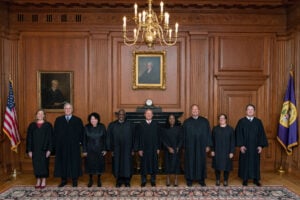
Photo
by
Collection
of
the
Supreme
Court
of
the
United
States
via
Getty
Images
NBC
News
has
a
new
poll
out
about
the
Supreme
Court
and,
well…
remember
when
we
thought
the
Court’s
public
legitimacy
crisis
had
probably
bottomed
out
already?
Yeah.
About
that….
According
to
the
latest
national
poll,
just
22%
of
respondents
say
they
have
a
“great
deal”
or
“quite
a
bit”
of
confidence
in
the
Supreme
Court.
Another
40%
say
they
have
only
“some”
confidence,
while
38%
say
they
have
“very
little”
or
“no”
confidence
at
all.
That
22%
figure
is
the
lowest
confidence
rating
yet
for
the
Court
in
NBC’s
polling.
Which
is
impressive
in
the
worst
possible
way
considering
how
many
opportunities
this
Court
has
had
to
crater
public
trust.
The
Court’s
confidence
problem
didn’t
appear
overnight.
The
institution’s
public
standing
has
been
on
a
slow
downward
trajectory
for
decades,
ever
since
the
Court
decided
to
step
squarely
into
partisan
politics.
Many
observers
trace
the
modern
crisis
back
to
the
Court’s
intervention
in
the
Bush
v.
Gore
decision
in
2000,
which
effectively
decided
the
presidential
election.
Before
that
decision,
52%
of
Americans
reported
having
a
“great
deal”
or
“quite
a
bit”
of
confidence
in
the
Court.
That
was
the
high-water
mark.
Since
then,
the
Roberts
Court
era
has
been
defined
by
increasingly
ideological
rulings,
something
the
public
has
noticed.
When
the
Court’s
decision
in
Dobbs
v.
Jackson
Women’s
Health
Organization
came
down
in
2022,
eliminating
the
constitutional
right
to
abortion
and
overturning
Roe
v.
Wade,
confidence
in
the
Court
took
a
pretty
big
hit.
In
the
immediate
aftermath
of
Dobbs,
only
27%
of
voters
said
they
had
a
great
deal
or
quite
a
bit
of
confidence
in
the
Court.
And
somehow
the
numbers
have
gotten
even
worse.
This
topline
number
is
bad,
but
the
party
breakdown
reveals
even
deeper
issues.
Among
Democrats,
just
9%
say
they
have
a
great
deal
or
quite
a
bit
of
confidence
in
the
Court.
Republicans
are
more
supportive,
natch,
but
not
exactly
thrilled.
Only
35%
of
Republicans
say
they
have
a
high
degree
of
confidence
in
the
Court.
Think
about
that
for
a
second.
This
is
a
Court
where
Donald
Trump
appointed
three
justices
and
currently
enjoys
an
84%
win
rate
when
his
cases
reach
the
Supreme
Court.
By
any
objective
measure,
the
modern
Court
is
extraordinarily
favorable
terrain
for
the
conservative
legal
movement.
And
even
then,
only
about
a
third
of
Republicans
express
strong
confidence
in
the
institution.
That’s
how
deep
the
legitimacy
hole
is.
As
Democratic
pollster
Jeff
Horwitt
of
Hart
Research
Associates,
who
conducted
the
survey
alongside
Republican
pollster
Bill
McInturff
of
Public
Opinion
Strategies,
put
it:
“It’s
one
thing
to
make
controversial
rulings
that
one
party
may
or
may
not
like
but
maintain
respect
and
confidence.
What
we
are
seeing
is
quite
the
opposite,
where
the
court
is
making
controversial
rulings
but
not
being
respected
and
in
fact
confidence
is
being
eroded.”
Kathryn
Rubino
is
a
Senior
Editor
at
Above
the
Law,
host
of
The
Jabot
podcast,
and
co-host
of
Thinking
Like
A
Lawyer.
AtL
tipsters
are
the
best,
so
please
connect
with
her.
Feel
free
to
email
her
with
any
tips,
questions,
or
comments
and
follow
her
on
Twitter
@Kathryn1 or
Mastodon
@[email protected].
War
isn’t
cheap.
The
biggest
costs
of
war
inevitably
involve
the
economically
immeasurable
toll
of
the
lives
lost.
The
fallen
not
only
represent
generations
of
snuffed
out
potential
themselves.
They
also
leave
behind
swathes
of
forever
altered
survivors
doomed
to
follow
the
unpredictable
dictates
of
grief
over
the
coming
decades.
That
being
said,
there
is
a
large
portion
of
the
American
public
that
does
not
seem
to
care
about
anything
other
than
their
own
level
of
disposable
income
and
that
can’t
think
beyond
the
next
news
cycle.
So,
let’s
consider
the
undeniable,
immediate,
financial
impacts
of
this
war
in
Iran
that
President
Donald
Trump
has
gotten
us
into.
The
Pentagon
has
not
yet
released
an
official
estimate
of
the
cost
to
U.S.
taxpayers
for
the
war
against
Iran.
When
the
Pentagon
does
release
an
official
estimate,
I
wouldn’t
necessarily
trust
it
given
that
Trump
lackey
Pete
Hegseth
is
at
the
helm
there.
However,
a
few
days
ago
two
congressional
sources
told
media
outlets
that
the
war
has
been
costing
taxpayers
an
estimated
$1
billion
every
day.
One
day
after
that
initial
estimate
was
released,
reporting
indicated
that
Republicans
on
Capital
Hill
had
privately
expressed
fears
that
the
U.S.
is
actually
spending
more
like
$2
billion
every
day
to
blow
people
up
in
Iran.
Experts
apparently
agree
that
while
American
military
costs
could
climb
to
$2
billion
per
day
in
the
early
days
of
a
war
like
the
one
the
U.S.
just
launched
against
Iran,
ongoing
costs
are
more
likely
to
settle
around
the
$1
billion
per
day
figure.
We’ll
work
with
the
more
conservative
assumption
and
estimate
that
this
war
is
costing
the
U.S.
$1
billion
a
day.
March
has
31
days.
Whatever
lies
Trump
tells
about
this
war
being
over
quickly
in
his
attempts
to
calm
the
markets,
I
guarantee
that,
here
in
reality,
the
war
is
not
going
to
be
over
by
the
end
of
the
month.
We’ll
all
be
spending
at
least
$31
billion
on
the
Iran
war
in
March.
Every
year,
of
the
168
million
or
so
individual
income
tax
returns
filed,
about
112
million
show
at
least
some
taxable
income
(those
who
don’t
owe
any
income
tax
often
do
pay
other
taxes,
like
those
to
fund
Medicare
and
Social
Security,
but
they
are
not
directly
funding
military
spending
in
the
same
way
an
income
taxpayer
is).
Of
course,
though
some
taxpayers
pay
much
more
than
others
depending
on
their
respective
levels
of
income,
for
the
sake
of
this
exercise
we
are
going
to
consider
the
“average”
taxpayer.
So,
$31
billion
to
fund
war
against
Iran
this
month
divided
amongst
the
112
million
individual
income
tax
payers
in
this
country
results
in
an
individual
bill
to
every
single
American
taxpayer
of
$276.79.
I
don’t
know
about
you,
but
I
can
think
of
a
lot
of
other
things
I’d
like
to
spend
$276.79
on
this
month
that
are
not
blowing
up
a
girls’
elementary
school
or
mistakenly
shooting
down
three
of
our
own
fighter
jets.
I
can’t
imagine
that
people
who
were
whining
about
a
carton
of
eggs
going
up
in
price
by
a
dollar
two
years
ago
would
be
alright
with
incinerating
close
to
$300
of
their
own
money
this
month
to
fund
a
senseless
war
that
we
did
not
have
to
fight.
And
that
$276.79
that
the
average
taxpayer
is
spending
in
Iran
this
month
is
only
to
account
for
the
direct
military
costs
of
things
like
missiles,
fuel,
and
a
variety
of
operating
expenses
for
wildly
inefficient
military
hardware.
The
figure
does
not
include
the
many
ancillary
financial
impacts
of
the
war,
like
gas
prices
spiking
by
more
than
50
cents
a
gallon
over
the
course
of
only
a
single
week.
It
probably
won’t
matter,
but
hey,
it’s
worth
a
shot:
If
you
haven’t
cut
your
Trump-loving
family
members
out
of
your
life
yet,
try
pointing
out
to
them
how
they
each
just
spent
$276.79
this
month
on
a
spontaneous
war
against
a
country
they
probably
couldn’t
find
on
an
unlabeled
map
of
the
earth.
At
the
end
of
the
day,
$276.79
could
still
buy
a
hell
of
a
lot
of
eggs.
Jonathan
Wolf
is
a
civil
litigator
and
author
of Your
Debt-Free
JD (affiliate
link).
He
has
taught
legal
writing,
written
for
a
wide
variety
of
publications,
and
made
it
both
his
business
and
his
pleasure
to
be
financially
and
scientifically
literate.
Any
views
he
expresses
are
probably
pure
gold,
but
are
nonetheless
solely
his
own
and
should
not
be
attributed
to
any
organization
with
which
he
is
affiliated.
He
wouldn’t
want
to
share
the
credit
anyway.
He
can
be
reached
at [email protected].
Senior
Pentagon
Reporter
Ashley
Roque
joins
host
Aaron
Mehta
to
discuss
the
latest
developments
out
of
Iran,
including
a
reported
reduction
in
retaliatory
strikes
from
Iran.
Then,
Contributing
Editor
Sydney
Freedberg
joins
The
Weekly
Break
Out
to
detail
how
the
Pentagon’s
battle
against
Anthropic
continues
to
evolve.

















 Kathryn