Tom Goldstein Goes Bust – Above the Law

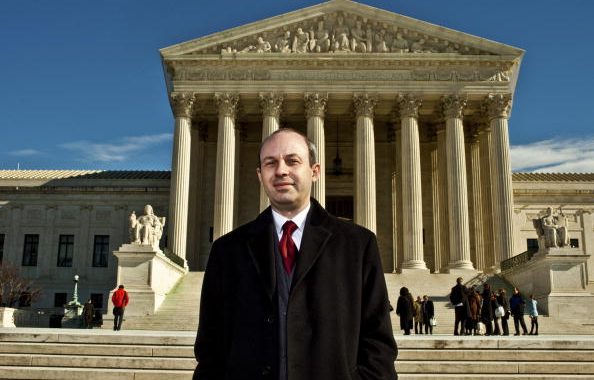
Photographer:
Stephen
Voss/Bloomberg
via
Getty
Images

Yesterday,
a
federal
jury
in
Maryland

convicted
the
SCOTUSblog
co-founder
on
12
of
16
counts

after
a
six-week
trial
befitting
the

wild
indictment
we
covered
last
January
.
After

celebrity
testimony

and

constitutional
showdowns
,
Goldstein’s
trial
ends
with
convictions
on
one
count
of
tax
evasion,
four
counts
of
willful
failure
to
timely
pay
taxes,
four
counts
of
aiding
in
the
preparation
of
false
tax
returns,
and
three
counts
of
making
false
statements
on
loan
applications.

Tom
Goldstein
argued
over
40
cases
before
the
Supreme
Court
and
co-founded
the
go-to
publication
for
live
doomscrolling
the
decline
and
fall
of
the
Constitution.
In
a
profession
that
doesn’t
breed
a
lot
of
celebrities,
Goldstein
worked
his
way
to
legal
royalty
through
pure
gumption

literally,
to
the
extent
it
included
a
stint
with
Akin
Gump

establishing
his
Supreme
Court
advocacy
street
cred
by
covering
the
Supreme
Court
for
the
National
Law
Journal
(under
then-NLJ
editor-in-chief
current

Above
the
Law

columnist

Bob
Ambrogi
)
before
ultimately
establishing
SCOTUSBlog.

He
was
also,
unfortunately,
a
high-stakes
poker
player.
Raking
in
roughly
$50
million
in
winnings
in
2016
alone

including
$22
million
playing
in
Asia

Goldstein
kept
income
hidden
from
his
accountants,
the
IRS,
and
mortgage
lenders.
The
indictment
read
like
the
unauthorized
sequel
to

Rounders
,
with
Mikey
finishing
law
school,
but
losing
it
all
because
he
can’t
stop
flying
to
Macao
to
play
Teddy
CCP.
Underground
poker
games,
duffel
bags
stuffed
with
nearly
a
million
in
cash
at
the
border,
firm
money
diverted
to
cover
personal
gambling
debts,
and
a
24-page
poker
strategy
memo
which
is
the
most
lawyer-ass
allegation
in
this
whole
story.

Billionaire
Alec
Gores
testified
about
losing
$26.4
million
to
Goldstein
in
heads-up
matches.
Rick
Salomon
of
Paris
Hilton
sex
tape
fame
testified
about
the
Asia-Pacific
poker
scene.
And
Tobey
Maguire
told
jurors
about
hiring
Goldstein
to
recover
a
$7
million
poker
debt
from
a
Texas
businessman.
Even
Spider-Man
needs
a
lawyer
sometimes.

DOJ
prosecutor
Sean
Beaty
told
the
jury
it
was
a
“textbook
tax-evasion
scheme”
that
Goldstein
“executed
nearly
flawlessly.”
Which
seems
like
an
overstatement
given
how
it
epically
unraveled.
The
scheme
apparently
unraveled
when
a
disgruntled
fellow
gambler
ratted
him
out
to
the
IRS
over
a
2016
debt.
Et
tu,
California
Businessman-1?

Goldstein
took
the
stand
in
his
own
defense,
acknowledging
that
he
should
have
paid
more
attention
to
his
taxes
and
law
firm
finances,
but
insisted
there
was
no
criminal
intent.
His
defense
attorney
Jonathan
Kravis
of
Munger
Tolles
argued
this
was
all
about
“innocent
mistakes”
and
accountants
who
committed
a

to
quote
the
defense

“catastrophic
f***-up.”

“A
mistake
is
not
a
crime,”
Kravis
told
the
jury.

The
jury,
having
heard
six
weeks
of
evidence
about
secret
poker
ledgers,
luxury
watches,
Bentleys,
hidden
gambling
debts,
and
diverted
law
firm
funds,
apparently
disagreed.

Goldstein
also
allegedly
omitted
$15
million
in
gambling
debts
from
mortgage
applications
while
house-hunting
in
D.C.
with
his
wife.
Kravis
argued
his
client
left
the
debts
off
“because
he
wanted
to
keep
them
secret
from
his
wife.”
The
defense
that
“you
can’t
spell

mens
rea

if
men…
are
just
lying
to
their
wives”
did
not
prove
persuasive
to
the
jury.

The
whole
saga
also

dragged
in
Jeffrey
Toobin
,
who
co-authored
a

New
York
Times
Magazine

profile
of
Goldstein
in
December
because

in
a
move
that
probably
took
ten
years
off
the
lives
of
his
defense
attorneys

Goldstein
sat
for
an
on-the-record
interview
while
facing
trial.
The
government

reached
a
deal

that
spared
Toobin
having
to
testify.

Goldstein
faces
a
maximum
of
five
years
on
the
tax
evasion
count
and
up
to
30
years
on
the
false
loan
statement
counts,
but
it’s
hard
to
imagine
the
value
of
a
lengthy
jail
sentence
for
a
nerdy
appellate
lawyer.
Tax
evasion
is
serious,
but
wasting
taxpayer
resources
to
keep
Goldstein
in
prison
doesn’t
seem
like
much
of
an
answer.
Just
conscript
him
to
take
down
Le
Chiffre
on
behalf
of
the
government
and
call
it
good.

If
the
indictment
came
off
as
a
wild
and
lawyerly
edition
of
“Behind
the
Music,”
we’ve
moved
on
from
the
“But
Storm
Clouds
Were
Gathering”
chapter
and
are
squarely
entering
the
“Where
Are
They
Now?”
segment.
And
we’ll
find
out
soon.


Earlier
:

SCOTUSblog
Founder
Indicted
In
Wild
Poker-Fueled
Tax
Case


Tom
Goldstein
Called
Government’s
Bluff
And
Now
Jeffrey
Toobin
Has
To
Litigate
It



HeadshotJoe
Patrice
 is
a
senior
editor
at
Above
the
Law
and
co-host
of

Thinking
Like
A
Lawyer
.
Feel
free
to email
any
tips,
questions,
or
comments.
Follow
him
on Twitter or

Bluesky

if
you’re
interested
in
law,
politics,
and
a
healthy
dose
of
college
sports
news.
Joe
also
serves
as
a

Managing
Director
at
RPN
Executive
Search
.

5 Tips For Proving Your Legal Department’s Value – Above the Law

Long
gone
are
the
days
when
demonstrating
the
value
of
legal
work
was
more
art
than
science.

Today’s
organizations
are
increasingly
demanding
data-backed
evidence
to
measure
the
work
of
law
departments
and
outside
counsel.

And
with
the
rapid
pace
of
advancement,
legal
technology
provides
ever
more
ways
to
track
the
full
scope
of
this
work

along
with
the
value
it’s
providing.

Join
our
expert
panel
on
March
3rd
at
1
p.m.
ET
for
an
exploration
of
the
traditional
and
emerging
ways
your
law
department
can
proactively
showcase
its
value
in
2026.

Along
with
our
friends
at
LinkSquares,
we’ll
be
discussing:

  • The
    emerging
    KPIs
    that
    businesses
    are
    examining
  • Why
    these
    metrics
    are
    important
    and
    how
    you
    can
    track
    them
    yourself
  • The
    opportunities
    to
    turn
    your
    contract
    portfolio
    into
    a
    source
    of
    revenue
  • The
    evolving
    role
    of
    the
    billable
    hour
    and
    AI’s
    impact

Register
today!
1
Hour
CLE
credit
is
available
for
live
attendees.


This Plaintiffs’ Lawyer Took ‘Creative Lawyering’ Way Too Literally – Above the Law

The
plaintiffs’
bar
spends
a
lot
of
time
reminding
the
world
that
it
exists
to
hold
bad
actors
accountable.
Which
is
why

the
plea
struck
by
former
Motley
Rice
attorney

William
Christopher
Swett
lands
with
a
particularly
sour
thud.

Federal
prosecutors
say
Swett
didn’t
just
cut
corners
or
play
fast
and
loose
with
billing.
Instead,
from
at
least
2018
through
March
2024,
he
allegedly
ran
a
multi-year
fraud
scheme
that
involved
fake
companies,
fake
clients,
fake
claims,
and
very
real
money

at
least
$1.5
million
of
it

siphoned
from
his
own
firm
and
the
clients
he
was
supposed
to
be
representing.

According
to
charging
documents
filed
by
Assistant
U.S.
Attorney
Emily
Limehouse,
Swett
allegedly
“knowingly
devised
a
scheme
and
artifice
to
defraud
the
law
firm
and
his
clients”
using
(what
else)
false
representations,
fraudulent
pretenses,
and
a
whole
lot
of
creativity
that
would
have
been
better
applied
to
literally
anything
(legal).

To
further
the
scheme,
Swett
allegedly
created
multiple
legal
services
companies
that
were
designed
to
appear
legitimate.
He
then
allegedly
expensed
Motley
Rice
and
his
clients
for
services
that
were
never
performed,
padded
invoices
with
inflated
and
illegitimate
expenses,
and,
crucially,
failed
to
disclose
that
he
had
a
financial
interest
in
the
companies
receiving
the
money.

You
know.
Minor
details.

Federal
prosecutors
say
Swett
didn’t
stop
there.
He
allegedly
submitted
reimbursement
requests
for
fake
clients,
fabricated
death
and
personal
injury
claims,
and
even
falsified
medical
records
and
other
documents
to
keep
the
fraud
going.

“To
conceal
his
crimes,
Swett
laundered
the
funds
through
accounts
he
controlled
and
siphoned
the
money
for
his
own
personal
enrichment,”
the
prosecutor’s
office
said.
“Swett
fraudulently
obtained
at
least
$1.5
million.”

The
plea
agreement
covers
eight
felony
counts
total,
each
carrying
a
maximum
penalty
of
20
years
in
federal
prison,
along
with
potential
fines
of
up
to
$250,000.

Swett’s
attorney,
Nathan
Williams,
offered
the
familiar
mitigation
framework,
saying
Swett
had
“for
a
long
time”
struggled
with
“personal
challenges”
and
had
made
“poor
and
regretful
decisions.”
Williams
emphasized
that
Swett
“has
made
significant
changes
in
his
life”
and
that
the
plea
agreement
reflects
an
effort
to
show
accountability.

Williams
added
that
he
hopes
the
judge
will
eventually
hear
“the
full
explanation
for
the
circumstances
of
the
case,”
likely
at
sentencing.

As
for
Motley
Rice,
the
firm
issued
a
succinct
statement
through
a
spokesperson,
“We
await
the
next
steps
in
this
criminal
prosecution
regarding
this
former
employee.”

Which
is
about
as
restrained
as
you
can
be
when
one
of
your
former
lawyers
allegedly
spent
years
running
a
private
fraud
operation
while
holding
himself
out
as
a
champion
for
plaintiffs.


Kathryn
Rubino
is
a
Senior
Editor
at
Above
the
Law,
host
of

The
Jabot
podcast
,
and
co-host
of

Thinking
Like
A
Lawyer
.
AtL
tipsters
are
the
best,
so
please
connect
with
her.
Feel
free
to
email

her

with
any
tips,
questions,
or
comments
and
follow
her
on
Twitter

@Kathryn1
 or
Mastodon

@[email protected].

Morning Docket: 02.26.26 – Above the Law

*
Tom
Goldstein
convicted
on
tax
evasion
charges.
[Politico]

*
Hillary
Clinton
set
to
testify
in
Epstein
probe,
meanwhile
an
investigation
reveals

the
DOJ
hid
documents

related
to
Donald
Trump’s
dealings
with
Epstein.
[Reuters]

*
Biglaw
vlogger
quits
the
law.
[Legal
Cheek
]

*
Former
prosecutor
charged
with
strangling
family
member.
[ABA
Journal
]

*
Democrats
want
an
explanation
for
DOJ
firing
Antitrust
chief
amid
administration
efforts
to
steer
deals
toward
donors.
[Law360]

*
Arrest
made
in
murder
of
a
retired
lawyer
in
an
assisted
care
facility.
[WGME]

*
Former
plaintiffs’
side
lawyer
facing
prison
for
defrauding
clients.
[Daily
Report
]

The Comedy After The Storm – See Also – Above the Law

Supreme
Judges
Banter
Over
Oral
Argument:
They’re
much
nicer
to
each
other
in
person
than
in
writing!
It
Ain’t
The
Size
Of
The
Firm:
9th
Circuit
rules
small
law
firms
can
get
paid
their
worth
too.
This
Wasn’t
Covered
In
Bar
Prep:
New
York
test
takers
had
to
fight
a
blizzard
on
the
way
to
their
fact
patterns.
FASORP
Wants
To
Revive
Their
Northwestern
Case:
They
couldn’t
even
muster
up
any
new
arguments.
It
Just
Keeps
Getting
Worse
For
This
Guy:
Fix
The
Court
filed
a
judicial
misconduct
complaint
against
Judge
Ludington.
On
This
Week
Of
Thinking
Like
A
Lawyer:
Hot
mics
and
“wing”
style
nonsense.

Mental Health Days Are Not Uncommon In Biglaw – Above the Law


Ed.
Note:

Welcome
to
our
daily
feature

Trivia
Question
of
the
Day!


According
to
a
2023
survey
by
mental
health
solutions
provider
Unmind,

The
State
of
Wellbeing
in
Law
,
what
percentage
of
respondents
said
they’ve
taken
at
least
one
day
off
because
of
mental
health
difficulties
in
the
past
three
months?


Hint:
They
surveyed
more
than
3,800
lawyers
and
employees
in
six
large
firms,
five
of
which
are
in
the
Am
Law
100.


See
the
answer
on
the
next
page.

The Best Law Schools For Environmental Law – Above the Law

For
those
in
law
school,
environmental
law
isn’t
some
niche,
tree-hugger
elective
you
take
to
feel
virtuous

it’s
rapidly
becoming
one
of
the
most
consequential
battlegrounds
in
the
legal
industry.
From
regulatory
whiplash
in
Washington
to
high-stakes
litigation
over
climate
disclosures,
ESG
investing,
and
state-level
enforcement,
the
lawyers
who
understand
environmental
statutes
and
administrative
law
are
the
ones
steering
billion-dollar
decisions.
For
law
students
staring
down
an
uncertain
job
market,
fluency
in
environmental
law
isn’t
just
about
saving
the
planet
(though
that’s
wonderful
too);
it’s
about
positioning
yourself
where
the
action
is.
Agencies
are
rewriting
rules,
courts
are
reshaping
deference
doctrines,
and
companies
are
scrambling
for
counsel
who
can
translate
shifting
mandates
into
workable
strategy.
In
other
words:
if
you
want
to
build
a
career
that’s
resilient,
relevant,
and
in
demand,
environmental
law
is
a
very
smart
place
to
start.

The National
Jurist’s
preLaw
magazine
 recently
released
its
specialty
ranking
of
the
best
law
schools
for
environmental
law
on
its
Environmental
Law
Honor
Roll,
highlighting
schools
for
the
strength
of
their
programs.
Here’s
the
methodology
that
was
used:

preLaw
magazine
grades
law
schools
based
on
the
breadth
of
their
curricular
offerings.
The
scores
are
figured
as
follows:
30%
for
a
concentration,
24%
for
a
clinic,
12%
for
a
center,
12%
for
an
externship,
9%
for
a
journal,
8%
for
a
student
group,
5%
for
a
certificate
and
added
value
for
additional
offerings.

Without
further
ado,
according
to
preLaw
magazine,
these
are
the
law
schools
that
earned
A+
grades
for
their
environmental
law
programs
(listed
in
alphabetical
order):

  • Georgetown
    University
    Law
    Center
  • George
    Washington
    University
    School
    of
    Law
  • Harvard
    Law
    School
  • Elizabeth
    Haub
    School
    of
    Law
    at
    Pace
    University

Click here to
read
all
about
the
programs
highlighted
in
this
specialty
Honor
Roll.

Congratulations
to
all
of
the
law
schools
that
made
the
cut
for
this
important
ranking.


Specialties
Honor
Roll:
Environmental
Law
 [preLaw
magazine
/
National
Jurist]


Staci
Zaretsky
 is
the
managing
editor
of
Above
the
Law,
where
she’s
worked
since
2011.
She’d
love
to
hear
from
you,
so
please
feel
free
to email her
with
any
tips,
questions,
comments,
or
critiques.
You
can
follow
her
on BlueskyX/Twitter,
and Threads, or
connect
with
her
on LinkedIn.

Federal Judge Accused Of Driving ‘Super Drunk’ Crashes Into Judicial Misconduct Complaint – Above the Law

If
you
thought
the
drama
surrounding
Judge
Thomas
L.
Ludington (E.D.
Michigan)
had
peaked
with
a ,
a
0.27
BAC
reading,
and
months
of
secrecy
about
the
incident,
think
again.

Yesterday, Fix
the
Court —
a
nonpartisan
group
that
advocates
for
greater
transparency
reforms
in
the
federal
courts

filed
a formal

judicial
misconduct
complaint
 against
Ludington
with
the Judicial
Council
of
the
Sixth
Circuit,
alleging
that
his
conduct “maligns
his
office
and
is
inconsistent
with
the
high
standard
of
conduct
that
federal
judges
are
expected
to
follow.” 

This
complaint,
backed
by
a
detailed
statement
of
facts,
police
reports,
and
contemporaneous
reporting,
marks
the
latest
escalation
in
a
matter
that
has
already
done
more
damage
to
public
confidence
than
most
judicial
scandals
in
recent
memory.

Fix
the
Court’s
complaint
isn’t
playing
nice.
It
recounts
the October
2025 crash
in
which
Ludington
was
found
behind
the
wheel confused
and
disoriented,
unable
to
explain
why
his
airbags
deployed,
and
twice
identifying
himself
as
a
federal
judge

even
after
failing
multiple
field
sobriety
tests.
A
toxicology
report
revealed
a
blood-alcohol
level well
above
the
legal
limit,
yet
that
information
undisclosed
for
roughly four
months until
a
local
newspaper broke
the
story. 

Fix
the
Court
doesn’t
just
outline
the
arrest,
it explicitly
calls
out
the
delay
in
reporting,
noting
that
Ludington
continued
to
hear
dozens
of
new
cases
right
up
through
February18,
even
as
the
criminal
matter
lingered
in
the
background
while
the
public
remained
in
the
dark. 

The
complaint
argues
that
these
facts
meet
the
statutory
grounds
for
admonishment
under
the Judicial
Conduct
and
Disability
Act,
and
that
the
Sixth
Circuit
should not let
Ludington
quietly
slide
back
into
the
judiciary’s
shadows.
Here’s
an
excerpt
from
the

complaint
:

On
the
afternoon
of
Feb.
23,
E.D.
Michigan
released
a
statement
saying
that
Ludington
“has
volunteered
to
take
a
leave
of
absence
from
the
Court
pending
resolution
of
the
state
legal
matter.”
That
is
a
prudent
decision
in
our
view,
but
unfortunately,
the
statement
does
not
indicate
whether
Ludington
sought
treatment
or
undertook
any
other
measures
to
try
to
instill
confidence
in
his
work
product
while
the
OWI
case
hung
over
his
head.
The
statement
also
means
taxpayers
are
on
the
hook
for
some
$50,000
in
paid
leave,
if
not
more.

Due
to
the
Oct.
3
incident,
we
believe
that
Judge
Ludington
meets
the
grounds
for
admonishment
under
the
Judicial
Conduct
and
Disability
Act,
if
not
a
recommendation
for
retirement
under
28
U.S.C.
§372
or
worse,
and
that
he
should
be
disciplined
as
the
Chief
Judge
and
Judicial
Council
deem
fit.

Fix
the
Court
goes
on
to
explicitly
ask
the
council
to consider
continuing
the
investigation even
if
Ludington
retires
during
the
pendency
of
the
matter,
and
to look
into
the
delay
in
public
disclosure. 

For
now,
Ludington

remains
on
leave
,
with
a
state
criminal
trial
set
for May
8 and
a
judicial
misconduct
complaint
now
hanging
over
him.

As
we’ve
previously
documented
in
these
pages,
a
judge’s
behavior off
the
bench can
have
real
effects on
the
bench,
and
when
the
institution
itself
appears
to
circle
the
wagons,
public
trust
erodes
even
further.
This
complaint
may
not
be
the
end
of
the
story,
but
it
sure
as
hell
makes
the
next
chapter
harder
to
ignore.


Judicial
Misconduct
Complaint
 [Fix
the
Court]


Earlier
:

Federal
Judge
Accused
Of
Driving
‘Super
Drunk’
Takes
‘Voluntary’
Leave
From
The
Bench

Federal
Judge
Arrested,
Accused
Of
Driving
While
‘Super
Drunk’


Staci
Zaretsky
 is
the
managing
editor
of
Above
the
Law,
where
she’s
worked
since
2011.
She’d
love
to
hear
from
you,
so
please
feel
free
to email her
with
any
tips,
questions,
comments,
or
critiques.
You
can
follow
her
on BlueskyX/Twitter,
and Threads, or
connect
with
her
on LinkedIn.

FASORP Is Back To Protect Vulnerable White Men From Not Being Overrepresented Enough – Above the Law

FASORP

known
mostly
for
repeated
failed
attempts
at
suing
law
schools
for
descriminiating
against
white
men
in
hiring
and
law
review
choices
and
encouraging

Michigan
Law

and

Harvard
law

students
to
lie
in
their
law
review
personal
statements
to
somehow
own
the
libs

is
back
at
it
again
with
the
white
victimhood.

Reuters

has
coverage:

A
conservative
organization
is
seeking
to
revive
its
lawsuit
against
Northwestern
University
alleging
its
law
school
discriminates
against
white
men
in
faculty
hiring,
after
a
federal
judge

dismissed

the
case
in
January.

FASORP
has
not
yet
laid
out
its
appellate
arguments
to
the
court.

It
isn’t
surprising
that
they’ve
opted
against
laying
out
appellate
arguments
considering
that
they
didn’t
even
manage
any
plausible
claims
of
discrimination
the
first
time
around.
Maybe
it
has
something
to
do
with

the
school’s
faculty
being
83%
white

when
they
launched
the
suit.
Trust,
if
there’s
any
DEI
or
bias
happening
concerning
white
folks,
those
numbers
don’t
suggest
it
is

against

them.
What
would
the
argument
even
be?

The
group
frequently
engages
in
sorts
of
behavior
that
suggests
they
have
nothing
better
to
do,
like
threatening
students
trying
to
make
it
through
the
law
review
process
to

“preserve
evidence”
or
face
legal
consequences
.
It
doesn’t
surprise
me
that
a
nameless
group
of
students
who
probably
have
closet
altars
dedicated
to
Abigail
Fisher
would
waste
their
time
on
suits
like
this,
but
why
would
professors
(the
P
in
FASORP)
lend
their
support
to
reviving
a
case
like
this?
Bunch
of
losers.


Conservative
Group
Seeks
To
Revive
Hiring
Bias
Case
Against
Northwestern
Law
School

[Reuters]


Earlier
:

Northwestern
Law
School
Sued
For
Having
ONLY
83
Percent
White
Faculty


Harvard
Law
Students
Hit
With
Invitation
To
Lie
On
Their
Law
Review
Personal
Statements,
Professors
Should
Speak
Out
On
It


Cringe
Reverse
Discrimination
Group
Hijacks
Michigan
Law
Listserv
To
Ask
Students
To
Sprinkle
A
Little
Fraud
In
Their
Personal
Statements


Chris
Williams
became
a
social
media
manager
and
assistant
editor
for
Above
the
Law
in
June
2021.
Prior
to
joining
the
staff,
he
moonlighted
as
a
minor
Memelord™
in
the
Facebook
group Law
School
Memes
for
Edgy
T14s
.
 He
endured
Missouri
long
enough
to
graduate
from
Washington
University
in
St.
Louis
School
of
Law.
He
is
a
former
boatbuilder
who
is
learning
to
swim, is
interested
in
critical
race
theory,
philosophy,
and
humor,
and
has
a
love
for
cycling
that
occasionally
annoys
his
peers.
You
can
reach
him
by
email
at [email protected]
and
by
tweet
at @WritesForRent.