Trump Administration’s Bad Legal Takes Are Surprisingly Effective – Above the Law

(Photo
by
Mark
Wilson/Getty
Images)

The
Trump
administration’s
fixation
on
Biglaw
has
become
one
of
the
strangest

and
most
legally
embarrassing

throughlines
of
this
term.
As
regular
readers
know,
the
White
House
has
rolled
out
a
series
of

executive
orders

aimed
squarely
at
elite
law
firms,
premised
on
the
idea
that
representing
certain
clients,
participating
in
diversity
initiatives,
or
otherwise
displeasing
the
administration
is
somehow
a
punishable
offense.
The
result?
Judicial
smackdown
after
judicial
smackdown.
Courts
across
the
ideological
spectrum
have
struck
these
orders
as

blatantly
unconstitutional
,
rejecting
the
administration’s
efforts
to
weaponize
federal
contracting
power
and
punish
protected
speech
and
association.
Conservative
judges.
Liberal
judges.
All
reading
the
same
Constitution
and
arriving
at
the
same
conclusion:
no,
the
president
does
not
get
to
blacklist
law
firms
because
he
doesn’t
like
them.

There
was
also
the
EEOC
gambit;
an
attempt
to
frame
Biglaw
diversity
efforts
as
unlawful
discrimination.
That,
too,
fizzled.
As
Bloomberg
Law

reports
,
the
EEOC
quietly
wrapped
up
its
investigation
without
much
to
show
for
it,
a
tacit
admission
that
the
agency’s
legal
theory
was
never
going
to
hold
water.
Then

came
the
FTC
,
with
the
administration
floating
an
antitrust
theory
attacking
law
firms
for
their
participation
in
diversity
programs
(the
Mansfield
Certification
program).
Actual
antitrust
experts

reacted

with
something
between
bafflement
and
laughter.
A
diversity
initiative
(particularly
one
that’s
been

blessed
by
a
federal
judge
)
as
cartel
behavior?
That’s
a
legal
yoga
pose
no
court
is
likely
to
attempt
without
pulling
a
muscle.

What’s
striking
about
all
of
this
isn’t
just
the
aggression;
it’s
how
bad
the
lawyering
is.
These
are
theories
that
collapse
under
even
casual
scrutiny.
And
yet,
here
we
are.
The
administration
keeps
losing
in
court,
keeps
advancing
new
theories,
and
keeps
pretending
that
the
next
swing
will
finally
connect.
It
hasn’t.
When
firms
have
actually
fought
back,
they’ve
won.
Overwhelmingly.

But
here’s
the
uncomfortable
part:
despite
the
administration’s
abysmal
legal
record,
the
campaign
against
Biglaw
hasn’t
been
a
total
failure. Faced
with
facially
unconstitutional
executive
orders,
nine
major
firms (Paul
Weiss,
Skadden,
Kirkland,
Latham,
Cadwalader,
Willkie
Farr,
Simpson
Thacher,
Milbank,
and
A&O
Shearman)
chose
not
to
litigate,
and
instead sought Trump’s
seal
of
approval,
providing
millions
in
pro
bono
payola,
that
is,
free
legal
services
on
behalf
of conservative
clients
or
approved
causes
 in
order
to
avoid
Trumpian
retribution.

That
capitulation,
which

Above
the
Law

has

chronicled
in
detail
,
remains
one
of
the
most
consequential
outcomes
of
this
pressure
campaign.
The
government
didn’t
need
good
law;
it
just
needed
enough
leverage
to
scare
firms
into
compliance.

And
the
chilling
effect

hasn’t
stopped
there
.
Even
firms
not
directly
targeted
have
quietly
revised
DEI
language,
pulled
affinity-group
pages,
and
softened
public
commitments,
all
preemptive
obedience
dressed
up
as
“risk
management.”
The
FTC’s
latest
bullying
move

may
yet
succeed
,
not
because
it’s
legally
sound,
but
because
it
signals
that
the
administration
is
willing
to
keep
throwing
punches
until
someone
flinches.

Power
doesn’t
always
need
doctrinal
coherence
to
be
effective.
Sometimes
all
it
needs
is
enough
bluster
and
enough
fear
to
convince
powerful
institutions
to
fold
without
a
fight.



Kathryn
Rubino
is
a
Senior
Editor
at
Above
the
Law,
host
of

The
Jabot
podcast
,
and
co-host
of

Thinking
Like
A
Lawyer
.
AtL
tipsters
are
the
best,
so
please
connect
with
her.
Feel
free
to
email

her

with
any
tips,
questions,
or
comments
and
follow
her
on
Twitter

@Kathryn1
 or
Mastodon

@[email protected].

Moderna Says FDA Refusal to Review mRNA Flu Vaccine Contradicts Federal Rules, Prior Guidance – MedCity News

Moderna’s
messenger
RNA
influenza
vaccine
succeeded
in
two
pivotal
clinical
trials,
but
the
Food
and
Drug
Administration
is

refusing
to
even
review

the
application
seeking
regulatory
approval,
telling
the
company
that
the
comparator
in
the
studies

an
FDA-approved
vaccine

is
insufficient.

The
FDA’s
refuse-to-file
letter
did
not
identify
any
safety
or
efficacy
concerns
for
the
vaccine,
mRNA-1010,
Moderna
said
after
Tuesday’s
market
close.
The
agency
told
the
company
that
the
vaccine
lacked
an
adequate
and
well-controlled
study
and
the
comparator
does
not
reflect
standard
of
care.

Refuse-to-file
letters
inform
a
company
that
an
application
lacks
information
for
the
agency
to
conduct
a
review.
While
the
issue
may
be
resolved
by
submitting
additional
data,
it
can
also
mean
the
agency
wants
a
company
to
conduct
another
clinical
trial.
Refuse-to-file
letters
are
considered
confidential
communication
between
the
FDA
and
a
company,
and
are
not
typically
made
public.
But
Moderna
took
the
unusual
step
of

posting
this
letter

to
its
website.
It
was
signed
by
Vinayak
Prasad,
director
of
the
FDA’s
Center
for
Biologics
Evaluation
and
Research
(CBER).

“CBER
does
not
consider
the
application
to
contain
a
trial
‘adequate
and
well
controlled’
and
the
application
is
therefore,
on
its
face,
inadequate
for
review,”
Prasad
wrote
in
the
letter
dated
Feb.
3.
“This
is
because
your
control
arm
does
not
reflect
the
best-available
standard
of
care
in
the
United
States
at
the
time
of
the
study.
I
note
that
this
determination
is
consistent
with
FDA’s
advice
given
to
you
prior
to
your
study.”

Moderna’s
mRNA-1010
is
a
seasonal
flu
vaccine
that
uses
mRNA
to
get
the
body’s
protein-making
machinery
to
code
for
hemagglutinin,
a
protein
on
the
surface
of
the
influenza
virus.
This
protein
triggers
a
protective
immune
response.
The
company’s
submission
for
the
vaccine
candidate
was
based
on
Phase
3
studies
whose
designs
were
reviewed
by
the
FDA
before
their
start.

Moderna
noted
that
the

federal
rules

that
call
for
adequate
and
well-controlled
clinical
trials
make
no
reference
to
a
comparator
reflecting
“the
best-available
standard
of
care.”
According
to
the
company,
the
FDA’s
2024
written
guidance
stated
the
agency
agreed
a
licensed
standard
dose
influenza
vaccine
would
be
an
acceptable
comparator
for
the
pivotal
study,
but
“we
recommend
you
use
a
vaccine
preferentially
recommended
for
use
in
older
adults
by
the
ACIP
[Advisory
Committee
on
Immunization
Practices]
(i.e.,
Fluzone
HD,
Fluad
or
Flublok)
for
participants
>65
years
of
age
in
the
study.”
The
Centers
for
Disease
Control
and
Prevention

recommends
high-dose
flu
vaccines

for
older
adults
because
immune
responses
typically
diminish
with
age,
putting
this
age
group
at
higher
risk.

The
Moderna
flu
vaccine
met
pre-specified
efficacy
goals
for
the
study,

named
P303
.
The
comparator
in
this
study
was
GSK’s
Fluarix,
a
standard-dose
quadrivalent
influenza
vaccine.
One
cohort
in
this
study
enrolled
participants
age
65
and
older
and
compared
the
Moderna
vaccine
to
Fluzone,
a
high-dose
influenza
vaccine
marketed
by
Sanofi.

Moderna
said
the
agency’s
written
feedback
asked
that
supportive
analysis
on
the
comparator
be
included
in
the
application
seeking
regulatory
approval.
The
company
said
it
provided
this
information,
including
data
from
a
separate
Phase
3
trial,
P304.
This
study
compared
mRNA-1010
to
Fluarix,
whose
FDA
approval
covers
adults
age
65
and
holder.
Moderna
said
many
other
countries
do
not
preferentially
recommend
high-dose
influenza
vaccines
over
standard-dose
flu
vaccines
for
those
age
65
and
older.
The
company
added
that
based
on
the
FDA’s
prior
feedback,
there
was
no
indication
the
agency
would
refuse
to
review
the
application.

“It
should
not
be
controversial
to
conduct
a
comprehensive
review
of
a
flu
vaccine
submission
that
uses
an
FDA-approved
vaccine
as
a
comparator
in
a
study
that
was
discussed
and
agreed
on
with
CBER
prior
to
starting,”
Moderna
CEO
Stéphane
Bancel
said
in
a
prepared
statement.
“We
look
forward
to
engaging
with
CBER
to
understand
the
path
forward
as
quickly
as
possible
so
that
America’s
seniors,
and
those
with
underlying
conditions,
continue
to
have
access
to
American-made
innovations.”

The
Trump
administration’s
justifications
for
some
of
its
health
policies
has
been
to
bring
the
U.S.
in
line
with
other
countries.
When
the

CDC
cut
the
list
of
recommended
vaccinations
from
17
to
11
last
month
,
the
agency
said
the
move
makes
the
U.S.
consistent
with
peer
nations.
That
was
also
one
of
the
justifications
for
the

FDA
changing
its
Covid-19
recommendations,
emphasizing
vaccination
for
older
adults
and
at-risk
groups
.
In
an
article
published
in
the

New
England
Journal
of
Medicine

last
May,
Prasad
and
FDA
Commissioner
Marty
Makary
pointed
out
this
approach
is
consistent
with
Europe
and
other
high-income
nations.

Like
other
manufacturers
of
Covid-19
vaccines,
Moderna
has
been
dealing
with
declining
revenue
from
these
shots
amid
falling
vaccination
rates.
But
the
Trump
administration’s
policy
shifts
effectively
shrink
the
market
for
Moderna’s
top
source
of
revenue,
putting
pressure
on
the
company
to
grow
revenue
from
other
products.
Some
of
these
efforts
have
been
also
been
stymied
by
the
Trump
administration.
Last
year,
the
Department
of
Health
and
Human
Services

terminated
Moderna’s
$590
million
contract
to
develop
a
vaccine
for
avian
influenza
.

Moderna’s
flu
vaccine
is
currently
under
regulatory
review
in
Europe,
Canada,
and
Australia,
and
the
company
plans
submissions
in
more
countries
this
year.
But
securing
U.S.
approval
will
be
key
for
meeting
revenue
goals.
Investment
bank
William
Blair
had
projected
mRNA-1010
sales
could
top
$1
billion
in
what
is
a
$5
billion
annual
market.
Moderna
is
also
developing
mRNA-1083,
a
Covid-19/influenza
combination
vaccine.
In
a
Wednesday
research
note,
William
Blair
analyst
Myles
Minter
wrote
that
the
refuse-to-file
letter
for
mRNA-1010
casts
doubt
on
the
future
of
the
combination
shot.

“We
remain
curious
as
to
the
specific
control
arm
CBER
is
requesting,
particularly
given
its
stated
preference
for
placebo-controlled
studies
in
its
previously
published
Covid-19
vaccine
guidance,”
Minter
said.
“Moderna’s
quotations
taken
from
FDA
meeting
minutes
acquired
prior
to
the
Phase
3
program
initiation
suggest
the
company
did
utilize
a
recommended
comparator
vaccine
in
the
P303
and
P304
studies
and
appear
to
directly
contradict
Vinayak
Prasad’s
statement
in
the
RTF
letter
that
his
‘determination
is
consistent
with
FDA’s
advice
given
to
you
prior
to
your
study.”

Moderna
has
requested
a
meeting
with
the
FDA
to
discuss
the
refuse-to-file
letter.


Illustration:
appledesign,
Getty
Images

Morning Docket: 02.12.26 – Above the Law

*
Lawmakers
grilled
Pam
Bondi
over
the
DOJ
cover-up
of
the
Epstein
files,
which
included
both
improper
redactions
of
perpetrators
and
illegal
disclosures
of
victims.
Bondi
responded
by
yelling
a
lot.
[Reuters]

*
The
last
remaining
enforcement
attorney
in
the
Chicago
CFTC
office
resigned.
It’s
like
the
movie

The
Purge

except
for
pork
belly
futures.
[Barrons]

*
Prosecutor
who
left
Minnesota
U.S.
Attorney’s
Office
joins
the
Don
Lemon
defense
team.
[ABA
Journal
]

*
Trump
fires
the
official
U.S.
Attorney
for
the
Northern
District
of
New
York
to
continue
using
the
guy
squatting
on
the
job
with
no
lawful
authority.
They
say
“no
person
is
illegal,”
but
then
how
do
you
explain
John
Sarcone?
[New
York
Law
Journal
]

*
Increasingly
irate
that
the
public
hates
him,
Donald
Trump
started
threatening
to
sue
the
media
for
reporting
his
polling
numbers.
So
Gallup
is
going
to
stop
polling.
[The
Hill
]

*
Tom
Goldstein
testifies
to
losing
millions
on
poker
in
2016.
[Law360]

*
Clients
are
figuring
out
what

we
already
told
them


law
firms
aren’t
going
to
pass
on
AI
savings.
[Artificial
Lawyer
]

That’s A Lot Of Love For Jeffrey Epstein – See Also – Above the Law

Emails
Show
Ken
Starr
Was
Very
Buddy-Buddy
With
Epstein:
Read
about
former
Baylor
University
president’s
exchanges
here.
Former
DLA
Piper
Chair
Was
Also
Close
With
E:
Was
anybody
in
a
position
of
power
not
cool
with
this
guy?
Former
Sheriff
Accused
Of
Killing
Judge
Wants
Death
Penalty
Off
The
Table:
He’s
arguing
that
he
has
a
serious
mental
illness
or
intellectual
disability.
Kirkland
&
Ellis
Open
Up
Shop
In
Nashville:
Hear
that?
That’s
the
sound
of
money!
On
This
Week
Of
Thinking
Like
A
Lawyer:
Flooding
the
zone
means
the
DOJ
is
drowning
in
work.

District Attorney Sanctioned Over Secret AI Use In Court Filings – Above the Law

AI
has
been
taking
the
“y”
out
of
“your”
work
product
for
years
now.
As
courts
succumb
to
the
apparent
inevitability
of
AI
being
used
to
collaborate
on
briefs,
they’ve
shared
some
pretty
reasonable
expectations
with
the
lawyers
who
use
ChatGPT
or
whatever
LLM
is
en
vogue
to
do
their
jobs.
First
and
foremost,
you
are
responsible
for
whatever
work
you
hand
in.
And
is
that
really
so
strict
of
an
expectation?
If
you
expect
a
judge
to
sit
through
your
laundry
list
of
WHEAREAS
and
whatnot,
the
least
you
can
do
is
proofread
your
words
and
the
cases
you
cite
to.
A
Wisconsin
DA
didn’t
take
the
time
out
to
clean
up
his
work
and
got
sanctioned
for
it.

CBS
News

has
coverage:

A
Wisconsin
judge
sanctioned
a
prosecutor
for
secretly
using
artificial
intelligence
in
court
filings,
and
getting
the
law
wrong
in
a
burglary
case
that
ended
up
being
dismissed.

[K]enosha
County
Circuit
Court
Judge
David
Hughes
sanctioned
county
District
Attorney
Xavier
Solis
during
a
hearing
in
the
case
of
Christain
Garrett,
26,
and
Cornelius
Garrett,
32,
who
in
2023
were
charged
with
a
combined
74
criminal
counts

38
of
them
felonies

related
to
burglary
and
property
damage.

Court
documents
requested
by
CBS
58
indicated
that
the
defense
moved
to
dismiss
the
case
in
August
of
last
year.
The
defense
said
a
reply
by
the
state
contained
“AI
hallucinations,”
documents
said.

It
is
worth
noting
that
the
reasons
for
dismissal
have
little
to
do
with
the
AI
use.
The
sanctions,
though?
All
because
Solis
didn’t
make
sure
the
caselaw
he
cited
actually
existed.

The
problem
isn’t
really
that
Solis
used
AI,
the
problem
is
that
he
couldn’t
follow
the
local
rules.
The
judge
allows
for
the
use
of
AI
in
documents,
you
just
have
to
also
tack
on
a
disclosure
that
you
got
some
LLM
help,
give
the
name
of
the
program
you
used,
explain
how
it
was
used,
along
with
some
other
minor
housekeeping
stuff.
The
legal
equivalent
of
your
math
teacher
telling
you
to
show
your
work.
It
keeps
everyone
honest
and
when
you
put
down
that
13×5
=
57,
it
shows
that
something
in
the
process
went
very
wrong.
The
usual
tell-tale
sign
of
hallucinations
tipped
the
judge
off
that
Solis
didn’t
take
the
time
to
do
a
close
read
of
his
work
product.

A
big
part
of
doing
the
work
is
making
sure
that

you

do
the
work.
Not
a
high
hurdle,
yet
people
keep
falling
on
their
faces.


Kenosha
County,
Wisconsin
Judge
Sanctions
Prosecutor
Over
AI
Use
In
Court
Filings

[CBS
News]


Chris
Williams
became
a
social
media
manager
and
assistant
editor
for
Above
the
Law
in
June
2021.
Prior
to
joining
the
staff,
he
moonlighted
as
a
minor
Memelord™
in
the
Facebook
group Law
School
Memes
for
Edgy
T14s
.
 He
endured
Missouri
long
enough
to
graduate
from
Washington
University
in
St.
Louis
School
of
Law.
He
is
a
former
boatbuilder
who
is
learning
to
swim, is
interested
in
critical
race
theory,
philosophy,
and
humor,
and
has
a
love
for
cycling
that
occasionally
annoys
his
peers.
You
can
reach
him
by
email
at [email protected]
and
by
tweet
at @WritesForRent.

Meet The $4,000/Hr Biglaw Partners – Above the Law


Ed.
Note:

Welcome
to
our
daily
feature

Trivia
Question
of
the
Day!


According
to
reporting
by
Reuters,
which
Biglaw
firm
has
set
the
top
of
the
market
for
partner
billing
rates
at
$4,000
an
hour
for
2026?


Hint:
Two
litigators
at
the
firm
charge
that
top
rate,
as
one
of
the
attorney’s
quipped,
“If
there’s
someone
out
there
who
bills
at
a
higher
rate
than
[the
other
partner]
and
me
on
hourly
cases,
please
let
us
know
so
we
may
raise
our
rates.”


See
the
answer
on
the
next
page.

From Doom Scrolling To Rainmaking: Why Lawyers Who Do Everything End Up Invisible – Above the Law

(Image
via
Shutterstock)

Last
night,
my
wife
and
I
did
that
thing
many
of
you
know
too
well.
We
sat
on
the
couch
with
good
intentions
and
six
different
streaming
services
at
our
fingertips.
HBO
Max
first.
Scroll.
Prime.
Scroll.
Netflix.
Scroll.
Plenty
of
options,
nothing
compelling.
After
10
minutes
of
indecision,
she
grabbed
a
book.
I
opened
my
laptop
and
started
writing.
Again.

It
hit
me
later
that
this
is
exactly
what
I
see
lawyers
doing
with
their
practices
every
day.
So
many
options.
So
many
directions.
And
somehow,
nothing
stands
out.

When
clients,
referral
sources,
or
even
peers
look
at
a
lawyer
who
does
“a
little
bit
of
everything,”
the
result
is
the
same
feeling
I
had
on
the
couch

uncertainty,
boredom,
and
ultimately,
disengagement.
Not
because
the
lawyer
is
bad,
but
because
nothing
is
clear
enough
to
choose.

I
understand
why
this
happens.
Early
in
a
legal
career,
saying
yes
to
everything
makes
sense.
You
need
experience.
You
need
revenue.
You
need
to
figure
out
what
you
like.
But
at
some
point,
breadth
stops
helping
and
starts
quietly
holding
you
back.

Here
are
three
questions
I
walk
lawyers
through
to
determine
whether
it
is
time
to
specialize,
focus,
and
become
known
for
something
meaningful.


Do
you
truly
enjoy
and
excel
at
it?

This
is
the
most
overlooked
question.
Too
many
lawyers
stay
in
practice
areas
they
tolerate
rather
than
those
they
genuinely
enjoy.
If
you
are
energized
by
real
estate
work
and
drained
by
M&A
or
thrive
in
a
specific
type
of
litigation
while
dreading
everything
else,
pay
attention
to
that
signal.

Enjoyment
matters
because
it
fuels
consistency.
Skill
matters
because
reputation
follows
results.
When
you
like
the
work
and
you
are
good
at
it,
leaning
in
feels
natural
instead
of
forced.
That
is
where
confidence
starts
to
show
up
in
your
conversations,
marketing,
and
networking.


Is
there
a
real
market
opportunity?

Loving
something
is
not
enough.
There
must
be
room
to
grow.
Some
practice
areas
are
so
saturated
in
certain
markets
that
breaking
in
becomes
an
uphill
battle,
especially
if
competitors
have
been
entrenched
for
decades.

This
does
not
mean
avoiding
competition
altogether.
It
means
understanding
it.
Look
at
who
already
dominates
your
space.
Look
at
underserved
niches,
emerging
industries,
or
specific
client
profiles
that
are
not
being
spoken
to
clearly.
Focus
does
not
eliminate
opportunity;
it
clarifies
where
opportunity
actually
exists.


Can
it
support
the
life
you
want?

This
is
the
uncomfortable
question.
You
can
love
the
work.
You
can
see
demand.
But
if
the
economics
don’t
work,
it
becomes
very
difficult
to
sustain
momentum
long
term.

Profitability
is
not
about
greed.
It
is
about
sustainability.
The
right
focus
should
allow
you
to
serve
clients
well,
build
a
book
of
business,
and
still
have
a
life
outside
the
office.
If
one
of
those
pieces
is
missing,
something
eventually
breaks.

The
most
successful
lawyers
are
not
known
for
everything.
They
build
a
reputation
around
the
right
thing.

Once
you
identify
your
focus,
the
next
step
is
communicating
it
consistently.

Your
website
and
LinkedIn
profile
should
make
it
obvious
what
you
are
best
at,
even
if
you
still
handle
other
matters.
Your
infomercial
and
your
networking
conversations
should
reinforce
one
clear
message
instead
of
a
list
no
one
remembers.
When
you
say
six
things
that
“you
do,”
people
hear
nothing
you
do.
When
you
say
one
thing
well,
it
sticks.
Make
sure
you
have
something
solid
to
say
that
is
highly
memorable.

Networking
should
follow
the
same
rule.
Talk
about
the
work
you
want
more
of.
Share
insights
about
that
space.
Comment
on
cases,
trends,
or
issues
tied
to
your
focus.
Whether
you
specialize
by
practice
area
or
by
industry,
clarity
builds
credibility.

I
do
this
myself.
I
work
exclusively
with
lawyers.
I
focus
on
business
development
and
personal
branding.
I
could
coach
leadership,
wellness,
or
marketing
execution,
but
I
choose
not
to.
When
clients
need
those
services,
I
refer
them
out.
That
generosity
comes
back
tenfold
because
my
referral
sources
know
me
as
the
expert
in
my
space,
as
they
are
in
theirs.

Trying
to
be
full-service
makes
referring
harder,
not
easier.
Focus
creates
trust.
Trust
creates
referrals.

If
your
practice
feels
like
endless
scrolling
with
no
clear
direction,
it
may
be
time
to
stop
sampling
everything
and
commit
to
the
series
worth
watching.
The
lawyers
who
build
strong
books
of
business
are
not
everywhere
doing
everything.
They
are
right
here
doing
one
thing
really
well.

If
you
want
help
identifying
the
right
focus
or
positioning
yourself
clearly,
you
can
reach
me
at

[email protected]

or
visit

www.bethatlawyer.com

to
learn
more
about
how
we
help
lawyer
build
the
practices
of
their
dreams,
not
just
living
with
the
one
they
currently
have.


Steve
Fretzin
is
a
bestselling
author,
host
of
the
“Be
That
Lawyer”
podcast,
and
business
development
coach
exclusively
for
attorneys.
Steve
has
committed
his
career
to
helping
lawyers
learn
key
growth
skills
not
currently
taught
in
law
school.
His
clients
soon
become
top
rainmakers
and
credit
Steve’s
program
and
coaching
for
their
success.
He
can
be
reached
directly
by
email
at 
[email protected].
Or
you
can
easily
find
him
on
his
website
at 
www.fretzin.com or
LinkedIn
at 
https://www.linkedin.com/in/stevefretzin.

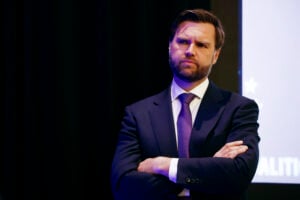
JD Vance Tells Olympic Athletes To ‘Play Sports,’ Not ‘Pop Off’ About Politics – Above the Law

(Photo
by
Anna
Moneymaker/Getty
Images)


Ed.
note
:
Welcome
to
our
daily
feature, Quote
of
the
Day
.


My
advice
to
them
would
be
to
try
to
bring
the
country
together,
and
when
you’re
representing
the
country,
you’re
representing
Democrats
and
Republicans.
You’re
there
to
play
a
sport,
and
you’re
there
to
represent
your
country
and
hopefully
win
a
medal.
You’re
not
there
to
pop
off
about
politics.


When
Olympic
athletes
enter
the
political
area,
they
should
expect
some
pushback.
But
most
Olympic
athletes,
whatever
their
politics,
are
doing
a
great
job,
and
certainly
enjoy
the
support
of
the
entire
country,
and
I
think
recognize
that
the
way
to
bring
the
country
together
is
not
to
show
up
in
a
foreign
country
and
attack
the
president
of
the
United
States,
but
to
play
your
sport
and
represent
the
country
well.


— Vice
President

JD
Vance
,
in
comments
noted
by

USA
Today
,
concerning
Olympic
athletes
who
are
speaking
out
about
U.S.
politics
while
at
the
Olympics
in
Italy.
Vance
was
defending
President
Donald
Trump’s
criticism
of
freestyle
halfpipe
skier

Hunter
Hess
,
who
said

he
had
“mixed
emotions”

about
representing
the
U.S.
“right
now,”
and
that
“[w]earing
the
flag
doesn’t
mean
I
represent
everything
that’s
going
on
in
the
U.S.”
Trump
went
on
to
call
Hess
a
“a
real
Loser,” which

prompted
Hess
to
respond
,
“I
love
my
country…
but
there
are
always
things
that
could
be
better.
One
of
the
many
things
that
makes
this
country
so
amazing
is
that
we
have
the
right
and
the
freedom
to
point
that
out.”
Relatedly,

Rich
Ruohonen
,
a
Minnesota
lawyer
on
the
curling
team,
recently
went
on
to
refer
to
the
shocking

killings
of
U.S.
citizens
by
ICE
agents
as
“wrong”

during
a
press
briefing.


Staci
Zaretsky
 is
the
managing
editor
of
Above
the
Law,
where
she’s
worked
since
2011.
She’d
love
to
hear
from
you,
so
please
feel
free
to email her
with
any
tips,
questions,
comments,
or
critiques.
You
can
follow
her
on BlueskyX/Twitter,
and Threads, or
connect
with
her
on LinkedIn.

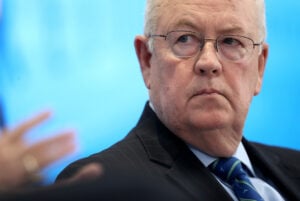
Ken Starr Writing To ‘My Friend, My Brother’ Jeffrey Epstein – Above the Law

(Photo
by
Win
McNamee/Getty
Images)

Ken
Starr
spent
the
90s
and
millions
of
taxpayer
dollars
investigating
a
real
estate
deal
that
turned
up
nothing
before
pivoting
to
criminalizing
an
affair
between
consenting
adults.
To
be
clear,
Bill
Clinton’s
relationship
with
Monica
Lewinsky
raised
the
sort
of
serious
power
imbalance
issues
that
HR
departments
exist
to
prevent,
but
the
Starr
investigation
wasn’t
designed
to
spark
a
nuanced
conversation
about
sexual
harassment,
it
was
an
effort
to
translate
quasi-puritanical
moral
panic
into
cheap
political
points.

Apparently,
the
moral
scold
of
the
Clinton
era
didn’t
have
the
same
hang
ups
when
a
convicted
child
sex
offender
came
calling.

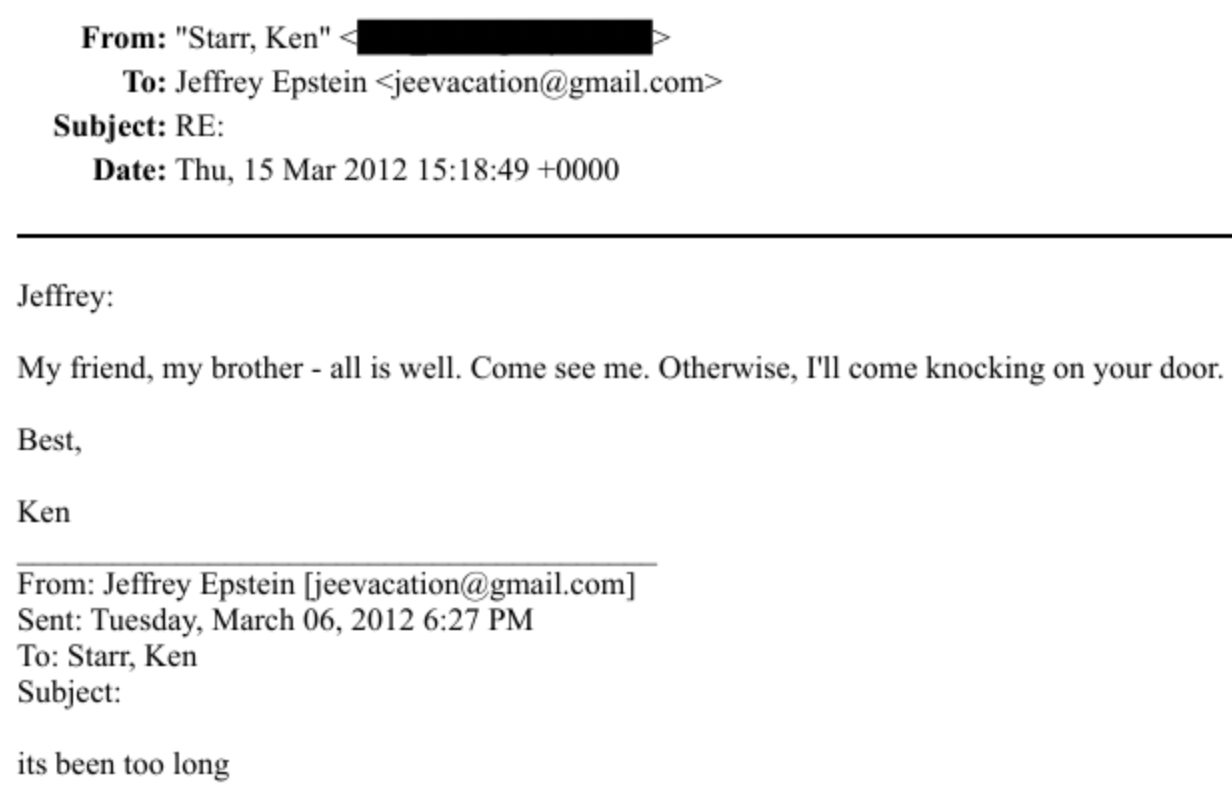
Emails
included
in
the
DOJs
latest
Esptein
files
dump
show
Starr

while
serving
as
president
of
Baylor
University


personally
corresponded
with
and
hosted
Jeffrey
Epstein
on
the
Baylor
campus
.
In
2012.
Four
years
after
Epstein
had
already
pleaded
guilty
to
soliciting
and
procuring
a
minor
for
prostitution.


I’m
shocked…
SHOCKED…
that
the
man
who

worked
with
Brett
Kavanaugh

to
prosecute
Bill
Clinton
would
exhibit
such
moral
flexibility.

Lest
anyone
tries
to
convince
themselves
that
Starr
might
not
have
known
about
Epstein’s
2008
child
prostitution
plea

or

the
much
more
horrific
contemporaneous
allegations

that
were
buried
by
Epstein’s
Non-Prosecution
Agreement

remember
that

Ken
Starr

represented

Epstein
in
that
deal
.
He
didn’t
just
know
about
the
facts
of
the
charge
Epstein
would
plea
to,
but
everything
about
the
case.
All
the
allegations
that
the
career
prosecutor
on
the
case
kept
begging
her
supervisors,
especially
future
Trump
Labor
Secretary
Alex
Acosta,
to
consider:


Julie
K.
Brown,
the
journalist
who
did
the
most
to
bring
Epstein’s
crimes
to
light,
reported
in

Perversion
of
Justice
,
that
Starr
was
the
“most
powerful
force”
behind
Epstein’s
2008
plea
deal,
leading
a
“scorched-earth”
legal
campaign
to
keep
Epstein
out
of
federal
prison.
Epstein
ultimately
took
a
year
of
county
jail
with
12-hour
daily
work
release.

Zealously
representing
a
criminal
defendant
does
not
require
being
their
buddy.
But
Starr
was
calling
Epstein
his
friend
and
brother
years
after
the
fact.
While
at
Baylor,
Starr
arranged
for
Epstein
to
come
to
Waco
and
rolled
out
the
red
carpet.
Starr

signed
off
his
emails
to
Epstein
with
“hugs”
and
“love,”

because
nothing
says
“appropriate
professional
boundaries”
quite
like
sending
mash
notes
to
a
registered
sex
offender.
Starr
expressed
interest
in
visiting
Epstein
in
New
York
and
Florida
and
the
two
chatted
about
current
events
like
old
college
buddies
catching
up.

In
2016,
after
Starr
was
ousted
from
Baylor
over
the
sexual
assault
cover-up

oh,
right!
Remember
how
Starr’s
tenure
as
Baylor’s
president
ended
after
it
came
out
that
his
office
looked
the
other
way
amidst

a
series
of
sexual
assault
claims?

Claims
that
the
university
didn’t
address
because
the
football
team
was
nationally
relevant?
According
to
the
Baylor
Lariat,
Starr
apparently
complained
to
Epstein
about
a

Texas
Monthly

article
detailing
the
scandal,
calling
it
an
“attack”
on
the
“turbo-charged
leadership”
of
football
coach
Art
Briles.

This
continued
correspondence
wasn’t
legal
work.
Lawyers
don’t
have
to
keep
up
with
former
clients
socially.
And
when
your
work
revealed
that
those
clients
credibly
ran
a
child
sex
ring,
you
definitely
don’t
have
to
keep
them
on
the
Christmas
card
list.

Starr’s
access
to
more
evidence
about
Epstein’s
2008
plea
makes
his
correspondence
more
disturbing
than
the
emails
involving
other
lawyers,
but
the
same
depressing
question
dominates
over
all
of
Epstein’s
stable
of
lawyer
pen
pals:
didn’t
anyone
ever
bother
to
ask
why
a
guy
with
a
child
prostitution
conviction
wanted
to
be
their
best
friend?

Epstein
was
a
groomer
and
part
of
that
process
involved
cultivating
relationships
with
the
rich
and
powerful.
He
built
a
shield
of
legitimacy
by
association
and
all
of
his
lawyer
buddies
became
bricks
in
that
wall.
Epstein
brought
credentialed,
respectable
people
into
his
orbit
so
people
could
point
to
his
dinner
companions
and
ask
themselves
“well,
would
all
these
important
people
hang
out
with
a
predator?”
The
answer,
obviously,
was
yes

but
most
folks
naively
thought
it
wasn’t.

And
look,
people
can
deserve
second-chances.
But
lawyers
are
professionally
expected
to
exercise
some
healthy
skepticism.
Someone
who
served
their
time
for
a
drunken
bar
fight
10
years
ago
probably
isn’t
using
their
relationship
with
a
lawyer
as
part
of
ongoing
exploitation.
Someone
guilty
of
sexually
exploiting
children
should
raise
some
red
flags.
It’s
not
so
much
that
these
lawyers
responded
to
Epstein’s
emails,
it’s
that
they
seemed
to
do
so
with
reckless
credulity.

For
Starr

who
knew
back
in
2008
that
the
government
had
reason
to
accuse
Epstein
of
running
a
“cult-like”
organization

it
requires
gobsmacking
levels
of
obliviousness
not
to
take
a
second
to
ask
if
maybe
you’ve
become
the
mark
once
you’re
sending
a
sex
offender
“hugs”
and
“love.”

Or
maybe
it
was
just
cynicism.
As

we
noted
when
Starr
died
in
2022
,
this
was
a
guy
who
dragged
the
country
through
scandal
for
naked
political
gain.
A
guy
who
abdicated
his
role
in
protecting
Baylor
students
to
maintain
a
winning
football
program.
Why
would
anyone
expect
any
sort
of
moral
pause
when
it
came
to
a
charming
rich
man
with
a
lot
of
friends
who
just
happened
to
traffic
children?

Ken
Starr
made
a
career
out
of
arguing
that
character
counts
and
that
private
conduct
reflects
upon
public
fitness.
It’s
a
shame
he
never
took
his
own
advice.


HeadshotJoe
Patrice
 is
a
senior
editor
at
Above
the
Law
and
co-host
of

Thinking
Like
A
Lawyer
.
Feel
free
to email
any
tips,
questions,
or
comments.
Follow
him
on Twitter or

Bluesky

if
you’re
interested
in
law,
politics,
and
a
healthy
dose
of
college
sports
news.
Joe
also
serves
as
a

Managing
Director
at
RPN
Executive
Search
.

Former DLA Piper Chair Was Allegedly Epstein’s ‘Very Close Friend’ – Above the Law

George
Mitchell
(Photo
by
Brian
Lawless/PA
Images
via
Getty
Images)

Despite
the
Biglaw
focus
of
Above
the
Law,
it’s
almost
strange
to
refer
to
George
J.
Mitchell
as
merely
the
former
chair
of
international
law
firm
DLA
Piper.
While
absolutely
accurate,
Mitchell
is
also
a
former
senator
from
Maine,
a
former
Democratic
Senate
Majority
Leader,
a
former special
adviser
and
US
Special
Envoy
for
Northern
Ireland,
a
key
negotiator
of
the
1998
Good
Friday
Agreement,
a
former
Special
Envoy
to
the
Middle
East,
and
recipient
of
the
Presidential
Medal
of
Freedom.
Mitchell
was
also
accused
by
a
victim
of
Jeffrey
Epstein,
Virginia
Giuffre,
who
said
she
was
instructed
to
have
sex
with
Mitchell
by
Ghislaine
Maxwell.

There’s
more
news
about
Mitchell
from
the
recent
release
of
Epstein
files.
A

FBI
document

from
December
2020
described
an
account
of
a
girl,
whose
name
is
redacted,
which
includes
having
sex
multiple
times
with
Mitchell.
According
to
the
document,
Mitchell
asked
for
a
blow
job
and
sex
and
the
girl
“did
what
she
was
told.”

A
spokesperson
for
Mitchell
said,
“Senator
Mitchell
reiterates
unequivocally
that
he
never
met,
spoke
with,
or
had
any
contact

with
any
underage
women.”

“Senator
Mitchell
profoundly
regrets
ever
having
known
Jeffrey
Epstein
and
condemns,
without
reservation,
the
horrific
harm
Epstein
inflicted
on
so
many
women,”
Mitchell’s
spokesperson
continued.

In
2019,
Mitchell
denied
the
allegation
made
by
Giuffre
as
“false.”
Mitchell continued,
“I
have
never
met,
spoken
with
or
had
any
contact
with
Ms.
Giuffre.
In
my
contacts
with
Mr.
Epstein,
I
never
observed
or
suspected
any
inappropriate
conduct
with
underage
girls.
I
only
learned
of
his
actions
when
they
were
reported
in
the
media
related
to
his
prosecution
in
Florida.
We
have
had
no
further
contact.”

However,
there’s
reason
to
question
whether
Mitchell’s
contact
with
Epstein
truly
ended
in
2008,
when
Epstein
served
time
for
crimes
in
Florida.
A

2010
document

in
the
recent
production
indicates
Mitchell
returned
a
phone
call
from
Epstein.
Documents
also
indicate

a
2013
meeting

between
Epstein
and
Mitchell.

And
in
a

2011
email

exchange
between
Epstein
and
Sultan
Ahmed
bin
Sulayem
(who
is
deeply
implicated
by
the
recent
release
of
files),
Epstein
describes
Mitchell
as
a
“very
close
friend”
as
well
as
the
chairman
of
DLA
Piper.

Since
the
recent
revelations,
many
institutions
are
backing
off
of
their
association
with
Mitchell.
The
Mitchell
Institute announced
Mitchell
resigned
from
his
position
as
honorary
chair
of
the
organization,
and
went
on
to
note
“We
also
agree
that
this
is
an
appropriate
time
to
initiate
a
thoughtful,
responsible
process
to
consider
a
potential
name
change.”
Queen’s
University
Belfast
in
Northern
Ireland
is

removing

Mitchell’s
name
from
its
Institute
for
Global
Peace,
Security
and
Justice
and
removing
a
bust
of
him
on
campus.
And
the
US-Ireland
Alliance removed Mitchell’s
name
from
its
scholarship
program.
There
are
also

calls

for
Mitchell’s
Medal
of
Freedom
to
be
revoked.


Kathryn
Rubino
is
a
Senior
Editor
at
Above
the
Law,
host
of

The
Jabot
podcast
,
and
co-host
of

Thinking
Like
A
Lawyer
.
AtL
tipsters
are
the
best,
so
please
connect
with
her.
Feel
free
to
email

her

with
any
tips,
questions,
or
comments
and
follow
her
on
Twitter

@Kathryn1
 or
Mastodon

@[email protected].