“Eagle”
Ed
Martin,
the
Trump
loyalist
that
even
this
Republican
Senate
found
too
incompetent
to
confirm
when
he
sought
to
head
the
U.S.
Attorney’s
Office
in
D.C.,
has
managed
to
find
a
new
way
to
confirm
that
skepticism.
Earlier
this
week,
we
heard
that
the
DOJ
relieved
Ed
of
his
tasks
as
the
driving
force
behing
the
DOJ’s
anti-weaponization
initiative
—
the
ironically
named
group
working
to
actively
weaponize
the
DOJ
against
Trump’s
political
enemies.
Every
accusation
really
is
a
confession,
as
they
say.
Now
we
may
know
why
Eagle
Ed
had
his
wings
clipped.
According
to
CNN,
a
DOJ
review
found
Martin
leaked
grand
jury
material
from
the
Trump
administration’s
politically
motivated
investigations
into
Adam
Schiff
and
Letitia
James:
The
department
found
that
Martin
had
shared
the
secret
grand
jury
material
in
the
Schiff
case,
one
of
the
sources
said.
The
person
said
Martin
initially
denied
sharing
the
material
with
unauthorized
people
when
asked
by
department
leaders,
but
emails
soon
surfaced
showing
that
Martin
had
in
fact
shared
the
grand
jury
material.
Generally,
we
keep
grand
jury
material
secret
for
a
reason.
It
protects
investigative
integrity
and
the
rights
of
the
accused.
When
prosecutors
leak
that
material,
it’s
at
least
contemptuous
and
at
worst
obstruction
of
justice.
That’s
one
of
those
actual
crimes,
not
the
made-up
“somebody
criticized
Elon
Musk”
crimes
Martin
threatened
people
with
during
his
tenure
as
interim
D.C.
U.S.
Attorney.
Deputy
AG
Todd
Blanche
reportedly
oversaw
the
review,
resulting
in
Martin’s
exile
from
the
weaponization
project
to
concentrate
on
his
role
overseeing
pardons
for
a
president
almost
assuredly
selling
pardons.
But
Blanche
isn’t
going
to
sell
out
a
fellow
MAGA
warrior.
In
his
statement
to
CNN,
Blanche
offers
a
masterclass
in
lawyerly
semantics:
[T]here
are
no
misconduct
investigations
into
Ed
Martin.
Ed
is
doing
a
great
job
as
Pardon
Attorney.
The
present
tense
does
some
conspicuous
heavy
lifting
here.
No
misconduct
investigations
currently,
but
don’t
ask
Blanche
the
follow-up
about
investigations
they’ve
already
concluded.
Ed
may
be
doing
a
great
job
as
Pardon
Attorney
—
he’s
not,
but
he
may
have
been
—
but
how’s
he
doing
as
Weaponization
Working
Group
chief,
Todd?
Fittingly,
the
whole
reason
this
investigation
came
to
light
was
also
quite
dumb.
Back
in
December,
a
witness
named
Christine
Bish
showed
up
at
a
Maryland
courthouse
after
receiving
a
subpoena.
Investigators
asked
her
about
two
people
who
claimed
to
be
working
on
fraud
cases
alongside
Martin
and
FHFA
Director
Bill
Pulte
that
the
DOJ
was
investigating
these
individuals
for
impersonating
federal
agents.
Shocking
theory
that
the
FBI
wouldn’t
have
the
same
appetite
for
wild
goose
chases
as
a
couple
of
bros
informally
deputized
to
poke
into
the
half-baked
theories
Martin
and
Pulte
keep
pinning
on
Trump’s
enemies.
Days
later,
a
social
media
user
highlighted
that
ongoing
probe
and
referenced
Pulte
and
Martin
being
under
investigation.
Attorney
General
Pam
Bondi
responded
by
seemingly
trying
to
correct
the
record,
without
elaborating.
“There
is
no
investigation
into
Bill
Pulte”
she
wrote
on
X.
When
he
took
over
the
weaponization
group,
he
said
of
the
work,
“If
they
can
be
charged,
we’ll
charge
them.
But
if
they
can’t
be
charged,
we
will
name
them.
And
we
will
name
them,
and
in
a
culture
that
respects
shame,
they
should
be
people
that
are
ashamed.”
It
seems
this
DOJ
has
little
interest
in
pursuing
charges
here.
So
I
guess
we’ll
have
to
rely
on
the
shaming.
And,
hopefully,
an
ethics
probe.
Some
law
schools
and
law
students
have
been
doing
their
part
to
push
back
against
ICE.
The
University
of
Maine’s
law
school
dean
spread
info
on
an
anti-ICE
hotline
to
the
community
and
students
at
Georgetown
and
George
Washington
tried
their
best
to
keep
ICE
from
attending
their
virtual
job
fair.
But
it
can
be
hard
to
tell
if
these
students
are
just
members
of
a
vocal
minority
when
it
comes
to
resisting
ICE
or
part
of
a
larger
trend.
Thankfully,
a
recent
Marquette
University
Law
School
national
survey
has
some
results
that
should
answer
that
question.
From
Fox:
A
new
Marquette
University
Law
School
poll
found
60%
of
adults
nationwide
disapprove
of
the
way
U.S.
Immigration
and
Customs
Enforcement,
known
as
ICE,
is
handling
its
job.
The
poll
was
conducted
after
the
shooting
in
Minneapolis
of
Renee
Good.
Most
interviews
were
completed
before
the
shooting
of
Alex
Pretti
on
Jan.
24,
2026.
Over
half!
Hard
data
really
does
make
the
go-to
“the
silent
majority
approves
of
this
because
some
mandate
given
to
us
back
in
2024”
argument
less
credible.
There’s
a
strong
divide
on
party
lines
—
a
whopping
80%
of
Republicans
approve
of
what
ICE
is
doing
according
to
the
poll
—
but
things
may
change
as
the
operation
scales
up.
The
party
has
done
a
phenomenal
job
of
practicing
cognitive
dissonance
whenever
facts
confront
their
world
view,
but
public
attacks
against
the
Second
Amendment
so
ICE
can
“do
the
jobs”
they
lack
jurisdiction
to
do
has
been
a
hard
selling
point
for
many.
What
this
dude
says
right
here
should
scare
the
shit
out
of
everyone.
“This
started
as
a
pretext
about
immigration
and
fraud,”
and
now
ICE
is
gunning
for
our
1st,
2nd,
4th
and
6th
amendment
rights.
The
Constitution
is
on
serious
life
support,
#NoWarrantNoICE
wake
up
America‼️
pic.twitter.com/1X4JDZcVoH
To
the
60%
of
adults
who
are
unhappy
with
ICE,
welcome
to
the
club.
As
for
the
other
40%,
here’s
one
last
push:
Those
geometric
designs
and
skulls
aren’t
SS
tattoos
but
definitely
Norse
and
Viking
symbols.
and
shouldn’t
be
automatically
considered
Nazi
adjacent.
Except
for
here,
this
ICE
agent
is
absolutely
a
Nazi.
https://t.co/Ugztj4YY82
Chris
Williams
became
a
social
media
manager
and
assistant
editor
for
Above
the
Law
in
June
2021.
Prior
to
joining
the
staff,
he
moonlighted
as
a
minor
Memelord™
in
the
Facebook
group Law
School
Memes
for
Edgy
T14s
.
He
endured
Missouri
long
enough
to
graduate
from
Washington
University
in
St.
Louis
School
of
Law.
He
is
a
former
boatbuilder
who
is
learning
to
swim, is
interested
in
critical
race
theory,
philosophy,
and
humor,
and
has
a
love
for
cycling
that
occasionally
annoys
his
peers.
You
can
reach
him
by
email
at [email protected]
and
by
tweet
at @WritesForRent.
Equity
partners
report
the
highest
satisfaction
across
all
measures,
highlighting
a
clear
satisfaction
gap.
[Satisfaction]
generally
rises
with
tenure
overall,
but
longest-tenure
nonequity
partners
are
among
the
least
satisfied,
equity
partners
rebound
after
an
early-career
dip,
and
associates
improve
through
mid-career
before
leveling
off.
— An
excerpt
from
a
Law.com
flash
survey,
where
it
was
revealed
that
across
firms
of
all
sizes,
equity
partners
had
the
highest
levels
of
satisfaction
(with
scores
of
3.8
to
~4.3),
on
a
scale
of
one
(very
dissatisfied)
to
five
(very
satisfied),
while
nonequity
partners
posted
the
lowest
average
satisfaction
scores
on
a
range
of
topics,
including
compensation
(~3.08),
current
standard
rates
(~3.14),
and
more
broadly,
their
current
role
(~3.54).
Kayla
McCaleb,
research
manager
and
compensation
research
lead
for
Law.com
Intelligence,
noted
in
light
of
the
survey
results
that
at
times,
nonequity
partners
“feel
like
glorified
associates.”
Staci
Zaretsky is
the
managing
editor
of
Above
the
Law,
where
she’s
worked
since
2011.
She’d
love
to
hear
from
you,
so
please
feel
free
to email her
with
any
tips,
questions,
comments,
or
critiques.
You
can
follow
her
on Bluesky, X/Twitter,
and Threads, or
connect
with
her
on LinkedIn.
HARARE
–
The
Bulawayo
High
Court
has
ordered
dozens
of
Zanu
PF
youths
who
invaded
Vubachikwe
Mine
in
Matabeleland
South
to
immediately
vacate
the
property,
granting
an
urgent
spoliation
order
in
favour
of
the
mine’s
owners.
In
a
ruling
handed
down
on
February
2,
Justice
Bongani
Ndlovu
directed
six
individuals
–
including
Zanu
PF
Matabeleland
South
youth
chairperson
Moses
Langa
–
and
all
those
claiming
occupation
through
them
to
cease
illegal
mining
activities
and
leave
the
gold
mine
in
Gwanda.
“The
application
for
spoliation
is
hereby
granted,”
Ndlovu
ruled.
The
court
ordered
Langa,
Aldonia
Gondo,
Madodana
Sibanda,
Taison
Mutengeni,
Takeson
Moyo
and
Alot
Ndlovu
to
restore
possession
of
mining
claim
ML16,
which
incorporates
Vubachikwe
Mine
and
is
owned
by
Forbes
&
Thompson
(Bulawayo).
Failure
to
comply
will
trigger
enforcement
by
state
authorities.
The
ruling
authorises
the
Sheriff,
with
the
assistance
of
the
Zimbabwe
Republic
Police,
“to
recover
vacant
possession
through
ejecting
the
respondents
and
all
those
claiming
occupation
through
them.”
The
order
follows
an
urgent
application
filed
by
Forbes
&
Thompson,
which
said
its
uninterrupted
possession
of
ML16
since
1983
was
violently
disturbed
on
January
17,
2026,
when
a
group
allegedly
led
by
Langa
forced
its
way
onto
the
mine.
In
a
founding
affidavit,
company
director
Musa
Amidu
said
the
respondents
arrived
with
front-end
loaders,
tippers
and
compressors
and
immediately
began
“large-scale
excavation,
removal
and
processing
of
gold-bearing
ore”
at
multiple
sites,
including
Sweet
Waters,
Magano
Shaft,
Churu
Farm,
the
Central
Shaft
turn-off
and
areas
near
low-density
housing.
Amidu
warned
that
the
invasion
was
escalating
and
posed
an
existential
threat
to
the
mine,
citing
irreversible
loss
of
gold
ore
and
serious
structural
damage.
He
accused
the
group
of
intimidating
mine
security
personnel,
resisting
police
intervention
and
holding
public
gatherings
at
the
site
where
they
allegedly
declared
that
the
mine
was
now
under
their
control.
The
affidavit
further
alleged
that
the
respondents
attempted
to
entrench
their
occupation
by
compiling
registers
for
illegal
panners,
planning
to
fence
off
parts
of
ML16
and
engaging
in
political
lobbying
to
legitimise
their
presence.
In
a
certificate
of
urgency,
the
company’s
lawyer,
Dave
Simbi,
said
any
delay
in
granting
relief
would
render
future
remedies
“hollow,”
as
gold
ore
was
being
continuously
removed
and
infrastructure
destroyed.
According
to
the
court
papers,
large
groups
of
youths
had
established
makeshift
structures
on
the
mine
and
were
hauling
away
truckloads
of
gold-bearing
ore,
raising
serious
safety
concerns
and
heightening
tensions
with
mine
workers.
What’s
in
the
3
million
pages
of
the
most
recent
drop
of
Epstein
files
is
still
being
sifted
through
by
journalists
and
concerned
citizens
alike.
The
latest
discovery,
made
by
Aaron
Parnas,
concerns
Judge
Rebecca
Taibleson,
a
Seventh
Circuit
judge
appointed
by
Donald
Trump,
whose
name
popped
up
not
because
there’s
evidence
she
communicated
directly
with
Jeffrey
Epstein,
but
because
of
a
chain
of
association
that
raises
concerns.
At
the
center
of
this
particular
mess
is
Taibleson’s
uncle,
Lawrence
Krauss,
the
former
Arizona
State
University
physics
professor
who
retired
after
allegations
of
sexual
misconduct.
When
those
allegations
began
swirling,
Taibleson
(then
serving
as
an
Assistant
U.S.
Attorney
in
Wisconsin)
sent
Krauss
advice
on
how
to
respond
to
the
dean.
That
advice
did
not
stay
private.
Krauss
forwarded
her
message
to
Epstein,
praising
his
niece
as
“brilliant.”
And
just
like
that,
Taibleson’s
name
landed
in
the
Epstein
files,
not
as
a
participant,
but
as
a
reminder
of
how
extensive
Epstein’s
orbit
really
was.
Advising
a
family
member
accused
of
sexual
misconduct
is
already
fraught,
particularly
while
serving
as
a
federal
prosecutor.
While
we
don’t
know
that
Taibleson
knew
her
advice
would
be
shared
with
Epstein,
the
fact
is
that
it
was.
And
that
Krauss
treated
Epstein
as
a
sounding
board
for
reputational
damage
control
underscores
just
how
normalized
Epstein’s
presence
had
become
among
elite
circles.
None
of
this
means
Taibleson
committed
misconduct,
and
it
bears
repeating
that
there’s
no
evidence
she
communicated
directly
with
Epstein.
But
her
advice
on
how
to
deal
with
sexual
misconduct
allegations
is
in
there.
Federal
judges
don’t
get
the
luxury
of
shrugging
off
appearances,
especially
when
the
judiciary
is
already
struggling
to
convince
the
public
it
is
neutral,
ethical,
and
worthy
of
trust.
Kathryn
Rubino
is
a
Senior
Editor
at
Above
the
Law,
host
of
The
Jabot
podcast,
and
co-host
of
Thinking
Like
A
Lawyer.
AtL
tipsters
are
the
best,
so
please
connect
with
her.
Feel
free
to
email
her
with
any
tips,
questions,
or
comments
and
follow
her
on
Twitter
@Kathryn1 or
Mastodon
@[email protected].
In
its
latest
situation
report,
the
DCP
said
nine
more
people
had
died
over
the
past
week,
raising
the
death
toll
to
118,
up
from
109
recorded
the
previous
week.
The
deaths
over
the
past
week
were
mainly
due
to
drowning
and
mine
collapse
caused
by
heavy
rains,
the
DCP
said.
The
rains
have
affected
8,295
households
and
damaged
334
houses,
236
schools,
15
health
facilities,
and
21
bridges
nationwide
as
of
now,
the
DCP
said,
adding
that
at
least
12
marooning
incidents
have
also
been
recorded.
The
department
said
that
major
highways
and
roads
in
both
urban
and
rural
areas
have
been
severely
affected,
with
some
impassable
and
in
need
of
rehabilitation.
Zimbabwe’s
rainy
season
typically
runs
from
October
to
March,
bringing
heavy
rainfall
and
occasional
storms.
At
Xiao
Honguqiu’s
Famona
gold
mine,
three
women
workers
were
compelled
to
undergo
HIV
tests
and
subsequently
dismissed
on
22
December
2025,
regardless
of
the
results,
while
more
than
60
male
colleagues
faced
no
such
requirement.
The
Zimbabwe
Diamond
and
Allied
Minerals
Workers
Union
(ZDAMWU),
an
IndustriALL
Global
Union
affiliate,
condemned
the
practice
as
a
form
of
sexual
harassment
and
gender-based
discrimination.
Zimbabwe’s
Constitution
and
labour
legislation
safeguard
workers’
dignity,
equality
before
the
law
and
protection
from
gender
discrimination.
The
right
to
privacy,
including
the
confidentiality
of
health
information
such
as
HIV
status,
is
similarly
enshrined.
Employers
are
expressly
barred
from
forcing
disclosure
of
HIV
status.
The
2021
Cyber
and
Data
Protection
Act
further
criminalises
unauthorised
disclosure
of
personal
health
data
by
third
parties,
including
online.
The
dismissals
reportedly
followed
information
obtained
from
an
online
platform
that
exposed
one
worker’s
HIV
status.
The
affected
worker
has
filed
a
police
report
at
Nyathi
Police
Station
near
Bulawayo
against
the
individual
responsible
for
the
posting.
ZDAMWU
has
lodged
a
formal
complaint
with
the
Zimbabwe
Gender
Commission,
which
is
now
investigating
the
matter
and
weighing
potential
legal
action
against
the
company.
Justice
Chinhema,
ZDAMWU
general
secretary,
asserted
that
the
union
is
pressing
for
the
reinstatement
of
the
three
women.
“It
is
unacceptable
for
employers
to
subject
women
to
sexual
harassment
and
flout
the
law
with
impunity,”
he
said.
IndustriALL
Sub-Saharan
Africa
regional
secretary
for
Paule-France
Ndessomin,
said:
“We
back
ZDAMWU
in
seeking
justice
for
these
workers.
Chinese
multinational
companies
operating
in
Zimbabwe
and
the
region
must
adhere
to
national
labour
laws
and
international
standards.”
IndustriALL’s
research
under
the
project:
Towards
an
inclusive
and
sustainable
future
for
workers
in
Eastern
and
Southern
Africa
with
the
University
of
the
Witwatersrand’s
Southern
Centre
for
Inequality
Studies
titled
Fighting
back:
Labour
fragmentation
in
and
the
face
of
capital
vis-à-vis
the
Just
Transition
and
eco-socialism
has
confirmed
rampant
sexual
harassment
and
exploitation
on
Chinese-owned
mines
in
Zimbabwe
with
supervisors
preferring
to
hire
“small
Maria”
instead
of
“big
Maria.”
“Chinese
management
in
both
Zambia
and
Zimbabwe
wanted
a
“small
Maria”
–
a
black
female
worker
who
was
small
built.
The
management
used
their
positions
and
fear
of
job
insecurity
to
exert
pressure
and
solicit
sexual
favours
or
rape
women
workers.
Black
women
workers
in
Zimbabwe
who
were
employed
in
the
mining
sector,
barely
faced
victimization
and
harassment,”
exposes
the
research
in
its
findings
which
will
be
published
in
April.
Zimbabwe
is
highly
vulnerable
to
the
adverse
impacts
of
climate
change.
The
Global
Climate
Risk
Index
ranks
it
34th on
a
list
of
174
countries
most
affected
by
extreme
weather
events
between
1995
and
2024
(Germanwatch,
2025).
And
the
Notre
Dame
Global
Adaptation
Initiative
(2026)
places
Zimbabwe
171st out
of
187
countries,
combining
high
vulnerability
to
climate
change
with
low
readiness
to
deal
with
climate-change
impacts.
The
country’s
major
challenges
include
reduced
and
erratic
rainfall
(Government
of
Zimbabwe
&
UNDP,
2017).
Whereas
droughts
occurred
in
one
in
10
growing
seasons
between
1902
and
1979,
their
frequency
increased
to
one
in
four
between
1980
and
2011.
Climate
change
has
also
been
associated
with
increases
in
average
temperatures,
numerous
mid
season
dry
spells,
and
a
shortening
of
the
rainy
season
since
1960
(World
Bank,
2024).
In
2024,
President
Emmerson
Mnangagwa
declared
a
state
of
national
disaster
in
response
to
the
impact
of
an
El
Niño-induced
drought
(Guardian,
2024).
This
followed
a
declaration
of
a
state
of
national
disaster
in
2019
after
Cyclone
Idai
ravaged
the
eastern
part
of
Zimbabwe,
particularly
the
Chimanimani
and
Chipinge
districts
of
Manicaland,
leaving
31
dead
and
more
than
100
missing
(United
Nations
Office
for
the
Coordination
of
Humanitarian
Affairs,
2019). In
January
it
was
reported
that
heavy
rains
during
the
summer
had
already
left
70 people
dead
and
51
injured,
and
destroyed
at
least
1,000
houses
(Shamu,
2026).
The
government’s
response
to
climate
change
is
anchored
in
the
National
Climate
Change
Adaptation
Plan
(2024-2030).
The
document
serves
as
a
roadmap
toward
a
climate-resilient,
low-carbon
economy,
which
it
seeks
to
achieve
by
mobilising
climate
finance
and
fostering
climate-change-adaptation
research,
innovation,
and
technology
development
and
transfer.
The
plan
lays
out
how
the
government
will
plan,
implement,
monitor,
and
evaluate
climate-adaptation
initiatives,
as
well
as
how
these
will
be
integrated
into
sectoral
development
programmes.
Other
strategic
priorities
include
strengthening
institutional
capacity
for
climate-change
management,
enhancing
climate-information
systems,
and
improving
disaster
preparedness
(Government
of
Zimbabwe,
2024).
In
September
2025,
Zimbabwe
gazetted
the
Climate
Change
Management
Bill,
a
legal
framework
designed
to
bolster
the
country’s
response
to
climate
change.
If
passed
by
Parliament
and
signed
into
law
by
the
president,
the
legislation
will
establish
a
national
climate
fund
that
will
draw
on
taxes
and
proceeds
from
the
trading
of
carbon
credits
to
fund
adaptation,
mitigation,
and
capacity
building.
Among
other
things,
the
bill
provides
for
the
obligations
of
sub-national
governments,
establishes
units
to
monitor
and
regulate
environmental
and
meteorological
outcomes,
and
allows
for
“green”
financial
incentives
(Chishuvo,
2025).
This
dispatch
reports
on
a
special
survey
module
in
the
Afrobarometer
Round
10
questionnaire
that
explores
Zimbabweans’
experiences
and
perceptions
of
climate
change
and
changing
weather
patterns.
Findings
show
that
overwhelming
majorities
of
citizens
report
worsening
drought
and
crop
failure
over
the
past
decade.
More
than
one-third
report
having
adapted
to
changing
weather
patterns
by
adjusting
water
consumption,
reducing
or
rescheduling
outdoor
work,
modifying
the
crops
they
plant
or
foods
they
eat,
and,
among
those
who
have
livestock,
altering
livestock
management.
A
slim
majority
of
citizens
have
heard
of
climate
change.
Among
them,
more
than
nine
in
10
say
it
is
making
life
worse,
and
two-thirds
say
human
activity
is
to
blame
for
the
changing
climate,
either
on
its
own
or
in
conjunction
with
natural
processes.
Majorities
say
that
the
Zimbabwean
government
must
take
urgent
action
to
limit
climate
change
and
that
rich
countries
should
help
fund
the
country’s
response.
Among
all
citizens,
majorities
support
a
range
of
potential
policy
responses
to
changing
weather
conditions,
including
greater
pressure
on
developed
countries
to
provide
climate
aid,
investment
in
climate-resilient
infrastructure
and
renewable
technologies,
use
of
cleaner
burning
cookstoves,
and
a
ban
on
cutting
trees
for
firewood
or
charcoal.
E.C.T
Shonhiwa
Property
Developers,
is
one
of
several
private
land
developers
contracted
to
service
residential
stands
in
Bulawayo.
The
company
owned
by
the
late
Edmund
Campion
Takawira
Shonhiwa
was
allocated
91
stands
in
Pelandaba
West
suburb
in
2006.
However,
the
developer
did
not
fully
service
the
stands
but
was
issued
with
a
certificate
of
completion
in
2021
.
A
Compliance
Certificate
is
issued
when
a
land
developer
has
provided
services
such
as
tarred
roads,
sewer
reticulation,
water
supply
and
drainages
to
required
quality
standards.
Besides,
without
a
Compliance
Certificate,
title
deeds
cannot
be
processed
for
individual
stands.
Private
land
developers
need
to
be
certified
before
they
can
hand
over
serviced
stands
to
the
Bulawayo
City
Council.
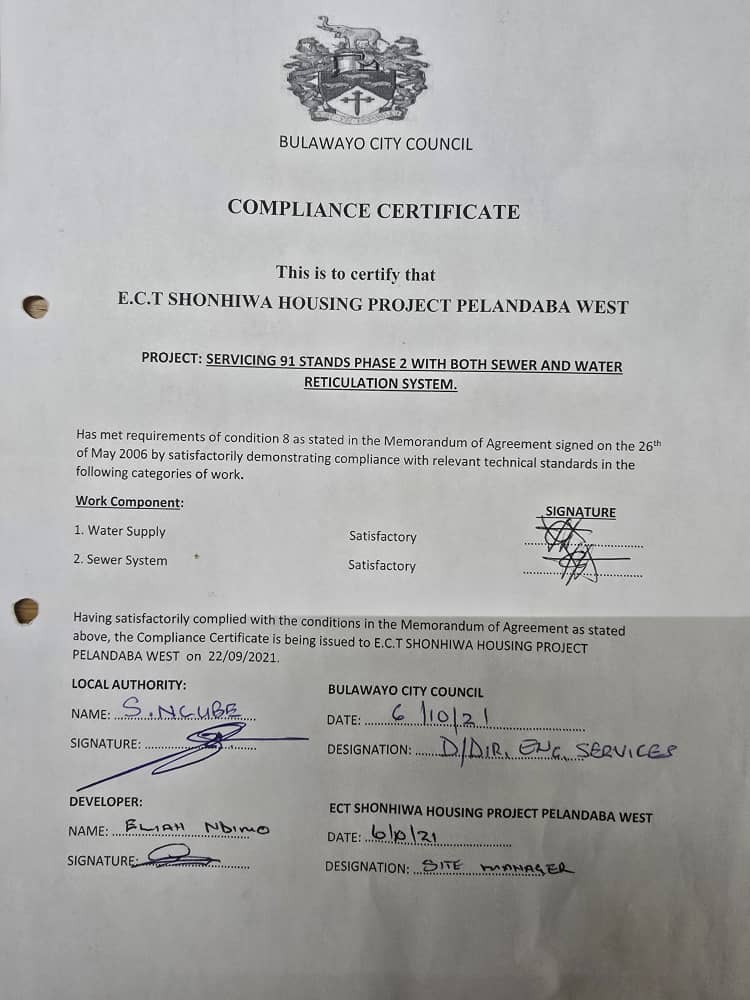
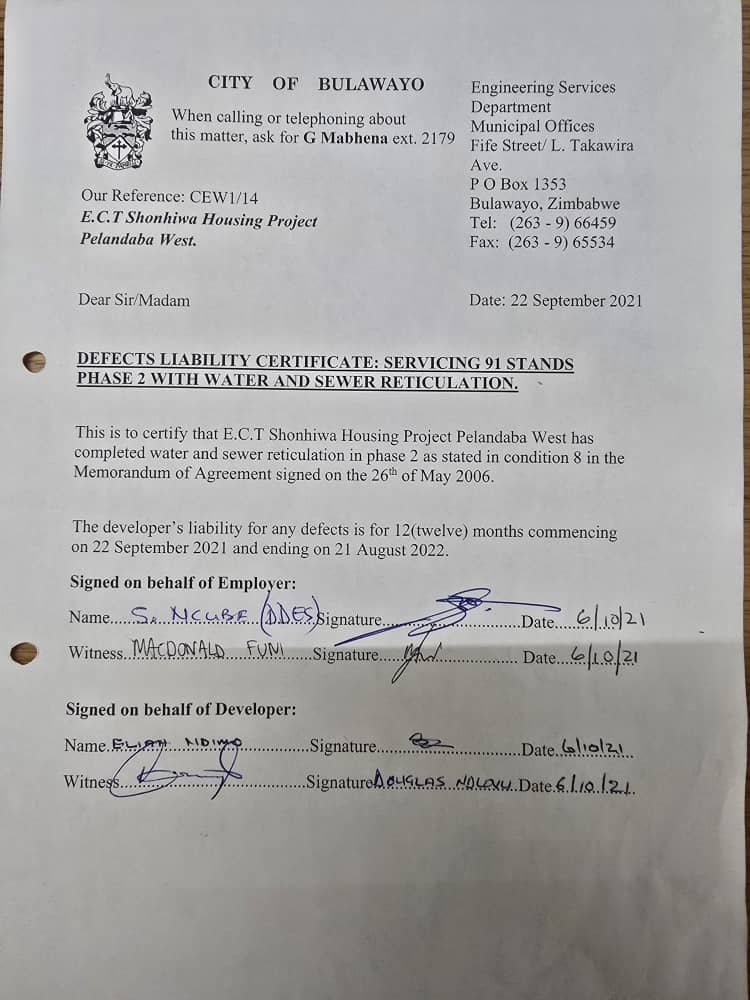
A
Compliance
Certificate
issued
on
22
September
2021
to
E.C.T
Shonhiwa
Property
Developers
seen
by
CITE
was
signed
by
Sikhumbuzo
Ncube,
then
Deputy
Director
of
Engineering
Services
on
6
October
2022.
Ncube
was
appointed
Director
of
Engineering
Services
in
April
2023.
The
Compliance
Certificate
states
that
BCC
was
satisfied
with
the
servicing
of
91
stands
under
phase
2
with
both
sewer
and
water
reticulation
systems.
“…Has
met
requirements
of
condition
8
as
stated
in
the
Memorandum
of
Agreement
signed
on
the
26th of
May
2006
by
satisfactorily
demonstrating
compliance
with
relevant
technical
standards
in
the
following
categories
of
work:
water
supply
and
sewer
system,”
read
the
Compliance
Certificate.
“We
Were
Told
Everything
Was
Ready”
E.C.T
Shonhiwa
Property
Developers,
sold
residential
stands
in
Pelandaba
West
in
2015,
assuring
buyers
that
the
area
would
have
paved
roads,
functional
sewer
systems
and
piped
water.
More
than
a
decade
later,
residents
say
they
are
living
with
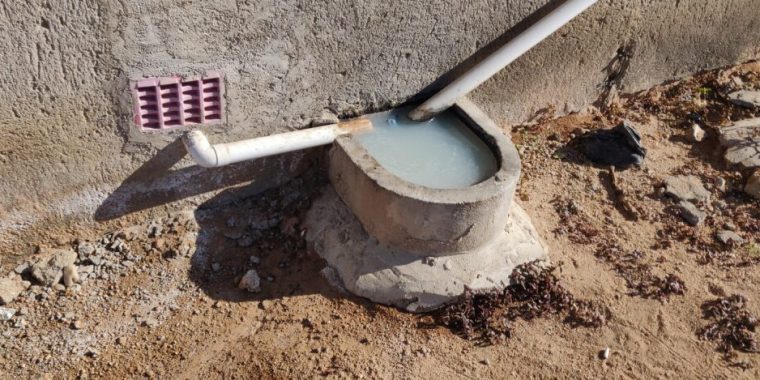
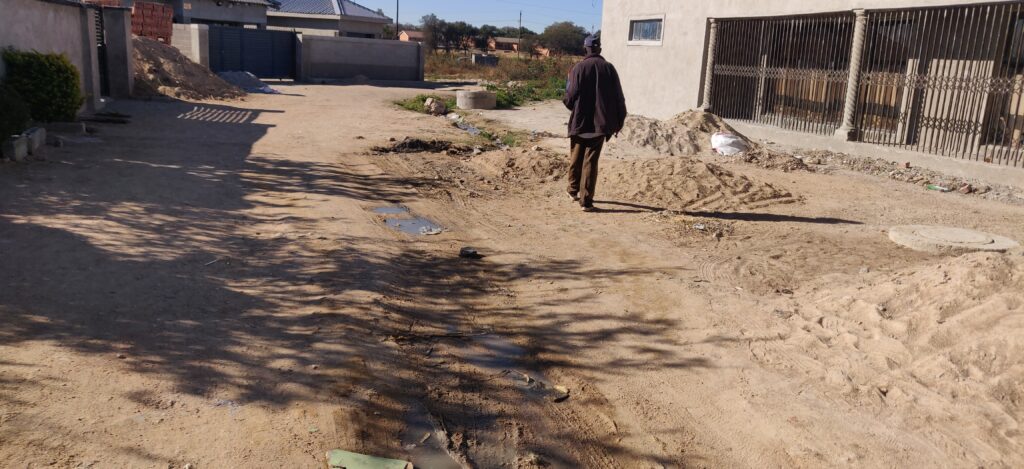
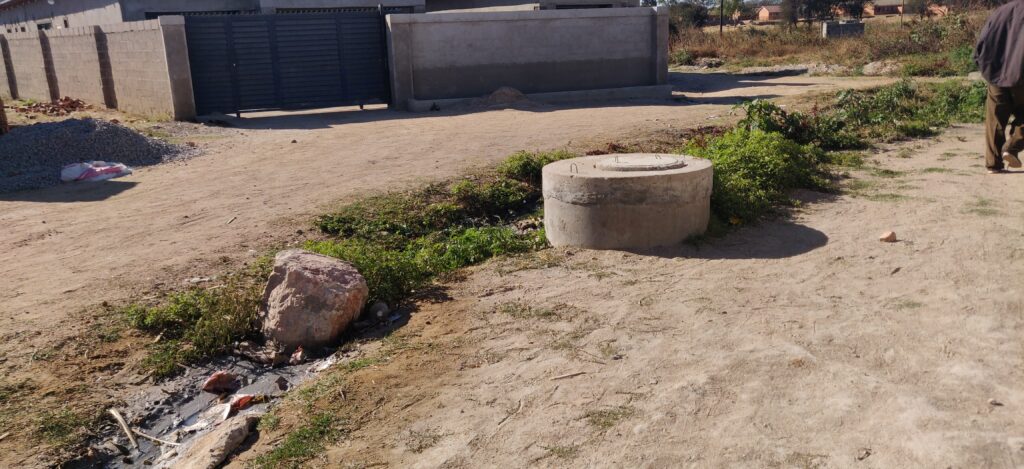
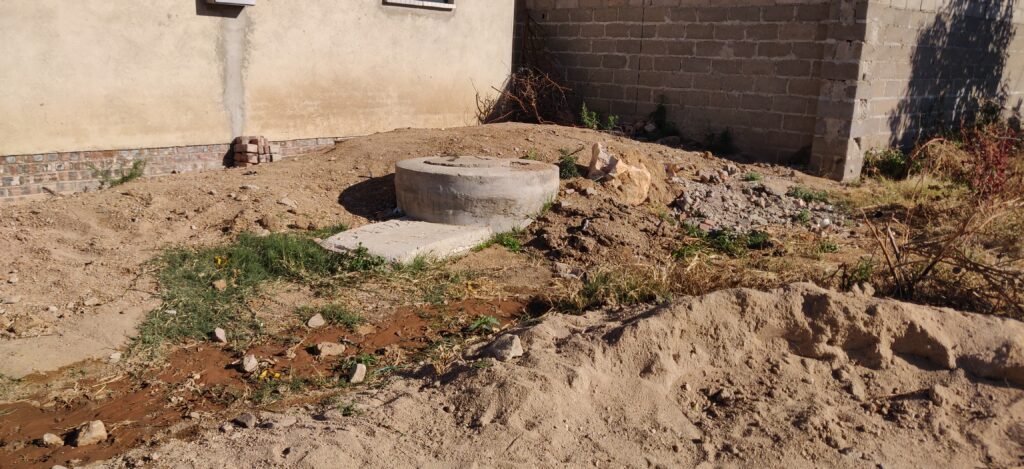
collapsing
sewer
lines,
poor
drainage
and
gravel
roads
that
become
muddy
and
impassable
during
the
rainy
season.
Different
private
land
developers
were
contracted
to
service
Pelandaba
West
suburb,
but
residents
complain
that
water,
sewer
and
road
infrastructure
was
not
fully
installed.
Residents
were
forced
to
pay
for
water
to
be
connected
to
their
homes.
Residents
of
Pelandaba
West
say
they
were
deceived
into
believing
their
stands
were
fully
serviced
before
they
began
construction.
Gatsheni,
who
also
chairs
Ward
18
residents
under
the
Bulawayo
Progressive
Residents
Association
(BPRA),
recalls:
“The
challenge
we
are
facing
began
in
2015
when
we
started
building
here,
we
were
told
that
the
stands
were
fully
serviced.
We
don’t
know
how
Bulawayo
City
Council
(BCC)
approved
the
sale
of
stands
before
they
were
fully
serviced.”
When
we
had
settled,
we
discovered
that
there
was
no
drainage
system,
when
it
rains
water
floods
our
houses,”
he
said.
“For
us
to
be
given
green
light
to
build,
services
such
as
roads,
water
should
have
been
there,
but
as
I
am
saying,
when
we
came
here,
there
were
no
water
pipes
until
we
took
the
matter
to
court,
now
there
is
sewer
problems
we
don’t
even
know
how
the
challenge
will
be
fixed
and
there
is
no
tarred
roads,”
he
said.
He
added
that
as
residents
leaders,
their
wish
is
for
private
land
developers
to
fully
service
the
area
and
put
all
facilities
such
as
the
road
infrastructure
,
water
pipes
and
sewer
pipes
before
selling
the
stands
so
that
residents
don’t
face
service
delivery
challenges.
E.C.T Shonhiwa Property
Developers
said
they
are
trying
to
resuscitate
other
businesses
to
raise
money
to
finish
the Pelandaba West
project.
“We
do
not
have
funds
because
the
estate
of
Edmund
Campion
Takawira
Shonhiwa
is
not
yet finalized, everything
is
still
under
the
government.
However,
there
is
a
project
that
we
are
trying
to
resuscitate
like
our
mine,
so
once
that
has
been finalized,
we
want
to
complete
the Pelandaba project,
drainage systems and
the
roads,”
said
Mark Shohniwa a
grandson of
the
late
Edmund
Shonhiwa.
Shonhiwa
said
he
has
contacted
one
of
his
relatives
with
a
plumbing
company
to
assess
the
situation
in Pelandaba West.
He
admitted
that
the
sewers
were
an
outstanding
item
the
land
developers
needed
to
fix.
“We
plead
with
the
community
of Pelandaba West
to
give
us
time
because
this
Estate
does
not
have
money.
We
are
working
on
our
mine
because
we
intend
to
keep
the
company
alive
because
right
now,
we
can
simply
walk
away
and
say
this
was
Edmund
Shonhiwa’s
project,
he
is
gone,
but
it’s
not
going
to
help
anyone,
we
want
to
maintain
a
good
reputation
and
intend
to
keep
the
business
alive.”
Shoniwa
explained
that
the
only
payments
he
is
aware
of
are
those
made
for purchasing stands
and
water
connections,
which
were
paid
to
the
developer
before
the
project
was
handed
over
to
the
City
Council.
The
Environmental
Management
Report
of
26
September
2025
indicates
that
E.C.T Shonhiwa Property
Developers
had
completed
sewer
and
water
reticulation
and
had
done
a
partial
handover.
“This
was
private
land
that
the
owner
had
subdivided
and
intended
to
fully
service
the
land
before handing over
to council.
Unfortunately,
the
developer failed
to fully
service
the
said
land
and
as
a
result
some
of
the
properties
were
inaccessible. Most of
the
roads
were
just
bush
cleared
and
no
formal
construction
had
been
carried
out,”
read
a
confidential
report.
Certified
but
work
half
done
Other
private
land
developers
accused
of
not
completing
the
servicing
of
residential
stands
have
also
been
issued
with
certificates
of
completion,
meaning
they
met
the
conditions
of
the
contract
to
service
stands.
Residents
in
Bulawayo
have
questioned
how
private
land
developers
were
issued
Compliance
Certificates
by
the
Bulawayo
City
Council
(BCC)
despite
what
they
describe
as
incomplete
and
substandard
infrastructure
in
their
suburb.
Another
private
land
developer,
A.P.
Glendinning
Private
Limited
was
allocated
stands
for
servicing
in
Pelandaba
West
Phase
4.
Residents
complain
that
AP
Glendenning
did
not
complete
the
development
of
roads
and
installation
of
water
and
sewer
systems.
“We
have
no
tarred
roads,
when
it
is
raining,
we
face
a
lot
of
challenges,”
bemoaned
Sakhile
Tshuma,
a
residents
leader
in
Pelandaba
West.
“There
are
no
drainage
systems,
and
the
sewer
system
was
not
properly
constructed,
it
constantly
bursts.”
Tshuma
moved
into
Pelandaba
West
in
2016,
and
her
stand
had
no
water
connection.
She
and
other
residents
had
to
pay
for
water
connection
to
their
stands.
Tshuma
said
they
have
engaged
A.P.
Glendinning
Private
Limited,
with
no
joy.
They
say
the
private
land
developer
told
them
the
Pelandaba
West
Phase
4
project
has
been
handed
over
to
the
local
authority.
The
company
has
maintained
that
it
completed
its
portion
of
the
servicing
of
the
stands.
Reached
for
a
comment,
a
manager
at
A.P.
Glendinning
Private
Limited,
who
identified
himself
as
Paul
Youngman
said:
“When
we
do
servicing
of
stands,
it
has
to
comply
to
BCC,
after
we
do
a
partial
handover
where
you
are
under
maintenance
for
12
months
under
city
council
and
then
once
you
have
done
your
12
months,
city
council
will
come
back
and
inspect
that
everything
is
satisfactory
and
then
they
give
you
a
handover
certificate,”
he
said.
“Once
the
12
months
have
lapsed
and
they
come
and
inspect
and
they
are
satisfied,
it
is
now
handed
over
to
the
council.
So,
anything
from
that
date
is
now
in
the
council’s
obligation
to
sort
out.”
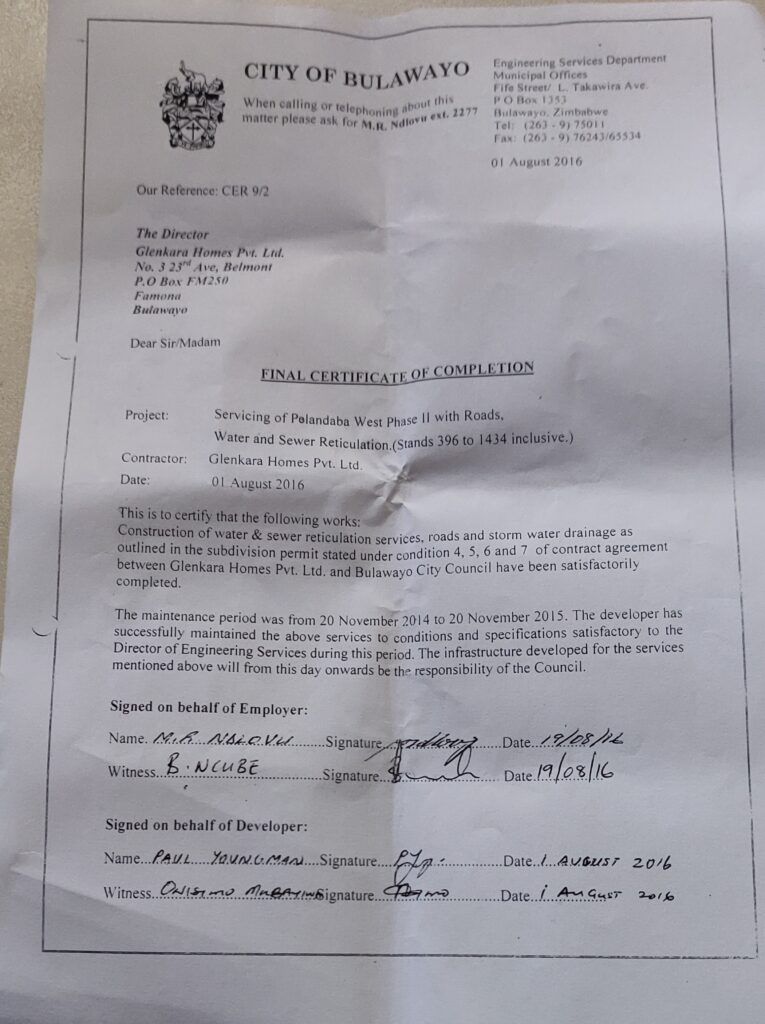
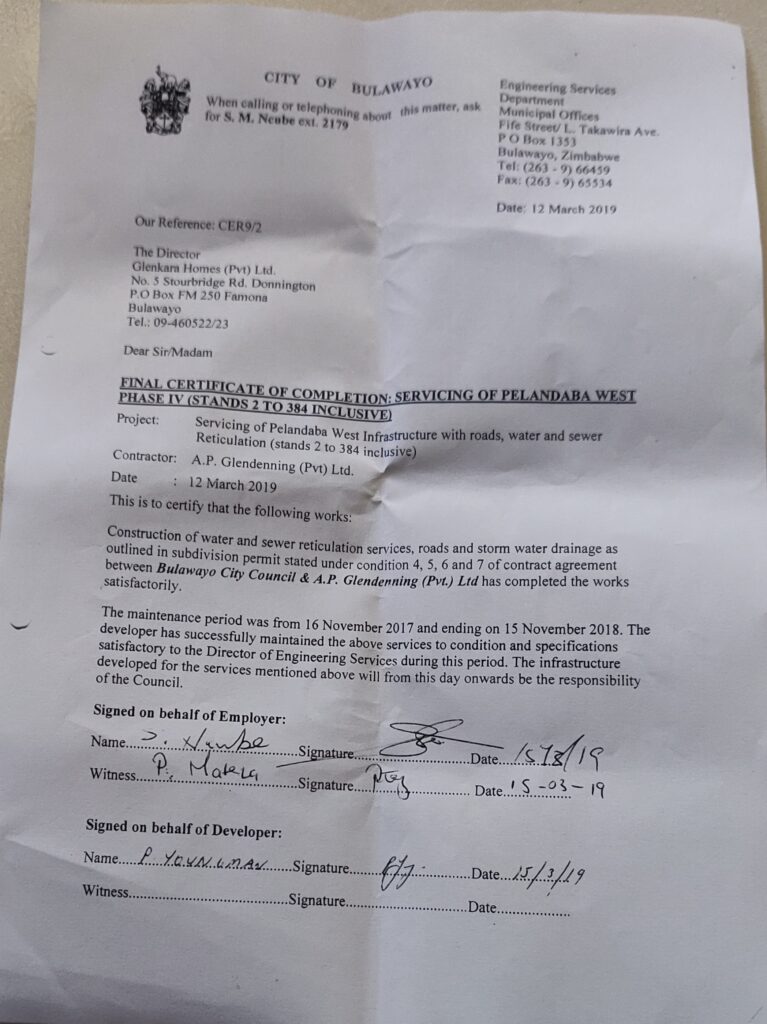
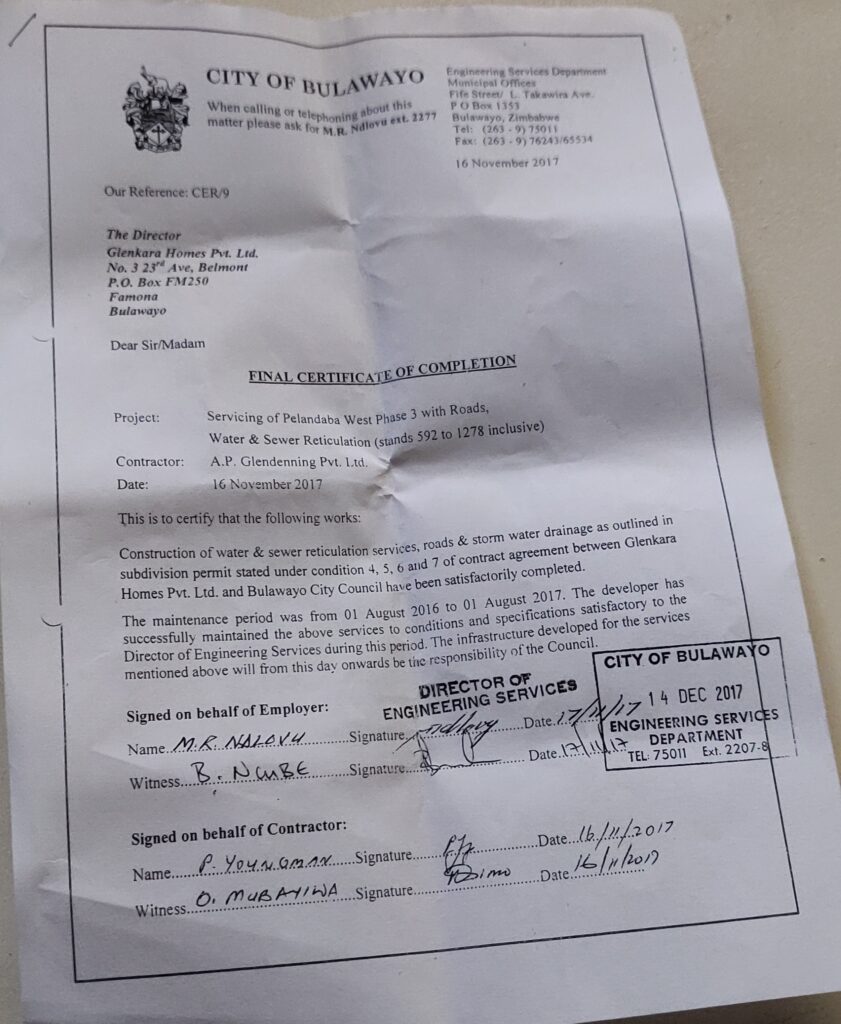
AP
Glendinning
Private
Limited
showed
CITE
copies
of
Certificate
of
Completion
which
were
granted
and
signed
in
a
phase
approach.
In
2016,
the
developer
completed
the
servicing
of
Pelandaba
Wet
phase
11
with
road,
water
and
sewer
reticulation
for
stands
396
to
1434.
On
14
December
2017,
the
land
developer
received
the
certificate
of
completion
for
servicing
of
Pelandaba
West
phase
1
with
roads,
water
and
sewer
reticulation
from
stand
number
1339
to
1738.
“The
maintenance
period
was
from
24
November
2014
to
23
November
2015.
The
developer
has
successfully
maintained
the
above
service
to
conditions
and
specifications
satisfactory
to
the
Director
of
Engineering
Services
during
this
period.
The
infrastructure
developed
for
the
services
mentioned
above
will
from
this
day
onwards
be
the
responsibility
of
the
City
Council,”
read
the
Certificate
of
Completion
dated
14
December
2017.
In
2019,
the
developer
completed
the
servicing
of
Pelandaba
West
with
roads,
water
and
sewer
for
stands
2
to
384.
The
certificates
were
all
signed
by
officials
from
the
local
authority.
However,
residents
say
the
quality
of
roads
in
Pelandaba
West
is
poorer
than
in
older
suburbs,
raising
questions
about
the
standards
applied
to
recent
private
developments
as
on
resident
remarked
“
This
is
a
new
suburb
but
now
looks
like
an
old
suburb.”
Documents
reviewed
by
CITE
and
interviews
with
residents
suggest
that
BCC
may
have
failed
to
enforce
its
own
regulations
as
empowered
by
the
Urban
Councils
Act
(Chapter
29:15)
to
inspect
and
approve
developments
before
issuing
Compliance
Certificates.
While
E.C.T
Shonhiwa
Property
Developers
has
a
Compliance
Certificate,
residents
under
his
phase
indicated
that
they
still
don’t
have
title
deeds
as
the
project
was
partially
handed
over.
Developers
Shift
Responsibility
Hawkflight,
another
private
land
developer
accused
of
delivering
substandard
work
in
Pelandaba
West
suburb
was
issued
with
a
Compliance
Certificate.
However,
contacted
by
CITE
for
comment,
the
Operations
Manager
at
Hawkflight,
Martin
Moyo,
said
they
could
not
show
their
Compliance
Certificate
because
the
Pelandaba
West
project
was
long
done
and
the
certificates
are
filed
in
their
archives.
“We
don’t
have
personnel
who
can
go
and
dig
the
archives
and
look
for
those
records,
I
cannot
be
asked
to
comment
on
what
is
happening,
that
is
not
my
suburb
at
the
moment
and
is
not
even
under
my
supervision.
I
handed
it
over
to
the
responsible
authority.
If
there
are
any
other
problems
the
responsible
authority
should
answer
that,”
he
said.
“We
don’t
keep
our
files
forever,
at
that
time
we
had
no
such
digital
platform,”
said
Moyo,
insisting
that
Hawkflight
had
completed
its
work
and
handed
the
project
over.
“We
are
no
longer
responsible
for
maintenance
of
sewer
and
water
lines.
Any
problems
should
be
directed
to
the
responsible
authority,”
said
Moyo.
Council
reports,
however,
note
that
Hawkflight
was
yet
to
submit
all
handover
documentation
to
the
city
council
for
future
maintenance
despite
claiming
completion
“For
the
projects
that
were
completed
and
handed
over
to
Council,
the
maintenance
is
now
the
responsibility
of
the
Engineering
Services
Department.
The
maintenance
will
now
be
carried
out
using
the
general
maintenance
now
competing
with
other
projects
city
wide,”
read
the
minutes.
Red
Flags
Bulawayo
Ward
13
Councillor,
Felix
Madzana,
confirmed
that
compliance
certificates
were
issued
to
private
land
developers
even
though
they
had
not
installed
roads,
water
and
sewer
lines
in
residential
stands
they
were
contracted
to
service.
“When
I
asked
why
developments
were
accepted
without
tarred
roads,
storm
drains
and
tower
lights,
I
was
told
this
was
what
had
been
agreed,”
Madzana
said
in
an
interview
with
CITE.
“We
need
to
ensure
that
the
department
of
Engineering
Services
does
proper
supervision.
We
have
roads
which
were
done
five
years
ago
that
look
older
than
the
roads
done
before
independence.
Even
in
some
areas
where
we
are
commissioning
stands,
the
roads
that
we
see
don’t
meet
standards
of
the
second
largest
city
in
the
country,”
Cllr
Madzana
said,
calling
for
strict
supervision
“so
that
we
don’t
carry
the
burden
of
substandard
work
which
should
be
done
by
private
developers.”
Claude
Phuti,
Programmes
Manager
for
Bulawayo
Progressive
Residents
Association
(BPRA),
a
community-based
organisation
advocating
for
residents’
rights,
said
Pelandaba
West
is
one
of
several
suburbs
where
residents
are
victims
of
incomplete
servicing.
“We’ve
received
similar
complaints
from
Magwegwe
West,
Pumula
South,
and
others,”
Phuti.
“Some
houses
in
Pelandaba
West
were
even
built
on
wetlands
without
inspection,
and
you
now
see
them
developing
structural
problems.
Some
are
too
close
to
each
other.
The
system
is
failing
residents.”
Council
tightens
vetting
of
private
land
developers
Reached
for
comment,
the
Bulawayo
City
Council
confirmed
that
under
the
previous
prepaid
scheme,
residents
made
payments
in
advance
before
a
contractor
was
appointed
to
service
the
land.
“This
arrangement
adversely
affected
beneficiaries,
particularly
when
the
national
currency
transitioned
from
the
United
States
Dollar
to
RTGS,
resulting
in
significant
value
erosion
of
the
funds
paid.
Consequently,
residents
were
later
required
to
make
additional
top-up
payments
to
cover
the
short
fall,”
said
BCC
Corporate
Communications
Officer,
Bongiwe
Ngwenya.
She
said
in
view
of
these
past
challenges,
the
current
developer-led
model
ensures
that
land
servicing
is
completed
prior
to
stand
allocation,
“thereby
protecting
beneficiaries
from
financial
loss
and
ensuring
that
only
fully
serviced
stands
are
brought
to
the
market.”
Ngwenya
said
the
City
has
taken
several
measures
against
private
land
developers
who
fail
to
meet
their
contractual
obligation
and
one
such
measure
is
the
withholding
of
completion
certificates
and
title
processing
until
the
developer
meets
all
servicing
and
contractual
requirements.
Meanwhile,
she
said
the
City
is
continuously
monitoring
all
ongoing
residential
development
projects
to
ensure
that
development
progresses
in
line
with
approved
layouts,
servicing
standards,
designs
and
timelines.
Ngwenya
admitted
that
most
complaints
from
residents
involve
incomplete
works
rather
than
poor
workmanship,
adding
that
“the
few
cases
of
substandard
works
generally
stem
from
projects
implemented
before
2009,
when
the
City
was
affected
by
brain
drain
and
reduced
technical
capacity.”
“In
respect
of
incomplete
works,
residents
have
been
requested
to
contribute
top-up
funds
to
facilitate
completion
of
outstanding
services,
since
funding
for
such
projects
is
solely
derived
from
the
sale
of
stands,”
she
said.
According
to
Ngwenya,
the
BCC
has
introduced
stricter
vetting
of
land
developers
and
performance-based
contracts
with
penalties
for
non-compliance
as
well
as
regular
inspections
by
city
engineers.
“Collaboration
between
the
Water
and
Sanitation
and
Works
Services,
Housing,
Town
Planning
and
Audit
Departments
has
been
enhanced
to
improve
oversight
and
information
sharing,”
Ngwenya
noted,
emphasizing
that
the
council
was
only
approving
land
developers
with
proven
technical
capacity,
financial
stability
and
a
track
record
of
successful
project
delivery
to
undertake
projects.
“The
city
has
taken
a
number
of
measures
against
private
land
developers
who
fail
to
meet
their
contractual
obligations,”
Ngwenya
said,
adding
that,
“These
Issuance
of
warning
letters
and
notice
of
breach,
cancellation
of
development
permits
in
cases
of
persistent
non-performance
and
utilization
of
performance
bonds
were
applicable.”
She
urged
residents
to
report
issues
through
ward
offices
and
the
City’s
customer
Contact
Centre
to
enable
early
identification
and
correction
of
deficiencies.
“The
City
has
established
procedures
for
addressing
complaints
from
residents
regarding
substandard
work
on
services
such
as
sewer,
roads,
and
water
infrastructure.
When
such
complaints
are
received,
the
following
steps
are
undertaken:
Receipt
and
Logging
of
Complaints,
Technical
Assessment
and
Inspection,
Engagement
with
the
Developer
or
Contractor,
Follow-Up
and
Verification
and
Enforcement
Action
(if
necessary),”
said
Ngwenya.
The
calls
come
as
the
country
joins
the
rest
of
the
world
in
marking
World
Wetlands
Day
under
the
theme “Wetlands
and
traditional
knowledge:
Celebrating
cultural
heritage.” The
day
highlights
the
role
of
indigenous
practices
in
sustaining
wetlands
and
safeguarding
cultural
identity.
The
Zimbabwe
Environmental
Law
Organisation
(ZELO)
said
conservation
initiatives
that
sideline
local
communities
were
failing.
“ZELO
joins
the
global
commemoration
by
calling
for
greater
integration
of
communities
in
conserving
these
vital
ecosystems,
reflecting
the
organisation’s
people-centred
and
inclusive
values,”
the
organisation
said
in
a
statement.
It
added
that
traditional
knowledge
systems
and
the
active
participation
of
communities
were
essential
to
effective
wetland
conservation,
and
that
incorporating
such
knowledge
into
national
and
global
monitoring
frameworks
would
improve
understanding
of
ecosystem
change
and
enable
meaningful
involvement
of
indigenous
peoples.
ZELO
said
wetlands
across
cultures
are
cultural
landscapes
embedded
in
identity,
art
and
spirituality,
but
rapid
social
and
economic
change
has
threatened
their
preservation.
“Significant
declines
have
been
recorded
in
Latin
America,
the
Caribbean
and
Africa,
while
degradation
has
also
increased
in
Europe,
North
America
and
Oceania,”
the
organisation
said.
It
warned
that
wetlands
continue
to
disappear
faster
than
they
are
being
restored,
citing
the
Global
Wetland
Outlook
2025,
which
shows
that
rates
of
degradation
vary
by
region
and
over
time,
driven
largely
by
development
and
land-use
change.
Wetlands
play
a
critical
role
in
water
supply,
biodiversity
conservation,
climate
resilience
and
food
security,
particularly
for
rural
and
peri-urban
communities
that
depend
on
them
for
livelihoods.
However,
rapid
economic
development
has
pushed
construction,
agriculture
and
mining
into
protected
wetland
areas,
often
with
limited
consideration
of
long-term
environmental
impacts.
“Despite
policy
commitments,
wetland
integrity
remains
threatened
by
encroachment
from
agriculture,
mining
and
urban
development,”
ZELO
said.
In
Harare
alone,
an
estimated
3,717
hectares
of
wetlands,
about
16%
of
the
city’s
total,
have
been
affected
by
construction.
The
organisation
said
embedding
cultural
values
and
traditions
into
wetland
management
remains
one
of
the
most
effective
ways
to
achieve
good
ecological
conditions.
It
urged
government
and
development
partners
to
invest
in
community-led
wetland
restoration
projects,
particularly
in
areas
affected
by
mining,
agriculture
and
urban
expansion,
while
safeguarding
cultural
heritage
and
local
livelihoods.
ZELO
also
called
for
wetland
management
to
be
integrated
into
national
and
local
land-use
planning,
including
stricter
enforcement
of
Environmental
Impact
Assessments
and
a
ban
on
destructive
activities
in
wetlands
and
their
buffer
zones.
Zimbabwe
recognises
wetlands
as
central
to
biodiversity
protection,
water
regulation
and
climate
resilience
under
National
Development
Strategy
1
and
has
pledged
to
strengthen
protection
measures
under
NDS
2.
Wetland
protection
is
also
anchored
in
Section
73
of
the
Constitution
and
the
Environmental
Management
Act.
The
country
currently
holds
the
Ramsar
Conference
of
the
Parties
presidency
for
the
2025–2028
triennium,
placing
it
at
the
centre
of
global
wetland
governance.
Zimbabwe
has
committed
to
restoring
250,000
hectares
of
degraded
land
and
designating
five
new
Ramsar
sites
by
2030.
“This
offers
an
opportunity
to
lead
in
conserving
pristine
wetlands
and
rehabilitating
degraded
ones,”
ZELO
said.


 Joe
Joe



 Kathryn