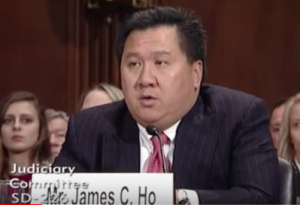
Judge With Overinflated View Of His Intelligence Blasts Judges For ‘Overinflated View Of Their Intelligence’ – Above the Law

(via
YouTube)

“Too
many
judges
think
that
they’re
better
than
other
people,”
writes
Fifth
Circuit
Judge
James
Ho
in

a
new
piece
for
the
Harvard
Journal
of
Law
&
Public
Policy
.
“Too
many
judges
have
an
overinflated
view
of
their
intelligence
and
their
abilities.”

For
my
money,
judicial
arrogance
and
an
“overinflated
view
of
their
intelligence
and
their
abilities”
would
look
like
basing
a
politically
motivated,
but
legally
dubious
Second
Amendment
opinion
around
a
bunch
of
cases
that

conclude
the
opposite
way
if
the
judge
bothered
to
read
them
.
Or
maybe
using
their
perceived
clout
to

blackmail
a
law
school
for
not
disrespecting
student
speech

enough
.
Those
would,
of
course,
describe
Judge
James
Ho.

To
quote
Sterling
Archer,
“This
is
like
O.
Henry
and
Alanis
Morissette
had
a
baby
and
named
it
this
exact
situation.”

But
Ho’s
broadside
against
judicial
arrogance
does
not
begin
from
a
point
of
honest
self-assessment.
Serious
law
journal
submissions
don’t
credulously
include
the
phrase
“woke
Constitution,”
after
all.
Instead,
the
judge
embarks
on
yet
another
rhetorical
thirst
trap
aimed
squarely
at
Donald
Trump.
Churning
out

inflammatory
separate
opinions

can
only
go
so
far
to
burnish
the
resume
of
a
Supreme
Court
hopeful.
It’s
a
challenge
to
stay
top
of
mind
in
MAGA
politics!
That’s
why
judges
use
their
free
time
to
pick
fights
with
law
schools
and,
as
here,
write
articles
supporting
the
president’s
fragile
ego
against
the
broad
array
of
judges


across
the
political
spectrum

constantly
ruling
against
the
White
House.

Too
many
judges
think
they
know
politics—when
they
don’t.
Too
many
judges
think
they
know
national
security—when
they
don’t.
In
short,
too
many
judges
have
forgotten
the
virtue
and
value
of
humility.
And
I
think
a
big
part
of
the
blame
goes
to
the
notion
of
judicial
supremacy.

It’s
a
curious
charge
to
level,
given
that
the
judges
he’s
mad
at
are
pointedly

not

trying
to
know
politics
or
national
security.
The
administration’s
beef
is
with
judges
who
have
refused
to
look
the
other
way
or
bend
the
rule
of
law
to
satisfy
politicians
draping
illegal
actions
in
“national
security”
rhetoric.
This
is
the
same
judge
who

threw
a
public
tantrum

when
the
Supreme
Court


this

Supreme
Court

dared
to
suggest
the
government
couldn’t
summarily
deport
people
without
due
process
just
because
Trump
yelled
“gang
members!”
loud
enough.

Standing
with
the
rule
of
law
over
the
assertions
of
politicians
is,
as
any
student
of
Schoolhouse
Rock
would
understand,
the
whole
point
of
the
Constitution’s
series
of
checks
and
balances.
To
that
near
universally
held
principle
dating
back
to
the
earliest
days
of
the
Republic,
Judge
Ho
says…
nuh-uh.

Did
someone
say
something
about
judges
being
arrogant?

It’s
often
said
that
the
judiciary
is
a
“co-equal”
branch
of
government.
You
hear
that
said
by
the
media,
and
by
legal
academics.
You
see
it
taught
in
schools
across
America.
But
it’s
wrong.
The
judiciary
has
an
important
role
in
our
constitutional
republic.
But
it’s
a
limited
one.
Judges
don’t
write
the
law.
Judges
don’t
execute
the
law.
And
that’s
for
one
simple
reason.

Yes…
they
don’t
write
law
or
execute
law
because
the
judiciary
is
the
third
branch
in
that
checks
and
balances
scheme.
But
Ho
waves
away
this
conclusion
to
proclaim
the
reason
is
“As
Americans,
we
believe
that
we
can
govern
ourselves.”
Which,
in
context,
Ho
believes
should
mean
the
political
branches
should
have
unfettered
authority
because
they
can
just
be
voted
out.

That’s
not
a
particularly
“originalist”
argument,
to
the
extent
originalism
is
about
interpreting
the
law
from
the
context
of
its
original
understanding,
but
it’s
a

paradigmatic
originalist
argument

to
the
extent
originalism
is
just
PR
fluff
for
contemporary
Republican
party
priorities.
Originalism
means
the
executive
branch
has
no
power
without
Congress
when
Democrats
are
president…
and
rubberstamping
disappearing
people
to
gulags
in
the
middle
of
the
night
when
Republicans
are
in
the
White
House.
But,
against
all
odds,
Judge
Ho
attempts
to
square
his
pet
fig
leaf
philosophy
with
the
argument
he’s
making
off
the
top:

The
American
people
expect
judges
to
use
our
independence
to
follow
the
law—nothing
more,
nothing
less.
And
that’s
the
whole
point
of
originalism.

Well,
no.
Originalism
is,
by
design,
porting
a
bunch
of
cherry-picked,
off-brand
history
into
judicial
decision-making
whenever
“following
the
law”
doesn’t
work
out.
Remember
when
the
judge
wrote
earlier
that
too
many
judges
think
they
know
subjects
that
they
don’t?
History
should
be
top
of
that
list.

Judge
Ho’s
complaint
when
it
comes
to
originalism
is
that
he
thinks
judges
too
often
depart
from
“originalism”
to
cater
to
the
public,
even
though
the
whole
first
half
of
his
article
complained
that
judges
aren’t
doing
enough
to
support
whatever
the

superior

political
branches
of
government
want.
But
his
faith
that
“As
Americans,
we
believe
that
we
can
govern
ourselves,”
runs
only
so
far
as
the
public
chooses
to
govern
itself
the
way
Donald
Trump
might
want.

It’s
not
an
intellectually
consistent
argument,
but
it
is
one
that
curries
favor
with
the
Mad
King
who
holds
one’s
future
career
prospects
in
his
tiny
little
hands.

And
since
every
accusation
is
an
admission,
Judge
Ho
spills
some
ink
trying
to
paint
the
adversaries
he’s
shadowboxing
as
the

real

hypocrites.

They
vigorously
defend
district
judges
against
criticism—unless
those
judges
live
in
Texas
or
Florida.
They
strenuously
condemn
forum
shopping—but
not
if
the
courts
are
in
Boston
or
San
Francisco.

It’s
about
receipts,
Jimbo.
Judge
Ho
doesn’t
want
to
get
into
specifics
with
this
topic,
because
his
past
efforts
to
make
it
make
sense

haven’t
gone
so
well
for
him
.
The
Texas
judge
he’s
alluding
to,
Matthew
Kacsmaryk,
sits
in
a
single-judge
courthouse
and
right-wing
activists

which
was,
of
note,
Kacsmaryk’s
job
description
before
joining
the
bench

used
this
hack
to

create
astroturfed
plaintiffs

and
get
nationwide
injunctions.
This
is
different
than
bringing
cases
in
Boston
in
two
ways:
(1)
bigger
cities
mean
more
people
with
legitimate
claims,
meaning
a
case
in
Boston
is
far
less
likely
to
involve
activists
inventing
an
organization
a
few
months
before
just
to
manufacture
a
favorable
venue,
and
(2)
a
case
in
Boston
is
still
randomly
assigned
to
a
judge
in
that
district.

Comically,
Judge
Ho
will
later
complain
about
district
judges
as
opposed
to
appellate
panels
and
only
manage
to
prove
how
ridiculous
it
is
to
conflate
Amarillo
and
Boston:

[District
court]
decisions
are
typically
made
by
just
one
district
judge.
They’re
the
only
members
of
the
judiciary
who
can
exercise
the
judicial
power
of
the
United
States
without
anyone’s
consent
but
their
own.
With
unilateral
power,
there’s
unique
danger
that
some
district
courts
may
get
off
track.

Exactly.
The
fact
that
a
party
can
use
a
single-judge
courthouse
to
chose
the
precise
judge
to
wield
all
this
unilateral
power
is

what
differentiates
these
categories
of
forum
shopping
.

They
strongly
oppose
the
impeachment
of
judges—except
when
those
judges
are
named
Thomas
or
Alito.
They’re
happy
to
impeach
a
President
for
an
alleged
abuse
of
power—but
horrified
if
anyone
even
suggests
impeaching
a
judge
on
the
same
basis.

Well,
the
distinction
might
be
that
Judge
Boasberg
is
catching
heat
for
authorizing
subpoenas
for
phone
records
of
sitting
legislators
based
on
probable
cause
that
they
were
communicating
with
actors
in
a
criminal
conspiracy.
People
talk
about
impeaching
Justices

Alito

and

Thomas

because
they
took
money
under
the
table
from
people
with
direct
and
indirect
business
before
the
court
and
didn’t
disclose
it
as
legally
required.
Judge
Ho
is
no
stranger
to
trying
to
blow
off
Justice
Thomas’s
ethical
issues,
but
at
least
back
then

he

tried

to
back
up
his
argument
.

Hey,
look,
if
a
federal
judge
ever
steals
classified
documents,
refuses
to
return
them,
and
then
has
their
lawyer
lie
to
law
enforcement
about
complying,
we’ll
all
agree
to
impeach
them
too.

Back
in
March,
Judge
Ho

left
the
Federal
Judges
Association

because
he
was
angry
that
they
issued
a
statement
about
judicial
safety.
He’s
going
to
double
down
on
that.

They’ve
even
politicized
judicial
security.
Today,
they’re
fearful
when
a
judge
receives
an
unsolicited
pizza
delivery
at
home.
But
just
a
few
years
ago,
they
applauded
when
swarms
of
protestors
disrupted
certain
Justices’
homes
for
weeks
on
end.

Fuck
you,
man.
Those
pizza
deliveries
are
arriving

in
the
name
of
a
federal
judge’s
murdered
son
.
The
message
those
pizza
deliveries
intend
to
send
is
“we
know
where
you
live,
and
remember
what
happened
to
Judge
Salas’s
son.”
Even
if
we
grant
Judge
Ho’s
generous
and
evidence-free
assumption
that
the
people
sending
those
pizzas
are
just
trolls
who
don’t
plan
to
follow
through,
this
is
an
act
of
violent
intimidation.

The
“swarms
of
protestors,”
Judge
Ho
describes
as
bothering
the
justices
“for
weeks
on
end.”
In
contrast
to
the
pizza
delivery
threats,
the
protestors
he’s
talking
about
set
up
on
public
property
outside
the
justices’
homes
and
picketed
for
20-30
minutes
at
a
time.
No
one
at
the
time
alleged
that
the
protestors
made
any
violent
threats

direct
or
implied

beyond
mere
proximity.
And
protesting
outside
someone’s
house
perhaps

should

be
off-limits,
but
the
Supreme
Court
itself
decided
to
bless
the
practice

when
they
ruled
that
nutjobs
can
camp
out
in
front
of
the
homes
of
abortion
doctors
.
It
was
all
fun
and
games
until
they
had
to
live
under
the
same
laws
they
imposed
on
everyone
else.

Speaking
of
arrogance.

So
Judge
Ho,
in
his
quixotic
attempt
to
be
Donald
Trump’s
best
judicial
boy,
went
to
a
law
journal
to
dismiss
judges
for
thinking
“A
$20
large
pepperoni
is
an
outrage,”
deliberately
refusing
to
acknowledge
the
context.
There’s
not
even
a

footnote

mention
of
the
name
attached
to
these
pizza
orders,
let
alone
what
that
would
mean.
Judge
Ho
used
a
Harvard
Law
platform
to
simultaneously
make
light
of
the
judges
receiving
violent
harassment
and
spit
on
Judge
Salas’s
tragedy.

I
know
sitting
on
the
Supreme
Court
is
cool,
but
is
it
really
worth
bringing
this
kind
of
poison
into
your
soul?


Not
Enough
Respect
for
the
Judiciary—Or
Too
Much?

[Harvard
Journal
of
Law
&
Public
Policy]


Earlier:


Judge
Ho
Indulges
In
Furious
Rage
Wank
Over
AEA
Deportations


Judge
Ho
Apparently
Didn’t
Bother
To
Read
The
Cases
He
Cited
In
Domestic
Abuser
Gun
Opinion


Federal
Judges
All
But
Admit
Yale
Law
School
Boycott
Was
A
Ruse



HeadshotJoe
Patrice
 is
a
senior
editor
at
Above
the
Law
and
co-host
of

Thinking
Like
A
Lawyer
.
Feel
free
to email
any
tips,
questions,
or
comments.
Follow
him
on Twitter or

Bluesky

if
you’re
interested
in
law,
politics,
and
a
healthy
dose
of
college
sports
news.
Joe
also
serves
as
a

Managing
Director
at
RPN
Executive
Search
.

A World Cup Ticket Isn’t A Souvenir. It’s A Contract Of Adhesion. – Above the Law

(Photo
by
Ahmed
Mosaad/NurPhoto
via
Getty
Images)

FIFA
has
managed
to
turn
World
Cup
ticketing
into
an
international
spectacle
before
a
single
match
has
even
started.
In
September,
the
organization
said
that
tickets
would
begin
at
around
€51
for
group-stage
games
and
top
out
near
€5,727
for
the
final.
That
was
before
FIFA
shifted
to
dynamic
pricing.

This
week,
fans
learned
what
“dynamic”
looks
like
in
the
real
world
.

Supporters
erupted
after
the
German
football
federation
published
the
price
bands
allocated
to
national
associations.
The
group-stage
tickets
that
were
supposed
to
hover
around
$60
now
sit
between
$180
and
$700.
The
cheapest
final
ticket
is
$4,185.
The
top
end
is
$8,680.
These
figures
make
a
mockery
of
the
original
promise,
and
they
obliterate
the
U.S.
bid
committee’s
vision
of
hundreds
of
thousands
of
$21
seats
for
early
matches.

Fans
call
it
a
“monumental
betrayal.”
Lawyers
know
it
is
also
a
bait-and-switch
that
funnels
consumers
straight
into
a
contract
written
with
one
goal:
protecting
FIFA
from
all
imaginable
risk.

Because
a
World
Cup
ticket
is
not
an
ordinary
purchase.
It
is
a
revocable
license
wrapped
in
the
Federal
Arbitration
Act
and
reinforced
with
clauses
that
eliminate
nearly
every
remedy
a
fan
might
expect.
I
have
read

the
lengthy
terms
and
conditions
of
ticketing
for
matches
in
the
U.S.

so
you
don’t
have
to.
What
follows
is
the
reality
behind
that
QR
code.


You
are
not
buying
access.
You
are
temporarily
borrowing
it.

The
ticket
is
a
“personal,
revocable,
single-entry
license.”
Anyone
who
has
spent
time
in
Property
or
Torts
understands
what
that
means.
FIFA
can
revoke
it
and
send
you
home
without
refund
or
explanation.
Wrong
reseller,
wrong
login,
wrong
battery
level,
wrong
vibes
at
the
turnstile.
It
all
creates
grounds
for
denial.
The
ticket
remains
FIFA’s
property
at
all
times.
Your
expectations
play
no
role
in
the
analysis.


Refunds
are
almost
nonexistent.

“Tickets
have
no
cash
value.”
That
sentence
appears
early
and
often.
Delayed
flights,
traffic
jams,
weather
disruptions,
illness,
injury,
or
a
match
that
changes
meaning
because
a
star
player
is
injured
offer
no
refund.
Even
when
refunds
exist,
they
usually
go
only
to
the
original
purchaser.
If
you
received
a
transferred
ticket,
your
chances
of
compensation
shrink
even
further.

FIFA’s
liability
cap
is
the
greater
of
$100
or
the
price
of
the
ticket.
Travel,
lodging,
and
every
other
expense
tied
to
your
once-in-a-lifetime
trip
are
on
you.


Unauthorized
sellers
are
legal
quicksand.

If
you
buy
from
anyone
other
than
FIFA
or
a
listed
partner,
your
ticket
can
be
invalidated
without
notice.
FIFA
can
refuse
entry
at
the
gate,
even
if
you
paid
a
premium.
Your
only
recourse
is
against
the
reseller,
which
is
usually
another
way
of
saying
you
have
no
recourse
at
all.


Your
phone
is
a
condition
precedent.

Mobile-only
ticketing
lets
FIFA
shift
even
more
risk
back
onto
fans.
If
your
phone
dies,
breaks,
fails
to
load
the
app,
or
doesn’t
authenticate
you
correctly,
the
terms
place
responsibility
squarely
on
you.
FIFA
suggests
using
its
help
desk
but
requires
advance
notice.
Few
people
discover
ticket
trouble
in
a
timeframe
that
makes
that
meaningful.


Children
require
precision
and
patience.

Every
individual
needs
a
ticket
unless
they
fit
FIFA’s
strict
definition
of
a
“baby
in
arms.”
Parents
are
legally
responsible
for
children’s
behavior.
Misuse
of
accessibility
tickets
can
result
in
cancellation
of
all
tickets
in
the
group.
FIFA
drafts
these
sections
with
an
attention
to
detail
usually
reserved
for
tax
codes.


Entry
is
conditioned
on
search
and
rule
compliance.

By
using
your
ticket,
you
consent
to
personal
and
bag
searches.
Refusal
means
removal.
Stadium
rules,
alcohol
regulations,
and
health
protocols
can
be
changed
at
any
time.
If
you
cannot
comply,
you
lose
your
right
to
attend.
There
is
no
refund
and
no
practical
path
to
challenge
the
decision.


You
surrender
broad
privacy
and
image
rights.

Attending
the
match
grants
FIFA
permission
to
use
your
image,
voice,
and
likeness
worldwide
in
any
medium
forever.
Anything
you
record
inside
the
stadium
can
be
used
by
FIFA.
You
may
not
livestream
or
monetize
your
content.
If
FIFA
thinks
your
post
looks
like
unauthorized
advertising,
they
reserve
full
enforcement
rights.


You
waive
most
claims,
including
unknown
ones.

The
terms
contain
a
wide
release
and
covenant
not
to
sue.
You
assume
all
typical
sporting-event
risks.
You
also
waive
protections
against
releasing
unknown
claims,
including
California’s
powerful
consumer
statute.
This
is
risk
transfer
at
its
most
aggressive.


All
disputes
go
to
private
arbitration
in
Miami.

Any
controversy
related
to
the
match,
the
ticket,
or
the
event
is
sent
to
mandatory,
binding,
individual
arbitration
under
JAMS
rules.
No
jury
trial.
No
class
actions.
No
group
claims.
The
contract
includes
an
opt-out,
but
only
if
you
notice
the
clause,
locate
the
deadline,
and
physically
mail
a
letter.
Most
people
will
not.


So
what
should
a
fan
do?

Lawyers
understand
contract
asymmetry.
Fans
generally
do
not.
If
you
are
advising
anyone,
including
yourself,
the
practical
steps
are
straightforward:


Buy
only
from
authorized
sources.


Confirm
that
your
phone,
app,
and
login
actually
work
days
in
advance.


If
arbitration
concerns
you,
calendar
your
opt-out
deadline
as
soon
as
you
purchase.


Accept
that
the
burden
of
every
unexpected
development
falls
on
the
consumer,
not
the
organizer.

The
World
Cup
will
deliver
unforgettable
moments.
It
always
does.
But
the
contract
behind
the
ticket
is
unforgiving
and
heavily
weighted
to
FIFA’s
advantage.
You
are
paying
premium
prices
for
a
document
that
offers
almost
no
reciprocal
protection.

A
World
Cup
ticket
is
not
peace
of
mind.
It
is
a
revocable
permission
slip
governed
by
New
York
law
and
the
Federal
Arbitration
Act.
And
you
have
agreed
to
every
part
of
it
long
before
the
first
whistle.


Michael
J.
Epstein
,
a
Harvard
Law
School
graduate,
is
a
trial
lawyer
and
managing
partner
of


The
Epstein
Law
Firm,
P.A.,


a
law
firm
based
in
New
Jersey.

Tales From The Witness Stand: What ‘Winning’ Expert Testimony Looks Like – Above the Law

Whether
you’re
cross-examining
or
putting
forth
an
expert
witness,
effectively
managing
their
testimony
is
a
difficult
task.

Experts
must
garner
the
respect
of
the
judge
and
jury
while
also
defending
their
own
credibility

a
precarious
balancing
act,
particularly
when
faced
with
effective
cross-examination.

Join
us
on

January
22nd
at
1
p.m.
ET
, for
this
webinar
presented
by
our
friends
at
GLG,
where
our
panel
will
look
at
all
things
expert
testimony
in
2025.


We’ll
explore:


What
“winning”
expert
testimony
looks
like

Examples
of
expert
testimony
from
notable
cases

How
effective
lawyers
cross-examine
experts

How
top
expert
witnesses
translate
specialized
jargon
for
factfinders

Trends
in
expert
witness
preparation,
including
the
role
of
technology 

Be
part
of
the
first
conversation
unpacking
these
findings

and
see
where
your
department
stands
in
this
new
era
of
IP
management.

CLE-credit
is
available
for
live
attendees.


Register
Today!


Attorney Accused Of Stalking And Filming Teenager Indicted On 91 Felony Counts – Above the Law

Former
Ohio
legal
aid
attorney
Matthew
Nicholas
Currie,
50,
is
facing
a
mountain
of
felony
charges
for
what

prosecutors
say

is
a
disturbing
stalking
campaign
of
a
teenager
and
other
women.
The
charges
include
40
counts
of
voyeurism;
49
counts
of
illegal
use
of
a
minor
in
nudity-oriented
material;
and
two
counts
of
unauthorized
use
of
a
computer,
cable
or
telecommunication
property.

Prosecutor
Mat
Heck
Jr.
says
the
investigation
began
in
October
of
2024,
when
a
relative
of
Currie
found
disturbing
images
in
his
phone.

“The
search
revealed
that
the
defendant
stalked
a
17-year-old
Oakwood
High
School
student.
The
defendant
went
to
her
residence
on
numerous
occasions
and
surreptitiously
photographed
and
videotaped
her
in
her
bedroom
through
her
windows,
including
in
various
states
of
nudity,
obviously,
all
without
her
knowledge,”
Heck
said.

Authorities
say
that
after
the
victim
left
for
college,
Currie
expanded
his
activities
to
include
other
women.
Four
victims
have
been
identified
so
far.

“A
91-count
indictment
does
not
happen
by
accident,”
said
Oakwood
Chief
Alan
Hill.
“There’s
a
tremendous
amount
of
work
that
goes
into
preparing
a
case
like
this.

From
this
point
forward,
this
is
about
holding
his
person
accountable
for
his
actions.”

Currie
left
his
job
at
the
Advocates
for
Basic
Legal
Equality
this
past
summer,
after
a
Parkinson’s
diagnosis.
He
is
scheduled
to
be
arraigned
January
20th.


Kathryn
Rubino
is
a
Senior
Editor
at
Above
the
Law,
host
of

The
Jabot
podcast
,
and
co-host
of

Thinking
Like
A
Lawyer
.
AtL
tipsters
are
the
best,
so
please
connect
with
her.
Feel
free
to
email

her

with
any
tips,
questions,
or
comments
and
follow
her
on
Twitter

@Kathryn1
 or
Mastodon

@[email protected].

A New Year, A New You – Above the Law

It’s
a
new
year,
which
means
it
can
be
a
new
you. 
Many
take
on
New
Year’s
Resolutions.
Perhaps
a
different
approach
is
better.


1)
Don’t
“set
goals.”
Build
a
plan
you
can
execute
on
your
worst
day.

Most
New
Year’s
resolutions
fail
for
a
boring
reason:
they
aren’t
operational.
“Get
better
at
depositions”
is
a
wish.
“Do
two
deposition-prep
sessions
this
month
and
ask
a
senior
associate
to
critique
my
outline”
is
a
plan.

Start
small
and
specific:

  • Pick

    three
    outcomes

    you
    want
    by
    year-end
    (skills,
    relationships,
    health,
    money

    your
    call).
  • For
    each
    outcome,
    write
    a

    short
    to-do
    list

    you
    can
    start
    in
    January.
  • Then
    take
    it
    one
    step
    further:
    break
    each
    goal
    into
    “next
    actions”
    you
    can
    complete
    in

    30
    minutes
    .

One
of
your
best
tools
is
embarrassingly
low-tech:
write
down
what
you’re
proud
of
and
keep
it
where
you
can
see
it.
It’s
not
vanity;
it’s
fuel.
Confidence
isn’t
just
a
personality
trait
in
law

it’s
part
of
the
product.


2)
Replace
willpower
with
systems:
checklists,
calendars,
and
repetition.

Law
rewards
consistency.
And
consistency
comes
from
systems,
not
motivation.

A
practical
trick:
build
checklists
for
repeatable
tasks

witness
interviews,
depo
prep,
discovery
responses.
Most
of
what
we
do
can
be
reduced
to
a
checklist,
and
every
time
you
use
it,
you
improve
it.
That’s
how
you
quietly
become
the
“always
prepared”
associate.

Another
simple
system:
review
your
calendar
forward
so
deadlines
stop
ambushing
you.
And
keep
a
running
case
list
so
you
can
spot
which
file
you’ve
neglected
and
re-engage
it.


3)
Stop
overthinking.
Start
doing.
(Yes,
it’s
that
blunt.)

Lawyers
are
wired
for
analysis.
That’s
why
clients
hire
us

and
it’s
also
why
we
get
stuck.
The
profession
breeds
analysis
paralysis:
we
think,
analyze,
ponder,
then
do
more
of
the
same
instead
of
deciding
and
moving.

The
fix
is
uncomfortable:
run
more
experiments.

  • Draft
    the
    outline
    and
    send
    it.
  • Make
    the
    call
    instead
    of
    sending
    the
    tenth
    email.
  • Offer
    to
    take
    the
    first
    cut
    at
    the
    motion
    even
    if
    it
    won’t
    be
    perfect.

Businesses
beta-test.
They
try,
fail,
adjust,
repeat.
Lawyers
should,
too.


4)
Build
your
“pack”

not
just
friends,
but
strategic
relationships.

Young
lawyers
love
to
talk
about
“networking”
like
it’s
a
gross
chore.
It’s
not.
It’s
professional
survival.
We’re
pack
animals.
We
work
best
in
teams.

An
innovative
relationship
plan
is
specific.
One
list
worth
stealing:
have
at
least
one
relationship
in
each
category

a
lawyer
in
your
practice
area,
a
senior
lawyer,
a
solo,
a
recruiter,
a
bar
leader,
a
legal
journalist,
a
strong
public
speaker,
and
a
legal
marketer.
That’s
not
random.
That’s
an
ecosystem.

And
don’t
wait
for
“networking
events”
to
start.
Build
a
tribe:
three
or
four
like-minded
young
lawyers,
weekly
coffee,
ongoing
support.
The
job
gets
lighter
when
you’re
not
carrying
it
alone.


5)
Put
“reps”
on
your
calendar:
speaking,
writing,
and
client
communication.

Skill
doesn’t
come
from
reading
about
the
skill.
It
comes
from
doing
the
skill
badly
and
then
less
badly.

Public
speaking
is
the
clearest
example.
If
you’re
starting
with
bar
gigs,
your
first
few
presentations
might
stink

and
that’s
normal.
There’s
no
replacement
for
reps.
The
best
advice
for
fear
is
exposure
therapy:
scale
it
from
coffee
conversations
to
small
groups
to
bigger
rooms.

Same
with
writing.
If
you
want
to
become
a
strong
legal
writer,
write
more.
If
you
want
to
become
a
visible
lawyer,
publish
and
speak.
The
New
Year
is
a
good
time
to
decide
what
you’re
going
to
be
known
for

and
start
building
receipts.


6)
Be
intentional
about
your
career
moves:
don’t
chase
dollars
at
the
expense
of
development.

The
market
will
always
tempt
you:
more
money
elsewhere,
a
shinier
title,
a
faster
track.
But
early
in
your
career,
training
is
leverage.
If
you’re
at
a
place
that
mentors
you,
develops
you,
and
gives
you
opportunities,
think
before
you
leap.

That
doesn’t
mean
tolerate
disrespect
or
dysfunction.
It
means
separate
the
two
questions:

  1. “Am
    I
    being
    treated
    professionally?”
  2. “Am
    I
    being
    developed
    into
    the
    lawyer
    I
    want
    to
    become?”

Money
matters.
But
so
does
becoming
excellent

and
excellence
compounds.


7)
Be
proactive
in
your
cases:
set
the
agenda,
or
someone
else
will.

A
lot
of
young
lawyers
unknowingly
practice
defense
(or
plaintiff)
law
reactively

responding,
reacting,
chasing.
You
want
to
push
your
cases
forward
and
dictate
the
speed,
tone,
and
activity.
Said
differently:
be
proactive,
set
the
agenda,
and
move
the
ball

regardless
of
which
side
of
the
“v.”
you’re
on.

That
mindset
is
a
career
accelerant.
Partners
trust
the
associate
who
drives
cases,
not
the
one
who
waits
for
instructions
like
a
slow
printer.


8)
Use
AI
wisely

and
protect
your
clients
(and
yourself).

AI
is
here,
and
pretending
otherwise
is
malpractice-by-denial.
But
reckless
use
is
just
as
bad.
One
non-negotiable:
warn
clients
not
to
upload
your
work
product
or
attorney-client
communications
into
public
tools.
Prompts
and
uploads
can
be
discoverable,
and
there’s
no
attorney-client
relationship
with
a
chatbot.

Your
New
Year
assignment:
learn
the
tools,
understand
the
risks,
and
become
the
lawyer
who
can
use
technology
without
becoming
its
cautionary
tale.


9)
Guard
your
mental
health
like
it’s
part
of
your
job
(because
it
is).

“The
kids
aren’t
alright”
is
not
a
slogan;
it’s
an
observation
about
a
profession
that
can
be
a
perfect
cauldron
for
anxiety
and
depression.
The
answer
isn’t
“toughen
up.”
The
answer
is
to
build
support,
keep
lines
of
communication
open,
and
stay
aware
of
changes
in
yourself
and
your
colleagues.

Also:
humor
helps.
It’s
an
antidote
and
a
vaccine
for
stress

use
it.


The
New
Year
takeaway

This
profession
rewards
the
unsexy
stuff:
discipline,
consistency,
and
doing
the
work
when
you
don’t
feel
like
it.
Hard
work
is
still
the
difference
between
stasis
and
movement.
And
success
is
sustained
discipline.

So
tackle
the
New
Year
like
a
lawyer:

  • Define
    the
    objective.
  • Build
    the
    system.
  • Gather
    the
    right
    people.
  • Take
    the
    next
    step.
  • Repeat
    until
    it’s
    yours.

And
if
you’re
waiting
for
the
perfect
moment
to
start,
stop.
Every
new
positive
habit
begins
with
a
decision.
Decide.


Frank
Ramos
is
a
partner
at
Goldberg
Segalla
in
Miami,
where
he
practices
commercial
litigation,
products,
and
catastrophic
personal
injury. You
can
follow
him
on LinkedIn,
where
he
has
about
80,000
followers
.

Business Origination Skills In The Age Of Agentic AI: Is There Anything New Under The Sun? – Above the Law

The
skills
clients
will
demand
from
their
lawyers
are
about
to
change
dramatically.
Or
are
they?


The
McKinsey
Panel

At

CES
2026
,
one
of
the
more
revealing
keynotes
featured

Jason
Calacanis

interviewing

Bob
Sternfels

of

McKinsey

and

Heman
Taneja

of

General
Catalyst

about
the
future
of
employment,
among
other
things.
What
emerged
wasn’t
just
advice
for
new
graduates,
it
signaled
a
roadmap
for
how
lawyers
need
to
think
about
client
origination
and
service.

At
one
point,
the
panelists
touched
on
a
critical
issue:
what
skills
will
be
sought
after
by
employers
with
the
advent
of
agentic
AI.
While
the
panelists
focused
on
those
who
are
getting
out
of
school
in
today’s
tough
employment
market,
what
they
were
talking
about
will
also
apply
to
what
lawyers
will
have
to
do
to
attract
future
clients.


A
Game
Changer?

The
game
changer
in
hiring
according
to
the
panel:
businesses
will
no
longer
be
focused
on
those
who
can
just
solve
problems
because
so
many
problems
can
and
will
be
solved
by
AI.

The
first
question
to
ask
is
instead
what
skills
humans
have
that
GenAI
and
AI
don’t.
According
to
the
panelist,
it
boils
down
to
three
things:
AI
can’t
aspire,
it
can’t
provide
leadership,
and
it
can’t
apply
human
judgment.


New
Skills?

As
a
result,
the
future
will
belong
to
those
who
ask
the
right
questions
about
the
problems.
Who
can
look
at
what
a
problem
means.
Who
can
figure
out
the
impact
the
problem

and
more
importantly,
the
solution

will
have
for
the
future.

It
will
matter
less
what
school
candidates
go
to
and
more
what
they
aspire
to.
How
resilient
they
can
be.
Leadership
skills
will
be
more
important.
And
drive
and
passion
may
be
everything.

If
you
want
to
get
hired,
the
panelists
say
worry
less
about
your
resume
and
more
about
doing
some
work,
even
if
for
free,
that
demonstrates
what
you
can
do.
That
shows
you
have
new
ways
of
thinking
about
things.
And
how
you
can
change
a
system
or
platform
for
the
person
you
want
to
be
hired
by.

Hiring
will
not
be
premised
on
future
on-the-job
training
since
it
will
take
less
time
to
build
an
agentic
agent
than
for
human
training.
(This
point
was
driven
home
to
me
later
in
a
keynote
by
Caterpillar
CEO

Joe
Creed

and
his
team.
They
displayed
an
AI
bot
that
can
provide
step-by-step
instructions
to
a
heavy
equipment
operator,
bypassing
an
otherwise
steep
learning
curve.)

This
means
that
some
kinds
of
experience
will
matter
less
and
judgment
more.
It
will
not
be
enough
to
recite
information;
it
will
be
the
ability
to
use
that
information
in
gray
areas
where
there
is
no
clear-cut
right
or
wrong
answer.

Being
nimble
and
innovative
will
matter
more.
AI
and
technology
in
general
are
developing
at
exponentially
warp
speed.
Being
adept
at
fast
adoption
and
implementation
will
matter
more
than
ever.

All
sounded
pretty
astute
even
though
the
panelists
lacked
concrete
examples.
But
more
than
that,
I
think
they
misunderstand
what
skills
and
talents
already
set
superstars
apart.
What
sets
themselves
apart.

Thinking
about
this
in
the
legal
context
might
help.


Asking
the
Right
Questions

I
often
handled
serial
litigation—cases
involving
the
same
product,
same
issues,
and
same
harm
in
a
variety
of
jurisdictions—over
my
career.
These
cases
were
often
viewed
as
merely
requiring
a
standard
playbook.
File
an
answer,
take
depositions,
defend
the
cases,
bill
by
the
hour.

But
one
particular
case
was
unusual.
It
needed
a
new
way
of
thinking
and
asking
the
right
questions.
It
meant
noticing
that
most
of
the
individual
cases
resolved
via
settlement
at
mediation,
that
it
was
important
to
the
client
to
move
the
cases
quickly,
and
that
many
of
the
lawyers
on
the
other
side
were
also
very
knowledgeable
about
the
cases.

That
led
to
quickly
getting
the
client
the
information
needed
to
assess
the
exposure
by
asking
the
other
side
to
provide
that
information
with
the
complaint.
In
exchange,
it
meant
a
commitment
to
the
other
side
to
mediate
the
case
within
60
days.
And
it
meant
converting
to
a
flat
fee
instead
of
billable
hour
to
solve
client
goals.
The
result:
a
national
problem
for
the
client
was
resolved
in
a
fraction
of
the
time
previously
thought.

That’s
asking
the
right
questions
and
coming
up
with
a
new
holistic
approach.


What
This
Means
for
Legal

If
the
panelists
were
right,
it
would
seem
at
first
blush
the
legal
world
is
about
to
be
turned
upside
down.
The
traditional
legal
model
assumes
law
schools
will
teach
people
the
law.
Young
lawyers
would
then
learn
how
to
practice
by
apprenticing
at
firms;
the
proverbial
on-the-job
training.
As
they
moved
up
the
ladder,
they
would
get
clients
by
knowing
the
law,
providing
information
to
clients,
and
standing
out
for
their
expertise.

But
that
model
seems
different
than
what
the
panelists
outlined.
And
while
the
panel
was
talking
about
how
to
get
hired
out
of
school,
they
might
just
as
well
have
been
talking
about
how
a
lawyer
gets
hired
by
a
client.
A
client
who
may
think
just
like
those
on
the
panel.

What
does
this
mean?
It
may
no
longer
be
enough
to
be
able
to
do
a
workman-like
job
solving
legal
problems.
Instead,
what
will
matter
more
is
the
ability
to
provide
holistic
answers
to
what
the
client
needs.
It
means
harnessing
the
tech
tools
and
providing
what
clients
can’t
get
from
their
own
AI
agents.
It
requires
asking
better
questions;
questions
the
client
may
not
have
thought
of.
To
have
the
passion,
drive,
and
aspiration
to
see
things
differently.
To
be
able
to
lead
a
team.
To
be
resilient
in
the
face
of
change.
To
demonstrate
your
abilities
by
offering
to
handle
a
client’s
matters
in
new
and
unusual
ways.

Experience
will
matter,
yes,
but
only
to
the
extent
it
supplies
judgment
to
do
things
in
better
ways.
To
get
to
the
core
issues,
not
the
surface
ones.

It
won’t
be
enough
to
send
a
client
an
email
notifying
them
of
a
development
the
client
will
likely
find
on
their
own.
It
won’t
be
enough
to
tell
them
the
news;
you
will
need
to
tell
them
what
it
means.

It
won’t
be
enough
to
be
an
expert
in
a
field.
You
will
need
to
show
how
you
can
use
that
expertise
to
do
things
an
AI
agent
can’t
do
and
the
client
can’t
access
on
their
own.
That
takes
judgment.


But
Then
Again,
Isn’t
That
What
Superstars
Have
Always
Done?

But
then
again,
isn’t
that
what
superstar
lawyers
and
originators
have
always
done?
Isn’t
that
what
my
example
demonstrates?

 It’s
that
ability
and
willingness
to
adapt
to
new
issues
and
challenges
and
use
those
challenges
for
your
benefit.
It’s
not
being
constrained
by
experience
but
using
it.
It’s
asking
the
right
questions
and
seeing
where
things
may
be
going.

The
question
is
not
what
surface
skills
will
get
me
hired.
It’s
asking
what
conceptual
approach
will
provide
what
clients
really
need.
And
in
some
cases,
that
means
figuring
out
the
needs
before
the
client
does.
Like
showing
the
client
the
solution
to
their
legal
budget
crisis
is
for
you
to
change
your
billing
model.

Asking
what
skills
you
need
for
the
future
and
how
to
get
them
is
the
wrong
question.
The
right
question
is
how
you
should
philosophically
approach
what
you’re
doing
in
ways
a
bot
can’t.
That
philosophy
must
include
being
aspirational,
having
passion,
and
being
ready
to
change
and
adapt.
And
putting
your
client
first.

Want
to
be
hired
in
the
future?
Start
with
the
right
mindset.


Stephen
Embry
is
a
lawyer,
speaker,
blogger,
and
writer.
He
publishes TechLaw
Crossroads
,
a
blog
devoted
to
the
examination
of
the
tension
between
technology,
the
law,
and
the
practice
of
law

‘BEWARE’: Trump order demands some defense firms halt paying dividends, buying back stock – Breaking Defense

WASHINGTON

President
Donald
Trump
issued
an
executive
order
today
that
prohibits
defense
companies
from
making
share
repurchases
and
paying
dividends
to
shareholders,
as
well
as
places
restrictions
on
executive
compensation,
unless
companies
make
investments
to
modernize
weapons
production
facilities.

“All
United
State
Defense
Contractors,
and
the
Defense
Industry
as
a
whole,
BEWARE:
While
we
make
the
best
Military
Equipment
in
the
World
(No
other
Country
is
even
close!),
Defense
Contractors
are
currently
issuing
massive
Dividends
to
their
Shareholders
and
massive
Stock
Buybacks,
at
the
expense
and
detriment
of
investing
in
Plants
and
Equipment.
This
situation
will
no
longer
be
allowed
or
tolerated!”
Trump
said
today
in
a

post

on
his
Truth
Social
media
platform,
shortly
before
the
EO
was

published

on
the
White
House
website.

“Therefore,
I
will
not
permit
Dividends
or
Stock
Buybacks
for
Defense
Companies
until
such
time
as
these
problems
are
rectified

Likewise,
for
Salaries
and
Executive
Compensation.
MILITARY
EQUIPMENT
IS
NOT
BEING
MADE
FAST
ENOUGH!”
he
said.

The
executive
order
formally
says,
“Effective
immediately,
they
are
not
permitted
in
any
way,
shape,
or
form
to
pay
dividends
or
buy
back
stock,
until
such
time
as
they
are
able
to
produce
a
superior
product,
on
time
and
on
budget.”

“Every
firm
across
our
economy
has
a
right
to
profit
from
prudent
investment
and
hard
work,
but
the
American
defense
industrial
base
also
has
the
responsibility
to
ensure
that
America’s
warfighters
have
the
best
possible
equipment
and
weapons.
These
two
objectives
are
not
mutually
exclusive,”
the
EO
says.

The
executive
order
mandates
that
Secretary
of
Defense
Pete
Hegseth
take
30
days
to
review
contractor
performance
and
identify
any
who
are
falling
short

from
“underperforming”
on
relevant
contracts,
to
failing
to
invest
in
production
capacity,
to
“not
sufficiently
prioritizing
United
States
government
contracts.”
If
so
identified,
Hegseth
is
to
work
with
the
company
to
remediate
the
issues
and,
if
that
fails,
Hegseth
is
to
“initiate
immediate
actions
to
secure
remedies”
through
a
number
of
legal
and
regulatory
channels,
such
as
the
Defense
Production
Act.
It
also
suggests
the
government
may
“cease
ongoing
advocacy”
for
underperforming
companies
when
it
comes
to
potential
deals
with
foreign
customers.

The
order
also
bakes
in
the
requirement
for
future
contracting,
saying
that
within
60
days
Hegseth
will
“ensure
that
any
future
contract
with
any
new
or
existing
defense
contractor,
including
a
renewal,
contains
a
provision
prohibiting
both
any
stock
buyback
and
corporate
distributions”
during
a
period
of
“underperformance.”

Elsewhere,
the
EO
mandates
that
executive
compensation
be
tied
not
to
traditional
financial
metrics
for
the
company,
but
to
“on-time
delivery,
increased
production,
and
all
necessary
facilitation
of
investments
and
operating
improvements
required
to
rapidly
expand
our
United
States
stockpiles
and
capabilities.”

Executives,
the
EO
says,
could
have
their
salaries
capped
at
currently
levels

presumably
more
flexible
than
Trump’s
original
demand
on
social
media
that
CEOs
not
make
more
than
$5
million.

In
his
social
media
post,
Trump
lists
several
actions
he’d
like
to
see
from
defense
companies

namely
building
new
production
plants
and
speeding
up
maintenance
and
repair

but
does
not
list
specific
metrics
that
companies
must
meet
to
regain
the
ability
to
buy
back
stock,
increase
executive
compensation
or
pay
dividends.

Singling
Out
One
Firm

In

another
post

on
Truth
Social
prior
to
the
EO,
Trump
took
aim
at
one
supposedly
offending
defense
company:
Raytheon,
the
weapon’s
building
arm
of
RTX,
responsible
for
manufacturing
products
like
the
Patriot
air
and
missile
defense
system. 

Raytheon,
Trump
wrote,
“has
been
the
least
responsive
to
the
needs
of
the
Department
of
War,
the
slowest
in
increasing
their
volume,
and
the
most
aggressive
spending
on
their
Shareholders
rather
than
the
needs
and
demands
of
the
United
States
Military.
Raytheon
seems
to
think
this
is
the
Biden
Administration,
and
this
is
‘business
as
usual,’
IT’S
NOT!
Either
Raytheon
steps
up,
and
starts
investing
in
more
upfront
Investment
like
Plants
and
Equipment,
or
they
will
no
longer
be
doing
business
with
Department
of
War.” 

The
president
added
that
RTX
must
stop
conducting
stock
buybacks
if
it
wants
further
business
with
the
US
government.

Breaking
Defense
reached
out
to
RTX
as
well
as
the
five
other
top
publicly
traded
defense
companies
for
comment.
RTX,
Boeing,
L3Harris
and
General
Dynamics
declined
to
comment.
Lockheed
Martin
and
Northrop
Grumman
did
not
immediately
respond
to
the
request
for
comment.


RELATED:

Defense
companies
keep
up
momentum
on
share
repurchases
despite
Navy
leader’s
criticism

Roman
Schweizer,
an
analyst
with
TD
Cowen,
said
prior
to
the
EO’s
publication
that
Trump’s
statements
could
come
as
a
surprise
to
industry,
as
Tuesday’s
announcement
of
an
agreement
between
Lockheed
Martin
and
the
Pentagon
to

triple
PAC-3
production

was
seen
as
a
positive
sign
for
defense
contractors.

“Ultimately,
this
announcement
[from
Trump]
results
in
more
questions
than
answers,
and
we
would
expect
DoW
to
clarify
the
President’s
intent
at
some
point
and
establish
definitions
and
benchmarks
for
the
policy.
We
expect
Congress
to
have
questions
about
the
policy
as
well,”
he
wrote
in
a
note
to
investors.

In
December,
Schweizer
wrote
that
implementing
an
EO
targeting
defense
companies
could
result
in
“a
host
of
regulatory
and
legal
issues,”
including
on
whether
firms
like
Amazon
or
Microsoft
could
be
considered
defense
contractors
due
to
their
contracts
with
the
military
and
US
intelligence
agencies. In
today’s
note,
he
stated
that
his
take
remains
the
same. 

Hegseth
expressed
support
for
the
pending
restrictions,
posting
a
screenshot
of
the
Truth
Social
post
on
X
and
adding
the
“100”
emoji.

In
another
social
post
guaranteed
to
raise
eyebrows
in
the
defense
industry,
Trump
said
he
wanted
the
defense
budget
for
fiscal
2027
to
be
raised
to
$1.5
trillion

more
than
50
percent
its
current
level.

“This
will
allow
us
to
build
the
“Dream
Military”
that
we
have
long
been
entitled
to
and,
more
importantly,
that
will
keep
us
SAFE
and
SECURE,
regardless
of
foe,”
the
president
wrote,
suggesting
purported
revenue
from
his
foreign
tariff
regime
would
offset
the
cost.


Updated
on
1/7/2026
at
5:32
p.m.
ET
to
include
information
from
a
later
Trump
post
on
Truth
Social.

Morning Docket: 01.08.26 – Above the Law

*
“Bulk”
of
SDNY
prosecutors
are
spending
their
days
reviewing
Epstein
files.
You
know,
there
are
discovery
tools
that
can
handle
massive
productions
like
this
very
quickly
if
the
only
issue
is
protecting
the
victims
and
not,
say,
using
redactions
to
cover
up
and
mislead.
[Law360]

*
Quinn
Emanuel
equity
partners
averaging
$9
million
this
year.
[Bloomberg
Law
News
]

*
Trump
seeks
millions
in
legal
fees
from
Georgia
election
interference
prosecution.
[NBC
News
]

*
DOJ
complaining
about
Luigi
Mangione’s
lawyers
pointing
out
that
Pam
Bondi
worked
at
a
lobbying
firm
that
represented
United
Healthcare.
[ABC
News
]

*
Is
a
pinstripe
suit
acceptable
for
interviews?
[Legal
Cheek
]

*
Latham
sued
by
former
counsel.
[Law.com
International
]

*
Polsinelli
settles

fee
dispute

with
former
partner.
[Law.com]

Zimbabwe’s Tobacco Success Is a Policy Achievement. The Opportunity Now Is Execution

By
Smart
Chireru

From
the
Land
Reform
Program
to
the
structured
oversight
of
the
Tobacco
Industry
and
Marketing
Board
(TIMB),
from
pricing
frameworks
to
agronomic
support
systems,
the
state
has
quietly
but
effectively
rebuilt
a
globally
competitive
sector.
Today,
Zimbabwe
is
not
merely
a
tobacco
producer;
it
is
a
world-class
source
of
premium
flue-cured
Virginia
tobacco,
generating
over
US$1.2
billion
in
annual
foreign
currency
earnings
and
sustaining
the
livelihoods
of
nearly
1.2
million
Zimbabweans,
from
farming
households
to
auction
floors
and
logistics
chains.

This
achievement
should
be
acknowledged
for
what
it
is:
a
policy
success.

But
it
is
also
incomplete.

Agricultural
recovery
is
only
the
first
chapter
in
the
value
story.
The
truly
transformative
opportunity
now
lies
in
converting
this
production
strength
into
industrial
depth
moving
decisively
from
exporting
raw
leaf
to
exporting
value-added
tobacco
products.

Crucially,
the
policy
foundation
for
this
shift
already
exists.

Zimbabwe
has,
over
the
past
few
years,
quietly
assembled
the
core
building
blocks
of
a
modern
export
manufacturing
economy:


Special
Economic
Zones
(SEZs)
with
competitive
fiscal
incentives


Export-oriented
manufacturing
licenses


USD-denominated
operating
and
banking
frameworks


Capital
protection
and
investment
guarantees

These
are
not
abstract
policy
ideas.
They
are
the
same
instruments
used
by
global
manufacturing
hubs
such
as
Dubai,
Vietnam,
and
Eastern
Europe
to
attract
patient
capital
and
anchor
high-value
industrial
activity.

The
question
before
us,
therefore,
is
no
longer
what
policies
are
needed.

The
question
is
how
quickly
and
effectively
we
activate
the
policies
already
in
place.

For
tobacco,
activation
means
building
SEZ-based,
export-only
processing
and
toll-manufacturing
platforms.
Facilities
where
Zimbabwean
tobacco
is
not
simply
baled
and
shipped,
but
processed,
blended,
cut,
and
manufactured
for
international
brand
owners
under
strict
compliance
and
traceability
frameworks.

This
toll-manufacturing
model
is
proven
globally.
It
allows
international
tobacco
companies
to
access
premium
leaf
and
skilled
processing
capacity
without
taking
agricultural
risk.
For
Zimbabwe,
it
delivers
something
far
more
powerful:


Predictable,
USD-denominated
processing
revenues


High-value
technical,
engineering,
and
managerial
jobs


Skills
transfer
and
industrial
learning


And,
critically,
the
retention
of
far
more
value
per
kilogram
of
tobacco
produced

Processing
at
origin
is
not
a
slogan.
It
is
an
economic
multiplier.

The
capital
to
unlock
this
next
phase
already
exists
within
Zimbabwe.
Pension
funds,
insurers,
and
institutional
investors
collectively
manage
significant
pools
of
long-term
capital
seeking
secure,
asset-backed,
development-aligned
investments.
What
they
require
are
bankable,
well-governed
projects
with
credible
sponsors,
strong
offtake
structures,
and
clear
alignment
to
national
priorities.

Export-focused
tobacco
processing
platforms,
anchored
in
SEZs
and
supported
by
long-term
international
contracts,
represent
exactly
this
kind
of
asset
class.

Re-industrialization
is
not
the
responsibility
of
the
government
alone.
It
is
a
shared
national
project.


About
the
Author

Smart
Chireru
is
the
Founder
and
Chief
Executive
Officer
of
Bullion
Essence
Pvt
Ltd,
a
Zimbabwe-based
export
manufacturing
and
investment
company
focused
on
value
addition,
industrialisation,
and
foreign-currency
export
growth.


About
Bullion
Essence

Bullion
Essence
is
developing
an
export-only,
SEZ-based
tobacco
processing
and
toll-manufacturing
platform
designed
to
process
Zimbabwean
tobacco
into
higher-value
products
for
global
markets.
The
company’s
model
integrates
compliant
processing,
skilled
manufacturing,
and
long-term
export
contracts
to
support
Zimbabwe’s
transition
from
primary
production
to
industrial
value
creation.

Source:


Zimbabwe’s
Tobacco
Success
Is
a
Policy
Achievement.
The
Opportunity
Now
Is
Execution.


Tobacco
Reporter

In Parliament Next Month


Both
Houses
of
Parliament
adjourned
last
month
to
the
10th
February. 
In
this
Bill
Watch
we
shall
outline
the
business
they
are
expected
to
deal
with
when
they
resume,
but
please
bear
the
following
points
in
mind:

  • When
    the
    National
    Assembly
    and
    the
    Senate
    adjourn,
    they
    set
    down
    all
    outstanding
    business
    on
    their
    Order
    Papers
    (i.e.
    their
    agendas)
    for
    the
    next
    appropriate
    sitting
    day. 
    There
    is
    usually
    too
    much
    to
    be
    covered
    in
    one
    day
    so
    whatever
    is
    not
    dealt
    with
    is
    postponed
    to
    the
    next
    appropriate
    day.
  • Both
    Houses
    of
    Parliament
    can
    change
    the
    order
    in
    which
    they
    consider
    business.

In
a
further
Bill
Watch
we
shall
publish
the
Government’s
legislative
agenda
announced
by
the
President
in
October
last
year.

THE
NATIONAL
ASSEMBLY

Tuesday
10th
February

Bills
to
be
dealt
with:

The
Assembly
is
expected
to
deal
with
the
following
Bills:


  • Zimbabwe
    School
    Examinations
    Council
    Amendment
    Bill 
    [link]

The
Committee
Stage
of
this
Bill
is
due
to
begin


  • Insurance
    and
    Pensions
    Commission
    Amendment
    Bill
     [link]

This
Bill
is
due
to
begin
its
Second
Reading


  • Climate
    Change
    Management
    Bill
     [link]

This
Bill
is
also
due
to
begin
its
Second
Reading.


  • Public
    Procurement
    and
    Disposal
    of
    Public
    Assets
    Amendment
    Bill
     [link]

The
Second
Reading
of
this
Bill
will
also
begin.


  • Occupational
    Safety
    and
    Health
    Bill
     [link]

This
Bill
is
due
to
begin
its
Committee
Stage


  • Tourism
    Bill
     [link]

This
Bill
is
due
to
begin
its
Second
Reading


  • State
    Service
    (Pensions)
    Bill
     [link]

Consideration
of
the
Parliamentary
Legal
Committee’s
adverse
report
on
this
Bill [linkwill
continue.


  • Mines
    and
    Minerals
    Bill
     [link]

The
Assembly
is
also
due
to
continue
its
consideration
of
the
PLC’s
adverse
report
on
this
Bill [link].


  • Public
    Service
    Amendment
    Bill
     [link]

Consideration
of
the
PLC’s
adverse
report
on
this
Bill
will
continue.

Reports
of
parliamentary
committees

The
Assembly
will
deal
with
reports
on
the
following
topics:

  • Adverse
    reports
    by
    the
    PLC
    on
    the
    constitutionality
    of
    various
    local
    authority
    by-laws
  • Audited
    2022
    and
    2023
    financial
    statements
    of
    the
    Ministry
    of
    Lands,
    Agriculture,
    Fisheries,
    Water
    and
    Rural
    Development
  • Audited
    2022
    financial
    statements
    of
    the
    Ministry
    of
    Finance,
    Economic
    Development
    and
    Investment
    Promotion
  • The
    state
    of
    vocational
    training
    centres
  • Projects
    implemented
    by
    the
    Lotteries
    and
    Gaming
    Board
    as
    part
    of
    its
    corporate
    social
    responsibility
  • 2024
    fourth
    quarter
    Budget
    Performance
    Report
    of
    the
    Ministry
    of
    Information,
    Publicity
    and
    Broadcasting
    Services
  • Challenges
    facing
    university
    students
    (motion
    to
    be
    restored
    to
    the
    Order
    Paper)
  • The
    2024
    fourth
    quarter
    Budget
    Performance
    Reports
    of
    the
    Ministries
    of
    Public
    Service,
    Labour
    and
    Social
    Welfare
    and
    Skills
    Audit
    and
    Development
  • The
    state
    of
    digital
    information
    centres
    in
    Zimbabwe.

Reports
of
constitutional
commissions
and
statutory
bodies
to
be
considered

The
Assembly
will
be
asked
to
consider:

  • 2024
    report
    of
    the
    Zimbabwe
    Electoral
    Commission
  • 2024
    report
    of
    the
    Judicial
    Service
    Commission
  • 2024
    report
    of
    the Attorney-General’s
    Office
  • 2024
    report
    of
    the
    National
    Prosecuting
    Authority
  • 2024
    report
    of
    the
    Zimbabwe
    Human
    Rights
    Commission
  • Reports
    of
    the
    Zimbabwe
    Electoral
    Commission
    on
    various
    by-elections
    held
    between
    October
    2024
    and
    January
    2025
  • 2024
    report
    of
    the
    Zimbabwe
    Gender
    Commission.
  • 2024
    report
    of
    the
    Zimbabwe
    Anti-Corruption
    Commission

Motions
on
the
National
Assembly
order
paper

Motions
set
to
be
debated
by
the
Assembly
will
include
the
following
topics:

  • The
    erection
    of
    public
    galleries
    and
    statues
    to
    preserve
    Zimbabwe’s
    cultural
    heritage
  • The
    establishment
    of
    succession
    rules
    and
    procedures
    for
    chiefs

Wednesday
11th
February


Note:
 
On
Wednesdays,
questions
and
other
private
members’
business
have
precedence
over
government
business.

Questions
set
down
for
answer

Among questions set
down
for
Ministers
to
answer
in
the
National
Assembly
on
Wednesday
11th
February
are questions on the
following
issues:

  • Construction
    of
    dams
    and
    other
    infrastructure
  • The
    cost
    of
    seed
    maize
  • Provision
    of
    agricultural
    inputs
    to
    organisations
    supporting
    persons
    with
    disabilities
  • Payment
    of
    allowances
    owing
    to
    persons
    employed
    on
    registration
    exercises
    in
    2023
  • Statistics
    on
    convictions
    for
    procuring
    in
    2023
    and
    2024
  • The
    contract
    between
    the
    Government
    and
    a
    private
    company
    for
    the
    provision
    of
    passports
  • Alignment
    of
    the
    Citizenship
    of
    Zimbabwe
    Act
    with
    the
    Constitution
  • The
    Government
    Employees
    Microfinance
    Scheme
    (GEMS)
  • Government
    plans
    to
    boost
    the
    economy
    of
    Chinhoyi
  • The
    establishment
    of
    local
    economic
    development
    agencies
    to
    stimulate
    economic
    growth
    in
    provinces
  • Revenue
    from
    the
    issue
    of
    number
    plates
    between
    January
    and
    June
    2025
  • Fraudulent
    certificates
    used
    to
    gain
    entry
    to
    nurses’
    training
  • How
    the
    government
    balances
    its
    commitment
    to
    democracy
    and
    human
    rights
    with
    trade
    relations
    with
    autocratic
    regimes
  • Health
    assistance
    for
    Zimbabwean
    women
    in
    South
    Africa
  • The
    status,
    functionality
    and
    effectiveness
    of
    the
    Rent
    Board
  • Radio
    and
    television
    time
    allocated
    to
    political
    parties
    between
    2023
    and
    2025
    and
    whether
    the
    Zimbabwe
    Electoral
    Commission
    monitors
    media
    fairness
    between
    elections
  • Exemption
    of
    deaf
    persons
    from
    need
    to
    have
    vehicle
    radio
    licences
  • Revenue
    from
    issue
    of
    vehicle
    licences
    between
    January
    and
    June
    2025
  • Special
    presidential
    bonuses
    for
    civil
    servants
  • Details
    on
    the
    employment
    of
    primary
    and
    secondary
    school
    teachers
  • Assistance
    for
    mentally
    challenged
    persons
    who
    are
    homeless
  • Votes
    for
    Zimbabweans
    in
    the
    diaspora
  • Compensation
    for
    victims
    of
    political
    violence
    since
    1980
  • Measures
    to
    keep
    retailers
    and
    industries
    in
    business
  • Supply
    of
    electricity
    to
    local
    authorities
    at
    non-commercial
    rates
  • Whether
    only
    ZANU-PF
    members
    are
    to
    be
    recruited
    into
    the
    Army

THE
SENATE

Tuesday
10th
February

Bill
to
be
dealt
with

The
Senate
is
expected
to
deal
with
the
following
Bill:


  • Medical
    Services
    Amendment
    Bill
     [link]

This
Bill
is
due
to
undergo
its
Second
Reading

International
agreements
to
be
approved

The
Senate
will
be
asked
to
approve:

  • Treaty
    on
    Mutual
    Assistance
    in
    Criminal
    Matters
    with
    the
    People’s
    Republic
    of
    China
  • SADC
    Protocol
    on
    the
    Inter-State
    Transfer
    of
    Sentenced
    Prisoners [link]

Reports
of
constitutional
commissions
and
statutory
bodies
to
be
considered

The
Senate
will
be
asked
to
consider:

  • 2024
    report
    of
    the
    Zimbabwe
    Anti-Corruption
    Commission
  • 2024
    report
    of
    the
    Zimbabwe
    Electoral
    Commission
  • 2024
    report
    of
    the
    Judicial
    Service
    Commission
  • 2024
    report
    of
    the Attorney-General’s
    Office
  • 2024
    report
    of
    the
    National
    Prosecuting
    Authority
  • 2024
    report
    of
    the
    Zimbabwe
    Human
    Rights
    Commission
  • Reports
    by
    the
    Zimbabwe
    Electoral
    Commission
    on
    various
    by-elections
    held
    between
    October
    2024
    and
    January
    2025
  • 2024
    report
    of
    the
    Zimbabwe
    Gender
    Commission

Parliamentary
committee
reports
to
be
considered

The
Senate
is
expected
to
consider
reports
on
the
following
topics:

  • Recurring
    droughts
  • Access
    to
    mining
    by
    women,
    youths
    and
    persons
    with
    disabilities
  • The
    state
    of
    prisons
    in
    Zimbabwe [link]

Motions
to
be
dealt
with
by
the
Senate

The
Senate
is
expected
to
debate
motions
on
the
following
topics:

  • Vandalism
    of
    natural
    resources,
    State
    property
    and
    infrastructure
  • Unpaid
    care
    work
  • Promoting
    the
    use
    of
    indigenous
    languages
    in
    education,
    particularly
    in
    STEM
    subjects
  • Enhancement
    and
    protection
    of
    inheritance
    rights
    of
    widows
    and
    children
  • Development
    of
    a
    language
    policy
    to
    enhance
    the
    use
    of
    indigenous
    languages
  • Urging
    a
    review
    of
    civil
    servants’
    salaries
    and
    conditions
    of
    service
  • Reply
    to
    the
    President’s
    speech

Wednesday
11th
February

The
Senate
will
continue
with
business
not
dealt
with
on
Tuesday

Thursday
12th
February

Questions
set
down
for
answer

The
following
questions
have
been
tabled
for
Ministers
to
answer
in
the
Senate
on
Thursday
12th
February:

  • Construction
    of
    a
    railway
    line
    between
    Harare
    and
    Chitungwiza
  • The
    disposal
    of
    vehicles
    impounded
    at
    border
    posts
  • Measures
    to
    mitigate
    the
    suspension
    of
    visas
    to
    the
    USA
  • ZIMRA’s
    inland
    checkpoints
  • The
    inclusion
    of
    elderly
    farmers
    in
    the
    Pfumfudza
    agricultural
    support
    programme

Veritas
makes
every
effort
to
ensure
reliable
information,
but
cannot
take
legal
responsibility
for
information
supplied.

Post
published
in:

Featured