The T14 Is Not Dead. It Is Undying, And That’s Okay – Above the Law

Once
upon
a
time,
asking
how
many
schools
were
in
the
T14
landed
the
same
as
asking
for
the
number
to
911.
But
once
strict
textualism
died
and

U.S.
News
ranked

17

schools
in
the
top

14
,
it
became
harder
to
not
ask
yourself
if
utility
or
inertia
was
the
thing
keeping
the
term
afloat.
As
the
number
discrepancy
suggests,
the
who
of
the
T14
started
changing
too.
There
may
have
been
some
occasional
re-orderings,
but
you
could
count
on
Yale
being
your
dream
school’s
dream
school,
Harvard
and
Stanford
forming
the
prestige
triumvirate,
all
while
Georgetown
and
UT
fought
over
last
place.
Now,
with
Yale
knocked
out
of
the
top
spot
and
new
names
like
Vanderbilt
and
Wash
U.
being
relevant
players,
the
title
is
going
through
a
signification
crisis
that
it
probably
won’t
weather.

Reuters

has
coverage:

“It’s
not
reflective
of
anything
anymore.
It’s
not
a
remotely
coherent
grouping,”
​said
Duke
law
professor
Stuart
Benjamin,
who
analyzed
36
years
of
rankings
data
in
a
post
on
the
Volokh
Conspiracy
blog
that
​argued
the
T-14
is
obsolete.

Law
school
admissions
consultant
Mike
Spivey,
who
closely
tracks
the
rankings,
said
the
T-14
has
outlived
its
usefulness
as
an
indicator
of
which
law
schools
are
consistently
the
best.
A
system
that
​groups
law
schools
into
tiers
​would
be
more
useful
⁠for
applicants
than
an
ever-changing
ordinal
ranking,
he
said,
noting
that
U.S.
News’
medical
school
rankings
follow
the
tier
model.

Benjamin
said
a
single
term
for
the
most
consistently
high-performing
schools
is
​still
valuable
and
suggested
the
“T-11,”
since
11
schools
have
remained
more
stable
at
the
top
​of
the
rankings.

There’s
been
a
definite
vibe
shift
in
what
meaning
is
left
in
the
term;
we
gave
our
extended
thoughts
on
its
significance
on
last
week’s
episode
of

Thinking
Like
A
Lawyer
.
And
there’s
an
open
question
on
what’s
to
blame
here:
are
schools
actually
jumping
around
in
quality
year
to
year
or
does
this
have
more
to
do
with
the
observer?
UC
Berkeley’s
Erwin
Chemerinsky
commented
that
the
school’s
ranking
results
from
shifts
in
U.S.
News’
formula

rather
than
any
meaningful
change
in
his
school
.
That’s
also
what
you’d
expect
to
hear
from
a
school
that
fell
out
of
the
T14

I
haven’t
come
across
any
naysaying
from
Stanford
about
stealing
Yale’s
spot.

Stuart
Benjamin
over
at
Volokh
made
the
point
much
better
than
I
did
on
the
podcast
that
the
T14
referent
is
heavily
nostalgia-based


he
brought
the
data
to
prove
it
!
His
proposed
replacement
for
the
T14
is
to
go
with
the
T10.
Doing
so
would
knock
my
alma
mater
out
of
the
conversation,
but
sacrifices
must
be
made
for
nice
round
numbers.

Even
if
the
data
shows
the
T14
is
dead,
I
wager
we
will
witness
its
undying
for
years
to
come.
Former
members
of
the
T14
wouldn’t
benefit
from
giving
up
the
association
(Georgetown
and
UT
come
to
mind).
Newcomers
like
Wash
U.
and
Vandy
have
no
incentive
to
get
off
the
pot
when
they
just
sat
down.
And
do
you
really
think
that
partner
who
is
reticent
to
open
PDFs
is
going
change
the
mental
school
ranking
schema
they’ve
had
for
four
decades
because
someone
showed
them
a
graph?
The
“T14”
will
go
the
way
of
“Ivy
League.”
Ivy
League
wasn’t
even
a
prestige
designation
at
first

it
was

a
cohort
of
old
schools
that
played
sports
together
.
You
probably
know
the
canon
Ivy
schools:
Brown,
Columbia,
Cornell,
Dartmouth,
Harvard,
Penn,
Princeton,
and
Yale.
But
there
are
many
claimants
to
the
Ivy
title.
You
have
your
public
Ivies
like
Rutgers
and

William
and
Mary


with

Rutgers
being
an
especially
strong
candidate
from
a
historical
perspective
.
You
have
your
Ivy
Plus

schools
like
Stanford
and
MIT.
There’s
even
a
whole
book
written
about

the
63
“Hidden
Ivies”

you
could
read
if
you
need
a
scholastic
break
from
billing
those
hours.

What
will
be
lost
if
U.S.
News
debuts
next
year’s
T14
list
with
20
members?
As
a
practical
matter,
not
much.
Assuming
the
list
tracks
job
placement
after
graduation,
a
list
of
20
well-placing
schools
means
that
applying
students
have
a
wider
safety
net
of
schools
they
can
apply
to
that
will
let
them
pay
off
their
gargantuan
student
loans.
If
you’re
a
data-driven
prestige
hound,
you
can
stick
to
the
T10
to
stem
the
bleeding
for
a
while
but
let’s
not
kid
ourselves


isn’t
this
just
a
legal
take
on
the
New
Ivies
rebranding
?
Chemerinsky
is
probably
right
in
that
the
rankings
changing
don’t
have
all
that
much
to
do
with
the
schools
themselves.
The
real
change
is
happening
inward
and
our
internal
models
of
where
these
schools
fall
won’t
change
all
that
much.


Law
School
Ranking
Shakeup
Sparks
Calls
To
Retire
‘T-14’

[Reuters]


Earlier
:

End
Of
An
Era:
Yale
Booted
From
No.
1
Spot
In
Historic
U.S.
News
Law
School
Rankings
Shakeup


All
You
Need
To
Know
About
The
2025
U.S.
News
Law
School
Rankings


Chris
Williams
became
a
social
media
manager
and
assistant
editor
for
Above
the
Law
in
June
2021.
Prior
to
joining
the
staff,
he
moonlighted
as
a
minor
Memelord™
in
the
Facebook
group Law
School
Memes
for
Edgy
T14s
.
 He
endured
Missouri
long
enough
to
graduate
from
Washington
University
in
St.
Louis
School
of
Law.
He
is
a
former
boat
builder
who
is
learning
to
swim
and
is
interested
in
rhetoric,
Spinozists
and
humor.
Getting
back
in
to
cycling
wouldn’t
hurt
either.
You
can
reach
him
by
email
at


[email protected]

and
by
Tweet/Bluesky
at @WritesForRent.
Sotomayor Apologizes For Possibly Hurting Kavanaugh’s Feelings Over The Racial Profiling He Invented – Above the Law

(Photos
by
ERIN
SCHAFF/POOL/AFP
&
MELINA
MARA/AFP
via
Getty
Images)

On
Wednesday,
Justice
Sonia
Sotomayor

publicly
apologized
to
Justice
Brett
Kavanaugh

for
her
“hurtful”
and
“inappropriate”
remarks
at
a
University
of
Kansas
law
school
event
last
week
that
kicked
a
hornet’s
nest
of
media
attention
framing
her
comments
as


rare

and

unusual
.
Specifically,
Justice
Sotomayor
remarked

without
naming
Kavanaugh

that,
“I
had
a
colleague
in
that
case
who
wrote,
you
know,
these
are
only
‘temporary
stops.’
This
is
from
a
man
whose
parents
were
professionals.
And
probably
doesn’t
really
know
any
person
who
works
by
the
hour.”

And
for
that,
Justice
Sotomayor
apologized.
Justice
Kavanaugh,
meanwhile,
is
not
under
any
pressure
to
do
anything
about
greenlighting

a
new
wave
of
racial
profiling
.

It’s
a
reminder
that
the
Supreme
Court

and
Supreme
Court
coverage

consistently
gets
more
worked
up
over
possible
behind-the-scenes
drama
than
the
Court
reshaping
basic
civil
rights.
It’s
also
a
reminder
that
conservatives
are
the
biggest
snowflakes
in
the
world.

Sotomayor’s
University
of
Kansas
remarks
referred
to

Kavanaugh’s
concurrence
in

Noem
v.
Vasquez
Perdomo
,
the
September
2025
shadow
docket
order
inventing
the
ICE
enforcement
tactics
we
now
shorthand
as
Kavanaugh
Stops

in
academic
literature,
legal
journalism,
and
basically
everywhere

except

the
chambers
of
Justice
Brett
Kavanaugh.
Kavanaugh
used
the
Court’s
emergency
docket
to
lay
out

without
full
briefing
or
argument

a
new
law
enforcement
standard
that
racial
profiling
is
perfectly
fine
as
long
as
the
minority
is

also

speaking
Spanish
and
working
a
job
that
involves
a
wrench.
To
be
precise,
Kavanaugh
explained
that
race
can
motivate
a
law
enforcement
stop
if
it
appears
that
the
minority
works
“in
certain
kinds
of
jobs,
such
as
day
labor,
landscaping,
agriculture,
and
construction,
that
do
not
require
paperwork
and
are
therefore
especially
attractive
to
illegal
immigrants.”

In
Brett
Kavanaugh’s
America,
the
Fourth
Amendment
requires
a
credit
check.
If
you’re
Latino
right
now
and
you
don’t
want
to
find
yourself
in
an
El
Salvadoran
prison
by
mistake,
the
best
legal
advice
is
to
wear
a
top
hat
and
monocle
everywhere
you
go.

Kavanaugh,
writing
alone,
reassured
the
public
that
these
stops
would
be
“typically
brief”
and
that
U.S.
citizens
would
“promptly
go
free”
once
they
produced
proof
of
their
citizenship.
This
was,

as
our
colleague
Liz
Dye
put
it
at
the
time
,
horseshit.
It
remained
horseshit
50
days
later,

when
the
count
of
detained
U.S.
citizens
cleared
170
.
The
record
in
the
underlying
case
included
plaintiffs
who
had
been
pushed
against
fences,
zip-tied,
held
for
days
in
unsanitary
facilities,
denied
phone
calls,
and
had
their
documentation
dismissed
on
the
ground
they
didn’t
“look
like”
their
names.

Army
veteran
George
Retes
.
Nineteen-year-old
Jose
Hermosillo.
Julio
Noriega.
Maria
Greeley.
Twenty-plus
detained
children.
The
Stanford
Law
Review
just
published

a
full-dress
legal
autopsy

of
Kavanaugh’s
concurrence
under
the
title
“Factual
Revisionism.”

Against
that
record,
saying
Justice
Keggy
McAssaulterton
might
“not
know
any
person
who
works
by
the
hour”
was
beyond
fair
for
a
guy
declaring
that
the
entire
construction
industry
is
inherently
suspect.
Saying
“race
plus
looks
blue
collar
equals
reasonable
suspicion”
was
a
constitutional
reboot.
Only
one
of
those
things
got
an
apology
this
week.

The
reaction
to
Sotomayor’s
original
remarks
reflect
the
media’s
desperate
desire
to
rebrand
legal
coverage
as

The
Real
Supreme
Court
Justices
Of
One
First
.
The
decisions
are
just
McGuffins
setting
up
the
next
gossipy
tale
of
behind-the-scenes
tension,
which
is
itself
the
most
obnoxious
part
of
the
Supreme
Court
beat
but
for
the
companion
narrative
of
look
at
how
they’re
really
all
best
friends!

Leaks,
drama,
reconciliation,
and
a
collegiality
reunion
special
replacing
Andy
Cohen
with
some
T14
law
school
dean

it’s
the
circle
of
Supreme
Court
coverage
life.
It’s
all
distraction.
Bread
and
circuses
updated
for
2026
America
as
Big
Macs
and
Big
Brother.

Sotomayor’s
candor
becomes
the

real

disruption
rather
than
the
topic
she
was
candid
about.
And
that
framing
contributed
to
this
apology.
And
coverage
of
this
apology
will
now
double
down
on
the
idea
that
her
comments
were
the
problem
as
opposed
to
a
refreshingly
straightforward
account
of
the
substantive
shitshow
Kavanaugh
unleashed
when
he
decided
ICE
can
arbitrarily
harass
any
Brown
person
with
a
landscaping
business.

https://bsky.app/profile/jaywillis.net/post/3mjlhrxumrk22

As
Jay
Willis
of

Balls
&
Strikes

notes,
Sotomayor’s
apology
provides
a
depressing
counterpoint
to

the
latest
out
of
Clarence
Thomas
.
On
the
same
day
that
Sotomayor
felt
the
need

or,
perhaps,
was
pressured?

to
apologize,
Thomas
delivered
a
televised
broadside
declaring
that
“progressivism”
seeks
to
“replace
the
basic
premises
of
the
Declaration
of
Independence”
and
holds
a
spirit
of
“cynicism,
rejection,
hostility
and
animus”
toward
America.
He
is
almost
certainly
not
apologizing
any
time
soon.
Sam
Alito
is

out
here
flying
insurrection-curious
flags

and
also
never
apologized.
Though

he
did
throw
his
wife
under
the
bus
over
it
.

To
borrow
from
a
movie
about
a
Harvard
Law
student,

conservatism
means
never
having
to
say
you’re
sorry
.

The
obsession
with
Supreme
Court
decorum
is
a
one-way
street,
which
is
a
feature,
not
a
bug.
The
more
violent
the
impact
of
a
policy,
the
more
aggressively
the
perpetrators
insist
on
polite
treatment
for
themselves.
It’s
essential
to
the
project
because,
one,
it’s
vital
to
distract
the
public
from
the
actual,
tangible
harm
being
done
with
reality
show
nonsense.
The
story
can’t
be
“third
generation
U.S.
citizen
zip-tied
and
beaten
by
ICE
because
they’re
working
as
a
nanny,”
it
has
to
be
“liberal
justice
violates
the
most
sacred
taboo
of
America’s
judicial
system
by
hurting
her
colleague’s
feelings.”

And
two,
a
fixation
with
decorum
artificially
blunts
anyone
trying
to
clearly
articulate
reality.
If
you
call
a
racial
profiling
doctrine
“a
racial-profiling
doctrine,”
then
it
crosses
the
line
into
“inappropriate.”
Call
ICE
kidnappings
of
U.S.
citizens
“kidnappings”
and
the
scolds
come
out
in
droves
to
brand
you
“uncivil.”
Point
out
that
the
author
of
a
10-page
concurrence
greenlighting
all
of
that
probably
doesn’t
personally
know
anyone
who
works
by
the
hour
or
have
a
practical
grasp
of
what
it’s
like
to
live
that
life
and

well,
you
saw
what
happened.

Sotomayor
has

spoken
publicly
this
month

about
her
earnest
belief
in
maintaining
civil
relationships
with
colleagues
even
when
she
dissents
so
much
that
she’s
running
out
of
synonyms
for
“disgraceful.”

Chris
Geidner
argued

that
Sotomayor’s
apology
is
strategically
sound
because
Kavanaugh
could
be
a
future
swing
vote.
That’s
a
fair
theory,
though
I’d
like
to
think
even
the
most
cynical
of
justices
are
going
to
do
what
they’re
going
to
do,
and
not
make
decisions
about
the
future
of
constitutional
law
based
on
interpersonal
beefs.
It
also
overlooks
the
power
of
negative
reinforcement:
showing
someone
the
smoke
he
might
catch
for
a
bad
decision
can
be
at
least
as
persuasive.

In
any
event,
Justice
Sotomayor
has
every
right
to
apologize
if
she
feels
she
crossed
a
line
or
her
assessment
of
realpolitik
demands
it,
but
if
these
are
her
motivations,
those
are
lines
she’s
drawn
for
herself.
And
those
lines
only
run
one
way.


Justice
Sotomayor
apologizes
to
Justice
Kavanaugh
for
public
criticism
of
immigration
opinion

[ABC
News]

Supreme
Court
Justice
Clarence
Thomas
blasts
progressivism
as
threat
to
America

[ABC
News]


HeadshotJoe
Patrice
 is
a
senior
editor
at
Above
the
Law
and
co-host
of

Thinking
Like
A
Lawyer
.
Feel
free
to email
any
tips,
questions,
or
comments.
Follow
him
on Twitter or

Bluesky

if
you’re
interested
in
law,
politics,
and
a
healthy
dose
of
college
sports
news.
Joe
also
serves
as
a

Managing
Director
at
RPN
Executive
Search
.

Due North: Navigating Legal Licensing In Canada For US Lawyers – Above the Law


Ed.
note
:
This
is
the
latest
installment
in
a
series
of
posts
on
motherhood
in
the
legal
profession,
in
partnership
with
our
friends
at 
MothersEsquire.
Welcome
Ruth
Kalnitsky
to
our
pages.
Click 
here if
you’d
like
to
donate
to
MothersEsquire.

Whether
it’s
for
a
different
lifestyle,
political
climate,
or
healthcare
system,
an
ever-increasing
number
of
families
are
looking
to
leave
the
United
States
for
what
they
perceive
to
be
greener
pastures.
Social
media
groups
dedicated
to
becoming
an
expat
are
booming,
lawyers
(and
other
professionals)
are
looking
for
alternative
career
paths
and
routes
to
legal
residency
abroad,
and
many
are
looking
to
Canada
as
a
potential
place
to
resettle
thanks
to
its
physical
and
cultural
proximity
to
the
U.S.
This
is
a
challenge
for
lawyers
who
are
geographically
bound
by
their
license
and
do
not
want
to
give
up
the
practice
of
law,
and
an
oft-repeated
question
among
potential
emigrant
lawyers
is
“how
do
I
convert
my
license?”  

So
what
does
it
take
to
become
licensed
to
practice
law
in
one
of
Canada’s
provinces
and
how
long
does
it
all
take?
To
some
extent,
it
depends:
when
I
launched
this
adventure
in
2017,
I
had
over
a
decade
of
American
practice
under
my
belt
and
have
since
walked
numerous
of
my
fellow
Americans
through
the
process.
Given
the
amount
of
inquiries
coming
from
south
of
our
current
border,
it
seems
a
ripe
time
to
put
a
handy
guide
together. 

Without
further
ado:
those
with
many
years
of
experience
face
a
shorter
climb
with
fewer
relicensing
exams
in
their
future
and
a
potential
exemption
from
the
requirement
to
article
as
detailed
below.
The
quickest
path
is
described
below,
although
it
should
be
noted
that
receiving
a
license
to
practice
law
in
one
of
Canada’s
provinces
in
no
way
secures
an
applicant’s
immigration
status,
does
not
guarantee
finding
employment,
and
does
not
assist
in
obtaining
a
residence
permit.
Please
also
note
that
none
of
the
below
applies
to
the
province
of
Québec,
which,
like
the
state
of
Louisiana,
operates
under
a
slightly
different
set
of
rules.
On
that
note:
each
of
Canada’s
provinces,
like
each
of
the
American
states,
has
its
own
regulatory
body,
and
admission
to
one
Provincial
Law
Society
(the
bar)
does
not
necessarily
qualify
you
to
practice
in
another
province. 

Caveats
aside,
first,
a
candidate
is
required
to
be
assessed
by
the
National
Committee
on
Accreditation
(NCA).
One
is
eligible
for
assessment
by
the
NCA
if
they
are
licensed
to
practice
law
in
any
state

except
for

Louisiana
and
attended
an
in-person,
ABA-accredited,
law
school
program.
The
NCA
Application
costs
C$400
plus
the
cost
of
ordering
and
shipping
transcripts
from
your
alma
mater.
Submit
an
application
to
the
NCA,
and
in
six
to
eight
weeks,
they
will
provide
a
list
of
“assignments”
or
tasks
that
need
to
be
done
to
qualify
to
take
the
bar
exam. 

Relatively
experienced
lawyers
from
the
U.S.
are
generally
required
to
write
five
out
of
14
possible
law
school
equivalency
exams
(Canadian
Administrative
Law;
Canadian
Constitutional
Law;
Canadian
Criminal
Law;
Canadian
Professional
Responsibility;
and
Foundations
of
Canadian
Law)
and
to
take
a
short
legal
research
and
writing
course. 

NCA
exams
are
offered
on
a
rolling
basis,
are
open
book,
and
each
is
three
hours
long.
The
cost
for
each
exam
is
approximately
C$500
plus
taxes
and
fees.
Assuming
a
requirement
of
five
exams,
budget
about
a
year
to
complete
them
all. 

Once
the
NCA
assignments
are
completed
successfully,
a
candidate
can
apply
for
a
Certificate
of
Qualification,
which
entitles
them
to
write
the
bar
exam
in
any
of
Canada’s
provinces
except
for
Québec.
The
bar
exam
itself
is
offered
twice
a
year
in
two
sittings
that
are
two
weeks
apart.
In
order
to
receive
a
license
to
practice,
a
candidate
must
pass
the
Barristers
and
Solicitors
exams,
both
of
which
are
one
full
day,
multiple
choice,
and
open
book.
In
Ontario,
each
exam
costs
C$865
plus
tax,
with
an
additional
C$100
fee
for
the
study
materials.
Other
provinces’
exam
fees
may
differ
and
the
cost
of
the
exam
is
admittedly
more
challenging
to
find
on
the
respective
provincial
law
society
websites,
but
should
be
obtainable
from
there. 

While
self-study
seems
sufficient
for
most,
various
courses
are
offered
to
help
test
takers
prepare
for
the
bar
exam.
Each
province
has
its
own
rules
for
admission:
in
Ontario,
test
takers
have
three
chances
to
pass
and
must
apply
for
special
permission
to
take
exams
four
or
more
times.
The
exams
are
broken
down
by
subject
matter,
with
some
crossover
questions
that
morph
a
substantive
subject
with
professional
responsibility. 

Unfortunately
for
those
who
are
undergoing
this
process,
that’s
not
it.
Most
provinces
also
have
an
articling
requirement
to
become
a
licensed
lawyer.
Articling
can
be
an
incredibly
valuable
experience
to
learn
to
navigate
a
new
legal
landscape
and
make
connections
in
a
new
jurisdiction,
but
opportunities
can
be
hard
to
come
by
and
often
constitute
an
eight-
to
12-month
commitment
at
a
significantly
reduced
salary.
Many
experienced
lawyers
are
eligible
for
an
articling
exemption,
which
is
applied
for
separately
and
decided
by
the
respective
provincial
law
society. 

Once
all
of
these
requirement
are
met,
you
can
sign
up
for
your
Call
to
the
Bar
(the
swearing-in
ceremony)
that
can
be
done
in
person
or
administratively.
The
ceremonial
call
must
be
attended
in
person
and
is
a
lovely
reminder
of
the
highlights
of
the
practice
of
law,
while
an
administrative
call
is
efficient,
albeit
lacking
in
pomp
and
circumstance.
Those
attending
a
call
in
person,
or
with
intention
to
litigate
thereafter
should
gird
themselves
to
be
in
costume
as
Canadian
courts
still
require
lawyers
to
wear
robes.
Mercifully,
we
no
longer
wear
wigs. 


Ruth
Kalnitsky
Roth
is
a
partner
at
Torkin
Manes
LLP
in
Toronto,
Ontario,
where
she
brings
nearly
20
years
of
experience
to
her
family
law
practice.
Ruth
began
her
career
in
San
Francisco,
California,
where
she
obtained
her
law
degree
in
2006. In
addition
to
being
a
member
of
the
Law
Society
of
Ontario,
Ruth
is
a
member
of
the
State
Bar
of
California,
the
United
States
District
Court
of
the
Northern
District
of
California,
and
the
Bar
of
Washington
D.C.
She
is
also
a
Fellow
of
the
International
Academy
of
Family
Lawyers. 

New FlyTech-LawSites Report on Legal Tech Advertising Finds Market Splitting Between Commoditization and Competition as Demand Surges

A
newly
released
report
on
legal
technology
advertising
trends
suggests
that
while
demand
for
legal
tech
continues
to
rise,
the
market
is
increasingly
dividing
between
commoditized
product
categories
and
highly
competitive
segments
tied
to
revenue
generation.

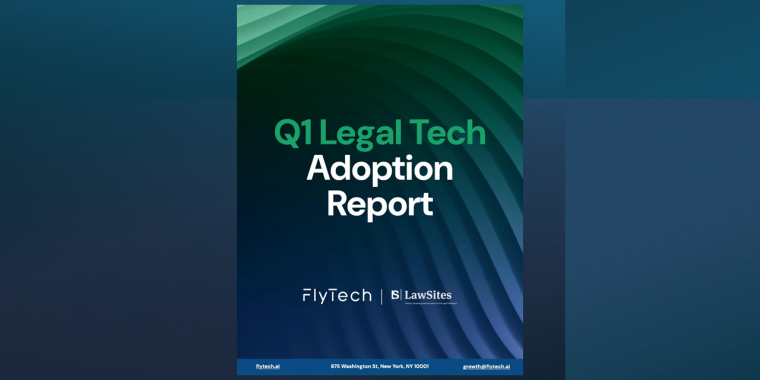
The
report,


Q1
2026
Legal
Tech
Adoption
Report
,
was
produced
by

FlyTech
,
a
marketing
agency
specializing
in
advertising
for
legal
vendors,
in
partnership
with
LawSites.

The
report
draws
on
data
from
FlyTech’s
campaigns,
including
more
than
60,000
demo
bookings
generated
from
digital
marketing
channels.
It
comes
against
a
backdrop
of
rapid
market
expansion,
with
the
report
noting
that
legal
tech
advertising
grew
faster
in
2025
than
at
any
point
in
recent
memory.

Its
findings
point
to
a
broad
surge
in
lawyer
engagement
with
legal
tech

alongside
intensifying
competition
in
certain
segments

and
underscore
how
both
buyer
behavior
and
vendor
strategy
are
evolving.


Drop
in
Lead
Costs
Signals
Demand
Shift

This
report
analyzes
data
by
cost
per
lead
(CPL).
“We
focus
this
metric
because
it
gives
a
quantitative
representation
for
how
competitive
a
particular
category
is,”
the
report
explains.
“Ultimately,
this
number
represents
a
combination
of
the
density
of
competition
and
overall
interest
in
a
particular
category.”

Across
nearly
every
major
practice
area,
the
report
found,
CPL
declined
sharply
in
Q1,
dropping
by
roughly
40%
to
50%
in
categories
including
business,
criminal
defense,
immigration,
family
and
intellectual
property
law.

Intellectual
property
attorneys
saw
the
steepest
decline
at
51%,
followed
by
business
at
47.6%,
criminal
defense
at
43.3%,
and
immigration
at
42.5%.

In
marketing
terms,
falling
CPL
typically
indicates
that
more
prospective
buyers
are
engaging
with
ads
and
signing
up
for
demonstrations,
effectively
lowering
the
cost
to
acquire
each
lead.

The
report
attributes
this
drop
to
a
seasonal
pattern,
as
law
firms
emerge
from
year-end
budgeting
cycles
and
begin
evaluating
new
technology
early
in
the
year.

Even
so,
the
consistency
and
depth
of
the
decline
across
practice
areas
suggests
this
is
not
just
seasonal
momentum,
but
a
broader
normalization
of
legal
tech
purchasing
behavior.
Rather
than
sporadic
adoption,
firms
appear
to
be
increasingly
treating
technology
evaluation
as
a
recurring
process.


The
Personal
Injury
Outlier

The
one
notable
exception
was
personal
injury,
where
CPL
rose
40.1%
to
$251.98

a
divergence
that
actually
reinforces
the
report’s
broader
theme.

In
recent
years,
thanks
in
part
to
new
AI-enabled
products,
PI
has
become
a
heavily
targeted
practice
area
for
legal
tech
advertising.
Every
intake
platform,
every
lead
generation
company,
every
AI-powered
litigation
tool,
is
competing
for
this
audience.

That
means
that
the
rising
cost
is
not
a
signal
of
declining
attorney
interest.
Rather,
it
signals
overcrowding
on
the
vendor
side.
More
companies
are
entering
this
market
or
increasing
their
ad
spend,
pushing
auction
costs
up
even
as
attorney
engagement
remains
strong.

That
dynamic
also
suggests
another
pattern
in
legal
tech.
Practice
areas
associated
with
higher
case
values
tend
to
attract
disproportionate
investment
from
vendors,
particularly
those
offering
intake,
lead
generation
and
case
management
tools.


A
Market
Dividing
Into
Two
Camps

Perhaps
the
most
significant
finding
from
the
report
is
the
extent
to
which
legal
tech
categories
are
diverging
in
cost
dynamics,
effectively
splitting
into
two
camps.

On
one
side
are
categories
where
the
cost
of
acquiring
leads
has
dropped
sharply.
Marketing
services
fell
70.9%.
Document
management
declined
61.1%.
Document
drafting
dropped
50.8%.
Litigation
analytics
and
valuation
also
saw
a
substantial
decline
of
over
34%.

These
are
categories
where
AI
has
moved
the
product
needle
most
dramatically
over
the
past
two
years
or
so,
and
perhaps
where
attorneys
can
most
clearly
see
the
value
proposition.

On
the
other
side
are
categories
where
CPL
is
rising
steeply.
Lead
generation
more
than
doubled,
climbing
108.7%
to
an
eye-popping
$1,013
per
lead.
Medical
record
retrieval
surged
102.3%.
Depositions
and
court
reporting
rose
97.3%.
Timekeeping
jumped
60.9%,
and
intake
climbed
53.6%.

The
report
attributes
these
increases
to
intensified
advertiser
competition,
as
more
companies
enter
or
increase
spending
in
these
segments.
It
identifies
lead
generation,
at
its
more
than
$1,000
per
lead,
and
practice
management,
at
roughly
$465,
as
potential
ceilings
for
customer
acquisition
costs
in
those
categories.

Taken
together,
these
patterns
suggest
a
market
in
which
some
categories
are
becoming
more
standardized
and
easier
to
evaluate,
driving
down
acquisition
costs,
while
others

particularly
those
tied
closely
to
client
acquisition
and
revenue
generation

are
becoming
increasingly
contested.


What
Attorneys
Actually
Respond
To

The
report
also
examines
which
types
of
marketing
messages
are
most
effective
in
converting
lawyers
into
leads.

It
found
that
educational
content
and
pain-point-specific
messaging
performed
best.
Each
of
those
types
generated
leads
at
an
average
cost
of
roughly
$230

about
20%
more
efficient
than
other
approaches.

Notably,
each
of
these
approaches
lead
with
the
attorney’s
interests
rather
than
the
product’s
features,
either
teaching
them
something
useful
or
naming
a
problem
they’re
already
feeling.

By
contrast,
messaging
focused
on
product
features
or
outcomes
performed
worst,
with
an
average
cost
of
$296.10
per
lead.

That
does
not
mean
that
product-focused
ads
are
failing

clearly
they
still
generate
leads
at
a
reasonable
cost.
But
it
does
suggest
that
attorneys
are
less
interested
in
comparing
feature
sets
across
products
and
more
interested
in
understanding
whether
a
category
of
tool
can
solve
a
problem
they
have.

Other
types
of
advertising
fell
into
a
middle
tier.
These
included
testimonials
at
$272.50
per
lead,
lead
magnets
at
$285.10,
and
topic/case
specific
ads
at
$290.20.

The
bottom
line
here
seems
to
be
that
legal
tech
companies
that
lead
with,
“Here’s
what
our
software
does,”
are
spending
more
to
reach
the
same
attorneys
than
those
saying,
“Here’s
the
problem
you’re
dealing
with,
and
here’s
how
to
think
about
solving
it.”


Visually,
People
Over
Product

A
similar
pattern
emerged
in
the
report’s
analysis
of
visual
formats.

Ads
featuring
headshots

whether
of
founders,
customers
or
team
members

produced
the
lowest
cost
per
lead
at
$255.20,
followed
by
text-only
formats
at
$268.50.
Product
screenshots
were
the
least
effective,
at
$300.20.

While
the
differences
were
relatively
modest,
the
results
suggest
that
even
in
a
technology-driven
market,
the
human
element
can
outweigh
visual
emphasis
on
the
actual
product.
A
face
can
create
a
moment
of
personal
connection
that
no
screenshot
ever
will.


Implications
for
the
Legal
Tech
Market

Although
the
report
is
just
a
snapshot
of
marketing
performance
over
a
single
quarter,
FlyTech
plans
to
produce
these
regularly.
But
even
just
this
snapshot
offers
a
window
into
broader
shifts
within
the
legal
tech
industry.

At
a
high
level,
the
data
suggests
that
demand
for
legal
technology
is
growing,
but
that
the
market
is
also
becoming
more
stratified.
Categories
centered
on
core
functionality
appear
to
be
moving
toward
greater
efficiency
and,
potentially,
commoditization.
Categories
tied
directly
to
revenue
generation
are
becoming
more
competitive
and
expensive
to
penetrate.

If
the
data
sustains
these
trends
over
time,
then,
for
legal
tech
vendors,
that
divergence
should
influence
both
product
strategy
and
go-to-market
approach.
For
buyers,
it
signals
an
increasingly
crowded
landscape
in
some
areas
alongside
greater
choice
and
lower
barriers
to
entry
in
others.

The
other
trend
worth
watching
is
whether
those
inflated
categories
start
to
see
vendor
attrition.
When
it
costs
more
than
$1,000
to
acquire
a
single
lead,
smaller
players
may
become
less
competitive.
That
could
mean
a
land
grab
followed
by
consolidation.

As
I
said
above,
this
report
is
based
solely
on
FlyTech’s
proprietary
data
from
its
own
advertising
platform,
so
it
reflects
only
the
slice
of
the
market
that
runs
campaigns
through
its
network.
That
said,
it
is
a
substantial
dataset,
reflecting
more
than
60,000
demo
bookings,
and
the
trends
it
depicts
are
consistent
with
what
I’m
hearing
from
vendors
and
firms
across
the
industry.

As
FlyTech
continues
to
compile
and
report
this
data
over
time,
it
will
be
interesting
to
watch
how
trends
evolve.
Yet
even
this
snapshot
appears
to
underscore
that
attorneys
are
engaging
with
legal
tech
at
unprecedented
levels

no
doubt
driven
by
AI.

The
big
question,
then,
is
not
whether
the
legal
market
is
ready
for
AI
tools.
The
question
is
which
vendors
can
convert
that
interest
into
lasting
customers

and
which
will
get
priced
out
trying.

Vault Ranks The Best Summer Associate Programs (2027) – Above the Law

Summer
associate
programs
at
Biglaw
firms
across
the
country
have
yet
to
begin,
but
the
recruiting
landscape
already
looks
very
different
from
even
a
few
years
ago.
With
law
students
now
being

heavily
precruited

and
traditional
interview
programs
playing
a
much
smaller
role,
many
future
summers
have
already
secured
their
spots
well
in
advance.
Against
that
backdrop,
Vault
has
released
its
closely
watched
rankings
of
the
best
summer
associate
programs
earlier
than
ever,
arriving
before
summer
programs
have
kicked
off.

Hot
on
the
heels
of
Vault’s
rankings
of
the most
prestigious
 law
firms
and
the
law
firms
with
the best
quality
of
life
 comes
the
career
website’s
ranking
of
the
best
summer
associate
programs
in
Biglaw.
Junior
associates
(first-
through
third-year
attorneys)
who
summered
at
their
current
firms
were
asked
to
rank
their
experiences
on
how
much
fun
the
program
was
and
how
well
it
prepared
them
for
life
at
the
firm
through
six
different
categories
(attorney
interactions,
substantive
assignments,
training
and
mentoring,
preparation
for
associate
life,
quality
of
events,
and
satisfaction
with
firm-sponsored
social
opportunities
and
social
interactions).
From
those
ratings,
Vault
ranked
the
best
summer
associate
programs
in
three
categories:
Attorney
Interactions,
Career
Development,
and
Social
Experiences.
It
shouldn’t
come
as
a
surprise
that
several
of
the
firms
that
made
the
Top
10
list
for
having
the
best
quality
of
life
made
the
Top
10
for
having
the
best
summer
associate
program.

There
was
once
again
a
huge
amount
of
movement
in
the
Top
10
this
year.
Which
firms
made
the
cut?
Without
any
further
ado,
here
are
the Top
10
Firms
With
the
Best
Summer
Associate
Programs
 based
on
Vault’s
Annual
Associate
Survey
for
2027:

  1. Clifford
    Chance
    US
    (+3)
  2. Morgan
    Lewis
    (+1)
  3. O’Melveny
    &
    Myers
    (-2)
  4. Eversheds
    Sutherland
    (+4)
  5. Williams
    &
    Connolly
    (+14)
  6. Wiley
    Rein
    (not
    ranked)
  7. Seward
    &
    Kissel
    (not
    ranked)
  8. Proskauer
    Rose
    (+23)
  9. Choate
    Hall
    Stewart
    (not
    ranked)
  10. Ropes
    &
    Gray
    (+37)

Clifford
Chance,
Morgan
Lewis,
O’Melveny,
Ropes,
and
Proskauer
each
made
appearances
in
the
Top
10
for
firms
with
the
best
quality
of
life.
Let’s
give
these
firms
a
round
of
applause
for
keeping
their
attorneys
happy
from
their
days
as
summers
through
their
days
as
junior
associates,
and
another
round
of
applause
for
the
previously
unranked
firms
that
finally
made
their
way
onto
the
list.

Here
are
the Top
3
Best
Summer
Programs
for
Attorney
Interactions
:

  1. Clifford
    Chance
    US
  2. Morgan
    Lewis
  3. Wiley
    Rein

Here
are
the Top
3
Best
Summer
Programs
for
Career
Development
:

  1. Eversheds
    Sutherland
  2. O’Melveny
    &
    Myers
  3. Clifford
    Chance
    US

Here
are
the Top
3
Best
Summer
Programs
for
Social
Experiences
:

  1. Clifford
    Chance
    US
  2. Williams
    &
    Connolly
  3. Wiley
    Rein

Congratulations
to
all
50
of
the
Biglaw
firms
that
made
the
latest
edition
of
the
Vault
Best
Summer
Associate
Program
rankings

and
an
even
bigger
congratulations
to
Clifford
Chance
for
coming
out
on
top
in
this
ranking.
How
did
your
firm
do? Email
us
,
text
us
at (646)
820-8477
,
or
tweet
us @atlblog to
let
us
know.


Best
Law
Firms
to
Work
For
(2027)
 [Vault]


Staci
Zaretsky
 is
the
managing
editor
of
Above
the
Law,
where
she’s
worked
since
2011.
She’d
love
to
hear
from
you,
so
please
feel
free
to email her
with
any
tips,
questions,
comments,
or
critiques.
You
can
follow
her
on BlueskyX/Twitter,
and Threads, or
connect
with
her
on Linke

White House wants Pentagon to demo nuclear space power by 2031 – Breaking Defense

COLORADO
SPRINGS

The
Trump
administration
today
published
a
new
strategy
to
bring
nuclear
power
to
the
heavens
through
a
cooperative
effort
between
civil
and
military
authorities
could
see
the
Pentagon
demonstrate
an
orbital
reactor
in
as
few
as
five
years,
according
to
a
White
House
memo.

Unveiled
today
at
the
Space
Symposium
conference
here
by
Michael
Kratsios,
director
of
the
White
House
Office
of
Science
&
Technology
Policy,
the
National
Initiative
for
American
Space
Nuclear
Power
effectively
implements
an

executive
order

signed
by
President
Donald
Trump
in
December
aimed
at
achieving
American
dominance
in
space.

“Nuclear
power
in
space
will
give
us
the
sustained
electricity,
heating
and
propulsion
essential
to
a
permanent
robotic
and
eventually
human
presence
on
the
moon,
on
Mars
and
beyond,”
Kratsios
said
today.
“Executing
on
the
President’s
National
Space
Strategy
will
require
a
whole
of
government
approach,
as
well
as
the
drive
and
ingenuity
of
America’s
private
space
industry.”

Additionally,
Kratsios
noted
that
the
upcoming
National
Space
Transportation
Policy
“will
incentivize
private
sector
partners
to
co-invest
in
launch
infrastructure.”

The
memo
published
today
[PDF]
says
that
space
nuclear
power
will
be
the
subject
of
“high-level
focus
and
attention”
from
the
executive
branch
“to
enable
a
path
that
is
both
ambitious
and
achievable.”
That
includes
cooperation
with
the
private
sector
and
the
“efficient
use”
of
existing
resources.

Key
to
the
new
strategy,
according
to
the
memo,
is
NASA
and
the
Defense
Department
“conduct[ing]
parallel
and
mutually
reinforcing

design
competitions”
that
can
pave
the
way
to
demonstrations
and
eventual
fielding
of
“low-
to
mid-power
space
reactors
in
orbit
and
on
the
lunar
surface.”
The
two
agencies
will
also
work
towards
“deploy[ing]
high-power
reactors
in
the
2030s,”
the
memo
says.

While
NASA
is
assigned
responsibilities
like
initiating
the
development
of
a
“mid-power
space
reactor
with
a
lunar
fission
surface
power
(FSP)
variant
ready
for
launch
by
2030,”
the
Pentagon
will
have
tasks
of
its
own.
Specifically,
the
memo
says
that
“pending
availability
of
funding,”
the
DoD
will
“pursue
deployment
of
a
mission-enabling
mid-power
in-space
reactor
by
2031”

essentially
an
orbital
nuclear
reactor.

For
the
first
year
under
the
strategy,
DoD
will
“contribute
its
available
space
nuclear
funding”
for
NASA
efforts
that
could
“enable”
future
Pentagon
missions,
according
to
the
memo.
Beginning
in
the
second
year,
DoD
would
then
be
directed
to
carry
“at
least
two
competing
vendors”
through
“at
least
preliminary
design
review
and
ground
tests”
for
the
future
mid-power
orbital
reactor.

The
memo
encourages
the
DoD
to
collect
proposals
from
vendors
already
working
with
NASA
on
related
technologies
and
states
that
the
Pentagon
“should
have
the
option”
to
select
any
qualified
vendors
from
NASA
programs
for
fission
surface
power
or
nuclear
electric
power
if
DoD
“program
participants
fail
to
meet
appropriate
programmatic
and
technical
milestones.”

Ideally,
learnings
from
low-
and
mid-power
reactors
could
eventually
culminate
in
a
high-powered
reactor
that
NASA
could
have
ready
for
launch
in
the
2030s.
The
memo
defines
a
high-powered
reactor
as
a
system
that
provides
“at
least
100″
kilowatts
of
elecrical
power.

The
memo
explicitly
lists
several
tools
for
program
managers,
including
firm
fixed-price
contracts,
vendor
proposals
for
milestones
and
the
establishment
of
government
use
rights.
The
White
House’s
Office
of
Science
and
Technology
Policy
is
expected
to
develop
a
“roadmap”
for
the
overarching
space
strategy
within
90
days,
which
will
address
potential
“obstacles”
and
ways
to
overcome
them.

The
new
strategy
comes
amid
a
burgeoning
space
race,
most
recently
exemplified
by
the
Artemis
II
mission
that
sent
American
astronauts
on
a
successful
slingshot
around
the
moon.
American
officials
hope
they
can
keep
ahead
of
adversaries
like
China
and
Russia
who
also
harbor
space
and
lunar
ambitions,
including
the

establishment
of
a
moon
base
.

Leveraging
previous
efforts
could
help
shape
the
path
ahead.
For
example,
while
the
memo
says
NASA’s
funding
to
develop
nuclear
thermal
propulsion
should
focus
on
aspects
like
common
components
that
could
benefit
other
space
nuclear
programs,
nuclear
thermal
propulsion
itself
could
be
an
“option
for
future
crewed
missions
to
Mars.”

Notably,
the
Defense
Advanced
Research
Projects
Agency

killed
a
program

for
a
nuclear
thermal
propulsion
demonstrator
last
year,
but
insights
from
the
project
could
theoretically
inform
fresh
efforts
under
the
White
House’s
new
space
strategy.

Morning Docket: 04.16.26 – Above the Law

*
“Law
school
ranking
shakeup
sparks
calls
to
retire
T-14.”
We’ve
been
doing
that
here
since

at
least
2017
.
[Reuters]

*
John
Eastman
formally
disbarred.
[NY
Times
]

*
And
so,

right
on
cue
,
Cornell’s
Federalist
Society
is
having
him
speak.
[Cornell
Daily
Sun
]

*
Justice
Sotomayor
apologizes
for
“hurtful
comments”
suggesting
that
Brett
Kavanaugh
might
not
know
any
hourly
workers.
Her
comments
were
always
unfair…
many
bartenders
are
paid
hourly.
[Law360]

*
Jury
finds
Live
Nation
operated
illegal
monopoly.
Too
bad
the
DOJ’s
antitrust
division
bailed
on
this
case
already.
[NY
Law
Journal
]

*
Latest
Eighth
Circuit
nominee
testifies
that
he
will
decide
cases
fairly
and
impartially.
His
online
footprint
explains
that
he’s
a
warrior
against
“woke
ideology.”
[Balls
and
Strikes
]

*
WNBA
labor
deal
came
together
because
of
a
lawyer
with
Philadelphia
basketball
roots.
[Inquirer]

Talk About Failing Upward – See Also – Above the Law

Ted
Cruz,
Supreme
Court
Justice?:
One
hell
of
a
promotion
for
being
annoying
to
work
with!
How
Much
Is
Your
Loyalty
To
Your
Firm
Worth?:
Probably
less
than
$80M!
The
Rich
Really
Do
Get
Richer:
The
#1
firm
raked
in
$10.556
billion
in
gross
revenue!
Where
Would
You
Like
To
Work?:
This
quality
of
life
ranking
should
help
you
narrow
down
your
options.
That’s
A
Lot
Of
Judicial
Firings:
The
Trump
administration
has
fired
over
100
immigration
judges
so
far.
It
Isn’t
What
You
Know,
It’s
How
You
Think:
Conservative
judges
are
hiring
clerks
before
1L
grades
are
in
if
their
politics
align.

It’s Not An AI Hallucination – It’s Lazy Editing Of A Human Paralegal – Above the Law

There
are
now

over
1,000
AI
hallucination
cases
and
counting

around
the
world,

according
to
one
researcher
.
Covering
hallucinations
has
become
its
own
subgenre
of
legal
journalism
at
this
point,
a
growth
industry
rivaling
the
artificial
intelligence
industry
itself.
So,
occasionally,
we
need
a
story
to
come
along
and
remind
everyone
of
the
inconvenient
truth
that
these
professionally
embarrassing
mistakes
aren’t
the
fault
of
the
technology
as
much
as
a
crucial
operator
error.

A
new
sanctions
order
out
of
the
District
of
New
Jersey
in


Gutierrez
v.
Lorenzo
Food
Group

(flagged
by

Rob
Freund
,
a
must-follow
for
AI
hallucination
news)
sets
the
stage
with
a
familiar
tale
for
those
following
the
AI
hallucination
beat.
A
brief
opposing
a
motion
to
dismiss
contained
incorrect
citations
and
quotations
attributed
to
the
wrong
cases.
The
brief
also
included
citations
to
cases
that
had
been
bad
law
for
decades.
The
court
and
defense
counsel
both
identified
the
problems,
and
everyone
began
the
countdown
to
the
next
big
AI
hallucination
benchslap.

Except
it
never
arrived.

Because
after
months
of
investigation

including
conflicting
affidavits,
finger-pointing
between
colleagues,
and
an
evidentiary
hearing

Judge
Evelyn
Padin
concluded
that
no
one
used
generative
AI
at
all.
Instead,
an
unlucky
paralegal
had
been
substantively
drafting
the
brief
and,
when
a
former
associate
told
her
that
the
brief
needed
to
have
Third
Circuit
citations
(logically,
as
the
case
was
in
the
Third
Circuit),
she
took
that
instruction
and,
as
Judge
Padin
observes,
“made
the
regrettable
decision
to
attribute
quotations
that
were
actually
from
cases
outside
the
Third
Circuit
to
cases
within
the
Third
Circuit.”
The
quotes
had
appeared
in
earlier
drafts,
and
when
told
that
they
needed
to
be
Third
Circuit
cites,
the
paralegal
“seemingly
swapped
in
the
Third
Circuit
citations,
making
it
appear
as
if
the
quotations
came
from
those
Third
Circuit
cases.”

Humans
can
hallucinate
too!

The
court
was
admirably
direct
about
why
this
distinction
doesn’t
actually
matter:

Whether
GAI
was
used
in
drafting
the
MTD
Opposition
is
not
central
to
this
Court’s
decision
because
regardless
of
whether
it
was
a
person
or
a
large
language
model
that
made
these
errors,
the
attorney
responsible
for
filing
the
brief
has
an
obligation
to
ensure
that
the
arguments
and
contentions
made
within
it
are
accurate
and
supported
by
existing
law.

Artificial
intelligence
may

accelerate
the
process

of
uncovering
lawyers
who
take
thorough
editing
for
granted,
but
the
mistake

in
either
event

is
a
human
failure
to
check
their
work.

Attorney
Geoffrey
Mott,
who
signed
the
brief,
reviewed
exactly
one
draft
of
the
opposition

the
initial
one

and,
the
court
found,
never
looked
at
it
again.
As
the
paralegal
made
disastrous
citation
changes,
seemingly
no
lawyer
doubled
back
to
cite
check
the
final
brief.
The
court
noted
that
Mott’s
assertion
that
he
“thoroughly
reviewed”
the
brief
“at
the
very
best,
strain[s]
credulity.”

But
the
cover-up

as
always

made
things
worse.
When
the
court
first
flagged
the
problems,
Mott
and
the
paralegal
filed
affidavits
blaming
the
former
associate
for
inserting
the
bad
citations
as
opposed
to
just
giving
the
misunderstood
instruction.
The
court
was
“deeply
troubled”
by
this
approach
and
didn’t
sugarcoat
it:

Mr.
Mott
was
disappointingly
slow
to
take
any
real
ownership
over
these
errors.
The
Court
might
have
avoided
a
hearing

and
Mr.
Mott
might
have
avoided
monetary
sanctions

had
he
promptly
conducted
a
thorough
inquiry
and
provided
the
Court
with
a
holistic
and
accurate
representation
of
the
facts
the
first
time
he
was
ordered
to
do
so.

Mott
got
hit
with
monetary
sanctions
(the
amount
TBD
once
defense
counsel
submits
its
fee
certification)
and
ordered
to
complete
two
CLE
courses
on
ethics
and
AI.
The
AI
CLE
requirement
might
seem
counterintuitive
as
redress
for
an
entirely
human
error,
but
the
court
pointed
to
Mott’s
repeated
claims
at
the
hearing
that
he
was
unfamiliar
with
generative
AI,
and
decided
he
figured
it
out.

AI
catastrophes
draw
attention
these
days,
whether
it’s

Butler
Snow
getting
kicked
off
Alabama
prison
matters

after
senior
partners
failed
to
check
their
team’s
work,
or
the

Goldberg
Segalla
meltdown

started
with
one
fake
cite
and
metastasized
into
a
systemic
disaster.
But
in
all
those
cases,
the
real
error
is
between
the
keyboard
and
the
chair.
And
when
that’s
the
nature
of
the
bug,
it
doesn’t
matter
if
the
issue
originated
from
the
computer
or
a
misguided
human.


(Check
out
the
full
opinion
on
the
next
page…)


HeadshotJoe
Patrice
 is
a
senior
editor
at
Above
the
Law
and
co-host
of

Thinking
Like
A
Lawyer
.
Feel
free
to email
any
tips,
questions,
or
comments.
Follow
him
on Twitter or

Bluesky

if
you’re
interested
in
law,
politics,
and
a
healthy
dose
of
college
sports
news.
Joe
also
serves
as
a

Managing
Director
at
RPN
Executive
Search
.