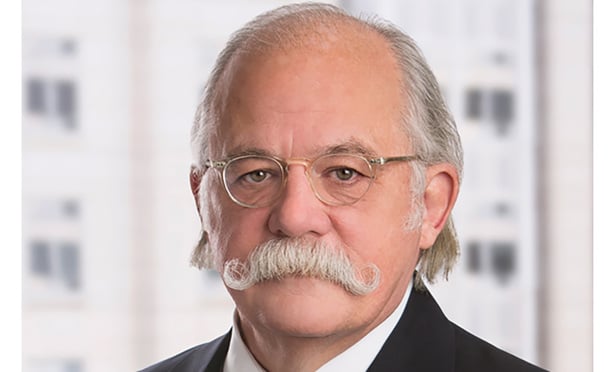
Ty
Cobb
—
the
former
Hogan
&
Lovells
partner
who
left
the
hallowed
halls
of
Biglaw
to
serve
as
special
counsel
in
the
first
Trump
White
House,
and
has
since
made
it
his
apparent
life’s
mission
to
say
out
loud
what
everyone
else
is
merely
thinking
—
was
back
on
MSNow’s
The
Beat
with
Ari
Melber,
and
wow,
did
he
have
some
things
to
get
off
his
chest.
As
we’ve
covered
extensively
around
here,
Cobb
(along
with
his
magnificent
signature
mustache)
has
developed
a
folksy
but
devastating
habit
of
cutting
through
the
right-wing
noise
and
telling
cable
news
audiences
exactly
what
the
situation
is.
This
latest
appearance
was
no
different.
Asked
about
the
current
state
of
affairs
inside
the
Trump
orbit,
Cobb
offered
a
genuinely
chilling
observation
rooted
in
his
firsthand
experience.
“When
I
was
there,
his
narcissism
would
be
on
display
because
he
would
passionately
want
to
do
something
that
seemed
out
of
bounds
but
people
like
Gen.
Kelly
and
Gen.
Mattis,
Nikki
Haley,
were
there
to
talk
him
out
of
it,”
he
explained.
The
problem,
of
course,
is
that
those
people
—
the
so-called
“adults
in
the
room,”
a
phrase
Cobb
himself
famously
used
back
in
his
White
House
days
—
are
long
gone.
“They
don’t
have
those
guardrails
there
today,”
he
lamented.
And
it
gets
more
alarming
from
there.
Cobb
raised
the
specter
of
bad
actors
filling
that
vacuum,
arguing
there
“should
be
some
concern
that
people
are
using
this,
using
his
incapacity,
to
manipulate
decisions.”
As
a
concrete
example,
he
pointed
to
Israeli
Prime
Minister
Benjamin
Netanyahu,
suggesting
Netanyahu
did
exactly
that
“in
connection
with
the
decision
to
go
into
Iran.”
That’s
a
pretty
significant
allegation!
The
idea
that
a
foreign
leader
is
effectively
steering
American
foreign
policy
by
exploiting
a
cognitively
diminished
president
is
not
a
small
thing
to
say
on
cable
television.
And
yet,
here
we
are.
On
Trump’s
general
mental
state
and
behavior,
Cobb
did
not
exactly
offer
reassuring
takes.
Trump’s
“vocabulary
has
shrunk,
he’s
resorted
to
profanity
and
threats,
totally
impulsive,”
Cobb
said.
He
pointed
to
Trump’s
attacks
on
the
late
filmmaker
Rob
Reiner
and
former
Special
Counsel
Robert
Mueller,
as
well
as
his
ongoing
feud
with
Pope
Leo
XIV
as
behavior
that
“just
shows
you
how
crazy
this
man
is.”
Hard
to
argue
with
that
breakdown,
honestly.
Cobb
also
drew
a
contrast
that
should
probably
be
getting
more
airtime.
He
distinguished
between
former
President
Joe
Biden’s
decline,
which
he
characterized
as
a
“benevolent
grandpa
losing
his
memory,”
and
Trump’s
altogether
different
situation,
which
he
described
as
“malignant
narcissism.”
That’s
not
a
semantic
distinction.
One
is
a
man
struggling
with
the
ordinary
cruelties
of
aging.
The
other
is
something
considerably
more
dangerous.
None
of
this
is
entirely
new
ground
for
Cobb.
He’s
been
sounding
these
alarms
with
increasing
urgency,
calling
Trump
a
threat
to
constitutional
norms,
warning
of
justifiable
paranoia
among
Trump’s
critics,
and
labeling
the
president
flatly
“gone.”
The
drumbeat
has
been
consistent.
What’s
changed
is
the
stakes,
and
apparently,
Cobb’s
willingness
to
name
names
—
including
heads
of
state
—
when
it
comes
to
who
might
be
capitalizing
on
the
chaos.
The
people
with
actual
power
to
do
something
about
any
of
this
remain,
as
ever,
conspicuously
silent.
But
at
least
Cobb
keeps
showing
up.
Ed.
Note:
A
weekly
roundup
of
just
a
few
items
from
Howard
Bashman’s
How
Appealing
blog,
the
Web’s
first
blog
devoted
to
appellate
litigation.
Check
out
these
stories
and
more
at
How
Appealing.
“Two
Magicians
Warn
the
Supreme
Court
About
Junk
Science;
Penn
&
Teller
filed
a
Supreme
Court
brief
questioning
the
use
of
‘investigative
hypnosis’
in
a
death-penalty
case
in
Texas”: Adam
Liptak
has this
new
installment of
his
“The
Docket”
newsletter
online
today
at
The
New
York
Times.
“Trump-Appointed
Judges
Rebuke
Denial
of
Covid-19
Bias
Rehearing”: Quinn
Wilson
of
Bloomberg
Law
has this
report (subscription
required
for
full
access).
“I
Almost
Never
Predict
Supreme
Court
Outcomes.
Trump
Will
Lose
This
Case.” Linda
Greenhouse
has this
guest
essay online
at
The
New
York
Times.
“Key
Senator
Says
Any
AG
Pick
Who
Backed
Jan.
6
‘Dead
on
Arrival’”: Suzanne
Monyak
of
Bloomberg
Law
has this
report.
“Eighth
Circuit
swats
challenge
to
Minnesota
policy
embracing
trans
athletes;
A
circuit
judge
said
since
Trump’s
executive
orders
aren’t
yet
established
law,
they
can’t
be
relied
on
to
prove
the
likelihood
of
Title
IX
violations”: Ryan
Luetkemeyer
of
Courthouse
News
Service
has this
report.
“Process
to
Refund
Tariffs
to
Begin
Next
Week;
Trade
court
judge
says
government
confirmed
it
is
on
track
to
start
processing
claims
for
refunds
of
Trump’s
tariffs
invalidated
by
the
Supreme
Court”: Lydia
Wheeler
of
The
Wall
Street
Journal
has this
report.
What
do
porn
stars
and
lawyers
have
in
common?
They
both
get
paid
by
the
hour
to
screw
someone.
Crass?
Sure.
But
in
light
of
a
famous
retired
adult
film
star
recently
passing
the
Texas
bar
exam,
maybe
it’s
a
little
too
on
the
nose.
Asia
Carrera,
a
former
pornography
actress
who
graduated
from
St.
Mary’s
Law
in
2024,
just
cleared
one
of
the
most
notoriously
miserable
hurdles
in
the
legal
profession.
Carrera
—
whose
real
name
is
Jessica
Steinhauser
—
previously
missed
passing
by
just
two
points,
but
was
able
to
turn
it
around
during
the
February
2026
exam.
For
what
it’s
worth,
according
to
TMZ,
she
has
no
desire
to
work
as
a
lawyer,
she
“just
wanted
to
prove
she
could
pass
the
bar.”
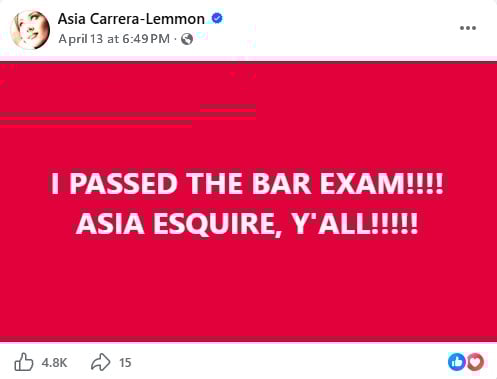
Here’s
the
celebratory
post
she
made
on
Facebook
after
finding
out
the
good
news:
Of
course
the
jokes
write
themselves,
but
the
comparison
between
lawyers
and
porn
stars
completely
holds
up.
Both
professions
are
built
on
performance,
stamina,
and
the
ability
to
deliver
under
pressure
while
someone
else
critiques
your
work.
Both
involve
long
hours,
exacting
clients,
and
a
surprising
amount
of
very
specific
positioning.
Still,
credit
where
it’s
due:
passing
the
bar
is
no
joke,
no
matter
your
background.
If
nothing
else,
Carrera’s
pivot
is
a
reminder
that
the
most
“nontraditional”
candidates
might
just
be
the
ones
best
equipped
to
handle
a
profession
that
already
demands
a
little
bit
of
everything.
Staci
Zaretsky is
the
managing
editor
of
Above
the
Law,
where
she’s
worked
since
2011.
She’d
love
to
hear
from
you,
so
please
feel
free
to email her
with
any
tips,
questions,
comments,
or
critiques.
You
can
follow
her
on Bluesky, X/Twitter,
and Threads, or
connect
with
her
on LinkedIn.
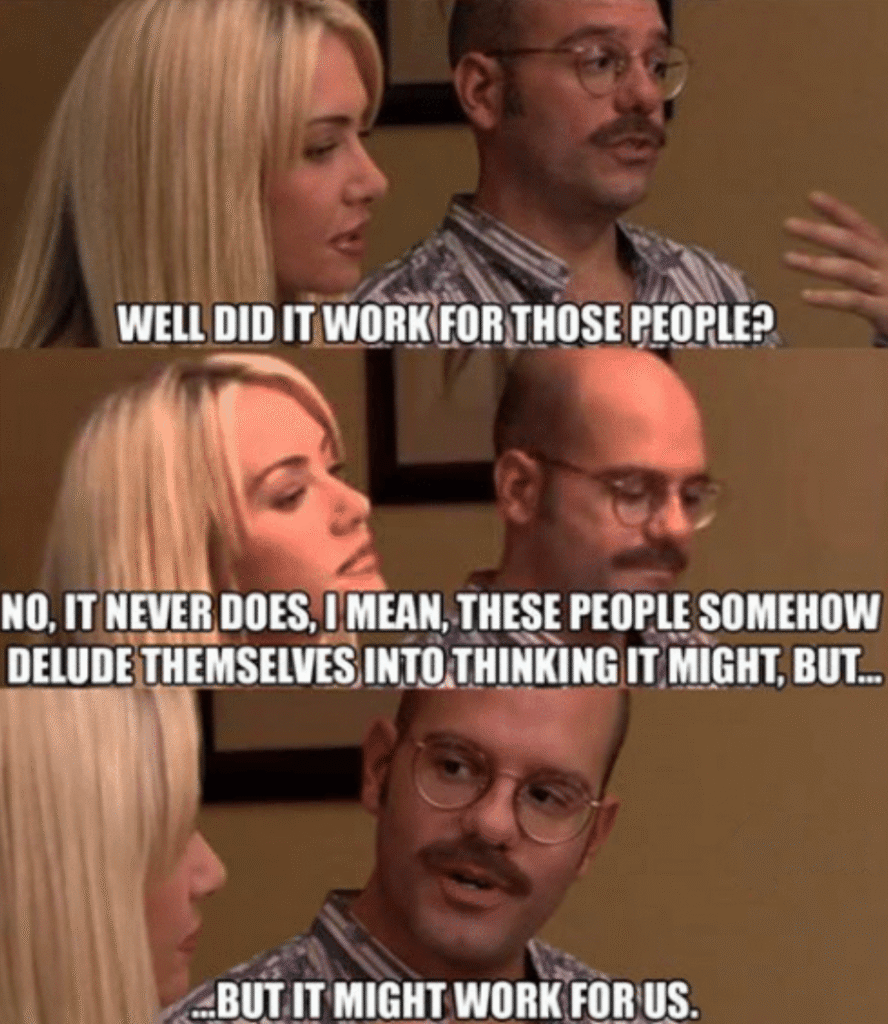
Arrested
Development
birthed
an
always
relevant
meme
when
Tobias
and
Lindsay
agreed
to
try
an
open
marriage.
After
Lindsay
asked
if
an
open
marriage
ever
works
to
solve
marital
difficulties,
Tobias
—
always
the
psychoanalyst
manqué
(an
“Analrapist”
as
he
described
his
brand
of
Analyst/Therapist)
—
explains
that
it’s
a
terrible
idea
that
“never,
ever
works,”
before
adding,
brightly,
“but
it
might
work
for
us.”
A
whole
lot
of
Trump’s
personal
lawyers
embraced
the
Tobias
logic,
with
Susan
Necheles
taking
the
hardest
hit.
According
to
a
new
FEC
filing
first
reported
by
NOTUS,
Donald
Trump’s
Save
America
PAC
—
the
vehicle
he
uses
to
pay
legal
bills
—
is
nearly
$500,000
in
the
red,
while
owing
roughly
$1.6
million
to
a
roster
of
12
different
law
firms.
When
Susan
Necheles
—
a
serious
criminal
defense
lawyer
with
a
long
and
respectable
career
—
decided
to
join
the
Trump
team
to
cross-examine
Stormy
Daniels,
the
veteran
attorney
apparently
looked
at
all
that
history
and
cheerily
muttered:
But
it
might
work
for
us!
NechelesLaw
LLP,
is
owed
more
than
$660,000.
But
while
she’s
getting
stiffed
the
worst,
she’s
at
least
not
alone.
Wharton
Law
PLLC,
another
firm
headed
by
a
lawyer
who
represented
Trump
in
the
same
trial,
is
due
$112K.
Brito
PLLC,
representing
Trump
in
defamation
suits
against
a
variety
of
media
outlets
as
well
as
the
$5
billion
lawsuit
against
Jamie
Dimon
for
caring
about
his
bank
over
Trump,
is
owed
$44K.
The
list
goes
on.
It
even
drags
in
Biglaw:
About
$400,000
is
owed
to
Sullivan
&
Cromwell
LLP.
Trump nominated one
of
its
lawyers
last
week
to
a
lifelong
U.S.
appeals
court
judge
position
based
in
New
York.
Trump
also nominated a
lawyer
from
James
Otis
Law
Group
LLC
in
February
to
a
federal
judicial
post.
His
PAC
owes
that
firm,
located
in
St.
Louis,
about
$1,700.
And
that’s
the
thing…
Trump
is
paying
his
lawyers,
just
not
with
money.
Paying
in
kind
is
much
cheaper
than
paying
in
money.
Indeed,
it
costs
Trump
nothing
at
all.
The
rule
of
law
pays
the
price.
And
this
is
where
Necheles’s
miscalculation
comes
into
focus.
She’s
shown
zero
public
interest
in
serving
the
administration.
She
just…
did
the
work
for
the
love
of
the
billable
hour.
In
Trumpland,
that’s
a
critical
mistake.
Save
America
has
done
this
before,
burning
through
donor
money
on
lawyers
faster
than
it
could
raise
it.
And
the
lawyers
doing
their
jobs
are
left
holding
the
bag.
Perhaps,
someday,
lawyers
will
learn
that
working
for
Trump
only
pays
in
patronage
assignments
to
jobs
they’re
questionably
qualified
to
hold.
Today
is
apparently
not
that
day.
For
now,
unless
lawyers
want
a
cushy
job,
they
should
stop
somehow
deluding
themselves
into
thinking
these
gigs
are
anything
but
pro
bono.
Or,
hey,
maybe
—
just
this
one
time
—
it
might
work
for
them.
Good
luck!
After
the
whirlwind
that
the
legal
profession
experienced
in
2025
—
a
year
where
large
law
firms
really
had
the urge
to
merge and nonequity
partnership
ranks continued
to
expand —
your
Biglaw
firm
may
be
doing
quite
well
financially…
but
is
it
among
the
Am
Law
100’s
Super
Rich?
What
qualifies
a
firm
to
be
designated
as
among
the
Super
Rich?
As
it
turns
out,
Biglaw
did
so
incredibly
well
in
2025
that
the
American
Lawyer
had
to
adjust
the
parameters
needed
to
be
included
on
this
exclusive
list.
These
are
the
Biglaw
firms
that
had
at
least
$1.45
million
in
revenue
per
lawyer
(RPL)
(up
from
$1.1
million
in
2024)
and
$625,000
in
profits
per
lawyer
(PPL)
(up
from
$550,000
in
2024).
The
Biglaw
firms
on
this
list
are
rolling
around
in
cash,
and
they’re
not
afraid
to
flaunt
it
after
coming
through
ahead
of
peer
firms
last
year.
Per
Am
Law,
the
Super
Rich
list
is
now
down
to
37
firms,
compared
to
41
last
year.
Before
we
get
to
the
members
of
the
2026
Super
Rich
list,
we’ll
let
you
know
the
four
firms
that
dropped
off,
and
only
one
was
due
to
a
merger.
Those
firms
are
Schulte
Roth
&
Zabel
(the
firm
merged
with
McDermott
Will
&
Emery,
and
the
combined
firm,
McDermott
Will
&
Schulte,
is
a
Super
Rich
firm);
Fish
&
Richardson
(didn’t
make
the
Am
Law
100);
Cadwalader,
Wickersham
&
Taft
(didn’t
make
the
new
financial
cut
for
the
Super
Rich);
and
Jones
Day
(didn’t
make
the
new
financial
cut
for
the
Super
Rich).
Now,
without
further
ado,
here
are
the
top
10
firms
on
the Super
Rich
list:
Congratulations
to
all
of
the
Biglaw
firms
that
made
it
into
the
Super
Rich
club
in
2025!
If
your
firm
performs
well
enough,
2026
could
be
your
year
to
shine
—
after
all,
almost
half
of
the
Am
Law
100
is
already
here!
Staci
Zaretsky is
the
managing
editor
of
Above
the
Law,
where
she’s
worked
since
2011.
She’d
love
to
hear
from
you,
so
please
feel
free
to email her
with
any
tips,
questions,
comments,
or
critiques.
You
can
follow
her
on Bluesky, X/Twitter,
and Threads, or
connect
with
her
on LinkedIn.
Does
the
risk
of
“cognitive
offloading”
alter
your
plans
for
AI
adoption?
Does
working
from
the
office
appeal
to
you
more
than
it
did
last
year?
Are
law
schools
and
law
firms
doing
enough
to
develop
the
necessary
skills
for
young
lawyers
to
succeed?
Please
take
this
(always)
brief
and
anonymous
survey
to
help
us
benchmark
the
industry
in
2026.
We’ll
be
sharing
the
results
in
a
report
later
this
year,
and
respondents
will
have
a
chance
to
receive
a
$250
gift
card.
A
lawyer
for
the
owners
of
Camp
Mystic,
the
Texas
camp
hit
by
a
flash
flood
that
tragically
led
to
the
deaths
of
27
people
including
25
children,
closed
out
a
a
long
day
of
hearings
by
telling
the
lawyers
for
the
family
of
a
dead
child
whose
body
has
never
been
recovered,
“you’re
gonna
burn
in
hell.”
You
know,
“see
you
tomorrow,”
works
just
fine.
On
the
third
and
final
day
of
an
evidentiary
hearing
in
the
lawsuit
against
Camp
Mystic,
Brad
Beckworth,
an
attorney
for
the
parents
of
one
of
the
8-year-old
victims
of
the
disaster,
told
the
court
that
Camp
Mystic
lawyer
Thomas
Wright
of
Wright
Close
Barger
&
Guzman
had
informed
him
and
co-counsel
Christina
Yarnell
the
previous
evening
that
they
were
going
to
burn
in
hell.
And
the
KXAN
local
news
has
footage.
The
exchange
arose
after
a
tense
hearing.
Beckworth
told
the
court
that
he
had
approached
another
lawyer
for
the
camp,
Jeff
Ray,
to
tell
him,
“You
know
maybe
before
you
talk
about
the
integrity
of
me
and
my
team,
maybe
you
just
ought
to
ask
us
about
the
facts.”
Harsh,
but
within
the
bounds
of
professional
conversation.
Another
lawyer
from
the
Camp
Mystic
team
acknowledged
that
it
was
a
good
idea.
According
to
Beckworth,
that’s
when
Wright
entered
the
chat
to
say
“You’re
gonna
burn
in
hell,”
before
telling
Yarnell
that
she
would
also,
in
fact,
be
burning
in
hell.
Camp
Mystic’s
attorneys
objected
when
Beckworth
tried
to
raise
this
conversation
in
court.
Not
that
it
didn’t
happen,
but
that
it
was
relevant
to
the
questioning
of
the
current
witness.
Judge
Maya
Guerra
Gamble
was
not
amused.
“Did
this
happen
in
my
courtroom,
or
somewhere
else?”
she
asked,
with
the
plaintiff
side
of
the
table
more
or
less
nodding
in
unison.
For
his
part,
Beckworth
said
he
wasn’t
as
much
complaining
about
the
remark,
as
citing
this
as
indicative
of
Camp
Mystic’s
posture,
which
he
argued
has
been
resistant
to
the
court’s
authority.
“I
believe
in
March,
I
explicitly
told
all
the
lawyers
who
were
present
that
all
the
rules
that
apply
when
I’m
in
the
courtroom,
apply
when
I
step
out
of
the
courtroom,”
Gamble
said.
“I
don’t
know
what
happened…
but
any
amount
of
that
conversation
that
happened
would
be
against
the
rules
in
this
courtroom
—
whether
I’m
here
or
I’m
not
here.”
That’s
the
judicial
equivalent
of
“I’m
not
mad,
I’m
just
disappointed.”
Wright’s
firm
issued
a
statement
saying
it
did
not
condone
the
remarks
and
that
the
firm
had
apologized
to
plaintiffs’
counsel
before
court
began
Wednesday.
Wright
himself
provided
a
statement
to
KXAN:
After
a
long
day
in
court,
my
emotions
were
running
high,
and
I
let
them
get
the
best
of
me.
For
that
I
sincerely
apologize
to
both
attorneys,
to
the
court
and
to
all
involved.
I
do
not
wish
to
cause
any
distractions
during
this
trial
or
any
distress
to
the
family
of
Cile
Steward
or
any
of
the
families
of
Camp
Mystic.
Long
days
happen.
Most
attorneys
manage
not
to
tell
the
other
side
they’re
going
to
burn
in
hell.
Some
things
you
can
just
keep
to
yourself.
In
early
March,
438
security
and
privacy
researchers
from
32
countries signed
a
massive
open
letter warning
that
age
verification
mandates
for
the
internet
are
technically
impossible
to
get
right,
easy
to
circumvent,
a
serious
threat
to
privacy
and
security,
and
likely
to
cause
more
harm
than
good.
While
many
folks
(including
us
at
Techdirt)
have
been
calling
out
similar
problems
with
age
verification,
this
was
basically
a
ton
of
experts
all
teaming
up
to
call
out
how
dangerous
the
technology
is
—
by
any
reasonable
measure,
a
hugely
significant
collective
statement
from
the
scientific
community
on
an
active
area
of
internet
regulation.
It
got
about
a
day
of press
coverage,
and
then
legislators
everywhere
went
right
back
to
doing
the
thing
the
scientists
just
told
them
was
dangerous.
We’ve
been
writing
about
the
serious
problems
with
age
verification
mandates for
years
now.
The
arguments
haven’t
changed,
because
the
underlying
technical
realities
haven’t
changed.
But
this
letter
deserves
far
more
attention
than
it
received
because
of
how
thoroughly
it
tears
apart
every
assumption
that
age
verification
proponents
rely
on.
The
letter
starts
by
acknowledging
what
should
be
obvious:
the
signatories
share
the
concerns
about
kids
encountering
harmful
content
online.
This
matters,
because
the
go-to
response
to
any
criticism
of
age
verification
is
to
accuse
critics
of
not
caring
about
children.
These
are
hundreds
of
scientists
saying:
we
care,
we’ve
studied
this,
and
what
you’re
proposing
will
make
things
worse.
We
share
the
concerns
about
the
negative
effects
that
exposure
to
harmful
content
online
has
on
children,
and
we
applaud
that
regulators
dedicate
time
and
effort
to
protect
them.
However,
we
fear
that,
if
implemented
without
careful
consideration
of
the
technological
hazards
and
societal
impact,
the
new
regulation
might
cause
more
harm
than
good.
Some
will
argue
that
this
is
meaningless
without
a
proposed
“fix”
to
the
problems
facing
children
online,
but
that’s
nonsense.
As
these
experts
argue,
the
focus
on
age
verification
and
age
gating
will
make
things worse.
It’s
the
classic
“we
must
do
something,
this
is
something,
therefore
we
must
do
this”
fallacy
dressed
up
as
child
protection.
The
fact
that
child
safety
problems
are
specific
and
complex
is
exactly
why
simplistic
bans
and
age-gating
cause
so
much
damage.
And
it’s
a
genuine
indictment
of
our
current
discourse
that
refusing
to
embrace
a
non-solution
somehow
gets
read
as
not
caring
about
the
problem
itself.
From
there,
the
letter
walks
through
the
actual
problems
with
these
commonly
proposed
solutions
in
a
level
of
detail
that
should
be
mandatory
reading
for
any
legislator
voting
on
these
laws.
(It
almost
certainly
won’t
be,
but
we
can
dream.)
First,
the
biggest
problem:
these
systems
are
ridiculously
easy
to
circumvent.
This
point
gets
hand-waved
away
constantly
by
politicians
who
seem
to
think
that
because
something
sounds
like
it
should
work,
it
must.
The
scientists
have
a
different
view,
grounded
in
actual
evidence
from
actual
deployments:
There
is
ample
evidence
from
existing
deployments
that
lying
about
age
is
not
hard.
It
can
be
as
easy
as
using
age-verified
accounts
borrowed
from
an
elder
sibling
or
friend.
In
fact,
there
are
reported
cases
of
parents
helping
their
children
with
age
circumvention.
There
is
evidence
that,
shortly
after
age-based
controls
appear,
markets
and
services
that
sell
valid
accounts
or
credentials
quickly
arise.
This
enables
the
use
of
online
services
deploying
age
assurance
at
an
affordable
price
or
even
for
free.
This
is
the
case
even
if
the
verification
is
based
on
government-issued
certificates,
as
shown
by
the
ease
with
which
fake
vaccination
certificates
could
be
acquired
during
the
COVID
pandemic
We
just
recently
talked
about
the
evidence
in
Australia
showing
that
a
huge
percentage
of
kids
have simply
learned
how
to
get
around age
gates.
Australia’s
biggest
accomplishment:
teaching
kids
how
to
cheat
the
system.
The
letter
makes
a
point
that
almost
never
appears
in
the
legislative
debates:
The
threat
model
for
age
verification
is
fundamentally
broken
because
the
people
building
these
systems
assume
the
only
adversary
is
a
teenager.
But
since
every
adult
internet
user
will
also
be
subjected
to
these
checks,
and
many
adults
will
not
want
to
submit
to
this
kind
of
surveillance,
we’re
going
to
be
creating
huge
incentives
for
adults
to
get
around
these
age
checks
as
well,
meaning
that
new
industries
(some
likely
to
be
pretty
sketchy)
will
arise
to
help
people
of
all
ages
avoid
this
kind
of
surveillance.
And
that,
alone,
will
make
it
easier
for
everyone
(kids
and
adults)
to
bypass
age
gates
(though
in
a
way
that
will
likely
make
many
people
less
safe
overall):
As
its
main
goal
is
to
restrict
the
activities
of
children,
it
is
common
to
believe
that
the
only
adversary
is
minors
trying
to
bypass
age
verification.
Yet,
age
verification
mechanisms
also
apply
to
adults
that
will
have
to
prove
their
age
in
many
of
their
routine
online
interactions,
to
access
services
or
to
keep
them
away
from
children-specific
web
spaces.
As
these
checks
will
jeopardize
their
online
experience,
adults
will
have
incentives
to
create
means
to
bypass
them
both
for
their
own
use
or
to
monetize
the
bypass.
Thus,
it
is
foreseeable
that
an
increase
in
the
deployment
of
age
assurance
will
result
in
growing
availability
of
circumvention
mechanisms,
reducing
its
effectiveness.
The
circumvention
problem
alone
should
be
enough
to
give
legislators
pause.
But
the
letter
goes
further,
addressing
what
happens
to
people
who can’t circumvent
the
systems,
or
who
try
to
and
end
up
worse
off.
One
of
the
strongest
sections
addresses
the
perverse
safety
consequences.
Deplatforming
minors
from
mainstream
services
doesn’t
make
them
stop
using
the
internet.
It
pushes
them
toward
less
regulated,
less
secure
alternatives
where
the
risks
are
dramatically
higher,
and
where
these
services
care
less
about
actually
taking
steps
to
protect
kids:
If
minors
or
adults
are
deplatformed
via
age-related
bans,
they
are
likely
to
migrate
to
find
similar
services.
Since
the
main
platforms
would
all
be
regulated,
it
is
likely
that
they
would
migrate
to
fringe
sites
that
escape
regulation.
This
would
not
only
negate
any
benefit
of
the
age-based
controls
but
also
expose
users
to
other
dangers,
such
as
scams
or
malware
that
are
monitored
in
mainstream
platforms
but
exist
on
smaller
providers.
Even
if
users
do
not
move
platforms,
attempting
circumvention
to
access
mainstream
services
from
a
jurisdiction
that
does
not
mandate
age
assurance
might
also
increase
their
risk.
For
example,
free
VPN
providers
might
not
follow
secure
practices
or
might
monetize
users’
data
(especially
non-EU
providers
that
are
not
subject
to
data
protection
obligations),
and
websites
accessed
in
other
jurisdictions
through
VPNs
would
not
provide
the
user
with
the
data
protection
standards
and
rights
which
are
guaranteed
in
the
EU.
And
as
we
keep
explaining:
age
verification
makes
adults think they’ve
“made
the
internet
safe,”
which
creates
all
sorts
of
downstream
problems
—
including
failing
to
teach
young
people
how
to
navigate
the
internet
safely,
while
doing
nothing
to
address
the
actual
threats.
As
the
letter
notes,
it
creates
a
false
sense
of
security:
The
promise
of
children-specific
services
that
serve
as
safe
spaces
is
unrealizable
with
current
technology.
This
means
that
children
might
become
exposed
to
predators
who
infiltrate
these
spaces,
either
via
circumvention
or
acquisition
of
false
credentials
that
allow
them
to
pose
as
minors
in
a
verifiable
way.
So
the
system
designed
to
“protect
the
children”
could
end
up
creating
verified
hunting
grounds
for
predators,
while
simultaneously
pushing
kids
who
get
locked
out
of
mainstream
platforms
toward
sketchy
fringe
sites.
Some
child
safety
measure.
The
privacy
concerns
are
equally
serious.
Age
verification
mandates
give
online
services
a
justification
—
indeed,
a legal
requirement —
to
collect
far
more
personal
data
than
they
currently
do.
The
letter
notes
that
age
estimation
and
age
inference
technologies
are
“highly
privacy-invasive”
and
“rely
on
the
collection
and
processing
of
sensitive,
private
data
such
as
biometrics,
or
behavioural
or
contextual
information.”
And
this
data
will
leak.
It
always
does.
The
letter
points to
a
concrete
example:
70,000
users
had
their
government
ID
photos
exposed
after
appealing
age
assessment
errors
on
Discord.
That’s
what
happens
when
you
force
the
creation
of
massive
centralized
databases
of
sensitive
identity
information.
You
create
targets.
The
most
alarming
part
of
the
letter
is
the
one
that
gets
the
least
discussion:
centralization
of
power.
The
scientists
warn,
bluntly,
that
age
verification
infrastructure
doubles
as
censorship
infrastructure:
Those
deciding
which
age-based
controls
need
to
exist,
and
those
enforcing
them
gain
a
tremendous
influence
on
what
content
is
accessible
to
whom
on
the
internet.
Recall
that
age
assurance
checks
might
go
well
beyond
what
is
regulated
in
the
offline
world
and
set
up
an
infrastructure
to
enforce
arbitrary
attribute-based
policies
online.
In
the
wrong
hands,
such
as
an
authoritarian
government,
this
influence
could
be
used
to
censor
information
and
prevent
users
from
accessing
services,
for
example,
preventing
access
to
LGBTQ+
content.
Centralizing
access
to
the
internet
easily
leads
to
internet
shutdowns,
as
seen
recently
in
Iran.
If
enforcement
happens
at
the
browser
or
operating
system
level,
the
manufacturers
of
this
software
would
gain
even
more
control
to
make
decisions
on
what
content
is
accessible
on
the
Internet.
This
would
enable
primarily
big
American
companies
to
control
European
citizens’
access
to
the
internet.
This
should
be
the
part
that
makes
everyone
uncomfortable,
regardless
of
their
political
orientation.
This
brings
us
to
what
is
already
happening
to
real
people
right
now.
A
recent
article
in
The
Verge
details
how
age
verification
systems
are
creating
serious, specific
harms
for
trans
internet
users.
Kansas
passed
a
law
invalidating
trans
people’s
driver’s
licenses
and
IDs
overnight,
requiring
them
to
obtain
new
IDs
with
incorrect
gender
markers.
Combine
that
with
age
verification
laws
requiring
digital
identity
checks,
and
you
get
exactly
the
kind
of
discriminatory
exclusion
the
scientists
warned
about:
“These
systems
are
specifically
designed
to
look
for
discrepancies,
and
they’re
going
to
find
them,”
said
Kayyali.
“If
you
are
a
woman
and
anyone
on
the
street
would
say
‘that’s
a
woman,’
but
that’s
not
what
your
ID
says,
that’s
a
discrepancy.”
The
danger
of
these
discrepancies
extends
not
just
to
trans
people,
but
to anyone
else whose appearance
doesn’t
match normative
gendered
expectations.
“A
lot
of
age
estimation
systems
are
built
on
a
combination
of
anthropological
sex
markers
and
skin
texture.
This
means
they
fall
over
and
provide
inaccurate
results
when
faced
with
people
whose
markers
and
skin
texture,
well,
don’t
match,”
explains
Keyes.
For
example,
one
of
the
most
prominent
markers
algorithms
measure
to
determine
sex
is
the
brow
ridge.
“Suppose
you
have
a
trans
man
on
HRT
and
a
trans
woman
on
HRT,
the
former
with
low
brow
ridges
and
rougher
skin,
the
latter
with
high
ridges
and
softer
skin,”
Keyes
explains.
“The
former
is
likely
to
have
their
age
overestimated;
the
latter,
underestimated.”
So
you
have
biometric
systems
that
are
specifically
designed
to
flag
discrepancies
between
someone’s
appearance
and
their
identity
documents.
And
you
have
a
government
that
is
deliberately
creating
discrepancies
in
trans
people’s
identity
documents.
The
result
is
predictable
and
ugly:
trans
people
get
locked
out,
flagged,
forced
to
out
themselves,
or
simply
blocked
from
accessing
services
that
everyone
else
uses
freely.
Most
of
these
verification
systems
are
black
boxes
with
no
meaningful
appeal
process.
The
laws
themselves
are
written
with
deliberately
vague
language
requiring
platforms
to
verify
age
through
“a
commercially
available
database”
or
“any
other
commercially
reasonable
method,”
with
nothing
about
transparency,
accuracy,
or
redress
for
people
who
get
wrongly
flagged
or
excluded.
And
in
many
of
these
laws,
the
definitions
of
content
“harmful
to
children”
are
flexible
enough
to
encompass
LGBTQ+
communities,
information
about
birth
control,
and
whatever
else
a
given
administration
decides
it
doesn’t
like.
As
one
of
Techdirt’s
favorite
technology
and
speech
lawyers,
Kendra
Albert,
noted
to
The
Verge:
“I
think
it’s
fair
to
say
that
if
you
look
at
the
history
of
obscenity
in
the
US
and
what’s
considered
explicit
material,
stuff
with
queer
and
trans
material
is
much
more
likely
to
be
considered
sexually
explicit
even
though
it’s
not.
You
may
be
in
a
circumstance
where
sites
with
more
content
about
queer
and
trans
people
are
more
likely
to
face
repercussions
for
not
implementing
appropriate
age-gating
or
being
tagged
as
explicit.”
So
to
summarize:
the
age
verification
infrastructure
being
built
across
the
world
(1)
doesn’t
actually
work
to
keep
kids
from
accessing
content,
(2)
pushes
kids
toward
less
safe
alternatives,
(3)
creates
verified
“safe
spaces”
that
predators
can
infiltrate,
(4)
forces
massive
collection
of
sensitive
personal
data
that
will
inevitably
leak,
(5)
creates
infrastructure
purpose-built
for
censorship
and
authoritarian
control,
(6)
systematically
discriminates
against
trans
people,
people
of
color,
the
elderly,
immigrants,
and
anyone
whose
appearance
doesn’t
match
neat
bureaucratic
categories,
(7)
concentrates
enormous
power
over
internet
access
in
the
hands
of
governments
and
a
handful
of
tech
companies,
and
(8)
lacks
any
scientific
evidence
that
it
will
actually
improve
children’s
mental
health
or
safety.
Seems
like
a
problem.
And
438
scientists
from
32
countries
put
their
names
on
a
letter
saying
so.
The
letter
closes
with
this:
We
believe
that it
is
dangerous
and
socially
unacceptable to
introduce
a
large-scale
access
control
mechanism
without
a
clear
understanding
of
the
implications
that
different
design
decisions
can
have
on
security,
privacy,
equality,
and
ultimately
on
the
freedom
of
decision
and
autonomy
of
individuals
and
nations.
“Dangerous
and
socially
unacceptable.”
That
isn’t
just
me
being
dramatic.
That’s
the
considered,
collective
judgment
of
hundreds
of
researchers
whose
professional
expertise
is
specifically
in
the
systems
being
deployed.
Meanwhile,
the
laws
keep
passing.
Nobody
seems
to
have
bothered
asking
the
scientists.
Or,
more
accurately,
the
scientists
volunteered
their
expertise
in
the
most
public
way
possible,
and
everyone
in
a
position
to
act
on
it
decided
that
the
political
appeal
of
“protecting
the
children”
was
more
important
than
whether
the
proposed
method
of
protection
actually
protects
children,
or
whether
it
creates
a
sprawling
new
infrastructure
for
surveillance,
discrimination,
and
censorship
that
will
be
almost
impossible
to
dismantle
once
it’s
built.
The
scientists’
letter
called
for
studying
the
benefits
and
harms
of
age
verification
before
mandating
it
at
internet
scale.
That
seems
like
a
comically
low
bar.
“Maybe
understand
whether
this
works
before
requiring
it
everywhere”
shouldn’t
be
a
controversial
position.
And
yet
here
we
are,
with
legislators
around
the
world
charging
ahead,
building
systems
that
security
experts
have
told
them
are
broken,
in
pursuit
of
goals
that
the
evidence
says
these
systems
can’t
achieve,
at
a
cost
to
privacy,
security,
equality,
and
freedom
that
nobody
in
a
position
of
power
seems
interested
in
calculating.
Justice
Says
Sorry
For
Accurately
Describing
Kavanaugh’s
Pro-Racial-Profiling
Opinion:
He’s
yet
to
apologize
for
penning
the
damned
thing.
You
Can’t
Just
Call
Renovations
A
“National
Security
Necessity”:
The
administration’s
ballroom
plan
has
two
left
feet.
Looking
For
The
Best
Summer
Associate
Programs?:
Look
no
further!
The
T14
Is
Dead.
Long
Live
The
T14:
People
will
still
use
the
term
even
if
the
data
tells
them
otherwise.
Dicking
Around
Is
Not
A
Crime:
The
only
peace
disturbance
was
arresting
a
protesting
grandma!
What
A
Horrible
Time
To
Show
Support:
DLA
Piper
contributed
to
Eric
Swalwell’s
campaign
after
the
rape
allegations
went
public.