For
Cadwalader,
That
Is:
They
could
be
tying
up
with
Alston
&
Bird.
We
Have
Another
Surrender
On
The
Board:
Simpson
Thacher
is
working
for
the
Commerce
Department.
Comey
Prosecution
Gets
Benchslapped:
Saw
this
coming!
It’s
Gonna
Cost
You:
These
are
the
15
most
expensive
law
schools
to
attend.
Can’t
Blame
Everything
On
DEI:
Former
in-house
attorney’s
last
ditch
effort
to
get
back
at
his
employer
flops.
As
a
former
senior
in-house
counsel,
I
knew
that
outside
counsel
could
be
slow
on
the
uptake.
For
years
and
years
we
tried
to
persuade
outside
counsel
that
there
were
benefits,
not
just
to
us,
but
to
them,
in
changing
their
thoughts
about
billing
and
case
staffing.
Waste
of
time,
whistling
in
the
wind,
stubborn
and
unwilling
to
change
their
ways.
Now
all
these
years
later,
it
may
be
AI
that
finally
tells
outside
firms
that
unless
they
get
with
the
program,
their
firms
could
lose
books
of
business
near
and
dear
to
their
bottom
lines.
In
a
recent
report,
in-house
departments
that
were
surveyed
blew
the
doors
off
about
inside
lawyers
being
reluctant
to
adopt
AI.
Not
so.
Two-thirds
are
now
using
AI
or
a
beta
version.
Over
90%
(not
a
typo)
say
that
efficiency
is
the
top
benefit
of
AI.
Just
about
two-thirds
say
that
in-house
use
of
outside
counsel
will
be
reduced.
About
a
quarter
of
in-housers
say
that
they
will
be
pushing
for
changes
in
billing
arrangements.
Now
that
I
have
your
attention,
how
are
outside
firms
going
to
respond
to
this
challenge
to
the
very
existence
of
some
firms?
Most
in-house
counsel
have
pushed
for
years,
if
not
decades,
to
get
the
attention
of
these
firms.
Is
this
report
going
to
be
the
needed
clarion
call?
Once
upon
a
time,
a
particular
ridiculous
and
extremely
irritating
billing
practice
made
in-house
counsel
very
unhappy.
When
fax
machines
(remember
those?)
were
new
in
the
repertoire
of
expenses
charged
by
outside
counsel,
it
was
routine
outside
firm
practice
to
charge
$1
a
page
for
someone
in
the
firm
to
feed
documents
into
the
fax
and
then
retrieve
faxes
being
received.
You
do
the
math.
It
was
only
after
our
general
counsel
had
a
giant
hissy
fit
that
outside
firms
backed
off
from
what
was
profit
for
them.
Some
interesting
issues
arise
from
using
AI
and
how
firms
are
billing
and
will
bill
for
that
time.
If
AI
can
do
the
basic
work
in
a
nanosecond
compared
to
a
junior
lawyer,
how
does
the
firm
bill
for
the
time?
How
to
allocate
between
client
savings
and
the
firm’s
responsibility
for
oversight
and
judgment?
What’s
also
startling
in
the
report
is
that
80%
of
the
in-house
lawyers
are
not
pushing
outside
firms
on
AI.
Why
aren’t
in-house
counsel
demanding
AI
usage
by
outside
firms
where
appropriate
and
necessary?
Please
explain.
Being
a
perfectionist
is
the
bugaboo
of
every
lawyer.
We
all
want
to
be
perfect,
don’t
we?
Write
briefs
that
are
perfect
and
hallucination-free.
Flawlessly
argue
every
motion
in
court
instead
of
waking
up
at
3
a.m.
with
the
argument
you
should
have
made,
could
have
made,
would
have
made,
if
only
you
had
remembered
it
the
day
before.
Resolve
every
case
in
a
timely
and
cost-efficient
manner,
no
matter
even
if
opposing
counsel
has
dump-trucked
reams
of
superfluous
discovery
that
nonetheless
still
had
to
be
responded
to.
This
is
after
assuring
the
client
that
the
case
is
a
“slam
dunk”
for
her.
Does
any
lawyer
have
a
usable
crystal
ball?
Why
do
we
twist
ourselves
into
pretzels
in
an
attempt
to
obtain
the
unobtainable?
Do
you
know
any
lawyer,
at
any
career
stage,
who
is
perfect?
Whose
practice
is
perfect?
Who
never
makes
mistakes?
We
must
continue
to
remind
ourselves
that
it
is
the
practice
of
law,
not
the
perfection
of
law.
E&O
carriers
would
cringe
more
than
they
already
do
if
lawyers
were
held
to
a
standard
of
unattainable
perfection,
even
though
some
malpractice
complaints
allege
it.
It’s
so
hard
for
us
to
let
go
and
relinquish
control.
But
if
you
think
about
it,
lawyers
have
less
control
than
other
professions.
We
put
ourselves
in
the
hands
of
judges
and
juries
who
decide
cases
on
bases
that
may
be
indecipherable
to
us.
Jury
nullification,
deadlocked
juries
with
jurors
unable
to
listen
to
other
viewpoints.
We’ve
all
said
to
clients
that
we
never
know
what
a
judge
or
jury
might
do,
and
that’s
why
so
many
cases
settle.
It’s
the
uncertainty,
the
ambiguity
that
can
make
practicing
law
such
a
crapshoot
and
so
nerve-wracking.
I
would
be
surprised
if
any
lawyer
doesn’t
admit
that
the
hardest
thing
about
practicing
law
is
the
difficulty
in
letting
go,
in
being
comfortable
with
not
knowing.
Much
to
client
dismay,
we
can’t
predict
outcomes,
even
with
AI.
And
when
that
day
comes,
we
will
know
that
the
fix
is
in.
We
need
to
let
go
of
the
quest
for
perfection.
As
lawyers
we
are
bombarded
with
responsibilities
to
both
clients
and
courts.
We
have
ethical
duties.
We
have
a
million
things
to
do.
Salvador
Dali
said,
“Have
no
fear
of
perfection-you
will
never
reach
it.”
I
rest
my
case.
Jill
Switzer
has
been
an
active
member
of
the
State
Bar
of
California
for
over
40
years.
She
remembers
practicing
law
in
a
kinder,
gentler
time.
She’s
had
a
diverse
legal
career,
including
stints
as
a
deputy
district
attorney,
a
solo
practice,
and
several
senior
in-house
gigs.
She
now
mediates
full-time,
which
gives
her
the
opportunity
to
see
dinosaurs,
millennials,
and
those
in-between
interact
—
it’s
not
always
civil.
You
can
reach
her
by
email
at [email protected].
AJ
Shankar,
CEO
and
founder
of
e-discovery
company
Everlaw,
used
the
company’s
annual
Everlaw
Summit
in
San
Francisco
to
announce
that
Deep
Dive,
a
new
AI
tool
within
the
company’s
platform
that
enables
legal
teams
to
ask
questions
across
millions
of
documents,
will
reach
general
availability
before
the
end
of
the
year
following
a
successful
eight-month
beta
testing
program.
The
announcement,
made
during
Shankar’s
Oct.
22
keynote
address,
highlighted
Deep
Dive’s
ability
to
allow
legal
professionals
to
ask
complex,
natural
language
questions
across
entire
document
collections
–
including
terabytes
of
data
across
different
file
types.
During
the
beta
program,
which
involved
thousands
of
user
queries,
the
average
database
size
was
166,000
documents,
with
the
largest
matter
successfully
tested
containing
tens
of
millions
of
documents,
Shankar
said.
“The
launch
of
Deep
Dive
ushers
in
a
new
era
for
legal
discovery,”
Shankar
said
in
a
press
release
announcing
the
news.
“Deep
Dive
empowers
legal
teams
of
all
areas
to
interrogate
the
entire
corpus
from
day
one,
expediting
insights
and
strategic
fact-finding,
then
and
throughout
the
lifecycle
of
a
matter.”
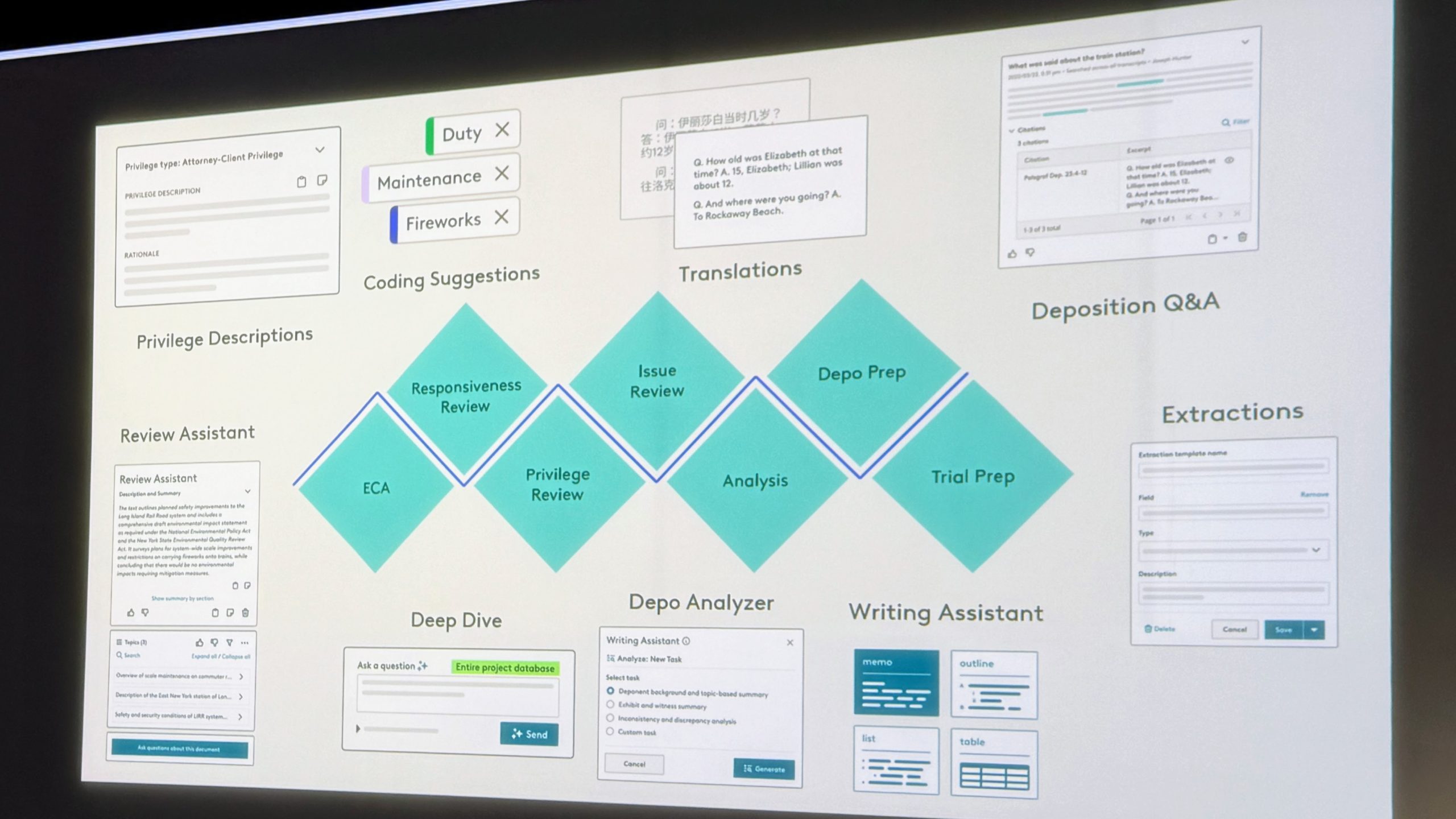
Shankar’s
keynote
included
this
slide,
showing
the
array
of
Everlaw’s
AI
products
and
the
e-discovery
tasks
for
which
they
can
be
used.
Shankar
emphasized
that
Deep
Dive
was
designed
specifically
to
reduce
hallucinations
by
searching
exclusively
within
the
document
corpus
rather
than
relying
on
embedded
knowledge.
Answers
are
ranked
by
confidence
level
and
supported
with
lists
of
facts
and
referenceable
resources.
When
insufficient
evidence
exists
to
answer
a
query,
the
system
says
so
explicitly
rather
than
generating
unreliable
content.
“Ask
an
LLM
why
the
sky
is
blue,
and
it
will
use
its
embedded
knowledge
to
answer,”
Shankar
said.
“That’s
not
helpful
when
you’re
trying
to
make
an
argument
supported
by
hard
evidence
from
within
your
discovery
universe.
Worse,
if
the
LLM
doesn’t
know
the
answer,
it
may
make
something
up.
“If
you
ask
Deep
Dive
these
questions,
it
will
say
that
it
cannot
find
evidence
within
the
corpus
to
answer
the
question.
By
anchoring
answers
to
specific
facts
present
in
their
corpus,
Deep
Dive
gives
our
users
actionable
intelligence.”
Significant
AI
Pricing
Restructuring
Perhaps
equally
significant
was
Everlaw’s
announcement
of
a
major
restructuring
of
its
AI
pricing
model.
Starting
with
the
company’s
October
release,
three
key
AI
features
–
Review
Assistant
for
single
documents,
Writing
Assistant
in
Story
Builder,
and
Deposition
Analyzer
–
will
be
included
in
the
core
per-gigabyte
rate
at
no
additional
charge.
Despite
adding
these
features,
Everlaw
is
not
increasing
its
per-gigabyte
pricing.
The
included
features
encompass
translations,
coding
suggestions,
summaries,
extractions,
sentiment
analysis
and
Q&A
capabilities,
as
well
as
memo
writing,
outline
creation
and
deposition
analysis.
This
is
departure
from
Everlaw’s
existing
credit-based
system
for
AI
features.
“We
know
how
hard
it
is
for
you
to
operationalize
the
use
of
these
really
powerful
tools
with
a
system
where
every
usage
is
metered,”
Shankar
said.
“We’ve
been
spending
a
lot
of
time
in
the
last
year
on
how
we
can
make
the
experience
better
for
you,
on
how
we
can
give
your
teams
more
of
the
value
we’ve
built
with
Everlaw
AI
without
charging
you
extra.”
Additionally,
Everlaw
announced
a
more
than
40%
price
reduction
for
batch
coding
suggestions,
one
of
its
most
popular
batch
AI
actions.
The
company
also
introduced
unified
contracts
that
allow
customers
to
access
staging,
drive-to-ECA,
active
and
suspend
functionality,
and
AI
credits
through
a
single
agreement.
Beta
Tester
Experiences
According
to
several
beta
testers
who
spoke
during
the
keynote
to
describe
their
experiences,
Deep
Dive’s
capabilities
provide
advantages
across
the
litigation
lifecycle,
including
early
case
assessment
for
understanding
core
facts
and
testing
hypotheses,
production
review
for
analyzing
large
data
dumps
and
identifying
gaps,
and
deposition
or
trial
readiness
for
generating
key
facts
and
quotes
based
on
actual
case
content.
Julie
Brown,
director
of
practice
management
at
Vorys,
an
Am
Law
200
firm,
described
the
tool
as
“remarkably
easy”
to
implement
and
“intuitive
and
user
friendly.”
Julie
Brown,
director
of
practice
management
at
Vorys,
joined
Shankar
during
his
keynote
to
share
her
experience
beta
testing
the
new
Deep
Dive
feature.
Brown
highlighted
three
key
use
cases:
investigations
for
identifying
key
people
and
events,
quality
control
to
catch
documents
missed
by
other
review
methods,
and
deposition
and
trial
preparation.
In
one
notable
example,
her
team
used
Deep
Dive
on
a
2
million-document
collection
with
a
week-long
production
deadline,
employing
the
tool
as
a
quality
control
mechanism
to
identify
potentially
missed
documents.
“The
attorneys
were
just
in
awe
when
they
saw
the
results,”
Brown
said,
noting
that
in
their
first
300,000-document
test
case
during
deposition
preparation,
Deep
Dive
not
only
confirmed
information
the
attorneys
already
knew
but
also
identified
new
relevant
documents.
Practical
Applications
Another
beta
tester,
Steve
Delaney,
director
of
litigation
support
at
Am
Law
200
firm
Benesh,
described
his
firm’s
rigorous
approach
to
implementing
AI
coding
suggestions.
Benesh
has
developed
a
systematic
process
that
involves
building
targeted
samples,
iterating
on
prompts
and
using
Story
Builder’s
drafts
section
to
track
all
revisions
and
validation
steps.
“The
biggest
takeaway
is
that
if
you
haven’t
started
using
coding
suggestions
yet,
like
do
it,
start,
find
a
way
to
get
yourself
using
it,”
Delaney
advised
the
audience
of
Everlaw
customers.
He
emphasized
that
firms
using
AI
tools
now
can
gain
competitive
advantage.
“You
don’t
get
competitive
advantage
by
doing
what
everyone
else
is
doing.”
For
a
panel
on
how
AI
is
impacting
dispute
resolution,
technology
journalists
Casey
Newton,
founder
of
Platformer
and
co-host
of
The
New
York
Times’
podcast
“Hard
Fork,”
and
Nilay
Patel,
co-founder
and
editor-in-chief
of
The
Verge,
interviewed
Rebecca
Delfino,
associate
professor
of
law
at
LMU
Loyola
Law,
and
Bridget
May
McCormack,
president
of
the
American
Arbitration
Association
and
former
chief
justice
of
the
Michigan
Supreme
Court.
Ed
Valio,
director,
eDiscovery
and
records
management
at
Geico,
described
an
unusual
use
case
where
his
team
needed
to
evaluate
tens
of
thousands
of
contracts
in
48
hours
to
answer
a
specific
business
question.
By
combining
custom
extractions,
Review
Assistant
coding
suggestions,
and
predictive
coding,
they
identified
just
one
relevant
contract
out
of
50,000
and
later
pulled
in
related
email
traffic
for
context.
Deep
Dive
Pricing
Deep
Dive
will
operate
as
a
batch
feature
with
a
one-time
per-gigabyte
ingestion
fee
that
provides
unlimited
questions
for
the
lifetime
of
a
case.
Shankar
emphasized
that
the
pricing
model
gives
customers
control
over
when
and
how
they
deploy
AI
tools.
More
than
250
customers
currently
use
Everlaw’s
suite
of
generative
AI
features,
including
federal
customers
and
participants
in
the
Everlaw
for
Good
program
serving
nonprofits.
A
panel
of
judges
shared
their
insights
on
technology
and
the
law.
From
left:
Gloria
Lee,
chief
legal
officer,
Everlaw,
who
served
as
moderator;
Senior
District
Judge
Joy
Conti,
W.D.
Pa.;
Judge
David
Cunningham,
Los
Angeles
County
Superior
Court;
Chief
U.S.
Magistrate
Judge
Willie
Epps
Jr.,
W.D.
Mo.;
U.S.
Magistrate
Judge
Young
B.
Kim,
N.D.
Il.;
and
Judge
Victoria
Kolakowski,
Alameda
County
Superior
Court.
The
keynote
also
included
an
early
preview
of
Workflow
Builder,
a
forthcoming
tool
designed
to
help
legal
teams
construct
and
execute
complex,
repeatable
workflows.
While
Shankar
emphasized
this
is
in
the
early
development
stage,
the
tool
will
allow
users
to
orchestrate
document
flow
through
various
Everlaw
features,
including
AI
capabilities,
with
automated
triggering,
conditional
branching,
and
human
approval
gates.
“Instead
of
getting
in
the
guts
of
Everlaw,
you’re
orchestrating
outcomes,”
Shankar
said.
“Your
colleagues
can
step
in
at
exactly
the
right
time
to
add
value
in
a
defensible,
repeatable
way.”
Responsible
AI
Development
Throughout
his
presentation,
Shankar
emphasized
Everlaw’s
approach
to
responsible
AI
development,
including
protecting
customer
data
from
model
training,
minimizing
hallucinations
by
focusing
on
document
content
rather
than
general
legal
knowledge,
and
conducting
extensive
beta
testing
before
general
releases.
The
company’s
Value
AI
team,
composed
of
experienced
legal
professionals,
is
available
to
help
customers
navigate
AI
adoption
challenges,
including
economics,
functionality,
firm
policy,
client
approvals,
and
team
training.
Everlaw
continues
to
release
new
features
on
a
monthly
basis,
with
upcoming
tools
including
a
Depositions
Q&A
tool
for
comprehensive
cross-deposition
queries
and
a
Privilege
Descriptions
tool
for
generating
explanations
of
privilege
designations.
Shankar
emphasized
that
Deep
Dive
is
designed
to
work
as
part
of
the
broader
Everlaw
platform.
“Deep
Dive
is
best
used
as
one
of
many
powerful
tools
in
the
Everlaw
platform,”
he
said.
“Combined
with
Coding
Suggestions,
Clustering
and
Story
Builder,
Deep
Dive
provides
a
strong
platform
for
legal
teams
to
drive
successful
outcomes.”
US
Customs
and
Border
Patrol
Commander
Gregory
Bovino
(Photo
by
KAMIL
KRZACZYNSKI/
AFP
via
Getty
Images)
U.S.
Border
Patrol
commander
Gregory
Bovino,
head
of
the
Trump
administration’s
military
presence
in
Chicago,
“Operation
Midway
Blitz,”
is
in
the
hot
seat.
That’s
been
true
for
a
minute,
since
there
are
some
pretty
serious
allegations
(and
video!)
that
federal
agents
—
and
Bovino,
specifically
—
violated
a
temporary
restraining
order
issued
by
U.S.
District
Court
Judge
Sara
Ellis.
A
group
of
journalists,
protesters,
and
clergy
sued
the
Trump
administration over
the
military
occupation
of
Chicago,
and
Ellis
issued
a
TRO
limiting
the
tactics
federal
agents
can
use.
Amongst
the
banned
methods
of
riot
control
include
the
use
of
tear
gas
unless
there
is
an
immediate
safety
threat.
But
then
Bovino
was
caught
on
camera
throwing
canisters
of
tear
gas
into
a
crowd
without
any
warnings
or
verbal
orders
to
disperse.
So,
Judge
Ellis
hauled
Bovino
into
her
courtroom
to
figure
out
what
in
the
hell
is
going
on
in
the
streets
of
Chicago.
And
from
all
indications,
Ellis
was
deeply
concerned
with
the
brutal
tactics
being
used
by
federal
forces.
Today,
Judge
Ellis
upgraded
the
TRO
to
a
preliminary
injunction
and
eviscerated
Bovino’s
actions.
In
deposition
testimony,
Bovino
had
justified
his
use
of
tear
gas,
saying
he
was
hit
in
the
head
with
a
rock
before
deploying
the
noxious
gas.
“Video
evidence
ultimately
disproved
this,”
said
Ellis.
“Defendant
Bovino
admitted
that
he
lied,”
she
said.
“I
find
the
defendant’s
evidence
simply
not
credible,”
Ellis
said.
“I
watched
the
defendants’
videos,”
she
continued.
“This,
and
hours
and
hours
and
hours
of
bodycam
video
and
video
from
helicopters
was
the
best
they
could
provide.
”
Ellis
went
further,
saying
the
government’s
depiction
of
what
is
going
on
in
Chicago
“is
untrue,”
and
protesters
are
being
“threatened
and
harmed
for
exercising
their
constitutional
rights.”
The
tactics
and
behavior
of
the
occupying
forces
“shocks
the
conscience”
and Judge
Ellis
said she
was
“ordering
complete
relief
to
the
plaintiffs.”
Kathryn
Rubino
is
a
Senior
Editor
at
Above
the
Law,
host
of
The
Jabot
podcast,
and
co-host
of
Thinking
Like
A
Lawyer.
AtL
tipsters
are
the
best,
so
please
connect
with
her.
Feel
free
to
email
her
with
any
tips,
questions,
or
comments
and
follow
her
on
Twitter
@Kathryn1 or
Mastodon
@[email protected].
We’ve
all
heard
the
chatter
about
our
dwindling
attention
spans.
But
do
we
truly
grasp
the
extent
of
this
issue?
It’s
a
shared
struggle
that
many
of
us
are
navigating.
Let’s
consider
how
much
content
contends
for
our
attention.
On
a
typical
workday,
I
receive
between
200
and
300
emails,
100
to
200
text
messages,
100
or
more
instant
messages
across
various
social
media
platforms,
and
over
50
voicemails
on
both
my
cell
and
work
lines.
The
only
way
to
manage
this
much
input
is
to
triage
what’s
essential
and
what
is
not
and
do
my
best
to
respond
as
quickly
and
succinctly
as
possible.
This
process
may
be
effective
for
managing
my
inbox,
but
it
hinders
my
ability
to
pay
attention
and
communicate
effectively.
And
in
all
of
our
hands,
our
smartphones
are
daily
and
hourly
chipping
away
at
a
fundamental
skill:
paying
attention
and
focusing.
No
matter
how
much
we
work
on
our
listening
and
attention
skills,
our
phones
pull
us
toward
distraction,
reaction,
and
a
lack
of
focus.
And
invariably,
even
if
we
work
on
listening
and
paying
attention
to
others,
there’s
little
hope
that
we
can
get
others
to
do
the
same.
We
must
acknowledge
that
most
of
the
people
we
deal
with
are
perpetually
distracted,
overwhelmed,
and
drowning
in
emails,
phone
messages,
instant
messages,
news
notifications,
and
other
matters.
Because
we
are
all
overwhelmed
with
so
many
incoming
messages
and
notifications,
we
play
an
essential
role
in
not
adding
to
the
cacophony.
This
is
what
I
do
to
facilitate
communication
with
others
who
are
already
overwhelmed
by
it.
First,
adapt
to
your
audience’s
preferred
communication
method.
Whether
it’s
voicemails,
emails,
text
messages,
or
instant
messages,
meet
them
where
they’re
at.
Second,
I
get
to
the
point
and
use
bullet
points.
Sometimes
longer
communications
are
unavoidable,
but
that
does
not
mean
you
cannot
do
everything
you
can
to
shorten
and
streamline
them.
I
typically
start
an
email
with
a
topic
sentence
that
outlines
what
I’m
delving
into,
then
provide
a
series
of
titles,
subtitles,
and
bullet
points
that
the
reader
can
easily
follow
and
refer
to
later
if
needed.
My
communications
are
not
meant
to
benefit
me.
They
are
intending
to
help
the
recipient,
and
to
do
so,
I
want
to
make
it
as
easy
as
possible
for
them
to
identify
and
process
the
information
I
am
conveying.
Third,
I
avoid
digressions,
anecdotes,
humor,
and
related
issues
unless
the
situation
absolutely
calls
for
it.
My
job
is
to
get
in,
share
information,
and
get
out.
I’m
not
trying
to
receive
an
award
as
a
humorist
or
a
Pulitzer.
I
am
perpetually
aware
and
appreciate
that
I’m
intruding
on
someone’s
attention
and
time,
and
I
want
the
intrusion
to
be
as
limited
and
painless
as
possible.
A
caveat
is
warranted.
The
communications
I
speak
of
are
business-related.
It’s
easy
to
transfer
these
pointed
and
direct
communications
into
your
personal
relationships.
Please
don’t.
Your
family
and
friends
want
to
hear
from
you.
They
want
to
talk
to
you.
They
don’t
want
yes-or-no
answers.
They
want
something
more.
So
often,
we
lawyers
bring
our
work
home
with
us,
cross-examining
and
interrogating
our
families
at
the
dinner
table.
Let’s
not
apply
our
business-style
communication
to
home
or
to
friends.
In
addition
to
written
communications,
let’s
address
our
oral
communications
with
others.
Again,
the
focus
is
on
getting
to
the
point,
answering
the
questions
posed,
and
providing
solutions
and
resolutions
clearly
and
positively.
So
often,
I’ve
been
on
business
calls
or
on
Zoom
or
Teams,
and
someone
is
overextending
their
welcome
by
discussing
unrelated
items,
not
getting
to
the
point,
and
prolonging
the
conversation.
Perhaps
they
think
that
the
more
they
talk,
the
more
in
control
they
are
or
the
better
they
will
be
remembered.
They
will
be
remembered
for
all
the
wrong
reasons. I’ve
never
been
in
a
meeting
where
someone
said
I
wish
it
were
longer.
Or
I
wanted
that
person
to
have
talked
more.
You
have
more
impact
with
the
less
you
say.
If
you’re
always
talking,
people
are
listening
less,
and
when
you
make
a
strong
point,
others
are
likely
to
ignore
it.
Say
only
what’s
needed
and
move
on.
Remember,
in
all
forms
of
communication,
less
is
more.
Getting
to
the
point
is
key.
Making
information
digestible
and
easy
to
process
is
crucial.
There
are
times
when
soaring
oratory
is
required.
But
for
the
rest
of
the
time,
keep
it
short
and
to
the
point.
Your
audience
will
appreciate
the
clarity
and
brevity.
Frank
Ramos
is
a
partner
at
Goldberg
Segalla
in
Miami,
where
he
practices
commercial
litigation,
products,
and
catastrophic
personal
injury. You
can
follow
him
on LinkedIn,
where
he
has
about
80,000
followers.
The
hearing
was
a
bloodbath
for
the
Trump
administration:
Six
justices
lined
up
to
bash
the
Justice
Department’s
defense
of
the
tariffs,
barely
disguising
their
annoyance
with
the
government’s
barrage
of
blustery
nonsense.
At
the
halfway
point,
it
would’ve
saved
everyone
time
had
the
court
just
huddled,
announced
its
decision
from
the
bench,
and
recessed
early
for
lunch.
—
Mark
Joseph
Stern,
a
senior
writer
at
Slate,
summarizing
the
epic
takedown
the
Trump
administration
faced
at
the
Supreme
Court
earlier
this
week
during
oral
arguments
on
the
legality
of
Trump’s
tariffs.
“We
have
spent
10
months
waiting
to
see
if,
and
when,
this
court
would
set
a
limit
on
Trump’s
power,”
Stern
wrote.
“Perhaps
we
should’ve
guessed
that
its
extraordinary
deference
to
this
president
could
be
outweighed
only
by
its
hatred
of
taxes.”
Staci
Zaretsky is
the
managing
editor
of
Above
the
Law,
where
she’s
worked
since
2011.
She’d
love
to
hear
from
you,
so
please
feel
free
to
email
her
with
any
tips,
questions,
comments,
or
critiques.
You
can
follow
her
on Bluesky, X/Twitter,
and Threads, or
connect
with
her
on LinkedIn.
This
has
left
the
community
to
count
their
losses
while
the
criminal
syndicates
operate
with
impunity.
In
an
interview
with
CITE,
one
villager
Thuleleni
Nhliziyo
said
her
family
lost
livestock
in
September,
but
the
suspects
were
never
held
accountable.
“We
have
a
challenge
in
Ngwaladi.
On
10
September,
we
lost
two
cows
from
my
homestead
and
our
neighbour’s
cows
were
also
stolen.
We
searched
for
the
cows
and
found
the
person
who
took
them,
through
someone
else
who
was
also
looking
for
his
livestock,”
said
Nhliziyo.
“The
suspect
revealed
that
the
cows
were
taken
to
Bulawayo.
The
police
were
called
and
arrested
a
suspect
called
Mguni,
who
led
them
to
Masuku,
who
also
led
them
to
someone
else
as
they
work
in
a
chain.”
However,
Nhliziyo
said
the
suspects
mysteriously
disappeared
before
trial.
“During
the
court
case,
Mguni
was
no
longer
available.
We
were
told
he
had
a
lawyer
and
was
given
another
court
date,
but
when
the
next
case
came,
both
Mguni
and
Masuku
were
no
longer
in
Gwelutshena.
We
were
later
told
Brighton
and
Themba
were
also
released,”
she
said.
She
added
that
when
villagers
ask
to
see
dockets,
details
of
the
arrests
are
often
missing.
Nhliziyo
said
such
incidents
have
become
common
in
Chief
Sikhobokhobo’s
area.
“Last
year
another
villager
lost
his
cattle,
and
when
they
went
to
court,
they
found
that
the
thief
they
had
caught
was
no
longer
in
the
cells.
These
people
are
exchanged
inside
the
cells.
We
know
each
other,
the
person
is
still
at
home,
and
we
see
them,”
she
said.
Villagers
believe
a
lack
of
accountability
at
Gwelutshena
Police
Station
has
emboldened
offenders.
“We
don’t
know
how
the
police
are
working,”
said
Nhliziyo.
“They
say
the
thieves
are
released
to
find
lawyers.
Is
this
how
the
law
works?
We
are
being
abused
while
the
thieves
are
treated
well.”
She
called
on
senior
police
authorities
to
intervene.
“We
want
the
person
in
charge
of
the
police
to
hear
our
issue
because
Gwelutshena
has
no
proper
officers.
We
have
no
complaints
about
other
crimes,
but
stock
theft
suspects
are
always
released.
The
thieves
and
the
police
are
taking
advantage
of
the
elderly
and
children,”
she
said.
Another
villager,
who
requested
anonymity,
said
cattle
stolen
from
their
community
were
later
found
in
Gomoza,
but
suspects
“disappeared”
before
facing
trial.
“The
cows
were
recovered
in
Gomoza
and
the
thieves
apprehended
as
well,
but
when
the
community
followed
up
on
the
case,
they
were
told
the
thieves
disappeared.
How
do
thieves
disappear
under
police
watch?
What
should
the
community
do
then?”
she
asked.
Country
Moyo,
from
Sivomo
and
a
member
of
the
Azibuye
Emaseleni
Community
Group
formed
to
combat
livestock
theft,
said
villagers
are
no
longer
issued
case
numbers
when
reporting
crimes.
“We
are
appealing
for
assistance
so
that
these
police
officers
can
be
changed
—
we
are
tired
of
the
current
ones,”
said
Moyo.
This
year
when
reached
for
comment,
Village
Head
Nkululeko
Ncube
from
Ward
8,
KoSando,
said
the
situation
has
eroded
community
trust
in
law
enforcement.
“The
thieves
even
confess
to
their
crime
and
the
stolen
livestock
will
be
there
as
exhibits.
We
take
them
to
Gwelutshena
police,
but
the
next
day
we
see
them
walking
free.
We
don’t
want
to
end
up
taking
matters
into
our
own
hands,
but
the
police
are
letting
us
down,”
said
Ncube.
He
urged
authorities
to
restore
order
and
make
sure justice
is
served.
“As
the
village
head,
I
can
confirm
this
is
happening.
We
want
those
who
commit
crimes
to
face
the
law.
These
people
confess,
they
don’t
even
deny
it.
How
can
we
live
in
peace
when
the
thieves
are
among
us?
We
are
not
happy
with
Gwelutshena
police,”
he
said.
Efforts
to
reach
Matabeleland
North
Provincial
Police
Spokesperson,
Inspector
Glory
Banda,
were
unsuccessful,
as
his
phone
was
unavailable
for
the
past
two
days.
The
foreign
miners
are
being
shielded
by
heavyweights
in
Mashonaland
Central,
who
are
wantonly
disregarding
the
government’s
2020
ban
on
mining
activities
in
all
national
parks.
Located
near
the
towns
of
Guruve
and
Centenary,
Mavuradonha
covers
600
square
kilometres
of
the
eastern
part
of
the
Zambezi
escarpment.
It
was
declared
a
monument
by
the
government
in
2017
because
of
its
historical
and
cultural
importance.
Mavuradonha
is
also
renowned
for
its
rich
biodiversity
comprising
229
bird
species,
including
several
large
eagles,
and
41
species
of
large
and
medium
sized
mammals.
The
undisturbed
part
of
the
Mavuradonha
Wilderness
showing
a
glimpse
of
the
natural
wonder
In
1988
it
was
declared
a
protected
area
by
the
government
through
the
Muzarabani
Rural
District
Council
(RDC)
in
recognition
of
its
scenic
beauty
and
conservation
value.
The
nature
reserve
was
one
of
the
success
stories
of
the
Communal
Areas
Management
Programme
for
Indigenous
Resources
(CAMPFIRE),
whose
objective
was
to
ensure
that
local
communities
derived
direct
benefits
from
natural
resources
in
their
areas.
Mavuradonha
also
boasts
of
numerous
historical
and
cultural
sites,
including
San
rock
art
and
Mutota’s
Kraal
ruins,
which
makes
it
a
potential
tourism
magnet
for
Zimbabwe.
Over
the
years,
however,
encroaching
mining
activities
have
been
destroying
the
pristine
environment
and
investigations
by
CITE
exposed
how
some
Chinese
companies
are
being
allowed
to
plunder
Mavuradonha
with
impunity
with
the
aid
of
officials
from
institutions
that
should
be
protecting
the
reserve.
The
Chinese
miners
have
opened
roads
deep
inside
the
nature
reserve,
disturbing
the
wildlife
and
causing
serious
damage
to
the
environment
The
groundwork
for
the
destruction
of
the
reserve
was
laid
on
July
7,
2015
when
the
Muzarabani
RDC
signed
a
memorandum
of
understanding
(MOU)
with
Afrochine
Smelting,
a
subsidiary
of
China’s
second-biggest
stainless
steel
products
manufacturer,
the
Tsingshan
Group,
to
explore
for
chrome.
This
was
despite
the
fact
that
the
authorities
had
embarked
on
a
process
to
push
for
Mavuradonha
to
be
declared
a
World
Heritage
Site.
It
was
also
a
few
years
after
the
Muzarabani
RDC
signed
an
agreement
with
a
private
company
to
spruce
up
the
wilderness.
A
2012
agreement
with
Nzou
Safaris
was
meant
to
facilitate
the
restoration
of
the
nature
reserve
to
its
past
glory
to
attract
tourists
and
help
the
local
community
benefit
from
rich
natural
resources
in
their
area.
Floodgates
for
the
Chinese
The
MOU
with
Afrochine
appears
to
have
opened
the
floodgates
for
other
Chinese-owned
companies
to
invade
the
reserve
as
two
others,
namely
Labenmon
Investments
and
Alaska,
had
joined
the
scramble
for
chrome
at
Mavuradonha
by
2019.
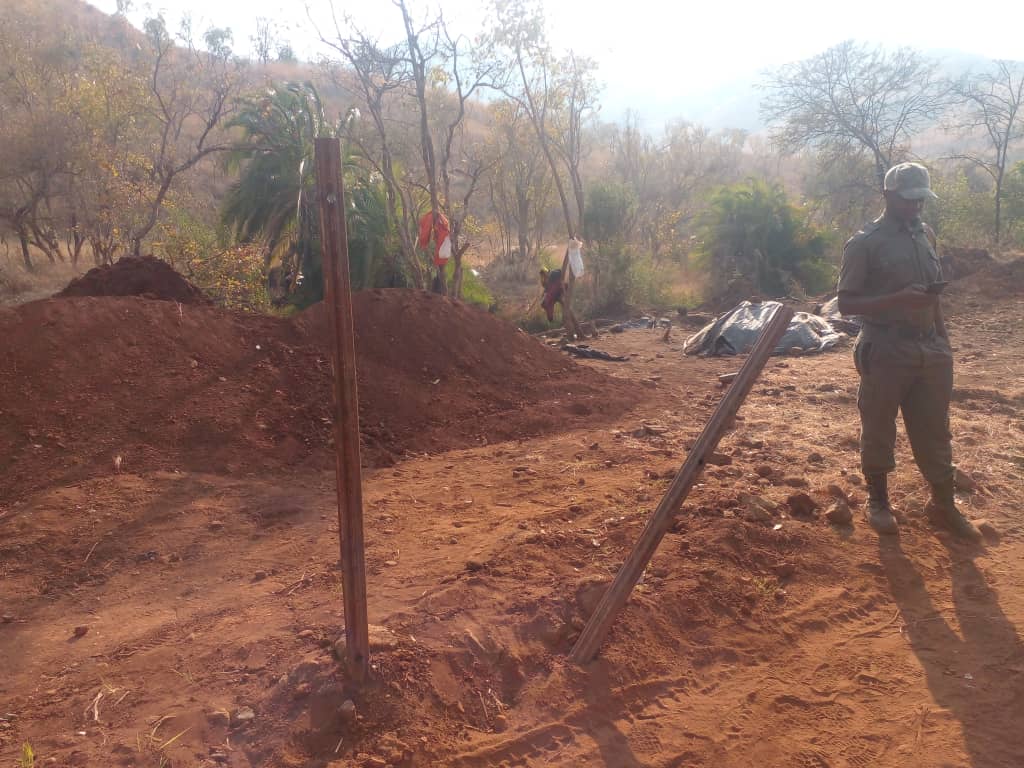
A
game
ranger
at
the
Mavhuradonha
Wilderness
is
seen
standing
in
one
of
the
areas
where
mining
operations
have
led
to
serious
land
degradation
Documents
obtained
during
investigations
showed
that
National
Monuments
and
Museums
of
Zimbabwe
(NMMZ)
regional
director
Godhi
Bvocho
promised
to
facilitate
Afrochine’s
entry
into
the
reserve
through
a
2017
letter.
The
NMMZ
is
a
parastatal
charged
with
the
preservation
of
ancient,
historical
and
natural
monuments,
relics
and
other
objects
of
historical
or
scientific
value
or
interest,
including
nature
reserves
such
as
Mavuradonha.
Bvocha
promised
to
link
Afrochine
with
the
Muzarabani
RDC,
the
community
and
traditional
leaders
as
well
as
Nzou
Safaris,
which
was
running
a
concession
at
the
reserve
at
the
time.
“Access
to
Mukura
100
Mine
(Reg
40712
BM)
is
hereby
granted,”
reads
part
of
the
letter
by
the
NMMZ
regional
boss
to
Afrochine,
which
is
in
our
possession.
“The
NMMZ
will
in
the
shortest
possible
time
convene
a
stakeholder
meeting
to
familiarise
with
your
operational
procedures
and
requirements
for
a
smooth
sailing
(sic)
of
activities.”
Bvocho
made
the
undertaking
despite
the
fact
that
the
Muzarabani
RDC
had
an
agreement
with
Mavuradonha
that
prohibited
mining
activities
inside
the
reserve,
including
prospecting
for
minerals.
He
even
proposed
to
give
the
Chinese
a
free
reign
to
carry
out
open
cast
mining
at
the
site,
the
documents
showed.
Afrochine
immediately
descended
on
Mavuradonha,
broke
down
locked
gates
and
opened
gravel
roads
to
access
its
mine,
leading
to
the
destruction
of
natural
habitat.
Afrochine
ignored
cancellation
of
MOU
This
alarmed
the
Muzarabani
RDC,
which
was
forced
to
cancel
the
controversial
MOU
with
the
Chinese
firm,
but
this
did
not
stop
Allen
Mashumba,
who
was
fronting
Afrochine
from
leading
the
foray
into
the
wilderness.
Mashumba
took
advantage
of
a
raging
border
dispute
between
the
Muzarabani
and
Guruve
RDCs
to
get
the
nod
to
continue
mining
through
the
latter’s
then
chief
executive
Tinos
Marisa.
Marisa
was
fired
by
the
Guruve
RDC
last
year
for
abuse
of
office
arising
from
a
matter
that
was
not
related
to
the
illegal
mining
activities
at
the
nature
reserve.
It
also
emerged
during
investigations
that
on
March
22,
2021,
Marisa
with
the
help
of
an
Environmental
Management
Agency
(EMA)
senior
official
Nicholas
Jombe
facilitated
the
granting
of
an
environmental
impact
assessment
(EIA)
certificate
for
Labenmon
to
mine
chrome
inside
the
reserve.
Jombe
is
EMA’s
EIA
and
ecosystems
protection
officer.
Labenmon’s
licence
was
granted
under
the
guise
that
it
was
for
a
Guruve
nickel
mine.
The
two
facilitated
the
issuing
of
the
certificate
despite
being
aware
that
Mavhuradonha
had
been
ascertained
to
be
under
the
jurisdiction
of
the
Muzarabani
RDC,
and
not
Guruve
through
a
government
process.
On
May
5,
2021
Marisa
wrote
to
Mavuradonha
to
exert
pressure
on
the
reserve
to
allow
Labenmon
to
start
mining
operations
following
indications
that
there
was
resistance
from
the
authorities
at
the
wilderness.
“A
complaint
has
been
raised
by
Labenmon
Investments
that
your
organisation
is
barring
access
to
its
mining
claims
by
way
of
locking
your
entrance
gates,”
the
letter
read.
“To
avoid
loss
of
time
and
financial
resources
to
both
parties
through
impending
litigation
against
you,
it
is
prudent
that
you
immediately
provide
them
with
their
lawful
access
to
resume
operations.”
Vandalising
infrastructure
CITE
obtained
four
copies
of
EIA
certificates
signed
by
Jombe
that
cleared
the
Chinese
to
start
mining
chrome
in
different
sites
inside
Mavhuradona,
which
are
wrongly
identified
as
under
the
jurisdiction
of
the
Guruve
RDC.
The
two
companies
tore
down
part
of
the
state-of-the-art
fence
that
was
erected
to
help
keep
animals
in
the
wilderness
safe
and
reduce
human
and
wildlife
conflicts.
They
changed
keys
at
the
main
gate
and
disrupted
business
that
had
attracted
interest
from
the
internationally
recognised
Global
Environment
Facility
(GEF)
worth
US$12
million.
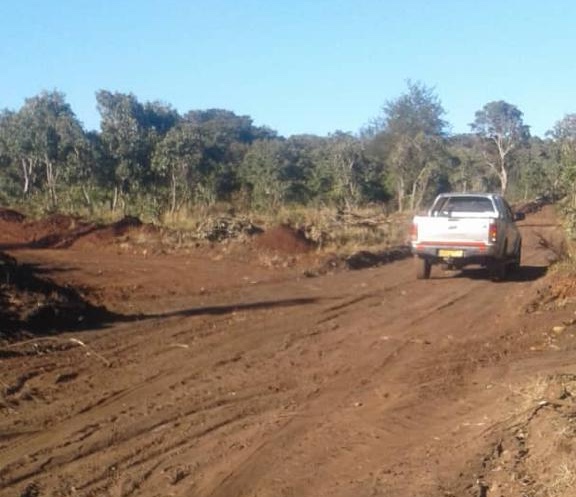
A
truck
belonging
to
one
of
the
Chinese
miners
at
the
Mavuradonha
Wilderness
seen
navigating
the
rugged
terrain.
Opencast
mining
being
done
by
Labenmon
and
Afrochine
has
left
gaping
holes
such
as
those
found
on
the
southern
parts
of
the
wilderness,
which
have
seen
wild
animals
falling
into
their
deaths
in
numbers.
Mining
activities
continued
despite
a
July
5,
2021
High
Court
order
that
barred
Afrochine
Smelting
and
Labenmon
Investments
“from
entering
the
gate
that
leads
to
Varden
Safaris’
game
breeding
and
botanical
reserves
without
Varden
Safari’s
prior
consent.”
The
court
order
came
at
a
time
Mavuradonha
Wilderness
was
awaiting
conclusion
of
processes
by
the
United
Nations
Education,
Scientific
and
Cultural
Organisation
(UNESCO)
to
review
its
application
for
a
World
Heritage
Site
status.
As
recently
as
September
4,
2024,
the
NMMZ’s
Bvocho
wrote
to
the
authorities
at
Mavhuradonha
Wilderness
asking
them
to
give
access
to
officials
from
another
Chinese
miner
Jin
An
Chrome
to
reach
a
mining
site
inside
the
reserve.
The
Chinese
nationals
were
identified
as
Kai
Wang,
Zhiyi
Guan
and
Chong
nan
Qia
and
the
purpose
of
their
visit
was
to
explore
for
mining
opportunities,
documents
in
our
possession
show.
Investigations
showed
that
the
scramble
for
chrome
inside
the
game
reserve,
which
is
being
facilitated
by
compromised
government
officials,
is
frustrating
efforts
by
the
Muzarabani
RDC
to
restore
Mavuradonha.
After
the
Nzou
Safraris
arrangement,
the
local
authority
also
reached
another
deal
with
Varden
Safaris
that
envisaged
improved
protection
of
the
reserve’s
flora
and
fauna,
developing
tourist
attractions
and
drawing
in
more
visitors.
According
to
the
agreement,
human
activities
that
included
mining
were
supposed
to
be
outlawed
as
the
council
agreed
to
“maintain
Mavhuradonha
Wilderness
area
free
from
human
settlement
and
construction
of
any
type.”
Murazabani
CEO
Ennie
Mutema
and
Andrew
Henderson
of
Varden
Safaris
appended
their
signatures
to
the
agreement
that
is
in
our
possession.
“The
council
also
agrees
to
maintain
the
area
free
from
miners,
mineral
panners
or
prospectors
for
the
duration
of
the
period
and
to
abide
by
all
EMA
and
Minerals
Act
laws,”
the
agreement
said
in
part.
NMMZ
boss
ignored
protests
Varden
Safaris’
Henderson
said
Bvocho
ignored
their
protests
that
allowing
mining
activities
in
the
reserve
would
harm
its
recently
acquired
national
monument
status.
“As
soon
as
we
achieved
national
monument
status,
Bvocho
wrote
a
letter
granting
Afrochine
access
into
Mavuradonha
and
it
is
that
letter
we
believe
has
emboldened
them
to
continue
breaking
our
locks,
gaining
illegal
entry
as
well
as
other
miners
as
they
have
realised
that
they
have
an
ally
in
the
NMMZ,”
he
said.
“Bvocho
chose
to
ignore
our
protests
and
continues
to
back
the
miners,”
said
Varden
Safaris’
Henderson.
“Already,
he
had
allowed
San
He
Mining,
another
Chinese
firm
to
invade
and
mine.”
The
decisions
were
made
against
recommendations
from
Muzarabani
RDC’s
executive
officer
natural
resources
Elmon
Kaombe.
Bvocho
also
ignored
a
Muzarabani
RDC
resolution
to
bar
prospecting
and
mining
in
the
Mavuradonha
Wilderness
area,
which
waspresented
to
him
on
May
31,
2023.
“The
area
of
concern
is
a
wilderness
area
declared
so
by
a
general
circular
No.
369
of
1988.
It
is
also
a
national
monument
area
declared
so
by
SI
6
of
2017,”
Kaombe
said.
“It
is
against
this
background
that
Muzarabani
RDC
wants
this
area
set
aside
for
conservation.
“Surface
and
alluvial
mining
of
chrome
cannot
leave
ecological
benefits,
but
degradation.
“San
He
Mining
needs
to
look
for
alternative
sites,
which
are
outside
the
wilderness
area.”
San
He
Mining
even
defied
a
November
15,
2024
order
from
President
Emmerson
Mnangagwa’s
office
to
stop
mining
activities
at
Mavuradonha,
investigations
showed.
The
Office
of
the
President
and
Cabinet
(OPC)
said
it
had
been
alerted
to
the
fact
that
San
He
Mining
had
started
chrome
mining
in
the
Mavuradonha
Wilderness,
along
Utete
River.
The
miner
had
closed
the
entire
riverine
system
in
the
area,
which
posed
dangers
of
flooding
especially
during
this
rainy
season
and
massive
land
degradation,
the
order
said.
San
He
Mining
was
ordered
to
rehabilitate
the
land
under
the
strict
supervision
and
monitoring
of
EMA,
Muzarabani
district
development
coordinator
and
the
OPC.
“All
costs
of
rehabilitation
are
carried
by
the
individual
or
company
that
degraded
the
land,”
the
order
said.
“(The
Zimbabwe
Republic
Police)
ZRP
and
EMA
are
being
requested
to
stop
the
activities,
impound
the
equipment
involved
as
well
as
effecting
arrests.”
‘Don’t
point
fingers’
Bvocho
defended
the
presence
of
Afrochine
Smelting
at
the
nature
reserve,
saying
Mavuradonha
was
not
yet
a
national
monument
when
the
Chinese
miner
obtained
a
lease
agreement
from
the
Muzarabani
RDC
and
EMA
licences.
He
said
some
of
the
mining
licenses
were
issued
as
far
back
as
during
the
colonial
era
and
that
authorities,
including
the
police
and
the
Mines
ministry
had
failed
to
stop
the
mining
activities.
“There
are
people
with
valid
mining
claims
in
Mavhuradonha
Wilderness
that
were
pegged
in
the
1960s
and
1970s,”
he
told
CITE.
“We
do
not
stop
them
from
getting
into
the
site
to
see
their
claim
but
will
then
deny
them
their
application
to
mine.
“When
someone
wants
permission
to
get
into
the
monument,
I
will
not
deny
them.”
Bvocho
said
it
was
unfair
to
blame
him
alone
for
the
chaos
at
Mavhuradonha
because
the
Muzarabani
RDC,
local
chiefs,
the
Local
Government
and
Mines
ministries
had
all
failed
to
remove
the
Chinese
miners
from
the
reserve.
“It
is
not
only
our
fault.
We
have
failed
together,”
he
said.
“Is
there
no
armed
ZRP
being
hired
to
guide?
Why
are
they
not
stopping
them?
“The
letter
I
wrote
is
not
more
powerful
than
a
court
order,
we
should
not
point
fingers
where
there
is
corporate
failure.”
Amkela
Sidange,
the
EMA
spokesperson,
said
although
the
agency
was
aware
of
the
cases,
most
of
the
issues
fell
under
the
purview
of
other
government
departments.
Sidange
said
they
had
handled
cases
of
violation
of
environmental
regulations
at
Mavhuradonha.
Efforts
to
get
responses
from
the
Chinese
miners
were
fruitless.
In
September
2020,
the
government
banned
mining
activities
in
all
wildlife
parks
and
game
reserves
in
response
to
pressure
from
conservationists
and
environmentalists,
who
accused
two
Chinese
companies
of
exploring
for
coal
in
the
biggest
national
park,
Hwange.
At
the
time,
then
Information
minister
Monica
Mutsvangwa
said
steps
were
being
undertaken
to
call
all
mining
titles
held
in
national
parks.
The
Chinese
embassy
in
Harare
recently
issued
a
strongly
worded
advisory
to
Chinese
investors
in
Zimbabwe
to
respect
local
laws.
The
investors
were
urged
to
“build
trust
through
community
and
environment
stewardship,
promote
fair
labour
practices
and
comply
with
environmental
laws.”
The
application,
names
Zanu
PF
as
the
first
respondent,
alongside
the
Minister
of
Justice,
Legal
and
Parliamentary
Affairs
–
Ziyambi
Ziyambi,
the
Speaker
of
Parliament
–
Jacob
Mudenda,
the
Attorney
General
–
Virginia
Mabiza
and
President
Emmerson
Mnangagwa
himself,
all
cited
in
their
official
capacities.
The
legal
challenge
centres
on
Zanu
PF’s
Resolution
Number
1
of
2024,
adopted
at
its
National
People’s
Conference
in
Bulawayo
in
October
2024,
which
explicitly
calls
for
the
president’s
term
to
be
“extended
beyond
2028
to
2030.”
The
Zanu
PF
resolution
directs
both
the
party
and
the
“Government”
to
“set
in
motion
the
necessary
amendments
to
the
National
Constitution
so
as
to
give
effect
to
this
resolution.”
This
directive
was
reaffirmed
with
greater
urgency
at
the
party’s
2025
conference
in
Mutare,
which,
noting
that
“no
notable
steps
have
been
taken,”
directed
the
Secretary
of
Legal
Affairs
and
the
Minister
of
Justice
to
make
sure
the
resolution
is
“fully
implemented”
before
the
2026
conference.
In
his
founding
affidavit,
Fuzwayo,
argues
that
this
resolution
creates
a
“real
and
imminent
threat
of
unconstitutional
action”
that
directly
infringes
upon
his
fundamental
rights.
He
is
seeking
direct
access
to
the
Constitutional
Court
to
challenge
it.
Fuzwayo’s
application
lays
out
a
clear
set
of
demands
from
the
court.
He
states
that
if
granted
leave
for
direct
access,
he
will
seek
the
following
relief,
quoted
directly
from
the
draft
order:
“Interdicting
the
Respondents
from
taking
any
steps
to
implement
Zanu
PF’s
Resolution
Number
1
pending
the
determination
of
this
matter.”
“Declaration
that
sections
95(2)(b)
and
143(1)
constitute
term-limit
provisions
under
section
328(1)
and
328(7)
of
the
Constitution.”
“Declaration
that
the
implementation
of
Zanu
PF’s
Resolution
Number
1
infringes
my
rights
under
sections
3,
56,
and
67
of
the
Constitution.”
Fuzwayo
said
he
is
not
seeking
“any
order
of
costs
as
against
any
Respondents
as
this
is
a
matter
of
public
and
national
importance.”
Fuzwayo’s
application
hinges
on
a
critical
interpretation
of
Section
328
of
the
Constitution,
which
deals
with
amendments.
Acting
on
legal
advice,
Fuzwayo,
contends
that
provisions
establishing
the
presidential
term
of
office
(Section
95)
and
the
lifespan
of
parliament
(Section
143)
are
“term-limit
provisions.”
He
cites
the
landmark
case
of
Marx
Mupungu
versus
Minister
of
Justice,
Legal
and
Parliamentary
Affairs
and
Ors
CCZ7/21,
where
the
court
defined
a
term-limit
provision
as
“a
myriad
of
provisions
that
unquestionably
constitute
specific
term
limit
provisions
within
the
parameters
of
Section
328.
First
and
foremost,
there
is
s
95(2)
which
expressly
stipulates
that
the
term
of
office
of
the
President
is
5
years
and
coterminous
with
the
life
of
Parliament.”
This
is
crucial
because
Section
328(7)
of
the
Constitution
states
that
any
amendment
to
a
term-limit
provision
that
extends
the
term
of
an
incumbent
must
be
subjected
to
a
national
referendum.
Fuzwayo
argues
that
Zanu
PF’s
resolution,
by
seeking
to
extend
President
Mnangagwa’s
term
without
such
a
referendum,
is
fundamentally
unconstitutional.
In
his
affidavit,
Fuzwayo
details
how
the
resolution
threatens
his
rights
as
a
citizen.
It
“threatens
the
rule
of
law
principle
by
bypassing
potential
referendum
safeguards,
eroding
multiparty
democracy.”
Furthermore,
he
states
it
“discriminates
by
extending
benefits
to
the
incumbent
President,
the
5th
Respondent,
violating
equality
before
the
law
protected
under
section
56
of
the
Constitution.”
Perhaps
most
significantly,
he
contends
it
“risks
infringing
rights
(enshrined
in
section
67
of
the
Constitution)
to
free,
fair
elections
and
participation,
as
the
amendments
being
sought
without
referendums
would
skew
democratic
processes.”
Fuzwayo
asserts
his
right
to
approach
the
court
under
Section
85(1)
of
the
Constitution,
which
allows
any
person
acting
in
their
own
interests
to
seek
relief
when
a
right
is
“likely
to
be
infringed.”
The
application
argues
that
the
matter
is
of
profound
public
importance,
warranting
direct
access
to
the
highest
court.
It
cites
the
“national
significance
of
clarifying
section
328(1)
amid
succession
debates”
and
the
“risk
of
irreparable
harm
if
amendments
proceed
without
judicial
guidance.”
Adding
a
stark,
real-world
dimension
to
the
legal
dispute,
Fuzwayo’s
affidavit
includes
as
an
exhibit
pictures
of
the
petrol
bombing
of
the
Southern
Africa
Political
Economy
Series
(SAPES)
trust
premises.
The
bombing
occurred
on
October
28,
2025,
ahead
of
a
news
conference
by
opposition
politicians
of
the
term
extension
resolution
that
was
due
to
be
hosted
at
SAPES.
He
presents
this
as
“alarming
evidence”
of
the
high
stakes
and
volatile
nature
of
the
dispute.
The
second
applicant,
Ibhetshu
Likazulu,
through
its
vice-chairperson
Thamsanqa
Ncube,
associated
itself
with
Fuzwayo’s
affidavit,
stating
that
one
of
its
fundamental
mandates
is
“to
guard
against
the
violation
of
the
Constitution.”









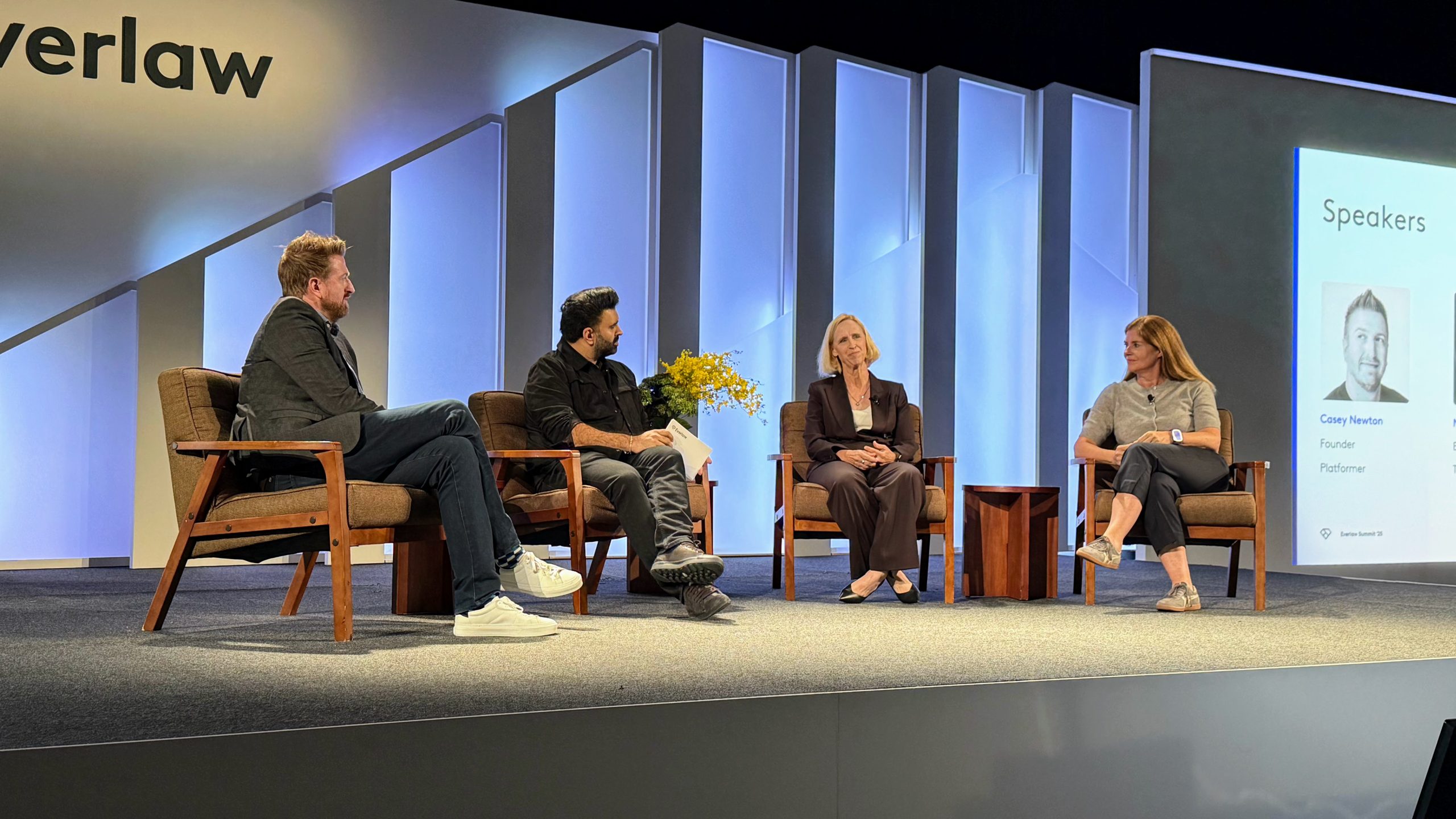
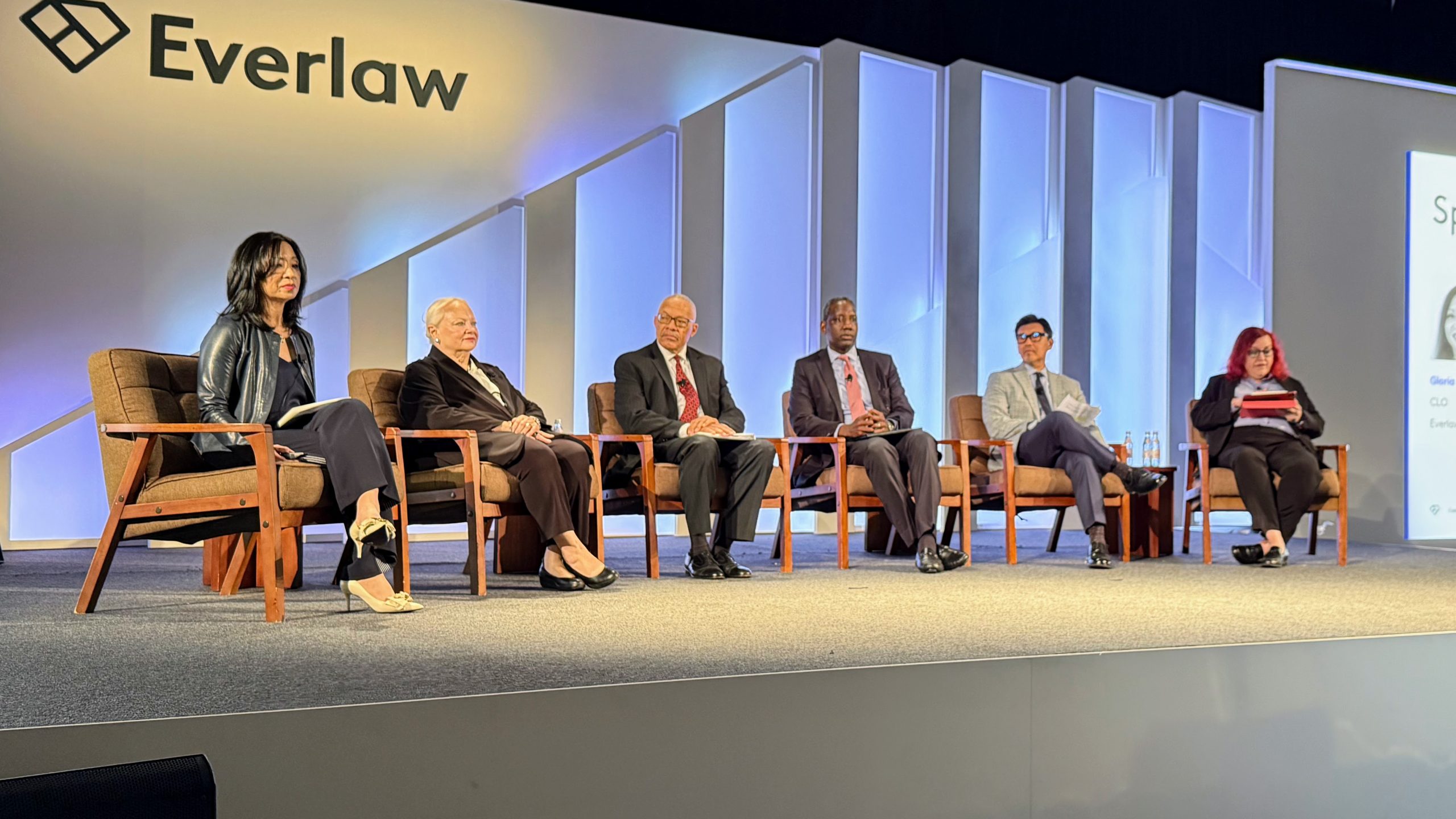

 Kathryn