HARARE
–
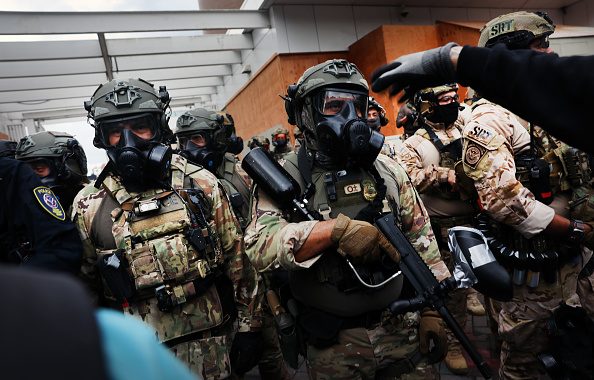
Four
armed
robbery
suspects
were
shot
dead
in
a
fierce
exchange
of
gunfire
with
police
detectives
near
Norton
on
Friday,
the
Zimbabwe
Republic
Police
(ZRP)
said
on
Sunday.
Two
detectives
from
the
Criminal
Investigations
Department
(CID)
Homicide
section
were
seriously
injured
and
are
receiving
treatment
at
a
local
hospital.
Police
spokesperson
Commissioner
Paul
Nyathi
said
two
of
the
slain
suspects
were
foreign
nationals.
“The
Zimbabwe
Republic
Police
confirms
a
serious
shooting
incident
and
exchange
of
fire
by
CID
Homicide
detectives
and
armed
robbery
suspects
in
Norton
on
3
October
2025.
Four
suspects
have
died
while
two
detectives
sustained
serious
injuries,”
Nyathi
said.
He
said
detectives
had
been
tracking
a
motorised
syndicate
that
had
crossed
from
South
Africa
to
carry
out
robberies
in
Bulawayo,
Harare
and
Kwekwe.
“As
the
detectives
were
following,
the
suspects
fired
at
them,
resulting
in
a
serious
exchange
of
fire
near
the
Norton
Tollgate
along
the
Harare–Bulawayo
Road,”
Nyathi
said.
Police
recovered
the
suspects’
getaway
car
—
a
Toyota
Axio
—
along
with
two
pistols:
a
Girsan
9mm
Parabellum
loaded
with
two
rounds,
and
another
9mm
Parabellum
with
one
round
remaining.
Also
recovered
were
a
pair
of
Relay
grey
and
army-green
shoes
and
a
black-and-navy-blue
jacket
branded
“Grey
Wolf.”
Nyathi
said
one
of
the
slain
suspects
had
been
captured
on
CCTV
wearing
the
same
shoes
and
jacket
during
a
September
30
armed
robbery
at
a
Harare
hospital,
where
robbers
stole
US$1,833
in
cash
and
airtime
recharge
cards
worth
US$140.
The
gang
is
linked
to
five
armed
robbery
cases
committed
between
June
25
and
October
3,
2025,
in
Harare
and
Bulawayo,
including
a
June
25
robbery
in
Njube,
where
US$8,000
and
an
iPhone
were
stolen.
“The
Zimbabwe
Republic
Police
reiterates
that
there
is
no
going
back
in
the
fight
against
armed
robbery
cases
in
the
country.
All
syndicates,
whether
locally
or
foreign-based,
will
be
decisively
dealt
with
in
line
with
the
country’s
laws,”
Nyathi
said.
Police
urged
members
of
the
public
to
report
criminal
activities
to
the
National
Complaints
Desk
on
(0242)
703631,
via
WhatsApp
on
0712
800
197,
or
at
any
nearest
police
station.
The
measures,
presented
during
a
full
council
meeting,
cover
mining
operations,
construction
materials,
non-timber
forest
produce,
and
new
revenue
streams
such
as
carbon
credits.
Council
treasurer
Sicelesile
Ncube
said
the
local
authority
was
responding
to
rising
commercial
activity
in
the
district.
“We
saw
that
in
Gwanda
there
is
quarry.
We
realised
that
there
will
be
people
interested
in
having
businesses
dealing
with
quarry,
so
we
introduced
the
licences
at
US$500
per
annum,”
she
said.
Penalties
for
illegal
sand
extraction
will
also
increase
from
US$100
to
US$300,
in
line
with
existing
by-laws.
“We
have
aligned
it
with
our
by-law
which
is
at
US$300,
so
we
increased
it
for
2026,”
Ncube
explained.
The
mining
sector
will
see
significant
changes.
Fees
for
stamp
mills,
which
were
reduced
to
US$2,400
in
2025,
will
revert
to
US$3,000
per
year
after
a
review
revealed
that
some
operators
were
carrying
out
multiple
activities
under
a
single
licence.
“Stamp
mills
were
US$2,400
for
2025,
but
initially
they
were
US$3,000,”
said
Ncube.
“We
had
a
tour
as
the
Finance
Committee
visited
areas
with
stamp
mills
and
we
realised
that
people
with
stamp
mills
will
be
calling
it
a
stamp
mill,
but
when
you
enter
inside
the
mine
you
realise
there
are
many
activities
happening.
So
we
decided
to
bring
it
back
to
US$3,000,
which
we
were
initially
charging.”
Ball
mills
and
hammer
mills,
previously
charged
the
same,
will
now
be
separated,
ball
mills
at
US$700
and
hammer
mills
at
US$600.
“We
used
to
charge
these
the
same
at
US$600,
but
we
were
advised
that
they
are
different.
We
left
the
hammer
mill
at
US$600
and
the
ball
mill
is
at
US$700
because
they
work
differently,
so
we
separated
the
prices,”
Ncube
said.
At
the
processing
level,
fees
for
elution
plants
have
been
reduced
from
US$2,400
to
US$2,000,
while
heap
leach
plants
will
rise
from
US$3,000
to
US$3,500.
Fees
for
cyanidation
tanks
remain
unchanged.
The
council
has
also
introduced
a
charge
on
soil
aggregates
used
in
commercial
building
projects,
pegged
at
US$3
per
tonne.
“On
permits
for
soil
aggregate,
we
noticed
that
in
rural
areas,
people
are
now
building
huge
houses,
so
we
said
we
will
charge
them
US$3
per
tonne,”
Ncube
said.
“We
are
specifically
targeting
those
building
shops.
Some
of
them
are
consuming
too
much
of
our
soil.
We
are
looking
at
ways
to
increase
our
revenue
bases,
so
we
are
targeting
those
building
businesses,
not
homes.”
GRDC
also
plans
to
regulate
the
commercial
harvesting
of
non-timber
forest
produce,
particularly
mopane
worms
(amacimbi).
“On
non-timber
produce
we
are
looking
at
things
like
amacimbi.
There
will
be
those
whom
we
will
charge
US$150,
we
are
targeting
those
coming
with
vehicles
to
buy
and
hoard
many
bags,”
Ncube
said.
“Then
there
are
those
who
harvest
mopane
worms
from
home,
we
are
going
to
charge
them
US$50.
The
US$50
is
not
for
those
staying
here
and
harvesting
for
consumption
purposes,
it’s
for
those
doing
commercial
purposes.”
She
added:
“But
if
the
villagers
also
harvest
for
commercial
purposes,
we
will
also
expect
them
to
pay
the
US$50
permit.”
Ncube
said
the
council
was
also
exploring
revenue
from
carbon
credits,
projecting
about
US$150,000
in
the
2026
budget
framework.
“We
are
not
yet
sure
how
that
will
be
charged,”
she
added.
Carbon
credits
are permits
that
allow
the
owner
of
the
credit
to
emit
a
certain
amount
of
carbon
dioxide
or
other
greenhouse
gases
(GHGs).
One
credit allows
the
emission
of
one
ton
of
carbon
dioxide
or
the
equivalent
of
other
greenhouse
gases.
Now
here’s
a
good
one.
With
all
the
publicity
about
lawyers
not
checking
cites,
it’s
good
to
be
reminded
that
we
aren’t
the
only
dumbasses
in
the
world.
According
to
a
report
in
HackerNews,
KNP
Logistics
Group,
which
had
been
in
business
some
158
years,
recently
shut
its
doors.
Why?
One
of
its
employees
had
an
easily
guessed
password.
There
was
no
sophisticated
phishing
attack
or
zero-day
exploitation.
The
hacker
just
got
into
the
company’s
system
and
found
an
employee
who
didn’t
use
multifactor
authentication.
Then,
using
highly
sophisticated
logic
and
complicated
algorithms
(aka
someone
who
doesn’t
have
multifactor
authentication
probably
has
an
easy-to-guess
password),
they
punched
in
1-2-3-4
or
something
similar
and
voila,
in
like
Flynn.
Once
in,
the
hackers
had
a
field
day.
They
deployed
ransomware
across
the
whole
infrastructure.
Then,
perhaps
just
to
get
a
good
laugh
at
the
employee
and
the
company,
they
destroyed
the
company’s
backup
and
recovery
systems.
So,
there
was
no
way
for
the
company
to
recover
anything.
One
Slight
Miscalculation
But
the
hackers
did
make
a
slight
miscalculation:
they
demanded
more
ransom
money
than
the
company
had.
And
KNP’s
cyber
insurance
didn’t
cover
enough
of
the
demand
to
keep
KNP
going.
The
company
operated
a
transport
business
with
500
trucks
and
700
employees
and
just
like
that,
it
was
gone.
I
used
to
see
companies
plead
the
“poverty
defense”
in
litigation
all
the
time
—
meaning
don’t
bother
pursuing
me,
I
can’t
pay
any
judgment
anyway.
Usually,
they
didn’t
want
to
offer
proof
of
their
financial
condition
either
because
their
condition
was
not
that
bad
or
they
didn’t
want
to
open
up
their
books
to
the
other
side.
But
when
they
did,
it
was
effective.
Guess
KNP
couldn’t
convince
the
bad
guys,
though.
Lessons
for
Lawyers
Of
course,
there’s
lots
of
lessons
for
law
firms
here.
Law
firms
all
too
often
think
that
security
by
obscurity
is
great
protection,
just
like
pleading
poverty
will
get
you
off
the
hook
in
a
lawsuit.
But
law
firms
forget
how
valuable
their
data
is.
First
there’s
the
ethical
requirement
that
we
take
reasonable
steps
to
protect
our
clients’
confidences.
That
means,
of
course,
if
we
are
hacked,
we
a)
must
tell
our
clients,
which
is
not
a
pleasant
conversation
and
b)
we
may
have
violated
the
canons
of
ethics.
So
even
if
our
data
has
little
intrinsic
value
to
someone
else,
it
clearly
has
a
lot
of
value
to
us.
And
we
can’t
sell
the
notion
that
our
data
is
valuable
to
others
short:
we
have
lots
of
secrets
locked
up
in
our
files
that
could
be
exploited
for
monetary
gain.
So,
you
(like
a
good
lawyer)
say,
well,
we
have
cyber
insurance,
so
not
to
worry.
Not
so
fast.
You
had
better
read
the
policy.
And
the
sublimits.
(If
you
don’t
know
what
that
is,
you’re
already
in
trouble.)
And
you
better
read
what
security
you
committed
to
have
in
place
before
the
carrier
issued
the
policy
—
like
maybe
multifactor
authentication,
for
a
start.
You
might
also
want
to
check
what
security
your
corporate
clients
demanded
you
have
in
place
before
they
hired
you.
Oh
well,
it
can’t
be
that
bad,
right?
I
mean,
we
aren’t
like
KNP;
we’ll
just
go
back
to
work,
and
it
will
be
business
as
usual.
Yeah,
right,
try
billing
hours
when
all
your
files
are
locked
up
and
your
systems
have
cratered.
That
is,
if
you
still
have
clients
to
bill
to.
The
Sad
Truth:
Excuses
Galore
The
sad
truth
is
that
law
firms
and
lawyers
just
aren’t
as
security
conscious
as
they
need
to
be.
It’s
classic
hear
no
evil,
speak
no
evil,
see
no
evil.
Far
too
often,
they
view
security
protocols
as
a
pain
in
the
butt
that
interferes
with
their
getting
to
their
work
(and
billing
time).
I’ve
seen
partners
and
associates
circumvent
security
protocols
because
they
didn’t
want
to
take
the
time
to
comply
with
them:
“I’ve
got
work
to
do
I
can’t
be
burdened
with
multifactor
authentication.”
Here’s
another
one:
“I
don’t
have
time
to
change
my
password
every
so
often.
I
got
too
much
important
shit
to
do
to
remember
a
bunch
of
passwords.
I
need
to
get
to
my
work
quickly
without
having
to
plug
in
a
complicated
password.”
And
always
hubris:
do
lawyers
really
want
to
listen
to
those
“non-lawyers”
who
work
for
them,
like
IT
people?
And
of
course,
there
is
the
notion
that
it
can’t
happen
to
me.
Lawyers
often
just
don’t
want
to
invest
in
improved
security
or
don’t
listen
when
IT
talks
about
it.
I
mean,
it’s
boring,
right?
And
finally,
there
is
always
the
training
conundrum.
It
takes
time
away
from
billable
hours
to
be
trained
on
risks
and
how
to
avoid
them.
I
mean,
after
all,
we
got
insurance,
right?
Stephen
Embry
is
a
lawyer,
speaker,
blogger,
and
writer.
He
publishes TechLaw
Crossroads,
a
blog
devoted
to
the
examination
of
the
tension
between
technology,
the
law,
and
the
practice
of
law.
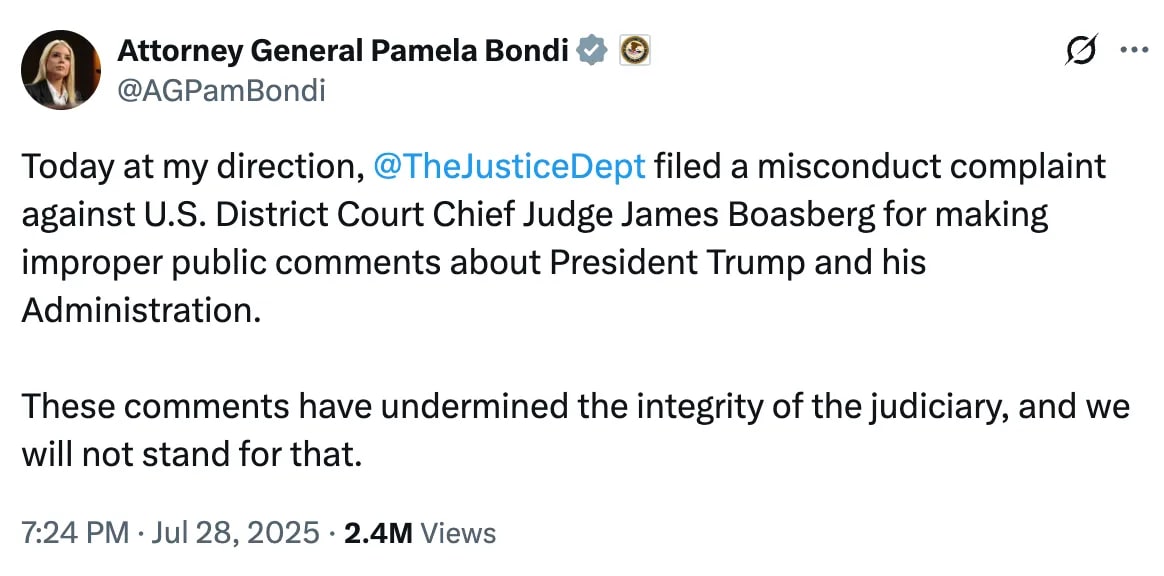
The
Justice
Department
lied
in
a
judicial
misconduct
complaint
against
Chief
Judge
James
Boasberg
of
the
US
District
Court
for
the
District
of
Columbia,
referring
to
attached
evidence
that
was
not
provided
and
may
not
even
be
in
the
possession
of
the
DOJ.
The
complaint,
addressed
to
Chief
Judge
Sri
Srinivasan
of
the
DC
Circuit,
alleged
that
Judge
Boasberg
attempted
to
intimidate
Chief
Justice
John
Roberts
at
the
March
meeting
of
the
Judicial
Conference
and
made
“improper
public
comments”
about
pending
cases
in
violation
of
the
Judicial
Canon.
The
nastygram,
signed
by
the
AG’s
chief
of
staff
Chad
Mizelle,
was
vague
on
the
source
of
its
information,
simply
dropping
a
footnote
to
“Attachment
A
at
16.”
But
no
such
attachment
was
included
in
the
copy
of
the
complaint
slipped
to
reporters
in
July.
That
missing
attachment
is
the
subject
of
a
FOIA
suit
filed
by
Law
and
Chaos,
and
we
can
now
exclusively
confirm
that
no
such
copy
was
provided
to
Chief
Judge
Srinivasan
either,
according
to
a
source
familiar
with
the
matter.
And
so
far
Judge
Srinivasan
has
had
no
better
luck
kicking
loose
this
attachment
than
we
have.
In
short,
the
judiciary
was
provided
zero
evidence
of
Judge
Boasberg’s
supposed
“improper
public
comments
about
President
Donald
J.
Trump
to
the
Chief
Justice
of
the
United
States
and
other
federal
judges
that
have
undermined
the
integrity
and
impartiality
of
the
judiciary.”
This
would
suggest
that
the
complaint
was
purely
performative,
lodged
solely
to
discredit
a
jurist
who
has
issued
rulings
adverse
to
the
Trump
administration.
Under
the
guise
of
protecting
the
“integrity
and
impartiality
of
the
judiciary,”
the
Trump
administration
is
in
fact
working
to
undermine
it.
Lies,
damn
lies,
and
The
Federalist
The
first
reporting
on
Judge
Boasberg’s
comments
at
the
Judicial
Conference
came
from
conservative
propagandist
Margot
Cleveland
at
The
Federalist,
who
affected
outrage
that
“Judge
Boasberg
and
his
fellow
D.C.
District
Court
judges
would
discuss
how
a
named
Defendant
in
numerous
pending
lawsuits
might
respond
to
an
adverse
ruling.”
She
hyperventilated
about
“those
judges’
clear
disregard
for
the
presumption
of
regularity
—
a
presumption
that
requires
a
court
to
presume
public
officials
properly
discharged
their
official
duties,”
without
informing
her
readers
that
the
presumption
is
by
custom,
not
statute,
and
can
be
abrogated
when
the
government
lies
to
courts.
Which
it
has.
And
she
indignantly
insisted
that
the
Trump
administration
abides
by
each
and
every
court
order.
It
hasn’t.
Cleveland’s
July
16
article
referred
to
a
“memorandum”
in
which
“a
member
of
the
Judicial
Conference
summarized
the
March
meeting.”
Law
and
Chaos
can
report
that
this
memorandum
was
compiled
as
minutes
of
the
multi-day
conference,
distributed
by
the
drafter,
and
released
by
a
third
party.
Cleveland
claims
to
have
a
copy
of
this
memo,
but
the
DOJ
has
been
quite
cagey.
This
raises
the
possibility
that
“Attachment
A”
to
the
DOJ’s
letter
is
not
the
memorandum
itself,
but
rather
rightwing
reporting
on
the
document,
either
from
Cleveland
or
from
another
outlet.
Free
that
information!
On
July
28,
Law
and
Chaos’s
parent
company
filed
a
FOIA
request
for
“Attachment
A”
along
with
expedited
processing,
since
this
is
a
single
document
in
the
possession
of
the
attorney
general.
There
is
no
argument
that
the
document,
which
appears
to
be
generated
by
a
member
of
the
judiciary
and
given
to
the
DOJ,
is
not
an
agency
record
subject
to
FOIA.
And
clearly
this
is
a
matter
of
public
interest,
since
it
was
tweeted
out
by
the
AG
herself
and
covered
in
every
major
newspaper
in
America.
And
yet,
the
DOJ’s
Office
of
Information
Policy
refused
our
request
to
expedite,
claiming
that
it
“cannot
identify
a
particular
urgency
to
inform
the
public
about
an
actual
or
alleged
federal
government
activity
beyond
the
public’s
right
to
know
about
government
activities
general.”
Even
more
bizarrely,
it
informed
us
that
it
was
assigning
our
request
to
the
complex
track,
the
proverbial
“slow
boat
to
China,”
meaning
we
could
be
waiting
years
to
get
it.
We
appealed,
noting
that
the
search
involves
“one
document
maintained
by
one
office”
and
“in
the
custody
of
the
Office
of
the
Attorney
General,
for
which
OIP
processes
all
FOIA
requests.”
That
appeal
was
rejected
by
Christina
Troiani,
Chief
of
Administrative
Appeals,
who
stuck
by
the
claim
that
asking
for
one
document,
recently
on
the
desk
of
the
AG,
involves
“a
search
for
and
collection
of
records
from
field
offices
or
other
separate
offices,
and
thus
your
client’s
request
falls
within
‘unusual
circumstances.’”
And
so
we
moved
for
partial
summary
judgment.
As
our
attorney
Kel
McClanahan
of
National
Security
Counselors
noted,
this
story
is
newsworthy
because
it
reflects
on
the
credibility
of
some
branch
of
the
government
—
although
whether
that
branch
is
the
judicial
or
executive
is
not
obvious:
To
be
clear,
this
Court
need
not
accept
DOJ’s
allegations
about
Chief
Judge
Boasberg
as
accurate;
it
need
only
accept
that
DOJ
has
stated
them
in
a
formal
judicial
filing
and
cannot
retreat
from
them
now
when
it
is
inconvenient.
According
to
DOJ’s
own
words,
the
document
requested
by
Law
and
Chaos
clearly
raises
“possible
questions
about
the
government’s
integrity
which
affect
public
confidence.”
28
C.F.R.
§
16.5(e)(1)(iv).
Moreover,
this
is
doubly
true
if
the
Court
considers
DOJ’s
allegations
not
to
be
accurate,
because
that
would
raise
definite
questions
about
DOJ’s
integrity
which
affect
public
confidence.
Either
way,
this
case
involves
possible
questions
about
some
Government
official’s
integrity
which
affect
public
confidence,
whether
that
Government
official
is
a
Chief
Judge
of
a
U.S.
district
court
or
the
DOJ
Chief
of
Staff.
Publicity
stunts
can
backfire
It’s
clear
that
the
DOJ
intended
to
fire
off
this
supposed
ethics
complaint,
win
a
news
cycle,
and
move
on.
After
publicly
braying
for
Judge
Boasberg’s
impeachment,
it
couldn’t
even
be
bothered
to
answer
Judge
Srinivasan’s
follow
up
questions.
And
now
it
denies
the
hype
AG
Bondi
herself
fomented,
claiming
that
this
supposed
threat
to
the
integrity
of
the
judiciary
is
a
matter
of
no
public
interest.
This
judicial
complaint
could
have
been
a
press
release
—
and
very
clearly
was.
But
that
doesn’t
make
it
immune
from
FOIA.
The
hits
keep
coming
for
Cadwalader
Wickersham
&
Taft.
Reports
of
a
mass
lateral
defection
from
the
firm’s
collateralized
loan
obligation
and
asset-backed
lending
team have
now
been
confirmed,
with
Orrick
taking
in
a
37-lawyer
team
from
the
firm
—
including
10
partners
—
in
one
of
the
most
sweeping
group
lateral
moves
the
Biglaw
world
has
seen
this
year.
This
will
give
Orrick
an
immediate
boost
in
one
of
its
most
profitable
practice
areas,
and
deal
year
another
serious
blow
to
Cadwalader’s
already
shake
sense
of
stability.
As
noted
by
the
American
Lawyer,
this
group
lateral
moves
spans
continents,
with
lawyers
in
the
U.S.
and
the
U.K.
involved,
and
this
expansion
has
allowed
Orrick
to
claim
rights
to
one
of
the
largest
finance
practices
in
the
world.
Here’s
a
statement
from
Mitch
Zuklie,
Orrick’s
chair,
on
the
news:
“The
addition
of
this
world-class
team
positions
our
firm
uniquely
to
advise
our
private
credit
and
banking
clients
as
they
innovate
on
private
debt
solutions.
It
advances
multiple
strategic
priorities,
including
growing
our
London
office
and
scaling
our
finance
practice
with
a
team
of
remarkable
quality.”
For
Cadwalader,
this
move
lands
at
a
delicate
moment.
The
233-year-old
firm
seems
to
have
spent
much
of
2025
in
triage
mode,
trying
to
steady
itself
after
months
of
partner
departures
and
growing
internal
unease.
Just
last
week,
the
firm
announced
that
finance
partner
Wes
Misson
would
become
co-managing
partner
alongside
long-time
leader
Pat
Quinn
—
a
move
widely
interpreted
as
an
effort
to
project
calm
amid
the
chaos.
The
firm’s
leadership
shuffle
was
meant
to
show
that
management
was
paying
attention,
but
today’s
news
makes
that
attempt
at
reassurance
feel
almost
quaint.
When
nearly
40
lawyers
pack
up
from
one
of
Wall
Street’s
most
venerable
firms
and
move
together,
they
send
a
message
about
where
they
believe
opportunity
lies
—
and
where
it
no
longer
does.
Orrick
didn’t
just
make
a
group
lateral
hire;
it
made
a
huge
statement.
Cadwalader’s
leaders
insist
that
the
firm
remains
strong,
profitable,
and
focused,
but
the
optics
here
are
simply
brutal.
In
a
talent-driven
economy,
stability
is
currency,
and
this
move
suggests
that
Cadwalader’s
reserves
may
be
running
low.
Staci
Zaretsky is
the
managing
editor
of
Above
the
Law,
where
she’s
worked
since
2011.
She’d
love
to
hear
from
you,
so
please
feel
free
to
email
her
with
any
tips,
questions,
comments,
or
critiques.
You
can
follow
her
on Bluesky, X/Twitter,
and Threads, or
connect
with
her
on LinkedIn.
And
the
libs
fall
for
it
—
perhaps
because
it’s
so
hard
to
tell
the
difference
between
when
Trump’s
being
a
jerk
and
when
he
later
insists
that
he
was
just
joking.
I
don’t
want
to
own
the
MAGA
types.
No,
no,
no.
Let
me
devote
this
column
simply
to
asking
questions. I’m
not
answering
questions;
I’m
not
giving
any
reactions;
I’m
just
asking.
Let
me
ask
first: Was
Trump
correct
to
pardon
all
of
the
January
6
rioters,
including
the
one
who
had
been
convicted
of
seditious
conspiracy
and
sentenced
to
22
years
in
prison?
I’m
not
opining. I’m
not
telling
you
the
right
answer
to
this
question. I’m
just
asking.
Second: Was
Trump
correct
to
announce
massive
tariffs
on
“Liberation
Day”
—
April
2,
2025
—
only
then
to
suspend
the
planned
tariffs
because
of
the
massive
market
turmoil
they
created?
Or
maybe
he
should
have
thought
this
through
more
carefully?
Was
Trump
correct
to
have
the
U.S.
government
take
a
10%
interest
in
Intel,
or
should
he
have
left
the
free
market
alone?
So,
my
conservative
friends,
in
what
other
companies
should
the
government
take
a
stake?
Was
Trump
correct
to
invite
Vladimir
Putin
to
meet
on
American
soil,
and
have
American
troops
literally
lay
out
a
red
carpet
for
him,
to
gain
the
concessions
that
Putin
made
to
end
the
war
in
Ukraine?
Remind
me
again
what
those
concessions
were.
Was
Trump
correct
to
hire
Tom
Homan
as
the
“border
czar”
at
a
time
when
Homan
was
under
investigation
for
having
accepted
a
paper
bag
containing
$50,000
in
cash?
Was
Trump
correct
to
announce
that
the
government
was
imposing
a
$100,000
fee
on
employers
for
H-1B
visa
applications,
causing
confusion
and
prompting
immediate
changes
to
people’s
travel
plans,
and
clarify
on
the
next
day
that
the
fee
applied
only
to
new
applicants
in
the
2026
lottery
and
did
not
apply
to
current
H-1B
holders?
Or
maybe
he
should
have
thought
this
through
more
carefully
and
made
the
entire
announcement
at
once?
Was
Trump
correct
to
ignore
a
statute,
passed
in
2024,
that
required
ByteDance,
the
Chinese
parent
company
of
TikTok,
to
divest
its
interest
in
TikTok’s
U.S.
operations
by
January
19,
2025?
Or
don’t
we
care
about
those
pesky
little
things
called
“laws”?
Was
Trump
correct
to
conduct
multiple
lethal
military
strikes
on
boats
manned
by
Venezuelans
who
were
supposedly
smuggling
drugs
and
later
to
declare
that
the
U.S.
was
engaged
in
a
“non-international
armed
conflict”
with
drug
cartels,
thus
trying
to
justify
multiple
assassinations
after
the
fact?
Was
Trump
correct
to
impose
50%
tariffs
on
products
imported
from
Brazil
to
retaliate
for
Brazil’s
decision
to
prosecute
Jair
Bolsonaro
for
orchestrating
a
plan
to
overthrow
the
2022
election
in
Brazil
and
remain
in
power
by
force?
Is
Trump
correct
to
try
to
put
the
Federal
Reserve
Board
under
political
control?
Was
Trump
correct
to
say
that,
when
media
stories
about
him
are
negative,
those
stories
are
no
longer
free
speech
but
instead
interfering
with
an
election?
Aw,
c’mon
—
didn’t
you
go
to
law
school?
Is
Trump
correct
to
say
that
Jimmy
Kimmel’s
jokes
about
Trump
constitute
illegal
campaign
contributions
by
ABC
to
the
Democratic
National
Committee?
Really? Is
this
column
also
an
illegal
campaign
contribution
to
the
DNC?
What
the
heck
are
we
going
to
do
about
Fox
and
the
RNC?
Exactly
how
does
this
work?
Note
that
this
column
didn’t
say
anything
about
truly
controversial
issues. I’ve
said
nothing
about
whether
imposing
massive
tariffs
are
a
good
way
to
reduce
inflation,
or
whether
sending
the
U.S.
military
to
American
cities
makes
sense,
or
whether
we
should
criticize
the
process
by
which
undocumented
immigrants
are
being
thrown
out
of
the
country.
I
don’t
want
to
stir
things
up
here.
I’ve
just
picked
a
few
noncontroversial
issues
and
asked
some
questions.
Ed.
note:
Please
welcome
Renee
Knake
Jefferson
back
to
the
pages
of
Above
the
Law.
Subscribe
to
her
Substack,
Legal
Ethics
Roundup,here.
Welcome
to
what
captivates,
haunts,
inspires,
and
surprises
me
every
week
in
the
world
of
legal
ethics.
Happy
First
Monday! On
the
first
Monday
of
each
month,
you
get
a
longer
version
of
the
Roundup
with
the headlines plus reading
recommendations, job
postings, events,
and
many
other
features.
The
first
Monday
in
October
is
extra
special
because
it
is
also
the
opening
day
for
the U.S.
Supreme
Court’s
2025
Term.
In
2010,
I
wrote
a
law
review
article
called “The
Supreme
Court’s
Increased
Attention
to
the
Law
of
Lawyering:
Mere
Coincidence
or
Something
More?” I
described
what
has
turned
out
to
be
the
high-water
mark
for
cases
involving
legal
ethics
issues
taken
up
by
the
Supreme
Court
in
a
particular
term.
There
were
seventeen
— seventeen! —
such
cases
during
the
2009
Term.
You
canread
the
full
article
here if
you
want
to
know
more
about
the
cases
from
the
2009
Term.
But
what
about
the
Supreme
Court’s
docket
for
the
upcoming
term? So
far
we
have
only
one.
But
to
be
fair
the
Court
has
only granted
cert to
a
few
dozen
cases
to
date.
I’ll
be
keeping
an
eye
out.
For
now,
here’s
an
overview
of Villarreal
v.
Texas,
which
will
be
argued today.
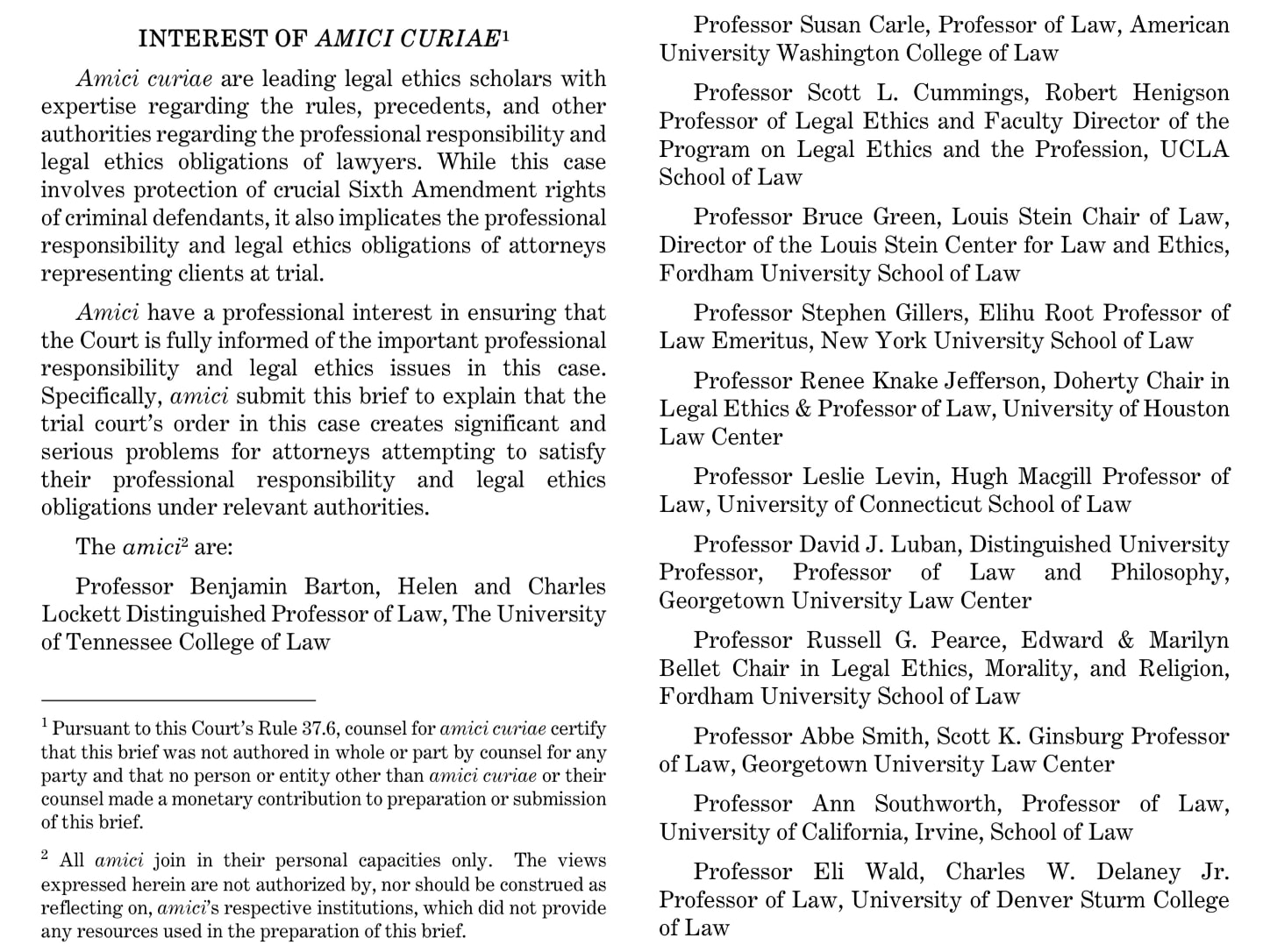
Along
with
several
other
legal
ethics
scholars,
I
joined
an
amicus
brief
filed
in
this
case.
At
issue
is
whether
a
trial
court
violates
a
defendant’s
Sixth
Amendment
right
to
counsel
by
prohibiting
the
defendant
and
his
lawyer
from
discussing
testimony
during
an
overnight
recess.
We
argue
that
a
ban
on
discussions
like
this
jeopardizes
the
lawyer’s
compliance
with
core
professional
responsibilities
and
undermines
attorney-client
privilege
and
the
duty
of
confidentiality.
Read
more
and
download
the
amicus
brief here.
In
totally-unrelated-to-legal-ethics
news,
I’ve
been
listening
nonstop
to
the
newly-released
album
from Taylor
Swift,
The
Life
of
a
Showgirl
(reviewed here by
The
New
York
Times
–
gift
link).
At
the
moment,
my
favorite
tracks
are
CANCELLED!
and
Opalite.
Whatever
you
think
of
her
music,
she
always
leaves
her
fans
with
something
to
look
forward
to.
I
hope
that’s
what
I’m
doing
here
for
legal
ethics
fans
each
week!
Source:
Taylor
Swift/Republic
Records,
Public
domain,
via
Wikimedia
Commons
Now,
let’s
get
started
with
the
headlines.
Don’t
forget
to
keep
scrolling
down
to
the
very
end
for
all
the
“First
Monday”
extra
features.
Enjoy!
Highlights
from
the
Past
Week –
Top
Ten
Headlines
#1 “Texas
Plans
to
End
ABA’s
Role
in
State’s
Law
School
Oversight.” From Reuters: “The
Supreme
Court
of
Texas
said
in
an
order
on
Friday
that
it
‘is
of
the
tentative
opinion
that
the
ABA
should
no
longer
have
the
final
say’
on
whether
a
law
school’s
alumni
can
sit
for
the
Texas
Bar
or
be
licensed….University
of
Houston
law
dean Leonard
Baynes told
Reuters
on
Monday
that
he
was
pleased
the
court
showed
commitment
to
law
degree
portability
and
avoiding
onerous
requirements
on
law
schools.
But
Baynes
said
the
‘order
creates
uncertainty
for
legal
education
in
the
backdrop
of
an
already
chaotic
world
of
higher
education.’”
Read
more here.
#2
“The
Justice
Department
Seeks
Information
on
the
Georgia
D.A.
Who
Prosecuted
Trump.” From
the New
York
Times: “The
Department
of
Justice
has
issued
a
subpoena
for
records
related
to
the
travel
history
of Fani
T.
Willis,
the
Georgia
district
attorney
who
charged President
Trump in
a
sweeping
election
interference
case,
according
to
a
federal
grand
jury
subpoena
reviewed
by
The
New
York
Times.
The
scope
of
the
investigation
is
not
yet
clear.
Also
unclear
is
whether
Ms.
Willis
is
the
target
of
the
inquiry
and
whether
she
will
ultimately
face
charges.
Grand
jury
proceedings
are
secretive
by
law.
But
the
document
reviewed
by
The
Times
is
an
indication
that
the
Justice
Department
under
President
Trump
may
be
investigating
another
one
of
his
old
foes.”
Read
more here.
#3
“Michigan
Justices
Issue
Scaled-Back
Judicial
Anti-Bias
Rule.” From Bloomberg
Law: “The
Michigan
Supreme
Court
on
Wednesday tweaked a
conduct
rule
barring
judges
from
exhibiting
bias
or
harassing
those
in
their
courtrooms,
but
didn’t
go
as
far
as
a
proposal
from
earlier
this
year.
The
rule
previously
said
a
judge
‘should’
treat
everyone
fairly
and
respectfully,
‘without
regard
to
a
person’s
race,
gender,
or
other
protected
personal
characteristic.’
The
new
one,
which
goes
into
effect
Jan.
1,
says
a
judge
must
perform
their
duties
‘without
bias
or
prejudice.’
It
changes
‘should’
to
‘shall,’
and
says
they
‘shall
not
intentionally
or
recklessly,
in
the
performance
of
judicial
duties,
manifest
bias
or
prejudice’.”
Read
more here.
#4
“What
Ethics
Rules
Say
On
Atty
Discipline
For
Online
Speech.” From
the Law360: “Though
law
firms
are
free
to
discipline
employees
for
their
online
commentary
about Charlie
Kirk or
other
social
media
activity,
saying
crude
or
insensitive
things
on
the
internet
generally
doesn’t
subject
attorneys
to
professional
discipline
under
the
Model
Rules
of
Professional
Conduct,
says Stacie
H.
Rosenzweig at
Halling
&
Cayo.”
Read
more here.
#5
“Ethics
Opinion
1286:
Requesting
Former
Clients
to
Write
Google
Reviews.” From
the New
York
State
Bar
Association: “A
lawyer
may
ask
a
former
client
to
write
a
Google
review
of
the
lawyer’s
services,
and
may
offer
the
former
client
a
nominal
gift
for
doing
so,
provided
the
lawyer
does
not
draft
the
Google
review
for
the
client
or
condition
the
gift
on
the
content
of
the
review.
The
lawyer
may
not
use
the
former
client’s
confidential
information
to
the
disadvantage
of
the
former
client.”
Read
more here.
#
6
“Supreme
Court
Ethics
Issues
Trace
to
John
Roberts’
‘Original
Sin,’
New
Book
Alleges.” From
the Rolling
Stone: “When
he
was
pitching
himself
to George
W.
Bush for
a
seat
on
the
highest
court
in
the
land, John
Roberts famously
declared
that
judges
should
be
like
‘umpires,’
making
calls
but
never
stepping
up
to
the
plate
for
either
team.
Bush
liked
the
line
so
much
he
didn’t
just
give
Roberts
a
seat
on
the Supreme
Court,
he
installed
him
as
chief
justice
—
the
youngest
person
to
hold
that
job
in
almost
200
years.
A
new
book, Without
Precedent —
an
excerpt
of
which
has
been
shared
exclusively
with Rolling
Stone —
suggests
another
powerful
reason
why
Bush
may
have
felt
such
extraordinary
confidence
appointing
Roberts
to
the
most
powerful
position
in
the
U.S.
judiciary.
At
the
time
that
Roberts
was
auditioning
for
the
job,
he
was
also
presiding
over
a
critical
case
to
which
the
Bush
administration
was
a
party
—
and
rather
than
acting
as
an
ump
in
that
case,
author Lisa
Graves suggests,
Roberts
was
practically
pinch-hitting
for
Bush
and
his
cronies.”
Read
more here.
#7
“Using
Military
Lawyers
as
Immigration
Judges
is
Ill-Advised
and
Potentially
Illegal.” From
the Brennan
Center
for
Justice: “The
Trump
administration’s reported
authorization of
600
military
lawyers
to
act
as
temporary
immigration
judges
would
deprive
immigrants
of
a
fair
hearing
and
further
erode
the
line
between
the
military
and
civilian
government.
This
is
true
regardless
of
the
professionalism
of
the
military
lawyers.
Immigration
judges
are
specially
trained
administrative
judges
in
the
Department
of
Justice
who
oversee deportation hearings.
…
In
addition, ethical
rules are
fundamental
to
the
rule
of
law,
but
the
legal
and
ethical
obligations
of
military
lawyers
and
immigration
judges
are
in
tension.”
Read
more here.
#8
“Update
to
‘Conflict
U.’:
Some
Judges
Are
Recusing
Due
to
a
University
Conflict.” From Fix
the
Court: “In
July,
Fix
the
Court
released
a
report
called Conflict
U. that
identified
24
federal
judges
who
did
not
recuse
in
six
dozen
cases
involving
the
universities
where
they
also
serve
as
law
school
instructors.
This
practice
raises
clear
conflict-of-interest
concerns,
despite
being
sanctioned
by
judiciary
policy.
The
report
urges
reforms
to
strengthen
recusal
practices
and
restore
public
trust
in
judicial
ethics.
This
past
month,
Fix
the
Court
conducted
follow-up
research
on
this
issue,
and
what
we
found
was
somewhat
surprising:
several
judges
with
adjunct
positions
at
law
schools
are,
in
fact,
choosing
to
recuse
when
the
law
schools’
parent
universities
find
themselves
in
their
courtrooms.”
Read
more here.
#9
“Law,
Layers
and
the
Battle
Against
Antisemitism.” From Eli
Wald (Denver)
in JOTWELL reviewing Antisemitism
and
the
Law by Robert
Katz: “According
to
the
American
Bar
Association
Model
Rules
of
Professional
Conduct,
a
lawyer
is
‘a
representative
of
clients,
an
officer
of
the
legal
system
and
a
public
citizen
having
special
responsibility
for
the
quality
of
justice.
As
Deborah
Rhode
has
astutely
pointed
out,
however, lawyers’
duties
as
public
citizens
have
long
been
more
of
a
rhetorical
ploy
than
an
actual
commitment,
in
need
of
elaboration
and
exposition.
In
the
twenty-first
century,
lawyers
have
been
forced
to
come
to
terms
with
their
asserted
role
as
public
citizens
in
the
face
of
the
#MeToo
and
the
Black
Lives
Matter
movements,
reform
calls
for
the
deregulation
of
the
legal
profession
designed
to
increase
access
to
legal
services
for
those
who
cannot
afford
to
pay
for
them,
and
attacks
on
the
rule
of
law.
Professor
Robert
Katz’
new
casebook, Antisemitism
and
the
Law,
constitutes
an
important
contribution
sure
to
help
those
aiming
to
understand
the
obligations
of
lawyers
to
pursue
justice
and
combat
discrimination.”
Read
more here.
#10“Dealing
with
Social
Media
&
Public
Comment:
Legal
Ethics
Lessons
for
Corporate
Counsel.” From JD
Supra: “Social
media
can
turn
small
moments
into
corporate
crises
overnight.
For
in-house
counsel,
the
ethical
challenges
are
particularly
complex:
protecting
confidential
information,
addressing
employee
conduct,
and
managing
public
backlash
when
private
behavior
goes
viral.
…
The
Oklahoma
and
Texas
Rules
of
Professional
Conduct
frame
the
lawyer’s
obligations
when
social
media
collides
with
the
workplace.”
Read
more here.
Recommended
Reading
“Legal
Insurance
and
Its
Limits” by Nora
Freeman
Engstrom (Stanford).
From
the
abstract:
Courts
are
buckling
under
the
weight
of
a
staggering
access-to-justice
crisis.
In
three-quarters
of
cases,
at
least
one
side
lacks
a
lawyer,
default
judgments
are
on
the
rise,
and
most
Americans
with
valid
claims
never
take
legal
action.
The
situation
is
dire,
and
it
understandably
has
policymakers
casting
about
for
a
fix.
On
the
menu
are
a
range
of
uncontroversial
reform
ideas,
such
as
expanding
legal
aid,
supporting
system
simplification,
and
promoting
pro
bono.
But
it
is
increasingly
clear
that
those
measures—even
if
accomplished—would
not
make
a
dent
in
the
problem.
Attention
is
thus
turning
to
other
reform
ideas,
such
as
relaxing
unauthorized
practice
of
law
(UPL)
rules
and
scrapping
Model
Rule
5.4(d),
the
provision
that
prevents
nonlawyers
from
even
partially
owning
entities
that
deliver
legal
services.
Both
reforms
are
promising.
But
both
would
dilute
the
longstanding
lawyers’
monopoly.
Perhaps
not
surprisingly,
the
bar
is
fighting
these
reforms
tooth-and-nail.
Into
this
roiling
landscape,
some
now
have
a
new
idea:
legal
insurance.
They
suggest
that
legal
insurance
is
the
way
to
expand
access
to
justice
for
middle
and
working-class
Americans.
Reformers
are
also
quick
to
point
out
that—unlike
a
relaxation
of
UPL
restrictions
or
the
abolition
of
Rule
5.4(d)—legal
insurance
stands
to
benefit
lawyers.
We
have
seen
this
play
before.
In
the
1970s,
the
bar
seized
on
legal
insurance
as
a
solution
to
what
was
then
seen
as
an
urgent
access-to-justice
crisis
afflicting
the
middle-class.
…
This
Article
recovers
the
lost
history
of
the
country’s
first
experiment
with
legal
insurance.
In
so
doing,
it
seeks
to
forestall
another
false
start.
In
addition,
by
drawing
on
a
range
of
disciplines—including
insurance
law
(particularly
insights
concerning
moral
hazard
and
adverse
selection),
behavioral
economics,
legal
ethics,
and
the
legal
profession—this
Article
explains
why
the
legal
insurance
idea
floundered,
and
seems
destined
to
flounder,
going
forward.
“Interoperable
Legal
AI
for
Access
to
Justice” by Drew
Simshaw (UNLV).
From
the
abstract:
The
access-to-justice
gap
is
growing,
affecting
individuals
with
both
civil
and
criminal
needs
in
the
United
States.
Though
these
challenges
are
multifaceted,
procedural
barriers
in
the
U.S.
legal
system
can
often
inhibit
access-to-justice
efforts.
The
resulting
inequities
undermine
fairness
for
those
interacting
with
courts
and
jeopardize
the
legitimacy
of
the
broader
legal
system.
Legal
technology
driven
by
artificial
intelligence
(AI)
has
been
heralded
for
its
potential
to
combat
these
challenges
on
three
access-to-justice
fronts
that
are
often
conceptualized
in
isolation:
a
consumer
(i.e.,
self-help)
front,
a
legal-service-provider
front,
and
a
court
front.
Progress
on
each
of
these
fronts
is
apparent,
though
not
at
the
pace
or
scale
necessary
to
make
meaningful
inroads
into
closing
the
justice
gap
nationwide.
The
time
has
come
to
appreciate
that,
although
progress
on
all
three
fronts
is
necessary
for
closing
the
justice
gap
and
maximizing
fairness,
it
is
insufficient
if
there
is
not
also
some
level
of
shared
commitment
and
coordination
across
–
and
not
just
within
–
all
fronts.
This
Essay
argues
that
technological
and
procedural
legal
interoperability
–
that
is,
widespread
consistency
in
technology
design
and
related
processes
–
should
be
at
the
forefront
of
these
efforts,
particularly
as
they
relate
to
artificial
intelligence.
Further,
although
the
consumer
and
legal-services
fronts
remain
critically
important,
courts
should
be
recognized
as
the
necessary
drivers
in
achieving
this
interoperable
legal
AI.
From
the
Texas
Center
for
Legal
Ethics,
here’s
the
question
of
the
month:
“How
much
do
you
know
about
the
ethics
rules
governing
law
firm
names?” Test
yourself
at
this
website where
you
can
read
a
short
hypothetical,
select
an
answer,
and
see
your
results.
So
far,
only
31%
have
gotten
it
right.
Will
you?
Get
Hired
Did
you
miss
the
350+
job
postings
from
previous
weeks?
Find
them
all here.
Assistant
General
Counsel,
State
Bar
of
Georgia
—
Atlanta. From
the
posting:
“The
primary
purpose
of
this
position
is
to
review,
investigate,
and
prosecute
violations
of
the
Georgia
Rules
of
Professional
Conduct.
Act
as
lead
counsel
in
all
aspects
of
prosecuting
disciplinary
cases
including
drafting
pleadings,
conducting
discovery,
conducting
hearings
before
the
Special
Master,
presenting
oral
argument
before
the
Special
Master
and
State
Disciplinary
Review
Board,
and
negotiating
settlements
of
disciplinary
matters.”
Learn
more
and
apply here.
Associate
Counsel,
American
Bar
Association
Center
for
Professional
Responsibility
–
Chicago/Hybrid. From
the
posting:
“Serve
as
national
legal
expert
in
the
field
of
legal
and
judicial
ethics
and
professional
responsibility
law.
Provide
expertise
to
ABA
governance,
ABA
entities,
state,
local,
national
and
international
legal
community.
Develop
substantive
legal
resources
to
ensure
and
enhance
the
Association’s
continued
status
as
the
preeminent
legal
authority
in
professional
responsibility
law.”
Salary
range
$89,280
–
$109,740
annually.
Learn
more
and
apply here.
Attorney
x
2,
Texas
Ethics
Commission
—
Austin/Hybrid. From
the
posting:
”The
Texas
Ethics
Commission
is
hiring
two
attorneys
to
perform
entry
level
to
moderately
complex
attorney
work
administering
and
enforcing
state
ethics
laws.
Work
for
the
Enforcement
Division
would
involve
investigating
and
processing
sworn
complaints,
conducting
discovery
and
hearings,
and
drafting
and
negotiating
settlements.
These
positions
will
work
under
moderate
supervision
with
significant
latitude
for
the
use
of
initiative
and
independent
judgment.”
Salary
range
$75,000
–
$102,000
annually.
Learn
more
and
apply here.
Conflicts
Staff
Attorney,
Cooley
LLP
—
Multiple
Locations. From
the
posting:
“Working
closely
with
Associate
Directors
of
Conflicts,
the
Conflicts
Staff
Attorney
is
responsible
for
assuring
compliance
with
applicable
Rules
of
Professional
Conduct
and
assisting
and
managing
other
loss
prevention
functions.
The
Conflicts
Staff
Attorney
is
a
staff
attorney
who
understands
the
rules
that
govern
legal
practice
and
can
perform
practical
processes
to
ensure
compliance
with
those
rules.”
Salary
range
$125,000
–
$190,000
annually.
Learn
more
and
apply here.
Legal
Operations
Manager,
United
Airlines
—
Chicago. From
the
posting:
”Our
department
is
seeking
a
legal
operations
manager
with
proven
experience
in
data
analytics
and
managing
the
day-to-day
administrative
operations
of
a
corporate
legal
department
while
supporting
and
driving
strategic
initiatives.
This
position
reports
to
the
Chief
Legal
Operations
Officer
and
plays
a
pivotal
role
in
optimizing
the
department
to
run
more
efficiently
and
effectively.”
Salary
range
$99,750.00
to
$129,924.00
annually.
Learn
more
and
apply here.
Senior
Attorney
–
Ethics
&
Advertising,
The
Florida
Bar
—
Tallahassee. From
the
posting:
”Provides
oral
ethics
opinions
to
Florida
Bar
members
on
the
Ethics
Hotline,
advises
reporters
and
others
generally
regarding
application
of
the
Rules
of
Professional
Conduct.
Reviews
attorney
advertisements
for
compliance
with
the
Rules
Regulating
The
Florida
Bar;
answers
advertising
questions
on
the
Hotline
and
issues
written
opinions;
staffs
the
Standing
Committee
on
Advertising,
drafts
formal
and
informal
advisory
advertising
opinions,
performs
legal
research
on
advertising
issues,
drafts
amendments
to
the
lawyer
advertising
rules,
prepares
agenda
items
for
meetings,
attends
meetings
and
conference
calls,
and
reviews
minutes.”
Minimum
starting
salary
$85,247.22
annually.
Learn
more
and
apply here.
Upcoming
Ethics
Events
&
Other
Announcements
Did
you
miss
an
announcement
from
previous
weeks?
Find
them
all here.
October
9-10.
Complex
Litigation
Ethics
Conference,
Center
for
Litigation
and
Ethics,
UC
Law
SF. Learn
more here.
October
16,
3-5PM
Central.
“Lawyers
Who
Lead:
Ethics,
Influence,
and
Impact”,
University
of
Houston
Law
Center. Join
me
for
a
conversation
along
with H.
Stephen
Grace
Jr. (President
and
Founder
H.S.
Grace
&
Co.)
and Andrew
Gratz (Founder
of
the
Initiative
on
Lawyers
as
Leaders).
Learn
more
and
register here.
December
8-9.
Australia
and
New
Zealand
Legal
Ethics
Colloquium
VIII,
University
of
Otago,
New
Zealand. The
2025
colloquium
will
explore
the
evolving
expectations
of
lawyers
in
a
world
where
professional
conduct
is
increasingly
scrutinized
through
the
lens
of
public
morality
and
social
justice.
We
encourage
submissions
that
engage
with
questions
such
as:
What
are
the
limits
of
role
morality
in
legal
practice?
How
should
legal
ethics
respond
to
the
rise
of
“cancel
culture”
and
public
backlash
against
lawyers?
How
can
the
legal
profession
maintain
its
commitment
to
the
rule
of
law
while
remaining
responsive
to
democratic
values
and
social
change?What
does
accountability
look
like
for
lawyers
representing
controversial
clients
or
causes?
How
should
legal
education
evolve
to
prepare
future
lawyers
for
these
ethical
complexities?
Learn
more here.
December
9
@
noon
–
1PM
Eastern.
Florida
Bar
CLE
“What
Messy
Celebrity
Breakups
Teach
About
Legal
Ethics.” From
the
program
description:
“What
do Gwyneth
Paltrow, J.
Lo,
and Ryan
Seacrest all
have
in
common?
They
all
had
messy,
public
breakups
that
offer
surprisingly
rich
lessons
about
attorney
ethics
and
professional
conduct.
Professional
legal
educator Stuart
Teicher,
Esq. (known
as
The
CLE
Performer)
uses
celebrity
relationship
drama
to
explore
the
rules
of
professional
conduct
in
ways
that
are
both
memorable
and
practical.
From
power
couple
joint
representation
disasters
to
confidentiality
breaches
that
make
tabloid
headlines,
these
high-profile
relationship
meltdowns
mirror
the
ethical
dilemmas
attorneys
face
in
their
own
practices.
You’ll
discover
how
celebrity
scandals
illuminate
key
ethical
principles,
making
complex
rules
easier
to
understand
and
remember
when
real
ethical
challenges
arise
in
your
practice.
This
program
combines
real
celebrity
situations
with
hypothetical
scenarios
to
create
engaging
teaching
moments
that
stick.”
Learn
more here.
January
6-9.Association
of
American
Law
Schools
Annual
Meeting,
Section
on
Professional
Responsibility
Events. I’ll
be
moderating
the
Section’s
main
program
on
“The
Law
Professor’s
Role
in
Protecting
Our
Legal
System”which
will
be
held
January
8
from
2:35-3:50
PM.
Learn
more here.
Keep
in
Touch
News
tips?
Announcements?
Events?A
job
to
post?Reading
recommendations? Email [email protected] –
but
be
sure
to
subscribe
first,
otherwise
the
email
won’t
be
delivered.
Renee
Knake
Jefferson
holds
the
endowed
Doherty
Chair
in
Legal
Ethics
and
is
a
Professor
of
Law
at
the
University
of
Houston.
Check
out
more
of
her
writing
at
the Legal
Ethics
Roundup.
Find
her
on
X
(formerly
Twitter)
at @reneeknake or
Bluesky
at legalethics.bsky.social.
After
Congress
failed
to
pass
a
funding
bill,
the
government
shut
down
early
Wednesday
morning,
which
has
significant
implications
for
healthcare,
including
the
future
of
telehealth
flexibilities
and
Affordable
Care
Act
(ACA)
coverage.
The
shutdown
has
sparked
strong
backlash
from
the
healthcare
community.
Patient
advocacy
group
Families
USA,
for
example,
criticized
Congressional
leaders
for
not
extending
the
ACA’s
enhanced
premium
tax
credits.
These
enhanced
subsidies
(which
are
set
to
expire
at
the
end
of
the
year)
were
introduced
in
2021
and
lowered
monthly
premiums
for
those
who
buy
coverage
on
the
marketplaces.
The
subsidies
are
a
key
sticking
point
between
Democrats
and
Republicans,
with
Democrats
calling
for
an
extension,
while
Republicans
say
negotiations
should
happen
after
the
funding
is
approved.
“We
shouldn’t
need
a
shutdown
to
prevent
a
massive
spike
in
health
insurance
premiums.
After
an
election
on
affordability,
Republican
leaders
are
betraying
their
own
voters
with
their
willingness
to
shut
down
the
government
to
avoid
extending
tax
credits
that
help
more
than
20
million
working-class
Americans
afford
health
care,”
said
Anthony
Wright,
executive
director
of
Families
USA.
“When
Republicans
in
Congress
passed
huge,
permanent
tax
credits
for
billionaires
and
big
corporations
this
summer,
they
blocked
multiple
attempts
and
amendments
to
similarly
extend
the
tax
credits
that
help
working
families
pay
their
health
insurance
premiums.”
According
to
KFF,
if
the
enhanced
subsidies
expire,
out-of-pocket
premium
payments
would
increase
by
114%,
from
$888
on
average
in
2025
to
$1,904
in
2026.
Another
key
issue
with
the
shutdown
is
the
expiration
of
the
Medicare
telehealth
flexibilities,
which
expired
on
Tuesday
and
will
remain
expired
unless
Congress
includes
them
in
the
next
funding
bill.
The
flexibilities
introduced
during
the
Covid-19
pandemic
broadened
Medicare
eligibility
for
virtual
care,
which
had
previously
been
limited
to
patients
in
rural
areas
and
required
them
to
be
at
an
approved
originating
site,
such
as
a
hospital
or
physician’s
office.
Now
that
the
flexibilities
have
expired,
Medicare
telehealth
coverage
will
return
to
its
pre-pandemic
requirements.
The
American
Telemedicine
Association
is
calling
for
Trump
and
Congress
to
restore
these
flexibilities
and
retroactively
reimburse
providers
still
offering
telehealth
services
during
the
shutdown.
“Most
providers
and
hospital
systems
are
taking
calculated
risks
to
continue
care
during
this
time,
but
long-term
continuity
depends
on
action
by
our
telehealth
champions
in
Washington
to
restore
these
flexibilities
and
ensure
retroactive
reimbursement,”
said
Kyle
Zebley,
executive
director
of
ATA
Action
and
senior
vice
president
of
public
policy
at
the
ATA,
in
a
statement.
“Medicare
patients
woke
up
this
morning
without
telehealth
coverage
for
the
first
time
since
the
pandemic,
five
years
ago.
Our
healthcare
services
are
regressing,
falling
woefully
short
for
millions
of
patients
in
need.”
An
executive
for
a
brain
health
company
also
expressed
concern
over
the
uncertainty
of
Medicare
telehealth
flexibilities.
“Most
likely
telehealth
benefits
will
be
extended,
but
we
are
getting
a
lot
of
questions
both
from
our
employees
and
patients
on
where
they
stand,”
said
Dr.
Julius
Bruch,
co-founder
and
CEO
of
Isaac
Health.
“In
an
area
like
dementia
care,
where
there
are
already
so
few
neurologists,
and
not
nearly
enough
to
care
for
the
aging
population,
telehealth
works
wonders
to
increase
access,
and
the
potential
of
this
going
away
could
be
detrimental
for
not
only
patients
with
dementia,
but
for
their
caregivers,
and
other
loved
ones.”
Another
industry
follower
is
worried
about
how
the
shutdown
will
affect
those
who
depend
on
government-funded
programs,
such
as
the
Supplemental
Nutrition
Assistance
Program
(SNAP).
“If
this
shutdown
lasts
more
than
a
month,
which
is
a
possibility
given
the
last
shutdown
was
34
days,
those
experiencing
food
insecurity
across
the
country
may
see
a
lapse
in
SNAP
benefits,
as
government
funding
for
the
program
will
only
last
about
a
month.
We
risk
creating
more
non-medical
barriers
to
health,
like
lack
of
access
to
food
or
transportation
to
doctor
appointments,
which
can
account
for
up
to
80%
of
a
person’s
health,”
said
Cindy
Jordan,
CEO
and
co-founder
of
Pyx
Health,
an
engagement
company.
*
Administration
officials
thought
they
could
get
around
court
order
blocking
federal
deployment
of
the
Oregon
National
Guard
by
using
California
units.
Trump-appointed
judge
blocks
that
too.
[AP]
*
Judge
who
received
death
threats
after
temporarily
blocking
the
Trump
administration’s
effort
to
seize
state
voting
records
sees
home
burned
down.
[Time]
*
The
toll
AI
hallucinations
have
taken
on
the
lawyers
who
trusted
their
machines.
[Mercury
News]
*
Capital
Markets
lawyers
prepare
for
shutdown
fallout.
[Law.com]
*
WashU
Law
helping
high
schoolers
with
AI
“Buddy
Bot.”
[NY
Post]
*
New
lawsuit
challenges
the
new
H-1B
fee.
[Law360.com]
*
Woman
who
confessed
to
wanting
to
assassinate
Brett
Kavanaugh
sentenced
to
8
years
and
lifetime
supervision
based
on
sincere
remorse
and
lack
of
recidivism
risk.
[Reuters]
There
are
two
open
parliamentary
committee
meetings
scheduled
for
the
coming
week,
as
indicated
below.
Also,
the
Portfolio
Committee
on
Health
and
Child
Care
will
be
conducting
verification
visits
to
selected
rural
health
centres,
while
the
Portfolio
Committee
on
Budget,
Finance
and
Investment
Promotion
will
be
holding
consultations
on
the
forthcoming
national
budget
at
centres
round
the
country.
The
Committees’
itineraries
are
shown
below.
“Open”,
in
the
context
of
committee
meetings,
means
that
members
of
the
public
are
entitled
to
attend,
but
as
observers
only.
Members
of
the
public
who
wish
to
attend
meetings
in
the
New
Parliament
Building
must
produce
their
IDs
to
gain
entry
to
the
Building.
Monday
6th
October
at
2
p.m.
Portfolio
Committee
on
Youth
Empowerment,
Development
and
Vocational
Training
Oral
evidence
from
the
Public
Service
Commission
on
progress
towards
filling
vacant
posts
in
the
Ministry
of
Youth
Empowerment,
Development
and
Vocational
Training
Venue:
Committee
Room
7,
second
floor,
New
Parliament
Building.
Monday
6th
October
at
2
p.m.
Thematic
Committee
on
HIV/AIDS
Oral
evidence
from
the
Ministry
of
Health
and
Child
Care
and
the
National
AIDS
Council
on
young
people’s
access
to
HIV
and
sexual
reproductive
health
services
Venue:
Committee
Room
4,
first
floor,
New
Parliament
Building.
Verification
Visits
to
Selected
Rural
Health
Centres
by the
Portfolio
Committee
on
Health
and
Child
Care
Date
Place
Venue
Time
6.10.2025
Bubi
Nyathi
Clinic
10
a.m.
7.10.2025
Insiza
Avoca
Clinic
10
a.m.
8.10.2025
Masvingo
North
Gundura
Clinic
10
a.m.
9.10.2025
Buhera
Mutiusinazita
11
a.m.
10.10.2025
Goromonzi
Melfort
Clinic
10
a.m.
11.10.2025
Mhondoro
Ngezi
St
Michael’s
Mission
Hospital
11
a.m.
Consultations
on
the
2026
National
Budget
by
the
Portfolio Committee
on
Budget,
Finance
and
Investment
Promotion
Team
A
Date
Place
Venue
Time
6.10.2025
Bindura
Tatenda
Hall
10
a.m.
to
12
p.m.
6.10.2025
Shamva
Shamva
Sports
Club
2
p.m.
to
4
p.m.
7.10.2025
Mbire
Mushumbi
Shops
10
a.m.
to
12
p.m.
8.10.2025
Mazoe
Nzvimbo
Business
Centre
10
a.m.
to
12
p.m.
9.10.2025
Mahusekwa
Mahusekwa
Council
boardroom
10
a.m.
to
12
p.m.
9.10.2025
Seke
Golf
course
at
Mahusekwa
turn-off
2
p.m.
to
4
p.m.
10.10.2025
Mudzi
Kaitano
Primary
School
10
a.m.
to
12
p.m.
Team
B
Date
Place
Venue
Time
6.10.2025
Epworth
Epworth
Local
Board
Hall
10
a.m.
to
12
p.m.
6.10.2025
Seke
Unity
L
Community
Hall
2
p.m.
to
4
p.m.
7.10.2025
Murombedzi
Gonzoguzha
Hall
10
a.m.
to
12
p.m.
8.10.2025
Sanyathi
Patchway
Community
Hall
10
a.m.
to
12
p.m.
9.10.2025
Chiwundura
Muchakata
Business
Centre
10
a.m.
to
12
p.m.
10.10.2025
Mberengwa
Masase
High
School
Hall
10
a.m.
to
12
p.m.
Team
C
Date
Place
Venue
Time
6.10.2025
Fairbridge
Fairbridge
Primary
School
10
a.m.
to
12
p.m.
6.10.2025
Bulawayo
Selborne
Hotel
2
p.m.
to
4
p.m.
7.10.2025
Tsholotsho
Tsholotsho
Boardroom
11
a.m.
to
1
p.m.
8.10.2025
Ntabazinduna
Ntabazinduna
Hall
10
a.m.
to
12
p.m.
9.10.2025
Bulilima
Ndiweni
Centre
10
a.m.
to
12
p.m.
10.10.2025
West
Nicholson
West
Nicholson
Factory
10
a.m.
to
12
p.m.
10.10.2025
Esigodini
Ncema
Valley
Club
2
p.m.
to
4
p.m.
Team
D
Date
Place
Venue
Time
6.10.2025
Buhera
Murambinda
BSPZ
Hall
10
a.m.
to
12
p.m.
7.10.2025
Nyanga
Nyamhuka
Hall
10
a.m.
to
12
p.m.
7.10.2025
Mutasa
Hauna
Valley
Lodge
2
p.m.
to
4
p.m.
8.10.2025
Mutare
Chiyadza/Marange
High
School
10
a.m.
to
12
p.m.
9.10.2025
Zaka
Zaka
RDC
Hall
10
a.m.
to
12
p.m.
10.10.2025
Chiredzi
Tshovani
Hall
10
a.m.
to
12
p.m.
10.10.2025
Ngundu
Madzivire
Primary
School
2
p.m.
to
4
p.m.
Veritas
makes
every
effort
to
ensure
reliable
information,
but
cannot
take
legal
responsibility
for
information
supplied.