African-American, Top-Ranked Tennis Star Applied To Be First In Family To Go To College — Except Her Dad Runs A Law Firm, She Doesn’t Play Tennis, And She’s White

Perhaps the most bizarre of all the “Varsity Blues” stories is the tale of college consultant Rick Singer’s efforts to enmesh himself in the Buckley School. Singer, the alleged mastermind behind the college admissions scandals that have provided so much glee to those of us watching rich people plead guilty to trying to rig the system to help out their fail kids, locked in on the prestigious school’s board members and took the questionable tactics we’ve read about in other indictments to a whole new level.

Adam Bass, the CEO of the Buchalter firm and a Buckley board member approached the school’s headmaster to push his daughter’s C+ to a B-. That’s mildly sketchy but the difference between the two is often negligible so that’s not so bad. But that’s when Bass says he gave Singer his daughter’s applications password and things took a curious turn. According to a detailed Vanity Fair report:

In December 2017, [Guidance Counselor Julie] Taylor-Vaz found herself in a different curious conversation, this time with Tulane. A Tulane admissions officer said the college would be delighted to offer a spot to one of Buckley’s students, Eliza Bass—an African American tennis whiz, ranked in the Top 10 in California, whose parents had never attended college. But Taylor-Vaz knew this wasn’t true. Eliza was white. She didn’t play tennis competitively. And her father was Adam Bass, a wealthy board member, with a B.A. and law degree from USD. Taylor-Vaz shared the information with her superiors. Puzzled, Buckley made calls to Georgetown and Loyola Marymount. They too wanted to accept Eliza, the African American tennis wonder. Buckley set the colleges straight and promptly got to work trying to determine what on earth was going on.

When pressed, Bass informed the school that he’d handed over his daughter’s applications to Singer but had no idea she had become an unwitting Rachel Dolezal. Now aware of the issue, his daughter contacted all the schools and set the record straight, pleading for an opportunity to submit her real bio for consideration.

It turned out she got into Berkeley on her own merits, so the story ends well for her.

Meanwhile, her dad isn’t facing any penalties for his work with Singer. In some ways, since the scam apparently set up for his daughter was so off-the-wall — one that didn’t involve parents and students colluding with shady proctors to fake test scores like many of the Varsity Blues stories — authorities seem to believe that he was fully out of the loop on all this.

So the lesson, for anyone out there still considering an admissions consultant, is to remember that no matter how much you’re paying them, it’s still your child’s application and under no circumstances should you cede control of the application to anyone else. You wouldn’t let an associate file something with your signature without passing your eyes over it — your kid deserves the same courtesy.

To Cheat and Lie in L.A.: How the College-Admissions Scandal Ensnared the Richest Families in Southern California [Vanity Fair]


HeadshotJoe Patrice is a senior editor at Above the Law and co-host of Thinking Like A Lawyer. Feel free to email any tips, questions, or comments. Follow him on Twitter if you’re interested in law, politics, and a healthy dose of college sports news. Joe also serves as a Managing Director at RPN Executive Search.
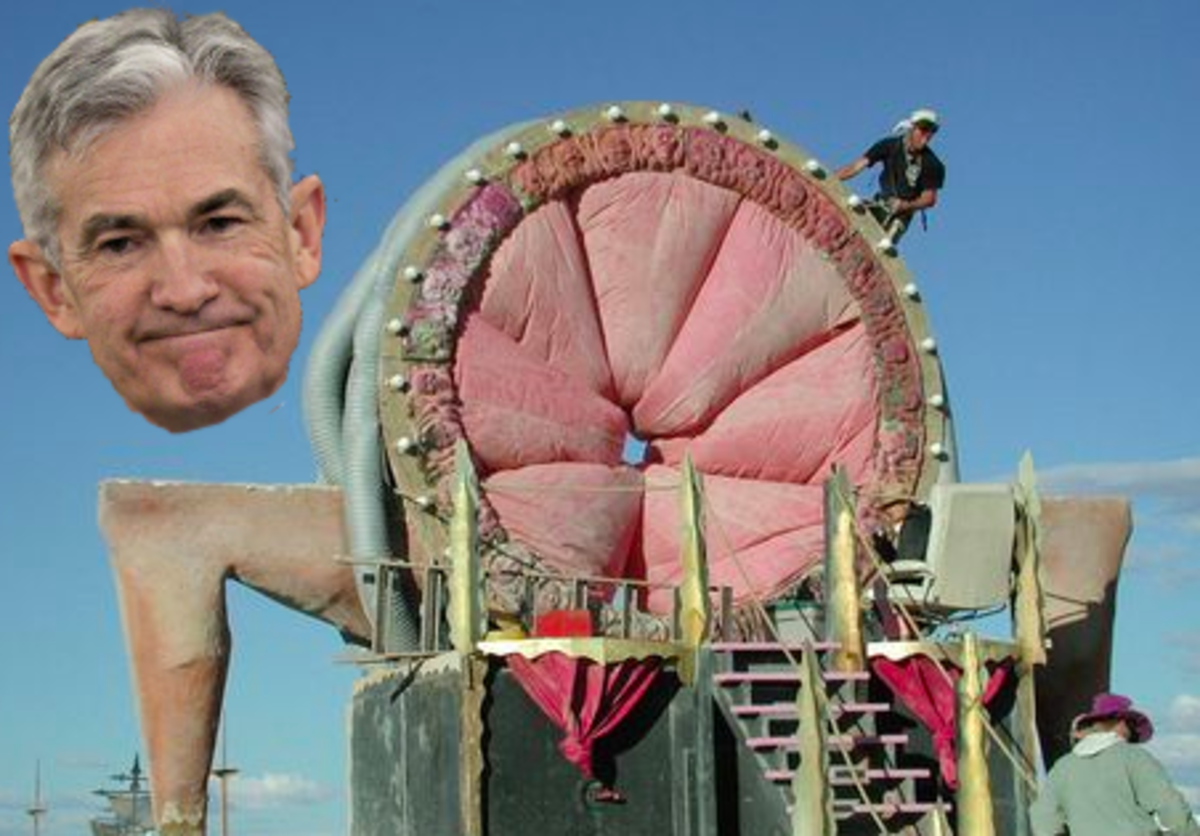

Silicon Valley CEOs Are Letting Employees Expense Their Trips To Burning Man And Tell Us Again About Interest Rates Being Too High

There’s economic data in the Orgy Dome.

Alabama Governor Once Wore Blackface And Nobody Cares Because White People Have Decided That Blackface Was Okay

53% (Photo by Mark Wallheiser/Getty Images)

Alabama Governor Kay Ivey apologized for appearing in blackface while in college. A yearbook photo surfaced of her sorority sisters appearing in blackface… because appearing in blackface in your YEARBOOK used to be a thing for white people. Ivey was not featured in the photo, but old radio interviews allude to her being in blackface. While Ivey couldn’t specifically remember a time when she lathered herself in black shoe polish to make fun of Negros, because apparently that thing was so commonplace doing it was forgettable, Ivey copped to probably doing it and apologized.

From NBC News:

Ivey said Thursday that while she cannot recall dressing up in blackface, she “will not deny what is the obvious.”

“As such, I fully acknowledge — with genuine remorse — my participation in a skit like that back when I was a senior in college,” she said in a statement. “While some may attempt to excuse this as acceptable behavior for a college student during the mid-1960s, that is not who I am today, and it is not what my Administration represents all these years later.”

There’s no law against blackface. No Constitutional carve out that makes mocking the terror and pain experienced by black people a form of unprotected speech. There’s no ethical rule or norm that prevents people who have engaged in this textbook racist form of “entertainment” — and white people cavorting around in blackface doing a mock “minstrel show” is textbook racist — from running for office.

All that we can hope is that white people who didn’t wear blackface and always knew wearing blackface is wrong outnumber the white people who did or do. But there are not enough of those non-blackface-wearing white people. Not nearly enough. And so the blackface-wearing white people win. And we all have to pretend that wearing blackface is a “youthful indiscretion” white people are allowed to make and still hold positions of public trust.

Even though they’re clearly, provably and actionably racist.

Alabama Gov. Kay Ivey apologizes after 1967 audio describing her in blackface emerges [NBC News]


Elie Mystal is the Executive Editor of Above the Law and a contributor at The Nation. He can be reached @ElieNYC on Twitter, or at elie@abovethelaw.com. He will resist.

Former Inmate Alice Marie Johnson Models for Kim Kardashian West’s Skims ‘Solutionwear’ Line

Kardashian West lobbied the president to grant Johnson clemency from a life sentence without possibility of parole. Now Johnson’s repping Kardashian’s product.

Morning Docket: 08.30.19

* Brexit is going to be a real problem for law firms. [Law.com]

* Former paralegal sues firm alleging it “fosters a ‘party culture’ rife with drug use and sexual harassment.” [Philly Voice]

* Law firms are feasting on the Sears bankruptcy. [NY Post]

* 2020 could be a monster year for Biglaw fundraising. [American Lawyer]

* What happens to intellectual property when artificial intelligence starts inventing things? [The Recorder]

* Even the Second Circuit doesn’t want to fly Spirit. [Law360]

* SEC targets investment fund that allegedly preyed upon brain-damaged NFL players to enrich themselves. Team owners, meanwhile, face no repercussions. [Daily Business Review]

* The DOJ makes secret laws? Super. [Politico]

Zimbabwe ‘has never been this bad’ as crackdown silences resistance – The Zimbabwean

Harare — Earlier this month, Zimbabwean opposition leader Nelson Chamisa announced that his party, the Movement for Democratic Change, was taking to the streets. He said they were protesting against the rapidly deteriorating economic situation, and promised to bring the nation to a standstill.

The demonstration, when it happened on August 16, fell far short of that promise. In Harare, only a few hundred people turned out, in defiance of a last-minute government ban.
Chamisa was not among them. Riot police locked down the city centre and dispersed the protesters with extreme force. The protest was over before it really began.

That day, the repressive tactics of President Emmerson Mnangagwa’s administration were on full view and were broadcast to the world. But a cross-section of members of the political opposition and civil society activists — none of whom are strangers to government brutality — said this was merely the public face of a crackdown that has been longer, more systematic and less predictable than any other they can remember.

“You know, under [former president Robert] Mugabe, we knew what we could do and what we couldn’t do. We knew where the line was. But now there is no line. The repression is much worse,” said one journalist, speaking on condition of anonymity.

The crackdown has come in two waves. The first was in January this year, in response to a much more successful protest: a national stayaway sparked by a sudden rise in fuel prices. Protest leaders encouraged citizens to stay at home, and they listened, shutting down the country for several days and prompting a vicious backlash from the government.

This backlash took two forms. In the first, uniformed members of the police and army were accompanied by plainclothes paramilitary units aligned to the ruling Zanu-PF in a largely indiscriminate wave of violence unleashed across the country. This was supposedly in response to the looting that had occurred during the protest.

In addition, opposition party supporters, union leaders and civil society leaders were targeted. Some were abducted and assaulted, while others were thrown into jail and charged with a range of crimes, including treason. Not all the abductions were by men in uniform, but all seemed to be operating on government instructions. Several of those targeted mentioned the existence of a “list” against which their names were being checked.

In the space of a single week, the Zimbabwe Human Rights NGO Forum had recorded 844 human rights violations that included 12 deaths, 78 gunshot injuries, 242 incidents of assault, torture and inhuman and degrading treatment; 46 incidents of vandalism and looting; and 466 arbitrary detentions.

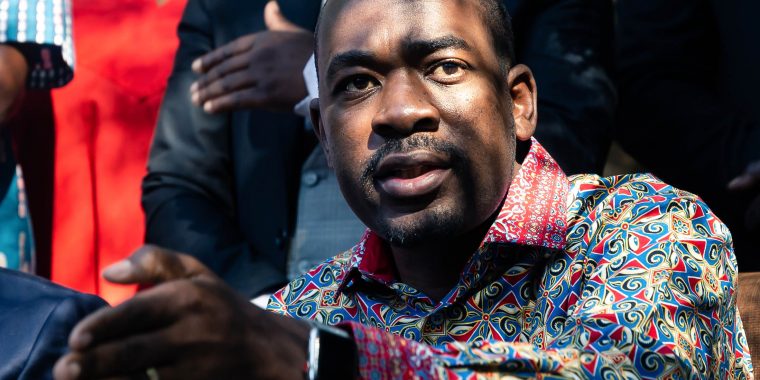
Nelson Chamisa, the leader of the opposition Movement for a Democratic Change, had promised the action would bring the country to a standstill but given the ongoing repression and violent action by the state, the protest attracted few people. (Jekesai Njikizana/AFP)

The second wave of the crackdown took place this month, with serious abuses taking place before and after the August 16 protest. The latest statistics from the forum show that prior to the protest, at least six people were abducted, assaulted and tortured by “suspected state agents”, including one person who had caustic acid poured on his body. After the protest, at least 128 people were arrested, and 12 needed urgent medical attention following injuries sustained at the hands of the police.

The abductions have continued.

Last week, Samantha Kureya, a popular comedian who goes by the stage name Gonyeti, was at her home in Harare’s Mufakose township when masked gunmen burst in and bundled her into a vehicle. Over the course of several hours, she was severely assaulted and forced to drink sewage water, before being dumped naked on the side of the road.

The attack was explicitly related to Kureya’s work, which makes fun of the government. “According to the guys who took me, it is the type of content we create which they don’t like and it includes the recent skit titled Statutory Instrument of Evil Servants. When they took me they kept referring to that skit,” said Kureya.

She and her family — who were at home when she was abducted and assaulted — are being counselled. “Imagine someone pointing a gun at a seven-year-old … just a sound from outside can make everyone panic.”

Kureya said that she will not be silenced by the attack. “Yes, I am scared but we can’t stop doing our work. Comic relief is a key aspect of our society. Humour keeps the ordinary citizens going in this tough situation. Our content doesn’t just entertain, we also inform and educate, so we feel that we are playing an important role in getting youths and women engaged in key issues of society. So stopping is not an option.”

Earlier this week, six armed men descended on the home of Makomborero Haruzivishe, the outspoken former leader of the Zimbabwe National Students Union. He was lucky; he was not there. This is not the first time that he has received such unwelcome attention.

“Two days before the January demonstrations began, we were raided at midnight at a guest house where we were having a youth conference under the auspices of the Global Network for Youth Action. I managed to escape the raid by 12 armed men with AK-47 rifles but my colleagues from the Democratic Republic of Congo and one from the United States of America were abducted and interrogated for six hours,” said Haruzivishe.

He was arrested two days later and charged with working with foreigners to subvert the government.

Although the alleged perpetrators of these attacks are not always in uniform, there is no doubt in the minds of civil society leaders that they are operating at the government’s behest.

“Artists and creatives are deeply concerned that a rogue and criminal behaviour operating outside the realms of law and human decency is taking over our law enforcement,” said two Zimbabwean arts groups, Nhimbe Trust and Rooftop Promotions, in a joint statement in response to the attack on Kureya. “Someone must be responsible for this lawlessness that seems to be acting on behalf of the government. Unfortunately the buck stops with the law enforcement agencies and our government.”

The government disagrees. Although the information ministry did not respond to a request for comment, in a previous statement — released before the August 16 protest — the ministry blamed the spate of abductions on a “force comprised of discharged and disgruntled former members of the old establishment, of whom some are trained”. This force is apparently loyal to Mugabe, and intent on discrediting the new president.

Whoever is responsible for the violence, there can be no doubt that it is having a chilling effect on all forms of opposition to the government. And although Kureya insists that the show must go on, not everyone agrees.

“The stakes are too high now. These guys can do anything,” said one high-profile activist, speaking on condition of anonymity.

This activist, who is known for his outspokenness, has never before requested to keep his name out of the newspaper, but felt that the risk of retaliation had become too high for him to speak freely.

“It has never been this bad,” he said. Other sources echoed this sentiment.

Hunger, death and safer births in cash-strapped Zimbabwe – The Zimbabwean

When hospitals are few and far between, these shelters become homes away from home for expecting mothers. Find out how countries around the world are getting mothers to book in for better births starting right here close to home.


When hunger came to Tsholotsho, it came first for the town’s women.

The men were mostly gone from this quiet outpost, about 120 kilometres north of Bulawayo — or so it often felt. Every family that could, sent its men to South Africa.
Brothers and fathers and uncles and sons hopped the border to find work and send money back. They left behind the women to watch the fields and tend the homesteads.

So when the maize, a staple here, began to shrivel and die late last year it was the women who scraped the last flecks of corn from the undersized cobs. It was women who decided when it was time for the family to begin forgoing one meal a day to preserve the supply just a little longer.

Nearby, the shelves in the local shops remained crammed full of tinned viennas and long-life milk and a thousand other foods. But as crops failed and the country’s economic crisis jacked prices higher and higher, everything on the shelves had become too expensive for many here to even consider buying.

That is a problem that has spread across Zimbabwe, where the United Nations World Food Programme (WFP) estimated earlier this year that almost one out of every three Zimbabweans would require food assistance.

But failing crops and skyrocketing prices have had an unexpected consequence: They’ve made the local maternal waiting homes — or amadumba — for pregnant women even more popular than usual.

The amadumba are far from new in Zimbabwe. They’re older than the country itself. The first waiting rooms here were opened before independence, by mission hospitals. But the programme expanded rapidly in the 1980s and early 1990s and by 1997, Zimbabwe had 255 of these waiting mother shelters, according to the World Bank.

From Zimbabwe to Indonesia, countries have turned to maternal waiting rooms to

fill a pernicious gap in rural health care. In many places, women in small communities often live too far from hospitals and clinics to make it to one in time when they are about to give birth. By waiting out the last days of their pregnancies in facilities near hospitals, they can ensure they’ll have access to a trained professional and a safer birth.

It is a simple idea, and a good one. In Zimbabwe in the mid ‘90s, the death rate among babies one week or younger — whose mothers had stayed at the amadumba — was almost half that of infants whose mothers had travelled to hospital from far-flung communities after labour started, 2003 World Bank research showed.

In 2015, the World Health Organisation recommended that maternal waiting homes be established close to healthcare facilities in remote areas or those with limited access to healthcare. This was, in part, to help reduce not only infant mortality but also deaths among pregnant women although the organisation noted that more rigorous studies were needed to figure out just how well homes worked to curb these deaths.

Zimbabwe’s 2015 demographic and health survey found that about 3% of all women will die during pregnancy, childbirth or within two months of giving birth.

Senzeni Fuzwayo knew what happened when there was a medical emergency in her rural community outside of Tsholotsho. People looked for a car, and if one couldn’t be found (and it usually couldn’t), they loaded the sick person onto a donkey-drawn cart and made the jolting 10-kilometre journey to the hospital.

So, when the nurses at the Tsholotsho district hospital told her during a prenatal check-up that she could spend her final days before her delivery in a dormitory near the hospital, she was intrigued.

And when they said she’d be fed during her stay, she jumped at the chance. “Pregnancy is painful for many [of] us , especially now when our crops failed and we did not harvest anything [this year].” Her own family survives on her husband’s piece work — taking care of people’s cattle or selling firewood to scrape together a few dollars. But it was rarely enough.

“I am happy that during our stay we do not have to bring food from our homes as we [are] given nutritional food packs by the hospital,” she adds.

Fuzwayo’s story is common.

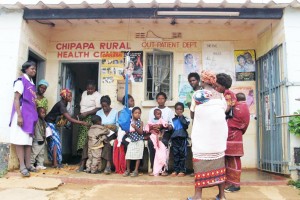
“We currently have about 60 expectant mothers here,” says Mary Ndlovu, the sister in charge at the Tsholotsho waiting room on a recent morning, as she shows a journalist around what looked like a boarding school dormitory, with 20 narrow beds crammed into two rooms.

In an ideal world, she explains, each of them would stay only a week. But “some have been here for close to a month because home is a long way from the hospital and many have little to eat in their homes”.

Food rations have become a major draw for the women staying here, who are each given a food pack stocked with enough cooking oil, cereals and pulses to last a fortnight.

For the aid agencies providing the rations, the food packs provide an “incentive” for rural women to come to the homes, according to the World Food Programme and the United Nations Children’s Fund (UNICEF), which are jointly providing the packs.

And they’re not alone in asking what’s on the menu. A 2017 Cochrane Review of 29 studies on maternal waiting homes in countries across Africa, Asia and Latin America found that catering for women’s dietary and social needs was key to getting them to trade the familiarity of home for the maternal waiting shelters.

Cochrane reviews are widely recognised as one of the strongest types of research reviews in healthcare, sifting through and making sense of all of the scientific evidence on any given topic.

Women surveyed in the studies said that a lack of food, privacy or kitchen facilities were huge barriers to booking into the homes. So too were policies that prohibited family members — especially influential mothers-in-law — from accompanying them. And when food wasn’t provided by homes, researchers found it exacerbated inequality between those who could afford it and those who could not in the wards. And of course, the review found, homes’ successes depended on how well other maternal healthcare services operated around them.

But in Zimbabwe the food packs provided by aid agencies aren’t enough to meet the rising demand.

“If only the quantities [of food new mothers] are receiving could be increased that could go a long way,” says Shepherd Bobo, the acting Tsholotsho district medical officer. “Sometimes those who come [to the maternity waiting rooms] after others have left find the rations depleted… so that’s a major challenge.”

The programme to provide the packs leans heavily on donor funding, which can be fickle. The Japanese government, for instance, was sponsoring this project, but their support ended in March.

Now, Eddie Rowe, the World Food Programme representative and country director for Zimbabwe, says his agency is actively seeking longer-term, multi-year funding for food assistance to keep mothers coming back to the country’s amadumba.

So far, he says, the feeding packs have reached nearly 24 000 women in seven districts across Zimbabwe. But in a country where one-third of people are food insecure, that is, in many ways, a drop in the ocean.

Zimbabwe ‘has never been this bad’ as crackdown silences resistance
IPC Acute Food Security Situation June – September 2019 and Projection for October – December 2019

Post published in: Featured

IPC Acute Food Security Situation June – September 2019 and Projection for October – December 2019 – The Zimbabwean

30.8.2019 8:38

Currently, despite all humanitarian assistance provided, over 2 million people are in need of urgent action in Zimbabwe

Key results

Currently, 25% of the rural population are estimated to be in Crisis or Emergency (IPC Phase 3 and 4) and face moderate to large food consumption gaps or are only marginally able to meet minimum food needs by depleting essential assets or employing crisis or emergency coping strategies. Another 26% are in Stress (IPC Phase 2).

Between October and December, the number of people in IPC Phase 3+ is expected to increase to 3.58 million (38%) with nine districts classified in Emergency (IPC Phase 4).

The first half of the agricultural season (Oct-Dec 2018) was affected by El Niño, which resulted in a delayed start of the season; and the second half was characterised by prolonged dry spells. The Eastern and parts of Southern Zimbabwe were affected by Cyclone Idai. These climate shocks, exacerbated by the effects of the Fall Army Worm, resulted in significantly reduced crop harvest. The second round crop and livestock assessment reported a deficit of 760,000 MT indicating that most households will have reduced supply from own production. Livestock diseases contributed to two thirds of cattle deaths. Water availability and grazing conditions are generally fair but are expected to deteriorate as the season progresses. The situation is also a result of the prevailing macro-economic situation in Zimbabwe characterised by hyperinflation (98% in May 2019) leading to erosion of income and purchasing power.

Recommendations and next steps

  • In light of the high prevalence of acute food insecurity, there is need for urgent assistance to reduce food consumption gaps and protect/save livelihoods for the 2.29 million people in IPC Phase 3 (Crisis) and above and the additional 1.3 million people facing Crisis or worse between October and December 2019.
  • In response to increased vulnerability, the Government and its Development Partners should consider improving efficiency in the identification of beneficiaries. A standardised approach to enhance accountability should be implemented.
  • Management of Food Aid: Government should take far-reaching and monitorable actions to reform the way Zimbabwe receives and manages food aid. Management of Food Aid should be in-line with the “Paris Declaration on Aid Effectiveness” particularly item 3(ii) – increasing alignment of aid with partner country’s priorities, systems and procedures and helping to strengthen their capacities.
  • Crop Production: Results show evidence of households’ constraints in accessing agriculture inputs. During the current 2019/20 consumption year, more resources should be channelled towards Government Input Support (the Command Agriculture and Presidential Input Scheme Programmes), household economy strengthening and building productive community assets.
  • Crop Production – Government to consider the importance and urgency of efforts to build resilience against climate variability and climate change amongst the rural populations of Zimbabwe. These efforts could include stepping up the promotion of climate-smart agriculture, water harvesting and irrigation development, particularly in the most drought-prone areas – Crop Pests: Considering the damage caused by the Fall Army worm, building capacity of extension agencies in providing the relevant and high quality information to farmers on Fall Armyworm is recommended. Government to ensure Research institutions have capacity to determine sustainable ways of managing the pest including efficacy of pesticides and indigenous control measures, most effective, lowest-risk, economical, accessible and easily used by smallholders (without sophisticated machinery).
  • Livestock Production: Livestock drought mitigation strategies need to be prioritized in areas that suffered most from the drought and where livestock makes the most significant contribution to households’ livelihoods. The mitigation strategies could include (i) Provision of subsidised livestock feeds and animal drugs; and (ii) Facilitating access to relief grazing.
    Income and Expenditure – Interventions that strengthen households’ economy and resilience are thus recommended to ensure households remain food and nutrition secure.
  • Child Nutrition: In view of results showing high levels of stunting, Child Supplementary Feeding Programmes (CSFP) should be prioritised as a matter of urgency especially for districts with Global Acute Malnutrition above 5%. Livelihoods and food security interventions coupled with nutrition education programmes should be implemented alongside emergency response programmes to ensure consumption of diverse and micronutrient rich foods while simultaneously building community resilience to future shocks that compromise household food and nutrition security. There is need for a robust and real-time community based surveillance system to constantly monitor the tenuous nutritional situation especially as the season progresses towards the hunger or lean months of the year.
  • Enhanced Food Access: It is recommended that Government consider duty free for the import of household’s food requirements as per Zimstat’s food basket.
  • Shocks and Hazards – Government and development partners should consider broadening social protection and resilience-building programmes in order to strengthen absorptive and adaptive capacities of at-risk communities through scaling up of programmes such as Harmonised Social Cash transfers and Productive Community Works targeting both labour and non-labour constrained households.
Hunger, death and safer births in cash-strapped Zimbabwe
SADC, political elite is blind to suffering of the masses in Zimbabwe

Post published in: Agriculture

SADC, political elite is blind to suffering of the masses in Zimbabwe – The Zimbabwean

The military has become a very powerful political institution in Zimbabwe. Increasingly the military has been dabbling in the electoral landscape and openly supporting one faction against another in the ruling party. ILLUSTRATION | JOHN NYAGA 

In Summary

  • The leaders meeting in Tanzania did not pay adequate attention to the way Zimbabwe’s crisis has been manufactured by nationalist elite.

Tanzania recently hosted the Southern Africa Development Community (SADC) Summit and, as part of the resolutions, the leaders condemned sanctions against Zimbabwe. They agreed to make October 25, 2019 a “day of political action against sanctions” in solidarity with Zimbabwe.

The ruling Zimbabwe African National Union Patriotic Front (Zanu-PF), celebrated the resolution as a victory. But, as the summit was going on, in Zimbabwe, the opposition had organised national protests, which were brutally stopped by the police backed by the military. While the leaders in Tanzania revived the liberation movement solidarity that historically existed in the pan-African project to liberate Zimbabwe, the people of Zimbabwe themselves were protesting the worsening socio-economic conditions.

While showing solidarity with the political class in Zimbabwe, the citizens have been abandoned. It is likely that the country will face more social unrest.

LIBERATION

The leaders meeting in Tanzania did not pay adequate attention to the way Zimbabwe’s crisis has been manufactured by a nationalist elite, who have abandoned the liberation project of transformation and are now focused on an accumulation project, which has killed the country’s economic prospects.

No amount of “liberation solidarity” is going to rescue a leadership that is imploding. The International Monetary Fund has said that Zimbabwe’s economy will experience negative growth. Power generation has almost ground to a halt, as electricity is now only available for a few hours at night. Incomes for the working class have collapsed so badly that the average worker now earns almost $40 a month and unions are threatening strikes.

Inflation has been spiralling out of control and close to five million Zimbabweans have crossed the borders into South Africa, Botswana, Namibia and Mozambique. Others have gone to Australia, Europe and the US. If there were no crisis in printing passports, more citizens would leave.

But this crisis cannot be explained by the noise over sanctions. The economic collapse can be blamed on the way the nationalist-liberation movement in the country has degenerated because of corruption, incompetence and unwillingness to promote economic and political reforms.

After the removal of Robert Mugabe in November 2017, the military has become a very powerful political institution. Just before Mugabe left, the Commander of the Zimbabwe Defence Forces issued a warning that as a “result of squabbling” within the ruling party, “there has been no meaningful development in the country for the past five years” and that the economic impasse had “ushered in more challenges to the Zimbabwean populace.”

Increasingly the military has been dabbling in the electoral landscape in the country and openly supporting one faction against another in the ruling party.

MILITARY INVOLVEMENT

While the involvement of the military in politics can be traced to the early 1980s, it intensified after 2000, when the ruling political class faced a formidable challenge from the Movement for Democratic Change (MDC) then led by the late Morgan Tsvangirai.

In 2008, the military took complete charge of the ruling party machinery and engaged in operations across the country to make sure that Mugabe was retained in the election. The election was so bloody that the opposition leader fled, hundreds of opposition members were brutalised, the Africa Union and SADC refused to endorse the results and the mayhem only ended when a government of national unity was formed.

Since then, the military has continued its march into civilian institutions. Men — and a few women — from the army, especially those associated with the liberation army of the 1970s, are now occupying very powerful positions across the bureaucracy.

Vice-President Kembo Mohadi was in the military in the 1970s; the other vice-president, Constantine Chiwenga was recently the Commander of the Zimbabwe Defences Force (ZDF). The ministers of Agriculture and Foreign Affairs are former army generals. What this means is that while Zimbabwe has constitutional democracy institutions like parliament, judiciary and holds periodic elections, the real political power now lies elsewhere — in what has been called the “junta” or the “system.”

This is a network of very powerful military elites who make decisions that override civilian institutions and the result has been catastrophic on several fronts. Routinely, the military and its resources are deployed against citizens and the election campaign of 2018 was run by a political commissar, who is a former army general.

SANCTIONS AND THE RULING CLASS

The ruling political class has been very quick to point to the sanctions imposed by the US as a stumbling block to economic transformation. There is no doubt that the sanctions have restricted the ability of Zimbabwe to access financial facilities from the likes of the IMF and the World Bank. But the story goes further than this.

Zimbabwe’s growth prospects have been hampered by widespread corruption. When the army generals placed Mugabe under house arrest and then he subsequently resigned, they cited corruption around the president as a cause of political instability in the country. What has since emerged is that for the past four decades in Zimbabwe, the ruling elites have inserted themselves in every corner of the economy – the political class is now the business class.

Officials from the Ministry of Finance recently admitted, in parliament, that the ministry had irregularly disbursed $3 billion. Year in, year out, the Auditor-General has diligently pointed to how state resources have been pillaged and nothing has been done. The Zimbabwe Anti-Corruption Commission is chaired by Loice Matanda-Moyo, the wife of Foreign Affairs minister Sibusiso Moyo.

It was significant that the SADC Summit was held in Tanzania. First, Tanzania’s founding president Mwalimu Julius Nyerere was a pan-Africanist who maintained solidarity with the liberation project in Africa. Second, post-colonial Tanzania has remained politically and socially stable, with leadership changes, and has escaped the scourge of regionalist and ethnic movements that have torn apart most independent African countries. Third, and most importantly, Tanzania, especially the University of Dar es Salaam, provided intellectual space for pan-Africanists, Marxists, nationalists and radical activists of all shades who challenged colonialism and apartheid. So notable was Tanzania in the pan-African solidarity that Dr Walter Rodney made it his home when he was researching, teaching, and wrote How Europe Underdeveloped Africa, which became a seminal text in understanding Africa’s underdeveloped political economy.

But Africa has changed and the nationalist movements have been in power for a while now. The nationalist movement has been in power in Zimbabwe for almost four decades and they have made a mess of things. Unless the regional leaders confront the real problem of militarism in Zimbabwe’s politics, the cycle of repression and protest will continue and more Zimbabweans will continue fleeing poverty. As Nelson Mandela once said, the Zimbabwe crisis is a leadership crisis.

Tinashe L. Chimedza is an associate director of the Institute for Public Affairs in Zimbabwe

CiZC deeply concerned about the deteriorating socio-economic conditions in Zimbabwe

Post published in: Featured