Morning Docket: 08.28.19

* What associates love, hate, and fear. [American Lawyer]

* Deutsche Bank admits the obvious — it’s got Trump’s documents. [Law360]

* A quick rundown of all the threats to U.S. elections. [National Law Journal]

* Referrals aren’t enough to make a law firm. [Yahoo]

* Missouri abortion ban blocked because precedents still matter… for now. [NPR]

* Sacklers talking opioid settlement because they aren’t stupid. [Huffington Post]

* MPAA general counsel arrested on sex abuse charges. [Corporate Counsel]

The shrinking of democratic space in Zimbabwe – The Zimbabwean

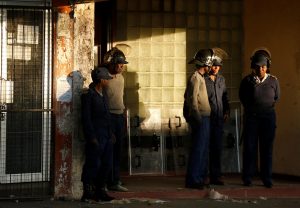
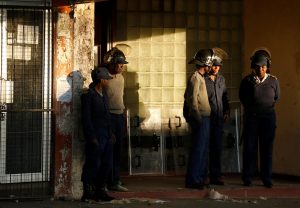
Riot police officers stand guard in the streets of Bulawayo, Zimbabwe August 20, 2019. REUTERS/Philimon Bulawayo

The shrinking of democratic space in Zimbabwe and an update on the key economic and political developments in Zimbabwe: Where to Zimbabwe?

Zimbabwe’s political and economic situation is reaching a boiling point and faced by a myriad of challenges. The political dispute emanating from the July 2018 presidential election has brought the country to a standstill with the economic situation worsening. In the past few weeks, we have seen an escalation of police brutality, with abductions and arrests of activists in Zimbabwe at the hands of the state security forces. Nearly 22 activists from the civil society and the main opposition political party the MDC Alliance are facing trial on treason charges.

In light of the above, the  Crisis in Zimbabwe Coalition (CiZC) regional office and the Zimbabwe Solidarity Forum (ZSF) cordially invites the media to a press briefing and interaction on the matter to be addressed by the representatives of the following,

Speakers:

Crisis in Zimbabwe Coalition

Zimbabwe Solidarity Forum

Human Rights Watch

Date: Thursday, 29 August 2019

Time: 10:00am

Venue: Parktonian Hotel (120 De Korte St, Wanderers View Estate, Braamfontein Johannesburg, 2000)

Zim’s Mnangagwa blasts CITES over ivory trade ban

Post published in: Featured

Zim’s Mnangagwa blasts CITES over ivory trade ban – The Zimbabwean

Zimbabwe’s President Emmerson Mnangagwa has lambasted the regulator of global wildlife trade CITES over the continued ban in international ivory trade.

Global trade in ivory has largely been outlawed since 1989 after elephant numbers plunged from millions in the mid-20th century.

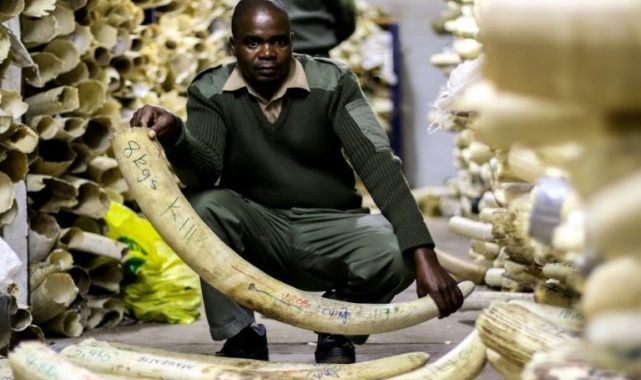
Zimbabwe and its two southern neighbours Botswana and Namibia, had requested a resumption of ivory sales to clear their stockpiles and fund conservation activities.

But their proposal was rejected by governments at the ongoing Convention on International Trade in Endangered Species (CITES) meeting in Geneva.

The three countries’ stockpiled ivory has a combined value of US$600 million (540.7 million euros), Mnangagwa said.

“It’s a lot of money we can use for big projects,” Mnangagwa was quoted as saying by the government daily, The Herald, on Tuesday.

“Our wild animals are being discussed in Geneva, an irrelevant place to the animals,” he said referring to the 183-country forum.

“They bar us from killing our animals for selling ivory, but they want us to protect them from being poached,” Mnangagwa protested.

“Europeans have consumed all their animals, but they want to set rules for us who have managed to conserve theirs.”

Southern Africa is home to the majority of the remaining African elephants where populations have traditionally been better protected and healthier.

The overpopulation of the animals has resulted in them destroying crops and killing villagers living alongside the national parks where they are found.

The ivory stockpiles come from tusks from natural deaths, confiscations from poachers and culling.

Zimbabwe has permission to carry out culling to maintain a sustainable elephant population, but it has not done so in three decades.

“The last cull was in 1987, we have not carried out any because of disapproval by the various animal rights activists,” Zimbabwe National Parks spokesperson Tinashe Farawo told AFP.

Zimbabwe, which has an elephant population of 84,000 against it carrying capacity of 56,000, is permitted to issue licenses to commercial hunters to kill 500 elephants every year, but most of the hunters take the tusks with them as trophies, said Farawo.

On Tuesday CITES imposed a near-total ban on exporting African elephants captured from the wild to zoos.

Really – abductions are stage managed? – The Zimbabwean

Sekai Holland

I was horrified to read a media article saying you had described the recent abductions of MDC members and civic society activists by suspected security forces as stage-managed. It is my hope that you were misquoted by state media which is desperate at giving a false impression that there are democracy and rule of law in Zimbabwe.

The facts are that Zanu PF youth are in some cases even taking the victims into their offices where the victims are severely tortured.

It is also a fact that persons armed with guns have opened fire and cause some damage to the home of Marondera member of parliament Caston Matewu, as even reported by the Zimbabwe Broadcast Corporation. Why note allow the experts to trace the origin of the bullets if that is possible. The statement attributed to you should not have been made before the results of police investigations have been released.

If you really said these words, please review your facts and make a correction.

US Official: US Increasingly Disappointed with Zimbabwe Government

Post published in: Featured

US Official: US Increasingly Disappointed with Zimbabwe Government – The Zimbabwean

“The disappointment just keeps getting worse and worse, unfortunately,” said the official, speaking on background to reporters. “The government seems to be getting even more violent in their response to any form of opposition.”

The official said Washington had made clear to the government of President Emmerson Mnangagwa what it would take to improve relations between Zimbabwe and the United States.

U.S. officials have previously called on Mnangagwa to change Zimbabwe’s laws restricting media freedom and allowing protests.

Mnangagwa’s government last week banned anti-government protests by the opposition Movement for Democratic Change, which accuses the authorities of political repression and mismanaging the economy. Police fired tear gas to disperse crowds and barred access to the MDC’s Harare offices.

Anger among the population has mounted over triple-digit inflation, rolling power cuts and shortages of U.S. dollars, fuel and bread.

In March, President Donald Trump extended by one year U.S. sanctions against 100 entities and individuals in Zimbabwe, including Mnangagwa, saying his government had failed to bring about political and economic changes.

Nissan May Or May Not Have Been Investing In Multiple Ghosns

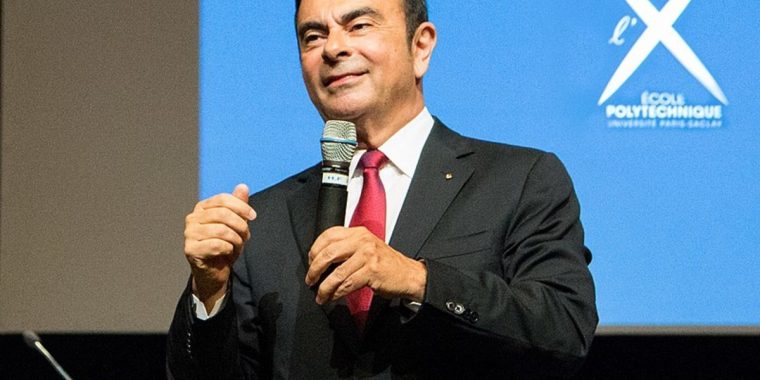
Allow us to introduce you to Beauty Yachts, Shogun Investments and the potentially delightfully ironically-named Good Faith Investments.

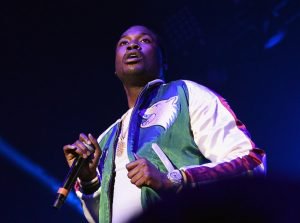
Meek Mill’s Legal Woes Are Over, But He Says The Struggle Must Go On

Meek Mill

It’s important that we now channel our energy into helping the millions that are unjustly trapped in our criminal justice system.

–Meek Mill after a plea deal with Philadelphia prosecutors officially ends his unfortunate entanglement with the criminal justice system. After earning a new trial earlier this summer, prosecutors finalized a plea deal where the rapper admitted to a minor gun charge and all other convictions were dropped and his record cleared. But in a Tweet, Meek Mill implores the forces that supported the “Free Meek” movement to keep fighting for others.

The Religious Right Is Leading Us Off Valuable First Amendment Rails

Extending First Amendment protection against compelling citizens to endorse ideas they find objectionable appears to depend primarily upon whether the idea or objection falls within Christian doctrine.

Almost a year ago, I pointed out that modern religious liberty doctrine is grossly unbalanced in a way that favors religion, the Christian religion in particular, at the great expense of everyone else’s free conscience protection. Unfortunately, in the time since I wrote that piece the unbalance has rapidly increased. Indeed, the last year has made it painfully obvious that the single greatest factor for determining the result in any free conscience objection case is whether the objecting party is doing so because of their Christian faith. Moreover, if your free conscience objection against government compelling citizens to pay for or otherwise endorse ideas they find objectionable is based on an opposition to government compelling an overtly Christian idea, your free conscience objection is guaranteed to lose.

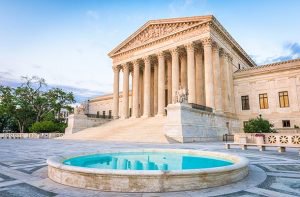
This current state of affairs in free conscience liberty doctrine meant it was rather easy for me to successfully predict the result in The American Legion v. American Humanist Association case, otherwise known as the Bladensburg Cross case. All one has to do in order to become a free conscience case prophet is rely on the premise that a majority of this current United States Supreme Court will never side with a party making a free conscience objection to any government assessment that forces all citizens to pay for or endorse overtly Christian ideas, monuments, organizations or expressions. In the Bladensburg cross case for example, two members on the Supreme Court, Justices Neil Gorsuch and Clarence Thomas wrote separately in a concurrence declaring that the non-Christian parties did not even possess standing for relief. Why? Well, according to Justices Gorsuch and Thomas, the mere individual objection to the government forcing citizens to finance, maintain, and therefore otherwise promote a giant Christian cross is insufficient to sustain an injury-in-fact under the First Amendment. 

I tried to make clear at the time, the conclusion reached by Justice Gorsuch’s and Thomas’ concurrence that no injury existed in the Bladensburg case flew in the face of the Court’s First Amendment jurisprudence established just the year prior in Janus v. Am. Fed’n of State, Cnty,, & Mun. Emps., Council, and was rather notably joined by both Justices Gorsuch and Thomas. Per my piece:

In the Janus case….a citizen was objecting to the government (in the form of public sector unions), forcibly extracting money to pay for the promulgation of political speech the citizen disagreed with. In that case, the Court focused not on the mere offense of the individual with the particular beliefs being expressed, but rather on the fact that the government was forcibly extracting money from the citizen to pay for promulgation of the beliefs. Had the Court focused on the issue of forced extraction in the Bladensburg case, it would undoubtedly have reached the same conclusion as it did in Janus, which, of course is why it ignored the issue.

To be clear, I wholeheartedly agree with the decision in Janus, such forced extraction by the government to convey beliefs, either political or religious, is unlawful to any fair reading of the First Amendment. However, what makes the Janus decision even more remarkable when compared to the Bladensburg case is that Janus was decided based on original principles of religious freedom. Yet, just a year later, and faced with a case of citizens objecting to the power of the state to extract money in order to promulgate religious speech/beliefs — you know the kind of objection that original religious freedom was based upon — the Court refuses to apply the original religious freedom analysis it applied in Janus. Instead, the Court engages in a transparently biased selective historical analysis to reach an absurdly obvious preferred conclusion that favors religion over non-religion.

In further retrospect, the Janus opinion appears to be unique in that its set of facts dealing with compelled support of public sector unions is the only set of facts that has been granted the same type of free conscience protections one only sees in First Amendment cases involving Christian free conscience objections. Outside of the narrow facts in Janus and ideas that only Christians object to, the concept of free conscience liberty against government coercion is routinely disregarded. In point of fact, in cases such as Bladensburg where the free conscience objection is being made by parties who are secular or non-religious against government forcing them to endorse overtly Christian ideas, you will find open judicial scorn and ridicule at even the concept of extending First Amendment protection.

I might sound biased or paranoid to you but a recent decision by the Eighth Circuit currently being touted by members of the Christian right lends a lot of credibility to my assessment of the current state of religiously selective affairs when it comes to free conscience liberty. To put this decision in proper context it must be pointed out that just last year, a three-judge panel of the very same Eight Circuit held that forcing all objecting non-religious people — who explicitly reject a belief in any deity — to use currency that conveys upon them a belief and trust in God in order to participate in commerce does not violate the First Amendment. In fact, that same Eight Circuit stated there was no semblance of government coercion over the non-religious party’s beliefs whatsoever.

Now, my fellow Americans, compare that conclusion to a free conscience case decided last week where the same Eighth Circuit found that a Christian party’s beliefs were violated by a legislatively established state condition on commerce, drawn upon a judicially recognized legislative power upheld by layers and decades of precedent, that mandates one cannot discriminate against homosexuals in commerce. Make the comparison between these two free conscience cases objectively and you will find there is clearly only one consistent principle at play here, and it is not a healthy respect for the free conscience objections of all individuals.


Tyler Broker’s work has been published in the Gonzaga Law Review, the Albany Law Review, and is forthcoming in the University of Memphis Law Review. Feel free to email him or follow him on Twitter to discuss his column.