Morning Docket: 08.07.19

(Photo by Chip Somodevilla/Getty Images)

* President Trump and the RNC sued over a new California law that requires presidential candidates to release five years of tax returns to get onto the 2020 primary ballot. We were wondering when this “naked political attack against the sitting president of the United States” would happen. [New York Times]

* Former FBI agent Peter Strzok has filed suit against the Justice Department over his firing, claiming that being dismissed from the investigative agency for sending text messages disparaging Donald Trump violated his constitutional right to private political speech. [Wall Street Journal]

* From the demise of your favorite toy store to the destruction of one the most recognized luxury stores, Kirkland & Ellis is making a killing when it comes to representing the death of our brick-and-mortar retail economy. [American Lawyer]

* William Brown, a former Navy SEAL who currently works as an associate at McCarter & English, recently led the first-ever sanctioned swim across the Hudson River with 30+ other SEALs to raise money for veterans. Congrats! [Big Law Business]

* Meet Jeffrey Morgan, one of the lucky few lawyers to have had his federal student loans discharged through the Public Service Loan Forgiveness program. Unfortunately, he still owes $67,987.09 in private student loans. [MarketWatch]


Staci ZaretskyStaci Zaretsky is a senior editor at Above the Law, where she’s worked since 2011. She’d love to hear from you, so please feel free to email her with any tips, questions, comments, or critiques. You can follow her on Twitter or connect with her on LinkedIn.


Massive Law Firm To Become Even More Massiver

We’ve run out of ways to express the rise of Dentons with proper English. It’s hard to believe this is a firm that didn’t even exist 7 years ago when SNR Denton, Fraser Milner Casgrain and Salans got together to create what at the time was a pretty big firm — roughly 2500 lawyers. That figure seems quaint now. After merging with Dacheng to create a “gobsmacking” 6600 attorney firm, the firm didn’t stop.

Today, the firm has over 10,000 attorneys working around the world and while you’d think that would be more than enough to cover every conceivable market and practice area, but you would apparently be wrong.

Yesterday, Dentons announced that it plans to merge with Lee International, a leading law firm in South Korea. In keeping with the verein model Dentons operates under, the South Korea practice would be owned and controlled by the South Korean partners — making it the first global firm where local operations are 100% owned and controlled by Korean partners.
“With this combination, Dentons will be the only global law firm permitted to practice Korean law, offering clients high-quality legal counsel and business solutions,” said Joe Andrew, Global Chairman of Dentons. “This combination is an illustration of Dentons’ strategy to scale the business in dynamic and growing regions.”

Lee International is not bringing a Dacheng-level influx of new lawyers to the Dentons umbrella, but it does add a hefty number of both attorneys and dedicated patent attorneys. Lee International is a full-service firm boasting a strong reputation in IP, M&A, Finance, Real Estate, Corporate, Litigation, Entertainment, L&E, TMT, and Biotech. “We are enthusiastic about joining Dentons.” said Sung-Duck Park, Representative Attorney of Lee International. “The combination with Dentons will enable us to connect our respective talents to opportunities in South Korea and around the world.”

The merger is still pending partner approval and regulatory clearance but will probably be finalized over the next several months.


HeadshotJoe Patrice is a senior editor at Above the Law and co-host of Thinking Like A Lawyer. Feel free to email any tips, questions, or comments. Follow him on Twitter if you’re interested in law, politics, and a healthy dose of college sports news. Joe also serves as a Managing Director at RPN Executive Search.

Zimbabwe: A third of population faces food crisis, says UN – The Zimbabwean

Poor harvests have left many in need of humanitarian aid

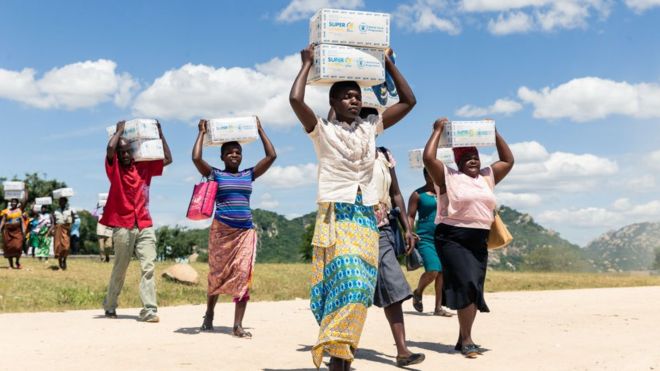
More than five million people in Zimbabwe – about a third of the population – need food aid, with many coming close to starving, the UN says.

The World Food Programme (WFP) has launched a $331m (£270m) appeal as the country battles the effects of drought, a cyclone and an economic crisis.

David Beasley, head of the WFP, said many were “in crisis emergency mode… marching towards starvation”.

Once a regional breadbasket, Zimbabwe has suffered years of turmoil.

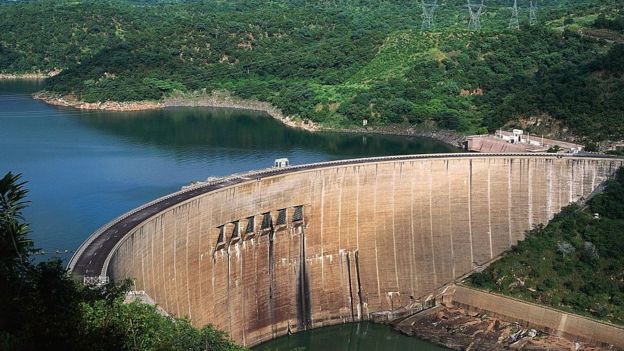
Recent harvests have been badly affected by drought and the price of food has risen sharply. Low water levels have also hit the main hydro-electric plant at Kariba, triggering rolling power cuts across the country.

The country is also facing a financial crisis and has reintroduced the Zimbabwe dollar a decade after it was abandoned amidst rampant inflation.

Launching the appeal on Tuesday, Mr Beasley said about 2.5 million people were on the cusp of starvation.

“We are talking about people who truly are marching towards starvation if we are not here to help them,” he said.

“We are facing a drought unlike any that we have seen in a long time.”

Kariba dam, ZimbabweThe drought has reduced water levels at Kariba, cutting electricity generation

Zimbabwe’s problems were exacerbated when Cyclone Idai swept through the region earlier this year.

The huge storm, which also hit parts of Malawi and Mozambique, affected 570,000 Zimbabweans and left tens of thousands of them homeless.

Cyclone Idai: Survivors rescued by land and air

Last week, Finance Minister Mthuli Ncube said the government had been providing grain to 757,000 homes since January, in both rural and urban areas.

And on Tuesday, President Emmerson Mnangagwa, who took over from long-time ruler Robert Mugabe in November 2017, declared the drought a national disaster.

The UN was already appealing for $294m for Zimbabwe but says it now needs more funding as the impact of the drought has spread.

UN launches new Zimbabwe appeal as millions face food crisis

Post published in: Agriculture

UN launches new Zimbabwe appeal as millions face food crisis – The Zimbabwean

HARARE – The UN food agency launched a $331-million appeal for aid donations to feed millions of people in crisis-hit Zimbabwe, which is reeling from a drought and the high cost of food.

Around five million people, or a third of the 16 million Zimbabweans, are in need of aid and at least half of them are on the cusp of “starvation”, according to the World Food Programme (WFP).

Speaking at the launch of the appeal, WFP executive director David Beasley said 2.5 million Zimbabweans were “in crisis emergency mode… marching towards starvation”.

He added that by early next year 5.5 million in all, will be in a similar position.

A former regional breadbasket, Zimbabwe’s economy has been on a downturn for over a decade with perennial food shortages, a foreign currency crunch, scarcity of basic commodities and high unemployment.

The government blames the food shortages on the effects of climate change while critics say the shortages are a result of a slump in agricultural production following the government’s land reforms.

The last agricultural period was particularly bad as the country was hit by an El Nino induced drought.

In addition to food shortages, the appeal also targeted the humanitarian needs of victims of the monster Cyclone Idai which swept through parts of eastern Zimbabwe earlier this year.

The cyclone, which also affected parts of Malawi and Mozambique, affected 570,000 Zimbabweans and displaced some 50,000 of them.

Finance Minister Mthuli Ncube last week said the government was feeding hundreds of thousands of people affected by drought both in rural and urban areas, providing grain to 757,000 households since January.

The country’s inflation rate spiked to 176 percent in June up from 97.85 percent in May, according to official figures, and the government has decided to stop publishing inflation statistics for the next six months, raising fears of the 2008 hyperinflation.

Zimbabwe Opposition Plans Demonstrations Over Economy Next Week – The Zimbabwean

The southern African nation is enduring shortages of foreign currency, fuel and bread as well as 18-hour power cuts. The power outages threaten mining and industrial output and have upended lives.

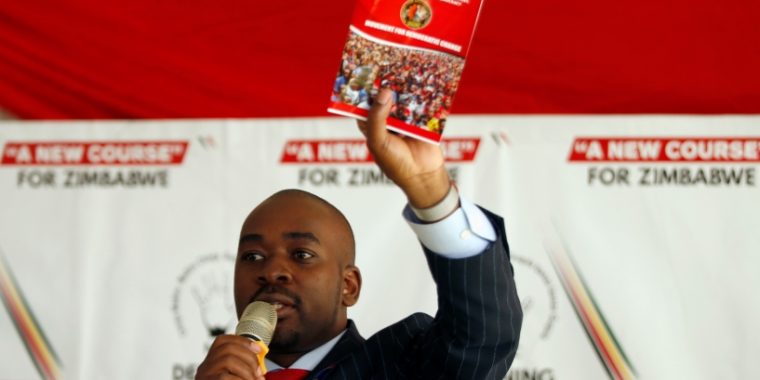
The opposition Movement for Democratic Change (MDC) will hold marches in the capital on Aug. 16 against corruption, unemployment and power and fuel shortages and a deteriorating economy, the party said in a notice to the police dated Aug. 5.

“The national challenges are a result of a governance and legitimacy crisis arising primarily out of the disputed election of July 2018,” national organizing secretary Amos Chibaya said in the notice, seen by Reuters.

The departure of long-time leader Robert Mugabe after a coup in 2017 was greeted with euphoria and hope, but this has gradually turned to despair as his successor, President Emmerson Mnangagwa, has failed to revive the economy or usher in meaningful political reforms.

Chibaya said demonstrators would present a petition to parliament after next week’s march.

Luke Tamborinyoka, the MDC deputy spokesman, confirmed the party had notified the police, adding that “we hope the police will allow us to exercise our constitutional right.”

Police spokesman Paul Nyathi said he could not immediately comment.

The MDC does not recognize Mnangagwa’s presidency and maintains that he rigged last year’s vote, charges that the 76-year-old leader denies. Last week, MDC legislators boycotted the mid-term budget statement in parliament because Mnangagwa was present.

The last big protest in Zimbabwe, organized by the main labor union in January against a sharp fuel hike, turned deadly after it spilled onto the streets and was met by an army clampdown in which more than a dozen people died.

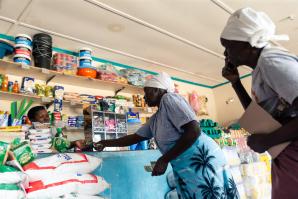
Everyday life is getting increasingly tough, with the prices of basic goods spiraling and medical supplies in short supply. Motorists wait for hours to fill up at fuel stations despite fuel prices having gone up more than 500% this year.

U.N. raises aid appeal for Zimbabwe to $331.5 million, many face starvation – The Zimbabwean

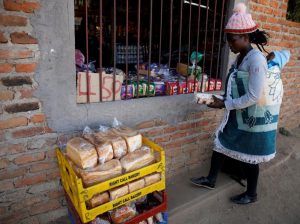
A woman buys bread at a shop in Chitungwiza, Zimbabwe, July 16, 2019. REUTERS/Philimon Bulawayo

The El Nino-induced drought cut the maize harvest by half and is responsible for low water levels at the biggest hydro plant Kariba that has reduced power generation and triggered rolling power cuts.

The drought comes with Zimbabweans enduring the worst economic crisis in a decade – prices of staples such as sugar, cooking oil and rice have more than doubled since June, jacking up inflation to 175.66%.

David Beasley, executive director of the U.N. World Food Programme, said 2.3 million people in rural Zimbabwe need emergency food aid now and the figure would increase to 5.5 million during the lean season up to March next year.

The government estimates another 2.2 million people in urban areas also require food aid, bringing the total to 7.7 million, more than half of the southern African nation’s population.

The $331.5 million would be used for food aid, provision of water and sanitation and cash handouts to stricken families.

“We are talking about people who truly are marching toward starvation if we are not here to help them,” Beasley told diplomats, aid agencies and government officials at the launch of Zimbabwe’s humanitarian appeal to international donors.

“We are facing a drought unlike any that we have seen in a long time. We don’t have the luxury of fiddling while Rome burns.”

The United Nations had previously appealed for $294 million but as the impact of the drought has spread, it needed more funding.

President Emmerson Mnangagwa on Tuesday declared the drought a national disaster.

Finance Minister Mthuli Ncube told the same meeting that the government was surprised by the impact of the drought on power generation.

Another government official told reporters earlier on Tuesday that Zimbabwe would import 400 MW of electricity from neighboring South Africa’s Eskom after agreeing to make weekly payments of $890,000 to clear its debt.

This was after a treasury official said on Monday Zimbabwe would ramp up electricity imports over the next few weeks, potentially easing rolling power cuts, after agreeing to clear its debt to a regional power utility.

“The impact of weather goes beyond the vulnerable, it is affecting production in the manufacturing sector, agriculture and everywhere, and this is an impact again that was not anticipated,” Ncube said.

The hope and euphoria that greeted long-time leader Robert Mugabe’s departure after a coup in 2017 has gradually turned to despair as Mnangagwa has failed to revive the economy or usher in meaningful political reforms.

Amid rising discontent over the state of the economy, the main opposition party said it was planning street demonstrations next week to protest against the government’s handling of the economy.

Zimbabwe Opposition Plans Demonstrations Over Economy Next Week
Zimbabwe’s opposition MDC party is planning to protest next week, here’s why 

Post published in: Business

Zimbabwe’s opposition MDC party is planning to protest next week, here’s why  – The Zimbabwean

HARARE (Reuters) – Zimbabwe’s main opposition party is planning street demonstrations next week to protest against the government’s handling of the economy, which is mired in its worst crisis in a decade and has plunged most citizens into poverty.

The southern African nation is enduring shortages of foreign currency, fuel and bread as well as 18-hour power cuts. The power outages threaten mining and industrial output and have upended lives.

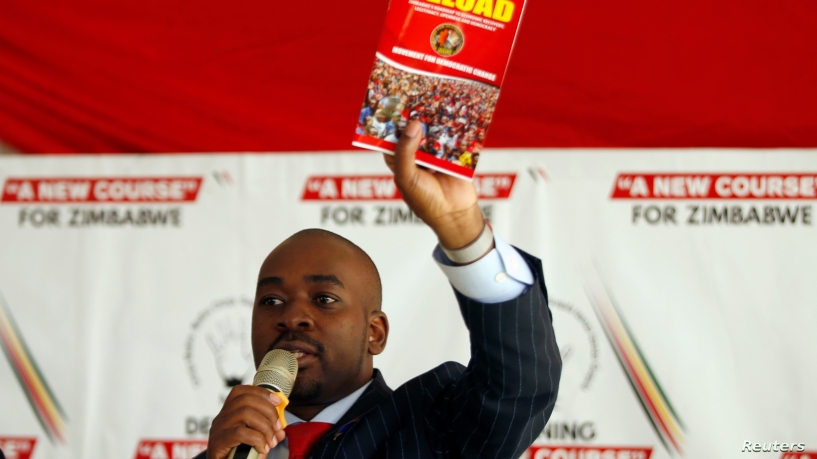
The opposition Movement for Democratic Change (MDC) will hold marches in the capital on Aug. 16 against corruption, unemployment and power and fuel shortages and a deteriorating economy, the party said in a notice to the police dated Aug. 5.

“The national challenges are a result of a governance and legitimacy crisis arising primarily out of the disputed election of July 2018,” national organising secretary Amos Chibaya said in the notice, seen by Reuters.

The departure of long-time leader Robert Mugabe after a coup in 2017 was greeted with euphoria and hope, but this has gradually turned to despair as his successor, President Emmerson Mnangagwa, has failed to revive the economy or usher in meaningful political reforms.

Chibaya said demonstrators would present a petition to parliament after next week’s march.

Luke Tamborinyoka, the MDC deputy spokesman, confirmed the party had notified the police, adding that “we hope the police will allow us to exercise our constitutional right”.

Police spokesman Paul Nyathi said he could not immediately comment.

The MDC does not recognise Mnangagwa’s presidency and maintains that he rigged last year’s vote, charges that the 76-year-old leader denies. Last week, MDC legislators boycotted the mid-term budget statement in parliament because Mnangagwa was present.

The last big protest in Zimbabwe, organised by the main labour union in January against a sharp fuel hike, turned deadly after it spilled onto the streets and was met by an army clampdown in which more than a dozen people died.

Everyday life is getting increasingly tough, with the prices of basic goods spiralling and medical supplies in short supply. Motorists wait for hours to fill up at fuel stations despite fuel prices having gone up more than 500% this year.

UN rolls out Zimbabwe road safety performance review in bid to reduce carnage

Post published in: Featured

Layoff Watch ’19: Wells Fargo Has A “Location Strategy” For Telecommuters That Will Require Actual Commuting

An insider tells us that The Stagecoach is asking non-customer facing telecommuters to uproot their lives or find a new job.

This Biglaw Partner Is Featured In All The Best Documentaries

Image via PBS Home Video

What Biglaw firm once bore the name of famed essayist George Templeton Strong? His diary has been featured in Ken Burns’s documentary The Civil War, as well as in Ric Burns’s New York: A Documentary Film.

Hint: The firm was once known as Strong, Tidwell & Strong — the first Strong after his father, George Washington Strong.

See the answer on the next page.