UN rolls out Zimbabwe road safety performance review in bid to reduce carnage – The Zimbabwean

The United Nations Economic Commission for Africa (ECA) is working with Zimbabwe to see how they can significantly reduce road casualties in the southern African nation so it can serve as an example for the rest of the region.

A team from the UN is in the country to review and assess the country’s performance on road safety.

In remarks during the launch of the Road Safety Performance Review for Zimbabwe, which was accompanied by a two-day workshop to review the road safety situation in the country, Soteri Gatera of the Industrialization and Infrastructure Section of the ECA said accelerating road safety action was crucial not only for Zimbabwe but Africa as a whole.

“The road safety performance review aims to assist Zimbabwe in strengthening her road safety management capacities and improving her national road safety record,” said Mr. Soteri.

“We have to work to avoid a case of unintended consequences whereby the story of Zimbabwe’s economic growth – with accompanying infrastructure development and increased car ownership – is eroded by increased road accidents and deaths. Even a single death on the road is simply unacceptable.”

According to the Traffic Safety Council of Zimbabwe (TSCZ), over US$ 460 million is spent annually on road traffic accidents, with an average of 40,000 accidents being recorded annually.

At least 15,000 people are injured and almost 2,000 killed every year in road traffic accidents, says the TSCZ.

In 2018, the country recorded a total of 1,517 fatal road traffic accidents compared to 1,325 in 2016 of which 90 percent were attributed to human error, including speeding, misjudgement, drinking and driving and recklessness.

“Although there is a strong foundation in place, Zimbabwe urgently needs to scale-up efforts. We need to move towards action and implementation,” said Mr. Soteri.

The global Decade of Action for Road Safety and sustainable development goal target to halve the number of fatalities by 2020 is an ambitious goal, he said.

“However, after conducting the road safety performance reviews in some few African countries, we are convinced that Zimbabwe can make the biggest strides towards that goal. Fortunately, we know the solutions,” added Mr. Soteri.

“We need safer roads and infrastructure, safer vehicles, safer road user behaviour, better legislation, stronger enforcement, improved post-crash care as well as better means to evaluate and monitor progress through availability of quality data.”

He said a whole UN team, through the UN Special Envoy for Road Safety, was in Zimbabwe to join hands with Zimbabwe to;

• To update the regulatory framework to include international and regional recommendations through the accession to the UN Road Safety Conventions. This includes acceding to the African Road Safety Charter and African Trans-Highway Agreement.

• Consider the transposition of these legal instruments onto the national Road Safety Act

• Strengthen the National Road Safety Council so that it is able to perform the functions it should as a Lead Road Safety Agency.

• Establish the road crash database.

• Ensure national wide coverage of the vehicle inspections program

• Roll out the national curriculum for drivers training and strengthen the drivers testing regime. Enforcement and education in schools are also key to improving driver and road user behaviours.

• Roll out the National Road Safety Audit Manual to ensure that roads are built for the benefit of all road users.

• Establish the Emergency Medical Service Policy in line with internationally recommended guidelines, such as by ones developed by the WHO to give road crash victims the best chance of survival.

“We know that solid data will help us identify risks, address them and monitor our progress.  The crash database will help achieve coordinated data collection and management, which is a critical issue across the continent,” said Mr. Soteri as he applauded Harare for its commitment to road safety.

TSCZ Director Obio Chinyere said the review was important in helping the country to reduce the road carnage.

“The envoy will look at the five pillars which the road safety is anchored on and they will give recommendations on their findings, and it will be up to us to decide on the course of action concerning their recommendations,” he said.

Road Safety is a global challenge with an estimated 1.2 million people dying every year as a result of road crashes. At least 50 million people are injured globally in road crashes annually.

Road crashes have a disproportionately high toll in Africa compared to other regions of the world. In this regard, the risk of death from road traffic injury is 26.6 per 100,000 in Africa compared to 17.0 for South-East Asia, the world average of 17.5 and 9.3 per 100,000 in Europe.

Mr. Soteri said road crashes have economic implications estimated to be an equivalent of up to 5 percent of GDP in low-and middle-income countries.

“This suggests that a significant share of investment in roads is lost through road crashes,” he said, adding there is evidence that the road safety situation in some African countries may be getting worse, not improving, contrary to the objective of the African Road Safety Action Plan 2011-2020, which is to half the number of deaths on the continents roads by 2020.

Zimbabwe secures more electricity imports to ease outages

Post published in: Featured

Zimbabwe secures more electricity imports to ease outages – The Zimbabwean

FILE PHOTO: Residents collect water at night from an electric-powered borehole, as the country faces 18-hour daily power cuts, in a suburb of Harare, Zimbabwe, July 30, 2019. REUTERS/Philimon Bulawayo

The southern African nation has endured 18-hour daily power cuts since May as a result of a prolonged drought that has reduced output at its largest hydro plant and aging coal-fired generators that keep breaking down.

Foreign power companies also stopped supplying Zimbabwe with electricity in 2017 after the country failed to pay its bills, although Zimbabwe resumed limited imports of 300 MW a month last week.

George Guvamatanga, secretary for the ministry of finance, told business leaders in Harare that Zimbabwe had agreed to make weekly payments to clear its debt to a regional power utility, which would start providing at least 400 MW of electricity a month, starting from this week.

That would take total imports to 700 MW a month.

Guvamatanga did not name the supplier. Zimbabwe typically buys electricity from South Africa’s Eskom and Hydro Cahora Bassa of Mozambique.

Zimbabwe owes more than $70 million to Eskom and Hydro Cahora Bassa of Mozambique for past power supplies.

“I think the arrangement that we have put in place now on electricity should hopefully guarantee us increased supply from tomorrow or Wednesday,” Guvamatanga said.

“Working with the mining sector we have been able to ring-fence adequate resources to pay for at least 400 megawatts of electricity a month.”

Power shortages, along with drought and a severe dollar crunch, will result in the economy shrinking this year, the finance minister said last week.

Energy and Power Development Minister Fortune Chasi was in South Africa at the end of July to try negotiate for a power deal with Eskom. He did not immediately respond to calls and messages on his mobile phone on Monday.

Eskom, which is itself struggling to meet South Africa’s electricity needs, had no immediate comment.

The government said last week that power utility ZESA Holdings was accessing 300 MW during off-peak hours from the Southern African Power Pool, a regional industry collaboration linking up national grids.

Guvamatanga said for now Zimbabwe would have to rely on electricity imports, which required foreign currency that is in short supply.

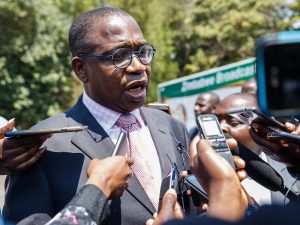
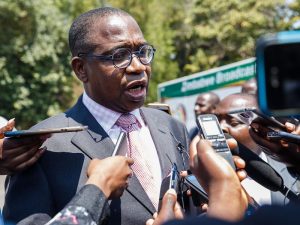
Last week finance minister Mthuli Ncube announced a three-fold increase in electricity tariffs, as the government seeks to raise more funds for power generation.

UN rolls out Zimbabwe road safety performance review in bid to reduce carnage
Zimbabwe’s main opposition plans protest over economic crisis

Post published in: Featured

Zimbabwe’s main opposition plans protest over economic crisis – The Zimbabwean

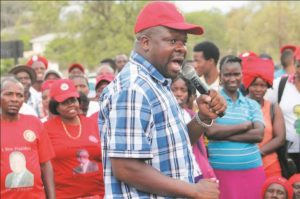
Amos Chibaya

The demonstration will be held in the capital, Harare, on August 16, Movement for Democratic Change National Organising Secretary Amos Chibaya said in an application filed to the police August 5.

The party listed 12 reasons it said protest action is necessary, including state corruption and shortages of power and fuel.

Zimbabwe has recently suffered load shedding – where there are power cuts of up to 18 hours and shortages of everything from bread to motor fuel.

People are receiving food aid in cities for the first time and a drought has necessitated the import of hundreds of thousands of tons of corn.

Zimbabwe’s finance minister responded to the country’s worsening economic crisis last week by blacking out inflation statistics for the next six months, boosting the price of the little power that’s available five-fold and admitting what the International Monetary Fund told him in April: the economy will contract for the first time since 2008.

At the same time he spoke of fiscal surpluses and a relaxation in local ownership requirements for the key platinum industry.

Meanwhile Zimbabwe expects its power situation to improve from today after its government said it had reached payment plans with key foreign suppliers.

The country mainly imports electricity from Eskom in South Africa and from the Cahora Bassa hydroelectric generation station in Mozambique.

Zimbabwe started implementing rotational load shedding in May, due to a combination of low water levels at Kariba Dam’s hydroelectric power plant, generation constraints at ageing power stations and limited foreign imports. It has been struggling to pay for power imports as it faces a crippling power deficit of roughly 950MW.

Zimbabwe secures more electricity imports to ease outages
Slowly Going Nowhere

Post published in: Business

Slowly Going Nowhere – The Zimbabwean

Mthuli Ncube

I just finished perusing the Mid Year Budget Review, and sadly it is another indicator of the doom that is lurking in the horizon of our future economic prospects. The future is indeed bleak. Unfortunately, the Minister of Finance and Economic Development, Mthuli Ncube has tried to cure a disease by doctoring the symptoms. Not to cover the whole budget, but critical areas that highlight my pessimism. Surely the calmness we have is the warmth that presages the storm.

Points to note:

Revenue Exceeded its target
Revenue for the first six months of the year where ZWL$4.99 billion exceeding a target of ZWL$4.15 billion. Sounds great right? Wrong! I draw strength from International Accounting Standard 29 (IAS 29) which is common sense accounting in hyperinflationary environments. The rate between USD and ZWL was about 1:4 in January and now it is hovering above 1:9.5

It is not wisdom to celebrate an increase in revenue generation which doesn’t compensate for inflation.

Such simple ballpark estimates would yield this: the target of ZWL$4.15 billion in January was factual almost equal to USD$1 billion and the revenue collected now is about US$450 million, which is in fact a reduction in revenue.

Expenditure exceeded target

Expenditure increase is mainly attributed to variances in exchange rate and inflation, so by similar logic presented analysing expenditure without adjusting for inflation or pegging the values is one frivolous activity to hide the real problems we have. It is unfortunate that the surplus is being celebrated without compensating civil servants fairly for their efforts which is a recipe for disaster. Civil servants are poorer than they were three years ago. Its illogical to celebrate a surplus in a household by not buying food for your kids or providing for their welfare.

My take:

The government is in a paradoxical situation, faced with two problems: The first being the problem of managing appearance where they want to give a veneer of optimism and lie that things are well without the fundamental economic principles in place. In this, the civil servants are suffering from loss of earnings in that the value of their labour has not been adjusted to meet the reality of the exchange rate difference. The second problem emanates from the first problem, the pending further recession due to repressed demand. With government punishing civil servants by not adjusting their salaries, local demand is weakened and most companies will feel the pinch. As one of the largest employers, the government budget management through punitive means of not rewarding their employees is a recipe for disaster.

Zimbabwe’s Mugabe in Singapore hospital for extended stay

Post published in: Business

3 Thoughts On The Future Of Litigation Finance (Part II)

Last week, we discussed the continued development of the litigation finance market, as well as the likely impacts of increased discovery into funding relationships. Continuing our look at this increasingly important piece of the legal landscape, we can now focus on two other potential developments worthy of our consideration.

For our second point, remember that while some litigation funders will fund (discounted) attorney’s fees on a case, there is nary a litigation funding arrangement where case expenses — e.g. experts, eDiscovery vendors, transcripts — are not funded. In a patent case, for example, these expenses can easily approach seven figures through trial, depending on the amount of discovery in the case and the need for expert help on both the damages and technical sides. While the latter category of expenses may be more difficult for a third-party funder to control or even police, it is likely that litigation finance firms will start taking tighter control over case expenses that they are funding. Why wouldn’t they? Many litigation support services are commoditized, with stiff competition between vendors often the best price control measure available. At the same time, litigation funders could easily start negotiating preferred pricing with certain vendors, so that firms and clients they fund can be steered towards using those vendors on funded cases. 

In the long term, it would not be surprising to see litigation funders start to build in-house discovery teams and support services as a cost-control measure. While I don’t see litigation funders necessarily telling lawyers they are investing in which experts to hire in a case, for example, I do think it likely that litigation funders may start to steer those firms towards preferred eDiscovery vendors or court reporting services. The funder is typically picking up the tab for those services, after all. Of course, how quickly litigation funders become demanding on this issue will likely be impacted by how healthy their profit margins remain. But there will likely become a day where even the most profitable funder looks at where they can get more bang for their invested buck on the expense funding side. 

Finally, I think a new breed of activist litigation funders is likely to arise in the near future, to the extent that such activist funders are not already operating. I know that one of the selling points of pure-play litigation funders is that they will take a passive role in the case they are funding — and would never deign to tell a law firm how to handle the litigation. But shouldn’t law firms welcome input from sophisticated outside observers? Especially as litigation funders continue to build robust in-house legal teams — often drawing on experienced lawyers with admirable pedigrees — for diligence purposes? Why couldn’t those same lawyers offer dispassionate advice to the litigation team? In fact, we are starting to see even pure-play funders experimenting with different funding models, including by looking to deploy more capital on a portfolio, as opposed to a case-by-case, basis. Especially with trusted firms. That trust is likely to start being shared in both directions as law firm to funder relationships take firmer root over time.

Even if it takes the pure-play litigation funders a bit longer towards taking a more active role in the cases they fund, my experience with hedge funds and family offices is that there is a measurable percentage of those types of investors that relish an active role in any investment they make. For them, litigation finance will be no exception. Sophisticated investors are used to operating in competitive (even adversarial) environments, and at least a segment of that population would conceivably welcome the opportunities for activist intervention inherent in litigation. The ethics will likely be complicated — and a fair measure of risk would be assumed — but we are perhaps not far from the day where an investor looks to capitalize on a litigation funding investment by shorting the stock of the target company in the case. Or looking to hedge by buying shares in that same target. Whatever it takes to generate a positive return. No matter how this unfolds, you can be assured that investors will espouse creative strategies to generate an edge. They do so with any type of investment they make. Litigation finance will not be an exception.

Ultimately, the time has long-since passed for considered discussion in the legal industry regarding litigation finance. In my opinion, it is a phenomenon that no practicing lawyer can ignore. Nor should the discussion around the impacts of litigation finance be limited to those firms that have already taken outside funds for litigations they are pursuing. In short, we are in the midst of a significant change in the dynamics of litigation practice. While the future of litigation finance may still be unclear, there are no indications that it will not remain an important issue in the careers of anyone practicing today. Time for every active litigator to discuss, no matter what you think that future will be.

Please feel free to send comments or questions to me at gkroub@kskiplaw.com or via Twitter: @gkroub. Any topic suggestions or thoughts are most welcome.


Gaston Kroub lives in Brooklyn and is a founding partner of Kroub, Silbersher & Kolmykov PLLC, an intellectual property litigation boutique, and Markman Advisors LLC, a leading consultancy on patent issues for the investment community. Gaston’s practice focuses on intellectual property litigation and related counseling, with a strong focus on patent matters. You can reach him at gkroub@kskiplaw.com or follow him on Twitter: @gkroub.

Turns Out Texas District Attorney Resigned Because He Was Under Investigation For Sexual Harassment

In October of 2018, Jim Wheeler resigned as the Wood County, Texas District Attorney. When he stepped down from public office, there wasn’t much information released about the why of the resignation. Thanks to a Texas Public Information Act request, it’s now come to light that he resigned after learning he was under investigation for sexual harassment. In fact, he resigned just two hours and 47 minutes after learning about the investigation.

As reported by Texas Lawyer, the investigation was sparked when an investigator became suspicious of Wheeler’s behavior towards First Assistant District Attorney Angela Albers. And it turns out Albers had been recording her interactions with Wheeler because she feared for her job and didn’t think others would believe her:

The allegations in the Texas Department of Public Safety Texas Ranger Division’s report show that Wood County D.A. investigator Jerry Hirsch was suspicious of Wheeler’s conduct toward then-First Assistant District Attorney Angela Albers. When Hirsch asked her, Albers admitted that Wheeler had been pursuing her for sex for eight months; she had been recording his comments for two months.

The report said Wheeler would say things like, “We could have fun together and no one would know,” and ask what Albers would do when he started putting his hands on her. He didn’t touch her physically, other than giving her “full-frontal hugs” in the office, said the report.

Though Wheeler provided no comment about the allegations, his dad had something to say:

But James Paul Wheeler, who is Jim Wheeler’s father and attorney, said that Jim Wheeler was not guilty of any crime.

“However, rather than go through any trial, if there was to be one, he made the determination that he would retire, and retired with the full retirement of 12 years and lifetime medical,” James Paul Wheeler said.

According to Upshur County District Attorney Billy Byrd, the official charged with prosecuting Wheeler, there was enough evidence to charge him with official oppression, which includes intentionally subjecting someone to sexual harassment. However, instead of filing charges against Wheeler, he asked him to resign — an exit Wheeler took. Byrd says this was done in the best interest of the victim:

“Being very involved with the victim and fully discussing all of those potential avenues of disposition, we felt this was in the best interest of justice. My oath of office is not to see that convictions happen, but to see that justice is done,” Byrd explained. “If there was a jury trial and a conviction, the same result would have happened, but getting to that point, there would have been a lot of information that was potentially harmful to other people, who were not victims.”

According to Texas law, when the District Attorney position becomes vacant, the First Assistant District Attorney becomes the acting district attorney. So, when Wheeler stepped down, Albers began managing the office and Texas Governor Gregg Abbott appointed her as D.A. in February.


headshotKathryn Rubino is a Senior Editor at Above the Law, and host of The Jabot podcast. AtL tipsters are the best, so please connect with her. Feel free to email her with any tips, questions, or comments and follow her on Twitter (@Kathryn1).

Sugar, We’re Goin’ Down (Swinging): When It’s You Or The Business

Despite having never served in the armed forces, my former GC was inordinately fond of military expressions, usually involving insurrections and rebellions. But chief among them was his fervent assertion that when something was of utmost importance, he was ready to die on that hill. Of course, his sense of what constituted an issue of utmost importance ran the gamut from SEC financials disclosures to the brand of Caesar dressing our cafeteria served.

Now, while I’ll admit that I enjoyed the way his brows knit together as he informed us in a grim, but resolute tone that he would be dying on the hill that day, I always thought the sentiment was a little much. And to be frank, having always been of the mind that as long as the course of action proposed wasn’t illegal or unethical, the business will do what the business will do, regardless of whatever carefully crafted legal advice is offered, I wasn’t sure what was the point of getting so worked up.

Of course, the one time I dared suggest that maybe, just maybe, he was overreacting a smidge, my GC looked down at me like a bushy-browed Zeus lording over his poor, wretched mortals from atop Olympus, and told me that someday I’d understand that it was the principle of the thing.

Uh-huh. See, having spent quite a bit of time around business partners, you pick up this unique talent for sniffing out bullshit a mile away. And this was bullshit. I don’t care who you are (unless you’re Atticus Finch, and then by all means, get on with your bad self), if your best comeback as an in-house counsel is it’s the principle of the thing, you’re in trouble.

Well, it was all fun and games, my former GC and his quirks. Yes, it was all fun and games until Procurement suggested that we dismantle our document management system in favor of their new contract platform.

I saw red. I tasted red. I breathed and typed and emailed red. IN ALL CAPS. Who the heck did Procurement think they were making decisions for all business functions as to where contractual documents were not only stored but drafted? Plain English? Procurement would have the ability to change drafts without Legal being notified. Gone would be the chance to help determine the right form so we didn’t end up with a construction contract on a form for off-the-shelf goods. Gone would be our ability to hold back an internal draft while working out a tax issue that might tank the deal.

Anarchy, friends. I didn’t see red. I saw anarchy. That’s a color in the Crayola box, right?

Oh, fine. There was an honest-to-goodness hill — no, make it a mountain — that I was willing to — again, no. Just no. It’s still a morbid expression. Instead, I found myself hearkening back to that ubiquitous mid-2000’s Fall Out Boy track. And trust me when I tell you that sugar, I was going down swinging.

Now, the point of this story isn’t about how I thwarted Procurement (although to be clear, I thwarted them. I wouldn’t be telling this story if I crashed and burned. Because who wants to be that kid at the party?) The point, dear reader, is that this move by Procurement incensed me in a way that I had never been fired up, more so than being lied to by legions of fresh-faced salespeople on the regular. More so than having my cred repeatedly questioned because I have lady parts. Even more so than that time the VP of HR kept writing the word “irregardless” into my drafts.

I know, I know. Some of you are probably thinking right now, what’s the big deal, Thrace? It’s a freaking software platform, you control freak. Embrace change. Adapt or die.

I tried. I really did. I did a deep dive on the platform. I thought about it in the shower, on my drive to work, even on the all-sacred “do not talk business to me or even look at me while I’m sweating” gym treadmill. And finally, I knew what the GC really meant. It wasn’t the principle of the thing. It was the thing. Allowing this project to go forward as proposed would mean altering the way we partnered and negotiated all of our contracts, while potentially sacrificing the checks and balances we built into the process. And I wasn’t up for it. It was something I was willing to throw everything I had against it. There was swinging. So much swinging.

And in the end, my former GC was right. But please don’t tell him. Because it’s the principle of the thing.


Kay Thrace (not her real name) is a harried in-house counsel at a well-known company that everyone loves to hate. When not scuffing dirt on the sacrosanct line between business and the law, Kay enjoys pub trivia domination and eradicating incorrect usage of the Oxford comma. You can contact her by email at KayThraceATL@gmail.com or follow her on Twitter @KayThrace.

Morning Docket: 08.06.19

Cesar Sayoc

* The mail bomber, Cesar Sayoc, gets sentenced to 20 years in prison for sending 16 explosive devices to journalist, high ranking officials and former elected politicians. [New York Law Journal]

* Roger Stone would really like the D.C. Circuit to lift the gag imposed last month by U.S. District Judge Amy Berman Jackson. [Law360]

* In the wake of the latest round of mass shootings, the governments of Venezuela and Uruguay issue warnings for their citizens traveling in the U.S. [Huffington Post]

* With the courts being the way they are, don’t get too excited about the prospect of actual gun control. [Slate]

Zimbabwe’s Mugabe in Singapore hospital for extended stay – The Zimbabwean

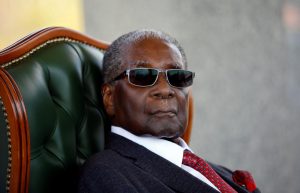
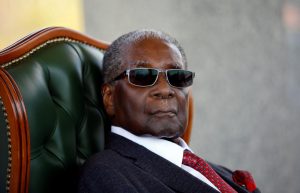
President Emmerson Mnangagwa, in a statement released Monday, did not disclose what Mugabe is being treated for but the ex-leader “continues to make steady progress toward eventual recovery.”

Mnangagwa, a former ally who took over from Mugabe in 2017 with the help of the military, said physicians decided that Mugabe should be kept under observation for a lengthy period when he went for his “latest routine checkup.”

Mugabe ruled Zimbabwe with an iron fist from independence in 1980 until he resigned under pressure from the military and his party in 2017. He has regularly visited Singapore for medical treatments for more than 10 years. Mugabe previously said the visits were for scheduled checkups after an eye operation.

With Zimbabwe’s health system rapidly deteriorating, many of the country’s top officials fly out of the country for medical treatment. Vice President Constantino Chiwenga, a former army general who led the military’s revolt against Mugabe, was airlifted last month to China, after previously getting medical treatment in India and South Africa.

Zimbabwe lies in ruins after government leaders destroy once-thriving economy

Post published in: Featured

Zimbabwe lies in ruins after government leaders destroy once-thriving economy – The Zimbabwean

“No. I am South African, going to a family function in Zimbabwe,” I answered. “Oh, I hope it all goes well,” the man said.

It turned out the man was Zimbabwean. He was going home, after a sojourn to see his relatives in Benoni.

The man quickly shared the story of his collapsed footwear and jewellery business in Harare, and the difficult choice he had to make: either pay a bribe or let his successful business collapse.

“My religion does not allow me to pay a bribe. I am a Muslim, my brother. So, I let my business go down.

“Everyone who does business in Zimbabwe today pays a bribe,” the man said, with tears refusing to be hidden.

“I am very sorry, Sir.” Those were my last words to the man who did not tell me his name. He, too, did not ask for mine. And off we flew to Zimbabwe, where visitors are welcomed by a big billboard at the airport advertising the country as “the place of the majestic Victoria Falls”.

My host waited to pick me up and drive from Harare to Gweru, a distance of just under 300km , southwest of Harare on the N2 highway to Bulawayo.

Having informed him that I had not been to Zimbabwe since 2005, my host drove me around Harare before we hit the highway to Gweru. From the airport we drove through Hatfield, Harare’s equivalent of Sandton.

Today Harare’s Hatfield can’t be mentioned in the same sentence with Sandton. It looks worse than a God-forsaken neighbourhood in Brakpan. What we call potholes in SA is nothing. Zimbabwe has real road holes.

As we drove from one small town to another, my host kept showing me something: “You see, uncle, that is Zimbabwe’s new trademark.”

He was showing me long queues at fuel stations.

Every fuel station in Zimbabwe has an unbelievably long queue, some as long as 4km. My host refuelled his car from a drum in his son’s house.

What about water? It is a scarce commodity. If you are lucky to have it flow through your tap, you just don’t drink it – or else you contract cholera. There are billboards warning about cholera.

As for electricity, Zimbabweans get it between midnight and 5am. With our own Eskom, we cannot afford to laugh at Zimbabweans.

About 50km outside Harare, my host showed me a brown-looking piece of land. “That farm belongs to Gideon Gono, the former governor of Zimbabwe’s reserve bank who presided over the collapse of our currency.

“I still remember the bank notes Mr Gono used to print 20,000; 500,000, and something like that.”

Today nobody knows what Zimbabwe’s currency is: the US dollar? the rand? government bond? I was swindled R1,021.54 via $72.00 in a simple chicken-meat transaction that deserves a complex PhD thesis in banana economics.

My host, a black chartered accountant, showed me Gono’s farm.

“It is very sad that Zimbabwe now imports maize,” he said.

Here is a simple truth: The place called Zimbabwe is not a country; it is a sad story of a liberation movement gone mad.

A big Zanu-PF billboard in Harare, bearing the smiling picture of President ED Mnangagwa, reads: “2019 the year of rebuilding the party through ideological training.”

My heart sank as I looked at it, and I laughed.

Zimbabwe’s Mugabe in Singapore hospital for extended stay
Zimbabwe Reaches ‘Tipping Point’ as Inflation Blacked Out

Post published in: Business