There’s So Much Between The Lines In This ‘Disbarred Lawyer Arrested For Shoplifting And Drugs’ Story

Imagine this, but on fire, and then imagine basically ignoring that.

Local television news outlets are suckers for hard luck crime stories to pad out their metanarrative that whatever wonderful town you live in has puppies and cute kids and remains ever teetering on the brink of a crime fueled hellscape. If one approaches local news through the lens that it’s mostly sensationalism, it’s pretty entertaining.

But this story out of Florida — obviously — about disbarred local attorney Joshua Stewart is a true artifact in the local media oeuvre because somehow the fewer than 150-word writeup manages to tell a tale that seems to be glossing over a lot.

A disbarred lawyer found himself in trouble with the law again after shoplifting while carrying drugs, according to Pasco County deputies.

So far so good.

In March, 41-year-old Joshua Stewart was accused of setting fire to a 47-foot yacht. He was a lawyer in New Port Richey, but was disbarred in December 2017 for an unrelated felony charge.

For those keeping track, it took until sentence TWO before this went wildly off the rails. “Setting fire to a 47-foot yacht”? That’s not a nugget that you get to throw in there and just waltz past. And, yes, there was a hyperlink to prior coverage, but this is the sort of thing that demands a thumbnail summary. I went ahead and checked up on this story and, well, here’s the headline:

Disbarred lawyer accused of burning yacht fitted for family’s wheelchair-bound son.

What? Apparently, Stewart is accused of burning a yacht specially fitted for a quadriplegic kid because he was feuding with the father on social media. Buried in that story is the a lone subordinate clause explaining why the police suspect Stewart: “Though Lissow says he never knew Stewart, he wasn’t surprised; Stewart pleaded guilty to stealing Lissow’s yacht’s motor back in 2012.” OH? What’s that all about? We’re left hanging. And neither story bothers to explain the unrelated felony that got Stewart disbarred.

Anyway, back then the police worried that Stewart had fled to Costa Rica. It seems he was just down at the Home Depot. Back to the current story:

On Friday, Pasco County detectives said Stewart walked into a Home Depot in Port Richey, grabbed several items and placed them in his pockets. He was seen by a lost prevention officer walking past the cash registers without paying for those items, officials said.

The lost prevention officer detained him and the responding deputy said Stewart admitted to trying to steal those items.

Did this lawyer never learn about Miranda? Why make this admission? Did they not cover basic criminal law at Stetson? Actually… maybe not.

Oh and while we’re here, here’s some more on that unrelated crime that got him disbarred, he was, “charged with grand theft of merchandise from Best Buy.” He also had morphine with him at that time, just like he allegedly had drugs with him this time.

During a search, deputies said they found controlled substances on Stewart. He was arrested for retail theft and possession drugs.

Despite glossing over a lot of the wild stuff that actually makes this story interesting, the most important factor getting skipped between the lines here is the dearth of mental health services available to attorneys and how depression can manifest itself in dependency issues without intervention. At his 2015 suspension, Stewart noted:

“Depression caused some significant problems for me that I did not handle in an appropriate manner,” he said. “Trying to deal with depression with a medication called morphine that you don’t even have a scrip for is absolutely insane.”

How the justice system chooses to deal with Stewart at this point is anyone’s guess, but it’s clear from Stewart himself that whatever penalty gets meted out, some kind of mental health counseling must be a critical component.

Disbarred lawyer caught shoplifting at Port Richey Home Depot, deputies say [Fox 13 News]


HeadshotJoe Patrice is a senior editor at Above the Law and co-host of Thinking Like A Lawyer. Feel free to email any tips, questions, or comments. Follow him on Twitter if you’re interested in law, politics, and a healthy dose of college sports news. Joe also serves as a Managing Director at RPN Executive Search.

EXCLUSIVE: Rumor Has It That Less Than 20% Of JPM Summer Associates Are Going To Become Real JPM Associates

Jamie Dimon is apparently quite unimpressed with his Summer People.

Privacy, Big Data, And The Argument For U.S. Federal Privacy Legislation

(Image via Getty)

Most of us have heard the phrase “someone watching over you,” and some take solace in it and view it as a good thing. Unfortunately, it seems that may not be the case when it comes to your privacy. The fact is that there are more and more “eyes” on you and your personal data everyday.  Just recently, it was uncovered that the U.S. military plans to test a 24-hour mass surveillance system using high altitude balloons equipped with special radar systems that can track multiple vehicles simultaneously over a period of time.  Further satellite imagery has progressed a great deal over the last 10 years, arguably enough to identify certain vehicle characteristics (but not license plate numbers… yet).  What does this all mean?  A great deal, and for reasons other than you might think.

Let’s face it — the advent of the internet has created a mechanism whereby companies (from your internet service provider to your browser, mobile devices… even the “internet of things” or IoT) can (and do) collect, store, use, and share personal information.  We’ve become accustomed to such data collection online, arguably to the point where such collection and use is viewed as the “toll” for the information superhighway and price to be paid for getting to the information we seek for “free.” Unfortunately, the level of collection and use of such data from interactions on the internet has reached epic proportions, as has the hacking of such information and its unauthorized use.

Thankfully, many jurisdictions have “woken up” to this issue.  For example, the European Union passed the GDPR  a few years ago (effective May 2018) in an effort to update its original Data Privacy Directive from the 1990s (i.e., before Google even registered its domain name).  Non-EU jurisdictions (such as Australia, New Zealand, and Canada have also implemented regulations designed to provide greater rights to individuals regarding their data.  The United States is seeing its fair share of state laws either passed (such as California’s CCPA) or in process (such as Senate Bill 5376 in the State of Washington or New York State’s far reaching Senate Bill 224 which provides, inter alia, a private right of action for individuals who are injured to sue companies for a violation).  That said, the U.S. has struggled to follow suit federally, and such continued delay can no longer continue.

Why?  For starters, state laws create a patchwork of regulation that are difficult to harmonize.  I applaud states such as California, Washington, and New York for taking a lead from the GDPR and attempting to wrestle more individual rights to such data, but not every state that has (or is addressing) data privacy laws approaches it the same way.  As a result, this disparity creates incredible challenges (and liabilities) to companies doing business throughout the U.S. For example, should New York’s proposed bill become legislation, companies will need to address not only the quick turnaround times for customer data inquiries, but will need to be prepared for potential lawsuits for purported violations.  Worse, it may serve as a reason for companies collecting personal data from NY residents a reason to offset increased costs by passing such costs (or more) to such NY customers.

The biggest concern from my perspective, however, is that federal regulation may be the best way to address what I perceive as inevitable “next level” use, namely, the merging of satellite and related imaging data to private data already collected.  According to MIT Technology Review, there are currently almost 770 imaging satellites in orbit above the Earth, but it’s not the images that are the issue, but how those images can be mapped to other individual identifying characteristics that is causing the problem.  You can turn off location tracking on your mobile device or implement a VPN or other technological safeguards when internet surfing, but you won’t have that option with satellites.  What’s worse, what about companies whose competitors seek to gain a competitive advantage by seeking a combination of imagery of their competitor’s locations with other information (such as form supply chain sources or logistics)?  Don’t think it can happen?  The point is that it may already be happening.

I realize the difficulties involved with seeking a federal legislative solution to this impending problem, but (sadly) it is the one solution that provides a harmonious resolution for a thorny problem.  Absent a federal solution, there appears to be little to prevent this “next-level” data mapping from further eroding data privacy rights.  If anything, Congress should take the lead from those states (like California and New York) that have been influenced by the GDPR — it would be a good start.  That said, whether the eventual legislation would actually reflect what is necessary to protect such rights is another issue altogether (and one fraught with political issues far beyond the scope of this article).  Let’s just hope that somehow Congress and business can resolve this dilemma in a way that is a win for personal data privacy (I know, I know — hope springs eternal).  Until then, the view from above is not going to get any clearer.


Tom Kulik is an Intellectual Property & Information Technology Partner at the Dallas-based law firm of Scheef & Stone, LLP. In private practice for over 20 years, Tom is a sought-after technology lawyer who uses his industry experience as a former computer systems engineer to creatively counsel and help his clients navigate the complexities of law and technology in their business. News outlets reach out to Tom for his insight, and he has been quoted by national media organizations. Get in touch with Tom on Twitter (@LegalIntangibls) or Facebook (www.facebook.com/technologylawyer), or contact him directly at tom.kulik@solidcounsel.com.

Democracy Or Dictatorship? You’ll Tear Your Hair Out Either Way

(Image via Getty)

Consider first a dictatorship:

“You say this.  He says that.  I can’t bear the quibbling.  We’re doing X.  Go execute it.”

That’s the dictatorial style.  It has its advantages:  You have a decision; you know what you’re doing; you can carry out your marching orders.

But you will, of course, tear your hair out over it:  You must get to the dictator first.  When the dictator is about to say something silly, you must influence the dictator quickly.  If the dictator makes the wrong decision, you must meet with the dictator privately, and convince the dictator that the dictator didn’t mean what he (or she) said.  Meetings with the dictator are likely to be uncomfortable.  Why should a person have to deal with this?

Consider next a democracy: 

“You say this.  He says that.  We don’t seem to have yet reached a consensus, even among ourselves.  Please send out an email to some people explaining what the positions are.  After you send the email, we’ll look at the responses.  Then we’ll schedule a meeting to discuss this.  See what time is open on all of our calendars a couple of weeks from now.  I understand that the issue requires a quick decision, but I want to come to agreement among ourselves before I make a recommendation to management.”

That’s the democratic style.  It has its advantages:  All opinions are respected; everyone gets to express themselves; if you do reach an agreement, everyone will be happy.

But you will, of course, tear your hair out over it:  We need a decision, for heaven’s sake!  Opportunity is passing us by!  It doesn’t really matter if we do X or Y, so long as we know what direction we’re heading in.  We’ll never reach a consensus, and now we have to waste time writing emails and having meetings, even though that process won’t take us anywhere.  Why should a person have to deal with this?

I have some bad news for you:  You pays your money and you takes your choice.  You can have type one:  the boss (or partner) who’s decisive and moves things forward.  Or you can have type two:  the boss (or partner) who strives for consensus.  But you can’t have both simultaneously.

So:  Hope for a happy medium.  Hope for a boss who listens to a decent amount of debate, closes the debate, and then makes a decision.  That’s all you can ask for.

And don’t be too offended by the person you’re working with.  Everyone will occasionally be a little too dictatorial, or a little too democratic, for your taste.  That’s life. 

Don’t ask for perfection.  Don’t ask for someone whose taste for discussion will always, precisely match yours.  That won’t happen.

Just ask for someone who’s reasonable; understand that people’s tastes will always vary; and accept the fact that you’ll always think that the boss was unreasonable in one way or the other.


Mark Herrmann spent 17 years as a partner at a leading international law firm and is now deputy general counsel at a large international company. He is the author of The Curmudgeon’s Guide to Practicing Law and Inside Straight: Advice About Lawyering, In-House And Out, That Only The Internet Could Provide (affiliate links). You can reach him by email at inhouse@abovethelaw.com.

Zimbabwe’s Econet Wireless shuts African pay TV unit amid crisis – The Zimbabwean

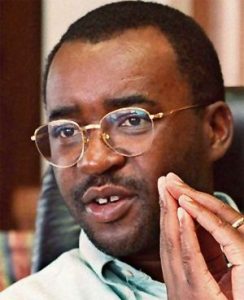
Strive Masiyiwa. (File, AFP)

“We regret to announce the discontinuation of Kwese TV Satellite Service with effect from August 5,” Mboweni said in a statement Sunday. The service was offered by Econet Media, an affiliated company.

“The third party content providers on whose content we rely, require payment in foreign currency,” he added. “With the prevailing economic conditions in Zimbabwe, and the current business operating environment – characterised by an acute shortage of foreign currency – sustaining Kwese and Kwese Satellite Service was no longer viable.”

Econet Media operates in more than a dozen countries under the Kwese brand and is owned by Zimbabwe’s richest man, Strive Masiyiwa.

Last month the company went into voluntary administration and appointed accountants Ernst & Young to manage the process as it pays its creditors.

Zimbabwe stopped recognizing the US dollar, South African rand and other foreign currencies as legal tender in June as it tries to curb black-market trading that’s contributed to surging inflation.

The country’s finance minister last week responded to the worsening economic crisis by blacking out inflation statistics for the next six months.

–With assistance from Loni Prinsloo.

Zim will defer publication of inflation rates
Zimbabwe cricketers not giving up after ICC suspension

Post published in: Business

Zimbabwe to repeal economic empowerment legislation – The Zimbabwean

5.8.2019 6:41

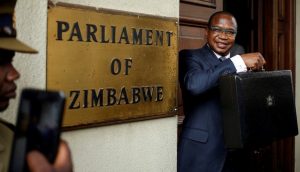
Reuters reported that Zimbabwe will repeal its indigenisation and economic empowerment legislation dealing with ownership of foreign-controlled companies and replace it with a new empowerment law, Finance Minister Mthuli Ncube said on Thursday.

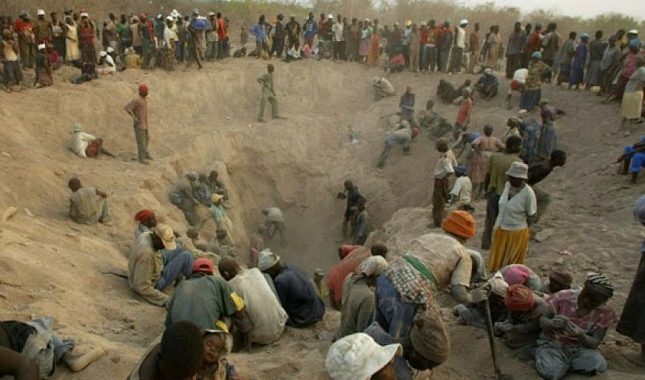
In an address to the Zimbabwean parliament, Minister Ncube said foreign investors can now take majority stakes in the platinum and diamond sectors. It should be noted that the empowerment law adopted in 2008 under Robert Mugabe forced foreign-owned businesses including mines to cede at least 51percent shares of their local operations to black Zimbabweans. At a later point in time, Mugabe closed down all diamond mining firms that had foreign investment partners.

In a bid to attract investment, President Emmerson Mnangagwa last year removed these requirements for other minerals except diamonds and platinum, which his government said were strategically important. Russian miner Alrosa was just given a new contract and Zimbabwe is about to do the same with the Chinese miner Anjin.

Zimbabwe cricketers not giving up after ICC suspension
I will build bigger ones

Post published in: Business

Unhappy anniversary – Zimbabwe Vigil Diary – The Zimbabwean

At least 35 others were wounded. The Motlanthe Commission appointed by the government found that the use of live ammunition against fleeing civilians was ‘clearly unjustified and disproportionate’. It called for prosecutions and compensation.

A year on not a single prosecution has taken place. Instead the government promoted the officer in charge of the Presidential Guard responsible for the shootings, Brigadier General Anselem Sanyatwe, and blamed the violence on the opposition which it said had ‘unleashed mayhem’.

The government recently went so far as to name Sanyatwe as Zimbabwe’s Ambassador-designate to Tanzania, only for the United States to place him under sanctions for ‘gross violations of human rights’. The government’s self-righteous protests that this was ‘undermining Zimbabwe’s sovereignty’ has been met with laudable directness by the US Embassy: ‘No one has been held responsible for these heinous acts. The people of Zimbabwe deserve better.’

Judge for yourself whether the Americans are correctly informed about Zimbabwean affairs by reading an article in the influential New York Times which describes the situation in Zimbabwe as a nightmare, pointing in particular at the water crisis, apart from the energy crisis and shortage of fuel and medicines.

The paper quotes the chief economist of the National Chamber of Commerce, Kipson Gundani, as saying: ‘We had a window of opportunity when Mugabe left power but we missed that window’. (See: https://www.nytimes.com/2019/07/31/world/africa/zimbabwe-water-crisis.html).

Next Saturday the Vigil will be devoted to a protest against the government’s inaction over the army’s killing of civilians last August and again in January.

Other points

  • Grace Mugabe heads a list of Zanu PF bigwigs accused of looting $160 million from CBZ Bank. She is alleged to have irregularly obtained a loan of $4.5 million without collateral. Number two in the looters’ list is predictably Obert Mpofu who owes $2.5 million, followed by Gideon Gono, the former Governor of the Reserve Bank, with $2 million. Vice President General Chiwenga’s wife Jocelyn owes a mere $900,000. The chastened bank has employed the law firm of former Finance Minister Tendai Biti to try to recover the money.
  • Congratulations to those who raised funds from their sponsors for last week’s walk: Hazvinei Saili £468.20 (in sterling and euros), Ephraim Tapa £225 (more to follow), Molly Ngavaimbe £92 and Miriam Gasho £60. We expect this list to expand as others are still collecting contributions from their sponsors. Esther Munyira’s report on the walk can be seen here: http://www.zimvigil.co.uk/vigil-news/campaign-news/1027-report-on-the-rohr-peace-walk-27th-july-2019.
  • Thanks to those who helped set up the front table and put up the banners today: Happy Chazuza, Jane Kaphuwa, Lucia Mungwari, Richard Munyama, Casper Nyamakura, Hazvinei Saili and Ephraim Tapa. Thanks to Lucia, Margaret Munenge and Miriam Gasho for looking after the front table, to Hazvinei, Jane, Esther Munyira and Bigboy Sibanda for handing out flyers and to Casper and Jonathan Kariwo for photos.
  • For latest Vigil pictures check: http://www.flickr.com/photos/zimb88abwevigil/. Please note: Vigil photos can only be downloaded from our Flickr website. 

FOR THE RECORD: 22 signed the register. 

EVENTS AND NOTICES:

  • ROHR general members’ meeting. Saturday 10th August from 11.30 am. Venue: Royal Festival Hall, South Bank Centre, Belvedere Road SE1 8XX. Contact: Ephraim Tapa 07940793090, Patricia Masamba 07708116625.
  • Demonstration to mark anniversary of army’s shooting of civilians. Saturday 10thAugust from 2 – 5 pm outside the Zimbabwe Embassy. Organised by Esther Munyira 07492058109.
  • ROHR Beach Barbecue. Sunday 25th August. Venue: Frinton-on-Sea, Essex CO13 9DN. Tickets: adults £20, Kids £10. Contact: Patricia Masamba 07708116625, Heather Makawa 07716391800, Esther Munyira 07492058109 and Daizy Fabian 07708653640.
  • The Restoration of Human Rights in Zimbabwe (ROHR) is the Vigil’s partner organization based in Zimbabwe. ROHR grew out of the need for the Vigil to have an organization on the ground in Zimbabwe which reflected the Vigil’s mission statement in a practical way. ROHR in the UK actively fundraises through membership subscriptions, events, sales etc to support the activities of ROHR in Zimbabwe. Please note that the official website of ROHR Zimbabwe is http://www.rohrzimbabwe.org/. Any other website claiming to be the official website of ROHR in no way represents us.
  • The Vigil’s book ‘Zimbabwe Emergency’ is based on our weekly diaries. It records how events in Zimbabwe have unfolded as seen by the diaspora in the UK. It chronicles the economic disintegration, violence, growing oppression and political manoeuvring – and the tragic human cost involved. It is available at the Vigil. All proceeds go to the Vigil and our sister organisation the Restoration of Human Rights in Zimbabwe’s work in Zimbabwe. The book is also available from Amazon.
  • Facebook pages:
    Vigil: https://www.facebook.com/zimbabwevigil
    ROHR: https://www.facebook.com/Restoration-of-Human-Rights-ROHR-Zimbabwe-International-370825706588551/
    ZAF: https://www.facebook.com/pages/Zimbabwe-Action-Forum-ZAF/490257051027515
I will build bigger ones
Presentation of 2019 Mid-Year Budget Review & Supplementary Budget

Post published in: Business

Presentation of 2019 Mid-Year Budget Review & Supplementary Budget – The Zimbabwean

Mthuli Ncube

On Thursday 2nd August the Minister of Finance and Economic Development, Hon Mthuli Ncube, presented his 2019 Mid-Year Budget Review and Supplementary Budget to the National Assembly.  President Mnangagwa attended the presentation.  Opposition MDC-A MPs did not [see below].

Budget debate to continue on Tuesday 6th August

There was no debate after the Minister’s presentation.  Debate will continue on Tuesday next week, 6th August, on his motion seeking the leave of the House to bring a Bill to make provision for the revenues and public funds of Zimbabwe and ancillary and incidental matters.  MPs, therefore, have four intervening days to digest the Minister’s speech and Budget documents, and prepare for the debate.

Budget Documents available from Veritas

The following documents are available on the Veritas website using the hyperlinks specified:

Minister’s Budget Speech [link]

2019 Mid-Year Budget Review and Supplementary Budget [link]

Budget Highlights [document prepared by the Ministry of Finance and Economic Development] [link]

Departmental Draft of the Finance (No. 2) Bill [a Bill to give effect to the taxation measures proposed in the Supplementary Budget that need to be approved by Act of Parliament] [link].

The Blue Book [Supplementary Estimates  of Expenditure for 2019] showing the proposed revised vote appropriations for Ministries and other entities – a 129-page book – is not yet available in soft copy.  Page 5 of the Budget Highlights document [link], however, contains a handy list of the revised vote appropriations for the Office of the President and Cabinet, Parliament, Ministries, Commissions and other State entities.

Exclusion of MDC-A MPs from 1st August proceedings

When, before the Budget presentation, Hon Chinotimba raised as a matter of privilege the boycotting of the Budget proceedings by MDC-A MPs because the President would be present, the Speaker made a ruling:

THE HON. SPEAKER: It is unfortunate that the Hon. Members of the main opposition party here in Parliament have decided to boycott this session in which His Excellency the President will be in attendance. There are two issues that we need to put on record. The first one is that His Excellency the President is Head of State and Government and Commander-In-Chief of the Defence Forces.

Now, there is some lack of understanding when we say the President is Head of State. The President is Head of State because he is an embodiment of the sovereignty of the people of Zimbabwe without any exclusion or discrimination. His uncontested position as Head of State has been recognised by the United Nations and the International Community, let alone the African Union. We have not heard of any country under the sun that has not recognised His Excellency President Mnangagwa. So therefore, there is misdirection in terms of the opposition in their unwarranted behaviour.

Secondly, in terms of section 116 of the Constitution of Zimbabwe which I shall quote, the Legislature of Zimbabwe consists of Parliament and the President acting in accordance with the Constitution, which means His Excellency the President institutionally is part of this august House and that position has got to be respected and cannot be contested.

Accordingly, as head of this institution, I rule that the Hon. Members from the opposition shall not be allowed to attend Parliament today, including after his Excellency has gone – [HON. MEMBERS: Hear, hear.] – Relatedly, their allowances for today shall not be paid accordingly, so I have ruled”.

Two MDC-A MPs who entered and took their seats after the President’s departure were duly requested to leave the House, and did so.

NSSA Forensic Audit Report Tabled on 1st August

The Minister of Public Service, Labour and Social Welfare tabled this report [link] after the Budget presentation.  She said copies were being printed and would be provided to MPs.  The Speaker requested MPs to study the report so as to be able to make constructive contributions on the way forward for NSSA.

Update on Bills

In the brief sitting that ensued after the Budget presentation there were the following developments on Bills:

Education Amendment Bill [link]

The Parliamentary Legal Committee [PLC]’s adverse report on the amended Education Amendment Bill  was announced.  The details of the report and which of the amendments the PLC found problems with may become apparent when the report is formally presented by or on behalf of the PLC chairperson.

Maintenance of Peace and Order Bill [link]

Hon Mataranyika, on behalf of the PLC chairperson, withdrew the Adverse Report on this Bill announced on 24th July and discussed in Bill Watch  /2019 [link].  He explained why in the following terms:

“The Committee met on the 1st of August and considered the notice of amendments signed by the Minister of Justice, Legal and Parliamentary Affairs and resolved to withdraw the adverse report previously issued as the notice of amendments addresses the Committee’s concerns.”

The Minister’s amendments have not yet been included on the Order Paper for next week.

Zimbabwe Investment and Development Agency Bill [link]

The Minister of Industry and Commerce asked for the Committee Stage to be stood down until 6th August.

Reserve Bank of Zimbabwe Amendment Bill [link]

As observed earlier in this bulletin, this Bill [gazetted on 23rd July] and Part V of the draft Finance (No. 2) Bill, released in the Budget presentation on 1st August overlap.  This situation will need to be resolved.

Government Gazettes 1st and 2nd August

Gazette Extraordinary of 1st August No. 64

Budget – Excise duty changes with effect from 2nd August 2019

In the Budget speech these measures were described as striving to achieve an optimal policy mix between specific and ad valorem excise taxes:

·      on alcoholic beverages – SI 160/2019 [this review of the excise duty structure, the Minister said, maintains the existing support framework for local industry]

·      on petrol and diesel – SI 161/2019 [effect – price increases]

Regular Gazette of Friday 2nd August No. 65

Customs duty rebate on motor vehicles imported by Health Service workers

SI 163/2019 corrects anomalies in the existing rebate provision.

Income tax – deductions connected with farming operations

SI 164/2019 is a retroactive declaration of epidemic-stricken farms for a five-month period in 2017.  The beneficiary is Irvines Zimbabwe (Pvt) Ltd..

Local authority by-laws – Masvingo Rural District Council

SI 162/2019 is the council’s Traffic, Clamping and Tow-away By-laws.

Gazette Extraordinary of 2nd August No. 66

This was solely to announce the appointments of ambassadors to (1) the Republic of the Sudan and (2) the United Arab Emirates.

Veritas makes every effort to ensure reliable information, but cannot take legal responsibility for information supplied.

Unhappy anniversary – Zimbabwe Vigil Diary
‘Zimbabwe Facing Worse Political, Economic Crisis Today Than Under Robert Mugabe’

Post published in: Business

The Number Of People Applying To Law School Is Up Again This Year, Proving The ‘Trump Bump’ Is More Than Just A Fleeting Trend

(Image via Getty)

If you’re a big fan of legal education, there’re some good news for you — the number of people applying to law schools is, again, on the rise. According to Kellye Testy, the president & CEO of the Law School Admissions Council, law school applicants are up 3.3 percent, which on top of last year’s massive applicant increase means there’s been an 11.6 percent increase over the last two years:

With nearly all our 2019-2020 applicant and application data accounted for, as of July 31, 2019 we’re seeing 62,427 applicants to U.S. law schools which represents a 3.3 percent increase over last year and an 11.6 percent increase over a two-year period.

And, despite the increased competition from the GRE in law school admissions, the number of LSATs administered is up big, which definitely suggests the trend of increased law school applications is far from over:

We’re also seeing an increase of 7.3 percent in the number of LSATs administered (26.7 percent when looking at a two-year period), and a 3.2 percent increase in new test takers. Because almost all applicants begin their enrollment journey by taking the LSAT, national trends in test takers help preview the coming cycles.

For this year, the number of applications submitted to law schools dipped slightly over last year’s high, but still remains strong:

Although the number of applications to U.S. law schools declined slightly by 1.5 percent to 379,696, we’re seeing an increase of 7.1 percent over a two-year period. The average number of schools to which candidates apply has remained stable for several years at around six.

And the numbers from the most recent application cycle also suggest the pipeline is not the problem (or at least not the biggest problem) when it comes to diversity in the legal profession:

When we break applicants down by ethnicity, we see substantial gains among both Hispanic/Latino (8.7 percent) and Asian (7.5 percent) applicants, with other ethnic groups remaining relatively stable. The number of female applicants continues to grow this year, reaching nearly 34,000 or 54 percent of all genders – while males applied in roughly the same numbers as last year.

Many observers of legal academia suggest that politics — specifically the election of Donald Trump — is behind the increased interest in law school. The law school Trump Bump is a phenomenon where more — and smarter —  people want to be lawyers because of the tumultuous political landscape, and it’s led to the biggest law school enrollment in years. Indeed, 45 percent of law school applicants say politics played a role in their decision to go to law school. And with the post law school job market stronger than it’s been in 10 years, that might not be a terrible decision. Which is a good thing, as this trend looks like it’s here to stay.


headshotKathryn Rubino is a Senior Editor at Above the Law, and host of The Jabot podcast. AtL tipsters are the best, so please connect with her. Feel free to email her with any tips, questions, or comments and follow her on Twitter (@Kathryn1).

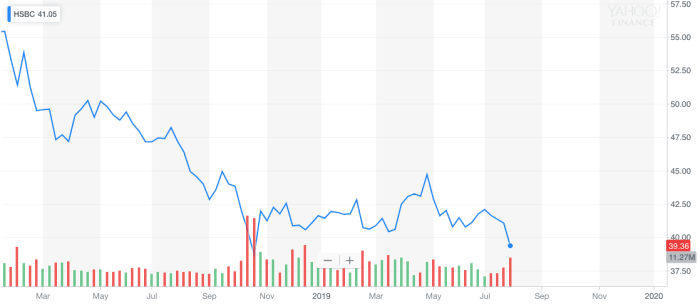
HSBC Decides That It Won’t Survive 19 Months Of John Flint’s Leadership

The board is saying “HSBC ya later!” to its still-brand-new CEO.