Former Attorney General Released From Prison

Kathleen Kane, the former Pennsylvania AG who managed to get herself sent to prison after shutting down a public corruption investigation and then retaliating against the prosecutor she blamed for leaking the move, is finally out of the pokey.

Kane’s downfall was one of the all-time Above the Law tales. Beyond the abuse of power, Kane’s story involved lying to a grand jury, using her twin sister as a decoy, and getting state supreme court justices to resign in a porn scandal.

It was an eventful 2015.

After eight months behind bars, former Pennsylvania Attorney General Kathleen G. Kane was released Wednesday from the Montgomery County prison.

Asked how she felt as she walked through the prison gate, she only said, “Grateful.”

Kane was disbarred, so private practice is out of the question. Perhaps building boats in Zihuatanejo?

Former AG Kathleen Kane released from jail; ‘Grateful,’ she says [Inquirer]

Earlier: Penn Attorney General Dupes The Press
‘No Law License? No Problem!’ Says Embattled State Attorney General
Pennsylvania Attorney General Kathleen Kane: From Top Prosecutor To Convicted Criminal

California Bans Bar Examiners From Asking Law School Grads About Their Mental Health

(Image via Getty)

There is no reason why perfectly capable people with PTSD or depression, who suffered with those issues, can’t practice law and do so effectively.

— Senator Tom Umberg (D-Santa Ana), commenting on legislation in California that bans the State Bar from seeking the mental health records of law school graduates as part of its character and fitness assessment. Governor Gavin Newsom signed the bill into law earlier this week. Other states have already removed such questions from their bar applications.


Staci ZaretskyStaci Zaretsky is a senior editor at Above the Law, where she’s worked since 2011. She’d love to hear from you, so please feel free to email her with any tips, questions, comments, or critiques. You can follow her on Twitter or connect with her on LinkedIn.

NRA May Be Shooting Itself In The Foot With Out-Of-Control Legal Bills

The NRA appears to be in utter disarray. They’ve had a failed palace coup, state regulators are closing in, and the group is openly admitting that they’re running out of money. A key factor in all of these problems may be their lawyer, Bill Brewer.

Brewer is known for his tenacity, but NRA insiders are starting to wonder if Brewer’s zealousness is driving the organization toward bankruptcy. A new ProPublica report dishes on some hefty legal bills over at Gun Central.

The statement [from former senior employee, Emily Cummins] lays out a list of allegations regarding Brewer’s legal work and his treatment of NRA staff as questions surfaced about his law firm’s billings, which totaled $24 million over a 13-month period. In the first quarter of 2019, Brewer’s firm charged over $97,000 per day, according to internal NRA documents posted anonymously online.

Normally, stories about how much attorneys charge are little more than pearl-clutching overreactions. But $97K every single day is actually eye-popping.

“I witnessed what appeared to be unrealistic and duplicative billing from Bill Brewer,” Cummins wrote. “I witnessed that Bill Brewer himself created a 2018 cash flow crunch by interfering with accounts payable to prioritize paying himself immediately versus other NRA vendors that had been providing goods or services for months without payment, also jeopardizing the NRA’s biweekly staff payroll.”

I doubt the bills were “unrealistic and duplicative” but there’s definitely room to be overaggressive that lay observers might perceive as duplicative. Still, Brewer is no stranger to getting sanctioned, so it’s easy for people to jump to the least charitable read of a hefty bill.

This month, four NRA board members publicly called for an “independent review of the millions of dollars in payments to Brewer, Attorneys & Counselors for legal fees.” But other NRA senior officials continue to defend the group. Carolyn Meadows, the NRA’s president, told ProPublica, “I have never worked with an outside law firm that is more on call, attentive and positively in tune to the needs of their client.” Charles Cotton, the NRA’s first vice president and chairman of the audit committee, added that Cummins’ allegations “reflect a misinformed view of the Brewer firm, its billings, and its advocacy for the NRA.”

Former NRA President Oliver North was one of those seeking an audit of Brewer’s bills. He got wished into the cornfields for his efforts. No matter how much internal pressure bubbles up against Brewer’s billings, the NRA’s core leadership unit is steadfast in its support.

And they sound like they will be all the way to the poor house.

New Documents Raise Ethical and Billing Concerns about the NRA’s Outside Counsel [ProPublica]

Earlier: Federal Judge Wants To Hear Why Bigtime Attorney Said He’d Never Been Sanctioned… When He Was TOTALLY Just Sanctioned


HeadshotJoe Patrice is a senior editor at Above the Law and co-host of Thinking Like A Lawyer. Feel free to email any tips, questions, or comments. Follow him on Twitter if you’re interested in law, politics, and a healthy dose of college sports news. Joe also serves as a Managing Director at RPN Executive Search.

Capital One Attempts To Ease Customer Concern Over Massive Hack With Stats, Fails Miserably

Only 140,000 Social Security numbers were stolen, the other 99% are almost definitely safe…wait, what?

This Baby’s Parents Are Both U.S. Citizens, But The U.S. Government Says She Isn’t One

Simone Mize-Gregg is the legal daughter of two parents who are U.S. citizens, but the federal government says that she, herself, is not one. How is that even possible? This is another terrible case that reads like an Immigration Law final exam question. But unfortunately, there’s a lot more at stake than just 1L grades.

One of Simone’s dads is James Mize, who was born and raised in Mississippi. In fact, Mize explained that he is ”very, very, very Mississippi.”  Mize says he just wants “the house with the front porch and two kids running around the yard. I want to go to church on Sunday and have a simple life.”

Simone’s other dad, Jonathan Gregg, was born to a mother who was a citizen of the United States, and a father who was a citizen of the United Kingdom. Nevertheless, Gregg is and always has been a U.S. citizen through his mother, despite being born and raised in the United Kingdom. Mize and Gregg married in 2015 in New York, and, like many couples, decided to have children together. Simone Mize-Gregg was born in England through the help of assisted reproductive technology, involving an egg donor and a friend volunteering to be Mize and Gregg’s gestational surrogate. Gregg is Simone’s genetic father, although the only one who’s ever cared about that is the U.S. State Department. Another fact the U.S. State Department is concerned about is that Gregg lived in the U.S. for only four years prior to his daughter’s birth.

Simone has a birth certificate issued in the United Kingdom, which accurately includes both dads as her legal parents. However, when Mize and Gregg set out to confirm their daughter’s U.S. citizenship, they were ruthlessly denied. They were told that “since a woman outside of the couple’s marriage had carried Simone, the baby was born out of wedlock. Mize was not recognized as her father.” Given that Mize and Gregg were legally married, and were the legal parents of Simone, that outcome makes little sense.

The best that the State Department would offer was a travel visa for Simone. As a result, the couple — who live and work in Atlanta — have been forced to inconveniently travel back and forth to England to constantly renew her visa. To make matters worse, Gregg was recently diagnosed with a brain tumor, and had to undergo surgery in November. He is being treated for the remaining cancer and to improve his vision, which currently prevents him from being able to drive. That means that a rough situation has been made even worse by the State Department’s refusal to recognize their family.

Mize and Greg have brought a lawsuit against the State Department on behalf of their daughter, arguing that the State Department has both wrongly applied the Immigration and Naturalization Act (the “Act”) to their family, as well as unconstitutionally discriminated against their family on the basis of sex. Mize and Gregg filed in the United State District Court for the Northern District of Georgia.

This case may sound a bit like deja vu to readers.

This Is At Least The Fourth Case to Go Public

This is happening over and over again. And it is heartbreaking. Over the last few years, the U.S. State Department has repeatedly made life more difficult for married same-sex couples, and denied their children U.S. citizenship. The first case to hit the media occurred when only one of two twins was being granted citizenship, while the other twin was denied citizenship. I previously wrote about the Dvash-Banks case, where Andrew Dvash-Banks (a dual U.S.-Canadian citizen) and his husband, Elad Dvash-Banks (an Israeli citizen) had married and were residing in Canada when they started their family with the help of an anonymous egg donor and a gestational surrogate. The twins were born in Canada, and the Canadian government recognized both dads as the legal parents to both twins, without any distinction. However, when the couple moved to bring their family closer to relatives in Los Angeles, the U.S. State Department saw an important distinction between the boys. The State Department demanded DNA testing, which showed that one twin was genetically relate to Andrew (the U.S. citizen) and one to Elad (the Israeli citizen). The State Department denied citizenship to the twin genetically related to Elad.

Like any good Americans, they sued. And won! The federal district court found in their favor that the State Department had incorrectly applied the “unwed” sections of Immigration Code instead of recognizing Andrew as a parent of both twins. The court ordered that the child be granted an American passport. Happy ending, right? Not so fast. The State Department has appealed. And that’s where the case currently stands.

Will It Get Worse?

Section 301 of the Immigration Code offers a number of ways that someone can claim citizenship. One way — an easier way — involves having two parents who are U.S. citizens, if one of the parents lived in the U.S. before the birth. That’s literally and legally what happened here. But the State Department is saying that James Mize — our friend from Mississippi — is not technically a “parent” of Simone under the statute, since he isn’t genetically related to the child. Instead, the State Department is saying that another — harder — provision applies; that one says that if one of the parents is a foreign national, the U.S. citizen parent must have been in the U.S. for five years. Here, Jonathan Gregg has only lived in the U.S. for four years, and thus can’t establish citizenship for his daughter.

Advocates for LGBT families say that this is blatant discrimination based on sex. But theoretically, straight couples could face the same issues if they use egg donors or surrogates overseas. The government contends that the law is applied across the board, but the application of the State Department’s discretionary DNA requests to same-sex couples tells a different story. Rather than move the needle in the right direction (recognizing the marriages of same-sex couples and the citizenship of their children), the State Department might opt to “level down” in practice. So instead of stopping the harassment of same-sex couples and requiring DNA tests, they might begin requiring all children born abroad to any U.S. citizen to undergo DNA testing, and to require evidence as to who gave birth to the child. And then, regardless of marital status or sexual orientation, potentially prevent any citizen who used assisted reproductive technology — whether that be a sperm donor, egg donor, embryo donation, or a gestational carrier — from obtaining American citizenship for the child.

I spoke with Aaron C. Morris, Executive Direct of Immigration Equality. Morris did not share my concern. He noted that the State Department was applying these provisions selectively in order to discriminate against LGBT couples, and that it was “deeply disappointing, but not surprising, given the Administration’s overall stance on immigration and the LGBT community.”

Either way, Morris and I agree that these families should be recognized and supported and their children’s U.S. citizenship acknowledged. Parents should be recognized — and able to pass on their citizenship to their children — regardless of outdated notion of blood, birth, or marriage.


Ellen TrachmanEllen Trachman is the Managing Attorney of Trachman Law Center, LLC, a Denver-based law firm specializing in assisted reproductive technology law, and co-host of the podcast I Want To Put A Baby In You. You can reach her at babies@abovethelaw.com.

The California Bar Exam Leak Is Much Ado About Nothing

(Image via Getty)

Last Saturday night, as I was preparing quarterly employment tax returns and thinking about being a CPA, I received numerous notifications that the California State Bar had told all of the bar exam applicants the subjects being tested on the upcoming exam. This was because they were accidentally disclosed to a select group of law school deans a few days before.

I thought the news was amusing and this site would cover the blunder first thing Monday morning. I figured that with the exam being only a few days away, the applicants could enjoy a few chuckles, narrow their studies, and forget about the rule against perpetuities and UCC 2-207.

But several things happened which I did not expect. First, a lot of people were angry. Now I get that for the exam takers, this news comes as a shock considering they spent a lot of time studying and a lot is at stake. And being stressed, I can understand being emotional about this. But even a number of practicing lawyers — who I assume have no dog in the fight — were outraged about this.

Second, this story became viral and was covered by many mainstream news sites. This was surprising because I didn’t think many in the legal profession and even less in the outside world would care about this. Perhaps they wanted to cover the story to reach as many examinees as possible, particularly those who turned off social media so they could study. Or maybe they thought their readers would get a kick out of a lawyer screw-up story. Or all of the above.

The State Bar tried to explain the situation but it seemed to add fuel to the fire rather than contain it. On social media and in private discussion, people brought up all kinds of theories. Some have noticed that almost all of the law schools who received this information are not accredited by the ABA. The one notable exception is UC Hastings, whose dean has recently been an outspoken critic of the bar exam and has spearheaded the effort to reduce the pass score. This made some think that the State Bar intentionally leaked this information to covertly boost those schools’ bar passage rates.

The attention has gotten so bad that it’s to the point where the California Supreme Court feels that a thorough investigation is necessary to protect the integrity of the examination.

Personally, I think this is overblown.

Is this unfair? Only to a very few. Now let’s accept the State Bar’s timeline of events. The subjects tested were accidentally sent to select law school deans sometime on Thursday, July 25th. When they discovered the error, the infamous email was sent to all of the exam takers on the night of July 27. To my knowledge, there have been no reports that any of those deans notified their students.

But let’s assume the deans forwarded the information to the students immediately after receiving it. This gives these students approximately an additional 50 hours with this inside information. If we deduct 10 hours per day for sleep, meals, and posting selfies with bar exam materials on Facebook, these students will have 30 hours of advantaged study time.

So will spending 30 hours specifically on the subjects that are guaranteed to be tested provide an unfair advantage over those who spent that time studying every subject that could be tested? Intuitively, that would seem to be the case. The lucky students can focus on those topics and have time left over to take MBE questions or do something else while everyone else tries to understand holographic wills. But in reality, this question is difficult to answer since everyone studies and learns differently and has unique life circumstances.

Let’s compare this to the hours spent studying overall. Considering that most people have studied for the exam since mid-May (or even earlier), 30 hours is a drop in the bucket. At this stage, most people will either know the material or they won’t. Most bar prep programs advise students to use the final stretch for practice exams and not for substantive studying. So the 30 hours of advantaged study time will likely be of minimal benefit.

Accordingly, any bump in the applicants’ scores as a result would likely be minimal. This means that if you did very badly on practice exams, the theoretical score boost probably won’t be enough to put you in passing territory.

Finally, there is the psychological shock (commonly known as “OMGWTF!!”) of knowing that someone else will have an unfair advantage. All I can suggest is to not let it get to you. It happens. Sometimes you benefit from inequity, most of the time you don’t. Know that if you studied properly, you will likely pass. If you don’t think you are ready, you can take this rare opportunity to withdraw and get a refund.

The California State Bar has some explaining to do and the Supreme Court’s investigation will determine whether this was an accident or a systemic conspiracy to dismantle the bar examination and allow Google Deepmind to practice law. But I think the effect of this leak will be very minimal and will only affect the few who are on the fringes. We’ll see if a class-action suit for negligence follows but I wouldn’t bet on it since torts is not being tested on the exam.


Steven Chung is a tax attorney in Los Angeles, California. He helps people with basic tax planning and resolve tax disputes. He is also sympathetic to people with large student loans. He can be reached via email at sachimalbe@excite.com. Or you can connect with him on Twitter (@stevenchung) and connect with him on LinkedIn.

Morning Docket: 07.31.19

(NICHOLAS KAMM/AFP/Getty Images)

* California just enacted a law that will require Donald Trump to release his tax returns if he wants to get on the state’s primary ballot next year. Get ready for a tweetstorm about this one. [Los Angeles Times]

* Not only is LeClairRyan facing a gender discrimination case amid its uncertain future, but the firm is also facing a lawsuit over allegedly unpaid rent to the tune of $348K+ at one of its offices. [American Lawyer]

* In case you missed it, NFL commissioner Roger Goodell and three game officials are going to be deposed over the “stupid blown call” during the Saints-Rams game that allowed the Rams to proceed to the Super Bowl. [Sports Illustrated]

* Good news for Biglaw legal ops professionals: The Corporate Legal Operations Consortium, an organization designed for in-house legal ops employees, has now opened its membership to those who are working at law firms. [Big Law Business]

* Guess what? There’s something to look forward to after this torture. As the saying goes, “you can do anything with a law degree,” but if you pass the bar exam this week, you’ll probably be able to practice law in one of these exciting jobs. [U.S. News]


Staci ZaretskyStaci Zaretsky is a senior editor at Above the Law, where she’s worked since 2011. She’d love to hear from you, so please feel free to email her with any tips, questions, comments, or critiques. You can follow her on Twitter or connect with her on LinkedIn.

Job Market For Law School Grads Is The Best We’ve Seen In 10 Years

‘We obviously got jobs!’

It’s been years since we’ve seen a truly positive law school jobs report, but now that we’re more than a decade out from the nation’s financial turmoil that wreaked havoc upon the legal profession, we’re looking at employment outcomes that “approach pre-recession levels.”

According to the latest entry-level employment figures from the National Association of Law Placement (NALP), the class of 2018’s employment outcomes were quite strong. Not only did overall graduate employment increase to 89.4 percent (0.8 percent over the class of 2017), but the number of graduates employed in full-time, long-term jobs where bar passage was required was nearly 71 percent (an increase of about 2 percent), a percentage that’s even higher than rates measured before the recession. Here’s what James Leipold, NALP’s executive director, had to say about the latest employment figures:

“The employment outcomes findings for members of the Class of 2018 are strong and, along with the findings for members of the Class of 2017, clearly mark the beginning of a new post-recession cohort. The employment outcomes for this class more closely resemble employment outcomes measured in the years before the recession than they do the classes that graduated between 2009 and 2013 in the immediate aftermath of the recession,” noted James G. Leipold, NALP’s executive director. “Certainly, the overall employment rate has improved because of two intertwined factors. First, and most importantly, the smaller graduating class has meant that there is less competition for the jobs that exist. Second, large law firm hiring has increased steadily since 2011, adding more than 1,900 jobs in seven years.”

In fact, much of the class of 2018’s success in the job market was thanks to Biglaw employment. About 160 more associates were hired at firms with more than 500 lawyers than in 2017, such that 29.1 percent of 2018 graduates employed in law firm jobs were employed at the biggest of Biglaw firms. According to Leipold, this is “even higher than the pre-recession levels of over 25 percent in 2008 and 2009.”

Before you get too excited, please allow us to temper it with some cold, hard facts about the class of 2017. From a press release about the latest NALP numbers:

  • Despite the rise in the overall employment rate, the number of jobs found by graduates declined again this year, by about 150 compared with the Class of 2017.
  • Despite the relative strength of the job market for new law school graduates, at 8.3%, the unemployment rate ten months after graduation remains higher by nearly three percentage points than before the recession.

Will law schools continue to enroll smaller classes to ensure that their graduates will be able to find jobs, or will they take students’ nondischargeable student loan dollars and run? “Rising law school enrollment could also certainly put downward pressure on the employment prospects for future classes, and it is unlikely that the current jobs environment could support a graduating class of anything over 40,000,” said Leipold, sounding a cautionary alarm amid soaring law school enrollment.

On a more positive note, while “any significant economic interruption or slowdown could once again depress legal employment numbers for future classes,” Leipold thinks that the Class of 2019 “is also likely to post strong employment outcomes.”

“All of that suggests cautious optimism is in order, with an eye to the sky for ill winds and the understanding that independent of whatever happens with the national and global economies, the legal services sector continues to be in the midst of dramatic change that will be ongoing, and will, in the end, change the job market for law school graduates in ever more dramatic ways. Ten years from now the employment profile of the graduating Class of 2028 is likely to look quite different from the Class of 2018.”

Congratulations to everyone who was able to find a job in this brave new world of post-recession legal employment. Remember that law school may be less of a risky investment now than it was at any time over the course of the past decade, but it’s still a risk. Be sure to do your research before you enroll — but in the meantime, law school graduates can enjoy all of their sweet Biglaw cash.

Jobs & JDs: Class of 2018 [NALP]
Class of 2018 Employment Outcomes Approach Pre-Recession Levels [NALP]
Employment for the Class of 2018 — Selected Findings [NALP]


Staci ZaretskyStaci Zaretsky is a senior editor at Above the Law, where she’s worked since 2011. She’d love to hear from you, so please feel free to email her with any tips, questions, comments, or critiques. You can follow her on Twitter or connect with her on LinkedIn.

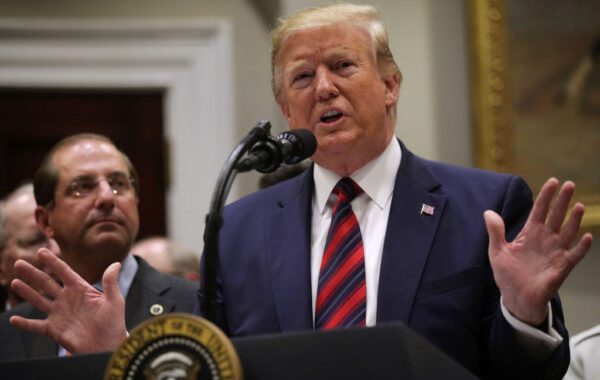
Trump administration proposes allowing some drug importation – MedCity News

A new proposal from the Trump administration would take steps toward allowing importation of drugs from other countries.

The Department of Health and Human Services on Wednesday proposed two potential pathways to allow the importation of drugs from foreign markets, part of a broader effort bring down drug prices. One would allow importation from Canada through pilot projects, while the other would allow manufacturers to go around distributors and import their own products directly from other countries.

“Today’s announcement outlines the pathways the administration intends to explore to allow safe importation of certain prescription drugs to lower prices and reduce out-of-pocket costs for American patients,” HHS Secretary Alex Azar said in a statement. “This is the next important step in the administration’s work to end foreign freeloading and put American patients first.”

Under the first pathway, HHS and the Food and Drug Administration would use authority provided under current federal law to authorize pilot projects by states, wholesalers and pharmacists outlining ways to import drugs from Canada that are versions of FDA-approved products manufactured in ways consistent with U.S. regulatory standards.

However, there’s a catch. Because it would be based on current federal law, it would exclude products that are controlled substances, biologics, infused and intravenously injected drugs, drugs inhaled during surgery and any drug with a Risk Evaluation and Mitigation Strategy, along with certain parenteral drugs. Moreover, drugs would be eligible only if they contain active pharmaceutical ingredients made at the same manufacturing plants used to produce APIs for the products sold in the U.S.

The second pathway would allow manufacturers of FDA-approved drugs to import versions they sell in foreign countries, using a new national drug code that would potentially allow them to offer lower prices than those required by their current contracts with distributors, provided they could demonstrate to the FDA that the foreign versions were the same as the U.S. versions. Drugs covered under this pathway could include insulin and medicines for diseases like rheumatoid arthritis, cardiovascular disorders and cancers.

“The Administration has reason to believe that manufacturers might use this pathway as an opportunity to offer Americans lower cost versions of their own drugs,” an accompanying action plan put out by the FDA and HHS read. “In recent years, multiple manufacturers have stated (either publicly or in statements to the Administration) that they wanted to offer lower cost versions but could not readily do so because they were locked into contracts with other parties in the supply chain.”

While welcoming the plan, Senate health committee Chairman Lamar Alexander, R-Tennessee, expressed reservations. “The key for me is whether this plan preserves the Food and Drug Administration’s gold standard for safety and effectiveness,” he said in a statement. “Millions of Americans every day buy prescription drugs relying on the FDA’s guarantee of quality.”

However, Stephen Ubl, president of trade group the Pharmaceutical Research and Manufacturers of America, called the proposal “dangerous.”

“There is no way to guarantee the safety of drugs that come into the country from outside the United States’ gold-standard supply chain,” Ubl wrote in an emailed statement. “Drugs coming through Canada could have originated from anywhere in the world and may not have undergone stringent review by the FDA.”

Ubl added that law enforcement officials have said drug importation plans could worsen the opioid crisis, while Canadian officials have called such policies unworkable and run the risk of creating drug shortages in Canada.

The Healthcare Distribution Alliance, which represents drug distributors, also criticized the proposal.

“Pharmaceutical distributors support efforts to address the high cost of prescription drugs,” a statement by the HDA read. “But we firmly believe the administration should focus on policies that maintain the same high standards of safety that Americans have come to rely on. Importation runs directly counter to the efforts of many regulators, the pharmaceutical industry and congressional intent — and is simply not worth the risk.”

Current FDA regulations prohibit importation of unapproved drugs, which includes foreign-made versions of drugs that are approved in the U.S. and “have not been manufactured in accordance with and pursuant to an FDA approval.”

The administration has long accused other countries of “freeloading” off of American biopharmaceutical innovation by forcing Americans to pay more for drugs than people in other countries. However, experts have said this is misleading because every country makes its own decisions around pricing and reimbursement. Indeed, Medicare’s statutory inability to negotiate drug prices – as agencies of universal healthcare systems abroad do – is a consequence of domestic policy, not the policies of foreign countries.

Photo: Alex Wong, Getty Images

Problems Pile On For Struggling Biglaw Firm

They always say when it rains it pours and the case of the once Biglaw firm of LeClairRyan proves the saying. We’ve been reporting on the firm a lot recently, what with partners fleeing from the firm like rats on a sinking ship — even name partner Gary LeClair is leaving — and being barred by their lender from returning departing partners’ capital contributions and the firm handing out WARN Act notices informing staff of pending mass layoffs. But it turns out a decimated headcount isn’t the only problem the firm is facing.

Earlier this month, the firm was sued by the landlord of their Williamsburg, Virginia, office for $348,000, apparently over back rent. The lawyers practicing out of the office left the firm in February, and as reported by Law.com, the firm signed a promissory note, but the lawsuit suggests they haven’t lived up to the terms of the agreement:

The bare-bones confession of judgment filed by Robertson Liebler Development Group indicates that the law firm failed to pay the amounts due under a promissory note. The note doesn’t mention rent, but Robinson Liebler has the same address as the LLC that is listed in property records as the owner of the building where LeClairRyan had its offices.

LeClairRyan agreed to pay its landlord $506,000 under the promissory note, which was notarized Feb. 14 and signed by firm president Elizabeth Acee. Once the firm paid $272,000, the remaining amount due was to be waived, but based on the amount of the judgment, LeClairRyan only appears to have made the first two payments, plus a few hundred dollars.

The firm is also facing an unequal pay lawsuit. Former marketing professional Marci Keatts says she was paid less than her male colleague who was hired after she was and whom she was supervising:

Keatts was initially hired at the firm as a marketing communications coordinator and was promoted to marketing communications professional at the start of 2018, according to the complaint.

While in her previous role, she learned that she was earning $14,000 less than a male colleague hired five years after her start. She said that even after being promoted to supervise the colleague and receiving a $7,000 increase, she still lagged his salary by $7,000.

As part of LeClairRyan’s “law firm 2.0,” both the plaintiff and her subordinate were transferred to ULX Partners (the firm launched a strategic partnership with alternative legal service provider UnitedLex). Keats says she brought the matter to human resources, but the pay disparity continued. The plaintiff says she left the firm because of the unequal pay:

“This was not a voluntary decision on plaintiff’s part, but the result of defendants’ insistence of continuing a discriminatory pay practice towards plaintiff as reflected in the compensation associated with the ‘offer’ for continued employment,” said Keats, represented by Harris D. Butler III of Butler Royals in Richmond, Virginia.

All of this adds up to a heap of trouble for a firm that doesn’t seem to have much more time left.


headshotKathryn Rubino is a Senior Editor at Above the Law, and host of The Jabot podcast. AtL tipsters are the best, so please connect with her. Feel free to email her with any tips, questions, or comments and follow her on Twitter (@Kathryn1).