Morning Docket: 07.29.19

Justice Ruth Bader Ginsburg (Photo via Wikimedia Commons)

* The House Judiciary Committee has (finally) opened an impeachment investigation against President Trump, and has asked a federal judge to supply subpoenaed grand jury information related to Robert Mueller’s probe. [Washington Post]

* “I was OK this last term. I expect to be OK next term. And after that we’ll just have to see.” Justice Ruth Bader Ginsburg has no immediate plans for retirement, saying that she’ll continue to take things “year by year” and “stay on this job as long as [she] can do it full steam.” [CNN]

* In case you missed it, here’s what SCOTUS justices have done on their summer vacation thus far: they’re allowing the Trump administration to use $2.5 billion of funds that were previously allocated to the Defense Department to start construction on the border wall. [New York Times]

* Just as LeClairRyan finds itself gasping its presumptive last breaths, the firm finds itself on the wrong end of a gender pay discrimination case. [Big Law Business]

* A federal judge has dismissed Nick Sandmann’s $250 million defamation lawsuit against the Washington Post. This probably means that Sandmann’s similar suits against CNN and NBC will be dismissed soon as well. [USA Today]


Staci ZaretskyStaci Zaretsky is a senior editor at Above the Law, where she’s worked since 2011. She’d love to hear from you, so please feel free to email her with any tips, questions, comments, or critiques. You can follow her on Twitter or connect with her on LinkedIn.

Maintenance of Peace and Order Bill – The Zimbabwean

Maintenance of Peace and Order Bill

Adverse Report by Parliamentary Legal Committee

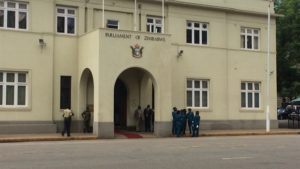
On the 24th July the Deputy Speaker of Parliament announced that the Parliamentary Legal Committee had issued an adverse report on the Maintenance of Peace and Order Bill, meaning that the Committee had found some provisions of the Bill to be unconstitutional.  The report can be seen on the Veritas website [link] as can the Bill itself [link].

To understand the report one needs to refer to the Bill and the Constitution, which readers may not have readily available;  so in this bulletin we shall summarise and clarify the report’s findings.  Before doing so however we should point out that the Bill is virtually identical to the Public Order and Security Act, so the Committee’s criticisms of the Bill apply equally to the Act, which is currently relied on by the security services to control demonstrations and protests.

Analysis of the PLC Report

The Committee found that no fewer than 11 clauses of the Bill were unconstitutional.  We shall deal with each of them in turn.

Clause 3 (Regulating authorities)

This clause declares that the senior police officer of every police district is the “regulating authority” for that district  ‒ i.e. the official who will fix conditions under which public gatherings (i.e. meetings, demonstrations and processions) can be held within the district.

The Committee considered the clause “gives regulating authorities the power to limit the freedom of assembly and association” in violation of section 58 of the Constitution.  With respect to the Committee, this criticism should not be directed at clause 3, which does no more than appoint regulating authorities, but rather at those clauses which give regulating authorities excessive powers ‒ and, as we shall see, the Committee does attack those clauses later in the report.

Clause 4 (Prohibition of carrying of weapons in public)

This clause gives regulating authorities power to prohibit for up to three months the carrying of weapons, and items capable of being used as weapons, in public places if the regulating authorities think they are likely to cause public disorder.  Prohibition orders under the clause will be published in newspapers or posted up on public buildings or broadcast by radio.  Anyone aggrieved by an order will have a right to appeal against it to the Minister of Home Affairs, and anyone contravening an order will be liable to imprisonment for up to six months.

The Committee pointed out that people in rural areas might not be able to learn about prohibition orders, not having access to newspapers or public buildings;  it also considered that the right of appeal to the Minister, rather than to a court, went against the tenets of justice and violated section 69(3) of the Constitution which guarantees right of access to the courts for the resolution of disputes.

The Committee’s view is right.  There seems no justification for having the Minister decide appeals:  a court will be more likely to give a fair and impartial decision than the Minister.  A further point about the clause, which the Committee did not mention, is that it makes it a crime for a person to carry weapons in breach of an order, no matter what reason or excuse the person may have for carrying them and regardless of whether the person is brandishing them or, for example, carrying a just-purchased kitchen knife in a packet.  The clause is far too widely phrased.

Clauses 5 to 8 (gatherings in public places)

These clauses require organisers of public gatherings to notify regulating authorities before the gatherings are held (five days’ notice in the case of public meetings, seven days in the case of demonstrations and processions).  Organisers will also be obliged to negotiate with regulating authorities about arrangements for the gatherings and to comply with directives the regulating authorities may give them.  If a regulating authority believes that a gathering will cause serious disruption, injuries or property damage the authority will be able to prohibit the gathering.  An organiser who fails to give the requisite notice of a gathering will be guilty of a crime and liable to a year’s imprisonment.

In the Committee’s view these clauses will unduly limit freedom of assembly and association guaranteed by section 58 of the Constitution and will debar citizens from holding spontaneous gatherings.  The Committee also objected to clause 7 making it a crime, punishable by imprisonment, not to give notice of a gathering.  The intention of this provision, the Committee said, was clearly to curtail freedom of expression and conscience.  A fine would serve the required purpose.

In support of its views the Committee referred to a decision of our Constitutional Court, DARE & Others v Saunyama & Others [link].  The Committee might have gone further if it had referred to a South African constitutional court judgment [link] which emphasised how important it is for citizens to have the right to demonstrate spontaneously and declared that failure to give notice of a demonstration could not be made a crime, no matter what penalty was prescribed.

Clause 10 (Gatherings in vicinity of Parliament)

This clause will prohibit public gatherings in the vicinity of Parliament, courts or places declared to be protected places under the Protected Places and Areas Act.

The Committee pointed out that Parliament is a public institution open to members of the public and that the clause would unreasonably limit their right to petition Parliament which is guaranteed by section 149 of the Constitution.  The Committee is undoubtedly correct.  Even though the clause will allow demonstrations near Parliament if the Speaker gives written permission for them, the constitutional right to petition Parliament cannot be made dependent on permission from the Speaker or a police officer.

Clause 12 (Civil liability of organisers of gatherings)

Under this clause organisers of gatherings who fail to notify regulating authorities of their gatherings or to follow directives issued by regulating authorities will be liable to compensate persons who suffer injury or loss from public violence or breaches of the peace caused by or arising out of or occurring at” the gatherings.

The Committee said this clause was too broad and an invasion of freedom of assembly and association guaranteed by section 58 of the Constitution.  Again the Committee was quite right:  organisers will be liable regardless of whether they incite or permit the violence or disturbance which causes injury or loss, and regardless of any measures they may have taken to prevent it.

Clause 14 (Carrying of identity documents)

This clause requires every adult to carry an identity document whenever he or she is in a public place.  The Committee considered the clause was “a remnant from the oppressive colonial laws” and should not be in the Bill since it contravened section 66(2)(a) of the Constitution which guarantees freedom of movement.

Again the Committee is perfectly right:  indeed more than 20 years ago our Supreme Court declared a similar provision in the old Law and Order (Maintenance) Act ‒ an oppressive colonial law ‒ to be unconstitutional for precisely the same reason

Clause 21 (Special jurisdiction of magistrates)

This clause will give magistrates special powers to sentence people convicted of crimes under the Bill “on summary trial”.  The Committee considered that summary trials went against the principles of natural justice and violated section 69 of the Constitution, which provides for fair trials.

Here, with respect, the Committee seems to have misunderstood the meaning of “summary trial”.  In the context of magistrates courts it is a technical term and means a trial which takes place without there having been a previous hearing of the evidence before a magistrate other than the trial magistrate.  It does not mean a kangaroo trial or a rushed trial such as those that were conducted in the aftermath of the violent demonstrations in January this year.  Virtually all trials in magistrates courts are “summary trials”.   [Comment: The clause would make perfect sense if the references to summary trials were omitted;  perhaps they should be omitted to avoid misconstruction.]

Despite the misunderstanding, the Committee was right to draw attention to clause 21 because the sentencing powers it gives magistrates are excessive ‒ eye-wateringly so.  A magistrate other than the most junior will be able to impose sentences of up to ten years’ imprisonment and regional magistrates up to twenty years.  These are sentences that should be imposed only by judges of the High Court and only in the most serious of cases.

Conclusion

The PLC is to be commended for a report which points out the main respects in which the Bill is in conflict with the Constitution.  It is gratifying for Veritas, because many of the Committee’s objections to the Bill are the same as those we pointed out in our Bill Watch 24/2019 of 2nd May 2019 [link].

It is to be hoped that the Government will pay proper attention to the report and revise the Bill to take account of the Committee’s valid objections.  If the Bill is not revised extensively it will have a chilling effect on freedom of expression, freedom of assembly and the right to demonstrate, all vital to a democratic society and all guaranteed by the Constitution.  Also, if the Bill is not revised it will prompt a great number of court cases challenging its constitutionality.

Veritas makes every effort to ensure reliable information, but cannot take legal responsibility for information supplied.

Victoria Falls Safari Lodge Named in the Top Five Resort Hotels in Africa
Boris as PM: it’s no laughing matter

Post published in: Featured

Boris as PM: it’s no laughing matter – The Zimbabwean

© 2019 – 2019 Zapiro (All Rights Reserved). Originally published in the Daily Maverick in 2019. Used with permission. More Zapiro cartoons at http://www.zapiro.com.

This thanks to the votes of an ageing, white, male Conservative party membership of only 92,000 people. With an extreme right-wing cabinet, and the prospect of a ‘no deal’ Brexit, the UK is poised for a dangerous new era. As a Washington Post comment piece argues, it really is no laughing matter.

What is Africa making of it all? One of the most fulsome messages of congratulation came from President Mnangagwa of Zimbabwe, combined with a fawning piece in the state-run Herald newspaper. Desperate to normalise relations and seek investment, the Zimbabwean government has struck on a journalistic piece by Johnson penned in 2015, which blamed Tony Blair for the mess Zimbabwe was in, the propping up of Mugabe and the failure to pay compensation to white farmers.

As ever with Johnson’s writing – and much of his political conduct to date – journalistic flourish comes before facts. As anyone reading this blog will know, the history of UK-Zimbabwe relations, especially over land, is much more complex. It may be however that, with the UK concerned about post Brexit trade(despite the bluster, very few deals have been signed) and Zimbabwe keen to be re-admitted to the Commonwealth and become accepted again by the international community, common cause will be found.

To the relief of many, Johnson did not abolish the Department for International Development, nor reinstate the disgraced Priti Patel as minister – although shockingly she got the much bigger Home Secretary post. That said, the department’s mandate will no doubt continue to shift towards promoting the fanciful idea of ‘Global Britain’, focused on promoting UK trade and investment through ‘aid’.

Maybe this will deliver the bilateral partnerships (and cash) that Mnangagwa so desires. But the Zimbabwean government should be wary. What will the terms be? Just as with dealings with the much more powerful (and rich) Chinese,negotiating aid relationships with strings attached is fraught with dangers. With the prospect of a Johnson premiership some years ago on this blog, I argued that we should all be ‘scared, very scared’. Well now it has come to pass, and scary times are upon us.

The ever-astute South African cartoonist Zapiro captured it well in the image above. Trump and Johnson seem to come from the same stock. George Monbiotcalls them and their ilk, the ‘killer clowns’. Dangerous, below a thin veneer, and backed by oligarchs interested in making money out of the chaos created by the ruthless destruction of the administrative state. Buffoonery, overt racism, and an overwhelming sense of privilege (of different sorts), combine with a lack of attention to detail, and a proclivity to make up facts to suit the argument. But both are smart, wily and surrounded by clever, dangerous people – from Bannon to Cummings –  with radical political agendas to pursue.

The link to a wider form of authoritarian populism is clear in their respective political projects. Along with close links to oligarchic capital and big business, they see their political base rooted in disenchantment with metropolitan, ‘elite’ politics, which has emerged as a consequence of a politics of austerity and the failure of ‘progressive neoliberalism’. Unlike the traditional Left, right-wing populist politicians across the world – from Bolsanaro to Modi, Orban, Salvini, Duterte and Erdogan – have been able to mobilise this discontent effectively – despite its obvious contradictions. We can expect a UK election soon with a similar regressive, populist rhetoric.

This inward-looking nationalism has consequences for how international relations are viewed. Johnson, like Trump, has a dismissive, colonial, often racist, approach to Africa. His litany of comments is well known. He has argued that Africa (which he described as ‘that country’) would be better off if still colonised, arguing that “the problem is not that we were once in charge, but that we are not in charge any more” and ‘‘The best fate for Africa would be if the old colonial powers, or their citizens, scrambled once again in her direction; on the understanding that this time they will not be asked to feel guilty”. Meanwhile, he claimed that the Commonwealth is supported by the Queen “because it supplies her with regular cheering crowds of flag-waving piccaninnies”. There is a long catalogue that could have come from the mouth of a Victorian imperialist.

Some will dismiss such comments as flourish and frippery. I believe this is mistaken. These are not jokes; they are deeply offensive comments from someone who is the British PM. They reveal much about the current state of the Tory party and British politics. Zimbabwe – and Africa more broadly – should be worried. It certainly is no laughing matter.

This post was written by Ian Scoones and first appeared on Zimbabweland.

Maintenance of Peace and Order Bill
Mnangagwa: The hardships are necessary for a growing economy

Post published in: Featured

Public Consultations on a Petition to Parliament on – The Zimbabwean

Public Consultations on a Petition to Parliament on

Pension and Other Welfare Benefits for War Veterans:

29th July to 2nd August

The Portfolio Committee on Defence, Home Affairs and Security Services will be holding public consultations in response to a petition by Mr B. Kundhlandle on the Pension Benefits and General Welfare of War Veterans from 29th July to 2nd August 1019. The Committee will split into two teams and will cover all the provinces as shown in the following tables:

SOUTHERN TEAM

Date Place Venue Time
Monday 29 July Gwanda Juwanda Community Hall 9.30 am to
11.30 am
Bulawayo Luveve Hall 2.30 pm to
4.30 pm
Tuesday 30 July Plumtree TMB Hall 9.30 am to
11.30 am
Bulawayo Stanley Hall 2.30 pm to
4.30 pm
Wednesday 31 July Tsholotsho Roman Catholic Hall 9.30 am to
11.30 am
Lupane Lupane Council Hall 2.00 pm to
4 .00 pm
Thursday 1 August Zvishavane Chiedza Hall 9.30 am to
11.30 am
Kwekwe Kwekwe Theatre Hall 2.30 pm to
4.30 pm
Friday 2 August Chegutu Chegutu Community Hall 10.00 am to
12 noon
Karoi Chikangwe Hall 2.00 pm to
4 pm

NORTHERN TEAM

Date Place Venue Time
Monday 29 July Chiredzi Chitsanga Hall 9.30 am to
11.30 am
Masvingo Masvingo Civic Centre Hall 2.30 pm to
4.30 pm
Tuesday 30 July Chipinge Chipinge, Gaza Hall 10.30 am to
12.30 pm
Mutare Queens Hall 3.30 pm to
5.30 pm
Wednesday 31 July Marondera Mbuyanehanda Hall 9.30 am to
11.30 am
Murehwa Zihute Hall 2.00 pm to
4 .00 pm
Thursday 1 August Mt Darwin Mt Darwin Sports Club 9.30 am to
11.30 am
Bindura Halla Hall 2.00 pm to
4 .00 pm
Friday 2 August Harare Parliament Senate Chamber 9.00 am to

11.00 am

Harare Mai Musodzi Hall, Mbare 2.00 pm to
4.00 pm

All those who will be putting on military uniforms, signs of ranks, flags or badges and political party regalia will not have access to the public hearing.

The public, interested groups and organizations are invited to attend these consultations. Written submissions and correspondences are welcome and should be addressed to:

The Clerk of Parliament

Attention: Portfolio Committee on Youth, Sports, Arts and Recreation

P.O. Box CY 298

Causeway

Harare

Submissions can also be made by email through email address [email protected]

For any further information or clarifications please call on the numbers indicated below and speak to the officers indicated:

Telephone: (0242) 700181-8, 252936-50

Cleopas Gadaga (Committee Clerk)  0785 016 966

Ellen Huwa (Public Relations Officer)  0772 359 534

Cecilia Njovana (Public Relations Officer)  0779 674 426

Fax: (0242) 252935

Veritas makes every effort to ensure reliable information, but cannot take legal responsibility for information supplied.

COMESA to hold climate change meeting in Zimbabwe
A ‘one day’ economy – Zimbabwe Vigil Diary

Post published in: Featured

A ‘one day’ economy – Zimbabwe Vigil Diary – The Zimbabwean

https://www.flickr.com/photos/zimbabwevigil/48397089922/sizes/m/

Newsday tells the story: ‘A rudimentary bread oven that was officially opened by two ministers in Makonde amid pomp and fanfare has been closed barely 24 hours after it became operational.’

A local villager said they were not aware the project until the ministers arrived to commission the oven, which uses firewood and could produce 500 loaves a day.

‘The moment the ministers went away everything came to a halt’, he said. Not surprising as the 50 kgs of flour delivered on the day had been exhausted.

The usual Herald report hailing a pioneering government project to relieve rural poverty failed to materialize, probably because  one of  the ministers, Environment, Tourism and Hospitality Minister Priscah Mupfumira, was arrested on her return to Harare under new powers given to the Zimbabwe Anti-Corruption Commission over an alleged $95 million corruption scandal.

Mupfumira was previously Public Service, Labour and Social Welfare Minister in charge of the national social security authority, which looks after the tempting billion-dollar state pension fund and was the subject of a critical audit report still to be published by the government.

MDC leader Nelson Chamisa says corruption has become ‘a national anthem’ and life has become unbearable with ‘no fuel, no power, no money, no passports, no jobs and no food’.

He called for seven days of national prayer, fasting and intercession by Zimbabweans inside and outside the country beginning on Monday, ahead of what he said would be decisive steps by the party to rescue the country.

Other points

  • Activists from the Vigil and our sister organization Restoration of Human Rights in Zimbabwe (ROHR) walked 15 miles from Redbridge in Essex to the Zimbabwe Embassy today to raise funds for our work in Zimbabwe. Thanks to our valiant walkers: Shylette Chipangura, Daizy Fabian, Beaulah Gore, Deborah Harry, Simbarashe Jingo, Josephine Jombe, Tatenda Mandiki, Charles Mararirakwenda, Patricia Masamba, Cephas Maswoswa, Joyce Mbairatsunga, Bianca Mpawaenda, Margaret Munenge, Esther Munyira, Fungisai Mupandira, Molly Ngavaimbe, Hazvinei Saili, Ephraim Tapa and BensonTsikwa. A special thank you to Esther who organised the event and to Mary Muteyerwa who prepared snacks for the walkers and to Jonathan Kariwo who took the exhausted walkers to a well-deserved meal at Nandos after the Vigil
  • The charity ZANE (Zimbabwe a National Emergency) is organising a much longer fundraising walk from Canterbury to Oxford from 28th August to 11th September.  Money raised will help the poor and elderly left destitute by the crisis in Zimbabwe. If you would like to take part or contribute in some way see their website: www.zane.uk.com.
  • Thanks to those who helped set up the front table today and put up the banners: Marvellous Chinguwa, Isabell Gwatidzo, Jane Kaphuwa, Jonathan Kariwo, Philip Maponga, Gloria Mudzimu, Mary Muteyerwa, Tsitsi Nyirongo and Ephraim Tapa. Thanks to Isabell and Tsitsi for looking after the front table, to Gloria and Marvellous for handing out flyers, to Mary and Hazvinei for drumming and to Patricia, Tatenda, Hazvinei, Daizy, Isabell and Jonathan for photos.
  • For latest Vigil pictures check: http://www.flickr.com/photos/zimb88abwevigil/. Please note: Vigil photos can only be downloaded from our Flickr website.

FOR THE RECORD: 27 signed the register.

EVENTS AND NOTICES:

  • ROHR general members’ meeting. Saturday 10th August from 11.30 am. Venue: Royal Festival Hall, South Bank Centre, Belvedere Road SE1 8XX. Contact: Ephraim Tapa 07940793090, Patricia Masamba 07708116625.
  • ROHR Beach Barbecue. Sunday 25th August. Venue: Frinton-on-Sea, Essex CO13 9DN. Tickets: adults £20, Kids £10. Contact: Patricia Masamba 07708116625, Heather Makawa 07716391800, Esther Munyira 07492058109 and Daizy Fabian 07708653640.
  • The Restoration of Human Rights in Zimbabwe (ROHR) is the Vigil’s partner organization based in Zimbabwe. ROHR grew out of the need for the Vigil to have an organization on the ground in Zimbabwe which reflected the Vigil’s mission statement in a practical way. ROHR in the UK actively fundraises through membership subscriptions, events, sales etc to support the activities of ROHR in Zimbabwe. Please note that the official website of ROHR Zimbabwe is http://www.rohrzimbabwe.org/. Any other website claiming to be the official website of ROHR in no way represents us.
  • The Vigil’s book ‘Zimbabwe Emergency’ is based on our weekly diaries. It records how events in Zimbabwe have unfolded as seen by the diaspora in the UK. It chronicles the economic disintegration, violence, growing oppression and political manoeuvring – and the tragic human cost involved. It is available at the Vigil. All proceeds go to the Vigil and our sister organisation the Restoration of Human Rights in Zimbabwe’s work in Zimbabwe. The book is also available from Amazon.
  • Facebook pages:

    Vigil: https://www.facebook.com/zimbabwevigil
    ROHR: https://www.facebook.com/Restoration-of-Human-Rights-ROHR-Zimbabwe-International-370825706588551/
    ZAF: https://www.facebook.com/pages/Zimbabwe-Action-Forum-ZAF/490257051027515

Public Consultations on a Petition to Parliament on
Search and you will find

Post published in: Featured

Bar Exam Leak! Massive Screw-Up Just Days Before The California Bar Exam

Studying for the bar exam is a stressful bit of awfulness, but one that is necessary if you want to be a real-life attorney. It would certainly make life easier if you knew the precise subject matters that would be tested ahead of time, wouldn’t it? Well, those who are taking the July administration of the California bar exam have unexpectedly received that valuable bit of information, just a couple of days before they’re scheduled to take the test.

On Saturday evening, folks signed up to take the California bar received an email telling them the subject matters being tested on each of the essay questions. The reason why Donna Hershkowitz, Chief of Programs at the State Bar of California, took this most unusual step is that some California law school deans were inadvertently provided with the inside information. Though it is unclear how many deans were privy to the information, how long they had it, or whether anyone actually taking the bar exam on Tuesday had access to the topics, the powers-that-be at the California Bar decided in an abundance of caution to share them with everyone.

You can read the email for yourself:

Initially some suspected the email was a hoax — some bad actor causing chaos days before the exam. Indeed, in an email sent to the Class of 2019, David L. Faigman, Dean of University of California Hastings College of the Law, advised students, “Please stay confident and, for now, assume it is some profoundly misguided joke.” But it isn’t a hoax — it was confirmed as legit by the official Twitter account of the California Bar.

Well then.

As you might imagine, here at Above the Law we’ve been inundated with test takers weighing in on the snafu. Here’s just a quick sample of the comments we’ve received:

The CA bar done fucked up….

This is insane.

California Bar Made a big uh-oh

But not everyone is happy that the Bar threw a monkey wrench into the last few days of studying for the most important exam of their lives:

You can’t make this up. Please report this ASAP and help put pressure on the California Bar Association to make this right.

I don’t know what else the California Bar could have done once they realized the subjects of the exam were outside of their exclusive control. It’s certainly better that everyone has access to the information than only a select few have the heads-up to double down on their Civ Pro notes.

As Tammi Rice, Vice President of Kaplan Bar Review noted, students about to take the bar exam have to use the information to their benefit without overly obsessing over it:

“This leak represents an unprecedented situation for a widely taken bar exam and while there are still questions to be answered about how this happened, right now students’ only concern should be their final days of review. The good news for exam takers is that it eliminates about a dozen possible essay topics, so they know exactly which essay topics to focus on and which to ignore in their last days of preparation. This gives them the opportunity to hone their skills in the lead up to Test Day. We advise students to remain focused on their prep and to not let this throw them off their game. For all the students who have been studying hard for the bar exam: they’ve got this.”

Though it seems likely the information has ramped up the stress bar exam takers are feeling right now, now is not the time to lose focus. It might seem like a big reveal, but there is nothing too crazy or infrequently tested on the list (the Remedies/Constitutional Law crossover is interesting, but not overly shocking), and an objective memo is the most common PT format. Best of luck buckling down and making the most out of the precious time remaining before the bar exam.


headshotKathryn Rubino is a Senior Editor at Above the Law, and host of The Jabot podcast. AtL tipsters are the best, so please connect with her. Feel free to email her with any tips, questions, or comments and follow her on Twitter (@Kathryn1).

UHS agrees to $127M DOJ to settle behavioral health investigation – MedCity News

King of Prussia, Pennsylvania-based hospital management company Universal Health Services (UHS) has agreed to pay the U.S. Department of Justice $127 million to resolve the investigation into its behavioral health facilities.

Alongside the payment, which resolves the civil aspect of the probe from the DOJ and a number of states that UHS incorrectly billed Medicare and Medicaid programs, the government has dropped the criminal investigation against the company. The agreement is still subject to requisite regulatory approvals and has not been closed.

UHS has been dealing with the federal investigation for a number of years and executives have said the company has been paying in excess of $10 million annually in legal fees as part of the case. UHS CFO Steve Filton said on the company’s earning call that the settlement is expected to be completed by the fall.

A Buzzfeed News investigation detailed an alleged pattern of involuntary patient admissions at UHS facilities where some individuals would be held involuntarily and their condition would be upcoded to bill insurers at a higher level.

While Filton said there has been no strongly measurable impact on the business as a result of the investigation, he added that the resolution of the case “certainly can’t hurt.”

“We certainly have dedicated a significant amount of time and effort internally, on the part of some individuals, but I think we have made every effort to try not to distract our operators with the issues of this case,” Filton said. “But I think there’s no way there’s not sort of a general halo benefit.”

As part of the settlement, government will send the hospital group a corporate integrity agreement with the Office of the Inspector General of the Department of Health and Human Services.

While a draft of that agreement has not been finalized, UHS executives predicted that the policies would include strengthening and validation of the company’s compliance program.

“The criminal investigation came to absolutely nothing so you’ll have to deal with the existing management for a while,” said UHS CEO Alan Miller on the company’s earnings call.

UHS, which earned $238 million profit on $2.9 billion of revenue in the second quarter of 2019 currently owns 288 behavioral health centers and 26 acute-care hospitals.

Those numbers continue to grow. Earlier this month, UHS won approval to develop a $33 million behavioral health hospital in Wisconsin scheduled to open in 2021.

Investors have reacted positively to the news about the settlement and favorable financial metrics from UHS with the company’s stock up more than 10 percent since the announcement.

Photo: JamesBrey, Getty Images

The drive towards EWC may be faltering – The Zimbabwean

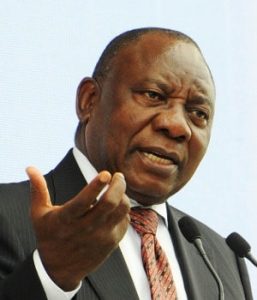
President Cyril Ramaphosa (GCIS) (Siyabulela Duda)

At the December 2017 African National Congress (ANC) leadership conference, Cyril Ramaphosa and the moderate wing of the party had been blindsided by Jacob Zuma and the Radical Economic Transformation (RET) zealots. After an emotional debate that at times degenerated into abuse and scuffles, the Ramaphosa faction had forced upon it a poisoned chalice — a policy commitment to state seizure of agricultural land which, if implemented,  on previous international history from Russia a hundred years ago through to Venezuela today, would beggar the nation.

Ramaphosa then appeared to have an abrupt change of heart. Instead of digging in his heels, he in a flash became an enthusiastic proponent of EWC, which he said would be executed “differently” from the chaotic land grabs that destroyed the economy of neighbouring Zimbabwe.

This may have been a genuine change on the part of Ramaphosa, based on the pragmatic realisation that the survival of his presidency depended on it. Alternatively, it may just be a temporary stratagem to outflank the leftist wing of the ANC, as it tilts towards the Economic Freedom Front (EFF), only then slowly to rein it in as his hold on the party apparatus becomes stronger.

After all, a runaway riderless horse can’t be stopped by simply standing in front of it. That’s to risk being smashed to pulp. The trick is to nip in from the side, seize the reins, incrementally try to slow the momentum, all the while feverishly praying for assistance.

It’s no different in SA politics when trying to contain thundering EWC populism, once the wild-eyed radicals have the bit between the teeth. No point in pluckily flinging one’s body in front of the beast, only to be crushed.

Better to grab whatever tenuous control possible and rely on support arriving quickly enough to avoid lasting damage and tears. In any case, whatever Ramaphosa’s initial game plan, this is what appears to be happening.

Within the ANC, some semblance of rationality is slowly reasserting itself. A fortnight ago, former president Kgalema Motlanthe came out strongly against EWC.

Motlanthe pointed out that Section 25 of the Constitution already fully recognised the need for restoration of rights to those who had been dispossessed of land and there is no need for an EWC amendment. He warned that for the ANC to go that route would have dire consequences.

“If property is not protected you destroy value, and if there’s no value then you won’t have an economy driving forward… If property is not protected by law, society, as we understand it today, will disappear because the kind of anarchy and chaos that would ensue is difficult to imagine.”

Motlanthe’s intervention is important, despite him, at 70, being officially retired from politics. This a man who is respected by both factions of the ANC, an old unionist, a blooded former uMkhonto weSizwe soldier, and the Marxist intellectual whom Zuma had wanted to head the ANC’s internal “school” of political education for cadres. His views matter, especially in the RET camp.

There may be softening occurring elsewhere in the EWC process. According to BusinessLive, this week, a leaked draft of the presidential expert advisory panel on land reform has recommended against a “blanket approach” to EWC, essentially calling for “just and equitable compensation”, at least in the majority of cases. However, Minister in the Presidency, Jackson Mthembu, said that such work on land reform done by the executive, that is the Cabinet, would not determine the parliamentary process to amend the Constitution to allow EWC.

In other words, a bolshy Parliament might well to choose to ignore the recommendation of all the president’s men, as embodied in the views Cabinet.  So, as with everything in SA at the moment, any movement in the sluggish body politic depends on the strength of a Ramaphosa administration that is perpetually being dragged down by its ball-and-chain, the Zuma-ites.

Any shifts on EWC within the ANC are attributable not only to such internal currents but to pressure from outside. Not only has there been a surprising resilience in the parliamentary opposition to EWC but now there is growing international antipathy.

Despite the lure of the “take back the land” populists, opposition parties that oppose EWC performed credibly in the May general election. The Democratic Alliance slid only a couple of percentage points and the Freedom Front Plus gained ground, while the combined vote for Cope and ACDP remained static. The land-invasion favouring EFF did grow, but not as much as feared, winning the support of only one-in-10 voters.

Perhaps this indicates a growing political maturity in the SA electorate. It may be that the tragic unravelling of Zimbabwe has inoculated SA to some degree against the worst manifestations of populism.

What is particularly important, and leaves the ANC and woke social media incandescent with rage, is the overseas lobbying of SA political groups against EWC. No doubt, it scours deeply the ANC psyche that the same arguments it used to convince the West to pressure the apartheid regime — international conventions on human rights — are being successfully deployed against it, mostly by right-of-centre groups.

And, what’s more, it’s beginning to work. In response to SA lobbyists, US President Donald Trump has made clear his abhorrence of EWC and the growing incidence of farm killings. At stake, just for starters, is SA’s preferential access to US markets.

At the other end of the global power scale to the US, is the Netherlands, which is nevertheless important because the Dutch were among the most active European supporters of the ANC during the struggle. It is a telling shift that the Dutch second chamber this month passed, by 86-64, a motion condemning EWC as contrary to both the Universal Declaration of Human Rights and the African Charter of Human Rights. It instructed the Dutch government, bilaterally and in international forums, to pressure the SA government to abandon its EWC intentions.

This is the first such motion passed in a Western legislative assembly but unlikely to be the last. Here is potentially a fertile political field for tilling by the likes of Solidarity and AfriForum, which have eschewed the racist rhetoric of the rabid right, to calmly but remorselessly hoist the ANC on its own petard, that of international law.

ICC instructs Zimbabwe Cricket to reinstate previous board
Letter from Africa: Zimbabwe descends into darkness

Post published in: Agriculture

Letter from Africa: Zimbabwe descends into darkness – The Zimbabwean

AFP

In our series of letters from African writers, journalist-turned-barrister Brian Hungwe says many people in Zimbabwe are struggling to cope with long power blackouts as the country’s financial crisis worsens and fears of hyperinflation grow.

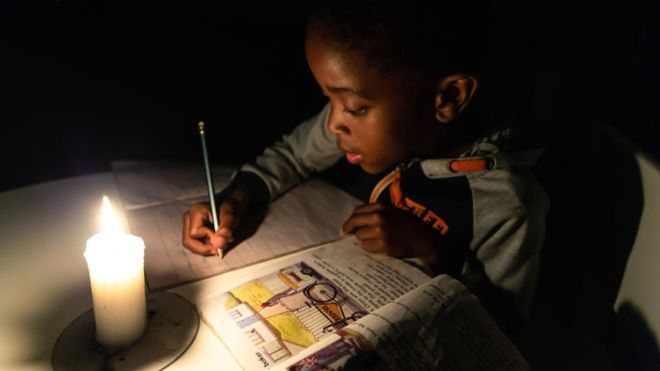
With both the government and families battling to pay electricity bills, many children now do their homework by candlelight.

For the last month, as soon as the sun goes down at six o’clock, candles are lit so they can settle down to complete their assignments.

It is only after they have gone to bed that the electricity comes on – usually at around 22:00 local time.

The children then have to be woken the next morning before 05:00 if they want a warm breakfast, as that is when the blackout starts again. It could be their only hot meal of the day.

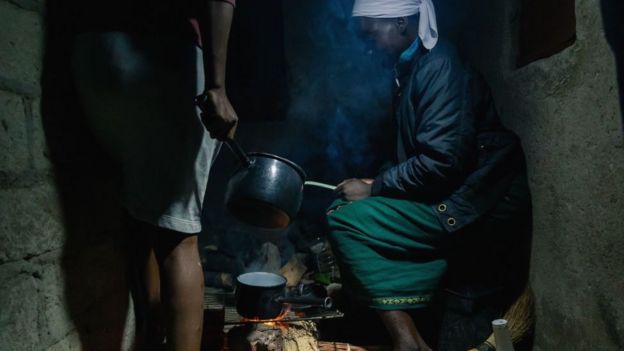
A woman using firewood to cook in Mbare township, Zimbabwe - June 2019This family in the capital, Harare, now uses torch light to cook their evening meal over a fire
It is like that in most households unless you have invested in solar power or a generator – but the latter is difficult to rely on because of severe petrol and diesel shortages and long queues at garages.

Other people have resorted to wood to cope with the 18-hour daily blackouts – which can be purchased from the roadside vendors who, quick to spot a business opening, now populate the roads leading to residential areas with their bundles of logs.

This means deforestation is on the rise.

Mobile cash hit

The electricity rationing, known as load shedding, is also crippling the economy and robbing people of sleep.

I know people who are doing their ironing after 22:00, when they should be heading to their beds, or staying up late into the early hours to cook meals for their family.

A charity that runs a retirement home has appealed for help as it struggles amid the blackouts.

“We need to run on generators, not only to heat our water so people can bath, and enjoy hot meals – but more importantly, for people who rely on oxygen provision to keep them comfortable, and ultimately alive,” BS Lion said in its appeal.

Many businesses that rely on electricity have resorted to working a night shift.

You now see artisans such as welders and carpenters heading out to work in the evening to make the most of the seven hours of electricity.

A platinum miner in Zimbabwe

AFP

Mining contributes a huge chunk to Zimbabwe’s foreign currency earnings – something the country, which imports nearly everything, desperately needs”

The industrial area to the south of Harare, which the economic mayhem of recent decades has left a shadow of its former self, is still ominously quiet during the day.

Last Saturday, the country’s biggest mobile phone operator, Econet, shutdown for more than six hours thanks to a blackout after its own generators failed – this hit those out doing their weekly shopping as millions rely on mobile money to pay as cash is still in short supply here.

Such prolonged blackouts are a big threat to production in the mining and agriculture sectors – and could bring job losses.

Mining contributes a huge chunk to Zimbabwe’s foreign currency earnings – something the country, which imports nearly everything, desperately needs.

Farmers complain that it is hard to irrigate crops – which they need to do in this winter season when there is no rain.

Unpaid bills

And it is rain – or the lack of rain – that the government blames for these problems.

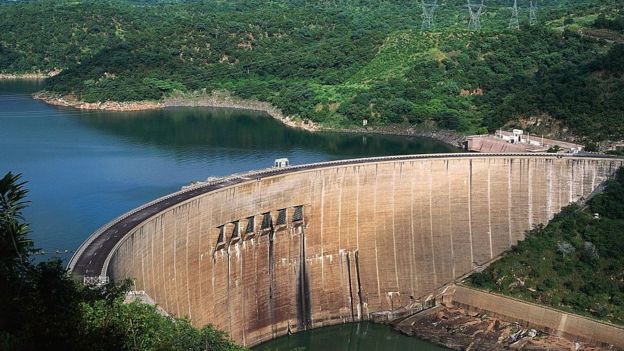
Kariba dam, ZimbabweA drought has reduced water levels at Kariba cutting electricity production
The country has one hydropower plant – Kariba – but it is failing to supply its usual amount of electricity because of low water levels cause by drought.

It now only generating 358MW instead of its usual 1,050MW. Zimbabwe needs 1,700MW each day to meet demand.

A coal-fired power plant in Hwange is also facing problems caused by its ageing and crumbling infrastructure, only three of its six units are operational.

Zesa, the state power firm, which would usually have been able to buy electricity from its neighbours in such circumstances, has been unable to do so because it has failed to pay its outstanding bills – it owes $83m (£66.4m) to South Africa and Mozambique.

Brian Hungwe

Brian Hungwe

Solar power is definitely the country’s one growth area – panels and such gadgets are mushrooming on rooftops”

Last month the government said it was paying $10m to South Africa’s power utility, Eskom, which has its own problems meeting demands, as part of negotiations to open up supplies.

Zesa also blames its cash-strapped customers for failing to pay their bills and it has proposed that mining firms pay for their electricity in US dollars.

This flies in the face of government policy which last month banned the use of foreign currencies that had been legal tender for the last decade – in its bid to stabilise the economy.

But the situation appears to be spiralling out of control because of a severe shortage of foreign currency, something that will only improve if exports grow.

The most recent figures suggest inflation has risen sharply over the last year. In May it was 98% and by June, annual inflation stood at 176%. So, the trend is not encouraging.

Solar power is definitely the country’s one growth area – panels and such gadgets are mushrooming on rooftops.

Yet it seems Zimbabweans will have to continue operating in the dark for some time to come.

The drive towards EWC may be faltering
Zimbabwe tourism minister charged with corruption worth $95 million

Post published in: Business

Zimbabwe tourism minister charged with corruption worth $95 million – The Zimbabwean

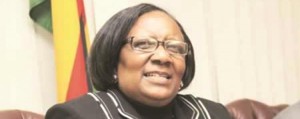
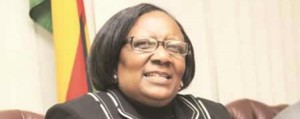
Minister Prisca Mupfumira

Mupfumira is the first senior government official to be interrogated by the commission, which was appointed by President Emmerson Mnangagwa last week after he promised tough action against graft.

The prosecution laid out charges ranging from alleged abuse of state pension fund money to finance Mupfumira’s political campaigning to directing investments of up to $62 million into a bank against the advice of the pension fund’s risk committee.

Mupfumira is also accused of leaning on the pension fund to enter into property deals with the same bank worth $15.7 million.

The charges arose from Mupfumira’s tenure as labour minister between 2014 and 2018, when she oversaw the state pension fund.

“While some amounts have been identified, where they went to, there are other amounts which the police and officers at the Zimbabwe Anti-Corruption Commission have failed to find. She has managed to hide that money very well,” prosecutor Michael Reza said in court.

Transparency International says Zimbabwe loses $1 billion to corruption every year.

Zimbabwe’s state pension fund, which has assets exceeding $1 billion, has often been targeted for looting by politicians and public officials, none of whom have been prosecuted until now.

The auditor general completed a forensic audit into the state pension fund in March. Opposition parliamentarians, who believe the report details extensive fraud, have been pushing for it to be released, but Labour Minister Sekai Nzenza says she is under no obligation to do so.

The new anti-graft body has, however, said the audit report forms the basis of one of 200 corruption cases it is currently pursuing.

Mupfumira will remain in custody until a magistrate rules on Saturday on the prosecutors’ request to keep her in custody for 21 days while further investigations are carried out.

Elton Mangoma, an opposition official who was energy minister in 2011 under a power-sharing government, was the last sitting minister to be arrested, on graft charges relating to a fuel supply contract. He was later acquitted.

Letter from Africa: Zimbabwe descends into darkness
Perspective

Post published in: Featured