LawNext Episode 45: As Fastcase Turns 20, Founders Recount Its History and Predict Its Future | LawSites

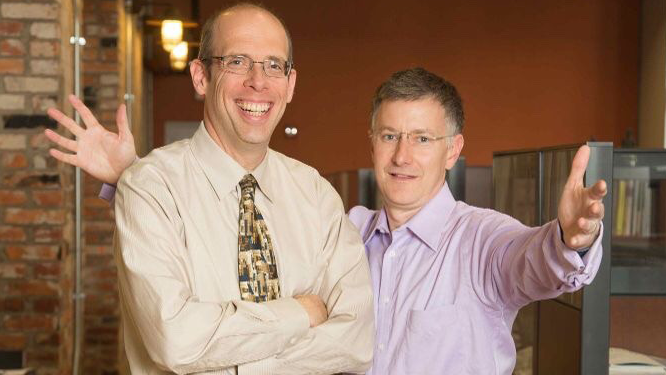
It was 20 years ago that two Covington & Burling associates, Ed Walters and Phil Rosenthal, made the audacious move of quitting their jobs and launching the legal research company Fastcase. Their goal was to democratize the law through affordable pricing and smarter technology. Two decades later, that once-scrappy company is now a major player in the legal research market.

At the recent annual conference of the American Association of Law Libraries, Walters and Rosenthal — now CEO and president respectively — sat down for a live interview with LawNext host Bob Ambrogi. They recount the beginnings of their company, its growth over the intervening 20 years, and their successes and mistakes over the years. They also offer predictions for where Fastcase and legal research will be in another 20 years.

This episode of LawNext was produced and recorded in collaboration with the Legal Talk Network. A big thanks to them for partnering with us on this podcast.

NEW:

We are now on Patreon! Subscribe to our page to be able to access show transcripts, or to submit a question for our guests.

Comment on this show: Record a voice comment on your mobile phone and send it to info@lawnext.com.

California Bar’s Handling Of Real Estate Draws Scrutiny

(Image via Getty)

The State Bar of California’s management of its real estate has drawn criticism in recent months from the state auditor and state Legislature.

The auditor accused the bar of failing to maximize revenue from the leasing of floors it does not use in its headquarters located in San Francisco’s financial district.

In particular, Auditor Elaine M. Howle said the bar is leasing spaces at below-market rates and has let some space at the property go unleased for long periods of time.

The auditor’s office wrote that its appraiser’s “comprehensive analysis” determined that retail space similar to the State Bar’s should lease for $54 to $60 a square foot and office space for $68 to $76 a square foot.

“In 2018 and 2019, [the] State Bar entered into four leases for its San Francisco building with below-market rates that range from $12 to $28 per square foot less than those of comparable properties,” the audit said. “Even if [the] State Bar had leased its space at the lowest of the appraiser’s market rates, it would have earned $777,000 in additional revenue in just the first year of the four leases.”

The bar commissioned its own recent analysis that confirmed its San Francisco lease rates are below market, according to the audit.

The auditor also criticized the bar for not leasing one entire floor in the 13-floor office tower. The third floor, which needs to have a heating and cooling system installed, has not been leased since at least 2016.

The space could generate $1.1 million in annual revenue under the market rates estimated by the auditor’s appraiser.

Earlier this year, the bar began negotiating with an existing tenant that is seeking to expand to another floor and is willing to pay for the heating and cooling upgrades in exchange for rent concessions.

A bar spokeswoman said this week that the agency is still in lease negotiations with the tenant.

The auditor also said the bar has not maximized leasable space in either its San Francisco or Los Angeles buildings because it uses more square footage than current standards for office space suggest that it needs.

In addition, the auditor raised a concern that the bar giving its property management firm 4,000 square feet of office space in the bar’s San Francisco building at no cost was atypical.

“Our appraiser questioned this term, especially given that the property management firm has offices nearby,” the audit said. “At market rates, the space the property management firm occupies has an annual lease value of $260,000.”

The bar is currently going through request for proposal processes for property management/construction management and leasing services.

The vendors’ proposals are currently being reviewed and proposed contracts will be on the agenda for the bar board meeting in late September, according to a bar spokeswoman.

Meanwhile, the Assembly Judiciary Committee also recently took aim at the bar’s management of its real estate, a topic the Assembly panel has scrutinized previously.

The committee’s analysis of the bar’s annual funding bill for 2020 said: “The bar’s failures to properly manage its real estate holdings raises many questions.”

The questions listed were:

  • Should the bar own its own buildings, especially if it cannot manage them effectively?
  • Given that the bar’s paramount duty is public protection, is it appropriate for the bar and its board to spend significant portions of their time, as it has at recent board meetings, focused on real estate management and not on public protection?
  • If the bar is to continue to own its own real estate, might it be more appropriate to transfer responsibility for building management to the Department of General Services, which manages other state-owned buildings?

The Assembly recently amended the bar’s annual bill to express the Legislature’s intent that “the State Bar’s licensing fees in future years be reduced by the increase in income generated by increasing all real estate leases of State Bar property to market rate as soon as the existing below market rate leases expire.”

The legislation, SB 176, would bump the overall bar fee for active lawyers to $544, a 27 percent increase from the $430 in place now.


Lyle Moran is a freelance writer in San Diego who handles both journalism and content writing projects. He previously reported for the Los Angeles Daily Journal, San Diego Daily Transcript, Associated Press, and Lowell Sun. He can be reached at lmoransun@gmail.com and found on Twitter @lylemoran.

The Best Biglaw Firm In Antitrust

Which Biglaw firm was ranked #1 in Vault’s 2020 practice area rankings in the area of antitrust?

Hint: The firm was founded in 1946 with two offices in New York and Washington, D.C. opening simultaneously. Those offices remain the firm’s only two domestic offices.

See the answer on the next page.

PART II : AI Tools for Solo and Small Law Firms

Generally, today’s AI tools for solo and small law firms break down into three categories: (1) legal research and issue spotting; (2) law practice automation and marketing tools and (3) substantive legal issues arising out of the use of algorithmic, AI-driven platforms in legal matters ranging from criminal defense, employment, insurance, custody defense and others that solo and small firm lawyers tend to handle.  One caveat: many commercial tools bill themselves as using AI are at best, display the “weak AI” characteristics described in Part I where a machine detects patterns or applies rules but is not yet thinking at a level of human logic.    

Legal Research and Issue Spotting Tools

 Brief Contextual Tools

As an appellate practitioners, one of the most exciting AI advancements for me has been its application to legal research. For too long, legal research advancements stood still.  From the time that I graduated law school in 1988 until just recently, I ran searches using the same Boolean logic that I’d been taught back in law school. Sure, natural language search emerged – but it sucked. And while the cost of legal research finally began to decline as the WEXIS duopoly faced competition from inexpensive but effective tools like  VersusLaw, Fastcase and Google Scholar, the capabilities of these systems weren’t all that different from earlier iterations.

But now we’ve reached a point where AI and data analytics are helping to innovate the way we do legal research.  One of the first developments out of the gate was Casetext’s  CARA, where lawyers can upload a brief and generate find relevant or omitted cases that pertain to the subject of the brief. In other words, it’s a form of contextualized search. Of course, this being the legal industry where a great idea generates dozens of copies – and so now, at least a half dozen companies – most recently Westlaw, and Bloomberg, offer some type of brief analyzer tool.  Unfortunately, I’m not familiar with the cost of most of the brief analyzer services but Casetext’s entire research system with CARA included comes in at just $65/month making it eminently affordable for solo and small firms.

Analytics

Increasingly, analytics are becoming an important component of legal research because they may give insight into the outcome of a particular case or line of argument.  Fastcase founder Ed Walters has spoken about the importance of  using analytics to advise clients about likely outcomes as well as the costs and risks involved in a particular case.   Two research oriented analytics programs are Lex Machina and Docket Alarm which lawyers can use to sort data to figure out the average duration to resolve a case, percentage of cases disposed of on summary judgment or wins on a given issue before a particular judge.

Analytics can also be used by law firms internally to determine the average cost of handling a particular case. This article describes how practice management tool Smokeball helps firms harness the power of their data to determine the time and cost of preparing certain documents – and presumably, many of the other LPM tools include similar features. On this point, however, I’m a skeptic because even a high-volume small practice can’t possibly have enough data to offer meaningful analytic results. Another firm – Atrium harvests data from its startup clients on employee salaries and vesting schedules. Atrium then uses that data (if authorized by the client) to help its other clients make business decisions about salaries and stock policies.  As I’ve written here, I’m uncomfortable with law firms leveraging their position as trusted advisors who are privy to business data the using that information to advise other clients – but that’s an ethics question that hasn’t yet been addressed.

Contract Analysis

One overlooked source of legal research involves contract analysis. Many times, lawyers are asked to review a non-compete or employment contract for a client – and while they can research potential issues, applying a contract analysis tool to identify whether certain standard terms are omitted or whether any problematic terms are included offers the best starting point. Contract analysis tools have been around for a long time – I blogged about an early version of Legal Sifter’s analysis tool five years ago which ranked a contract based on its completeness and also whether the terms weighed in favor of the drafter or the other party. Legal Sifter is still around but not sure whether these tools are available. Another popular contact analytics tool is Law Geex  which analyzes various contracts for employment and NDAs. A few years back, I paid $79 to run a LawGeex contracts analysis – but not sure whether that pricing option is still available. For more details on contract analysis tools, see this ABA Journal article.

Law Practice Automation and Marketing Tools

Law Practice Automation Tools

 Legal automation tools like document automation have been around for a while.  As far as I can tell, the early iterations of these tools aren’t AI-powered but are nonetheless, highly robust.  I’ve blogged about online, self-scheduling tools and automated intake forms and recorded a 30-minute video on other tools like chatbots, invoicing and billing tools and integration tools like Zapier.

But what’s more exciting is the emergence of more sophisticated products that appear to be AI driven and that can automate routine work in meaningful ways. For example, LegalMation created a complaint analysis tool where users can upload a complaint and Legalmation will generate an answer and a complete set of discovery requests. As I blogged here, companies like Legalist and Do Not Pay have developed chatbots and forms that help consumers prepare complaints for small claims court – though there’s no reason that these tools couldn’t be used by lawyers as well.

AI Driven Marketing Tools

SEO and other online web marketing tools can be costly and it’s difficult to determine how effectively they work. One company, Lawfty is a data-driven system that determines which systems work best to draw clients. There are many other AI-powered marketing tools but haven’t yet been adopted in the legal sector. 

For additional information on AI-powered marketing tools, check out this talk, Practicing With Machines by Nicole Black. .

Substantive AI Issues

There’s a final component of AI and law practice that is important for solo and small firm lawyers to understand:  the substantive legal issues that AI raises.  I described some of these in this chapter on AI and this chapter on Algorithm Law from 41 Legal Practice Areas That Didn’t Exist 15 Years Ago.  Foremost, AI raises the problem of algorithmic bias which has reared its head in criminal defense sentencing (with reliance on racially-disparate risk classification software), differential pricing that may favor certain groups and bias in hiring algorithms. And more algorithm-based tools are in the pipeline from use of algorithms in custody disputes or online dispute resolution. Many solo and small firm lawyers are not yet aware that these algorithms can impact the cases that they handle – yet they may lack the resources or the leverage to force disclosure of these algorithms or to retain the technical experts needed to challenge the underlying assumptions. Some states like New York have adopted algorithmic transparency requirements as has the European Union GDRP which requires data controllers to provide “meaningful logic” about any automated decision-making tools that produce “legal effects” on EU data subjects.  But there’s still a need to ensure that solo and small firms have access to the means to challenge algorithms that may impact their clients. And as discussed in Part III that’s one of the many roles that law librarians can play.

For additional information on algorithmic bias, check out :

Trust But Verify: A Guide to Algorithms and the Law, (April 2017), Beyond the Information Age: the Duty of Technology Competence in the Algorithmic Society, South Carolina Law Review (2018) and Measuring Algorithmic Fairness  (July 2019).

ZACC arrests Minister Mupfumira over NSSA scandal – The Zimbabwean

25.7.2019 11:19

Harare – Investigators from the Zimbabwe Anti-Corruption Commission this morning arrested Environment, Tourism and Hospitality Industry Minister, Prisca Mupfumira over the National Social Security Authority (NSSA) scandal.

Minister Prisca Mupfumira

Last week the newly-appointed chairperson of ZACC, Justice Loice Matanda-Moyo announced that would soon make arrests in some high profile cases they were investigating. She promised there would be no sacred cows.

More later

Zimbabweans work at night to beat hydropower shortage as drought bites
Dispute over teenager’s beard puts religious freedom on trial in Zimbabwe

Post published in: Featured

Dispute over teenager’s beard puts religious freedom on trial in Zimbabwe – The Zimbabwean

In a country like Zimbabwe, where Muslims are a tiny minority, making up just one percent of the population, the community – along with other minority groups – usually takes what could be deemed as offensive acts by the majority as part of everyday life. Despite constitutional provisions guaranteeing the rights of minorities, in public places, institutions and gatherings it is usually taken for granted that nothing is amiss as long as the majority are happy. Until one Muslim family felt enough was enough and decided to push back.

The resulting legal ruckus – as the usually reclusive Muslim community pursues what it believes are its constitutionally-enshrined rights – has brought to the fore the debate about how far minorities’ rights are respected in the country.

In late 2018, Yusuf Ismail, the teenage son of businessman Mohammed Ismail, was barred from St John’s College, an elite school where he was in Form 5 – a pre-university level in Zimbabwe’s education system. The boy, who is training to be a cleric, had refused to shave his nascent beard in conformity with the school’s regulations which required that all students be clean-shaven.

When his father agreed to the regulations on his son’s behalf when Yusuf enrolled at the school in 2013, they had appeared harmless… until five years later when his son’s beard came through.

Ismail challenged his child’s suspension from school on the basis that he was being discriminated against on the grounds of his religious beliefs. He believes the school regulations are discriminatory and unconstitutional.

In January, the High Court threw the case out, ruling that the parent had freely agreed to the regulations and therefore cannot suddenly seek exemption for his son years down the line. The court said the pupil should abide by the school regulations in order to maintain the private school’s objectives and ethos.

“The Code of Conduct applied to all the learners alike and did not discriminate on any grounds. The school in effect expected every pupil to maintain the ‘St John’s College’ educational and ethical standards as espoused in the Code of Conduct,” said High Court judge, Justice Alphas Chitakunye
.

“Even if the application had been a declaration against the provisions in the code of conduct that would not have succeeded as I am of the view that it is for the pupil to conform to school regulations and not to school regulations to conform to individual pupil’s belief and standards no matter how dearly one holds to such beliefs,” the judge added.

This forced Ismail to appeal to the Supreme Court. In early June the court of appeal ruled that the High Court had not erred in rejecting his claim of discrimination on the grounds of faith.

This prompted the businessman to take his case to the Constitutional Court (ConCourt), the highest court in the country, as he seeks to assert his son’s religious rights which he believes are being violated by the school’s continued refusal to allow him to attend classes.

“We have filed the case with the Constitutional Court and I understand that the other side has also filed their own arguments, but we don’t know when the court will sit down to decide on the case,” Ismail’s lawyer, Professor Lovemore Madhuku, who is also a University of Zimbabwe law lecturer, told TRT World in an interview.

This is the latest of the cases of noisy friction between religion and the right to education. In the past, similar cases have had different outcomes depending on whether the school involved was a public or private one, as arguments on discrimination have tended to carry more weight when the institution in question is run and funded by the government.

In 2016, the ConCourt dismissed an application by four Jehovah’s Witness parents of children at an Anglican school who were against the school’s regulation that required every pupil to attend chapel sessions. In this ruling Justice Bharatkumar Patel highlighted that the private school had the right to enforce its rules and that every parent or guardian with a child enrolled at the school was obliged to abide by the institution’s policies.

“Given that this contractually agreed stipulation is intended to apply to all pupils without distinction, I do not think that it is necessarily discriminatory on the grounds of religion,” wrote the judge in the ruling. “Every parent who agrees to this condition does so willingly and actively chooses to abide by it implications. Thus, as I have stated earlier in relation to the right to education, it cannot be said that this mutually agreed condition per se amounts to discriminatory treatment at the point of admission to the school.”

In 2007, the Supreme Court ruled in favour of an eight-year-old Rastafarian schoolboy who had been barred from attending a public school in Harare because of his dreadlocks. The court ruled that the school had violated the boy’s constitutional rights.

In 2014, another public school in the mining town of Mashava was barred from expelling four pupils for wearing long hair after the ConCourt ruled that such a decision was in breach of the girls’ freedom of conscience. The quartet, who were members of a church going by the name End Time Message, had refused to trim their hair citing religious beliefs.

The latest case has divided public opinion as some find the pronouncements by the court to be fair while others see them to be unreasonable.

Arthur Gwagwa, an academic who has just finished doing research on the rights of minorities for the Minority Rights Group said freedom of religion is a public good worth of strongest protection under international law, but there are circumstances where a balancing act has to be made between the rights of an individual and greater public good.

“Under these circumstances, schools have discretionary rights to enforce standards in the interest of order provided such measures are applied equally to all religions, are proportionate and are serving a greater public good that outweigh the banned religious practice,” Gwagwa told TRT World in an interview.

“It’s all a balancing act. For example in Europe and also in Tunisia, a Muslim country, the governments are banning women from wearing jihabs in public on the grounds that they promote schisms in society and oppress women.

“So where a minority practice is in conflict with the need for societal cohesion and integration, the competing interests have to be weighed against each other and it’s a balancing act, but at the end of the day the public institution has a discretion within the provisions of the law when interpreting a qualified right.”

Human rights lawyer, Miriam Majome, said there was need for consistency in the court rulings as in some cases the courts have upheld the religious rights of learners, while in others, they have dismissed them.

 “The court ruled that since dreadlocks are an expression of Rastafarianism — a religion, expelling the boy was discriminatory on the grounds of religious faith,” Majome said. “This contradicts the St John’s (College) boy’s ruling in which the High Court saw no discrimination or violation of his religious beliefs. The court told the Muslim boy to go home and shave his beard like all the other boys and return to school with a clean face or stay home with his long beard. The reasons the Muslim teen refused to shave his beard are exactly the same with the little Rastafarian boy, who refused to cut his dreadlocks.”

Ismail initially agreed to give TRT World an interview but later changed his mind.

It is understood that case has the support of a sizeable section of the Muslim community in Zimbabwe. The state-owned Sunday Mail newspaper quoted sources close to the Ismail family as saying the businessman is even prepared to take the case to regional and international courts if the need arises.

“They have appealed to the Constitutional Court and are prepared to take the case to the Africa Centre for Human Rights and the International Court of Justice,” the weekly quoted its sources as saying.

Sajid Umar, an Islamic scholar and qualified judge who is based in Harare said keeping beard by Muslim men was part of their faith. “Within the Islamic faith, Prophet Muhammad (peace be upon him) said: ‘Keep the beard and trim the moustache’,” Umar said in a statement to TRT World.

“For Muslims, the actions and sayings in the life of Prophet Muhammad are considered a model of the life-style that Muslims are obliged to follow. “The Final Prophet (peace be upon Him) is still a perfect example for humanity. Even though He delivered and implemented his message over fourteen hundred years ago, he occupies a special place in the life and conscience of Muslims today, just as he did in the past, and they believe he received and transmitted the last revealed book, the Qur’an.”

There have been many other court cases brought by people of different religious beliefs in ZimbabweSouth Africa and other parts of the world in which their hairhairstyles and headgear were at the centre of legal wrangling.

ZACC arrests Minister Mupfumira over NSSA scandal
Zimbabwe c.bank eases forex rules for some in bid to improve dollar flows

Post published in: Featured

Zimbabwe c.bank eases forex rules for some in bid to improve dollar flows – The Zimbabwean

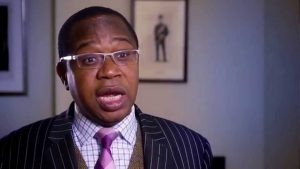
Mthuli Ncube

  •  Forex holders exempted on domestic transactions
  • C.bank hopes to unlock $1.3 bln held by firms, individuals (Adds detail, quote)

Last month, Zimbabwe banned the use of foreign currencies in domestic transactions after renaming its RTGS currency Zimbabwe dollar and making it sole legal tender, ending a decade of dollarisation.

The exemption, announced on Wednesday and which the central bank hopes will unlock $1.3 billion held in banks by exporting companies, individuals and international organisations, is the latest unexpected policy change by the government. It could embolden critics who argued that last month’s currency reforms were hurried.

The ban on domestic use of foreign currencies caught the market by surprise as only a week before, President Emmerson Mnangagwa and Finance Minister Mthuli Ncube had repeated a pledge to only introduce a local currency at the end of this year.

The new rules have stoked inflation, which soared to a new 10-year high of 175.66% in June, raising fears of the return of hyperinflation of a decade ago.

Those holding foreign currency have been reluctant to sell on the official interbank market, where the Zimbabwe dollar has slid by 30% since June 24 to trade at 8.9 to the greenback on Wednesday.

In a circular to banks seen by Reuters, the Reserve Bank of Zimbabwe said those earning foreign currency would be allowed to buy fuel in dollars and that chrome mining firms and smelters could buy chromium from small scale producers in forex.

“To facilitate increased accessibility of fuel in the country and to reduce pressure on the inter-bank foreign exchange market, direct fuel imports are still permissible,” the central bank said in the circular.

Shortages of fuel, dollars and medicines and rolling power cuts lasting 18 hours a day are throttling an economy grappling with a severe drought that has cut the staple maize harvest by half.

Analysts say currency reforms in a country where the population is distrustful of government economic polices and the national currency can not quickly fix the deep problems that have constrained economic growth. (Reporting by Nelson Banya Editing by Gareth Jones and Emelia Sithole-Matarise)

Dispute over teenager’s beard puts religious freedom on trial in Zimbabwe
Zimbabwean Banks Get 10 Days to Respond to $100 Million Lawsuit

Post published in: Business

Zimbabwean Banks Get 10 Days to Respond to $100 Million Lawsuit – The Zimbabwean

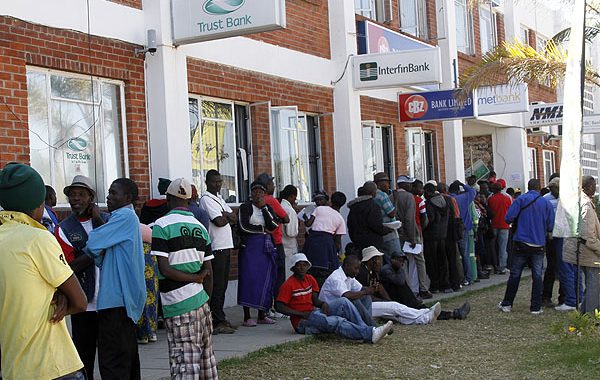
People queue outside a bank in Harare, Zimbabwe.

Cambria Africa Plc’s Paynet Zimbabwe and Payserv Africa units are claiming the damages from the Bankers Association of Zimbabwe, according to the summons, dated July 22 and served on the 21-member organization by the sheriff of the court on Wednesday. The summons gives the association 10 business days to oppose the application, the court filings show.

Calls to the banking association’s chief executive officer, Sijabuliso Biyam, didn’t connect, while calls to its vice president, Ralph Watunga, weren’t answered. Neither were calls to the association’s president, Webster Rusere, who didn’t immediately respond to a text message seeking comment.

The summons escalates a dispute between London-based Cambria and the association, which reached a tipping point in June when Paynet suspended services to banks, citing unpaid bills. It forced the lenders to switch to smaller providers or resort to manually managing payments. That’s hindering the flow of money in the cash-starved $31 billioneconomy, already grappling with rampant inflation and mass unemployment.

More noses were bloodied when it emerged banks are building their own bulk-payments network, a move Cambria says is anti-competitive. At stake is $22 million in profits Cambria estimates that banks in Zimbabwe made last year via charges to their account holders for services provided by Paynet, according to a June 12 statement.

Paynet had hardly cut the banks off when it announcedon June 19 that it partnered with Econet Wireless Zimbabwe Ltd.’s Ecocash in a venture that will bypass lenders when paying salaries or facilitating other transactions. Ecocash brings 6.3 million active users to the venture and has handled more than $10 billion worth of transactions since inception in 2011, while Paynet has more than 1,200 corporate customers in the nation of about 14 million people.

With very little cash being dispensed at ATMs and individuals relying on mobile phones to pay bills, banks will need to fight for relevance by focusing on those corporate clients who still need a “physical interface,” said Kato Mukuru, the head of frontier research at EFG Hermes, in response to the announcement of the venture.

“With the bulk-payment system not working, payments of salaries are now being slowed down significantly, so any solution should result in significant market-share gains” for any company making headway into the space, Mukuru said. The partnership “will give Ecocash a tremendous opportunity to get corporate and retail market share,” he said.

Mandatory Biglaw Psychological Counseling Seems Like An Occam’s Razor Problem

A lot of spilled ink is devoted to the pernicious mental health issues plaguing the legal profession. From simple burnout to tragic episodes of substance abuse and even suicide, the industry takes a brutal toll. A pair of former Biglaw partners who’ve taken on second careers as psychologists have a proposal: mandatory (subject to opt-out) counseling at targeted career milestones.

This… seems to be a complex solution to a simpler problem.

From Law.com:

As such [Jonathan Moult and Jonathan Coppin] have now joined forces to come up with a service that they believe could make a fundamental difference to the state of lawyers’ mental health. What they are proposing is a series of seven psychotherapy sessions for every lawyer in any given firm at key points in their career.

The first point would be at three to four years’ post-qualified, which is usually when the pair have found anxiety has started to kick in for lawyers; then at 10 years’ qualified when the strain of making or not making partner is taking hold; and then again at 20 years’ qualified where it is common for partners to plateau and feel they have wasted their lives while also dealing with problems in their private lives.

Mental health should be treated more seriously by everyone, not just attorneys, but Moult and Coppin are entirely right about the career turning points where the undue stress upon practitioners can take a turn toward the tragic.

But I just can’t help but think this is another instance of the Biglaw mentality run amok. Confronted with all these negative impacts, Biglaw tries to find the right counseling while the simplest solution would be to address a model that thrives on putting people in a pressure cooker. Pull back on the hours, provide more leave, assign and manage tasks more humanely, ditch the “up or out” model that creates artificial career deadlines… basically address the source of stress rather than try to manage it.

Sorry, that’s just crazy talk. Biglaw isn’t going to change.

Would Mandatory Psychologist Appointments Reduce Burnout in Big Law? [Law.com]


HeadshotJoe Patrice is a senior editor at Above the Law and co-host of Thinking Like A Lawyer. Feel free to email any tips, questions, or comments. Follow him on Twitter if you’re interested in law, politics, and a healthy dose of college sports news. Joe also serves as a Managing Director at RPN Executive Search.