Real civilian rule in Zimbabwe is not possible as long as the military pulls the strings – The Zimbabwean

The civilian control over armed and security forces is arguably the most crucial, yet least appreciated aspect of democracy. The simple reason is that, as RJ Rummel so conclusively demonstrated in Death By Government, states kill more of their own citizens than any other factor save for natural disasters. No number of violence-free elections can guarantee a democracy as long as a military is not subject to parliamentary oversight.

However, Chapter 4, Article 111 of the Zimbabwe Constitution (2013) grants the president the sole authority to declare war, which can only be overturned by a two-thirds majority in both Houses of Parliament. This is an extraordinary power which severely limits the oversight power of Parliament to control the military in Zimbabwe. In other words, civilian control over the armed forces is fairly weak.

The Zimbabwean military has been content to be the power behind the throne, seldom removing the velvet glove to exercise its iron fist. The removal of Robert Mugabe was one exceptional case where the glove came off, another is the current state of violence. As long as the civilian politicians have acceded to the interests of the military, senior officers have stayed in their barracks. If substantial change is desired in Zimbabwe, then the time has come to stop treating Zimbabwe as a democracy, flawed or otherwise, and view it as a military dictatorship with a thin civilian veneer.

International actors have long struggled to negotiate with military regimes, even when their actions are far more egregious than Zimbabwe’s. As in Burma, the international community has been unable to prevent the genocide against the Rohingya. Similarly, efforts to promote human rights in Latin American juntas in decades past were fruitless.

Unfortunately for the people of Zimbabwe, the options are stark. History has shown that in such similar cases the pursuit of peace and justice can be mutually exclusive. Senior officers are unlikely to withdraw from politics unless granted some degree of amnesty (as in Brazil) or delays of prosecution (as experienced in Argentina). Very rarely do military rulers quietly give up power.

A first step towards both peace and justice, however, could be to make the restructuring and reform of the security sector a necessary requirement of all loans and aid projects. SADCEcowas and the AU have successfully run similar programmes and view security sector reform as necessary post-conflict programmes. The programme for Zimbabwe would require the restructuring of not only the military, but the police, judiciary and intelligence services as well.

As successful as some of these projects have been elsewhere in Africa, it is not a cure-all for Zimbabwe, but a comprehensive reform programme for the military as a necessary step towards a more complete civilian and democratic control of the armed forces. Without such democratic norm training, any other intervention is unlikely to prove stable or enduring. DM

Zimbabwean Government Workers Feeling High Inflation Heat
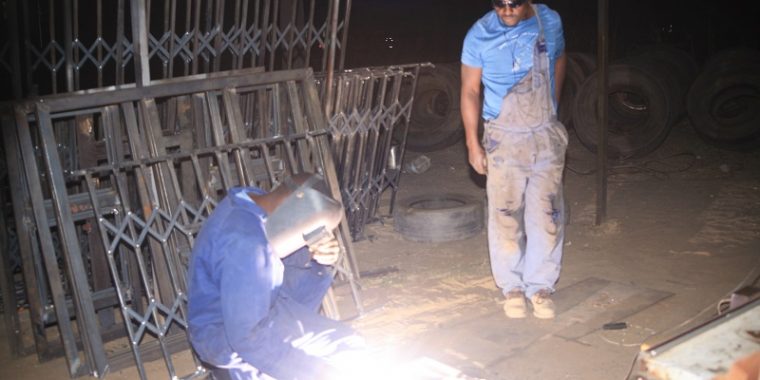
Zimbabweans work at night to beat hydropower shortage as drought bites

Post published in: Featured

Zimbabweans work at night to beat hydropower shortage as drought bites – The Zimbabwean

Zimbabwe’s capital is experiencing some of its worst power outages in memory, as drought hits hydropower production at Kariba Dam.

Electricity is mostly available between 10pm and 6am, forcing businesses to go nocturnal, run expensive diesel generators or face bankruptcy.

“The situation has reached another level. We have to do our work during the middle of the night, because that is the only time we are guaranteed electricity,” Enock Chihombwe, a welder in Harare, told Climate Home News.

“Our work relies heavily on electricity, so we have to work double shifts every day. At night we weld window panes and door frames and during the day, we will be selling the products.”

It is particularly tough for informal traders, who cannot afford generators or do not have ready access to fuel. Motorists must queue for several hours to get petrol or diesel.

Even bigger companies are feeling the pinch. The country’s biggest mobile operator Econet said power cuts had reached unsustainable levels and were threatening the viability of the telecoms sector.

“The company is incurring high production costs by use and servicing of generators, while its prices have remained constant. We have made attempts despite serious fuel shortages to increase diesel allocated to our base station sites.

“Even with these contingency measures, fuel allocation is still inadequate to ensure the required optimum network performance and at current regulated pricing levels, the related costs are not sustainable,” said the company in a statement.

Cooking oil manufacturer Surface Wilmar said it had cut production to below 15% of its installed capacity as a result of the incessant power cuts.

Ordinarily, the company produces 8,000 tonnes of cooking oil a month, but executives said output had slumped to 1,500 tonnes.

“There is no production. The company requires 8 megawatt-hours per day to power its plant,” said company chairman Narottan Somani.

The country relies heavily on hydroelectricity, with Kariba Dam providing the bulk of power to both Zimbabwe and Zambia.

“Hydro-energy has increasingly become unreliable because of the frequency of droughts in the country,” said Panganai Sithole, a spokesperson for Zimbabwe Energy Council.

Zambezi Water Authority, which oversees the dam, said the level of usable water in the lake is down to 25%, making it difficult to produce electricity.

It is designed to operate between 475.50 and 488.50 metres, the authority said in a statement. The level fell 11cm to 479.01m on 22 July, compared to 486.83m at the same time last year.

“It is a climate change issue,” said Priscah Mugabe, a climate expert at the Institute of Environmental Studies at the University of Zimbabwe: “Climate change is reflected in rainfall patterns in Zimbabwe from 1901 up to now.”

There have been noticeable shifts in the onset of the rains, with more extremes of heavy rainfall and drought, she added. There are also changes in the hydrology and run-off in catchment areas for the lake.

Aging coal infrastructure and weak purchasing power for imports only add to the strain on electricity supplies.

Zimbabwe’s energy minister Fortune Chasi backed small-scale renewables as the government announced a package of measures to tackle the energy crisis earlier this month.

“Government fully supports the use of solar power and sees the adoption of renewable energy as a sustainable, clean and long-term option to the challenges of inadequate power supply.

“Solar energy can alleviate the country’s dependence on both hydro-power energy and non-renewable fossil fuels, and it can significantly reduce the importation of energy and save scarce foreign currency, which can be used for other national developmental programmes,” the minister said.

More than 10,000 solar home systems have been installed country-wide, the minister claimed, while 400 mini-grids have been set up at rural schools and clinics.

To further boost take-up, the government waived import duties on solar energy technologies and made solar power mandatory for new construction projects.

“To alleviate the situation on the power supply front, government resolved that a large-scale programme be implemented to promote the importation, local production of solar equipment and the use of solar power as an alternative energy source,” explained information minister Monica Mutsvangwa at a briefing.

Zimbabwe Building Contractors Association chief executive Crispen Tsvarai welcomed the move.

“It is a good decision, it is innovative, and we welcome that we need to harness the natural power that we have. We are richly endowed in the sunshine. We need to convert it into energy so that we can manage our import bill,” he said.

Governor clarifies Statutory Instrument 142 of 2019 – The Zimbabwean

25.7.2019 7:35

NANGO Board Chairperson, Ronika Mumbire, led a delegation that met the Governor of the Reserve Bank, Dr. J. P. Mangudya, on the 17th of July 2019.

Mangudya

The objective of the engagement was to seek clarity on Statutory Instrument (SI) 142 of 2019 and the subsequent RBZ Directives. The engagement was a result of a membership meeting where NANGO members resolved to seek clarity and commitments from the Governor.

The Governor clarified the provisions of SI142/19 and assured NGOs that the Bank is implementing these reforms in view of creating a constructive environment for all sectors to thrive. This he said is envisaged to ultimately contribute to economic growth and development.

The Governor clarified that:

  • SI 142/19 compliments SI 133 which came to establish the exchange rate between the Zimbabwe Dollar and other currencies. Further, it came to facilitate local purchases that should be done using local currency.
  • As such, the SI is effective at the point of purchasing goods within the local market where all domestic purchases are to be done using the Zimbabwe Dollar.
  • He asserted that this is facilitating a process of transitioning to normalcy within the Monetary Policy Framework.
  • NGO employees who were being paid in foreign currency will still maintain their contract in foreign currency and can withdraw their salaries in foreign currency. However, when they want to buy from local shops they will have to change to local currency from Banks and Bureau De Change.
  • Thus to further ensure effective implementation of the Statutory Instrument, the RBZ will be issuing guidelines that should guarantee that there are no inconsistencies among banks and other agencies.

The Governor assured and committed to the following:

  • He reiterated that NGO funds are free funds and are not subject to the Exchange Control Regulations. Thus, there will be no retention, expiry and deductions.
  • The Governor, stressed that the Domestic Nostro accounts for NGOs will still be functional as in the previous monetary regime and NGOs can make transfers from one organisation to another or to make payments to sectors that are exempted.
  • The RBZ is going to instruct all the banks to communicate an agreed position on how they should relate with NGOs.
  • The RBZ highlighted that Banks were engaged and sensitised on SI 142/19 and how they should operate. In this regard, if NGOs face any challenges with their respective banks they are free to report to the RBZ.
  • The Governor highlighted that they are going to review RTGS withdrawal limits considering the obtaining prices of commodities due to inflation.
  • The Reserve Bank will facilitate access to Zimbabwe Dollar for NGOs who would like to disburse huge sums of money to communities on cash basis.
  • The Government is considering putting in place a system where some designated service stations will be selling fuel in USD for Embassies, Development Partners and NGOs who may want to purchase fuel in USD.
  • As a fiscal Advisor, the Governor will advise the Minister of Finance and Economic Development on the tax regime which is in relation to people earning in USD.
Summary comparison of AIPPA and Freedom of Information Bill 
Nango, Zimra in Tax Talks

Post published in: Business

Nango, Zimra in Tax Talks – The Zimbabwean

25.7.2019 7:31

Harare — The National Association of non governmental organisations (NANGO) this week said it had entered into negotiations with the Zimbabwe Revenue Authority (ZIMRA) to resolve a four-month tax dispute but hinted the civic society could be forced to resort to legal action if government presses ahead with the controversial decision to have them pay income tax at the interbank rate.

A storm had been brewing between the two sides after the revenue-collecting agency in June ordered non governmental organisations (NGOs) paying salaries in foreign currency to meet their income tax obligations using the interbank rate, which will leave workers with little money to spend. NGOs previously remitted Pay As You Earn (PAYE) using a much lower rate fixed in terms of the Exchange Control Act.

Governor clarifies Statutory Instrument 142 of 2019
Zimbabwe Fashion Showcase announces ‘top-line’ showcasers for London fashion show

Post published in: Business

Deutsche Bank Somehow Still A Thing That Exists

Admitting to collecting fees from a notorious sex criminal is somehow only the third-worst thing that has happened to Deutsche Bank in the last 24 hours.

This Biglaw Firm Knows A Lot About Bankruptcy

Which Biglaw firm was ranked #1 in the Vault’s 2020 practice area rankings in the area of bankruptcy & restructuring?

Hint: The firm is new to the #1 spot in bankruptcy, and the full service firm has notable litigation, M&A, and private equity practices as well.

See the answer on the next page.

Thanks So Very Much To All Of Our Awesome Advertisers

Advertising

We appreciate your support!

We’d like to express gratitude to our fantastic sponsors here at Above the Law:

If you’re interested in advertising on Above the Law or any other site in the Breaking Media network, please download our media kits or email advertising.

—ADVERTISEMENT—

From the Above the Law Network

It’s Time To Consider Investing In Commercial Real Estate

Interested in investing in commercial real estate (CRE)? Diversifying your investments across asset classes is an excellent risk management tool, and with historically strong annual returns, there’s never been a better time to consider adding CRE to your portfolio.

Stocks may generate high returns over time, but offer very low returns until they are sold. The simple reason for CRE’s advantage over stocks is that rent payments generate income for investors during the entire holding period — from the moment the property is purchased until it is sold.

Investors can get into this alternative asset class with just $30,000 thanks to iintoo, an innovative online investment platform that provides convenient access to CRE. After thoroughly evaluating hundreds of real estate opportunities each year, iintoo’s experts offer investors hand-picked, pre-vetted real estate deals to ensure quality.

To learn more about investing in commercial real estate, fill out the form below to download iintoo’s report today, and find out how you can get direct access to premium real estate opportunities from industry experts.

The Am Law A-List: Ranking The Most Elite Law Firms In America (2019)

Another day, another ranking for lawyers to ogle in a search for meaning as they attempt to get through the day’s billables. Such is the life of a Biglaw attorney, always on the hunt for confirmation that their firm is the best firm, the one that’s hitting all of its essential metrics year after year. If that sounds like you (and you might as well admit it, it probably does), then you should check out the latest offering from the American Lawyer, the annual A-List ranking.

Are you somehow unfamiliar with this ranking? Here are all of the metrics that it measures to determine which Biglaw firms are the best of the best:

The American Lawyer’s annual A-List ranking doesn’t measure size or profits. Rather, it highlights the best of the best law firms for their commitment to a variety of financial and cultural markers: revenue per lawyer, pro bono work, associate satisfaction, racial diversity and gender diversity among the partnership. The last metric was added to our calculation in 2017 to recognize firms for supporting women and making them partners.

With that said, the full top 20 firms and their scores are listed at the American Lawyer. Without further ado, here are the top 10 to satiate your rankings cravings (with the firms’ total scores noted parenthetically):

  1. Munger Tolles & Olson (89.8)
  2. Wilmer Cutler Pickering Hale and Dorr (88.8)
  3. Ropes & Gray (88.3)
  4. Orrick, Herrington & Sutcliffe (88.2)
  5. Covington & Burling (88.1)
  6. Debevoise & Plimpton (87.1)
  7. O’Melveny & Myers (86.8)
  8. Morrison & Foerster (86.4)
  9. Skadden, Arps, Slate, Meagher & Flom (85.9)
  10. Paul, Weiss, Rifkind, Wharton & Garrison (84.6)

Congratulations to all of the firms that made this year’s Am Law A-List.

The 2019 A-List: Law Firms Think Holistically to Make the Cut [American Lawyer]
The 2019 A-List: Which Firms Are Knocking at the Door? [American Lawyer]


Staci ZaretskyStaci Zaretsky is a senior editor at Above the Law, where she’s worked since 2011. She’d love to hear from you, so please feel free to email her with any tips, questions, comments, or critiques. You can follow her on Twitter or connect with her on LinkedIn.