Given
a
softer
weekly
export
pace,
it
is
unlikely
that
the
country
will
see
strong
enough
momentum
in
the
remaining
weeks
of
the
current
marketing
year
to
reach
the
2.40
million
tonnes
seasonal
forecast
for
maize
exports.
The
challenge
is
the
softer
global
demand,
not
supply
availability.
South
Africa
has
ample
maize
supplies
following
favourable
agricultural
seasons.
South
Africa’s
maize
exports
in
the
2025-26
marketing
year
have
mainly
been
to
the
African
continent,
with
Zimbabwe
as
the
major
buyer,
accounting
for
38%
of
South
Africa’s
maize
exports
so
far.
The
likes
of
Vietnam,
Taiwan
and
South
Korea,
amongst
others,
that
typically
import
maize
from
South
Africa
didn’t
import
much
this
year
as
they
relied
on
ample,
cheaper
global
maize
supplies.
Chicago
is
brimming
with
business
opportunities
for
Biglaw
firms,
and
it
continues
to
be
quite attractive
for
lateral
moves
and
office
openings alike.
It’s
definitely
a
winning
city
for
the
legal
profession.
But
which
firm
is
right
for
you?
Thanks
to
Vault’s
recently
released regional
rankings,
we
now
know
which
Biglaw
firms
are
dominating
the
legal
scene
in
the
Windy
City.
This
ranking
is
based
on
votes
tabulated
from
associates
who
were
asked
to
rate
firms
on
a
1
to
10
scale
based
on
their
prestige
within
the
region.
Here
are
the
top
10
most
prestigious
firms
in
Chicago
(you
can
see
the
full
list
from
Vault
by
clicking here):
Kirkland
&
Ellis
Sidley
Austin
Latham
&
Watkins
Skadden
Mayer
Brown
Jenner
&
Block
Winston
&
Strawn
McDermott
Will
&
Schulte
Jones
Day
Ropes
&
Gray
Congrats
to
all
of
the
Biglaw
firms
that
made
the
latest
edition
of
Vault’s
Chicago
rankings.
How
did
your
firm
do
this
time? Email
us,
text
us
at (646)
820-8477,
or
tweet
us @atlblog to
let
us
know
how
you
feel.
Staci
Zaretsky is
the
managing
editor
of
Above
the
Law,
where
she’s
worked
since
2011.
She’d
love
to
hear
from
you,
so
please
feel
free
to email her
with
any
tips,
questions,
comments,
or
critiques.
You
can
follow
her
on Bluesky, X/Twitter,
and Threads, or
connect
with
her
on LinkedIn.
Around
February,
Blanche
reportedly
started
the
rigorous
process
to
join
the
Metropolitan
Club,
one
of
Washington’s
oldest
and
very
important
private
clubs.
The
application
process
requires
two
sponsors
and
at
least
eight
supportive
letters
from
current
members.
Blanche’s
sponsors
are
Biglaw
heavy
hitters:
Bill
Burck,
global
co-managing
partner
at
Quinn
Emanuel,
and
James
M.
McDonald,
a
litigation
partner
at
Sullivan
&
Cromwell
—
both
white-collar
heavyweights,
both
presumably
capable
of
vouching
for
a
man’s
fitness
to
eat
lunch
in
a
nice
room.
And
yet.
At
least
six
members
have
written
to
the
Metropolitan
Club’s
board
of
directors
to
object
to
Blanche’s
joining,
saying
he’s
too
polarizing
and
has
politicized
the
Justice
Department.
The
members
who
spoke
to
Politico
were
granted
anonymity
because
the
club
prohibits
its
members
from
speaking
to
the
media
about
internal
matters.
The
objections
are
not
vague.
“He
is
targeting
a
lot
of
people,
and
the
Justice
Department
is
targeting
a
lot
of
the
members
of
the
club,
like
judges,
nonprofit
organizations
and
universities,”
one
member
said.
That
is
not
a
small
point.
Federal
Reserve
Chair
Jerome
Powell
—
whom
the
DOJ
was
investigating
for
not
cutting
interest
rates
as
part
of
a
probe
into
central
bank
renovations
—
is
a
club
member.
The
same
member
was
not
done:
“The
Trump
administration
is
at
war
with
most
American
institutions,
and
so
the
people
who
represent
those
institutions,
many
of
them
are
at
the
club.
And
the
club
is
the
kind
of
place
where
you
want
to
be
able
to
relax
and
have
a
congenial
conversation.
But
if
he’s
in
there,
given
that
the
Justice
Department
is
so
combative
and
aggressive,
this
is
not
the
kind
of
tone
that
we
want.”
Well,
well,
well,
if
it
isn’t
the
consequences
of
Blanche’s
own
actions.
A
second
member
who
penned
a
rejection
letter
called
Blanche’s
public
comments
endorsing
Trump’s
use
of
the
DOJ
to
target
political
enemies
“pretty
startling.”
And
a
third
went
full
patrician:
“I
am
disappointed
that
the
club’s
standards
are
slipping
on
so
many
levels
and
can
only
hope
that
the
club
leadership
will
recover,
grab
the
rudder
and
set
us
on
a
smooth
sail
once
again.”
Someone
has
been
waiting
their
entire
life
to
write
that
sentence
and
they
finally
got
their
moment.
But
Blanche
isn’t
the
only
controversial
political
figure
to
get
the
cold
shoulder
from
the
club.
Donald
Rumsfeld
—
Bush-era
Secretary
of
Defense,
architect
of
the
Iraq
War,
a
man
who
presided
over
Abu
Ghraib
—
was
reportedly
rejected
by
the
Metropolitan
Club.
There
is
also
something
almost
poignant
about
the
sponsors
here.
Two
Biglaw
partners
from
Quinn
Emanuel
and
Sullivan
&
Cromwell
—
exactly
the
kind
of
establishment
legal
figures
who
built
careers
on
the
idea
that
the
rule
of
law
is
a
thing
worth
preserving
—
putting
their
names
on
a
membership
application
for
the
man
who,
this
very
week,
put
his
name
on
what
the
legal
internet
has
been
calling
the
most
embarrassing
court
filing
in
recent
memory.
They
may
want
to
have
a
quiet
word
with
their
sponsee
about
the
ALL
CAPS
situation
before
the
board
votes.
Kathryn
Rubino
is
a
Senior
Editor
at
Above
the
Law,
host
of The
Jabot
podcast,
and
co-host
of Thinking
Like
A
Lawyer.
AtL
tipsters
are
the
best,
so
please
connect
with
her.
Feel
free
to
email her with
any
tips,
questions,
or
comments
and
follow
her
on
Twitter @Kathryn1 or
Bluesky @Kathryn1
Do
you
like
prestige?
Of
course
you
do.
Is
there
really
a
law
student
who
doesn’t?
That
being
said,
if
you’re
like
the
majority
of
your
colleagues
and
you’d
like
to
embark
upon
one
of
the
most
prestigious
career
paths
available
to
recent
law
school
graduates,
then
you’ll
probably
want
to
compete
for
an
elite
federal
clerkship.
The
American
Bar
Association
recently
released
new
employment
data
for
the
Class
of
2025,
and
thanks
to
an
analysis
made
by Reuters,
we
now
know
which
law
schools
dominated
the
clerkship
market
by
sending
the
highest
percentage
of
graduates
into
federal
clerkships.
According
to
the
ABA
data,
just
3.19%
of
the
class
of
2025
found
work
as
federal
clerks.
In
all,
30
schools
were
responsible
for
more
than
half
(59%)
of
all
federal
clerk
hiring,
and
the
10
law
schools
that
sent
the
highest
percentage
of
graduates
into
these
clerkships
are
listed
here.
Without
further
ado,
these
are
the
top
10
schools
for
clerkships:
Yale
might
have
lost
its
No.
1
spot
at
the
top
of
the
U.S.
News
law
school
rankings,
but
the
school
is
still
pulling
its
weight
when
it
comes
to
clerkship
placements.
The
Ivy
League
school
elbowed
Chicago
out
of
the
way,
after
the
Windy
City
school
reigned
in
this
ranking
for
four
out
of
the
last
five
years.
Stanford
still
clocked
in
at
the
top
of
the
heap
for
the
class
of
2025,
sending
just
under
20%
of
its
graduates
to
elite
clerkships.
An
obvious
point
to
make
here
is
that
these
rankings
don’t
distinguish
between
prestige
of
clerkship.
Were
these
judges
the
ABA
determined
to
be
“qualified”
or
“not
qualified,”
feeder
judges
or
non-feeder
judges,
circuit
courts
or
district
courts,
Article
III
courts
or
non-Article
III
courts?
In
the
land
of
law,
these
things
are
important.
Considering
how
coveted
federal
clerkships
are,
we’d
absolutely
love
to
see
this
information.
If
you
have
it,
please
feel
free
to
email
us.
Congratulations
to
all
of
these
law
schools
on
helping
their
graduates
get
federal
clerkships.
Check
back
with
us
next
year
to
see
if
Yale
is
able
to
hold
onto
the
top
spot.
Staci
Zaretsky is
the
managing
editor
of
Above
the
Law,
where
she’s
worked
since
2011.
She’d
love
to
hear
from
you,
so
please
feel
free
to email her
with
any
tips,
questions,
comments,
or
critiques.
You
can
follow
her
on Bluesky, X/Twitter,
and Threads, or
connect
with
her
on LinkedIn.
The
Justice
Department’s
Civil
Rights
Division,
helmed
by
Harmeet
Dhillon,
just
filed
a
14-page
joint
motion
to
terminate
the
consent
decree
with
the
Springfield,
Massachusetts
Police
Department
with
a
giant
gray
“DRAFT”
watermark
plastered
diagonally
across
every
single
page.
You
cannot,
as
they
say,
make
this
up,
folks.
Under
Dhillon’s
leadership,
the
Civil
Rights
Division
has
endured
mass
defections
owing
to
its
chief’s
avowed
mission
to
contort
the
Justice
Department’s
storied
civil
rights
legacy
into
ambulance
chasers
for
mediocre
white
men
crying
“reverse
discrimination.”
While
the
DOJ
faces
talent
shortages
across
the
board
—
it’s
why
the
once-prestigious
Department
now
recruits
off
candidates
sliding
into
Twitter
DMs
—
the
Civil
Rights
Division
has
(along
with
the
Public
Integrity
Section)
uniquely
suffered.
Roughly
70
percent
of
the
Civil
Rights
Division’s
attorneys
quit,
were
reassigned,
or
accepted
deferred
resignation
in
the
first
months
of
the
second
Trump
administration.
And
that’s
how
you
end
up
filing
drafts.
A
lot
of
hands
touch
a
legal
filing,
and
it’s
important
to
make
sure
no
one
accidentally
files
the
wrong
version.
A
sound
document
management
platform
can
do
wonders,
but
if
lawyers
want
a
belt-and-suspenders
approach,
visibly
and
garishly
marking
the
draft
version
can
prevent
accidental
filings.
That
said,
the
Wall
Street
Journal
once
wrote
that
Dhillon
told
them
that
“[she]
wakes
up
around
6
a.m.
and
begins
her
workday
scrolling
through
X,
searching
for
claims
of
discrimination,”
which
doesn’t
describe
a
workflow
defined
by
conscientious
attention
to
the
serious
work
of
the
Department.
The
Civil
Rights
Division
under
Dhillon
has
run
around
the
country
seeking
to
lift
consent
decrees
imposed
upon
local
law
enforcement
for
past
police
brutality
or
systematic
racial
discrimination.
In
the
instant
case,
the
Springfield,
Massachusetts
police
entered
the
agreement
in
April
2022
after
a
DOJ
investigation
found
a
pattern
of
excessive
force
in
its
narcotics
unit,
including
kicking
and
spitting
on
detained
juveniles.
The
consent
decree
included
a
four-year
timeframe
for
a
scheduled
reevaluation,
and
the
final
report
found
substantial
compliance.
So
the
DOJ
moved
to
lift
the
decree.
In
the
laziest
manner
possible.
This
is
an
embarrassing,
but
ultimately
superficial
mistake.
While
the
“DRAFT”
version
was
still
up
on
PACER
the
last
time
we
checked,
it’s
presumably
going
to
be
replaced
soon.
But
it’s
yet
another
indicia
of
the
DOJ’s
cratering
professionalism.
It’s
not
as
extreme
as
filing
a
motion
in
4th
grade
English
and
riddled
with
grammatical
errors,
or
bringing
criminal
charges
citing
the
wrong
legal
standard
over
a
bunch
of
sea
shells,
or
getting
caught
over
and
over
openly
lying
to
the
courts,
but
it’s
all
part
of
the
same
rich
tapestry.
This
is
an
institution
in
turmoil.
And
it’s
a
catastrophe
that
runs
at
the
macro
and
micro
level.
The
next
time
someone
in
this
administration
suggests
that
the
DOJ’s
talent
drought
just
means
that
it’s
being
run
more
efficiently
with
fewer
lawyers…
point
them
to
the
cover
page.
(Filing
—
or
at
least
the
Draft
Filing
—
on
the
next
page…)
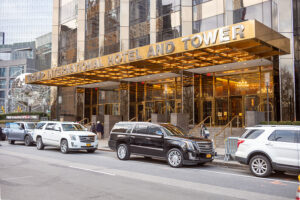
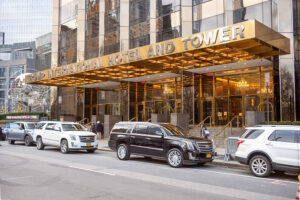
Last
week
I
happened
to
be
strolling
through
the
Upper
West
Side
when
I
found
myself
next
to
the
Trump
International
Hotel’s
Manhattan
location.
While
I
had
some
vague
idea
of
where
the
ones
in
my
vicinity
were,
a
Trump-branded
property
was
not
something
I’d
consciously
realized
I’d
be
encountering
before
I
set
out.
Without
really
thinking,
I
pulled
up
my
smartphone’s
camera
app,
focused
on
the
gaudy
facade
of
the
building,
inserted
my
extended
middle
finger
into
the
frame,
snapped
a
photo,
and
chuckled
a
little
at
my
own
childishness.
Waiting
at
the
next
stoplight,
I
sent
the
picture
to
a
couple
friends
who
I
thought
might
also
get
a
kick
out
of
it.
Some
time
later,
on
my
way
back,
I
started
to
ponder
my
experience.
I’d
hardly
invented
the
concept
of
flipping
the
bird
to
buildings
with
the
word
“Trump”
emblazoned
on
them.
Hell,
one
of
the
news
podcasts
I’m
familiar
with,
The
Daily
Beans,
encourages
listeners
to
send
in
their
own
photos
giving
Trump
properties
the
one-finger
salute.
It
felt
like
being
a
little
part
of
something
bigger.
So,
on
the
return
journey,
I
was
more
deliberate.
Trump
Tower,
in
Midtown
Manhattan,
was
a
bit
out
of
my
way.
Nonetheless,
I
made
a
stop
at
the
granddaddy
of
all
the
gold-lettered
monstrosities
that
now
bear
the
Trump
name.
I
got
a
shot,
rude
gesture
included.
Then,
unsatisfied
with
the
angle,
moved
a
few
feet
farther
along
the
sidewalk
for
another.
Unlike
outside
the
Trump
International
Hotel,
at
Trump
Tower
there
were
other
people
snapping
photos.
I
couldn’t
spot
anyone
else
giving
it
the
finger.
Some
just
seemed
to
want
an
unobscured
picture
of
the
building.
One
was
filming
himself
with
a
selfie
stick
as
he
wandered
precariously
through
the
street.
None
of
the
others
seemed
to
notice
my
existence,
though
it
occurred
to
me
that
I
no
doubt
faced
far
more
of
a
threat
from
any
nearby
reverent
Trump
supporters
than
I
did
from
the
lone,
sleepy-looking
NYPD
officer
posted
out
front.
In
the
United
States,
I
can
say
with
near
legal
certainty
that
you
could
not
be
legitimately
convicted
of
any
crime
for
flipping
off
a
Trump-branded
building.
In
only
the
latest
in
a
long
line
of
examples
of
why
this
sort
of
thing
would
be
constitutionally
protected
free
speech,
a
62-year-old
grandmother
was
acquitted
on
all
charges
stemming
from
wearing
a
7-foot
inflatable
penis
costume
along
with
a
sign
that
said
“No
Dick
Tator”
at
an
Alabama
“No
Kings”
protest.
Still,
the
“No
Dick
Tator”
grandma’s
prosecution
got
way
further
along
than
it
should
have.
She
had
to
endure
getting
roughed
up
by
an
overzealous
police
force
and
go
through
an
arduous
and
expensive
courtroom
process.
Any
lawyer
who’s
been
at
it
long
enough
can
tell
you
plenty
of
stories
about
how
“legal”
is
not
synonymous
with
“consequence-free.”
We
are
not
enough
of
a
“Dick
Tator-ship”
yet
for
you
to
face
a
criminal
penalty
for
flipping
the
bird
to
a
Trump
building.
Even
so,
you
might
get
abused
by
Trump-loving
cops
who
know
it’s
probably
going
to
be
too
much
trouble
for
you
to
effectively
hold
them
accountable
(although
in
the
places
Trump-branded
buildings
exist
in
the
U.S.
—
that
is,
not
places
like
Alabama
—
most
law
enforcement
officers
are
familiar
enough
with
the
roughly
half
of
the
Bill
of
Rights
specifically
aimed
at
restricting
them
from
doing
things
like
arresting
a
senior
citizen
for
wearing
a
penis
suit
at
a
protest
in
order
to
make
this
an
unlikely
problem
to
face).
Outside
of
the
U.S.,
you
might
want
to
tread
more
lightly.
There
are
a
lot
of
countries
where
you’d
be
just
fine
dishonoring
the
local
Trump-branded
buildings
however
you
saw
fit,
and
might
even
have
more
freedom
of
expression
than
you
do
at
home.
But
with
Trump
properties
now
existing
or
currently
in
development
in
stifling
places
like
Saudi
Arabia,
the
United
Arab
Emirates,
Oman,
and
Qatar,
you
certainly
cannot
take
your
free
speech
rights
for
granted
abroad.
Those
international
caveats
aside,
I
encourage
you
to
get
out
there
and
patriotically
flip
the
bird
to
a
Trump-branded
property
near
you.
You
won’t
get
in
any
legal
trouble
for
it,
and,
I
assure
you,
it’s
a
much
healthier
way
to
express
displeasure
with
this
presidential
administration
than
what
we’ve
seen
from
a
few
lone-wolf
types
lately.
Jonathan
Wolf
is
a
civil
litigator
and
author
of Your
Debt-Free
JD (affiliate
link).
He
has
taught
legal
writing,
written
for
a
wide
variety
of
publications,
and
made
it
both
his
business
and
his
pleasure
to
be
financially
and
scientifically
literate.
Any
views
he
expresses
are
probably
pure
gold,
but
are
nonetheless
solely
his
own
and
should
not
be
attributed
to
any
organization
with
which
he
is
affiliated.
He
wouldn’t
want
to
share
the
credit
anyway.
He
can
be
reached
at [email protected].
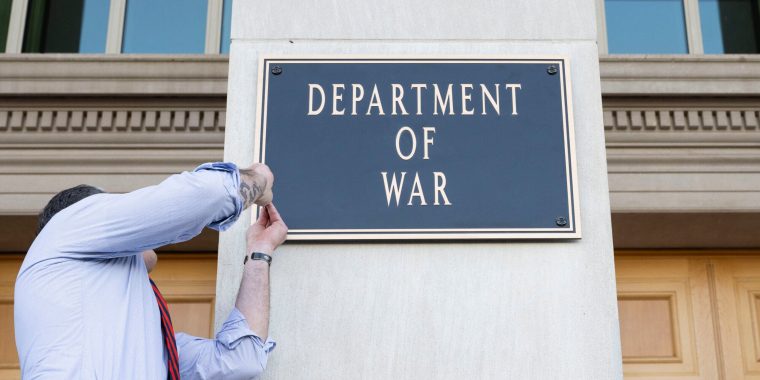
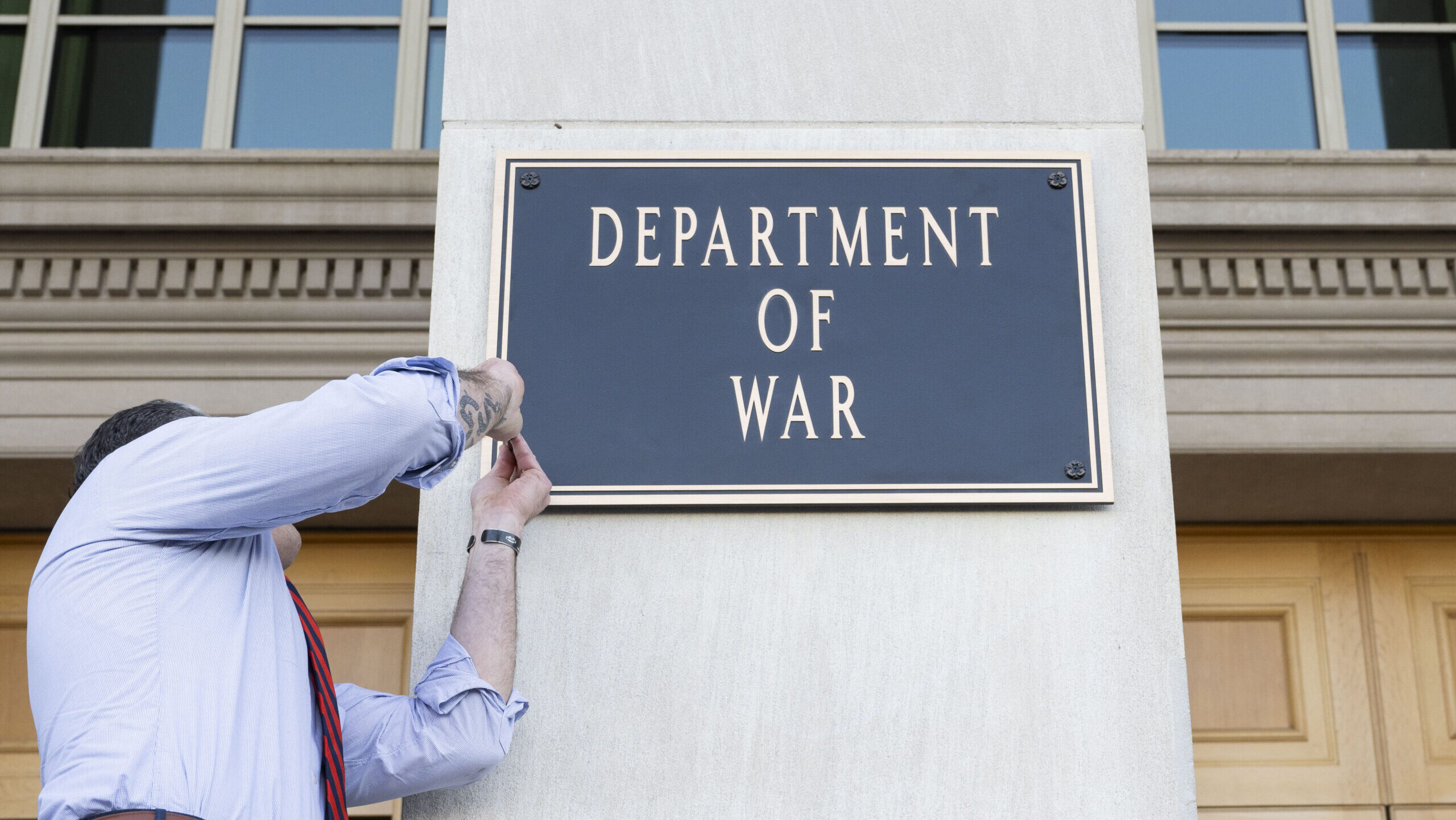
WASHINGTON
—
The
Pentagon
has
requested
that
Congress
formally
change
the
name
of
the
Defense
Department
to
the
Department
of
War
in
a
new
legislative
proposal,
a
move
that
is
likely
to
rile
Democrats
as
lawmakers
begin
hashing
out
the
fiscal
2027
defense
policy
bill.
The
Pentagon
stated
in
the
proposal
that
the
change
would
have
“no
significant
impact”
on
the
FY27
budget.
However,
it
later
added
that
the
department
estimates
it
will
spend
about
$51.5
million
across
its
entire
organization
during
FY26
to
implement
the
name
swap,
with
the
majority
of
that
sum
—
$44.6
million
—
used
to
make
changes
within
defense
agencies
and
DoD
field
activities.
“Changes
were
implemented
in
Fiscal
Year
(FY)
2026
from
existing
resources
in
the
most
cost
effective
and
non-invasive
ways
(e.g.,
using
stock
until
depleted
before
making
changes
to
letterhead,
updating
signage
by
collective
purchases),”
the
proposal
states,
adding
that
actual
costs
incurred
as
the
department
transitioned
using
to
the
“Department
of
War”
nomenclature
“are
still
being
collected.”
“The
revision
to
the
designation
of
the
Department
serves
as
a
fundamental
reminder
of
the
importance
and
reverence
of
our
core
mission,
to
fight
and
win
wars.
It
serves
as
a
strategic
objective
in
which
to
measure
and
prioritize
all
activities,”
it
said.
Inside
Defense
was
first
to
report
on
the
legislative
proposal.
The
Congressional
Budget
Office
estimated
in
January
that
transitioning
the
name
of
the
Defense
Department
to
the
War
Department
would
cost
at
least
$10
million
“but
they
could
be
as
large
as
$125
million
if
the
name
change
was
implemented
broadly
and
rapidly
throughout
the
department,”
the
office
stated
in
a
letter
to
Sen.
Jeff
Merkley,
the
top
Democrat
on
the
Senate
Budget
Committee.
“A
statutory
renaming
could
cost
hundreds
of
millions
of
dollars
depending
on
how
Congress
and
DoD
chose
to
implement
the
change,”
the
CBO
said
in
the
letter.
*
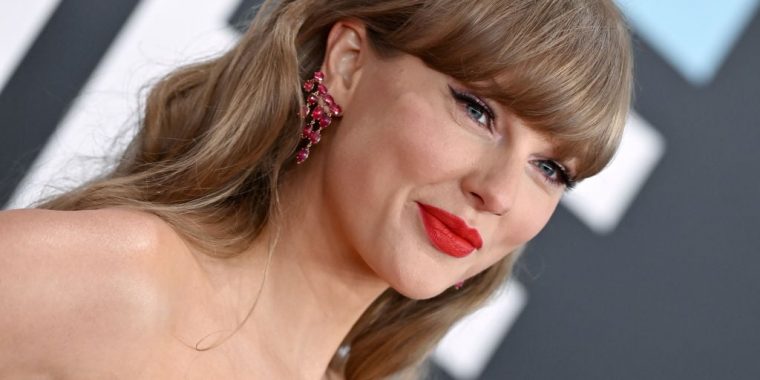
Taylor
Swift
attempts
to
register
her
voice
and
likeness
as
trademarks
to
combat
deep
fakes
that
copyright
law
can’t
address.
[ABA
Journal]
*
This
morning,
the
Supreme
Court
will
hear
the
government’s
argument
that
it
can
arbitrarily
strip
Haitians
over
temporary
protected
status
while
simultaneously
still
classifying
the
country
as
dangerous.
[NPR]
*
The
Alien
Tort
Act
doesn’t
reach
everything,
but
it
probably
reaches
claims
that
a
U.S.
company
aided
and
abetted
overseas
torture.
[Law360]
*
“Firm
Leaders
‘Determined’
to
Train
Attorneys
to
Avoid
Using
AI-Produced
Mistakes.”
Sure,
but
since
the
firm
leaders
are
the
ones
signing
the
briefs,
have
they
considered
“bothering
to
edit
them?”
[Daily
Report]
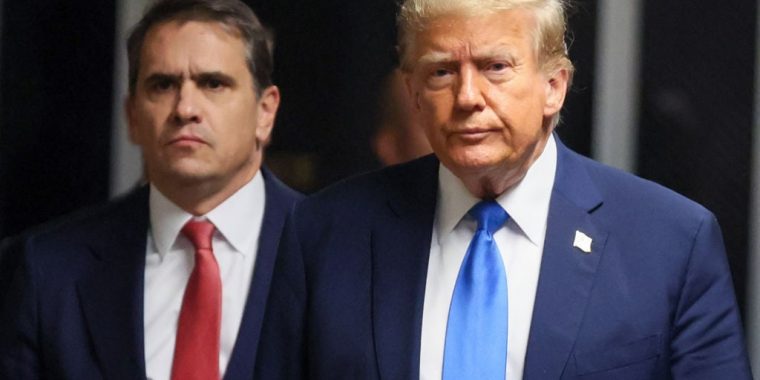
Did
Todd
Blanche
Really
Just
Say
That?:
The
best
and
the
brightest
can’t
manage
forensics.
…Did
Donald
Trump
Write
This?:
This
DOJ
ballroom
brief
looks
a
LOT
like
a
Truth
Social
post.
How
Did
Obama
Get
Swept
Into
This?:
Georgetown
Law
professor
tries
turning
a
former
president
mourning
a
murdered
boy
into
comedy.
One
Hell
Of
A
Streak!:
Law
student
finishes
Jeopardy!
run
with
nearly
$900k
in
winnings!