Another
day,
another
elite
law
boutique
that’s
offering
bonuses
to
their
associates
that
blow
the
prevailing
market
bonuses
at
Biglaw
firms
out
of
the
water.
Litigation
powerhouse
Kellogg
Hansen
recently
announced
special
bonuses,
and
of
course
they’re
way
above
market.
It
isn’t
much
of
a
surprise;
the
firm’s
base
compensation
ranges
have
been
on
top
of
the
Biglaw
scale
for
years,
and
their
year-end
bonuses
are
huge
too. This
just
lines
Kellogg
associates’
pockets
with
even
more
money.
So
what,
exactly,
does
an
“above
market”
special
bonus
look
like
at
Kellogg
Hansen?
While
Biglaw
associates
are
receiving
$6,000
to
$25,000
associates
at
the
firm
will
be
receiving
much,
much
more.
According
to
an
internal
email
from
Michael
Kellogg,
all
associate
classes
as
well
as
of
counsel
will
be
receiving
big-time
special
bonuses
on
the
following
scale:
Associate
Year
1
(joined
the
firm
in
2024)
–
$30,000
Associate
Year
2
–
$35,000
Associate
Year
3
–
$40,000
Associate
Year
4
–
$45,000
Associate
Year
5
–
$50,000
Associate
Year
6
–
$55,000
Of
Counsel
–
$60,000
These
bonuses
come
in
addition
to
the
firm’s
year-end
bonuses,
which
are
usually
gigantic
for
almost
every
class
year.
Stay
tuned,
because
those
are
set
to
be
announced
soon.
Congratulations
to
everyone
at
Kellogg
Hansen!
Remember
everyone,
we
depend
on
your
tips
to
stay
on
top
of
compensation
updates,
so
when
your
firm
announces
or
matches,
please
text
us
(646-820-8477)
or email
us (subject
line:
“[Firm
Name]
Bonus/Matches”).
Please
include
the
memo
if
available.
You
can
take
a
photo
of
the
memo
and
send
it
via
text
or
email
if
you
don’t
want
to
forward
the
original
PDF
or
Word
file.
And
if
you’d
like
to
sign
up
for
ATL’s
Bonus
Alerts
(which
is
the
alert
list
we
also
use
for
salary
announcements),
please
scroll
down
and
enter
your
email
address
in
the
box
below
this
post.
If
you
previously
signed
up
for
the
bonus
alerts,
you
don’t
need
to
do
anything.
You’ll
receive
an
email
notification
within
minutes
of
each
bonus
announcement
that
we
publish.
Thanks
for
your
help!
Staci
Zaretsky is
the
managing
editor
of
Above
the
Law,
where
she’s
worked
since
2011.
She’d
love
to
hear
from
you,
so
please
feel
free
to
email
her
with
any
tips,
questions,
comments,
or
critiques.
You
can
follow
her
on Bluesky, X/Twitter,
and Threads, or
connect
with
her
on LinkedIn.
Kinney
Recruiting
is
working
closely
with
a
nationally
renowned
Boutique
in
Chicago
on
a
search
for
an
experienced
Real
Estate
Attorney
with
7+
years
experience
to
join
the
firm
at
the
Income
Partner
level.
(No
book
requirement.)
We
are
pleased
to
release
our
eighth
annual
ranking
of
the
Top
Outside
Counsel,
featuring
the
law
firms
that
clients
depend
on
most.
Every
year
since
2018,
Above
the
Law
has
published
a
list
of
the
top
law
firms
in
the
country,
based
on
the
insights
of
those
who
know
best
—
the
in-house
attorneys
who
hire
them.
This
year,
approximately
550
in-house
lawyers
participated
in
our
survey,
sharing
their
perspectives
on
the
law
firms
their
organizations
work
with.
Our
survey
takes
a
very
straightforward
approach.
To
determine
participants’
go-to
firms,
we
asked
two
questions:
1)
“Which
law
firms
does
your
company
engage
for
legal
services?”
and
2)
“Please
indicate
the
highest
level
legal
work
for
which
your
company
will
engage
the
particular
firm(s).”
The
levels
of
work
were
defined
along
a
four-point
scale:
Cost-efficient,
bulk
tasks
Routine
matters
High-value,
complex
matters
“Bet-the-company”
matters
The
ratings
for
each
firm
were
averaged
and
the
law
firms
with
the
highest
average
scores
made
it
into
our
list
of
the
Top
Outside
Counsel.
Check
out
the
results
here.
The
long-running
copyright
litigation between
Thomson
Reuters
and
ROSS
Intelligence
is
now
pending
in
the
3rd
U.S.
Circuit
Court
of
Appeals
for
an
interlocutory
appeal
of
the
trial
judge’s
rulings
in
favor
of
TR.
Now,
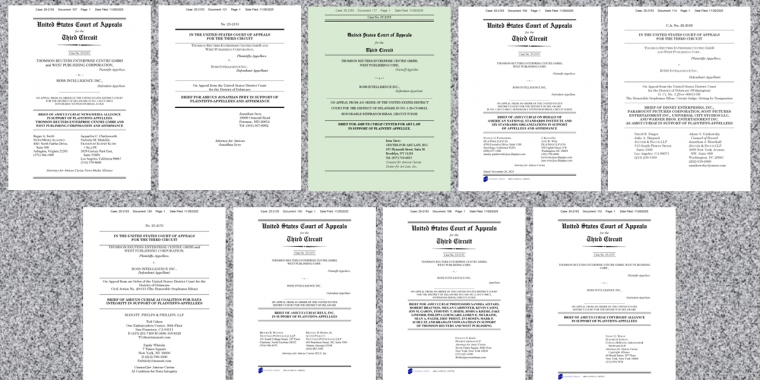
nine
amicus
briefs
have
been
filed
in
support
of
TR.
Those
filing
briefs
range
from
major
movie
studios
such
as
Disney
and
Paramount,
to
news
media
and
copyright
organizations,
to
individual
copyright
law
professors,
and
even
to
TR’s
principal
competitor
LexisNexis.
(Note:
All
of
my
stories
covering
this
case
back
to
2020
can
be
found
here.)
The
primary
argument
of
all
nine
briefs
is
that
Westlaw’s
headnotes
are
sufficiently
original
to
qualify
for
copyright
and
that
ROSS’s
unauthorized
copying
of
them
to
build
its
AI
legal
research
platform
was
not
fair
use.
This
matter
is
now
before
the
3rd
Circuit
after
the
trial
judge
in
the
case,
U.S.
Circuit
Judge
Stephanos
Bibas,
sitting
by
designation
in
the
U.S.
District
Court
in
Delaware,issued
partial
summary
judgment
last
February
in
favor
of
TR
on
two
key
issues
of
copyright
law.
At
ROSS’s
request,
he
thenpostponed
the
scheduled
trialto
allow
ROSS
to
file
an
interlocutory
appeal
on
those
two
issues.
The
two
issues
Judge
Bibas
certified
for
appeal
to
the
3rd
Circuit
are:
Are
Westlaw’s
editor-created
headnotes
and
Key
Number
system
sufficiently
original
to
qualify
for
copyright
protection?
The
answer
could
have
profound
implications
for
the
legal
publishing
industry.
Judge
Bibas
concluded
that
attorney
editors
exercise
enough
creativity
when
they
choose
which
parts
of
judicial
opinions
to
highlight
and
how
to
categorize
them,
meeting
copyright
law’s
low
bar
for
originality.
Fair
use.
Even
if
the
headnotes
are
copyrightable,
did
ROSS’s
use
of
them
constitute
fair
use
under
copyright
law?
Judge
Bibas
found
that
ROSS’s
use
was
not
“transformative”
because
both
companies
created
legal
research
tools
that
“identify
the
important
parts
of
a
large
body
of
law.”
He
concluded
that
ROSS
essentially
created
a
“market
substitute”
for
Westlaw
rather
than
adding
new
meaning
or
purpose
to
the
original
work.
Below
are
quick
summaries
of
the
amicus
briefs,
including
a
“nugget”
quote,
with
links
to
the
full
text
of
each.
I
published
the
summaries
of
the
briefs
in
favor
of
ROSS
here.
Note:
I
used
ChatGPT
to
help
me
extract
information
from
the
briefs
and
create
these
summaries.
1.
American
National
Standards
Institute
(ANSI)
and
Six
Standards
Organizations
ASTM
International
(American
Society
for
Testing
and
Materials).
International
Association
of
Plumbing
&
Mechanical
Officials
(IAPMO).
International
Code
Council
(ICC).
National
Electrical
Manufacturers
Association
(NEMA).
National
Fire
Protection
Association
(NFPA).
ULSE
Inc.
(UL
Standards).
Background
These
are
private
standards-development
organizations
(SDOs)
that
create
technical
codes
and
standards
used
across
industry
and
often
incorporated
by
reference
into
law.
They
emphasize
that
standards
are
costly
to
develop
and
funded
largely
through
copyright-based
licensing
and
sales
of
standards
documents.
Supports
Thomson
Reuters.
Principal
Arguments
Headnotes
are
like
standards:
TR’s
headnotes
are
privately
authored,
creative
works
that
help
professionals
navigate
complex
legal
material,
analogous
to
SDO
technical
standards
that
help
industry
navigate
complex
technical
requirements.
Government
edicts
doctrine
is
narrow:
Amicus
argue
ROSS
misreads
Banks
and
Georgia
v.
Public.Resource.Org;
the
“government
edicts
doctrine”
is
“a
straightforward
rule
based
on
the
identity
of
the
author,”
and
applies
only
to
works
authored
by
judges/legislators
in
their
official
capacities,
not
to
private
commentary
such
as
headnotes.
Supreme
Court
precedent
already
answers
this:
Callaghan
v.
Myers
and
Georgia
confirm
that
headnotes
and
similar
explanatory
texts
created
by
private
parties
remain
copyrightable,
even
when
closely
tracking
judicial
text.
Policy
concern:
If
ROSS’s
rule
were
adopted,
it
would
jeopardize
the
business
model
of
SDOs
whose
privately
authored
standards
sit
“side-by-side
with
government-authored
works”
and
are
frequently
incorporated
by
reference
into
law.
Counsel
for
Amicus
Stanley
J.
Panikowski,
J.
Kevin
Fee,
Jane
W.
Wise,
DLA
Piper
LLP,
San
Diego
and
Washington,
D.C.
Nugget
Quote
“Like
standards
authored
by
standards
development
organizations,
Thomson
Reuters’
headnotes
are
creative,
privately-authored
works
that
advance
public
knowledge
by
translating
complex
material
into
structured,
comprehensible
guidance.
These
are
precisely
the
kinds
of
expressive
works
that
copyright
protects.”
Sandra
Aistars,
Distinguished
Counselor
in
Residence
&
Professor
of
Law,
IPPI:
The
IP
Policy
Institute,
The
University
of
Akron
School
of
Law.
Robert
Brauneis,
Michael
J.
McKeon
Professor
of
Intellectual
Property
Law,
Co-Director
of
the
Intellectual
Property
Program,
The
George
Washington
University
Law
School.
Megan
Carpenter,
Dean
and
Professor
of
Law,
Franklin
Pierce
School
of
Law,
University
of
New
Hampshire.
Kevin
Casini,
Lecturer,
Quinnipiac
University
School
of
Law.
Jon
M.
Garon,
Associate
Dean
for
Technology
and
Innovation,
Director,
Goodwin
Program
for
Society,
Technology,
and
the
Law,
Shepard
Broad
College
of
Law,
Nova
Southeastern
University.
Timothy
T.
Hsieh,
Associate
Professor
of
Law,
Oklahoma
City
University
School
of
Law.
Joshua
Kresh,
Research
Professor
&
Executive
Director,
The
IP
Policy
Institute,
the
University
of
Akron
School
of
Law.
Jake
Linford,
Associate
Dean
for
Academic
Affairs,
Loula
Fuller
&
Dan
Myers
Professor,
Florida
State
University
College
of
Law.
Philippa
Loengard,
Executive
Director
of
the
Kernochan
Center
for
Law,
Media
and
the
Arts
and
Lecturer
in
Law,
Columbia
Law
School.
Loren
E.
Mulraine,
Professor
of
Law,
Director
of
Music
and
Entertainment
Law
Studies,
Belmont
University
College
of
Law.
Sean
A.
Pager,
Professor
of
Law;
Associate
Director,
Intellectual
Property,
Information
&
Communications
Law
Program
(IPIC),
Michigan
State
University
College
of
Law.
Eric
Priest,
Professor
of
Law,
University
of
Oregon
School
of
Law.
Zvi
Rosen,
Associate
Professor
of
Law,
Franklin
Pierce
School
of
Law,
University
of
New
Hampshire.
Mark
F.
Schultz,
Goodyear
Tire
&
Rubber
Company
Endowed
Chair
in
Intellectual
Property
Law,
Faculty
Chair,
IPPI:
The
IP
Policy
Institute,
The
University
of
Akron
School
of
Law.
Bhamati
Viswanathan,
Fellow,
Columbia
Law
School,
Kernochan
Center
for
Law,
Media
and
the
Arts,
Senior
Visitor,
University
of
Cambridge
Faculty
of
Law.
Background
These
are
academic
copyright
scholars
from
law
schools
across
the
U.S.
who
study
fair
use,
AI,
and
markets
for
expressive
works.
Supports
Thomson
Reuters.
Principal
Arguments
Fair
use
remains
holistic
and
fact-specific:
Amicus
stress
that
fair
use
is
a
“case-by-case”
analysis
focusing
on
substitution,
and
that
ROSS
bears
the
burden
of
justifying
its
copying.
Training
AI
to
perform
the
same
function
is
not
transformative:
When
AI
is
trained
“to
perform
the
same
function
as
the
original
work”
–
here,
directing
users
to
relevant
portions
of
judicial
opinions
–
the
first
factor
favors
the
plaintiff.
Non-expressive
/
intermediate
use
arguments
misstate
the
law:
ROSS’s
claim
that
it
engaged
only
in
“nonexpressive”
or
intermediate
copying
ignores
that
copyright
protects
reproduction
even
if
the
output
is
not
infringing,
and
that
one
cannot
justify
copying
expressive
works
simply
by
saying
the
goal
was
to
reach
the
unprotected
“facts.”
Oracle,
Sega,
and
Sony
are
distinguishable:
Those
cases
involved
functional
computer
code
and
necessary
interoperability,
not
expressive
editorial
text,
and
do
not
create
an
AI-specific
carveout.
Counsel
for
Amicus
Felicity
S.
Kohn,
Pryor
Cashman
LLP,
New
York,
NY.
Nugget
Quote
“It
makes
no
difference
that
the
headnotes
express
facts
(albeit
creatively);
if
all
defendants
could
excuse
their
unauthorized
copying
by
claiming
to
be
seeking
the
facts
contained
therein,
the
exception
would
swallow
copyright
law
whole.
Nor,
as
Ross
and
its
amici
argue,
is
its
use
fair
because
it
engaged
only
in
‘intermediate
copying,’
creating
no
infringing
output.
The
law
is
clear
that
copyright
holders
have
the
right
to
control
reproduction,
irrespective
of
whether
the
separate
rights
to
distribute
the
work
or
create
derivative
works
therefrom
are
infringed.”
News/Media
Alliance
(N/MA)
–
a
nonprofit
trade
group
representing
over
2,200
news
and
magazine
publishers
in
the
U.S.
Background
N/MA
represents
newspapers,
digital-only
outlets,
and
magazines
ranging
from
local
papers
to
national
brands.
Its
members
depend
on
copyright
to
fund
journalism,
especially
as
they
negotiate
AI
and
RAG
(retrieval-augmented
generation)
licensing
deals.
Supports
Thomson
Reuters.
Principal
Arguments
Unauthorized
copying
to
build
a
competing
product
is
not
fair
use:
The
district
court
correctly
held
that
Ross’s
use
of
more
than
2,000
headnotes
to
build
a
rival
research
platform
was
not
fair
use,
and
that
“one
may
not
copy
another’s
copyrighted
content
to
produce
a
product
that
seeks
to
displace
the
market
for
that
very
content.”
Parallel
with
news
scraping:
Amicus
warn
that
if
this
conduct
is
blessed,
AI
developers
could
treat
news
reporting
the
same
way—scraping
it
to
build
directly
competing
AI
news
tools
and
invoking
fair
use.
RAG
and
live
news:
Because
LLMs
are
static,
they
rely
on
RAG
that
scrapes
up-to-date
publisher
content.
Treating
that
as
fair
use
would
divert
traffic
and
revenue
away
from
publishers
and
undermine
a
rapidly
growing
AI
licensing
market.
Market
harm
and
Warhol:
Amicus
lean
heavily
on
Warhol’s
rule
that
using
a
work
for
the
same
commercial
purpose
as
the
original
is
incompatible
with
fair
use,
especially
where
it
usurps
existing
or
potential
licensing
markets.
Counsel
for
Amicus
Regan
A.
Smith,
News/Media
Alliance,
Arlington,
VA.
Jacqueline
C.
Charlesworth
&
Nicholas
M.
Medellin,
Frankfurt
Kurnit
Klein
+
Selz
PC,
Los
Angeles,
CA.
Nugget
Quote
“News
companies
rely
on
revenue
from
the
stories
they
publish
to
pay
the
journalists
who
research
and
write
those
stories.
When
news
reporting
or
other
copyrighted
material
is
taken
and
used
without
permission
to
develop
a
competing
product
—
as
Ross
Intelligence
Inc.
did
here
—
it
undermines
the
ability
of
publishers
to
create
and
disseminate
original
content,
including
quality
online
journalism.”
Copyright
Alliance
is
a
nonprofit
public-interest
organization
representing
over
two
million
individual
creators
and
15,000
organizations
across
music,
publishing,
visual
art,
film,
software,
etc.
Background
The
Alliance
advocates
for
strong
copyright
protections
and
enforcement
as
essential
to
the
livelihoods
of
creative
professionals
and
to
the
U.S.
copyright
industries’
contribution
to
the
economy.
Supports
Thomson
Reuters.
Principal
Arguments
Headnotes
easily
clear
Feist’s
originality
bar:
Amicus
argue
the
West
headnotes
are
independently
created
by
attorney-editors
who
select,
organize,
and
phrase
legal
points,
making
them
“quintessentially
copyrightable.”
Narrowing
originality
would
harm
many
industries:
Weakening
protection
for
selections/arrangements
of
factual
material
would
devastate
creators
in
photography,
fashion,
databases,
scientific
publishing,
and
more,
who
rely
on
compilation-based
copyright.
ROSS’s
fair-use
arguments
misapply
Google
Books,
Arriba,
and
Oracle:
Those
decisions
involved
distinct,
functional
uses
(search,
thumbnails,
interoperability)
and
were
“boundary-testing”
cases
that
do
not
justify
copying
to
build
a
direct
competitor.
AI
licensing
is
a
growing,
legitimate
market:
AI
training
is
already
being
licensed
at
scale
(e.g.,
content
deals
with
OpenAI,
Microsoft,
and
others),
and
fair
use
should
not
be
stretched
to
undermine
this
emerging
revenue
stream
for
rightsholders.
Counsel
for
Amicus
Nancy
E.
Wolff
and
Elizabeth
Safran,
Cowan,
DeBaets,
Abrahams
&
Sheppard
LLP,
New
York,
NY.
Nugget
Quote
“Appellant’s
activity
threatens
wide
swaths
of
creative
industries
and
the
livelihoods
of
authors
and
book
publishers,
as
well
as
many
other
types
of
creative
professionals.
Permitting
Appellant
to
take
and
reproduce
Appellees’
copyrighted
headnotes
without
authorization
for
purposes
of
a
competing
product
would
undermine
existing
licensing
markets
and
strip
creators
and
rightsholders
of
their
statutory
rights
to
control
and
commercialize
their
copyrighted
works.”
5.
Major
Film
Studios
(Disney,
Paramount,
Sony,
Universal,
Warner
Bros.)
These
are
five
of
the
largest
U.S.
film/television
studios,
each
owning
extensive
libraries
of
copyrighted
works
and
heavily
invested
in
both
content
creation
and
new
technologies.
They
frequently
litigate
and
rely
on
fair
use
but
worry
about
over-expansion
of
the
doctrine
in
the
AI
context.
Supports
Thomson
Reuters.
Principal
Arguments
No
AI-specific
fair-use
rule:
Amicus
urge
the
court
to
reject
any
“AI
exception,”
arguing
that
fair
use
already
accommodates
new
technologies
and
should
not
be
rewritten
to
make
AI
training
presumptively
transformative.
ROSS’s
use
is
classic
market
substitution:
Ross
used
the
headnotes
as
a
“shortcut”
to
build
a
competing
legal
research
product
serving
the
same
function
and
customers
as
Westlaw
–
precisely
the
kind
of
substitution
Campbell,
Warhol
and
Video
Pipeline
disfavor.
Intermediate
copying
doesn’t
save
them:
Amicus
argue
that
“intermediate
copying”
cases
(Sega,
Sony,
Oracle)
involved
functional
code
and
interoperability,
not
expressive
text,
and
required
necessity.
Ross
could
have
created
its
own
headnotes
from
public
cases
but
chose
not
to.
Licensing
and
potential
markets:
Fourth-factor
analysis
must
consider
Westlaw
as
the
copyrighted
work
and
the
emerging
derivative
market
for
AI
training
on
editorial
datasets.
Ross’s
refusal
to
pay
for
a
license
and
subsequent
copying
is
classic
market
harm.
Counsel
for
Amicus
Adam
G.
Unikowsky
and
Jonathan
J.
Marshall,
Jenner
&
Block
LLP,
Washington,
D.C.
David
R.
Singer
&
Julie
A.
Shepard,
Jenner
&
Block
LLP,
Los
Angeles,
CA.
Nugget
Quote
“[W]hile
Defendant
seeks
shelter
behind
the
fact
that
its
competing
product
involves
purportedly
novel
machine-learning
technology,
that
does
not
alter
the
copyright
principles
in
play.
There
is
no
‘novel
technology’
exception
to
copyright
law,
and
there
is
no
thumb
on
the
fair-use
scale
for
commercially
motivated
copying
just
because
the
competing
product
in
some
sense
incorporates
AI.”
The
Center
for
Art
Law
is
a
Brooklyn-based
501(c)(3)
nonprofit
focused
on
the
intersection
of
visual
art,
cultural
heritage
and
law.
Background
Founded
in
2009,
the
Center
researches
and
educates
on
artists’
rights,
AI
and
copyright,
restitution,
and
cultural
property.
It
represents
visual
artists’
interests
in
emerging
AI
copyright
issues.
Supports
Thomson
Reuters.
Principal
Arguments
Reject
a
blanket
AI
fair-use
exemption:
Fair
use
is
an
“equitable
rule
of
reason,”
and
courts
should
not
carve
out
a
categorical
exemption
for
AI
training;
each
use
must
be
analyzed
under
the
four
factors.
AI
training
can
seriously
harm
artists:
Unauthorized
ingestion
of
images
and
visual
art
for
training
causes
concrete
harm
to
creators—loss
of
autonomy,
licensing
opportunities,
and
value
of
their
styles—especially
when
outputs
mimic
original
works.
All
four
factors
usually
cut
against
training
on
creative
works:
Factor
1:
Mere
ingestion
for
pattern
recognition
is
rarely
transformative.
Factor
2:
Visual
art
is
at
the
core
of
copyright
protection.
Factor
3:
Training
typically
copies
entire
works
at
scale.
Factor
4:
AI
outputs
can
function
as
substitutes,
diluting
markets
for
commissioned
and
licensed
works.
Comparative
perspective
&
licensing:
The
brief
notes
EU
TDM
rules
and
growing
licensing
models
(Adobe
Firefly,
Shutterstock,
Getty,
News
Corp–OpenAI)
as
proof
that
innovation
and
rights-respecting
licensing
can
coexist.
Counsel
for
Amicus
Irina
Tarsis,
Center
for
Art
Law,
Inc.,
Brooklyn,
NY.
Nugget
Quote
“[T]he
unauthorized
use
of
copyrighted
visual
works
in
AI
systems
poses
significant
and
concrete
harm
to
artists.
Illustrators,
photographers,
painters,
and
designers
face
infringement
of
their
creative
autonomy,
threats
to
licensing
and
market
opportunities,
and
loss
of
the
value
of
their
labor
and
distinctive
styles
when
their
works
are
incorporated
into
AI
datasets
without
consent,
attribution,
or
compensation.”
The
AI
Coalition
for
Data
Integrity
is
a
multi-stakeholder
coalition
of
AI
developers,
content
owners,
publishers,
trade
associations
and
others
focused
on
transparency,
attribution,
and
licensing
in
AI
data
practices.
Background
AICDI
promotes
ethical
AI
by
advocating
for
proper
data
stewardship,
including
lawful
licensing
of
training
data.
Several
member
organizations
(writers’
guilds,
SAG-AFTRA,
music
and
image
licensing
groups,
Yelp,
etc.)
are
listed
as
signatories
to
the
brief.
Supports
Thomson
Reuters.
Principal
Arguments
Warhol
and
factor
one:
Under
Warhol,
commercial
uses
serving
“substantially
the
same
purpose”
as
the
original
weigh
sharply
against
fair
use.
Ross
used
headnotes
to
build
an
AI
research
tool
that
serves
the
same
legal
research
function
as
Westlaw.
Three-fold
market
harm
under
factor
four:
Direct
substitution:
Ross’s
platform
is
marketed
as
a
competitor
to
Westlaw,
usurping
TR’s
core
market.
Licensing
&
derivative
markets:
Ross’s
copying
bypassed
an
established
licensing
market
for
editorial
datasets
and
training
data;
Ross
even
sought
a
license,
was
refused,
then
used
the
data
anyway.
Market
dilution:
AI
systems
can
flood
the
market
with
substitutes;
AICDI
leans
on
Kadrey’s
acknowledgment
that
dilution
can
decisively
defeat
fair
use
when
evidence
is
present.
Critique
of
Kadrey
and
Bartz:
Amicus
argue
those
decisions
misapplied
Warhol
by
treating
AI
training
as
inherently
transformative
and
downplaying
licensing
and
dilution
harms;
they
urge
the
Third
Circuit
not
to
follow
that
path.
Protecting
the
AI-licensing
economy:
Affirming
the
district
court
will
reinforce
copyright’s
incentive
structure
and
the
emerging,
legitimate
market
for
AI-training
licenses.
Counsel
for
Amicus
Tod
Cohen
and
Emily
Whitely,
Manatt,
Phelps
&
Phillips,
LLP
(San
Francisco
&
New
York).
Nugget
Quote
“Ross’s
conduct
…
threatens
the
rapidly
developing
market
for
licensing
copyrighted
works
as
AI-training
data.
By
ignoring
a
refused
license
and
taking
Thomson
Reuters’s
proprietary
content
to
power
a
direct
competitor,
Ross
undermines
existing
licensing
practices
and
accelerates
market
dilution,
which
are
both
core
harms
under
the
Copyright
Act’s
fair
use
fourth
factor.”
8.
Jonathan
Iwry,
Fellow,
Wharton
Accountable
AI
Lab
Jonathan
Iwry
is
a
fellow
at
the
Wharton
Accountable
AI
Lab
(University
of
Pennsylvania).
Background
Iwry
researches
AI
governance
and
accountability,
especially
how
AI
intersects
with
foundational
legal
concepts
such
as
copyright,
liability,
and
fair
use.
He
appears
as
an
individual
scholar,
not
on
behalf
of
Wharton.
Supports
Thomson
Reuters.
Principal
Arguments
AI
must
not
become
a
loophole
for
appropriation:
If
copying
expressive
works
“at
commercial
scale”
and
diffusing
them
into
model
weights
were
automatically
insulated
from
liability,
any
competitor
could
ingest
thousands
of
works
and
claim
non-infringement,
undermining
copyright’s
incentives.
Headnotes
are
expressive,
not
mere
facts:
Editorial
judgments
in
headnotes—selection,
framing,
emphasis—are
expressive
under
Feist
and
should
not
be
redefined
as
“facts”
simply
because
they
concern
legal
holdings.
True
purpose,
not
intermediate
technical
steps,
governs
factor
one:
Converting
text
into
vectors
is
just
another
encoding;
training
an
AI
is
not
a
distinct
purpose
when
the
ultimate
goal
is
a
competing
commercial
research
tool.
Market
harm
and
AI
accountability:
Allowing
this
sort
of
copying
would
erode
incentives
for
editors
and
researchers
and
encourage
AI
developers
to
“rely
on
opacity
and
litigation
risk
rather
than
legitimate
acquisition
of
data.”
Affirming
TR
would
promote
accountability
in
AI
development.
Counsel
for
Amicus
Jonathan
Iwry,
Potomac,
MD
(appearing
pro
se
as
amicus).
Nugget
Quote
“The
internal
processing
of
expressive
content
by
an
AI
system
does
not
thereby
count
as
transforming
that
expressive
content
for
fair
use
purposes.
The
model’s
encoding
of
the
headnotes’
content
might
take
a
numerical
form,
but
what
it
encodes
is
still
the
rightsholder’s
expressive
judgments
and
organization,
which
ROSS
copied
to
provide
a
substitutive
service.”
RELX
Inc.,
doing
business
as
LexisNexis,
one
of
the
two
dominant
U.S.
legal
research
platforms.
Background
LexisNexis
is
a
global
legal-information
and
analytics
provider
and
the
principal
competitor
to
Westlaw.
It
creates
and
licenses:
Case
law
databases
Legal
commentary
Topical
taxonomies
LexisNexis
Headnotes,
which
it
argues
are
expressive
works
protected
by
copyright
LexisNexis
notes
that
it
owns
its
own
copyright
registrations
for
headnotes
and
that
it
uses
a
team
of
attorney-editors
who
synthesize
case
law
and
create
summarizing
annotations.
This
gives
the
company
a
strong
competitive
and
doctrinal
interest
in
the
outcome:
if
Westlaw’s
headnotes
were
declared
uncopyrightable,
LexisNexis’s
competing
headnotes
would
be
equally
jeopardized.
Supports
Thomson
Reuters.
Principal
Arguments
Headnotes
are
copyrightable
under
long-standing
precedent.
LexisNexis
emphasizes
that
Callaghan
v.
Myers
and
Georgia
v.
Public.Resource.Org
confirm
headnotes
created
by
private
publishers
are
protectable
expression.
It
cites
a
long
history
of
courts
treating
annotations
as
expressive
works.
Editorial
headnotes
serve
essential
public-facing
functions.
Lexis
describes
headnotes
as
the
“bridge”
between
complex
case
law
and
the
public—judges,
lawyers,
students,
journalists,
and
pro
se
litigants.
Headnotes
require
sustained
human
creativity.
The
brief
outlines
the
labor-intensive
editorial
process,
in
which
attorneys:
1.
read
full
opinions,
2.
identify
and
paraphrase
key
legal
issues,
draft
accessible
summaries,
apply
proprietary
taxonomies,
and
cross-link
to
citators
and
research
tools.
Because
LexisNexis
and
Westlaw
often
produce
different
headnotes
from
the
same
case,
the
brief
argues,
this
proves
headnotes
are
not
dictated
by
convention
or
mere
fact.
Eliminating
protection
would
collapse
the
market.
If
the
court
ruled
headnotes
uncopyrightable,
the
economic
foundation
that
supports
continuous
editorial
creation
would
collapse.
Among
the
predicted
consequences:
publishers
would
stop
producing
headnotes;
research
platforms
would
degrade;
errors
and
doctrinal
drift
would
increase;
and
the
harm
would
fall
hardest
on
small
firms,
courts,
legal
aid
and
pro
se
litigants.
LexisNexis
warns
this
outcome
would
result
in
“fewer,
lower-quality
options”
in
legal
research.
Fair
use
does
not
excuse
ROSS’s
appropriation.
Lexis
argues
the
fourth
factor
—
market
effect
—
decisively
weighs
against
ROSS,
in
that:
ROSS’s
copying
targeted
the
core
market
for
editorial
annotations,
it
deprived
publishers
of
licensing
revenues
and
emerging
AI-training
markets,
and
allowing
this
would
privilege
“copyists
over
creators”
and
remove
incentives
for
legal-editorial
investment.
Counsel
for
Amicus
All
from
Troutman
Pepper
Locke
LLP:
Michael
D.
Hobbs,
Jr.,
Atlanta,
GA;
Austin
Padgett,
Atlanta,
GA;
and
Brooke
R.
Watson,
Charlotte,
NC.
Nugget
Quote
“Editorial
headnote
annotations
provide
a
public-facing
bridge
between
complex
judicial
opinions
and
the
communities
who
must
understand
and
apply
them:
judges,
practitioners,
students,
journalists,
and
pro
se
litigants.
…
By
distilling
controlling
holdings,
locating
issues
within
an
established
taxonomy,
and
articulating
rules
in
accessible
prose,
headnotes
reduce
the
time,
cost,
and
error
associated
with
legal
research.
This
lowers
barriers
to
entry
for
smaller
firms
and
self-represented
parties,
promotes
more
uniform
application
of
the
law,
and enhances
courts’
efficiency
by
directing
them
to
the
precise
passages
that
matter
most.”
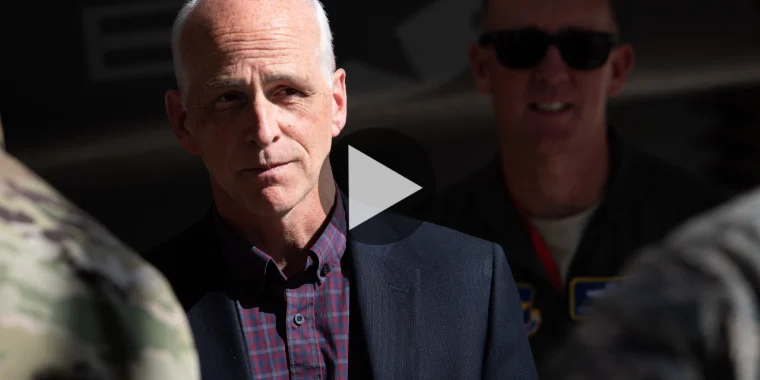
In
an
interview
Saturday
on
the
sidelines
of
the
2025
Reagan
National
Defense
Forum
in
Simi
Valley,
Calif.,
House
Armed
Services
Committee
Ranking
Member
Adam
Smith
offered
new
details
about
lawmakers’
compromise
on
the
2026
National
Defense
Authorization
Act
just
ahead
of
the
bill’s
Sunday
release.
He
also
weighed
in
on
Office
of
Management
and
Budget
Director
Russ
Vought’s
speech
to
the
national
security
establishment
and
discussed
the
Trump
administration’s
failure
to
disclose
orders
authorizing
combat
operations
—
including
strikes
on
alleged
drug
runners
in
the
Caribbean
—
to
Congress.
Stay
tuned
for
more
from
our
interview
with
HASC’s
top
Democrat.
*
State
takes
aim
at
Kalshi,
a
site
that
describes
itself
as
merely
participating
in
the
“sports
prediction”
market,
which
the
rest
of
the
world
calls
“gambling.”
[Reuters]
*
Terry
Rozier
pleads
not
guilty
to
in
sports
betting
investigation…
sorry,
in
sports
prediction
investigation.
[ESPN]
Jenner
&
Block
Expects
Associates
In
4
Days
A
Week:
The
change
is
set
for
March
1st,
2026.
Harvard
Law
Professor
Deported
Over
Shooting
Pellet
Gun:
The
nearby
synagogue
thinks
it
was
fair
game,
but
that’s
not
enough
to
stop
antisemitism
accusations.
There
Goes
The
Evidence!:
The
DOJ’s
case
against
James
Comey
somehow
got
even
weaker.
The
White
House
Is
Still
Starstruck
With
Sabrina
Carpenter:
Could
you
imagine
a
more
annoying
fan?
Quitting
Before
You
Start:
Alina
Habba
steps
down
from
the
job
she
didn’t
actually
have.
AI
Trends
Are
Shifting
The
Work
In-House:
It
gets
harder
for
outside
firms
to
justify
price
hikes
when
everyone
has
the
same
LLM.
Today,
the
Golden
Globes
announced
nominees
in
the
inaugural
podcast
category.
Which
host
of
a
Golden
Globe-nominated
podcast
has
a
JD
from
Boston
College?
Hint:
They
began
their
career
as
a
public
defender,
though
the
law’s
not
the
focus
of
the
nominated
podcast.
Ed.
note:
This
article
first
appeared
in
an
ILTA
publication.
When
law
firms
discuss
technology
adoption,
the
spotlight
typically
falls
on
lawyers
or
partners
as
the
primary
decision-makers
whose
buy-in
determines
a
rollout’s
level
of
success.
However,
the
support
of
a
different
type
of
legal
professional
is
equally
critical
for
ensuring
successful,
long-term
technology
adoption:
administrative
professionals.
Admins
often
serve
as
the
quiet
bridge
holding
all
the
moving
parts
of
a
law
firm
(and
its
clientele)
together.
With
unique
insight
into
the
workflows
of
different
practice
groups
and
office
culture,
they
understand
how
both
non-partner
attorneys
and
partners
operate,
and
where
those
workflows
intersect.
Their
interdepartmental
perspective
makes
them
natural
connectors
who
can
spot
adoption
challenges
long
before
they
become
firmwide
frustrations.
The
Nuance
of
Generational
Shifts
One
nuanced
observation
in
conversations
about
multi-generational
legal
workspaces
is
that
younger
attorneys
today
are
more
independent
than
their
predecessors.
They
rely
less
on
administrative
support
staff.
They
draft
their
own
documents,
manage
their
calendars,
and
navigate
systems
independently.
This
shift,
however,
does
not
mean
that
admin
staff
are
any
less
vital.
Partners
and
associates
alike
still
take
cues
from
trusted
staff
who
normalize
new
workflows.
At
the
same
time,
a
new
generation
of
administrative
professionals
is
entering
the
legal
sector.
Many
are
navigating
evolving
expectations
in
their
roles,
balancing
traditional
support
functions
with
new
responsibilities
tied
to
technology,
process
efficiency,
and
client
service.
Just
as
younger
attorneys
are
redefining
how
support
looks
in
legal
practices,
these
new
administrative
professionals
are
redefining
how
support
is
delivered,
and
when
empowered
with
training
and
visibility,
they
can
become
powerful
allies
in
driving
adoption.
Why
Administrative
Professionals
Matter
in
Adoption
Administrative
professionals
sit
in
a
unique
position
within
law
firms.
They
sit
at
the
intersection
of
workflows,
practice
groups,
and
attorney
levels,
giving
them
a
unique
perspective
that
is
invaluable
during
a
rollout.
•
Workflow
Insight:
Admins
understand
the
nuances
of
how
different
practice
groups
operate.
A
litigation
secretary
knows
the
pressure
of
tight
filing
deadlines,
while
a
corporate
secretary
might
focus
on
version
control
in
long
drafting
cycles.
These
insights
enable
them
to
quickly
identify
areas
where
a
new
system
may
cause
friction
and
help
mitigate
it.
•
Bridging
Non-Partner
Attorneys
and
Partners:
Admin
staff
often
see
both
sides.
They
understand
what
partners
prioritize
(client
demands,
efficiency,
risk
reduction)
and
what
associates
juggle
(billable
hours,
document-heavy
workflows,
balancing
learning
with
output).
This
dual
perspective
positions
them
to
bridge
adoption
gaps.
•
Trusted
Influencers:
Attorneys,
especially
partners,
often
lean
on
their
secretaries
for
day-to-day
processes.
If
an
admin
embraces
a
new
tool,
the
attorneys
they
support
are
more
likely
to
follow
suit.
Administrative
professionals
also
bring
a
diverse
range
of
experience
to
the
table.
Seasoned
administrative
staff
carry
an
institutional
memory
of
“how
things
really
get
done”
across
practice
groups,
making
them
invaluable
when
new
technologies
disrupt
long-standing
processes.
Meanwhile,
the
new
generation
of
administrative
professionals
entering
firms
is
often
more
comfortable
with
technology
while
also
navigating
changing
expectations
for
their
roles.
When
firms
empower
both
groups,
valuing
the
wisdom
of
experienced
staff
while
equipping
newer
professionals
with
tools
to
grow
into
evolving
roles,
they
create
a
stronger
bridge
for
technology
adoption
that
works
across
generations
and
practice
groups.
Challenges
When
Admins
Are
Overlooked
Unfortunately,
administrators
are
often
the
last
to
know
about
the
newest
tech
tools
decision
makers
choose
to
implement
at
their
firm.
They
must
adjust
on
the
fly,
support
attorneys
immediately,
and
keep
workflows
moving,
all
without
having
been
appropriately
included
in
the
planning.
This
approach
creates
two
significant
issues:
1.
Change
Fatigue:
Admin
professionals
are
constantly
adapting
to
new
processes
and
technologies.
Without
context
or
support,
every
rollout
can
feel
like
just
“one
more
thing,”
which
kills
morale
and
buy-in.
2.
Missed
Opportunity:
By
excluding
admins,
law
firms
lose
the
chance
to
leverage
their
insight
into
practice
group
workflows.
The
result?
Adoption
strategies
that
miss
the
mark
for
different
groups
or,
worse,
inconsistent
adoption
across
the
firm.
The
business
impact
is
real.
If
an
attorney
struggles
with
a
new
system
and
their
admin
isn’t
confident
in
it
either,
frustration
builds
quickly.
Missed
deadlines,
duplication
of
effort,
and
resistance
to
future
rollouts
all
stem
from
this
gap.
How
Firms
Can
Empower
Admin
Staff
Here
are
practical,
real-world
strategies
firms
can
use
to
position
administrative
professionals
as
technology
adoption
champions:
Admin
Inclusion
in
Pilot
Groups
•
Action:
Before
firmwide
rollouts,
include
secretaries
and
paralegals
in
pilot
testing
alongside
attorneys.
•
Impact:
Provides
admins
with
early
exposure,
enabling
them
to
anticipate
both
partner
and
non-partner
workflows
and
position
themselves
as
trusted
go-to
resources
as
adoption
scales.
•
Example:
Secretaries
who
piloted
a
new
DMS
became
the
primary
point
of
support
for
attorneys,
significantly
easing
the
rollout.
Feedback
Loops
with
Practice
Groups
•
Action:
Create
structured
channels
for
admins
to
share
adoption
challenges
by
practice
group.
•
Impact:
Surfaces
workflow
differences
early,
ensuring
adoption
strategies
feel
relevant
across
the
firm.
•
Example:
Set
up
quarterly
meetings
where
attorneys
and
admin
staff
share
what’s
working,
what’s
not,
with
new
tools.
Recognition
and
Visibility
•
Action:
Highlight
administrative
professionals
who
model
adoption
in
firm
newsletters,
town
halls,
or
rollout
communications.
•
Impact:
Sends
a
clear
message
that
admins
are
valued
partners
in
change,
encouraging
others
to
follow
their
lead.
•
Example:
Spotlight
secretaries
as
“tech
champion”
during
a
DMS
rollout,
boosting
morale
and
motivating
peers
to
adopt
faster.
Together,
these
strategies
shift
admins
from
being
“reactors”
to
becoming
drivers
of
adoption.
Stronger,
Sustainable
Adoption
When
firms
leverage
administrative
professionals
as
champions
of
change,
adoption
rates
improve
and
change
becomes
more
sustainable.
Why?
•
Consistency:
Admins
help
establish
standardization
across
practice
groups
by
reinforcing
best
practices
daily.
•
Efficiency:
Lawyers
at
all
levels
benefit
when
the
staff
who
manage
workflows
are
confident
and
equipped.
•
Inclusivity:
Recognizing
administrative
staff
as
adoption
partners
fosters
a
culture
of
shared
responsibility,
rather
than
placing
all
the
burden
on
lawyers.
•
Resiliency:
When
admins
are
trusted
champions,
they
are
more
willing
to
support
future
rollouts,
reducing
resistance
and
smoothing
the
path
for
ongoing
innovation.
The
reality
is
this:
technology
adoption
in
law
firms
is
never
just
about
the
tool
itself.
It’s
about
people,
and
the
people
who
often
make
the
difference
are
those
behind
the
scenes,
keeping
workflows
moving
no
matter
what’s
thrown
at
them.
Conclusion
For
too
long,
the
conversation
around
technology
adoption
has
centered
on
attorneys
and
partners.
However,
adoption
does
not
occur
in
a
vacuum;
it
takes
place
within
the
day-to-day
workflows
that
administrative
staff
are
most
familiar
with.
By
bringing
them
into
the
conversation
early
and
recognizing
their
impact,
firms
can
transform
admin
staff
from
passive
supporters
into
active
strategists.
They
become
the
bridge
between
partners
and
non-partners,
between
practice
groups,
and
ultimately
between
resistance
and
adoption.
So
in
your
next
rollout,
do
not
just
train
attorneys
and
hope
adoption
sticks.
Empower
the
professionals
who
keep
the
workflows
running.
Because
when
admin
staff
move
from
support
to
strategy,
everybody
wins.
Michelle
Zaman
is
a
Senior
Technology
Trainer
at
Morrison
Foerster
LLP
(MoFo),
where
she
leads
firmwide
learning
initiatives
that
drive
technology
adoption
and
innovation.
Her
background
in instructional design brings
strategic
insight
to
the
creation
of
people-centered
learning
experiences. She leverages generational
diversity
to
drive
legal
innovation
and enhance
law
firms’
long-term
sustainability. Michelle recently
joined
ILTA’s
NextGen
Legal
Innovators
Advisory
Group
to
support
and
mentor
the
next
generation
of
legal
technology
professionals.