According
to
recent
analysis
by
Bloomberg
Law,
a
review
of
Form
10-K
filings
from
S&P
500
firms
during
fiscal
years
2019–2024
revealed
AI-related
disclosures
increased
how
much?
Hint:
The
majority
of
these
disclosures
appeared
in
the
“risk
factors”
of
the
Securities
And
Exchange
Commission
forms.
Fraud
is
bad.
When
it
takes
place,
it
should
be
uncovered
and
prosecuted.
That
was
exactly
what
was
happening
before
dimwitted
MAGA
internet
addicts
melted
down
this
week
over
old
and
largely
debunked
daycare
fraud
claims
made
(up)
by
a
23-year-old
right-wing
YouTuber.
These
allegations
got
so
much
traction
online
because
they
involve
Minnesota’s
large
Somali
population
and
MAGA
cult
members
are
foaming-at-the-mouth
racists.
I
wish
it
wasn’t
that
simple,
but
it
is.
A
little
background
here:
claims
of
fraud
happening
in
Minnesota
daycare
facilities
run
by
Somali
immigrants
date
back
to
at
least
2018,
when
Minnesota
Gov.
Tim
Walz
had
just
been
elected.
At
that
time
a
Fox
affiliate
(who
else?)
“reported”
(in
other
words,
fabricated)
allegations
that
up
to
$100
million
in
childcare
funds
were
being
funneled
to
a
Somali
terror
group
overseas.
In
March
of
2018,
two
months
after
Walz
became
governor,
nonpartisan
Legislative
Auditor
Jim
Nobles
released
a
report
on
fraud
in
Minnesota’s
daycare
assistance
program
that
found
that
although
fraud
was
a
persistent
concern
there
was
no
evidence
to
substantiate
the
claim
of
$100
million
of
fraud
in
the
state’s
daycare
system
per
year,
nor
was
any
evidence
uncovered
of
any
taxpayer
funds
being
sent
to
terrorists.
Flash
forward
a
few
years
to
the
pandemic.
Millions
in
taxpayer
funds
from
the
USDA
were
paid
primarily
to
the
Twin
Cities
nonprofit
Feeding
Our
Future
through
a
Minnesota
state
agency
overseeing
emergency
food
programs
on
the
state
level.
The
money
was
paid
out
in
2020,
and
by
April
of
2021,
staff
at
that
Minnesota
state
agency
realized
something
was
very
wrong.
They
informed
the
FBI
that
Feeding
Our
Future
was
diverting
taxpayer
funds
away
from
child
nutrition
programs.
Following
an
official
investigation,
several
FBI
raids,
and
the
dissolution
of
Feeding
Our
Future,
prosecutions
of
those
involved
in
the
fraud
began
in
September
of
2022.
That
very
month,
Republicans
applauded
Walz
for
catching
the
fraud
so
early.
Just
kidding!
Instead,
even
as
the
prosecutions
began,
they
blamed
him
for
fraud
committed
by
third
parties
he
had
zero
involvement
with,
and
they
haven’t
shut
up
about
it
since.
Many
people
were
convicted
for
the
Feeding
Our
Future
fraud
as
the
criminal
cases
worked
their
way
through
the
system.
Not
one
of
them
was
a
Minnesota
state
employee.
No
state
employee
was
ever
implicated
in
this
case
in
doing
anything
illegal.
The
process
did,
however,
expose
vulnerabilities
in
Minnesota
to
public
program
fraud,
which
led
to
expanded
investigations
in
2024
and
2025.
There
were
more
prosecutions,
and
more
oversight
was
installed.
Some,
but
not
all,
of
the
fraud
defendants
prosecuted
during
this
multiyear
campaign
were
indeed
of
Somali
descent
(the
ringleader
of
the
Feeding
Our
Future
fraud
was
a
regular
old
Karen-looking
blonde
white
lady).
Then,
on
the
day
after
Christmas,
egged
on
by
Minnesota
Republicans,
23-year-old
content
creator
Nick
Shirley
released
a
social
media
video
in
which
he
visited
Twin
Cities
daycare
centers,
claimed
there
were
not
children
at
them,
and
fantasized
that
he
had
“uncovered
over
$110,000,000
[of
Somali
daycare
fraud]
in
ONE
day.”
His
video
could
have
just
as
easily
been
—
could
have
much
more
easily
been,
in
fact
—
a
video
of
daycare
employees
not
wanting
to
expose
the
children
under
their
care
to
a
random
creepy
young
man
with
a
camera
who
had
no
good
reason
to
be
there.
State
inspectors
immediately
followed
up
with
each
of
the
businesses
featured
in
Shirley’s
video
and
found
all
of
them
to
be
operating
as
expected.
Despite
Shirley’s
claims
being
almost
instantly
debunked,
they
went
viral
on
the
right-wing
internet,
because,
see
above,
howling
racists.
As
much
as
he
initiates
many
ridiculous
lies
himself,
he
also
follows
along
with
the
catchy
ones,
so
President
Donald
Trump
is
still
riding
the
coattails
of
Shirley’s
viral
video.
He’s
deployed
thousands
more
federal
immigration
agents
to
the
Twin
Cities
and
froze
federal
childcare
funds
owed
to
five
blue
states.
That
won’t
be
the
end
of
it
either.
In
the
wake
of
this
circus,
Walz
ended
his
campaign
for
a
third
term
as
Minnesota
governor.
“Every
minute
that
I
spend
defending
my
own
political
interest
would
be
a
minute
I
can’t
spend
defending
the
people
of
Minnesota
against
the
criminals
who
prey
on
our
generosity
and
the
cynics
who
want
to
prey
on
our
differences,”
he
said.
By
vastly
exaggerating
the
grain
of
truth
in
their
racist
fraud
fever
dreams,
Trump
and
his
supporters
may
have
found
a
temporary
justification
for
their
grotesqueries.
But
by
putting
his
state
above
his
own
ambitions,
Tim
Walz
has
ensured
that
these
MAGA
lies
will
swiftly
disappear.
In
an
age
when
a
few
hours
and
a
sensational
unverified
video
clip
can
change
everything,
it’s
difficult
to
remember
the
value
of
long-term
thinking.
Nevertheless,
things
do
still
matter
beyond
the
daily
news
cycle.
Ten
years
from
now,
Walz’s
legacy
will
be
cemented
in
Minnesota
and
nationwide;
MAGA’s
grassroots
army
of
liars
will
all
be
long
forgotten.
Jonathan
Wolf
is
a
civil
litigator
and
author
of Your
Debt-Free
JD (affiliate
link).
He
has
taught
legal
writing,
written
for
a
wide
variety
of
publications,
and
made
it
both
his
business
and
his
pleasure
to
be
financially
and
scientifically
literate.
Any
views
he
expresses
are
probably
pure
gold,
but
are
nonetheless
solely
his
own
and
should
not
be
attributed
to
any
organization
with
which
he
is
affiliated.
He
wouldn’t
want
to
share
the
credit
anyway.
He
can
be
reached
at [email protected].
Former
pop
megastar
Britney
Spears
is
now
fighting
the
IRS.
Last
month,
Spears
filed
a
petition
with
the
U.S.
Tax
Court
to
contest
a
$720,000
bill
for
the
year
2021
which
includes
taxes
and
penalties.
This
amount
does
not
include
interest.
The
U.S.
Tax
Court
specializes
in
resolving
tax
disputes
before
payment
is
required,
making
it
a
common
venue
for
taxpayers
unable
to
pay
disputed
amounts
upfront.
Taxpayers
can
also
sue
the
government
in
federal
district
courts
to
challenge
the
tax
but
the
court
only
has
refund
jurisdiction
which
means
the
taxpayer
must
pay
the
tax
in
full
first.
According
to
the
IRS
report,
the
auditor
added
$1,390,922
to
Spears’s
taxable
income
as
a
result
of
an
audit
of
her
S
corporation
return
named
Shiloh
Standing,
Inc.
An
S
corporation
is
a
pass-through
entity
so
the
corporation’s
income
or
net
loss
is
transferred
to
the
shareholders
based
on
their
ownership
percentage.
The
details
of
Shiloh
Standing
Inc.’s
audit
is
unknown
since
the
corporation
has
its
own
taxpayer
ID
number
(known
as
an
Employer
Identification
Number
or
EIN)
and
was
audited
separately.
But
the
tax
court
petition
states
that
the
entity
is
in
the
business
of
performing
arts
and
entertainment.
The
auditor
then
disallowed
$608,120
in
medical
expenses
claimed
as
an
itemized
deduction
claiming
that
Spears
did
not
prove
the
amount
claimed
was
a
medical
expense
and
paid
in
2021.
As
a
result
of
this
disallowance
and
thanks
to
complicated
tax
calculation
rules,
the
IRS
added
back
$334,372
originally
claimed
as
an
itemized
deduction.
The
thought
of
spending
$608,120
in
medical
bills
would
be
toxic
for
most
Americans.
But
for
some
current
or
former
celebrities
with
wealth,
this
is
not
that
unusual
as
high-end
rehab
facilities
can
charge
five-figure
fees
monthly.
The
petition
asked
the
court
to
remove
the
accuracy-related
penalty
against
Spears
because
there
is
no
tax
due,
and
in
the
alternative,
she
acted
in
good
faith
and
made
reasonable
attempts
to
comply
with
the
tax
laws
and
IRS
guidance.
Generally,
the
IRS
forgives
most
tax
penalties
if
the
taxpayer
can
show
reasonable
cause.
Reasonable
cause
is
shown
when
a
taxpayer
exercises
ordinary
business
care
and
prudence
in
determining
their
tax
obligations
but
is
unable
to
comply
with
those
obligations
due
to
circumstances
beyond
their
control.
Common
situations
favoring
reasonable
cause
include
reasonable
reliance
on
a
tax
professional,
severe
health
issues
for
the
taxpayer
or
their
immediate
family,
a
natural
disaster,
or
inability
to
obtain
records
that
are
not
the
taxpayer’s
fault.
Spears
states
in
her
petition
that
the
penalty
was
not
approved
by
an
immediate
supervisor
and
so
must
be
removed.
Supervisory
approval
is
required
by
law,
specifically
section
6751
of
the
Internal
Revenue
Code.
Generally,
when
a
taxpayer
is
presented
with
a
tax
adjustment
calculation
that
contains
a
penalty,
the
auditor
includes
in
the
report
a
letter
signed
by
a
supervisor
approving
the
penalty.
While
this
is
usually
standard
procedure
for
an
IRS
auditor,
it
can
be
missed
at
times.
If
the
taxpayer
can
prove
that
there
was
no
supervisor
approval,
the
penalty
can
be
automatically
removed
without
proving
reasonable
cause.
From
2008
to
late
2021,
Spears
was
placed
in
a
conservatorship
by
her
father
due
to
her
mental
health
issues.
At
the
time
the
2021
returns
were
timely
filed,
which
would
be
before
April
15,
2022
or
October
15,
2022
with
an
extension,
it
is
unclear
how
much
she
knew
about
her
financial
affairs
or
whether
she
understood
the
numbers
in
her
2021
tax
returns.
If
she
reasonably
relied
on
her
tax
preparer
and
her
fiduciaries,
she
has
a
strong
case
for
showing
reasonable
cause.
But
ultimately,
it
is
Spears’s
responsibility
to
ensure
that
the
tax
returns
are
correct,
even
if
it
requires
her
to
hire
a
second
professional
to
double
check
the
returns.
Since
the
case
appears
to
be
about
business
and
medical
expenses,
this
case
is
likely
to
settle
quickly
if
Spears
can
produce
the
documentation
to
IRS
satisfaction.
While
the
case
is
in
the
tax
court’s
docket,
it
will
be
sent
to
a
settlement
officer
from
the
IRS
Office
of
Appeals.
As
the
name
implies,
a
settlement
officer
must
consider
the
hazards
of
litigation
so
they
may
allow
a
deduction
in
a
close
case.
What
can
a
noncelebrity
learn
from
Britney
Spears’s
fight
with
the
IRS?
First,
keep
good
records
of
all
business
expenses
as
you
may
never
know
when
the
IRS
will
audit
the
returns.
This
is
particularly
important
if
the
expenses
are
unusually
large.
Medical
expenses
can
be
large
if
someone
is
uninsured,
or
if
the
insurance
does
not
cover
the
entire
bill.
Second,
if
you
feel
uncomfortable
about
claiming
a
large
deduction,
particularly
if
the
nature
of
the
expense
seems
to
be
in
a
gray
area,
consult
a
tax
professional
about
it.
Steven
Chung
is
a
tax
attorney
in
Los
Angeles,
California.
He
helps
people
with
basic
tax
planning
and
resolve
tax
disputes.
He
is
also
sympathetic
to
people
with
large
student
loans.
He
can
be
reached
via
email
at [email protected].
Or
you
can
connect
with
him
on
Twitter
(@stevenchung)
and
connect
with
him
on LinkedIn.
This
morning,
ICE
agents
shot
and
killed
a
woman
in
Minneapolis.
The
agents,
part
of
a
Minnesota
surge
designed
by
the
administration
to
harass
the
local
Somali
immigrant
population
and,
by
extension,
keep
media
focus
on
a
day
care
scandal
that
conservatives
recently
“uncovered”
even
though
the
mainstream
media
had
covered
the
case
for
over
a
year.
This
political
theater
has
now
cost
a
woman
her
life
and,
because
“being
law
enforcement
means
legally
never
having
to
say
you’re
sorry,”
there
will
likely
be
no
consequences
for
this.
Masked
ICE
officers
approach
a
Honda
Pilot
stopped
on
Portland
Avenue.
The
driver
was
a
37-year-old
U.S.
citizen
working
as
a
legal
observer.
She
was
not
the
target
of
any
law
enforcement
investigation
or
activity,
according
to
Minneapolis
Police
Chief
Brian
O’Hara.
Video
of
the
incident
shows
one
officer
tell
the
driver
to
“get
out
of
the
f*cking
car”
and
trying
to
open
the
door.
Another
seems
to
be
ordering
her
to
leave.
The
driver
then
backs
up
and
as
she
drives
away
from
the
officers,
an
officer
fires
three
shots.
The
woman
slumped
over
in
her
seat
and
was
later
pronounced
dead
at
Hennepin
Healthcare.
DHS
spokesperson
Tricia
McLaughlin
said
the
woman
“weaponized
her
vehicle,
attempting
to
run
over
our
law
enforcement
officers
in
an
attempt
to
kill
them.”
Homeland
Security
Secretary
and
dog
murderer
Kristi
Noem
called
it
“an
act
of
domestic
terrorism,”
a
wild
claim
to
make
about
a
slowly
departing
SUV
on
the
day
after…
JANUARY
6.
The
Party
told
you
to
reject
the
evidence
of
your
eyes
and
ears.
It
was
their
final,
most
essential
command.
Mayor
Jacob
Frey,
who
had
actually
watched
the
video,
described
the
DHS
press
spin
succinctly.
“That
is
bullshit.”
He’s
right,
not
that
it
will
end
up
mattering.
It
was
also
the
inevitable
result
of
a
government
lowering
its
standards
to
the
bottom
of
the
ocean
to
arm
any
aspiring
Dirty
Harry
with
a
pulse
and
a
burning
desire
to
harass
and
beat
anyone
based
on
race.
They
don’t
even
have
to
pretend
it’s
not
just
about
race
thanks
to
Brett
Kavanaugh!
We’ve
been
treated
to
video
of
ICE
agents
fumbling
their
guns
and
waving
them
at
innocent
bystanders
and
running
over
people
with
their
cars.
The
agency
has
struggled
so
badly
to
meet
Trump’s
hiring
goals
that
it
eliminated
age
requirements
entirely
(18-year-olds
welcome!).
Reports
indicate
that
one-third
of
recruits
at
the
Federal
Law
Enforcement
Training
Center
failed
a
modest
physical
fitness
test.
Half
failed
an
open-book,
open-notes
test
on
immigration
and
constitutional
law.
Who
fails
an
open-book,
open-notes
exam?
The
administration
will
make
sure
the
man
who
killed
this
woman
in
cold-blood
this
morning
won’t
face
criminal
prosecution.
Hennepin
County
Attorney
Mary
Moriarty
says
she’s
pushing
for
a
local
investigation.
The
FBI
and
Minnesota
Bureau
of
Criminal
Apprehension
are
supposedly
looking
into
it.
But
federal
agents
enjoy
broad
protections
from
state
prosecution,
and
this
Justice
Department
under
this
administration
isn’t
exactly
eager
to
hold
ICE
accountable
for
anything.
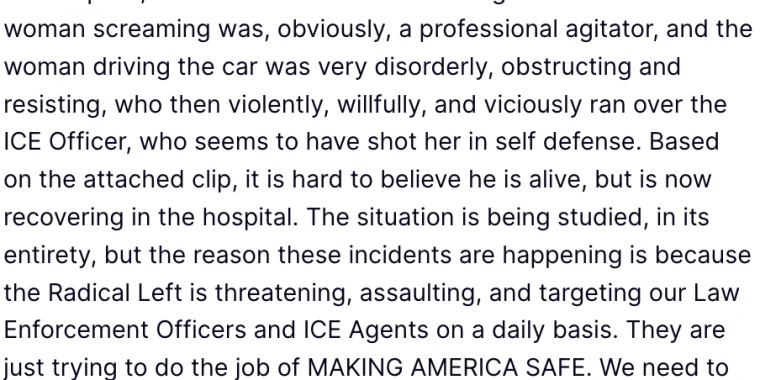
For
what
it’s
worth,
Trump’s
post
includes
a
video
clip
of
the
shooting
where
the
ICE
agent
who
is
“hard
to
believe
he
is
alive”
got
up
next
to
her
car
after
backing
up
and
beginning
to
go
the
other
way.
It’s
in
super-duper
slow
mo
in
order
to
obscure
the
fact
that
the
car
was
inching
forward
when
the
agent
was
so
grievously…
near
it.
Yeah,
Trump’s
going
to
give
the
guy
a
medal
at
his
pardoning
ceremony.
Probably
the
Purple
Bone
Spur
or
something.
But
even
a
civil
effort
to
discourage
dangerous
—
and
in
this
case,
deadly
—
incompetence
or
abuse
must
deal
with
qualified
immunity,
the
court-invented
doctrine
shielding
government
officials
from
the
law
unless
they
violate
“clearly
established”
constitutional
rights.
And
if
you’re
wondering
what
qualifies
as
“clearly
established,”
the
answer
is:
basically
nothing!
Because
the
courts
have
come
to
a
dangerously
dystopian
consensus
that
the
law
does
not
“clearly
establish”
rights
if
the
exact
scenario
of
police
misconduct
has
never
been
ruled
on
before…
which
means
they
can’t
rule
on
it
now!
It’s
a
situation
that
Kafka
would
dismiss
as
too
over-the-top.
Qualified
immunity
also
asks
whether
a
“reasonable
officer”
would
have
known
their
conduct
was
unlawful.
But
what
counts
as
“reasonable”
for
officers
barely
passing
open
book
con
law
exams?
So
now
you
have
a
rapidly
recruited
and
questionably
vetted
force,
built
off
warlike
recruiting
pitches,
promised
cushy
federal
protections
plus
a
doctrine
that
says,
“Don’t
worry,
you’ll
never
face
civil
liability
unless
someone
somewhere
has
already
litigated
a
situation
just
like
this
one.”
Even
if
the
agents
didn’t
kill
anyone
today,
this
is
a
noxious
combination
that
incentivizes
reckless
action
—
killing
an
innocent
bystander
was
an
inevitability.
Usually,
these
cases
deal
with
state
law
enforcement
avoiding
federal
civil
rights
laws
based
on
qualified
immunity
—
a
doctrine
that
stems
from
a
clerical
error.
As
Cardozo
Law
professor
Alexander
Reinert
uncovered,
the
original
text
of
Section
1983
—
the
civil
rights
statute
at
issue
—
specifically
stated
that
officials
couldn’t
hide
behind
any
state
common
law
protections
for
law
enforcement.
Which
makes
sense
because
what
would
be
the
point
of
a
federal
civil
rights
law,
passed
during
Reconstruction,
if
it
didn’t
supersede
state
law.
But
when
someone
compiled
the
federal
statutes
in
1874,
they
just…
left
that
part
out.
Oops.
Here
we
have
a
federal
law
enforcement
officer
killing
a
woman,
so
it
should
be
an
easier
question:
of
course
the
federal
Congress
who
passed
this
law
did
not
intend
to
render
it
inapplicable
to
the
federal
government.
Yet,
the
Supreme
Court
went
ahead
and
applied
the
whole
rickety
qualified
immunity
doctrine
to
federal
agents.
So
here
we
are
with
a
scriveners
error
creating
a
nonsense
doctrine
to
protect
state
law
enforcement
that’s
now
clumsily
bolted
onto
federal
agents.
Not
that
Bivens
—
the
basis
of
a
citizen’s
recourse
against
federal
actors
—
has
much
juice
left
in
it
anyway,
but
that’s
another
legal
and
moral
failing
of
this
Supreme
Court.
Based
on
what’s
been
happening
with
Bivens,
it’s
arguable
that
victims
have
a
better
chance
holding
a
state
officer
accountable.
Congress
could
get
rid
of
this
protection
for
ICE
agents
—
there
was
a
bill
to
do
just
that
last
year
—
but
Congress
has
its
hands
full
keeping
the
Epstein
files
from
getting
out.
No
one
in
a
position
to
address
this
injustice
will
do
anything
about
it.
Because
“law
and
order”
politicians
like
their
law
enforcement
unfettered
by
accountability.
And
so
officers
keep
shooting
and
courts
keep
shrugging.
Even
while
families
have
to
bury
their
loved
ones
killed
over
this
doctrine.
A
woman
has
a
fundamental
right
to
make
her
own
health
care
decisions,
including
the
decision
to
have
an
abortion.
The
state
did
not
meet
its
burden
of
demonstrating
the
abortion
laws
further
the
compelling
interest
of
protecting
unborn
life
without
unduly
infringing
upon
the
woman’s
fundamental
right
to
make
her
own
health
care
decisions.
—
Chief
Justice
Lynne
Boomgaarden
of
the
Wyoming
Supreme
Court,
writing
for
the
majority
in State
of
Wyoming
v.
Johnson,
where
the
court
struck
down
the
state’s
abortion
pill
ban
as
unconstitutional.
The
court
also
held
Wyoming’s
near-total
abortion
ban
to
be
invalid.
In
comments
noted
by
Courthouse
News
Service,
Julie
Burkhart,
president
of
Wellspring
Health
Access,
called
the
ruling
“a
victory
for
the
fundamental
right
of
people
across
Wyoming
to
make
decisions
about
their
own
lives
and
health.”
Wellspring
is
the
state’s
only
abortion
provider.
Staci
Zaretsky is
the
managing
editor
of
Above
the
Law,
where
she’s
worked
since
2011.
She’d
love
to
hear
from
you,
so
please
feel
free
to
email
her
with
any
tips,
questions,
comments,
or
critiques.
You
can
follow
her
on Bluesky, X/Twitter,
and Threads, or
connect
with
her
on LinkedIn.
Lindsey
Halligan
is
an
insurance
lawyer
cosplaying
as
the
U.S.
Attorney
for the
Eastern
District
of
Virginia.
Because
she
is
famously
*not*
the
actual
U.S.
Attorney
for
the
district.
Though
the
Trump
administration
attempted
to
install
her
in
the
job,
Judge
Cameron
Currie
ruled
that
28
USC
§
546
allows
the
president
to
make
only
one
interim
appointment
as
U.S.
Attorney
in
any
given
federal
district,
after
which
the
position
may
only
be
filled
by
a
Senate-confirmed
nominee
or
a
judicially
installed
placeholder.
(Trump
used
up
that
appointment
on
Halligan’s
predecessor
Erik
Seibert
who
was
pushed
out
of
the
role
for
failing
to
act
like
a
trained
seal
and
prosecute
Donald
Trump’s
political
enemies.)
So,
um,
why
is
Schrödinger’s
U.S.
Attorney
still
out
there
signing
indictments?
That’s
what
Judge
David
Novak
wants
to
know,
writing
in
a
recent
order,
“the
Court
hereby
DIRECTS
Ms.
Halligan
to
file,
within
seven
(7)
days
of
the
issuance
of
this
Order,
a
pleading
explaining
the
basis
for
Ms.
Halligan’s
identification
of
herself
as
the
United
States
Attorney,
notwithstanding
Judge
Currie’s
contrary
ruling.
She
shall
also
set
forth
the
reasons
why
this
Court
should
not
strike
Ms.
Halligan’s
identification
of
herself
as
United
States
Attorney
from
the
indictment
in
this
matter.
Ms.
Halligan
shall
further
explain
why
her
identification
does
not
constitute
a
false
or
misleading
statement.”
An
attorney
with
any
shred
of
respect
for
the
rule
of
law
would
be
committing
professional
seppuku
after
reading
those
words,
yet,
somehow
I
doubt
that’s
Halligan’s
takeaway.
And
she
now
has
a
week
to
come
up
with
an
explanation
that
somehow
reconciles
“Judge
Currie
ruled
I
am
not
the
U.S.
Attorney”
with
“I
keep
calling
myself
the
U.S.
Attorney
anyway.”
That’s…
quite
the
needle
to
thread.
Judge
Novak
is
forcing
a
reality
check
on
Halligan’s
imagined
authority,
one
that’s
desperately
needed.
Read
the
full
order
below.
Kathryn
Rubino
is
a
Senior
Editor
at
Above
the
Law,
host
of
The
Jabot
podcast,
and
co-host
of
Thinking
Like
A
Lawyer.
AtL
tipsters
are
the
best,
so
please
connect
with
her.
Feel
free
to
email
her
with
any
tips,
questions,
or
comments
and
follow
her
on
Twitter
@Kathryn1 or
Mastodon
@[email protected].
In
its
2025
Human
Rights
Situation
Report,
the
commission
highlighted
concerns
over
the
Zimbabwe
Broadcasting
Corporation’s
(ZBC)
perceived
lack
of
editorial
impartiality.
Under
section
38B
of
the
Broadcasting
Services
Act,
motorists
must
show
a
valid
ZBC
radio
licence
or
exemption
certificate
when
licensing
or
insuring
a
vehicle,
effectively
making
payment
mandatory
to
access
essential
services.
ZHRC
says
this
enforcement
is
unconstitutional
when
applied
to
a
public
broadcaster
that
does
not
consistently
meet
the
impartiality
standards
outlined
in
section
61(4)
of
the
Constitution.
It
said:
“Linking
vehicle
licensing
and
insurance
to
a
ZBC
radio
listener’s
licence
raises
concerns,
apart
from
the
licence’s
significant
cost,
about
freedom
of
choice
in
information
sources.
“This
undermines
the
right
to
freedoms
of
movement,
expression
and
access
to
information
and
obliges
people
to
financially
support
a
State-run
broadcaster
whose
editorial
content
is
partisan
in
violation
of
section
61(4)
constitutional
guarantee
of
media
freedom
through
the
requirement
of
State-owned
media
to
be
impartial,
independent
and
accessible
to
divergent
and
dissenting
views,
a
regression
of
the
rights
that
the
Zimbabwean
Constitution
seeks
to
protect.”
ZHRC
criticised
the
mandatory
payment
of
radio
licences,
saying
it
undermines
freedom
of
expression
and
access
to
information
by
removing
citizens’
choice
over
which
media
to
support.
The
commission
also
noted
that
enforcing
compliance
through
vehicle
licensing
and
insurance
places
an
unfair
financial
burden
on
the
public.
It
argued
that
such
practices
violate
consumer
protection
principles,
which
require
transparency
and
fair
access
to
information,
and
noted
that
many
people
consider
the
licensing
fees
expensive.
ZHRC
has
called
on
authorities
to
urgently
review
the
radio
licensing
framework
and
ensure
it
aligns
with
constitutional
standards
for
public
media
and
the
protection
of
fundamental
rights.
The
PVO
Amendment
Act
itself
is
highly
contentious,
introducing
sweeping
new
regulations,
registration
requirements,
civil
and
criminal
penalties
for
non-governmental
and
charitable
organisations,
citing
compliance
with
international
Financial
Action
Task
Force
recommendations.
The
application,
filed
on
24
December
2025
and
citing
Parliament,
the
Minister
of
Public
Service,
Labour
and
Social
Welfare
(Edgar
Moyo),
the
President
(Emmerson
Mnangagwa)
and
the
Attorney
General
(Virginia
Mabiza),
as
respondents,
alleges
that
the
law
was
birthed
through
a
“legally
irregular
process”
that
“flouted
the
Constitution
and
the
Standing
Orders.”
“The
legislative
process
that
culminated
in
the
promulgation
of
the
Private
Voluntary
Organisations
Amendment
Act
No.
1
of
2025
violated
Sections
131
(2)
and
(4),
of
the
Constitution
and
Section
133
(1)
and
138
(1)
of
the
Parliament
of
Zimbabwe
(The
Senate)
Standing
Rules
and
Orders
and
in
that
regard,
Parliament
failed
to
fulfil
its
constitutional
obligations,”
Matete
said
in
his
founding
affidavit.
“In
allowing
the
Private
Voluntary
Organisations
Amendment
Bill
to
sail
through
its
processes
in
light
of
the
violations
referred
to
in
paragraph
1
above,
Parliament
failed
to
fulfill
its
obligations
in
terms
of
section
119
(1)
and
(2)
of
the
Constitution
of
Zimbabwe
“In
assenting
to
the
Private
Voluntary
Organisations
Amendment
Bill,
which
had
not
been
passed
in
accordance
with
the
constitution
as
read
with
the
Standing
orders,
the
President
failed
to
fulfill
his
constitutional
obligations
in
terms
of
section
90
(1)
of
the
Constitution
obliging
him
to
ensure
the
constitution
and
all
other
laws
are
faithfully
observed.”
Matete
said
the
enactment
of
the
PVO
act,
which
came
into
effect
on
1
April
2025
falls
foul
of
that
basic
constitutional
requirement.
“Being
a
concerned
citizen,
I
thus
have
a
right
to
see
to
it
that
the
laws
that
bind
me
and
other
citizens
are
promulgated
through
processes
not
marred
with
irregularity,”
he
said
in
his
founding
affidavit.
“Consequently
I
am
entitled
as
such
to
being
governed
by
laws
that
are
properly
promulgated
in
terms
of
the
applicable
procedural
legislative
processes
and
to
challenge
laws
that
fall
below
that
standard.
As
such
I
have
a
direct
and
substantial
interest
in
the
matter.”
At
the
core
of
Matete’s
challenge
is
that
the
PVO
Bill
debated
and
passed
by
the
National
Assembly
was
fundamentally
different
from
the
one
later
sent
to
the
Senate,
bypassing
crucial
stages
of
scrutiny
and
violating
mandatory
procedures.
“It
is
inexplicable
that
a
Bill
approved
during
debate
by
the
National
Assembly
would
reach
the
Senate,
in
the
same
building,
with
missing
clauses,”
states
Matete
in
his
founding
affidavit.
“Clearly,
it
is
apparent
that
the
National
Assembly
and
the
Senate
in
the
first
and
second
reading
debated
and
passed
two
fundamentally
different
Bills.”
The
application
hinges
on
detailed
procedural
allegations.
It
notes
that
when
the
Bill
was
transmitted
to
the
Senate
in
October
2024,
key
sections,
including
the
Long
Title
and
Clauses
2,
3,
4,
5,
7,
8,
9,
10,
14
and
25
were
absent.
These
omissions
were
only
addressed
months
later
in
February
2025,
when
the
Minister
of
Justice,
Ziyambi
Ziyambi,
initiated
an
unusual
“re-committal”
process
during
the
Senate’s
third
reading.
“There
is
no
such
process
provided
for
in
the
constitution
or
Standing
Orders
whereby
a
Bill
is
re-committed
to
a
House
of
Parliament,”
argues
the
applicant.
“Such
procedure
is
alien
and
has
no
basis
at
law.”
The
filing
includes
damning
evidence
from
the
parliamentary
record
(Annexure
A),
a
Hansard
extract
where
Minister
Ziyambi
concedes
the
omissions,
stating:
“We
have
clauses
that
were
omitted
when
the
Bill
was
transmitted
from
the
National
Assembly
to
the
Senate.”
The
applicant
argues
this
fatally
flawed
process
means
the
Bill
that
eventually
received
Presidential
assent
never
properly
underwent
the
constitutionally
required
first
and
second
readings
in
the
Senate. “The
Bill
that
in
fact
passed
the
third
reading
in
Senate
and
was
presented
to
the
President
for
assent
never
went
through
the
first
and
second
readings.
It
only
went
through
the
third
reading,”
the
affidavit
reads.
Furthermore,
the
application
accuses
Parliament
of
failing
its
constitutional
duty
to
“protect
the
Constitution
and
promote
democratic
governance,”
and
charges
that
the
President
violated
his
oath
of
office
by
assenting
to
a
Bill
not
passed
in
accordance
with
the
law.
“Nothing
legally
valid
can
be
born
out
of
a
legally
irregular
process.
It
is
a
nullity
and
cannot
stand,”
the
application
concludes,
seeking
an
order
for
the
entire
act
to
be
“struck
down
and
declared
invalid.”
The
respondents
have
21
days
to
file
notices
of
opposition.
Figures
from
the
Zimbabwe
Parks
and
Wildlife
Management
Authority
(ZimParks)
show
that
1
760
wire
snares
were
recovered
in
Hwange
National
Park
and
the
Victoria
Falls
area
in
2024.
In
the
first
ten
months
of
2025,
a
further
1
048
snares
were
removed,
underscoring
the
persistence
of
illegal
snaring
in
one
of
southern
Africa’s
most
important
conservation
landscapes.
ZimParks
says
snaring
is
most
common
along
park
boundaries
and
buffer
zones,
particularly
around
Sinamatella,
Hwange
Main
Camp,
Matetsi
and
Robins
Camp,
as
well
as
in
nearby
communities
such
as
Dete
and
Mambanje.
“Our
teams
remain
actively
deployed
on
the
ground,
conducting
regular
patrols
and
monitoring
exercises
to
combat
snaring
and
other
illegal
activities,”
ZimParks
said
in
a
written
response.
“This
consistent
field
presence
has
been
instrumental
in
safeguarding
wildlife
populations.”
However,
conservation
organisations
operating
in
these
areas
say
the
rising
number
of
recovered
snares
points
to
an
escalating
problem
rather
than
success.
Painted
Dog
Conservation
(PDC),
which
runs
extensive
anti-poaching
patrols
in
and
around
Hwange,
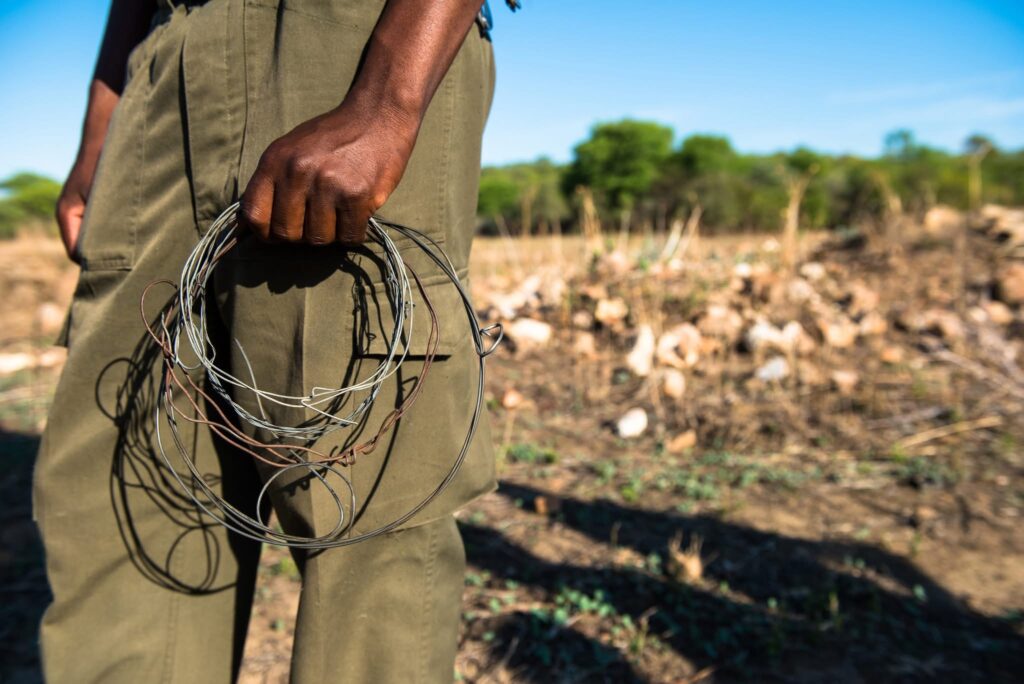
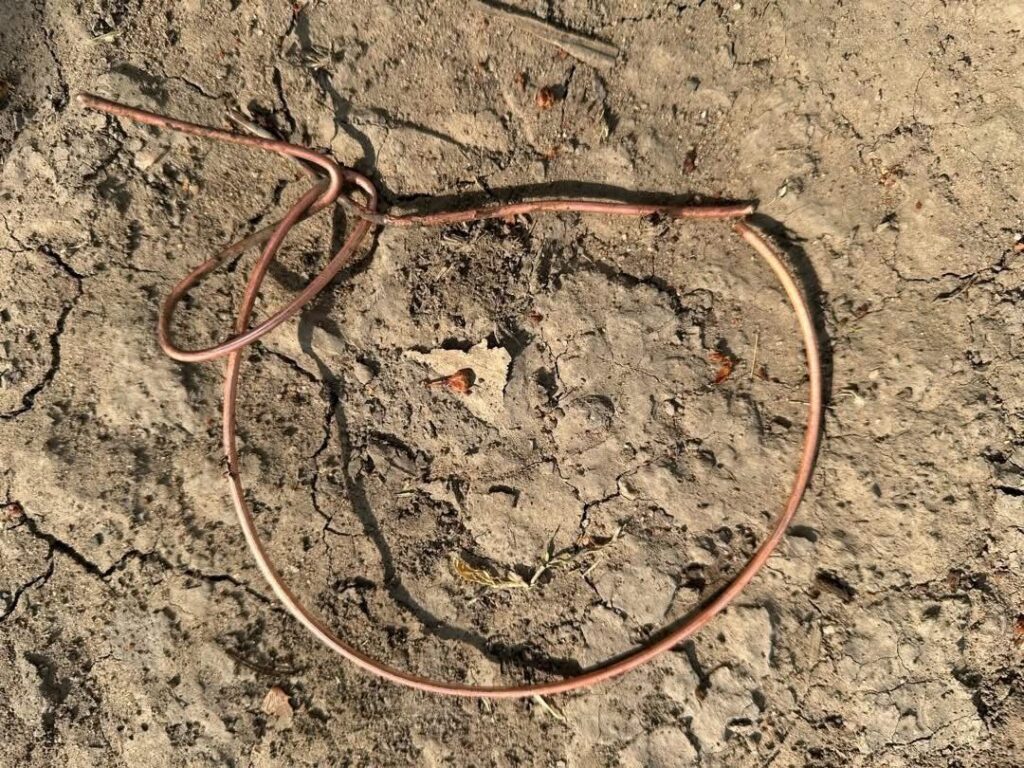
describes
wire
snares
as
one
of
the
most
indiscriminate
threats
to
wildlife.
Pics
supplied
by
Painted
Dog
Conservation
(PDC)
“Poachers
are
quite
skilled
and
know
what
they
are
targeting,”
said
David
Kuvaoga,
operations
director
at
PDC.
“But
the
snare
itself
is
not
selective.”
He
said
animals
of
all
sizes
are
caught.
“We
have
seen
elephants
trapped
by
the
trunk,
lions,
buffalo,
giraffe
and
painted
dogs,”
Kuvaoga
said.
“Once
an
animal
is
caught,
it
can
suffer
for
hours
or
days.
Many
die
without
ever
being
seen.”
PDC
rangers
removed
more
than
3
500
wire
snares
in
2024
across
Hwange,
the
Gwayi
Valley
and
surrounding
forestry
areas.
“For
every
snare
we
remove,
there
are
animals
that
have
already
been
injured
or
killed,”
he
added.
In
the
Victoria
Falls
area,
the
Victoria
Falls
Anti-Poaching
Unit
(VFAPU)
has
reported
a
steady
increase
in
snaring
incidents,
particularly
during
the
dry
season
when
wildlife
movements
intensify.
VFAPU
recorded
59
snares
recovered
in
September
2025
and
54
in
October,
alongside
confirmed
wildlife
losses
including
buffalo
and
hyena.
“Animals
lost
to
poaching
is
always
a
bitter
pill
to
swallow,”
VFAPU
said
in
its
October
operational
report.
“Sadly,
we
lost
three
animals
that
we
know
of.
From
every
case,
we
learn
more
about
how
these
poaching
groups
operate.”
VFAPU
said
the
regular
recovery
of
snares
reflects
active
and
ongoing
poaching,
prompting
expanded
patrols
in
collaboration
with
ZimParks
and
neighbouring
ranger
units.
At
the
Conservation
Wildlife
Fund
(CWF)
in
Hwange,
conservationists
caution
against
viewing
high
snare
recovery
figures
as
progress.
“It
is
difficult
to
describe
collecting
snares
as
success,”
said
Debra
Ogilvie-Roodt
of
CWF.
“Success
would
be
seeing
fewer
snares
being
set
in
the
first
place.”
She
said
snares
remain
lethal
long
after
they
are
placed.
“A
snare
doesn’t
stop
killing
once
it’s
set,”
Ms
Ogilvie-Roodt
said.
“Unless
it
is
found
and
removed,
it
will
continue
to
trap
animals.
We
have
seen
lions
with
snares
around
their
necks,
giraffes
caught
and
elephants
injured.
Many
do
not
survive.”
ZimParks
acknowledges
the
scale
of
the
challenge
and
says
it
is
intensifying
enforcement
and
cooperation
with
conservation
partners.
The
authority
works
with
organisations
including
Painted
Dog
Conservation,
Conservation
Wildlife
Fund,
Friends
of
Hwange,
Dete
Animal
Rescue
Trust,
Victoria
Falls
Anti-Poaching
Unit
and
Victoria
Falls
Wildlife
Trust,
many
of
which
operate
outside
protected
areas
where
most
snares
are
set.
“These
partners
play
a
critical
role
in
early
detection
and
rapid
response,”
ZimParks
said.
ZimParks
says
its
anti-snaring
strategy
includes
increased
law-enforcement
patrols,
de-snaring
operations,
sniffer
dogs,
intelligence
networks,
technology
such
as
drones
and
camera
traps,
and
community
engagement
through
programmes
like
CAMPFIRE.
The
authority
warns
that
snaring
threatens
not
only
biodiversity
but
also
livelihoods.
“Snaring
poses
a
serious
ecological
threat
and
undermines
wildlife-based
tourism,
which
is
a
major
revenue
earner
for
local
communities
and
the
country,”
ZimParks
said.
BULAWAYO
–
Chief
Justice
Luke
Malaba
will
reach
the
mandatory
retirement
age
for
judges
in
May
for
the
second
time,
and
members
of
the
legal
profession
will
be
watching
closely
for
clues
about
his
impending
exit
when
he
opens
the
2026
legal
year
next
week.
Malaba
turns
75
on
May
15,
the
revised
retirement
age
introduced
after
the
ruling
Zanu
PF
party
amended
the
constitution
in
2021
to
allow
him
to
remain
in
office
beyond
the
then-limit
of
70,
which
he
had
already
reached
in
May
of
that
year.
The
Chief
Justice’s
looming
retirement
comes
at
a
politically
sensitive
moment,
with
Zanu
PF
pushing
for
another
constitutional
amendment
–
this
time
to
extend
President
Emmerson
Mnangagwa’s
second
and
final
term
from
2028
to
2030.
Any
such
amendment
is
almost
certain
to
be
challenged
in
court,
with
the
matter
ultimately
landing
before
the
Constitutional
Court,
potentially
placing
Malaba
in
a
decisive
position
over
its
legality.
Lawyers
say
tradition
dictates
that
a
retiring
Chief
Justice
uses
the
official
opening
of
the
legal
year
to
signal
their
departure
and
bid
farewell
to
the
profession.
Malaba
notably
did
not
do
so
in
2023,
a
move
widely
interpreted
as
reflecting
prior
knowledge
of
efforts
to
extend
his
tenure.
“It’s
also
tradition
that
a
Chief
Justice
does
not
assign
himself
new
matters
in
his
final
year,”
one
senior
lawyer
said.
“We
will
also
be
watching
to
see
what
he
does.”
Some
within
the
legal
fraternity
fear
Zanu
PF
could
use
the
Mnangagwa
2030
amendment
to
again
manipulate
constitutional
provisions
on
judges,
this
time
by
removing
the
age
cap
altogether,
effectively
allowing
Malaba
to
remain
in
office
indefinitely.
Lawyers
warn
such
a
move
would
permanently
tether
Malaba’s
legacy
to
the
ruling
party,
staining
the
career
of
a
jurist
once
widely
regarded
as
accomplished
and
principled.
Amid
the
uncertainty,
ZimLive
understands
that
Malaba
has
quietly
begun
preparing
for
his
exit.
He
is
reported
to
have
approached
the
Judicial
Service
Commission
(JSC)
seeking
working
space
in
Bulawayo,
which
insiders
have
dubbed
“the
office
of
the
retired
Chief
Justice.”
It
remains
unclear
why
Malaba
would
require
a
state-funded
office
after
retirement.
The
Chief
Justice
has
also
reportedly
undertaken
renovations
at
his
home
in
Kumalo
suburb,
which
some
interpret
as
acceptance
that
his
tenure
is
nearing
its
end.
The
JSC
said
it
would
not
be
commenting
on
the
Chief
Justice’s
retirement.







 Kathryn