Last
year,
Goodwin
announced
its
bonus
structure
in
early
January.
Not
that
there’s
anything
necessarily
wrong
about
that
—
many
firms
don’t
pay
out
their
bonuses
until
the
new
year,
so
there’s
nothing
magic
about
hearing
about
it
until
January.
But,
like
Clark
Griswold
and
his
pool,
you
just
want
to
know
what
you’re
getting
before
shelling
out
for
the
holidays,
you
know?
Well,
this
year,
the
firm
isn’t
leaving
its
team
in
suspense.
The
Top
20
Am
Law
firm,
sitting
on
almost
$2.5B
in
revenue,
put
out
its
bonus
announcement
and
it’s
not
just
associates
getting
the
good
news.
The
associates
are
getting
the
market
standard
combination
of
annual
bonus
and
belated
Milbank
summer
bonus
match
(pending
the
associate
meeting
the
requisite
performance
benchmarks,
of
course).
Bonuses
will
show
up
in
the
January
30
checks.
Bonus
memos
announcing
the
same
chart
also
went
out
to
the
London
&
Cambridge,
Luxembourg,
Singapore,
and
Hong
Kong
associates.
But
the
news
doesn’t
end
with
the
associates.
As
an
industry,
counsel
consistently
get
left
in
the
dark
around
bonus
time.
The
perils
of
being
off-grid.
Goodwin
is
offering
more
transparency
to
the
counsel
cohort,
informing
them
that
they
will
be
eligible
for
a
$25,000
special
bonus
atop
their
individualized
bonus
deals.
And
it
doesn’t
stop
there,
with
Department
and
Discovery
Attorneys
eligible
for
a
$6,000
special
bonus.
Beyond
the
lawyers,
Goodwin
is
paying
bonuses
to
the
Global
Operations
Team
at
all
levels
—
from
secretaries
and
assistants
to
directors
and
chiefs.
These
bonuses
are
individualized,
but
the
team
knows
something
is
appearing
in
their
stockings.
A
good
day
at
Goodwin.
Please
help
us
help
you
when
it
comes
to
salary
news
at
other
firms.
As
soon
as
your
firm’s
memo
comes
out,
please email
it
to
us (subject
line:
“[Firm
Name]
Salary”)
or
text
us
(646-820-8477).
Please
include
the
memo
if
available.
You
can
take
a
photo
of
the
memo
and
send
it
via
text
or
email
if
you
don’t
want
to
forward
the
original
PDF
or
Word
file.
Last
week,
we
released
our
Outside
Counsel
Rankings,
an
annual
look
at
the
Biglaw
firms
corporate
law
departments
depend
on
most.
Today,
we
highlight
the
firms
rated
highest
by
in-house
counsel
based
on
the
industries
in
which
they
work.
Drawing
on
survey
responses
from
more
than
500
GCs
and
in-house
lawyers,
we’ve
compiled
rankings
for
three
industries:
Finance/Banking,
Healthcare/Life
Sciences,
and
Technology.
While
six
law
firms
made
the
list
for
more
than
one
industry,
just
one
—
Latham
&
Watkins
—
appears
in
all
three
industry
categories.
(Latham
was
also
the
only
firm
to
make
all
of
the
industry
rankings
in
2024.)
All
six
firms
are
featured
in
the
Top
Tier
of
our
overall
ranking
across
sectors.
The
following
law
firms
are
top
ranked
in
more
than
one
industry
this
year:
Latham*
(Finance,
Healthcare,
Technology)
Cooley*
(Finance,
Healthcare)
Jones
Day
(Finance,
Healthcare)
Kirkland
&
Ellis*
(Finance,
Technology)
Sidley
Austin
(Finance,
Healthcare)
WilmerHale
(Finance,
Healthcare)
*Also
ranked
in
these
categories
in
2024
Congratulations
to
all
the
recognized
firms!
To
see
who
else
made
the
cut,
check
out
the
full
set
of
industry
rankings.
Now,
the
real
work
of
ensuring
long-term
success
begins.
Ironically,
this
forward-looking
effort
may
start
with
a
big
step
back:
revisiting
the
reasons
for
the
deal
in
the
first
place
and
clarifying
what
“success”
even
looks
like.
“You’ve
got
to
understand
the
reasons
and
value
drivers,
right?”
says
Josh
Hollingsworth,
an
M&A
partner
with
Barnes
&
Thornburg
LLP.
“If
nobody
articulates
the
goals
and
actually
says:
‘This
is
why
we
did
it,
and
this
is
what
we’re
hoping
to
do
over
the
next
three
to
five
years,’
then
you
don’t
know.”
In
this
series,
we’re
providing
a
step-by-step
guide
for
general
counsel
navigating
a
merger
or
other
corporate
transaction.
In
part
one,
we
explored
best
practices
for
corporate
law
departments
in
the
pre-merger
phase,
and
in
part
two,
we
looked
at
the
immediate
steps
post-closing.
Here,
we’re
eyeing
ways
law
departments
can
help
to
ensure
the
long-term
success
of
an
integrated
company.
Long-term
success
is
necessarily
a
function
of
effective
planning:
setting
up
processes
that
will
ensure
positive
outcomes,
and
creating
a
comprehensive
checklist
for
your
law
department
to
follow.
“You
need
to
have
the
resources
in
place
to
actually
execute
the
plan,”
says
Kariem
Abdellatif,
the
head
of
Mercator
by
Citco
(Mercator),
a
specialist
entity
management
provider
that
helps
organizations
manage
their
global
entity
portfolios,
including
during
complex
M&A
transactions.
“It’s
not
just
about
building
a
plan
and
then
hoping
that
things
will
come
together
–
you
need
to
ensure
you
have
the
operational
capacity
and
ability
to
follow
through”
Abdellatif
adds
that
one
area
often
overlooked
is
entity-governance
mapping
–
creating
a
clear
inventory
of
acquired
entities,
their
governance
requirements,
and
upcoming
filing
cycles.
“A
merger
can
instantly
multiply
the
number
of
entities
you’re
responsible
for,”
he
says.
“Without
a
clear
map
of
governance
requirements
and
renewal
cycles
for
each
jurisdiction,
critical
obligations
can
slip
through
the
cracks.”
Hollingsworth
notes
that
law
departments
involved
in
corporate
transactions
will
often
create
a
bespoke
checklist
that
will
kick
off
the
long-term
work
of
integration.
There
are
standard
items
that
can
easily
be
found
on
Google,
but
organizations
will
need
to
customize
these
to
their
specific
needs.
“The
law
department’s
going
to
want
to
have
its
own
integration
checklist,
not
just
to
make
sure
that
things
aren’t
missed,
but
to
make
sure
there’s
accountability,”
Hollingsworth
says.
“Is
the
law
department
responsible
for
this
item,
or
is
it
some
other
department?”
Don’t
Neglect
HR
Many
of
the
items
on
your
checklist
will
involve
the
legal
department
—
issues
like
contract
renewal,
or
consolidating
insurance.
But
none
may
be
more
extensive
than
the
human
resources
issues
that
arise.
Something
as
seemingly
straightforward
as
consolidating
benefit
plans
is
rife
with
potential
problems.
These
go
beyond
health
and
dental
insurance,
implicating
everything
from
401(k)
programs
to
remote
work
policies
to
paid
time
off.
Combining
benefit
plans
raises
the
possibility
that
the
company
will
face
a
tough
choice:
either
take
on
unforeseen
costs
in
meeting
higher
requirements,
or
alienate
a
large
portion
of
the
workforce
by
cutting
their
benefits.
Additional
problems
often
arise
when
merged
entities
retain
separate
programs,
Hollingsworth
notes.
When
employees
at
the
same
level
have
different
PTO
allotments,
for
example,
this
type
of
disparity
will
create
management
issues.
“That
kind
of
human
resource
stuff
really
can
drive
people
mad,”
Hollingsworth
says,
“which
is
one
of
the
reasons
I
think
a
lot
of
companies
try
to
integrate
it
all,
as
painful
as
it
is.”
Prepare
for
New
Jurisdictions
While
your
company
presumably
entered
a
transaction
based
on
certain
value
drivers,
understanding
any
compliance
issues
that
can
arise
in
new
jurisdictions
will
help
you
hit
the
ground
running.
Abdellatif
notes
that
the
merged
company
is
now
responsible
for
entities
in
each
new
jurisdiction
on
Day
One,
and
this
needs
to
be
addressed
by
the
legal
department.
“Suddenly
you
find
yourself
responsible
for
a
portfolio
of
entities
in
countries
that
you’ve
never
operated
in
before
–
with
unfamiliar
legal
systems,
languages
and
regulatory
expectations.”
he
says.
“So
gaining
practical
knowledge
of
how
to
actually
run
a
portfolio
of
entities
in
the
Gulf
region,
APAC,
or
South
America
becomes
essential”.
Even
if
the
CEO
of
the
merged
company
directs
the
legal
department
to
take
a
relatively
hands-off
approach
to
a
new
entity
post-merger,
obligations
still
arise
for
the
company’s
lawyers.
The
legal
department
will
still
need
to
oversee
all
of
the
units
in
its
organization,
regardless
of
the
broader
approach
to
business
management,
Hollingsworth
notes.
“If
it’s
part
of
what
I’m
responsible
for,
I’m
going
to
need
to
be
involved,
right?”
he
says.
“I’m
going
to
need
to
have
meetings
and
ask
questions
and
implement
processes
—
or
at
least
ask
what
they
are.”
“Part
of
that
oversight
is
having
a
system
or
working
with
a
provider
that
gives
you
visibility
into
filings,
local
relationships,
signatory
authorities,
and
upcoming
deadlines
so
you
can
prioritize
what
matters
most,”
Abdellatif
says.
“Visibility
drives
triage;
without
it
you’re
reacting
instead
of
planning.”
Prepare
for
the
Unexpected
Even
with
robust
due
diligence,
some
unforeseen
compliance
issues
may
still
slip
through
the
cracks
and
arise
post-merger.
Maybe
an
underground
storage
tank
that
nobody
knew
about
raises
environmental
concerns,
or
maybe
a
union
problem
could
be
developing.
If
such
an
issue
is
brought
to
the
attention
of
the
legal
department,
there
are
a
number
of
steps
to
take.
The
first
step
for
the
GC
is
to
note
whether
this
is
an
ongoing
or
one-off
issue,
Hollingsworth
says.
“If
it’s
an
ongoing
issue,
we’ve
got
to
stop,
and
we’ve
got
to
start
complying
with
the
law
today.”
Going
back
to
the
purchase
agreement
is
also
a
critical
step.
Lawyers
will
need
to
determine
if
any
misrepresentations
were
made,
and
whether
any
legal
claims
could
arise
under
the
terms
of
the
deal.
Typically,
there
are
deadlines
to
make
any
claims,
and
these
should
be
carefully
calendared
by
the
legal
department
post-merger.
The
GC
should
also
determine
what
insurance
is
in
play
—
whether
it
originates
with
the
larger
entity
or
the
company
that
was
acquired.
“I
think
after
you
have
an
assessment
of
the
facts
and
the
legal
circumstances,
then
at
that
point
you’re
going
to
bring
in
the
leaders
of
the
business,
and
then
they’re
going
to
ultimately
make
the
call
about
what
to
do
about
it,”
Hollingsworth
says.
“But
there’s
a
lot
of
fact-finding
and
investigation
before
that.”
Abdellatif
notes
that
many
“surprises”
are
actually
governance
issues
waiting
to
be
discovered
—
dormant
subsidiaries
with
legacy
liabilities,
missing
UBO
records,
or
incomplete
statutory
registers.
That’s
why
a
compliance
health
check
is
so
valuable
during
the
due
diligence
phase.
“We
often
see
cases
where
local
entity
documents
are
incomplete
or
outdated,”
he
says.
“Identifying
those
issues
early
lets
you
mitigate
operational
and
financial
risk
before
they
become
crises.”
Maintain
Your
Infrastructure
It’s
no
secret
that
law
departments
are
facing
ever
greater
demands
for
efficiency,
and
to
remain
competitive
they
must
maintain
effective
systems.
Since
much
of
the
merger
process
primarily
involves
logistics,
the
right
tech
can
be
transformative,
Abdellatif
notes.
“You
want
a
partner
who
can
keep
all
the
logistics
and
details
under
control,”
he
says,
“so
the
brilliant
minds
in
the
M&A
department
can
stay
focused
on
negotiations
and
strategic
outcomes
rather
than
being
stuck
with
the
administrative
burden.”
“After
a
merger,
the
volume
of
entity
data,
signing
workflows,
and
jurisdiction-specific
obligations
can
double
overnight,”
Abdellatif
explains.
“The
real
challenge
is
not
just
managing
the
data
but
centralizing
it
so
global
leadership
can
trust
it.”
“Technology
gives
you
auditability
and
scale.
People
will
still
make
decisions,
but
technology
prevents
the
simplest
administrative
items
from
derailing
those
decisions.”
Closing
Thought
Long-term
success
after
a
merger
requires
the
same
things
that
make
any
complex
program
work:
a
clear
plan,
accountable
owners,
the
right
information,
and
the
infrastructure
to
make
timely,
auditable
decisions.
That
mix
of
strategy,
governance,
and
logistics
is
where
legal
teams
can
add
enormous
value
—
and
where
specialist
entity
management
partners
and
oversight
tools
can
make
integration
faster,
safer,
and
more
predictable.
“Integration
is
fundamentally
an
exercise
in
aligning
people,
processes
—
and
entities,”
Abdellatif
says.
“If
you
prepare
for
those
three
things
from
Day
One,
you
give
the
newly
merged
company
the
best
chance
of
achieving
the
strategic
goals
that
justified
the
deal
in
the
first
place.”
One
of
the
most
consistent
themes
of
this
year’s
bonus
season
is
that
big
bonuses
are
not
just
for
Biglaw.
Time
and
again,
small
but
mighty
law
firms
are
lavishing
their
attorneys
with
the
kind
of
money
that’s
typically
associated
with
much
larger
firms.
Massumi
+
Consoli
LLP,
a
Los
Angeles-based
firm
specializing
in
private
equity
and
M&A
deals,
is
matching
the
market,
offering
year-end
and
special
bonuses.
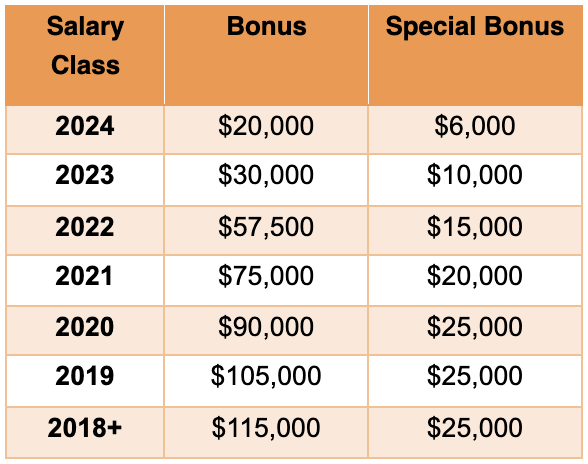
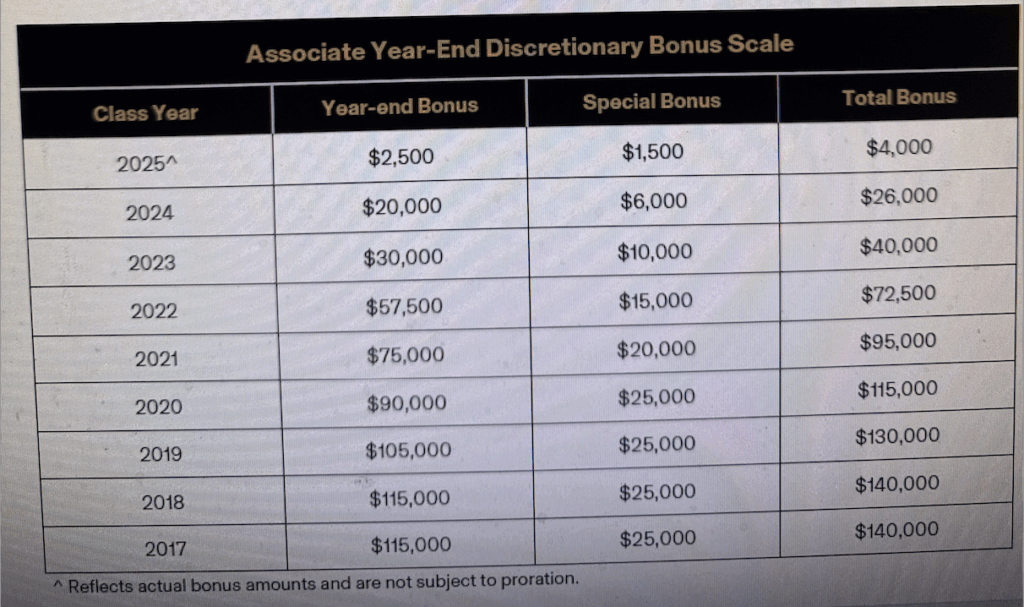
That
means
associates
are
taking
home
year-end
bonuses
ranging
from
$20,000-$115,000
on
top
of
special
bonus
in
the
neighborhood
of
$6,000-$25,000.
The
schedule
is
as
follows:
Congratulations
to
everyone
at
Massumi
+
Consoli!
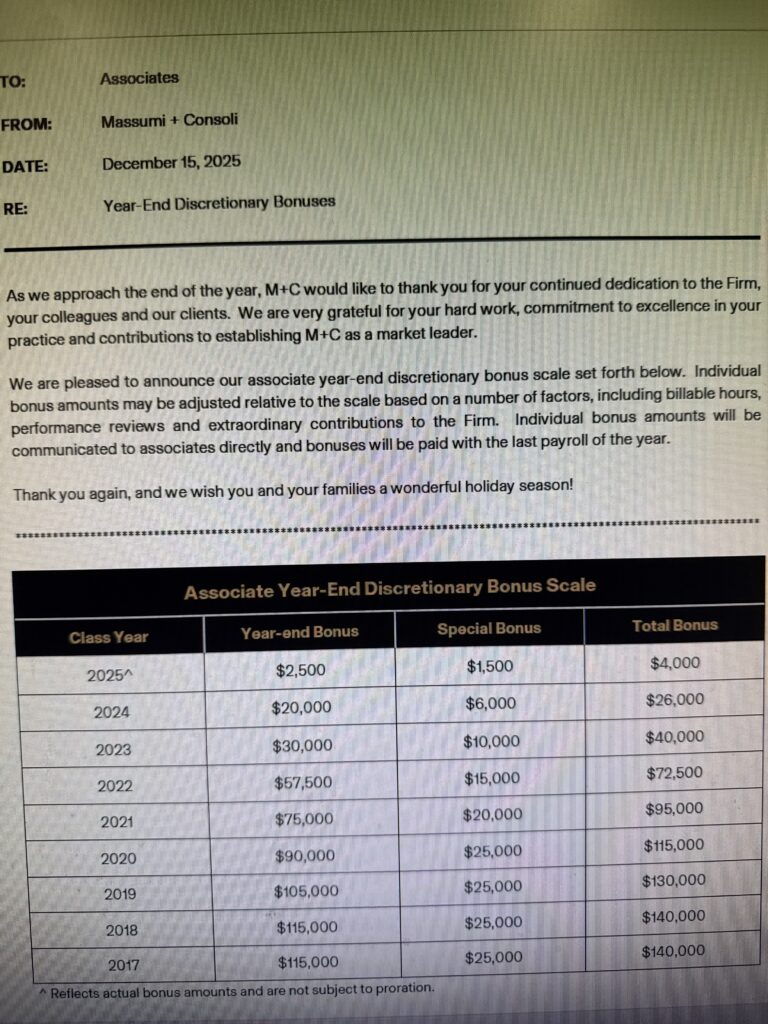
(Full
full
memo
below.)
Remember
everyone,
we
depend
on
your
tips
to
stay
on
top
of
compensation
updates,
so
when
your
firm
announces
or
matches,
please
text
us
(646-820-8477)
or email
us (subject
line:
“[Firm
Name]
Bonus/Matches”).
Please
include
the
memo
if
available.
You
can
take
a
photo
of
the
memo
and
send
it
via
text
or
email
if
you
don’t
want
to
forward
the
original
PDF
or
Word
file.
And
if
you’d
like
to
sign
up
for
ATL’s
Bonus
Alerts,
please
scroll
down
and
enter
your
email
address
in
the
box
below
this
post.
If
you
previously
signed
up
for
the
bonus
alerts,
you
don’t
need
to
do
anything.
You’ll
receive
an
email
notification
within
minutes
of
each
bonus
announcement
that
we
publish.
Thanks
for
your
help!
Kathryn
Rubino
is
a
Senior
Editor
at
Above
the
Law,
host
of
The
Jabot
podcast,
and
co-host
of
Thinking
Like
A
Lawyer.
AtL
tipsters
are
the
best,
so
please
connect
with
her.
Feel
free
to
email
her
with
any
tips,
questions,
or
comments
and
follow
her
on
Twitter
@Kathryn1 or
Mastodon
@[email protected].
With
2025
nearly
in
the
rearview
mirror,
we
thought
it
would
be
a
good
time
to
solicit
nominations
for
Above
the
Law’s
annual LAWYER
OF
THE
YEAR competition.
Which
lawyers
made
major
headlines
during
the
year
that
was?
We’ll
conduct
the
competition
as
we’ve
done
for
the
past
decade.
Please
submit
your
nominees
to
us by
email (subject
line
“Lawyer
of
the
Year
2025”).
We
will
review
them
and
pick
a
slate
of
finalists,
and
then
you’ll
vote
on
them
in
a
reader
poll.
The
winner
will
join
an
august
group
of
past
LOTY
honorees,
including
Chief
Justice John
Roberts (2012)
and
President Barack
Obama (2008).
But
the
contest
has
room
for
“fun”
as
well.
In
2019,
Christopher
Hook,
a
lawyer
who told
a
Biglaw
partner
to
“eat
a
bowl
of
dicks” during
settlement
negotiations
took
home
the
grand
prize,
and
in
2015,
our
champion
was
a
young
Texas
lawyer
by
the
name
of
Bryan
Wilson
—
better
known
to
the
world
as
the
“Law
Hawk,”
famous
for
his irreverent
and
creative
attorney
advertisements.
What
does
it
take
to
be
nominated?
As
we’ve
explained before:
What
are
the
criteria
for
being
our
Lawyer
of
the
Year?
Since
you’re
doing
the
nominating
and
voting,
it’s
really
up
to
you.
You
can
nominate
a
LOTY
based
on
whatever
reasoning
you
choose
—
e.g.,
because
the
lawyer
in
question
is
influential,
infamous,
awesome,
or
awful.
As
reflected
in
the
past
victory
of Loyola
2L (2007),
not
all
nominees
need
to
be
famous
—
or
even
named.
And
as
with
the
past
victory
of
Kyle
McEntee
and
Patrick
Lynch
(2010),
the
co-founders
of Law
School
Transparency,
you
can
nominate
multiple
people
if
their
achievements
are
closely
related.
We
have
only
three
things
to
ask
of
you
before
the
nominations
begin
to
roll
in:
Please
try
to
nominate
actual
lawyers.
Please
try
to
nominate
lawyers
who
are
still
living.
Please
submit
all
nominations via
email,
with
this
exact
subject
line:
“Lawyer
of
the
Year
2025.”
Let
the
nominations
begin!
Please
submit
your
nominations
by FRIDAY,
DECEMBER
19,
at
11:59
p.m. (Eastern
time).
We
look
forward
to
reading
your
thoughts
and
insights
on
the
potential
candidates
who
will
go
on
to
vie
for
the
title
of
Above
the
Law’s
Lawyer
of
the
Year
for
2025.
Staci
Zaretsky is
the
managing
editor
of
Above
the
Law,
where
she’s
worked
since
2011.
She’d
love
to
hear
from
you,
so
please
feel
free
to
email
her
with
any
tips,
questions,
comments,
or
critiques.
You
can
follow
her
on Bluesky, X/Twitter,
and Threads, or
connect
with
her
on LinkedI
Party
divides
are
becoming
wider
and
wider
as
the
Senate
rejected
two
healthcare
bills
focused
on
the
Affordable
Care
Act
on
Thursday,
drawing
criticism
from
several
healthcare
organizations.
One
was
a
Democratic
bill
that
would
have
extended
ACA
enhanced
premium
tax
credits
for
three
years.
The
subsidies
have
lowered
premiums
for
those
receiving
healthcare
on
the
marketplaces
and
are
set
to
expire
at
the
end
of
the
year.
It’s
estimated
that
if
the
tax
credits
expire,
ACA
Marketplace
premiums
will
more
than
double
on
average
next
year.
The
other
was
a
Republican
bill
that
would
not
have
extended
the
subsidies,
but
instead
would
have
provided
up
to
$1,500
a
year
in
payments
for
health
savings
accounts
for
those
making
less
than
700%
of
the
federal
poverty
level.
However,
this
money
could
not
have
been
used
on
premiums.
The
bills
needed
at
least
60
votes
to
pass,
but
both
received
votes
of
51-48.
Republican
Senators
Susan
Collins
(Maine),
Josh
Hawley
(Missouri),
Lisa
Murkowski
(Alaska)
and
Dan
Sullivan
(Alaska)
voted
in
favor
of
the
Democratic
bill.
No
Democrats
voted
in
support
of
the
Republican
bill,
and
Senator
Rand
Paul
(Kentucky)
was
the
only
Republican
to
oppose
this
bill.
Families
USA,
a
patient
advocacy
organization,
condemned
the
Senate’s
vote.
“Today’s
Senate
vote
to
reject
the
extension
of
premium
tax
credits
will
have
devastating,
immediate
consequences
for
the
health
and
finances
of
families
across
the
country,
and
that
will
reverberate
throughout
the
health
care
system
we
all
rely
on,”
said
Anthony
Wright,
executive
director
of
Families
USA,
in
a
statement.
“Just
days
away
from
the
deadline
for
Americans
to
sign
up
for
coverage
that
starts
January
1,
senators
decided
to
let
premiums
double
or
more
for
22
million
Americans
who
rely
on
these
premium
tax
credits
to
make
coverage
affordable.”
The
organization
also
called
on
the
House
to
step
up
to
extend
the
tax
credits,
though
there’s
currently
no
consensus
on
a
plan
in
the
House
yet.
The
Association
for
Community
Affiliated
Plans
(ACAP)
echoed
these
comments.
“Families
deserve
a
workable
answer
to
skyrocketing
premium
costs,”
said
Margaret
A.
Murray,
CEO
of
ACAP.
“Sound
bites
aren’t
helpful—policy
solutions
are.
These
enhanced
tax
credits
offered
to
families
who
rely
on
Marketplace
coverage
have
been
a
wildly
successful
way
to
help
make
coverage
affordable.
Simply
allowing
subsidies
to
lapse
is
a
way
to
willfully
shoot
costs
skyward
for
millions
of
families.
This
moment
demands
policy
solutions
that
will
help
working-
and
middle-class
families
this
holiday
season,
not
split-screen
messaging
efforts.”
Community
Catalyst,
an
organization
focused
on
race
equity
and
health
justice,
also
came
out
against
the
vote,
stating
that
the
Senate’s
inaction,
combined
with
the
One
Big
Beautiful
Bill,
will
severely
harm
access
to
care.
“We
know
who
will
bear
the
brunt:
Black,
Latinx,
immigrant,
and
low-income
families,
who
already
face
the
steepest
affordability
barriers
because
decades
of
policy
decisions
have
limited
wages,
wealth,
and
access
to
stable,
affordable
coverage,”
said
Michelle
Sternthal,
director
of
government
affairs
at
Community
Catalyst.
“If
Republicans
were
serious
about
lowering
costs,
they
would
immediately
pass
a
permanent,
clean
extension
of
these
tax
credits
and
repeal
the
dangerous
health
care
cuts
in
H.R.
1.”
*
Paul
Weiss
is
in
the
newly
released
Epstein
files
to
perfectly
round
out
the
firm’s
year
in
the
news.
[American
Lawyer]
*
Roomba
falls
helplessly
down
the
staircase
that
is
Chapter
11
bankruptcy.
[Law360]
*
Lawsuit
alleges
that
former
DLA
Piper
partner
sexually
harassed
and
assaulted
an
associate.
[Bloomberg
Law
News]
*
Consistency
is
the
hobgoblin
of
good
faith
actors:
Trump
administration
takes
California
to
court
over
mid-decade
redistricting.
[Courthouse
News
Service]
*
State
bars
struggling
to
keep
up
with
AI.
[ABA
Journal]
*
Donald
Trump
suing
BBC
for
$10
billion
because
it
sounds
like
an
appropriately
Bond
villain
figure.
[Reuters]
*
Ukrainian
lawyer
fighting
for
return
of
children
kidnapped
by
Russia.
[The
Guardian]
Speaking
to
the
ZANU
PF
Mashonaland
West
Provincial
Coordinating
Committee
during
its
final
meeting
of
the
year
in
Karoi
on
Sunday,
Ziyambi
added
that
the
proposed
extension
would
also
benefit
all
elected
political
leaders.
He
said:
“The
proposed
term
is
about
safeguarding
stability
and
continuity
in
our
national
development
agenda.
“As
a
party
and
as
a
country,
we
have
learned
that
perpetual
election
mode
diverts
energy,
resources
and
focus
away
from
service
delivery
and
long-term
planning.
“This
measure
is,
therefore,
meant
to
stabilise
the
nation,
create
policy
certainty
and
allow
Government
at
all
levels
to
fully
concentrate
on
implementing
programmes
that
improve
the
lives
of
our
people.”
What
Ziyambi
did
not
address
is
that
Zimbabwe’s
2013
Constitution
explicitly
provides
for
regular
elections.
Under
the
Constitution,
the
President
is
elected
directly
by
citizens
every
five
years.
Members
of
the
National
Assembly
and
Senate
are
elected
on
the
same
five-year
cycle,
while
councillors
are
chosen
to
serve
in
municipalities
and
rural
district
councils
for
five-year
terms.
Despite
approximately
94.5%
of
Zimbabwean
voters
supporting
the
adoption
of
the
Constitution
in
2013,
ZANU-PF
is
seeking
to
amend
it
without
holding
a
referendum—apparently
out
of
fear
that
it
could
lose.
Harare
City
Council
spokesperson
Stanley
Gama
said
the
street
children
had
become
a
“menace
in
the
city,
harassing
residents
and
stealing
from
them,”
with
reports
of
them
targeting
women
and
snatching
food
and
valuables.
He
said:
“Municipal
police
officers
led
by
Chief
Superintendent
Mhizha
rounded
up
street
kids
in
the
Central
Business
District.
“The
street
kids
are
becoming
a
menace
in
the
city,
harassing
residents
and
stealing
from
them.
“The
street
kids
in
the
city
have
also
become
notorious
for
committing
horrendous
crimes.”
Gama
added
that
all
the
street
kids
were
taken
to
the
police.
The
youngsters,
reportedly
aged
between
5
and
20,
have
created
a
climate
of
fear
by
snatching
mobile
phones,
purses,
and
food,
and
aggressively
targeting
women’s
accessories
such
as
wigs
and
jewellery.
Africa
Unity
Square,
Harare
Gardens,
and
the
areas
around
Town
House
are
among
the
worst-hit
locations,
where
street
children
are
said
to
be
causing
chaos
and
stealing
people’s
belongings.


 Joe
Joe




 Kathryn