Bussed crowd turns Nkulumane by-election debate chaotic

The
debate
on
Wednesday
held
at
Nkulumane
Hall
and
organised
by
the
Centre
for
Innovation
and
Technology
(CITE)
in
collaboration
with
the
Bulawayo
Progressive
Residents
Association
(BPRA),
Election
Resource
Centre
(ERC)
and
the
Nkulumane
Constituency
Development
Committee,
drew
a
packed
and
highly
charged
audience
that
exposed
raw
tensions
and
divisive
tactics.

Ndlovu,
representing
the
CCC
now
led
by
Sengezo
Tshabangu,
struggled
to
deliver
his
points
as
a
section
of
the
crowd
heckled,
booed
and
hurled
questions
aimed
at
discrediting
him.

Tensions
escalated
when
one
attendee
loudly
demanded
to
know
where
in
Nkulumane
he
lived.

Visibly
irritated,
Madlela
said
some
in
the
audience
were
transported
to
the
hall
specifically
to
disrupt
him.

“Go
and
check
on
the
voters’
roll
where
I
stay,”
he
shot
back.

“Let
me
ask
you
as
well,
of
all
these
candidates
here,
no
one
sleeps
in
Nkulumane.
I
am
telling
you,
you
are
being
lied
to
but
I
came
here
knowing
it
would
be
like
this.
Some
of
you
were
bussed
here,
it’s
ok,
stay
there
in
your
lanes.
Let
me
tell
you
the
truth,
let’s
be
truthful
whether
you
agree
or
not,
this
is
time
for
truth,
we
are
not
stopping,
I
will
stand
for
the
truth.”

The
disruptions
also
intensified
when
Madlela
was
asked
about
his
leadership
and
public
office
experience.

“Leadership
does
not
mean
you
only
lead
in
politics…,”
he
said
but
before
he
could
complete
his
response,
hecklers
again
shouted
him
down.

“…
the
moment
I
open
my
mouth
they
disrupt”
as
he
requested
protection
from
the
master
of
ceremonies.

Madlela
insisted
he
has
a
long
record
of
leadership
outside
politics.

“Someone
who
leads
an
NGO
is
a
leader.
I
lead
in
the
arts
sector.
I
have
been
a
leader
from
the
age
of
16.
Not
knowing
someone
doesn’t
mean
they
cannot
lead,”
said
the
CCC
hopeful.

Madlela
attempted
to
steer
the
conversation
towards
issues
of
historical
injustice
and
marginalisation,
saying
many
residents
carry
unhealed
wounds.

“There
are
people
today
who
carry
pain
in
their
heart.
It
is
easy
for
us
to
be
here
making
noise
and
forget,
but
there
are
old
women
here
who
do
not
know
the
graves
of
their
children,”
he
said
amid
boos.

He
urged
Nkulumane
residents
to
give
him
a
mandate.

“Give
us
that
power
to
carry
your
tears,
carry
your
pain
and
deliver
it
to
Parliament,”
Madlela
said.

However,
each
time
he
tried
to
emphasise
his
willingness
to
confront
long-standing
issues
affecting
Matabeleland,
including
unequal
distribution
of
resources
and
poor
road
infrastructure,
he
was
again
met
with
loud
booing.

“All
of
us
here
can
agree
that
there
is
marginalisation
in
Matabeleland.
Even
on
roads,
I
drove
using
the
Zvishavane
road
going
to
Birchenough
bridge,
you
don’t
even
see
one
pothole
but
when
going
to
Tsholotsho
you
see
craters
and
craters,
including
in
Nkayi,”
he
said.

“Who
can
go
and
roar
that
in
Parliament
so
it’s
fixed?
I
am
a
courageous
man
willing
to
confront
issues
honestly.
If
you
allow
me
to
represent
you
in
Parliament,
I
will
run
with
your
grievances.”

Appealing
for
unity,
Madlela
added
that,
“politics
divides
people,
religion
divides
people,
but
our
humanity
does
not.
Knowing
who
we
are
unites
us.”

Meanwhile,
independent
candidates
were
challenged
on
how
they
would
remain
accountable
to
residents
without
the
backing
of
political
party
structures.

Independent
candidate
Mbuso
Fuzwayo
said
accountability
lies
directly
with
the
community,
that
is
people
would
make
sure
he
was
transparent.
“We
report
to
the
electorate.
We
campaign
to
people,
work
with
people.
Work
with
associations,
residents, ozibuthe,
section
leaders,
churches.
We
need
people,
we
don’t
need
political
parties,”
he
said.

Fellow
independent
candidate,
Rodney
Jele,
said
leadership
does
not
require
a
party
card,
but
clarity
of
purpose.

“You
don’t
need
a
political
party
to
lead,
you
need
a
clear
vision
and
knowing
what
people
want.
You
need
to
be
resident
here
in
Nkulumane;
I
know
residents.
I
will
hold
feedback
meetings
with
different
communities,”
he
said.

Jele
reminded
residents
that
degeneration
in
the
constituency
affects
everyone.

“Don’t
blame
leaders
if
Nkulumane
deteriorates,
it
is
Nkulumane
that
suffers,
not
the
MP
alone.
It
affects
all
of
us,”
said
the
candidate.
Bussed-in crowds, heated exchanges as Nkulumane candidates define MP’s role in debate

Organised
by
the
Centre
for
Innovation
and
Technology
(CITE)
in
collaboration
with
the
Bulawayo
Progressive
Residents
Association
(BPRA),
Election
Resource
Centre
(ERC)
and
the
Nkulumane
Constituency
Development
Committee,
the
Meet
Your
Candidates’
debate
held
Wednesday
at
Nkulumane
Hall
drew
a
packed
crowd.

However,
the
environment
was
far
from
neutral,
as
attendees
noted
that
Zanu
PF
had
bussed
in
supporters
who
cheered
loudly
whenever
their
candidate
spoke 
and
loudly
registered
disapproval
when
rivals
attempted
to
make
their
points,
frequently
drowning
them
out.

One
of
the
questions
that
laid
bare
the
candidates’
political
depth
including
that
of
their
supporters
was
deceptively
simple

‘Do
you
know
and
understand
the
role
of
a
Member
of
Parliament?’

ZAPU
candidate,
Vivian
Viyo
Siziba,
delivered
one
of
the
most
pointed
and
constitutionally
grounded
responses
as
he
underscored
that
an
MP’s
role
is
fundamentally
different
from
that
of
a
councillor.

“The
role
of
an
MP
is
supposed
to
hold
the
executive
accountable,
prevent
the
executive
from
doing
misdeeds
and
hold
the
government
departments
to
account,
including
the
police,”
he
said.
“For
instance
all
the
bad
deeds
that
some
police
officers
are
doing
on
the
roads
should
be
taken
to
Parliament
and
ask
the
relevant
ministry.”

Siziba
explained
that
oversight
and
scrutiny
are
the
core
of
parliamentary
duty
and
then
invoked
a
dramatic
example
that
instantly
ignited
tensions
in
the
hall.

“For
example,
this
past
Sunday
we
saw
a
helicopter
campaigning
for
one
candidate,
flying
into
a
public
area.
An
MP
has
to
ask
the
Ministry
of
Defence
to
explain
on
what
grounds
that
helicopter
was
doing
at
a
school
grounds,”
he
said,
prompting
loud
heckling
and
protests
from
Zanu
PF
supporters.

Their
reaction,
Siziba
noted,
was
precisely
why
constitutional
literacy
was
urgently
needed.

“Their
reaction
is
why
the
constitution
must
be
taught
so
that
people
understand
what
freedom
of
speech
is
to
allow
people
to
express
their
views.
We
must
make
sure
we
follow
the
constitution,”
he
said.

Siziba
continued,
criticising
the
extension
of
Bulawayo’s
town
clerk
as
another
example
requiring
oversight.

“When
it
comes
to
scrutiny
or
oversight
it
is
finding
out
why
there
are
no
pills
in
the
hospitals,
why
roads
are
not
fixed.
We
must
make
sure
the
minister
fixes
that,
not
keep
quiet
about
it.
It
is
surprising
that
even
MPs
in
Parliament
suffer
on
the
roads
when
travelling
to
their
rural
homes.”

Siziba
pushed
for
constitutional
education
in
schools
as
civics,
warning
that
without
this
grounding,
Zimbabwe
risked
producing
legislators
who
are
“dismissed
as
cartoons.”

Zanu
PF
candidate,
Freedom
Murechu,
in
contrast,
took
a
more
conventional,
but
noticeably
less
critical
stance.

He
defined
representation
as
being
“the
mouth
of
the
constituency,”
saying
an
MP
takes
people’s
views
to
Parliament,
participates
in
law-making
and
provides
oversight
“on
the
government
and
even
the
local
government,
the
city
council.”

Murechu’s
priorities
centred
on
addressing
drug
abuse,
supporting
youth
and
women
entrepreneurs,
including
pushing
for
smart
metering
in
water
billing
by
the
local
city
council.

He
pledged
to
advocate
for
more
government
funding
to
support
18
solarised
boreholes
in
Nkulumane
and
to
strengthen
welfare
support
for
the
elderly.

His
attempt
to
downplay
the
helicopter
incident
drew
loud
applause
from
his
supporters.

“That
helicopter
that
you
were
talking
about,”
he
said,
gesturing
toward
the
ZAPU
candidate,
“was
meant
to
bring
me
that
money
to
support
projects.”

Independent
candidate,
Rodney
Jele,
echoed
the
constitutional
framing
laid
out
by
Siziba,
citing
Section
119
as
the
backbone
of
the
MP’s
mandate.

“Zimbabwe’s
constitution
Section
119
talks
about
roles
of
an
MP,
which
is
representation
and
law-making,
monitoring
the
government
performance,
bringing
accountability,”
he
said.

Jele’s
priorities
focused
on
basic
infrastructure,
water,
roads
and
sewer 
and
pushing
for
devolution
to
make
sure
provincial
councils
are
operational.

“Young
people
need
to
have
self-sustenance
and
have
income
generating
projects.
We
must
implement
devolution
and
make
sure
provincial
councils
are
implemented
so
that
voices
of
Nkulumane
can
be
heard,
even
that
of
the
greater
Bulawayo,”
he
saidd

Independent
candidate
Mbuso
Fuzwayo
was
repeatedly
shouted
down
by
Zanu
PF
supporters,
especially
when
he
criticised
attempts
to
extend
political
terms.

“The
role
of
an
MP
is
to
protect
the
constitution,”
he
said.

“Right
now
Zanu
PF
is
talking
about
extending
the
president’s
term
of
office
to
2030,
but
we
have
to
follow
what
is
in
the
constitution
and
stop
their
extension.”

As
jeers
intensified,
his
microphone
was
nearly
drowned
out,
but
Fuzwayo
continued,
arguing
that
MPs
must
lobby
the
executive
to
change
its
priorities
and
to
focus
on
social
services.

He
cited
one
of
the
main
priorities
should
be
water
infrastructure
rather
than
“handing
out
cars.”

“Since
independence,
Bulawayo
only
has
one
dam
yet
it
is
a
big
city.
The
government
is
supposed
to
build
dams,”
he
said.

A NEW SOURCE AND LENGTH FOR THE ZAMBEZI RIVER


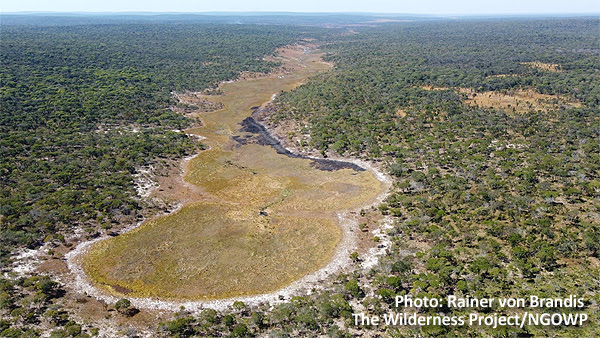
However,


new
research
 has
discovered
that
the
actual
source
of
the
river
lies
in
a
shallow
depression
in
Angola’s
southern
highlands,
at
the
source
of
a
river
called
the
Lungwebungu
(pictured
above). 
This
gives
the
Zambezi
a
new
total
length
of
3,421
km
(2,126
mi),
or
342
km
(213
mi)
longer
than
previously
thought.

The
research
was
carried
out
in
2022
and
2023
by The
Wilderness
Project
,
in
collaboration
with
the National
Geographic
Okavango
Wilderness
Project
 and
the Wild
Bird
Trust

Two expeditions
travelling
the
entire
length
of
the
Zambezi
River
from
its
traditional
source
in
Zambia
and
its
most
distal
source
in
the
Angolan
Highlands
Water
Tower,
all
the
way
to
the
Indian
Ocean,
collected data
on
human
impact,
biodiversity,
water
quality,
and
river
discharge. 
Their
findings
revealed
that
the
Lungwebungu
and
several
other
Angolan
rivers
contribute
about
70%
of
the
water
reaching
Victoria
Falls,
making
them
critical
to
the
long-term
health
of
the
Zambezi
and
the
people
and
wildlife
who
depend
on
it.

The
study
highlights
the
importance
of
protecting
the
Upper
Zambezi
Basin,
where another
recent
study
 recorded
significant
forest
loss
over
the
past
three
decades.

In
July
2025,
at
a
Ramsar
Convention
on
Wetlands
held
in
Victoria
Falls, The
Wilderness
Project
 presented
its
case
for
a
large
part
of
the
Angolan
water
tower
to
be
declared
a
Wetland
of
International
Importance,
to
boost
its
recognition
and
protection.
Approval
for
the
site,
known
as Lisima
lya
Mwono
,
or
“the
source
of
life,”
is
expected
later
this
year
or
early
next. 


Zambezi
Society
Bulletin

December
2025

Post
published
in:

Featured

Zimbabwe Vigil Diary 13th December 2025


14.12.2025


17:59

Another
virtual
Vigil
today
continues
our
protest
against
the
human
rights
abuse
and
lack
of
democracy
in
Zimbabwe. Our
virtual
Vigil
activist
today
was
Noble
Mwashita.


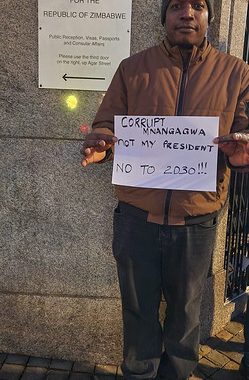
https://www.flickr.com/photos/zimbabwevigil/54982795047/sizes/m/

He
carried
a
placard
expressing
his
dissatisfaction
with
ZANU
PF,
Zimbabwe’s
ruling
regime.  Photos:

https://www.flickr.com/photos/zimbabwevigil/albums/72177720330904081/
.

For
Vigil
pictures
check: http://www.flickr.com/photos/zimbabwevigil/.
Please
note:
Vigil
photos
can
only
be
downloaded
from
our
Flickr
website.


Events
and
Notices:  


  • Next
    Vigil
    meeting
    outside
    the
    Zimbabwe
    Embassy. 
    Saturday
    20th December
    from
    2

    5
    pm.
    We
    meet
    on
    the
    first
    and
    third
    Saturdays
    of
    every
    month.
    On
    other
    Saturdays
    the
    virtual
    Vigil
    will
    run.

  • The
    Restoration
    of
    Human
    Rights
    in
    Zimbabwe
    (ROHR)
     is
    the
    Vigil’s
    partner
    organisation
    based
    in
    Zimbabwe.
    ROHR
    grew
    out
    of
    the
    need
    for
    the
    Vigil
    to
    have
    an
    organisation
    on
    the
    ground
    in
    Zimbabwe
    which
    reflected
    the
    Vigil’s
    mission
    statement
    in
    a
    practical
    way.
    ROHR
    in
    the
    UK
    actively
    fundraises
    through
    membership
    subscriptions,
    events,
    sales
    etc
    to
    support
    the
    activities
    of
    ROHR
    in
    Zimbabwe.

  • The
    Vigil’s
    book
    ‘Zimbabwe
    Emergency’
     is
    based
    on
    our
    weekly
    diaries.
    It
    records
    how
    events
    in
    Zimbabwe
    have
    unfolded
    as
    seen
    by
    the
    diaspora
    in
    the
    UK.
    It
    chronicles
    the
    economic
    disintegration,
    violence,
    growing
    oppression
    and
    political
    manoeuvring

    and
    the
    tragic
    human
    cost
    involved. It
    is
    available
    at
    the
    Vigil.
    All
    proceeds
    go
    to
    the
    Vigil
    and
    our
    sister
    organisation
    the
    Restoration
    of
    Human
    Rights
    in
    Zimbabwe’s
    work
    in
    Zimbabwe.
    The
    book
    is
    also
    available
    from
    Amazon.


  • Facebook
    pages:   

  • Vigil : 
    https ://www.facebook.com/zimbabwevigil
  • ROHR: https://www.facebook.com/Restoration-of-Human-Rights-ROHR-Zimbabwe-International-370825706588551/
  • ZAF: https://www.facebook.com/pages/Zimbabwe-Action-Forum-ZAF/490257051027515

The
Vigil,
outside
the
Zimbabwe
Embassy,
429
Strand,
London
meets
regularly
on
Saturdays
from
14.00
to
17.00
to
protest
against
gross
violations
of
human
rights
in
Zimbabwe.
The
Vigil
which started
in
October
2002
will
continue
until
internationally-monitored,
free
and
fair
elections
are
held
in
Zimbabwe.

Post
published
in:

Featured

Tungwarara’s Central Committee Co-Option Heads To Politburo

On
Sunday,
7
December,
the
ZANU
PF
Manicaland
Provincial
Coordination
Committee
(PCC)
resolved
to
co-opt
Tungwarara
to
fill
a
vacant
Central
Committee
seat.
The
vacancy
arose
after
Chipinge’s
Dorothy
Mabika
was
elected
provincial
Women’s
League
chairperson.

However,
on
11
December
2025,
ZANU
PF
National
Political
Commissar
Munyaradzi
Machacha
wrote
to
provincial
chair
Tawanda
Mukodza
informing
him
that
Tungwarara’s
co-option
had
been
nullified.

Machacha
said
the
move
went
against
the
Legal
Affairs
Department
Circular
of
30
June
2025,
which
outlines
the
mandatory
procedures
for
co-opting
members
into
the
Central
Committee.

He
also
warned
aspiring
candidates
against
giving
out
money,
goods
or
services
in
pursuit
of
the
position,
stressing
that
such
actions
amount
to
vote
buying
and
would
lead
to
automatic
disqualification.

In
a
statement
issued
on
Friday,
12
December,
Mutsvangwa
said
the
Politburo
respects
Manicaland
Province’s
decision
and
will
meet
to
consider
the
matter
before
making
a
final
determination.
Said
Mutsvangwa:

“There
is
an
appearance
of
needless
confusion
concerning
the
nominations
for
the
Central
Committee
replacement
in
Manicaland
Province.

“The
correct
position
is
that
the
party
takes
serious
respect
for
the
deliberations
of
the
provincial
leadership
of
the
province.

“It
is
an
important
organ
of
the
party,
particularly
for
Manicaland,
which
is
the
second
largest
population
after
Harare.

“So
it’s
natural
that
whatever
they
apply
themselves
to
is
taken
seriously
by
the
party.

“The
appearance
of
confusion
will
be
addressed
in
the
usual
manner,
as
was
done
in
the
case
of
Harare
Province,
and
it
will
be
done
at
the
Politburo
level.

“So
for
anybody
who
has
got
anxieties
about
what
is
going
on,
hold
your
gun.
The
Politburo
will
meet
and
the
matter
will
be
considered
and
a
due
finality
will
be
delivered
on
the
matter
of
the
Central
Committee
nomination
for
Manicaland.”

Zimbabwe Bars Foreigners from Certain Businesses, Reserve Sectors for Locals

Under
Statutory
Instrument
215
of
2025,
foreigners
are
barred
from
operating
in
sectors
such
as
artisanal
mining,
bakeries,
advertising
agencies,
salons,
employment
agencies,
and
the
local
arts
and
crafts
industry.

In
certain
sectors,
including
retail,
wholesale,
trucking,
grain
milling,
and
shipping,
foreign
participation
is
permitted
only
for
large
investors.

For
instance,
in
retail
and
wholesale,
a
foreign
investor
must
commit
at
least
US$20
million
and
employ
200
people.

In
the
haulage
industry,
the
minimum
investment
is
US$10
million
with
100
employees.

In
grain
milling,
a
foreign
investor
must
employ
at
least
50
people
and
invest
US$25
million.

In
shipping
and
forwarding,
the
threshold
is
US$1
million
and
20
employees.

The
transport,
estate
agency,
and
clearing
and
customs
sectors
remain
exclusively
for
Zimbabweans,
except
for
international
brands.

Existing
foreign-run
businesses
in
the
reserved
sectors
have
three
years
to
sell
75%
of
their
shares
to
Zimbabwean
citizens,
divesting
25%
each
year.

Foreign
control
in
other
parts
of
the
economy,
including
large-scale
mining,
banking,
and
other
industries,
will
not
be
affected.

Sectors
exclusively
reserved
for
Zimbabweans
include
barber
shops,
hairdressing
and
beauty
salons,
employment
agencies,
valet
services,
bakeries,
tobacco
grading
and
packaging,
advertising
agencies,
local
arts
and
crafts
marketing
and
distribution,
artisanal
mining,
borehole
drilling,
and
pharmaceutical
retail.

Zanu PF thwarts Tungwarara bid for central committee, slams vote buying

HARARE

Zanu
PF
has
blocked
an
attempt
by
its
Manicaland
provincial
leadership
to
co-opt
President
Emmerson
Mnangagwa’s
adviser
Paul
Tungwarara
into
the
party’s
central
committee,
ruling
that
the
move
violated
party
procedures
and
warning
against
creeping
vote
buying.

The
intervention
came
in
a
December
11
letter
from
National
Political
Commissar
Munyaradzi
Machacha
to
provincial
chairman
Tawanda
Mukodza,
in
which
he
nullified
Tungwarara’s
elevation
by
the
Manicaland
Provincial
Coordinating
Committee
(PCC)
during
its
December
7
meeting.

Machacha
said
the
PCC
had
disregarded
guidelines
issued
by
the
party’s
legal
affairs
department,
which
require
that
any
replacement
for
a
vacant
central
committee
post
must
come
from
the
same
administrative
district
as
the
departing
member.

Tungwarara
had
been
selected
to
fill
a
vacancy
left
by
Dorothy
Mabika,
who
hailed
from
Chipinge.

“The
said
co-option
has
been
nullified
with
immediate
effect,”
Machacha
wrote,
stressing
that
the
correct
nominee
“must
originate
from
Chipinge
administrative
district”
in
line
with
Zanu
PF’s
proportional
representation
rules
across
districts.

He
also
issued
a
pointed
warning
against
any
acts
of
inducement,
saying
“issuance
of
money,
goods
or
services”
by
aspirants
would
be
treated
as
vote
buying
and
lead
to
automatic
disqualification.

Tungwarara,
who
has
amassed
significant
wealth
through
opaque
state
contracts,
was
accused
by
rivals
of
distributing
cash
and
buying
food
for
PCC
delegates
who
backed
his
attempted
co-option.

Manicaland
has
been
instructed
to
restart
the
process,
this
time
adhering
strictly
to
the
legal
affairs
department
circular.

Once
a
peripheral
political
figure,
Tungwarara
has
rapidly
risen
within
Zanu
PF
circles
through
a
series
of
high-profile
schemes
run
in
the
name
of
Mnangagwa

including
the
Presidential
Borehole
Scheme,
the
Presidential
Stands
for
Veterans
of
the
Liberation
Struggle
Programme,
the
Presidential
War
Veterans
Fund
and
the
Presidential
Solar
Programme.

His
nationwide
cash
giveaways
and
lavish
sponsorship
of
party
activities
have
unsettled
some
within
Zanu
PF,
who
privately
warn
that
money
is
increasingly
tilting
internal
power
dynamics.

With
some
touting
him
as
a
future
presidential
candidate,
Tungwarara
appears
in
a
hurry
to
scale
up
Zanu
PF’s
political
ladder,
and
a
place
in
the
300-member
central
committee
is
a
key
step.

Since When Can Presidents Do That? – See Also – Above the Law

President
Trump
Pardons
Election
Denier
For
State
Crimes:
What
part
of
Federalism
is
this?
See
If
You
Can
Catch
All
Of
The
Issues
With
Trump’s
AI
Executive
Order:
Who
said
issue
spotters
were
just
a
law
school
thing!
Mega
Merger
Alert!:
Winston
&
Strawn
and
Taylor
Wessing
are
in
tie-up
talks.
At
This
Firm
The
Market
Is
The
Floor!:
Associates
at
Axinn
are
making
bank!
Elon
Thinks
Any
Regulation
Is
Censorship:
That’s
not
at
all
what
the
fine
for
violating
the
Digital
Services
Act
is
doing.
Judge
Mandates
Breakfast
Break
During
Immigration
Hearing:
ICE
drove
someone
in
custody
7
hours
without
feeding
them.

Do We Actually Believe What Biglaw Leaders Are Saying About Equity Partnership? – Above the Law

(Image
via
Getty)


Ed.
Note:

Welcome
to
our
daily
feature

Trivia
Question
of
the
Day!


According
to
the
newly
released
2026
Citi
Hildebrandt
Client
Advisory
on
the
legal
industry,
what
percentage
of
large
firm
leaders
that
were
surveyed
said
their
firms
plan
to
increase
their
equity
ranks
over
the
next
two
years?


Hint:
The
equity
tier
in
Biglaw
actually
contracted
in
the
first
nine
months
of
2025,
while
the
nonequity
ranks
grew
by
6%.


See
the
answer
on
the
next
page.

Stat(s) Of The Week: New Study Reveals Gender Ambition Gap – Above the Law

Despite
equal
devotion
to
their
work,
there
is
a
“notable
ambition
gap”
between
men
and
women,
according
to
a
new
study
by
McKinsey
and
Lean
In.

The

Women
in
the
Workplace
report
,
which
examined
data
from
124
companies
and
9,500
employees,
found
that
80%
of
women
want
to
be
promoted
to
the
next
level,
compared
to
86%
of
men. 

The
gap
is
widest
for
employees
early
in
their
careers
and
those
at
senior
levels.
Among
entry-level
employees,
just
69%
of
women
want
to
be
promoted
vs
80%
of
men.
At
the
senior
level,
84%
of
women
want
to
advance
compared
to
92%
of
their
male
peers.

The
divide
seems
to
be
driven
less
by
differences
in
career
dedication
than
by
disparities
in
career
support.
The
report
finds
that
both
men
and
women
are
highly
motivated
and
view
their
career
as
important.
But
women
are
less
likely
than
their
male
colleagues
to
have
a
sponsor
at
work,
to
be
offered
training
opportunities,
and
to
receive
consistent
support
from
their
managers.
They
are
also
less
likely
to
be
promoted.

It
may
therefore
be
unsurprising
that
the
report
finds
that
women
are
underrepresented
in
senior
leadership,
with
women
holding
just
29%
of
C-suite
roles.
While
the
McKinsey
study
covers
corporate
America
more
broadly,
other
research
shows
that
women
are
similarly
underrepresented
in
leadership
roles
in
the
legal
industry.
According
to
a

2024-25
NALP
report
,
women
represent
a
majority
(52%)
of
law
firm
associates
but
just
29%
of
partners. 


Women
in
the
Workplace
2025:
Key
Findings
and
Takeaways

[Lean
In]