It’s
the
most
wonderful
time
of
the
year!
With
Biglaw
bonus
season
already
well
underway
—
thanks
to
Cravath
and
Milbank,
we’re
talking year-end
bonuses and special
bonuses,
too
—
the
holiday
season
is
already
off
to
a
great
start.
Law
firm
holiday
parties
will
certainly
get
our
readers
feeling
festive,
but
all
of
the
celebrations
and
hefty
paychecks
pale
in
comparison
to
what’s
about
to
get
underway:
Above
the
Law’s
seventeenth
annual
holiday
card
contest.
We’ve
already
received
several
emails
asking
about
when
this
year’s
contest
would
start.
The
answer:
It
starts
today.
We
are
a
legal
website,
so
of
course
there
are
some
rules
to
follow:
1.
Because
we
are
committed
to
the
environment
here
at
Breaking
Media,
we
will
consider ONLY
E-CARDS.
Please
don’t
send
us
paper
holiday
cards
via
snail
mail
this
year
—
the
Above
the
Law
editorial
team
hasn’t
been
in
our
physical
office
much
since
March
2020.
2.
To
submit
an
e-card,
please
email
either
a
link
to
the
card
or
the
card
itself
(as
an
attachment)
—
but
note
that WE
PREFER
LINKS,
if
available
—
to [email protected],
subject
line:
“Holiday
Card
Contest.”
The
subject
line
is
very
important
because
it’s
how
we
will
comb
through
our
inbox
to
collect
the
entries
when
picking
finalists.
If
you
don’t
use
the
correct
subject
line,
expect
a
lump
of
coal
in
your
stocking.
3.
Please
limit
submissions
to
holiday
/
Christmas
cards
that
you
view
as WORTHY
CONTENDERS.
We’re
looking
for
cards
that
are
unusually
clever,
funny,
or
cool;
we’re
not
interested
in
cards
that
are
safe
or
boring
(e.g.,
a
beautiful
winter
landscape,
a
“Happy
Holidays
2024,”
and
the
law
firm
name).
We’re
seeking
cards
with
some
attitude,
with
that
extra je
ne
sais
quoi.
If
you
send
us
a
banal
card,
don’t
be
surprised
if
we
make
fun
of
it.
4.
In
your
email,
please
include
a BRIEF
EXPLANATION of
why
this
card
is
compelling
—
an
explanation
that
we MIGHT
QUOTE
FROM if
your
nominee
makes
the
finals
(if
you
want
to
be
anonymous,
let
us
know).
If
you
can’t
offer
an
explanation,
please
rethink
whether
the
card
is
a
worthy
contender
(see
rule
#3,
supra).
5.
The
deadline
for
submissions
is
about
two
weeks
away: FRIDAY,
DECEMBER
12,
at
11:59
p.m. (New
York
time).
No
exceptions.
If
you’re
reading
this
post
after
the
deadline,
then
you
don’t
read
Above
the
Law
frequently
enough.
We
look
forward
to
seeing your
submissions.
Thank
you,
and
happy
holidays!
Staci
Zaretsky is
the
managing
editor
of
Above
the
Law,
where
she’s
worked
since
2011.
She’d
love
to
hear
from
you,
so
please
feel
free
to
email
her
with
any
tips,
questions,
comments,
or
critiques.
You
can
follow
her
on Bluesky, X/Twitter,
and Threads, or
connect
with
her
on LinkedIn.
Sometimes
the
legal
universe
gifts
us
a
moment
of
pure,
uncut
joy…
the
kind
of
cosmic
alignment
where
the
docket
reads
less
like
a
court
filing
and
more
like
a
setup
for
a
joke
you’re
pretty
sure
you
can’t
tell
at
the
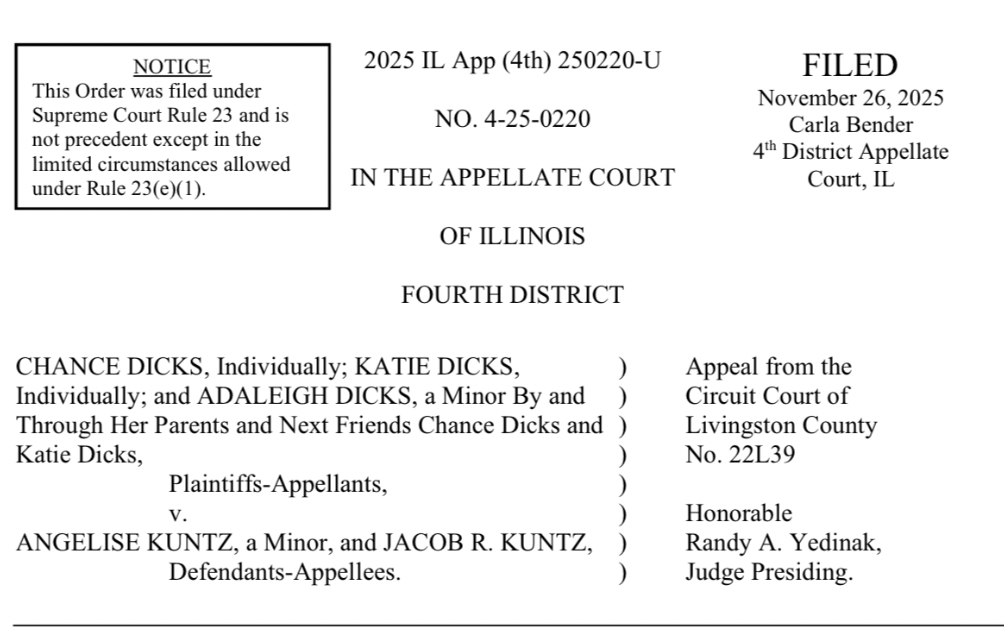
office.
And
today,
friends,
that
moment
arrives
courtesy
of
a
lawsuit
captioned
Dicks
v.
Kuntz.
Yes.
Really.
Dicks.
Versus.
Kuntz.
The
case
caption
that
launched
a
thousand
suppressed
giggles.
Listen,
this
is
all
extremely
serious
business
for
the
litigants,
who
were
involved
in
a
car
crash,
and
the
case
will
proceed
with
the
requisite
judicial
solemnity.
But
let’s
be
honest:
every
attorney
who
has
touched
this
file
has
had
to
fight
back
at
least
one
involuntary
snort-laugh.
And,
let’s
be
fair
to
the
families
here,
because
the
Dickses
and
the
Kuntzes
have
almost
certainly
endured
a
lifetime
of
juvenile
jokes,
deliberate
mispronunciations,
eyebrow
raises,
and
roll
calls
from
hell.
To
have
the
two
names
collide
in
a
single
case
caption
is
an
absurd
coincidence
the
universe
cooked
up
with
a
smirk.
So
of
course,
we
wish
both
parties
well
in
resolving
their
deeply
normal,
absolutely
un-funny
underlying
dispute.
But
the
caption?
The
caption
is
a
masterpiece.
A
work
of
art.
A
rare
gift
in
a
world
of
Smiths
and
Williams
and
Joneses.
Long
live
the
docket.
Long
live
the
clerk
who
entered
this
without
bursting
into
laughter.
And
may
Dicks
v.
Kuntz
take
its
rightful
place
among
the
great
case-caption
hall-of-famers.
It’s
reminder
that
sometimes
the
law
can
still
surprise
us,
delight
us,
and,
yes,
make
us
giggle
like
12-year-olds.
Kathryn
Rubino
is
a
Senior
Editor
at
Above
the
Law,
host
of
The
Jabot
podcast,
and
co-host
of
Thinking
Like
A
Lawyer.
AtL
tipsters
are
the
best,
so
please
connect
with
her.
Feel
free
to
email
her
with
any
tips,
questions,
or
comments
and
follow
her
on
Twitter
@Kathryn1 or
Mastodon
@[email protected].
It
takes
two
to
stand
off. If
either
side
gave
in
to
its
opponent’s
position,
there
would
be
no
standoff.
So
who
caused
the
government
shutdown?
Both
sides,
of
course. The
Republicans
were
being
stubborn
on
issues
that
mattered
to
Republicans. The
Democrats
were
being
stubborn
on
issues
that
mattered
to
Democrats. You
might
agree
with
one
side
or
the
other
about
whose
stubbornness
was
more
reasonable,
or
which
issue
better
justified
stubbornness,
but
there
can
be
no
doubt
about
who
caused
the
government
to
shut
down: Both
sides
did.
Here’s
an
even
worse
example: Who’s
to
blame
for Rahmanullah
Lakanwal
having
shot
two
National
Guardsmen
in
Washington,
D.C.,
last
week?
Rahmanullah
Lakanwal,
of
course.
Or
maybe
you
could
break
it
down
further. Let’s
allocate
blame
as,
say:
95%
Lakanwal,
who
was,
after
all,
the
shooter;
1%
Lakanwal’s
parents
and
health
care
professionals,
who
probably
didn’t
raise
him
right
and
treated
his
mental
illness
poorly;
1%
the
Taliban
and
the
CIA,
who
together
seemingly
caused
some
of
Lakanwal’s
mental
health
issues;
1%
the
Biden
administration
for
having
allowed
Lakanwal
to
enter
the
United
States
in
2021
under
the
Operation
Allies
Welcome
parole
program
for
Afghans
who
had
helped
the
U.S.
during
the
war;
1%
the
Trump
administration
for
having
granted
asylum
to
Lakanwal
in
April
2025;
1%
the
Trump
administration
for
shifting
its
focus
from
anti-terrorism
efforts
to
border
enforcement
(if
it
turns
out
that
Lakanwal
was
a
terrorist);
1%
the
Trump
administration
for
sending
the
National
Guard
to
the
District
of
Columbia,
without
coordinating
with
the
local
police
and
over
local
opposition,
for
the
political
purpose
of
trying
to
embarrass
a
city
run
by
Democrats; and
1%
the
Trump
administration
for
sending
the
National
Guard
to
D.C.
despite
warnings
that
the
Guard’s
deployment
presented
an
easy
“target
of
opportunity”
for
grievance-based
violence.
Perfect! Except
that
my
percentages
probably
add
up
to
more
than
100.
But
you
get
the
idea.
When Rahmanullah
Lakanwal
shoots
someone, Rahmanullah
Lakanwal
is
to
blame. The
rest
is
petty
bickering.
Who
was
responsible
for
trying
to
assassinate
Donald
Trump
last
summer?
The
shooter.
Who
was
responsible
for
assassinating
Charlie
Kirk?
The
shooter.
You
can
quibble
around
the
edges
of
these
things,
always
assigning
blame
to
the
other
side
for
having
very
slightly
contributed
to
the
shooter’s
motivations. But
that
slight
blame
is
nothing
compared
to
where
the
blame
really
lies.
Moreover,
in
situations
such
as
these,
it
probably
makes
sense
to
put
partisanship
aside
for
a
moment
—
both
to
lower
the
temperature
of
our
country’s
political
climate
and
to
more
accurately
place
responsibility
for
atrocities
where
the
responsibility
truly
lies.
As
I
was
drafting
this
piece,
Cloudflare
experienced
an
outage
that
froze
the
AI
tools
I
needed
for
background
information.
The
outage
lasted
several
hours.
Imagine
if
I’d
been
working
on
a
brief
due
in
an
hour.
While
the
legal
profession
debates
AI
hallucinations,
privacy
risks,
and
the
adoption
curve,
some
fundamental
threats
that
lurk
beneath
the
surface
are
being
ignored.
The
fact
is
AI
development
could
stall
and
systems
malfunction,
as
explored
here.
And
as
explored
in
a
future
post,
is
it
possible
we
never
get
to
the
point
where
the
efficiency
gains
from
its
use
fully
offset
the
time
needed
to
verify
output?
Legal
in
particular
risks
overreliance
on
something
that
may
not
always
deliver.
Like
the
people
of
Pompeii,
many
sit
blissfully
unaware
of
the
dangers
from
believing
the
volcano
above
us
will
never
erupt.
Where
We
Are
Today
Here’s
where
we
are
today.
Vendors
touting
the
magic
of
AI,
developing
ever
increasing
and
more
sophisticated
programs
running
off
AI
platforms
to
do
more
and
more
mysterious
and
mystical
things.
Pundits
and
commentators
urging
legal
adoption
at
warp
speed.
Predictions
that
AI
will
disrupt
what
lawyers
do
and
how
they
do
it
by
a
generation
that
barely
has
any
practical
or
hands-on
experience.
A
belief
in
an
ever
and
exponential
expansion
in
what
AI
can
do.
Billions
of
venture
capital
dollars
being
poured
into
legal
AI
companies
and
farcically
inflated
valuations.
Law
firms
investing
million
in
AI
systems
that
replace
core
functions
and
ways
of
doing
things.
There’s
an
ever-increasing
reliance
on
these
AI
systems
to
practice
law
and
an
assumption
that
these
systems
will
not
only
work
flawlessly
but
exponentially
get
better.
But
to
make
all
this
AI
work
you
need
vast
numbers
of
computing
chips.
You
need
data
centers
that
are
expensive
and
time
consuming
to
construct.
You
need
the
energy
to
power
these
huge
data
centers.
More
energy
than
the
existing
systems
can
supply.
That
means
new
power
plants.
The
Numbers
Just
Don’t
Support
Complacency
Some
numbers
from
a
recent
Business
Insider
article
entitled
The
AI
Bubble
You
Haven’t
Heard
About
highlight
this
potential
coming
infrastructure
crisis.
Data
center
developers
have
proposed
26
projects
to
major
US
utilities
which
they
say
will
require
some
711
gigawatts
of
power
beyond
present
capacity.
That’s
almost
the
same
amount
of
power
demanded
by
the
continental
US
at
the
summer
peak.
If
every
already
permitted
data
center
came
online
the
electricity
demanded
could
be
as
high
as
over
293
terawatt
hours.
That’s
about
the
same
amount
of
power
needed
for
the
state
of
Florida
for
a
year.
There
is
simply
not
enough
energy
capacity
to
power
all
the
semiconductor
chips
the
data
centers
say
they
will
need.
Put
simply,
there’s
an
infrastructure
gap
between
the
energy,
the
data
centers,
and
chip
capacity
and
the
coming
need.
And
closing
that
gap
won’t
be
easy.
As
a
former
utility
lawyer,
I
know
you
just
can’t
clap
your
hands
and
say
here’s
more
power.
(There
is
nothing
longer
than
a
state
Public
Service
Commission
proceeding
to
approve
a
new
power
plant.
It’s
like
watching
paint
dry.)
Increasing
capacity
means
building
new
utility
plants.
It
takes
time
to
get
regulatory
approval
to
construct
these
plants
and
time
to
build
them.
Lots
of
time.
And
all
these
estimates
are
based
on
the
assumed
continuing
development
of
AI
and
increased
needs.
If
both
plateau,
then
we
are
left
with
a
huge
amount
of
capacity
but
stagnant
demand.
It’s
a
recipe
for
a
volcano
eruption
for
which
we
aren’t
prepared
And
Then
What?
The
impact
of
the
shortfall
could
be
huge.Think
of
a
fast-growing
city.
The
new
population
inundates
the
existing
road
infrastructure.
We
all
know
the
result.
Think
Atlanta,
Nashville,
LA,
Miami.
You
sit
in
traffic
bottlenecks
for
hours
and
hours,
frustrated.
Wasted
time
and
inefficiency.
The
same
is
true
for
AI.
If
the
data
center
and
utility
and
chip
capacity
can’t
meet
demand,
the
AI
systems
we
all
depend
on
will
be
slowed.
Or
worse,
the
existing
capacity
will
be
throttled
(think
brownouts
when
capacity
is
reached
on
a
hot
summer
day).
Like
the
outage
that
frustrated
my
work
on
this
article,
AI
systems
could
just
stop
working
for
a
time.
Certainly,
models
would
get
more
expensive
to
run.
Development
will
slow
down
and
tools
that
depend
on
newer
models
will
start
to
stagnate.
Training
slows
or
stops.
Capabilities
plateau.
And
if
that
happens,
we
will
be
left
with
no
longer
needed
capacity.
What
About
Legal?
For
AI
tools
to
work
effectively
in
legal,
they
not
only
need
to
be
accurate
(more
on
that
in
a
later
post)
they
need
to
work
at
warp
speed.
Lawyers
and
legal
professionals
can’t
sit
around
for
hours
waiting
for
AI
to
supply
a
new
contract
draft.
They
can’t
wait
days
for
an
AI
tool
to
help
them
prepare
for
a
hearing
or
finalize
a
motion
on
time.
A
litigation
team
facing
a
discovery
deadline
can’t
tell
the
judge
that
Harvey
was
down.
Clients
won’t
accept
“the
AI
crashed”
as
an
excuse
for
missed
deadlines
or
shoddy
work.
How
can
firms
meet
client
expectations
when
they’re
relying
on
AI
that
may
not
deliver
as
promised?
The
alternative
fee
business
model
with
which
many
firms
are
experimenting
depends
on
AI
doing
a
lot
of
the
work.
What
happens
if
AI
can’t
do
that
work
or
at
least
do
it
in
the
expected
time
frame?
And
it’s
no
defense
to
a
malpractice
case
that
there
was
an
outage.
Most
of
the
legal
world
is
not
focusing
on
the
risk
the
infrastructure
volcano
will
erupt.
They
aren’t
making
contingency
plans
if
and
when
AI
becomes
constrained
due
to
energy
shortages.
They
aren’t
asking
about
what
happens
if
the
GPU
supply
becomes
threatened.
Or
if
the
cloud
provider
runs
out
of
capacity.
They
don’t
wonder
if
uses
can
be
scaled
to
meet
peak
and
emergency
legal
demands
which
often
happens
in
litigation.
Law
firms
are
making
million-dollar
bets
on
AI
infrastructure
they
don’t
control,
with
vendors
who
can’t
guarantee
uptime
during
peak
demand.
Legal
AI
is
like
Pompeii
before
the
volcano.
Once
it
erupts,
the
cascading
effects
will
be
throughout
the
industry.
Law
firms
could
be
left
with
expensive
tools
they
can’t
use.
The
legal
AI
boom
will
be
just
another
tech
bust.
A
Few
Prophets
Of
course,
not
everyone
in
Pompeii
is
ignoring
the
potential
pitfalls.
Recently,
even
Google
CEO
Sundar
Pichai
sounded
the
alarm
that
no
company
would
be
left
unscathed
if
the
AI
boom
collapses
and
that
there
are
elements
of
irrationality
in
the
market,
according
to
an
Reuters
article.
On
the
other
hand,
fortunately
there
are
plenty
of
entrepreneurs
out
there
looking
for
innovative
solutions.
Entrepreneurs
like
Lance
Dieken,
a
tech
savvy
businessman
with
some
30
years
in
the
IT
industry
and
more
advanced
degrees
than
I
can
count.
His
company,
XYK
Financial,
is
looking
to
solve
the
speed
and
capacity
problems
by
going
smaller
scale.
Building
smaller
data
centers
and
then
powering
these
centers
with
generators
that
depend
on
existing
and
underutilized
energy
sources
like
combined
heat
and
power
(CHP)
close
to
where
the
centers
are.
XYK
is
looking
to
modular
and
quickly
deployable
systems
instead
of
behemoth
data
centers.
Think
local.
The
smaller
scale
and
decentralized
approach
enable
faster
build
time
and
cost-effective
geographic
deployment.
“The
project,”
says
Dieken,
“leverages
existing
geothermal
sources
and
fiber
infrastructure
to
minimize
capital
expense
and
maximize
speed
deployment.”
XYK’s
systems
could
be
used
to
supply
the
needs
of
hospitals,
universities,
and
factories.
And
law
firms:
distributed
systems
like
XYK’s
could
provide
the
backup
capacity
needed
when
big
data
centers
hit
peak
demand
during
major
work
crunches.
And
these
smaller
centers
could
spur
growth
and
jobs
in
rural
locations,
close
to
the
data
centers.
Dieken’s
“keep
it
simple
approach”
allows
him
to
move
fast,
not
worry
about
over
supply
and
meet
the
needs
where
they
are.
We
will
need
this
kind
of
thinking
to
meet
the
infrastructure
problems.
So,
What
Do
We
Do
Now?
Like
the
ancient
city
of
Pompeii,
legal
sits
complacent
to
the
real
fundamental
risk
towering
above
it
with
AI.
In
the
age
of
the
nonstop
AI
hype
machine,
legal
risks
an
overreliance
on
something
that
has
some
fundamental
issues,
as
this
morning’s
experience
taught
me.
One
can
only
imagine
if
the
outage
was
longer
or
more
pervasive
due
to
systemic
infrastructure
problems
or
something
else
What
can
legal
do
to
survive?
Be
aware
of
the
volcano
that
could
and
likely
will
erupt.
Understand
that
there
may
be
limits
to
how
far
AI
can
go
despite
what
everyone
is
saying.
Yes,
we
should
all
be
cognizant
of
the
immense
benefits
that
AI
can
bring.
But
like
good
lawyers,
let’s
look
at
the
potential
problems
and
our
collective
exposure
should
the
AI
tools
plateau
or
even
crater.
Ask
the
hard
questions.
It’s
probably
safe
to
assume,
as
many
say,
AI
is
as
bad
today
as
it’s
ever
going
to
be.
But
take
that
with
a
grain
of
salt:
it
may
not
necessarily
continue
to
exponentially
improve
or
even
work
as
well
and
as
consistently
as
more
is
added.
Let’s
not
lose
our
heads.
Smart
firms
should
diversify
their
AI
dependencies,
maintain
analog
backup
processes,
and
avoid
betting
their
client
service
on
infrastructure
they
can’t
control.
And
not
believe
everything
the
vendors
promise.
Stephen
Embry
is
a
lawyer,
speaker,
blogger,
and
writer.
He
publishes TechLaw
Crossroads,
a
blog
devoted
to
the
examination
of
the
tension
between
technology,
the
law,
and
the
practice
of
law.
Melissa
Rogozinski
is
CEO
of
the
RPC
Round
Table
and
RPC
Strategies,
LLC,
a
marketing
and
advertising
firm
in
Miami,
FL.
Corporate
legal
departments
are
under
immense
pressure
to
deliver
more
value
with
fewer
resources.
The
expectation
to
‘do
more
with
less’
is
a
constant
challenge,
with
many
teams
reporting
a
20%-30%
increase
in
workload
over
the
past
year
without
a
proportional
increase
in
staffing.
The
daily
workload
is
vast,
spanning
critical
areas
such
as
contract
lifecycle
management
(CLM),
entity
oversight,
litigation,
and
compliance.
Relying
on
disconnected
point
solutions
or
outdated
manual
systems
like
spreadsheets,
shared
drives
and
email
inboxes
creates
significant
information
silos,
escalates
risk,
and
can
lead
to
legal
teams
spending
up
to
40%
of
their
time
on
non-strategic,
administrative
tasks,
effectively
turning
the
legal
department
into
a
bottleneck.
A
truly
effective
legal
department
needs
a
unified
platform
that
provides
a
single
source
of
truth
for
all
legal
matters.
Legisway
from
Wolters
Kluwer
offers
an
all-in-one
legal
management
solution,
enhanced
with
AI,
that
empowers
legal
teams
to
amplify
efficiency,
improve
collaboration,
and
drive
business
growth.
This
is
why
forward-thinking
legal
departments
are
choosing
the
Legisway
advantage.
Move
Beyond
Disconnected
Tools
Many
software
providers
specialize
in
niche
functions,
most
commonly
contract
lifecycle
management.
While
these
tools
can
be
effective
for
a
single
purpose,
they
often
fail
to
address
the
full
scope
of
a
corporate
legal
team’s
responsibilities.
This
forces
departments
to
either
purchase
multiple,
disconnected
systems
or
create
manual
workarounds
to
connect
essential
data.
Legisway
provides
a
comprehensive,
all-in-one
legal
hub.
Our
platform
was
designed
to
manage
the
entire
spectrum
of
legal
operations,
including:
By
unifying
these
functions,
Legisway
eliminates
data
silos
and
provides
a
‘single
source
of
truth’
for
all
legal
records.
Our
global
search
capability
allows
your
team
to
instantly
access
information
across
contracts,
matters,
and
compliance
documents,
saving
valuable
time
and
ensuring
decisions
are
based
on
a
complete
picture.
A
Flexible
Platform
That
Grows
with
You
Your
legal
processes
are
unique
to
your
organization.
A
rigid,
“one-size-fits-all”
solution
can
force
your
team
to
change
proven
workflows,
causing
disruption
and
hindering
adoption.
Legisway
is
different.
Our
platform
is
highly
configurable,
adapting
to
your
existing
processes
without
requiring
heavy,
expensive
custom
coding.
The
modular
design
of
Legisway
offers
unmatched
flexibility.
You
can
start
with
the
modules
you
need
most—like
contract
and
entity
management—and
easily
add
more
as
your
department’s
responsibilities
evolve.
This
scalable
approach
ensures
you
only
pay
for
what
you
need,
with
the
assurance
that
the
platform
can
grow
alongside
your
business.
Key
features
that
provide
flexibility
include:
Tailored
Workflows:
Adapt
the
platform
to
your
department’s
specific
processes.
Role-Based
Dashboards:
Give
general
counsel,
paralegals,
and
business
users
a
customized
view
of
their
priorities
and
tasks.
Legal
Ticketing:
Empower
business
users
with
self-service
tools
to
submit
requests
for
NDAs,
contract
reviews,
and
other
legal
issues,
reducing
email
overload
for
your
team.
AI-Driven
Insights:
Leverage
advanced
AI
tools
to
analyze
contracts
and
automate
document
review
to
streamline
efficiency
and
enable
your
team
to
make
strategically
informed
decisions
faster.
Get
Measurable
Value
and
Transparent
Pricing
Investing
in
legal
technology
should
deliver
a
clear
and
rapid
return.
Hidden
fees,
per-contract
charges,
and
add-on
costs
for
essential
features
can
make
budgeting
unpredictable
and
strain
resources.
Legisway
operates
on
a
simple,
all-inclusive
annual
subscription
model.
There
are
no
hidden
charges
for
storage,
AI
features,
or
additional
modules,
giving
you
full
transparency
and
cost
predictability.
Because
our
platform
consolidates
both
contract
and
matter
management,
customers
see
measurable
efficiency
gains
within
months,
not
years.
By
centralizing
information
and
automating
workflows,
Legisway
helps
your
team
work
smarter
and
faster,
directly
impacting
the
bottom
line.
Enable
Your
Business
to
Move
Forward
Legisway
is
more
than
a
system
of
record;
it’s
a
tool
for
business
enablement
and
operational
excellence.
While
other
solutions
often
overlook
intake
and
triage
processes,
Legisway
empowers
legal
teams
to
move
from
being
a
bottleneck
to
a
strategic
business
partner.
Take
control
of
your
legal
information
and
accelerate
your
company’s
performance
with
a
single,
powerful
solution.
Don’t
Just
Take
Our
Word
for
It
Discover
how
Legisway
brings
everything
together
for
your
corporate
legal
team
in
one
powerful
platform.
Ready
to
see
for
yourself? Book
your
personalized
demo
today.
The
Legisway
Advantage
Backed
by
the
deep
legal
expertise
of
Wolters
Kluwer,
the
Legisway
solution
is
designed
to
meet
modern
challenges
with
innovative
and
scalable
tools.
Choose
Legisway
to
transform
how
your
legal
department
delivers
value
and
drives
growth.
(Photo
by
SAUL
LOEB
/
AFP)
(Photo
by
SAUL
LOEB/AFP
via
Getty
Images)
Eight
days.
That’s
how
long
it
took
the
Eleventh
Circuit
to
dropkick
Donald
Trump’s
bid
to
resuscitate
his
RICO
trollsuit
against
Hillary
Clinton,
the
Democratic
National
Committee,
James
Comey,
and
some
two
dozen
other
defendants.
After
oral
argument
on
November
18th,
the
appeals
court
needed
just
over
a
week
to
announce
their
holding:
YOUR
SUIT
IS
GARBAGE
AND
YOUR
LAWYERS
SHOULD
FEEL
BAD.
The
average
time
between
oral
argument
and
a
written
decision
is
76
days
across
all
federal
circuits
and
a
whopping
129
days
in
the
Eleventh.
An
opinion
rendered
in
a
mere
eight
days
is
a
loud
signal
that
the
federal
courts
in
Florida
will
not
be
fertile
ground
for
Trump’s
campaign
of
extortionate
lawfare.
It’s
also
a
message
to
his
lawyers
that
hundreds
of
pages
of
screaming
invective
which
ignores
the
circuit’s
procedural
pleading
requirements
will
be
swiftly
booted.
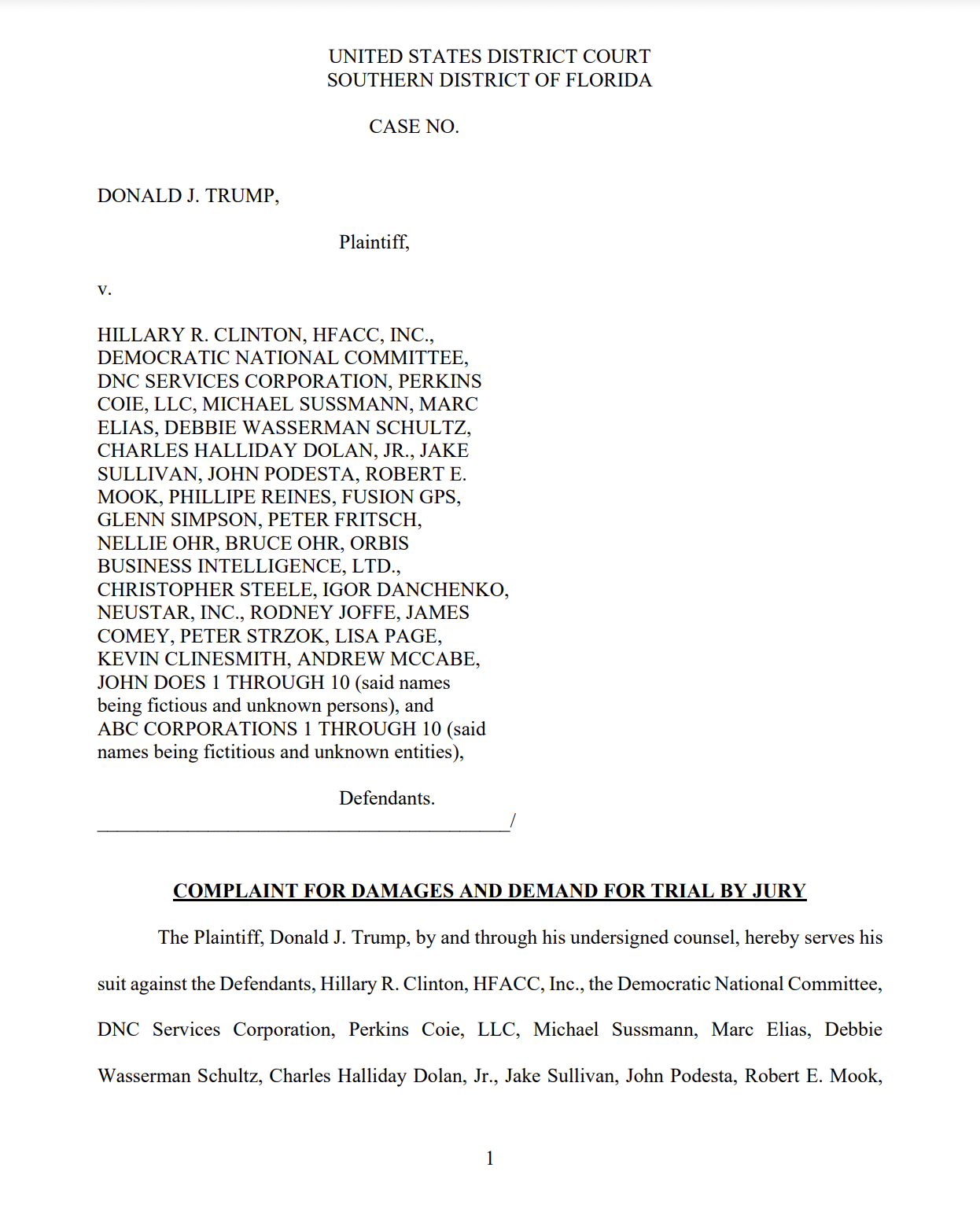
How
it
started
…
This
misadventure
began
back
in
March
of
2022
when
Trump’s
lawyers
Alina
Habba
and
Peter
Ticktin
filed
a
108-page
complaint
alleging
civil
RICO
by
long
list
of
Trump’s
enemies.
Alina
Habba
(who
needs
no
introduction)
needed
local
counsel,
and
she
turned
to
Ticktin,
a
guy
whose
claim
to
fame
is
that
he
roomed
with
a
teenage
Donald
Trump
at
boarding
school
some
six
decades
ago.
Ticktin
authored
the
book
“What
Makes
Trump
Tick:
My
Years
with
Donald
Trump
from
New
York
Military
Academy
to
the
Present”
as
well
as
some
truly
bizarre
poetry.
But
he
does
have
a
Florida
bar
card!
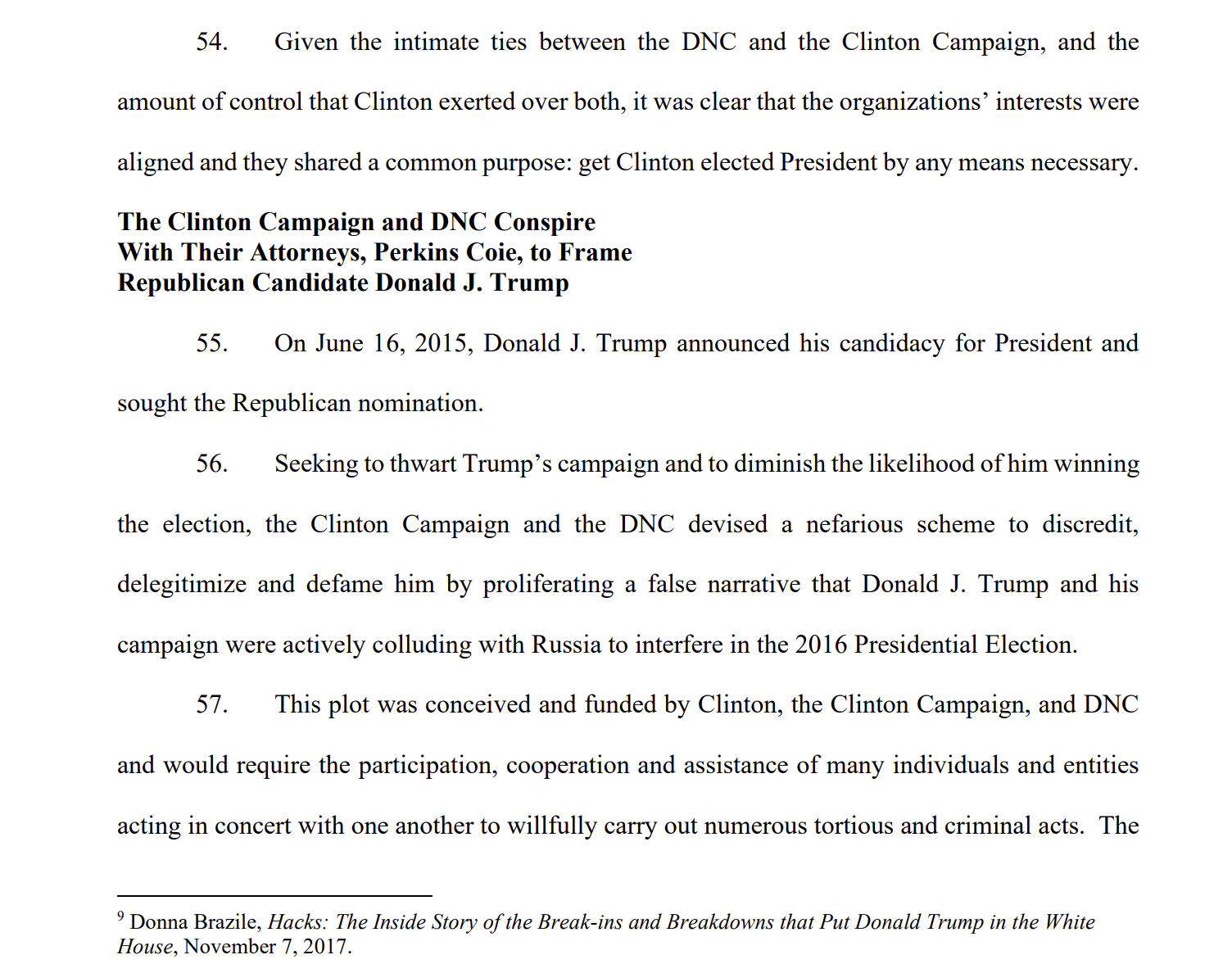
The
case
they
cooked
up
was
a
manic
stringboard,
alleging
a
racketeering
conspiracy
between
the
Clinton
campaign,
the
Democratic
National
Committee,
and
the
“Deep
State”
FBI.
They
were
all
in
on
a
dastardly
plot
to
publicize
the
Steele
dossier,
gin
up
the
Russia
investigation,
and
ruin
Trump.
Aside
from
being
batshit
crazy,
the
complaint
was
defective
in
every
respect.
As
the
predicate
crime
for
civil
RICO,
it
alleged
“theft
of
trade
secrets,”
by
which
Habba
and
Ticktin
meant
recording
internet
traffic
from
servers
in
Trump
Tower
—
something
which
is
neither
trade,
nor
a
secret.
Trump
purported
to
sue
government
officials
in
their
individual
capacities
for
actions
taken
on
the
job,
later
adding
his
own
deputy
attorney
general
Rod
Rosenstein
as
a
defendant.
His
lawyers
shrugged
off
the
statute
of
limitations
by
claiming
that
Trump
was
entitled
to
an
extension
because
he
worked
harder
than
any
other
president
and
didn’t
have
time
to
sue
for
two
full
years
after
leaving
office.
They
falsely
asserted
that
one
of
the
defendants,
Charles
Dolan,
was
a
former
chairman
of
the
DNC.
And
they
left-justified
the
subheadings!
Over
508
paragraphs,
they
spewed
claims
of
perfidy,
gesturing
vaguely
towards
the
varied
cast
of
defendants
and
insisting
that
they
were
all
in
on
it.
This
would
have
been
ill-advised
in
any
federal
court,
but
it
was
positively
suicidal
in
the
Eleventh
Circuit.
All
federal
circuits
require
complaints
to
provide
“a
short
and
plain
statement
of
the
claim
showing
that
the
pleader
is
entitled
to
relief”
under
Federal
Rule
of
Civil
Procedure
8.
But
the
Eleventh
Circuit
is
extremely
hostile
to
what
are
colloquially
known
as
shotgun
pleadings.
A
shotgun
pleading
lays
out
a
whole
pile
of
factual
claims,
and
then
when
it
comes
to
the
actual
injuries
says,
in
essence,
“see
above.”
The
hallmark
of
a
shotgun
pleading
is
an
overly
long
complaint
with
hundreds
of
disconnected,
often
salacious,
allegations.
The
reason
shotgun
pleadings
are
prohibited
is
that
a
defendant
can’t
properly
respond
to
a
complaint
where
there’s
no
bright
line
connecting
specific
facts
and
the
corresponding
harms
alleged.
And
that’s
especially
true
when,
as
here,
there
are
multiple
defendants
and
a
wildly
complicated
(not
to
say
fantastical)
set
of
factual
allegations.
Saying
over
and
over,
“The
Plaintiff
avers
the
allegations
contained
in
the
preceding
paragraphs
and
incorporates
them
in
this
count,
as
if
set
forth
at
length
herein,”
will
not
cut
it.
And
filing
an
amended
complaint
that
clocked
in
at
a
whopping
819
paragraphs,
spread
over
193
pages
did
not
help.
That
monstrosity
landed
on
the
docket
of
Judge
Donald
Middlebrooks,
a
no-nonsense
Clinton
appointee,
who
yeeted
it
into
the
sun
with
extreme
prejudice.
“Plaintiff’s
Amended
Complaint
is
neither
short
nor
plain,
and
it
certainly
does
not
establish
that
Plaintiff
is
entitled
to
any
relief,”
he
wrote,
adding
that
“What
the
Amended
Complaint
lacks
in
substance
and
legal
support
it
seeks
to
substitute
with
length,
hyperbole,
and
the
settling
of
scores
and
grievances.”
The
judge
described
it
as
”a
quintessential
shotgun
pleading,”
expressed
“serious
doubts”
as
to
whether
Habba
and
Ticktin
had
lived
up
to
their
professional
obligations,
and
ended
with
the
ominous
sentence
“I
reserve
jurisdiction
to
adjudicate
issues
pertaining
to
sanctions.”
That
was
an
invitation
heard
loud
and
clear
by
the
defendants,
who
moved
for
and
got
roughly
$1
million
in
attorneys
fees.
“This
case
should
never
have
been
brought,”
Judge
Middlebrooks
wrote
in
the
sanctions
order.
“Its
inadequacy
as
a
legal
claim
was
evident
from
the
start.
No
reasonable
lawyer
would
have
filed
it.”
The
order
called
out
“A
continuing
pattern
of
misuse
of
the
courts
by
Mr.
Trump
and
his
lawyers,”
including
“Provocative
and
boastful
rhetoric;
A
political
narrative
carried
over
from
rallies;
Attacks
on
political
opponents
and
the
news
media;
Disregard
for
legal
principles
and
precedent;
and
Fundraising
and
payments
to
lawyers
from
political
action
committees.
And
when
a
ruling
is
adverse,
accusations
of
bias
on
the
part
of
judges—often
while
the
litigation
is
ongoing.”
How
it’s
going
…
Trump
appealed
both
the
dismissal
and
the
sanctions
order
to
the
Eleventh
Circuit,
and
the
consolidated
appeals
were
argued
two
weeks
ago.
The
hearing
did
not
go
well
for
Trump’s
lawyers.
“I
can
read
this
complaint,”
snapped
Chief
Judge
William
Pryor,
Jr.
a
George
W.
Bush
appointee.
“It
seems
a
classic
shotgun
complaint.
It
incorporates,
by
reference,
hundreds
of
paragraphs
into
succeeding
counts.”
Judge
Andrew
Brasher,
a
Trump
appointee,
and
Judge
Embry
Kidd,
who
was
nominated
by
Biden,
were
similarly
unreceptive.
Back
in
chambers,
they
had
no
difficulty
reaching
a
decision.
“Many
of
Trump’s
and
Habba’s
legal
arguments
were
indeed
frivolous,”
they
wrote
last
week,
adding
that
the
plaintiff
forfeited
several
arguments
by
failing
to
make
them
in
timely
fashion.
“Trump
and
Habba
abandoned
this
argument
by
not
raising
it
in
the
district
court,
despite
having
the
opportunity
to
do
so,”
they
explained.
Indeed,
there
was
more
than
a
little
judicial
side-eye
for
the
president’s
lawyers:
For
example,
Trump
incorporates
each
of
the
preceding
633
paragraphs
in
his
third
count,
injurious
falsehood.
Nothing
prevented
him
from
specifying
the
statements
he
contends
are
injurious
falsehoods
under
this
count.
Although
he
identified
some
examples
in
this
section
of
his
complaint,
the
previous
paragraphs
contain
dozens
of
candidate
statements
that
Trump
obliged
the
district
court
to
evaluate
for
itself.
We
consider
that
abuse
of
judicial
resources
sanctionable.
That’s
a
very
bad
sign
for
those
lawyers
and
their
client.
Danger,
Will
Robinson!
As
Judge
Middlebrooks
noted,
Donald
Trump
files
a
lot
of
lawsuits.
He’s
currently
suing:
the
New
York
Times
for
reporting
on
his
family’s
business
practices;
the
Wall
Street
Journal
for
saying
he
drew
boobs
for
Jeffrey
Epstein;
and
the
Pulitzer
Prize
Board
for
defamatory
refusal
to
retract
a
prize
for
reporting
on
the
Russia
investigation
— all
in
Florida.
Trump
is
threatening
to
sue
the
BBC
in
federal
court
in
Florida.
His
media
company
is
currently
suing
the
Washington
Post
over
reporting
on
its
corporate
finances,
and
recently
lost
a
similar
claim
against
The
Guardian.
And
he
lost
another
appeal
on
November
15
in
an
effort
to
get
the
Eleventh
Circuit
to
revive
a
defamation
suit
against
CNN
for
using
the
phrase
“Big
Lie.”
In
short,
Trump
is
waging
a
campaign
of
garbage
litigation
in
Florida
courts.
The
chief
architect
of
this
campaign
is
a
Coral
Gables
litigator
named
Alejandro
Brito,
who
filed
most
of
the
above
complaints.
Brito’s
filings
are
no
more
cogent
than
Habba
and
Ticktins.
In
September,
Judge
Stephen
Merryday
immediately
struck
Trump’s
complaint
against
the
New
York
Times
for
being
a
shotgun
pleading
that
flagrantly
violated
Rule
8.
“As
every
lawyer
knows
(or
is
presumed
to
know),
a
complaint
is
not
a
public
forum
for
vituperation
and
invective
—
not
a
protected
platform
to
rage
against
an
adversary,”
Judge
Merryday
scoffed,
adding
that
“Although
lawyers
receive
a
modicum
of
expressive
latitude
in
pleading
the
claim
of
a
client,
the
complaint
in
this
action
extends
far
beyond
the
outer
bound
of
that
latitude.”
It’s
an
embarrassing
stumble
for
someone
who
has
been
practicing
law
for
decades.
But
Brito’s
humiliation
is
more
than
just
hilarious
fodder
for
legal
blogs.
Because
none
of
this
litigation
is
happening
in
a
vacuum.
Indeed,
the
Eleventh
Circuit
took
pains
to
note
that
it
was
perfectly
appropriate
for
the
trial
court
to
“bolster[]
its
finding
of
bad
faith
by
pointing
to
Trump’s
litigation
conduct
in
other
cases.”
That’s
an
explicit
greenlight
for
trial
court
judges
in
this
circuit
to
start
treating
Trump
like
the
vexatious
litigant
that
he
is.
This
sharp
and
speedy
rebuke
is
a
clear
warning
to
Trump
and
his
lawyers.
The
Eleventh
Circuit
is
conservative
bastion,
with
seven
of
13
active
duty
judges
appointed
by
Trump
himself.
Chief
Judge
Pryor
is
a
FedSoc
stalwart
(and
kind
of
a
dick).
But
the
Eleventh
Circuit
will
not
be
rolling
out
the
red
carpet
for
Trump’s
nonsense
lawsuits.
And
certainly
not
when
the
lawyering
is
so
disgracefully
sloppy
and
disrespectful
of
procedural
rules.
You
want
to
come
into
Judge
Pryor’s
house,
you
better
come
correct.
That
should
make
the
hairs
on
the
back
of
Alejandro
Brito’s
neck
stand
on
end.
The
appeals
court
affirmed
a
seven-figure
sanctions
award
for
which
Trump
and
his
lawyer
are
jointly
liable.
Brito’s
currently
leading
the
charge
on
a
whole
bevy
of
extremely
incorrect
trollsuits
in
this
circuit.
He’s
now
been
warned
that
these
could
be
very
costly
for
him
personally.
Guess
we’ll
find
out
this
week
if
he
heeds
that
message,
or
forges
ahead
and
makes
good
on
his
threat
to
sue
the
BBC
in
Florida
over
a
documentary
that
never
even
aired
in
North
America.
Biglaw
associates
sure
are
stuffed
after
Thanksgiving
last
week,
and
now
that
it’s
bonus
season,
their
bank
accounts
will
be
stuffed
as
well.
Just
before
the
holiday
last
week,
Willkie
Farr
&
Gallagher
announced
its
bonus
scale.
Last
year,
the
firm
took
in
$1,775,000,000
gross
revenue,
and
now
they’re
sharing
the
good
fortune
with
associates.
Willkie
sent
a
memo
to
its
associates
announcing
the
firm
will
be
matching
the
Cravath
scale,
complete
with
Milbank’s
summer
bonuses.
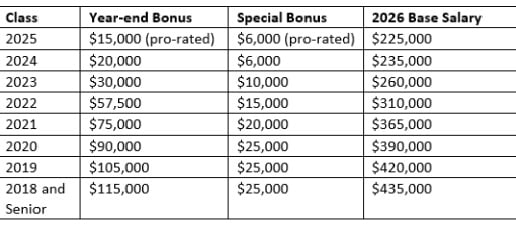
Here’s
what
that
looks
like
at
the
firm:
Bonuses
will
hit
bank
accounts
on
December
31,
2025,
making
for
a
very
happy
new
year
indeed.
Congratulations
to
everyone
at
Willkie!
Remember
everyone,
we
depend
on
your
tips
to
stay
on
top
of
compensation
updates,
so
when
your
firm
announces
or
matches,
please
text
us
(646-820-8477)
or email
us (subject
line:
“[Firm
Name]
Bonus/Matches”).
Please
include
the
memo
if
available.
You
can
take
a
photo
of
the
memo
and
send
it
via
text
or
email
if
you
don’t
want
to
forward
the
original
PDF
or
Word
file.
And
if
you’d
like
to
sign
up
for
ATL’s
Bonus
Alerts
(which
is
the
alert
list
we
also
use
for
salary
announcements),
please
scroll
down
and
enter
your
email
address
in
the
box
below
this
post.
If
you
previously
signed
up
for
the
bonus
alerts,
you
don’t
need
to
do
anything.
You’ll
receive
an
email
notification
within
minutes
of
each
bonus
announcement
that
we
publish.
Thanks
for
your
help!
Staci
Zaretsky is
the
managing
editor
of
Above
the
Law,
where
she’s
worked
since
2011.
She’d
love
to
hear
from
you,
so
please
feel
free
to
email
her
with
any
tips,
questions,
comments,
or
critiques.
You
can
follow
her
on Bluesky, X/Twitter,
and Threads, or
connect
with
her
on LinkedIn.
So
while
there
may
be
a
lot
going
on
at
the
firm,
they
aren’t
ignoring
their
associates.
Last
week,
the
firm
announced
special
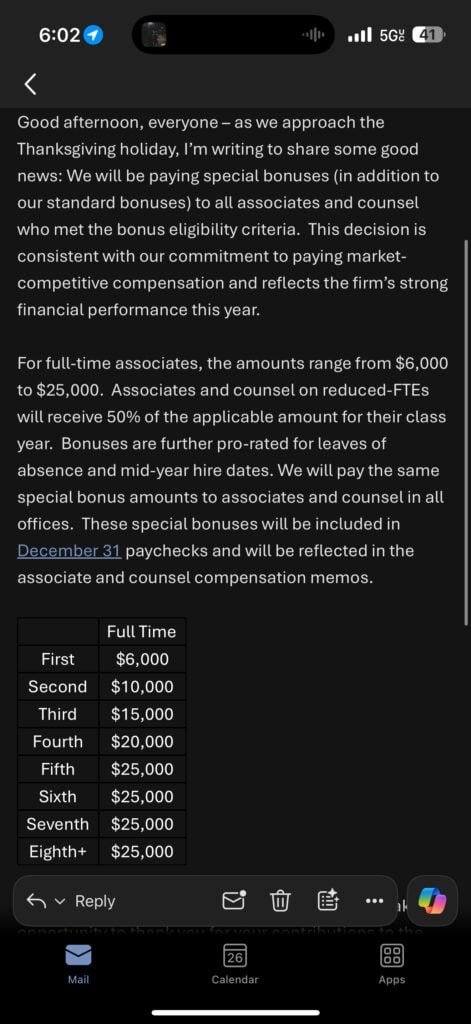
bonuses
for
associates,
matching
the
prevailing
scale
of
$6,000
–
$25,000,
depending
on
seniority.
It’s
noteworthy
that
the
firm
came
out
early
to
match
the
special
bonuses,
since
last
year
Perkins
lagged
in
their
special
bonus
announcement,
much
to
the
consternation
of
associates.
The
special
bonuses
will
be
in
addition
to
year-end
bonuses
(which
were
not
announced
at
the
same
time),
and
paid
December
31.
Read
the
full
memo
below.
So,
is
your
firm
matching
*both*
the
year-end
and
special
bonuses?
Let
Above
the
Law
know!
We
depend
on
your
tips
to
stay
on
top
of
important
bonus
updates,
so
when
your
firm
matches
(or
if
they
fail
to
do
so),
please
text
us
(646-820-8477)
or email
us (subject
line:
“[Firm
Name]
Matches”).
Please
include
the
memo,
if
available.
You
can
take
a
photo
of
the
memo
and
send
it
via
text
or
email
if
you
don’t
want
to
forward
the
original
PDF
or
Word
file.
Screenshot
Kathryn
Rubino
is
a
Senior
Editor
at
Above
the
Law,
host
of
The
Jabot
podcast,
and
co-host
of
Thinking
Like
A
Lawyer.
AtL
tipsters
are
the
best,
so
please
connect
with
her.
Feel
free
to
email
her
with
any
tips,
questions,
or
comments
and
follow
her
on
Twitter
@Kathryn1 or
Mastodon
@[email protected].
It’s
evident
that
there
is
still
a
challenge
with
access
to
mental
health
support.
There’s
a
provider
shortage,
and
the
available
providers’
time
slots
fill
up
quickly.
But
more
than
that,
receiving
quality
mental
health
care
is
also
difficult.
Payers
collect
a
lot
of
data
on
patient
care,
but
it’s
not
always
obvious
how
good
that
care
was.
This
is
according
to
Dr.
Taft
Parsons,
chief
psychiatric
officer
of
CVS
Health,
during
an
interview
at
the
recent
Behavioral
Health
Tech
conference
in
San
Diego.
He
argued
that
in
order
to
improve
the
quality
of
care
in
behavioral
health,
there
needs
to
be
better
guidelines
for
what
good
actually
looks
like.
And
this
may
require
some
action
from
lawmakers.
“I
personally
think
that
the
way
to
really
get
to
consensus
broadly
is
something
that
takes
policy
action,”
he
said.
“We
certainly
want
to
participate
in
defining
what
good
looks
like.
But
it’s
hard
for
payers,
providers,
advocates,
everybody
…
to
all
be
on
the
exact
same
page
of,
‘What
does
good
look
like?’
And
I
think
that
sometimes
the
only
way
that
that
happens
is
when
there
is
a
policy
that
says
we’re
going
to
define
it.”
Parsons
added
that
care
in
behavioral
health
is
oftentimes
measured
by,
“Did
you
do
a
thing?”
However,
this
doesn’t
always
give
the
full
picture.
“My
poster
child
HEDIS
measure
for
that
is
follow
up
after
hospitalization,”
Parsons
said.
“Did
you
get
them
in
for
an
appointment
within
seven
days?
And
while
that
may
indicate
that
across
a
large
number
of
people,
folks
that
get
in
within
seven
days
do
better
than
folks
that
don’t,
it
doesn’t
tell
you
whether
or
not
that
clinician
actually
did
a
good
medication
reconciliation.
Did
they
make
sure
that
social
determinants
of
health
needs
are
met?
Did
they
do
the
things
in
that
appointment
that
are
actually
going
to
lead
to
the
success
of
that
patient
in
their
health
journey?”
He
argued
that
behavioral
health
should
shift
from
tracking
whether
clinicians
completed
tasks
to
measuring
whether
patients’
health
actually
improved.
“The
way
that
that
happens
is
through
some
of
these
policy
changes
that
I
think
have
been
long
overdue
on
the
behavioral
health
side,”
he
said.
“I
won’t
say
that
they’re
perfect
on
the
physical
health
side,
but
they’re
much
further
along.”
Better
defining
quality
in
behavioral
health
could
also
help
advance
value-based
care,
especially
given
how
differently
people
interpret
good
care.
“It’s
hard
for
us,
or
anybody,
to
write
a
value-based
contract
with
that
many
different
variables.
When
there’s
alignment
on
what
is
defined
as
good
care,
it’s
much
easier
for
us
all
to
work
together,
to
actually
pay
for
results
instead
of
pay
for
activity,”
he
said.




 Kathryn