3 Questions For A Law School Admissions Expert (Part II) – Above the Law

(Image
via
Getty)

Last
week,
I
presented

the
first
part

of
my
written
interview
with
Ethan
Madore,
7Sage’s
coordinator
of
their
law
school
admissions
consulting
program.
That
column
presented
his
answer
to
the
first
of
my
three
questions
and
focused
on
how
the
changing
law
school
admissions
landscape
has
made
getting
into
one’s
school
of
choice
more
difficult
than
ever.
What
follows
are
Ethan’s
answers
to
my
remaining
two
questions.
As
usual,
I
have
added
some
brief
commentary
to
his
answers
below,
but
have
otherwise
presented
his
answers
as
he
provided
them.


GK:
What
lessons
have
you
learned
about
how
best
to
position
candidates
in
light
of
the
factors
law
schools
are
choosing
to
focus
on?


EM:

Many
of
the
best
candidates
tell
stories
about
wising-up.
Among
the
flood
of
young
graduates
looking
to
law
school
as
a
way
to
learn
how
to
write
a
blank
check
for
social
change,
candidates
with
a
sober
understanding
of
what’s
possible

and
admirable

in
the
life
of
a
lawyer
really
stand
out.

And
there
are
a
lot
of
people
who
would
make
great
law
students
and
lawyers
who
get
passed
over
because
they
don’t
realize
there’s
a
good
deal
of
strategy
in
how
you
choose
to
present
yourself.
An
application
is
a
test.
If
you’re
from
a
certain
background,
you
probably
already
understand
that.
If
not,
it
can
really
be
a
learning
curve.

When
our
committee
of
admissions
officers
do
their
blind
reviews
on
a
fresh
set
of
applications,
you
really
see
the
difference
the
right
narrative
can
make.
Admissions
officers
are
natural
cynics
and
stereotypers.
They’re
there
to
recognize
patterns
and
secure
certain
outcomes
for
the
institutions
that
employ
them.
But
they’re
also
human.
They

want

to
believe
that
their
role
as
professional
gatekeepers
actually
does
contribute
to
the
kind
of
change
they
want
to
see
in
the
world.
In
the
heart
of
hearts,
they
believe
they’re
there
to
elevate
the
worthy,
punish
the
arrogant,
and
dole
out
hard-earned
second
chances.

When
I
read
an
application
for
the
first
time,
I
always
underline
the
first
moment
I
start
to

like

a
candidate.
Usually,
it’s
a
very
small
moment
of
self-description.
Far
too
often,
it
comes
at
the
very
end
of
an
application.
But
if
you
do
that
early
enough
to
get
a
reader
on
your
side,
then
there’s
a
lot
you
can
do
with
the
right
narrative
delivered
to
a
sympathetic
audience.


GK
:
Pragmatism
is
in
short
supply.
As
is
resilience.
But
both
are
qualities
that
are
essential
to
success
in
legal
practice,
especially
as
we
stand
on
the
precipice
of
an
AI-driven
shift
in
how
legal
services
are
delivered
to
clients.
For
me,
Ethan’s
answer
is
a
reminder
that
screening
for
those
who
have
demonstrated
the
ability
to
think
and
act
pragmatically,
or
who
have
shown
resilience
in
the
face
of
challenges,
is
a
good
approach
for
all
of
us
to
take
when
evaluating
others.
Whether
it
is
to
build
a
1L
law
school
class,
bring
on
a
lateral
partner
or
associate,
or
when
choosing
to
partner
with
another
lawyer
on
a
client
matter

spotting
and
acting
on
evidence
that
your
counterparty
embodies
a
pragmatic
and
resilient
spirit
is
critical
to
a
successful
relationship.
And
if
you
can
find
something
likeable
about
the
person
you
are
choosing
to
deal
with,
all
the
better.


GK:
What
challenges
do
you
and
your
team
at
7Sage
look
forward
to
tackling
in
the
coming
years?


EM:

Universities
have
been
adopting
the
‘revenue
model’
of
education
for
decades.
The
median
tenure
for
a
law
school
dean
is
less
than
three
years

that’s
not
enough
time
to
see
an
entering
class
through
graduation.
What
happens
is
that
a
new
person
comes
in
with
a
promise
to
raise
a
school’s
ranking,
which
they
do
by
maximizing
the
very
limited
factors
measured
by
U.S.
News.
Maybe
they
cut
academic
programs
to
give
scholarships
to
people
with
really
high
LSAT
scores.
Their
LSAT
median
goes
up,
their
ranking
goes
up.
But
the
program
doesn’t
get
better.
And
so
in
two
years,
there’s
a
crash.
The
school
falls
back
down
to
where
it
was
before

often
lower.
But
that
new
dean,
well,
they’ve
already
already
gotten
a
new
job
at
a
higher-ranked
university
on
the
basis
of
their
“accomplishment.”
The
cycle
repeats! 

Of
course
that
isn’t
the
problem
7Sage’s
admissions
program
is
trying
to
solve.
But
it’s
the
landscape
we’re
in.
Our
concern
is
for
the
individual:
how
do

you

climb
this
increasingly
rickety
ladder
up
into
professional
life?
The
more
we
can
help
people
reflect
on

why

they’re
about
to
take
this
journey
and
explain
themselves
to
these
gatekeepers
of
professional
life,
the
more
they
can
make
smart
choices
in
the
face
of
billion-dollar
educational
institutions.

Universities
have
embraced
being
businesses.
You
need
to
be
a
savvy,
suspicious,
disenchanted
customer
if
you
want
what
they’re
selling.
You
need
to
talk
to
them
the
right
way.


GK
:
I
believe
that
many
readers,
like
myself,
are
glad
that
they
don’t
have
to
navigate
the
law
school
admissions
process
in
the
current
climate.
At
the
same
time,
even
though
Ethan’s
considered
opinion
about
the
flawed
outcomes
engendered
by
short-term
thinking
at
law
schools
rings
true,
I
think
what
is
most
important
to
remember
is
his
advice
to
aspiring
applicants.
Namely,
that
it
is
important
to
be
an
informed
consumer,
while
also
confident
in
why
they
want
to
go
to
law
school
in
the
first
place.
As
I
watch
my
son
work
his
way
through
the
current
application
cycle
with
7Sage’s
help,
I
can’t
help
but
be
excited
and
proud
to
watch
him
take
the
brave
next
step
towards
a
life
of
what
I
hope
will
be
full
of
professional
fulfillment
and
contributions
to
society. 

My
thanks
to
Ethan
for
the
insights
and
cooperation,
and
I
wish
him
continued
success
with
his
important
work
at
7Sage’s
law
school
admissions
consulting
program.
Hopefully
this
readership
will
share
Ethan’s
insights
with
aspiring
law
students
and
any
current
applicants
they
have
in
their
lives. Our
profession
is
ever-changing
and
it
is
in
our
collective
best
interest
that
the
next
generation
of
law
school
attendees
is
as
capable
and
well-trained
for
a
career
in
the
law
as
can
be.
Law
school
admissions
offices
are
the
gatekeepers
that
help
make
that
happen

and
thoughtful
consultants
like
Ethan
and
his
colleagues
help
make
the
admissions
process
more
successful
for
applicants
as
well
as
those
making
the
decisions.
I
am
always
open
to
conducting
interviews
of
this
type
with
other
IP
thought
leaders,
so
feel
free
to
reach
out
if
you
have
a
compelling
perspective
to
offer. 

Please
feel
free
to
send
comments
or
questions
to
me
at

[email protected]

or
via
Twitter:

@gkroub
.
Any
topic
suggestions
or
thoughts
are
most
welcome.


Gaston
Kroub
lives
in
Brooklyn
and
is
a
founding
partner
of 
Kroub,
Silbersher
&
Kolmykov
PLLC
,
an
intellectual
property
litigation
boutique,
and 
Markman
Advisors
LLC
,
a
leading
consultancy
on
patent
issues
for
the
investment
community.
Gaston’s
practice
focuses
on
intellectual
property
litigation
and
related
counseling,
with
a
strong
focus
on
patent
matters.
You
can
reach
him
at 
[email protected] or
follow
him
on
Twitter: 
@gkroub.

From ‘Who Luck’ to ‘Who’s Here?’: The TLTF Summit Continues to Excel, Even As It Expands

God
forbid
a
disaster
had
befallen
Austin,
Texas,
last
week,
because
it
could
have
set
back
the
evolution
of
legal
tech
by
at
least
a
decade.
Assembled
there
were
many
of
the
best
and
the
brightest
of
the
legal
tech
world,
who
had
all
come
together
for
the
fourth
edition
of
what
has
become
the
must-attend
event
for
legal
tech
innovators,
entrepreneurs
and
investors

the

TLTF
Summit
.

Produced
by

The
Legaltech
Fund
,
the
first
venture
capital
firm
devoted
exclusively
to
legal
tech,
it
is
a
conference
I
previously
dubbed the
Davos
of
legal
tech

for
the
fact
that
it
brings
together
leaders
from
across
disciplines
to
engage
in
open
and
unfettered
dialogue
about
the
state
and
future
of
legal
innovation.
As
someone
who
has
attended
all
four
summits,
I’ve
had
a
front-row
seat
to
its
evolution.

Unique
to
this
conference
is
its
mix
of
people.
It
is
invitation
only,
and
TLTF
staff
literally
call
and
interview
everyone
who
applies
to
ensure
the
right
fit.
It
is
also
sales
free

no
exhibitors
or
salespeople.
To
encourage
open 
dialogue,
the
summit
operates
under
the

Chatham
House
Rule
,
by
which
participants
are
free
to
use
the
information
they
receive,
but
not
to
reveal
the
identify
or
affiliation
of
any
speaker
or
participant.


Kristen
Sonday,
founder
and
CEO
of
Paladin,
and
Ryan
Alshak,
founder
and
CEO
of
Laurel,
enjoy
some
Texas
barbecue
during
an
after-hours
party. 

This
formula
adds
up
to
a
conference
attended
by
a
who’s
who
of
legal
tech:
investors
from
venture
capital
and
private
equity
firms,
CEOs
and
top
executives
from
legal
tech
companies,
managing
partners
and
innovation
leaders
from
some
of
the
largest

and
some
of
the
most
innovative

law
firms
in
the
world,
founders
of
companies
ranging
from
early-stage
startups
to
established
leaders,
and
lawyers
and
legal
professionals
who
are
at
the
leading
edge
innovation.

In
his
keynote
to
open
this
year’s
summit,
organizer Zach
Posner
,
cofounder
and
managing
director
of
The
LegalTech
Fund,
did
as
he
had
done
in
past
years,
inviting
attendees
to
skip
the
sessions
in
favor
of
spending
time
and
taking
walks
with
acquaintances
new
and
old.
Again
this
year,

as
he
had
before
,
he
encouraged
attendees
to
make
“who
luck”
happen,
conjuring
a
concept conceived
by
business
author
Jim
Collins
.

As
I
walked
the
hallways
and
grounds
of
the
Omni
Barton
Creek
Resort
and
asked
attendees
their
impression
of
the
summit,
superlatives
abounded.
The
best
conference
in
legal
tech.
No
other
conference
creates
such
a
sense
of
community.
I
feel
safe
here,
knowing
I
won’t
be
accosted
by
sales
pitches.
An
unparalleled
mix
of
attendees.
The
best
swag.
The
best
food.
Fantastic
location.

These
were
all
paraphrases
of
comments
I
heard
repeatedly.
And
remember,
these
are
people,
for
the
most
part,
who
attend
more
than
their
fair
share
of
conferences.
So
they
know
of
what
they
speak.

But
as
the
summit
has
quadrupled
in
size
over
its
four
years,
I
also
heard
many
return
attendees
express
concern
that
some
of
that
“who
luck”
was
getting
lost
to
the
question
of
“Who’s
here?”,
exacerbated
by
name
badges
with
tiny
type
and
the
lack
of
an
attendee
roster.
More
on
that
later.


A
Focus
On
AI

If
superlatives
characterized
the
conference,
AI
characterized
its
theme.

In
an
ironic
twist
of
fate,
the

first
TLTF
Summit
,
held
in
Miami
Dec.
7-9,
2022,
convened
just
days
after
the
Nov.
30,
2022,
launch
of
ChatGPT.
Now,
four
years
later,
this
gathering
in
the
Austin
hill
country
seemed
to
confirm
how
far
we
have
come.
Legal
tech,
it
seemed
last
week,
is
no
longer
feeling
its
way
toward
an
AI-driven
future

it
has
arrived
at
one.

As
I
mingling
with
founders,
law
firm
leaders,
corporate
counsel,
investors
and
others,
the
mood
felt
strikingly
unified.
Everyone,
from
the
earliest-stage
startups
to
the
industry’s
largest
players,
seemed
to
be
working
on
some
version
of
the
same
mandate,
that
of
how
to
operationalize
AI
in
legal
work,
not
as
a
novelty,
but
as
infrastructure.

Not
to
mention
how
to
do
it
responsibly,
at
scale,
and
with
the
end
user
squarely
in
focus.

This
was
reflected
in
the
summit’s
eight
programming
tracks,
15
panels,
15
roundtables,
seven
education
sessions,
and
hundreds
of
companies
represented.
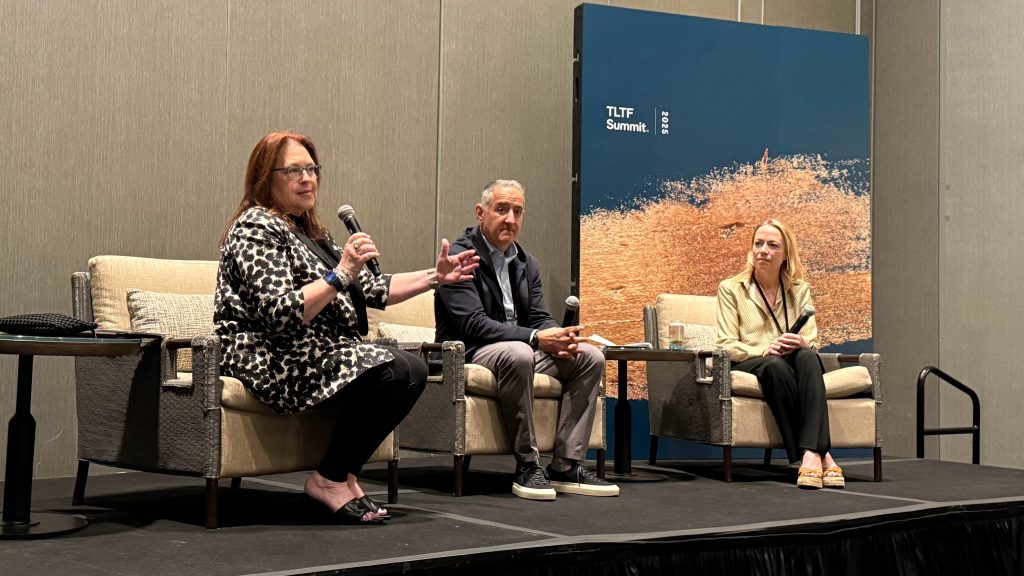


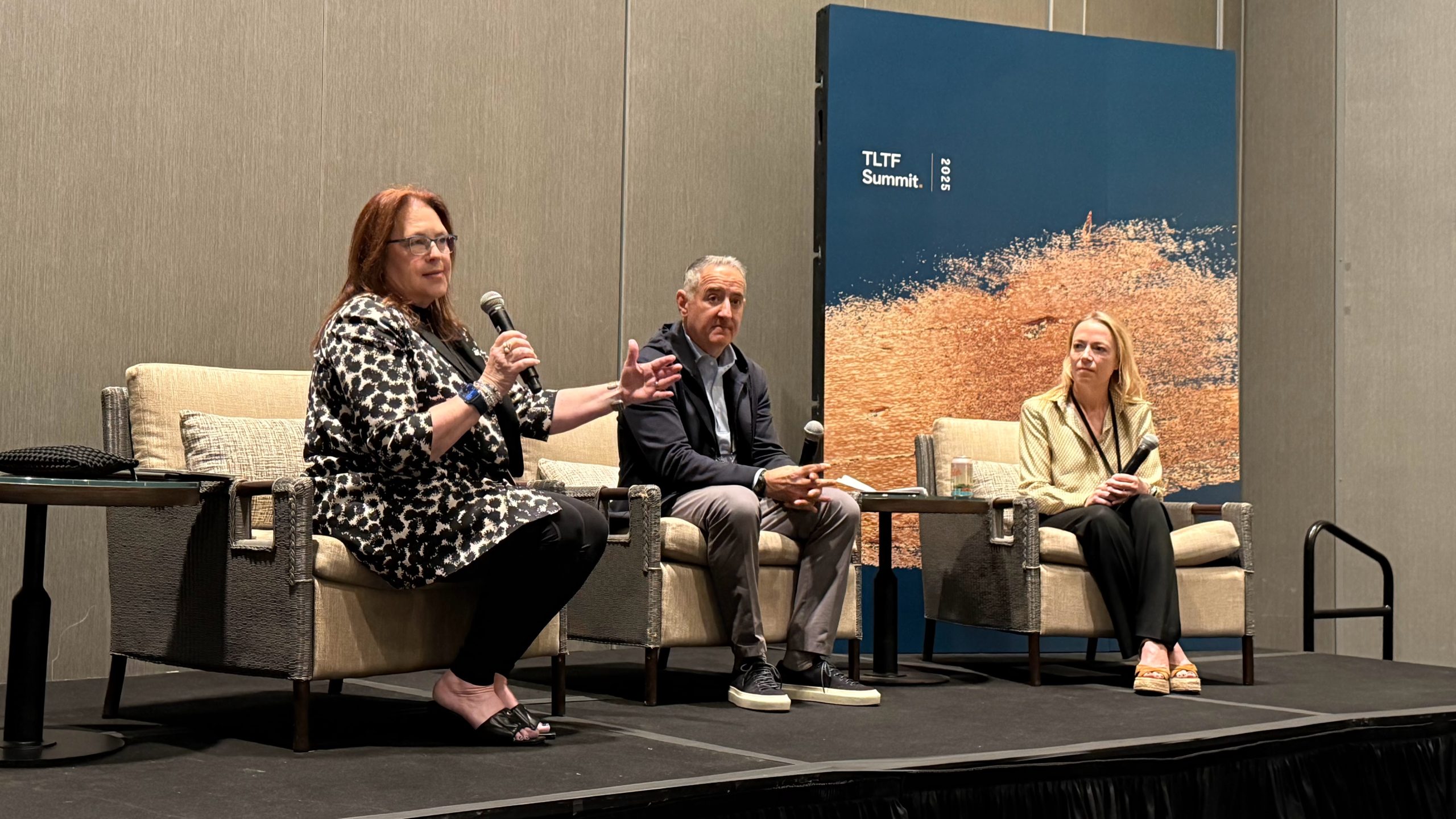
The
managing
partners
of
Morgan
Lewis
(left)
and
Seyfarth
(right)
and
the
former
managing
partner
of
Skadden
(center)
offered
a
rare
candid
look
at
how
BigLaw’s
leaders
are
navigating
AI
adoption.

For
example,
the
panel
“Leadership
&
Technology
in
Law,”
featuring
the
managing
partners
of
Morgan
Lewis
and
Seyfarth
and
the
former
managing
partner
of
Skadden,
offered
a
rare
candid
look
at
how
BigLaw’s
leaders
are
navigating
AI
adoption,
pricing
transformations
and
clients’
demands
for
greater
value.

Another
panel,
the
“AI
Effect
on
Law
Firm
Economics,”
considered
the
economic
case,
that
AI
is
simultaneously
undermining
and
reinventing
the
billable
hour,
enabling
fixed-fee
and
subscription
models,
and
offering
firms
the
data
visibility
they’ve
always
lacked.

“AI
Is
My
Co-Counsel”
brought
together
Microsoft,
Google,
Warburg
Pincus,
Streamline
AI
and
Clearbrief
to
dissect
what
is
working
in
corporate
legal
departments

and
where
hallucinations,
data
protection,
and
explainability
still
pose
real
barriers.
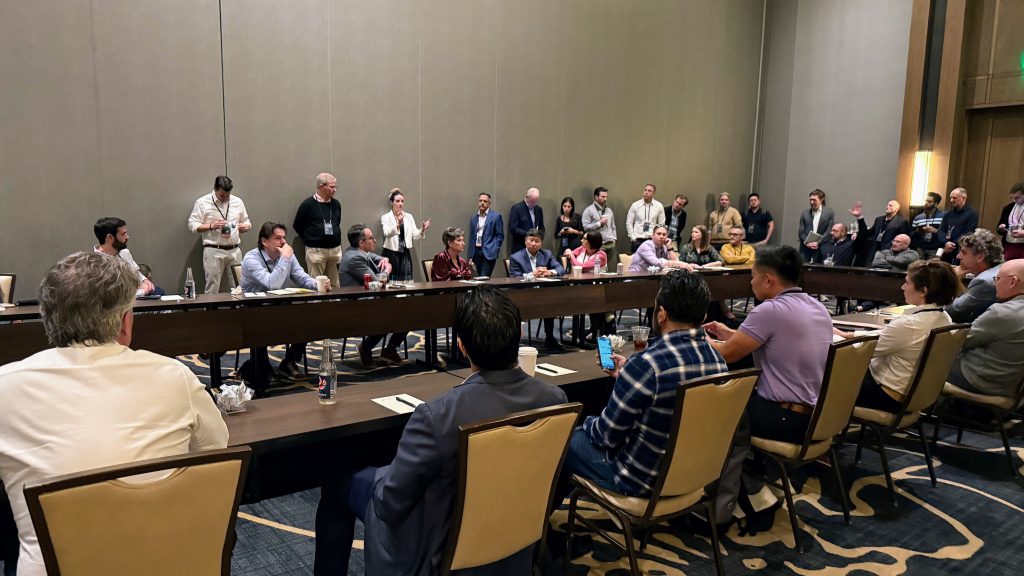


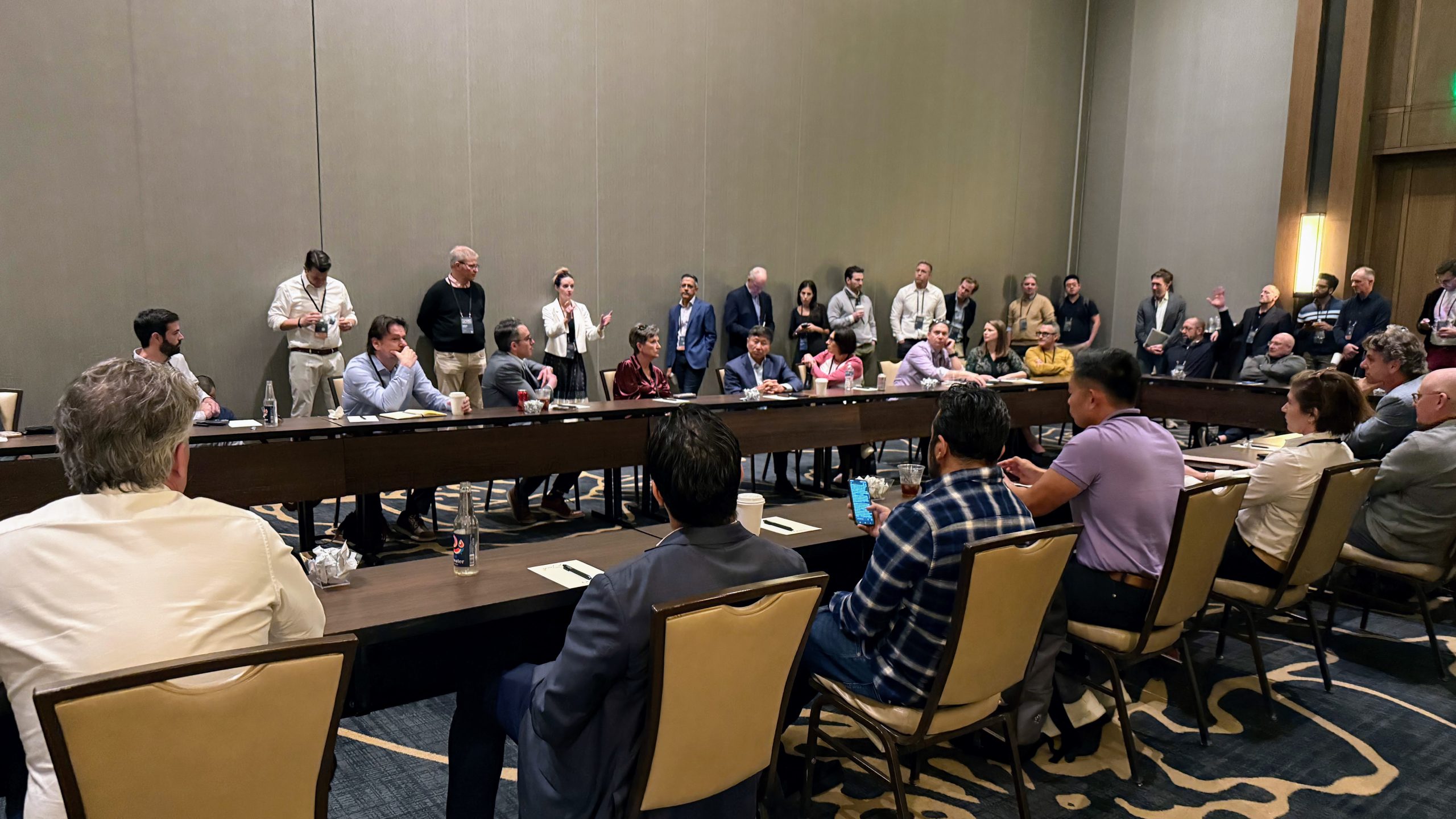
Natalie
Knowlton,
associate
director
of
legal
innovation
at
Stanford
University
(in
white
coat
against
wall),
moderated
a
roundtable
on
the
future
of
nonlawyer
ownership.

Meanwhile,
in
“Unlocking
Collaboration:
Interoperability
in
Legal
AI,”
speakers
from
Meta,
Cityblock
Health,
HSF
Kramer,
Harbor,
and
Legaltech
Hub
made
the
case
for
interoperability,
arguing
that
the
next
leap
in
AI
won’t
come
from
smarter
models,
but
from
better
systems
that
talk
to
each
other.

One
of
the
most
talked-about
panels,
“Who
Controls
the
Future
of
Legal
Services?”,
captured
the
tension
and
opportunity
in
the
shifting
ownership
of
the
“legal
services
stack,”
as
ABS
models,
MSOs,
and
AI-driven
platforms
challenge
traditional
firm
structures.


The
Next
Wave
of
Legal
AI

A
signature
feature
of
the
summit
is
its
Startup
Showcase,
which
this
year
introduced
17
early-stage
companies
spanning
such
areas
as
AI-native
litigation
platforms
(TrialKit),
contract
intelligence
(Syntracts),
structured
data
extraction
(LexSelect),
patent
automation
(Paximal,
Patlytics),
in-house
copilots
(Ruli),
compliance
infrastructure
(SurePath
AI),
and
conversational
AI
(Querious).

Cumulatively,
their
presentations
reflected
several
of
the
key
themes
currently
dominating
the
legal
tech
landscape:

  • Agentic
    AI:
    Not
    just
    answering
    questions,
    but
    performing
    tasks
    (Paximal,
    Newcode.ai,
    Lead
    Autopilot).
  • Data
    structuring:
    Turning
    messy
    PDFs
    into
    usable
    data,
    enabling
    AI
    accuracy
    at
    scale
    (LexSelect,
    Syntracts).
  • Vertical
    AI
    platforms:
    Built
    specifically
    for
    injury
    claims,
    immigration,
    private
    markets
    or
    patents
    (Predict.law,
    CaseBlink,
    Covenant,
    Patlytics).
  • AI-first
    infrastructure:
    Governing
    AI
    usage,
    mitigating
    risk,
    and
    automating
    compliance
    (SurePath
    AI,
    Warrant).

In
addition
to
startups,
the
summit
also
highlighted
scale-stage
and
growth-track
companies.

The
15
scale
stage
presenters,
described
as
companies
“that
are
scaling
rapidly
and
redefining
the
legaltech
landscape,
included:
DraftWise,
FirmPilot,
Flo
Recruit,
Foundation
AI,
HelloPrenup,
Hona,
Jigsaw,
Jusfy,
Lawline,
New
Era
ADR,
Orbital,
SimpleClosure,
SimplyAgree,
StructureFlow
and
Vertican.

Meanwhile,
the
growth
track
featured
nine
companies
that
have
achieved
substantial
growth
“and
long
surpassed
product-market
fit:
BlackCloak,
Bridge
Legal,
Centerbase,
Harvey,
LegalOn,
Scalar,
Smokeball,
Steno,
and
Trust
&
Will.


Lowering
the
‘Who
Luck’
Odds

But
even
for
all
of
its
substance,
much
of
the
TLTF
Summit’s
value
still
comes
from
its
format

from
the
serendipity
of
its
“who
luck.”

Yet
among
those
who
had
attended
this
conference
before,
I
heard
grumbling
over
its
growth.
The
first
year
was
capped
at
a
relatively
intimate
250
registrants
(and
Posner
said
in
his
keynote
that
the
actual
attendance
had
been
around
150).
Last
year
was
supposed
to
have
been
capped
at
500
but
actually
reached
around
650.
This
year,
total
registrants
reached
876.

By
the
standards
of
large
legal
tech
conferences
such
as
Legalweek
and
ILTACON,
the
TLTF
Summit
is
still
small.
But
by
the
standard
of
making
“who
luck”
happen,
this
year’s
larger
attendance
meant
a
lowering
of
the
odds.

In
my

review
of
last
year’s
summit
,
I
wrote,
“Without
question,
the
defining
trait
of
this
summit
is
its
atmosphere
of
engagement,
discovery
and
serendipity.”

That
is
still
a
true
statement.
But,
somehow,
it
felt
less
true
this
year.
There
was
less
of
that
serendipity
and
spontaneity.
This
is
not
just
me
talking.
I
heard
it
over
and
over
again
from
others
who
had
attended
in
prior
years.
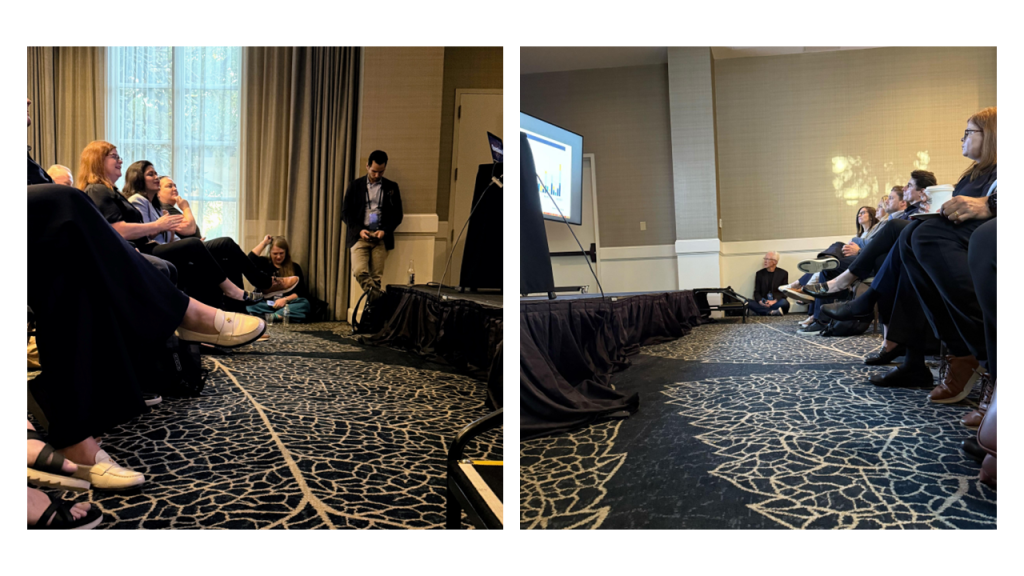


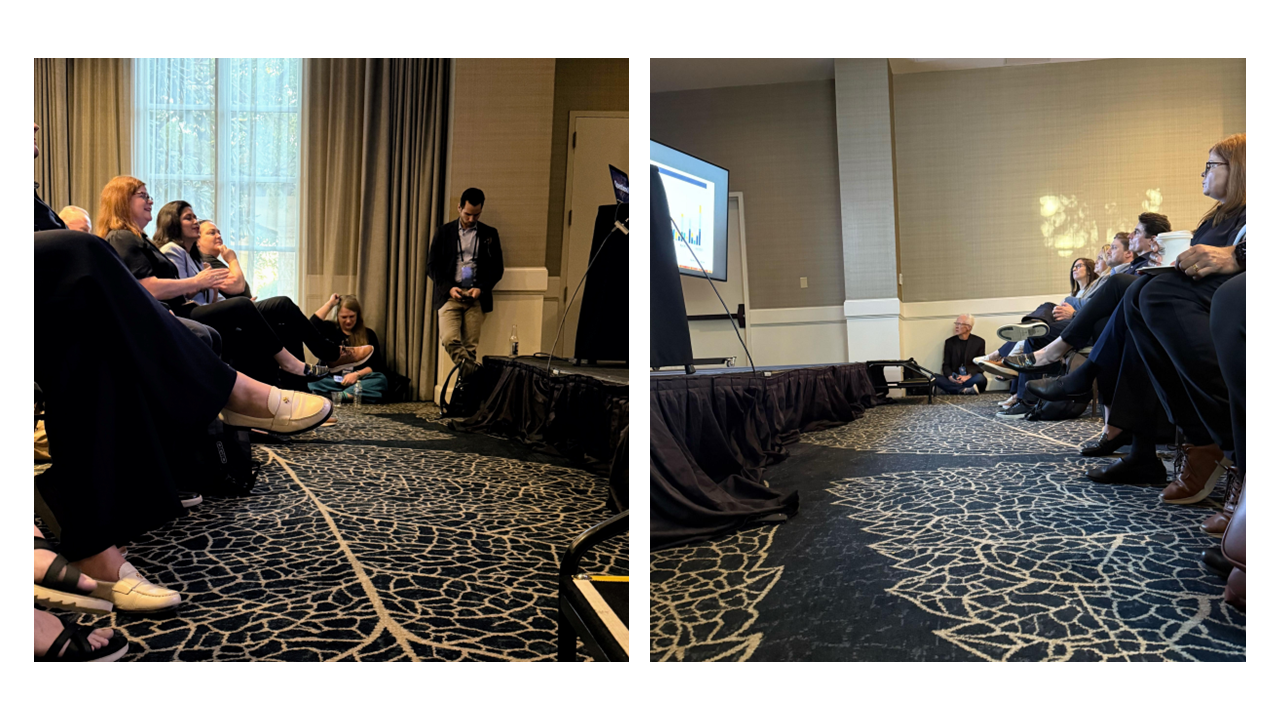
Through
sheer
coincidence,
at
one
of
the
standing-room-only
programs,
my
Legaltech
Week
co-panelist
Stephanie
Wilkins,
director
of
content
at
Legaltech
Hub,
and
I
found
ourselves
sitting
on
the
floor
directly
across
from
each
other.
When
Stephanie
sent
me
the
photo
on
the
right,
I
responded
with
one
of
her. 

One
seemingly
preventable
side
effect
of
this
year’s
larger
attendance
was
that
seminar
rooms
were
consistently
standing-room
only.
At
virtually
every
program
I
attended,
many
audience
members
were
forced
to
stand
crowded
along
the
walls
or
to
plop
down
cross-legged
on
the
floor.

Not
only
was
this
uncomfortable
for
the
audience,
but
I
heard
from
speakers
that
it
was
distracting
for
them,
particularly
as
late
arrivers
jockeyed
for
a
space.

I
get
it:
Success
brings
growth
and
growth
brings
growing
pains.
I’ve
been
on
the
conference
circuit
long
enough
to
see
several
conferences
that
started
small
and
grew
exponentially
and
remained
successful

or
became
even
more
successful

through
it
all.

But
there
comes
a
point
where
the
who-luck
runs
low,
and
the
very
thing
that
characterized
the
conference
in
its
early
days
morphs
into
something
much
different.


‘Still
the
Best’

Thankfully,
that
has
not
happened
yet,
and
my
complaints
about
the
numbers
are
nothing
more
than
picking
nits
off
an
otherwise
fantastic
conference.

In
fact,
in
the
case
of
virtually
every
repeat
attendee
who
grumbled
to
me
about
its
growth,
they
would
always
quickly
temper
that
comment
with
the
postscript:
But
it
is
still
the
best
conference
in
legal
tech.

One
of
the
characteristics
that
make
it
so
good
is
its
ability
to
maintain
an
atmosphere
that
I
described
last
year
as
“chill.”

Because
everyone
is
vetted,
because
everything
is
off
the
record,
because
no
one
is
trying
to
sell
you
anything,
participants
seem
unusually
relaxed,
unguarded,
approachable
and
engaging.

What
I
wrote
last
year
on
this
point
remains
true:
“No
one
was
too
big
or
important
to
approach,
or
too
unapproachable
because
they
were
surrounded
by
their
people.
Everyone
was
on
equal
footing,
and
everyone
engaged
as
co-equal
peers.”



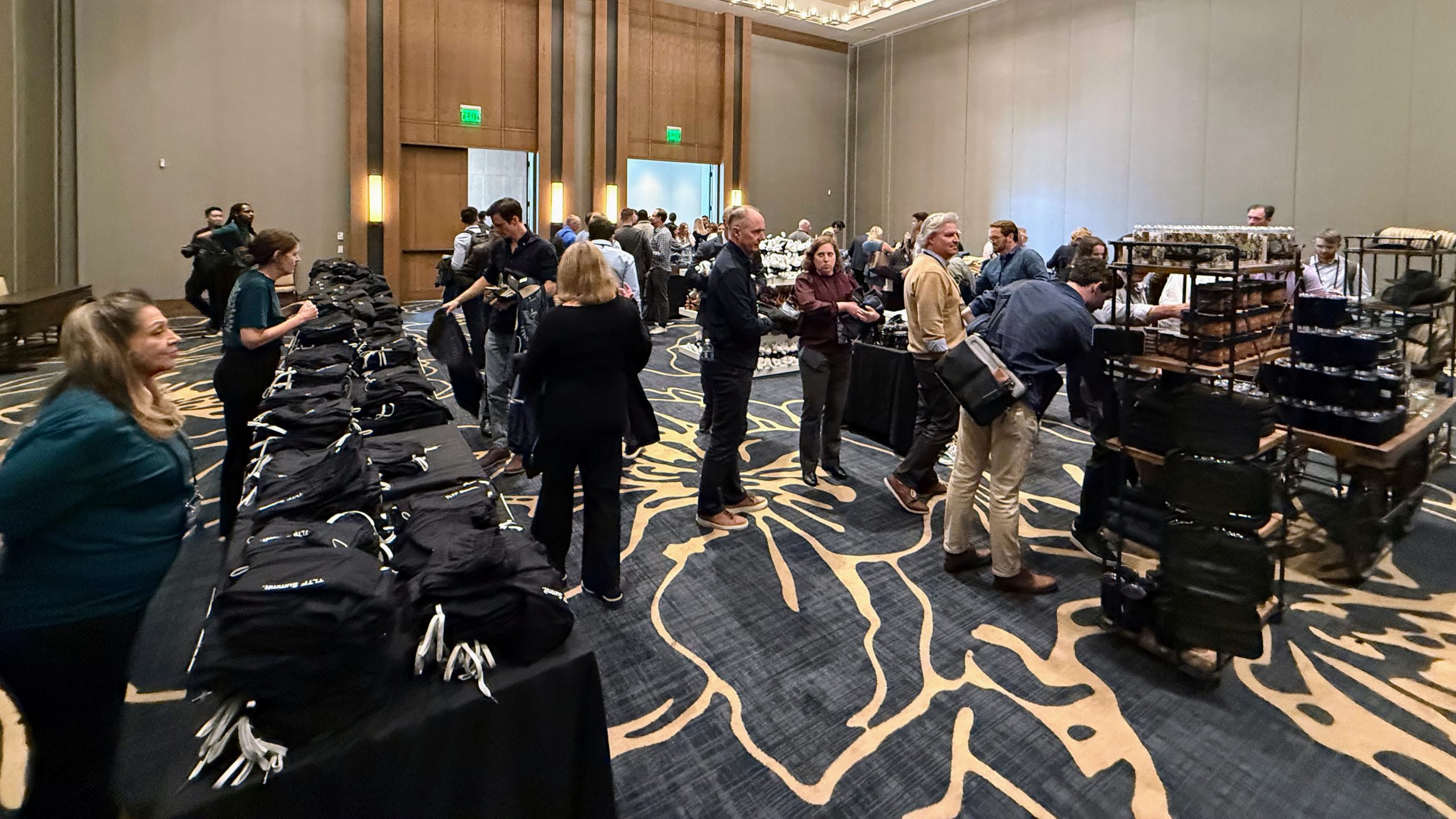
Swarming
the
swag.

And
when
who-luck
did
strike
and
you
found
yourself
connecting
with
a
complete
stranger,
the
conversation
was
bound
to
be
fascinating.
To
double-click
on
what
I’ve
already
said:
The
people
who
attend
the
TLTF
Summit
are
truly
those
who
are
at
the
vanguard
of
legal
innovation,
across
a
range
of
roles.

It
is
also
a
conference
that
continues
to
be
defined
by
how
well
it
handles
the
smaller
details.
Two
in
particular
that
have
been
true
for
all
four
years
are:


  • Food.

    It
    is
    ample
    and
    delicious.
    Participants
    are
    served
    breakfast,
    lunch
    and
    dinner,
    with
    a
    variety
    of
    both
    healthy
    and
    indulgent
    snacks
    seemingly
    always
    available.
    Menus
    all
    accommodated
    the
    vegetarians
    and
    pescatarians
    among
    us,
    even
    at
    an
    off-site
    BBQ
    party.
    (This
    pescatarian
    was
    particularly
    grateful.)

  • Swag.

    I
    have
    said
    before
    and
    will
    say
    it
    again:
    No
    legal
    tech
    conference
    does
    swag
    like
    the
    TLTF
    Summit.
    At
    a
    designated
    hour,
    the
    swag
    room
    doors
    opened,
    and
    you
    would
    think
    they
    had
    announced
    free
    equity
    in
    the
    latest
    legal
    AI
    startup.
    Accomplished
    professionals
    swarmed
    the
    room,
    grabbing
    hoodies
    and
    sweats
    and
    hats
    and
    cups
    and
    socks
    and
    all
    sorts
    of
    other
    paraphernalia.
    Savvy
    summit
    veterans
    knew
    to
    bring
    extra-large
    suitcases
    to
    get
    all
    their
    goodies
    back
    home,
    while
    newbies
    wondered
    what
    to
    do
    with
    their
    overflowing
    bags.


Picking
Nits

While
the
summit
stands
out
for
so
many
of
its
macro
and
micro
details,
I
would
be
painting
a
one-sided
picture
if
I
did
not
also
mention
some
of
the
smaller
nits
that
I
heard
attendees
complain
about:


  • The
    lack
    of
    an
    app.

    Ahead
    of
    the
    conference,
    TLTF
    circulated
    a
    summit
    “look
    book,”
    a
    76-page
    PDF
    with
    extensive
    details
    about
    the
    conference.
    While
    helpful
    in
    advance
    as
    a
    planning
    tool,
    it
    was
    so
    extensive
    and
    unwieldy
    that
    it
    was
    virtually
    unusable
    as
    a
    conference
    guide.
    In
    fact,
    the
    cumbersomeness
    of
    the
    PDF
    inspired
    one
    enterprising
    attendee,

    Rob
    Saccone
    ,
    chief
    technology
    officer
    at

    Lega


    literally
    while
    at
    the
    airport

    en
    route

    to
    the
    summit

    to
    create
    an
    AI
    chat
    interface
    that
    he
    made
    available
    to
    attendees
    for
    free.
    During
    the
    conference,
    TLTF
    put
    the
    agenda
    up
    on
    a
    web
    page,
    but
    it,
    also,
    was
    not
    user
    friendly,
    given
    that
    every
    time
    you
    looked
    at
    it,
    you
    had
    to
    scroll
    down
    to
    find
    your
    day
    and
    time.
    As
    it
    turns
    out,
    here
    is
    an
    app
    for
    that.
    Why
    not
    use
    it?

  • Tiny
    type
    on
    name
    tags.

    The
    complaint
    I
    heard
    most
    often
    was
    about
    the
    tiny
    typeface
    used
    to
    show
    names
    on
    badges
    and
    the
    even
    tinier
    typeface
    showing
    affiliations.
    I’m
    guessing
    this
    was
    done
    to
    encourage
    people
    to
    engage
    rather
    than
    just
    read,
    and
    perhaps
    also
    to
    separate
    people
    from
    their
    affiliations.
    But
    I
    know
    many
    people
    were
    bothered
    by
    it.

  • Lack
    of
    attendee
    list.

    With
    name
    tags
    unreadable,
    and
    so
    many
    people
    in
    attendance,
    it
    would
    have
    been
    nice
    to
    have
    some
    sort
    of
    attendee
    list.
    I
    understand
    that
    the
    organizers
    want
    everyone
    to
    feel
    free
    from
    pitches
    and
    solicitations,
    but
    this
    is
    already
    a
    select
    group,
    one
    that
    is
    already
    vetted
    in
    advance.
    Why
    not
    make
    it
    easier
    for
    attendees
    to
    follow
    up
    with
    each
    other?

Also
worth
noting

not
as
a
complaint,
but
as
information
for
anyone
thinking
of
attending
in
the
future

is
that
the
summit’s
primary
focus
is
on
BigLaw
and
corporate
legal.
As
evidence
of
this,
look
no
farther
than
the
law
firms
represented
on
the
speaker
roster:
A&O
Sherman,
Goodwin
Procter,
K&L
Gates,
Latham
&
Watkins,
Ogletree
Deakins,
Orrick
and
Skadden.

I
was
glad
to
see
one
program
on
“AI
and
the
Justice
Gap,”
which
looked
at
how
AI
tools
can
help
expand
access
to
justice.
I
was
not
able
to
attend
it,
so
I
cannot
comment
on
its
substance.
However,
I
was
surprised
to
see
that
panel’s
principal
speaker
as
the
chief
operating
officer
of
one
of
the
world’s
largest
law
firms.

That
said,
for
all
its
focus
on
BigLaw
and
corporate
legal,
there
is
room
to
wonder
whether
“who
luck”
could
extend
to
those
working
on
the
justice
gap.
Perhaps
that
is
next
year’s
growth
opportunity

not
just
in
numbers,
but
in
diversity
of
mission.

I
was
also
glad
to
see
several
panels
that
looked
at
issues
around
regulatory
reform,
non-lawyer
ownership,
and
the
like

some
of
which
also
touched
on
issues
of
access
to
justice.


Creating
Community

In
his
opening
keynote,
Zach
Posner
talked
about
the
power
of
community

the
power
of
bringing
together
people
who
are
working
on
similar
things
to
advance
their
common
goals.

“If
we
get
that
right,
we’re
not
only
helping
individuals
achieve,
but
we’re
helping
the
entire
community
and
the
entire
space
achieve
its
goals,”
he
said.

Later,
as
I
happened
into
one
of
those
who-luck
conversations
with
the
CEO
of
a
major
legal
tech
company,
he
used
that
same
word,
community,
to
describe
how
this
conference
was
like
no
other
he
has
attended.

The
TLTF
Summit
is
a
formula
that
combines
“who
luck”
with
“who’s
who”
to
create
a
community
of
like-minded
leaders
and
thinkers
and
to
spark
three
days
of
dialogue
and
engagement,
all
focused
on
the
future
of
legal
technology
and
legal
practice.

Having
attended
all
four
summits,
having
watched
it
already
quadruple
in
size,
I
am
almost
hesitant
to
publish
this
post.
Like
that
Austin
swimming
hole
the
locals
do
not
want
mapped
on
Google,
I
almost
wish
I
could
keep
this
a
secret
known
only
to
an
intimate
few.

That,
however,
would
be
not
only
selfish,
but
counterproductive.
It
would
also
be
impossible.
As
the
field
of
legal
technology
grows
exponentially,
so
too
will
this
summit.

Maybe
all
that
who-luck
won’t
run
out,
maybe
it
will
simply
evolve
and
expand.
The
challenge
for
organizers
is
not
whether
to
grow

that
ship
has
sailed

but
whether
they
can
maintain
the
magic
that
made
150
people
feel
like
they
had
found
something
special,
even
as
they
welcome
hundreds
more.


Why Shared Savings Still Isn’t a Viable Business Model for Hospitals – MedCity News

Shared
savings
programs
are
useful
for
nudging
providers’
behavior
toward
value,
but
they
aren’t
a
true
payment
model
that
can
sustain
a
health
system,
according
to
one
executive.

“Shared
savings
contracts
are
a
really
great
mechanism
for
getting
people
to
start
to
pay
attention
to
value

but
their
structure
is,
by
definition,
not
overall
how
we’re
going
to
get
paid
for
our
care,”
said
Patrick
Runnels,
chief
medical
officer
of

University
Hospitals

in
Cleveland,
during
an
interview
last
month
at
Reuters’

Total
Health
conference

in
Chicago.

He
pointed
out
that
University
Hospitals
earned
about
$50
million
in
shared
savings
last
year,
but
that
was
still
less
than
5%
of
its
total
revenue.
Even
if
the
health
system
doubled
or
tripled
that
amount,
shared
savings
would
not
be
a
major
revenue
driver,
Runnels
stated.

To
meaningfully
shift
incentives,
health
systems
need
either
more
downside
risk
and
more
capitated
contracts,
or
much
larger
shared
savings
incentives
than
exist
today,
he
declared.

In
his
eyes,
the
economics
of
value-based
care
are
simply
misaligned

every
value-based
dollar
earned
often
requires
giving
up
more
lucrative
fee-for-service
dollars.

Runnels
said
University
Hospitals
is
working
with
a
healthcare
economist
to
identify
the
inflection
point
at
which
reducing
low-value
care
becomes
financially
rational
under
current
incentives.

“Most
systems
are
going
to
be
reluctant
to
shift
their
economic
engine
to
a
value-based
payment
mechanism
that
is
actually
going
to
make
them
less
money
and
be
less
sustainable.
As
a
caveat
to
that,
certainly
part
of
the
idea
behind
value-based
contracts
is
that
we
reduce
overall
spending
and
overall
costs

and
health
systems
have
work
to
do
to
figure
out
how
to
reduce
costs,”
he
explained.

He
noted
that
lower
utilization
only
works
if
costs
are
reduced
as
well. 

For
example,
University
Hospitals
increased
colorectal
cancer
screening
from
roughly
40%
to
75%,
which
cut
surgeries
by
half.
But
if
the
health
system
doesn’t
decrease
the
cost
structure
around
colorectal
surgery,
it
still
carries
the
same
fixed
costs
despite
lower
surgical
volume,
Runnels
said.

Many
hospitals
are
not
built
to
lower
their
internal
cost
structures
quickly,
he
added.

He
also
mentioned
that
most
of
University
Hospitals’
shared
savings
come
from
Medicare.
Runnels
believes
CMS
should
change
payment
incentives

not
necessarily
by
eliminating
fee-for-service
models,
but
reshaping
them
so
that
they
reward
high-value
care
and
penalize
low-value
care.

Options
include
increasing
shared
savings
percentages,
adjusting
fee-for-service
rates
to
favor
high-value
services,
and
temporarily
paying
more
for
avoiding
unnecessary
procedures,
he
said.

Until
those
incentives
change,
he
warned,
shared
savings
will
remain
a
useful
pilot

but
not
a
scalable
business
model.

Morning Docket: 11.18.25 – Above the Law

*
Biglaw
knows
they
won’t
get
people
back
in
the
office.
But
the
more
days
they
ask
for,
the
more
days
they
might
get.
[American
Lawyer
]

*
Trump
administration
pursuing
over
a
hundred
Section
111
cases,
the
nation’s
“Stop
Hitting
Yourself!”
statute.
[The
Atlantic
]

*
Supreme
Court
takes
on
case
poised
to
put
U.S.
out
of
line
with
international
law
but
also
make
it
easier
for
Trump’s
immigration
policies,
so…
[ABA
Journal
]

*
Judge
affirms
law
to
keep
immigration
enforcement
out
of
state
courthouses.
[Reuters]

*
Attorney
says
that
they
feel
better
giving
work
to
AI
than
junior
lawyers.
That
seems…
ill-advised.
[Artificial
Lawyer
]

*
DOJ
gets
behind
arbitrary
plan
to
use
random
military
lawyers
as
immigration
judges.
[Law360]

*
Another
publication
discusses
this

very,
very
dumb

study.
[National
Law
Journal
]

Another Day, Another Merger – See Also – Above the Law

Ashurst
Merges
With
Perkins
Coie:
Together
they
have
$2.58B
in
gross
revenue!
Relating
To
A
Kardashian:
Failing
the
bar
sucks.
More
bar
prep
doesn’t
make
it
any
better.
There
Goes
Another
Benchslap!:
Judge
Fitzpatrick
orders
the
DOJ
to
turn
over
everything.
Harvey
Heads
To
Oxford!:
The
AI
law
school
software
has
crossed
the
pond!
DoorDash
Girl
Charged
With
Felonies:
Sharing
a
video
of
someone
passed
out
in
their
home
didn’t
go
so
well.

The Key To Biglaw’s Good Year? Raising Billable Rates – Above the Law


Ed.
Note:

Welcome
to
our
daily
feature

Trivia
Question
of
the
Day!


According
to
Wells
Fargo’s
Legal
Specialty
Group
Nine-Month
2025
Survey,
the
average
standard
billing
rate
for
the
top
200
firms
rose
how
much
year-over-year?


Hint:
The
first
nine
months
of
2025
saw
a
sharper
increase
in
billable
rates
that
the
same
period
in
2024,
with
the
top
50
Biglaw
firms’
standard
rate
growth
higher
than
for
other
tiers.


See
the
answer
on
the
next
page.

Keeping Pace: How In-House Counsel Can Stay Ahead Of Rapidly Changing AI Laws – Above the Law

The
speed
of
AI
development
gets
most
of
the
headlines,
but
the
law
is
running
a
race
of
its
own.
Legislators
and
regulators
are
releasing
new
rules
at
a
pace
that
can
surprise
even
the
most
seasoned
compliance
teams.
For
in-house
counsel,
this
creates
a
constant
challenge:
how
to
give
sound,
forward-looking
advice
when
the
ground
under
your
feet
is
shifting.


The
Fastest-Moving
Rulebook
In
Tech

Unlike
more-established
areas
of
technology
law,
AI
regulation
is
in
a
period
of
constant
motion.
The
EU
AI
Act
is
nearing
implementation.
States
like
California
and
Colorado
are
experimenting
with
their
own
frameworks.
Sector-specific
guidance
is
emerging
for
industries
from
healthcare
to
finance.
Meanwhile,
countries
in
Asia,
the
Middle
East,
and
Latin
America
are
rolling
out
policies
tailored
to
their
markets.

A
product
that
meets
every
legal
requirement
at
the
time
of
launch
may
still
face
new
obligations
before
its
first
update.
This
volatility
means
that
compliance
cannot
be
treated
as
a
single
checkpoint.
It
must
be
a
continuous
discipline.


Building
A
Legal
Radar

Staying
ahead
begins
with
visibility.
In-house
counsel
should
develop
a
reliable
system
for
tracking
legislative
proposals,
draft
regulations,
and
enforcement
trends.
This
is
not
something
that
can
be
left
to
occasional
research.
It
requires
a
mix
of
automated
alerts,
regular
briefings
from
trusted
external
advisors,
and
active
participation
in
industry
groups
that
engage
with
policymakers.

The
goal
is
to
see
changes
coming
early
enough
to
adapt
strategy,
rather
than
reacting
in
a
scramble
after
the
rules
are
finalized.


Embedding
Law
Into
Development

When
legal
obligations
can
change
midstream,
product
development
must
be
able
to
absorb
those
changes
without
losing
momentum.
This
is
where
embedding
counsel
in
early-stage
planning
becomes
critical.
Legal
input
at
the
design
stage
ensures
that
requirements
are
considered
as
part
of
the
build
process,
not
as
unexpected
barriers
at
the
end.

If
a
proposal
for
stricter
transparency
rules
appears
halfway
through
development,
for
example,
a
team
with
legal
already
at
the
table
can
pivot
more
smoothly
than
one
that
learns
about
it
just
before
launch.


Designing
For
Flexibility

An
effective
way
to
manage
shifting
regulations
is
to
build
flexibility
into
the
product
itself.
Modular
design,
configurable
features,
and
adaptable
reporting
mechanisms
make
it
easier
to
comply
with
new
requirements
without
overhauling
the
entire
system.

On
the
organizational
side,
this
means
having
governance
processes
that
allow
for
quick
decision-making.
Roles,
responsibilities,
and
escalation
paths
should
be
clear
so
that
regulatory
changes
can
be
addressed
without
delay.


Turning
Change
Into
Opportunity

While
frequent
regulatory
updates
can
create
uncertainty,
they
also
open
doors
for
competitive
advantage.
Companies
that
can
adjust
faster
than
their
peers
can
enter
regulated
markets
sooner,
build
stronger
relationships
with
regulators,
and
signal
to
customers
that
they
take
responsible
AI
seriously.

In-house
counsel
is
in
a
unique
position
to
help
the
business
turn
adaptability
into
a
selling
point.
By
anticipating
legal
developments
and
guiding
agile
responses,
legal
teams
can
help
transform
compliance
into
a
tool
for
building
market
trust.


Leading
In
A
Moving
Landscape

AI
regulation
will
not
slow
down
any
time
soon.
Companies
that
thrive
will
not
be
the
ones
waiting
for
the
rules
to
settle
but
those
that
plan
for
constant
evolution.
For
in-house
counsel,
that
means
treating
legal
change
as
a
constant
design
factor,
not
an
occasional
obstacle.

The
ability
to
stay
informed,
adapt
quickly,
and
guide
the
business
through
regulatory
shifts
is
now
a
core
part
of
legal
leadership
in
the
AI
era.
The
companies
that
master
this
will
not
just
keep
pace
with
the
law.
They
will
help
shape
the
standards
that
define
the
future
of
AI.


Olga
V.
Mack
 is
the
CEO
of TermScout,
an
AI-powered
contract
certification
platform
that
accelerates
revenue
and
eliminates
friction
by
certifying
contracts
as
fair,
balanced,
and
market-ready.
A
serial
CEO
and
legal
tech
executive,
she
previously
led
a
company
through
a
successful
acquisition
by
LexisNexis.
Olga
is
also
Fellow
at
CodeX,
The
Stanford
Center
for
Legal
Informatics
,
and
the
Generative
AI
Editor
at
law.MIT.
She
is
a
visionary
executive
reshaping
how
we
law—how
legal
systems
are
built,
experienced,
and
trusted.
Olga 
teaches
at
Berkeley
Law
,
lectures
widely,
and
advises
companies
of
all
sizes,
as
well
as
boards
and
institutions.
An
award-winning
general
counsel
turned
builder,
she
also
leads
early-stage
ventures
including 
Virtual
Gabby
(Better
Parenting
Plan)
Product
Law
Hub
ESI
Flow
,
and 
Notes
to
My
(Legal)
Self
,
each
rethinking
the
practice
and
business
of
law
through
technology,
data,
and
human-centered
design.
She
has
authored 
The
Rise
of
Product
Lawyers
Legal
Operations
in
the
Age
of
AI
and
Data
Blockchain
Value
,
and 
Get
on
Board
,
with Visual
IQ
for
Lawyers (ABA)
forthcoming.
Olga
is
a
6x
TEDx
speaker
and
has
been
recognized
as
a
Silicon
Valley
Woman
of
Influence
and
an
ABA
Woman
in
Legal
Tech.
Her
work
reimagines
people’s
relationship
with
law—making
it
more
accessible,
inclusive,
data-driven,
and
aligned
with
how
the
world
actually
works.
She
is
also
the
host
of
the
Notes
to
My
(Legal)
Self
podcast
(streaming
on 
SpotifyApple
Podcasts
,
and 
YouTube),
and
her
insights
regularly
appear
in
Forbes,
Bloomberg
Law,
Newsweek,
VentureBeat,
ACC
Docket,
and
Above
the
Law.
She
earned
her
B.A.
and
J.D.
from
UC
Berkeley.
Follow
her
on 
LinkedIn and
X
@olgavmack.

The Grace To Dabble: Two Biglaw Firms Look To An AI-First Future – Above the Law

Lots
of
questions
swirl
around
the
use
of
AI
by
lawyers
in
general
and
young
lawyers
in
particular.
The
questions
all
center
around
how
do
we
train
young
lawyers
to
use
AI
tools
safely
and
proficiently
while
ensuring
they
develop
the
skills
firms
want
them
to
have?

At
least
two
leading
firms
have
recently
taken
affirmative
steps
to
do
just
that
and
prepare
for
a
future
where
proficiency
in
the
use
of
AI
tools
will
be
critical.
Both
firms
have
elected
to
make
an
investment
in
the
future
that
we
often
don’t
see
in
the
legal
community.
Both
firms
have
elected
to
forgo
some
billable
hours
and
perhaps
revenue
for
future
returns.
Both
firms
aren’t
just
talking
professional
development
for
young
lawyers,
they’re
investing
real
resources
and
forgoing
billable
hours.
They
are
walking
the
walk.


The
Ropes
&
Gray
Initiative

The
first
is

Ropes
&
Gray
,
headquartered
in
Boston.
Ropes
has
over
1,500
attorneys
with
16
offices
worldwide
and
is
an
Am
Law
50
firm. 
Definitely
qualifies
as
Biglaw.
Ropes
has
decided
to
make
a
sizeable
investment
in
AI:
starting
immediately,
first-year
associates
can
spend
up
to
400
hours
of
their
annual
1,900-hour
billable
hour
requirement
for
AI
training
and
experimentation.
This
can
include
time
experimenting
and
working
in
groups.
That’s
up
to
20%
of
the
total
requirement.
The
time,
of
course,
can’t
be
billed
to
clients.

According
to
Amy
Ross,
Chief
of
Attorney
Talent,
and
Jane
Rogers,
Partner
&
Co-head
of
the
Finance
Practice,
the
associates
will
work
in
mentoring
circles
to
discuss
how
they
have
used
AI,
what
success
they
have
found
and
importantly
what
opportunities
they
have
identified.
The
associates
will
also
receive
hands
on
training.
“Associates
are
expected
to
co-create
solutions,
act
as
thought
partners,
and
help
establish
repeatable,
defensible
approaches
for
applying
AI
in
practice.”
The
associates
will
use
Ropes’
15+
approved
AI
tools.
The
firm
also
plans
to
“collect
analyze
and
disseminate
use
cases
to
enhance
learning,”
say
Ross
and
Rogers.

It’s
a
good
investment
with
little
downside.
On
the
face
of
it,
it
looks
like
Ropes
is
giving
up
a
chunk
of
revenue
from
the
400
hours
that
the
first-year
associates
could
perhaps
bill.
I
say
perhaps
because
that’s
not
necessarily
true.
Let’s
face
it,
first-years
are
not
terribly
profitable.
They
lack
the
experience
to
do
a
whole
lot
substantially.

In
Biglaw,
they
are
highly
paid
but
often
don’t
produce
a
lot
of
revenue.
Nor
are
they
expected
to.
It’s
a
training
period.
Add
to
this
the
fact
that
lots
of
clients
are
simply
unwilling
to
pay
for
work
by
beginning
associates.
So
Ropes’
loss
or
revenue
may
not
be
that
significant

But
the
revenue
analysis
is
not
the
whole
story.
Retaining
associates
these
days
is
an
arms
race.
Keeping
associates
happy
is
important: 
a
firm
may
spend
a
year
training
a
first-year
associate
and
not
getting
much
return
only
to
see
them
leave
and
lose
the
investment.
My
guess
is
Ropes’
first-year
associates
will
embrace
this
program,
encouraging
their
long-term
and
short-term
loyalty.

So,
all
in
all,
it’s
a
smart
move
that
will
result
in
AI-first
lawyers
that
are
more
productive
and
happier
in
the
long
run.
And
that
will
inure
to
the
firms’
benefit
long
term.


The
Grace
to
Dabble

As
I
recently
discussed,
mastering
GenAI
simply
requires
taking
the
time
work
with
it,
to
try
and
fail.
It
requires
on
the
job
training
more
than
classroom
instruction.

I
recently
did
a
podcast
interview
of
 Thomas
Suh
,
a
former
practicing
lawyer
and
founder
of

LegalMation,

an
AI
litigation
tools
provider.
In
his
former
life
as
a
lawyer,
he
helped
build
what
he
called
a
tech-first
law
firm.
He
and
his
partners
did
that
by
giving
themselves
the
grace
to
“dabble”
as
he
put
it.
To
master
tech
by
doing
what
I
just
said:
experimenting,
trying
different
things.
Yes,
it
takes
time.
Yes,
much
of
that
time
can’t
be
billed.
But
the
returns
can
be
significant.
Ropes
has
just
given
its
first
years
the
power
to
dabble
and
learn
how
to
leverage
AI
tools.
I’m
guessing
the
return
will
be
significant.


The
Latham
Program

While
Ropes
focused
on
individual
experimentation,
another
Am
Law
behemoth
took
a
slightly
different
approach.

A
second
AI
training
initiative
that
will
pay
off
long
term
is
that
of

Latham
&
Watkins
.
Latham
is
a
Los
Angeles-based
firm
and
even
bigger
than
Ropes.
It
has
over
3,500
attorneys
and
over
25
offices
worldwide.
It
consistently
ranks
near
the
top
of
the
American
Lawyer
Am
Law
revenue
rankings.
Definitely
big,
Biglaw.

According
to
a

recent
article

in
Business
Insider,
Latham
took
the
unusual
step
in
2024
 of 
bringing
all
400
of
its
first-year
associates
to
Washington,
D.C.,
for
a
mandatory
two-day
AI
Academy.
The
program
focused
on
the
use
of
Harvey
and
Microsoft
Copilot
and
included
outside
speakers.
Latham
repeated
the
program
this
year.

In
addition
to
the
two-day
inaugural
program,
Latham
says
there
are
also
multiple
events
and
training
programs
throughout
the
year
aimed
at
different
groups.
The
program
is
“designed
to
equip
lawyers
to
navigate
the
significant
changes
that
artificial
intelligence
(AI)
will
bring
to
businesses
across
industries
and
around
the
globe,”
according
to
a

Latham
announcement
.

Like
Ropes,
Latham
views
AI
as
a
“generational
opportunity”
according
to
one
of
the
Latham
partners
interviewed
for
the
article.
And
like
Ropes,
rather
than
wringing
its
hands
about
what
the
future
will
be
like,
it’s
leaning
in
and
making
an
investment
in
the
future.
No
doubt
those
400
associates
left
the
Academy
emboldened
to
use
the
AI
tools
and
begin
their
experimentation
as
well.


Where
Does
That
Leave
Others?

Two
Biglaw
firms.
Two
similar
approaches.
I
like
the
Ropes
approach
since
it
encourages
experimentation
and
innovation
on
an
ongoing
basis.
I
like
the
Latham
approach
because
it
sets
up
the
guardrails
and
expectations.

But
either
way,
approaches
like
these
will
position
these
firms
for
greater
success
and
help
them
define
what
Suh
would
no
doubt
call
an
AI-first
approach.
Both
firms
seem
to
get
it:
AI
is
going
to
fundamentally
change
the
practice
of
law

Too
many
firms
are
doing
the
opposite:
wringing
their
hands
about
the
future
while
doing
little.
Trying
to
drive
forward
by
looking
in
the
rear-view
mirror.

What
these
two
firms
are
doing
is
a
bit
unusual.
Investing
substantial
time
and
energy
in
non-billable
programs
that
will
aid
the
firms
long
term,
not
just
this
year.
In
an
industry
where
partners
obsess
over
utilization
rates
and
billable
hour
quotas,
these
firms
are
making
a
counterintuitive
bet
that
the
short-term
sacrifice
will
yield
long-term
competitive
advantage.


Deal
With
It

And
you
don’t
have
to
be
an
Am
Law
50
firm
to
take
the
reins.
It
requires
a
commitment
by
firm
leadership
no
matter
what
the
firm
size
to
see
and
plan
for
a
potentially
different
future.
It
requires
a
senior
management
that
itself
is
willing
to
learn.
A
50-lawyer
firm
can’t
bring
400
associates
to
Washington,
but
it
can
dedicate
Friday
afternoons
to
AI
experimentation
or
partner
junior
associates
with
tech-savvy
partners.
Assuming
of
course
that
there
are
partners
willing
to
become
tech
savvy.

Moreover,
in
a
world
where
competition
and
retention
of
quality
associates
becomes
more
difficult
every
day,
firms
that
treat
AI
training
as
optional
professional
development
are
setting
themselves
up
to
lose
talent
to
competitors
who
embrace
it
as
core
competency.

Want
to
compete
with
Ropes
and
Latham
in
years
to
come?
 Stop
wondering
if
AI
will
disrupt
the
practice
of
law
and
start
developing
the
talent
to
deal
with
it.


Stephen
Embry
is
a
lawyer,
speaker,
blogger,
and
writer.
He
publishes TechLaw
Crossroads
,
a
blog
devoted
to
the
examination
of
the
tension
between
technology,
the
law,
and
the
practice
of
law
.

‘DoorDash Girl’ Hit With Felony Charges For Sharing Video Of Naked, Passed-Out Man On Social Media – Above the Law

I
would
imagine
that
if
you
polled
most
people
on
whether
it
was
okay
to
record
an
unconscious
naked
person
in
their
home
and
spread
the
video
on
a
social
media
platform
you’d
be
met
with
resounding
“Hell
No!”
answers.
However,
that
gutcheck
assumption
got
questioned
in
October
when
a
DoorDasher
accused
a
man
of
sexual
assault
for
deliberately
passing
out
in
what
would
be
the
deliverer’s
direct
line
of
sight.
The
internet
has
been
ablaze
with
the
fact
pattern.
Since
the
order
just
asked
for
the
food
to
be
delivered
at
the
door,
did
the
food
deliverer

actually

need
to
be
in
the
line
of
sight?
Was
the
man
a
pervert
or
did
he
just
get
too
drunk
in
the
comfort
of
his
own
home,
order
some
food
to
sober
up,
and
pass
out
during
the
wait?
Was
there
a
cognizable
indecent
exposure
charge
somewhere
in
all
of
this,
even
if
he
was
in
his
own
home?
DoorDash
responded
by
cancelling
both
the
DoorDasher’s
and
customer’s
access
to
the
platform

was
that
the
right
thing
to
do?
While
there
are
still
many
questions,
there’s
been
a
decisive
development:
the
DoorDasher
was
charged
with
two
felonies
over
the
weekend:

And
while
the
comments
surrounding
what
happened
and
how
the
DoorDasher
responded
used
a
lot
of
legal
sounding
language
(many
of
the
people
talking
about
the
video
gravitated
toward
using
the
word
assault),
a
much
smaller
amount
of
people
saying
what
did
or
didn’t
happen
showed
a
familiarity
with
the
law.
A
few,
namely
the
public
defense
attorney
with
the
handle
@giancrstesq,
covered
the
case
as
it
developed
and
were
unsurprised
with
how
it
has
played
out
so
far:

The
comments
are
full
of
people
who
shared
stories
of
being
insulted
or
retaliated
against
for
saying
that
the
DoorDasher
shouldn’t
have
shared
a
video
of
some
naked
dude
online

at
one
point
@giancrstesq
commented
that
someone
threatened
to
report
her
to
the
bar
for
her
prior
coverage.
Just
goes
to
show
that
the
average
person
should
be
careful
to
get
(and
share)
their
legal
opinions
on
social
media
without
doing
the
homework.
To
summarize
one
of
the
commenters,
there
is
a
difference
between

offense

and

assault


a
distinction
that
would
have
been
helpful
to
know
before
the
unlawful
surveillance
charges.


Chris
Williams
became
a
social
media
manager
and
assistant
editor
for
Above
the
Law
in
June
2021.
Prior
to
joining
the
staff,
he
moonlighted
as
a
minor
Memelord™
in
the
Facebook
group Law
School
Memes
for
Edgy
T14s
.
 He
endured
Missouri
long
enough
to
graduate
from
Washington
University
in
St.
Louis
School
of
Law.
He
is
a
former
boatbuilder
who
is
learning
to
swim, is
interested
in
critical
race
theory,
philosophy,
and
humor,
and
has
a
love
for
cycling
that
occasionally
annoys
his
peers.
You
can
reach
him
by
email
at [email protected]
and
by
tweet
at @WritesForRent.

Four-Day Attendance Mandates Meet Reality: Partners Hope Associates Show Up, But Aren’t Holding Their Breath – Above the Law


Ed.
note
:
Welcome
to
our
daily
feature,

Quote
of
the
Day
.


I
continue
to
believe
that
firms
requesting
four
days
in-office
aren’t
really
expecting
it
or
are
likely
to
achieve
it.
But
it’s
the
hope
that,
‘The
more
days
we
ask
for,
the
more
days
they’re
likely
to
show
up.’


Jeffrey
Lowe
,
recruiting
firm
CenterPeak’s
market
president
of
Washington,
D.C.,
in
comments
given
to

Law.com
,
concerning
whether
Biglaw
firms
will
become
“more
rigid”
on
their
four-day
office
attendance
requirements.
The
following
firms
now
require
attorneys
to
work
from
the
office
four
days
each
week: A&O
Shearman
CooleyCovingtonDavis
Polk
Dechert (junior
associates); DLA
Piper
 (corporate
associates); GoodwinHogan
Lovells
LathamPaul
Weiss
Ropes
&
Gray
SidleySimpson
Thacher
SkaddenVinson
&
Elkins
Weil
Gotshal
WilmerHale;
and White
&
Case


Staci
Zaretsky
 is
the
managing
editor
of
Above
the
Law,
where
she’s
worked
since
2011.
She’d
love
to
hear
from
you,
so
please
feel
free
to

email

her
with
any
tips,
questions,
comments,
or
critiques.
You
can
follow
her
on BlueskyX/Twitter,
and Threads, or
connect
with
her
on LinkedIn.