Have
you
ever
found
yourself
present
in
a
moment
and
realized
you
were
witnessing
something
historic?
It
is
not
an
exaggeration
to
say
that
is
what
many
of
the
2,700
in-person
attendees
felt
who
were
present
for
Clio
cofounder
and
CEO
Jack
Newton’s
keynote
address
that
opened
the
13th
annual
ClioCon
conference
last
week
in
Boston.
Two
people
told
me
they
literally
teared
up
during
his
talk.
Others
said
they
felt
chills
down
their
spines.
While
Newton’s
past
keynotes
have
typically
been
punctuated
by
whoops
and
cheers
as
he
laid
out
new
products
and
features,
this
year’s
audience
was
so
quiet
during
most
of
the
talk
you
could
hear
a
pin
drop.
Their
faces
conveyed
rapt
attention,
fixated
on
Newton
and
the
giant
images
illustrating
his
words.
Afterwards,
people
told
me
they
felt
an
array
of
emotions:
shell-shocked,
thrilled,
numbed,
elated,
energized,
frightened.
So
many
said
they
needed
time
to
process
his
words,
to
think
about
what
it
all
meant
for
them
and
their
practices
or
their
companies.
Related
post:
A
Day
in
the
Life
of
a
Clio
Lawyer,
As
Powered
By
Its
New
‘Intelligent
Legal
Work
Platform’
Even
Newton
himself
acknowledged
this.
In
his
remarks
closing
the
conference
the
next
day,
he
said
that
one
consistent
piece
of
feedback
he
had
received
was
that
“so
many
people
told
me
they’re
still
processing
what
we
announced”
and
that
“they
felt
a
sense
of
overwhelm
and
almost
were
shell
shocked.”
“On
one
hand,
I’m
sorry,”
Newton
said.
“But
on
the
other
hand,
I’m
also
really
excited
by
that
feedback
because
that
tells
me
that
we
delivered
a
lot
of
value
and
that
is
pretty
profound.
“It
does
take
some
time
to
process
not
just
how
this
will
change
your
day
to
day
and
make
it
a
little
better,”
he
continued,
“but
how
this
technology
might
fundamentally
rewire
and
rewrite
how
you
run
your
law
firm.”
Even
I,
who
have
covered
legal
tech
for
30
years,
who
has
been
to
every
ClioCon
and
heard
every
Newton
keynote,
as
well
as
the
keynotes
of
so
many
other
CEOs
at
so
many
other
conferences,
felt
moved.
It
was
a
moment
at
which
everything
everyone
had
ever
envisioned
for
legal
tech
seemed
finally
to
be
becoming
tangible
and
real.
In
fact,
“becoming”
is
not
even
the
right
word,
because
much
of
what
Newton
described
is
already
here.
‘Intelligent
Legal
Work
Platform’
So
what
was
going
on
here?
I’ll
admit,
to
attempt
to
convey
any
of
this
in
a
news
report
is
daunting.
No
doubt
many
of
you
reading
this
will
think
I
have
lost
my
mind.
If
I
had
not
heard
the
same
reaction
repeated
by
so
many
who
were
there,
I
would
probably
agree
with
you.
But
it
seemed
evident
to
everyone
in
that
room
that
we
were
present
at
an
almost-tangible
inflection
point
in
the
evolution
of
legal
tech.
This
inflection
point
–
this
new
chapter
–
is
one
that
aims
to
dissolve
the
line
between
the
business
of
law
and
the
practice
of
law
and
to
redefine
how
legal
work
itself
gets
done.
And
what
is
enabling
this
new
chapter,
the
key
that
is
unlocking
it,
the
glue
that
is
holding
it
all
together,
is
generative
AI.
Let
us
remember
that
Clio
is
a
company
that
helped
pioneer
the
cloud
revolution
in
law
when
it
started
17
years
ago.
This
year’s
keynote
felt
like
a
sequel
of
even
greater
magnitude:
the
dawn
of
an
AI-driven,
fully
connected
legal
ecosystem
that
Newton
called
“the
intelligent
legal
work
platform.”
Simply
from
a
product
perspective,
this
year’s
announcements
–
which
included
the
launch
of
the
new
Clio
Work
and
Clio
for
Enterprise
and
the
company’s
most
aggressive
integrations
of
legal
AI
yet
–
represented
the
most
ambitious
set
of
announcements
in
Clio’s
history.
But
beyond
the
products,
Newton’s
keynote
advanced
a
broader
vision:
a
legal
future
built
not
on
“systems
of
record,”
but
on
“systems
of
action.”
From
Cloud
Revolution
to
AI
Reinvention
Newton
began
his
keynote
with
a
retrospective
on
Clio’s
origins
in
2008,
when
he
and
cofounder
Rian
Gauvreau
introduced
one
of
the
first
cloud-based
legal
practice-management
systems
at
ABA
Techshow.
Back
then,
putting
your
practice
in
the
cloud
was
a
revolutionary
and
even
heretical
idea.
Seventeen
years
later,
Clio
has
grown
from
serving
solos
to
more
than
200,000
legal
professionals
worldwide,
dominating
the
small-firm
practice-management
market,
making
notable
inroads
on
the
mid-firm
market,
and
now
setting
its
sights
on
the
enterprise
market.
That
expansion,
Newton
announced,
would
come
through
a
new
dedicated
division,
Clio
for
Enterprise,
and
a
new
suite
of
AI-driven
tools
designed
for
global
firms
and
corporate
legal
departments.
Setting
Sights
On
Big
Law
Building
on
its
billion-dollar
acquisition
of
vLex
(which
has
yet
to
be
finalized
pending
approval
by
regulatory
authorities
in
Spain,
where
vLex
is
headquartered)
and
its
acquisition
in
March
of
ShareDo,
Clio
announced
a
new
enterprise
division
of
the
company
and
the
launch
of
a
suite
of
products
housed
within
that
division,
Clio
Operate,
Vincent
by
Clio,
Clio
Library
and
Clio
Docket.
Clio
Operate,
built
on
the
foundation
of
ShareDo,
formerly
a
U.K.-based
enterprise
platform,
is
described
as
an
“adaptive
work-management
platform”
capable
of
connecting
workflows,
analytics
and
collaboration
across
global
teams.
Newton
called
it
“Clio
Manage’s
big
brother,”
a
system
configurable
enough
for
1,000-lawyer
firms
yet
still
grounded
in
Clio’s
hallmark
usability.

The
second-morning
keynote
featured
an
interview
with
psychotherapist Esther
Perel
conducted
by
writer
and
former
lawyer
Gretchen
Rubin.
The
engine
driving
this
enterprise
suite
is
Vincent
by
Clio,
the
gen
AI
platform
Clio
inherited
through
its
vLex
acquisition.
With
vLex
already
deployed
at
eight
of
the
world’s
10
largest
firms,
according
to
Clio,
Vincent
is
able
to
deliver
“enterprise-grade
legal
AI”
grounded
in
a
verified
global
legal
corpus
of
over
one
billion
documents
spanning
110
jurisdictions.
That
makes
Clio
one
of
only
three
companies
in
the
world,
alongside
Thomson
Reuters
and
LexisNexis,
with
such
depth
of
legal
data.
Newton
unveiled
three
notable
innovations
built
on
Vincent:
-
Vincent
Studio,
a
no-code
environment
for
lawyers
to
build
their
own
AI
tools.
-
Vincent
Drafting,
which
generates
complex
contracts
from
firm
precedents.
-
Deep
Integrations
with
document-management
systems
such
as
iManage,
NetDocuments
and
SharePoint.
Together,
these
offerings
mark
Clio’s
most
aggressive
move
yet
into
the
larger-firm
market,
signaling
a
bid
to
compete
not
only
on
usability
but
on
depth,
data
and
sophisticated
AI.
From
System
of
Record
to
System
of
Action
While
the
enterprise
announcement
illustrated
Clio’s
market
ambitions,
Newton’s
introduction
of
the
concept
of
the
Intelligent
Legal
Work
Platform
defined
its
philosophical
ones.
For
decades,
he
told
the
crowd,
practice-management
software
has
been
defined
by
one
essential
role
–
serving
as
a
law
firm’s
system
of
record,
the
place
where
they
store
everything
about
their
practice.
But
in
the
era
of
AI,
he
said,
firms
need
systems
that
do
not
just
record
what
happens,
but
that
make
things
happen.
As
Newton
framed
it,
Clio
is
now
becoming
a
system
of
action
that
is
a
proactive
participant
in
legal
work,
automating
tasks,
anticipating
next
steps,
and
converting
context
into
outcomes.
“In
a
system
of
record,
you
enter
a
deadline,”
he
explained.
“In
a
system
of
action,
AI
adds
it
to
your
calendar,
alerts
your
team,
and
drafts
a
client
update
on
your
behalf.”
“In
a
system
of
record,
you
enter
a
deadline,”
he
said.
“In
a
system
of
action,
AI
adds
it
to
your
calendar,
alerts
your
team,
and
will
even
draft
a
client
update
on
your
behalf.
A
system
of
action
takes
action
and
does
work
on
your
behalf.”
That
transformation
is
embodied,
Newton
said,
in
a
four-pronged
integration
of
AI
within
Clio’s
product
suite:
-
Clio
Manage
AI,
automating
docket
extraction,
billing,
and
client
updates.
-
Clio
Grow
AI,
screening
leads,
running
conflict
checks,
and
scheduling
consults
automatically.
-
Clio
Draft
AI,
transforming
firm
templates
into
full
workflows
in
minutes.
-
Clio
Work,
a
new
workspace
uniting
research,
drafting,
and
reasoning
under
a
single
AI
layer.
Collectively,
they
form
what
Newton
repeatedly
referred
to
as
the
Intelligent
Legal
Work
Platform,
“the
ecosystem
for
the
full
lifecycle
of
legal
work
–
intake,
scheduling,
research,
drafting,
tracking,
billing
–
all
connected,
all
powered
by
AI.”
An
AI-Native
Legal
Ecosystem
Central
to
Clio’s
new
product
universe
is
Clio
Work,
a
workspace
that
combines
a
lawyer’s
matter
data
with
the
vLex
legal
library
to
deliver
“research,
analysis,
and
case
strategy
lawyers
can
rely
on.”

The
first
day
of
ClioCon
ended
with
an
after
party
at
Boston’s
MGM
Music
Hall.
Unlike
generic
AI
tools
that
“summarize,
speculate
and
wait
for
direction,”
a
Clio
press
release
said,
Clio
Work
“understands.”
It
integrates
directly
with
Clio
Manage
to
draw
live
data
from
documents,
emails,
and
notes;
cross-references
that
with
Clio
Library’s
verified
law;
and
provides
precise,
cited
recommendations
in
real
time.
The
result
is
what
Newton
called
context
engineering
–
AI
that
mirrors
the
way
lawyers
think
by
understanding
the
relationships
among
facts,
law
and
intent.
“Context
engineering
is
about
giving
AI
the
same
complete
picture
you’re
carrying
around
in
your
head,
so
it
doesn’t
need
to
interpret
text
in
an
island,
but
it
grasps
meaning
and
relationships
and
intent,
because
it
has
all
the
context
necessary
to
make
the
right
conclusions,”
he
said.
“This
is
where
our
approach
to
AI
really
sets
itself
apart
from
what
others
in
the
industry
are
doing,
because
Clio
already
connects
every
piece
of
your
practice
together
in
a
unified
system
of
record,
and
we
can
bring
all
of
that
information
to
bear
as
context
for
our
AI.”
Clio
Work’s
capabilities
include
drafting
motions,
analyzing
evidence,
extracting
claims
and
timelines,
and
even
transcribing
depositions
with
built-in
legal
analysis.
For
transactional
lawyers,
it
reviews
contracts
for
risk
and
inconsistency
and
suggests
negotiation
strategies.
Sold
as
an
additional
product
at
$199
per
user
per
month,
Clio
Work
delivers
“an
entire
legal
intelligence
suite,”
Newton
said,
which
includes
Vincent
AI,
Clio
Library
and
deep
integration
with
Clio
Manage.
Merging
Legal
Business
and
Practice
Perhaps
the
most
resonant
theme
of
the
keynote
was
Newton’s
assertion
that
the
traditional
division
between
software
for
the
practice
of
law
and
the
business
of
law
is
obsolete.
For
50
years,
he
noted,
those
two
domains
have
been
served
by
separate
technologies,
such
as
LexisNexis
and
Westlaw
for
research
on
the
practice-of-law
side,
and
Clio
and
others
for
practice
management
on
the
business-of-law
side.
AI,
he
argued,
is
now
collapsing
that
divide.
“Through
AI,
we’re
bringing
together
the
practice
of
law
and
the
business
of
law
to
create
an
entirely
new
category
of
solution
for
you
today
–
a
single
context-aware
platform
where
one
AI
understands
how
the
pieces
fit
together.”
In
Newton’s
telling,
every
major
milestone
in
technology
–
Microsoft’s
creation
of
its
Office
suite,
Google’s
launch
of
its
collaborative
cloud
tools,
Apple’s
hardware-software
synergy
–
has
been
defined
by
convergence.
Clio,
he
argued,
is
now
driving
that
same
unification
in
legal
technology.
“This
is
what
we
saw
as
the
opportunity
to
bring
Clio
and
vLex
together.
We
truly
saw
it
as
a
one
plus
one
equals
10
opportunity.”
Grounding
AI
in
Legal
Intelligence
A
central
thread
in
Newton’s
keynote
–
and
a
central
justification
for
Clio’s
acquisition
of
vLex
–
was
the
differentiation
between
“generic”
AI
products
as
represented
by
foundational
models
such
as
OpenAI
and
Claude
and
what
he
called
“legal
intelligence”
–
AI
grounded
not
in
the
open
web
but
in
reliable
legal
data
sources
such
as
case
law
and
statutes.
“In
legal,
the
performance
of
AI
depends
entirely
on
the
quality
behind
its
answers,
and
that’s
why
vLex
is
so
important
to
Clio,”
he
said.
Because
Vincent
is
anchored
in
vLex’s
1
billion
document
corpus,
it
can
achieve
3.7
times
greater
accuracy
and
a
38
percent
productivity
lift
across
key
workflows,
Clio
claims.
That
grounding,
Newton
argued,
is
not
just
about
precision,
but
about
trust.
“Every
insight
Vincent
provides
to
you,”
he
said,
“is
supported
by
verified
citations
and
sources
you
can
trust.”
Newton
also
framed
AI
as
not
merely
an
efficiency
tool
but
as
a
catalyst
for
expanding
the
entire
legal
market.
Citing
data
from
the
World
Justice
Project,
he
noted
that
77
percent
of
legal
problems
worldwide
go
unaddressed
by
lawyers.
If
AI-enabled
lawyers
can
serve
even
a
fraction
of
that
unmet
need,
he
argued,
the
total
addressable
market
for
legal
services
could
grow
from
$1
trillion
to
$4
trillion
annually.
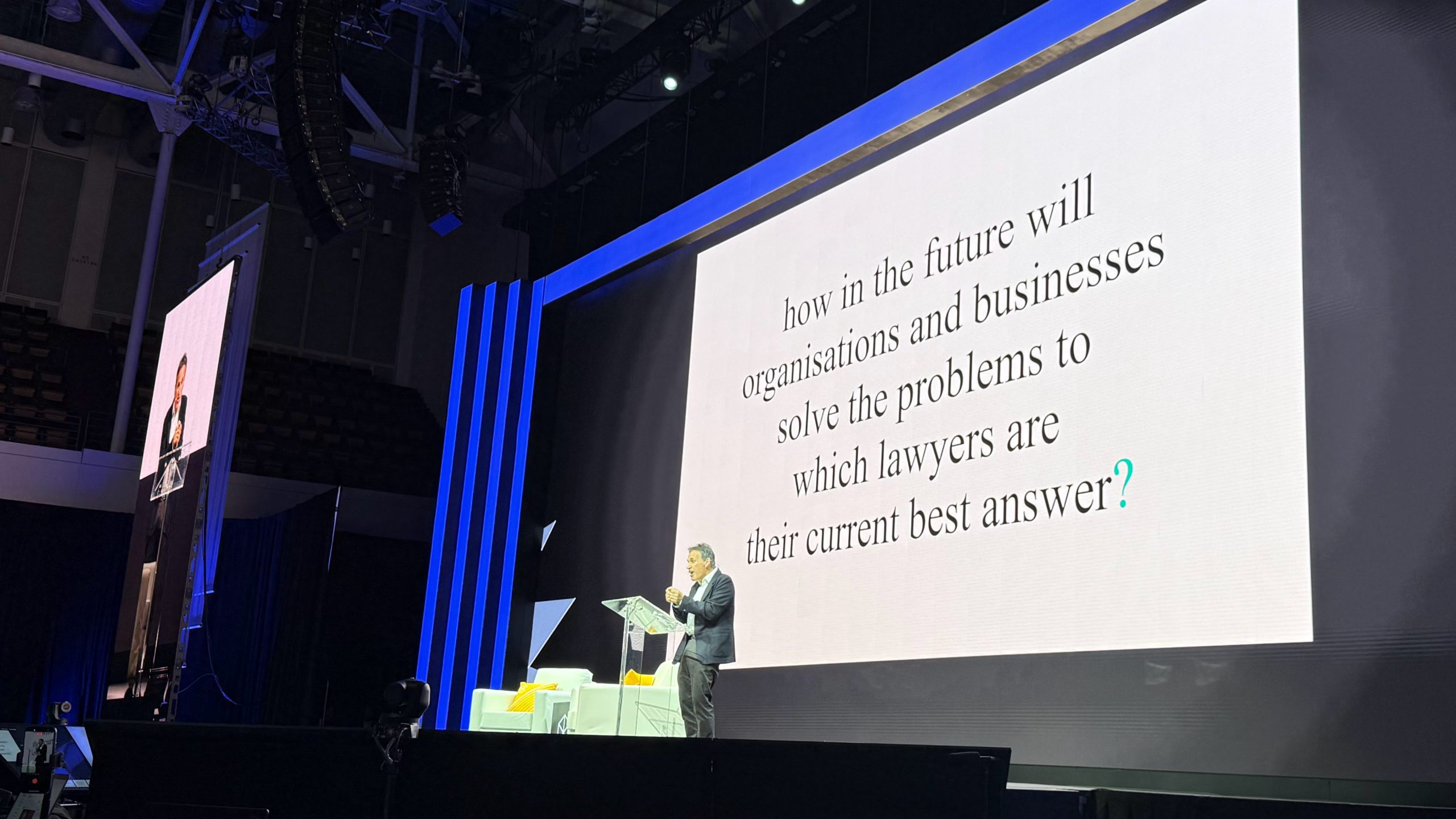
In
his
closing
keynote,
futurist
Richard
Susskind
cautioned
that
lawyers
may
not
always
be
the
“best
answer”
for
those
with
legal
problems.
“AI
is
not
here
to
replace
legal
professionals,”
Newton
said,
“AI
is
here
to
amplify
your
impact.”
A
Turning
Point
for
Clio
…
Over
nearly
90
minutes,
Newton
painted
a
portrait
of
Clio
not
simply
as
a
SaaS
vendor,
but
as
the
nucleus
of
a
new
legal-AI
infrastructure
–
one
that
spans
solo
practitioners,
small
firms,
mid-sized
firms,
multinational
firms
and
corporate
legal
departments
alike.
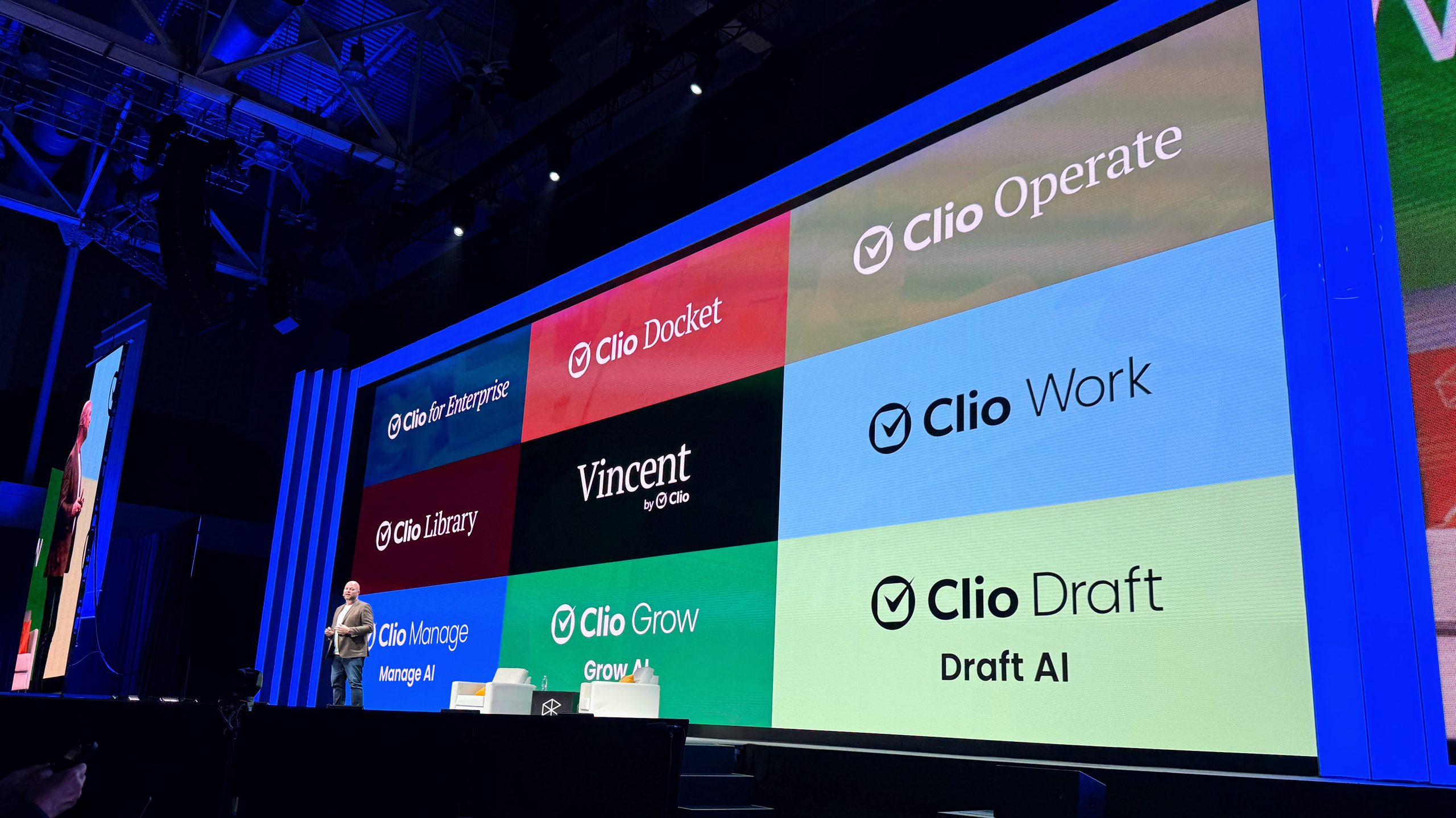
The
full
array
of
Clio’s
new
product
line-up.
The
Clio
for
Enterprise
launch
moves
the
company
into
direct
competition
with
entrenched
enterprise
providers;
the
Intelligent
Legal
Work
Platform
positions
Clio
as
a
potentially
category-defining
AI
company
rather
than
simply
a
practice-management
tool;
and
Clio
Work
embodies
the
vision
many
have
had
of
contextual,
actionable
AI
for
legal
professionals.
In
doing
so,
Newton
seemed
to
be
suggesting,
Clio
has
completed
its
evolution
from
the
cloud-based
startup
that
liberated
lawyers
from
servers
to
the
AI-driven
platform
that
may
soon
liberate
them
from
administrative
drag
altogether.
…
and
for
Legal
Practice?
The
philosopher
and
mathematician
Blaise
Pascal
once
famously
said
that
if
he
had
more
time,
he
would
have
written
a
shorter
letter.
I
feel
that
way
about
this
post.
But,
then
again,
I
am
attempting
to
report
a
nearly
90-minute
keynote
and
share
some
inkling
of
why
it
felt
so
impactful.
In
the
end,
I
think
the
reason
so
many
in
that
audience
were
so
moved
or
so
shell-shocked
is
that
the
implications
of
what
Newton
laid
out
are
profound.
If
Clio
succeeds
in
executing
on
all
this,
it
moves
AI
from
the
periphery
of
legal
work
to
its
core.
It
renders
AI
able
to
interpret,
anticipate
and
act
across
every
layer
of
a
firm’s
operations.
For
the
broader
legal-tech
industry,
Newton’s
keynote
sets
a
new
benchmark
for
integration
and
ambition.
It
is
a
direct
challenge
to
incumbents
that
have
yet
to
fuse
research
data,
workflow
automation
and
AI
into
a
single
cohesive
experience.
And
for
the
profession
at
large,
Clio’s
product
agenda
hints
at
a
future
where
technology
finally
narrows
the
gap
between
legal
demand
and
supply
–
where
lawyers,
armed
with
“context-aware”
AI,
can
serve
more
clients,
with
higher
quality,
at
lower
cost.
“This
isn’t
the
end
of
the
story,”
Newton
concluded.
“This
is
the
beginning
of
a
new
one.
Every
product,
every
innovation,
every
step
along
the
way
has
been
leading
us
here
to
the
first
chapter
of
a
new
era
for
legal
technology,
a
chapter
that
will
redefine
how
legal
work
gets
done.”
Although
I
have
written
this
story
about
a
specific
keynote
given
by
a
specific
CEO
of
a
specific
legal
tech
company,
I
truly
believe
that
what
happened
last
week
was
not
just
about
one
man
or
one
company.
It
was
about
a
moment
in
history
that
signified
something
happening
on
a
far-broader
scale
–
a
turning
point
for
the
entire
legal
profession
and
for
everyone
whom
that
profession
serves
–
and
everyone
it
should
be
serving
but
is
not.





 Kathryn