A
punishing
regional
drought
in
2024
makes
the
picture
here
even
clearer:
food,
land,
and
water
systems
have
been
reshaped
in
ways
that
directly
influence
social
cohesion
and
stability.
Southern
Africa
has
faced
repeated
climate
shocks
in
recent
years.
In
places
like
Tsholotsho,
displacement
after
cyclones
collided
with
drought
and
economic
stress.
This
convergence
increased
the
risk
that
small
disagreements
at
water
points
or
grazing
areas
might
create
wider
social
tensions.
Without
a
closer
look,
it
is
difficult
to
understand
how
communities
in
the
southwestern
parts
of
Zimbabwe
(specifically
Tsholotsho’s
wards
5,
6,
8,
and
10)
are
adapting
to
these
crises—as
well
as
climate
change
in
general.
That
is
why
a
research
team
from
the
CGIAR
Climate
Security
Southern
Africa
Hub
spent
two
weeks
in
Tsholotsho
in
late
November
and
early
December
2024.
Team
members
walked
through
transects
with
local
community
members,
leaders
and
agricultural
extension
workers
and
interviewed
displaced
residents
and
their
host
communities.
They
also
spent
time
with
the
San
community,
an
ethnic
minority
group
in
wards
8
and
10,
and
their
neighboring
communities,
tracing
the
dynamics
around
their
co-existence
in
a
climate
crisis
and
their
daily
journeys
through
the
long
routes
necessary
to
obtain
the
water
and
firewood
that
define
survival
in
a
fragile
landscape.
The
research
team
obtained
significant
new
perspectives
by
living
under
the
same
conditions
as
the
people
they
studied.
Living
without
electricity,
with
poor
connectivity,
and
often
improvising
basic
comforts,
the
team
found
that
resource
access
is
more
than
a
question
of
scarcity.
It
is
a
daily
negotiation
shaped
by
structural
inequities,
gender,
ethnicity,
displacement,
and
local
governance.
It
is
also
a
struggle
that
holds
lessons
for
how
climate,
peace,
and
security
intersect
across
Southern
Africa.
|
|
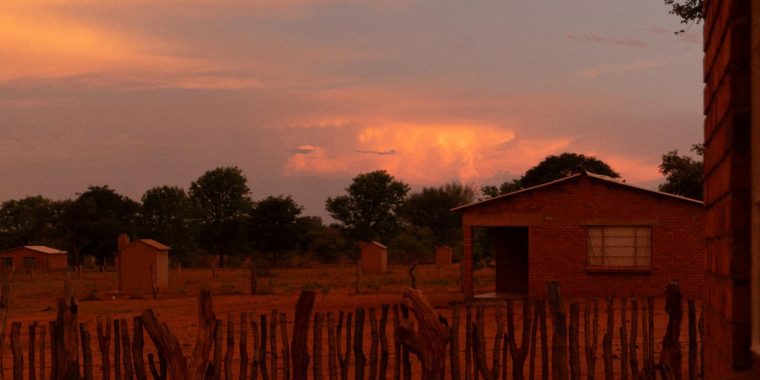
Photo
Credit:
Thea
Synnestvedt.,
Full
view
of
the
homestead
with
house
built
by
the
Government
of
Zimbabwe
and
its
partners
for
displaced
populations
in
Tsholotsho |
Climate
Stress
at
the
Water’s
Edge
One
particular
part
of
this
challenging
landscape
stood
out.
Gariya
Dam
in
Ward
8
represents
both
a
lifeline
and
a
pressure
point
for
the
San
community
and
its
counterparts.
During
the
field
visit,
drought‑strained
supplies
caused
intensified
tensions
here.
Communities
struggled
over
scarce
water
resources,
and
conflicting
interests
between
watering
livestock
and
fishing
emerged.
One
evening,
that
tension
escalated
into
actual
violent
confrontation
between
a
Kalanga
man
and
a
San
man
that
left
one
of
them
seriously
injured
and
in
need
of
urgent
care.
The
incident
also
underscores
a
broader
reality.
When
rainfall
fails
and
buffers
are
thin,
competition
over
access
points
can
become
volatile.
Investments
in
water
governance
and
conflict‑sensitive
resource
management
are
not
side
issues.
Rather,
they
are
central
to
climate
adaptation
and
local
stability.
The
Tsholotsho
field
visit
also
offered
broader
lessons
about
the
vexed
interaction
between
climate
and
social
tensions
in
the
region.
The
first
is
that
climate
adaptation
cannot
be
separated
from
mediation
at
the
water’s
edge.
Water
points
are
both
lifelines
and
flashpoints,
and
without
locally
legitimate
rules,
disputes
can
spiral
quickly.
Strengthening
committees
that
bring
together
customary
leaders,
displaced
households,
and
minority
groups
(including
the
San)
is
one
way
to
turn
shared
access
into
a
foundation
for
cooperation,
rather
than
conflict/competition.
The
second
lesson
is
that
early
warning
and
drought
management
must
be
matched
with
last-mile
delivery.
A
community
may
know
when
water
is
running
out
or
when
livestock
are
at
risk,
but
if
clinics
lack
basic
supplies
or
transport,
small
disputes
can
escalate
into
medical
emergencies
and
deepen
mistrust.
Investing
in
local
transport
links,
stocking
rural
clinics,
and
ensuring
that
alerts
translate
into
rapid
action
can
prevent
grievances
from
hardening
into
wider
insecurity.
Why
This
Matters
Now
Field
research,
such
as
the
project
undertaken
in
Tsholotsho,
can
be
a
raw
and
unpredictable
exercise.
It
demands
that
researchers
move
beyond
their
customary
academic
frameworks
to
share
in
the
rhythms
of
daily
life
in
the
communities
they
study.
Fieldwork
that
respects
local
rhythms
and
builds
trust
can
help
surface
easily
overlooked
pressure
points
(such
as
the
Dam
mentioned
earlier).
Such
insights
allow
stakeholders
to
craft
policies
that
bring
water
governance,
livelihoods
support,
and
basic
services
together
to
reduce
risks.
From
a
research
and
practice
perspective,
the
logistics
of
field
research
matters
as
much
as
the
design
of
the
research
or
program.
It
is
a
space
in
which
gender
dynamics,
privacy,
and
fatigue
are
not
peripheral
concerns;
they
shape
whether
diverse
teams
can
work
effectively
and
whether
women
and
young
researchers
are
able
to
participate
fully.
Planning
for
gender-sensitive
housing,
childcare
support,
and
safe
transport
is
therefore
not
a
luxury;
it
is
an
essential
part
of
building
credible,
resilient
teams
and
programs.
And
the
success
of
fieldwork
heavily
lies
in
community
acceptance
and
trust.
To
demonstrate
this,
we
share
a
personal
recollection
of
our
journey
in
Tsholotsho.
After
our
arrival
in
Tsholotsho,
community
members
welcomed
us
politely,
yet
they
remained
closed
off;
we
could
sense
walls
of
resistance.
Our
breakthrough
came
via
the
most
unexpected
turn
of
events:
a
literal
mud
bath.
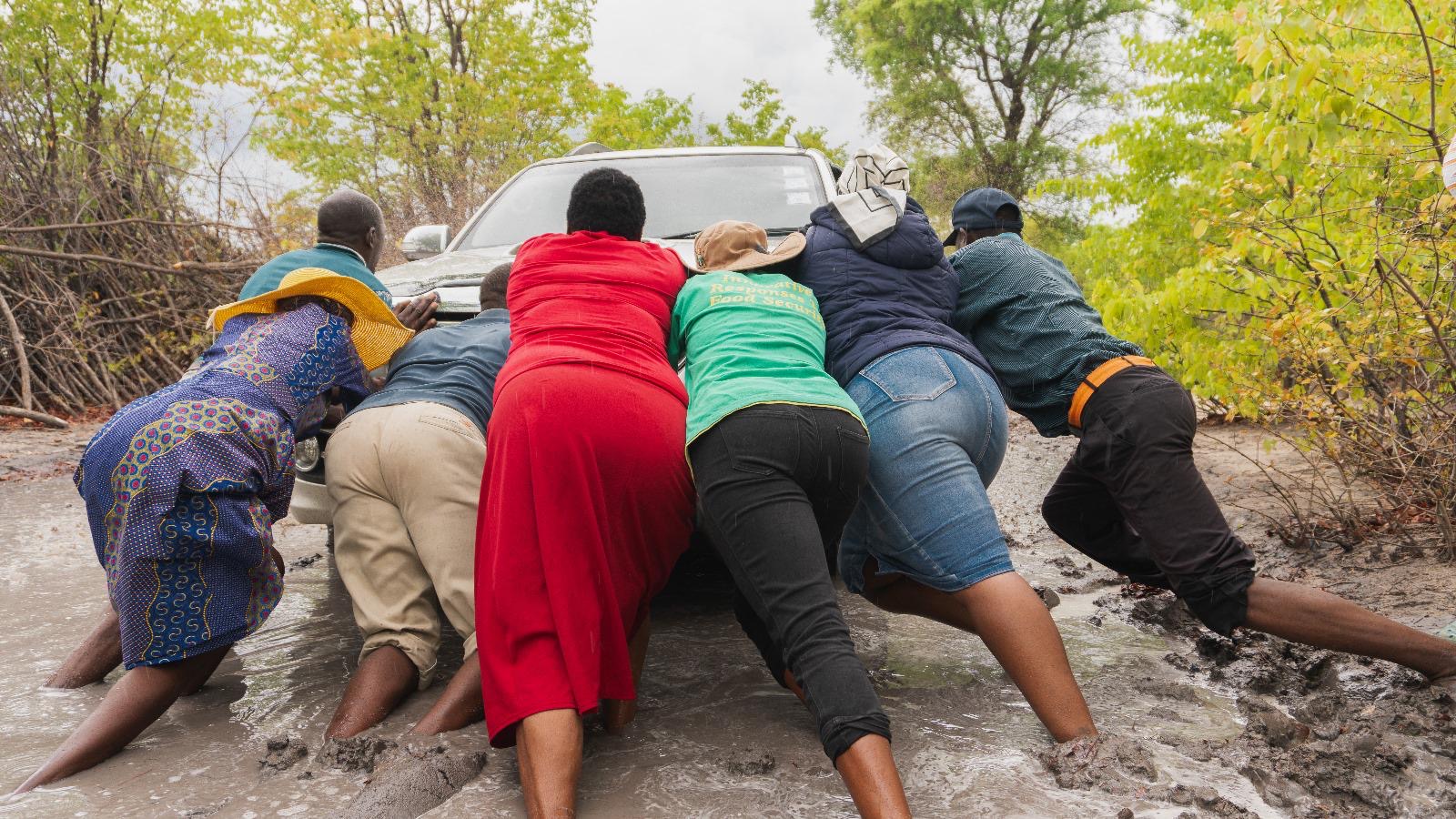 |
Photo
Credit:
Thea
Synnestvedt.
CGIAR
Climate
Security
Team
members
and
community
members
pushing
car
out
of
the
mud
in
Tsholotsho,
Zimbabwe |
During
a
transect
walk,
a
deceptively
small
puddle
held
our
team
hostage
by
stopping
our
4×4
vehicle
in
place.
What
followed
was
an
intense
and
messy
joint
struggle
to
push
it
free.
The
researchers
and
villagers
worked
together,
barefoot,
deep
in
thick
clay,
slipping,
laughing
and
bonding.
Being
drenched
together
was
a
literal
mud
bath
that
proved
to
be
our
initiation
into
the
community.
It
was
the
moment
that
community
welcomed
us
and
invited
our
team
in.
Sometimes,
before
the
real
conversations
begin,
you
need
to
earn
trust
in
unexpected
ways.
That
muddy
afternoon
became
the
joke
of
the
week,
a
shared
memory
that
cemented
a
sense
of
unity. It
is
immersion,
rather
than
observation
alone,
that
ultimately
brings
the
complex
dynamics
of
climate,
peace,
and
security
into
clearer
view.
Gracsious
Maviza is
a
gender,
migration
and
climate
security
scientist
and
the
Southern
Africa
Regional
Lead
for
the
CGIAR
Climate
Security
team
at
the
Alliance
of
Bioversity
International
and
CIAT,
one
of
the
research
institutes
at
CGIAR.
Ibukun
Taiwo is
a
Communications
Specialist
at
Alliance
of
Bioversity
International
and
CIAT.
The
work
described
in
this
article
was
carried
out
with
support
of
the
CGIAR
Climate
Action,
and
Food
Frontiers
and
Security
Science
Programs,
and
the
CGIAR
Initiatives
on
Climate
Resilience
and
Fragility,
Conflict,
and
Migration.
We
thank
all
funders
who
supported
this
research
through
their
contributions
to
the
CGIAR
Trust
Fund: https://www.cgiar.org/funders/
Photo
Credits: Licensed
by
Adobe
Stock.











 Kathryn