
What No One Tells You About Running A Law Firm (Part I) – Above the Law


Ed.
note
:
This
is
the
latest
installment
in
a
series
of
posts
on
motherhood
in
the
legal
profession,
in
partnership
with
our
friends
at 
MothersEsquire.
Welcome

Elise
Buie

back
to
our
pages.
Click


here


if
you’d
like
to
donate
to
MothersEsquire.

When
I
went
to
law
school,
there
was
no
class
teaching
young
law
students
how
to
run
a
business.
Such
classes
are
still
an
anomaly,
though,
for
the
life
of
me,
I
cannot
understand
why.
Having
founded
a
law
firm
devoted
to
family
law
about
a
decade
ago
(later
expanding
into
estate
planning),
classes
on
running
a
law
firm

even
one

would
have
been
a
godsend.
I
also
strongly
believe
this
type
of
class
should
be
a
requirement,
not
an
elective. 

Why?
Because
lawyers’
paths
change.
Plus,
owning
a
law
firm
can
be
one
of
the
most
rewarding,
not
to
mention
effective,
ways
to
blend
life
and
work.
If
you’re
hellbent
on
excelling
at
both,
law
firm
ownership
offers
a
real
chance
to
make
that
happen. 

I
have
found
this
to
be
especially
true
for
lawyer
moms
like
myself.
Lawyers
who,
like
I
once
did,

find
themselves
struggling
to
do
it
all

in
an
industry
that
hasn’t
caught
up
(or
caught
on)
to
women’s
workplace
struggles
due
to
the
gender
inequality
that
persists
at
home
and
in
the
office. 

But,
as
is
painfully
evident,
it’s
not
entirely
the
legal
profession’s
fault.
Our
infrastructure
in
the
U.S.
falls
short
of
supporting
families
like
other
countries
do
by,
for
example,
offering
parental
leave
for
mothers

and

fathers
across
the
board.
We
need
to
catch
up. 

Until
then,
many
people
continue
to
turn
to
law
firm
ownership
as
a
means
to
afford
themselves
control
alongside
flexibility,
as
I
did.
Long
before
remote
working
was
in
vogue,
I
started
a
fully
remote
law
practice.
I
haven’t
regretted
going
remote
since,
not
for
one
minute,
because
being
remote
meant
I
could
be
the
mom
and
lawyer
I
envisioned.

That’s
not
to
say
starting
a
law
firm
and
leading
it
to
success
was
easy
or
that
there
hasn’t
been
a
steep
learning
curve.
There
has
been.
I
will
be
the
first
to
say
that
being
a
law
firm
CEO
is
not
for
the
faint
of
heart.
You
have
to
not
only
want
it
but
also
be
prepared
for
it
in
more
ways
than
one.
Twenty-two,
actually,
if
I’m
counting,
which
I’ll
cover
in
this
first
part
of
a
two-part
series
to
give
them
the
attention
they
deserve. 

Before
I
get
into
any
of
those,
though,
you
should
be
honest
with
yourself
if
you’re
considering
taking
this
leap.
Look
in
the
mirror
and
say,
“Do
I
have
what
it
takes
to
be
the
CEO
of
my
law
firm?”
If
you
aren’t
sure,
here’s
what
I
can
tell
you:
The
CEO
role
may
not
be
for
you
if:


Plan
To
Spend
The
Next
1,000-Plus
Hours
Reading
Business/Self-Improvement
Books

Have
you
ever
seen
the
1988
film
“Cocktail”?
In
it,
bartender
Brian
Flannigan
(Tom
Cruise)
always
has
a
business
book
stashed
behind
the
bar.
Why?
He
wants
to
have
his
own
bar
one
day.
The
message?
You
don’t
need
school
to
learn.
But
you
do
need
to
read
books

a
lot
of
them.


Time
To
Tackle
Your
Money
Mindset

Law
firms
don’t
come
cheap.
You
have
to
invest
in
them,
you
have
to
invest
in
yourself,
and
you
have
to
invest
in
the
people
you
hire
to
help
them
grow.
If
you
don’t
want
to
part
with
money
to
enable
this
growth,
law
firm
ownership
will
not
be
for
you.
Mind
you,
the
investment
doesn’t
end
when
you
hang
the
proverbial
shingle
outside
the
door.
Growth
pays,
but
it
costs,
too.  


It’s
Not
Enough
To
Love
Practicing
Law

Law
is
a
noble
career.
It
is
an
art
form.
Many
people
love
that
about
law
practice
and
would
never
want
to
give
that
up.
If
that’s
you,
and
you
have
your
heart
set
on
owning
a
law
firm,
understand
you
may
have
to
give
up
that
love
of
legal
practice
because
there
are
only
so
many
hours
in
the
day. 


You
Think
2,400
Billable
Hours
Per
Year
Sounds
Difficult?
(Oh,
Sugar

Try
5,000)

You’ve
heard
about
work-life
balance/integration
(or,
as
I
like
to
say,

life-work
balance/integration
).
Yes,
I
believe
in
the
concept.
But
I
also
had
to
work
for
it.
So
will
you.
There’s
just
no
easy
way
around
it. 


You
Value
Your
Freedom

Your
dream
of
being
a
law
firm
CEO
will
hold
you
captive,
but
you
won’t
mind
that
so
much
if
you’re
serious.
Just
keep
in
mind
that
you
won’t
feel
free
until
you
get
what
you
want. 


Say
Buh-Bye
To
Imposter
Syndrome

Imposter
syndrome
is
real.
For
me,
impostor
syndrome
comes
in
the
body
of
a
mean
girl
named
Eloise.
If
you
want
to
be
a
law
firm
CEO,
fire
the
employees
who
poison
the
well,
starting
with
the
one
in
your
head.
It
took
me
a
while,
but
I
finally
got
up
the
nerve
to
fire
Eloise,
and
I
haven’t
missed
her
since.


You
Can’t
Handle
The
Truth
(Think
‘A
Few
Good
Men’)

To
succeed
as
a
law
firm
CEO,
you
have
to
be
willing
to
ask
yourself
the
hard
questions.
You
also
need
to
prepare
yourself
to
answer
the
hard
questions
from
others
along
the
way
that
you
seek
support
from,
like
coaches
and
mentors.
If
you
think
you’re
a
hot
mess
now
and
own
that,
good
for
you.
That’s
a
sign
you
are
not
yet
in
the
position
to
go
solo.
However,
it
doesn’t
mean
you
can’t
work
on
becoming
someone
who’s
ready
to
take
that
leap.
We
all
have
the
power
within
us
to
pull
ourselves
together. 


Get
Ready
To
Experience
Regular,
Large,
Public
Failings

If
you
fail,
understand
that
it’s
going
to
be
in
public.
I’ve
already
done
it
a
few
times.
Que
sera
sera.
Pro
tip:
Get
the
support
of
others
on
your
way
to
becoming
a
law
firm
CEO,
the
people
who
will
cheer
you
on
no
matter
what.
The
ones
who
will
be
sad
if
you
don’t
succeed. 

Unfortunately,
there
will
also
be
those
waiting
to
see
you
fail,
waiting
to
enjoy
it.
There’s
really
not
much
you
can
do
to
avoid
that.
But
if
law
firm
ownership
is
what
you’re
after,
develop
a
thick
skin
first.
You’re
gonna
need
it.


Managing
People
Can
Drain
Your
Bucket,
Then
fill
It
Right
Back
Up

Fact:
Hiring
is
soul-sucking.
It’s
tedious
and
can
take
a
lot
of
time
to
get
right.
When
you
don’t,
it
can
be
even
more
grueling.
Firing
people
doesn’t
feel
good
(to
most
people),
either.
I’m
not
arguing
any
of
this. 

But
managing
people
can
also
be
gratifying
as
you
begin
to
see
the
team
you’re
assembling
take
shape.
If
you’re
going
to
become
a
law
firm
CEO,
you
need
to
be
able
to
picture
a
time
when
this
will
happen
and
recognize
that
every
obstacle
you
hit
until
then
will
make
those
moments
that
much
sweeter.  

You
Thought
‘The
Devil
Wears
Prada’
Was
A
Powerful
Example
Of
Good
Leadership

If
you’re
itching
to
say,
“That’s
all,”
and
be
dismissive
like
Miranda,
don’t
bother
with
this
career
route.
As
a
law
firm
CEO,
it’s
incumbent
on
you,
if
you
want
to
build
a
strong
team
and
have
that

life-work
balance/integration
you
dream
about
,
to
become
a
mentor
first.
So
be
prepared
to
teach,
share,
appreciate,
and,
by
that,
lead.
When
doing
so
becomes
second
nature,
even
in
the
hardest
of
moments,
you’ll
know
this
is
what
you’ve
been
working
toward
all
along.
And
why. 


Stacey
Freeman
contributed
to
the
writing
of
this
article. 


Elise
Buie
is
a
Seattle-based
divorce
and
family
lawyer,
founder
of


Elise
Buie
Family
Law
Group
,
a
law
firm
devoted
to
family
law
and
estate
planning,
writer,
and
public
speaker​.
A
champion
for
maintaining
civility
throughout
the
divorce
process,
Elise
advocates
for
her
clients
and
the
best
interests
of
their
children,
helping
them
move
forward
with
dignity
and
from
a
position
of
strength.


There’s No Absolution For Biglaw Firms Suing The Administration After Bending A Knee To Trump – Above the Law

Above
the
Law
has
spent
a
lot
of
time
and
digital
ink
decrying
the
cowardly
decision
of

nine
Biglaw
firms

to
bend
a
knee
to
Donald
Trump
and
ink
deals
promising
$940
million
in
pro
bono
payola
for
conservative
causes.
These
deals
have
garnered
a
lot
of
criticism
from around
the
industry.
 since
the
Executive
Orders
that
were
threatened
were unconstitutional power
grabs
and
many
wondered,
if
a
firm
won’t
stand
up
to
the
bullying
of
the
Trump
administration
for
themselves, how
will
they
do
it
for
clients?

But
it’s
not
so
cut
and
dried.
After
showing
their
belly,
several
of
the
firms
decided
to
use
their
lawyerly
skill
to
work
against
Trump’s
agenda.
We
made
a
big
deal

when
Milbank
cut
their
billing
rate
s
to
fight
on
behalf
of
so-called
sanctuary
cites.
Plus
they’re
working

against
Trump’s
tariffs

in
court.
And
when
Skadden
took
on
a
pro
bono
client
that
runs
afoul
of
Trump’s
preferred
immigration
goals,
it

was
worthy
of
cheers.

Skadden
and
Milbank
aren’t
alone.
Reuters

reports

Latham
filed
a
lawsuit
against
the
administration
after
it
stopped
construction
on
a
Danish
energy
company’s
Rhode
Island
offshore
wind
farm.
Plus,
Willkie
Farr
is
representing
the
Arlington,
VA
and
Fairfax,
VA
school
districts
over
the
Department
of
Education’s
threatened
funding
freeze
over
their
bathroom
policies.

These
are
certainly
good
developments.
These
are
absolutely
clients
and
causes
worthy
of
the
power
and
might
of
Biglaw.
But
make
no
mistake:
this
doesn’t
count
as
absolution.

The
deals
that
Biglaw
struck
with
Trump
were
the
beginning
of
the
erosion
of
the
rule
of
law.
The
toehold
that
the
far-right
needed
to
push
more
and
more
blatantly
unconstitutional
policies.
And
now
that
everyone
to
the
left
of
Kash
Patel
is
being
investigated
by
the
administration,
fingers
are
absolutely
being
pointed.

Was
it
worth
it?
Well,
Paul
Weiss

sure
seems
to
think
so.


Kathryn
Rubino
is
a
Senior
Editor
at
Above
the
Law,
host
of

The
Jabot
podcast
,
and
co-host
of

Thinking
Like
A
Lawyer
.
AtL
tipsters
are
the
best,
so
please
connect
with
her.
Feel
free
to
email

her

with
any
tips,
questions,
or
comments
and
follow
her
on
Twitter

@Kathryn1
 or
Mastodon

@[email protected].

Paul, Weiss Is Having A Great Year, Despite Making A Deal With Trump – Above the Law


Ed.
note
:
Welcome
to
our
daily
feature,

Quote
of
the
Day
.


We
successfully
resolved
our
dispute
with
the
Trump
Administration
in
Q1
and,
through
the
first
eight
months
of
the
year,
we
are
fortunate
that
all
of
our
metrics
are
up
double
digits:
revenues,
demand,
profits,
pro
bono
hours,
inventory.
We
have
never
been
busier.
I’m
grateful
to
our
clients
for
reposing
trust
in
us
and
to
my
colleagues
for
maintaining
their
focus
in
the
face
of
outside
distractions.


Brad
Karp
,
chair
of
Paul,
Weiss,
in
comments

given
to
Law.com
,
on
the
firm’s
overall
successes
during
a
“most
eventful
year.”
The
firm’s

deal
with
the
Trump
administration

gave
rise
to
eight
other
firms
doing
the
same,
and
four
others
litigating
against
Trump’s
executive
orders,
which
were
ultimately
ruled
to
be
unconstitional.


Staci Zaretsky


Staci
Zaretsky
 is
the
managing
editor
of
Above
the
Law,
where
she’s
worked
since
2011.
She’d
love
to
hear
from
you,
so
please
feel
free
to

email

her
with
any
tips,
questions,
comments,
or
critiques.
You
can
follow
her
on BlueskyX/Twitter,
and Threads, or
connect
with
her
on LinkedIn.

Pay white farmers first — US lawmaker wants to block loans to Zim

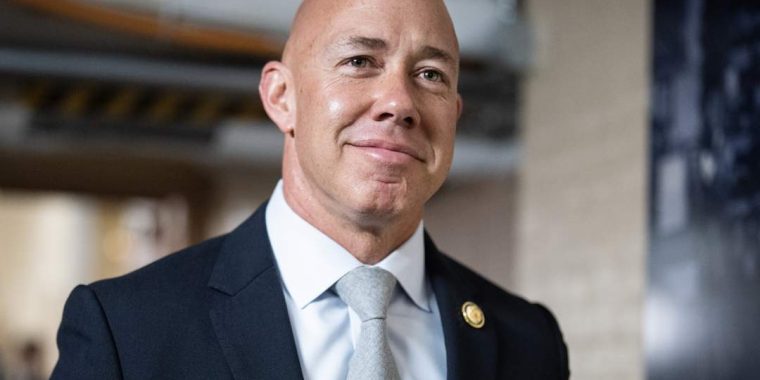
Brian
Mast,
a
Florida
Republican
congressman
and
chairman
of
the
House
of
Representatives
Foreign
Affairs
Committee,
seeks
to
block
US
support
for
any
new
or
expanded
funding
to
Zimbabwe.

Tom
Williams/CQ-Roll
Call,
Inc
via
Getty
Images


The
southern
African
nation
struck
a
deal
in
2020
under
a
so-called
Global
Compensation
Deed
to
reimburse
the
farmers
for
improvements
they
made
to
land
that
was
seized
by
government-backed
militants.
The
initial
terms
of
the
deal
were
never
met
and
have
since
been
revised
several
times.
In
April,
the
authorities
unveiled
a
new
payment
plan
that
would
see
treasury
bonds
being
issued
to
the
farmers,
an
option
most
of
them
rejected.

A
September
11
bill,
proposed
by
Brian
Mast,
a
Florida
Republican
congressman
and
chairman
of
the
House
of
Representatives
Foreign
Affairs
Committee,
seeks
to
block
US
support
for
any
new
or
expanded
funding
to
Zimbabwe
unless
it
commits
to
settling
its
arrears
within
12
months
of
the
financing
being
approved.

If
passed,
the
legislation
will
also
require
the
southern
African
nation
to
adjust
the
compensation
for
inflation
and
ensure
it
isn’t
settled
using
Zimbabwe-issued
securities.

Zimbabwe
has
been
locked
out
of
international
capital
markets
since
1999
after
it
defaulted
on
debt
from
lenders
including
the
World
Bank,
Paris
Club
and
African
Development
Bank.
It
has
appealed
to
10
nations
including
China
and
France
to
consider
providing
bridge
finance
totalling
$2.6
billion
to
help
it
repay
multilateral
lenders,
but
none
have
committed
so
far.

Relations
between
Washington
and
Harare
have
been
frosty
due
to
longstanding
tensions
over
human-rights
abuses,
a
lack
of
democratic
reforms
and
unresolved
disputes
stemming
from
the
land
seizures,
which
led
to
US
sanctions.

Zimbabwe’s tourism industry attracts record US$190 million investments

Source:


Zimbabwe’s
tourism
industry
attracts
record
US$190
million
investments
|

TV
BRICS,
16.09.25


In
2024,
the
country
achieved
a
7%
increase
in
investment

Zimbabwe’s
Minister
of
Tourism
and
Hospitality
Industry,
Barbara
Rwodzi,
highlighted
that
tourism
has
become
a
cornerstone
of
Zimbabwe’s
strategy
for
reaching
an
upper-middle-income
economy
by
2030.
This
is
reported
by
The
Herald,
a
partner
of
TV
BRICS.

In
2024,
the
country
not
only
welcomed
over
1.6
million
visitors
but
also
achieved
a
7
per
cent
increase
in
investment
compared
to
the
previous
year,
showcasing
the
resilience
and
growth
potential
of
the
sector
despite
global
challenges.

Key
drivers
behind
this
success
include
enhanced
air
connectivity,
strategic
destination
marketing,
and
the
country’s
tourism
environment.

Furthermore,
with
the
launch
of
the
Tourism
and
Hospitality
Industry
Policy
(2025–2030),
the
government
has
outlined
a
clear
framework
for
the
sector’s
future,
focusing
on
sustainability,
innovation,
and
eco-friendly
tourism
practices.

Photo: minoandriani /
iStock

Post
published
in:

Featured

Tanzania, Zimbabwe seek to deepen ties in trade, private sector investment

Tanzanian
envoy
to
Zimbabwe,
Suzan
Kaganda,
who
recently
met
with
Christopher
Mugaga,
the
Chief
Executive
Officer
of
the
Zimbabwe
National
Chamber
of
Commerce
(ZNCC)
held
lengthy
discussions
focused
on
exploring
opportunities
and
strategies
to
enhance
economic
cooperation
between
the
two
nations,
particularly
in
the
areas
of
trade,
investment,
and
private
sector
collaboration.

During
the
talks,
Ambassador
Kaganda
praised
ZNCC
for
its
significant
contribution
to
the
promotion
of
business
in
Zimbabwe.
She
also
conveyed
greetings
from
Vincent
Minja,
the
President
of
the
Tanzania
Chamber
of
Commerce,
Industry,
and
Agriculture
(TCCIA).

Ambassador
Kaganda
emphasized
the
critical
role
of
the
Port
of
Dar
es
Salaam
in
facilitating
regional
trade.
She
highlighted
that
the
port
plays
a
vital
part
in
the
transportation
of
vehicles
from
Japan
to
Zimbabwe,
a
factor
that
prompted
the
Tanzania
Ports
Authority
(TPA)
to
open
an
office
in
Zimbabwe
to
streamline
shipping
procedures.

On
his
part,
Christopher
Mugaga
expressed
gratitude
to
the
Tanzanian
leaders
for
the
ongoing
cooperation
and
underscored
the
importance
of
increasing
visits,
meetings,
and
business
forums
to
further
boost
trade
and
investment
growth
between
the
two
countries.

Mugaga
also
announced
that
ZNCC
is
ready
to
organize
and
bring
a
delegation
of
Zimbabwean
businesspeople
to
Tanzania
in
June
2026,
where
they
will
engage
with
their
counterparts
from
TCCIA
and
explore
various
investment
opportunities
available
in
Tanzania.

These
discussions
have
laid
a
solid
foundation
for
economic
cooperation
between
Tanzania
and
Zimbabwe.
It
is
also
anticipated
that
prior
to
the
Africa-Nordic
Foreign
Ministers
Meeting
scheduled
for
October
2025
in
Victoria
Falls,
Zimbabwe,
leaders
from
TCCIA
and
ZNCC
will
convene
again
for
in-depth
talks
aimed
at
promoting
trade
and
investment
for
the
mutual
benefit
of
both
nations.


Source:


Tanzania,
Zimbabwe
seek
to
deepen
ties
in
trade,
private
sector
investment


Daily
News

Transforming Education in Zimbabwe

“Not
all
superheroes
wear
capes;
some
carry
school
bags,
walk
10km
to
class
and
still
dream
of
changing
the
world,”
says
Jacqueline
Nyakunu,
founder
of
a
small
rural
education
nonprofit
in
Zimbabwe.
Financial
support
through
scholarships,
government
aid
programs
like
the
Basic
Education
Assistance
Module
(BEAM),
NGO
initiatives
and
community-based
efforts
is
vital
in
improving
the
education
system
for
vulnerable
children
in
Zimbabwe.
These
interventions
transform
their
futures
and
empower
communities
through
increased
educational
opportunity.

The
Challenge
of
Accessing
Education
in
Zimbabwe


Zimbabwe’s
education
system
 experiences
some
strenuous
challenges
from
systemic
underfunding,
rural
disparities
compared
to
urban
areas
and
holistic
inequalities.
The
government
allocated
14%
of
the
national
budget
to
education
in
2023,
an
improvement
from
13.4%
the
previous
year.
However,
it
still
falls
short
of
the
“20%
threshold
on
budgets
when
it
comes
to
the
education
sector”
recommended
by
the
Dakar
Framework.

This
constant
underfunding
has
led
to
poor
infrastructure
in
rural
areas,
where
some
schools
operate
in
makeshift
garages
or
abandoned
buildings.
This
leaves
students
in
remote
regions,
with
limited
resources
and
inadequate
infrastructure,
at
a
severe
disadvantage
compared
to
their
urban
counterparts.
In
2021,
an
estimated
30,000
students
failed
to
register
for
national
exams
due
to
financial
barriers.

High
dropout
rates
compound
the
problem.
UNICEF
reports
that
nearly
50%
of
children
are
out
of
school,
specifically
in
the
pre-primary
(68%)
and
adolescent
(47%)
age
groups.
Girls
face
additional
hurdles,
including
period
poverty,
which
affects
around
60%
of
rural
girls
and
contributes
to
a
school
attendance
rate
of
20%,
as
well
as
a
21.2%
child
marriage
rate
among
girls
aged
15
to
18
years
of
age.

Technological
inequality
further
limits
learning
opportunities,
with
most
rural
schools
lacking
electricity,
internet
access
and
digital
resources.
Most
of
these
schools
“do
not
have
the
necessary
equipment
like
computers
and
computer
labs
needed
for
ICT
studies
and
virtual
learning.”
Overall,
in
the
modern
world,
not
having
access
to
the
internet
or
technology
while
also
lacking
tangible
resources
makes
it
extremely
difficult
for
students
to
flourish.
With
72%
of
Zimbabwe’s
population
aged
below
18
living
in
rural
areas,
these
challenges
point
to
a
severe
education
crisis
that
disproportionately
affects
the
country’s
most
vulnerable
communities.

Government
and
Institutional
Support

Beginning
in
2009,
Zimbabwe
revitalized
its
BEAM
via
a
partnership
between
the
government
and
UNICEF
to
provide
tuition,
examination
fees
and
rally
support
to
needy
students.
The
initiative
targets
children
in
school
who
are
struggling
to
pay
the
expenses,
dropouts
due
to
financial
burdens,
those
who
never
enrolled
and
other
socially
marginalized
groups,
such
as
orphans
or
children
with
disabilities.
In
2009, BEAM
served
approximately
 527,330
students
across
5,055
schools.
It
achieved
approximately
94%
of
its
initial
goal
of
560,000
beneficiaries,
with
a
gender
equity
of
50%
of
beneficiaries
for
girls.

Despite
this
early
impact,
funding
challenges
quickly
developed.
In
2011,
BEAM
received
$10
million
from
donors
for
primary
and
special
needs
schools
and
$13
million
from
the
government
for
secondary
schools.
This
fell
$7
million
short
of
the
$30
million
needed
to
meet
the
program’s
goals.
BEAM
complements
efforts
like
the
Education
Transition
Fund
(ETF).
The
ETF
is
designed
to
supply
teaching
and
learning
materials
and
broader
social
protection
objectives
coordinated
through
district
and
national
Child
Protection
Committees.

Community-Based
Initiatives

The
Borgen
Project
spoke
with
Nyakunu,
a
rising
senior
at
Davidson
College,
who
shared
her
personal
journey
and
the
inspiration
behind
her
nonprofit
work.
She
spent
her
early
years
in
rural
Bocha,
Zimbabwe,
where
she
and
her
brother
walked
close
to
15km
to
reach
Chapeyama
Primary
School,
often
crossing
a
river
along
the
way.
“Although
I
enjoyed
learning,
the
long
journey
and
lack
of
resources
made
school
physically
and
mentally
draining,”
she
recalled.

Her
circumstances
changed
dramatically
when
her
family
moved
to
an
urban
area
and
she
transferred
to
Sakubva
Primary
School.
With
access
to
textbooks,
a
library
and
transportation,
Nyakunu
began
to
thrive.
She
eventually
graduated
top
of
her
class
and
earned
a
fully
funded
place
at
Davidson
College
in
the
U.S.

During
the
interview,
Nyakunu
spoke
about
Start-Up
Rural
Gen
(SURG):
the
youth-led
nonprofit
she
founded
in
high
school.
What
began
as
a
capstone
project
has
become
an
organization
that
now
expands
educational
access
for
rural
students
in
Zimbabwe
and
Kenya.

SURG
focuses
on
addressing
both
financial
and
material
barriers
for
Zimbabwe’s
education
system
through
four
core
initiatives:


  • Scholarships
    :
    Covering
    school
    fees
    for
    students
    whose
    families
    are
    unable
    to
    pay.

  • Material
    Support
    :
    Providing
    essentials
    like
    textbooks,
    stationery,
    school
    uniforms
    and
    sanitary
    wear.

  • Mentorship
    and
    Career
    Guidance
    :
    Offering
    workshops
    and
    personal
    mentoring
    to
    help
    students
    prepare
    for
    higher
    education.

  • Community
    Engagement
    and
    Partnerships
    :
    Collaborating
    with
    schools,
    volunteers
    and
    donors
    for
    sustained
    impact.

Since
2021,
SURG
has
supported
more
than
1,000
rural
students.
Nyakunu
highlighted
the
example
of
Mt.
Matedzi
Secondary
School,
where
overcrowded
classrooms
and
limited
textbooks
make
learning
difficult.
In
one
case,
she
described
an
11-year-old
boy
from
Mukwada
who
now
receives
full
support
through
SURG
and
consistently
ranks
at
the
top
of
his
class.
What
began
with
a
$600
grant
has
grown
steadily,
now
receiving
funding
from
sources
like
Davidson
College,
AFS
Intercultural
Programs
and
even
Nyakunu’s
income!

Moving
Forward

Financial
support
through
government
programs
like
BEAM,
scholarships
or
philanthropic
efforts
like
SURG
is
more
than
just
assistance;
it
is
a
lifeline
changing
the
trajectory
of
thousands
of
children
in
Zimbabwe.
These
initiatives
are
closing
critical
access,
resources
and
opportunity
gaps,
especially
for
rural
and marginalized
communities
.

However,
continued
investments
from
institutions,
local
governments,
donors
and
individuals
alike
are
necessary
and
urgent.
This
ongoing
commitment
will
ensure
education
is
not
a
privilege
for
the
few
but
a
fundamental
right
for
every
child
in
Zimbabwe.


LaRaymee
Lee

LaRaymee
is
based
in
Missouri
City,
TX,
USA
and
focuses
on
Global
Health
for
The
Borgen
Project.

Post
published
in:

Education

Justice Sotomayor Thinks To Herself ‘That Law School Failed’ When She Sees These Politicians With Law Degrees – Above the Law

(Photo
by
ERIN
SCHAFF/POOL/AFP
via
Getty
Images)

“Every
time
I
listen
to
a
lawyer-trained
representative
saying
we
should
criminalize
free
speech
in
some
way,”
Justice
Sotomayor
told
a
New
York
Law
School
audience
this
morning,
“I
think
to
myself,
that
law
school
failed.”

Supreme
Court
justices…
they’re
just
like
us!

If
you’ve
followed
the
news
this
week,
you’ve
probably
muttered
the
same
thing.
The
most
dangerous
place
in
Washington
right
now
is
between
a
news
camera
and
some
grandstanding
hack
demanding
prosecutions
for
anyone
who
hasn’t
yet
tattooed
Charlie
Kirk
high-fiving
Jesus
on
their
chest.

The
justice
has
had
no
shortage
of
opportunities
to
mutter
this
lament
under
her
breath
this
week,
as
the
most
dangerous
place
in
Washington,
D.C.
is
now
between
a
news
camera
and
any
Republican
official
demanding
criminal
prosecutions
for
anyone
who
hasn’t
yet
gotten
a
tattoo
of
Charlie
Kirk
high-fiving
Jesus.


Some
outlets

interpreted
Sotomayor’s
remarks
as
directly
aimed
at
Pam
Bondi,
Stetson
Law’s
most
regrettable
export,
who
declared
the
administration
would
use
the
Kirk
killing
as
a
pretext
to
crack
down
on
“hate
speech.”
But
since
Sotomayor
said,
“representative,”
she
likely
intended
to
cast
a
broader
net
in
the
direction
of
Capitol
Hill.
That
said,
the
former
Florida
attorney
general
has
made
a
career
out
of
proving
that
a
J.D.
is
not
an
inoculation
against
constitutional
illiteracy,
so
the
shoe
fits.

The
New
York
Law
School
event
follows
her

Stephen
Colbert
appearance
,
where
the
justice
tried
to
extend
charity
to
her
colleagues
over
the
shadow
docket
order
authorizing
the
administration
to
use
racial
profiling
to
target
people
for
looking
Latino,
speaking
Spanish,
and
having
a
low-wage
job.
The
cursed
waltz
of
the
Supreme
Court
is
that
you
can
call
your
colleagues
democracy-shredding
maniacs
in
an
opinion,
but
in
public,
they’re
all
expected
to
insist
everyone’s
just
doing
their
best.
It’s
a
relic
of
a
bygone
era
where
people
think
the
public
will
have
more
faith
in
institutions

especially
the
critical
institutions
that
uphold
constitutional
order

if
they
think
everyone
involved
means
well.

At
this
moment
in
history,
however,
it
hits
most
people
as
apathy.
If
the
officials
fighting
over
these
profoundly
consequential
questions

whether
in
the
judiciary
or
Congress

can
go
pal
around
afterward,
most
Americans
just
take
that
as
proof
that
it’s
all
empty
theater.
That’s
why
Colbert’s
interjection
as
something
of
an
anger
translator,
keeping
the
audience
grounded
in
the
stakes,
made
that
interview
click.

Speaking
to
this
morning’s
law
school
audience,
Sotomayor’s
comments
keyed
into
a
broader
lament
about
civics
education
circling
the
drain.
Rhetorically,
but
also
hauntingly,
she
asked,
“Do
we
understand
what
the
difference
is
between
a
king
and
a
president?”
Great
question,
but
Sonia…
the
call
is
coming
from
inside
your
office.
She
sits
on
a
bench
with
colleagues
who
hear
that
question
and
respond
with
80-page
love
letters
to
Henry
VIII.

After
the
Supreme
Court
decided
that
presidents
can

order
SEAL
Team
6
to
kill
a
political
rival
without
judicial
review
,
and
the
administration
took
that
as
a
greenlight
to
start
blowing
up
fishing
boats,
while
saying,
“um,
they
maybe
had
drugs.”

Imagine
spending
all
day
spinning
how
100%
confident
the
government
is
that
they’ve
hit
only
drug
shipments
only
to
have
this
mentally
hazy
dingbat
go
in
front
of
the
cameras
and
tell
commercial
fishers
that
they
probably
should
be
afraid
they’ll
get
accidentally
blown
up.
I’d
imagine
it’s
a
special
kind
of
Sisyphean
hell,
watching
your
work
constantly
undermined
day
after
day
until
a
teenaged
intern
named
HugeNuts
decides
to
fire
you
over
Slack.

Some
critics
might
quip
that
the
law
schools
haven’t
failed
because
these
officials
are
all
fully
aware
that
none
of
their
cheap
politicking
is
constitutional…
they
just
don’t
care.
Yet,
that’s
actually
a
deeper
layer
of
failure.
Law
schools
aren’t
exclusively
about
doctrinal
knowledge,
they’re
supposed
to
impress
on
their
students
some
sort
of
free-floating
respect
for
the
law.
Knowing
the
law
and
choosing
to
lie
to
the
public
about
it
is
far
worse
than
graduating
someone
who
might
not
know
every
part
of
the
First
Amendment
(not
that
something
like
that
would

describe,
say,
a
Supreme
Court
justice
).

Or
maybe
these
people
really
didn’t
learn
how
the
law
works.

Either
way,
if
you
still
believe
law
schools
exist
to
churn
out
an
intellectual
priesthood
bound
by
ethics,
animated
by
civic
duty,
and
committed
to
the
rule
of
law,
then,
yes,
those
law
schools
failed.

On
the
other
hand,
the
law
school
still
cashed
the
tuition
check,
so
did
it

really

fail?


Earlier
:

Kristi
Noem
Thinks
Habeas
Corpus
Is
A
Deportation
Spell


SCOTUS
Greenlights
SEAL
Team
6
Solution


Justice
Sotomayor
Lets
Stephen
Colbert
Say
What
She
Can’t


HeadshotJoe
Patrice
 is
a
senior
editor
at
Above
the
Law
and
co-host
of

Thinking
Like
A
Lawyer
.
Feel
free
to email
any
tips,
questions,
or
comments.
Follow
him
on Twitter or

Bluesky

if
you’re
interested
in
law,
politics,
and
a
healthy
dose
of
college
sports
news.
Joe
also
serves
as
a

Managing
Director
at
RPN
Executive
Search
.

Luigi Mangione’s Terrorism Charges Recently Dismissed – Above the Law

Shortly
after
healthcare
CEO
Brian
Thompson
was
killed
by
a
hooded
figure
in
broad
daylight,
Luigi
Mangione
was
accused
of
murdering
him.
Many
took
the
shooting
to
be
an
indictment
of
healthcare
and
health
insurance
companies:
CEOs
scrubbed
personalized
information
from
their
websites
and
buffed
up
their
security
personnel,
and
Luigi
was
charged
with
two
terrorism
charges

first-
and
second-degree
murder.
But
a
closer
inspection
showed
that
the
accusations
of
terrorism
that
flew
around
headlines
just
doesn’t
hold
up
in
court.

BBC

has
coverage:

A
judge
in
New
York
state
has
dismissed
two
terrorism
charges
against
Luigi
Mangione,
the
alleged
killer
of
UnitedHealthcare
CEO
Brian
Thompson.

Although
prosecutors
argued
that
writings
left
by
Mangione
demonstrated
a
terrorism
motive,
the
judge
said
they
failed
to
show
that
the
suspect
intended
to
put
political
pressure
on
the
government
or
terrorise
the
general
population

key
provisions
of
New
York’s
terrorism
law
which
was
passed
in
the
wake
of
the
11
September
2001
attacks.

This
is
one
of
those
times
where
you
get
to
see
that
facts
=/=
feelings
play
out
in
real
time.
Goes
to
show
that
the
terrorist
perp
walk
wasn’t
nearly
as
significant
or
symbolic
as
Eric
Adams
intended
for
it
to
be:

Luigi
isn’t
out
of
the
fire
yet.
He
still
faces
a
second-degree
murder
charge
at
the
state
level
and
still
faces
federal
murder
charges.

May
Luigi
get
a
fair
trial
that
follows
the
rule
of
law.


Judge
Dismisses
Terrorism
Charges
Against
Luigi
Mangione

[BBC]


Earlier
:

Healthcare
Companies
Screwed
Over
So
Many
People
That
It’s
Hard
To
Find
Luigi
Mangione
A
Neutral
Jury


Luigi
Mangione
Pulls
$300K
From
Grassroots
Funds
To
Bolster
His
Case


Chris
Williams
became
a
social
media
manager
and
assistant
editor
for
Above
the
Law
in
June
2021.
Prior
to
joining
the
staff,
he
moonlighted
as
a
minor
Memelord™
in
the
Facebook
group Law
School
Memes
for
Edgy
T14s
.
 He
endured
Missouri
long
enough
to
graduate
from
Washington
University
in
St.
Louis
School
of
Law.
He
is
a
former
boatbuilder
who
is
learning
to
swim, is
interested
in
critical
race
theory,
philosophy,
and
humor,
and
has
a
love
for
cycling
that
occasionally
annoys
his
peers.
You
can
reach
him
by
email
at [email protected]
and
by
tweet
at @WritesForRent.

Trump Sues NYT For Tortious Journalisming. Again. – Above the Law

Last
night,
Donald
Trump
filed
yet
another
media
trollsuit.
As
usual,
he
took
full
advantage
of
the
ad
damnum
clause
to
juice
the
news
cycle.

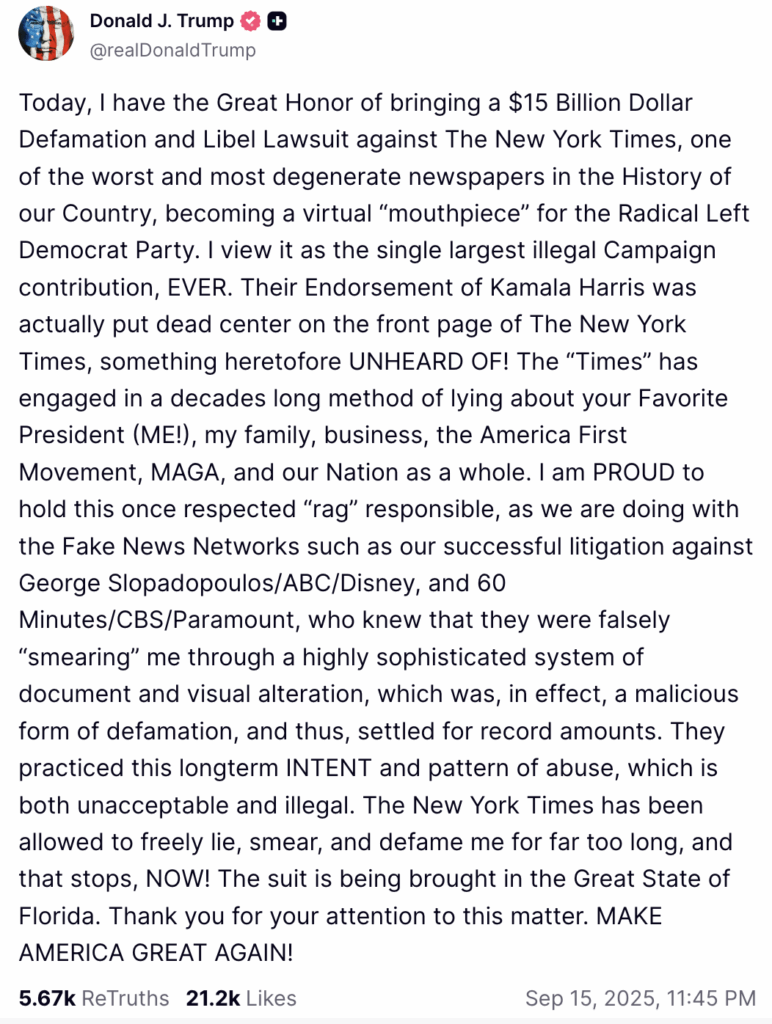
“Today,
I
have
the
Great
Honor
of
bringing
a
$15
Billion
Dollar
Defamation
and
Libel
Lawsuit
against
The
New
York
Times,
one
of
the
worst
and
most
degenerate
newspapers
in
the
History
of
our
Country,”
he

screeched

on
his
social
media
platform.
“The
New
York
Times
has
been
allowed
to
freely
lie,
smear,
and
defame
me
for
far
too
long,
and
that
stops,
NOW!”

The
suit
names
the
Times,
reporters
Susanne
Craig,
Russ
Beuttner,
Peter
Baker,
and
Michael
Schmidt,
along
with
Penguin
Random
House,
LLC.
In
reality,
most
of
the
“defamatory”
statements
are
located
in
Craig
and
Buettner’s
book

Lucky
Loser:
How
Donald
Trump
Squandered
His
Father’s
Fortune
and
Created
the
Illusion
of
Success
,
published
by
Penguin
Random
House
on
September
17,
2024

just
inside
New
York’s
one-year
statute
of
limitations
for
defamation!
But
like
Trump’s
social
media
bleeting,
the
complaint
is
focused
almost
solely
on
the
perfidy
of
the
Times
whose
“editorial
routine
is
now
one
of
industrial-scale
defamation
and
libel
against
political
opponents.”

As
always,
Trump
characterizes
his
demand
for
cash
as
a
fight
for
the
little
guy.

Contrary
to
the
Times’
and
its
reporters’
apparent
impression,
the
First
Amendment
has
never
furnished
the
Times—or
Penguin,
or
anyone
else—with
an
unqualified
privilege
to
make
false,
malicious,
and
defamatory
statements
about
its
opponents
in
order
to
try
and
ruin
their
lives
and
livelihoods.
President
Trump
brings
this
suit
to
highlight
that
principle
and
to
clearly
state
to
all
Americans
exhausted
by,
and
furious
at,
the
decades
of
journalistic
corruption,
that
the
era
of
unchecked,
deliberate
defamation
by
the
Times
and
other
legacy
media
outlets
is
over.

Over
82
frothy
pages,
the
lawsuit
praises
“President
Trump’s
sui
generis
charisma
and
unique
business
acumen,”
“his
name’s
association
with
excellence,
luxury,
and
elegance,”
his
“brilliant
business
acumen
and
unique
real
estate
abilities.”

It’s
a
little
lighter
on
actual
law.

The
dozens
of
supposedly
defamatory
statements
are
a
hodgepodge
of
protected
opinion
(“Good
things
happened
to
Donald
Trump.
He
did
not
earn
most
of
those
good
things”),
attributed
quotes
(“He
likewise
cheated
to
get
into
college,
according
to
his
estranged
niece,
Mary
L.
Trump,”)
and
verifiable
facts
(“the
first
thing
Burnett’s
producers
noticed
when
they
arrived
on
the
twenty-sixth
floor
of
Trump
Tower
was
the
stink,
a
musty
and
moldy
carpet
smell
that
seemed
to
emanate
from
every
corner.”)

Actual
malice
is
waved
away
with
conclusory
allegations
that
the
reporters
were
well
aware
of
Trump’s
greatness
(“At
the
time
of
publication,
Craig,
Buettner,
and
Penguin
knew
that
President
Trump
paid
appropriate
attention
to
the
finances
of
his
businesses,”)
as
well
as

whatever

this

is:

Defendants
each
desire
for
President
Trump
fail
politically
and
financially.
Each
feels
actual
malice
towards
President
Trump
in
the
colloquial
sense:
that
is,
each—Craig,
Buettner,
Baker,
and
Schmidt,
as
individuals,
and
the
Times
and
Penguin’s
relevant
executives
as
corporations—subjectively
wishes
to
harm
President
Trump,
and
each
wish
to
manipulate
public
opinion
to
President
Trump’s
disadvantage
to
worsen
his
current
and
future
political
and
economic
prospects.
Put
bluntly,
Defendants
baselessly
hate
President
Trump
in
a
deranged
way.

And
the
fantastical
damage
demand
is
undercut
by
the
very
first
paragraph,
which
touts
Trump’s
2024
electoral
win
and
“resounding
mandate
from
the
American
people.”
Larding
your
complaint
with
numerous
mentions
of
the
plaintiff’s
wildly
successful
social
media
and
crypto
businesses
is
a
weird
way
to
show
he’s
been
harmed
to
the
tune
of
$15
billion,

plus
punis
!

This
isn’t
even
the
first
time
Trump
sued
the
Times
and
these
reporters.
In
January
of
2024,
he
was

ordered

to
pay
$392,000
in
legal
fees
to
the
paper
over
earlier
stories
about
his
family’s
sharp
business
practices.
After
his
niece
Mary
Trump
handed
the
reporters
tax
returns
and
other
financial
statements
revealing
the
family’s
extravagant
looting
of
Fred
Trump’s
estate,
Trump

sued

the
paper
for
tortious
interference
with
a
contract

namely
the
confidentiality
agreement
Mary
signed
pursuant
to
her
settlement
with
said
estate.
Noting
that
the
plaintiff
had
not
disputed
any
of
the
facts
alleged
in
the

article

based
on
those
tax
returns,
New
York
Supreme
Court
Justice
Robert
Reed
dismissed
the
case
and
ordered
Trump
to
pay
the
Times’s
legal
fees
under
the
state’s
anti-SLAPP
law.

The
prior
suit
was
filed
by
the
ubiquitous
Alina
Habba,
who
only
asked
for
a
modest
$100,000,000.
But
Habba
is
off
pretending
to
prosecute
cases
in
New
Jersey,
and
so
the
task
falls
to
a
now
familiar
cast
of
characters:
Alejandro
Brito,
Edward
Paltzik,
and
Daniel
Epstein
(no
relation
to
that
guy
Trump
drew
birthday
boobs
for).
Between
them,
they’ve
represented
Trump
in
trollsuits
against

CNN
,

Michael
Cohen
,
the

Wall
Street
Journal
,
and
the

Des
Moines
Register

(with

hilarious
results
).
None
of
these
dumb
turkeys
went
anywhere
in
court.
Their
only
success
came
in
leveraging
the
power
of
the
presidency
to
extort
settlements
from
CBS
and
ABC

which
they
made
sure
to
mention
in
this
current
complaint,
adding
Trump’s
social
media
post
exulting
in
his
big
victory
over
“George
Slopadopoulos.”

And
perhaps
they’ll
manage
to
arm
twist
the
Times
into
something
similar.
It
seems
pretty
unlikely
that
the
president
will
go
through
with
a
trial
that
would
require
him
to
sit
for
depositions
about
his
family’s
creative
tax
strategies
and
force
“Apprentice”
producer
Mark
Burnett
to
go
under
oath
to
discuss
their
association.
But
if
Trump
hopes
to
extract
some
quick
cash
and
more
sycophantic
coverage,
he
may
well
wind
up
disappointed.
So
far,
he’s
had
no
success
forcing
Rupert
Murdoch
to
knuckle
under,
and
his
paper
isn’t
even
the
one
that
established
the

Sullivan

standard.


Liz
Dye
 lives
in
Baltimore
where
she
produces
the
Law
and
Chaos substack and podcast.