
Zimbabwe Rural Schools Library Trust wins Best Literary Development Initiative Award


The
organisation’s
work
was
noticed
through
a
book
published
in
2024
to
mark
its
tenth
anniversary.
This
accolade
celebrates
the
book’s
contribution
to
education
and
social
development
and
reflects
the
impact
of
the
Trust’s
work
over
the
past
decade.

Titled
Uniting
the
World
for
Rural
School
Library
Development,
the
book
was
intended
to
mark
the
Trust’s
10-year
milestone
of
mobilising
books
for
over
100
rural
schools
and
advocating
for
the
establishment
of
libraries
in
schools
in
Zimbabwe.
Several
individuals
and
former
students’
associations
were
inspired
to
build
libraries
at
rural
schools
they
or
their
parents
went
through
the
organisation’s
Know
Your
Roots
campaign,
which
encouraged
people
to
give
back
to
their
communities.

The
book
also
highlights
initiatives
such
as
sponsoring
an
orphaned
student
to
complete
high
school,
running
reading
promotion
programs,
producing
a
musical
album
to
encourage
literacy,
and
advocating
for
national
library
policy
reform
through
engagement
with
the
Zimbabwean
government.

Edited
by
Dr.
Eric
Boamah,
a
Ghanaian
national
who
lectures
at
the
Open
Polytechnic
of
New
Zealand,
the
publication
includes
chapters
written
by
the
late
Tonderayi
Chanakira,
Zimbabwe’s
Minister
of
Skills
Audit
and
Development,
Professor
Paul
Mavima,
former
Minister
of
Information
and
Communication
Technology
Advocate
Nelson
Chamisa,
ladies
who
studied
at
benefiting
schools,
namely
Rufaro
Marbo
Lunga,
who
did
her
Ordinary
level
studies
at
Igava
High
School
in
Wedza,
and
Kudzaishe
Mungwena,
a
former
student
at
Batanai
High
School
in
Gokwe.
The
former
President
of
the
International
Federation
of
Library
Associations
and
Institutions
(IFLA),
Barbara
Lison,
wrote
the
preface,
while
Professor
Tinashe
Mugwisi
of
the
National
University
of
Science
and
Technology
did
the
foreword.
Other
contributors
include
Mr.
Macdonald
Nhakura,
Mr.
Carren
Musada,
Dr.
Kudakwashe
Tuwe,
Dr.
Josiline
Chigada,
Dr.
Shadreck
Ndinde,
Mr.Kudakwashe
Muchenje,
Mr.
Bert
Nyabadza,
Dr.
Eric
Boamah,
and
Mr.
Driden
Kunaka.

With
such
a
diverse
array
of
contributors,
the
book
covers
a
wide
range
of
interests,
giving
an
in-depth
coverage
of
factors
influencing
the
state
of
school
libraries,
particularly
in
the
rural
areas
of
Zimbabwe.
It
provides
solutions
to
the
slow
growth
of
school
libraries
and
recommends
legislative
reforms
to
ensure
adequate
attention
is
given
to
school
library
development.

Officially
launched
in
Zimbabwe
by
the
Minister
of
Primary
and
Secondary
Education,
Dr.
Torerayi
Moyo,
and
in
Australia
by
the
Deputy
Mayor
of
the
City
of
Belmont,
Councillor
Deborah
Sessions,
the
book
is
available
online
from
Amazon.
In
Zimbabwe,
hard
copies
can
be
obtained
from
Mr.
Macdonald
Nhakura,
who
can
be
reached
on
 +263
77
304
8590.

The
Zimbabwe
Rural
Schools
Library
Trust
was
registered
as
a
Charitable
Trust
in
Zimbabwe
in
2012
and
in
New
Zealand
in
2013.
It
rebranded
in
Zimbabwe
to
become
the
Zimbabwe
Rural
Schools
Library
Initiative
in
Zimbabwe
following
the
decision
to
register
as
a
Private
Voluntary
Organisation
in
2023,
as
Zimbabwe
legislation
does
not
allow
the
name
of
a
Private
Voluntary
Organisation
to
have
the
word
Trust
as
part
of
its
name.
The
New
Zealand
chapter
still
operates
as
Zimbabwe
Rural
Schools
Library
Trust,
but
in
Australia,
we
have
obtained
an
ABN
as
the
Zimbabwe
Rural
Schools
Library
Initiative
to
reflect
the
name
now
used
in
Zimbabwe,
the
benefiting
country.

Chairperson
of
the
Zimbabwe
Rural
Schools
Library
Initiative
in
Zimbabwe,
Dr.
Josiline
Chigwada,
says
the
accolade
is
testimony
of
the
hard
work
that
has
been
done
over
the
years.
“Getting
people
who
benefited
giving
testimonies
proves
beyond
a
reasonable
doubt
that
we
are
on
course
to
do
greater
things.
We
thank
all
the
authors,
advertisers,
and
donors
who
made
this
book
a
reality,”
she
said.

Post
published
in:

Featured

Zimbabwe simplifies permits and slashes fees for farmers

The
measures,
unveiled
as
part
of
the
country’s
Ease
of
Doing
Business
programme,
include
slashing
or
abolishing
dozens
of
permits
and
fees
that
farmers
and
processors
were
previously
required
to
pay.

Finance
Minister
Professor
Mthuli
Ncube
said
the
changes
would
remove
duplication,
simplify
compliance,
and
promote
competitiveness
in
agriculture.

“These
reforms
are
about
lowering
the
cost
of
doing
business,
especially
for
small
and
medium
enterprises,”
Ncube
said.
“By
streamlining
fees
and
removing
unnecessary
requirements,
we
are
creating
a
business
environment
that
is
affordable,
transparent
and
supportive
of
growth.”

The
new
framework
sees
farm
registration
fees
under
the
Agricultural
Marketing
Authority
(AMA)
reduced
to
a
$1
flat
rate,
while
small
and
medium-sized
farmers
will
no
longer
need
farm
registration
certificates.
Large-scale
farmers
will
now
pay
$50
instead
of
previous
higher
charges.

Dairy
processors,
who
previously
paid
$350
annually,
will
now
pay
a
one-off
$50
fee.
Feed
manufacturers
will
pay
$20,
down
from
between
$150
and
$250.

On
livestock
permits,
duplicate
local
authority
requirements
have
been
scrapped,
while
movement
clearance
has
been
reduced
to
$5
per
herd,
down
from
$10
per
beast.
Export
fees
have
also
been
slashed,
with
dairy
product
export
registration
falling
from
$900
to
$10,
and
meat
export
registration
reduced
from
$500
to
$100
annually.

Professor
Ncube
said
the
reforms
would
have
a
direct
impact
on
farmers’
livelihoods.
“Agriculture
supports
65%
of
our
people’s
livelihoods
and
remains
the
mainstay
of
our
exports,”
he
said.
“Excessive
regulations
and
high
compliance
costs
have
held
back
growth.
This
package
of
reforms
is
designed
to
free
up
our
farmers
and
processors
so
they
can
focus
on
production,
not
paperwork.”

Environmental
and
utility
charges
have
also
been
cut,
with
the
Environmental
Management
Agency’s
(EMA)
effluent
and
waste
disposal
fee
for
dairy
farmers
reduced
from
$800
to
$100
annually.
Borehole
abstraction
and
water
use
fees
charged
by
ZINWA
have
been
abolished,
and
environmental
impact
assessment
licences
have
been
lowered
from
1.5%
of
project
value
to
0.05%,
capped
at
$100,000.

Ncube
said
the
changes
were
part
of
a
wider
government
strategy
to
modernise
the
economy.
“This
is
only
the
first
phase,
focusing
on
agriculture,”
he
said.
“We
will
extend
these
reforms
to
tourism,
transport,
retail
and
other
sectors.
Our
goal
is
to
position
Zimbabwe
as
a
leader
in
creating
a
conducive
environment
for
business
growth,
job
creation
and
competitiveness.”

He
added
that
all
future
regulations
would
undergo
strict
assessment
to
ensure
they
do
not
undermine
investment.
“Government
remains
committed
to
building
a
modern,
efficient,
and
business-friendly
regulatory
system
that
drives
inclusive
economic
growth
and
positions
Zimbabwe
as
an
upper
middle-income
society
by
2030,”
Ncube
said.

Mtshabezi Hospital receives new ambulance


By
Simelokuhle
Nyathi

The
Board
for
World
Missions,
a
key
arm
of
the
Brethren
in
Christ
Church,
raises
funds
to
support
various
church
departments,
while
Friends
of
Mtshabezi
is
a
local
community-based
group
dedicated
to
improving
services
at
the
hospital.

Hospital
administrator
Rich
Ndlovu
welcomed
the
donation,
describing
it
as
timely.

“This
ambulance
has
come
at
the
right
time.
Our
old
ambulance,
bought
in
2002,
had
become
unreliable,
costly,
and
frequently
broke
down.
This
created
serious
challenges
in
transporting
patients
safely
to
and
from
the
hospital
and
referral
centres,”
Ndlovu
said.

He
explained
that
the
new
ambulance
will
improve
patient
transfers
to
referral
hospitals
in
Gwanda
and
Bulawayo,
as
well
as
serve
nine
surrounding
clinics.

“The
ambulance
will
save
lives
by
reducing
delays
during
emergencies,
cut
down
costs
caused
by
repeated
breakdowns
of
the
old
vehicle,
and
build
trust
and
confidence
between
the
hospital
and
the
community
we
serve,”
he
said.

The
ambulance
is
also
fitted
with
a
tracking
device
to
ensure
proper
monitoring
and
accountability.

“We
thank
our
partners
for
this
generous
gift.
This
ambulance
is
not
just
a
vehicle,
it
is
a
lifeline
for
our
patients,
our
hospital,
and
the
community,”
Ndlovu
added.

Community
members
said
the
donation
has
strengthened
their
trust
in
the
hospital’s
ability
to
respond
to
emergencies.

“We
now
feel
confident
in
the
hospital’s
ability
to
provide
quality
care
during
emergencies,”
said
one
resident.

Locals
added
that
the
ambulance
would
particularly
benefit
vulnerable
groups,
including
pregnant
women,
children,
the
elderly
and
people
living
with
disabilities.

“We breathe poison daily”: Residents demand action on Ngozi Mine fires

For
Kayleen
and
many
other
residents
of
Cowdray
Park
in
Bulawayo,
toxic
smoke
from
the
city’s
main
dumpsite
has
become
an
unavoidable
part
of
life.

“Children
and
the
elderly
are
the
most
affected,
and
sometimes
we
cannot
even
open
our
windows
because
of
the
smell,”
she
said.
“At
night
the
smoke
is
worse,
it
covers
the
whole
area
and
we
are
forced
to
breathe
it
in
while
we
sleep.
Many
people
now
have
constant
coughs,
headaches,
and
chest
pains.
We
are
living
in
fear
because
we
do
not
know
what
this
smoke
will
do
to
our
health
in
the
future.”

Ngozi
Mine
is
now
Bulawayo’s
biggest
landfill,
but
its
poor
management
has
turned
it
into
a
health
hazard.
Thick
smoke
and
recurring
fires
engulf
nearby
homes,
leaving
families
to
live
in
conditions
residents
say
would
not
be
tolerated
elsewhere
in
the
city.

“We
keep
hearing
promises
but
nothing
changes,”
said
Memory
Ncube,
another
resident.
“The
smoke
is
dangerous,
people
have
asthma
and
chest
problems
now,
and
still
there
is
no
action.
For
years
we
have
been
told
that
the
council
will
fix
this
problem,
but
every
time
they
say
something,
nothing
is
done.
It
feels
like
we
are
forgotten
people…
We
are
also
citizens
who
deserve
clean
air
and
a
safe
environment.”

Residents
say
the
situation
has
persisted
because
the
dumpsite
lacks
the
proper
equipment
and
infrastructure
to
manage
waste
safely.

Without
compactors,
firebreaks,
or
proper
waste
separation,
fires
are
reignited
frequently,
often
by
scavengers
burning
rubbish
to
extract
metals,
while
methane
gas
from
decomposing
waste
fuels
further
combustion.

Michael
Ndlovu,
who
is
raising
his
family
near
the
dumpsite,
said
living
conditions
had
become
unbearable.

“People
are
struggling
because
of
the
pollution.
We
are
breathing
in
toxic
air
every
day,
and
the
fires
at
Ngozi
Mine
never
stop.
Our
children
are
growing
up
in
a
dangerous
environment
and
the
council
must
take
this
seriously,”
he
said.

Ward
28
councillor
Ntandoyenkosi
Ndlovu
has
acknowledged
the
scale
of
the
problem,
describing
it
as
a
major
health
hazard.

“We
don’t
know
the
long-term
effects
of
the
smoke
from
Ngozi
Mine,
and
we
need
a
lasting
solution.
We
proposed
to
the
city
council
that
if
the
mine
is
causing
problems,
it
should
be
relocated
away
from
residents,
but
they
said
it
would
cost
about
US$4
million.
Environmentalists
suggested
that
we
focus
on
compacting
the
waste
at
the
mine.
We
support
this,
as
proper
waste
management
will
reduce
burning
and
smoke,
protecting
residents’
health,”
he
said.

The
councillor
also
pointed
to
opportunities
in
reimagining
the
landfill
as
an
energy
resource.

“There
is
methane
gas
at
Ngozi
Mine,
and
over
the
years
burning
waste
has
only
made
the
problem
worse.
But
if
we
do
proper
waste
separation,
recycling,
and
set
up
a
waste-to-energy
plant,
the
site
has
the
potential
to
produce
a
lot
of
electricity.
Whatever
investment
comes
must
also
benefit
the
community,”
he
added.

Environmental
experts
have
urged
the
city
to
pursue
a
mix
of
immediate
and
long-term
solutions.
In
the
short
term,
compacting
waste,
covering
it
with
soil,
and
creating
fire
suppression
systems
could
reduce
smoke
levels.

Longer-term
strategies
include
developing
a
waste-to-energy
facility
and
gradually
relocating
the
landfill
to
a
safer
distance
from
residential
areas.

A
recent
report
from
the
Health,
Housing
and
Education
Committee
indicated
that
the
Town
Clerk
Christopher
Dube,
had
advised
councillors
that
central
government
had
issued
directives
for
all
local
authorities
to
manage
landfill
sites,
following
Harare’s
Pomona
model.

“Local
Authorities
were
required
to
copy
the
City
of
Harare
landfill
site
model
being
managed
by
POMONA
(pvt)
Ltd.
Energy
was
being
generated
from
waste
at
Pomona
landfill
site.
A
lot
of
companies
had
indicated
an
interest
in
the
management
of
the
City’s
landfill
site
at
Richmond.
The
issue
would
be
tendered
out
inline
with
PRAZ
and
ZIDA
regulations.
Once
the
tendering
process
was
done
and
finalised,
the
landfill
site
would
be
properly
managed,”
the
report
read.

How Intentional Networking Can Grow Your Legal Practice – Above the Law

In
this
episode,
host
Steve
Fretzin
and
lawyer
coach
Phyllis
Sisenwine
discuss
the
art
of
building
a
legal
practice
through
intentional
networking,
relationship-building,
and
smart
business
development
strategies.

Phyllis
shares
her
decades
of
experience
helping
lawyers
and
professionals
connect
more
meaningfully,
manage
their
time,
and
turn
introductions
into
real
opportunities. 


How
to
Make
Introductions
That
Matter 

Phyllis
and
Steve
dive
into
the
importance
of
context
when
making
introductions.
It’s
not
enough
to
simply
refer
to
someone
because
you
like
them—there
needs
to
be
a
clear
business
reason.

Phyllis
explains
that
you
should
help
your
contacts
introduce
you
in
a
way
that
highlights
your
value
and
relevance
to
the
person
you
want
to
meet.

“We
have
to
help
that
person
introduce
us
in
the
way
we
want
to
be
introduced
to
the
kind
of
person
that
we
want
to
work
with.”

By
sharing
a
short,
compelling
story
about
your
journey
and
the
results
you
deliver,
you
make
it
easier
for
others
to
advocate
for
you. 


The
Only
Thing
That
Matters
in
Getting
Meetings 

The
conversation
highlights
that
people
take
meetings
for
business
reasons,
not
just
because
of
personal
rapport.

Steve
and
Phyllis
discuss
the
power
of
having
your
advocates
repeat
back
the
story
of
why
a
meeting
with
you
is
valuable.

This
ensures
the
introduction
is
set
up
for
success
and
that
both
parties
understand
the
benefit. 


Mastering
Referrals
and
Follow-Up 

Phyllis
emphasizes
the
importance
of
follow-up
and
accountability
in
business
development.
When
you’re
copied
on
an
introduction,
you
can
see
if
the
other
person
responds.
If
not,
it’s
an
opportunity
to
reach
out
and
have
a
candid
conversation
with
your
client
or
contact.

She
also
cautions
that
referrals
can
go
“dark”
if
not
set
up
properly:
“If
it
wasn’t
set
up
properly,
if
it
wasn’t
teed
up
beautifully
for
me
or
for
someone
else,
there
could
be
a
chasing
game
there.
It
could
go
dark
real
fast
and
it
could
waste
our
time.” 

Want
more
from
Phyllis
Sisenwine? 


Get
to
know
her
work
and
insights
here.


Catch
the
full
podcast
episode
here.

And
if
you’re
serious
about
growing
your
practice,
don’t
miss
my
new
book,
now
on
Amazon. Check
it
out
here.


Steve
Fretzin
is
a
bestselling
author,
host
of
the
“Be
That
Lawyer”
podcast,
and
business
development
coach
exclusively
for
attorneys.
Steve
has
committed
his
career
to
helping
lawyers
learn
key
growth
skills
not
currently
taught
in
law
school.
His
clients
soon
become
top
rainmakers
and
credit
Steve’s
program
and
coaching
for
their
success.
He
can
be
reached
directly
by
email
at 
[email protected].
Or
you
can
easily
find
him
on
his
website
at 
www.fretzin.com or
LinkedIn
at 
https://www.linkedin.com/in/stevefretzin.

Zimbabwe beats South African in securing zero-tariff access for blueberries to China


Guest
article
by
Diego
Castagnasso,
a
fresh
produce
and
blueberry
industry
expert.
Loud,
opinionated,
INFORMED!
Diego
writes
DC’s
B-Side’s
newsletter
as
he
speaks
and
speaks
as
he
writes.
You
can
subscribe,
under
your
own
peril,
to 
his
newsletter
 here
or
visit
his
less
fun
(for
now)
website 
Drip
Consulting
.


In
the
produce
industry, there’s
always
a
race
to
become
the
top
exporter
,
the
largest
producer,
or
the
first
to
enter
a
promising
new
market.
I’ve
witnessed
a
few
of
those
in
my
region.
Take
Chile,
for
example—the
country was
the
leading
blueberry
exporter
for
some
time
and
was
the
first
to
open
access
to
the
Chinese
market.


China
remains
the
golden
goose
in
the
global
agricultural
industry
—the
market
everyone
wants
to
reach.
For
growers
across
all
categories,
gaining
access
to
the
Asian
giant
represents
a
major
milestone.
Entering
this
market
is
like
earning
a
gold
star
on
your
chest,
much
like
in
middle
school.

In
this
case, Zimbabwe
has
earned
that
star,
beating
South
Africa
 to
secure
access
to
China.
But
even
more
notably,
the
African
nation
did
it
with zero
tariffs
,
which
is
a
significant
accomplishment.

Now,
it
appears
China
is
placing
its
bets
on
Zimbabwe.
The
reason
is
unknown,
but
I
suspect
the
Chinese
have
been
testing
Zimbabwean
blueberries
through
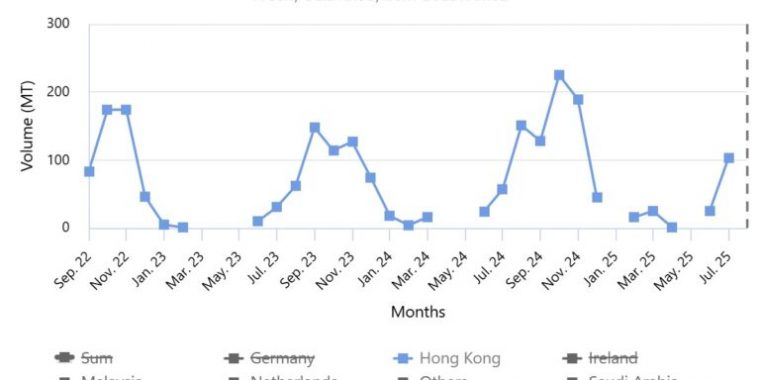
Hong
Kong,
which
often
acts
as
an
informal
‘beta
tester’
for
products
entering
mainland
China.


Source:
USDA
Market
News
via Agronometrics.
(Agronometrics
users
can
view
this
chart
with
live
updates here)

Source:
USDA
Market
News
via Agronometrics.
(Agronometrics
users
can
view
this
chart
with
live
updates here)

Despite
the
large
difference
in
overall
production
volumes
between
Zimbabwe
and
South
Africa,
their
exports
to
Hong
Kong
appear
similar
in
size,
and
Zimbabwe
may
even
be
shipping
more
fruit.
However, the
two
countries
aren’t
in
direct
competition
,
as
their
harvest
peaks
occur
at
different
times.
Zimbabwe’s
peak
arrives
earlier,
which
allows
the
two
to
complement
rather
than
compete
with
each
other
in
the
Chinese
market.

That
said,
both
countries
still
represent
relatively
small
volumes
when
compared
to
China’s
leading
blueberry
suppliers:
Peru
and
Chile.
These
two
continue
to
dominate,
thanks
in
part
to
their
robust
export
infrastructure
and
tariff-free
access.


Source:
USDA
Market
News
via Agronometrics.
(Agronometrics
users
can
view
this
chart
with
live
updates here)

Looking
at
the
data,
one
question
comes
to
mind:
Why
does
China,
with
such
a
vast
appetite
for
fruit,
limit
itself
to
just
four
blueberry
suppliers?
And
why
not
lower
tariffs
to
attract
more
competition?

I
believe
that
if
China
extended
zero-percent
tariffs
to
countries
like
Argentina
and
Uruguay
(which
already
have
approved
export
protocols),
they
might
start
exporting
more
actively
as
well. It’s
a
matter
of
strategy
,
and
such
adjustments
are
often
well
within
China’s
capabilities
when
the
timing
is
right.

In
the
meantime, congratulations
to
Zimbabwe
.
With
this
new
market
opportunity,
the
country
becomes
a
more
attractive
destination
for
foreign
investment
in
its
blueberry
sector.


P.S.
 In
South
America,
Chile
was
the
first
to
open
the
Chinese
market
for
blueberries
and
eliminate
tariffs
through
a
Free
Trade
Agreement.
Uruguay
followed,
but
faced
high
tariffs
(30
percent),
which
limited
the
impact
of
market
access.
Peru
later
joined
with
the
added
benefit
of
duty-free
access,
also
thanks
to
its
FTA.


P.S.
2.
 For
clarity,
when
I
said
“the
reason
is
unknown”
regarding
why
China
chose
Zimbabwe,
I
meant
that
while
there
are
many
possible
explanations,
I
don’t
know
which
specific
factors
influenced
the
decision.
The
likely
explanations,
in
my
view,
are
political
and
unrelated
to
the
blueberry
market
itself.

Source:


Zimbabwe
secures
zero-tariff
access
for
blueberries


FreshFruitPortal.com

Midlevel Biglaw Associates No Longer Respect Firms That Made Deals With Trump – Above the Law


Ed.
note
:
Welcome
to
our
daily
feature,

Quote
of
the
Day
.


The
lack
of
backbone.


An
anonymous
Am
Law
100
associate’s
response
to
a
question
found
in
the American
Lawyer
Midlevel
Associates
Survey
 about
what
surprised
them
the
most
about
working
at

their
current

firm.
As
noted
by

Am
Law
,
how
firms
handled
the
Trump
v.
Biglaw
battle
really
shaped
this
year’s
feedback
from
midlevel
associates.
More
notable
and
quotable
responses
can
be
found here.


Staci Zaretsky


Staci
Zaretsky
 is
the
managing
editor
of
Above
the
Law,
where
she’s
worked
since
2011.
She’d
love
to
hear
from
you,
so
please
feel
free
to

email

her
with
any
tips,
questions,
comments,
or
critiques.
You
can
follow
her
on BlueskyX/Twitter,
and Threads, or
connect
with
her
on LinkedIn.

Attorneys Should Take Long Times Off Between Jobs – Above the Law

When
aspiring
lawyers
are
in
college
and
law
school,
they
typically
have
substantial
time
off
from
their
studies.
Indeed,
students
usually
have
weeks
off
between
semesters,
and
may
have
close
to
three
months
off
during
the
summer. This
permits
students
to
travel,
relax,
and
do
whatever
is
necessary
to
recharge
their
batteries. However,
practicing
attorneys
often
are
not
permitted
to
take
more
than
a
few
weeks
off
at
a
time. For
many
attorneys,
the
only
way
they
can
take
more
time
off
from
work
is
if
they
intentionally
begin
a
new
job
weeks
or
even
months
after
departing
their
old
one.

I
have
heard
of
lawyers
taking
one
week
or
two
weeks
off
to
go
on
extended
vacations. In
one
instance,
I
knew
a
lawyer
who
took
nearly
an
entire
month
off
to
attend
a
wedding
and
a
honeymoon. The
longest
amount
of
time
I
ever
took
off
as
a
practicing
attorney
was
a
little
longer
than
two
weeks. I
once
worked
at
a
law
firm
at
which
pretty
much
everyone
took
off
for
the
last
few
weeks
of
December. This
was
an
awesome
experience,
since
taking
off
so
long
really
permitted
me
to
recharge
my
batteries
and
be
ready
to
return
to
work
feeling
rested
in
the
new
year.

The
only
time
I
knew
attorneys
to
take
longer
than
a
month
off
was
when
friends
of
mine
started
new
jobs. They
negotiated
a
future
start
date
with
their
new
employers,
and
they
stopped
working
at
their
current
employer
knowing
that
in
a
month
or
two
they
would
have
a
new
job
lined
up. Everyone
I
know
that
facilitated
this
arrangement
really
enjoyed
the
extended
time
they
had
before
starting
their
new
jobs.

One
of
my
friends
stayed
at
home
but
caught
up
on
a
bunch
of
errands,
watched
some
television
series
they’d
wanted
to
see
for
a
while,
and
made
time
to
see
friends
and
family
they
had
not
visited
in
ages. Another
one
of
my
friends
who
opted
for
this
arrangement
elected
to
travel
for
weeks
to
a
bunch
of
far-flung
locations. It
would
have
been
extremely
difficult
for
this
friend
to
travel
to
so
many
distant
places
within
the
confines
of
a
normal
vacation
at
a
law
firm
job.

People
feel
more
alive
and
healthier
when
they
have
extended
time
off
from
work. Not
having
to
return
to
work
for
weeks
or
months
can
lead
to
greater
relaxation
than
if
someone
takes
a
shorter
vacation. In
addition,
taking
such
time
off
between
jobs
means
that
there
is
less
likelihood
that
something
will
interrupt
a
lawyer’s
vacation. People
do
not
get
work
emails
or
client
calls
if
they
are
in-between
jobs,
and
this
can
enrich
that
person’s
time
off
substantially.

Not
everyone
can
take
gaps
in
their
employments. Some
cannot
financially
afford
to
take
such
time
off
without
a
paycheck. In
addition,
longer
periods
between
jobs
can
raise
red
flags
for
future
employers
since
gaps
in
resumes
might
be
perceived
negatively.

However,
if
people
have
the
freedom
and
flexibility
to
take
time
off
between
jobs,
the
benefits
usually
outweigh
the
risks. Free
time
during
this
period
is
often
more
secure
from
interruptions
and
taking
longer
periods
off
than
is
available
during
work
vacations
can
have
a
positive
impact
on
an
individual’s
mental
health
and
well
being.


Jordan
Rothman
is
a
partner
of 
The
Rothman
Law
Firm
,
a
full-service
New
York
and
New
Jersey
law
firm.
He
is
also
the
founder
of 
Student
Debt
Diaries
,
a
website
discussing
how
he
paid
off
his
student
loans.
You
can
reach
Jordan
through
email
at 
jordan@rothman.law.

Debrief: What It’s REALLY Like To Open Your Own Firm  – Above the Law

Tune
in
to
the
latest
Jabot
episode
as
I
chat
with

Margot
Hoppin
,
co-founder
of
Hoppin
Grinsell.
Discover
the
challenges
and
victories
of
starting
a
law
firm
post-COVID,
the
impact
of
AI
in
law,
and
the
real
deal
on
work-life
balance.


Highlights

  • Transition
    from
    Biglaw
    to
    founding
    a
    boutique
    firm.
  • Trend
    of
    starting
    new
    firms
    post-COVID.
  • Time-tracking
    challenges
    of
    running
    a
    law
    firm.
  • Growth
    milestone:
    hiring
    and
    team
    development.
  • Balancing
    work
    demands
    with
    personal
    time-off
    goals.
  • Importance
    of
    cash
    flow
    management
    in
    a
    small
    firm.
  • Key
    learnings:
    experience
    in
    running
    a
    law
    firm.
  • Impact
    of
    AI
    on
    traditional
    law
    firm
    structures.
  • Maintaining
    firm
    culture
    during
    growth.
  • Benefits
    of
    transparency
    in
    a
    smaller
    law
    firm.
  • Valuing
    open
    communication
    and
    addressing
    knowledge
    gaps.


Kathryn
Rubino
is
a
Senior
Editor
at
Above
the
Law,
host
of

The
Jabot
podcast
,
and
co-host
of

Thinking
Like
A
Lawyer
.
AtL
tipsters
are
the
best,
so
please
connect
with
her.
Feel
free
to
email

her

with
any
tips,
questions,
or
comments
and
follow
her
on
Twitter

@Kathryn1
 or
Mastodon

@[email protected].

Training Young Lawyers In The Age Of AI: A Riddle Wrapped In A Mystery Inside An Enigma – Above the Law

Winston
Churchill
once
said
about
Russia:
It
is
a
riddle
wrapped
in
a
mystery
inside
an
enigma.
 I’m
starting
to
feel
the
same
way
about
training
young
lawyers
in
the
age
of
AI.
How
do
we,
as
a
profession,
train
law
students
and
young
lawyers
with
critical
skill
sets
and
thinking
ability
when
so
much
can
now
be
done
with
AI?
It’s
a
continuing
and
critical
question
and
our
thinking
needs
to
continually
evolve.

I
have

written
recently

about
some
conclusions
of
economist
Tyler
Cowen
about
AI
and
the
need
for
law
schools
to
play
a
greater
role
in
developing
GenAI
skills.
Cowen’s
conclusions
and
to
some
extent
mine
were
that
educational
institutions
like
law
schools
need
to
double
down
on
teaching
students
how
to
effectively
use
AI.
I
had
some
thoughts
on
the
Socratic
method
and
the
use
of
adjunct
practicing
lawyer
professors.
This
came
on
the
heels
of

another
article

I
did
bemoaning
the
apparent
lack
of
critical
thinking
skills
as
noted
by
several
law
librarians.


A
Nuanced
View

Now
perhaps
another
nuanced
view
from
an
actual
academician,
Clay
Shirky,
the
vice
provost
at
New
York
University.
Shirky
recently
wrote
a
guest
essay
for
the
New
York
Times
entitled,

Students
Hate
Them,
Universities
Need
Them.
The
Only
Real
Solution
to
the
AI
Cheating
Crisis
.
Shirky
makes
the
point,
“Learning
is
a
change
in
long
term
memory:
that’s
the
biological
correlate
of
what
we
do
in
the
classroom.”
Similar
to
my
discussion
of
the
need
for
repetitive
type
work
to
allow
young
lawyers
to
begin
to
see
patterns
as
they
develop,
Shirky
says
educational
institutions
need
to
move
away
from
take-home
assignments
and
essays
and
more
toward
“in
class
blue
book
essays,
oral
examinations,
required
office
hours
and
other
assessments
that
call
on
students
to
demonstrate
knowledge
in
real
time.”

Shirky
debunks
the
notion
that
educational
institutions
can
simply
talk
to
students
about
how
AI
can
disrupt
their
learning
and
that
they
should
use
it
as
a
partner
to
help
them
learn.
The
truth,
says
Shirky
is
that
despite
all
the
talk
about
using
AI
to
facilitate
learning,
students
even
the
good
ones
were
mostly
taking
the
easy
way
out.
In
his
article,
he
says:

We
cannot
simply
redesign
our
assignments
to
prevent
lazy
A.I.
use.
(We’ve
tried.)
If
you
ask
students
to
use
A.I.
but
critique
what
it
spits
out,
they
can
generate
the
critique
with
A.I.
If
you
give
them
A.I.
tutors
trained
only
to
guide
them,
they
can
still
use
tools
that
just
supply
the
answers.
And
detectors
are
too
prone
to
false
accusations
of
cheating
and too
poor
at
catching
lightly
edited
output
for
professors
to
rely
on
them.

So
Shirky
thinks
institutions
need
to
go
back
to
in
class
work
and
oral
discussion
designed
to
show
that
students
have
learned
something.
And
to
move
away
from
exclusive
reliance
on
writing,
at
least
outside
a
controlled
classroom.
He
goes
on
to
say
that
not
many
professors
like
this.
And
not
many
students
do
either.


What’s
This
Mean
for
Law
Schools?

If
he
is
right,
this
of
course
has
implications
for
law
schools.
But
law
professors
should
have
one
advantage.
U.S.
law
schools
were
built
on
the
Socratic
method:
oral
question
and
answer
sessions
with
students
in
a
classroom
designed
to
get
at
their
knowledge.
At
least
that’s
the
ideal.
The
method,
if
used
correctly,
would
be
ideal
for
the
kind
of
learning
Shirky
is
talking
about.
Combined
with
other
teaching
methods
like
small
group
discussion,
problem
solving
without
the
use
of
AI
and
active
listening,
could
enhance
the
skills
lawyers
will
actually
need
in
the
AI
world.

But
here’s
the
rub.
Over
time,
law
professors
have
been
relying
less
and
less
on
the
Socratic
method
and
moving
to
the
type
of
large
group
lectures
Shirky
is
bemoaning.
The
emphasis
is
more
on
writing
and
open
book
examinations
that
may
indeed
demonstrate
some
skill
in
using
AI
but
not
much
else.
To
paraphrase
Shirky,
a
student
who
cuts
and
pastes
a
legal
research
paper
is
enrolled
in
a
cutting
and
pasting
class,
not
a
law
school
class.
As
one

commentator
put
it

in
a
Nebraska
Law
Journal
article
some
time
ago,
“the
traditional
Socratic
method
is
today
more
myth
than
reality
because
legal
pedagogy
has
changed
dramatically,
and
the
Socratic
method
still
common
during
the
1950s
and
1960s
is
nearly
extinct.”


It’s
Just
Too
Damned
Hard

Shirky
talks
about
the
reluctance
of
professors
to
do
what
he
outlines.
Why?
I
think
because
it’s
just
too
damned
hard.
Giving
the
same
lecture
year
in
and
year
out
is
easy.
Coming
up
with
penetrating
questions
using
the
Socratic
method
and
then
analyzing
the
student’s
answer
for
learning
purposes
isn’t
so
easy.
It
requires
work,
patience,
and
expertise.
You
have
to
ask
questions
that
draw
out
what
a
student
knows
and
how
they
approach
a
problem.
You
have
to
be
able
to
ask
follow-up
questions.
All
without
embarrassing
or
harassing
students
unduly.

Certainly,
when
I
was
in
law
school,
there
were
some
professors
who
were
better
at
it
than
others.
And
indeed,
some
used
it
as
a
form
of
hazing:
if
I
had
to
go
through
it,
so
do
you.
But
let’s
face
it,
when
you
practice
law,
you
are
going
to
get
hard
questions
from
judges,
clients,
and
your
adversaries.


When
the
Real
Training
Begins

And
the
learning
doesn’t
stop
when
you
graduate
from
law
school;
in
fact,
some
would
say
that’s
when
the
real
training
begins.
I
have
said
for
some
time
that
law
firms
need
to
get
serious
about
training.
That’s
even
more
critical
and
challenging
now.
If
Shirky
is
right,
firms
need
to
work
harder
on
mentorship
programs.
They
need
to
train
the
trainer:
senior
lawyers
need
to
learn
how
to
mentor
and
train.
They
need
more
hands-on
training
that
can’t
be
done
exclusively
with
AI.


But
Can
We?

But
all
that
takes
time.
Time
that
can’t
be
billed.
It
takes
investment
in
the
future
for
business
models
that
often
look
only
at
the
end-of-the-year
numbers
and
distribute
to
the
partners
every
drip
and
drop
of
profit.

I’m
not
sure
we
are
ready
for
that.
But
the
consequences
if
we
don’t
may
mean
we
end
up
with
a
profession
that’s
no
longer
a
profession
and
replaced
by
something
else
entirely.
Where
legal
services
are
primarily
provided
not
by
skilled
practitioners
but
by
AI
bots
and
robot
lawyers.


Stephen
Embry
is
a
lawyer,
speaker,
blogger,
and
writer.
He
publishes TechLaw
Crossroads
,
a
blog
devoted
to
the
examination
of
the
tension
between
technology,
the
law,
and
the
practice
of
law
.