Morning Docket: 08.11.25 – Above the Law

*
Lawyer
shifts
career
to
OnlyFans
content.
[NY
Post
]

*
Trial
over
Trump’s
use
of
military
for
domestic
policing
begins.
[Reuters]

*
Former
copyright
chief
thinks
she
got
fired
for
suggesting
AI
companies
have
to
respect
IP
law.
[Law.com]

*
Justice
Department
going
after
Tish
James
for
pointing
out
that
Trump’s
businesses
cooked
books.
[ABA
Journal
]

*
Supreme
Court
sees
opportunity
to
promote
more
bribery.
[Bloomberg
Law
News
]

*
New
allegations
added
to
Tom
Goldstein
case.
[Reuters]

*
Judge
wants
everyone
in
the
Lively-Baldoni
scuffle
to
play
nice.
[Law360]

Welcome To ILTACON 2025! A Day Of Insights And Entertainment – Above the Law

Registration
opens
at
7
this
morning
in
the
Convention
Center
Foyer.
Make
sure
to
bring
a
valid,
government-issued
form
of
identification
with
you
to
pick
up
your
conference
badge! 

After
securing
your
badge,
mingle
with
conference
attendees
in
the
Potomac
A/C
Foyer
over
light
breakfast
offerings
before
heading
to
Potomac
A/B
to
secure
your
seat
for
Ryan
Campbell’s
Keynote
presentation,
“What’s
Your
Pink
Cadillac?
The
Transformational
Power
of
Prioritizing
Joy,”
from
9-10:30.  


Follow
the
links
below
for
more
on
some
of
the
sponsors
you’ll
be
meeting:


• Aiden
• Litera
• Opus
2

• Traveling
Coaches

This
year’s
ILTACON
Planning
Committee
organized
over
80
educational
sessions
covering
aspects
of
eight
legal
tech
focus
areas
and
featuring
speakers
prepared
to
share
from
their
real-world,
practical
experience
and
expertise. 

Monday’s
first
round
of
90-minute
sessions
begins
at
11
and
includes:

Data
Lakehouses:
Not
Just
Fun
for
the
Summer!,
Project
Management:
The
Secret
Edge
to
Strategic
Planning,
The
Anatomy
of
a
Cyberattack:
A
Live
Walkthrough,
A
Practical
Approach
to
M365
Purview
for
Law
Firms,
Ensuring
Success:
Onboarding
Strategies
for
New
Hires,
Navigating
the
High
Seas
of
Financial
Systems
Innovations
and
AI,
eDiscovery
Litigation
Support
Roundtable:
From
TAR
to
Generative
AI,
and
Boring
AI
That
Saves
Time
&
Money.

Or
make
your
way
to
the
Cherry
Blossom
Ballroom
to
catch
Intapp’s
Company
Update,

The
Intelligence
Edge:
How
Leading
Law
Firms
Are
Winning
the
New
Arms
Race

at
11:15.
Stick
around
for
Thomson
Reuters
Company
Update,

Ushering
in
the
Agentic
Era
of
Legal
Work
,
at
1
p.m.

Stop
by
the
Riverview
Ballroom
between
12:30-2:30
to
enjoy
a
hearty
“Tex-Mex”
lunch
and
refuel
for
the
afternoon
sessions.
During
the
2:30-3:30
block,
attendees
can
choose
from
sessions
like:

Charting
Your
Search
Journey
in
the
Age
of
AI,
Feel
The
Fear…And
Do
It
Anyway,
Comparing
Vendor
Management
Program
Solutions,
Ensuring
Success:
Onboarding
Strategies
for
New
Hires,
Power
BI:
Legal
Insights,
The
Human
Element:
Digital
Legal
Skills
Evolution,
and
Ethics
and
Accountability
in
AI
and
Legal
Technology. 

Close
out
the
educational
part
of
your
day
with
the
4-5
session
selection,
including:

From
Boomers
to
Zoomers:
Is
Your
KM
Tech-Enabled
or
Tech-Innate,
Feedback
in
Motion:
How
to
Request,
Deliver,
and
Apply
It
for
Growth,
Navigating
Multi-Cloud
Challenges,
What
Tech
Leaders
want
from
IG,
Focusing
Copilot’s
abilities:
Introduction
to
Copilot
Studio
for
ChatBots,
From
Reactive
to
Proactive:
Building
a
Litigation
Response
Playbook,
and
AI
in
Legal
Practice:
From
Theory
to
Practical
Solution.

Or
swing
by
the
Cherry
Blossom
Ballroom

for
Built
for
Growth:
Litera’s
Vision
for
the
Modern
Law
Firm.

As
the
day
ends,
the
fun
begins.
Make
sure
to
reserve
the
7-9
spot
on
Monday
night
for
attending
the
Opening
Reception
of
this
year’s
Exhibit
Hall,
featuring
over
225
booths!
Then
wind
down
and
sail
into
dreamland
as
you
recharge
for
Tuesday’s
adventures
and
festivities. 


Looking
Ahead

ILTACON
2025
promises
to
be
an
extraordinary
four-day
event
full
of
educational
sessions,
product
updates,
and
networking
opportunities!
Watch
for
more
ILTACON-related
news
here
on
Above
the
Law
and
at www.iltacon.org

UN Working Group urges Zimbabwe to invest in girls’ rights for gender equality


The
UN
Working
Group visited Zimbabwe
and
assessed
progress
and
challenges
in
ensuring
gender
equality
and
eradicating
discrimination
in
terms
of
the
lives
of
women
and
girls.
Following
the
official
visit,
the
experts
acknowledged
progress
but
called
for
decisive
steps
to
dismantle
discriminatory
attitudes.

“Zimbabwe
must
actively
confront
and
eradicate
patriarchal
attitudes
that
undervalue
girls,
creating
a
society
which
nurtures
their
potential
as
future
leaders,
innovators
and
change
makers”,
the
UN
Working
Group
said
in
the
statement.

UNICEF emphasized the
strategic
importance
of
empowering
women,
who
make
up
52
percent
of
Zimbabwe’s
population,
but
noted
that
many
remain
disadvantaged.
UNICEF
cited
pressing
challenges,
including
early
marriage
and
pregnancy,
high
maternal
mortality,
limited
educational
opportunities,
and
gender-based
violence.
They
also
cited
research
that
shows
that
one
in
four
girls
aged
15-19
is
married,
and
many
face
difficulties
transitioning
to
secondary
school.
Girls
are
also
disproportionately
exposed
to
sexual
violence
both
at
home
and
in
schools.

According
to
UNICEF,
addressing
these
issues
requires
systemic
change
in
institutional
practices
and
social
norms
that
perpetuate
inequality.

The
Working
Group
reinforced
this
call,
highlighting
that
“gender
equality
is
not
a
zero-sum
goal

men
and
boys
also
stand
to
benefit
significantly
from
a
more
just
and
equal
society”.
The
experts
also
urged
the
Government
to
implement
public
awareness
campaigns
and
prioritize
“human
rights
education
for
boys
and
girls,
grounded
in
the
values
of
equality,
dignity,
and
autonomy”.

Post
published
in:

Featured

Moving gold, moving economies: The rise of migrant women in Zimbabwe’s mining sector


11.8.2025


2:54

Faith’s
hands
are
calloused,
her
nails
stained
with
soil
and
ore.
But
when
she
smiles,
there’s
something
golden
about
it,
something
earned.
Each
scar
on
her
fingers
tells
a
story:
not
just
of
digging
for
survival,
but
of
learning,
adapting,
and
rising.

A
few
years
ago,
she
crossed
into
Zimbabwe
from
Mozambique
with
nothing
but
her
youngest
child,
a
small
backpack,
and
the
hope
of
a
better
life.
Today,
she
is
part
of
a
growing
network
of
migrant
women
shaping
the
country’s
mining
economy.

An
infographic
outlining
migration
patterns
from
the
country
of
origin
to
the
area
of
settlement.


Women
as
Economic
Architects


Across
Zimbabwe’s
artisanal
gold
fields,
stories
like
Faith’s
are
no
longer
rare.
Women,
once
invisible
in
mining,
are
now
taking
their
place
at
the
centre
of
an
industry
long
dominated
by
men.
And
not
just
local
women,
many
have
journeyed
from
across
borders.


In
the
dynamic
mining
corridors
of
Zimbabwe,
from
Penhalonga
to
Mazowe,
a
quiet
revolution
is
reshaping
the
landscape.
It’s
not
led
by
bulldozers
or
corporations,
but
by
women,
with
tools
in
hand,
business
savvy
in
their
minds,
and
community
at
heart,
they
are
building
economies,
networks,
and
futures.


These
women
are
not
passive
participants
in
a
tough
trade.
They
are
pioneers
in
a
regional
transformation,
connecting
communities,
creating
markets,
and
aligning
naturally
with
the
vision
of
a
borderless,
prosperous
Africa.


Women
from
across
Zimbabwe,
Mozambique,
Malawi,
and
Zambia
are
making
strategic
moves
to
mining
centers
not
out
of
desperation,
but
out
of
ambition.
Whether
traveling
internally
or
across
borders,
they
arrive
equipped
with
a
will
to
work,
a
knack
for
trade,
and
a
strong
sense
of
community.

An
image
visualiser,
showing
women
miners
in
action


Mining
as
a
Launchpad,
Not
a
Destination


Migrant
women
play
their
role
in
Zimbabwe’s
artisanal
and
small-scale
mining
(ASM)
sector.
They
are
miners,
traders,
cooperative
leaders,
safety
advocates,
and
value-chain
entrepreneurs.
With
each
gram
of
gold
they
produce
or
trade,
they
are
investing
in
their
families,
their
communities,
and
the
regional
economy.


Many
of
these
women
are
experienced
market
traders,
farmers,
and
informal
entrepreneurs.
When
economic
pressures
or
climate
shifts
affect
their
home
regions,
they
view
mining
hubs
like
Mazowe
or
Bikita
as
opportunities,
not
just
to
earn,
but
to
grow.


“Mining
offered
me
the
capital
I
needed
to
scale
up
my
business,”
says
Miriam,
a
miner
originally
from
Mozambique.
“I
came
to
dig,
but
I
stayed
to
build.”


Rather
than
being
locked
into
the
mine,
women
are
using
mining
as
a
stepping
stone
into
other
ventures:
poultry,
retail,
construction,
and
cross-border
trade.
It
is
a
deliberate
strategy,
not
a
last
resort.


Mining
by
the
Numbers:
A
Sector
Shaped
by
Women


Zimbabwe’s
ASM
sector
employs
an
estimated
535,000
people.
According
to
the
Zimbabwe
Environmental
Law
Association,
women
represent
between
10%
and
15%
nationally.
In
some
districts
like
Mazowe
or
Penhalonga,
they
make
up
nearly
half
of
the
workforce.
While
official
data
doesn’t
always
capture
migration,
field
evidence
shows
that
migrant
women
form
a
vital
backbone
of
mining
site
economies,
especially
in
high-traffic
gold
zones.


Nowhere
is
this
impact
more
visible
than
at
Jumbo
Mine
in
Mazowe.
Once
a
conventional
gold
field,
the
site
has
transformed
into
a
mini
trading
hub,
largely
due
to
the
work
and
vision
of
women.

Image
showing
women
miners
in
Mazowe
at
work


Migrant
women
miners
and
traders
from
neighboring
countries
have
built
a
thriving,
self-sustaining
local
economy.
They’ve
attracted
tailors,
food
vendors,
mobile
money
agents,
and
tool
suppliers,
many
of
whom
are
also
women.
These
economic
linkages
closely
resemble
the
goals
of
the
African
Continental
Free
Trade
Area
(AfCFTA):
free
movement
of
goods,
services,
and
people,
driven
from
the
ground
up.


“We’ve
created
a
town
around
the
mine,”
says
Chimwala,
a
Malawian
cross-border
trader.
“And
it’s
women
who
keep
it
moving.”


From
Policy
to
Practice:
Women
Leading
Integration


While
many
national
governments
are
still
implementing
continental
frameworks
like
AfCFTA
and
the
AU
Free
Movement
of
Persons
Protocol,
these
women
are
already
practicing
them.


The
Free
Movement
Protocol
encourages
safe,
legal
mobility
for
workers
and
entrepreneurs.
The
AU
Labour
Migration
Strategy
promotes
dignity,
skills-building,
and
inclusion
for
migrants.
The
migrant
women
working
Zimbabwe’s
mining
fields
embody
all
of
this.
They’re
not
waiting
for
formal
platforms,
and
they’re
building
trade
corridors
with
every
exchange,
creating
jobs,
transferring
skills,
and
generating
revenue.

Infographic
detailing
migration
routes
to
Zimbabwe


Cooperation
Over
Competition:
Women’s
Self-Regulated
Systems


With
little
external
support,
migrant
women
have
developed
cooperative
models
that
manage
risk,
share
resources,
and
enhance
safety.
These
aren’t
aid-dependent
groups,
and
they
are
investor-minded,
self-regulating
teams
that
fund
tools,
childcare,
transport,
and
even
community
defense.


A
group
of
women
who
migrated
from
South
Africa
and
settled
in
Bikita,
Masvingo,
have
formed
a
viable
mining
enterprise
and
are
now
contributing
to
large
platforms
like
the
regional
Alternative
Mining
Indaba.


Some
cooperatives
have
launched
financial
savings
schemes;
others
run
training
sessions
on
mercury
handling,
pricing
negotiations,
and
even
basic
bookkeeping.
Women
also
engage
in
peer-to-peer
mentoring,
helping
newcomers
quickly
get
up
to
speed
with
mining
techniques
and
navigate
local
authorities.


Beyond
Gold:
Investing
in
Future
Generations


The
benefits
aren’t
limited
to
the
women
themselves.
Many
are
channeling
their
earnings
into
education
and
assets
for
their
children.
In
camps
where
women
work,
schools
and
clinics
have
begun
to
emerge,
some
supported
by
mining
income.


“I
used
to
sell
tomatoes
at
a
border
post,”
says
Rose
Phiri,
a
former
trader
turned
miner.
“Now
my
daughter
is
in
college.
That’s
the
power
of
a
little
gold
and
a
lot
of
purpose.”


Several
cooperatives
now
support
after-school
study
groups
and
youth
savings
accounts,
planting
the
seeds
of
generational
economic
mobility.


Women
miners
are
also
opening
the
door
for
younger
generations
to
participate
in
safer,
smarter
ways.
Young
women
and
girls,
who
often
watch
their
mothers
lead
cooperatives,
are
learning
not
only
the
value
of
hard
work
but
also
how
to
run
businesses,
manage
money,
and
make
strategic
decisions.


Some
youth-focused
projects
in
Penhalonga
and
Gwanda
now
include
mentorship
programs
for
daughters
of
miners,
connecting
them
to
STEM
careers,
journalism,
and
financial
literacy.
These
investments
are
shaping
an
empowered,
entrepreneurial
generation.


Strengthening
Systems:
Who’s
Supporting?


Positive
shifts
are
happening
at
multiple
levels.
The
Zimbabwe
Women’s
Microfinance
Bank
now
extends
loans
to
women
in
extractives,
including
migrants.
The
Zimbabwe
School
of
Mines
introduced
outreach
training
for
informal
and
cross-border
workers.


NGOs
and
development
partners
are
launching
safe
mining
toolkits
and
gender-smart
resource
hubs.
Pilot
projects
by
IOM
and
UN
Women
are
exploring
regional
mining
ID
cards
and
legal
aid
clinics.


These
initiatives
align
well
with
the
AU’s
migration
and
trade
policies.
What’s
needed
now
is
further
integration
and
funding
to
scale
up.

Moving
gold


Policy
Catch-Up:
Learning
from
the
Ground


While
migrant
women
miners
still
face
hurdles
like
documentation
gaps,
legal
ambiguity,
and
safety
concerns,
they
are
not
defined
by
these.
They
are
already
offering
answers.
Each
challenge
is
met
with
innovation.
These
women
are
not
waiting
for
reform

they
are
leading
it.


To
fully
harness
this
movement,
policymakers
must
shift
focus
and
recognize
informal
actors
as
legitimate
economic
participants.


Shamva
South
legislator,
Honourable
Joseph
Mapiki,
who
is
also
a
committee
member
of
the
Parliamentary
Portfolio
Committee
on
Mines,
says
it
is
imperative
for
policymakers
to
enact
laws
that
promote
women
in
mining
and
allow
for
easier
access
to
the
formalization
of
their
work.


Next
Steps:
Formalization
and
Mobility


To
strengthen
the
position
of
migrant
women
in
Zimbabwe’s
mining
sector
and
align
national
efforts
with
African
Union
frameworks,
several
forward-looking
policy
measures
could
be
enacted,
including
domestication
of
the
AU
Protocol
on
Free
Movement
of
Persons,
ensuring
that
migrant
workers,
especially
women
in
informal
sectors
can
legally
live
and
work
across
borders
with
secure
documentation.
This
would
reduce
vulnerability
and
support
regional
integration.


The
introduction
of
simplified
cross-border
work
permits
for
informal
miners
and
traders,
tied
to
cooperatives
or
mining
syndicates,
would
provide
legal
recognition
and
enable
safer,
more
stable
mobility
for
thousands
of
women
who
are
contributing
to
the
economy.


Recognition
and
formalisation
of
women-led
cooperatives
would
help
secure
land
use
rights,
expand
access
to
finance,
and
elevate
their
contributions
in
artisanal
and
small-scale
mining.


Coupled
with
a
gender-inclusive
mining
formalization
strategy,
these
approaches
would
prioritize
legal
literacy,
safety
training,
and
youth
mentorship,
creating
sustainable
livelihoods
across
generations.


Why
Free
Movement
Matters


The
AU
Protocol
on
Free
Movement
of
Persons,
if
fully
adopted
and
implemented
across
Africa,
would
allow
women
miners
and
traders
to
move
legally
and
safely
across
borders
without
fear
of
detention,
deportation,
or
discrimination.
It
would
enable
the
creation
of
regional
IDs,
access
to
services,
and
formal
recognition
of
economic
contributions.


Today,
many
migrant
women
miners
operate
without
formal
documentation,
often
in
legal
grey
areas
where
they
face
harassment,
extortion,
or
barriers
to
accessing
basic
services.
Lack
of
mobility
rights
makes
it
difficult
to
scale
businesses,
attend
regional
training
sessions,
or
formalize
their
activities.
This
undermines
not
only
their
productivity
but
also
the
broader
goals
of
continental
integration.


Implementing
the
AU
Free
Movement
Protocol
would
unlock
access
to
formal
trade
corridors,
cross-border
banking,
cooperative
registration,
and
healthcare.
It
would
also
ease
movement
for
cross-border
traders
who
supply
mining
communities,
allowing
for
greater
economic
diversity
and
resilience.


Some
women-led
organizations
are
already
advocating
for
these
policy
changes.
Regional
forums
and
networks
are
pushing
for
simplified
visa
processes,
recognition
of
informal
worker
contributions,
and
protection
mechanisms
for
mobile
workers,
especially
women.


Free
movement
supports
human
dignity.
For
women
building
economies
across
borders,
it
is
the
foundation
that
makes
everything
else
possible.

An
Infographic
on
Free
Movement

Govt. warns Chinese investors against labour violations, environmental negligence, and illicit deals


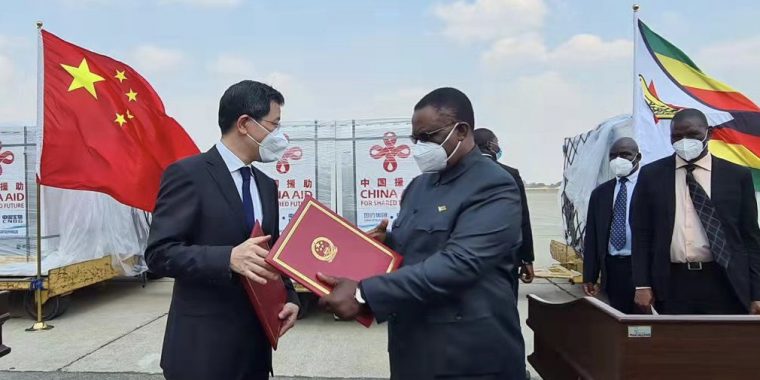
Vaccine
diplomacy

Vice
President
Constantino
Chiwenga
receiving
a
consignment
of
donated
Chinese
vaccines
in
Harare
on
Sunday,
September
26,
2021

​Zimbabwe
has
warned
Chinese
investors
against
disregarding
local
labour
and
environmental
laws
as
well
as
driving
illicit
financial
activities,
an
unusual
stance
after
months
of
public
complaints.
Harare’s
rebuke
now
upends
Zimbabwe’s
record
as
one
of
the
African
countries
that
have
been
most
receptive
to
investment
from
Beijing,
often
looking
away
when
issues
are
raised.
China
had,
over
the
years,
grown
to
be
the
dominant
source
market
for
investors
into
Zimbabwe
following
the
Southern
African
country’s
isolation
by
the
West
over
two
decades
ago.
Tafadzwa
Muguti,
a
senior
official
in
President
Emmerson
Mnangagwa’s
office,
this
week
took
by
surprise
delegates
at
a
conference
to
discuss
Chinese
investments
in
Harare,
when
he
warned
investors
from
the
Asian
country
to
desist
from
“illicit
financial
activities,
environmental
harm
and
disregard
for
local
laws.”
“The
majority
of
you
(Chinese)
businesspeople
are
not
banking
(money),”
Mr
Muguti
told
the
China-Zimbabwe
Business
Forum
on
Wednesday.
“You
do
not
have
bank
accounts.

…Critics
have
long
raised
concerns
about
Chinese
investors’
alleged
disregard
for
local
labour
and
environmental
laws,
but
Harare
has
frequently
defended
them.
The
government
has
in
the
past
accused
those
who
are
critical
of
the
conduct
of
Chinese
investors
of
being
agents
of
the
West,
trying
to
disrupt
the
flow
of
investment
from
a
reliable
ally.
Zimbabwe
has
battled
a
currency
crisis
for
nearly
two
decades
that
saw
the
country
abandon
the
local
unit
in
2009
in
favour
of
a
basket
of
currencies
dominated
by
the
US
dollar.
The
country
has
since
then
made
six
attempts
to
revive
the
Zimbabwe
dollar
with
the
latest
attempt
being
the
mineral-based
Zimbabwe
Gold
currency
introduced
a
year
ago.
Most
businesspeople,
especially
foreigners,
are
hesitant
to
use
local
banks
because
of
uncertainties
surrounding
the
country’s
monetary
policies
and
the
challenges
associated
with
repatriating
their
profits
from
Zimbabwe.

…Chinese
companies
have
been
caught
mining
in
Zimbabwe’s
game
reserves
after
obtaining
licences
in
unclear
circumstances
while
others
are
involved
in
riverbed
mining,
leading
to
massive
destruction
of
the
water
courses…There
are
also
several
cases
of
Chinese
mining
companies
that
are
locked
in
conflicts
with
local
communities
after
being
accused
of
invading
ancestral
lands
and
desecrating
graves.
“We
are
noticing
that
some
Chinese
companies
are
digging
up
our
ancestors’
graves
to
extract
granite
or
gold,”
Mr
Muguti
said.
“Some
of
them
are
picking
the
bones
and
putting
them
aside
to
start
digging.
That’s
the
greatest
disrespect
to
any
person,
even
in
your
culture.
So,
if
we
are
not
patient
with
one
another,
then
we
can’t
work
together.”
Steve
Zhao,
CEO
of
China-Zimbabwe
Exchange
Centre,
which
represents
the
interests
of
Chinese
nationals,
said
most
of
the
problems
were
caused
by
bureaucratic
bottlenecks.
“Chinese
companies
are
facing
a
lot
of
trouble,”
Mr
Zhao
said.

Source:


Zimbabwe:
Govt.
warns
Chinese
investors
against
labour
violations,
environmental
negligence,
and
illicit
deals


Business
&
Human
Rights
Resource
Centre

Post
published
in:

Business

Money, Money, Money – See Generally – Above the Law

BONUS
TIME!:
Milbank
opens
up
the
Biglaw
summer
bonus
season.
Will
anyone
follow?
Now
You
See
Them…:
Todd
Blanche’s
Library
of
Congress
deleted
habeas
corpus
and
the
part
that
says
presidents
can’t
impose
tariffs
from
the
Constitution.
Complete
coincidence.
Former
Associate
Alleges
Racist
Incident:
Claims
partner
used
slur
while
trying
to
make
him
quit.
Welcome
To
The
World:
McDermott
&
Schulte
officially
merge.
Bar
Exam’s
Dangerous
Mistake
Still
Resonates:
Are
we
going
to
let
them
slide
past
nearly
letting
someone
die?
Aloha:
Hawaii
looking
for
public
defenders.
At
Least
We
Aren’t
Weaponizing
The
DOJ:
Justice
going
after
Jack
Smith
for
having
the
audacity
to
point
out
all
those
illegal
things
Donald
Trump
seems
to
get
up
to.

Ministry Of Health Says Bikita Nurse Injured In Line Of Duty Received All Entitlements

The
Ministry
of
Health
and
Child
Care
issued
an
update
addressing
concerns
raised
by
Progress
Muzuva,
a
former
nurse
stationed
in
Bikita
who
was
injured
in
the
line
of
duty
in
2018.

In
its
update
on
Friday,
8
August
2025,
the
Ministry
reaffirmed
its
commitment
to
handling
the
matter
with
seriousness,
empathy
and
transparency,
assuring
the
public
that
all
measures
taken
comply
with
the
relevant
laws
and
procedures.

It
said
that
Muzuva’s
case,
which
has
drawn
significant
public
attention,
involves
long-term
medical
treatment,
compensatory
benefits,
and
the
possibility
of
medical
retirement
due
to
injuries
sustained
whilst
in
service.

Muzuva,
who
was
based
at
Bikita
Rural
Hospital,
sustained
spinal
and
leg
injuries
while
attempting
to
restrain
a
violent
patient
during
an
emergency
ambulance
transfer.

Her
ordeal,
which
recently
gained
renewed
prominence
through
social
media
and
widely
circulated
audio
clips,
has
sparked
widespread
outrage
and
calls
for
reform
in
the
treatment
of
frontline
healthcare
workers
in
Zimbabwe.

According
to
the
Ministry’s
update,
Muzuva
began
receiving
monthly
disability
compensation
in
October
2024
under
the
Disability
Benefits
Act,
with
payments
backdated
to
2018.

The
Ministry
added
that
she
also
received
three
months’
full
salary
in
August
2020,
as
well
as
a
cash
payment
in
lieu
of
outstanding
holiday
leave
in
January
2022.

Although
she
went
off
pay
in
2019
after
exceeding
the
statutory
sick
leave
limits,
the
Ministry
stressed
that
all
her
entitlements
were
processed
in
accordance
with
government
regulations.
The
Ministry
said:

“Sick
leave
documentation
was
completed
and
submitted
to
the
relevant
government
departments
for
processing.

“Compensation
under
the
Disability
Benefits
Act
[Chapter
16:05]
commenced
in
October
2024,
backdated
to
2018,
and
is
being
paid
monthly
to
date.

“Ms.
Muzuva
went
off
pay
in
2019
after
exceeding
the
regulatory
sick
leave
limits
but
received
three
months’
full
salary
(including
arrears)
in
August
2020,
as
well
as
cash
in
lieu
of
outstanding
vacation
leave
days
in
January
2022.”

In
terms
of
medical
support,
the
Ministry
said
that
Muzuva
was
granted
Government
patient
status
in
January
2020,
allowing
her
to
access
free
treatment
at
public
health
institutions.
The
statement
reads:

“As
of
21
January
2020,
Ms.
Muzuva
was
granted
Government
patient
status,
entitling
her
to
free
treatment
in
public
health
institutions.
This
status
remains
in
effect
to
date.

“Records
show
that
Ms.
Muzuva
accessed
care
at
Mpilo
Central
Hospital,
Sally
Mugabe
Central
Hospital,
Masvingo
Provincial
Hospital,
and
Parirenyatwa
Group
of
Hospitals,
with
ambulance
services
and
medical
treatment
provided
as
needed.

“A
Ministry
team
has
been
deployed
to
assess
her
current
needs
and
identify
additional
measures
to
support
her.

“Ms
Muzuva
has
since
been
assessed
on
07
August
2025
by
a
Specialist
Neurosurgeon
at
Masvingo
Provincial
Hospital
and
recommendations
for
advanced
imaging
and
psychological
support
have
been
made
and
will
be
undertaken.”

Regarding
her
employment
status,
the
Ministry
revealed
that
medical
boards
convened
in
2020
and
2021
recommended
retirement
on
medical
grounds.
The
Ministry
stated:

“Medical
boards
convened
in
2020
and
2021
assessed
her
condition
and
recommended
retirement
on
medical
grounds
in
July
2021.

“Ms.
Muzuva
initially
disputed
the
recommendation
in
October
2021
but
submitted
consent
for
retirement
in
June
2024.

“The
Ministry
has
since
requested
the
Health
Services
Commission
to
consider
her
latest
request.

“All
processes
have
been
undertaken
in
line
with
the
Health
Service
Regulations
of
2006.”

In
response
to
allegations
of
mistreatment
and
administrative
negligence,
the
Ministry
reiterated
its
zero-tolerance
policy
toward
misconduct.

It
said
it
has
asked
the
Health
Services
Commission
to
review
all
aspects
of
Muzuva’s
case
and
pledged
to
take
appropriate
action
should
any
breaches
be
confirmed.

Muzuva
reportedly
spent
over
US$11,000
on
medical
expenses
and
endured
years
of
bureaucratic
hurdles,
often
travelling
in
pain
without
reliable
ambulance
support.

The Energy Crisis : Need to Re-look at the Energy Mix


Introduction

Zimbabwe
is
facing
a
serious
energy
crisis
that
has
resulted
in
long
hours
of
load
shedding,
sometimes
as
long
as
16
hours
a
day.
 The
country’s
energy
demands
at
present
are
estimated
at
4000
megawatts
[MW]
of
electricity
whereas
we
currently
produce
only
about
1400
MW.
 This
is
unsustainable
and
many
households
and
industries
are
now
turning
to
their
own
private
sources
of
energy
like
solar
plants,
diesel
generators
and
windmills.
 Poor
working-class
and
peasant
families,
who
cannot
afford
these
things,
are
bearing
the
brunt
of
the
energy
crisis,
but
everyone
is
suffering
because
electricity
generated
from
private
sources
is
generally
more
expensive
than
electricity
from
the
national
grid,
and
goods
produced
using
privately
generated
electricity
are
correspondingly
more
expensive.

The
current
energy
mix

Zimbabwe
gets
its
electricity
from
several
sources.

Hydro-electric
Power

The
country
currently
has
two
hydro-electric
power
stations
built
on
the
Kariba
Dam

Kariba
North
and
Kariba
South.
 They
have
a
combined
output
of
1200
MW
but
the
current
output
is
less
than
a
quarter
because
of
breakdowns,
obsolete
equipment
and,
in
recent
years,
low
levels
of
water
in
the
dam
for
electricity
generation.

Private
mini-hydros

There
are
several
small
hydro-electric
power
stations
across
the
country
with
outputs
ranging
from
2
MW
to
5
MW. 
They
are
however
for
the
use
of
their
private
owners,
though
they
re-channel
excess
power
into
the
national
grid.

Thermal
Power
Stations

Zimbabwe
potentially
has
four
thermal
power
stations:
 Hwange,
Munyati,
Bulawayo
and
Harare.
 Hwange
has
the
largest
output
at
around
600
MW
after
its
recent
refurbishment,
which
was
paid
for
by
a
Chinese
loan
[increasing
our
national
debt].
 Munyati,
Bulawayo
and
Harare
power
stations
still
need
to
be
refurbished
before
they
can
contribute
anything
to
the
national
power
grid.

Dema
Diesel
Power
Plant

The
US$200
million-dollar
Dema
Diesel
power
plant
remains
unused
after
being
commissioned
in
2016.
 Many
doubted
the
wisdom
of
setting
up
a
diesel
power
plant,
which
is
expensive
to
run,
at
a
time
when
Zimbabwe
was
struggling
to
import
fuel.

Solar
farms

The
Zimbabwe
Electricity
Supply
Authority
[ZESA]
appointed
a
local
company,
Intratek
Zimbabwe
headed
by
Mr
Wicknell
Chivhayo,
to
set
up
a
US$100
million
solar
farm
project
at
Gwanda.
 The
feasibility
of
the
project
is
still
being
assessed
yet
the
government
has
already
paid
Intratek
US$5
million
in
advance.
 The
project
is
riddled
in
legal
wrangles
after
ZESA
tried
to
cancel
the
contract.

Private
players
are
setting
up
solar
farms
like
the
one
in
Nyabira
set
up
by
Centragrid
and
the
one
in
Selous
established
by
Zimplats. 
Econet
through
its
subsidiary,
DPA,
has
started
putting
solar
panels
on
roofs
of
large
warehouses
for
private
energy
use.

Power
imports

Zimbabwe
imports
power
from
DRC’s
SNEL,
Mozambique’s
HCB
and
South
Africa’s
Eskom,
but
our
ability
to
continue
these
imports
has
been
imperilled
by
swelling
debts
owed
by
ZESA
to
the
three
power
companies.
 The
foreign
currency
scarcity
has
exacerbated
the
situation
as
it
can
no
longer
enjoy
power
on
debt,
especially
when
ZESA’s
and
country’s
financial
stability
is
perilous.

New
investments
into
energy

Despite
the
efforts
mentioned
above,
Zimbabwe
is
still
facing
an
acute
energy
crisis
and
new
sources
of
energy
have
to
be
found
urgently.
 Possible
sources
include
the
Batoka
Gorge
Hydroelectric
Project. 
More
solar
farms
could
be
established
as
Zimbabwe
has
fair
warm
weather
for
most
of
the
year. 
Incentives
could
be
put
in
place
to
encourage
electricity
consumers,
both
commercial
and
domestic,
to
switch
to
the
use
of
solar.

A
New
Energy
Policy

Zimbabwe
needs
a
new
comprehensive
energy
policy
that
looks
at
the
energy
mix
and
funding
mechanisms.
 Above
all
the
policy
should
include
a
transition
to
green
energy
with
clear
time-lines
drawn
up
in
the
light
of
the
country’s
economic
and
social
context.
 The
policy
should
be
drawn
up
so
as
to
involve
all
stakeholders

domestic
consumers,
industrial
consumers,
funders,
climate
change
activists
and
the
government.

Most
multilateral
funding
partners
are
now
inclined
to
finance
clean
energy,
that
is
hydroelectric
power
stations,
solar
farms
and
wind
power.
 Zimbabwe
however
should
remain
alive
to
the
fact
that
the
country
still
has
extensive
reserves
of
coal
that
can
be
used
cheaply
to
run
thermal
power
stations.
 This
should
be
only
a
pro
tem
solution
as
coal
power
is
very
polluting.  As
to
financing,
we
should
look
at
opportunities
for
domestic
resource
mobilisation,
including
the
use
of
pension
funds,
because
such
national
projects
are
spurs
to
economic
growth.

Conclusion

Zimbabwe
will
need
as
much
as
US$10
billion
to
invest
in
energy
production
over
the
next
decade
to
avert
the
ongoing
energy
crisis.
 In
establishing
new
energy
projects
we
should
re-examine
our
energy
mix
and
adopt
measures
to
enhance
energy
transition.
 The
development
of
a
new
energy
policy
should
be
framed
from
an
all
stakeholders’
approach
to
gain
support
from
all
players.


Veritas
makes
every
effort
to
ensure
reliable
information,
but
cannot
take
legal
responsibility
for
information
supplied.

Post
published
in:

Featured

The Dollar Signs Are Heading Your Way! – See Also – Above the Law

If
You
Work
At
Hueston
Hennigan,
That
Is!:
They
just
dropped
summer
bonuses.
The
DOJ
Is
Leaking
Lawyers:
Who
will
be
left
to
do
the
work?
Biglaw
Partner
Dies
In
Apparent
Suicide:
We
extend
our
condolences
to
his
family
and
friends.
Looking
To
Get
Paid
$1500
To
Take
The
Bar?:
Applications
open
next
week!
PACER
Left
Their
Security
Measures
Behind:
They
just
got
hacked!