
Merck Breathes Life Into Its Respiratory Prospects With $10B Deal to Buy Verona Pharma – MedCity News

Merck
has
reached
a

$10
billion
deal

to
acquire
Verona
Pharma,
a
biotech
whose
first-in-class
drug
is
already
commercialized
in
one
prevalent
lung
disorder
and
is
showing
promise
in
other
respiratory
conditions.
The
multi-blockbuster
potential
of
this
drug
is
important
to
Merck,
which
is
scouting
for
assets
to
make
up
for
the
steep
drop
in
revenue
coming
soon
when
its
top
overall
product
tumbles
over
the
patent
cliff.

London-based
Verona
has
American
depositary
shares
that
trade
on
the
Nasdaq.
According
to
acquisition
terms
announced
Wednesday,
Merck
will
pay
$107
for
each
of
those
shares,
which
represents
a
more
than
23%
premium
to
Verona’s
closing
stock
price
on
Tuesday.
When
Verona
went
public
in
2017,
it

priced
shares

at
$13.50
apiece.

The
main
asset
of
Verona
is

Ohtuvayre,
a
drug
that
the
FDA
approved
last
year
as
a
maintenance
treatment
for
chronic
obstructive
pulmonary
disease
(COPD).

This
inhaled
medicine’s
main
pharmaceutical
ingredient,
ensifentrine,
is
a
small
molecule
with
a
dual
mechanism
of
action.
In
addition
to
blocking
PDE4
enzymes
to
stop
inflammation,
it
also
blocks
PDE3
enzymes
to
widen
the
airway.
This
dual
approach
may
have
applications
in
other
respiratory
disorders.
Mid-stage
studies
are
underway
in
asthma,
cystic
fibrosis,
and
non-cystic
fibrosis
bronchiectasis.

The
bronchiectasis
indication
is
a
particularly
promising
one,
as
this
chronic
lung
disorder
is
growing
in
prevalence
and
currently
has
no
FDA-approved
therapies

though
that
could
change
soon.

Insmed
drug
brensocatib

is
currently
under
FDA
review
in
non-CF
bronchiectasis.
An
FDA
decision
for
the
oral
small
molecule
is
expected
by
Aug.
12.
Industry
observers
project
the
Insmed
drug
could
become
a
blockbuster
seller.
Ohtuvayre
gives
Merck
a
way
to
potentially
get
a
piece
of
the
bronchiectasis
market.

When
Ohtuvayre
was
approved
in
June
2024,
it
was
the
first
new
inhaled
COPD
drug
with
a
novel
mechanism
of
action
in
two
decades.
Since
then,
Sanofi’s
Dupixent
and
Nucala
from
GSK

both
biologic
drugs
administered
by
injection

have

expanded
their
labels
specifically
to
include
treatment
of
COPD

driven
by
type
2
inflammation,
a

new
indication
for
both
blockbuster
products.

Ohtuvayre
is
also
projected
to
become
a
blockbuster
seller.
Market
uptake
for
the
drug
in
COPD
has
been
rapid.
For
the
first
quarter
of
this
year,
Verona
reported
about
25,000
Ohtuvayre
prescriptions
filled
for
COPD
and
a
50%
increase
in
prescribers
of
the
medication
compared
to
the
fourth
quarter
of
2024.
Revenue
in
the
first
quarter
was
$71.3
million,
up
from
$36.6
million
in
the
prior
quarter.

Verona
CEO
David
Zaccardelli
told
MedCity
News
in
an
interview
last
year
that
he
expected
his
company’s
clinical
and
regulatory
validation
of
PDE3
and
PDE4
inhibition
with
a
single
molecule
would
lead
other
companies
to
pursue
drugs
that
work
this
way.
He
added
that
Verona
was
committed
to
commercializing
Ohtuvayre
in
the
U.S.,
but
would
seek
partners
to
develop
and
commercialize
it
in
other
markets.
So
far,
the
only
partner
is
Shanghai-based
Nuance
Pharma,
which
secured
rights
to
the
small
molecule
in
Greater
China
in
2021.
In
the
Merck
announcement
Wednesday,
Zaccardelli
said
the
pharma
giant’s
commercial
footprint
and
clinical
capabilities
will
enable
Ohtuvayre
to
reach
more
COPD
patients.

Merck’s
top
overall
product
is
the
cancer
immunotherapy
Keytruda,
which
accounted
for
$29.4
billion
in
revenue
last
year,
a
more
than
17%
increase
over
sales
in
the
prior
year.
But
Keytruda’s
patent
expires
in
2028,
which
puts
the
pharmaceutical
giant
in
the
position
of
finding
commercialized
assets
or
drugs
in
late-stage
development
with
the
potential
to
fill
the
coming
revenue
gap.

In
an

investor
presentation,

Merck
said
Ohtuvayre
represents
a
multibillion-dollar
commercial
opportunity
into
the
mid-2030s.
The
pharma
giant
framed
the
Verona
acquisition
as
complementary
to
its
cardio-pulmonary
portfolio,
which
is
currently
headlined
by

Winrevair,
a
drug
that
received
FDA
approval
last
year
for
treating
pulmonary
arterial
hypertension.

Winrevair
came
from
the

$11.5
billion
acquisition
of
Acceleron
Pharma

in
2021.
Merck’s
older
cardiovascular
drugs
went
to

Organon
when
that
unit
spun
out
of
the
pharma
giant

earlier
that
year.
Winrevair
now
stands
as
the
top
Merck
cardio
product,
accounting
for
$419
million
in
2024
sales.
This
drug
is
also
projected
to
become
a
blockbuster
seller.

“Ohtuvayre
complements
and
expands
our
pipeline
and
portfolio
of
treatments
for
cardio-pulmonary
diseases
while
delivering
near-
and
long-term
growth
as
well
as
value
for
shareholders,”
Merck
CEO
Robert
Davis
said
in
a
prepared
statement.
“This
novel,
first-in-class
treatment
addresses
an
important
unmet
need
for
COPD
patients
persistently
symptomatic
based
on
its
unique
combination
of
bronchodilatory
and
non-steroidal
anti-inflammatory
effects.”

Merck’s
acquisition
of
Verona
has
been
approved
by
the
boards
of
directors
of
both
companies.
The
deal
still
needs
Verona
shareholder
and
regulatory
approvals.
The
companies
expect
to
close
transaction
in
the
fourth
quarter
of
this
year.


Photo:
Christopher
Occhicone/Bloomberg,
via
Getty
Images

Stat(s) Of The Week: Legal Marketing In The AI Age – Above the Law

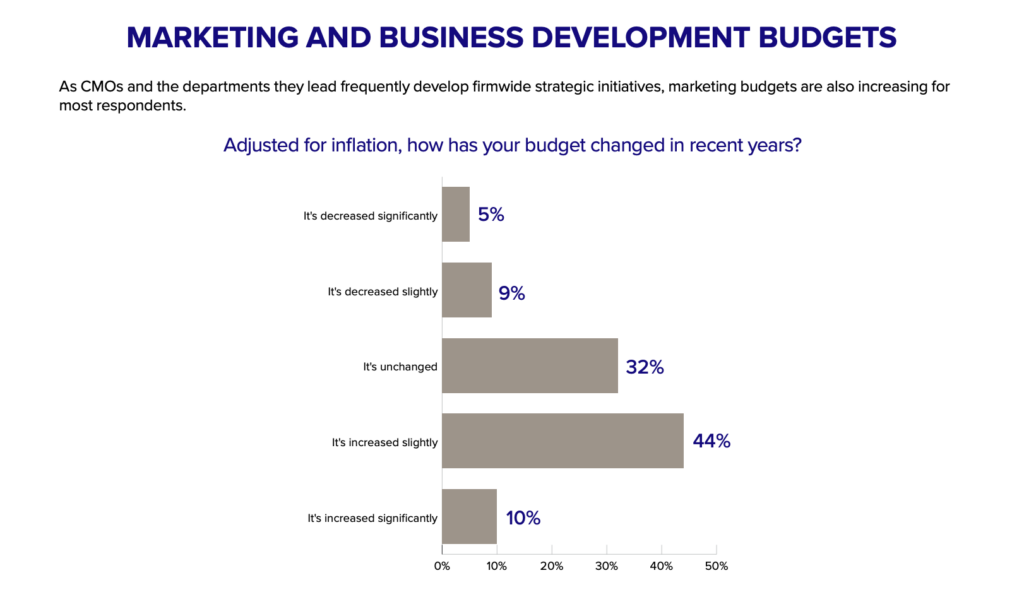
For
most
legal
marketing
professionals,
the
AI
era
has
seen
growing
budgets,
according
to
a
new
report
by
the
Legal
Marketing
Association
and
Above
the
Law. 

When
adjusting
for
inflation,
54%
of
respondents
to
the

2025
Legal
Marketing
Decision-Makers
Survey

report
“slightly”
or
“significantly”
increased
budgets
in
recent
years,
while
only
14%
say
their
budgets
have
slightly
or
significantly
decreased. 

A
number
of
respondents
noted
that
their
marketing
department
is
often
at
the
“forefront
of
new
technology
and
innovation
that
impact
the
legal
industry,”
according
to
the
report,
since
they’re
“able
to
identify
the
technologies
that
will
best
work
to
make
their
firm
successful.” 

The

2025
Legal
Marketing
Decision-Makers
Surve
y
draws
on
data
from
nearly
100
top
legal
marketing
and
business
development
professionals,
who
weigh
in
on
everything
from
technology
best
practices
to
specific
advice
for
lawyers
looking
to
grow
their
book
of
business.


The
2025
Legal
Marketing
Decision-Makers
Survey

[LMA
and
ATL]


Jeremy
Barker
is
the
director
of
content
marketing
for
Breaking
Media.
Feel
free
to email
him
 with
questions
or
comments.

Building A Firm That’s Better Than Biglaw – Above the Law

Join
me
with
guests

Laurice
Rutledge
Lambert

and

Jennifer
Whitton
,
founders
of

Aligned
Health
Law
.
Discover
their
unique
journey
from
Biglaw
to
founding
a
boutique
health
law
firm.
Explore
their
mission-driven
approach
and
the
challenges
they
face
in
healthcare
regulation.
Perfect
for
aspiring
entrepreneurs
and
legal
enthusiasts


Highlights

  • Jennifer’s
    journey:
    from
    international
    relations
    to
    law.
  • Laurice’s
    shift
    from
    medicine
    ambitions
    to
    health
    law.
  • Misconceptions
    about
    lawyers
    and
    real
    pathway
    insights.
  • Importance
    of
    persistence
    in
    career
    focus.
  • Jennifer’s
    mentor-driven
    transition
    to
    actual
    healthcare
    law.
  • Challenges
    and
    implications
    of
    starting
    their
    own
    firm.
  • Biglaw
    vs.
    entrepreneurship:
    Laurice’s
    turning
    point.
  • Values-driven
    alignment
    in
    forming
    their
    firm.
  • Organic
    growth
    and
    values
    attract
    talent.
  • Overcoming
    misconceptions
    about
    small
    firms
    lacking
    sophistication.
  • Team
    strength
    and
    client
    faith
    as
    major
    successes.
  • Current
    challenges
    and
    future
    of
    health
    care
    law.

The
Jabot
podcast
is
an
offshoot
of
the
Above
the
Law
brand
focused
on
the
challenges
women,
people
of
color,
LGBTQIA,
and
other
diverse
populations
face
in
the
legal
industry.
Our
name
comes
from
none
other
than
the
Notorious
Ruth
Bader
Ginsburg
and
the
jabot
(decorative
collar)
she
wore
when
delivering
dissents
from
the
bench.
It’s
a
reminder
that
even
when
we
aren’t
winning,
we’re
still
a
powerful
force
to
be
reckoned
with.

Happy
listening!


Kathryn
Rubino
is
a
Senior
Editor
at
Above
the
Law,
host
of

The
Jabot
podcast
,
and
co-host
of

Thinking
Like
A
Lawyer
.
AtL
tipsters
are
the
best,
so
please
connect
with
her.
Feel
free
to
email

her

with
any
tips,
questions,
or
comments
and
follow
her
on
Twitter

@Kathryn1
 or
Mastodon

@[email protected].

Starting A Law Firm Can Have Negative Career Consequences – Above the Law

Many
people
start
their
own
law
firms
because
they
want
to
enjoy
the
freedom
and
flexibility
afforded
by
self-employment.
 Indeed,
self-employment
can
be
extremely
rewarding
and
can
permit
lawyers
to
practice
law
the
way
they
want
to
without
the
hassle
of
having
a
law
firm
boss. 
Although
attorneys
may
not
think
about
long-term
career
consequences
associated
with
opening
a
practice,
starting
a
firm
can
have
negative
career
consequences
that
lawyers
should
consider.


Difficulty
Leaving

It
is
difficult
to
close
a
law
practice
and
accept
other
career
opportunities
once
a
lawyer
opens
up
a
law
firm. 
If
a
lawyer
handles
litigation
matters,
they
cannot
be
discharged
from
those
matters
without
court
approval. 
This
can
be
time-intensive,
and
some
courts
take
every
excuse
they
can
to
keep
lawyers
assigned
to
cases. 
Even
if
a
lawyer
handles
non-litigation
matters,
it
might
be
difficult
for
the
lawyer
to
withdraw
from
a
representation
in
the
middle
of
a
deal
and
find
substitute
counsel. 
Of
course,
many
lawyers
can
bring
their
clients
to
other
law
firms
that
employ
them,
but
some
career
opportunities,
like
government
jobs,
require
lawyers
to
be
free
from
client
responsibilities
associated
with
their
own
law
practice.

I
personally
know
several
lawyers
who
have
struggled
to
find
new
work
since
they
had
difficulty
leaving
the
responsibilities
of
their
law
practice
behind. 
In
several
instances,
lawyers
tried
self-employment
for
a
few
years
and
then
realized
that
they
could
not
make
a
living
running
a
law
practice. 
These
lawyers
attempted
to
join
other
law
firms,
but
some
of
the
lawyers
had
contingency-fee
cases
and
other
matters
that
were
not
desirable
to
the
new
law
firm. 
In
several
instances,
I
have
been
approached
about
taking
lousy
cases
from
such
lawyers
so
that
they
could
pass
these
matters
onto
other
lawyers
and
have
an
easier
time
leaving
for
a
new
law
firm. 
This
phenomenon
is
especially
bad
for
solo
practitioners
and
small
firm
lawyers
who
cannot
easily
pass
work
to
someone
else
at
their
firm.
I
think
court
rules
should
be
changed
to
make
it
easier
for
such
attorneys
to
withdraw
as
counsel
to
take
career
opportunities,
but
that
should
be
the
subject
of
a
whole
new
article.
In
any
case,
lawyers
should
be
aware
that
work
they
perform
for
their
own
practice
can
impede
them
as
they
move
through
their
careers.


Prestige

As
I
have
discussed
in
prior
articles,
the
legal
profession
is
addicted
to
prestige. 
Where
you
go
to
law
school,
and
how
prestigious
that
institution
is
perceived
to
be,
can
have
longstanding
consequences
on
a
lawyer’s
career. 
In
addition,
the
prestige
of
working
at
a
fancy
law
firm
or
government
position
can
help
propel
lawyers
to
new
heights
in
their
careers.
Some
lawyers
have
told
me
that
they
are
fearful
of
getting
off
a
kind
of
prestige
escalator
in
their
careers,
and
take
positions
that
are
less
regarded
since
they
may
have
difficulty
getting
back
on
this
escalator
and
have
difficulty
snagging
prestigious
positions
later
in
their
careers.

Starting
a
law
firm
is
not
considered
prestigious
to
many
lawyers. 
Indeed,
there
is
oftentimes
a
stigma
around
people
who
start
law
firms,
and
some
might
erroneously
believe
that
individuals
who
start
law
firms
had
no
other
options,
and
this
is
why
these
attorneys
took
the
plunge
to
launch
their
own
practices. 
As
a
result,
running
a
practice
might
significantly
impact
a
lawyer’s
resume
and
make
it
difficult
for
self-employed
attorneys
to
pursue
other
opportunities
later
in
their
careers.

All
told,
there
are
many
reasons
why
people
choose
to
start
their
own
law
firms,
but
lawyers
need
to
carefully
consider
this
option. 
Starting
a
law
firm
can
have
short-term
financial
and
vocational
consequences
and
can
also
impact
attorneys
for
years
as
they
move
throughout
their
careers.


Jordan
Rothman
is
a
partner
of 
The
Rothman
Law
Firm
,
a
full-service
New
York
and
New
Jersey
law
firm.
He
is
also
the
founder
of 
Student
Debt
Diaries
,
a
website
discussing
how
he
paid
off
his
student
loans.
You
can
reach
Jordan
through
email
at 
jordan@rothman.law.

America Is In Trouble And It’s Keeping This Supreme Court Justice Up At Night – Above the Law

(Photo
by
Win
McNamee/Getty
Images)


Ed.
note
:
Welcome
to
our
daily
feature,

Quote
of
the
Day
.


I
would
say
the
state
of
our
democracy.


Justice

Ketanji
Brown
Jackson
,
in
response
to
being
asked
what
kept
her
up
at
night,
during
an
Indianapolis
Bar
Association
event
held
earlier
this
week.
As
noted
by
the

New
York
Times
,
her
response
was
met
with
a
round
of
applause,
prompting
her
to
say,
“I’m
really
very
interested
in
getting
people
to
focus
and
to
invest
and
to
pay
attention
to
what
is
happening
in
our
country
and
in
our
government.”


Staci Zaretsky


Staci
Zaretsky
 is
a
senior
editor
at
Above
the
Law,
where
she’s
worked
since
2011.
She’d
love
to
hear
from
you,
so
please
feel
free
to

email

her
with
any
tips,
questions,
comments,
or
critiques.
You
can
follow
her
on BlueskyX/Twitter,
and Threads, or
connect
with
her
on LinkedIn.

Hindsight Makes It Easy To See The California Bar Made Too Many Changes Too Quickly – Above the Law

One
of
the
worst
things
about
how
bad
the
February
2025
California
Bar
exam
went
was
that
nobody
was
even
surprised
about
how
bad
it
turned
out.
From
the
poor
budgeting
that
birthed
the
rationale
for
this
fiasco
to
the
rushed
timeline
and
AI
questions
being
passed
off
as
rigorous
testing
technology,
the
exam
was
a
veritable
comedy
of
errors.
And
when
something
this
tragicomic
happens,
what
is
left
but
to
learn
from
your
mistakes?
Former
director
of
the
state
bar
Leah
Wilson
shared
her
retrospective
on
the
exam
with

Reuters
:

The
State
Bar
of
California
pursued
too
many
changes
at
once,
setting
the
stage
for
the
problem-plagued
February
attorney
licensing
exam,
the
agency’s
former
executive
director
said.

Many
of
the
February
exam’s
problems
stemmed
from
the
decision
to
change
both
the
content
and
delivery
system
of
the
bar
exam
simultaneously,
Leah
Wilson
told
Reuters
on
Wednesday
in
an
interview
two
days
after
stepping
down
as
the
state
bar’s
executive
director.

While
late
is
better
than
never,
executives
put
in
position
to
sift
through
who
is
and
isn’t
minimally
competent
enough
to
be
a
lawyer
really
should
be
better
at
issue
spotting.

I
will
be
the
first
to
acknowledge
hindsight
is
20/20

I
lived
through
the
SWAG
era
of
fashion.
But
I
will
also
say
that
we
are
responsible
for
our
own
discernment.
Did
wearing
checkered
skinny
jeans,
a
BAPE
skully,
and
shutter
shades
seem
like
a
good
idea
at
the
time?
Maybe,
but
I
had
enough
foresight
to
not
base
my
entire
business
model
on
a
spur
of
the
moment
assessment
of
what
was
in
vogue!
I
also
didn’t
have
a
business
at
the
time
to
risk
or
enough
money
to
be
that
swagged
out,
but
that’s
neither
here
nor
there.

There
was
a
bunch
of
critique
toward
the
Cali
Bar’s
decision
to
break
from
NCBE
happening
in
real
time.
Yes,
they
could
tell
by
the
ledger
that
things
were
unsustainable
as
they
were.
And

it
isn’t
like
their
prior
exam
delivery
system
was
without
fault
.
But
there
were
other
options
at
the
time,
like

“let[ting]
a
well-established
business
of
bar
exam
experts
write
a
test
that
could
be
used
online,
or
limit
the
deal
to
Kaplan-provided
locations,
or
create
a
slightly
elongated
timeline”

just
to
get
the
ball
rolling.
But
hubris
wouldn’t
be
hubris
without
eschewing
safety
measures.
After
one
of
the
worst
roll
outs
possible,
California’s
Supreme
Court

ordered
the
Bar
to
use
NCBE’s
test
for
the
July
bar
.
And
while
this
simplifies
things
for
the
July
test-takers,
it
only
kicks
the
can
down
the
road
for
dealing
with
the
Bar’s
budget
burden.
Hopefully
the
hindsight
lesson
of
don’t
change
everything
at
once
will
help
them
dig
out
of
the
hole.


Too
Many
Changes
At
Once
Led
To
California
Bar
Exam
Mess,
Ex-Director
Says

[Reuters]


Earlier
:

California
Bar
Risks
Going
Bankrupt
Rather
Than
Change
Its
Exam


California’s
Bar
Exam
Fiasco
Enters
Next
Stage
Of
Stupid


Chris
Williams
became
a
social
media
manager
and
assistant
editor
for
Above
the
Law
in
June
2021.
Prior
to
joining
the
staff,
he
moonlighted
as
a
minor
Memelord™
in
the
Facebook
group Law
School
Memes
for
Edgy
T14s
.
 He
endured
Missouri
long
enough
to
graduate
from
Washington
University
in
St.
Louis
School
of
Law.
He
is
a
former
boatbuilder
who
is
learning
to
swim, is
interested
in
critical
race
theory,
philosophy,
and
humor,
and
has
a
love
for
cycling
that
occasionally
annoys
his
peers.
You
can
reach
him
by
email
at [email protected]
and
by
tweet
at @WritesForRent.

Beyond The Billable Hour: How Scope-Based Pricing is Reshaping Legal Support – Above the Law

As
legal
departments
push
for
more
value
from
their
outside
counsel
relationships,
many
are
considering
the
use
of
flat-fee
access
arrangements
for
ongoing
Advice
&
Counsel
work.
These
monthly
fees
provide
flexibility,
predictability,
better
communication
with
the
law
firm,
and
often
reduced
legal
spend.

Drawing
on
our
combined
experience
in
Legal
Operations
strategy
and
legal
pricing
transformation,
we’ve
demonstrated
how
scope-based
pricing
models
are
helping
legal
teams
transition
from
reactive
support
to
proactive
partnerships.

Why
Hourly-Based
Models
Fall
Short

The
typical
hourly
fee
structure
for
A&C
support
is
often
an
open
checkbook.
and
does
not
promote
efficiency.
What’s
included
in
the
open
matter
(e.g.,
Agency
charges,
pre-litigation)? 
What
are
service
level
expectations?
What
is
done
in-house
vs.
Outside
Counsel? 
Without
well-defined
scope
or
service
levels,
these
arrangements
can
leave
both
clients
and
firms
guessing
without
controls
on
the
dollar
amount
spent
each
month.

This
tension
was
echoed
by Collin
Smyser,
General
Counsel
at
Option
Care
Health,
on
the

UpLevel
View
 podcast
(July
2025):

“When
you
have
hourly
pricing…
it
can
cause
your
attorneys
to
wonder
whether
they
should
call
outside
counsel,
and
it
can
kind
of
spin
them
up
in
terms
of
whether
they
should
do
the
work
themselves
versus
make
that
call.”

The
Power
of
Scope-Based
Pricing

Scope-based
fixed-fee
pricing
flips
the
script.
Instead
of
paying
for
undefined
access
and
unlimited
spend,
clients
enter
structured
agreements
with
clearly
defined
services,
delivery
cadence,
and
responsiveness
expectations
all
on
a
monthly
fixed
fee.

Support
can
be
customized
based
on
complexity
and
business
value.
Some
engagements
may
focus
on
routine
tasks,
such
as
answering
questions
or
reviewing
documents.
Others
may
require
strategic
counsel,
risk
analysis,
or
deeper
collaboration
with
internal
stakeholders.
For
high-impact
scenarios,
legal
departments
may
require
immediate,
executive-level
access
to
outside
experts
who
are
deeply
familiar
with
the
business.
Each
scope
of
work
is
priced
accordingly,
offering
a
monthly
fixed
fee
for
ongoing
work
streams
and
a
fixed
fee
per
occurrence
for
episodic
work.

As
Smyser
noted
in
that
same
podcast
episode,
legal
teams
should
be
upfront
about
what
kind
of
service
they’re
seeking:

“You
should
be
very
open
about
the
level
of
service
you
want
from
your
law
firm…
It’s
perfectly
fine
to
say
the
gold
level
of
service
will
cost
you
this
much,
and
the
silver
will
cost
you
less.”

Why
Legal
Departments
Are
Making
the
Shift

Rising
law
firm
rates
and
the
productivity
boost
from
Generative
AI
are
prompting
in-house
teams
to
revisit
how
they
pay
for
recurring
legal
work.
Scope-based
pricing
doesn’t
just
offer
better
cost
control;
it
rewards
outcomes
over
effort.

Smyser
emphasized
the
disconnect
between
time
and
value
under
hourly
models:

“Hourly
rates
don’t
tie
to
value…
What
you
don’t
want
is
to
be
consistently
surprised
to
the
upside.
If
you’re
always
saying,
‘Well,
I’ll
do
this
for
$5,000,’
and
then
it’s
$10,000,
that’s
a
real
problem.”

Legal
departments
want
measurable
impact,
efficient
delivery,
lower
costs,
and
proactive
insights.
Scope-based
contracts
create
the
foundation
for
those
results.

How
to
Build
a
Scope-Based
Advice
&
Counsel
Program

Getting
started
doesn’t
require
an
overhaul,
just
intention.
Begin
by
defining
what
type
of
work
needs
to
be
performed
by
Outside
Counsel
versus
what
will
be
done
in-house.
This
should
also
include
service-level
expectations.
Internally,
it’s
about
setting
clear
expectations
and
drawing
distinct
boundaries.
As
Smyser
put
it:

“Be
very
clear
about
what’s
in
and
what’s
out;
what
you
will
do
internally
versus
what
you
will
expect
externally.”

A
pilot
engagement,
focused
on
a
single
practice
area,
can
be
a
low-risk
way
to
test
the
model,
gather
feedback,
and
refine
the
process
before
scaling
it
more
broadly. 
It
can
also
be
used
as
a
way
to
drive
acceptance
of
this
new
methodology. 

What
Success
Looks
Like

With
scope-based
pricing,
the
real
win
isn’t
just
reducing
legal
spend,
it’s
gaining
predictability
and
freeing
up
time.
Legal
teams
no
longer
have
to
wade
through
the
monthly
invoice
and
accrual
grind.
Turnaround
times
improve,
internal
clients
get
better
service,
and
the
legal
function
becomes
more
strategic
and
measurable.

On
the UpLevel
View
 podcast,
Smyser
explained
that
budget
predictability
goes
a
long
way:

“You
can
avoid
fighting
with
your
finance
team
over
cost
overruns…
and
avoid
fights
with
your
vendors
and
your
law
firms
over
individual
lines
in
the
invoices.”

And
success
isn’t
static.
Regular
check-ins
and
post-engagement
reviews
help
refine
scope,
surface
process
improvements,
and
keep
the
client-firm
partnership
aligned
as
needs
evolve.

The
AI
Accelerator

AI
is
transforming
legal
delivery,
particularly
in
Advice
&
Counsel
work.
Tasks
that
once
took
hours
now
take
minutes.
But
unless
pricing
reflects
those
gains,
clients
won’t
see
the
benefit.

Scope-based
pricing
makes
it
reasonable
to
ask
how
AI
is
actually
being
deployed
in
the
work
being
done.
Is
the
firm
applying
automation
to
early
drafts,
compliance
reviews,
or
research?
And
if
so,
are
those
time
savings
being
passed
along
to
the
client?

This
model
helps
ensure
legal
departments
aren’t
paying
for
manual
effort
that
AI
already
handles,
and
it
rewards
firms
that
embrace
efficiency
and
transparency.

From
Transaction
to
Partnership

Scope-based
pricing
encourages
a
collaborative
rhythm.
Clients
don’t
have
to
think
twice
about
the
meter
running
before
picking
up
the
phone.
Firms
don’t
have
to
guess
what’s
expected.
Everyone
knows
the
rules
of
engagement
and
how
to
win
together.

So
if
you’re
still
managing
A&C
work
on
hourly
rates
with
fuzzy
boundaries,
consider
this
your
cue:

Scope
it.
Price
it.
Measure
it.

That’s
where
real
value
and
genuine
partnership
begin.

that
thrives
in
change.


Stephanie
Corey is
the
co-founder
and
CEO
of
UpLevel
Ops.
She
also
serves
as
the
Global
Chair
of LINK
x
L
Suite—a
premier
community
of
General
Counsel
and
Legal
Operations
leaders
united
to
transform
the
legal
industry
through
collaboration,
innovation,
and
strategic
insight. Stephanie co-founded LINK
(Legal
Innovators
Network),
a
legal
ops
organization
exclusively
for
experienced
in-house
professionals,
and
previously
founded
the Corporate
Legal
Operations
Consortium
(CLOC),
where
she
served
as
an
executive
board
member.
She
is
a
recognized
leader
in
legal
operations
and
a
frequent
advisor
to
corporate
legal
departments
on
scaling
operational
excellence. Please
feel
free
to
connect
with
her
on
LinkedIn. https://www.linkedin.com/in/stephcorey-ulo/


Ken
Callander
is
the
founder
of
Value
Strategies
by
UpLevel
Ops
and
specializes
in
helping
corporate
legal
departments
optimize
their
outside
counsel
relationships,
ensuring
greater
value,
efficiency,
and
budget
predictability.
As
part
of
the
Advisory
Team
at
UpLevel
Ops, he
partners
with
legal
teams
to
implement
strategic
outside
counsel
management
programs,
including
transitioning
from
hourly
billing
to
value-based
fee
arrangements.
 His
clients
span
industries
such
as
technology,
healthcare,
construction,
the
sharing
economy,
private
equity,
and
multinational
conglomerates.

MAGA Desperate To Prove Superman Isn’t An Immigrant But The Law Is Clear – Above the Law

There’s
a
new
Superman
movie
out
this
week
and
it’s
proving
to
be
the
right-wing’s
kryptonite.

In
the
lead
up
to
the
film’s
release,
the
folks
behind
the
movie
have
been
up
front
that
it’s
an
immigrant
story.
This
shouldn’t
come
as
a
shock
since
the
character
is
almost
a
century
old
and
has
been
an
immigrant
THE
WHOLE
TIME,
but
since
the
conservative
movement
is
just
a
bad-faith
book
club
for
people
who
never
read
the
book,
they’ve
launched
a
broadside
against
the
movie.

What
does
that
even
mean?
Orphans
from
other
countries
cease
to
be
immigrants?
That’s
would
be
news
to
the

3-year-olds
defending
themselves
in
immigration
court

if
they
were
allowed
social
media
in
their
cages.
Is
he
making
a
scienter
argument
that
a
child
arriving
in
this
country
through
no
act
of
their
own
deserves
citizenship?

The
Fifth
Circuit
disagrees
.
But
even
DACA
is
about
a
path
to
legal
status…
they’re
still
immigrants.

As
an
aside,
imagine
being
Steeze
and
knowing
that
no
matter
what
vile,
insipid
garbage
you
put
out,
you’ll
never
even
be
the
most
vile
or
insipid

Stephen
Miller

out
there.
That’s
got
to
be
rough.

Superman’s
creators,
Jerry
Siegel
and
Joe
Shuster,
drew
upon
their
experience
as
the
children
of
Jewish
immigrants,
unveiling
an
American
hero
who
came
to
the
country
as
a
refugee.
It’s
a
message
that
hit
hard
in
the
late-1930s
as
American
nativism
closed
doors
on
European
Jews
trying
to
flee.
That
the
purest
expression
of
all-American
idealism
is
an
immigrant
is
the
core
of
the
character

he’s
compelling
because
he’s
America’s
savior
not
because
he
was
born
here,
but
because
he
believes
in
what
“here”
can
be.
Stripping
the
character
of
that
context
is
like
having
Peter
Parker’s
Uncle
move
to
Boca
and
die
of
old
age.

It’s
one
thing
to
not
understand
the
character,
but

the
even
greater
sin

it
doesn’t
make
any
sense

legally
.

Clark
Kent
was
not
born
in
the
United
States.
Neither
of
his
parents
were
citizens.
He
arrived
as
an
undocumented,
unaccompanied
minor.

That
sure
seems
like
an
immigrant
under
all
applicable
laws.
The
Kents
took
on
the
job
of
raising
him,

adoption
doesn’t
automatically
confer
citizenship

under
U.S.
law.
Even
if
the
Kents
tried
to
go
through
the
legal
process
of
adopting
him
instead
of
just
lying
about
it.
If
they’re
just
sponsoring
an
undocumented
minor,
they’d
best
watch
their
back
because
the
Trump
administration
has
begun

a
systematic
crackdown
on
those
sponsors
too


ostensibly
for
child
safety

looking
to
separate
kids
from
their
caregivers
and
then…

oops,
there’s
no
one
to
watch
them
so
it’s
time
to
send
them
back
!

Where
would
they
even
send
Clark
with
Krypton
gone?
Well,

South
Sudan
is
lovely
this
time
of
year
.

Clark
could
potentially
benefit
from
the
Foundling
Statute

8
U.S.
Code
§
1401(f)

providing
that
anyone
of
“unknown
parentage
found
in
the
United
States
while
under
the
age
of
five
years”
is
presumptively
a
U.S.
citizen
unless
proof
of
being
born
elsewhere
is
established
prior
to
turning
21.
But
the
proverbial
ship
on
that
one
sailed
when
the
Kents
found
his
literal
ship.
It’s
a
difficult
presumption
to
maintain
when
you’re
holding
the
kid’s
interstellar
Uber
in
the
barn.

And
the
Foundling
law
is
predicated
on
birthright
citizenship

since
it
turns
on
the
idea
that
a
4-year-old
in
the
country
was
probably
born
here
and
therefore
a
citizen

and
the
same
people
who
don’t
want
Superman
to
be
an
immigrant
aren’t
too
crazy
about
birthright
citizenship.
There’s
actually
a
dumb
alternate
Superman
origin
where
his
escape
pod
was
actually
a
birthing
module,
meaning
he
was
actually
“born”
in
Kansas.

Randy
Barnett
and
Ilan
Wurman
are
already
working
on
the
op-ed
explaining
why
that
shouldn’t
matter
.

There’s
just
no
legal
argument
for
Clark
being
anything
but
an
immigrant.
In
the
past,
this
didn’t
bother
conservatives
who
would
celebrate
Superman
for
being
a
“good”
assimilationist
immigrant.
Clay
Travis
is
at
least
trying
that
angle,
though
his
arguments
(technically
his
wife’s)
for
Superman
as
MAGA-certified
immigrant
are
almost
as
bad
as
the
arguments
that
he’s
not
an
immigrant
at
all.

Oh,
Superman
is
an
asylum
seeker?
Great
point.
The
administration
is
nabbing
asylum
seekers
from
court
hearings
and
disregarding
orders
barring
deportation.
He
has
nowhere
to
go
back
to?
DHS
is
happy
to
find
a
third
country
for
him…
indeed,
they
won’t
even
let
him
seek
asylum
without

checking
in
with
another
country
first
.
He
has
unique
talents
that
benefit
the
country
as
described
by
the
EB-1A
visa?
That
requires

pre-existing

acclaim
in
the
candidate’s
specific
field.
DHS
requires
the
immigrant
to
show
up
with
an
Oscar
or
a
Pulitzer
in
hand
to
qualify
(seriously,
those
are

specific
examples
from
the
USCIS
website
).
Superman
didn’t
have
pre-existing
acclaim
as
a
baby.
As
a
baby
he
was
just
a
potty
training
nightmare
for
the
Kents.
And
as
for
his
talents
outside
of
superpowers,
I
think
Lois
is
the
one
winning
a
Pulitzer,
not
Clark.
But
at
least
Travis
is

trying

to
make
MAGA
accept
immigrant
Superman
instead
of
reject
him
out
of
hand.

But
what
he
doesn’t
get
is
that
they
don’t

want

to
accept
an
immigrant.
Now
that
they’ve
thrown
off
the
hood

or
put
it
on
as
the
case
may
be

and
decided
good
immigrants
don’t
exist
unless
mail-ordered
by
an
incel.
The
assimilationist
narrative
that
Travis
wants
has
always
been
there
for
Superman
too,
but
what’s
raising
conservative
hackles
is
they
don’t
want
assimilation,
they
just
want
them
out.
So
they’re
tying
themselves
in
knots
trying
to
figure
out
how
the
last
son
of
Krypton
is
really
a
son
of
Kansas
because
they
don’t
want
EB-1A
Clark
Kent,
they
need
him
to

not
be
an
immigrant
at
all
.
And
there’s
no
good
argument
for
that.

And
just
wait
until
they
hear
about
his
cousin
Kara
chain
migrating.


HeadshotJoe
Patrice
 is
a
senior
editor
at
Above
the
Law
and
co-host
of

Thinking
Like
A
Lawyer
.
Feel
free
to email
any
tips,
questions,
or
comments.
Follow
him
on Twitter or

Bluesky

if
you’re
interested
in
law,
politics,
and
a
healthy
dose
of
college
sports
news.
Joe
also
serves
as
a

Managing
Director
at
RPN
Executive
Search
.

How Appealing Weekly Roundup – Above the Law


Ed.
Note
:

A
weekly
roundup
of
just
a
few
items
from
Howard
Bashman’s

How
Appealing
blog
,
the
Web’s
first
blog
devoted
to
appellate
litigation.
Check
out
these
stories
and
more
at
How
Appealing.


“Trump’s
first
judicial
nominee
Hermandorfer
moves
ahead
to
final
confirmation
vote
in
Senate;
The
president’s
pick
to
fill
a
Sixth
Circuit
vacancy
is
headed
to
a
final
ballot
as
the
first
judicial
nominee
in
years
not
to
have
been
formally
vetted
by
the
American
Bar
Association”:
 Benjamin
S.
Weis
of
Courthouse
News
Service
has this
report
.


“Firings
without
explanation
create
culture
of
fear
at
Justice
Dept.,
FBI;
Widespread,
abrupt
terminations
have
left
Justice
Department
and
FBI
employees
wondering
if
they
will
be
next,
people
familiar
with
the
matter
say”:
 Perry
Stein
of
The
Washington
Post
has this
report
.


“Justice
Dept.
Promised
to
Prosecute
Abrego
Garcia.
Now
It’s
Not
So
Clear.
In
the
case
of
Kilmar
Armando
Abrego
Garcia,
the
administration
appears
primarily
concerned
with
ensuring
that
a
man
it
has
described
as
a
‘dangerous
illegal
alien’
never
walks
free
on
U.S.
soil.”
 Alan
Feuer
and
Minho
Kim
of
The
New
York
Times
have this
news
analysis
.


“Why
a
Devoted
Justice
Department
Lawyer
Became
a
Whistle-Blower;
In
the
first
Trump
Administration,
‘they
didn’t
say
“Fuck
you”
to
the
courts,’
Erez
Reuveni
said”:
 Ruth
Marcus
has this
essay
 online
at
The
New
Yorker.


“‘A
Period
Of
Great
Constitutional
Danger’:
Pam
Karlan;
A
longtime
Stanford
Law
professor
and
seasoned
Supreme
Court
advocate,
Professor
Karlan
has
strong
views
on
the
current
constitutional
moment.”
 David
Lat
has
posted
online this
new
installment
 of
his
“Original
Jurisdiction”
podcast.


“Far-right
lecturer
asks
Third
Circuit
to
restore
retaliation
claims
over
suspension;
The
New
Jersey
Institute
of
Technology
suspended
philosophy
professor
Jason
Jorjani
after
articles
surfaced
of
him
making
favorable
comments
about
Adolf
Hitler
and
eugenics”:
 Jackson
Healy
of
Courthouse
News
Service
has this
report
.

Someone Spliced Elle Woods Into A Few Good Men And It Should Not Be As Funny As It Is – Above the Law

Some
actual
genius
out
there
spliced
together
Elle
Woods
grilling
the
witness
about
perm
maintenance
with
Col.
Jessup
finally
admitting
he
ordered
the
Code
Red
and
it’s
pure
poetry.

While
the
comedy
comes
from
mashing
up
two
films
that
couldn’t
be
more
different
in
tone,
it
also
says
something
about
the
lack
of
creativity
in
Hollywood’s
approach
to
the
courtroom.
You
could
probably
get
Jack
McCoy
to

crack
Wilma
Flintsone
on
the
stand

if
you
were
so
inclined.
Grandstanding
monologue,
maybe
win
a
few
objections,
elicit
dramatic
confession.
Rinse
and
repeat.
Delete
a
few
of
the
more
specific
factual
references
and
everything’s
interchangeable.

But
I
digress.
It’s
pretty
funny.


Joe
Patrice
 is
a
senior
editor
at
Above
the
Law
and
co-host
of

Thinking
Like
A
Lawyer
.
Feel
free
to email
any
tips,
questions,
or
comments.
Follow
him
on Twitter or

Bluesky

if
you’re
interested
in
law,
politics,
and
a
healthy
dose
of
college
sports
news.
Joe
also
serves
as
a

Managing
Director
at
RPN
Executive
Search
.