Since
Sean
“Diddy”
Combs
was
arrested
in
September
of
last
year,
headlines
have
been
flooded
with
RICO
charges,
accusations
of
abusive
behavior,
and
baby
oil.
Coverage
has
been
star
studded:
Tony
Buzbee
accused
Jay-Z
of
playing
a
part
in
the
freakoffs,
Cassie
and
Kid
Cudi
gave
testimony
in
the
courtroom,
and
Brian
Steel
joined
Combs’s
legal
team
after
Anthony
Ricco
quit
for
reasons
he
refused
to
share.
He
was
charged
with
some
very
serious
crimes
that
could,
were
he
found
guilty,
have
him
spending
the
rest
of
his
life
behind
bars.
Today,
the
jury
returned
a
verdict
on
the
five
charges
he
was
eventually
tried
for.
While
he
will
be
going
somewhere
(and
that
somewhere
appears
to
be
prison),
the
Bad
Boy
for
life
managed
to
avoid
a
life
sentence.
Washington
Post
has
coverage:
Sean
“Diddy”
Combs
and
his
family
were
jubilant
Wednesday
after
a
jury
acquitted
the
music
producer
of
the
most
serious
charges
against
him:
sex
trafficking
and
racketeering
conspiracy.
But
the
jury
found
Combs
guilty
of
two
prostitution-related
charges
that
could
carry
years
of
prison
time,
and
it
was
not
immediately
clear
if
he
will
be
freed
from
jail
while
he
awaits
sentencing.
The
responses
to
Diddy
beating
the
sex
trafficking
and
RICO
charges
have
ranged
from
genuine
questions
about
why
some
charges
stuck
and
others
didn’t:
That
Diddy
verdict
don’t
even
make
sense
lol
how
you
not
guilty
of
sex
trafficking
but
guilty
of
prostitution
transportation??
Diddy
beat
Rico
and
sex
trafficking
charges
and
only
got
found
guilty
for
prostitution.
It
has
no
mandatory
minimum
he
could
get
time
served.
Diddy
won
And
while
the
charges
that
stuck
could
see
Combs
facing
upwards
of
20
years,
folks
are
already
speculating
on
how
that
time
could
be
reduced
or
pardoned:
Who
else
thinks
the
Diddy
verdict
doesn’t
matter
because
Velveeta
Voldemort
will
pardon
him
anyway?
Chris
Williams
became
a
social
media
manager
and
assistant
editor
for
Above
the
Law
in
June
2021.
Prior
to
joining
the
staff,
he
moonlighted
as
a
minor
Memelord™
in
the
Facebook
group Law
School
Memes
for
Edgy
T14s
.
He
endured
Missouri
long
enough
to
graduate
from
Washington
University
in
St.
Louis
School
of
Law.
He
is
a
former
boatbuilder
who
is
learning
to
swim, is
interested
in
critical
race
theory,
philosophy,
and
humor,
and
has
a
love
for
cycling
that
occasionally
annoys
his
peers.
You
can
reach
him
by
email
at [email protected]
and
by
tweet
at @WritesForRent.
In
today’s
world,
the
vast
majority
of
students
attending
law
school
have
been
saddled
with
seemingly
insurmountable
six-figure
debt
loads.
Many
law
students
are
under
the
mistaken
impression
that
they’ll
be
able
to
pay
off
that
debt
quickly;
after
all,
they
believe
their
starting
salaries
after
graduation
will
be
in
line
with
the
now-standard
starting
salary
of
up
to
$225,000
at
Biglaw
firms
across
the
country
(depending
on
office
location).
Unfortunately,
these
high-salary
positions
account
for
only
a
small
percentage
of
entry-level
jobs
for
recent
law
school
graduates.
The
vast
majority
of
law
school
graduates
will
be
left
wondering
how
they’ll
ever
be
able
to
pay
down
their
debt
in
a
timely
fashion,
if
at
all.
What’s
a
prospective
law
student
to
do?
Choose
the
most
cost-efficient
law
school
to
which
you’ve
been
accepted,
preferably
one
with
a
high
salary-to-debt
ratio,
and
your
starting
salary
may
well
meet
or
exceed
your
student
debt
burden.
There
are
several
law
schools
whose
graduates
are
very
well-compensated
after
graduation
—
in
fact,
they’re
so
well-compensated
that
it
makes
up
for
the
costs
of
their
education.
U.S.
News
recently
put
together
a
ranking
of
the
25
schools
with
the
highest
salary-debt
ratios
in
the
private
sector
among
2024
graduates.
Did
your
law
school
or
alma
mater
make
the
cut?
Here
are
the
Top
10.
Southern
Methodist
University’s
Dedman
School
of
Law
(TX):
2.92-to-1
Starting
median
private
salary
(2023):
$150,000
Average
debt
(2024):
$51,451
Brigham
Young
University’s
J.
Reuben
Clark
Law
School
(UT):
2.56-to-1
Starting
median
private
salary
(2023):
$140,000
Average
debt
(2024):
$54,678
University
of
Alabama
School
of
Law:
2:37-to-1
Starting
median
private
salary
(2023):
$150,000
Average
debt
(2024):
$63,225
University
of
Florida
Levin
College
of
Law:
2.28-to-1
Starting
median
private
salary
(2023):
$140,000
Average
debt
(2024):
$61,356
Wayne
State
University
Law
School
(MI):
2.22-to-1
Starting
median
private
salary
(2023):
$135,000
Average
debt
(2024):
$60,852
Washington
University
School
of
Law
(MO):
2:20-to-1
Starting
median
private
salary
(2023):
$205,000
Average
debt
(2024):
$93,380
University
of
Illinois
College
of
Law:
2:11-to-1
Starting
median
private
salary
(2023):
$150,000
Average
debt
(2024):
$71,157
Boston
University
School
of
Law
(MA):
2:07-to-1
Starting
median
private
salary
(2023):
$225,000
Average
debt
(2024):
$108,550
Georgia
State
University
College
of
Law:
2:07-to-1
Starting
median
private
salary
(2023):
$100,000
Average
debt
(2024):
$48,259
University
of
Tennessee-Knoxville
Winston
College
of
Law:
2:07-to-1
We’ve
said
it
once
and
we’ll
say
it
again,
but
before
you
decide
to
shell
out
tens
of
thousands
of
loan
dollars
to
attend
a
law
school
in
the
hope
of
having
a
high
salary
after
graduating,
it’s
worth
it
to do
all
of
your
research beforehand.
Staci
Zaretsky is
a
senior
editor
at
Above
the
Law,
where
she’s
worked
since
2011.
She’d
love
to
hear
from
you,
so
please
feel
free
to
email
her
with
any
tips,
questions,
comments,
or
critiques.
You
can
follow
her
on Bluesky, X/Twitter,
and Threads, or
connect
with
her
on LinkedIn.
The
momentum
for
a
four-day,
in-office
mandate
is
picking
up
steam
in
Biglaw.
Just
this
week,
A&O
Shearman
announced
that,
beginning
on
September
2nd,
attorneys
will
have
a
face
time
requirement
of
four
days
a
week,
up
from
the
in-office
three-days
a
week
rule
that
the
firm
previously
employed.
As
per
the
firm’s
statement
on
the
matter:
This
update
recognizes
the
vital
role
in-person
interaction
plays
in
the
professional
development,
mentorship,
training,
and
teamwork
of
our
people,
and
serves
to
maintain
the
strong
culture
that
underpins
the
quality
of
our
work
and
client
service.
It
also
aligns
with
a
broader
shift
in
the
legal
industry
and
among
many
of
our
clients,
who
have
adopted
similar
approaches
to
in-office
work
in
the
U.S.,
while
continuing
to
support
a
flexible
working
environment.
We
remain
focused
on
ensuring
our
people
have
the
tools,
environment,
and
support
they
need
to
thrive,
both
individually
and
collectively.
And
with
this
broader
trend
—
as
well
as
a
tightening
job
market
—
associates’
avenues
to
resist
the
four-day
mandate
are
lessening.
This
is
the
new,
new
normal
and
associates
will
have
to
acclimate
if
they
want
to
stay
in
Biglaw.
At
least
the
firm
is
waiting
until
September
when
the
worst
heat
of
the
summer
is
over
before
calling
everyone
back
to
the
office.
As
soon
as
you
find
out
about
office
attendance
plans
at
your
firm,
please email
us (subject
line:
“[Firm
Name]
Office
Reopening”)
or
text
us
at
(646)
820-8477.
We
always
keep
our
sources
on
stories
anonymous.
There’s
no
need
to
send
a
memo
(if
one
exists)
using
your
firm
email
account;
your
personal
email
account
is
fine.
If
a
memo
has
been
circulated,
please
be
sure
to
include
it
as
proof;
we
like
to
post
complete
memos
as
a
service
to
our
readers.
You
can
take
a
photo
of
the
memo
and
attach
as
a
picture
if
you
are
worried
about
metadata
in
a
PDF
or
Word
file.
Thanks.
Kathryn
Rubino
is
a
Senior
Editor
at
Above
the
Law,
host
of
The
Jabot
podcast,
and
co-host
of
Thinking
Like
A
Lawyer.
AtL
tipsters
are
the
best,
so
please
connect
with
her.
Feel
free
to
email
her
with
any
tips,
questions,
or
comments
and
follow
her
on
Twitter
@Kathryn1 or
Mastodon
@[email protected].
Recently,
the
Senate
passed
their
version
of
“The
One
Big
Beautiful
Bill
Act,”
which
among
other
things
would
limit
the
amount
of
federal
student
loans
someone
can
borrow.
Americans
owe
over
$1.7
trillion
in
student
loan
debt,
and
the
current
repayment
system
is
one
big
ugly
mess.
For
over
15
years,
the
government
focused
on
helping
borrowers
after
graduation
by
introducing
various
income-driven
repayment
(IDR)
plans.
These
plans
generally
set
the
monthly
repayment
based
on
the
borrower’s
income
and
forgave
the
loan
balance
after
25
or
even
20
years.
The
first
IDR
plan
was
the
Income
Contingent
Repayment
plan.
Later,
the
Income
Based
Repayment
plan
was
introduced
in
2009.
A
few
years
later,
it
was
followed
by
the
Pay
As
You
Earn
plan,
followed
by
the
Revised
Pay
As
You
Earn
Plan.
In
August
2023,
the
government
introduced
Saving
on
a
Valuable
Education,
which
not
only
had
the
lowest
repayment
plan
compared
to
the
other
plans
but
also
capped
interest
accrual
and
provided
early
loan
forgiveness
for
low-balance
borrowers.
But
Republican
lawmakers
challenged
the
SAVE
plan
in
federal
court
and
had
the
plan
invalidated.
The
loans
were
also
designed
to
provide
another
source
of
revenue
for
the
government.
But
according
to
the
Economist,
the
government
loses
25
cents
for
each
dollar
lent.
Also,
officials
expect
the
student-loan
portfolio
to
cost
around
$450
billion
over
the
next
nine
years.
Lastly,
it
is
arguable
that
the
student
loan
crisis
has
been
politicized.
In
2020,
then
President
Donald
Trump
declared
a
moratorium
on
federal
student
loan
payments
due
to
COVID-19
and
the
government-mandated
shutdowns.
When
President
Joe
Biden
was
elected
in
2021,
he
kept
the
student
loan
moratorium
due
to
public
pressure
even
though
COVID-19
cases
were
dropping
significantly.
It
should
be
noted
that
Democrats
controlled
the
White
House
and
Congress
from
2021
until
2023,
and
no
loan
forgiveness
bill
was
brought
for
a
vote
during
that
time.
Biden
issued
an
executive
order
forgiving
$10,000
for
each
borrower
or
$20,000
if
the
borrower
had
Pell
grants
provided
they
met
income
thresholds.
The
Supreme
Court
invalidated
this
order
ruling
that
the
economic
significance
was
strong
enough
to
require
congressional
approval.
Democrats
were
quick
to
blame
the
Republican
court.
When
Biden
finally
lifted
the
loan
repayment
moratorium
due
to
pressure
from
the
Republicans,
he
created
a
backdoor
moratorium
by
announcing
that
delinquent
accounts
will
not
be
sent
to
collections,
nor
will
the
government
report
late
payments
to
credit
agencies
and
resort
to
enforced
collections
such
as
bank
levies
and
wage
garnishments
on
delinquent
accounts.
Democrats
might
have
been
hoping
that
voters
with
large
student
loan
bills
would
vote
blue
across
the
board
because
a
Republican
president
would
resume
collections.
The
proposed
bill
would
cap
annual
federal
loan
borrowing
to
$20,500
per
year.
For
professional
schools
(including
law
schools),
the
annual
amount
is
increased
to
$50,000.
Also,
the
total
amount
of
loans
will
be
capped
at
$100,000
for
master’s
degrees
and
$200,000
for
professional
degrees.
Under
the
current
plan,
borrowers
can
pay
the
full
cost
of
attendance
through
GRAD
PLUS
loans.
Law
schools
will
need
to
limit
their
total
cost
of
attendance
to
$66,666
per
year
so
their
students
will
be
able
to
fully
finance
their
education
through
federal
loans.
Many
law
schools
will
not
meet
this
requirement
due
to
local
housing
costs.
At
some
law
schools,
tuition
alone
exceeds
this
amount.
Students
will
be
responsible
for
covering
any
shortfalls.
Some
may
have
savings
or
family
assistance.
But
some
won’t
have
these
resources
and
may
have
to
consider
not
attending.
That
brings
us
to
the
main
argument
against
capping
loans.
Qualified
people
with
low-income
backgrounds
and
no
financial
resources
will
not
be
able
to
afford
an
education
with
which
to
obtain
social
mobility.
They
will
have
to
resort
to
obtaining
private
loans.
Private
lenders
do
not
accept
all
loan
applications
as
they
do
a
routine
credit
check.
Assuming
an
applicant
gets
a
private
loan,
they
may
not
get
much
sympathy
from
their
servicer
if
there
is
a
financial
emergency
such
as
a
layoff.
Most
private
loan
companies
do
not
have
IDR
plans
so
borrowers
must
stay
with
their
agreed
payment
plan
unless
they
qualify
for
a
forbearance.
Also,
private
loan
companies
have
strengthened
creditor
protections
in
case
a
borrower
decides
to
file
bankruptcy.
Bankruptcy
petitioners
must
show
that
they
will
suffer
“undue
hardship”
if
they
are
forced
to
pay
the
loan
in
full.
Indeed
it
is
unfortunate
if
some
people
will
not
be
able
to
attend
law
school
due
to
loan
maximums.
But
many
law
schools
were
established
with
the
working
class
in
mind.
If
a
large
percentage
of
the
student
body
find
themselves
unable
to
pay
tuition,
room,
and
board,
schools
may
have
to
lower
tuition
or
risk
losing
so
many
students
that
they
will
not
have
enough
money
to
operate.
Also,
at
the
undergraduate
level,
many
top
schools
are
offering
full
scholarships
based
on
financial
need.
So
long
as
a
family
earns
below
a
certain
amount,
and
has
assets
below
a
certain
value,
students
will
qualify.
No
law
school
has
followed
this
model
but
will
most
likely
be
used
by
top
schools
that
generally
have
large
endowments.
The
proposal
to
limit
federal
student
loans
seeks
to
fix
a
broken
system
that
is
costing
the
government
and
taxpayers
money.
It
will
take
a
few
years
to
see
how
schools
will
react
to
federal
loan
caps
and
whether
it
will
start
reducing
the
total
student
loan
debt.
Will
schools
keep
their
tuition
steady
and
hope
their
students
find
creative
ways
to
obtain
the
necessary
funding?
Or
will
they
be
forced
to
cut
tuition
and
operating
costs
in
response?
Steven
Chung
is
a
tax
attorney
in
Los
Angeles,
California.
He
helps
people
with
basic
tax
planning
and
resolve
tax
disputes.
He
is
also
sympathetic
to
people
with
large
student
loans.
He
can
be
reached
via
email
at
[email protected].
Or
you
can
connect
with
him
on
Twitter
(@stevenchung)
and
connect
with
him
on LinkedIn.
When
it
comes
to
adopting
generative
artificial
intelligence,
lawyers
are
faced
with
competing
incentives.
On
the
one
hand,
clients
are
demanding
that
their
firms
become
more
efficient
—
and
a
lawyer’s
competitors
are
already
delivering
on
this
goal.
On
the
other
hand,
evolving
ethical
concerns
continue
to
dog
the
industry
and
present
challenges
to
innovation.
The
good
news
is
that
modern
legal
AI
tools
make
it
possible
to
work
more
efficiently
while
staying
firmly
within
ethical
guardrails.
Here,
we’ll
explore
how
firms
can
responsibly
integrate
AI
into
financial
workflows
without
compromising
trust,
compliance,
or
the
lawyer’s
central
role
in
judgment
and
decision-making.
The
Intersection
of
AI,
Ethics,
and
Legal
Practice
While
discussions
of
the
pitfalls
of
generative
AI
often
focus
on
the
problem
of
hallucinations,
the
core
concerns
for
legal
professionals
are
more
grounded:
accuracy,
security,
and
ethical
integrity.
As
noted
in
MyCase’s
2025
Legal
Industry
Report,
76%
of
respondents
said
“significant”
or
“moderate”
ethics
concerns
were
slowing
their
adoption
of
AI.
These
concerns
aren’t
just
theoretical.
The
legal
field
is
governed
by
strict
professional
conduct
rules,
particularly
when
it
comes
to
confidentiality,
accuracy
of
communication,
and
the
nondelegation
of
key
legal
tasks
to
non-lawyers
or
technology.
Firms
exploring
AI
must
be
cautious
and
intentional,
choosing
tools
that
are
built
specifically
for
legal
use
and
that
reinforce
the
lawyer’s
central
role
in
decision-making.
Responsible
AI
in
Action
MyCase
recently
announced
the
launch
of
MyCase
IQ,
which
draws
on
cutting-edge
generative
AI
tailored
for
the
legal
industry.
MyCase
is
dedicated
to
a
conscientious
and
ethically
grounded
approach
to
AI
innovation.
MyCase
IQ
is
a
suite
of
tools
within
the
MyCase
platform
that
brings
AI
into
everyday
legal
workflows
in
a
way
that
supports
—
but
doesn’t
replace
—
human
judgment.
The
MyCase
IQ
features
now
include:
•
AI
Text
Editing:
Quickly
revise
legal
documents
with
AI-powered
suggestions
while
staying
in
control
of
the
tone,
legal
accuracy,
and
structure.
MyCase
IQ
also
translates
from
Arabic
and
Spanish
to
English
and
vice
versa.
•
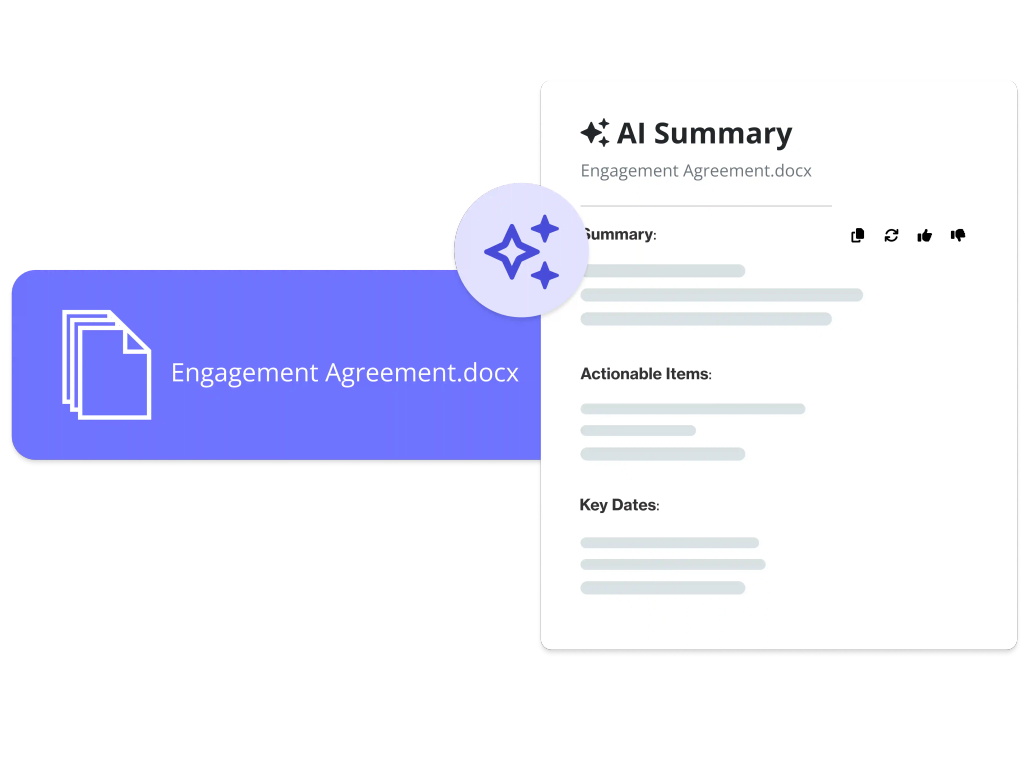
Document
Summarization:
Save
time
reviewing
lengthy
files
by
generating
document
summaries
—
helping
attorneys
and
staff
get
to
the
heart
of
a
matter
faster
without
compromising
security.
Real
Use
Cases
So,
how
can
ethical
AI
emerge
in
the
daily
business
of
law?
•
Drafting
and
Editing
Legal
Documents:
With
MyCase
IQ,
attorneys
can
clean
up
written
content,
improve
clarity,
and
revise
tone
without
handing
control
to
a
generic
chatbot.
The
result?
Lawyers
stay
efficient
while
keeping
their
voice
and
authority
intact.
Additionally,
the
translation
capabilities
include
Spanish
and
English,
reducing
miscommunication
due
to
language
barriers.
•
Understanding
Case
Materials
Faster:
MyCase
IQ
document
summarization
provides
a
quick,
reliable
overview
of
complex
documents,
without
compromising
confidentiality.
Whether
it’s
intake
notes,
discovery
files,
or
correspondence,
summaries
enable
a
faster
way
to
prepare
for
client
calls
—
all
with
appropriate
human
oversight.
In
both
cases,
AI
works
in
the
background,
supporting
better
legal
service
without
sacrificing
ethical
obligations
or
introducing
compliance
risks.
Legal-Specific
AI
Generic
tools
aren’t
enough
—
law
firms
need
platforms
built
with
legal
workflows,
confidentiality,
and
compliance
standards
in
mind.
MyCase
integrates
AI
responsibly,
enabling
faster
work
while
reinforcing
ethical
guardrails.
The
tools
are
embedded
into
the
daily
systems
you
already
use,
meaning
there’s
no
need
to
learn
a
separate
app
or
risk
sensitive
data
on
platforms
not
built
for
legal
use.
MyCase
IQ
ensures
your
firm
can
adopt
AI
on
your
own
terms,
with
a
clear
understanding
of
where
automation
helps
—
and
where
attorney
judgment
remains
irreplaceable.
I
remember
an
argument
I
had
10
years
ago
with
an
ancient
fossil
of
a
lawyer
after
I
mentioned
that
I
had
attended
a
Bernie
Sanders
rally.
“But
he
calls
himself
a
socialist,”
croaked
the
old
codger,
himself
a
lifelong
Democrat.
“Nobody
would
vote
for
him!”
So,
entrenched
party
insiders
like
that
fellow
led
Democrats
into
instead
running
Hillary
Clinton
in
the
2016
presidential
election.
We
all
remember
how
that
turned
out.
Today,
after
self-described
democratic
socialist
Zohran
Mamdani
won
New
York’s
ranked-choice
primary,
becoming
the
Democratic
nominee
for
New
York
City
Mayor,
we
are
hearing
all
the
same
pearl
clutching.
“If
the
city
of
New
York
is
going
socialist,
I
will
definitely
close,
or
sell,
or
move,”
whined
billionaire
grocery
chain
CEO
John
Catsimatidis.
Mamdani’s
ascension
marked
the
start
of
“hot
commie
summer”
for
New
York,
according
to
hedge
fund
billionaire
Daniel
Loeb.
Meanwhile,
Joe
Kernen
of
CNBC’s
financial
news
channel
had
a
Batman-inspired
take:
“They’re
taking
Wall
Streeters
and
making
them
walk
out
onto
the
ice
in
the
East
River.
And,
and
then
they
fall
through.”
I
mean,
if
we
were
indeed
walking
Wall
Streeters
out
onto
the
ice,
about
90%
of
Americans
would
actually
be
fine
with
that.
Popular
support
for
Gotham-style
justice
aside,
this
is
all
wildly
hyperbolic.
Mamdani’s
signature
policy
proposals
include
affordable
housing
(accomplished
in
part
through
a
rent
freeze
in
rent-stabilized
apartments),
making
public
buses
free,
universal
childcare,
a
pilot
program
to
bring
city-run
supermarkets
to
a
handful
of
strategic
locations,
and
higher
taxes
on
the
top
1%
of
earners
to
pay
for
it
all.
Now,
I
can
see
why
maybe
Catsimatidis
would
not
want
city-run
supermarkets
springing
up
as
potential
competitors.
But
Mamdani
is
only
proposing
five
of
them
in
the
whole
city,
at
least
at
first.
Opening
five
public
grocery
stores
in
a
city
of
more
than
8
million
people
hardly
makes
someone
Mao
Zedong.
Of
course,
because
he
has
to
make
himself
the
center
of
everything
that
happens,
President
Donald
Trump
chimed
in
too
to
call
Mamdani
a
“pure
communist.”
Thank
goodness
for
that,
anyway:
we
wouldn’t
want
to
have
an
“impure”
communist
as
New
York’s
mayor.
Led
by
billionaire
hedge
fund
manager
Bill
Ackman,
titans
of
the
finance
industry
are
assembling
“hundreds
of
millions
of
dollars”
to
oppose
Mamdani’s
campaign.
Although
Mamdani
secured
a
stunning
and
overwhelming
victory
in
the
Democratic
primary,
he
still
must
face
off
against
a
slew
of
opponents
in
November,
including
the
Republican
nominee
Curtis
Sliwa
as
well
as
current
New
York
mayor
Eric
Adams,
who
announced,
despite
his
many
scandals,
his
intention
to
seek
reelection
as
an
independent.
Money
might
not
be
enough
this
time.
The
millions
Wall
Street
donated
to
its
preferred
candidate
in
the
Democratic
primary,
Andrew
Cuomo,
were
wasted
as
Mamdani
easily
swept
the
former
governor
aside.
Mamdani
came
from
polling
next
to
nothing
to
crushing
his
closest
opponent.
He
talks
like
a
normal
person
on
the
platforms
that
regular
people
actually
look
at
instead
of
blowing
millions
on
focus-grouped
television
ads.
He
hammers
a
handful
of
issues
that
are
important
to
average
New
Yorkers
(hint:
one
of
these
is
not
an
endless
debate
about
the
meaning
of
the
word
“socialist”).
Plus
he
has
Hot
Girls
4
Zohran
on
his
side,
which
certainly
can’t
hurt.
November
is
a
long
time
away.
Anything
can
happen
in
the
run-up
to
an
election.
Still,
this
primary
result
alone
is
enough
to
suggest
that
Democrats
around
the
country
should
be
taking
notes
rather
than
hand-wringing
and
seeking
the
counsel
of
the
same
highly
paid
strategists
who
lost
them
two
presidencies
to
Donald
Trump.
Sure,
even
if
he’s
elected,
a
lot
of
what
Mamdani
is
proposing
won’t
actually
work
out
for
a
whole
variety
of
reasons.
If
one
thing
is
clear,
though,
it’s
that
voters
want
to
see
politicians
experimenting
and
taking
bold
action
rather
than
defending
the
status
quo:
they
get
points
for
trying.
Don’t
believe
me?
Well,
how’s
that
full-length
border
wall
that
Mexico
was
going
to
pay
for
during
Trump’s
first
term
coming
along?
As
for
Wall
Street,
there’s
an
old
saying
that
applies
here:
“Check
thyself
before
you
doth
wreck
thyself.”
Don’t
be
a
crybaby
about
this.
Rather
than
once
again
donating
millions
to
one
of
Mamdani’s
competitors
only
to
see
it
backfire
spectacularly,
just
save
that
money
and
do
something
cool
with
it
instead.
Worst-case
scenario,
you
have
to
pay
a
little
more
in
taxes
and
you’re
still
rich
as
hell.
Jonathan
Wolf
is
a
civil
litigator
and
author
of Your
Debt-Free
JD (affiliate
link).
He
has
taught
legal
writing,
written
for
a
wide
variety
of
publications,
and
made
it
both
his
business
and
his
pleasure
to
be
financially
and
scientifically
literate.
Any
views
he
expresses
are
probably
pure
gold,
but
are
nonetheless
solely
his
own
and
should
not
be
attributed
to
any
organization
with
which
he
is
affiliated.
He
wouldn’t
want
to
share
the
credit
anyway.
He
can
be
reached
at [email protected].
Play
free-association
with
an
attorney
and
the
word
“BARBRI”
likely
draws
a
Pavlovian
wince
and
a
bad
joke
about
the
UCC.
During
that
window
between
law
school
and
practice,
bar
prep
courses
become
your
only
window
onto
the
world.
After
it’s
over,
you
remember
the
key
takeaways
about
“hearsay
exceptions,”
or
“adverse
possession,”
or
“the
history
of
Penne
alla
Vodka,”
but
we
more
or
less
move
on
from
our
relationship
with
the
company
that
put
all
that
into
our
heads.
But
that
may
be
a
mistake.
The
Instant
Pot’s
manufacturer
filed
for
bankruptcy.
Jarring
transition,
I
know,
but
stick
with
me.
The
culprit,
as
always,
was
a
bunch
of
private
equity
leeches.
But
the
fundamental
issue
with
the
Instant
Pot
that
drove
its
owners
to
make
a
mess
of
the
company
was
the
product
was
too
good.
People
got
one
pot
at
their
wedding
shower
that
would
last
them
their
whole
lives.
Other
than
men
having
to
buy
a
new
one
after
the
inevitable
divorce,
there
wasn’t
really
a
growth
strategy.
What
they
needed
and
could
never
pull
together
was
another
offering.
BARBRI
isn’t
following
the
Instant
Pot
model.
Through
acquisitions
and
expanded
offerings,
the
company
is
branching
out
from
coaching
prospective
lawyers
through
the
bar
exam
into
coaching
lawyers
throughout
their
career.
Law
school,
in-house
training,
CLEs,
and
even
AI
readiness
(because
it’s
2025).
BARBRI
for
Professionals
aims
to
bring
the
BARBRI
touch
to
the
whole
lifecycle
of
the
practice.
If
they
could
help
you
remember
the
Rule
Against
Perpetuities
enough
to
joke
about
it
for
the
rest
of
your
life,
then
why
not
leverage
that
talent
for
practical
education
into
the
job
itself.
Who
is
going
to
train
first-year
associates
in
an
AI-infused
landscape
to
provide
actual
insight
once
firms
can
no
longer
justify
keeping
people
on
board
to
churn
on
brute
force
tasks?
Probably
not
the
octogenarian
partner.
Even
if
the
firm
has
its
own
training
materials,
BARBRI
can
come
in
and
customize
that
material
and
make
it
stick
the
way
they’ve
successfully
made
obscure
bar
exam
lessons
stick.
Justin
Hummel,
BARBRI’s
VP
of
Product
for
Professional
Education,
laid
out
the
strategy
to
bring
BARBRI’s
expertise
to
more
legal
professionals
built
on
expanding
its
tentacles
into
LSAT
prep,
acquiring
the
old
West
Academic
empire,
eDiscovery
specialist
training,
CLE,
and
paralegal
courses.
With
SkillBurst,
BARBRI’s
digital
learning
subsidiary,
they
can
deliver
education
right
to
the
busy
audience
“in
meaningful,
salient,
single
source
solution.”
Training
is
increasingly
relevant
as
the
lateral
market
builds
a
more
fluid
profession
(or
“mercenary”
depending
on
your
feelings
about
it).
Firms
pride
themselves
on
having
a
“way
we
do
things”
and
while
a
lot
of
that
is
pretentious
faith
that
their
firm
is
a
special
snowflake
that
does
work
differently
than
everyone
else,
there
actually
are
a
lot
of
often
unspoken
nuances
in
how
a
firm
works.
Add
in
AI
tools
threatening
to
upend
the
whole
nature
of
junior
associate
work,
and
“training”
isn’t
an
HR
line
item
as
much
as
a
survival
tactic.
Barring
a
total
AI
collapse,
the
whole
nature
of
hiring
will
change
over
the
next
few
years.
Firms
can’t
justify
keeping
warm
bodies
at
the
bottom
of
the
pyramid
scheme
if
they
can’t
find
a
way
to
leverage
them
into
billable
work
and
AI
promises
to
soak
up
many
of
the
traditional
chores
of
a
junior.
Spinning
up
future
juniors
into
a
full
billable
resource
in
this
landscape
presents
a
challenge
law
firms
haven’t
really
faced
before.
Which
is
why
a
name
that
lawyers
remember
from
their
most
desperate
hour
of
learning
is
swooping
in.
I
remember
an
argument
I
had
10
years
ago
with
an
ancient
fossil
of
a
lawyer
after
I
mentioned
that
I
had
attended
a
Bernie
Sanders
rally.
“But
he
calls
himself
a
socialist,”
croaked
the
old
codger,
himself
a
lifelong
Democrat.
“Nobody
would
vote
for
him!”
So,
entrenched
party
insiders
like
that
fellow
led
Democrats
into
instead
running
Hillary
Clinton
in
the
2016
presidential
election.
We
all
remember
how
that
turned
out.
Today,
after
self-described
democratic
socialist
Zohran
Mamdani
won
New
York’s
ranked-choice
primary,
becoming
the
Democratic
nominee
for
New
York
City
Mayor,
we
are
hearing
all
the
same
pearl
clutching.
“If
the
city
of
New
York
is
going
socialist,
I
will
definitely
close,
or
sell,
or
move,”
whined
billionaire
grocery
chain
CEO
John
Catsimatidis.
Mamdani’s
ascension
marked
the
start
of
“hot
commie
summer”
for
New
York,
according
to
hedge
fund
billionaire
Daniel
Loeb.
Meanwhile,
Joe
Kernen
of
CNBC’s
financial
news
channel
had
a
Batman-inspired
take:
“They’re
taking
Wall
Streeters
and
making
them
walk
out
onto
the
ice
in
the
East
River.
And,
and
then
they
fall
through.”
I
mean,
if
we
were
indeed
walking
Wall
Streeters
out
onto
the
ice,
about
90%
of
Americans
would
actually
be
fine
with
that.
Popular
support
for
Gotham-style
justice
aside,
this
is
all
wildly
hyperbolic.
Mamdani’s
signature
policy
proposals
include
affordable
housing
(accomplished
in
part
through
a
rent
freeze
in
rent-stabilized
apartments),
making
public
buses
free,
universal
childcare,
a
pilot
program
to
bring
city-run
supermarkets
to
a
handful
of
strategic
locations,
and
higher
taxes
on
the
top
1%
of
earners
to
pay
for
it
all.
Now,
I
can
see
why
maybe
Catsimatidis
would
not
want
city-run
supermarkets
springing
up
as
potential
competitors.
But
Mamdani
is
only
proposing
five
of
them
in
the
whole
city,
at
least
at
first.
Opening
five
public
grocery
stores
in
a
city
of
more
than
8
million
people
hardly
makes
someone
Mao
Zedong.
Of
course,
because
he
has
to
make
himself
the
center
of
everything
that
happens,
President
Donald
Trump
chimed
in
too
to
call
Mamdani
a
“pure
communist.”
Thank
goodness
for
that,
anyway:
we
wouldn’t
want
to
have
an
“impure”
communist
as
New
York’s
mayor.
Led
by
billionaire
hedge
fund
manager
Bill
Ackman,
titans
of
the
finance
industry
are
assembling
“hundreds
of
millions
of
dollars”
to
oppose
Mamdani’s
campaign.
Although
Mamdani
secured
a
stunning
and
overwhelming
victory
in
the
Democratic
primary,
he
still
must
face
off
against
a
slew
of
opponents
in
November,
including
the
Republican
nominee
Curtis
Sliwa
as
well
as
current
New
York
mayor
Eric
Adams,
who
announced,
despite
his
many
scandals,
his
intention
to
seek
reelection
as
an
independent.
Money
might
not
be
enough
this
time.
The
millions
Wall
Street
donated
to
its
preferred
candidate
in
the
Democratic
primary,
Andrew
Cuomo,
were
wasted
as
Mamdani
easily
swept
the
former
governor
aside.
Mamdani
came
from
polling
next
to
nothing
to
crushing
his
closest
opponent.
He
talks
like
a
normal
person
on
the
platforms
that
regular
people
actually
look
at
instead
of
blowing
millions
on
focus-grouped
television
ads.
He
hammers
a
handful
of
issues
that
are
important
to
average
New
Yorkers
(hint:
one
of
these
is
not
an
endless
debate
about
the
meaning
of
the
word
“socialist”).
Plus
he
has
Hot
Girls
4
Zohran
on
his
side,
which
certainly
can’t
hurt.
November
is
a
long
time
away.
Anything
can
happen
in
the
run-up
to
an
election.
Still,
this
primary
result
alone
is
enough
to
suggest
that
Democrats
around
the
country
should
be
taking
notes
rather
than
hand-wringing
and
seeking
the
counsel
of
the
same
highly
paid
strategists
who
lost
them
two
presidencies
to
Donald
Trump.
Sure,
even
if
he’s
elected,
a
lot
of
what
Mamdani
is
proposing
won’t
actually
work
out
for
a
whole
variety
of
reasons.
If
one
thing
is
clear,
though,
it’s
that
voters
want
to
see
politicians
experimenting
and
taking
bold
action
rather
than
defending
the
status
quo:
they
get
points
for
trying.
Don’t
believe
me?
Well,
how’s
that
full-length
border
wall
that
Mexico
was
going
to
pay
for
during
Trump’s
first
term
coming
along?
As
for
Wall
Street,
there’s
an
old
saying
that
applies
here:
“Check
thyself
before
you
doth
wreck
thyself.”
Don’t
be
a
crybaby
about
this.
Rather
than
once
again
donating
millions
to
one
of
Mamdani’s
competitors
only
to
see
it
backfire
spectacularly,
just
save
that
money
and
do
something
cool
with
it
instead.
Worst-case
scenario,
you
have
to
pay
a
little
more
in
taxes
and
you’re
still
rich
as
hell.
Jonathan
Wolf
is
a
civil
litigator
and
author
of Your
Debt-Free
JD (affiliate
link).
He
has
taught
legal
writing,
written
for
a
wide
variety
of
publications,
and
made
it
both
his
business
and
his
pleasure
to
be
financially
and
scientifically
literate.
Any
views
he
expresses
are
probably
pure
gold,
but
are
nonetheless
solely
his
own
and
should
not
be
attributed
to
any
organization
with
which
he
is
affiliated.
He
wouldn’t
want
to
share
the
credit
anyway.
He
can
be
reached
at [email protected].
Flag
of
Iran
on
a
computer
binary
codes
falling
from
the
top
and
fading
away.
(Getty
images)
WASHINGTON
—
With
a
tenuous
ceasefire
holding
in
the
wake
of
US
and
Israel
airstrikes
on
Iran,
the
Departments
of
Defense
and
Homeland
Security
have
both
issued
stern
reminders
of
the
Iranian
cyber
threat,
especially
to
US
defense
contractors.
“This
joint
fact
sheet
details
the
need
for
increased
vigilance
for
potential
cyber
activity
against
U.S.
critical
infrastructure
by
Iranian
state-sponsored
or
affiliated
threat
actors,”
the
DHS-NSA-DC3
statement
said.
“Defense
Industrial
Base
companies,
particularly
those
possessing
holdings
or
relationships
with
Israeli
research
and
defense
firms,
are
at
increased
risk.”
The
DHS
statement
did
not
give
further
detail
to
defense
contractors
about
the
threat,
but
in
a
statement
to
Breaking
Defense,
Katie
Arrington,
a
tech
industry
veteran
currently
performing
the
duties
of
Pentagon
CIO,
in
a
statement
to
Breaking
Defense,
expanded
on
the
topic.
“We
recognize
this
is
a
time
of
heightened
risk
to
the
Department
and
our
critical
partners
in
the
Defense
Industrial
Base,”
said
Arrington.
“We
don’t
fight
alone
and
our
adversaries
know
it.
DoD
encourages
the
DIB
to
raise
their
cybersecurity
posture
to
ensure
uninterrupted
operations
and
the
security
of
critical
data,”
Arrington
said,
referring
to
a
recent
Pentagon
LinkedIn
post
for
detailed
guidance.
While
Iranian
hackers
are
less
infamously
skillful
than
Russian
or
Chinese
ones,
they
have
a
long
history
of
politically
motivated
digital
vandalism
against
businesses,
governments,
and
even
Boston
Children’s
Hospital.
Neither
Arrington
nor
the
DHS
statement
cited
specific
intelligence
or
warned
of
an
imminent
attack,
and
experts
say
that
Tehran
has
kept
things
quiet
on
the
digital
front,
at
least
so
far.
The
fact
both
DoD
and
DHS
felt
it
timely
to
nudge
corporate
America
to
keep
its
digital
guard
up
is
still
notable,
albeit
unsurprising.
Asked
last
week
whether
Iran
could
look
to
launch
cyber
attacks
against
US
firms,
Luke
McNamara,
deputy
chief
analysts
with
the
Google
Threat
Intelligence
Group,
said,
“The
defense
and
aerospace
sector
has
been
a
consistent
target
for
Iranian
cyber
espionage
actors.
Cessation
of
hostilities
is
unlikely
to
diminish
the
espionage
threat
that
western
defense
companies
—including
the
European
DIB
—
face.”
Added
McNamara,
“Beyond
espionage,
cyber
is
of
course
a
tool
that
can
be
leveraged
across
a
continuum
of
escalation,
depending
on
the
nature
of
the
targets
and
the
level
of
any
disruption
…
We
also
should
be
prepared
for
messaging
by
actors
in
an
attempt
to
inflate
their
successes.
The
cyber
impact
may
be
minimal,
but
stoking
fear
can
also
be
an
objective.”






 Kathryn