Responding
to
the
brutal
attack
in
Harare
on
Professor
Lovemore
Madhuku,
the
leader
of
the
opposition
National
Constitutional
Assembly
(NCA),
and
several
other
political
activists
on
March
1,
by
armed
men
in
full
view
of
the
police,
Amnesty
International
Zimbabwe’s
Executive
Director,
Lucia
Masuka,
said:
“Professor
Lovemore
Madhuku,
Effort
Manono,
and
other
activists
from
his
party
had
gathered
for
a
meeting
when
they
were
violently
beaten
with
batons
in
the
presence
of
uniformed
police
officers.
This
violent
attack
is
a
blatant
violation
of
the
rights
to
personal
security,
freedom
of
expression,
and
peaceful
assembly.
“This
assault
is
the
latest
outrage
targeting
critics
opposed
to
changing
the
Constitution
to
allow
the
extension
of
presidential
term
limits.
Zimbabwean
authorities
must
immediately
end
the
escalating
crackdown
on
peaceful
dissent,
which
has
seen
public
meetings
banned
and
critics
brutally
attacked,
arbitrarily
detained,
and
silenced.
“Authorities
must
promptly,
thoroughly,
impartially,
independently,
transparently,
and
effectively
investigate
the
attacks
on
these
NCA
members
and
bring
to
justice
those
suspected
to
be
responsible.
Authorities
must
ensure
access
to
justice
and
effective
remedies
for
victims
and
their
families.
They
must
create
an
environment
that
guarantees
and
ensures
the
effective
exercise
of
the
human
rights
of
everyone
in
the
country,
including
the
rights
to
freedom
of
opinion,
expression,
and
peaceful
assembly,
allowing
everyone
to
peacefully
express
their
opinions
without
the
risk
of
interference,
intimidation,
attacks,
or
reprisals.”
Background
On
March
1,
2026,
armed
unidentified
men
forced
their
way
into
the
Harare
offices
of
Professor
Lovemore
Madhuku’s
political
NCA
party,
violently
interrupting
a
meeting
and
attacking
several
participants.
Zimbabwean
authorities
have
targeted
activists
opposed
to
the
extension
of
presidential
term
limits.
Political
activist
Godfrey
Karembera
has
been
in
pretrial
detention
since
his
arrest
on
October
20,
2025.
He
faces
charges
of
incitement
to
commit
public
violence
for
allegedly
distributing
flyers
ahead
of
a
protest
march
that
was
scheduled
for
October
17,
2025.
Over
90
other
activists
opposed
to
the
extension
of
term
limits
were
arrested
on
March
31,
2025
for
allegedly
gathering
with
intent
to
promote
public
violence.
For
many,
Kesha
represents
the
original
recipe
4Loko,
nights
you
can’t
remember
(because
of
the
4Loko),
and
damn
catchy
party
anthems.
But
the
White
House
recently
pushed
the
party
animal
to
take
on
a
new
role:
a
spokesperson
for
peace,
human
dignity,
and
a
reminder
that
Donald
Trump’s
name
appears
in
the
Epstein
Files
more
than
Eminem’s
did
in
Stan’s
letters.
On
the
American
surveillance
and
propaganda
app
known
as
TikTok,
the
White
House
made
light
of
human
suffering
and
tax
dollars
going
toward
weapons
instead
of
healthcare
by
sound
tracking
war
planes
and
bombing
footage
with
Kesha’s
hit
song
“Blow”:
Kesha
denounces
the
White
House’s
usage
of
her
song
‘Blow’
for
a
TikTok
video
of
bombings:
“Trying
to
make
light
of
war
is
disgusting
and
inhumane.
I
absolutely
do
NOT
approve
of
my
music
being
used
to
promote
violence
of
any
kind…
don’t
let
this
distract
us
from
the
fact
that…
pic.twitter.com/HvtxmkunCM
Curious
timing
though:
Kesha’s
rebuke
came
about
three
weeks
after
the
White
House
posted
the
video.
Better
late
than
never.
We’re
talking
to
you,
Taylor
Swift.
According
to
NME‘s
coverage,
the
outrage
response
may
just
be
part
of
the
overall
social
media
strategy:
[W]hite
House
Communications
Director
Steven
Cheung
re-posted
Kesha’s
statement
on
his
X/Twitter
profile.
“All
these
‘singers’
keep
falling
for
this,”
he
wrote.
“This
just
gives
us
more
attention
and
more
view
counts
to
our
videos
because
people
want
to
see
what
they’re
bitching
about.
Thank
you
for
your
attention
to
this
matter.”
Shortly
afterwards,
Kesha
fired
back
with
a
simple
request:
“Stop
using
my
music,
perverts.”
She
also
tagged
the
official
White
House
account
in
the
tweet.
Is
Steven
Cheung
revealing
some
master
plan
or
is
this
just
an
attempt
at
damage
control?
For
example,
it
is
definitely
true
that
Sabrina
Carpenter
speaking
out
against
the
White
House’s
use
of
“Juno”
brought
more
attention
and
views
to
their
video.
It
was
also
one
of
the
biggest
ratios
in
Twitter
history;
those
were
eyes
of
judgment,
not
approval.
Considering
Trump’s
historically
low
approval
rating,
ICE’s
melting
approval
rating,
and
widespread
fallout
from
going
to
war
with
Iran
from
some
of
MAGA’s
most
ardent
supporters,
does
giving
celebrities
with
millions
of
devoted
fans
an
opportunity
to
voice
their
dissatisfaction
with
policies
home
and
abroad
really
help
the
government’s
cause?
That’s
a
pretty
hard
sell.
Chris
Williams
became
a
social
media
manager
and
assistant
editor
for
Above
the
Law
in
June
2021.
Prior
to
joining
the
staff,
he
moonlighted
as
a
minor
Memelord™
in
the
Facebook
group Law
School
Memes
for
Edgy
T14s
.
He
endured
Missouri
long
enough
to
graduate
from
Washington
University
in
St.
Louis
School
of
Law.
He
is
a
former
boat
builder
who
is
learning
to
swim
and
is
interested
in
rhetoric,
Spinozists
and
humor.
Getting
back
in
to
cycling
wouldn’t
hurt
either.
You
can
reach
him
by
email
at [email protected]
and
by
tweet
at @WritesForRent.
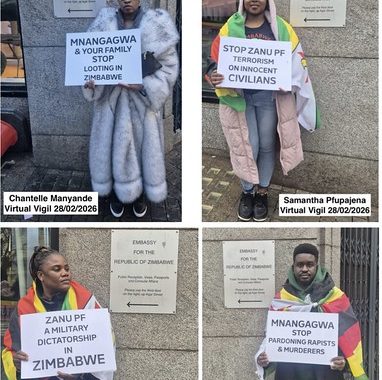
Our
virtual
Vigil
activist
today
were
Elizabeth
Chitengo,
Munashe
Madziyauswa,
Chantelle
Manyande
and
Samantha
Pfupajena.
They
carried
placards
expressing
their
dissatisfaction
with
ZANU
PF,
Zimbabwe’s
ruling
regime. Photos:https://www.flickr.com/photos/zimbabwevigil/albums/72177720332333983/
Next
Vigil
meeting
outside
the
Zimbabwe
Embassy. Saturday
7th March
2026
from
2
–
5
pm.
We
meet
on
the
first
and
third
Saturdays
of
every
month.
On
other
Saturdays
the
virtual
Vigil
will
run.
The
Restoration
of
Human
Rights
in
Zimbabwe
(ROHR) is
the
Vigil’s
partner
organisation
based
in
Zimbabwe.
ROHR
grew
out
of
the
need
for
the
Vigil
to
have
an
organisation
on
the
ground
in
Zimbabwe
which
reflected
the
Vigil’s
mission
statement
in
a
practical
way.
ROHR
in
the
UK
actively
fundraises
through
membership
subscriptions,
events,
sales
etc
to
support
the
activities
of
ROHR
in
Zimbabwe.
The
Vigil’s
book
‘Zimbabwe
Emergency’ is
based
on
our
weekly
diaries.
It
records
how
events
in
Zimbabwe
have
unfolded
as
seen
by
the
diaspora
in
the
UK.
It
chronicles
the
economic
disintegration,
violence,
growing
oppression
and
political
manoeuvring
–
and
the
tragic
human
cost
involved. It
is
available
at
the
Vigil.
All
proceeds
go
to
the
Vigil
and
our
sister
organisation
the
Restoration
of
Human
Rights
in
Zimbabwe’s
work
in
Zimbabwe.
The
book
is
also
available
from
Amazon.
The
Vigil,
outside
the
Zimbabwe
Embassy,
429
Strand,
London
meets
regularly
on
Saturdays
from
14.00
to
17.00
to
protest
against
gross
violations
of
human
rights
in
Zimbabwe.
The
Vigil
which started
in
October
2002
will
continue
until
internationally-monitored,
free
and
fair
elections
are
held
in
Zimbabwe.
(Photo
by
Isabelle
Ouvrard/SEPA.Media
/Getty
Images)
With
just
over
100
days
until
kickoff,
U.S.
host
cities
for
the
2026
World
Cup
went
to
Capitol
Hill
with
a
warning
—
not
a
progress
report.
Before
the
House
Homeland
Security
Committee,
local
officials
described
frozen
FEMA
funds,
coordination
gaps,
and
mounting
pressure
as
security
preparations
enter
their
most
critical
phase.
Their
message
was
direct:
time
is
short,
money
is
stalled,
and
the
risks
are
real.
Congress
should
be
concerned.
This
is
not
a
routine
sporting
event.
The
tournament
organized
by
FIFA
will
be
the
largest
World
Cup
in
history.
Expanded
teams.
Expanded
venues.
Expanded
global
attention.
Multiple
U.S.
cities
will
temporarily
become
international
epicenters,
drawing
massive
crowds
and
worldwide
visibility.
That
scale
carries
consequence.
World
Cup
matches
are
high-profile
global
gatherings
requiring
layered
security
planning
—
counterterrorism
coordination,
cybersecurity
defenses,
transportation
safeguards,
emergency
medical
integration,
intelligence
sharing,
and
seamless
federal-local
command
structure.
These
systems
are
built
deliberately,
tested
repeatedly,
and
funded
predictably.
Predictability
is
exactly
what
host
cities
say
they
don’t
currently
have.
FEMA
dollars
that
were
earmarked
for
security
preparation
remain
frozen.
That
may
sound
procedural,
but
operationally
it’s
disruptive.
Cities
cannot
responsibly
finalize
staffing,
procure
specialized
equipment,
run
full-scale
exercises,
or
lock
in
contracts
without
clarity
on
reimbursement.
Local
governments
are
now
left
to
either
front
millions
in
costs
and
hope
federal
dollars
arrive
—
or
slow
aspects
of
preparation
and
accept
heightened
vulnerability.
Neither
option
inspires
confidence.
Funding
is
only
part
of
the
problem.
Officials
also
pointed
to
coordination
friction
between
federal
agencies
and
local
planners.
At
this
stage
—
with
just
over
three
months
remaining
—
alignment
should
be
seamless.
Any
bureaucratic
lag
becomes
a
strategic
liability.
Major
international
events
are
symbolic
targets.
That
is
not
speculation;
it
is
a
sober
assessment
shared
by
security
professionals
across
administrations.
The
larger
the
stage,
the
greater
the
exposure
—
operationally,
diplomatically,
and
politically.
If
something
were
to
go
wrong,
the
record
will
show
that
host
cities
raised
concerns
in
advance.
The
question
would
then
shift
to
Congress:
What
did
you
do
when
you
were
warned?
There
is
also
a
broader
structural
issue
lurking
beneath
the
surface.
FIFA
generates
billions
in
global
revenue
from
its
tournaments.
Host
cities
assume
logistical
strain.
Federal
agencies
carry
national
security
responsibility.
American
taxpayers
underwrite
much
of
the
protective
apparatus.
When
funding
freezes
threaten
readiness,
lawmakers
should
be
asking
whether
the
financial
architecture
matches
the
security
burden.
With
just
over
100
days
remaining,
this
is
not
about
theoretical
preparedness.
It
is
about
execution.
Congress
does
not
need
to
panic.
But
it
does
need
to
act.
Because
when
the
people
tasked
with
securing
the
event
say
the
system
is
not
moving
fast
enough,
that
is
not
background
noise.
Yesterday,
the
federal
government
defended
the
constitutionality
of
a
statute
—
18
U.S.C.
§
922(g)(3)
—
barring
“unlawful
users”
of
controlled
substances
from
possessing
firearms
by
citing
local
early
American
laws
restricting
the
rights
of
“habitual
drunkards.”
You
might
ask
if
laws
aimed
at
“drunkards”
necessarily
justify
laws
against
mere
users,
whether
such
a
distinction
provides
any
predictable
enforcement
brightline,
or,
better
yet,
why
we
should
even
care
about
cherry-picked
18th
century
town
ordinances.
Justice
Neil
Gorsuch,
by
contrast,
reached
directly
for
the
Originalism
hard
stuff
to
point
out
that…
the
Founders
went
HARD.
“‘Habitual
drunkard,’
the
American
Temperance
Society
back
in
the
day
said
eight
shots
of
whiskey
a
day
only
made
you
an
‘occasional
drunkard,’”
Gorsuch
explained.
“We
have
to
remember
the
founding
era,
if
you
want
to
invoke
the
founding
era,
to
be
a
‘habitual
drunkard,’
you
had
to
do
double
that,
okay?”
The
Constitutional
Convention
was
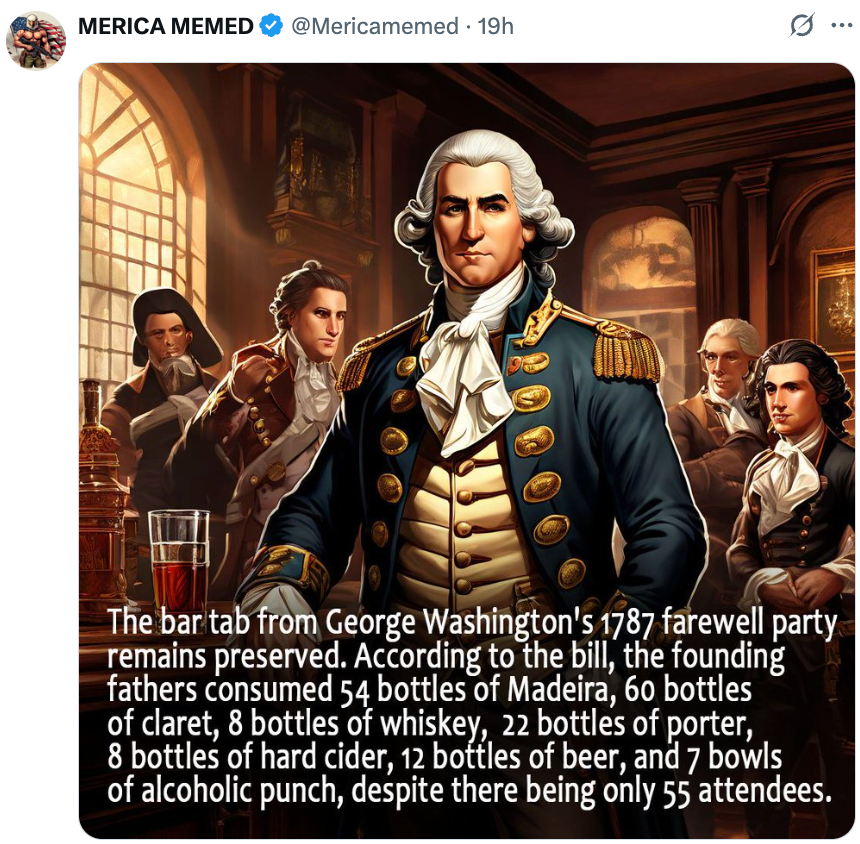
basically
a
frat
party,
okay?
You
can’t
hammer
out
the
details
of
a
new
nation
without
being
absolutely
hammered!
The
gallery
watching
United
States
v.
Hemani
—
the
case
of
a
Texas
man
who
uses
marijuana
every
other
day
while
keeping
an
otherwise
legally
purchased
handgun
in
his
home
—
giggled
at
Gorsuch’s
remarks,
but
the
justice
barreled
forward
with
his
humorless
brand
of
originalism:
John
Adams
took
a
tankard
of
hard
cider
with
his
breakfast
every
day.
James
Madison
reportedly
drank
a
pint
of
whiskey
every
day.
Thomas
Jefferson
said
he
wasn’t
much
a
user
of
alcohol,
he
only
had
three
or
four
glasses
of
wine
a
night,
okay?
Are
they
all
habitual
drunkards
who
would
be
properly
disarmed
for
life
under
your
theory?
All
that
and
they
built
a
new
nation
conceived
in
liberty?
Talk
about
putting
the
fun
in
functional
alcoholism.
And
they
weren’t
even
the
hardest
of
the
hardcore
Founders:
USA!
USA!
USA!
Justice
Barrett
questioned
whether
someone
who
takes
Ambien
or
Xanax
without
a
prescription
becomes
“dangerous”
under
this
framework,
noting
that
it’s
the
lawfulness
of
the
use,
not
the
drug
itself,
that
triggers
the
statute.
Justice
Kagan
went
on
a
tangent
about
Ayahuasca
—
prompting
Barrett
to
ask
if
it
was
a
real
drug.
(It
is.)
Justice
Thomas
asked
about
anabolic
steroids.
Which
are
all
very
valid
questions
about
the
troubling
vagueness
of
this
statute
that
probably
should
be
struck
down.
None
of
which
require
asking
if
Ali
Hemani
could
keep
up
with
John
Adams
at
bottomless
cider
brunch.
But
this
is
the
intellectual
dead
end
wrought
by
the
Court’s
2022
Bruen
framework.
Requiring
the
country’s
gun
regulations
to
match
the
“Nation’s
historical
tradition,”
based
on
quasi-historical
vibes
might
produce
an
occasional
insight,
but
it
also
traps
the
Constitution
in
the
sort
of
sophistic
“how
much
pot
would
you
have
to
smoke
to
lose
a
drinking
contest
with
James
Madison?”
banter
better
suited
to
an
actual
barstool
conversation.
This
dogmatic
adherence
to
historical
analogy
as
the
only
acceptable
framework
for
constitutional
analysis
spirals
into
absurdity.
When
early
American
legislatures
restricted
the
rights
of
habitual
drunkards,
they
weren’t
setting
a
blood
alcohol
threshold
for
future
generations
to
reverse-engineer.
They
were
articulating
the
principle
that
the
government
can
act
to
protect
public
safety
when
substance
use
renders
someone
incapable
of
exercising
responsible
judgment.
It
translates
perfectly
well
to
the
modern
era
without
asking
if
the
kids
these
days
are
too
soft
to
hang
at
a
John
Hancock
rager.
Comparative
tolerance
studies
across
centuries
shouldn’t
be
the
basis
for
interpreting
fundamental
rights.
Bruen
created
the
mess.
Rahimi
—
the
domestic
abuser
case
—
was
the
first
attempt
to
clean
it
up
without
admitting
it
was
a
mess.
Hemani
is
the
next
installment.
On
Monday,
the
U.S.
Department
of
Justice
waved
the
white
flag
in
the
Biglaw
executive
order
cases,
filing
a
voluntary
dismissal
request,
seeking
to
quietly
slink
away
from
Donald
Trump’s
constitutionally
suspect
vendetta
against
major
law
firms.
It
was,
by
any
measure,
a
remarkable
concession.
After
months
of
bluster,
the
administration
appeared
ready
to
admit
what
judges
across
the
ideological
spectrum
had
already
made
clear
—
the
orders
weren’t
going
to
survive
constitutional
muster.
Cue
the
record
scratch.
Because
by
Tuesday
morning
—
less
than
24
hours
later
—
the
Trump
administration
had
apparently
decided
that
conceding
defeat
is
for
losers.
According
to
reporting
from
the
The
New
York
Times,
the
administration
abruptly
reversed
course
and
now
plans
to
renew
its
defense
of
the
very
same
executive
orders
it
had
just
tried
to
abandon.
Wake
up,
babe…
new
civ
pro
doctrine
of
“take
backsies”
just
dropped.
By
10
a.m.
Tuesday
morning,
the
same
DOJ
officials
who
filed
to
get
out
of
the
case
were
back
with
a
completely
different
litigation
strategy
(if
you’re
bold
enough
to
call
it
that).
In
an
email
to
the
four
firms
fighting
the
administration
—
Jenner
&
Block,
WilmerHale,
Perkins
Coie,
and
Susman
Godfrey
—
a
department
official
reportedly
apologized
for
the
short
notice
and
said
the
government
would
file
a
motion
to
withdraw
its
own
voluntary
dismissal.
The
firms
were
asked
to
let
DOJ
know
within
a
half
hour
whether
they
planned
to
oppose
the
administration’s
attempt
to
un-ring
the
bell.
Thirty
minutes
seems
like
a
short
turn
around
to
make
a
major
litigation
decisions,
but
let’s
be
so
fucking
for
real
right
now
—
the
firms
needed
all
of
thirty
seconds
to
know
what
they
wanted
to
do
(though
nothing
official
has
been
filed
thus
far).
What
exactly
*is*
the
DOJ
planning
on
telling
the
appellate
court?
“Your
Honors,
as
the
court
will
recognize,
our
original
filing
never
said
‘Simon
Says,’
so….“
The
glaring
question
of
WHY
is
also
up
for
debate.
A
White
House
official
reportedly
insisted
there
are
ongoing
discussions
within
the
White
House
Counsel’s
Office
about
how
to
proceed.
Was
Monday’s
concession
a
rogue
act
of
realism
inside
DOJ?
Did
someone
at
the
White
House
see
headlines
about
the
administration
blinking
and
decide
that
simply
would
not
do?
Did
a
certain
someone
wake
up
Tuesday
morning,
scroll
social
media,
and
decide
he
did
not
care
for
the
optics
of
surrender?
We
may
never
know.
But
federal
appellate
litigation
is
not
supposed
to
operate
like
a
group
chat
where
someone
says
“nvm”
five
minutes
later.
Kathryn
Rubino
is
a
Senior
Editor
at
Above
the
Law,
host
of
The
Jabot
podcast,
and
co-host
of
Thinking
Like
A
Lawyer.
AtL
tipsters
are
the
best,
so
please
connect
with
her.
Feel
free
to
email
her
with
any
tips,
questions,
or
comments
and
follow
her
on
Twitter
@Kathryn1 or
Mastodon
@[email protected].
Where
do
legal
teams
still
have
meaningful
leverage
in
rate
negotiations?
Even
where
legal
teams
negotiate
aggressively
and
achieve
apparent
“wins,”
net
year-over-year
increases
frequently
remain
in
the
high
single
to
double
digits,
according
to
proprietary
Persuit
data
detailed
in
a
recent
report.
Join
us
as
our
expert
panel
will
share
real-world
negotiation
and
rate
data
across
more
than
500
law
firms,
multiple
geographies,
and
thousands
of
timekeeper
rate
submissions.
You’ll
learn:
How
leading
legal
departments
are
shifting
from
reactive
negotiation
to
proactive
pricing
design,
setting
guardrails
before
rates
are
proposed
rather
than
responding
after
the
fact.
Which
levers
still
work
in
2026,
including
standard-rate
governance,
role
clarity,
senior
lawyer
approvals,
and
matter-level
staffing
controls.
How
portfolio-level
data
and
visibility
change
negotiation
dynamics,
enabling
more
consistent,
defensible
outcomes
across
firms,
geographies,
and
practice
areas.
Why
manual,
ad
hoc
approaches
fail
to
scale,
particularly
as
rate
dispersion
widens
and
global
portfolios
become
more
complex.
Sign
up
to
join
the
discussion.
1
hr
CLE
credit
is
available.
Another
day,
another
fictitious
case
citation.
Blink,
and
you’ll
miss
the
most
recent
comedy
of
AI-created
errors.
Since
the
release
of
ChatGPT
in
late
2022,
the
frequency
of
court
submissions
riddled
with
AI-hallucinated
gibberish
has
increased
exponentially.
Now,
more
than
three
years
later,
it
seems
that
not
a
week
goes
by
without
a
headline
about
yet
another
case
in
which
a
lawyer
has
submitted
briefs
to
the
court
full
of
AI-hallucinated
gibberish.
One
of
the
standout
features
of
many
of
these
cases
is
that
the
attorneys
double
down,
rather
than
admitting
the
error
of
their
ways.
Sometimes,
they
even
submit
responsive
papers
in
defense
of
their
actions
that
include
hallucinations.
Of
course,
it’s
one
thing
to
read
about
these
shenanigans,
but
seeing
the
audacity
in
action
during
an
appellate
argument?
Priceless.
And
appalling.
In
equal
proportions.
I
present
to
you,
attorney
for
the
appellant
in
Deutsche
Bank
National
Trust
Company
v.
Jean
LeTennier,
CV-23-0713
(2026),
whose
absolute
chutzpah
was
on
full
display
—
captured
on
video
on
October
16,
2025,
during
an
oral
argument
before
the
New
York
Appellate
Division,
Third
Department.
About
one-third
of
the
way
into
the
video,
at
6:30,
he
faced
a
very
hot
bench.
The
judges
were
collectively,
and
understandably,
piqued
by
both
the
number
of
hallucinations
contained
in
his
submissions
and
the
fact
that
he
seemed
to
be
entirely
unbothered
by
his
own
fictions.
When
asked
about
his
response
to
the
allegations
that
he’d
used
AI,
he
appeared
to
be
oblivious
to
the
very
admissions
he’d
included
in
his
responsive
papers.
Rather
than
answering
their
pointed
questions
about
the
errors,
he
deflected
and
tried
to
avoid
the
topic
entirely*:
The
Court:
The
citations
used
in
some
of
the
cases
are
not
real
citations
(to)
real
cases.
Counsel:
(T)hat
was
never
asserted
to
me.
The
Court:
You
acknowledged
it
in
your
reply
brief
that
some
of
the
cases
were
not
accurate.
Counsel:
The
issue
that
I
believe
is
really
important
is
the
fact
that
fraud
was…
The
Court:
It’s
important
to
us,
so
I
guess
you’re
going
to
have
to
deal
with
what’s
important
to
us.
The
judges
were
not
dissuaded
by
his
obfuscation.
They
persisted
in
their
questioning,
forcing
him
to
concede
that
there
were
fake
cases
cited
in
his
briefs.
Undeterred,
he
then
informed
the
panel
that
the
AI
issue
was
immaterial,
apparently
deciding
that
patronizing
the
bench
was
a
winning
tactical
move:
The
Court:
Did
you,
as
an
attorney,
write
a
brief
and
submit
it
to
this
court?
Counsel:
Yes,
Court:
Okay,
so
you
own
it,
right?
Counsel:
Yes.
Court:
Okay,
in
that
brief,
we’re
telling
you,
and
you
are
aware
…
not
only
were
you
made
aware
by
the
court,
but
by
your
adversary,
that
there
are
citations
that
are
not
real
cases.
Counsel:
That’s
not
germane
to
the
fact
that
the
SEC
is
telling
this
court
…
Once
that
approach
proved
ineffective,
he
switched
gears
once
again.
When
directly
questioned
about
his
AI
use,
he
played
coy,
acting
like
a
petulant
adolescent
who’d
been
caught
drinking.
Finding
that
tactic
to
be
futile,
he
once
again
reverted
to
his
previously
unsuccessful
strategy
of
mansplaining
to
the
bench:
The
Court:
So,
I
guess
I’m
asking
you,
did
you
use
AI
to
do
the
brief,
and
are
these
hallucinated
cases,
or
did
you
miscite
cases?
Because
you
didn’t
give
us
any
corrections
…
Counsel:
AI
is
a
tool
that
I
think
all
of
us
use
these
days.
The
Court:
So
that
would
be
a
“yes,
I
used
AI.”
Counsel:
Well,
not
exactly.
I
mean,
yeah,
I
used
AI.
The
Court:
Okay.
You’ve
got
to
check
AI,
right?
Counsel:
I
do.
The
Court:
Well,
evidently
not
too
well,
right?
Counsel:
It
seems
like
we’re
not
able
to
focus
on
the
issue
that
they
brought
it
…
When
it
became
apparent
that
condescension
wasn’t
working,
he
retreated
to
a
defense
of
statistical
probability.
The
exchange
that
followed
captures
the
surreal
moment
that
he
attempted
to
treat
a
‘mostly
accurate’
brief
as
a
job
well
done:
The
Court:
Because
we’re
on
this
side
of
the
of
the
bench
…
that’s
why
we’re
asking
you
about
the
citations
in
your
brief
that
you
provided
to
us
and
the
response
when
it
was
pointed
out
that
these
are
AI
citations.
Counsel:
I
believe
that
the
citations
that
I
used
were
accurate,
like
90%
were
accurate,
some
of
them
which
really
aren’t
necessarily
germane
to
the
issues
at
hand
…
The
Court:
Okay,
your
time
is
up!
Thank
you.
Needless
to
say,
the
court
was
unimpressed
with
his
assertion
that
a
90%
accuracy
rate
was
a
passing
grade
for
the
truth,
dismissing
his
argument
in
its
written
decision,
issued
in
January:
“(D)uring
oral
argument
defense
counsel
estimated
that
90%
of
the
citations
he
used
were
accurate,
which,
even
if
it
were
true,
is
simply
unacceptable
by
any
measure
of
candor
to
any
court.”
In
the
court’s
eyes,
a
brief
that
is
only
10%
imaginary
is
still
100%
problematic,
especially
when
that
small
slice
of
fiction
accounted
for
“at
least
23
fabricated
legal
authorities
across
five
filings
…
(and
misrepresenting)
the
holdings
of
several
real
cases
as
being
dispositive
in
his
favor
—
when
they
were
not.”
His
stubborn
resistance
to
reality
was
rewarded
with
sanctions
in
the
amount
of
$5,000
due
to
his
refusal
to
take
accountability
for
his
actions:
“(H)is
reliance
on
fabricated
legal
authorities
grew
more
prolific
as
this
appeal
proceeded
…
Rather
than
taking
remedial
measures
or
expressing
remorse,
defense
counsel
essentially
doubled
down
during
oral
argument
on
his
reliance
of
fake
legal
authorities
as
not
‘germane’
to
the
appeal.”
Importantly,
the
court
acknowledged
that
AI
does
have
a
place
in
litigation,
as
long
as
attorneys
and
staff
are
sufficiently
trained
and
carefully
check
their
work
for
accuracy
before
submitting
it
to
the
court:
“As
with
the
work
from
a
paralegal,
intern
or
another
attorney,
the
use
of
GenAI
in
no
way
abrogates
an
attorney’s
or
litigant’s
obligation
to
fact
check
and
cite
check
every
document
filed
with
a
court.
To
do
otherwise
may
be
sanctionable
…”
It’s
a
bold
new
era
for
the
legal
profession:
one
where
‘mostly
accurate’
is
a
tactical
hill
to
die
on
and
23
imaginary
cases
are
just
‘minor’
details.
As
it
turns
out,
that
final
10%
is
the
difference
between
a
winning
argument
and
a
$5,000
audacity
tax.
*
The
court
transcript
excerpts
have
been
lightly
edited
for
readability
and
flow.
Some
practice
areas
easily
lend
themselves
to
pro
bono
work.
Criminal
defense
lawyers
can
step
up
for
indigent
defendants
and
commercial
real
estate
attorneys
can
help
a
non-profit
organization
find
a
new
headquarters.
It’s
a
bit
tougher
to
figure
out
what
a
40
Act
lawyer
is
going
to
do.
While
the
biggest
barrier
to
pro
bono
service
will
always
be
professional
apathy,
don’t
overlook
the
problem
of
willing
lawyers
who
feel
lost
and
unqualified
about
the
particulars
of
pro
bono
work.
That
feeling
is
even
more
pronounced
among
law
students
who
don’t
really
know
how
to
do
anything
yet.
But
a
new
partnership
aims
to
help
law
students
get
the
specific
training
they
need
to
help
the
community.
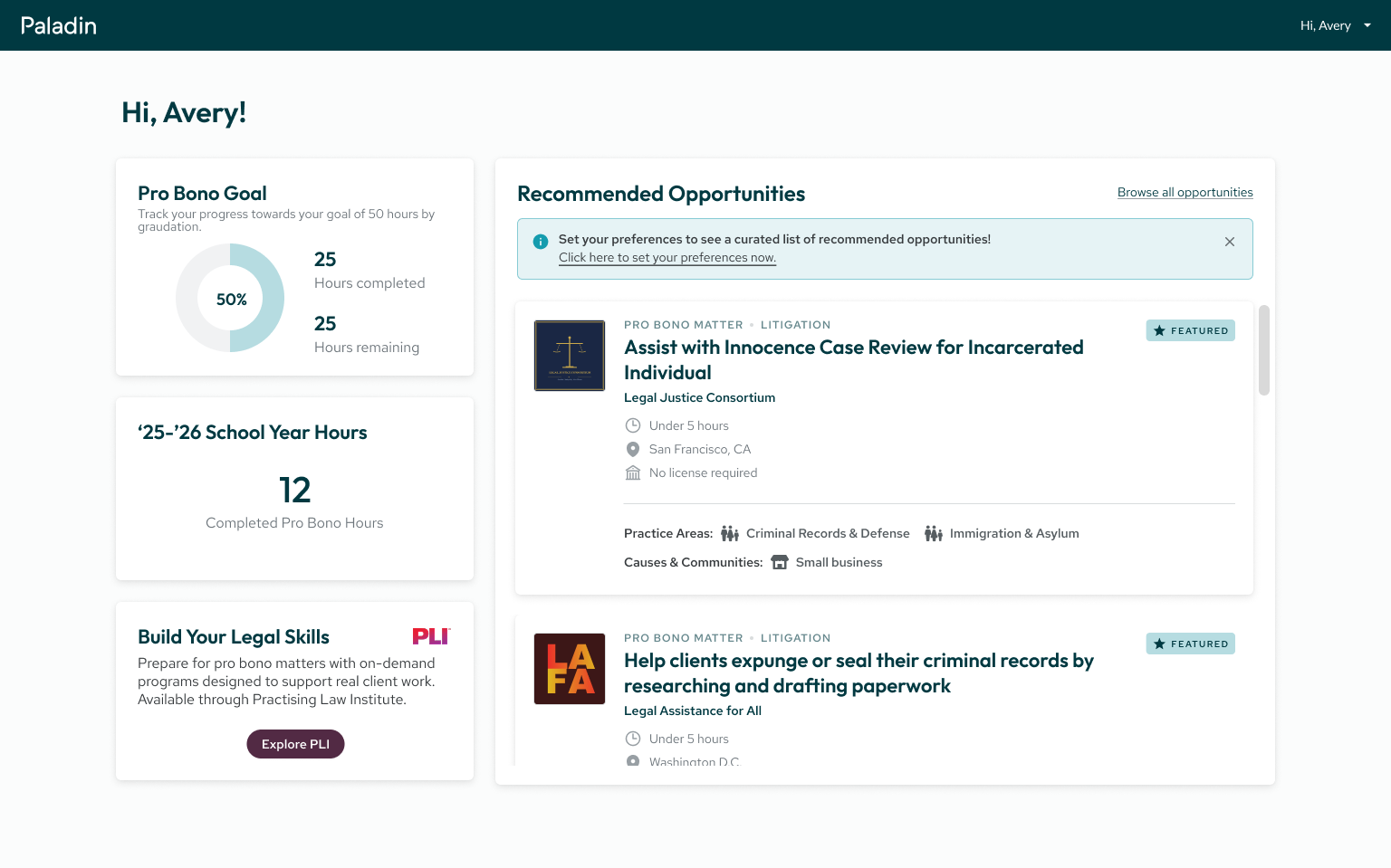
Pro
bono
management
platform
Paladin
and
the
Practising
Law
Institute
just
announced
an
initiative
designed
to
integrate
PLI’s
training
programs
directly
into
Paladin’s
law
school
pro
bono
platform.
The
idea
is
straightforward:
when
a
law
student
signs
up
for
a
pro
bono
matter
through
Paladin,
they’ll
also
get
access
to
targeted,
skills-based
PLI
training
tailored
to
that
specific
type
of
work.
We
talk
a
lot
about
the
gap
between
what
law
school
teaches
and
what
practice
demands.
It’s
practically
a
genre
of
legal
commentary
at
this
point.
But
pro
bono
work
presents
a
uniquely
thorny
version
of
this
problem.
When
a
first-year
associate
shows
up
at
a
Biglaw
firm
not
knowing
how
to
draft
a
motion,
the
firm
should
have
every
financial
incentive
to
train
them.
For
all
the
rosy
talk
about
pro
bono
commitments,
they
aren’t
as
eager
to
burn
time
on
training.
Law
students,
meanwhile,
are
doing
a
staggering
amount
of
pro
bono
work.
The
class
of
2025
contributed
more
than
5.1
million
hours
of
legal
services,
amounting
to
over
$178
million
worth
of
work.
With
their
souls
still
somewhat
intact,
law
students
are
a
motivated
population
and
could
do
even
more
if
we
cut
down
the
millions
of
opportunities
for
undertrained
students
to
find
themselves
worried
that
they’re
in
over
their
heads.
Opportunities
to
assist
asylum
intake
clinics,
perform
guardianship
casework
for
children,
engage
in
innocence-related
research,
or
simply
help
the
elderly
navigate
benefits
claims
are
all
available.
The
skills
gap
between
“I
just
finished
Civ
Pro”
and
“I
need
to
interview
a
detained
asylum
seeker”
is
vast
but
not
insurmountable.
Like
a
lot
of
pro
bono
challenges,
it’s
a
matter
of
bringing
the
resources
to
bear.
Paladin
CEO
Kristen
Sonday
framed
the
partnership
in
terms
that
should
resonate
with
anyone
watching
AI
reshape
associate
work:
Integrating
legal
training
with
hands-on
pro
bono
experience
is
the
future
of
legal
education.
Especially
with
the
advancement
of
AI
and
associates’
work
changing
so
rapidly,
there
is
no
substitute
for
real-world
pro
bono
experience.
Artificial
intelligence
isn’t
going
to
replace
lawyers,
but
it’s
going
to
reduce
the
number
of
lawyers
it
takes
to
get
things
done.
It’s
a
distinction
that
won’t
matter
to
the
person
left
unemployed,
but
it
should
inform
how
law
students
approach
their
future
careers.
When
firms
don’t
need
as
many
bodies
to
perform
bottom
rung
tasks,
the
people
who
keep
their
jobs
will
be
the
ones
already
ahead
on
developing
the
higher
level
reasoning
and
client-facing
tasks.
And
pro
bono
work
offers
a
time-honored
avenue
to
developing
those
skills
early.
Paladin
launched
its
law
school
platform
last
summer
in
collaboration
with
30
schools,
and
since
then
law
students
have
signed
up
for
over
5,600
pro
bono
cases
through
the
platform.
Adding
PLI’s
training
resources
to
that
pipeline
delivers
practical,
on-demand
training
led
by
expert
faculty
at
no
cost
to
students.
PLI’s
Kirsten
Talmage
pitched
the
partnership
as
building
a
pipeline:
This
initiative
will
help
schools
deliver
trusted,
experiential
training
that’s
practical
and
meaningful,
while
building
a
stronger
pipeline
of
law
students
who
will
carry
pro
bono
forward
into
firms,
in-house
teams,
and
every
corner
of
practice.
Even
though
this
is
directed
at
law
students,
the
impact
promises
to
carry
over.
Giving
eager,
service-minded
law
students
real
learning
and
genuine
experience
can
give
them
the
confidence
to
keep
doing
good
work
when
they
graduate
and
start
drafting
purchase
agreements
to
acquire
orphanages
to
work
the
client’s
coal
mines.
Lawyers
who
develop
pro
bono
habits
in
law
school
are
far
more
likely
to
continue
that
work
in
practice.
But
lawyers
who
had
a
bad
pro
bono
experience
—
either
because
they
felt
unprepared,
unsupported,
overwhelmed,
or
all
three
—
tend
to
quietly
opt
out
once
they
have
the
option.
If
the
current
generation
of
Biglaw
partners
won’t
stand
up,
maybe
training
the
next
generation
to
actually
know
what
they’re
doing
when
they
volunteer
will
produce
lawyers
with
both
the
skills
and
the
spine
to
do
the
work
that
needs
doing.
Health
data
network
Health
Gorilla
has
filed
a
motion
to
dismiss
a
lawsuit
brought
earlier
this
year
by
Epic
and
several
health
systems
alleging
improper
access
to
patient
records.
The
motion,
filed
last
Thursday,
called
Epic’s
lawsuit
“an
attack
on
interoperability.”
The
dispute
reflects
unresolved
ambiguities
in
how
data
interoperability
should
be
governed
across
the
healthcare
industry.
Experts
think
the
lawsuit
is
less
about
stopping
one
bad
actor
—
and
more
about
the
need
to
define
standardized
rules
and
boundaries
around
healthcare
data
exchange.
Epic’s
complaint,
filed
January
13,
claims
that
Health
Gorilla
enabled
other
companies
to
inappropriately
access
and
monetize
nearly
300,000
patient
medical
records.
Health
Gorilla
has
denied
the
allegations.
The
plaintiffs
are
Epic,
Trinity
Health,
UMass
Memorial
Health,
Reid
Health
and
OCHIN.
They
allege
that
Health
Gorilla
and
a
network
of
other
companies
set
up
fictitious
healthcare
providers,
shell
websites
and
fake
provider
IDs
to
make
it
look
like
records
requests
were
for
real
treatment
purposes.
Instead,
the
data
was
allegedly
diverted
for
non-treatment
uses
—
such
as
marketing
to
lawyers
seeking
potential
claimants
for
lawsuits.
The
other
companies
involved
in
the
network
are
a
cluster
of
small
telehealth,
data
and
shell
companies
—
many
allegedly
linked
to
the
same
founders
and
operators
—
that
the
plaintiffs
say
were
used
to
pose
as
legitimate
providers.
The
complaint
also
stated
that
the
defendants
inserted
“junk”
information
into
records
to
hide
their
activity
and
give
the
appearance
of
genuine
care,
which
in
turn
risked
patient
safety
and
wasted
clinician
time.
When
one
fraudulent
entity
was
exposed,
the
same
actors
allegedly
created
new
companies
to
continue
the
same
conduct,
operating
“like
a
Hydra,”
according
to
the
lawsuit.
In
its
motion
to
throw
out
the
case,
Health
Gorilla
argued
that
the
dispute
should
be
handled
through
the
networks’
built-in
governance
and
dispute
resolution
processes
rather
than
federal
litigation.
The
company
also
said
it
cooperated
with
months-long
investigations
into
the
issue,
and
it
maintains
that
Epic’s
lawsuit
threatens
the
stability
of
national
data
sharing
systems
used
by
providers.
“Epic
tries
to
paint
itself
as
a
good
actor
because
it
has
come
under
sustained
criticism
and
inquiry
from
regulators
and
private
plaintiffs
for
its
widespread
unfair
business
practices,
and
it
desperately
needs
a
distraction
from
its
primary
goals,
which
are
to
continue
enriching
itself
at
the
expense
of
patients
nationwide.
The
case
should
be
dismissed,”
Health
Gorilla’s
motion
stated.
The
Health
Gorilla
lawsuit
is
the
latest
in
a
series
of
legal
disputes
for
Epic,
which
is
also
locked
in
a
high-profile
battle
with
data
platform
Particle
Health.
In
September
2024,
Particle
Health
sued
Epic
over
claims
that
the
EHR
vendor
is
using
its
dominance
in
the
market
to
prevent
competition
in
the
payer
platform
space.
The
complaint
claims
that
Epic
imposed
technical
and
contractual
barriers
that
limited
access
to
patient
data,
which
has
effectively
blocked
rivals
from
building
competing
payer-facing
platforms.
Last
September,
a
federal
judge
advanced
the
antitrust
lawsuit.
Epic
is
fighting
vigorously
in
both
lawsuits.
“Medical
records
are
deeply
personal
and
exploiting
them
is
wrong.
In
their
motion,
Health
Gorilla
asserts
that
they
should
be
dismissed
as
a
defendant
in
the
lawsuit
because
they
had
‘lack
of
actual
knowledge’
of
wrongdoing.
That
is
not
an
acceptable
reason
—
Health
Gorilla
had
a
responsibility
to
safeguard
sensitive
patient
data
and
know
why
it
was
being
taken,”
an
Epic
spokesperson
said
in
a
statement
sent
to
MedCity
News.
The
EHR
giant
added
that
the
public
deserves
a
complete
investigation
and
resolution
in
federal
court
rather
than
behind
closed
doors.





 Kathryn