*
The
DOJ’s
long-awaited
antitrust
trial
against
Live
Nation-Ticketmaster
kicked
off
Monday.
If
you
want
tickets
to
the
hottest
trial
of
the
year,
then
good
news!
It’s
free
(plus
applicable
surcharges).
[NBC
News]
*
Supreme
Court’s
conservatives
issue
another
pair
of
unexplained
shadow
docket
rulings
predicated
on
the
legal
principle
of
“Republican
political
priorities.”
[One
First]
*
Though
the
Court
denied
an
appeal
in
the
AI-generated
art
case
that
could
have
massive
economic
implications
soon.
[Courthouse
News
Service]
Bellarmine
Chatunga
Mugabe
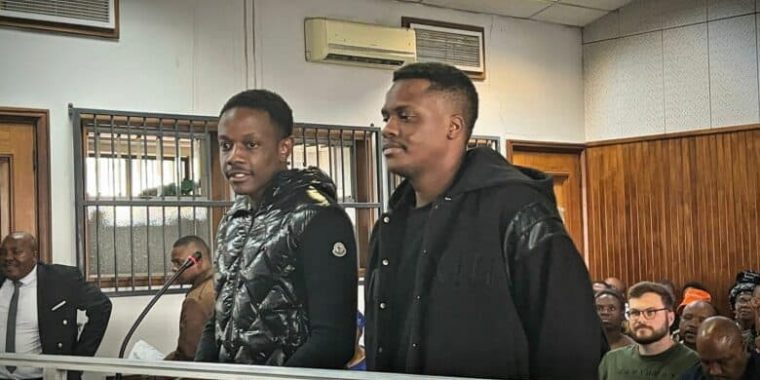
(28)
and
his
co-accused,
Tobias
Matonhodze
Mugabe
(33),
are
expected
to
appear
at
the
Alexandra
Magistrate
Court
in
Johannesburg,
South
Africa,
on
Wednesday
for
a
bail
application.
The
pair
were
remanded
in
custody
on
February
23
and
are
facing
charges
of
attempted
murder,
defeating
the
ends
of
justice,
and
illegal
possession
of
a
firearm.
Chatunga
is
accused
of
shooting
his
23-year-old
employee
on
February
19
following
an
altercation,
the
details
of
which
are
still
unclear.
During
their
initial
arrest,
both
men
were
charged
with
attempted
murder.
Additional
charges
were
later
added
after
police
reportedly
failed
to
recover
the
firearm
allegedly
used
in
the
incident.
The
South
African
Police
Service
(SAPS)
confirmed
that
the
weapon
has
not
yet
been
located.
Gauteng
police
spokesperson
Colonel
Dimakatso
Nevhuhuwi
said
investigators
were
still
searching
for
the
firearm,
although
spent
cartridges
were
recovered
from
the
scene.
The
alleged
victim
remains
hospitalised
as
investigations
continue.
The
outcome
of
Wednesday’s
bail
hearing
is
expected
to
determine
whether
the
accused
will
remain
in
custody
pending
trial. Source:
B24
DOJ
Drops
Defense
Of
Biglaw
Bullying
Executive
Orders:
See
what
happens
when
you’re
actually
willing
to
fight
in
court?
Political
Appointments
For
Law
Students?
Political
purity
tests
for
law
jobs!
The
Early
Bird
Gets
The
Litigation
Finance
Knowledge:
Make
the
most
out
of
the
Certum
Group
Litigation
Finance
Fellowship!
Trump
Leads
Judicial
Appointments
With
His
ASS:
He’s
picked
more
judges
from
George
Mason
than
Harvard
and
Yale.
West
Virginia
Judges
Skewer
“Operation
Country
Roads”:They’ve
run
out
of
patience
for
rogue
government
action.
Biglaw
Firms
Prepare
For
Conflict:
Middle
eastern
firms
prepare
evacuation
plans
and
work
from
home
work-arounds.
Threats
Toward
Judges
Jump:
Protecting
the
Constitution
has
become
risky
business.
According
to
an
analysis
by
Adam
Feldman’s
substack
Legalytics,
who
is
the
only
U.S.
President
to
appoint
more
women
to
the
federal
judiciary
than
men?
Hint:
Women
have
outnumbered
men
in
law
schools
for
quite
some
time
—
it’s
past
time
judicial
nominations
reflect
that
reality.
In
The
Hunt
for
Red
October,
we
learn
that
Soviet
submarine
carried
a
“political
officer,”
a
Communist
Party
appointee
whose
job
wasn’t
navigating
or
torpedoing
things,
but
making
sure
everyone
on
board
remained
sufficiently
loyal
to
the
regime.
Not
to
spoil
a
42-year-old
book,
but
the
Red
October
had
—
against
all
odds
in
the
Soviet
Navy
—
been
staffed
by
officers
who
had
slipped
through
the
thought
police
cracks,
rising
through
the
ranks
and
now
wanting
to
defect.
And
so
the
political
officer
“slipped
on
some
tea”
a
few
pages
in.
But
“political
officer”
concept
struck
American
audiences
at
the
time
as
both
absurd
and
a
testament
to
the
USSR’s
ultimate
fragility.
The
government’s
hold
on
power
had
grown
so
flimsy
that
it
willingly
traded
competence
for
lockstep
compliance.
The
political
officer
served
as
a
symbol
of
the
USSR’s
institutional
rot.
Anyway,
in
2026,
the
Trump
administration
is
conducting
1L
job
interviews
with
a
White
House
official
sitting
in
to
vet
the
political
loyalty
of
each
candidate.
An
email
sent
to
Liberty
University
School
of
Law
students
over
the
weekend
lays
out,
in
refreshingly
unvarnished
terms,
what
the
administration’s
hiring
pipeline
actually
looks
like.
And
it’s
exactly
as
bad
as
everyone
suspected:
The
two
most
important
requirements
are
you
MUST
be
aligned
politically
with
President
Trump
and
his
administration
and
you
must
be
willing
to
work
hard.
Don’t
be
scared
off
by
the
transcript
requirement.
GPA
is
not
a
strong
factor.
If
you
meet
those
two
requirements,
you
have
a
shot.
Imagine
a
career
services
office
writing
this
paragraph
and
not
expecting
it
making
a
laughingstock
of
the
law
school?
“GPA
is
not
a
strong
factor”
doesn’t
make
for
a
ringing
endorsement
of
any
law
school’s
mission.
Telling
students
at
a
law
school
ranked
in
the
140s
that
their
GPAs
don’t
matter
if
a
candidate
is
politically
correct
enough
is
just
open
mockery
of
the
curriculum.
And
political
alignment
almost
certainly
trumps
“willing
to
work
hard,”
because
it’s
not
even
clear
what
hard
work
would
look
like
at
this
ironically
named
Department
of
Labor.
Secretary
Lori
Chavez-DeRemer
is
the
subject
of
an
inspector
general
investigation
into
travel
fraud,
alleged
inappropriate
relationships
with
subordinates,
drinking
on
the
job,
and
staff
trips
to
strip
clubs.
Her
chief
of
staff
and
deputy
chief
of
staff
have
both
been
placed
on
leave
during
the
probe,
and
investigators
have
now
expanded
their
examination
to
whether
grants
were
improperly
directed
to
favored
political
operatives.
Those
selected
for
interviews
will
meet
with
a
2025
Liberty
graduate
currently
working
as
a
Policy
Advisor
at
the
Department
of
Labor
as
well
as
“a
representative
of
the
White
House
Liaison
Office.”
According
to
the
email,
this
dynamic
duo
—
a
first-year
graduate
and
some
cross
between
the
Red
October
political
officer
and
ersatz
Jonah
Ryan
—
will
conduct
interviews
that:
will
be
a
combination
of
traditional
interview
questions
and
political
questions
(i.e.,
did
you
vote
for
President
Trump?
Do
you
disagree
with
the
President
on
anything?
What
do
you
think
about
XYZ
executive
order?).
If
you
get
selected
for
an
interview,
Ms.
Smith
or
I
are
happy
to
meet
with
you
to
help
prepare.
I
don’t
know
what’s
more
disturbing:
probing
candidates
about
their
secret
ballot
as
a
condition
of
government
employment
or
that
anyone
would
need
interview
prep
for
this.
Q:
Did
you
vote
for
President
Trump? A:
No…
oh,
fuck,
can
I
try
that
one
again?
That
might
be
unfair
though.
For
a
school
that
bills
itself
as
“Training
Champions
for
Christ
since
1971”
it
must
take
some
work
to
tune
out
the
hush
money
for
sex
with
a
porn
star
and
the
sexual
assault
adjudication
and
everything
about
the
Epstein
files
when
answering,
“Do
you
disagree
with
the
President
on
anything?”
The
email
closes
with
an
encouragement
that
Liberty
Law
would
love
to
get
“double
digit”
students
into
the
program
this
summer.
That’s
going
to
take
a
level
of
denying
that
would
make
Peter
blush!
Now,
the
email
does
note
that
“this
is
a
political
position
in
which
interns
will
serve
the
Trump
Administration
for
the
duration
of
their
internships,”
which
means
the
administration
will
argue
these
are
political
appointee
positions.
But
this
is,
in
itself,
bogus.
The
Department
of
Labor
doesn’t
need
1L
summer
political
positions.
Or,
maybe
they
do,
if
they’re
just
looking
for
anyone
over
there
able
to
make
it
through
a
day
on
the
job
without
getting
drunk
at
a
strip
club.
But
in
the
normal
course
of
business,
bottom
rung
interns
aren’t
political
roles.
They
might
have
been
expected
to
perform
work
for
political
appointees,
but
they
were
not
expected
to
swear
that
they’re
in
the
bag
with
every
unrelated
presidential
directive.
And
the
email
begins
by
noting
that
the
Department
seeks
“students
(1Ls
&
2Ls)
interested
in
all
kinds
of
areas:
litigation,
appeals,
regulations,
policy,
etc.”
Right
off
the
top,
the
email
acknowledges
that
they’re
looking
at
roles
that
are
traditionally
handled
by
apolitical
career
employees.
But
this
is
consistent
with
the
Trump
OPM
“merit
hiring
plan,”
which
replaces
merit
with
essay
questions
about
advancing
Trump’s
executive
orders
for
positions
GS-5
and
above.
It’s
the
human
resources
blueprint
that
landed
a
22-year-old
Trump
campaign
worker
with
no
national
security
expertise
who
got
promoted
to
lead
terrorism
prevention
at
the
Department
of
Homeland
Security.
Legal
scholars
have
noted,
this
approach
runs
headlong
into
Elrod
v.
Burns,
where
the
Supreme
Court
held
that
only
policymaking
positions
could
be
assessed
based
on
political
loyalty,
and
explicitly
rejected
“efficiency”
and
“loyalty”
as
justifications
strong
enough
to
overcome
First
Amendment
protections
for
government
employees.
But
if
you
redefine
a
1L
summer
job
as
“policymaking,”
you
can
redirect
work
to
give
a
career
boost
to
political
acolytes
from
TTT
programs.
The
LSAT
is
probably
woke
anyway,
amirite?
This
is
the
whole
government
hiring
endgame.
The
conservative
legal
movement
fought
for
years
to
reclassify
career
government
positions
as
at-will
political
employees
through
Schedule
F
and
various
rebrands.
Now
they’re
filling
those
positions
with
ideological
loyalists
—
people
screened
not
for
competence
but
for
their
willingness
to
answer
“did
you
vote
for
President
Trump?”
correctly.
Don’t
be
surprised
when
a
future
Democratic
administration
tries
to
replace
these
hires
and
the
very
same
conservatives
howl
about
“politicization
of
the
civil
service”
and
“illegal
purges.”
It’s
a
heads-I-win-tails-you-lose
proposition
designed
to
populate
the
government
bureaucracy
with
a
Fifth
Column
to
frustrate
future
policy
action.
A
summer
position
isn’t
embedding
itself
like
a
chigger
into
agency
roots,
but
it’s
representative
of
the
staffing
philosophy
transforming
tasks,
no
matter
how
mundane,
into
political
positions.
Someone
needs
to
train
the
future
Red
October
political
officers
of
tomorrow!
And
to
stan
for
this
administration,
a
good
GPA
is
not
only
not
a
strong
factor,
it’s
certainly
a
detriment.
Down
in
the
Southern
District
of
West
Virginia,
four
federal
judges
—
appointed
by
presidents
of
both
parties
—
have
spent
the
last
several
weeks
issuing
rulings
sounding
the
alarm
over
a
MAGA
immigration
initiative
dubbed
“Operation
Country
Roads.”
The
policy,
a
partnership
between
federal
and
local
law
enforcement,
reportedly
netted
roughly
650
arrests
in
January
alone,
largely
targeting
immigrants
driving
along
the
state’s
roadways.
What
followed
was
the
predictable
wave
of
habeas
petitions
from
people
(many
without
criminal
records
and
with
longstanding
ties
to
the
United
States)
challenging
their
detention
by
ICE.
What
was
less
predictable?
Just
how
blunt
the
judges
would
be.
Politico
reports
on
the
resistance
coming
from
deep
in
Trump
country,
and
what
the
judges
are
saying
in
West
Virginia
should
make
anyone
sit
up
and
take
notice.
In
a
February
19
opinion
Judge
Joseph
Goodwin
did
not
bother
with
the
usual
soft-focus
judicial
prose.
“Antiseptic
judicial
rhetoric
cannot
do
justice
to
what
is
happening,”
wrote
the
Clinton
appointee.
He
then
described
agents
“masked,
anonymous,
armed
with
military
weapons,
operating
from
unmarked
vehicles,
acting
without
warrants
of
any
kind”
seizing
people
for
civil
immigration
violations
and
locking
them
up
“without
any
semblance
of
due
process.”
He
didn’t
stop
there.
“The
systematic
character
of
this
practice
and
its
deliberate
elimination
of
every
structural
feature
that
distinguishes
constitutional
authority
from
raw
force
place
it
beyond
the
reach
of
ordinary
legal
description,”
Goodwin
wrote.
“It
is
an
assault
on
the
constitutional
order.”
In
a
subsequent
opinion
he
labeled
a
“final
notice,”
Goodwin
made
it
crystal
clear
that
the
court’s
patience
had
expired:
“The
Government
is
wrong.
Judges
in
this
district
have
said
that
over
and
over
and
over.”
And
then,
“If
officials
could
repeat
practices
already
determined
to
be
unconstitutional
and
require
each
affected
person
to
begin
anew
…
judicial
power
would
be
reduced
to
commentary. The
Constitution
does
not
contemplate
violations
in
installments.”
But
the
pushback
hasn’t
come
from
just
one
judge.
Judge
Robert
Chambers,
another
Clinton
appointee,
lamented
that
the
American
dream
has
been
“tarnished”
by
what
he
described
as
illegal
detentions.
Judge
Irene
Berger,
an
Obama
appointee,
accused
the
administration
of
showing
a
“lack
of
respect
for
the
law,”
noting
that
arrests
continued
at
a
rapid
clip
despite
multiple
rulings
declaring
the
practices
unlawful.
Berger’s
opinions
have
been
particularly
pointed.
She
pointed
out
“sloppiness”
so
bad
it
makes
you
wonder
what
else
is
messing
up.
Like
when
the
government
accused
one
ICE
detainee
of
having
marijuana
possession
convictions
from
2009.
“The
Petitioner
was
four
years
old
in
2009,”
she
wrote.
Berger
and
Judge
Thomas
Johnston,
a
George
W.
Bush
appointee,
have
separately
called
out
the
bond
process
as
a
sham,
and
noted
ordering
more
sham
hearings
isn’t
a
remedy.
Gone
are
“immigration
judges
who
provide
neutral
adjudications”
replaced
with
bond
that
is
“systematically
denied
after
a
pro
forma
hearing
with
a
predetermined
outcome.”
Johnston,
for
his
part,
distilled
the
stakes
in
stark
terms:
“If
the
government
may
simply
seize
someone
without
due
process,
there
is
no
check
on
its
ability
to
seize
anyone.”
And
then
he
delivered
the
line
that
cuts
through
the
usual
culture-war
framing:
“One
might
say,
‘I
don’t
care
because
that
only
happens
to
THOSE
people.’
Perhaps.
But
what
if
someone
here
legally,
or
even
a
United
States
citizen,
is
afforded
no
due
process
after
being
seized
by
mistake?
Or
by
a
choice?”
“Fortunately,”
he
concluded,
“our
Constitution
demands
more,
including
the
rule
of
law,
as
opposed
to
the
rule
of
unchecked
executive
fiat.”
Judge
Johnston
is
right
about
the
constitutional
demands,
but…
is
anyone
in
MAGAland
listening?
Like
Judge
Goodwin
said,
“The
problem
lies
in
the
attorneys’
clients,
federal
government
actors,
who
have
offered
no
evidence
that
they
have
seen
or
even
care
about
the
legal
rulings
of
this
district.”
“The
disregard
for
the
law
shames
every
hardworking
public
servant
who
toils
for
the
benefit
of
the
country
and
its
people.”
And
the
only
comment
the
government
has
made
is
red-hatted
ragebait
that’s
wildly
out-of-touch
with
what
the
judges
are
seeing
on
the
ground,
saying
he
Justice
Department
“is
focused
on
law
and
order,
public
safety,
and
will
not
tolerate
any
violence
directed
toward
law
enforcement
officials
working
tirelessly
to
keep
Americans
safe,
despite
the
best
efforts
of
activist
judges
who’d
rather
see
violent
illegal
criminals
walk
free.”
Because
in
2026
judicial
due
process
concerns
are
synonymous
with
activist
judges.
Kathryn
Rubino
is
a
Senior
Editor
at
Above
the
Law,
host
of
The
Jabot
podcast,
and
co-host
of
Thinking
Like
A
Lawyer.
AtL
tipsters
are
the
best,
so
please
connect
with
her.
Feel
free
to
email
her
with
any
tips,
questions,
or
comments
and
follow
her
on
Twitter
@Kathryn1 or
Mastodon
@[email protected].
Right
now
is
a
tough
time
to
be
a
federal
judge.
While
the
judiciary
has
long
been
(naively)
thought
of
as
the
neutral
branch,
judges
with
steadfast
commitment
to
upholding
the
Constitution
have
been
facing
serious
consequences.
By
consequences
I
don’t
mean
being
“forced”
to
flee
Morton’s
Steakhouse
because
protestors
were
pissed
at
you
for
overturning
Roe
v.
Wade
—
the
court
basically
blessed
that
with
the
way
they
handled
Madsen
v.
Women’s
Health
Center.
I
mean
actual
threats
to
life
and
liberty
like
the
would
be
assassin
that
tried
to
kill
Kavanaugh.
Federal
judges
banned
together
to
speak
out
against
the
uptick
in
violent
crime
and
threats
befalling
judges
for
simply
doing
their
jobs.
CBS
News
has
coverage:
Judge
John
Coughenour
–
appointed
by
Ronald
Reagan…blocked
President
Trump’s
bid
to
end
birthright
citizenship.
He
wasn’t
prepared
for
what
happened
next.
Judge
John
Coughenour:
My
wife
and
I
are
at
home.
And
the
doorbell
rings.
And
I
go
to
the
door.
And
there’s,
I
think,
five
sheriff’s
deputies
there
with
long
rifles
–
Bill
Whitaker:
And
they
show
up
with
guns
drawn?
Judge
John
Coughenour:
Oh
yeah.
Yes,
yes.
Long
guns,
very
intimidating
guns.
And
they
said
to
me,
“Sir,
could
we
see
your
wife?”
And
I
said,
“whatever
for?”
And
they
said,
well,
sir,
we’ve
had
a
report
that
you’ve
murdered
your
wife.”
It
was
a
cruel
hoax.
The
next
day?
A
bomb
threat.
It
should
be
plainly
obvious
that
the
President
is
not
empowered
to
willy
nilly
invalidate
our
Supreme
document
the
moment
it
inconveniences
their
policy
plans.
That’s
kind
of
the
point
of
checks
and
balances
—
if
the
Executive
or
the
Legislative
branches
go
too
far,
the
judiciary
is
supposed
to
point
at
the
Constitution
and
reel
them
back
in.
You
don’t
reward
that
behavior
by
swatting
judges.
Judge
Coughenour
wasn’t
the
only
judge
to
get
this
treatment.
U.S.
District
Judge
Tanya
Chutkan
was
similarly
swatted
after
she
oversaw
Trump’s
federal
election
interference
case.
And
when
dialing
911
doesn’t
do
the
trick,
these
cowards
have
taken
to
calling
pizzerias.
When
D.C.
Circuit
Judge
J.
Michelle
Childs
got
a
cheese
pizza
delivered
to
her
home
it
wasn’t
meant
to
make
deciding
dinner
easier
that
night.
It
was
a
threat
—
the
pizza
was
delivered
with
the
name
Daniel
Anderl,
the
son
of
U.S.
District
Judge
Esther
Salas.
Anderl
was
shot
dead
by
someone
who
knew
the
judge’s
address.
These
cheesy
threats
are
way
more
credible
than
Comey’s
sea
shell
art,
yet
the
White
House
has
done
little
to
address
the
uptick
in
outrage
directed
at
judges.
The
“Hey,
don’t
attack
these
crazy
bastards”
response
felt
a
lot
more
like
stand
back
and
stand
by.
Judges
usually
keep
their
thoughts
to
themselves
rather
than
risk
muddying
themselves
with
politics
and
appearing
impartial.
The
fact
that
this
many
judges
were
willing
to
speak
out
against
how
unsafe
their
workplace
has
become
is
a
sign
on
how
bad
things
are
going.
Chris
Williams
became
a
social
media
manager
and
assistant
editor
for
Above
the
Law
in
June
2021.
Prior
to
joining
the
staff,
he
moonlighted
as
a
minor
Memelord™
in
the
Facebook
group Law
School
Memes
for
Edgy
T14s
.
He
endured
Missouri
long
enough
to
graduate
from
Washington
University
in
St.
Louis
School
of
Law.
He
is
a
former
boat
builder
who
is
learning
to
swim
and
is
interested
in
rhetoric,
Spinozists
and
humor.
Getting
back
in
to
cycling
wouldn’t
hurt
either.
You
can
reach
him
by
email
at [email protected]
and
by
tweet
at @WritesForRent.
One
clause.
One
indemnity.
One
catch-all
promise
that
everything
would
be
fine
if
it
wasn’t.
That
approach
worked
reasonably
well
when
software
had
clear
authorship,
clear
inputs,
and
outputs
that
behaved
as
lawyers
expected.
AI
ended
that
illusion.
And
2025
was
the
year
the
market
finally
stopped
pretending
otherwise.
A
wave
of
litigation
didn’t
resolve
all
the
hard
questions
around
AI
and
intellectual
property.
What
it
did
do
was
force
contract
drafters
to
confront
something
they
had
been
papering
over
for
years:
IP
risk
in
AI
systems
isn’t
singular.
It’s
layered.
And
it
doesn’t
fit
inside
a
single
indemnity
anymore.
What
The
Litigation
Actually
Exposed
The
cases
themselves
varied.
The
takeaway
didn’t.
Training
data
became
impossible
to
ignore.
Derivative
works
stopped
being
a
theoretical
debate
and
started
showing
up
in
pleadings.
Output
ownership,
attribution,
and
labeling
all
surfaced
as
real
points
of
contention
rather
than
academic
hypotheticals.
None
of
this
was
entirely
new.
What
changed
was
that
courts
and
counterparties
alike
began
asking
the
same
uncomfortable
question:
what
exactly
is
this
indemnity
supposed
to
cover?
The
honest
answer,
increasingly,
was
“not
all
of
this.”
Why
The
Traditional
IP
Indemnity
Stopped
Working
The
classic
IP
indemnity
assumed
a
few
things
that
AI
quietly
breaks.
It
assumed
that
infringement
flows
from
a
discrete
act.
It
assumed
inputs
and
outputs
are
cleanly
separable.
It
assumed
authorship
is
identifiable.
And
it
assumed
risk
can
be
transferred
wholesale
from
customer
to
vendor.
AI
systems
collapse
those
assumptions.
Training
happens
continuously.
Outputs
are
probabilistic.
Models
evolve.
Risk
emerges
from
combinations
of
data,
architecture,
and
use
context
rather
than
a
single
act
of
copying.
Trying
to
force
that
reality
into
a
single
clause
doesn’t
simplify
things.
It
obscures
them.
By
2025,
contracts
started
reflecting
that
reality.
Not
because
lawyers
suddenly
became
more
creative,
but
because
pretending
otherwise
became
too
risky.
The
shift
from
boilerplate
to
rights
architecture
What
replaced
the
monolithic
IP
clause
wasn’t
chaos.
It
was
structure.
Instead
of
one
sweeping
indemnity,
contracts
began
separating
rights
and
obligations
into
components
that
roughly
track
how
AI
systems
actually
work.
Input
rights
started
to
stand
on
their
own.
Training
rights
became
explicit
rather
than
implied.
Output
rights
were
carved
out
and
qualified.
Labeling
and
attribution
obligations
appeared
where
they
hadn’t
before.
This
wasn’t
about
adding
pages
for
the
sake
of
complexity.
It
was
about
admitting
that
different
parts
of
the
AI
lifecycle
create
different
kinds
of
IP
exposure.
IP
didn’t
get
more
complicated.
It
got
more
honest.
Why
IP
risk
is
now
itemized,
not
abstract
The
practical
effect
of
this
shift
is
that
IP
risk
stopped
being
a
vague
background
concern
and
became
something
parties
negotiate
line
by
line.
That’s
why
indemnities
feel
narrower
even
when
contracts
are
longer.
Risk
hasn’t
disappeared.
It’s
been
disaggregated.
Training
data
risk
might
be
excluded
but
addressed
through
representations
and
disclosures.
Output
risk
might
be
capped
or
shared.
Derivative
works
might
trigger
obligations
that
look
more
like
governance
than
remediation.
For
lawyers,
this
means
the
“real”
IP
risk
often
lives
outside
the
indemnity
section.
It’s
embedded
in
definitions,
use
restrictions,
audit
rights,
and
documentation
requirements.
If
you’re
only
reading
the
indemnity,
you’re
missing
the
architecture.
What
this
means
for
practitioners
right
now
This
shift
explains
why
IP
negotiations
around
AI
feel
harder
than
they
used
to.
Clients
expect
the
same
comfort
they
got
from
legacy
software
deals.
Vendors
resist
promises
they
can’t
realistically
keep.
Everyone
senses
the
risk,
but
it
no
longer
has
a
single
home.
The
danger
is
treating
this
like
a
drafting
problem
instead
of
a
structural
one.
Swapping
language
without
understanding
how
the
pieces
fit
together
can
create
gaps
that
only
show
up
when
something
goes
wrong.
The
more
useful
question
isn’t
“is
the
indemnity
broad
enough?”
It’s
“where
is
this
risk
actually
being
carried?”
Looking
ahead:
there’s
no
going
back
to
one
clause
There’s
no
path
back
to
the
single,
catch-all
IP
indemnity
for
AI
systems.
The
market
has
crossed
that
line.
What
comes
next
isn’t
uniformity.
It’s
modularity.
Contracts
will
continue
to
experiment
with
different
ways
of
allocating
input,
training,
and
output
risk
depending
on
use
case,
industry,
and
tolerance
for
uncertainty.
The
work
now
is
aligning
legal
structure
with
technical
reality.
That’s
slower
than
boilerplate.
It’s
also
more
defensible.
These
patterns
show
up
repeatedly
across
2025
commercial
agreements
and
are
explored
in
more
detail
in
a
recent
Contract
Trust
Report
examining
how
AI
is
reshaping
IP
risk
in
contracts.
In
2025,
IP
risk
stopped
being
theoretical
and
started
being
drafted.
The
era
of
pretending
otherwise
is
over.
Olga
V.
Mack
is
the
CEO
of
TermScout,
where
she
builds
legal
systems
that
make
contracts
faster
to
understand,
easier
to
operate,
and
more
trustworthy
in
real
business
conditions.
Her
work
focuses
on
how
legal
rules
allocate
power,
manage
risk,
and
shape
decisions
under
uncertainty.
A
serial
CEO
and
former
General
Counsel,
Olga
previously
led
a
legal
technology
company
through
acquisition
by
LexisNexis.
She
teaches
at
Berkeley
Law
and
is
a
Fellow
at
CodeX,
the
Stanford
Center
for
Legal
Informatics.
She
has
authored
several
books
on
legal
innovation
and
technology,
delivered
six
TEDx
talks,
and
her
insights
regularly
appear
in
Forbes,
Bloomberg
Law,
VentureBeat,
TechCrunch,
and
Above
the
Law.
Her
work
treats
law
as
essential
infrastructure,
designed
for
how
organizations
actually
operate.
On
February
20th,
my
article
warning
about
the
dangers
of
clients
using
GenAI
tools
and
creating
discoverable
information
was
published.
Unbeknownst
to
me,
the
day
before
the
article
was
published,
a
ruling
from
the
Southern
District
of
New
York
affirmed
my
very
fears.
So
once
again,
I
get
to
say,
“I
told
you
so.”
Unlike
what
many
think,
just
because
someone
puts
something
in
a
GenAI
tool
doesn’t
mean
it’s
private.
In
United
States
of
America
v.
Bradley
Heppner,
Judge
Rakoff
ruled
that
certain
written
exchanges
Heppner
had
with
the
GenAI
platform,
Claude,
were
not
protected
from
disclosure
to
the
government
by
either
the
work
product
or
attorney
client
privilege.
Without
Suggestion
from
Counsel
The
key
concept
cited
by
Judge
Rakoff
was
that
Heppner
consulted
Claude
without
any
suggestion
or
direction
of
counsel
when
he:
a)
outlined
for
Claude
his
defense
strategy
and
sought
comments,
b)
outlined
the
law
and
facts
he
might
argue,
and
c)
asked
what
the
other
side
might
argue.
He
then
gave
what
he
had
learned
from
Claude
to
his
counsel.
Heppner
argued
that
he
did
all
this
in
anticipation
of
speaking
with
his
lawyer
to
get
legal
advice.
The
Attorney-Client
Privilege
According
to
the
court,
application
of
the
attorney-client
privilege
requires
a
communication
between
a
client
and
their
lawyer,
that
was
intended
to
be
and
was
kept
confidential,
and
was
for
purpose
of
obtaining
legal
advice.
Judge
Rakoff
made
short
work
of
Heppner’s
attorney-client
privilege
argument.
First
of
all,
the
communications
between
Heppner
and
Claude
were
not
between
lawyer
and
client
but
between
a
client
and
a
GenAI
platform.
Second,
the
communications
were
not
confidential.
Under
the
terms
of
use,
it
was
clear
that
Claude
collects
data
from
those
who
use
it
and
then
uses
those
communications
for
training
purposes.
Heppner
was
thus
clearly
on
notice
of
the
lack
of
confidentiality
and
that
any
input
data
could
be
disclosed
to
others.
As
a
result,
said
the
court,
Heppner
had
no
reasonable
expectation
of
privacy.
The
court
noted
Heppner’s
argument
that
he
consulted
with
Claude
with
the
intent
to
give
it
to
counsel
to
get
later
advice.
But
that
argument
rang
hollow
since
Heppner
didn’t
tell
counsel
in
advance
that
he
was
going
to
do
it,
and
his
lawyer
didn’t
know
he
did
it.
The
Work
Product
Privilege
The
work
product
privilege
is
designed
to
protect
and
shelter
the
mental
processes
and
thinking
of
an
attorney
in
representing
their
client
and
in
anticipation
of
litigation.
But
the
key,
said
the
court,
was
that
the
material
needs
to
be
prepared
by
the
attorney.
Certainly,
said
the
court,
the
privilege
may
apply
if
done
by
an
agent
and
at
the
direction
of
the
attorney.
On
first
blush,
that
sounds
like
it
may
save
the
Heppner
communications
from
disclosure.
But
once
again,
Heppner
didn’t
communicate
with
Claude
under
the
direction
of
his
lawyer
or,
again,
even
with
his
knowledge.
So,
there
was
no
way
either
Heppner
or
Claude
was
acting
as
an
agent
of
the
lawyer.
Even
if
the
material
was
prepared
in
anticipation
of
litigation,
the
privilege
doesn’t
apply,
nor
did
it
reflect
the
lawyer’s
strategy
or
mental
processes.
Lessons
Learned
I
have
been
warning
about
the
impact
of
throwing
caution
to
the
wind
when
inputting
sensitive
material
into
GenAI
tools.
First,
it’s
clear
that
what
a
client
puts
into
a
GenAI
and
what
they
get
out
before
they
see
a
lawyer
is
fair
game
for
discovery.
Nor,
under
the
court’s
analysis
in
Heppner,
will
it
be
protected
from
once
litigation
is
commenced
unless
directed
by
the
lawyer.
That
doesn’t
change
by
afterwards
saying,
well,
I
was
going
to
give
to
my
lawyer.
Right.
How
convenient.
Granted,
some
systems
provide
the
option
to
direct
the
tool
not
to
disclose
the
information
to
others
or
use
it
for
training.
But
it
still
pays
to
read
the
terms
of
use
very
carefully
before
placing
confidential
material
into
the
platform.
Oh,
and
by
the
way,
ignoring
the
privilege
issue
for
the
moment,
under
the
ethical
confidentiality
rules
(Model
Rule
1.6),
it’s
not
just
confidential
material
we
need
to
protect.
It’s
information
“relating
to
the
representation
of
a
client.”
That’s
a
little
broader.
Nor
will
ignorance
of
the
terms
of
use
be
an
excuse.
Terms
of
use
matter
and
it’s
clear
—
lawyer
or
not
—
they
better
be
read.
So,
as
I
have
discussed
before,
we
as
lawyers
need
to
educate
our
clients
as
to
these
basic
principles
if
we
want
to
protect
them
down
the
road.
But
What
About
the
Lawyers?
But
what
about
us
lawyers?
It’s
been
said
over
and
over
that
we
shouldn’t
put
client
confidential
material
into
an
open
or
public
system.
And
that
we
need
to
be
careful
in
directing
our
clients
to
use
the
tools
as
well.
Merely
telling
a
client
to
look
something
on
ChatGPT
doesn’t
make
what
they
input
or
get
back
privileged
if
the
other
criteria
are
not
met.
But
more
and
more,
I
see
lawyers
themselves
going
to
public
GenAI
tools
to
do
many
of
the
things
Heppner
was
doing:
brainstorming
their
cases
and
strategies.
Will
the
work
product
privilege
apply
to
that
material?
Certainly,
if
the
lawyer
inputs
the
material,
the
platform
might
be
considered
an
agent.
Assuming
that
the
material
is
being
prepared
or
obtained
in
anticipation
of
litigation
and
contains
or
references
the
lawyer’s
mental
processes
and
strategies,
there
should
be
no
problem,
right?
Maybe.
As
I
have
discussed,
the
issue
is
whether
the
privilege
is
waived
by
placing
it
in
a
public
platform
where,
like
Claude,
the
material
is
retained
by
the
platform
and
used
for
training.
In
thinking
how
this
issue
might
come
up,
assume
that
you
use
Claude
and
ask
it
for
help
with
evaluating
your
strategy.
Assuming
that
what
you
say
is
relevant
to
the
case
itself
(which
granted
could
be
a
tall
order
for
the
other
side
to
show),
your
opponent
moves
to
compel
production
of
the
material.
You
make
your
arguments,
and
your
adversary
says
with
a
sly
smile,
“I
actually
asked
ChatGPT
what
it
thought
about
this.
Here
is
what
it
said”:
Placing
thoughts
and
ideas
into
a
large
language
model
(LLM)
like
ChatGPT could
potentially
waive
work
product
protection. If
a
lawyer
uses
a public,
consumer-facing
LLM (like
ChatGPT
or
Copilot)
without
a confidentiality
agreement
or
enterprise-level
protections,
inputting
sensitive
legal
analysis
or
impressions might
be
considered
disclosure
to
a
third
party. If
the
provider
reserves
the
right
to retain,
review,
or
use the
input
data,
a
court
might
find
that
confidentiality
was
not
preserved.
Nothing
like
having
your
own
tool
stuck
up
your
you
know
what.
As
the
judge
says,
you
got
10
days
to
produce
your
prompts
and
the
outputs.
What’s
the
Point?
The
point
is
not
to
use
GenAI
tools
but
to
use
them
knowledgeably,
understanding
the
risks
to
you
and
to
your
client.
You
can’t
do
that
by
sticking
your
head
in
the
sand
about
GenAI.
You
need
to
carefully
read
the
terms
of
use.
You
need
to
train
yourself.
Beyond
what
you
do
for
yourself,
you
also
need
to
educate
your
clients.
You
need
to
think
about
what
you’re
putting
in
and
getting
out
and
weigh
the
risks.
As
a
profession,
we
don’t
want
our
clients
or
ourselves
ending
up
like
Mr.
Heppner.
Stephen
Embry
is
a
lawyer,
speaker,
blogger,
and
writer.
He
publishes TechLaw
Crossroads,
a
blog
devoted
to
the
examination
of
the
tension
between
technology,
the
law,
and
the
practice
of
law.
Some
of
the
feedback
is
that
our
aggressive
persona
puts
certain
clients
off.
It
slightly
bemuses
me
that
you
would
go
out
and
hire
a
litigation
firm
that’s
not
regarded
as
aggressive.
At
the
point
of
litigation,
that’s
what
you
need.
But
it
also
depends
on
what
you
mean
by
aggressive.
— Richard
East,
senior
partner
at
Quinn
Emanuel’s
London
office,
in
comments
given
to
Financial
News,
concerning
the
firm’s
image
in
the
marketplace.
Quinn’s
“aggressive
American
litigation
brand”
is
reportedly
scaring
off
certain
UK
clients,
and
the
firm
may
be
considering
a
rebrand
across
the
pond,
after
spending
four
years
leading
the
“most
feared
firm”
ranking.
East
said,
“We’re
just
asking
ourselves
the
question:
is
our
branding,
is
our
positioning,
is
it
right?
Who
are
the
clients
that
we
now
need
to
attract
to
grow?”
Staci
Zaretsky is
the
managing
editor
of
Above
the
Law,
where
she’s
worked
since
2011.
She’d
love
to
hear
from
you,
so
please
feel
free
to email her
with
any
tips,
questions,
comments,
or
critiques.
You
can
follow
her
on Bluesky, X/Twitter,
and Threads, or
connect
with
her
on LinkedIn.











 Kathryn