
What is Legal Analytics? | LexisNexis


*
The
views
expressed
in
externally
authored
materials
linked
or
published
on
this
site
do
not
necessarily
reflect
the
views
of
LexisNexis
Legal
&
Professional.

Data
and
AI
are
reshaping
how
decisions
are
made
across
industries,
and
the
legal
sector
is
no
exception. Today’s
legal
analytics combine
advanced
data
analysis
with
AI-enabled insights to
support
legal
work. You
may
hear
it
referred
to as litigation
analytics,
law
firm
analytics,
or
legal
data
analysis. Put
simply,
legal
analytics
is
the
science
of
drawing
insights by
mining
large
volumes
of
data.
In
practice,
legal
analytics
tools help
legal
professionals make
data-driven
decisions that
strengthen
strategy
and
outcomes. That
could
mean
things
like
knowing
the
probability
of
a
specific
motion
outcome,
how
seemingly
unrelated
cases
connect,
or how
much
a
settlement
award
could
be


Related: You’ve probably
noticed that new
technologies often
incorporate
their
own
specialized
dictionary
of
industry
jargon. To
help
make
sense
of
it
all,
see: 


What
Can
Legal
Analytics
Technologies
Do?
 

As
mentioned
above,
legal
analytics helps legal
professionals incorporate
data
into
their
decision
making.
But that’s a pretty
broad statement,
so
to
better
understand
what
that
means, let’s explore
some
specifics. 

Truth
is, there’s not
a
single standalone
tool
that
delivers
every
analytics
capability legal professionals may
need. Lexis+
AI
 unifies legal
research,
analytics,
and
AI-driven
insights
in one platform, helping legal
professionals find the
right
insights faster
 within
a connected
experience. 


How Do Legal
Analytics
Benefit a
Law
Practice?
 

Legal
analytics help legal
professionals bring
data
and
AI-driven
insight
into
every
stage
of
litigation
strategy.
Rather
than
relying
solely
on
intuition
or
anecdotal
experience, legal
professionals can analyze
how
judges,
courts,
counsel,
and
parties
have
behaved
in
similar
matters 
to
make
more
informed
decisions. 

These
insights
can
help legal
professionals assess
the
likelihood
of
success
on
motions,
understand
how
specific
judges
tend
to
rule,
evaluate
opposing
counsel
strategies,
and anticipate how
cases
may
progress
over
time. By
grounding
strategy
in
historical
patterns
and
outcomes,
legal
teams
can
plan
more
effectively
and
advise
clients
with
greater
confidence. 

Analytics
can
also apply predictive
language
analytics
 to
judicial
opinions
and
legal
text, enabling legal
professionals to identify which
arguments,
phrasing,
and
authorities
are
most
likely
to
resonate
with
a
specific
judge,
while
reducing
time
spent
on
research,
so
they
can
focus
on
refining
arguments
and
preparing
for
hearings.  

Beyond
courtroom
dynamics,
legal
analytics
provide
critical
visibility into outcomes.
By
analyzing
verdict
and
settlement
data, legal
professionals can
better
estimate
potential
case
value,
assess
financial
risk,
and
support
negotiations
with
data-backed
expectations. 

Together,
these
capabilities
help
legal
teams allocate resources
more
effectively,
prepare
more
persuasive arguments,
and
guide
clients
with
clarity
throughout
the
lifecycle
of
a
matter. 


The
Data
Behind
Analytics
Magic
 

At
the
core
of
legal
analytics
is
data.
These
tools
rely
on
large,
structured
collections
of
legal
information,
including
court
records,
filings,
opinions,
verdicts,
settlements,
and
related
legal
documents,
to
surface
meaningful
insights. 

Scale
matters,
but
quality
matters
even
more.
The
accuracy
and
usefulness
of
analytics
depend
not
just
on how
much
data
is
available,
but
on
how
reliable,
comprehensive,
and
current
that
data
is. Well curated datasets
allow
analytics
tools
to identify patterns,
trends,
and
tendencies
that
support
confident
decision
making. 

Equally
important
is
data
integrity.
Analytics
systems
depend
on
clean,
well validated
data
to
produce
trustworthy
results.
Inaccurate,
incomplete,
or
inconsistent
data
can
undermine
insights
and
lead
to
flawed
conclusions. 

For
that
reason, legal
professionals evaluating
legal
analytics
should
understand
where
the
data
comes
from,
how
it
is
sourced,
and
how
it
is
reviewed
and maintained.
A
strong
analytics
foundation
is
built
on
transparent
data
practices
and
rigorous
quality
controls,
ensuring
insights legal
professionals rely
on are
credible
and
defensible. 


The
Value
of
Legal
Analytics
 

Legal
analytics
deliver value
well beyond
surface-level
statistics. For legal
professionals, analytics
transform
large
volumes
of
legal
data
into
practical
insight
that
supports
smarter,
faster
decision
making
throughout
a
matter. 

With
access
to
analytics-driven
insight, legal
professionals can
better
evaluate
the
strength
of
a
case,
assess
potential
outcomes,
and determine how
to allocate time
and
resources
effectively.
Whether
estimating
the
likelihood
of
success
on
a
motion,
understanding
potential
exposure
in
a
dispute,
or
supporting
internal
risk
assessments,
analytics
help
reduce
uncertainty
and
support
informed
judgment. 

Visualization
and
analysis
tools
further
enhance
this
value
by
revealing
relationships
between
parties,
cases,
and
legal
issues
that
may
not
be immediately obvious.
These
insights
help legal
teams identify connections, focus research
efforts,
and
quickly
interpret
complex
information. 

Ultimately,
the value
of
legal
analytics
shows
up
in
everyday
practice. Legal
professionals save
time,
sharpen
strategy,
improve
communication
with
stakeholders,
and
make
more
confident
decisions.
Across
private
practice,
corporate
legal
departments,
and
public
sector
organizations,
analytics
help
teams
work
more
efficiently
and
deliver
better-informed
outcomes. 


Will
Legal Analytics
Eventually Replace
Lawyers?
 

Not
likely.
What
legal
analytics
does
is
encourage legal
professionals to
take
a
more
data-informed
approach
to
decision
making.
Rather
than
replacing
judgment
or
experience,
analytics
complement
them
by providing additional
insight
to
support
strategy
and
planning. 

As
the
legal
profession
evolves,
so
do
the
skills
that
legal
professionals
bring
to
their
work.
While
traditional
strengths
like
legal
reasoning,
writing,
and
advocacy
remain
essential,
there
is
growing
value
in
understanding
how
to
interpret
data,
evaluate
trends,
and
apply
analytics-driven
insight
in
context. 

This
shift
benefits
both
legal
professionals
and
the
organizations
they
serve.
Leveraging
data
to
inform
decisions
has
already
proven
effective
in
many
scenarios,
helping
teams
reduce
uncertainty, allocate resources
more
effectively,
and
prepare
with
greater
confidence. 

While
fully
autonomous
legal
decision
making remains unlikely,
analytics
and
AI
are
already
helping
legal
professionals
work
smarter
and
faster.
As
these
technologies
continue
to
advance,
their
role
will
only
expand,
reinforcing
analytics
as
a
trusted component of today’s
legal
work. 


Transform
Legal
Decision
Making with
LexisNexis
Legal
Analytics
 

To support
confident
litigation
decision
making,
LexisNexis
delivers
these
complementary
litigation
capabilities
within
the
Lexis+
AI
platform,
bringing
research,
analytics,
and
insight
together
in
one
connected experience. 


  • CourtLink®
     tracks dockets
    nationwide
    with
    real-time
    alerts
    and
    comprehensive
    document
    access,
    so
    you
    never
    miss a
    filing or
    case
    development. 


  • Lex
    Machina®
     delivers
    deep
    litigation
    analytics
    that
    reveal
    how
    judges,
    courts, counsel and
    parties
    behave,
    elevating
    legal
    decision-making
    and
    strategy. 


  • CaseMap+™
    AI
     helps legal
    teams organize
    complex
    litigation
    by
    surfacing
    key
    facts,
    timelines,
    summaries,
    and
    insights
    for
    efficient,
    collaborative
    case
    strategy. 


  • Context
     analyzes
    judicial
    language
    and
    expert
    witness
    history
    to
    predict
    tendencies
    and
    refine
    strategy. 


  • Expert
    Research
    On-Demand
     connects legal
    professionals to
    millions
    of
    expert
    witness
    records
    for
    insight
    into
    credibility
    and
    case
    history. 
Judge Pens MAGA-Friendly Dissent That Sure Reads Like A Supreme Court Audition – Above the Law

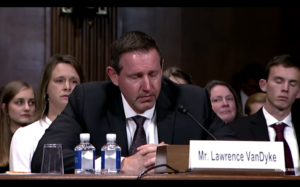
Lawrence
VanDyke
via
YouTube

If
judicial
opinions
were
résumés,
Judge
Lawrence
VanDyke
just
stapled
a
cover
letter
to
his
dissent
reading,
Dear
Donald
Trump,
please
notice
me.

With

rumors
swirling

that
Samuel
Alito
may
be
eyeing
retirement
from
the
Supreme
Court,
VanDyke’s
latest
performance
on
the
Ninth
Circuit
reads
less
like
a
serious
judicial
disagreement
and
more

like
an
audition
tape

for
the
potentially
open
seat.
And

not
a
subtle
one
.
This
is
full-on
pandering,
drenched
in
the
kind
of
belittling
rhetoric
that
reliably
delights
Donald
Trump
and
the
MAGA
faithful
who
view
professionalism
as
a
character
flaw.

VanDyke
turned

a
recent
dissent

into
a
late-night
blog
comment
section
rant,
complete
with
mockery,
sarcasm,
and
a
sneering
tone
that
would
get
a
first-year
associate
hauled
into
HR
by
lunchtime.
The
full
en
banc
court
was
reviewing
a
denial
of
a
stay
of
deportation
proceedings
for
a
Peruvian
family
seeking
to
remain
in
the
United
States
while
their
case
is
heard.
In
other
words,
the
stakes
were
extremely
real

whether
a
family
would
be
deported
before
the
court
even
finished
considering
the
legality
of
that
deportation.

Naturally,
VanDyke
responded
by
inventing
a
fictional
place
called
the
“Circuit
of
Wackadoo.”

Yes.
Really.

In
his
dissent,
VanDyke
spun
a
bizarre
fairy
tale
about
a
mythical
circuit
where
“the
attorneys
are
all
wise,
the
judges
are
all
zealous,
and
the
law
clerks
are
all
above
average.”
(Cool
joke,
everyone,
very
original.)
In
Wackadoo,
everything
is
“enlightened
and
efficient,”
except
for
one
fatal
flaw:
the
judges
are
apparently
too
busy.
To
cope,
they
allegedly
adopt
an
“unwritten
practice”
of
granting
administrative
stays
pending
review,
a
practice
VanDyke
presents
as
some
kind
of
radical
judicial
heresy.

The
punchline?
VanDyke
insists
that
Wackadoo
is

not

the
Ninth
Circuit.
That
would
be
ridiculous.
“That
would
be
crazy,”
he
writes.
“We
only
do
so
in
immigration
cases.”

Ah
yes.
Immigration
cases.
Those
famously
low-stakes
matters
involving
exile,
family
separation,
and
irreversible
harm.
Why

wouldn’t

judges
be
extra
cautious
there?

He
doubled
down,
accusing
his
colleagues
of
employing
what
he
calls
“manifestly
unlawful
stay
procedures.”
Procedures
that,
he
claims,
create
so
many
immigration
cases
that
the
court
then
points
to
the
volume
to
justify
continuing
the
practice.

And
here’s
where
the
dissent
fully
leaves
the
rails.

According
to
VanDyke,
the
Ninth
Circuit’s
internal
dialogue
resembles
“a
judicial
Oprah
Winfrey,
confused
by
her
own
popularity.”
He
then
helpfully
scripts
it
out:

“We
are

(‘You
get
a
stay!’)

sincerely
shocked

(‘You
get
a
stay!’)

by
the

(‘You
get
a
stay!’)

number
of

(‘You
get
a
stay!’)

utterly

(‘You
get
a
stay!’)

meritless

(‘You
get
a
stay!’)

immigration
petitions

(‘You
get
a
stay!
And
you
get
a
stay!
And
you
get
a
stay!’)

that
are
filed

(‘You
get
a
stay!’)

in
our
court.
(‘Everyone
gets
a
stay!’).”

This
isn’t
a
serious
critique;
it’s
performance
art
aimed
squarely
at
the
MAGA
audience
that
has
learned
to
hiss
at
the
words
“Ninth
Circuit”
on
command.

And
that’s
really
the
tell.
This
dissent
isn’t
about
persuading
colleagues

VanDyke
already
lost
that
battle.
It’s
about
mocking
fellow
judges
as
unserious,
lazy,
or
ideologically
captured,
while
casting
himself
as
the
lone
adult
in
the
room
bravely
resisting
the
forces
of…
procedural
fairness.
VanDyke
didn’t
need
to
write
like
this.
He
chose
to.
And
he
chose
a
tone
and
style
that
just
so
happens
to
align
perfectly
with
the
man
who
would
get
to
nominate
the
next
Supreme
Court
justice.

Of
course,
VanDyke
can
afford
this
blatant
pandering.
Lifetime
tenure
means
he
doesn’t
answer
to
voters,
clients,
or
managing
partners.
He
doesn’t
need
collegial
goodwill.
He
doesn’t
even
need
to
pretend
this
dissent
might
change
anyone’s
mind.
He
just
needs
to
make
sure
the
right
people
(Donald
Trump)
notice
that
he’s
very
angry
about
immigration
cases.


Kathryn
Rubino
is
a
Senior
Editor
at
Above
the
Law,
host
of

The
Jabot
podcast
,
and
co-host
of

Thinking
Like
A
Lawyer
.
AtL
tipsters
are
the
best,
so
please
connect
with
her.
Feel
free
to
email

her

with
any
tips,
questions,
or
comments
and
follow
her
on
Twitter

@Kathryn1
 or
Mastodon

@[email protected].

NY Bar Exam Tells Applicants Stranded By Historic Blizzard To Pound Snow – Above the Law

After
spending
the
last
36
hours
getting
walloped
by
a
historic
snow
storm

one
some
meteorologists
dubbed
a
“Snowicane”

the
New
York
Board
of
Law
Examiners
responded
with
all
the
compassion
and
common
sense
of
a
parking
meter.
Have
your
ass
in
its
seat
this
morning,
or
be
branded
as
“withdrawn”
from
the
exam.

Over
10,000
flights
have
been
canceled
since
Sunday,
as
one
of
the
New
York
airports
reported
over
27
inches
of
snow,
and
clearing
the
backlog
has
some
travelers
waiting
until
the
end
of
the
week
for
a
flight.
Ground
transportation
wasn’t
much
better
with
New
York
City
imposing
a
travel
ban
during
the
height
of
the
storm.
And
while
NYC
has
cleared
major
thoroughfares,
roads
across
the
region
remain,
as
the
National
Weather
Service
helpfully
noted,
“nearly
impossible”
to
navigate.

In
response,
the
NY
Board
of
Law
Examiners
told
bar
applicants
to
figure
it
out
or
get
bent.

According
to

the
ABA
Journal
,
the
Board’s
information
number
delivered
the
following
message
to
applicants
who
might
not
be
able
to,
you
know,
traverse
a
historic
blizzard
to
reach
their
testing
center
this
morning:

Failure
to
show
up
at
the
exam
will
not
prevent
you
from
reapplying
for
a
future
administration
of
the
bar
exam
in
New
York
unless
you
have
three
or
more
withdrawals
and
absences,
in
which
case
you
will
need
to
petition
the
board
for
permission
to
reapply.

“Withdrawn,”
because

you

made
the
deeply
personal
choice
not
to
risk
your
life
on
black
ice
at
6
a.m.
to
wax
philosophic
about
the
Rule
Against
Perpetuities.
See,
the
Board
wants
you
to
know
that
they
aren’t
punishing
you…
you’re
punishing

yourself

by
not
having
the
foresight
to
live
closer
to
a
testing
center.
Do
you
know
how
bad
it
was
out
there?
DoorDash
canceled
service,
and
their
motto
is:

Neither
rain
nor
gloom
of
night
stays
these
couriers
from
providing
your
burrito
a
personal
limousine
.

Also,
the
bar
exam
message
says
nothing
about
refunds
because
of
course
it
doesn’t.

Without
downplaying
how
much
this
sucks
for
anyone
trying
to
get
to
New
York,
what
makes
this
policy
so
reckless
is
that
law
school
graduates
looking
to
take
the
bar
are

exactly

the
kind
of
people
who
will
risk
a
drive
on
treacherous
roads
to
keep
their
jobs.

And
it’s
not
just
New
York
City.
The
Long
Island
location
got
hammered
with
over
15
inches
and
many
folks
heading
to
the
Albany
location
travel
up
from
NYC,
having
only
been
relegated
to
the
capital
by
virtue
of
having
attended
a
non-NY
law
school
before
moving
to
NYC
to
begin
their
careers.

Back
in
2013,
Missouri’s
Board
of
Law
Examiners

forced
applicants
into
a
blizzard

and
the
power
went
out
during
the
exam.
You’d
think
the
legal
profession
might
have
developed
some
institutional
memory
about
this
kind
of
thing.
But

and
I
cannot
stress
this
enough

once
you
accept
the
premise
that
the
bar
exam
is
a
good
idea
in
the
first
place,
you’ve
already
signaled
that
all
that
matters
is
performative
hardship.
Remember
how
the
various
state
bars
had
to
be
dragged
kicking
and
screaming
into
acknowledging
that
they
might
not
be
able
to
ram
hundreds
of
applicants
into
a
room
during
a
deadly
pandemic?
During
COVID,

bar
examiners
hinted
at
denying
licenses

to
anyone
who
publicly
criticized
them
for
forcing
applicants
to
subject
themselves
to
an
in-person
petri
dish.

The
bar
exam
is
always
form
over
substance,
but
it
takes
emergencies
like
these
to
distill
how
rotten
that
obsession
becomes.
If
the
goal
was
really
to
test
minimum
competence,
there
are
multiple
avenues
to
make
that
happen.
But
since
the
goal
is
actually
the
uncritical
devotion
to
a
gatekeeping
mechanism
of
dubious
value,
then
of
course
a
licensing
authority
cannot
even
conceive
of
a
world
involving
reasonable
delays
or
makeups
or
any
other
accommodations.
The
test
that
matters
to
them
is
getting
bodies
in
the
room
that
they
want
you
to
be
in,
full
stop.
These
applicants
spent
months
studying,
paid
their
application
fees,
and
many
went
to
great
lengths
to
try
to
travel
from
out
of
state.

And
the
bar
examiner
position
is
essentially,

fuck
them
kids
.


HeadshotJoe
Patrice
 is
a
senior
editor
at
Above
the
Law
and
co-host
of

Thinking
Like
A
Lawyer
.
Feel
free
to email
any
tips,
questions,
or
comments.
Follow
him
on Twitter or

Bluesky

if
you’re
interested
in
law,
politics,
and
a
healthy
dose
of
college
sports
news.
Joe
also
serves
as
a

Managing
Director
at
RPN
Executive
Search
.

The Rural Care Crisis Is an Economic Issue, Not Just a Public Health One – MedCity News

More
than
400
rural
hospitals
across
the
country
are

at
risk
of
closure
,
battling
a
mix
of
reimbursement
issues,
workforce
struggles
and
policy
decisions
that
have
left
safety
net
providers
financially
exposed.

Undeniably,
the
rural
healthcare
crisis
carries
serious
consequences
for
population
health
and
people’s
access
to
care,
but
there
are
also
ripple
effects
that
impact
the
economic
stability
of
rural
America
itself.
Healthcare
isn’t
just
a
social
good

it’s
a
foundational
infrastructure
that
determines
whether
rural
communities
can
attract
businesses,
sustain
populations
and
be
economically
viable.

I
asked
panelists
to
reflect
on
this
idea
during
a
rural
health
panel
I
was
moderating
Sunday
afternoon
at

ViVE

in
Los
Angeles,
and
they
agreed
that
access
to
healthcare
is
a
prerequisite
for
any
kind
of
rural
economic
development.

Joe
Dunn,
chief
policy
officer
at
the

National
Association
of
Community
Health
Centers
(NACHC)
,
noted
that
rural
communities
where
residents
must
drive
hours
to
reach
hospitals
or
specialist
care
are
fundamentally
unattractive
to
employers

whether
that’s
a
factory,
processing
plant
or
small
business. 

He
noted
that
healthcare
is
a
“backbone”
of
economic
vitality,
emphasizing
that
no
community
can
thrive

nor
can
the
country
tolerate

large
populations
being
cut
off
from
both
care
and
opportunity. 

Another
panelist,
Brian
Hoerneman,
CEO
at

Marshfield
Clinic
Health
System
,
pointed
out
that
rural
healthcare
organizations
often
serve
as
anchor
institutions
that
help
the
local
economy
grow.

“For
years,
we’ve
been
the
largest
employer
in
the
northern
half
of
Wisconsin,
and
in
many
of
the
other
communities
we
serve,
we’re
the
largest
employer.
Those
jobs
then
fund
local
small
businesses
and
make
up
a
significant
part
of
those
smaller
community
economies.
So
healthcare
is
kind
of
neat
that
way

it’s
a
big
obligation,
it’s
something
we
feel
every
day,
but
it
also
has
the
opportunity
to
really
help
support
the
community,”
Hoerneman
remarked.

Gulshan
Mehta,
chief
digital
and
information
officer
at

Blanchard
Valley
Health
System
,
added
that
his
health
system
is
the
largest
employer
in
its
region
as
well.

He
also
warned
that
the
economic
damage
isn’t
limited
to
hospital
closures
alone.
The
loss
of
individual
service
lines,
such
as
obstetrics
or
timely
emergency
services,
can
be
just
as
destabilizing.
When
residents
have
to
travel
long
distances
for
basic
care,
these
delays
compound
health
risks
across
the
area.

“You
start
thinking
about
the
commute
times
becoming
a
real
clinical
variable
when
it
comes
to
the
outcomes
of
healthcare

not
only
for
the
individual,
but
for
the
community
in
general,”
Mehta
declared.

Overall,
the
panelists
believe
that
healthcare
is
the
foundation
that
keeps
rural
communities
alive

both
literally
and
economically.


Photo:
Thomas
Barwick,
Getty
Images

Morning Docket: 02.24.26 – Above the Law

*
NY
Bar
Exam’s
response
to
snowstorm
canceling
flights
nationwide…
the
show
must
go
on!
[ABA
Journal
]

*
More
FOIA
suits
over
Biglaw
Pro
Bono
Payola
deals.
[National
Law
Journal
]

*
Neal
Katyal
says
his
clients
want
their
tariff
refunds.
If
they
get
them,
we’ll
all
surely
see
those
rebates
passed
on
to
the
consumer
the
same
way
they
passed
on
the
tariffs,
right?
[NPR]

*
Former
ICE
lawyer
testifies
that
the
system
is
dangerously
broken.
See,
now,
here’s
a
lawyer
abiding
by
his
ethical
duties

as
opposed
to
many,
many
others
.
[NBC
News
]

*
Gibson
Dunn
loses
case
over
former
partner’s
retirement
pay.
[Reuters]

*
Thomson
Reuters
CoCounsel
hits
a
million
users.
[Artificial
Lawyer
]

*
State
of
the
Union
poised
to
get
awkward
for
Supreme
Court.
[MSNow]

Law School Lurks Behind This Olympic Gold Medal Career – Above the Law

(Photo
by
Image
Photo
Agency/Getty
Images)


Ed.
Note:

Welcome
to
our
daily
feature

Trivia
Question
of
the
Day!


Olympic
gold
medalist
Alysia
Liu’s
father,
attorney
Arthur
Liu,
is
getting
a
lot
of
attention
in
the
wake
of
his
daughter’s
athletic
success.
What
law
school,
now
known
by
another
name,
did
he
attend?


Hint:
Arthur
Liu
fled
China
after
his
involvement
in
the
1989
Tiananmen
Square
protests
He
started
his
family
in
California
as
a
single
father
by
choice,
through
surrogacy.


See
the
answer
on
the
next
page.

Where Were You During Chief Justice Robert’s Humiliation? – See Also – Above the Law

“I’ll
Never
Forget
This”
To
“An
Embarrassment”
In
A
Year’s
Time:
Trump
shamed
the
hell
out
of
Republican
justices
that
didn’t
see
it
his
way.
Aileen
Cannon
Knows
Better
Than
To
Go
Against
Trump:
Nothing
say
“checks
and
balances”
like
protecting
the
president!
Law
Student
Dams
Car
Into
The
Hoover:
The
apparent
terrorist
attack
leaves
far
more
questions
than
answers.
Bad
Time
To
Be
The
Example:
Tech
accountability
case
gets
sidelined
by
lack
of
tech
accountability.
State
Supreme
Justice
Trades
Gavel
For
Chalkboard:
Finally,
a
Con
Law
professor
that
knows
their
stuff!

Kombi driver jailed 3 years for sexually abusing child kidnap teen

BULAWAYO

A
kombi
driver
who
sexually
abused
his
ex-girlfriend’s
14-year-old
sister
has
been
sentenced
to
three
years
in
prison
after
his
crime
was
exposed
through
a
bizarre
chain
of
events
triggered
by
the
teenager
kidnapping
a
two-year-old
baby.

Godwell
Mumba,
36,
pleaded
guilty
to
having
sexual
intercourse
with
a
minor
before
Bulawayo
provincial
magistrate
Themba
Chimiso
on
Monday.

Mumba
told
the
court
he
had
previously
been
in
a
relationship
with
the
victim’s
older
sister
and
had
since
“fallen
in
love”
with
the
younger
girl.

He
claimed
he
believed
she
was
old
enough
to
consent
because
she
had
told
him
she
was
already
a
mother.

Magistrate
Chimiso
was
unmoved.
He
said
Mumba’s
prior
relationship
with
the
family
placed
him
in
a
position
of
trust,
one
he
had
exploited
rather
than
honoured.

“Since
you
were
in
love
with
her
sister,
you
were
in
a
position
of
trust
and
you
were
supposed
to
protect
the
child,
but
instead
you
sexually
violated
her,”
Chimiso
said.

The
magistrate
described
Mumba
as
a
sexual
predator
who
had
groomed
the
girl
over
an
extended
period
from
January
this
year
until
last
week,
warning
that
the
ordeal
would
leave
lasting
scars
on
the
victim.

“It
is
the
duty
of
the
court
to
protect
the
girl
child
from
sexual
predators
like
you,”
he
said.

Prosecutor
Samuel
Mpofu
noted
that
Mumba
was
double
the
teenager’s
age
and
had
full
knowledge
that
she
was
below
the
age
of
consent.
He
successfully
argued
for
a
custodial
sentence.

Pleading
for
leniency,
Mumba
said
he
was
married
with
a
nine-year-old
child
and
was
his
family’s
sole
breadwinner.
The
court
was
not
persuaded.

Mumba’s
abuse
may
never
have
come
to
light
had
it
not
been
for
an
unusual
sequence
of
events.
On
February
17,
the
teenager

a
Form
One
pupil
living
with
her
mother
in
Rangemore

allegedly
abducted
a
two-year-old
child
from
Meikles
Market
in
the
city
centre.

She
took
the
baby
to
Mumba’s
home
in
Trenance,
presenting
the
child
as
her
own.
The
two
stayed
there
for
two
days.

On
February
19,
the
teenager
attempted
to
leave
the
baby
with
a
stranger
at
a
block
of
flats
in
the
city,
telling
the
man
that
the
child’s
father
would
come
to
collect
her.
The
man
grew
suspicious,
recognised
the
baby
as
the
child
reported
missing
and
alerted
authorities.

In
a
police
interview,
the
teen
revealed
that
Mumba
was
her
“boyfriend.”
He
was
arrested
in
Plumtree.

The
teenager
has
since
been
charged
with
kidnapping.
She
was
released
on
bail
into
the
custody
of
her
mother.

Zanu PF Harare spokesperson wanted in South Africa after skipping bail

JOHANNESBURG

Zanu
PF’s
deputy
secretary
for
information
and
publicity
in
Harare
province,
Joachim
Chivayo,
is
wanted
in
South
Africa
after
allegedly
breaching
bail
conditions
in
a
R15
million
gold
case.

South
African
authorities
confirmed
that
warrants
of
arrest
were
issued
on
March
11,
2025,
by
the
Brakpan
Magistrate’s
Court
after
Chivayo
and
his
co-accused,
Brian
Gungwa,
failed
to
return
to
court
and
did
not
comply
with
their
bail
conditions.

Chivayo,
35,
the
younger
brother
to
controversial
businessman
Wicknell
Chivayo,
was
arrested
on
November
26,
2024,
at
Helderwyk
Estate
in
Brakpan.
The
Hawks’
Serious
Organised
Crime
Unit
apprehended
him
and
Gungwa,
a
22-year-old
with
South
African
citizenship,
for
allegedly
possessing
six
unwrought
gold
bars
valued
at
approximately
R15
million.

The
pair
appeared
before
the
Brakpan
Magistrate’s
Court
on
November
28,
2024,
where
each
was
granted
bail
of
R20,000.

Their
release
came
with
strict
conditions:
they
were
required
to
remain
within
Gauteng
province,
and
to
report
weekly
to
the
Brakpan
Police
Station
every
Sunday
beginning
December
1,
2024.
The
matter
was
postponed
to
February
25,
2025,
to
allow
for
further
investigation.

However,
authorities
say
both
men
failed
to
adhere
to
the
bail
conditions
and
did
not
return
to
court
on
the
scheduled
date.
Warrants
were
subsequently
issued
for
their
arrest,
and
they
are
now
officially
listed
as
wanted
suspects.

Chivayo,
sometimes
referred
to
as
Joacham,
was
appointed
Zanu
PF’s
deputy
secretary
for
information
and
publicity
in
Harare
province
in
September
2025.
He
is
also
the
founder
of
ZimSports4ED,
a
Zanu
PF
affiliate
organisation.

He
has
in
recent
months
been
seen
at
Zanu
PF
gatherings
in
Harare,
often
driving
high-end
vehicles.
Allegations
have
circulated
linking
his
lifestyle
to
proceeds
of
gold
smuggling
and
other
illicit
activities.

South
Africa
and
Zimbabwe
regularly
cooperate
on
cross-border
crime
through
Interpol
and
other
extradition
protocols,
raising
the
prospect
of
Chivayo
being
extradited
if
a
request
is
made
by
South
African
authorities.

Zimbabwe rejects $350m US health deal, citing sovereignty concerns

HARARE

Zimbabwe
has
walked
away
from
a
proposed
$350
million
health
funding
agreement
with
the
United
States,
after
President
Emmerson
Mnangagwa
personally
directed
his
government
to
discontinue
negotiations
over
what
Harare
describes
as
a
one-sided
deal
that
undermines
the
country’s
sovereignty.

Albert
Chimbindi,
the
secretary
for
foreign
affairs
and
international
trade,
communicated
the
directive
to
the
secretaries
of
finance
and
health
in
a
letter
dated
December
23,
2025,
according
to
a
previously
unreported
document
seen
by
ZimLive.

“The
President
has
directed
that
Zimbabwe
must
discontinue
any
negotiation
with
the
USA
on
the
clearly
lopsided
MoU
that
blatantly
compromises
and
undermines
the
sovereignty
and
independence
of
Zimbabwe
as
a
country,”
the
letter
reads.

The
memorandum
of
understanding
(MoU)
was
being
promoted
by
Washington
as
the
future
framework
for
US
health
support
to
Zimbabwe
under
its
America
First
Global
Health
Strategy
(AFGHS).
But
Harare
found
its
conditions
unacceptable
on
multiple
fronts.

The
US
sought
direct
access
to
Zimbabwe’s
health
data
over
an
agreed
period,
a
provision
Zimbabwean
officials
viewed
as
intelligence
overreach.
The
US
separately
pushed
for
access
to
the
country’s
critical
mineral
resources
as
part
of
the
broader
arrangement.

Zimbabwe
also
objected
on
principle.
Harare
argued
that
signing
a
bilateral
health
agreement
with
Washington
would
be
inconsistent
with
its
commitment
to
multilateralism,
particularly
given
that
the
United
States
had
withdrawn
from
the
World
Health
Organisation
under
the
Donald
Trump
administration.

Entering
into
a
parallel
bilateral
health
architecture,
the
government
reasoned,
would
effectively
legitimise
Washington’s
exit
from
the
global
health
order.

Despite
Zimbabwe’s
resistance,
Washington’s
health
diplomacy
offensive
is
gaining
traction
elsewhere
on
the
continent.
At
least
14
African
countries
have
already
signed
similar
agreements
under
the
AFGHS
framework.

The
rejection
of
the
MoU
comes
as
Zimbabwe
also
faces
the
loss
of
US
humanitarian
funding.
A
year
after
Trump
began
dismantling
USAID,
which
had
funded
programmes
in
Zimbabwe
including
the
provision
of
HIV
medicines,
his
administration
is
now
initiating
a
new
round
of
significant
cuts
to
foreign
assistance.

An
internal
State
Department
email,
reported
by
The
Atlantic,
said
the
US
will
soon
end
all
humanitarian
funding
currently
provided
to
seven
African
nations,
including
Zimbabwe,
as
part
of
a
“responsible
exit,”
with
funding
in
nine
others
to
be
redirected.
Aid
programmes
in
all
of
these
countries,
previously
up
for
renewal
through
the
end
of
September,
will
instead
be
allowed
to
expire,
each
of
them
classified
as
lifesaving
by
the
Trump
administration’s
own
standards.

A
February
12
email
to
officials
in
the
State
Department’s
Bureau
of
African
Affairs
said
the
projects
in
Burkina
Faso,
Cameroon,
Malawi,
Mali,
Niger,
Somalia
and
Zimbabwe
are
being
cancelled
because
“there
is
no
strong
nexus
between
the
humanitarian
response
and
US
national
interests.”

The
US
Embassy
in
Harare
had
not
responded
to
a
request
for
comment
at
the
time
of
publication.