Back
in
November
2025,
Perkins
Coie
announced
its
plans
to
combine
with
Ashurst,
a
transatlantic
tie-up
expected
to
propel
the
combined
firm
into
the
top
20
of
the
Am
Law
100.
With
the
merger
expected
to
close
sometime
in
the
third
quarter,
partners
at
Perkins
Coie
are
already
voting
—
with
their
feet.
Within
the
last
week
alone,
competitors
have
announced
two
large
group
departures
from
the
firm.
McGuireWoods
picked
up
a
pack
of
eight
departing
Perkins
partners,
announcing
plans
to
open
a
Seattle
office,
while
Morrison
&
Foerster
managed
to
grab
a
group
of
15
litigation
partners,
also
announcing
plans
to
open
a
Seattle
office
with
its
new
Perkins
partners
in
tow.
Both
firms
are
taking
several
practice
group
leaders
in
their
Perkins
partner
haul.
Rike
Connelly,
former
co-leader
of
Perkins
Coie’s
business
litigation
practice
group,
will
serve
as
managing
partner
of
McGuireWoods’
new
Seattle
office
and
co-lead
their
business
litigation
practice
group.
The
other
seven
partners
joining
McGuireWoods
includes:
Eric
Wolff,
who
co-chaired
Perkins
Coie’s
appellate
practice;
Mack
Shultz,
who
chaired
Perkins
Coie’s
product
liability
litigation
group;
Todd
Rosencrans,
who
was
vice
chair
of
Perkins
Coie’s
product
liability
litigation
group;
Judge
Abdul
Kallon;
who
co-chaired
Perkins
Coie’s
trial
practice
group;
Daniel
Ridlon;
who
co-chaired
Perkins
Coie’s
autonomous
and
uncrewed
vehicle
systems
industry
group;
Monique
Wirrick;
and
Christopher
Ledford.
The
American
Lawyer
has
the
details
on
the
laywers
who
are
leaving
for
MoFo:
The
group
joining
Morrison
&
Foerster
includes
David
Perez,
who
was
previously
chair
of
Perkins’
business
litigation
practice
until
last
May,
and
had
been
with
the
firm
for
more
than
14
years,
as
well
as
Brendan
Murphy,
Zachary
Davison,
Mallory
Gitt,
Laura
Hill,
Megan
Houlihan,
Michelle
Maley,
Matthew
Mertens,
Gregory
Miller,
and
Eric
Weiss,
all
in
Seattle.
The
firm
also
hired
two
Perkins
partners
in
San
Diego:
Ray
Hartman
and
Jacob
Spekhard.
Morrison
&
Foerster
also
confirmed
that
three
additional
partners
are
expected
to
join
from
Perkins
in
Seattle
in
the
coming
weeks,
but
the
firm
could
not
yet
release
the
remaining
three
names.
In
response
to
the
partner
exits,
Perkins
Coie
said
the
firm
was
“grateful
for
the
contributions
of
our
former
colleagues,
and
we
wish
them
well.”
Best
of
luck
to
McGuireWoods
and
Morrison
&
Foerster
on
their
new
Seattle
offices,
which
are
brimming
over
with
former
Perkins
partners.
Staci
Zaretsky is
the
managing
editor
of
Above
the
Law,
where
she’s
worked
since
2011.
She’d
love
to
hear
from
you,
so
please
feel
free
to email her
with
any
tips,
questions,
comments,
or
critiques.
You
can
follow
her
on Bluesky, X/Twitter,
and Threads, or
connect
with
her
on LinkedIn.
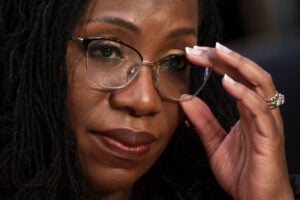
Justice
Ketanji
Brown
Jackson
attended
the
Grammy
Awards
over
the
weekend
because
her
memoir,
“Lovely
One,”
was
nominated
for
Best
Audio
Book,
Narration
&
Storytelling
Recording.
She
lost
to
the
Dalai
Lama.
Which,
honestly…
fair.
Anyway,
that
should
be
the
end
of
it,
but
it’s
2026
and
Republicans
need
to
find
something
to
talk
about
instead
of
unleashing
untrained,
armed
thugs
on
Minnesota
to
kidnap
journalists
and
murder
civilians,
so
Justice
Jackson’s
award
nomination
is
the
new
ethics
scandal.
There’s
nothing
improper
about
attending
an
awards
ceremony
for
an
award
that
you’re
actually
nominated
for.
But
Senator
Marsha
Blackburn
wants
an
investigation
into
whether
Jackson’s
attendance
breached
Supreme
Court
ethics
because
so
many
artists
and
presenters
bashed
ICE
at
the
event.
Blackburn’s
letter
claims
that
Jackson’s
mere
presence
at
an
event
where
other
people
exercised
their
First
Amendment
rights
somehow
compromises
her
impartiality
on
immigration
cases:
“While
it
is
by
no
means
unheard
of
or
unusual
for
a
Supreme
Court
justice
to
attend
a
public
function,
very
rarely—if
ever—have
justices
of
our
nation’s
highest
Court
been
present
at
an
event
at
which
attendees
have
amplified
such
far-left
rhetoric,”
Blackburn
(R-Tenn.)
wrote
in
a
Thursday
letter
to
[Chief
Justice
John]
Roberts.
Presumably
the
“far-left
rhetoric”
is
“Abolish
ICE.”
And
if
that’s
the
case,
the
bad
news
for
Blackburn
is
that
this
is,
according
to
polling,
the
mainstream
American
position
now.
The
ethical
constraints
on
the
Supreme
Court
are
notoriously
non-existent.
Blackburn
cites
the
toothless
advice
that
the
justices
“act
at
all
times
in
a
manner
that
promotes
public
confidence
in
the
integrity
and
impartiality
of
the
judiciary.”
The
senator
specifically
worries
that
Jackson’s
appearance
in
the
same
room
where
such
radical
thoughts
as
“maybe
don’t
imprison
children
without
due
process”
might
be
expressed.
Blackburn
recounted
how
Sens.
Dick
Durbin
(D-Ill.)
and
Sheldon
Whitehouse
(D-RI)
penned
a
letter
to
Roberts
urging
him
to
ensure
that
conservative
Justice
Samuel
Alito
would
recuse
himself
in
the
2020
election
and
Capitol
riot
cases
because
his
wife
put
up
a
Revolutionary
War-era
flag
at
his
house.
Right.
But
see
how
that’s,
like,
not
at
all
the
same
thing?
The
proper
analogy
would
be
if
Justice
Jackson
herself
wore
an
ICE
Out
pin
at
the
event.
And
if
she
did
so,
then
that
would
be
a
good
argument
for
recusal.
But
she
did
not.
Which
makes
it
very
different
than
Sam
Alito
flying
insurrection
symbols
outside
his
house
in
January
2021.
Third
Circuit
Judge
Emil
Bove,
one
of
the
architects
of
the
DOJ’s
contemptuous
approach
to
deportations
having
reportedly
counseling
government
lawyers
to
say
“fuck
you”
to
courts
blocking
illegal
flights,
attended
a
Trump
rally
in
Pennsylvania.
As
opposed
to
an
awards
show
where
Billie
Eilish
earned
30
seconds
to
express
her
support
for
immigrants,
Bove
attended
a
political
rally
where
the
president
declared
immigrants
as
coming
from
“shithole
countries,”
and
mused
about
running
for
a
third
term.
As
a
symbolic
expression
of
support,
this
is
not
in
the
same
ballpark.
It’s
not
even
clear
Blackburn
is
dumb
enough
to
buy
her
own
performative
tantrum:
“Congressional
Democrats
and
the
legacy
media
have
spent
years
smearing
Republican-appointed
Supreme
Court
justices
as
corrupt,
partisan,
and
having
engaged
in
conduct
that
violates
the
Court’s
Code
of
Conduct,”
Blackburn
bemoaned.
“These
public
smear
campaigns
orchestrated
by
congressional
Democrats
and
amplified
by
the
mainstream
media
were
baseless
and
a
pathetic
attempt
to
influence
the
decision-making
process
of
the
Court.”
And
that’s
the
whole
strategy.
Deflect
from
the
documented
corruption
piling
up
around
conservatives
by
claiming
the
real
bias
is
passively
sitting
in
the
audience
while
the
woke
mob
awards
Spanish-language
music.
If
the
standard
is
merely
attending
an
event
where
other
speakers
engage
in
radical
rhetoric,
can
we
get
some
ethical
complaints
over
being
within
a
thousand
yards
of
a
Federalist
Society
conference?
Because
I
don’t
know
if
the
GOP
wants
to
pull
that
string.
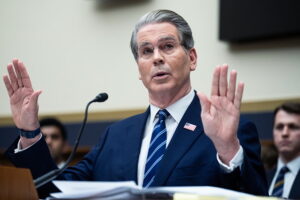
Scott
Bessent
has
to
pretend
to
believe
a
lot
of
nonsense,
but
Donald
Trump’s
lawsuit
against
the
IRS
is
really
making
the
Treasury
Secretary
work
for
it.
Last
week,
the
president
dropped
his
latest
trollsuit,
this
time
targeting
the
government
over
the
leak
of
his
tax
returns
in
2020
by
Charles
Littlejohn,
a
contractor
for
Booz
Allen
Hamilton.
The
New
York
Times
penned
dozens
of
stories
about
those
returns
before
the
2020
election,
but
Trump
claims
not
to
have
learned
about
it
until
January
of
2024,
when
Littlejohn
was
sentenced.
This
is
convenient,
since
any
civil
suit
over
wrongful
disclosure
of
tax
information
must
be
filed
within
two
years.
Less
convenient
is
the
fact
that
Trump’s
own
lawyer
Alina
Habba
appeared
at
Littlejohn’s
plea
hearing
on
October
12,
2023
“on
behalf
of
President
Trump
who
was
a
victim,
as
we
just
heard,
of
this
atrocity.”
But
no
matter!
Trump
demands
$10
billion
because
the
Times
wrote
mean
stuff
about
his
finances.
Plus,
he
and
his
company
had
to
“defend
against
a
meritless
civil
suit
brought
by
the
New
York
Attorney
General
based
on
wrongful
interpretation
of
unauthorized
disclosures
of
their
confidential
tax
returns
and
related
tax
information.”
KA-CHING!
This
puts
Secretary
Bessent
in
an
awkward
position
—
or,
two
awkward
positions
to
be
exact,
since
he
took
over
as
acting
Commissioner
of
the
IRS
after
Trump
pushed
out
Billy
Long,
his
own
pick
to
lead
the
agency.
If
Trump
“wins”
his
“lawsuit,”
then
the
taxpayers
will
be
on
the
hook
for
the
money.
Even
as
Americans
are
coughing
up
thousands
of
dollars
per
household
for
increased
health
insurance
premiums
and
those
“non-inflationary”
tariffs,
they’ll
be
asked
to
hand
the
president
an
eleven-figure
check.
It’s
breathtakingly
corrupt,
and
so
Bessent
has
figured
out
a
way
to
distance
himself
from
the
looting
of
his
agency:
He’s
blaming
Pam
Bondi.
“This
is
a
Justice
Department
matter.
They
represent
Treasury,”
he
sneered
in
response
to
questioning
by
Senator
Ruben
Gallego
about
the
glaring
conflict
of
interest.
GALLEGO:
Can
the
president
fire
you?BESSENT:
He
canGALLEGO:
Isn’t
it
a
conflict
of
interest
for
you
to
making
these
decisions
and
the
president
has
full
power?BESSENT:
I
am
not
part
of
the
decisionGALLEGO:
Well
you
hit
‘send’
on
the
wire
transfer.
You’re
plundering
US
taxpayer
dollars
So
much
for
the
unitary
executive
theory!
Apparently
the
DOJ
is
running
the
show,
and
Treasury
is
just
along
for
the
ride.
The
IRS
has
no
institutional
interest
or
say
in
the
litigation.
If
the
Attorney
General
decides
not
to
defend
against
a
patently
frivolous
lawsuit,
it’s
got
nothing
to
do
with
him.
“We
act
as
paymaster,”
Bessent
insisted,
conveniently
dumping
responsibility
for
the
plunder
of
his
agency
in
Bondi’s
lap.
When
hedge
fund
billionaire
Ken
Griffin
sued
the
Treasury
over
the
leak
of
his
tax
documents
— in
timely
fashion!
—
the
DOJ
mounted
a
robust
defense.
But
if
the
Bondi
decides
to
“lose”
this
lawsuit,
that’s
on
her.
Bessent
is
more
like
a
cash
register,
really,
or
an
AI
chatbot
being
ordered
to
generate
CSAM.
It’s
user
error!
GALLEGO:
Let’s
say
Trump
wins
that
lawsuit.
Where
would
that
$10
billion
come
from?BESSENT:
It
would
come
from
TreasuryGALLEGO:
So,
taxpayers?BESSENT:
Yes.
Part
of
the
44,000
whose
returns
were
leakedGALLEGO:
They’re
not
suing
It’s
a
neat
trick!
Someone
should
hurry
up
and
tell
DHS
Secretary
Kristi
Noem
that
she
has
to
do
whatever
the
DOJ
lawyers
tell
her
because
they’re
the
ones
really
in
charge.
That
would
save
those
poor,
harried
AUSAs
from
having
to
explain
to
judges
why
ICE
refuses
to
comply
with
court
orders.
Whether
it
saves
Bessent
from
being
held
responsible
for
the
coming
wealth
transfer
from
American
taxpayers
to
the
president’s
bloated
pockets
remains
to
be
seen
How
patent
work
is
structured
shapes
how
it
is
valued.
In
a
recent
Tradespace
and
Above
the
Law
survey,
two-thirds
of
companies
that
draft
patents
in-house
described
IP
as
a
value
driver,
while
71
percent
of
companies
that
outsource
drafting
viewed
IP
as
a
cost.
Inside
this
whitepaper,
we
explore:
Proximity
Changes
Strategy When
drafting
and
prosecution
move
inside,
IP
teams
work
closer
to
engineers
and
product
leaders.
This
proximity
improves
invention
quality,
strengthens
claim
strategy,
and
aligns
patent
decisions
with
product
direction,
market
timing,
and
business
priorities.
Scale
Breaks
Mid-Market
Teams
First Companies
in
the
$51
million
to
$499
million
revenue
range
report
the
lowest
satisfaction
with
staffing
ratios.
Patent
workloads
continue
to
grow
through
disclosures,
foreign
filings,
office
actions,
maintenance,
and
engineering
collaboration,
even
as
headcount
plateaus.
Without
systems,
scale
creates
strain.
Technology
Enables
the
Shift A
majority
of
surveyed
organizations
expect
to
invest
in
IP
technology
within
three
to
five
years,
citing
faster
drafting
cycles,
improved
accuracy,
clearer
portfolio
insight,
stronger
product
coordination,
and
more
predictable
review.
AI
makes
internalization
viable
for
lean
teams
by
absorbing
mechanical
work
and
stabilizing
growth.
Ed.
Note:
A
weekly
roundup
of
just
a
few
items
from
Howard
Bashman’s
How
Appealing
blog,
the
Web’s
first
blog
devoted
to
appellate
litigation.
Check
out
these
stories
and
more
at
How
Appealing.
“Justice
Department
Struggles
Under
Weight
of
Immigration
Crackdown;
Current
and
former
prosecutors
say
they
can
relate
to
the
government
lawyer
who
told
judge
she
was
overwhelmed”: Sadie
Gurman
and
Hannah
Critchfield
of
The
Wall
Street
Journal
have this
report.
“A
Revolt
Inside
Paul
Weiss
Over
the
Epstein
Files
Took
Down
Brad
Karp;
Latest
batch
of
Epstein
emails
prompted
partners
to
push
elite
law
firm’s
leader
from
chairman
role”: Cara
Lombardo,
Lauren
Thomas,
and
Erin
Mulvaney
of
The
Wall
Street
Journal
have this
report.
“Trump
DOJ
Reimagines
Birthright
Citizenship
History
for
Justices”: Justin
Wise
of
Bloomberg
Law
has this
report.
“Failure
to
Alert
Judge
to
Press
Law
for
Reporter
Search
Draws
Ethical
Scrutiny;
The
Justice
Department
may
have
violated
a
candor
rule
by
not
disclosing
a
1980
law
when
seeking
a
warrant
for
a
Washington
Post
reporter’s
home”: Charlie
Savage
of
The
New
York
Times
has this
report.
“Goldstein
Jury
Told
He
Admitted
to
Understating
Debt
to
Get
Loan”: Holly
Barker
of
Bloomberg
Law
has this
report.
For
years,
we’ve
been
subjected
to
an
endless
parade
of
hyperventilating
claims
about
the
Biden
administration’s
supposed
“censorship
industrial
complex.”
We
were
told,
over
and
over
again,
that
the
government
was
weaponizing
its
power
to
silence
conservative
speech.
The
evidence
for
this?
Some
angry
emails
from
White
House
staffers
that
Facebook
ignored.
That
was
basically
it.
The
Supreme
Court
looked
at
it
and
said
there
was
no
standing
because
there
was no
evidence
of
coercion (and
even
suggested
that
the
plaintiffs
had
fabricated
some
of
the
facts,
unsupported
by
reality).
But
now
we
have
actual,
documented
cases
of
the
federal
government
using
its
surveillance
apparatus
to
track
down
and
intimidate
Americans
for
nothing
more
than
criticizing
government
policy.
And
wouldn’t
you
know
it,
the
same
people
who
spent
years
screaming
about
censorship
are
suddenly
very
quiet.
If
any
of
the
following
stories
had
happened
under
the
Biden
administration,
you’d
hear
screams
from
the
likes
of
Matt
Taibbi,
Bari
Weiss,
and
Michael
Shellenberger,
about
the
crushing
boot
of
the
government
trying
to
silence
speech.
But
somehow…
nothing.
Weiss
is
otherwise
occupied—busy stripping
CBS
News
for
parts to
please
King
Trump.
And
the
dude
bros
who
invented
the
“censorship
industrial
complex”
out
of
their
imaginations?
Pretty
damn
quiet
about
stories
like
the
following.
Taibbi
is
spending
his
time
trying
to
play
down
the
Epstein
files
and
claiming
Meta
blocking
ICE
apps
on
direct
request
from
DHS
isn’t
censorship
because
he
hasn’t
seen
any
evidence
that
it’s
because
of
the
federal
government.
Dude.
Pam
Bondi
publicly
stated she
called
Meta to
have
them
removed.
Shellenberger,
who
is
now
somehow
a
“free
speech
professor”
at
Bari
Weiss’ collapsing
fake
university,
seems
to
just
be
posting
non-stop
conspiracy
theory
nonsense
from
cranks.
Let’s
start
with
the
case
that
should
make
your
blood
boil.
The
Washington
Post
reports
that
a
67-year-old
retired
Philadelphia
man
—
a
naturalized
U.S.
citizen
originally
from
the
UK
— found
himself
in
the
crosshairs of
the
Department
of
Homeland
Security
after
he
committed
the
apparently
unforgivable
sin
of…
sending
a
polite
email
to
a
government
lawyer
asking
for
mercy
in
a
deportation
case.
Here’s
what
he
wrote
to
a
prosecutor
who
was
trying
to
deport
an
Afghani
man
who
feared
the
Taliban
would
take
his
life
if
sent
there.
The
Philadelphia
resident
found
the
prosecutors
email
and
sent
the
following:
“Mr.
Dernbach,
don’t
play
Russian
roulette
with
H’s
life.
Err
on
the
side
of
caution.
There’s
a
reason
the
US
government
along
with
many
other
governments
don’t
recognise
the
Taliban.
Apply
principles
of
common
sense
and
decency.”
That’s
it.
That’s
the
email
that
triggered
a
federal
response.
Within
hours
— hours —
of
sending
this
email,
Google
notified
him
that
DHS
had
issued
an
administrative
subpoena
demanding
his
personal
information.
Days
later,
federal
agents
showed
up
at
his
door.
Showed.
Up.
At.
His.
Door.
A
retired
guy
sends
a
respectful
email
asking
the
government
to
be
careful
with
someone’s
life,
and
within
the
same
day,
the
surveillance
apparatus
is
mobilized
against
him.
The
tool
being
weaponized
here
is
the
administrative
subpoena
(something we’ve
been
calling
out for
well
over
a
decade,
under
administrations
of
both
parties)
which
is
a
particularly
insidious
instrument
because
it
doesn’t
require
a
judge’s
approval.
Unlike
a
judicial
subpoena,
where
investigators
have
to
show
a
judge
enough
evidence
to
justify
the
search,
administrative
subpoenas
are
essentially
self-signed
permission
slips.
As TechCrunch
explains:
Unlike
judicial
subpoenas,
which
are
authorized
by
a
judge
after
seeing
enough
evidence
of
a
crime
to
authorize
a
search
or
seizure
of
someone’s
things,
administrative
subpoenas
are
issued
by
federal
agencies,
allowing
investigators
to
seek
a
wealth
of
information
about
individuals
from
tech
and
phone
companies
without
a
judge’s
oversight.
While
administrative
subpoenas
cannot
be
used
to
obtain
the
contents
of
aperson’s
emails,
online
searches,
or
location
data,
they
can
demand
information
specifically
about
the
user,
such
as
what
time
a
user
logs
in,
from
where,
using
which
devices,
and
revealing
the
email
addresses
and
other
identifiable
information
about
who
opened
an
online
account.
But
because
administrative
subpoenas
are
not
backed
by
a
judge’s
authority
or
a
court’s
order,
it’s
largely
up
to
a
company
whether
to
give
over
any
data
to
the
requesting
government
agency.
The
Philadelphia
retiree’s
case
would
be
alarming
enough
if
it
were
a
one-off.
It’s
not.
Bloomberg
has
reported
on at
least
five
cases
where
DHS
used
administrative
subpoenas to
try
to
unmask
anonymous
Instagram
accounts
that
were
simply documenting
ICE
raids in
their
communities.
One
account,
@montcowatch,
was
targeted
simply
for
sharing
resources
about
immigrant
rights
in
Montgomery
County,
Pennsylvania.
The
justification?
A
claim
that
ICE
agents
were
being
“stalked”
—
for
which
there
was
no
actual
evidence.
The
ACLU,
which
is
now
representing
several
of
these
targeted
individuals,
isn’t
mincing
words:
“It
doesn’t
take
that
much
to
make
people
look
over
their
shoulder,
to
think
twice
before
they
speak
again.
That’s
why
these
kinds
of
subpoenas
and
other
actions—the
visits—are
so
pernicious.
You
don’t
have
to
lock
somebody
up
to
make
them
reticent
to
make
their
voice
heard.
It
really
doesn’t
take
much,
because
the
power
of
the
federal
government
is
so
overwhelming.”
This
is
textbook
chilling
effects
on
speech.
Remember,
it
was
just
a
year
and
a
half
ago
in Murthy
v.
Missouri,
the
Supreme
Court
found
no
First
Amendment
violation
when
the
Biden
administration
sent
emails
to
social
media
platforms—in
part
because
the
platforms
felt
entirely
free
to
say
no.
The
platforms
weren’t
coerced;
they
could
ignore
the
requests
and
did.
Now
consider
the
Philadelphia
retiree.
He
sends
one
polite
email.
Within
hours,
DHS
has
mobilized
to
unmask
him.
Days
later,
federal
agents
are
at
his
door.
Does
that
sound
like
someone
who’s
free
to
speak
his
mind
without
consequence?
Even
if
you
felt
that
what
the
Biden
admin
did
was
inappropriate,
it
didn’t
involve
federal
agents
showing
up
at
people’s
homes.
That
is
what
actual
government
suppression
of
speech
looks
like.
Not
mean
tweets
from
press
secretaries
that
platforms
ignored,
but
federal
agents
showing
up
at
your
door
because
you
sent
an
(perfectly
nice)
email
the
government
didn’t
like.
So
we
have
DHS
mobilizing
within
hours
to
identify
a
67-year-old
retiree
who
sent
a
polite
email.
We
have
agents
showing
up
at
citizens’
homes
to
interrogate
them
about
their
protected
speech.
We
have
the
government
trying
to
unmask
anonymous
accounts
that
are
documenting
law
enforcement
activities
—
something
that
is
unambiguously
protected
under
the
First
Amendment.
Recording
police,
sharing
that
recording,
and
doing
so
anonymously
is
legal.
It’s
protected
speech.
And
the
government
is
using
administrative
subpoenas
to
try
to
identify
and
intimidate
the
people
doing
it.
For
years,
we
heard
that
government
officials
sending
emails
to
social
media
companies
—
emails
the
companies
ignored
—
constituted
an
existential
threat
to
the
First
Amendment.
But
when
the
government
actually
uses
its
coercive
power
to
track
down,
identify,
and
intimidate
citizens
for
their
speech?
Crickets.
This
is
what
a
real
threat
to
free
speech
looks
like.
Not
“jawboning”
that
platforms
can
easily
refuse,
but
the
full
weight
of
federal
surveillance
being
deployed
against
anyone
who
dares
to
criticize
the
administration.
The
chilling
effect
here
is
the
entire
point.
As
the
ACLU
noted,
this
appears
to
be
“part
of
a
broader
strategy
to
intimidate
people
who
document
immigration
activity
or
criticize
government
actions.”
If
you
spent
the
last
few
years
warning
about
government
censorship,
this
is
your
moment.
This
is
the
actual
thing
you
claimed
to
be
worried
about.
But,
of
course,
all
those
who
pretended
to
care
about
free
speech
really
only
meant
they
cared
about
their
own
team’s
speech.
Watching
the
government
actually
suppress
critics?
No
big
deal.
They
probably
deserved
it.
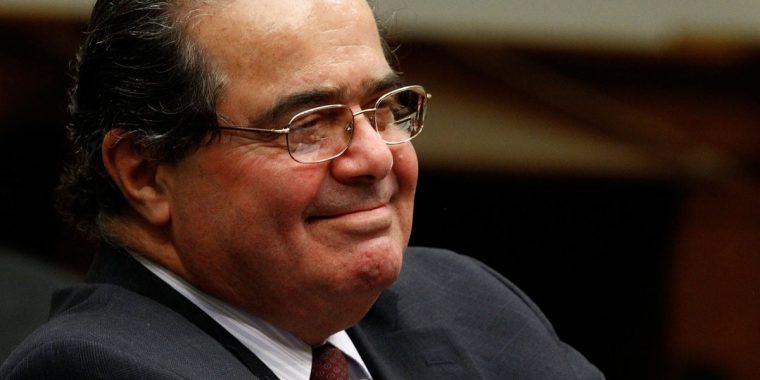
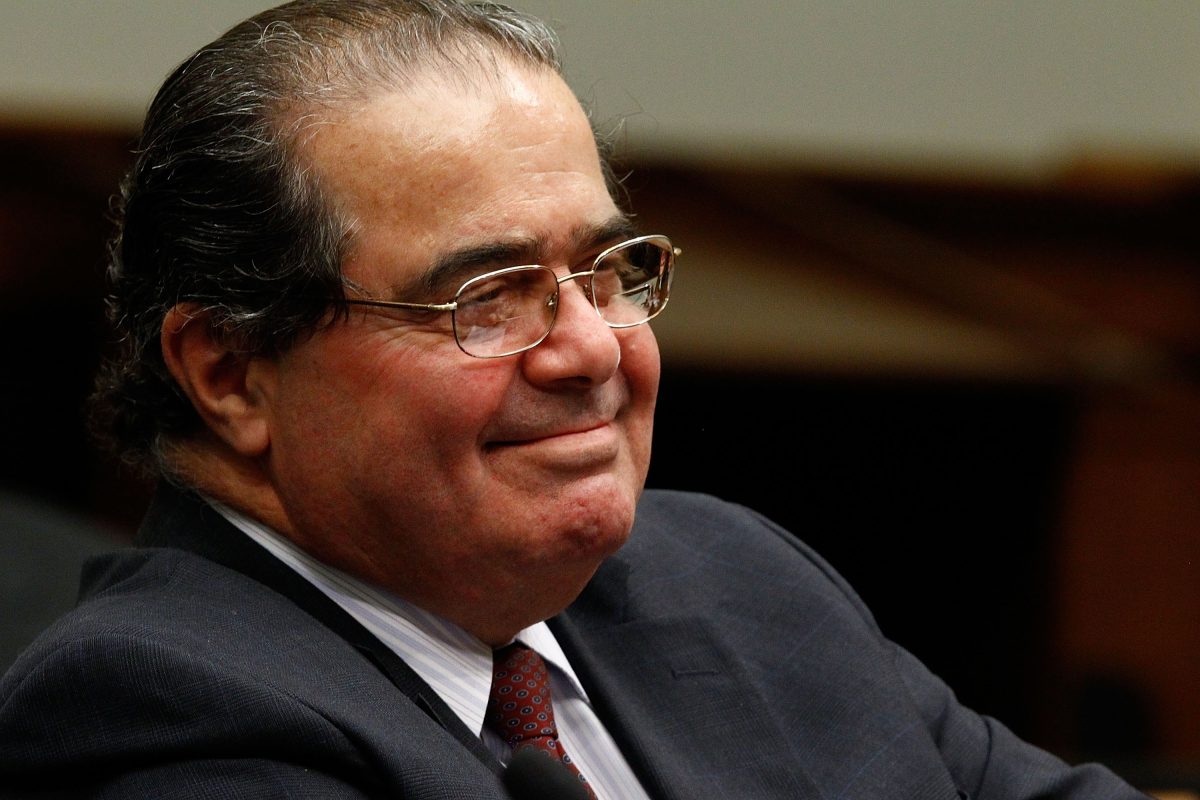
*
The
most
popular
way
to
win
over
this
Supreme
Court
is
to
quote
Scalia.
Very
originalist
to
be
primarily
swayed
whose
seat
is
still
warm.,
[CNN]
*
Yale
Law
fires
its
law
librarian
—
one
of
only
three
Black
women
on
faculty
—
after
she
filed
a
complaint
which
itself
followed
an
internal
investigation
about
working
conditions
in
the
library.
[Yale
Daily
News]
*
Starbucks
beats
back
Missouri
AG
lawsuit
over
“DEI”
policies.
[Reuters]
*
Lawyers
stepping
up
to
represent
ICE
victims.
[Law.com]
*
Uber
owes
$8.5M
in
sexual
assault
verdict.
[Law360]
Robert
Mugabe,
flanked
here
by
his
wife
Grace,
dominated
Zimbabwe’s
political
landscape
for
nearly
four
decades
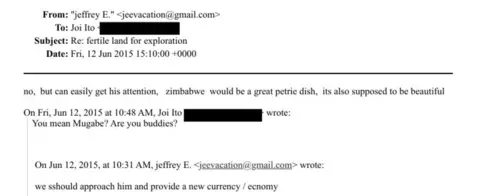
In
an
email
exchange
from
2015
with
Japanese
entrepreneur
Joi
Ito,
the
disgraced
financier
suggested
they
approach
then-President
Mugabe
to
provide
Zimbabwe
with
a
new
currency
after
the
local
dollar
collapsed
because
of
hyperinflation.
FBI
documents
from
2017
also
released
had
unverified
testimony
from
a
“human
confidential
source”,
who
claimed
Epstein
was
a
wealth
manager
for
Russia’s
President
Vladimir
Putin
and
provided
the
same
service
for
Mugabe.
Being
named
among
the
Epstein
files
is
not
an
indication
of
wrongdoing.
The
BBC
has
asked
the
Mugabe
family
for
a
response.
Robert
Mugabe,
Zimbabwe’s
independence
leader
and
long-time
president,
died
in
September
2019
aged
95
–
two
years
after
being
ousted
in
a
coup.
Epstein,
a
well-connected
US
financier
and
convicted
sex
offender,
was
found
dead
in
prison
by
suicide
while
awaiting
trial
on
sex-trafficking
charges
in
August
2019.
He
had
been
convicted
in
2008
of
soliciting
sex
from
a
14-year-old
girl
in
Florida
and
completed
his
sentence
in
July
2010.
The
latest
tranche
of
files
released
by
the
US
Department
of
Justice
(DOJ)
show
the
email
correspondence
between
Joichi
“Joi”
Ito
and
Epstein
that
took
place
five
years
later.
In
response
to
the
email
about
providing
Zimbabwe
with
a
new
currency,
with
the
subject
“fertile
land
for
exploration”,
Ito,
whose
email
address
is
redacted,
asked
if
Epstein
was
friends
with
Mugabe,
to
which
he
replied:
“No,
but
can
easily
get
his
attention,
zimbabwe
would
be
a
great
petrie
dish,
its
also
supposed
to
be
beautiful.”
US
Department
of
Justice
Ito
resigned
in
September
2019
as
head
of
MIT’s
Media
Lab
over
donations
the
academic
centre
had
received
from
Epstein.
The
BBC
has
contacted
the
FBI
for
more
information
about
the
documents
contained
in
the
recent
release
of
Epstein
files
–
as
the
US
financier
would
have
been
violating
sanctions
had
he
been
Mugabe’s
wealth
manager.
Mugabe
was
put
under
US
sanctions
from
2003
–
and
US
companies
and
citizens
were
prohibited
from
trading
or
conducting
financial
transactions
with
him.
Zimbabwe
and
Mugabe
come
up
in
other
correspondence
in
the
Epstein
files.
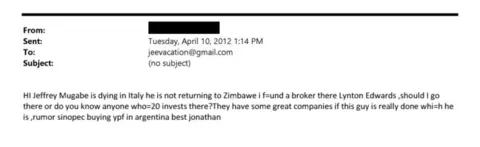
An
email
written
in
April
2012
suggested
incorrectly
that
Mugabe
was
on
his
death
bed
in
Italy.
The
sender’s
full
name
and
email
are
redacted
but
the
message
is
signed
off
as
“jonathan”.
He
asks
Epstein
for
possible
contacts
in
the
country,
adding
“they
have
some
great
companies
if
this
guy
is
really
done
whi=h
he
is”.
US
Department
of
Justice
Mugabe
was
then
88
years
old
–
and
appeared
fit
and
well
days
later
on
his
return
from
Singapore
to
lead
independence
celebrations.
One
of
his
old
allies,
who
asked
to
remain
anonymous,
told
the
BBC
that
such
inaccuracies
suggested
the
information
on
Mugabe
was
fabricated.
Zimbabwe
is
still
governed
by
Mugabe’s
Zanu-PF
party
–
and
struggled
with
inflation
for
decades
following
the
abandonment
of
the
Zimbabwean
dollar
in
2009.
Several
attempts
to
introduce
a
new
currency
failed,
but
a
gold-backed
currency
called
the
Zig,
launched
two
years
ago,
has
managed
to
stabilise
the
economy after
a
shaky
start –
though
many
people
still
rely
on
the
US
dollar.
When
the
President
delivered
his
State
of
the
Nation
Address
on
the
28th
October
last
year,
he
outlined
the
Government’s
legislative
programme
for
the
new
session
of
Parliament
–
that
is
to
say,
he
announced
the
Bills
which
the
Government
hopes
to
present
in
Parliament
during
the
coming
year.
With
Parliament
resuming
its
sittings
next
Tuesday
–
for
its
agenda
when
it
resumes
see
Bill
Watch
1/2026 [link] –
this
is
an
appropriate
time
to
look
at
the
Government’s
legislative
programme
for
the
rest
of
the
year.
Uncompleted
Bills
The
President
began
by
noting
that
several
Bills
announced
in
previous
years
had
not
been
passed
by
Parliament;
the
total
backlog
of
Bills,
he
said,
was
unacceptable.
Some
of
the
Bills
he
mentioned
in
this
context
are
currently
at
various
stages
in
their
passage
through
Parliament:
Insurance
and
Pensions
Commission
Amendment
Bill[link]:
This
Bill
is
awaiting
its
Second
Reading
in
the
National
Assembly.
Mines
and
Minerals
Bill[link]:
The
PLC
has
reported
adversely
on
this
Bill,
and
the
report
is
being
considered
by
the
Assembly.
Occupational
Safety
and
Health
Bill[link]:
This
Bill
is
due
to
undergo
its
Committee
Stage
in
the
Assembly.
Pipelines
Amendment
Bill[link]:
This
Bill
has
since
been
passed
by
both
the
National
Assembly
and
the
Senate,
and
is
now
awaiting
presidential
assent.
Police
Amendment
Bill[link]:
This
Bill
is
ready
to
be
presented.
The
President
erroneously
suggested
it
had
lapsed
at
the
end
of
the
Ninth
Parliament. It
should
be
noted
that,
despite
its
title,
the
Bill
will
also
amend
the
Private
Voluntary
Organisations
Act
and
the
Criminal
Law
Code.
Public
Procurement
and
Disposal
of
Public
Assets
Amendment
Bill[link]:
This
Bill
too
is
due
to
begin
its
Committee
Stage
in
the
Assembly.
Public
Service
Amendment
Bill[link]:
The
PLC
issued
an
adverse
report
on
this
Bill,
and
the
Assembly
is
due
to
debate
the
report.
State
Service
(Pensions)
Bill[link]:
This
Bill
was
amended
in
Committee
by
the
National
Assembly
and
the
amendments
received
an
adverse
report
from
the
PLC.
The
Assembly
is
still
to
debate
the
report.
Other
uncompleted
Bills
the
President
mentioned
have
not
been
presented
in
Parliament
or
published
in
the
Gazette,
so
presumably
they
are
still
being
drafted.
They
are:
Biological
and
Toxin
Weapons
Crimes
Bill
Electronic
Transactions
and
Electronic
Commerce
Bill
Legal
Practitioners
Amendment
Bill
Rural
Electrification
Fund
Amendment
Bill
Standards
Bill
Teaching
Professions
Council
Bill.
The
President
failed
to
mention
quite
a
number
of
Bills
which
have
been
published
in
the
Gazette
but
have
not
yet
been
presented
in
Parliament,
or
which
are
currently
going
through
Parliament:
Climate
Change
Management
Bill[link]:
This
Bill
is
awaiting
its
Second
Reading
in
the
National
Assembly.
Medical
Services
Amendment
Bill[link]:
This
Bill
was
passed
by
the
National
Assembly
with
amendments
(relating
to
the
termination
of
pregnancy).
It
is
now
awaiting
its
Second
Reading
in
the
Senate.
National
Drug
and
Substance
Abuse
Control
and
Enforcement
Agency
Bill[link]:
This
Bill
has
not
been
presented.
Postal
and
Telecommunications
Amendment
Bill[link]:
This
Bill
too
has
not
yet
been
presented.
Tourism
Bill[link]:
This
Bill
is
due
to
be
given
its
Second
Reading
in
the
Assembly.
Zimbabwe
School
Examinations
Council
Amendment
Bill[link]:
This
Bill
is
awaiting
its
Committee
Stage
in
the
National
Assembly.
One
of
the
Bills
the
President
mentioned
as
uncompleted,
the Persons
with
Disabilities
Bill,
has
in
fact
passed
through
Parliament
and
been
published
as
Act
number
3
of
2025 [link].
Altogether
Parliament
has
a
backlog
of
20
Bills
outstanding
from
the
previous
session.
With
only
six
Acts
published
so
far
this
year,
the
President’s
criticism
of
Parliament’s
legislative
record
seems
justified.
New
Bills
Announced
The
President
went
on
to
announce
many
new
Bills
which
he
said
would
be
placed
before
Parliament
during
the
new
session.
He
did
not
name
all
of
them
specifically,
so
some
of
the
names
in
the
following
list
represent
what
Veritas
assumes
will
be
the
Bills’
short
titles:
Commercial
Premises
(Lease
Control)
Amendment
Bill,
to
create
fairness
in
the
commercial
rental
market
Competition
Amendment
Bill,
to
protect
consumers
Defence
Amendment
Bill
Disaster
Risk
Management
Bill,
to
replace
the
current
Civil
Protection
Act
Foreign
Affairs
and
International
Trade
Bill
Iron
and
Steel
Industry
Amendment
Bill
Meteorological
Services
Amendment
Bill.
National
Heroes
Amendment
Bill
National
Languages
Bill
National
Productivity
Institute
Bill,
to
drive
increased
productivity
across
all
industries
Red
Cross
Amendment
Bill
Research
Amendment
Bill,
to
establish
a
sustainable
framework
for
funding
research
institutions
Sport,
Leisure
and
Recreation
Bill
Sports
Integrity
Bill
SugarProduction
Control
Amendment
Bill
Veterans
of
the
Liberation
War
Amendment
Bill
War
Victims
Compensation
Amendment
Bill
Zimbabwe
Media
Commission
Amendment
Bill.
Further
Legislation
Mentioned
In
addition
to
the
Bills
listed
above,
the
President
mentioned
the
following:
He
said
Government
was
working
on
“a
legislative
framework”
for
the
commercialisation
of
products
emanating
from
innovation
hubs.
“A
notable
number
of
Bills”,
he
said,
would
be
tabled
from
“our
transport
sector”
– whatever
that
is.
There
would
be
Bills
relating
to
devolution
and
decentralisation
as
well
as
local
government.
He
also
said
that
the
following
Acts
should
be
considered
for
amendment,
though
he
did
not
go
so
far
as
to
say
that
amending
Bills
would
be
ready
for
this
Parliamentary
session:
Censorship
and
Entertainments
Control
Act
Citizenship
of
Zimbabwe
Act[This
Act
has
not
been
aligned
with
the
Constitution]
Lotteries
and
Gaming
Act
National
Archives
of
Zimbabwe
Act
Official
Secrets
Act
Private
Investigators
and
Security
Guards
(Control)
Act.
Unlawful
Organisations
Act
Treaties
for
Ratification
The
President
ended
his
address
by
announcing
that
various
treaties
would
be
brought
to
Parliament
for
approval
in
terms
of
section
327(2)
of
the
Constitution,
which
says
that
international
treaties
do
not
bind
Zimbabwe
until
they
have
been
approved
by
Parliament
–
i.e.
the
National
Assembly
and
the
Senate.
The
treaties
he
mentioned
were:
Geneva
Act
of
the
Lisbon
Agreement
on
Appellations
of
Origin
and
Geographical
Indications
2015[link]
Hague
Agreement
Concerning
the
International
Registration
of
Industrial
Designs
(1925)[link]
Protocol
Against
the
Illicit
Manufacturing
of
and
Trafficking
in
Firearms,
Their
Parts,
Components
and
Ammunition[link]
Protocol
Against
the
Smuggling
of
Migrants
by
Land,
Sea
and
Air
(2000)[link]
Protocol
Amending
the
Trade-Related
Aspects
of
Intellectual
Property
Rights
(TRIPS)
Agreement
2005[link]
Treaty
on
the
Prohibition
of
Nuclear
Weapons
2017[link]
Comments
The
legislative
agenda
announced
by
the
President
is
unrealistically
ambitious,
specifically
listing
more
than
24
new
Bills
plus
the
14
which
are
still
going
through
Parliament
–
more
than
38
in
all.
At
Parliament’s
current
rate
of
enacting
legislation
–
only
six
Acts
were
passed
in
2025
and
only
seven
in
2024
–
it
will
take
Parliament
more
than
six
years
to
get
through
all
the
Bills
the
President
mentioned.
In
other
words,
the
legislative
agenda
is
a
wish
list
rather
than
a
statement
of
serious
intent.
It
is
doubtful
if
even
the
President
intended
anyone
to
take
the
legislative
agenda
seriously.
In
most
cases
when
he
mentioned
proposed
Bills
he
gave
their
names
only
and
did
not
describe
their
contents,
leaving
his
audience
to
guess
what
they
are
expected
to
achieve
–
no
easy
task
in
relation
to
the
Foreign
Affairs
and
International
Trade
Bill,
for
example.
All
this
suggests
that
responsible
Ministries
have
not
yet
worked
out
what
to
put
into
many
of
their
proposed
Bills
and
that
a
great
deal
of
hard
work
remains
to
be
done
before
they
are
even
sent
to
the
Attorney-General’s
Office
for
drafting,
much
less
presented
in
Parliament.
One
notable
omission
from
the
legislative
agenda
is
a
Constitution
Amendment
Bill
to
extend
the
President’s
term
of
office. Such
a
Bill
will
be
necessary
if
he
is
to
stay
in
office
beyond
2028,
and
there
have
been
statements
from
government
and
ZANU-PF
officials
suggesting
that
the
Bill
has
been
drafted. No
doubt
Parliament
will
be
informed
in
due
course
why
the
President
omitted
to
mention
the
Bill.
Veritas
makes
every
effort
to
ensure
reliable
information,
but
cannot
take
legal
responsibility
for
information
supplied.
Too
Much
Attention
In
The
Spotlight:
He
remains
a
partner
at
the
firm.
Did
Jones
Day
Represent
Ghislaine
Maxwell?:
Would
explain
the
sums
of
cash
she
transferred
to
the
firm’s
client
trust
account!
“Trading
Russians
Is
One
Thing,
But
I
Draw
The
Line
At
DEI”:
Did
Goldman
Sachs’s
Kathryn
Ruemmler
just
make
a
human
trafficking
joke
or
was
there
something
more?
Charlie
Adelson
Wants
A
Retrial:
His
lawyer
argues
that
the
jury
pool
was
tainted
by
media
coverage.
On
This
Week
Of
Thinking
Like
A
Lawyer:
Arresting
journalists,
Epstein
files,
and
accountability.