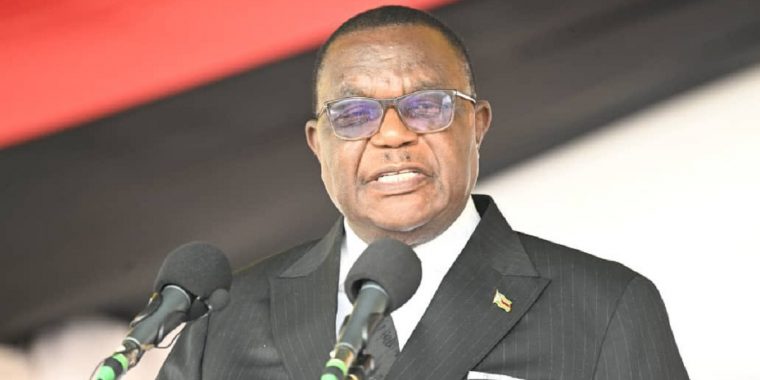

On
2
January
2026,
at
the
burial
of
Brigadier
General
(Retired)
Mathias
Tizirai
Ngarava
at
the
National
Heroes
Acre,
Acting
President
Constantino
Chiwenga
took
the
podium
in
the
full
voice
of
the
State.
The
occasion
was
mourning,
yes,
but
it
was
also
a
public
audit,
of
sacrifice,
of
governance,
of
what
the
living
have
done
with
what
the
dead
paid
for.
Chiwenga’s
speeches
in
such
moments
usually
carry
the
expected
elements,
salutes
to
the
departed,
an
account
of
service,
the
invocation
of
the
liberation
story
as
a
national
adhesive.
He
did
all
of
that.
He
traced
Ngarava’s
passage
from
schoolboy
to
combatant,
crossing
into
Mozambique
in
1976,
training
in
Syria,
operating
in
Gaza
Province
until
Independence,
later
serving
in
regional
peace
missions,
and
rising
through
the
ranks
over
decades.
But
the
speech
was
not
merely
biography.
It
was
instruction,
with
an
edge.
The
line
that
mattered,
and
why
it
travelled
Midway
through,
Chiwenga
framed
liberation
not
as
a
trophy
but
as
a
debt.
Ngarava’s
generation,
he
said,
did
not
choose
war
for
ambition,
they
were
compelled
by
the
obligation
to
restore
dignity,
and
that
independence
was
purchased
at
a
huge
cost.
That
is
familiar
territory
in
official
rhetoric.
What
was
less
routine
was
the
pivot
from
honouring
sacrifice
to
interrogating
what
that
sacrifice
has
been
turned
into.
He
asked,
in
effect,
what
kind
of
legacy
we
are
now
building,
one
rooted
in
sacrifice
and
purpose,
or
one
rooted
in
plunder.
That
single
contrast,
sacrifice
versus
plunder,
is
why
the
speech
did
not
remain
trapped
inside
the
granite
walls
of
Heroes
Acre.
It
travelled
because
it
named
the
national
wound
without
dressing
it
up
in
euphemism.
Zimbabweans
do
not
need
another
sermon
about
values
in
the
abstract,
they
need
senior
leaders
to
acknowledge,
in
plain
language,
the
moral
rot
that
has
eaten
away
at
public
trust.
Even
more
striking
was
that
Chiwenga
linked
that
moral
question
to
national
planning
and
economic
outcomes,
insisting
that
the
route
to
accelerated
growth
and
the
Upper
Middle-Income
Society
target
depends
on
ethical
leadership,
defeating
corruption,
and
a
whole-of-government
approach.
This
was
not
just
a
“be
good”
appeal.
It
was
a
claim
of
causality,
that
ethics
is
not
an
NGO
slogan,
it
is
economic
infrastructure.
A
subtle
report
of
what
he
said,
stripped
of
the
obvious
If
one
reduces
Chiwenga’s
address
to
its
spine,
it
carried
four
messages.
First,
Ngarava’s
life
is
presented
as
a
template
of
discipline,
training,
duty,
and
institutional
loyalty.
In
a
country
where
public
office
is
too
often
treated
like
a
private
harvest,
“duty”
is
being
reasserted
as
the
standard.
Second,
the
liberation
generation
is
framed
not
as
a
political
brand
but
as
a
moral
reference
point,
a
cohort
that
confronted
dispossession
and
exclusion,
and
accepted
suffering
as
the
price
of
restoring
dignity.
Third,
Chiwenga
explicitly
tied
today’s
economic
agenda
to
integrity.
He
spoke
about
industrialization,
value
addition,
inclusive
growth,
job
creation,
and
livelihoods,
but
anchored
the
entire
programme
in
the
rejection
of
“selfish
enrichment
practices.”
Fourth,
he
ended
with
the
harshest
metric
of
all,
that
the
real
measure
of
respect
for
fallen
comrades
is
not
the
beauty
of
today’s
ceremony,
it
is
“the
quality
of
the
Zimbabwe
we
will
leave
behind.”
This
is
why
the
speech
landed.
It
did
not
only
praise
the
dead,
it
indicted
the
living.
The
“principled
man”
argument,
and
the
test
that
comes
with
it
Now,
let
us
be
honest.
Zimbabwe
has
suffered
from
an
epidemic
of
fine
speeches
with
weak
consequences.
The
public
is
not
short
on
promises,
it
is
short
on
enforcement.
So
if
you
want
the
world
to
see
Chiwenga
as
consistent
and
principled,
the
argument
cannot
rest
on
adjectives.
It
must
rest
on
pattern
and
risk.
The
pattern
is
clear
in
this
address.
He
chose
to
talk
about
corruption
and
plunder
in
a
setting
that
could
easily
have
been
kept
safely
“apolitical,”
and
he
framed
ethics
as
the
hinge
of
economic
delivery,
not
a
side
issue.
That
is
not
the
language
of
a
man
merely
trying
to
survive
a
news
cycle,
it
is
the
language
of
someone
trying
to
establish
a
moral
frame
for
power.
The
risk
is
also
clear.
In
any
political
system,
the
closer
you
get
to
naming
“plunder,”
the
closer
you
get
to
naming
the
networks
that
benefit
from
it.
If
that
line
was
not
simply
rhetorical
flourish,
then
it
implicitly
commits
the
speaker
to
a
harder
road,
the
road
where
anti-corruption
is
not
selectively
applied,
not
outsourced
to
slogans,
not
postponed
until
after
the
next
internal
party
contest.
That
is
the
real
opportunity
in
this
moment.
Chiwenga’s
rare
public
performance
as
Acting
President
becomes
more
than
theatre
if
it
signals
an
internal
shift,
a
willingness
to
turn
the
liberation
narrative
from
a
shield
into
a
standard.
The
world
should
read
this
speech
as
a
signal,
not
a
eulogy
International
observers
often
misunderstand
Zimbabwean
politics
by
treating
official
speeches
as
propaganda,
full
stop.
Sometimes
that
is
correct.
But
sometimes
a
speech
is
also
a
contest
over
the
future
direction
of
the
State,
fought
in
code,
through
emphasis,
through
what
is
finally
said
aloud.
In
this
case,
the
emphasis
was
unmistakable.
Ethical
leadership
was
not
an
ornament,
it
was
the
precondition
for
growth.
The
liberation
legacy
was
not
invoked
to
demand
silence,
it
was
invoked
to
demand
higher
standards.
And
the
most
important
move
was
the
repositioning
of
“legacy.”
Not
legacy
as
medals,
titles,
and
state
funerals,
but
legacy
as
outcomes,
jobs,
livelihoods,
institutions
that
work,
and
a
country
whose
sovereignty
is
not
mocked
by
poverty
amid
abundance.
If
this
is
where
Chiwenga
wants
to
pitch
his
leadership
story,
then
the
world
should
take
note.
Not
because
one
speech
fixes
a
nation,
it
does
not.
But
because
in
a
system
where
ambiguity
is
often
safer
than
clarity,
clarity
itself
becomes
a
political
act.
The
only
remaining
question
is
whether
the
clarity
will
be
followed
by
the
one
thing
Zimbabweans
have
been
denied
for
too
long,
consequences.
Because
once
you
ask,
publicly,
whether
we
are
building
a
legacy
of
sacrifice
or
plunder,
you
have
already
told
the
nation
what
the
measure
is.
Post
published
in:
Featured