There’s
a
lot
of
money
to
go
around
at
successful
firms
and
Weil,
Gotshal
&
Manges
is
no
exception!
According
to
the
Am
Law
100,
Weil
grossed
$2,024,581,000
last
year.
The
best
thing
to
do
with
all
that
cash
is
to
spread
it
among
the
folks
who
worked
tirelessly
to
earn
it
—
Weil
is
rewarding
their
associates
by
matching
the
market
bonus
and
special
bonuses!
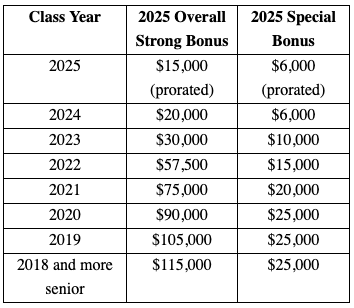
Here’s
the
scale:
Bonuses
will
be
paid
out
on
January
30th.
To
everyone
at
Weil,
enjoy
the
money!
And
if
you’re
looking
for
inspiration
on
what
to
spend
some
of
it
on,
check
out
Hollow
Knight
or
its
amazing
sequel
Hollow
Knight:
Silk
Song!
They
make
for
great
excuses
to
leave
the
table
if
your
Uncle
goes
on
a
rant
about
something
he
saw
on
Twitter.
That
said,
you
may
want
to
go
back
to
listening
to
his
tirade
once
you
meet
Zote
the
Mighty.
We
like
hearing
about
bonuses
almost
as
much
as
you
enjoy
spending
them.
As
soon
as
your
firm’s
memo
comes
out,
please email
it
to
us
(subject
line:
“[Firm
Name]
Bonus”)
or
text
us
(646-820-8477).
Please
include
the
memo
if
available.
You
can
take
a
photo
of
the
memo
and
send
it
via
text
or
email
if
you
don’t
want
to
forward
the
original
PDF
or
Word
file.
And
if
you’d
like
to
sign
up
for
ATL’s
Salary
&
Bonus
Alerts,
please
scroll
down
and
enter
your
email
address
in
the
box
below
this
post.
If
you
previously
signed
up
for
the
bonus
alerts,
you
don’t
need
to
do
anything.
You’ll
receive
an
email
notification
within
minutes
of
each
bonus
announcement
that
we
publish.
Chris
Williams
became
a
social
media
manager
and
assistant
editor
for
Above
the
Law
in
June
2021.
Prior
to
joining
the
staff,
he
moonlighted
as
a
minor
Memelord™
in
the
Facebook
group Law
School
Memes
for
Edgy
T14s
.
He
endured
Missouri
long
enough
to
graduate
from
Washington
University
in
St.
Louis
School
of
Law.
He
is
a
former
boatbuilder
who
is
learning
to
swim, is
interested
in
critical
race
theory,
philosophy,
and
humor,
and
has
a
love
for
cycling
that
occasionally
annoys
his
peers.
You
can
reach
him
by
email
at [email protected]
and
by
tweet
at @WritesForRent.
Sean
Charles
Dunn,
a
paralegal
at
the
Department
of
Justice,
got
acquitted
in
early
November
for
throwing
a
Subway
sandwich
at
a
federal
agent
during
what
he
thought
was
an
ICE
raid.
He
was
threatened
with
a
felony
charge,
but
the
grand
jury
refused
to
indict,
so
prosecutors
pursued
his
case
as
a
misdemeanor.
He
lost
his
job
in
the
interim
but
was
ultimately
acquitted
at
trial.
Apparently,
DC
jurors
did
not
believe
that
a
Subway
sandwich,
no
matter
how
intentionally
lobbed
at
an
agent,
constituted
assault.
Spitting,
however,
because
of
the
visceral
element
and
the
possibility
of
disease
transmission,
is
a
whole
different
animal.
Special
laws
have
been
enacted
that
penalize
spitting
as
a
felony
whether
it
reaches
the
other
person’s
skin
or
not.
I
learned
this
firsthand
when
a
close
friend
of
my
son
was
arrested
during
the
June
2025
No
Kings
rally
in
Los
Angeles.
Angus
—
a
24
-year-old
college
grad,
a
musician
and
set
assistant
in
L.A.,
with
no
criminal
record
and
as
far
from
an
“Antifa”
agitator
as
a
monk
—
went
to
the
protest
with
my
son.
It
was
festive,
full
of
marchers,
picnickers,
grandmas
and
kids,
funny
signs
and
costumes.
But
when
phalanxes
of
Los
Angeles
national
guards
in
heavy
armor
accompanied
by
other
federal
law
enforcement
and
LAPD
moved
in
to
order
the
crowd
to
disperse,
things
changed.
They
shouted
through
bullhorns
and
fired
rubbers
bullets,
some
of
which
ripped
through
protest
signs
even
though
it
was
daylight
and
the
allotted
protest
time
had
not
expired.
Some
in
the
crowd
stood
their
ground
as
law
enforcement
closed
in
with
shields,
batons,
and
other
riot
gear.
As
they
approached
Angus,
he
did
something
stupid.
He
spat
at
them
—
something
he’ll
regret
for
the
rest
of
his
life.
A
hunk
of
phlegm
landed
on
an
officer’s
shoe
and
face
shield.
Within
moments,
Angus
was
dog-piled
by
a
group
of
soldiers,
disappearing
beneath
the
scrum
of
heavily
armed
men.
He
didn’t
reappear
for
four
days.
He
had
been
in
federal
custody,
not
allowed
to
call
friends
or
family
who,
naturally,
were
frantic.
He
described
this
as
the
hardest
time
of
his
ordeal,
not
knowing
what
he
was
being
charged
with
or
when
he’d
see
a
judge.
He
finally
saw
a
federal
magistrate
and
learned
that
federal
prosecutors
were
charging
him
with
felony
assault
—
a
crime
that
carries
the
possibility
of
eight
years.
As
U.S.
Attorney
Pam
Bondi
told
Fox
News,
“You
can
run,
but
you
can’t
hide.
We
are
coming
after
you
federally.
If
you
assault
a
police
officer,
if
you
rob
a
store,
if
you
loot,
if
you
spit
on
a
police
officer,
we
are
coming
after
you.”
Two
days
after
being
arraigned,
prosecutors
gave
Angus
an
ultimatum:
plead
guilty
to
a
misdemeanor,
or
they’d
indict.
The
plea
bargain
compelled
Angus
to
serve
four
months
in
federal
prison.
That’s
a
lot
of
time
for
a
guy
exercising
his
First
Amendment
rights,
albeit
a
little
too
enthusiastically.
Ironically,
he
had
to
make
his
decision
around
the
time
of
July
4th,
a
day
that
celebrates
America’s
freedom
from
tyrannical
governments.
Being
convicted
of
a
federal
crime
carries
long-term
consequences.
There
is
none
of
the
expungement
or
sealing
of
records
which
can
happen
in
state
courts.
Whatever
crime
is
pleaded
to,
the
person
carries
the
rest
of
their
lives.
Angus
was
released
from
jail
and
mulled
over
options
with
his
attorney,
friends,
and
family.
Most
found
that
compelling
four
months
in
jail
for
spitting
during
a
protest
rally
was
outrageous.
But
what
choice
did
he
have?
Could
he
risk
being
indicted?
Although
a
Washington,
D.C.,
grand
jury
refused
to
indict
the
sandwich
man,
that
was
no
guarantee
they’d
do
the
same
in
L.A.
There
was
no
doubt
that
Angus
spit,
and
federal
law
is
clear
—
if
done
intentionally
against
a
federal
officer,
that’s
a
crime
even
if
no
harm
ensues.
Having
a
felony
record
does
a
lot
more
damage
than
a
misdemeanor.
It
prevents
the
person
from
getting
certain
jobs,
bank
loans,
housing,
and
even
travelling
to
certain
countries.
Angus
and
his
attorney
looked
at
all
the
angles.
The
spitting
was
not
on
video.
The
officer
exaggerated
what
had
happened
and
claimed
some
landed
on
his
skin
in
spite
of
his
face
visor
and
shield.
However,
the
possibility
of
ending
up
with
a
felony
conviction
and
being
sentenced
to
more
than
four
months
was
high
a
risk
to
run.
A
lot
of
cases
turn
on
a
dime
—
the
political
winds
of
the
time;
the
direction
of
higher-ups
in
the
prosecution
offices;
the
political
whims
of
the
Department
of
Justice.
Ultimately,
it
comes
down
to
a
cost
benefit
analysis,
how
much
risk
a
person
is
willing
to
handle.
Maybe
the
prosecution
would
not
have
indicted.
Maybe
it
was
a
bluff.
Maybe,
even
if
they
did,
Angus
would
have
been
indicted
only
for
a
misdemeanor,
or
maybe
he
wouldn’t
have
been
found
guilty
after
trial.
But
with
the
stern
rhetoric
of
the
Justice
Department
backed
by
the
vociferousness
of
the
U.S.
president
himself,
Angus
ultimately
decided
it
was
a
risk
he
couldn’t
take.
Angus’
parents,
two
research
scientists
from
Washington
State,
got
involved.
They
called
his
federal
public
defender
to
intercede.
She
then
spoke
to
her
supervisor,
who
then
spoke
to
the
head
of
the
prosecutor’s
office.
Character
letters
streamed
in
about
Angus’s
good
nature,
talents,
and
peacefulness.
It
helped
the
needle
budge
incrementally.
The
prosecution
still
insisted
Angus
serve
jail
time
on
a
misdemeanor
plea,
but
instead
of
four
months,
they
agreed
to
leave
it
up
to
a
judge
to
determine
what
amount
of
time
was
warranted.
But,
they
said,
it
had
to
be
at
least
two
weeks
and
could
still
be
as
much
as
four
months.
Angus
accepted
the
plea
deal.
While
this
wasn’t
a
total
victory,
it
saved
him
a
felony
conviction
and
left
the
possibility
that
his
jail
sentence
would
be
less
than
four
months.
Angus
had
to
report
to
federal
probation
during
the
pendency
of
his
case.
He
couldn’t
go
within
a
certain
distance
of
federal
buildings.
He
had
to
get
permission
to
travel
out
of
the
district.
Finally,
the
day
came
when
the
judge
pronounced
sentence.
At
least
20
well-wishers,
friends,
and
family
filled
the
courtroom.
In
the
six
months
since
the
time
of
the
crime,
the
political
climate
in
the
U.S.
had
shifted.
Trump’s
popularity
was
on
the
decline;
a
D.C.
jury
found
the
Subway
sandwich
defendant
not
guilty
of
even
a
misdemeanor.
It
appeared
reason
was
taking
hold
over
intimidation.
The
judge
commented
how
in
all
his
years
on
the
bench
he’d
never
see
the
prosecution
ask
for
jail
time
for
a
young
man
with
no
criminal
record
who
spit
during
a
protest
rally.
He
did,
however,
reiterate
that
it
was
against
the
law
and
should
not
be
done
ever
again.
Angus
thought
he
might
not
have
to
do
any
time
at
all,
but
that
was
a
misreading
of
the
plea
agreement.
No
matter
how
sympathetic
the
judge,
he
had
to
give
him
a
minimum
of
two
weeks
in
federal
prison.
And
that’s
what
Angus
got
—
two
weeks.
He’ll
turn
himself
in
to
start
the
sentence
in
January.
Undoubtedly,
the
conviction
will
impact
Angus’s
future.
He’ll
never
shake
himself
loose
from
it.
One
thing
is
for
certain
—
he’ll
never
spit
at
law
enforcement
again.
But
how
it
will
impact
his
and
his
friends’
interest
in
standing
up
for
what
they
believe
in,
taking
part
in
rallies,
and
making
their
voices
heard,
remains
to
be
seen.
Toni
Messina
has
tried
over
100
cases
and
has
been
practicing
criminal
law
and
immigration
since
1990.
You
can
follow
her
on
Twitter: @tonitamess.
Yesterday,
Judge
Cameron
McGowan
Currie
tossed
the
Trump
administration’s
slapdash
effort
to
criminally
prosecute
former
FBI
Director
James
Comey,
noting
that
the
purported
U.S.
Attorney
behind
the
prosecution
had
all
the
legal
authority
of
three
raccoons
in
a
trench
coat.
Alas,
the
role
of
“Kinda
Sorta
Interim-ish
U.S.
Attorney
for
the
Eastern
District
of
Virginia,”
is
not
so
much
“real,”
with
the
statutory
authority
provided
to
the
actual
interim
U.S.
Attorney
having
expired
months
ago.
Shuffling
lawyers
in
the
top
job,
Judge
Currie
observed,
cannot
reset
the
120-day
cap
on
staffing
a
U.S.
Attorney’s
Office
with
a
placeholder
or
the
executive
could
keep
swapping
out
cronies
ad
infinitum
to
permanently
avoid
the
constitutional
requirement
for
Senate
confirmation.
With
Halligan
proving
more
confident
than
the
law
or
her
own
competence
could
support,
Judge
Currie
found
herself
with
no
choice
but
to
ditch
both
the
case
against
Comey
and
the
equally
(pun
intended)
trumped
up
charges
against
current
NY
Attorney
General
Letitia
James.
While
the
dismissals
were
without
prejudice,
it
likely
closes
the
door
on
Comey’s
case,
since
the
whole
reason
Halligan
scrambled
to
cobble
together
an
indictment
that
the
grand
jury
never
voted
upon
was
the
ticking
clock
of
the
statute
of
limitations
that
would
turn
the
allegations
against
Comey
into
pumpkins
that
week.
And
now
that
indictment
—
which
was
already
doomed
because
of
the
grand
jury
screwup
—
is
void
from
jump
because
Halligan
lacked
any
more
authority
than
a
random
person
off
the
street,
and
the
statute
of
limitations
has
definitively
closed.
But
MAGA
social
media
still
has
hope:
There’s
a
six-month
extension!
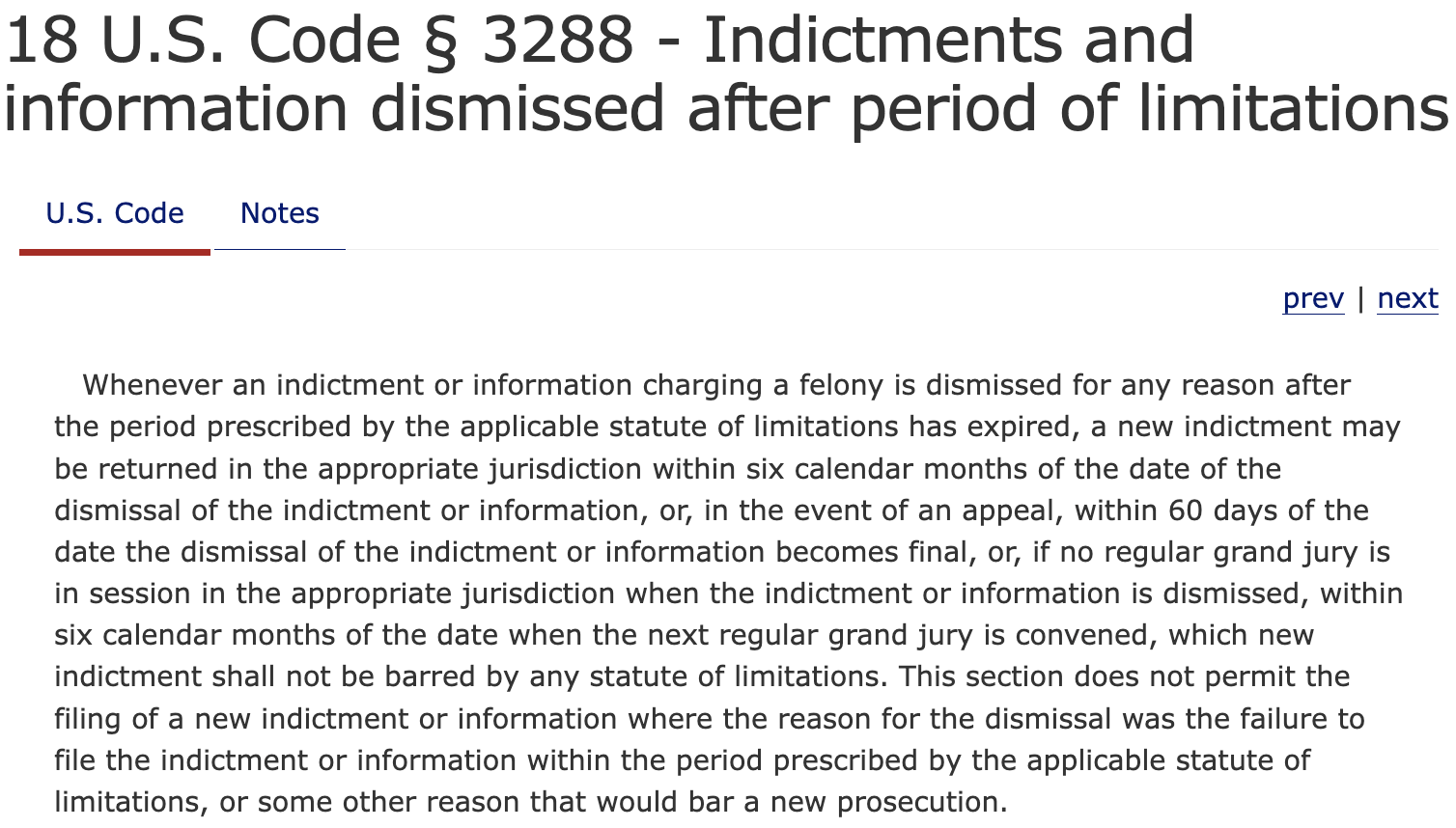
See,
it
says
“for
any
reason”
right
there!
Now,
even
though
this
case
would’ve
been
time-barred
within
hours
of
the
flawed
indictment,
the
government
gets
another
half
a
year
to
get
its
act
together.
Assuming
they
can
convince
the
Senate
to
confirm
someone
dumb
enough
to
bring
the
case.
Except…
no.
Despite
the
hope
they’re
pouring
into
this
“for
any
reason”
language,
the
problem
facing
the
government
is
that
Judge
Currie
didn’t
“dismiss”
the
indictment
so
much
as
declare
that
there
never
was
an
indictment
in
the
first
place.
As
she
explains
in
footnote
21,
even
though
“fake
prosecutors”
are
—
mercifully
—
not
something
the
justice
system
historically
dealt
with
very
often,
we
actually
do
have
caselaw
covering
how
to
handle
this
specific
six-month
extension
statute
in
light
of
a
void
indictment:
Generally,
“[t]he
return
of
an
indictment
tolls
the
statute
of
limitations
on
the
charges
contained
in
the
indictment.”
United
States
v.
Ojedokun,
16
F.4th
1091,
1109
(4th
Cir.
2021).
“An
invalid
indictment,”
however,
“cannot
serve
to
block
the
door
of
limitations
as
it
swings
closed.”
United
States
v.
Crysopt
Corp.,
781
F.
Supp.
375,
378
(D.
Md.
1991)
(emphasis
in
original);
see
also
United
States
v.
Gillespie,
666
F.
Supp.
1137,
1141
(N.D.
Ill.
1987)
(“[A]
valid
indictment
insulates
from
statute-of-limitations
problems
any
refiling
of
the
same
charges
during
the
pendency
of
that
valid
indictment
(that
is,
the
superseding
of
a
valid
indictment).
But
if
the
earlier
indictment
is
void,
there
is
no
legitimate
peg
on
which
to
hang
such
a
judicial
limitations-tolling
result.”
(emphasis
in
original)).
Here,
the
statute
of
limitations
collapsed
before
any
government
official
with
legal
authority
even
tried
to
get
an
indictment.
The
indictment
doesn’t
even
exist.
This
is
the
reading
Comey’s
lawyers
endorse,
and
it’s
the
only
one
that
makes
any
sense.
The
alternative
would
incentivize
the
government
to
hire
an
intern
off
Fiverr
to
turn
in
a
fake
indictment
the
day
before
the
limitations
period
runs
to
avoid
the
law.
Perhaps
fittingly,
the
alternative
reading
exhibits
the
same
core
bad
faith
as
repeatedly
stacking
“interim”
appointments
to
avoid
a
statute
capping
the
role
at
120
days.
Just
as
it
can’t
be
the
law
that
the
executive
can
forever
shuffle
lawyers
to
escape
the
Senate’s
constitutional
role,
they
can’t
constantly
file
void
documents
to
prolong
the
statute
of
limitations
just
by
slapping
the
word
“indictment”
on
them.
A
group
of
13
Democratic
House
Representatives
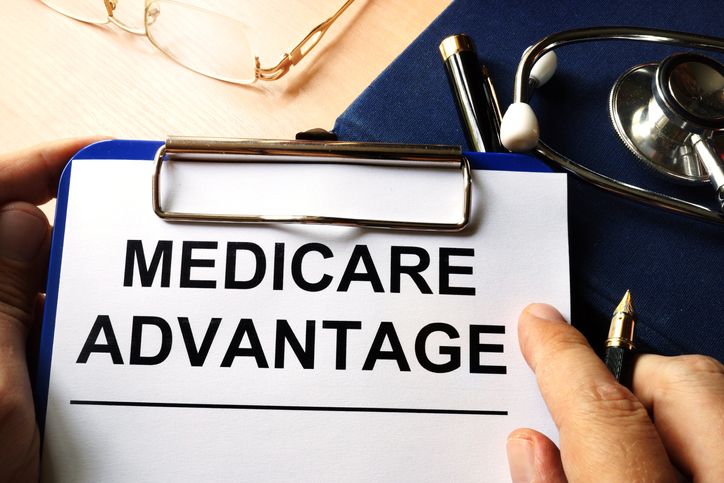
introduced
a
package
of
eight
bills
last
week
that
would
crack
down
on
Medicare
Advantage
and
strengthen
traditional
Medicare.
The
package
was
introduced
by
Mark
Pocan
(D-Wisconsin)
and
cosponsored
by
Andre
Carson
(D-Indiana),
Steve
Cohen
(D-Tennessee),
Rosa
DeLauro
(D-Connecticut),
Lloyd
Doggett
(D-Texas),
Pramila
Jayapal
(D-Washington),
Ro
Khanna
(D-California),
Eleanor
Holmes
Norton
(D-D.C.),
Alexandria
Ocasio-Cortez
(D-New
York),
Jan
Schakowsky
(D-Illinois),
Mark
Takano
(D-California),
Shri
Thanedar
(D-Michigan)
and
Rashida
Tlaib
(D-Michigan).
The
bills
fall
under
three
categories:
1.
Delays
and
denials
of
care
Denials
Don’t
Pay
Act:
Disincentivizes
MA
plans
from
delaying
and
denying
care
through
prior
authorization
requirements
Right
to
Appeal
Patient
Insurance
Denials
Act:
Helps
patients
receive
needed
care
by
automatically
appealing
denials
Disclose
Your
Denials
Act:
Requires
MA
plans
to
disclose
their
delay
and
denial
rates
when
advertising
2.
Overcharging
taxpayers
Medicare
Advantage
Fraud
Accountability
Act:
Bans
companies
from
participating
in
MA
if
they’ve
been
convicted
of
defrauding
the
government
Keep
Medicare
Costs
Down
Act:
Requires
MA
plans
to
charge
the
government
per
beneficiary
as
much
as
or
less
than
traditional
Medicare
Seniors’
Choice
and
Clarity
Act:
Limits
the
number
of
plans
that
MA
companies
can
provide
to
just
three
a
year
3.
Strengthening
traditional
Medicare
Protecting
Medicare
Choice
Act:
Prevents
Medicare
Advantage
from
being
set
as
the
default
option
for
seniors,
which
was
proposed
in
Project
2025
Find
My
Doctor
Act:
Requires
CMS
to
create
a
national
website
that
allows
people
to
search
for
doctors
by
plan
“Only
Medicare
is
Medicare.
It
is
one
of
the
most
popular
and
important
services
our
government
provides,”
Pocan
said
in
a
statement.
“But
for
too
long,
private
healthcare
companies
taking
advantage
of
Medicare’s
brand
and
popularity
have
tricked
and
wronged
seniors.
This
package
of
commonsense,
pro-patient
reforms
will
bring
greater
accountability,
transparency,
and
affordability
to
Medicare
Advantage,
while
strengthening
traditional
Medicare
and
protecting
patient
choice.
This
package
represents
a
strong
step
forward
to
protect
seniors,
save
taxpayer
dollars,
and
restore
integrity
to
the
Medicare
program.”
The
bills
are
endorsed
by
several
organizations,
including
the
Center
for
Health
and
Democracy,
Just
Care
USA,
Labor
Campaign
for
Single
Payer,
Physicians
for
a
National
Health
Program,
Public
Citizen
and
Social
Security
Works.
According
to
JustCare,
a
crackdown
on
Medicare
Advantage
is
overdue.
“Medicare
Advantage
insurers
profit
from
withholding
medically
necessary
care,
and
can
withhold
care
with
near
impunity.
So,
people
enrolling
in
corporate
MA
plans
are
forced
to
gamble
with
their
health
and
with
their
lives.
They
can’t
avoid
the
bad
actors.
It’s
time
Congress
protected
older
Americans
and
people
with
disabilities
from
bad
actor
Medicare
Advantage
insurers,
as
Congressman
Pocan’s
MA
Bill
package
would
do,”
said
Diane
Archer,
president
and
founder
of
JustCare.
*
Department
of
Justice
make
another
attempt
to
unseal
Epstein
grand
jury
records,
knowing
that
the
courts
will
say
no,
allowing
the
White
House
to
pretend
they
tried
to
follow
new
law,
even
though
there’s
nothing
preventing
them
from
releasing
everything
in
their
custody.
[New
York
Law
Journal]
The
Answer
To
If
Milbank
Will
Top
the
Scale
Is!:
Nah.
They’re
paying
out
market
bonuses.
It
Pays
To
Work
In
Texas!:
Vinson
&
Elkins
announced
bonuses!
…And
Other
Places,
Too!:
Simpson
Thacher,
Covington
&
Burling,
and
A&O
Shearman.
The
Biggest
Loser:
Lindsey
Halligan
manages
to
lose
two
cases
at
once!
ICE
Is
Using
ChatGPT
To
Do
Their
Paperwork:
If
ethics
won’t
stop
them
from
arresting
children,
why
wouldn’t
it
stop
them
from
half-assing
their
paperwork?
The
CDC
has
caused
outrage
from
many
in
the
medical
community
after
changing
its
webpage
on
Wednesday
to
include
language
that
links
vaccines
to
autism,
despite
numerous
studies
showing
that
there’s
no
link.
At
the
top
of
the
webpage,
the
CDC
states
that
the
claim
that
vaccines
don’t
cause
autism
is
not
evidence-based
“because
studies
have
not
ruled
out
the
possibility
that
infant
vaccines
cause
autism.”
It
also
says
that
studies
supporting
a
link
have
been
“ignored”
by
health
authorities,
and
that
HHS
is
assessing
the
causes
of
autism,
“including
investigations
on
plausible
biologic
mechanisms
and
potential
causal
links.”
There
is
also
a
header
that
says
“Vaccines
do
not
cause
autism.”
However,
this
has
an
asterisk
next
to
it
that
states,
“The
header
‘Vaccines
do
not
cause
autism’
has
not
been
removed
due
to
an
agreement
with
the
chair
of
the
U.S.
Senate
Health,
Education,
Labor,
and
Pensions
Committee
that
it
would
remain
on
the
CDC
website.”
Robert
F.
Kennedy
Jr.,
secretary
of
the
Health
and
Human
Services,
has
also
been
a
vocal
vaccine
critic.
He
recently
dismissed
the
CDC’s
independent
vaccine
advisory
panel,
replacing
them
with
vaccine
skeptics.
The
American
Medical
Association
slammed
the
CDC’s
changes
to
the
website.
“An
abundance
of
evidence
from
decades
of
scientific
studies
shows
no
link
between
vaccines
and
autism.
Extensive
and
rigorous
studies
consistently
show
that
vaccines
are
safe
and
effective
at
protecting
against
serious
illness.
Vaccination
is
essential
to
protect
individuals
and
communities
from
preventable
diseases,
making
it
a
fundamental
element
of
public
health,”
said
Sandra
Adamson
Fryhofer,
MD,
trustee
of
the
American
Medical
Association.
Fryhofer
added
that
the
AMA
is
“deeply
concerned”
that
the
“misleading
claims”
will
lead
to
more
confusion
and
harmful
consequences
for
Americans.
The
Autism
Science
Foundation
also
came
out
against
the
CDC’s
actions.
“The
facts
don’t
change
because
the
administration
does,”
said
Alison
Singer,
president
of
the
Autism
Science
Foundation,
in
a
statement.
“At
this
point
it’s
not
about
doing
more
studies;
it’s
about
being
willing
to
accept
what
the
existing
study
data
clearly
show.
You
can’t
just
ignore
data
because
it
doesn’t
confirm
your
beliefs,
but
that’s
what
the
administration
is
doing.”
Autism
Speaks,
meanwhile,
stated
that
two
of
the
changes
are
particularly
concerning.
First,
it
dismisses
“robust,
established
evidence”
by
elevating
outdated
studies,
including
one
20-year-old
parent
survey
with
77
respondents.
Second,
it
relies
on
“long-discredited
correlations.”
It
states
that
autism
correlates
with
the
rise
of
childhood
vaccines,
but
this
“does
not
mean
causation,”
Autism
Speaks
said.
“We
urge
the
CDC
to
restore
fact-based
language,
reaffirm
that
vaccines
do
not
cause
autism,
and
redirect
focus
toward
research
and
programs
that
address
the
critical
priorities
of
autistic
individuals
and
their
families,”
the
organization
said
in
a
statement.
Ed.
note:
Please
welcome
Renee
Knake
Jefferson
back
to
the
pages
of
Above
the
Law.
Subscribe
to
her
Substack,
Legal
Ethics
Roundup,here.
Welcome
to
what
captivates,
haunts,
inspires,
and
surprises
me
every
week
in
the
world
of
legal
ethics.
Hello
from
Arizona.
And
happy
early
Thanksgiving.
I’ve
been
fortunate
to
start
the
week
with
two
of
my
best
girlfriends,
wrapping
up
our
long
weekend
getaway
in
the
Santa
Catalina
Mountains.
This
rainbow
greeted
us
on
our
first
day!
Santa
Catalina
Mountains,
Arizona
(photo
by
Renee
Jefferson)
Many
of
us—but
not
all
of
us—will
enjoy
a
break
from
work
or
school
over
this
holiday
week.
Time
with
family
and
friends
can
be
a
respite
for
some,
but
others
may
be
separated
from
or
missing
loved
ones.
Wherever
you
find
yourself,
I
wish
you
many
moments
for gratitude.
I
hope
you
know
how
grateful
I
am
for
this
community.
Thank
you
for
reading,
subscribing,
sending
me
your
thoughts,
and
sharing
the
LER
with
others.
We
are
wrapping
up
November
with
a
week
of
many,
many
legal
ethics
headlines.
So
you
get
an
extra
five.
Read
on
below.
Highlights
from
Last
Week –
Top Ten Fifteen
Headlines
#1
“The
Unraveling
of
the
Justice
Department.
Sixty
Attorneys
Describe
a
Year
of
Chaos
and
Suspicion.” From The
New
York
Times: “President
Trump’s second
term
has
brought
a
period
of
turmoil
and
controversy
unlike
any
in
the
history
of
the
Justice
Department.
Trump
and
his
appointees
have
blasted
through
the
walls
designed
to
protect
the
nation’s
most
powerful
law
enforcement
agency
from
political
influence;
they
have
directed
the
course
of
criminal
investigations,
openly
flouted
ethics
rules
and
caused
a
breakdown
of
institutional
culture.
To
date,
more
than
200
career
attorneys
have
been
fired,
and
thousands
more
have
resigned.
…We
interviewed
more
than
60
attorneys
who
recently
resigned
or
were
fired
from
the
Justice
Department.
Much
of
what
they
told
us
is
reported
here
for
the
first
time.”
Read
more here (gift
link).
“They
didn’t
want
the
ethics
office
calling
them
up
and
telling
them
what
to
do.”
Joseph
Tirrell,
former
director
of
the
Departmental
Ethics
Office
#2
“Trusting
the
Machine:
Legal
Ethics
in
the
Era
of
Automated
Decision-Making.” From Legal
Reader: “Imagine
a
world
where
algorithms
set
bail,
draft
legal
briefs,
and
issue
sentences.
As
court
systems
explore
automation
in
law,
ethical
considerations,
questions
about
fairness,
accountability,
and
transparency
come
to
the
fore.
Can
we
trust
machines
with
decisions
that
affect
liberty
and
justice?
This
shift
raises
urgent
ethical
issues
in
automated
decision-making
and
tests
our
commitment
to
legal
ethics
in
artificial
intelligence.”
Read
more here.
#3
“Former
SCOTX
Chiefs
Make
Case
for
Judicial
Independence.” From The
Texas
Lawbook: “In
a
recent
joint
appearance
at
a
public
policy
forum
in
Austin,
three
former
Texas
Supreme
Court
chief
justices
discussed
encroachments
by
the
legislative
branch
on
judicial
independence
and
an
increase
in
hot-button
issues
being
directed
into
state
courts.”
Read
more here.
(Full
disclosure
–
I’m
married
to
one
of
the
former
SCOTX
Chiefs
— Wallace
B.
Jefferson.
If
you
don’t
know
our “Loving”
story,
check
it
out here.)
#4
“Judge
Horrified
as
Lawyers
Submit
Evidence
in
Court
That
Was
Faked
With
AI.” From Futurism: “Lawyers
across
the
country
have
been
landing
themselves
in
hot
water
for
submitting
botched
court
documents
written
with
the
help
of
AI,
in
blunders
that
were
clear
signs
of
the
tech’s
rapid
inroads
into
the
courtroom.
But
it
was
only
a
matter
of
time
before
AI
wasn’t
just
producing
clerical
errors,
but
actual
submitted
‘evidence.’
That’s
what
recently
played
out
in
a
California
court
over
a
housing
dispute
—
and
it
didn’t
end
well
for
the
AI-fielding
party.
As
NBC
News
reports,
the
plaintiffs
in
the
case, Mendones
v.
Cushman
&
Wakefield,
Inc.,
submitted
a strange
video that
was
supposed
to
be
witness
testimony.
In
it,
the
witness’s
face
is
fuzzy
and
barely
animated.
Aside
from
the
rare
blink,
the
only
noticeable
movement
comes
from
her
flapping
lips,
while
the
rest
of
her
expression
remains
unchanged.
There’s
also
a
jarring
cut,
after
which
the
movements
repeat
themselves.
In
other
words,
it
was
obviously
an
AI
deepfake.
And
according
to
the
reporting,
it
might
be
one
of
the
first
documented
instances
of
a
deepfake
being
submitted
as
purportedly
authentic
evidence
in
court
—
or
at
least
one
that
was
caught.”
Read
more here.
#5
“Jerry’s
Jeremiad:
A
Wild
Dissent
Roils
Texas
Redistricting
Debate.
You’ve
Never
Seen
a
Judicial
Burn
Quite
Like
This
One.” From Politico: “When
a
judge
warns
readers
to
‘Fasten
your
seatbelts!’
before
a
104-page
legal
diatribe
—
best
to
buckle
up. Jerry
Smith,
a
judge
on
the
5th
Circuit
Court
of
Appeals,
delivered
that
admonition
before
launching
into
an invective-laden,
unusually
personal
excoriation of
a
legal
decision
Tuesday
throwing
out
congressional
boundaries
Texas
just
redrew
at
the
urging
of President
Donald
Trump.”
Read
more here.
#6
“How
a
Top
DC
Lawyer
and
High-Stakes
Poker
Player
Risks
Losing
It
All.” From Washingtonian: “[Tom]
Goldstein’s problems
have
caught
the
local
legal
community
off
guard.
‘The
whole
thing
is
extremely
shocking,
to
have
a
prominent
lawyer
be
indicted
for
federal
crimes,’
says
one
Supreme
Court
lawyer.
‘I
would
say
it’s
less
shocking
that
it
was
Tom
than
if
it
was
some
other
lawyer,
just
in
the
sense
that
he’s
always
been
an
unorthodox
guy.
He’s
always
been
a
risk
taker.’
But
why
did
one
of
Washington’s
top
lawyers
risk
everything
to
play
cards?”
Read
more here.
#7
“Federal
Judge
Blasts
Potential
‘Government
Misconduct’
in
Comey
Case.” From
the Washington
Post: “A
federal
judge
on
Monday
offered
a
blistering
assessment
of
the
Justice
Department’s
case
against
former
FBI
director James
B.
Comey,
detailing
what
he
described
as
a
‘disturbing
pattern
of
profound
investigative
missteps’
and
possible
misconduct
that
could
imperil
the
prosecution. U.S.
Magistrate
Judge
William
Fitzpatrick criticized
authorities
for
their
“cavalier”
attitude
toward
the
rights
of
Comey
and
others. Lindsey
Halligan,
the
Trump-appointed
U.S.
attorney
overseeing
the
case,
also
appeared
to
have
made
‘fundamental
misstatements
of
the
law’
to
the
grand
jury
that
indicted
Comey
on
charges
of
lying
to
Congress,he
wrote.”
Read
more here (gift
link).
#8
“ABA
to
Review
Law
School
Standards,
May
Drop
Diversity
Rule
Amid
Pressure.” From Reuters: “The
American
Bar
Association
will
undertake
a
sweeping
review
of
its
standards
for
law
schools
as
states
weigh
dropping
the
organization
as
an
accreditor
and
critics
blame
its
regulations
for
driving
up
student
costs.
The
ABA
may
also
eliminate
its
diversity
and
inclusion
requirement
for
law
schools,
which
has
placed
the
ABA
in
the
crosshairs
of
the
Trump
administration
and
other
conservatives
who
claim
it
is
discriminatory.”
Read
more here.
#9
“Ousted
Immigration
Judge
Describes
Deepening
Court
Backlog.” From PBS: “Dozens
of
immigration
judges
have
been
fired
by
the
Trump
administration
with
no
explanation.
From
coast
to
coast,
nearly
four
dozen
judges
have
lost
their
positions
as
the
courts
face
a
record
backlog.
Many
had
worked
in
immigrant
defense,
prompting
questions
about
whether
the
firings
are
part
of
the
administration’s
hardline
approach. Geoff
Bennett discussed
more
with
former
judge Emmett
Soper.”
Read
more
and
listen here.
#10
“McDermott’s
Outside
Investor
Talks
Augur
Big
Law
Transformation.” From Bloomberg
Law: “The
possibility
of
outside
investors
taking
a
stake
in
McDermott
Will
&
Schulte
nudges
rivals
to
consider
a
similar
step
and
possibly
change
the
way
the
legal
industry
operates.
Small
firms
have
already
begun
to
embrace
the
idea
of
having
non-lawyer
investors
own
back-office
operations,
said Fredric
Litwiniuk,
chief
growth
officer
at
Litco
LSO.
His
Phoenix-based
company
handles
functions
such
as
accounting,
technology,
and
marketing
for
three
firms
and
plans
to
add
two
more
by
the
end
of
the
year,
he
said.”
Read
more here.
#11
“Judge
Gets
Sacked
for
‘Routinely’
Wearing
Elvis
Wig
&
Glasses
on
Bench
and
Playing
Icon’s
Legendary
Music
at
Hearings.” From The
Sun: “A
judge
has
been
forced
to
resign
after
he
routinely
dressed
up
as Elvis
Presley and
played
the
King
of
Rock
and
Roll’s
greatest
hits
in
court.
A
disciplinary
committee
found
that Matthew
Thornhill would
often
don
a
pompadour
wig,
aviator
shades
and
a
robe
during
hearings
to
cosplay
as
Elvis.
The
St.
Charles
County
Circuit
judge
dressed
up
as
the
music
icon
for
rulings
around
Halloween
season
in
Missouri, court
documents
state. He
was
also
accused
of
constantly
slipping
in
irrelevant
Elvis
references
during
hearings
and
swearings-in.”
Read
more here.
#12
“Court
Rules
That
Crime-Fraud
Exception
Strips
Firm’s
Privilege
Claim.” From JD
Supra: “Otherwise
privileged
communications
between
lawyers
and
their
clients
that
further
ongoing
or
even
contemplated
criminal
conduct
can
lose
their
protection
under
the
so-called
‘crime-fraud
exception.’
Courts
disagree
about
this
worrisome
doctrine’s
expansion
to
communications
about
fraudulent,
or
sometimes
even
willfully
tortious,
conduct.
In Eletson
Holdings
Inc.
v.
Levona
Holdings
Ltd.,
No.
23-cv-7331
(LJL),
2025
U.S.
Dist.
LEXIS
184584
(S.D.N.Y.
Sept.
19,
2025),
defendant
pointed
to
the
crime-fraud
exception
in
moving
to
compel
Reed
Smith
to
produce
documents.
…
The
court
noted
that
even
if
the
firm
‘was
a
victim
of
its
client’s
fraud
rather
than
complicit
in
it,
the
crime-fraud
exception
would
apply
if
the
communications
at
issue
were
in
furtherance
of
the
fraud.’ Id. at
*8-9.”
Read
more here.
#13
“The
Neuroanalytics
Of
Using
Legal
Tech:
Clio’s
Joshua
Lenon
On
A
First-of-its-Kind
Cognitive
Study.” From LawSites: “Legal
technology
company
Clio
recently
released
the
10th
edition
of
its Legal
Trends
Report,
its
annual
analysis
of
data
and
survey
responses
on
legal
practice
and
emerging
trends,
and
this
year’s
report
ventured
into
new
territory.
For
the
first
time,
the
report
included
a
neuroanalytics
study
of
legal
professionals,
analyzing
electrical
brain
activity
in
legal
professionals
as
they
performed
various
work-related
tasks,
in
order
to
paint
a
picture
of
their
emotional
strain
and
mental
focus
as
they
worked.”
Read
more here.
#14
“Lawyers
Need
Lifelong
Training
in
Ethics,
Say
Peers.” From
the Law
Society
Gazette: “Lawyers
should
receive
training
in
professional
ethics
throughout
their
careers,
peers
have
concluded
after
a
wide-ranging
inquiry
into
threats
to
the
rule
of
law
in
the
UK.
In
its
report Rule
of
Law:
Holding
the
Line
Between
Anarchy
and
Tyranny,
the
House
of
Lords
constitution
committee,
states
that
‘trust
in
the
legal
profession
has
been
undermined
by
high-profile
examples
of
unethical
practice’.
This
distrust,
accelerated
by
‘negative
rhetoric
in
the
media
and
by
politicians’
and
exacerbated
by
‘massive
inequalities
and
lack
of
access
to
legal
advice’,
undermines
respect
for
the
rule
of
law.
The
report
cites
the
Post
Office
Horizon
scandal
and
Legal
Services
Board
research
showing
‘a
lack
of
understanding
and/or
due
regard
to
the
significance
of
what
upholding
professional
ethical
duties
means
in
practice’.”
Read
more here.
#15
“Detecting
AI
Misconduct
by
Opposing
Counsel
Is
a
Lawyer’s
Duty.” From Bloomberg
Law: “Much
discussion
about
artificial
intelligence
has
centered
on
a
lawyer’s
duty
to
competently
and
ethically
use
it.
A
recent
California
court decision raises
a
critical,
additional
question:
Do
attorneys
have
a
responsibility
to
detect
and
report
an
opponent’s
use
of
AI,
especially
when
that
use
results
in
fabricated
or
‘hallucinated’
legal
authority?
In Noland
v.
Land
of
the
Free,
L.P.,
the
California
Court
of
Appeal,
Second
District,
determined
that
proactive
detection
is
best
practice
and
a
form
of
financial
self-defense.
The
court’s
denial
of
fees
establishes
that
attorneys
who
fail
to
identify
AI
fraud
may
not
qualify
for
recovery,
even
when
opposing
counsel’s
misconduct
deserves
sanctions.”
Read
more here.
Get
Hired
Did
you
miss
the
350+
job
postings
from
previous
weeks?
Find
them
all here.
Upcoming
Ethics
Events
&
Other
Announcements
Did
you
miss
an
announcement
from
previous
weeks?
Find
them
all here.
Keep
in
Touch
News
tips?
Announcements?
Events?A
job
to
post?Reading
recommendations? Email [email protected] –
but
be
sure
to
subscribe
first,
otherwise
the
email
won’t
be
delivered.
Renee
Knake
Jefferson
holds
the
endowed
Doherty
Chair
in
Legal
Ethics
and
is
a
Professor
of
Law
at
the
University
of
Houston.
Check
out
more
of
her
writing
at
the Legal
Ethics
Roundup.
Find
her
on
X
(formerly
Twitter)
at @reneeknake or
Bluesky
at legalethics.bsky.social.
The
status
quo
is
over.
We
can’t
continue
to
have
a
summer
program
where
we
can
look
at
people’s
full
first-year
grades
and
then
decide
[if]
we
want
to
make
them
an
offer
to
join
us
as
a
2L.
The
question
is,
do
we,
you
know,
do
we
just
lose
out
on
all
summer
associates
and
let
the
market
pass
us
by,
or
do
we
do
something
creative
that
will
allow
us
to
continue
to
have
a
summer
program,
but
also
making
sure
that
we’re
able
to
attract
and
hire
top
talent
[and]
people
who
are
really
succeeding
in
law
school.
—
Bryan
Heckenlively,
a
partner
at
Munger
Tolles
and
chair
of
its
recruiting
committee,
in
comments
given
to
the
American
Lawyer,
concerning
the
firm’s
shortening
of
its
summer
associate
program.
Starting
for
2Ls
in
2027,
the
firm
will
host
students
for
four-to-six
weeks
at
the
end
of
the
summer,
while
allowing
them
to
do
public
interest
work
or
work
for
another
firm
at
the
start
of
the
summer.
“We’ve
heard
from
students
that
[the
new
recruitment
scheme]
it’s
incredibly
stressful,” said
Kara
Sommers,
the
firm’s
director
of
legal
recruiting.
She
said
of
MTO’s
new
program
that
“[t]he
market
has
sort
of
pushed
this
[recruitment]
timeline,
but
it
doesn’t
seem
like
it’s
aligning
with
any
of
the
goals
of
the
constituencies,
so
this
is
our
attempt
to
shift
some
of
those
dynamics.”
Staci
Zaretsky is
the
managing
editor
of
Above
the
Law,
where
she’s
worked
since
2011.
She’d
love
to
hear
from
you,
so
please
feel
free
to
email
her
with
any
tips,
questions,
comments,
or
critiques.
You
can
follow
her
on Bluesky, X/Twitter,
and Threads, or
connect
with
her
on LinkedIn.