Ninth Circuit Confirms Trump Can Send SEAL Team 6 To Assassinate Dancing Inflatable Frogs – Above the Law

(Photo
by
Stephen
Lam/San
Francisco
Chronicle
via
Getty
Images)

In


Trump
v.
United
States
,
the
conservative
majority
of
the
Supreme
Court
considered
the
proposition
that
granting
Donald
Trump
unchecked
presidential
immunity
opened
the
door
to
a
president
sending
commando
units
to
assassinate
political
rivals
without
repercussion
and
said,
“yeah,
we’re
cool
with
that.”
Seemingly
taking
vibe
guidance
from
that
opinion,
a
divided
Ninth
Circuit
panel
fronted
by
Judges
Ryan
D.
Nelson
and
Bridget
S.
Bade
(take
a
guess
who
appointed
them!),
shot
down
District
Judge
Karin
Immergut’s
temporary
restraining
order
blocking
the
Trump
administration
from
deploying
National
Guard
troops

over
the
state’s
objection

to
perform
law
enforcement
duty
around
the
Portland
ICE
office
where
a
handful
of
dancing
inflatable
animals
gathered
in
protest.

The
Ninth
Circuit
will
inevitably
hear
the
case

en
banc


the
process
is
apparently
already
underway


but
in
the
meantime,
this
decision
becomes
another
collectible
in
the
White
House’s
effort
to
string
together
step-wise
court
victories
toward
laying
the
legal
groundwork
for
unilateral
authoritarianism.
That’s
really
what’s
going
on
here.
The
administration
is
fully
aware
that
they
don’t
need
the
National
Guard
to
secure
ICE
from
eight
hippies.
But
they’re
counting
on
judges
like
Nelson
and
Bade
to
write
opinions
establishing
that
Trump’s
subjective
assessment
of
“danger”
justifies
military
deployment

precedent
that
will
be
ready
and
waiting
when
he
wants
troops
at
polling
places
or
outside
state
capitols
during
vote
certification.

Like
the
proverbial
inflatable
frog
in
the
pot.

Judges
Nelson
and
Bade
are
both
Trump
appointees
who
rose
to
their
station
through
the
MAGA
patronage
pipeline,
a
sort
of
judicial
“Alabama
Rush,”
where
the
stakes
are
higher,
the
process
is
just
as
opaque,
and
there’s
somehow
even

more

white
people
involved.
But
it’s
not
fair
to
dismiss
a
court
opinion
just
because
they’re
Trump
judges.
After
all,
many
Trump-appointed
judges
have
stood
on
principle
in
cases
involving
the
government

indeed,
Judge
Immergut
(who
had
to
take
over
this
case
because
Judge
Michael
Simon
is
married
to
a
politician
who
spoke
against
the
administration
plan

if
that’s
the
standard,
wait
until
people
hear
what
Ginni
Thomas
says!)
is
a
Trump
appointee.
Let’s
just
say
it’s
a
necessary
but
not
sufficient
condition.

Instead,
let’s
dismiss
the
opinion
because
it’s
intellectually
vapid
and
factually
dishonest.

After
considering
the
record
at
this
preliminary
stage,
we
conclude
that
it
is
likely
that
the
President
lawfully
exercised
his
statutory
authority
under
10
U.S.C.
§
12406(3),
which
authorizes
the
federalization
of
the
National
Guard
when
“the
President
is
unable
with
the
regular
forces
to
execute
the
laws
of
the
United
States.”
The
evidence
the
President
relied
on
reflects
a
“colorable
assessment
of
the
facts
and
law
within
a
‘range
of
honest
judgment.’”

This
is
not,
in
fact,
what
the
statute
says.
In
fact,
§12406
authorizes
the
president
to
use
troops
where
the
federal
government
“is
unable
with
the
regular
forces
to
execute
the
laws
of
the
United
States.”
What
does
that
mean?
According
to
Judges
Nelson
and
Bade,
it
means
“whatever
the
president
says.”
After
paying
lip
service
to
recent
Ninth
Circuit
precedent
clarifying
that
the
White
House
can’t
make
unfounded
declarations
to
justify
sending
troops,
the
majority
strung
together
a
series
of
anecdotes
that
amount
to
little
more
than
“there
was
once
a
protest”

regardless
of
whether
it
actually
prevented
law
enforcement
from
functioning

and
said
that’s
enough
to
make
Trump’s
decision
colorable.

But
the
plural
of
anecdotes
is
not
data
as
they
say,
and,
in
dissent,
Judge
Susan
Graber
pulled
up
the
actual
reports
and
challenged
the
majority
to
explain
how
this
is
colorably…
anything.
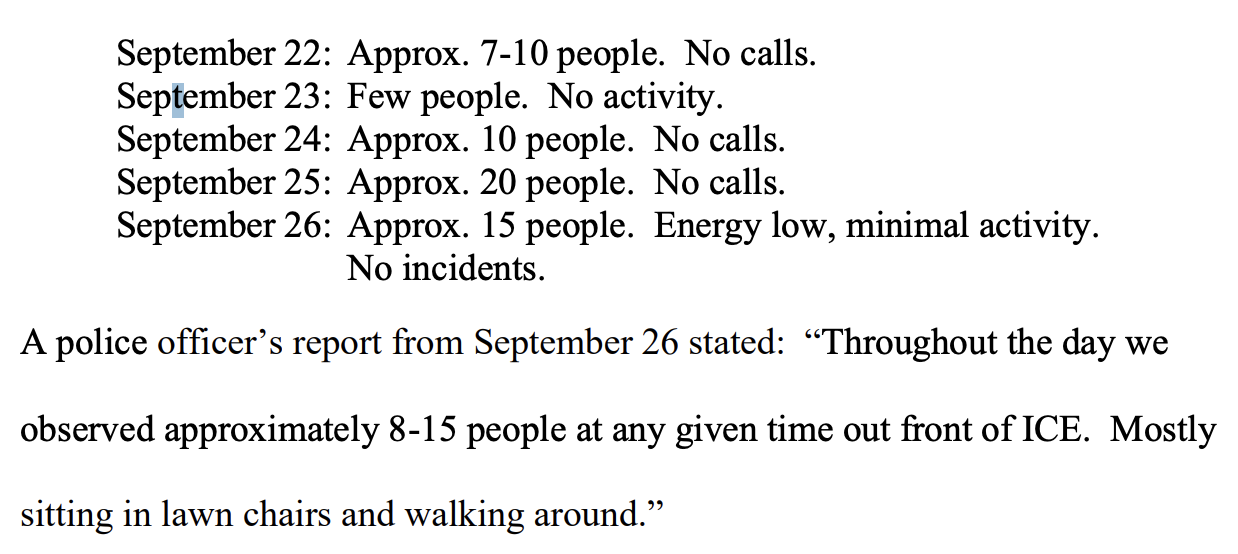
The
worst
that
ever
happened
in
Portland
was
all
handled
by
local
law
enforcement,
a
critical
point
since
the
statute
places
an
explicit
caveat
that
the
breakdown
must
be
beyond
the
capacity
of
regular
forces
to
warrant
military
involvement.

In
response,
the
majority
counters:

First,
the
district
court
erred
by
determining
that
the
President’s
“colorable
assessment
of
the
facts”
is
limited
by
undefined
temporal
restrictions
and
by
the
district
court’s
own
evaluation
of
the
level
of
violence
necessary
to
impact
the
execution
of
federal
laws.
Thus,
the
district
court
determined
that
it
would
apply
Newsom’s
deferential
“colorable
basis”
standard
to
the
facts
“as
they
existed
at
the
time
[the
President]
federalized
the
National
Guard.”

These
“undefined
temporal
restrictions”
are
grounded
in
what
the
rest
of
us
would
call
“the
English
language.”
As
much
as
the
country
might
benefit
from
reimposing
Reconstruction
on
the
South
based
on
its
“history”
of
rebellion,
past
administrations
respected
that
their
authority
was
limited
by
the
present
tense.
To
the
extent
Portland’s
ICE
agents
really
are
so
soft
that
they
couldn’t
do
their
jobs
in
July,
it
has
little
bearing
determining
that
it
“IS
UNABLE
with
the
regular
forces
to
execute
the
laws
of
the
United
States”
come
September.
Nor
can
the
president
assert
that
ICE
might
potentially
at
some
undefined
future
point
become
unable.

Congress,
presumably,
knows
how
to
write
forward-looking
language.
It
chose
not
to
do
so.

The
statute
delegates
the
authority
to
make
that
determination
to
the
President
and
does
not
limit
the
facts
and
circumstances
that
the
President
may
consider
in
doing
so.
Indeed,
the
inherently
subjective
nature
of
this
evaluation
demonstrates
that
the
President
has
the
authority
to
identify
and
weigh
the
relevant
facts
under
§
12406(3).
The
President
can,
and
should,
consider
the
totality
of
the
circumstances
when
determining
whether
he
“is
unable
with
the
regular
forces
to
execute
the
laws
of
the
United
States.”

Donald
Trump
has

publicly
claimed
that
Portland
is
a
“war
zone”
that
is
“on
fire.”

The
statute
may
not
explicitly
“limit
the
facts
and
circumstances”
a
president
can
consider,
but
one
presumes
a
limit
excluding

fiction
.
Alas,
the
majority
has
an
answer
for
this
and
it
is,
“The
Party
told
you
to
reject
the
evidence
of
your
eyes
and
ears.
It
was
their
final,
most
essential
command.”

While
we’re
on
fake
claims,
the
administration’s
argument
that
“regular
forces”
couldn’t
handle
the
protests
cited
an
unusually
high
number
of
ICE
agents
sent
to
the
Portland
office.
Judge
Graber
pointed
out
that
this
seems
to
be
a
bunch
of
people
cycling
in
and
out
a
handful
at
a
time.
Less
a
surge
than
a
revolving
door

probably
put
in
to
set
up
this
argument
for
any
judge
willing
to
treat
it
with
undue
credulity.

Second,
the
district
court
erred
by
placing
too
much
weight
on
statements
the
President
made
on
social
media.
The
district
court
interpreted
President
Trump
characterizing
Portland
as
“War
ravaged,”
as
the
equivalent
of
the
President
“ignoring
the
facts
on
the
ground.”
As
such,
the
district
court
relied
on
these
statements
to
disregard
other
facts
that
do
“reflect[]
a
colorable
assessment
of
the
facts
and
law
within
a
range
of
honest
judgment.”

When
Homer
Simpson
rose
to
lead
the
Stonecutters,
he
once
tried
to
fold
a
losing
poker
hand,
only
for
the
other
cultists
to
jump
in
and
declare
that
he
had
“the
Royal
Sampler.”
Apparently,
Trump’s
judges
on
the
federal
judiciary
now
take
their
cues
from
Lenny
and
Carl.
The
president

or
at
least
THIS
president

is
owed
such
extreme
deference
that
the
courts
are
allowed
to
substitute
their
own
imagined
justifications
if
the
president’s
own
words
don’t
measure
up
to
“colorable.”

That’s
not
legalism,
it’s
epistemic
control:
the
right
to
define
what
counts
as
a
threat,
what
counts
as
a
rebellion,
and
what
counts
as
the
ability
to
execute
laws.
When
courts
declare
that
even
fantasy
threats
justify
real-world
force,
we’re
no
longer
interpreting
the
Constitution,
we’re
narrating
empire.

The

per
curiam

opinion
rested
its
laurels
on
the

ability
to
execute
the
laws

justification,
but
give
a
special
shout
out
to
Judge
Nelson,
who
added
a
gratuitous
concurrence
to
clarify
that
he’d
also
allow
Trump
to
define
a
gathering
of
furries
outside
a
government
office
as
a
“rebellion”
if
he
wanted.
Citing
the
sort
of
ersatz
history
and
tradition
that
carries
the
day
at
the
Supreme
Court,
Nelson
cites
the
history
of
founding
era
rebellions
like
the
Whiskey
Rebellion
and
Shays’s
Rebellion
and
asserts
with
a
straight
face
that
these
are
more
or
less
the
same
as
Portland.
This
comparison
reflects
“history”
in
the
same
way
Ancient
Aliens
fits
on
the
History
Channel.
And
even
if
they
bore
any
resemblance
to
Portland,
the
government
sent
troops

while
they
were
ongoing
.

He
also
spills
ink
on
the
idea
that
Trump’s
judgment
shouldn’t
be
reviewable

at
all
.
No
one
has
standing.
Nothing
is
reviewable.
Just
the
whims
of
the
Mad
King
of
Mar-a-Lago
all
the
way
down.

But
you
don’t
move
up
the
Federalist
Society’s

cursus
honorum

for
backing
away
from
an
insane
statement
or
two.

More
or
less
absent
from
this
historical
review
is
the
Posse
Comitatus
Act,
which
frames
the
existing
Insurrection
Act
as
less
empowering
than
limiting.
The
Insurrection
Act
is
classically
understood
as
a
series
of
legal
obstacles
a
president
must
overcome
rather
than
a
grant
of
deferential
power.
This
opinion
attempts
to
flip
this
on
its
head,

continuing
the
baseless
sanewashing
coming
from
the
media
,
by
suggesting
the
Insurrection
Act
is
an
unchecked
magic
wand
that
just
never
got
used
like
this
out
because
prior
presidents
lacked
Trump’s
legal
acumen
to
read
the
invisible
ink
between
the
lines
of
the
statute.

Judge
Graber’s
dissent
lays
out
the
stakes:

Given
Portland
protesters’
well-known
penchant
for
wearing
chicken
suits,
inflatable
frog
costumes,
or
nothing
at
all
when
expressing
their
disagreement
with
the
methods
employed
by
ICE,
observers
may
be
tempted
to
view
the
majority’s
ruling,
which
accepts
the
government’s
characterization
of
Portland
as
a
war
zone,
as
merely
absurd.
But
today’s
decision
is
not
merely
absurd.
It
erodes
core
constitutional
principles,
including
sovereign
States’
control
over
their
States’
militias
and
the
people’s
First
Amendment
rights
to
assemble
and
to
object
to
the
government’s
policies
and
actions.
I
strenuously
dissent

The
comparison
to

Trump
v.
United
States

is
apt,
not
just
because
of
its
central
litigant,
but
just
like
the
justices
who
considered
the
possibility
that
their
decision

as
written

legalized
political
assassination,
the
judges
here
painted
executive
authority
with
a
brush
broad
enough
to
greenlight
any
number
of
abuses.
When
establishing
a
rule,
it’s
not
what
you
do,
it’s
what
you
justify

if
the
bar
is
set
at
“streaking
hipsters
three
months
ago
amounts
to
a
total
breakdown
in
law
now,”
what
happens
when
the
White
House
says
election
day
“could
be
violent”
based
on
anonymous
vibes?
Claiming
to
be
governed
by
laws
and
not
men
is
all
well
and
good,
but
rests
on
the
premise
that
courts
don’t
rewrite
the
law
as
“whatever
that
dude
thinks
in
the
moment.”
At
that
point,
it’s
all
theater.

Judge
Graber
concludes
her
opinion,
stressing,
“Above
all,
I
ask
those
who
are
watching
this
case
unfold
to
retain
faith
in
our
judicial
system
for
just
a
little
longer.”
With
all
due
respect,
that
faith
is
getting
harder
to
maintain
when
two
members
of
a
three-judge
panel
can
look
at
people
sitting
in
lawn
chairs
and
see
a
war
zone.


(Full
opinion
available
on
the
next
page…)


Earlier
:

TV
Legal
Analyst
Begins
Sanewashing
Trump
Declaring
Martial
Law


SCOTUS
Greenlights
SEAL
Team
6
Solution



HeadshotJoe
Patrice
 is
a
senior
editor
at
Above
the
Law
and
co-host
of

Thinking
Like
A
Lawyer
.
Feel
free
to email
any
tips,
questions,
or
comments.
Follow
him
on Twitter or

Bluesky

if
you’re
interested
in
law,
politics,
and
a
healthy
dose
of
college
sports
news.
Joe
also
serves
as
a

Managing
Director
at
RPN
Executive
Search
.

Teaching Law In A Red State (Part II): The Woke DEI Indoctrination Argument – Above the Law

Dear
Governor,
State
Senator,
or
Representative,

Thank
you
for
your
interest
in
my
course,
[redacted]. You
probably
discovered
my
course
by
accessing
Simple
Syllabus

or
scouring
our
course
offerings
page,
rather
than
engaging
in
some
other
constituent
concern. I
appreciate
your
devotion
to
higher
education
and
ensuring
that
students
get
the
maximum
opportunity
to
learn
in
a
school
in
our
state.

I
noted
in
your
social
media
post
that
you
consider
my
course
“woke”
and
“DEI”
or
part
of
some
“progressive
left
agenda”
to
indoctrinate
your
children. Just
for
clarification,
I
don’t
think
you
mean

your

actual
children,
all
of
whom
you
sent
to
Harvard
and
not
to
the
state
university
at
which
I
teach. I
suspect
you
meant
your
constituents’
children.


Effect
On
Taxpayers

I
understand
that
you
are
concerned
about
the
massive
amount
of
tax
dollars
spent
on
my
course. I
assure
you
that
is
not
the
case,
neither
in
terms
of
my
course
as
a
percentage
of
aggregate
tax
dollars
nor
even
as
a
percentage
of
each
individual
taxpayer’s
overall
liability. My
course
is
small
potatoes. Even
if
you
were
to
look
at
the
percentage
of
classes
you
deem
“woke”
versus
total
class
offerings
at
my
university,
you
would
not
conclude
that
the
“woke”
courses
are
in
any
way
breaking
anyone’s
bank.   

Nor
could
you
know
what
financial
impact
my
course
has
on
the
university,
absent
more
investigation. You
have
not
examined
enrollment
patterns
for
the
course,
which
is
surprising
given
you
are
a
firm
believer
in
markets
and
“liberty.” Thus,
it’s
hard
to
determine,
absent
more,
whether
my
course
subsidizes
the
university,
mitigating
tax
dollar
requirements,
or
vice
versa. I’m
sure
you
agree
that
if
a
course
has
high
demand,
liberty
dictates
that
we
offer
this
course
to
your
constituents.

You
point
out
that
taxpayers
(in
part)
pay
my
salary. I’ll
start
by
saying
thank
you
very
much
for
my
3%
pay
raise
over
the
past
eight
years. But
beyond
that,
you
are
measuring
the
opportunity
cost
between
offering
this
course
and
offering
a
different
course. Which
is
of
highest
value? Is
it
a
wise
use
of
your
time
to
try
to
make
that
determination
without
any
information
other
than
the
course
description
when
there
are
provosts,
deans,
department
chairs,
and
faculty
who
have
experience
with
this?  

In
sum,
be
assured
if
no
students
were
taking
the
course,
or
if
they
uniformly
hated
the
course,
or
if
some
other
courses
could
be
regarded
as
of
higher
value,
I’d
be
teaching
something
else
instead,
and
we
wouldn’t
be
having
this
conversation.
To
paraphrase

Gil
Scott-Heron
,
not
only
will
the
revolution
not
be
televised,
it
won’t
be
listed
in
the
course
catalog
if
no
one
wants
to
take
the
course. Even
a
mandatory
course
which
is
subject
to
hostile
evaluations
and
attack
is
not
likely
to
be
long-lived. Markets
work,
sometimes.


Is
My
Class
‘Woke’
Or
‘DEI’?

Discussing
a
societal
issue
in
a
course
does
not
mean
a
course
is
“woke”
or
“DEI.”
In
my
opinion,
both
terms
have
now
become
terms
that
do
not
mean
what
you
think
they
mean.
DEI,
before
you
altered
the
term
to
mean
any
course
you
hate,
meant
inclusion
of
diverse
groups
on
an
equal
basis. For
example,
as
some
have
pointed
out
facetiously,
your
argument
for
greater
inclusion
of
more
conservative
professors
is
a
DEI
claim.  

Including
LGBTQ+
courses
does
not
make
it
DEI
or
woke. For
example,
let’s
assume
there
is
a
course
called
“Dealing
with
Clients,”
in
which
“LGBTQ+
issues
will
be
addressed.” Your
search
of
courses
would
flag
this
and
suggest
that
it
is
wasting
taxpayer
dollars
on
woke
issues. But
did
you
consider
some
alternative
explanation
for
the
course
before
summarily
dismissing
it?
For
example,
if
this
course
were
offered
in
a
medical
school,
law
school,
school
of
social
work,
department
of
psychology,
or
other
department,
it
may
very
well
mean
assuring
the
competency
of
the
student
to
handle
clients. You
don’t
always
get
to
pick
your
clients,
and
foreclosing
understanding
of
clients
merely
because
a
state
senator
doesn’t
understand
that
would
be
to
not
fully
train
my
students
in
the
hopes
of
saving
my
own
skin. You
would
seek
to
make
our
students

worse
off

using
your
“standard.”


Am
I
Indoctrinating
Students?

All
signs
suggest
I’m
not
indoctrinating
my
students,
even
the
one
or
two
who
have
fully
read
my
syllabus.  

First,
indoctrination
probably
doesn’t
mean
what
you
think
it
means.
Correct
me
if
I’m
wrong,
but
you
seem
to
think
that
if
a
student
walks
into
my
class
there
is
some
power
I
will
hold
over
them
to
compel
them
to
my
beliefs,
whether
it
be
my
charisma
(thank
you),
Jedi
mind
tricks
(insulting
to students),
or
some
other
mechanism
which
you
don’t
describe
in
detail. Indoctrination
is
far
more
complex,
and
that
complexity
explains
its
impossibility.  

Second,
there
is
a
difference
between

indoctrination

and

education
,
and
I
believe
you
often
conflate
the
two. 
Introduction
of
an
idea
might
give
the
idea
temporary
appeal,
even
if
the
idea
is
presented
in
a
fashion
that
lists
all
of
the
idea’s
caveats. 
Without
more,
that
temporary
appeal
comes
from
novelty
and
dissipates
over
time. 
Second,
it
is
not
as
if
the
course
is
a
cult. 
I
have
no
ability
to
isolate
the
student
on
an
island
and
use
force
to
compel
the
drinking
of
the
Kool-Aid. 
Even
a
threat
of
a
final
exam
can
be
an
exercise
of
“fodder
in,
fodder
out”
without
acceptance
of
any
indoctrination. 
Thus,
exposure
to
ideas
isn’t
indoctrination,
unless
your
definition
of
indoctrination
is
so
broad
as
to
suggestion
all
education
is
indoctrination.  

Third,
evidence
suggests
that
indoctrination
(from
faculty)
simply

does
not
exist
. The

Economist

(hardly
a
leftist
rag,
I’ll
note)
discusses
the
phenomenon
and
concludes
that
faculty
indoctrination
of
students
is
unlikely.  

Even
if
one
were
to
think
that,
despite
all
evidence,
indoctrination
exists,
other
sources
appear
to
be
stronger
contributors
than
what
professors
do
in
the
classroom.
As
one

commentator

noted,
to
“the
limited
extent
that
student
views do shift
during
college,
the
changes
seem
to
have
much
more
to
do
with
fitting
in
with
peers
than
being
shaped
by
their
professors
or
the
books
they
read.” Another

commentator

puts
it
more
bluntly:

Furthermore,
um,
have
you
ever
met,
or
been,
an
adolescent?
If
so,
you
might
remember
that
there
are
a
lot
of
things
more
likely
to
influence
you
than
a
(most
likely)
uncharismatic,
middle-aged
professor
assigning
a
difficult
text
like
Foucault’s
Discipline
and
Punish.
There
are
your
friends.
Your
parents.
Religious
institutions.
Fraternities
or
sororities,
if
you
belong
to
one.
Your
cultural
heroes,
whether
found
in
sports,
entertainment,
or
(more
and
more)
among
the
deeply
online.
If
Judith
Butler
or
Angela
Davis
went
to
give
a
lecture
at
the
University
of
Michigan,
I
sincerely
doubt
they
would
get
an
audience
even
five
percent
of
the
number
who
show
up
for
the
university’s
home
football
games

probably
much
less.

(In
fairness,
this
commentator
is
biasing
the
numbers,
because
it’s
not
as
if
it’s
a
HUGE
event
like
an
Ohio
State
Game.)  

But
seriously,
even
conservative

bloggers

who
are
concerned
about
indoctrination
note
that
the
classroom
isn’t
the
biggest
issue:
“The
trap:
Years
(usually
more
than
the
advertised
four)
of
indoctrination
in
the
classroom
and,

more
harshly,
the
dormitories
” 
(emphasis
added).  

Even
if
I
were
to
indoctrinate
students
(which
hardly
seems
worth
the
effort
given
my
salary),
it
would
seem
your
concern
is
only
about
my
indoctrination
and
not
the
indoctrination
of
other
faculty
members. You
are
hardly
scouring
business
school
courses,
economics
courses,
or
other
schools
where
there
are
theories
and
schools
of
thought
that
are
incredibly
one-sided. In
economics
for
example,
you
are
not
concerned
that
they
are
only
teaching
neoclassical
economics
and
not
other
schools
of
thought. I’m
not
saying
you
should
bother,
I’m
just
saying
that
selective
attacks
for
indoctrination
may
itself
be
an
attempt
at
indoctrination.  

Personally,
I
should
point
out
that
several
of
my
students
have,
in
the
past,
worked
for
your
administration,
currently
work
in
the
Trump
administration,
or
work
in
similarly
conservative
administrations. If
I’m
trying
to
indoctrinate,
I
sure
do
suck
at
it.


A
Guaranteed
Way
To
Increase
The
Power
Of
An
Idea
Is
To
Suppress
It

Finally,
I
mention
what
I
had
hoped
would
be
obvious
to
students
of
history
(as
it
is
taught
in
nonoppressive
states). Namely,
the
best
way
to
give
force
and
power
to
an
idea
is
to
suppress
it.

Whether
it
is
called
the
“Streisand
Effect”
or
the
“Boomerang
Effect,”
the
principle
is
the
same:

Suppressing
ideas

only
makes
them
stronger. Openly
discussing
ideas,
particularly
where
trained
professors
can
present
the
strengths
and
weaknesses
of
particular
theories,
is
a
better
(and
more
liberal
in
the
classical
sense)
approach. As

Professor
Kinsley

puts
it,
“individuals
who
perceive
that
their
freedom
to
express
a
certain
position
or
to
offer
a
certain
form
of
speech
is
threatened
will
take
actions
to
continue
engaging
in
the
censored
expression,
thereby
contributing
their
message
to
the
free
speech
marketplace
to
a
greater
degree
than
before
the
censorship
took
place.” 
Ideas
have
power. And,
by
suppressing
ideas,
you
are
pouring
gasoline
on
the
idea’s
fire.  


Conclusion

If
you’re
just
posting
on
X
that
your
universities
are
woke
for
cheap
political
points,
carry
on. But
it
seems
you
are
targeting
students,
faculty,
and
staff
for
particular
ideas
and
viewpoints,
both
in
and
out
of
the
classroom.

If
you’re
seriously
concerned,
I
hope
this
letter
is
a
starting
point
of
discussion.
I’m
happy
to
meet
with
you
in
person. The
bottom
line
is
you
are
wrongly
implying
things
from
a
course
description
that
do
not
necessarily
follow.
And
that
has
had
an
impact
in
terms
of
faculty
holding
back
on
teaching,
and,
in
doing
so
giving
power
to
ideas
you
claim
you
do
not
wish
empowered.  

But
you
are
doing
more
than
that. For
example,
Constitutional
Law
has
an
LGBTQ+
component. Consider

Obergefell
. You
may
not
want
me
teaching
the
outcome
of
the
case. You
may
want
to
ban
me
from
teaching
it. But
that
means
I
won’t
teach
the
dissents
by
Justices
Alito,
Roberts,
Scalia,
and
Thomas,
either.  

In
suppressing
one
idea,
you
suppress
five,
injuring
understanding
and
my
students
(your
constituents)
in
the
process.


LawProfBlawg
 is
an
anonymous law professor.
Follow
him
on X/Twitter/whatever (
@lawprofblawg).
He’s
also
on
BlueSky,
Mastodon,
and
Threads
depending
on
his
mood. Email
him
at 
[email protected]
The
views
of
this
blog
post
do
not
represent
the
views
of
his
employer,
his
employer’s
government,
his
Dean,
his
colleagues,
his
family,
or
himself.  

Calling All Biglaw Associates: 2025 Bonus Season Awaits – Above the Law

If
you’re
a
Biglaw
associate
in
the
fall
of
2025,
two
things
are
probably
true:
(i)
you’re
billing
your
life
away
while
considering
if
a
lateral
move
is
right
for
you
while
the
market
is
still
hot,
and
(ii)
you’re
eagerly
waiting
to
receive
news
about
your
annual
bonus
(that
may
or
may
not
include
a

special
bonus

on
top),
which
may
be
right
around
the
corner.

To
kick
off
our
coverage,
we’re
asking
you
to
take
this
(always)
confidential,
(always)
brief
survey
to
share
your
thoughts
on
the
upcoming
bonus
season.
And
if
you’d
like
to
stay
on
top
of
any
changes
this
bonus
season,
enter
your
email
below
to
sign
up
for
our
free
bonus
alerts.


button_take-the-survey

And
as
a
little
reminder,
we
love
covering
the
Biglaw
bonus
season,
but
we
need
your
help.
As
soon
as
your
firm’s
bonus
memo
comes
out,
please email
us
 (subject
line:
“[Firm
Name]
Bonus”).
We
always
keep
our
sources
on
bonus
stories
anonymous.
There’s
no
need
to
send
the
memo
using
your
firm
email
account;
your
personal
email
account
is
fine.
Please
be
sure
to
include
the
memo
as
proof;
we
like
to
post
complete
bonus
memos
as
a
service
to
our
readers.
You
can
take
a
photo
of
the
memo
and
attach
as
a
picture
if
you
are
worried
about
metadata
in
a
PDF
or
Word
file.

Don’t
forget,
if
you’d
like
to
sign
up
for
ATL’s
Bonus
Alerts,
please
enter
your
email
address
in
the
box
below.
If
you
previously
signed
up
for
the
bonus
alerts,
you
don’t
need
to
do
anything.
You’ll
receive
an
email
notification
within
minutes
of
each
bonus
announcement
that
we
publish

including,
of
course,
the
first
such
announcement.


Staci Zaretsky


Staci
Zaretsky
 is
the
managing
editor
of
Above
the
Law,
where
she’s
worked
since
2011.
She’d
love
to
hear
from
you,
so
please
feel
free
to

email

her
with
any
tips,
questions,
comments,
or
critiques.
You
can
follow
her
on BlueskyX/Twitter,
and Threads, or
connect
with
her
on LinkedIn.

Law Professor Fired For Comments On Charlie Kirk’s Death Over Objections Of Appeals Panel – Above the Law

Law
professor
Felicia
Branch
was
fired
by
the
University
of
Arkansas
Little
Rock
William
H.
Bowen
School
of
Law
over
comments
she
made
on
Facebook
concerning
the
death
of
far-right
activist
Charlie
Kirk.
Branch
called
particular
attention
to
the
methods
of
Kirk,
such
as
doxxing
queer
Black
activist
Preston
Mitchum,
and
that
she
would
“not
pull
back
from
CELEBRATING
that
an
evil
man
died
by
the
method
he
chose
to
embrace.”

As

reported
by

the
Arkansas
Times,
“A
parade
of
white
Republicans
in
Arkansas,
including
the
governor
and
the
attorney
general,
quickly
came
for
Branch’s
job.”
And
they
were
ultimately
successful
in
their
efforts
to
remove
a
Black
woman
law
professor
from
her
position.


In
September
,
Branch
was
suspended
with
pay
while
the
school
conducted
an
investigation.
But
that
investigation
appears
to
have
been
disingenuous
at
best.
On
September
24th,
Bowen
School
of
Law
Dean
Colin
Crawford
fired
Branch,

writing
,
“free
expression
must
be
balanced
against
standards
of
appropriate
professional
behavior.”
Then,
earlier
this
month,
an
appeals
panel
made
up
of
UA
Little
Rock
faculty rejected
that
outcome,
recommending
Branch
receive
a
warning.
But
UA
Little
Rock
Chancellor
Christina
Drale rejected
the
appeals
panel’s
recommendation.
Instead,

Drale
upheld

Branch’s
termination,
writing
that
Branch’s
posts
were
disruptive
to
“the
operation
and
effectiveness
of
the
Low-Income
Taxpayer
Clinic,
the
Bowen
School
of
Law,
and
UA
Little
Rock.” 

The
irony
is
palpable
that
Branch
is
getting
fired
for
her
own
controversial
statements
when
Kirk
made
a
career
of
making
controversial
statements.


Kathryn
Rubino
is
a
Senior
Editor
at
Above
the
Law,
host
of

The
Jabot
podcast
,
and
co-host
of

Thinking
Like
A
Lawyer
.
AtL
tipsters
are
the
best,
so
please
connect
with
her.
Feel
free
to
email

her

with
any
tips,
questions,
or
comments
and
follow
her
on
Twitter

@Kathryn1
 or
Mastodon

@[email protected].

Top 10 Biglaw Firm Doubles Down On All-Equity Partnership – Above the Law

Biglaw
firms
with
single
partnership
tiers
are
now
few
and
far
between,
with
more
big-name
firms
showing
that
they’re
ready,
willing,
and
able
to
welcome
nonequity
partners
to
their
ranks.
One
top
Biglaw
firm,
however,
recently
decided
to
stay
true
to
its
single-tier
partnership
model,
announcing
a
near-record
size,
all-equity
partnership.

This
summer,
we
reported
that
Ropes
&
Gray,
the
#7
firm
in
the
country
by
gross
revenue, had
been
flirting
with creating
a
nonequity
partnership
tier
.
This
was
in
the
wake
of
other
storied
firms
welcoming
nonequity
partners
to
their
ranks
in
recent
years,
starting
in
November
2023
when
Cravath
created
“salaried
partner
tier.”
 That
move
gave
other
highly
ranked
firms
permission
to
tread
the
same
path,
including
Paul
Weiss,
which
announced
its new
two-tier
partnership
plan
 in
March
2024;
WilmerHale,
which added
a
nonequity
partnership
tier
 in
August
2024;
Cleary,
which
announced
its
own new
partnership
platform
 in
October
2024;
Skadden,
which
began
considering
nonequity
level
 in
February
2025;
Schulte
Roth
&
Zabel,
which
announced
an income
partnership
tier
 in
March
2025;
and
Debevoise,
which
created
its

nonequity
partnership
track

in
June
2025.

In
September,
a
member
of
the
firm’s
policy
committee

said
it
would
be
“premature”

to
say
the
firm
would
be
incorporating
a
nonequity
partnership
tier. With
the
firm
mulling
the
addition
of
non-equity
partnership
track,
we
wondered
what
the
future
may
hold
for
the
elite
firm.
With
the
announcement
of
its
latest
partnership
class,
we
now
know
that
Ropes
is
still
on
board
with
a
single-tier
partnership.

As
noted
by
the

American
Lawyer
,
the
firm
was
only
able
to
come
to
this
decision
following
what
firm
chair
Julie
Jones
described
as
a
“rigorous”
process.
Here’s
a
peek
into
what
that
process
involved
at
Ropes
&
Gray:

Jones
said
[it]
involved
looking
at
the
firm’s
partner
cohort,
its
talent
retention
and
the
progression
rate
to
partner.

The
firm
also
looked
at
its
peers
and
their
partnership
cohorts
by
seniority,
and
did
case
studies
of
peers,
including
firms
that
recently
decided
to
move
to
a
two-tier
structure,
she
said.
(Cleary
Gottlieb
Steen
&
Hamilton;
Wilmer
Cutler
Pickering
Hale
and
Dorr;
and
Debevoise
&
Plimpton
are
among
those
that
have
recently
adopted
a
second
tier.)

Ropes
partners
were
also
surveyed,
and
they
participated
in
group
discussions,
Jones
said,
noting
that
the
firm
also
interviewed
clients
on
the
issue.
“We
believe
in
making
decisions
that
involve
sufficient
analysis.
We
did
not
see
that
a
multi-tier
partnership
was
causative
to
performance,”
she
said.

Jones
said
that
the
firm
will
not
be
revisiting
the
partnership
tier
issue
in
2026,
or
anytime
in
the
near
future.
She
offered
a
statement
on
the
matter,
saying,
“A
unified
partnership
enables
Ropes
to
deliver
the
best
service
and
outcome
for
clients,
build
the
most
talented
lawyer
base
in
elite
law,
and
maintain
our
special
culture.
We
pride
ourselves
on
the
mantra:
‘one
firm,
one
partnership,
one
focus:
our
clients.’”

Ropes
welcomed
a
partnership
class
of
21
on
Monday,
coming
close
to
its
record
of
24
new
partners
in
2021.
The
firm
prominently
named
each
of
its
new
partners
in
a

welcome
notice
,
even
providing
photos
and
bios
of
each
of
its
talented
attorneys.
When
asked
if
the
firm
would
ever
consider

pulling
a
stunt

like
that
or
Kirkland
&
Ellis

which
declined
to
name
its
2025
partnership
class

Jones
answered
honestly,
saying
she
could
never
see
Ropes
doing
such
a
thing.
“We
are
really
proud,”
she
said.
“You
have
the
emotional
moments
with
these
colleagues.”

Congratulations
to
Ropes
&
Gray
on
committing
to
a
single-tier
partnership,
and
congratulations
to
each
of
the
firm’s
new
partners.
This
decision
makes
the
firms
stand
out
among
its
peers,
and
as
noted
by
Jones,
is
now
a
real
“differentiation”
in
the
Biglaw
landscape.

Is
your
firm
planning
to
increase
its
nonequity
partnership
ranks?
Please
please
text
us
(646-820-8477)
or email
us
 and
let
us
know.
Thanks.


Ropes,
Recommitting
to
Single
Tier
After
a
‘Rigorous
Process,’
Makes
Fresh
Round
of
Partner
Promotions

[American
Lawyer]


Earlier
:

Top
10
Biglaw
Firm
To
Remain
A
Single-Tier
Partnership

For
Now


Top
10
Biglaw
Firm
Is
Considering
Creating
A
Nonequity
Partnership
Tier


Staci
Zaretsky
 is
the
managing
editor
of
Above
the
Law,
where
she’s
worked
since
2011.
She’d
love
to
hear
from
you,
so
please
feel
free
to

email

her
with
any
tips,
questions,
comments,
or
critiques.
You
can
follow
her
on BlueskyX/Twitter,
and Threads, or
connect
with
her
on LinkedIn.

Consumer AI Versus Professional-Grade AI In The Practice Of Law – Above the Law

For
some
time
now,
legal
publications
like
Above
the
Law
have
been
sharing
a
steady
drip
of
instances
where
AI
hallucinations
find
their
way
into
a
lawyer’s
work
product.

Is
consumer
AI
especially
prone
to
such
mishaps?
What
sets
legal-specific
solutions
apart?
And
how
have
these
tools
advanced
in
ethically
aiding
the
practice
of
law?

Join
us
at

November
4th
at
1
p.m.
ET
,
for
this
CLE-eligible
webinar
detailing
some
differences
between
consumer
and
professional
AI
tools.

We’ll
explore:

  • Real
    differences
    between
    professional
    tools
    like
    Thomson
    Reuters’
    CoCounsel
    Legal
    and
    consumer
    AI
    products
  • Ethical
    risks
    of
    using
    consumer
    AI
    tools
    for
    client
    work
  • Addressing
    the
    problem
    of
    AI
    hallucinations 
  • Talking
    with
    clients
    about
    your
    responsible
    AI
    use
  • How
    tools
    like
    CoCounsel
    Legal
    are
    changing
    the
    way
    lawyers
    actually
    work
  • The
    future
    of
    legal
    AI


To A Sometimes ‘Shell-Shocked’ ClioCon Audience, Jack Newton Presented Clio’s Vision for a New Era of AI-Driven Legal Work

Have
you
ever
found
yourself
present
in
a
moment
and
realized
you
were
witnessing
something
historic?
It
is
not
an
exaggeration
to
say
that
is
what
many
of
the
2,700
in-person
attendees
felt
who
were
present
for

Clio

cofounder
and
CEO
Jack
Newton’s
keynote
address
that
opened
the
13th
annual
ClioCon
conference
last
week
in
Boston.

Two
people
told
me
they
literally
teared
up
during
his
talk.
Others
said
they
felt
chills
down
their
spines.
While
Newton’s
past
keynotes
have
typically
been
punctuated
by
whoops
and
cheers
as
he
laid
out
new
products
and
features,
this
year’s
audience
was
so
quiet
during
most
of
the
talk
you
could
hear
a
pin
drop.
Their
faces
conveyed
rapt
attention,
fixated
on
Newton
and
the
giant
images
illustrating
his
words.

Afterwards,
people
told
me
they
felt
an
array
of
emotions:
shell-shocked,
thrilled,
numbed,
elated,
energized,
frightened.
So
many
said
they
needed
time
to
process
his
words,
to
think
about
what
it
all
meant
for
them
and
their
practices
or
their
companies.


Related
post:

A
Day
in
the
Life
of
a
Clio
Lawyer,
As
Powered
By
Its
New
‘Intelligent
Legal
Work
Platform’

Even
Newton
himself
acknowledged
this.
In
his
remarks
closing
the
conference
the
next
day,
he
said
that
one
consistent
piece
of
feedback
he
had
received
was
that
“so
many
people
told
me
they’re
still
processing
what
we
announced”
and
that
“they
felt
a
sense
of
overwhelm
and
almost
were
shell
shocked.”

“On
one
hand,
I’m
sorry,”
Newton
said.
“But
on
the
other
hand,
I’m
also
really
excited
by
that
feedback
because
that
tells
me
that
we
delivered
a
lot
of
value
and
that
is
pretty
profound.

“It
does
take
some
time
to
process
not
just
how
this
will
change
your
day
to
day
and
make
it
a
little
better,”
he
continued,
“but
how
this
technology
might
fundamentally
rewire
and
rewrite
how
you
run
your
law
firm.”

Even
I,
who
have
covered
legal
tech
for
30
years,
who
has
been
to
every
ClioCon
and
heard
every
Newton
keynote,
as
well
as
the
keynotes
of
so
many
other
CEOs
at
so
many
other
conferences,
felt
moved.
It
was
a
moment
at
which
everything
everyone
had
ever
envisioned
for
legal
tech
seemed
finally
to
be
becoming
tangible
and
real.

In
fact,
“becoming”
is
not
even
the
right
word,
because
much
of
what
Newton
described
is
already
here.


‘Intelligent
Legal
Work
Platform’

So
what
was
going
on
here?

I’ll
admit,
to
attempt
to
convey
any
of
this
in
a
news
report
is
daunting.
No
doubt
many
of
you
reading
this
will
think
I
have
lost
my
mind.
If
I
had
not
heard
the
same
reaction
repeated
by
so
many
who
were
there,
I
would
probably
agree
with
you.
But
it
seemed
evident
to
everyone
in
that
room
that
we
were
present
at
an
almost-tangible
inflection
point
in
the
evolution
of
legal
tech.


This
inflection
point

this
new
chapter

is
one
that
aims
to
dissolve
the
line
between
the
business
of
law
and
the
practice
of
law
and
to
redefine
how
legal
work
itself
gets
done.
And
what
is
enabling
this
new
chapter,
the
key
that
is
unlocking
it,
the
glue
that
is
holding
it
all
together,
is
generative
AI.

Let
us
remember
that
Clio
is
a
company
that
helped
pioneer
the
cloud
revolution
in
law
when
it
started
17
years
ago.
This
year’s
keynote
felt
like
a
sequel
of
even
greater
magnitude:
the
dawn
of
an
AI-driven,
fully
connected
legal
ecosystem
that
Newton
called
“the
intelligent
legal
work
platform.”

Simply
from
a
product
perspective,
this
year’s
announcements

which
included
the
launch
of
the
new
Clio
Work
and
Clio
for
Enterprise
and
the
company’s
most
aggressive
integrations
of
legal
AI
yet

represented
the
most
ambitious
set
of
announcements
in
Clio’s
history.

But
beyond
the
products,
Newton’s
keynote
advanced
a
broader
vision:
a
legal
future
built
not
on
“systems
of
record,”
but
on
“systems
of
action.”


From
Cloud
Revolution
to
AI
Reinvention

Newton
began
his
keynote
with
a
retrospective
on
Clio’s
origins
in
2008,
when
he
and
cofounder
Rian
Gauvreau
introduced
one
of
the
first
cloud-based
legal
practice-management
systems
at
ABA
Techshow.
Back
then,
putting
your
practice
in
the
cloud
was
a
revolutionary
and
even
heretical
idea.

Seventeen
years
later,
Clio
has
grown
from
serving
solos
to
more
than
200,000
legal
professionals
worldwide,
dominating
the
small-firm
practice-management
market,
making
notable
inroads
on
the
mid-firm
market,
and
now
setting
its
sights
on
the
enterprise
market.

That
expansion,
Newton
announced,
would
come
through
a
new
dedicated
division,
Clio
for
Enterprise,
and
a
new
suite
of
AI-driven
tools
designed
for
global
firms
and
corporate
legal
departments.


Setting
Sights
On
Big
Law

Building
on
its

billion-dollar
acquisition
of
vLex

(which
has
yet
to
be
finalized
pending
approval
by
regulatory
authorities
in
Spain,
where
vLex
is
headquartered)
and
its

acquisition
in
March
of
ShareDo
,
Clio
announced
a
new
enterprise
division
of
the
company
and
the
launch
of
a
suite
of
products
housed
within
that
division,
Clio
Operate,
Vincent
by
Clio,
Clio
Library
and
Clio
Docket.

Clio
Operate,
built
on
the
foundation
of
ShareDo,
formerly
a
U.K.-based
enterprise
platform,
is
described
as
an
“adaptive
work-management
platform”
capable
of
connecting
workflows,
analytics
and
collaboration
across
global
teams.

Newton
called
it
“Clio
Manage’s
big
brother,”
a
system
configurable
enough
for
1,000-lawyer
firms
yet
still
grounded
in
Clio’s
hallmark
usability.


The
second-morning
keynote
featured
an
interview
with
psychotherapist Esther
Perel
conducted
by
writer
and
former
lawyer
Gretchen
Rubin.

The
engine
driving
this
enterprise
suite
is
Vincent
by
Clio,
the
gen
AI
platform
Clio
inherited
through
its
vLex
acquisition.
With
vLex
already
deployed
at
eight
of
the
world’s
10
largest
firms,
according
to
Clio,
Vincent
is
able
to
deliver
“enterprise-grade
legal
AI”
grounded
in
a
verified
global
legal
corpus
of
over
one
billion
documents
spanning
110
jurisdictions.

That
makes
Clio
one
of
only
three
companies
in
the
world,
alongside
Thomson
Reuters
and
LexisNexis,
with
such
depth
of
legal
data.

Newton
unveiled
three
notable
innovations
built
on
Vincent:

  • Vincent
    Studio,
    a
    no-code
    environment
    for
    lawyers
    to
    build
    their
    own
    AI
    tools.
  • Vincent
    Drafting,
    which
    generates
    complex
    contracts
    from
    firm
    precedents.
  • Deep
    Integrations
    with
    document-management
    systems
    such
    as
    iManage,
    NetDocuments
    and
    SharePoint.

Together,
these
offerings
mark
Clio’s
most
aggressive
move
yet
into
the
larger-firm
market,
signaling
a
bid
to
compete
not
only
on
usability
but
on
depth,
data
and
sophisticated
AI.


From
System
of
Record
to
System
of
Action

While
the
enterprise
announcement
illustrated
Clio’s
market
ambitions,
Newton’s
introduction
of
the
concept
of
the
Intelligent
Legal
Work
Platform
defined
its
philosophical
ones.

For
decades,
he
told
the
crowd,
practice-management
software
has
been
defined
by
one
essential
role

serving
as
a
law
firm’s
system
of
record,
the
place
where
they
store
everything
about
their
practice.
But
in
the
era
of
AI,
he
said,
firms
need
systems
that
do
not
just
record
what
happens,
but
that
make
things
happen.

As
Newton
framed
it,
Clio
is
now
becoming
a
system
of
action
that
is
a
proactive
participant
in
legal
work,
automating
tasks,
anticipating
next
steps,
and
converting
context
into
outcomes.

“In
a
system
of
record,
you
enter
a
deadline,”
he
explained.
“In
a
system
of
action,
AI
adds
it
to
your
calendar,
alerts
your
team,
and
drafts
a
client
update
on
your
behalf.”

“In
a
system
of
record,
you
enter
a
deadline,”
he
said.
“In
a
system
of
action,
AI
adds
it
to
your
calendar,
alerts
your
team,
and
will
even
draft
a
client
update
on
your
behalf.
A
system
of
action
takes
action
and
does
work
on
your
behalf.”

That
transformation
is
embodied,
Newton
said,
in
a
four-pronged
integration
of
AI
within
Clio’s
product
suite:

  • Clio
    Manage
    AI,
    automating
    docket
    extraction,
    billing,
    and
    client
    updates.
  • Clio
    Grow
    AI,
    screening
    leads,
    running
    conflict
    checks,
    and
    scheduling
    consults
    automatically.
  • Clio
    Draft
    AI,
    transforming
    firm
    templates
    into
    full
    workflows
    in
    minutes.
  • Clio
    Work,
    a
    new
    workspace
    uniting
    research,
    drafting,
    and
    reasoning
    under
    a
    single
    AI
    layer.

Collectively,
they
form
what
Newton
repeatedly
referred
to
as
the
Intelligent
Legal
Work
Platform,
“the
ecosystem
for
the
full
lifecycle
of
legal
work

intake,
scheduling,
research,
drafting,
tracking,
billing

all
connected,
all
powered
by
AI.”


An
AI-Native
Legal
Ecosystem

Central
to
Clio’s
new
product
universe
is
Clio
Work,
a
workspace
that
combines
a
lawyer’s
matter
data
with
the
vLex
legal
library
to
deliver
“research,
analysis,
and
case
strategy
lawyers
can
rely
on.”


The
first
day
of
ClioCon
ended
with
an
after
party
at
Boston’s
MGM
Music
Hall.

Unlike
generic
AI
tools
that
“summarize,
speculate
and
wait
for
direction,”
a
Clio
press
release
said,
Clio
Work
“understands.”
It
integrates
directly
with
Clio
Manage
to
draw
live
data
from
documents,
emails,
and
notes;
cross-references
that
with
Clio
Library’s
verified
law;
and
provides
precise,
cited
recommendations
in
real
time.

The
result
is
what
Newton
called
context
engineering

AI
that
mirrors
the
way
lawyers
think
by
understanding
the
relationships
among
facts,
law
and
intent.

“Context
engineering
is
about
giving
AI
the
same
complete
picture
you’re
carrying
around
in
your
head,
so
it
doesn’t
need
to
interpret
text
in
an
island,
but
it
grasps
meaning
and
relationships
and
intent,
because
it
has
all
the
context
necessary
to
make
the
right
conclusions,”
he
said.

“This
is
where
our
approach
to
AI
really
sets
itself
apart
from
what
others
in
the
industry
are
doing,
because
Clio
already
connects
every
piece
of
your
practice
together
in
a
unified
system
of
record,
and
we
can
bring
all
of
that
information
to
bear
as
context
for
our
AI.”

Clio
Work’s
capabilities
include
drafting
motions,
analyzing
evidence,
extracting
claims
and
timelines,
and
even
transcribing
depositions
with
built-in
legal
analysis.
For
transactional
lawyers,
it
reviews
contracts
for
risk
and
inconsistency
and
suggests
negotiation
strategies.

Sold
as
an
additional
product
at
$199
per
user
per
month,
Clio
Work
delivers
“an
entire
legal
intelligence
suite,”
Newton
said,
which
includes
Vincent
AI,
Clio
Library
and
deep
integration
with
Clio
Manage.


Merging
Legal
Business
and
Practice

Perhaps
the
most
resonant
theme
of
the
keynote
was
Newton’s
assertion
that
the
traditional
division
between
software
for
the
practice
of
law
and
the
business
of
law
is
obsolete.

For
50
years,
he
noted,
those
two
domains
have
been
served
by
separate
technologies,
such
as
LexisNexis
and
Westlaw
for
research
on
the
practice-of-law
side,
and
Clio
and
others
for
practice
management
on
the
business-of-law
side.
AI,
he
argued,
is
now
collapsing
that
divide.

“Through
AI,
we’re
bringing
together
the
practice
of
law
and
the
business
of
law
to
create
an
entirely
new
category
of
solution
for
you
today

a
single
context-aware
platform
where
one
AI
understands
how
the
pieces
fit
together.”

In
Newton’s
telling,
every
major
milestone
in
technology

Microsoft’s
creation
of
its
Office
suite,
Google’s
launch
of
its
collaborative
cloud
tools,
Apple’s
hardware-software
synergy

has
been
defined
by
convergence.
Clio,
he
argued,
is
now
driving
that
same
unification
in
legal
technology.

“This
is
what
we
saw
as
the
opportunity
to
bring
Clio
and
vLex
together.
We
truly
saw
it
as
a
one
plus
one
equals
10
opportunity.”


Grounding
AI
in
Legal
Intelligence

A
central
thread
in
Newton’s
keynote

and
a
central
justification
for
Clio’s
acquisition
of
vLex

was
the
differentiation
between
“generic”
AI
products
as
represented
by
foundational
models
such
as
OpenAI
and
Claude
and
what
he
called
“legal
intelligence”

AI
grounded
not
in
the
open
web
but
in
reliable
legal
data
sources
such
as
case
law
and
statutes.

“In
legal,
the
performance
of
AI
depends
entirely
on
the
quality
behind
its
answers,
and
that’s
why
vLex
is
so
important
to
Clio,”
he
said.
Because
Vincent
is
anchored
in
vLex’s
1
billion
document
corpus,
it
can
achieve
3.7
times
greater
accuracy
and
a
38
percent
productivity
lift
across
key
workflows,
Clio
claims.

That
grounding,
Newton
argued,
is
not
just
about
precision,
but
about
trust.
“Every
insight
Vincent
provides
to
you,”
he
said,
“is
supported
by
verified
citations
and
sources
you
can
trust.”

Newton
also
framed
AI
as
not
merely
an
efficiency
tool
but
as
a
catalyst
for
expanding
the
entire
legal
market.

Citing
data
from
the
World
Justice
Project,
he
noted
that
77
percent
of
legal
problems
worldwide
go
unaddressed
by
lawyers.
If
AI-enabled
lawyers
can
serve
even
a
fraction
of
that
unmet
need,
he
argued,
the
total
addressable
market
for
legal
services
could
grow
from
$1
trillion
to
$4
trillion
annually.


In
his
closing
keynote,
futurist
Richard
Susskind
cautioned
that
lawyers
may
not
always
be
the
“best
answer”
for
those
with
legal
problems.

“AI
is
not
here
to
replace
legal
professionals,”
Newton
said,
“AI
is
here
to
amplify
your
impact.”


A
Turning
Point
for
Clio

Over
nearly
90
minutes,
Newton
painted
a
portrait
of
Clio
not
simply
as
a
SaaS
vendor,
but
as
the
nucleus
of
a
new
legal-AI
infrastructure

one
that
spans
solo
practitioners,
small
firms,
mid-sized
firms,
multinational
firms
and
corporate
legal
departments
alike.


The
full
array
of
Clio’s
new
product
line-up.

The
Clio
for
Enterprise
launch
moves
the
company
into
direct
competition
with
entrenched
enterprise
providers;
the
Intelligent
Legal
Work
Platform
positions
Clio
as
a
potentially
category-defining
AI
company
rather
than
simply
a
practice-management
tool;
and
Clio
Work
embodies
the
vision
many
have
had
of
contextual,
actionable
AI
for
legal
professionals.

In
doing
so,
Newton
seemed
to
be
suggesting,
Clio
has
completed
its
evolution
from
the
cloud-based
startup
that
liberated
lawyers
from
servers
to
the
AI-driven
platform
that
may
soon
liberate
them
from
administrative
drag
altogether.


and
for
Legal
Practice?

The
philosopher
and
mathematician
Blaise
Pascal
once
famously
said
that
if
he
had
more
time,
he
would
have
written
a
shorter
letter.
I
feel
that
way
about
this
post.
But,
then
again,
I
am
attempting
to
report
a
nearly
90-minute
keynote
and
share
some
inkling
of
why
it
felt
so
impactful.

In
the
end,
I
think
the
reason
so
many
in
that
audience
were
so
moved
or
so
shell-shocked
is
that
the
implications
of
what
Newton
laid
out
are
profound.
If
Clio
succeeds
in
executing
on
all
this,
it
moves
AI
from
the
periphery
of
legal
work
to
its
core.
It
renders
AI
able
to
interpret,
anticipate
and
act
across
every
layer
of
a
firm’s
operations.

For
the
broader
legal-tech
industry,
Newton’s
keynote
sets
a
new
benchmark
for
integration
and
ambition.
It
is
a
direct
challenge
to
incumbents
that
have
yet
to
fuse
research
data,
workflow
automation
and
AI
into
a
single
cohesive
experience.

And
for
the
profession
at
large,
Clio’s
product
agenda
hints
at
a
future
where
technology
finally
narrows
the
gap
between
legal
demand
and
supply

where
lawyers,
armed
with
“context-aware”
AI,
can
serve
more
clients,
with
higher
quality,
at
lower
cost.

“This
isn’t
the
end
of
the
story,”
Newton
concluded.
“This
is
the
beginning
of
a
new
one.
Every
product,
every
innovation,
every
step
along
the
way
has
been
leading
us
here
to
the
first
chapter
of
a
new
era
for
legal
technology,
a
chapter
that
will
redefine
how
legal
work
gets
done.”

Although
I
have
written
this
story
about
a
specific
keynote
given
by
a
specific
CEO
of
a
specific
legal
tech
company,
I
truly
believe
that
what
happened
last
week
was
not
just
about
one
man
or
one
company.

It
was
about
a
moment
in
history
that
signified
something
happening
on
a
far-broader
scale

a
turning
point
for
the
entire
legal
profession
and
for
everyone
whom
that
profession
serves

and
everyone
it
should
be
serving
but
is
not.

Ex-Cano Health CEO on Trial Amid $72M Fraud Claims – MedCity News

Former

Cano
Health

CEO
Marlow
Hernandez
is
facing
a
jury
trial
this
week
over
allegations
of
fraud
and
corruption.
The
trial,
set
to
begin
on
Monday,
will
examine
claims
that
Hernandez
used
his
position
to
illicitly
enrich
himself
and
his
family

actions
the
plaintiffs
say
helped
drive
Cano
into
bankruptcy.

This
will
be
the
first
time
Hernandez
has
faced
trial
for
his
alleged
misconduct
at
Cano,
which
he
founded
in
2009.

The
Miami-based
company
is
a
senior-focused
primary
care
provider
that
went
public
in
2021
through
a
$4.4
billion
SPAC
merger.
Last
year,
it
filed
for
Chapter
11
bankruptcy.
This
filing
came
less
than
a
year
after
three
of
Cano’s
board
members
publicly
resigned
in
protest
of
its
governance
strategy.
They
left
in
March
2023,
when
the
company’s
stock
had
dropped
80%
in
12
months. 

Most
industry
experts
reacted
to
the
bankruptcy
filing

without
surprise
,
believing
it
to
be
a
direct
result
of
mismanagement,
poor
market
selection
and
a
quixotic
growth
strategy.

The
plaintiffs
in
the
trial
Hernandez
is
facing
this
week


Onsite
Dental

and
its
subsidiary
CD
Support

are
seeking
over
$72
million
in
damages. 

They
allege
that
Hernandez
made
multiple
fraudulent
misrepresentations
that
led
them
to
enter
into
two
major
business
deals

the
sum
of
which
totaled
more
than
$30
million. 

According
to
the
complaint,
Cano
was
supposed
to
partner
with
Onsite
to
open
dental
clinics
inside
Cano’s
primary
care
facilities

as
well
as
pay
the
company
guaranteed
monthly
fees
totaling
hundreds
of
millions
of
dollars
over
twenty
years.

Hernandez
told
Onsite
that
Cano
was
expanding
its
value-based
care
offerings
to
include
dental
services
and
that
he
wanted
a
partner
to
help
scale
those
operations
nationally,
said

Joe
Mamounas
,
one
of
the
attorneys
representing
the
plaintiffs.

The
plaintiffs
allege
that
Hernandez
lied
about
key
facts,
including
Cano’s
financial
health,
internal
approval
of
the
contracts
and
compliance
with
healthcare
regulations.
They
say
these
misrepresentations
caused
Cano
to
later
stop
paying
more
than
$5.5
million
in
invoices.

Their
lawsuit
accuses
Hernandez
of
fraud,
negligent
misrepresentation,
deceptive
trade
practices,
and
unjust
enrichment
for
misleading
business
partners
and
then
personally
benefiting
from
the
arrangement.

They
claim
they
poured
millions
of
dollars
into
staffing,
equipment
and
infrastructure
to
launch
Cano-branded
dental
clinics,
only
for
Cano
to
suddenly
stop
paying
its
invoices.
Because
their
agreement
guaranteed
fixed
monthly
payments,
that
halt
in
funding
allegedly
wiped
out
their
cash
flow
and
forced
them
to
shut
down
operations,
lay
off
employees
and
abandon
dozens
of
clinics
in
the
middle
of
building
them.

According
to
discovery,
Hernandez
allegedly
used
the
Onsite
Dental
deal
to
“line
his
and
his
wife’s
pockets,”
Mamounas
stated.

Hernandez
did
not
respond
to

MedCity
News

request
for
comment,
but
in
court
filings
has
denied
the
allegations.


Photo:
tiero,
Getty
Images

Morning Docket: 10.21.25 – Above the Law

*
Divided
Ninth
Circuit
panel
greenlights
Trump’s
military
occupation
plan
for
Portland.
[CNN]

*
…And
the
Circuit
might
well
revisit
that
en
banc
soon
enough.
[Bloomberg
Law
News
]

*
Anna
Bower
had
a
lengthy
text
exchange
with
Lindsey
Halligan
and
the
interim
prosecutor
never
remembered
to
say
anything
about
being
off
the
record.
[Lawfare]

*
Suspended
judge
attempted
to
change
his
first
name
to
“Judge.”
The
court
was
not
amused.
[ABA
Journal
]

*
Jack
Nicklaus
wins
$50
million
in
defamation
suit
over
false
claims
tying
him
to
Saudi-owned
and
Trump
hyped
LIV
Golf
league.
[ESPN]

*
Ropes
holds
the
line
on
single-tier
partnership
while
it
fades
away
across
Biglaw.
[American
Lawyer
]

*
Zuckerberg
ordered
to
testify.
Unlikely
to
be
allowed
to
send
his
Meta
avatar.
[Law360]

*
Class
action
accuses
banks
of
conspiring
to
set
prime
rate.
[National
Law
Journal
]