Law Department Professionals: How Does Your Patent Management Stack Up? – Above the Law

Does
your
organization
see
intellectual
property
as
a
key
value
driver?
How
is
your
patent
portfolio
integrated
into
business
strategy?
Do
you
have
sufficient
resources
for
growth
in
this
area?

As
technology
reshapes
the
functioning
of
in-house
law
departments,
Above
the
Law
and
our
friends
at
Tradespace
are
gauging
how
in-house
law
departments
are
managing
their
IP. 

Participants
in
this
brief
and
anonymous
survey
will
receive
a
chance
to
win
a
$250
gift
card,
along
with
the
opportunity
to
pre-register
for
a
report
detailing
its
findings.


Zimbabwe aims to expand dollar-denominated VFEX into financial centre, says CEO


Zimbabwe
aims
to
expand
dollar-denominated
VFEX
into
financial
centre,
says
CEO
© IntelliNews

State-owned
daily Chronicle cited
VFEX
head
Justin
Bgoni
on
September
23
as
saying
that
the
next
step
will
be
to
grow
the
platform
into
an
international
financial
services
centre.

“We
are
very
happy
with
what
we
have
seen
so
far
in
terms
of
new
listings,
in
terms
of
capital
raised,”
he
said.
“The
exchange
is
now
ripe
to
go
to
the
next
level,
where
we
can
raise
money
for
bigger
projects
that
can
help
the
country.”

VFEX
could
serve
as
the
anchor
for
a
future
international
financial
services
centre
in
Victoria
Falls,
modelled
loosely
on
hubs
such
as
Mauritius
or
Botswana’s
IFSC.
The
idea
is
to
cluster
banks,
insurers,
asset
managers
and
capital-market
players
around
a
USD-denominated
exchange,
leveraging
incentives
like
zero
capital
gains
tax
and
free
dividend
repatriation.

While
the
concept
has
strong
political
backing,
success
could
hinge
on
Zimbabwe
addressing
chronic
policy
instability,
building
credible
regulation,
and
generating
sufficient
liquidity
to
attract
global
institutions.

VFEX
has
17
counters,
including
gold
miner
Caledonia
Mining
Corp,
which
is
also
listed
in
New
York
and
London;
pan
African
seed
producer
SeedCo;
natural
gas
explorer
and
developer
Invictus
Energy,
which
is
primarily
listed
on
the
ASX;
and
crocodile-skin
producer
Padenga
Holdings.

Firms
listed
on
the
exchange
enjoy
a
number
of
incentives,
including
zero
capital
gains
tax,
flexible
repatriation
of
dividends
and
a
reduced
local
currency
risk
as
it
trades
in
the
greenback.
(Zimbabwe
debuted
the
gold-backed
ZiG
in
April
2024,
its
sixth
attempt
at
a
functioning
local
currency
since
2009).

Bgoni
recalled
a
recent
visit
to
VFEX
by
officials
from
the
Malawi
Stock
Exchange
who,
he
said,
were
surprised
to
learn
it
has
had
17
listings
in
five
years,
whilst
the
Blantyre-based
bourse
has
had
no
listing
since
2018.


Reuters 
reported
earlier
that
VFEX
turnover
stood
at
$15mn
in
Q2
2025,
with
average
foreign
participation
at
about
18.7%,
supporting
a
case
that
some
investors
use
VFEX
for
hard-currency
exposure
even
as
broader
market
caps
slipped.

VFEX’s
weaknesses
centre
on
thin
liquidity,
narrow
sectoral
concentration,
and
limited
investor
depth.
Daily
turnover
is
often
modest,
with
a
handful
of
mining
and
agro-export
counters
dominating
activity.

Whilst
its
USD
structure
is
unique
in
the
region,
and
it
has
grown
faster
than
some
peers,
it
remains
a
minnow
compared
to
larger,
more
liquid
markets
(such
as
Kenya,
Namibia,
and
Zambia).

Source:


Zimbabwe
aims
to
expand
dollar-denominated
VFEX
into
financial
centre,
says
CEO

Post
published
in:

Business

Zimbabwe’s Tobacco Empire, Built On The Back Of Farmers’ Debt


by Linda
Mujuru


HARARE
 —
Zimbabwe’s
tobacco
sector
was
once
on
the
brink
of
collapse.
Now,
it’s
booming
again.
Last
year
alone,
it
earned
the
country
close
to
$1
billion
in
revenue.

But
though
the
crop
is
one
of
the
country’s
top
exports
and
production
has
soared,
small-scale
contract
farmers
say
they
see
little
profit
due
to
restrictive
financing
agreements.

The
tobacco
boom,
farmers
say,
is
keeping
them
in
debt.

Gift
Ngoma
is
among
them.
When
he
lost
his
clerk
job
eight
years
ago,
tobacco
farming
was
the
only
way
he
could

feed
his
family
.
But
fertilizer,
seeds
and
labor
proved
expensive.
Even
money
from
the
few
cows
he
sold
wasn’t
enough.

Like
many
rural Zimbabweans,
he’d
gotten
land

about
3.5
hectares
(9
acres)

through
traditional
tenure.
But
those
who
secured
land
that
way
often
lack
a
title
deed.
For
Ngoma,
formal
credit
was
out
of
the
question.

Ngoma
knew
of
local
farmers
who
had
entered
agreements
with private
companies
.
The
deals
looked
good
at
first:
Each
planting
season,
a
company
provided
farmers
with
seeds
and
fertilizer
on
credit.
They’d
offer
technical
support
throughout
the
season.
In
return,
farmers
sold
enough
of
their
crop
to
the
company
and
used
part
of
the
revenue
to
cover
what
they
owed.


Ngoma
signed
on
with
Premium
Leaf
Zimbabwe,
a
subsidiary
of
Premium
Tobacco

a
global
company
headquartered
in
Dubai.

The
company
provided
him
with
seeds
and some
money
 for
labor.
Once
harvest
came,
he
sold
enough
tobacco
to
the
company
to
pay
off
his
debt.
But
over
time,
he
says,
this
agreement
came
to
feel
like
a
trap.
The
seeds
and
other
inputs
are
overpriced,
he
says,
and
there’s
little
money
left
over
to
find
true
success
as
a
farmer.


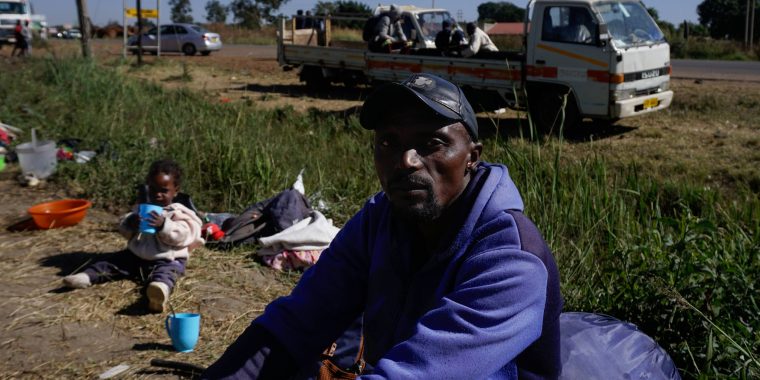
Gift
Ngoma,
a
tobacco
farmer,
waits
to
sell
his
crop
in
Harare. 
— Photo: Linda
Mujuru,
GPJ
Zimbabwe

Gift
Ngoma,
a
tobacco
farmer,
waits
to
sell
his
crop
in
Harare.
He
turned
to
farming
after
losing
his
formal
job,
but
he
says
contract
agreements
have
trapped
him
in
debt.
He
now
advocates
for
land
rights
and
alternative
financing.

Thin
rewards

More
than
100,000
small-scale
tobacco
farmers
in
Zimbabwe
have
entered
into
contracts
with
tobacco
companies,
according
to
data
from
the
Tobacco
Industry
and
Marketing
Board,
a
statutory
body
that
oversees
tobacco
production in
the
country
.

The
contracts

heavily
financed
by
companies
such
as
British
American
Tobacco
and
Tian
Ze
(China
Tobacco)

now
support
over
95%
of
Zimbabwe’s
tobacco
production.

We
are
in
a
cycle
of
oppression.

That
production
has
rebounded
from
just
44
million
kilograms
in
2006
to
232
million
kilograms
in
2024.
The
industry
brings
in
hundreds
of
millions
of
United
States
dollars
each
year
and
contributes
nearly
10%
of
Zimbabwe’s
gross
domestic
product.
It
accounts
for
30%
of
all
exports
and
over
50%
of
agricultural
exports.
In
2024,
Zimbabwe
was
the
world’s
third-largest
exporter
of
raw
tobacco,
accounting
for
10%
of
global
exports,
behind
Brazil
and
India.

But
smallholding
farmers don’t
feel
that
success
.
In
December
2024,
the
government
announced
plans
to
issue
title
deeds
to
beneficiaries
of
the
land
reform
program,
which
would
give
farmers
a
chance
to
use
their
land
as
collateral
and
rely
less
on
contract
farming.
But
for
now,
many
still
rely
on
tobacco
contracts.

“We
are
in
a
cycle
of
oppression,”
Ngoma
says.
“There
is
poverty
in
contract
farming.
It’s
as
if
we
are
laborers
on
our
farms.”

When
Global
Press
Journal
reached
out
to
Premium
Leaf
Zimbabwe
for
comment,
they
said
it
was
the
company’s
policy
to
“protect
the
privacy
of
our
farmers
and
operational
integrity.”
Tian
Ze
and
British
American
Tobacco
did
not
respond
to
several
requests
for
comment.


Tobacco
farmers
Chamu
Rukwere
and
Rudo
Nedziwe
grade
their
harvest
at
home
in
Rusape,
Zimbabwe.

Photo: Gamuchirai
Masiyiwa,
GPJ
Zimbabwe

Tobacco
farmers
Chamu
Rukwere
and
Rudo
Nedziwe
grade
their
harvest
at
home
in
Rusape,
Zimbabwe.
While
contract
farming
connects
them
to
global
markets,
they
say
it
strips
away
the
autonomy
land
reform
was
meant
to
provide.

Zimbabwe’s
shift
to
contract farming has
roots
in
a
wider
story
of
land
reform.

At
independence
in
1980,
white
Zimbabweans

who
made
up
less
than
2%
of
the
population

controlled
nearly
half
of
all
agricultural
land.
The
majority
black
population
was
confined
to
degraded,
overcrowded
communal
areas.

In
2000,
then-President
Robert
Mugabe
launched
the
controversial
Fast
Track
Land
Reform
Programme.
The
government
redistributed
millions
of
hectares
of
land
from
about
6,000
large,
white-owned
farms
to
more
than
168,000
black-owned
farms,
according
to
a
Human
Rights
Watch
report.

Farmers
needed
support,
and
into
the
vacuum
stepped
contract
schemes.

The
reforms
were
rushed,
controversial
and
violent,
but
they
brought
a
new
agrarian
structure.
Tobacco,
at
the
time
one
of
the
most
valuable
crops
and
dominated
by
white-owned
farms,
shifted
to
small-scale
operations by
the
new
landowners
.

But
the
new
generation
of
farmers
didn’t
have
access
to
traditional
bank
credit
since
they
didn’t
hold
deeds
to
their
land.
Tobacco
production
dropped
dramatically,
from
over
197,000
tons
in
1998
to
about
44,000
tons
in
2006.

Farmers
needed
support,
and
into
the
vacuum
stepped
contract
schemes,
mostly
by
Chinese
agribusinesses
such
as
Tian
Ze.
They
supplied
seeds,
fertilizers
and
technical
support
in
exchange
for
crop
guarantees,
price
control
and
access
to
global
markets.
Ultimately,
those
contracts
played
a
key
role
in
the
post-reform
tobacco
boom.

“We
continue
to
be
dependent”

Contract
schemes
now
dominate
Zimbabwe’s
tobacco
farming,
says
Emmanuel
Matsvaire,
acting
chief
executive
officer
of
the
Tobacco
Industry
and
Marketing
Board.
In
the
2024-25
season
alone,
the
board
recorded
a
total
of
106,555 small-scale
growers
,
he
says,
and
about
89%
of
these
are
contract
farming.
In
the
2025
season,
the
board
licensed
43
companies
to
contract
tobacco
farmers.

The
country’s
economy
has
long
struggled
and
“local
financing
is
generally
limited,”
Matsvaire
says.
These
companies
fill
the
gap.

But
farmers
say
the
fine
print
works
against
them.

Seeds
and
fertilizer
are
overpriced,
Ngoma
says.
For
half
a
hectare,
he
receives
seven
bags
of
fertilizer
for
$65
each.
At
the
shops,
the
same
bag
costs
about
$40.
Many
farmers
don’t
have
ready
cash
to
buy
directly
from
shops,
so
they
rely
on
private
companies
to
provide
fertilizer
and
other
inputs,
even
if
it
means
paying
more
when
harvest
comes.


Piles
of
tobacco
await
processing
in
Rusape,
Zimbabwe.

Photo: Gamuchirai
Masiyiwa,
GPJ
Zimbabwe

Piles
of
tobacco
await
processing
in
Rusape,
Zimbabwe.
Though
tobacco
is
one
of
the
country’s
top
exports
and
production
has
soared,
small-scale
contract
farmers
say
that
thanks
to
restrictive
agreements,
they
see
little
profit.

Because
of
poverty
,
we
continue
to
be
dependent,”
Ngoma
says.

Once
contract
farmers
pay
back
the
debts,
very
little
is
left.
In
some
cases,
the
total
earnings
don’t
even
cover
the
debt,
Ngoma
says,
which
forces
them
to
grow
tobacco
for
the
same
company
the
next
season.

The
companies
control
the
whole
process,
including
land
use,
Ngoma
says,
adding
that
at
times
they
bring
in
agricultural
experts
who
dictate
seed
types,
planting
times
and
farming
methods,
completely
disregarding
local
farming
knowledge.

Peter
Neshumba,
36,
began
contract
farming
for
Premium
Leaf
Zimbabwe
in
2024.
He
says
these
companies
go
as
far
as
controlling
whether
farmers
can
plant
anything
else.
They
want
full
devotion
for
their
crops,
he
says.
“Until
harvest,
the
land
essentially
belongs
to
them.”

These
arrangements
undermine
Zimbabwe’s
land
reforms.

If
a
farmer
doesn’t
stick
to
the
rules,
the
company
might
refuse
to
buy
their
crop
or
leave
them
without
a
contract
the
next
season,
he
says.

A
contract
analyzed
in
a
2023
study
in Oikos,
a
journal
published
by
Zimbabwe
Ezekiel
Guti
University,
shows
just
how
tobacco
contracts
lock
small-scale
farmers
into
risky
debt.
The
2019-20
Tian
Ze
contract
required
farmers
to
repay
loans
before
seeing
any
profit,
even
requiring
some
to
put
their
property
on
the
line
as
collateral.

Undoing
land
reforms

These
arrangements
undermine
Zimbabwe’s
land
reforms,
says
George
Seremwe,
the
president
of
the
Zimbabwe
Tobacco
Growers
Association.
The
reforms
were
meant
to
redress
colonial
imbalances,
but
contract
farming
introduces
new vulnerabilities for
small-scale
farmers
as
they
cede
control
of
their
land
to
contracting
companies.

But
Nelson
Marongwe,
an
independent
land
expert
who
has
researched
tobacco
farming
and
land
rights,
doesn’t
think
so.
The
contracts
are
valid,
he
says,
and
address
a
production
gap.

But
it
needs
to
be
for
a
limited
period,
he
says,
as
there
is
a
risk
of
farmers
losing
autonomy
and
companies
abusing
their
bargaining
power.
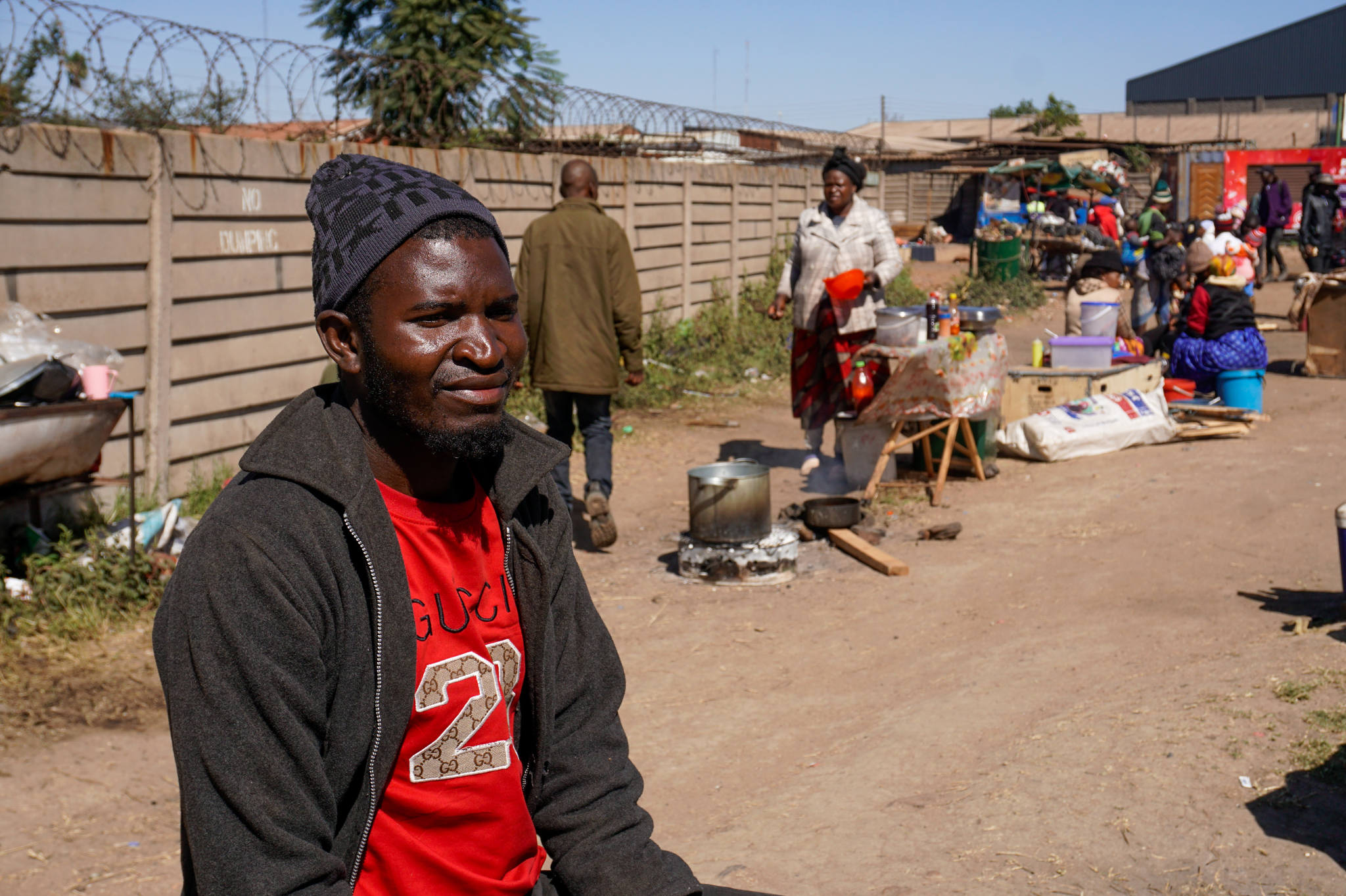

Tobacco
farmer
Peter
Neshumba
waits
for
payment
after
selling
his
crop
to
Premium
Leaf
Zimbabwe
in
Harare.
— Photo: Linda
Mujuru,
GPJ
Zimbabwe

Tobacco
farmer
Peter
Neshumba
waits
for
payment
after
selling
his
crop
to
Premium
Leaf
Zimbabwe
in
Harare.
He
says
contract
farming
controls
nearly
every
aspect
of
production,
leaving
farmers
with
little
say
over
their
land
until
harvest.

“I
feel
used”

The
tobacco
board
is
trying
to
make
these
arrangements
fairer
to
farmers,
Matsvaire
says.
The
government
is
implementing
a
framework
to
ensure
farmers
receive
a
fair
share
of
profits,
receive
inputs
in
time
and
aren’t
burdened
with
overpriced
or
substandard
inputs.
The
framework
will
also
set
a
minimum
input
package
for
farmers.

Now
that
I’m
in
it,
I
feel
used.

Matsvaire
adds
that this
farming
season
,
the
Reserve
Bank
of
Zimbabwe
has
mandated
that
tobacco
farmers
retain
70%
of
their
earnings,
in
U.S.
dollars
to
protect
them
from
exchange-rate
losses.

But
Ngoma
says
other
issues,
like
land
control
and
alternative
financing
methods,
still
need
to
be
addressed.

One
solution,
Marongwe,
the
land
expert,
says,
is
to
secure
rural
land
rights
for
all
farmers,
which
would
expand
access
to
other
financing
options.

Seremwe
says
farmers
need
fairer
terms,
but
the
solution
is
not
to
abandon
contract
farming,
since
the
country
needs
the
foreign
investment.

Despite
the
challenges,
Neshumba
plans
to
keep
contract
farming.
He
doesn’t
have
financing
alternatives.
When
he
started,
he
hoped
for
better
returns.
“Now
that
I’m
in
it,”
he
says,
“I
feel
used.”

For
farmers
like
Ngoma,
the
goal
is
self-financing.

“Contract
farming,”
he
says,
“is
a
bondage.”

Source:


Zimbabwe’s
Tobacco
Empire,
Built
On
The
Back
Of
Farmers’
Debt


Worldcrunch

From Casebooks To Chatbots: Another Law School Makes AI Certification Mandatory For Students – Above the Law

High-profile
artificial
intelligence
screwups
are
now
occurring
on
an
almost
weekly
basis,
proving
that
even
experienced
attorneys
need
more
training
when
it
comes
to
how
to
spot
caselaw
hallucinations.
With
law
schools
now
trying
to
get
their
students
future
ready
for
a
practice
of
law
that
will
inevitably
include
generative
AI,
a
second
school
will
now
require
AI
certification
for
its
first-year
students.

Mississippi
College
School
of
Law will
be
joining
Case
Western
Reserve
University
School
of
Law
in
adopting
this
mandatory
program.

Law.com

has
additional
information
on
MC
Law’s
new
Introduction
to
AI
and
the
Law
certification,
developed
in
partnership
with
Wickard.ai,
and
its
founder
and
CEO,
Oliver
Roberts:

The
program
will
combine
foundational
instruction,
hands-on
training
with
AI-powered
legal
tools,
and
an
assessment
to
ensure
demonstrated
competency,
while
students
will
also
learn
about
ethical
and
regulatory
aspects
of
AI,
according
to
the
school.

The
first
session
will
provide
an
introduction
to
AI
and
LLMs;
session
two
will
cover
best
practices
for
using
AI
models;
session
three
will
address
how
AI
can
be
ethically
used
in
research,
drafting
and
client
service;
and
the
fourth
and
final
session
will
give
an
overview
of
federal
and
state
AI
regulations,
according
to
Roberts.

The
course
culminates
in
a
certification
exam,
and
passing
students receive
an
AI
legal
practice
certification. 

“MC
Law
is
looking
to
take
the
lead
in
preparing
the
twenty-first-century
lawyer
for
the
effective
and
ethical
use
of
AI
to
better
serve
their
clients
and
communities,”
Dean
John
Anderson
said. “The
goal
is
to
maximize
the
benefits
of
these
transformational
technologies
for
our
state
and
nation
while
minimizing
the
risks.”

Which
law
school
will
be
the
next
to
offer
an
essential
AI
certification
program
like
this
for
its
students?
You
can email
us
 or
text
us
(646-820-8477)
if
you
have
any
intel.
Thank
you.


Second
Law
School
Adopts
Mandatory
AI
Certification
for
1Ls

[Law.com]


Staci Zaretsky


Staci
Zaretsky
 is
the
managing
editor
of
Above
the
Law,
where
she’s
worked
since
2011.
She’d
love
to
hear
from
you,
so
please
feel
free
to

email

her
with
any
tips,
questions,
comments,
or
critiques.
You
can
follow
her
on BlueskyX/Twitter,
and Threads, or
connect
with
her
on LinkedIn.

How Appealing Weekly Roundup – Above the Law


Ed.
Note
:

A
weekly
roundup
of
just
a
few
items
from
Howard
Bashman’s

How
Appealing
blog
,
the
Web’s
first
blog
devoted
to
appellate
litigation.
Check
out
these
stories
and
more
at
How
Appealing.


“Fed
Independence
Reaches
Its
Moment
of
Truth
as
Supreme
Court
Weighs
Cook’s
Fate;
High
court
to
decide
whether
Trump
can
remove
board
member,
which
former
officials
see
as
threat
to
central
bank
independence”:
 Nick
Timiraos
of
The
Wall
Street
Journal
has this
report
.


“11th
Circuit
upholds
law
targeting
racial
violence
on
government
property;
The
ruling
affirmed
the
conviction
of
Jordan
Leahy
for
using
his
car
to
terrorize
a
Black
family
on
a
Florida
road”:
 Megan
Butler
of
Courthouse
News
Service
has this
report
 on a
ruling
 that
the U.S.
Court
of
Appeals
for
the
Eleventh
Circuit
 issued
today.


“Barrett
spurns
Supreme
Court
bias
claims
after
string
of
Trump
shadow
docket
wins;
Justice
Amy
Coney
Barrett
sat
for
an
extended
discussion
where
she
defended
the
high
court’s
rulings
and
her
jurisprudence”:
 Kelsey
Reichmann
of
Courthouse
News
Service
has this
report
.


“Judges
Say
Justices
Need
to
Give
More
Emergency
Docket
Guidance”:
 Justin
Wise
of
Bloomberg
Law
has this
report
.


“Bonus
179:
The
Stare
Decisis-Free
Docket;
The
Court’s
recent
treatment
of
Humphrey’s
Executor
may
only
encourage
lower-court
judges
to
do
exactly
what
Justices
Gorsuch
and
Kavanaugh
purported
to
rail
against
in
August:
not
follow
precedents.”
 Steve
Vladeck
has this
post
 at
his
“One
First”
Substack
site.


“The
Situation:
Choose
Your
Own
Adventure:
Lindsey
Halligan
Edition;
Any
way
you
play,
you
lose.”
 Benjamin
Wittes
and
Anna
Bower
have this
post
 online
at
the
“Lawfare”
blog.

How Personal Injury Lawyers Are Leveraging AI – Above the Law

Are
personal
injury
lawyers
truly
taking
advantage
of
the
tools
available
to
them? 

Our
friends
at
8am
surveyed
325
PI
professionals
to
find
out. 

In
this
report,
ATL
contributor
and
8am
Insight
Strategist
Nicole
Black
shares
this
data
on
technology
use

contextualized
to
help
you
benchmark
how
your
firm
stacks
up. 

Download
it
to
explore: 

  • Experiences
    with
    and
    plans
    for
    AI
    adoption
  • Ethical
    concerns
    and
    practical
    challenges
    faced
    when
    implementing
    new
    software
  • Adoption
    rates
    for
    tools
    that
    increase
    efficiency
  • Remote
    work,
    including
    data
    on
    the
    types
    of
    proceedings
    conducted
    virtually
  • Profitability
    and
    productivity
    gains
    realized
    from
    online
    payment
    solutions

Fill
out
the
form
to
learn
more!

Courts Should Avoid Handwritten Orders – Above the Law

State
and
federal
courts
have
adopted
a
number
of
technological
advances
in
recent
years
that
make
it
much
easier
to
handle
judicial
matters.
For
instance,
many
courts
adopted
virtual
courtrooms
complete
with
cameras,
monitors,
and
other
systems
to
accommodate
remote
proceedings.
In
addition,
most
courts
have
adopted
electronic
filing
systems
that
are
much
more
efficient
than
paper
filing
systems. 
However,
many
courts
still
issue
handwritten
orders. Although
this
might
be
more
convenient
in
certain
circumstances,
courts
should
avoid
handwritten
orders
for
a
variety
of
reasons.


Difficult
To
Read

Perhaps
the
most
important
reason
why
handwritten
orders
should
be
avoided
is
that
they
are
difficult
to
read. In
many
instances,
handwritten
orders
are
written
on
carbon-copy
forms,
and
a
copy
of
a
form
might
be
difficult
for
a
litigant
to
review. The
process
of
scanning
a
handwritten
order
might
also
degrade
the
quality
of
the
text
on
the
decision. Moreover,
some
judges
and
judicial
staff
have
absolutely
horrible
handwriting,
and
it
is
altogether
difficult
to
discern
what
is
written
in
the
order.

A
few
years
ago,
I
filed
a
motion
that
the
judge
wanted
to
resolve
while
all
of
the
parties
were
in
the
courtroom. The
judge
wrote
out
an
order
that
was
around
a
paragraph
long,
and
he
told
us
we
would
be
able
to
see
the
decision
once
it
was
uploaded
later
that
day. When
I
finally
viewed
the
decision,
I
could
not
make
out
some
critical
language
in
the
order. My
adversary
and
I
had
different
interpretations
of
what
was
written
since
different
interpretations
of
the
language
had
different
impacts
on
our
clients. We
ended
up
needing
to
request
clarification
from
the
court,
which
wasted
more
time
than
if
the
court
typed
out
the
order
and
uploaded
that
instead
of
a
handwritten
order.


Space
Limitations

Handwritten
order
are
often
much
shorter
than
typed
orders. This
is
because
it
usually
takes
longer
to
write
a
decision
than
it
does
to
type
an
order. Accordingly,
judges
may
not
include
much
reasoning
around
their
decisions
when
they
choose
to
handwrite
an
order. This
can
have
significant
consequences
if
an
order
is
appealed
and
if
another
judge
needs
to
evaluate
why
a
judge
made
a
given
decision
on
an
issue.

Sometimes,
litigants
can
procure
the
record
of
oral
argument
to
ascertain
more
context
about
how
a
judge
arrived
at
a
given
decision. 
However,
not
all
oral
arguments
are
recorded,
and
sometimes
judges
do
not
specify
why
they
decided
a
certain
way
during
oral
argument. 
It
is
much
more
prudent
in
many
circumstances
for
judges
to
take
their
time
to
type
out
orders
so
that
they
can
be
more
comprehensive
when
deciding
how
they
arrived
at
a
given
position.


Editing
Is
Difficult

It
is
much
more
difficult
to
edit
a
handwritten
order
than
it
is
to
edit
a
typed
order. If
a
judge
wants
to
change
something
in
a
handwritten
decision,
they
may
need
to
strike
out
language,
include
arrows
to
added
language,
and
tuck
extra
words
into
the
margins. One
time,
I
saw
a
heavily
edited
handwritten
order
that
looked
more
like
a
treasure
map
than
a
judicial
order! If
judges
type
out
their
order,
they
can
just
delete
or
add
text
before
printing
out
the
order
and
filing
it. This
has
a
much
cleaner
look
than
a
handwritten
order
in
most
circumstances.

Clearly,
some
orders
are
just
easier
to
handwrite. For
instance,
if
the
parties
stipulate
to
items,
it
is
usually
easier
for
the
parties
to
write
the
items
down
and
have
a
judge
“so
order”
the
stipulation. Moreover,
for
smaller
matters,
it
might
be
completely
appropriate
for
a
judge
to
scribble
out
a
brief
order. However,
in
the
majority
of
circumstances,
it
is
usually
best
to
avoid
handwritten
orders
for
the
sake
of
clarity
and
efficiency.


Jordan
Rothman
is
a
partner
of 
The
Rothman
Law
Firm
,
a
full-service
New
York
and
New
Jersey
law
firm.
He
is
also
the
founder
of 
Student
Debt
Diaries
,
a
website
discussing
how
he
paid
off
his
student
loans.
You
can
reach
Jordan
through
email
at 
jordan@rothman.law.

The Right-Wing Zealots At Sinclair & Nexstar Push Their Luck, Refuse To Put Jimmy Kimmel Back On The Air – Above the Law

The
flood
of
outrage
at
the
Disney/FCC
cancellation
of
Jimmy
Kimmel
ultimately forced
the
company
to
retreat
 and
put
Kimmel
back
on
the
air.
Disney
apparently
didn’t
much
like
the
wave
of
folks
cancelling
their
Disney+
streaming
video
subscriptions
in
response
to
the
government
and
a
major
corporation
coordinating
a
frontal
assault
on
the
First
Amendment.

Some
insiders
at
Disney
indicated
that
Disney
had
a
planned
Disney+
price
hike
coming
this
week,
and
executives
worried
the
backlash
to
both
was
going
to
cause
significant
financial
harm
to
their
quarterly
numbers,
as
revealed
by
independent
journalist
Marisa
Kabas.

SCOOP

Part
of
the
reason
Disney/ABC
may
have
rushed
to
sort
things
out
with
Kimmel
is
because
tomorrow
they
have
a
planned
price
increase
for
Disney+
streaming,
a
Disney
source
tells
me.
With
subscriptions
hemorrhaging
since
last
week,
they
couldn’t
risk
losing
more
users
with
this
announcement.


Marisa
Kabas
(@marisakabas.bsky.social)


2025-09-22T22:20:12.473Z

Indeed,
on
Tuesday
morning the
price
hike
 was
confirmed.

Local
ABC
broadcast
affiliate
owner
Sinclair
Broadcasting,
however,
appears
intent
on
pushing
its
luck.
We’ve
long
pointed
out
how
the
right-wing
broadcaster
is
basically
GOP
propaganda
pretending
to
be
local
news.
The
company
has
an
extended
history
of
kissing
Trump’s
ass,
airing
all
kinds
of pro-Trump
propaganda
 (the
company’s
infamous “must
run”
segments
),
and
is often
cozy
 with white
nationalists
.

Sinclair says
it
will
continue
to
“pre-empt”
Jimmy
Kimmel
Live!
 as
some
sort
of
misguided
punishment
for
Kimmel’s
(fairly
tame)
criticism
of
their
beloved
President:


“Beginning
Tuesday
night,
Sinclair
will
be
preempting Jimmy
Kimmel
Live! across
our
ABC
affiliate
stations
and
replacing
it
with
news
programming. Discussions
with
ABC
are
ongoing
as
we
evaluate
the
show’s
potential
return.”

Soon
after
Sinclair’s
announcement,
Nexstar
followed
suit
and said
it
would
also
not
show
 Kimmel’s
show
despite
the
high
ratings
it
was
guaranteed
to
get
last
night.

Sinclair
owns
39
ABC-affiliated
stations
across
the
country,
including
WJLA-TV
in
Washington,
D.C.
The
company,
along
with
the
nation’s
other
major
right-wing
local
broadcaster,
Nexstar,
originally
demanded
Kimmel
issue
an
apology
(for
doing
nothing
really
wrong),
and
donate
to
Charlie
Kirk’s
right-wing
outreach
(and
dim
college
kid
disinformation
project),
Turning
Point
USA.

Nexstar
is
pushing
for
Trump
FCC
approval
of
a
$6.2
billion
deal
merger
with
Tegna,
which
is
part
of a
massive
new
wave
of
harmful
media
consolidation
under
Trump
2.0
.
The
Kimmel
saga
began
when
FCC
boss
Brendan
Carr,
once
again
abused
the
agency’s
regulatory
approval
powers
to
convince
Sinclair
and
Nexstar
that
pre-empting
Kimmel
for
criticizing
the
President would
be
in
their
best
interests
.

That’s
clearly
an
illegal
government
effort
to
cancel
free
speech,
and
Disney
has
paid
the
price
already.
The
censorship
effort
saw
widespread,
bipartisan
backlash,
including
(somewhat
surprisingly)
from
the
likes
of Senators
Ted
Cruz
and
Mitch
McConnell,
and
former
Fox
News
propagandist
Tucker
Carlson
.
They’re
at
least
aware
enough
to
know
that
this
sort
of
abuse
of
government
power
could
inevitably
be
turned
against them.

Sinclair
likely
still
believes
that
pushing
its
luck
and
continuing
to
“pre-empt”
Kimmel
gives
them
additional
leeway
within
the
Trump
administration,
cements
their
power
in
the
right-wing
propaganda
ecosystem,
and
makes
merger
approval
more
likely.
But
that’s
going
to
come
with
an
obvious
ratings
cost,
and
any
costs
incurred
by
those
identifying
Sinclair
stations
and
contacting
their
advertisers
to
complain
in
the
weeks
to
come:

Ultimately
Sinclair
and
Nexstar
may
get
more
harmful
media
consolidation
approved,
but
it’s
likely
going
to
be
more
trouble
than
it
was
worth.
The
MAGA
set
clearly
thinks
they
can
exploit
Charlie
Kirk’s
death
to
escalate
their
war
on
their
ideological
enemies,
but
having
been
pickled
in
their
own
propaganda,
one
gets
the
sense
they’re really
not
tuned
into
how
violently
unpopular
their
“movement”
is
becoming
 (something
set
to
get
worse
as
the
impacts
of
things
like
tariffs,
the elimination
of
all
corporate
oversight
,
and
the
evisceration
of
the
social
safety
net
begin
to
arrive
in
concussive
waves).

Meanwhile,
local
broadcast
television
was
also already
seeing
steady
viewership
declines
as
their
mostly
older
audience
dies
off
;
advertising
yourself
as
a
bunch
of
weird
censorial
zealots
engaged
in
fake
journalism
in
service
to
an
unpopular
idiot
king
isn’t
likely
to
help
the
company
make
inroads
with
a
younger
target
demographic
essential
for
the
company’s
longer
term
survival.


The
Right-Wing
Zealots
At
Sinclair
&
Nexstar
Push
Their
Luck,
Refuse
To
Put
Jimmy
Kimmel
Back
On
The
Air


More
Law-Related
Stories
From
Techdirt
:


DHS
Demands
Media,
Politicians
Stop
Being
So
Mean
To
ICE


Secret
Service
Dubiously
Claims,
Without
Evidence,
To
Have
Uncovered
‘Hidden
Telecom
Network’
That
Could
Have
Crippled
NYC,
UN


Hey,
Nintendo:
You
Cool
With
ICE
Using
Your
Pokémon
IP
To
Recruit
More
Goons?

Morning Docket: 09.26.25 – Above the Law

*
James
Comey
indicted
in
effort
to
criminalize
hurting
Trump’s
feelings.
[CNN]

*
Comey
is
hiring
Pat
Fitzgerald,
the
former
Illinois
federal
prosecutor,
to
represent
him.
[Bloomberg
Law
News
]

*
Clarence
Thomas
tells
audience
that
he
and
his
colleagues
are
no
longer
even
pretending
to
respect
stare
decisis.
[Courthouse
News
Service
]

*
Administration
sues
six
states
for
election
rolls
in
vote
suppression
bid.
[Reuters]

*
DOJ
creates
new
branch
dedicated
to
suing
people
and
institutions
that
don’t
comply
with
administration
policy
and
messaging.
[Law360]

*
Fourth
Circuit
prepares
to
hear
Trump’s
lawsuit
against
all
Maryland
judges.
[Law.com]

*
Biglaw
lawfluencer
quits
after
two
weeks.
[Roll
on
Friday
]

Did Kirkland Culturally Abandon Their Hong Kong Office? – See Also – Above the Law

Kirkland
Doesn’t
See
The
Issue:
The
11
partners
that
jumped
ship
may
feel
otherwise.
Trump’s
Tylenol
Theories
Are
Emboldening
Plaintiffs:
They
want
to
get
a
second
shot
at
Kenvue.
As
If
You
Needed
Another
Reason
To
Join
A
Boutique:
They’re
taking
the
fight
to
Trump.
New
DOJ
Improv
Prompt
Is…
George
Soros
But
Somehow
Illegal:
The
DOJ
has
asked
its
prosecutors
to
figure
out
how
to
charge
George
Soros.
The
only
challenge
is
thinking
of
anything
he’s
actually
done
wrong.
Let’s
Talk
About
Parental
Leave:
What
is
requesting
parental
leave
like
at
your
firm?