Managing In The Age Of AI: Bring Back Walking Around – Above the Law

I
had
a
friend
who
recently
applied
for
a
second
mortgage.
There
was
a
minor
title
issue
that
anyone
could
see
was
irrelevant
to
the
approval.
Yet
the
lender’s
AI
system
spotted
it
and
spit
out
an
email
saying
the
loan
officer
couldn’t
approve
the
loan.
When
my
friend
contacted
the
(human)
loan
officer,
he
quickly
noted
the
error
and
approved
the
loan.

But
this
is
the
danger
we
face
in
the
age
of
AI:
LLMs
and
bots
making
decisions.
An
overreliance
on
metrics
and
AI
summaries.
And
mistakes
that
humans
would
have
easily
thought
through
and
not
made.

And
it’s
a
particular
problem
for
law
which,
as
I

recently
wrote
,
thrives
on
ambiguity
and
nuance.
More
experienced
lawyers,
at
least
the
good
ones,
understand
this.

The
trick
is
to
impart
that
knowledge
and
training
on
younger
lawyers
and
those
they
supervise.
For
this,
the
answer
isn’t
focusing
on
AI.
It’s
creating
better
lawyers
and
having
partners
pay
attention
to
how
the
younger
ones
are
working.

Perhaps
it’s
time
to
reinstitute
and
reemphasize
the
old
managing
by
walking
around
concept.


Managing
by
Walking
Around

Years
ago,
there
was
a
management
concept
known
as
managing
by
walking
around.
It
was
based
on
the
notion
that
managers
who
leave
their
offices
and
spend
informal
time
talking
with
those
they
supervise
will
yield
greater
productivity
and
better
work
product.
It
drew
upon
the
practices
at
Hewlett-Packard
where
leaders
were
expected
to
be
visible,
accessible,
and
engaged.
It
involved
asking
questions,
listening,
and
face-to-face
communications.

The
idea
and
its
soundness
were
reiterated
to
me
in
a
recent

MacSparky
blog
post

by

David
Sparks
.
Sparks
is
a
real
thought
leader
in
the
tech
and
Apple
space.
And
because
he
is
a
former
practicing
lawyer,
he
understands
the
practice
and
the
impact
of
technology
on
it.
In
his
recent
post,
Sparks
talked
about
the
fact
that
Walt
Disney
was
at
Disneyland
constantly,
walking
around
checking
on
anything
and
everything.
Including
painters
freshening
up
various
areas
in
the
early
morning.
As
Sparks
put
it,
“Walt
wasn’t
checking
a
spreadsheet
or
reading
a
report
from
a
middle
manager.
He
was
standing
over
a
painter
at
7
AM
because
the
paint
mattered
to
him.”

Sparks
mentioned
this
and
other
CEOs
to
demonstrate
how
passionate
they
were
about
their
company’s
product
instead
of
the
business.
To
me,
it’s
the
similar
concept:
managing
and
supervising
by
walking
around
demonstrates
how
supervisors
should
care
about
the
product
being
produced.


The
Practice
Group
Leader

I
once
had
a
practice
group
leader
who
every
day
would
walk
the
halls
in
the
late
afternoon.
The
rumor
always
was
Charly
was
checking
to
see
who
was
working
and
who
had
left
early.
In
hindsight,
while
Charly
wanted
to
see
who
was
working,
he
was
really
doing
more.
Charly
didn’t
just
look
in
your
office,
he
stopped
by
and
chatted
a
few
minutes
about
what
his
team
was
working
on
and
what
cases
we
were
prioritizing.
He
asked
questions
and
gave
his
ideas.

Charly
wanted
to
be
sure
we
were
handling
our
cases
correctly
and
making
good
decisions
because
he
cared
about
the
product
we
were
producing
for
the
firm’s
clients.
It
took
time
and
energy
on
his
part
to
do
that
when
he
could
have
been
sitting
in
his
office
billing
time.
He
was
being
a
mentor.

And
we
all
benefitted.
My
work
got
better
with
his
guidance.
My
business
development
skills
sharpened
as
I
listened
to
his
ideas
and
got
to
ask
questions.
And
every
now
and
then,
he
would
learn
something
from
me
and
say,
“That’s
a
good
idea
I
hadn’t
thought
of.”

It
was
from
those
6
p.m.
discussions
that
I
got
my
best
ideas.
Charly
made
me,
and
all
of
us,
better
lawyers.


MBWA
Will
Matter
Even
More
Than
Ever

The
whole
concept
of
managing
by
walking
around
(MBWA),
however,
has
become
a
bit
lost.
Remote
work,
doing
more
by
Zoom,
increased
emphasis
on
billable
hours
and
revenue,
and
less
emphasis
on
listening
and
guidance
by
older
lawyers
have
resulted
in
the
concept
fading
from
view.

But
add
to
all
this
the
temptation
to
use
AI
to
make
decisions
and
you
have
all
the
more
reason
to
do
more
walking
around,
listening,
and
chatting.
Relying
on
LLMs
to
make
strategy
decisions
and
prioritize
tasks
and
work
results
in
potentially
bad
and
costly
decisions
like
the
loan
decision
that
almost
cost
my
friend
a
loan.
And
as
we
move
away
from
time-based
billing
to
value-based
billing,
maximizing
that
value
is
essential.
And
that’s
what
managing
by
walking
around
can
do.

All
the
more
reasons
we
need
more
Charlys
in
the
legal
world
and
less
reliance
on
dashboard
non
thinking.
We
need
senior
lawyers
who
take
time
to
ask
and
listen.
Who
themselves
understand
how
to
use
AI
and
its
benefits
and
risks.
Who
can
ask
how
their
team
is
using
AI
and
make
sure
it’s
done
to
enhance
the
work
and
not
a
mere
shortcut.
Who
care
about
the
team,
and
its
work
product.

So,
let’s
get
the
old
managing
by
walking
off
the
shelf,
dust
it
off,
and
apply
it
to
today’s
new
reality.

Before
it’s
too
late
and
we
end
up
with
lawyers
who
know
how
to
prompt
but
not
how
to
practice.


Stephen
Embry
is
a
lawyer,
speaker,
blogger,
and
writer.
He
publishes TechLaw
Crossroads
,
a
blog
devoted
to
the
examination
of
the
tension
between
technology,
the
law,
and
the
practice
of
law
.

Law Schools Face Enrollment ‘Wake-Up Call’ Following Landmark SCOTUS Case – Above the Law


Ed.
note
:
Welcome
to
our
daily
feature, Quote
of
the
Day
.


This
should
serve
as
a
wake-up
call
to
everyone
in
legal
education.
This
shift
is
particularly
concerning
because
first-gen
college
graduates
are
a
vital
way
to
broaden
who
gets
to
be
a
part
of
the
legal
profession
and
what
it
means
to
promote
access
to
justice
throughout
our
society.


— 

Sudha
Setty
,
president
and
the
CEO
of
the
Law
School
Admission
Council
(LSAC),
in
comments
given
to
the

ABA
Journal
,
concerning
the
decline
in
law
school
enrollment
of
first-generation
college
graduates
for
the
second
consecutive
year
(23.95%
for
the
2024
1L
class
and
21.6%
for
the
2025
1L
class).
This
data
comes
from
an

LSAC
report
on
law
school
enrollment
trends

from
2021
to
2025.
We
are
now
two
admissions
cycles
removed
from
the
Supreme
Court’s
2023
landmark
decision
in
Students
for
Fair
Admissions,
which
ended
affirmative
action.


Staci
Zaretsky
 is
the
managing
editor
of
Above
the
Law,
where
she’s
worked
since
2011.
She’d
love
to
hear
from
you,
so
please
feel
free
to email her
with
any
tips,
questions,
comments,
or
critiques.
You
can
follow
her
on BlueskyX/Twitter,
and Threads, or
connect
with
her
on LinkedIn.

Sean Combs Fights For Reduced Time Due To Potential Sentencing Error – Above the Law

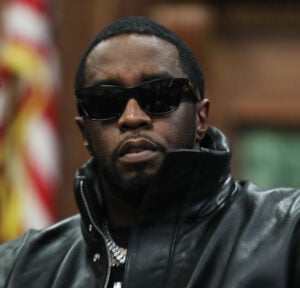
(Photo
by
Shareif
Ziyadat/Getty
Images)

Sean
“Diddy”
Combs
was
sentenced
to
50
months
in
prison
last
year.
This
was
a
major
victory
considering
that
many

thought
he
was
going
away
for
a
very
long
time
,
but
his
lawyers
are
arguing
that
even
the
50
months
is
too
much.
Since
the
sentencing,
his
legal
team
has
appealed
on
several
grounds.
Post
sentencing,
they
argued
that
Combs
wasn’t
engaging
in
prostitution;

rather,
he
was
just
a
constitutionally
protected
amateur
pornographer
.
As
interesting
as
that
attempt
at
reclassification
is,
a
novel
legal
question
posed
to
the
Second
Circuit
could
be
the
strategy
that
sticks.

Complex

has
coverage:

At
the
center
of
Thursday’s
argument
was
the
issue
of
whether
Judge
Subramanian
considered
acquitted
conduct
when
sentencing
Diddy.
Almost
all
of
the
mogul’s
legal
team
for
his
seven-week
trial
was
on
hand,
including
Brian
Steel,
Marc
Agnifilo,
and
Nicole
Westmoreland.
Several
members
of
Diddy’s
friends
and
family
were
also
there,
though
the
mogul
himself,
his
mother,
and
his
children
were
absent.

Alexandra
Shapiro’s
primary
argument
was
that,
because
her
client
was
acquitted
of
sex
trafficking
charges

and
thus
the
jury
didn’t
find
Diddy
guilty
of
having
used
force,
fraud,
or
coercion
to
get
Cassie
Ventura
and
the
pseudonymous
Jane
Doe
to
participate
in
the
freak-offs

Judge
Subramanian
had
erred
when
he’d
added
an
enhancement
for
coercion
to
the
mogul’s
sentencing
guidelines.

In
response,
the
prosecution
argued
that
the
enhancements
didn’t
come
from
characterizations
of
acquitted
behavior,
but
from
behaviors
Diddy
admitted
to
at
trial.
Judge
Subramanian
also
mentioned
that
they’d
have
given
Combs
the
same
50
months
without
factoring
in
any
enhancements,
but
just
saying
you
didn’t
do
a
thing
isn’t
enough
to
rule
out
that
you
did.

This
case
gets
more
interesting
with
time.
This
is
the
part
where
we
would
promise
to
keep
you
up
to
date
on
the
court
proceedings,
but
no
journalistic
endeavors
can
hold
a
candle
to
the
pettiness
of
Curtis
“50
Cent”
Jackson.
If
the
ruling
doesn’t
come
down
in
Combs’s
favor,
he
will
be
the
first
one
to
tell
you.


Diddy
Appeals
Hearing:
Lawyers
Argue
for
Freedom,
Judge
Calls
It
an
‘Exceptionally
Difficult
Case’

[Complex]


Earlier
:

Diddy
Did…Some
Of
It


Diddy
‘Freakoff’
Case
Takes
Unexpected
Constitutional
Turn


Chris
Williams
became
a
social
media
manager
and
assistant
editor
for
Above
the
Law
in
June
2021.
Prior
to
joining
the
staff,
he
moonlighted
as
a
minor
Memelord™
in
the
Facebook
group Law
School
Memes
for
Edgy
T14s
.
 He
endured
Missouri
long
enough
to
graduate
from
Washington
University
in
St.
Louis
School
of
Law.
He
is
a
former
boat
builder
who
is
learning
to
swim
and
is
interested
in
rhetoric,
Spinozists
and
humor.
Getting
back
in
to
cycling
wouldn’t
hurt
either.
You
can
reach
him
by
email
at


[email protected]

and
by
Tweet/Bluesky
at @WritesForRent.

Lawyers win fight over title deeds pilot discrimination

HARARE

Lawyers
on
Wednesday
warned
that
the
government’s
retreat
on
its
handpicked
conveyancers
for
a
pilot
scheme
to
digitalise
title
deeds
resolves
only
part
of
the
problem,
and
that
property
owners
across
Zimbabwe
now
face
a
broader
fight
against
a
compulsory
deeds
re-registration
programme
that
could
saddle
them
with
costs
they
never
agreed
to
and
never
asked
for.

The
ministry
of
justice
backed
down
on
Wednesday
after
the
Law
Society
of
Zimbabwe
intervened,
agreeing
to
open
the
Title
Deeds
Validation
and
Re-Issuance
Pilot
Programme
to
all
registered
conveyancers
rather
than
a
government-selected
list
of
16
firms.

Advocate
Thabani
Mpofu,
who
had
criticised
the
government
move
to
handpick
conveyencers,
said
the
lawyers’
victory
should
not
obscure
what
remains
at
stake
for
ordinary
title
holders.

“The
ministry
of
justice
has
backed
down
and
will
no
longer
be
proceeding
with
its
obnoxious,
nepotistic
and
corrupt
title
deeds
pilot
project
after
a
fierce
fight
back
from
lawyers,”
Mpofu
said.

“Now
that
the
lawyers
have
prevailed,
the
public
must
now
fight
them
and
their
state.”

Under
Statutory
Instrument
76
of
2025,
all
property
owners
in
Zimbabwe
are
required
to
convert
their
existing
title
deeds
to
digital
format
within
two
years.
The
conversion
process
requires
engagement
of
a
conveyancer

meaning
legal
fees
will
be
unavoidable
for
every
title
holder
in
the
country,
regardless
of
whether
they
want
or
need
the
service.

Mpofu
questioned
the
constitutional
basis
of
that
obligation.

“Why
should
people
be
required
to
consult
lawyers
for
a
service
they
do
not
need?”
he
asked.
“How
is
a
91-year-old
titleholder
expected
to
afford
legal
fees
that
are
finagled
upon
them
without
consultation
or
their
consent?”

He
also
pressed
for
transparency
on
the
financial
architecture
of
the
programme,
raising
questions
that
the
government
has
not
yet
publicly
answered.

“How
much
will
the
state
charge
for
this
service,
and
who
will
benefit
from
those
charges?
Are
private
companies
providing
this
digitalisation
service,
and
who
is
behind
them?”

The
ultimate
question,
Mpofu
said,
was
one
of
constitutional
property
rights.

“From
the
perspective
of
the
title
holder
who
made
an
outlay
to
acquire
property
and
obtain
a
deed
of
title,
is
this
expropriation
of
money
reasonably
justifiable
in
a
democratic
society?”

Advocate
Fadzayi
Mahere
raised
a
further
challenge
that
the
government
has
yet
to
address:
what
happens
to
title
holders
who
simply
refuse
to
comply.

“Why
should
people
have
to
pay
anything
more
for
properties
that
were
already
conveyanced
with
all
relevant
taxes
and
fees
paid
up?”
she
asked.

“Why
should
a
property
owner
be
burdened
by
this
new
money-making
experiment?”

Mahere
said
the
scheme
had
no
obvious
means
of
enforcement.

“What
happens
if
people
simply
don’t
comply?
You
can’t
take
their
properties.
They
already
hold
title,”
she
said.
“It’s
nonsensical.”

The
pilot
programme,
which
began
on
April
1,
2026,
is
designed
to
test
the
Digital
Land
Administration
Platform
before
a
nationwide
rollout.

The
ministry
of
justice
has
said
the
new
modalities
for
the
programme
will
be
worked
out
in
consultation
with
the
Law
Society,
with
details
to
follow.

Chivayo donates Toyota GD6, $50k cash to man whose family was wiped out in crash

HARARE

Flamboyant
businessman
Wicknell
Chivayo
has
donated
a
brand
new
Toyota
Fortuner
worth
US$80,000
and
US$50,000
in
cash
to
a
man
who
lost
his
wife
and
all
five
of
his
children
in
a
single
road
traffic
accident
over
the
Easter
weekend.

Ronald
Mujuru
was
left
without
his
entire
family
after
the
crash
which
claimed
six
lives.
Lilian
Mujuru
was
driving
to
a
church
conference
with
her
five
children
aged
15,
13,
11,
7
and
3
when
her
vehicle
had
a
head-on
collision
with
a
haulage
truck
near
Mvuma.

Chivayo
announced
the
donation
on
X,
saying
he
was
moved
by
the
scale
of
the
loss
and
felt
compelled
to
act
as
a
fellow
Zimbabwean
and
as
a
homeboy
from
the
same
part
of
Chivhu.

“It
is
the
most
difficult
and
unimaginable
thing
for
any
parent
to
bury
a
child,
but
to
bury
five
children
and
at
the
same
time
bury
your
wife
is
the
most
horrendous
thing
that
no
human
heart
should
ever
be
asked
to
endure,”
Chivayo
wrote.

He
directed
Mujuru
to
collect
the
2026
Toyota
Fortuner
2.8
GD6
from
Exquisite
Car
Dealership
in
Harare,
describing
the
vehicle
and
the
cash
as
chema

the
traditional
gesture
of
condolence
giving.

“This
is
all
from
the
bottom
of
my
heart
and
by
no
means
intended
to
gain
any
mileage
at
the
expense
of
your
grief,
but
a
small
token
to
lessen
the
emotional
pain
and
unimaginable
agony
you
are
carrying,”
he
added.

Chivayo
also
paid
tribute
to
first
lady
Auxillia
Mnangagwa,
who
visited
Mujuru
to
offer
condolences.

“Such
a
gesture
demonstrated
the
true
spirit
of
ubuntu
that
binds
us
together
as
Zimbabweans,”
he
wrote.
He
also
acknowledged
Transport
Minister
Felix
Mhona,
who
attended
the
funeral.

The
Toyota
GD6
which
Wicknell
Chivayo
donated
to
grieving
father
after
losing
his
wife
and
5
children

Chivayo
has
become
one
of
Zimbabwe’s
most
high-profile
philanthropists,
regularly
making
headline-grabbing
donations
to
celebrities,
churches,
schools,
politicians
and
football
clubs.

The
Mujuru
donation
adds
to
a
long
list
of
beneficiaries
that
has
made
him
a
polarising
but
unavoidable
figure
in
public
life.

Trump Sends DOJ After NFL To Avenge His Own Public Humiliation In The 80s – Above the Law

There
are
two
major
themes
from
the
past
couple
months
that
you
need
to
understand
about
this
Department
of
Justice.
First,
the

administration
forced
out
its
own
antitrust
chief

and
this
week
we
learned
that
the
senior
litigators
running
the
government’s
biggest
antitrust
matters
are

also
bolting
the
Department
of
Justice

following
the
surprise
settlement
with
Ticketmaster.
The
administration
used
the
threat
of
arbitrary
enforcement
to

shunt
a
media
consolidation
deal
toward
a
deep-pocketed
donor
.
And
we
learned
that
one
right-wing
lawyer
has
built
a
reputation
for

successfully
leaning
on
the
administration
to
approve
suspect
deals
for
his
clients
.

Second,
after

Pam
Bondi
got
fired
,
her
interim
replacement
Todd
Blanche
held
a
press
conference
where
he
said
that

Donald
Trump
has
the
“right”
to
influence
DOJ
investigations
.

So,
given
that
this
DOJ
doesn’t
give
a
shit
about
faithfully
enforcing
antitrust
law,
what
are
we
to
make
of
today’s


Wall
Street
Journal

exclusive
report

that
the
Justice
Department
has
opened
an
investigation
into
the
National
Football
League
over
potential
anticompetitive
practices?
Other
than
this
being
the
dementia-fueled
fulfillment
of
Trump’s
revenge
arc
against
the
NFL
for
never
letting
him
own
a
team
and
publicly
humiliating
him
in
an
antitrust
trial
40
years
ago.

The
DOJ
is
reportedly
examining
whether
the
NFL’s
media
rights
deals

which
now
spread
games
across
broadcast
networks,
cable
channels,
and
streaming
platforms

are
harming
consumers
by
forcing
fans
to
subscribe
to
an
ever-expanding
patchwork
of
services
just
to
watch
their
team
play.

The
Sports
Broadcasting
Act
of
1961
granted
the
NFL
a
limited
antitrust
exemption
so
that
teams
could
collectively
negotiate
TV
deals.
Back
then,
that
meant
games
on
free
broadcast
television.
Now
it
means
forking
over
cable
and
streaming
subscription
fees.
Senator
Mike
Lee
has
questioned
whether
the
statutory
exemption
should
still
apply
when
games
end
up
behind
paywalls,
and
FCC
Chair
Brendan
Carr
opened
a
public
comment
period
in
February
examining
how
the
streaming
migration
has
affected
consumers.

The
answer
is
“yes,
the
exemption
still
applies
until
Congress
does
something
about
it.”
Apparently
textualism
isn’t
Lee’s
strong
suit.

But
congressional
action
would
require
taking
responsibility
for
something,
which
is
anathema
to
a
body
that

won’t
even
vote
to

approve

Trump’s
attack
on
Iran
,
and
so
lawmakers
like
Lee
would
prefer
to
sit
back
and
beg
the
executive
branch
to
do
what
he
and
his
colleagues
lack
the
courage
to.

Is
the
NFL
a
monopoly?
Sure.
In
fact
it’s
been
adjudicated
as
one!

When
Donald
Trump’s
bid
to
buy
the
Baltimore
Colts
was
rejected
in
1981,
he
bought
the
New
Jersey
Generals
of
the
upstart
USFL.
But
Trump
didn’t
care
about
building
a
contender,
he
just
wanted
a
litigation
vehicle.
In
1986,
Trump
convinced
the
other
owners
to
abandon
their
successful
spring
schedule
and
go
head-to-head
with
the
NFL
in
the
fall,
a
move
that
was
intended
to
fail
and
set
up
a
$1.69
billion
antitrust
suit.

Who
cooked
up
this
doomed
legal
gambit?
Roy
Cohn.
It
was
always
Roy
fucking
Cohn.

The
jury
found
the
NFL
was
indeed
an
illegal
monopoly,
but
awarded
the
USFL…
one
dollar.
Trebled
under
antitrust
law,
the
USFL
collected
a
grand
total
of
$3.
With
interest,
the
NFL
eventually
paid
$3.76.
The
USFL
folded
days
later.
If
you
wanted
a
preview
of
Trump
the
MASTER
STRATEGIST
in
Iran,
you
needn’t
look
much
further
than
the
time
he
launched
an
expensive
assault
to
shake
up
a
steady
equilibrium,
declared
victory,
and
ended
up
with
3
bucks
for
his
trouble.

Trump
tried
to
get
into
the
NFL
a
couple
times
since
then.
He
tried
to
buy
the
New
England
Patriots
in
1988
and
lost
out
on
the
Buffalo
Bills
in
2014.
Former
Commissioner
Pete
Rozelle
reportedly
told
Trump
to
his
face
that
he
would
never
be
allowed
to
own
a
franchise.

So
four
decades
later,
Trump
is
the
president
of
the
United
States
and
noticeably
sundowning.
Trump

reportedly
told
ESPN’s
Stephen
A.
Smith

that
if
the
league
screwed
him
on
his
2014
attempt
to
buy
the
Buffalo
Bills
that
he’d
“run
for
president”
and
“get
them
all
back.”
It’s
not
really
a
conspiracy
theory
when
they’ve
been
telling
reporters
about
it
for
over
a
decade.

Speaking
of
reporters,
it
might
not
be
a
coincidence
that
the

Wall
Street
Journal


owned
by
Rupert
Murdoch,
who
also
owns
Fox,
which
is
currently
in
a
leverage
war
with
the
NFL
over
broadcast
rights
fees

got
an
exclusive.
Fox
has
been

fairly
openly
lobbying
the
FCC
and
Congress

to
strip
the
NFL’s
antitrust
exemption
so
the
league
can’t
squeeze
networks
for
more
money.
What
a
coincidence
that
Murdoch’s
newspaper
had
an
inside
line
on
the
DOJ
deciding
to
heed
Murdoch’s
plea.

The
NFL
is
absolutely
using
its
power
to
squeeze
the
media
and
the
media
is
passing
that
on
to
the
consumer.
But
this
administration
just
let
Ticketmaster’s
monopoly
walk
and
put
themselves
behind
a
consumer
crushing
media
merger.
They
don’t
care
about
sports
fans
getting
gouged.
This
is
Trump’s
revenge
tour
for
the
league
humiliating
him
and
permanently
barring
him
from
the
cool
kids’
table.


HeadshotJoe
Patrice
 is
a
senior
editor
at
Above
the
Law
and
co-host
of

Thinking
Like
A
Lawyer
.
Feel
free
to email
any
tips,
questions,
or
comments.
Follow
him
on Twitter or

Bluesky

if
you’re
interested
in
law,
politics,
and
a
healthy
dose
of
college
sports
news.
Joe
also
serves
as
a

Managing
Director
at
RPN
Executive
Search
.

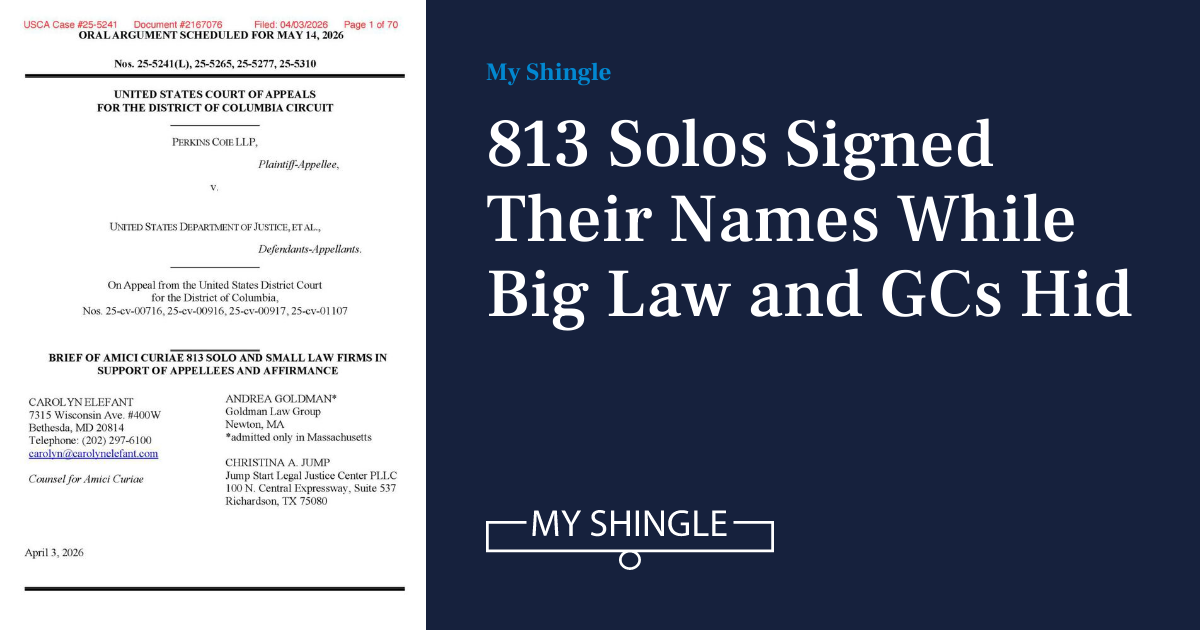
813 Solos Signed Their Names While Big Law and GCs Hid

Imagine
this:
You’re
a
high-powered
Big
Law
partner
pulling
in
seven
figures
a
year.
Or
maybe
you’re
in-house
counsel
at
a
Fortune
500
company
with
an
army
of
lawyers
at
your
disposal.
You’ve
got
resources,
prestige,
and
institutional
backing
that
most
lawyers
can
only
dream
of.

And
yet,
when
it
came
time
to
file
a
brief
supporting
the
executive
order
retaliating
against
lawyers,
you
were
too
afraid
to
sign
your
own
name.

That’s
exactly
what
happened
last
Friday.
Bloomberg reports that
the
firms
and
in-house
counsel
who
filed
amicus
briefs
asking
the
D.C.
Circuit
to
affirm
the
lower
court
rulings
invalidating
retaliatory
executive
orders
against
fourl
bigaw
firms
did
so anonymously.
Let
that
sink
in
for
a
moment.
These
are
supposed
to
be
the
heavyweights
of
the
legal
profession,
who
have
the
biggest
platforms,
the
deepest
pockets,
and
the
most
job
security.
And
they
couldn’t
muster
the
courage
to
put
their
names
on
a
public
court
filing.

Now
contrast
that
with
our
solos
and
smalls. We’re
built
different.  Eight
hundred
and
thirteen
solo
and
small
firm
lawyers
proudly
signed
their
names
 to
this amicus
brief
 we
filed
opposing
the
executive
orders.
No
anonymity.
No
hiding.
Just
lawyers
standing
up
and
saying,
“This
is
what
I
believe.”

The
money
and
prestige
of
high-level
legal
positions
are
enviable,
but
they
come
at
a
cost.
The
freedom
to
sign
your
name
whenever
you
want?
That’s
priceless.

Judge Accused Of Driving ‘Super Drunk’ Takes No Contest Plea – Above the Law

(Image
via
iStock)

When
we
last
checked
in
with
Judge
Thomas
L.
Ludington (E.D.
Michigan),
the
federal
jurist
had
been accused
of
driving
“super
drunk”

and
was
also
staring
down
a

judicial
misconduct
complaint
.
Back
in
February,
he
opted
to
take
a

voluntary
leave
of
absence

from
the
bench
while
his
case
moved
forward.
Now,
there’s
an
update:
Ludington
has
entered
a
no
contest
plea
to
a
misdemeanor
drunken-driving
charge
stemming
from
the
October
incident.

The
plea
resolves
the
criminal
case
on
more
limited
terms,
with
prosecutors
dropping
a
higher-level
charge
tied
to
an
elevated
blood
alcohol
content.

Bloomberg
Law

has
additional
details:

Ludington,
72,
is
set
to
be
sentenced
on
May
13.
He
was
ordered
to
undergo
a
substance
abuse
assessment
and
will
be
the
subject
of
a
pre-sentence
investigation
by
the
court’s
probation
department,
Emmet
County
Prosecuting
Attorney
Mike
Schuitema
said.

In
cases
such
as
Ludington’s,
the
court
usually
puts
a
defendant
on
probation
with
rehabilitation-focused
conditions,
said
Schuitema,
who
added
that
he
expected
that
for
the
judge.

“I’m
pleased
with
the
plea,”
Schuitema
said.
“It’s
going
to
hold
Judge
Ludington
accountable
for
what
he
did.”

Ludington
has
signaled
that
he
intends
to
remain
on
the
bench.
His
attorney,
Jonathan
B.
Steffy
of
Harris
Law,
noted
in
a
statement
that
“[t]his
case
was
not
as
simple
as
it
appeared
to
many,
but
the
most
important
thing
now,
for
all
involved,
is
to
move
forward.”
He
went
on,
saying,
that
the
judge
“looks
forward
to
continuing
to
serve
the
Federal
Court
at
the
highest
level
and
focus
on
his
work,
along
with
his
wife
and
family.”

With
a
judicial
misconduct
complaint
still
in
play,
the
focus
now
shifts
to
how
the
judiciary
polices
its
own,
and
whether
the
consequences
here
will
extend
beyond
the
criminal
docket.


US
Judge
Stays
on
Bench
After
No
Contest
Drunk
Driving
Plea
(2)

[Bloomberg
Law]


Earlier
Federal
Judge
Accused
Of
Driving
‘Super
Drunk’
Crashes
Into
Judicial
Misconduct
Complaint
Federal
Judge
Accused
Of
Driving
‘Super
Drunk’
Takes
‘Voluntary’
Leave
From
The
Bench


‘A,
B,
C,
D,
F,
U’:
Field
Sobriety
Test
For
Federal
Judge
Who
Allegedly
‘Urinated
Himself’
Goes
Remarkably
Off
Script
Federal
Judge
Arrested,
Accused
Of
Driving
While
‘Super
Drunk’


Staci
Zaretsky
 is
the
managing
editor
of
Above
the
Law,
where
she’s
worked
since
2011.
She’d
love
to
hear
from
you,
so
please
feel
free
to email her
with
any
tips,
questions,
comments,
or
critiques.
You
can
follow
her
on BlueskyX/Twitter,
and Threads, or
connect
with
her
on LinkedIn.

Lawyer Bills 36-Hour Day As Einstein’s Theories Meet Law Firm Management – Above the Law

Of
all
the
reasons
to
kill
off
the
billable
hour

and

advancing
AI
technology
presents
a
big
one


let
us
not
sleep
on
the
prospect
of
putting
an
end
to
lazy
record-keeping.
In
the
heat
of
lawyerly
battle,
no
one
does
a
particularly
great
job
of
tracking
all
their
time.
And
that’s
when
lawyers
start
reconstructing
the
work
in
their
mind
and
lose
track
of
details
about
“deadlines”
or
“meetings”
or
“the
time-space
continuum.”

The
city
of
Broken
Hill
in
New
South
Wales
Australia

a
town
of
around
17,000

received
a
1.5
million
Australian
dollar
settlement
(with
about
4.6
million
Australian
dollars
in
legal
fees)
in
a
legal
dispute
against
a
builder.
Then
their
lawyer,
Sydney-based
former
Norton
Rose
and
Maddocks
partner
Keith
Redenbach,
billed
them

10
million

Australian
dollars
for
his
services,
which
amounts
to
around
$6.9
million
American
dollars.
Whenever
a
client
gets
a
bill
for
10
times
more
than
they
won
and
more
than
double
the
court
imposed
fee
award,
they’re
going
to
scrutinize
the
bill,
and
that’s
when
Broken
Hill
started
to
notice
their
lawyer’s
invoices
resembled
more
of
a
big
ball
of
wibbly
wobbly,
timey
wimey
stuff.

The
NSW
court
concurred
with
Broken
Hill
that
Redenbach’s
billing
practices
were…

broken
:

Redenbach,
who
denied
overcharging,
billed
the
council
for
working
31.12
hours
on
December
6,
2018
and
25.5
hours
on
April
18,
2019,
the
council
alleged
in
a
lawsuit
filed
at
the
NSW
Supreme
Court.

The
hours
he
claimed
to
work
on
May
8,
9
and
10
were
even
more
impressive—103
hours
across
the
72-hour
period—a
feat
Justice
Elisabeth
Peden
described
as
impossible.

Sure,
it’s
not
possible
with
THAT
attitude.

Redenbach
has
practiced
for
three
decades
and
presumably
understands
how
time-based
billing
is
supposed
to
work.

This
sort
of
thing
happens
every
now
and
again.
Back
in
2013,
an

Ohio
attorney
billed
a
29-hour
day
.
But
that
guy
was
an
amateur
for
only
adding
5
hours
to
a
single
day

Redenbach
pulled
out
the
Time-Turner
some
six
times.

Redenbach
stressed
that
he
didn’t
intentionally
overbill,
suggesting
to
the
court
that
the
discrepancies
could
be
the
result
of
the
vagaries
of
international
time
zones
or
his
use
of
a
U.S.-based
billing
system.
Though
given
that
the
underlying
dispute
involved
a
civic
centre
in
a
remote
mining
town
roughly
700
miles
west
of
Sydney,
it’s
hard
to
imagine
Redenbach
spent
pulling
all-nighters
on
the
case
while
criss-crossing
the
globe.

Cross-examined
about
how
he
could
have
worked
34.5
hours
on
September
19,
2019,
Redenbach
insisted
he
did
work
the
hours
and
told
the
court
he
remembered
that
day
clearly
because
he
was
at
home
recovering
from
surgery.

“I
was
on
my
sick
bed,
doing
it
with
boxes
being
delivered
to
my
home.
I
know
all
about
it.
I
remember
that
time
vividly,”
he
told
the
court.
“It
was
a
difficult
time
for
me,
because
my
dog
died,
and
I
couldn’t
even—I
couldn’t
even
lift
her
up
to
have
her
euthanized.”

Yeah,
not
a
lot
of
international
jet-setting
work
from
the
sick
bed.
Maybe
he
was
billing
in
dog
years
that
day
as
a
tribute?

Justice
Elisabeth
Peden
found
Redenbach
to
be
a
“thoroughly
unimpressive
witness”
who
gave
“self-serving
evidence
and
even
evidence
which
I
consider
was
false.”

Generally
speaking,
overbilling
like
this
is
a
product
of
bad
record-keeping:
the
work
actually
happens,
but
it
gets
recorded
on
the
wrong
day
creating
an
embarrassing
impossible
day.
It’s
a
reason
to
invest
in
better
time-tracking
products

not
necessarily
to
make
the
hourly
bills
better,
but
to
accrue
a
better
internal
data
for
the
purpose
of
setting
fair
and
accurate
value-based
billing.

Though
the
court
in

this

case
felt
the
problem
went
well-beyond
lazy
records.
Redenbach
also
upped
his
rates
over
the
course
of
the
engagement,
levying
a
series
of
“uplift”
fees
based
on
the
success
of
the
litigation
and
also
adjusted
hourly
rates
upward

all
told
these
success
adjustments
totaled
around
3
million
Australian
dollars.

Justice
Peden
found
in
favor
of
Broken
Hill,
awarding
A$1.5
million
in
compensation
from
Redenbach,
A$46,010
in
compensation
from
his
firm,
and
another
firm
linked
to
Redenbach
had
to
pay
the
A$504,698
for
misleading
the
city
about
its
bill.

At
this
rate
he’s
not
going
to
have
enough
money
to
keep
a
boat
running
back
and
forth
over
the
international
date
line.


The
Billable
Hour
Enters
a
Whole
New
Dimension:
Lawyer
Billed
Client
For
34
Hours
of
Work
in
a
Single
Day

[Law.com
International]

Lawyer
billed
client
more
than
30
hours
a
day
in
$10m
fees
dispute

[Australian
Financial
Review]


Earlier
:

Lawyer
Billed
29-Hour
Day
To
The
Same
Client
And
Didn’t
Expect
To
Get
Caught


HeadshotJoe
Patrice
 is
a
senior
editor
at
Above
the
Law
and
co-host
of

Thinking
Like
A
Lawyer
.
Feel
free
to email
any
tips,
questions,
or
comments.
Follow
him
on Twitter or

Bluesky

if
you’re
interested
in
law,
politics,
and
a
healthy
dose
of
college
sports
news.
Joe
also
serves
as
a

Managing
Director
at
RPN
Executive
Search
.

ABA Hands Trump Nominee ‘Unqualified’ Reality Check – Above the Law

Well,
here
we
go
again,
because
apparently
the
lessons
of
Trump’s
first
judicial
rodeo
were
filed
somewhere
between
“ignore”
and
“double
down.”

Donald
Trump’s
nominee
for
a
lifetime
seat
on
the
U.S.
District
Court
for
the
District
of
Montana,
Kathleen
“Katie”
Lane,
has
earned
herself

an
“unqualified”
rating
from
the
American
Bar
Association
,
and
while
this
is
the
first
such
rating
of
Trump’s
second
term,
it
is
very
much
in
keeping
with
the
franchise.

A
quick
trip
down
memory
lane
reminds
us
that
the
ABA
handed
out
plenty
of
“not
qualified”
stickers
during
Trump
1.0.
They
scraped
the
bottom
of
the
barrel
and
found

ghost
hunters
,

anti-gay
bloggers
,

straight-up
associates
,
and
one
candidate
(ultimately
confirmed
because
we
live
in
the
dumbest
timeline)
that
is
an
arrogant,
lazy,
an
ideologue,
and
lacking
in
knowledge
of
the
day-to-day
practice
including
procedural
rules

(an
assessment

Judge
VanDyke’s
time

on
the
Ninth
Circuit
has
proven
the
ABA
prescient).

Lane’s
problem
isn’t
ideological

the
ABA
goes
out
of
its
way
to
say
she’s
smart,
well-regarded,
and,
in
fact,
“at
the
top
of
her
peer
group.”
The
problem
is
that
being
a
promising
lawyer
is
not
the
same
thing
as
being
ready
to
run
a
federal
trial
courtroom.
And
according
to
Pamela
J.
Roberts,
who
chairs
the
ABA’s
Standing
Committee
on
the
Federal
Judiciary,
the
baseline
expectation
for
that
job
is
about
12
years
of
legal
experience,
a
benchmark
Lane
doesn’t
hit
even
with
generous
counting.

Now,
that
experience
gap
could
theoretically
be
offset
by
substantial
courtroom
work.
But
according
to
the
ABA’s
evaluation,
Lane
has
never
tried
a
case
as
lead
counsel,
has
only
briefly
cross-examined
a
witness
while
serving
as
fourth
chair
in
a
bench
trial,
and
has
taken
exactly
one
deposition.
She’s
argued
two
appellate
cases,
but
has
never
handled
core
trial
functions
like
jury
selection
or
opening
statements.
Which
is…
not
ideal
when
you
are
being
nominated
to
be,
checks
notes,
a
trial
judge.

Roberts’s
assessment
manages
to
be
both
polite
and
devastating,
noting
that
while
Lane
is
talented
and
well-liked,
“these
positive
attributes
do
not
compensate”
for
her
limited
time
in
practice
(less
than
nine
years
total,
including
clerkships)
and
her
lack
of
meaningful
trial
experience.
That’s
the
kind
of
feedback
you
give
a
midlevel
associate
you’re
not
quite
ready
to
make
partner,
not
someone
you’re
about
to
hand
a
lifetime
appointment
with
enormous
power
over
people’s
rights
and
livelihoods.

Naturally,
the
White
House
response
to
all
this
was
not
“maybe
we
should
nominate
someone
who
has,
you
know,
tried
a
case,”
but
rather
to
attack
the
messenger.
Spokesperson
Abigail
Jackson
dismissed
the
ABA
as
“useless
and
partisan”
and
insisted
that
Trump’s
nominees
undergo
a
“rigorous
vetting
process.”
Which
is
a
bold
claim
for
an
administration
currently
batting
cleanup
with
candidates
who
have
never
picked
a
jury.

This
ongoing
war
on
the
ABA
isn’t
happening
in
a
vacuum.
The
organization
has
been
evaluating
judicial
nominees
since
the
1950s,
operating
as
an
independent
check
on
professional
qualifications
rather
than
ideology.
But
in
the
Trump
era,
any
institution
that
produces
inconvenient
conclusions
gets
rebranded
as
biased,
partisan,
or
otherwise
illegitimate.
Which
is
all
part
of
a
broader
project
that
treats
the
rule
of
law
less
as
a
governing
principle
and
more
as
an
obstacle
to
be
managed.

Meanwhile,
Senate
Democrats
are,
unsurprisingly,
not
buying
what
the
White
House
is
selling.
Sen.
Dick
Durbin
cut
to
the
chase,
saying
the
ABA’s
letter
“confirms
what
we
already
knew:
Katie
Lane
is
clearly
untested
and
unqualified
to
serve
as
a
lifetime
judge,”
and
suggesting
the
administration
might
want
to
try
again
with
someone
who
actually
meets
the
basic
job
requirements.

But
if
history
is
any
guide,
“unqualified”
is
less
a
red
flag
than
a
mild
inconvenience
to
the
Trump
administration
and
a
Senate
unwilling
to
stand
up
to
the
bully
in
the
presidency.