Artificial
intelligence
is
no
longer
optional
—
it’s
an
imperative
for
legal
professionals.
But
how
do
you
bridge
the
gap
between
simple
experimentation
and
full
business
transformation?
Join
Litify
for
an
insightful
discussion
on
the
current
state
of
AI
in
the
legal
sector.
Our
expert
panel
explores
key
insights
from
the
“2025
State
of
AI
in
Legal
Report,”
offering
practical
advice
for
leaders
looking
to
navigate
the
complex
AI
landscape.
What
You’ll
Learn:
Current
Trends:
Discover
the
latest
findings
on
AI
adoption,
investment,
and
sentiment
within
law
firms
and
corporate
legal
departments.
The
Maturity
Scale:
Understand
the
four
stages
of
AI
maturity
—
Explore,
Expand,
Integrate,
and
Transform
—
and
identify
where
your
organization
stands.
User
Adoption
vs.
Business
Impact:
Learn
why
user
adoption
is
often
high
for
simple
tasks
but
lags
in
advanced
use
cases,
and
how
this
affects
your
bottom
line.
Overcoming
Challenges:
Hear
from
industry
leaders
on
how
they
tackle
common
hurdles
like
trust,
security,
and
data
privacy.
Building
a
Future-Proof
Strategy:
Get
actionable
tips
on
gaining
executive
buy-in
and
fostering
a
community
of
AI
champions
within
your
organization.
Whether
you’re
just
starting
your
AI
journey
or
looking
to
optimize
your
existing
workflows,
this
webinar
provides
valuable
perspectives
from
across
the
legal
spectrum.
From
personal
injury
firms
to
global
corporate
departments,
our
panelists
share
real-world
examples
and
lessons
learned
on
the
path
to
AI
maturity.
CLE-credit
is
available
for
this
webinar.
Many
law
students
and
lawyers
alike
have
long
dreamed
of
someday
working
in
New
York,
the
city
that
never
sleeps
(and
if
they
wind
up
as
Biglaw
associates,
that
saying
may
hold
especially
true).
New
York
firms
are
regarded
as
the
crown
jewels
of
the
legal
profession,
and
it’s
in
New
York
where
firms
typically
set
the
stage
for
Biglaw
salaries
and
bonuses
across
the
country.
But
which
firm
is
considered
the
best
in
the
Big
Apple?
Thanks
to
Vault’s
recently
released
regional
rankings,
we
now
know
which
Biglaw
firms
are
dominating
the
legal
scene
in
Manhattan.
This
ranking
is
based
on
votes
tabulated
from
associates
who
were
asked
to
rate
firms
on
a
1
to
10
scale
based
on
their
prestige
within
the
region.
Here
are
the
top
10
most
prestigious
firms
in
New
York
(you
can
see
the
full
list
from
Vault
by
clicking here):
Wachtell,
Lipton,
Rosen
&
Katz
Cravath,
Swaine
&
Moore
Davis
Polk
&
Wardwell
(+1)
Skadden
(-1)
Sullivan
&
Cromwell
Latham
&
Watkins
(+1)
Simpson
Thacher
(+1)
Kirkland
&
Ellis
(+1)
Paul,
Weiss,
Rifkind,
Wharton
&
Garrison
(-3)
Milbank
There
was
a
lot
of
movement
in
the
ranking
this
time
around.
Much
like
what
happened
in
the
Vault
100,
Paul,
Weiss
—
the
very
first
firm
to
kiss
Trump’s
ring
—
has
been
knocked
off
its
pedestal
in
the
New
York
prestige
ranking.
This
is
what
happens
when
you
make
bad
deals,
but
at
least
the
firm
is
still
in
the
Top
10
here.
Skadden
and
DPW
traded
places
once
again,
and
while
Wachtell
maintains
its
command
at
the
top
for
the
second
year
in
a
row,
Cravath
still
commands
the
associate
salary
scale.
Congratulations
to
all
of
the
Biglaw
firms
that
made
the
latest
edition
of
Vault’s
New
York
rankings.
How
did
your
firm
do
this
time
around? Email
us,
text
us
at
(646)
820-8477,
or
tweet
us @atlblog to
let
us
know
how
you
feel.
Staci
Zaretsky is
the
managing
editor
of
Above
the
Law,
where
she’s
worked
since
2011.
She’d
love
to
hear
from
you,
so
please
feel
free
to email her
with
any
tips,
questions,
comments,
or
critiques.
You
can
follow
her
on Bluesky, X/Twitter,
and Threads, or
connect
with
her
on LinkedIn.
It
was
an
ordinary
day,
the
kind
that
blends
into
every
other
day
in
a
law
office.
Phones
ringing,
emails
stacking
up,
deadlines
pressing
in
from
every
direction.
In
the
middle
of
it,
a
colleague
stopped
by
my
office.
We
talked
the
way
lawyers
do,
quickly
and
efficiently,
moving
from
one
topic
to
the
next.
Then
he
said
something
that
stuck
with
me,
though
I
did
not
realize
it
at
the
time.
He
mentioned
he
had
been
getting
his
affairs
in
order.
He
had
paid
off
some
lingering
debts,
cleaned
up
some
personal
matters,
and
reconnected
with
people
he
had
not
spoken
to
in
years.
It
sounded
like
progress.
It
sounded
like
someone
taking
control.
I
told
him
that
was
a
good
thing.
We
shook
hands,
and
he
left.
Only
later
did
I
understand
what
that
conversation
really
was.
It
was
not
about
progress.
It
was
about
preparation.
That
is
the
problem
with
mental
health
struggles.
They
rarely
announce
themselves
in
ways
that
are
obvious
or
easy
to
understand.
We
expect
distress
to
look
like
distress.
We
expect
someone
who
is
struggling
to
appear
overwhelmed,
anxious,
or
visibly
upset.
But
that
is
not
always
how
it
presents.
Sometimes
it
looks
calm.
Sometimes
it
looks
like
clarity.
Sometimes
it
looks
like
someone
finally
has
everything
together.
As
lawyers,
we
are
trained
observers.
We
are
taught
to
listen
carefully,
to
watch
for
inconsistencies,
to
notice
what
does
not
fit.
In
a
deposition,
a
slight
shift
in
tone
or
a
change
in
word
choice
can
change
the
entire
direction
of
a
case.
In
a
trial,
a
pause
or
hesitation
can
carry
more
weight
than
a
long
answer.
We
are
good
at
reading
people
when
the
stakes
are
professional.
We
are
far
less
consistent
when
the
stakes
are
personal.
The
reality
is
that
the
same
skills
we
use
in
our
practice
apply
here.
Behavior
matters.
Change
matters.
Patterns
matter.
When
someone
begins
to
act
in
a
way
that
does
not
align
with
who
they
have
been,
that
is
not
something
to
ignore.
It
does
not
mean
something
is
wrong,
but
it
does
mean
something
is
different.
And
different
deserves
attention.
One
of
the
most
overlooked
warning
signs
is
a
sudden
shift
toward
resolution.
Someone
who
begins
tying
up
loose
ends,
paying
off
debts,
organizing
their
affairs,
or
reconnecting
with
people
from
their
past
may
appear
to
be
improving.
They
may
even
tell
themselves
they
are
improving.
But
in
some
cases,
that
activity
is
not
about
building
a
future.
It
is
about
closing
a
chapter.
That
distinction
is
easy
to
miss
if
you
are
not
looking
for
it.
Other
signals
are
just
as
subtle,
such
as
a
colleague
who
was
always
engaged
in
their
work
but
becomes
detached.
A
friend
who
carried
stress
openly
but
now
seems
unusually
calm.
Someone
who
withdraws
from
routines
that
once
mattered
to
them
or,
conversely,
someone
who
suddenly
becomes
intensely
focused
on
putting
everything
in
order.
None
of
these
changes,
standing
alone,
proves
anything.
But
together,
they
can
tell
a
story.
The
challenge
is
that
we
are
busy.
We
are
focused
on
our
own
deadlines,
our
own
clients,
our
own
responsibilities.
It
is
easy
to
explain
these
changes.
We
tell
ourselves
that
everyone
has
ups
and
downs,
that
people
go
through
phases,
that
it
is
not
our
place
to
get
involved.
Those
explanations
are
convenient,
but
they
are
not
always
correct.
And
when
they
are
wrong,
the
cost
can
be
high.
You
do
not
need
to
have
perfect
insight
to
act.
You
do
not
need
to
be
certain
that
something
is
wrong.
What
you
need
is
a
willingness
to
engage.
That
starts
with
a
simple
step
that
many
of
us
avoid
because
it
feels
uncomfortable.
Ask
the
question.
Tell
someone
you
have
noticed
a
change.
Let
them
know
you
are
paying
attention.
It
does
not
require
a
script.
It
does
not
require
expertise.
It
requires
presence.
“You
do
not
seem
like
yourself
lately.
Are
you
okay?”
is
enough.
That
question,
asked
sincerely,
opens
a
door.
It
gives
someone
permission
to
speak
if
they
want
to.
And
even
if
they
choose
not
to
open
up
in
that
moment,
they
know
someone
is
paying
attention.
That
alone
can
matter
more
than
you
think.
At
the
same
time,
we
need
to
be
honest
about
the
limits
of
what
we
can
do
on
our
own.
Being
a
good
colleague
or
a
good
friend
does
not
mean
taking
on
the
role
of
a
therapist.
It
means
recognizing
when
someone
needs
more
than
a
conversation
and
encouraging
them
to
seek
professional
help.
That
can
include
speaking
with
a
psychologist
or
a
psychiatrist.
It
may
involve
therapy,
medication,
or
a
combination
of
both.
There
is
no
single
approach
that
works
for
everyone,
and
there
should
be
no
judgment
about
the
path
someone
takes.
Too
often,
there
is
hesitation
around
these
conversations
because
of
stigma
or
misunderstanding.
People
worry
about
saying
the
wrong
thing
or
overstepping.
They
worry
about
how
their
suggestion
will
be
received.
But
framing
matters.
Encouraging
someone
to
seek
help
is
not
a
criticism.
It
is
a
recognition
that
their
situation
deserves
attention
and
care.
It
is
no
different
than
encouraging
someone
to
see
a
doctor
for
a
physical
condition
that
is
not
improving
on
its
own.
We
also
need
to
acknowledge
that
lawyers
are
particularly
skilled
at
masking
what
they
are
going
through.
From
the
beginning
of
our
careers,
we
are
taught
to
manage
pressure,
to
maintain
composure,
and
to
deliver
results
regardless
of
circumstances.
Those
are
valuable
skills,
but
they
come
with
a
cost.
They
allow
us
to
push
through
situations
that
might
otherwise
force
us
to
slow
down
and
address
underlying
issues.
Over
time,
that
can
lead
to
a
disconnect
between
what
we
present
to
the
world
and
what
we
are
experiencing.
That
disconnect
makes
it
harder
for
others
to
recognize
when
something
is
wrong.
It
also
makes
it
harder
for
individuals
to
recognize
it
in
themselves.
When
you
are
used
to
functioning
at
a
high
level
under
stress,
it
can
be
difficult
to
distinguish
between
what
is
normal
and
what
is
not.
That
is
why
external
awareness
matters.
Sometimes
it
takes
someone
else
noticing
a
change
to
bring
that
awareness
into
focus.
There
is
also
an
important
point
about
how
we
respond
when
someone
does
open
up.
The
goal
is
not
to
fix
everything
in
that
moment.
It
is
to
listen.
To
take
what
they
are
saying
seriously.
To
avoid
minimizing
their
experience
or
immediately
offering
solutions.
People
who
are
struggling
often
feel
isolated
or
misunderstood.
A
thoughtful
response
can
counter
that.
A
dismissive
one
can
reinforce
it.
Listening
does
not
mean
passivity.
It
means
being
engaged
without
being
overwhelming.
It
means
asking
follow-up
questions
when
appropriate
and
respecting
boundaries
when
they
are
not
ready
to
go
further.
It
means
reinforcing
that
seeking
help
is
a
strength,
not
a
weakness.
These
are
small
actions,
but
they
add
up.
I
think
back
to
that
conversation
in
my
office
and
how
easily
it
could
have
gone
the
other
way.
The
signs
were
there,
but
they
were
quiet.
They
required
attention
and
a
willingness
to
look
beyond
the
surface.
At
the
time,
I
did
not
do
that.
Like
many
of
us,
I
accepted
what
I
heard
at
face
value
and
moved
on
to
the
next
task.
Ultimately,
someone
else
noticed
the
signs
and
helped
him
get
the
assistance
he
needed.
That
is
how
these
moments
often
happen.
They
do
not
announce
themselves
as
critical.
They
do
not
come
with
warnings
or
clear
instructions.
They
appear
as
ordinary
conversations
in
the
middle
of
ordinary
days.
That
is
why
awareness
is
so
important.
It
is
not
about
becoming
hyper
vigilant
or
assuming
the
worst.
It
is
about
being
present
enough
to
notice
when
something
does
not
fit
and
being
willing
to
act
on
that
observation.
The
legal
profession
places
a
premium
on
results.
We
measure
success
in
outcomes,
in
wins
and
losses,
in
numbers
and
metrics.
But
some
moments
fall
outside
those
categories
that
matter
just
as
much,
if
not
more,
like
taking
the
time
to
check
in
on
someone,
asking
a
question
that
feels
uncomfortable,
or
encouraging
someone
to
get
help.
These
are
not
billable
activities.
They
do
not
show
up
on
a
report.
But
they
are
part
of
what
it
means
to
be
a
professional
and
to
be
human.
The
takeaway
is
straightforward.
Pay
attention
to
the
people
around
you.
Notice
changes
in
behavior,
even
when
they
seem
small.
Do
not
assume
that
improvement
always
means
things
are
getting
better.
Sometimes
it
means
something
else
entirely.
When
something
feels
off,
trust
that
instinct
enough
to
ask
a
question.
Be
willing
to
listen
to
the
answer.
And
when
appropriate,
guide
people
toward
the
help
they
need.
You
will
not
always
get
it
right.
There
will
be
times
when
you
misread
a
situation
or
when
your
concern
is
unnecessary.
That
is
part
of
the
process.
The
alternative,
ignoring
what
you
see
because
you
are
unsure,
carries
a
greater
risk.
This
is
not
about
certainty.
It
is
about
engagement.
In
the
end,
the
goal
is
not
to
become
an
expert
in
mental
health.
It
is
to
become
more
aware,
more
attentive,
and
more
willing
to
act.
Those
qualities,
applied
consistently,
can
make
a
difference
in
ways
that
are
not
always
visible
but
are
always
meaningful.
Frank
Ramos
is
a
partner
at
Goldberg
Segalla
in
Miami,
where
he
practices
commercial
litigation,
products,
and
catastrophic
personal
injury. You
can
follow
him
on LinkedIn,
where
he
has
about
80,000
followers.
Philadelphia-based
health
system
Jefferson
Health
is
suing
Aetna,
claiming
the
payer
is
unfairly
reducing
payments
for
some
hospital
stays
under
Medicare
Advantage.
Aetna
said
that
it
has
done
nothing
wrong.
The
complaint
—
filed
Monday
by
Jefferson
and
co-plaintiff
Lehigh
Valley
Physician
Hospital
Organization
—
centers
on
Aetna’s
“level
of
severity
inpatient
payment
policy”
for
Medicare
Advantage
beneficiaries,
which
took
effect
on
January
1.
Under
this
policy,
some
hospital
stays
that
are
technically
approved
as
inpatient
are
paid
at
a
lower
“observation-level”
rate
if
Aetna
decides
the
patient
wasn’t
sick
enough.
This
mainly
applies
to
hospital
stays
lasting
between
one
and
four
midnights,
even
when
a
physician
has
admitted
the
patient
as
an
inpatient.
In
the
lawsuit,
the
plaintiffs
described
a
situation
from
earlier
this
year
in
which
Aetna
deemed
the
following
patient
as
“low
severity”:
a
72-year-old
who
came
to
the
hospital
with
altered
mental
status,
a
prior
stroke
and
hypoxia
—
who
then
required
intubation
and
developed
acute
renal
failure
after
admission.
“After
the
patient’s
second
midnight
in
the
hospital,
Aetna
determined
the
patient
was
‘low
severity,’
even
though
the
patient
was
intubated
in
an
ICU,
had
acute
renal
failure,
and
was
administered
broad
spectrum
IV
antibiotics
for
multifocal
pneumonia.
The
admitting
physician
determined
the
patient’s
inpatient
stay
was
medically
necessary,
but
Aetna
decided
the
patient
was
not
‘severe’
enough
to
qualify
for
payment
at
an
inpatient
rate,”
the
complaint
read.
Jefferson
argued
that
this
effectively
“downcodes”
legitimate
inpatient
care,
therefore
reducing
hospital
revenue
and
creating
additional
administrative
burdens
for
providers
to
deal
with
as
they
appeal
the
lower
payments.
The
health
system
also
said
that
Aetna
unilaterally
created
a
new
payment
tier
that
was
never
negotiated
as
a
part
of
their
shared
Medicare
Advantage
contract.
The
complaint
also
claims
that
the
policy
violates
CMS’
two-midnight
rule,
which
requires
Medicare
to
cover
hospital
stays
as
inpatient
when
a
physician
expects
the
patient
to
need
care
for
at
least
two
midnights.
It
asserts
that
Medicare
Advantage
plans
must
follow
the
same
standard.
Overall,
Jefferson
contends
that
by
paying
some
qualifying
inpatient
stays
at
the
lower
rate,
Aetna
is
ignoring
federal
guidelines,
breaching
its
provider
contracts
and
shifting
financial
risk
onto
hospitals.
The
health
system
is
seeking
an
injunction
stopping
Aetna
from
using
the
policy,
as
well
as
compensation
for
legal
fees
and
damages.
Aetna
is
defending
its
policy,
according
to
a
statement
a
company
spokesperson
shared
with
MedCity
News.
“Aetna’s
policies,
including
the
Level
of
Severity
Inpatient
Payment
Policy,
comply
with
all
applicable
federal
law
and
regulations
and
with
the
terms
of
our
provider
contracts.
Aetna
disagrees
with
the
allegations
in
the
lawsuit
and
will
respond
in
the
appropriate
forum,”
the
statement
read.
This
lawsuit
touches
on
a
broader
national
fight
between
hospitals
and
Medicare
Advantage
insurers
—
one
in
which
hospitals
say
MA
plans
apply
stricter
medical-necessity
criteria
than
traditional
Medicare
and
often
reduce
payments
through
post-claim
reviews,
and
payers
argue
they’re
preventing
unnecessary
admissions
and
managing
their
spending.
If
Jefferson
wins
the
case,
the
ruling
could
limit
how
Medicare
Advantage
plans
adjust
hospital
payments
for
short
stays.
*
Anthropic
fails
to
secure
a
stay
of
Pete
Hegseth’s
“give
us
autonomous
murder
bots
or
else”
designation.
But
the
all-Republican
panel
of
the
D.C.
Circuit
ordered
expedited
briefing,
a
signal
that
even
the
administration’s
friendliest
possible
panel
is
struggling
with
the
argument
“this
company
is
a
supply
chain
risk
and
the
remedy
is…
we
should
be
able
to
use
even
more
of
it.”
[Politico]
*
FBI
arrests
woman
for
leaking
information
about
unsolved
drug
trafficking
murders
at
Fort
Bragg.
Federal
law
enforcement
continues
to
be
fairly
blasé
about
solving
the
actual
murders
though.
[Guardian]
*
ABA
issues
first
not
qualified
rating
for
a
Trump
II
judicial
nominee.
[Reuters]
*
Trump
asks
NY
Court
of
Appeals
to
throw
out
civil
judgment
against
Trump
Organization
on
the
grounds
that
the
case
was
prejudicial
since
Letitia
James
campaigned
on
being
anti-fraud…
or
something.
[Courthouse
News
Service]
*
DOJ’s
leading
antitrust
attorneys
announce
departures.
Todd
Blanche’s
tough
talk
about
combatting
fraud
doesn’t
seem
to
be
off
to
a
good
start.
[Law360]
*
Lawyer
accused
of
running
a
staged
car
accident
racket
for
insurance
settlements.
I
know
you’re
thinking
you’ve
heard
this
one
already,
but
this
is
a
different
lawyer
accused
of
doing
it.
[NY
Post]
*
Ketamine
dealer
sentenced
to
15
years
in
Matthew
Perry’s
death.[AP
News]
Zimbabwe’s
ruling
party,
Zanu-PF,
wants
to
amend
the
constitution
through
a
bill
in
parliament.
It
won’t
be
that
simple,
however.
Under
the
constitution,
voters
must
approve
such
changes
through
a
referendum.
The
new
bill’s
most
significant
proposals
include
extending
presidential
and
parliamentary
terms
by
two
years.
This
would
allow
Zimbabwe’s
83-year-old
president,
Emmerson
Mnangagwa,
to
remain
in
power
until
2030,
ending
the
hopes
of
vice-president
Constantino
Chiwenga
reaching
the
presidency
in
2028.
Chiwenga,
as
the
head
of
the
armed
forces,
was
the
main
organiser
of
the
2017
coup
that
brought
the
exiled
Mnangagwa
to
power.
The
proposals
could
also
pave
the
way
for
further
changes
that
help
Zanu-PF
realise
its
long-cherished
dream
of
permanent
rule.
The
amendment
proposes
ending
direct
presidential
elections.
Instead,
the
president
would
be
chosen
by
members
of
parliament.
Given
that
Zanu-PF
can,
and
has,
co-opted
enough
MPs
to
dominate
parliament,
this
would
consolidate
executive
power
within
the
ruling
party.
Other
proposed
changes
include
expanding
the
senate
to
90
members
and
returning
the
electoral
commission
to
a
largely
discredited
registrar-general
who
has
been
accused
of
bias.
The
bill
also
creates
a
Delimitation
Commission
that
would
allow
the
ruling
party
to
shift
constituency
boundaries.
I
have
researched
and
written
on
Zimbabwe’s
political
history
and
political
economy
since
the
early
1980s.
In
my
view,
these
changes
risk
weakening
already
fragile
democratic
protections
in
Zimbabwe.
Extending
term
limits
entrenches
incumbency.
Long-serving
president
Robert
Mugabe
established
de-facto
one-party
rule
–
always
contested,
but
maintained
consistently
by
carefully
calibrated
doses
of
coercion,
cheating
and
crafted
consensus
–
in
1987
as
he
became
executive
president.
This
followed
the
genocidal
Gukurahundi
massacre
of
the
1980s
when
thousands
of
people
were
killed
as
Zimbabwe’s
main
opposition
party
was
crushed.
Zanu-PF
veteran
Mnangagwa,
who
had
been
Mugabe’s
recently
fired
deputy,
and
since
1978
his
key
security
advisor,
took
on
his
mantle.
This
transition
was
violently
consummated
with
a
contested
election
in
2018
and
vicious
quelling
of
the
January
2019
“stay-away”
protests
calling
on
the
state
to
improve
citizen
livelihoods.
These
latest
proposed
amendments
–
dubbed
Agenda
2030
–
point
to
a
system
where
political
competition
is
narrowed
and
power
is
more
tightly
controlled
by
the
ruling
party
and
its
leaders.
What
it
means
for
Zimbabwe
Removing
direct
presidential
elections
reduces
voter
choice.
The
weakening
of
independent
institutions
–
including
electoral
and
judicial
bodies
–
further
reduces
accountability.
The
constitutional
amendment
proposes
that
the
presidential
vote
take
place
in
parliament
by
party-based
MPs,
who
would
likely
elect
one
of
their
own.
However,
the
generally
unpopular
ruling
party
fears
going
through
the
necessary
referendum
to
pass
such
changes.
Additionally,
90
days
of
public
consultation
on
constitutional
amendments
are
needed.
The
Zanu-PF
state
has
already
compressed
these
to
four
days
at
about
65
locations,
allowing
about
an
hour
each
for
discussion.
The
first
meetings
were
stacked
with
busloads
of
Zanu-PF
supporters.
And
as
happens
during
the
party’s
rallies,
there
were
gifts
of
bikes
and
food
as
the
carrots,
and
intimidation
and
threats
as
the
sticks.
Besides
this
mix,
session
chairs
ignored
opposition
efforts
to
voice
their
opinions.
By
the
end
of
the
second
day
of
these
meetings,
the
coalition
of
the
three
“defend
the
constitution”
movements
opposing
Zanu-PF’s
proposals
boycotted
the
hearings.
No
matter:
Zanu-PF
will
either
choose
to
push
a
referendum
forward
(with
low
participation)
or
pursue
more
repressive
and/or
judicially
engineered
means
to
secure
the
amendments.
What
it
means
for
Zanu-PF
The
proposed
constitutional
amendments
also
have
major
implications
within
Zanu-PF
itself,
particularly
for
Chiwenga.
They
would
effectively
end
his
chances
of
becoming
president
in
2028.
In
2008,
highly
contested
presidential
election
results
forced
Mugabe
and
opposition
leader
Morgan
Tsvangirai
to
a
run-off.
As
is
widely
acknowledged,
Mnangagwa
and
Chiwenga
–
then
leading
Zimbabwe’s
Joint
Operations
Command
–
agreed
to
let
Mugabe
stay
on.
They
would
strike
at
a
more
opportune
time:
Mnangagwa
would
then
lead
first,
and
Chiwenga
would
take
power
in
the
next
term.
The
severe
violence
during
the
run-off
led
to
a
transitional
inclusive
government.
This
eventually
led
to
the
development
of
the
2013
constitution,
which
introduced
a
two-term
limit
for
the
presidency.
At
a
Zanu-PF
congress
soon
after
the
2018
election,
Mnangagwa
announced
he’d
vie
again
in
2023.
Now,
the
proposed
extension
to
2030
effectively
blocks
Chiwenga’s
path
to
the
presidency.
At
the
very
least,
those
two
years
would
allow
Mnangagwa
to
consolidate
his
–
and
his
family’s
–
power.
Zanu-PF’s
ever
present
factional
tensions
will
be
exacerbated.
Zimbabwe’s
opposition
remains
fragmented
and
weakened.
The
once-powerful
Movement
for
Democratic
Change
splintered
and
its
closest
successor
succumbed
to
Zanu-PF,
partly
induced
by
its
leader’s
megalomania.
After
the
boycott
of
the
hearings,
how
will
the
proposed
constitutional
amendments
be
stopped?
Resistance
to
the
proposals
had
created
an
opportunity
for
greater
opposition
unity.
Events
such
as
the
October
2025
firebombing
of
a
civil
society
meeting
meant
to
discuss
the
amendments
foretold
the
current
intimidation.
Will
the
changes
sail
through?
Success
on
the
constitutional
amendments
is
not
guaranteed.
Internal
factional
tensions,
particularly
around
succession,
could
complicate
the
process.
Chiwenga
is
far
from
the
only
challenger
in
Mnangagwa’s
sight.
If
(when?)
the
shambolic
–
yet
brutal
–
ruling
party
manages
to
move
to
a
post-Agenda
2030
phase,
it
may
well
crash
under
the
weight
of
its
own
contradictions.
And
with
it
all
of
Zimbabwe
goes.
Fears
are
growing
in
opposition
circles
in
Zimbabwe
that
the
ruling
Zanu-PF
party
is
making
a
new
grab
for
power
as
it
presses
ahead
with
constitutional
amendments
aimed
at
giving
parliament
–
rather
than
voters
–
the
right
to
elect
the
president
and
to
extend
his
term
from
five
to
seven
years.
“This
is
a
coup,
a
slow
coup
that
is
unfolding
in
Zimbabwe,”
veteran
opposition
politician
and
former
finance
minister
Tendai
Biti
told
the
BBC.
But
Zanu-PF
–
in
power
since
independence
in
1980
–
has
vehemently
defended
the
proposed
changes.
“There’s
nothing
that
stops
us
to
change,
to
go
to
another
system
that’s
less
costly,
less
controversial,”
party
official
Patrick
Chinamasa
said.
The
conflicting
views
highlight
the
deep
polarisation
that
draft
legislation
–
aimed
at
changing
the
constitution
–
has
caused,
pitting
Zanu-PF
and
opposition
supporters
against
each
other.
This
became
clear
during
public
hearings
that
parliament
held
recently
to
give
people
a
chance
to
express
their
views
on
the
proposed
shake-up
that
will
lead
to:
Presidential
elections
–
held
since
1990
–
being
scrapped
Parliamentary
and
presidential
terms
being
extended
from
five
to
seven
years
Parliamentary
elections
scheduled
for
2028
being
delayed
to
2030
President
Emmerson
Mnangagwa,
whose
second
and
final
term
is
due
to
end
in
2028,
remaining
in
office
until
2030
The
new
parliament
electing
the
next
president.
“I
support
the
bill
in
its
entirety,”
a
woman
said,
at
a
public
hearing
in
a
sports
arena
in
the
capital,
Harare,
last
week.
Thousands
filled
the
venue,
with
speaker
after
speaker
taking
the
microphone
to
echo
calls
for
Mnangagwa
to
remain
in
office
beyond
2028.
At
a
recent
public
hearing
in
Harare
people
cheered
speakers
who
back
the
changes
but
opponents
were
intimidated
Mnangagwa
took
power
in
2017
after
ousting
long-time
ruler
Robert
Mugabe
with
the
backing
of
the
military
–
and
went
on
to
win
disputed
elections
in
2018
and
2023.
“Term
limits
must
be
extended
from
five
to
seven
years
and
the
MPs
that
we
vote
in,
must
be
allowed
to
elect
the
president,”
a
man
said
at
the
public
hearing.
When
the
microphone
was
moved
to
the
area
where
leading
critics
of
the
bill
were
sitting,
there
were
scenes
reminiscent
of
the
violence
and
intimidation
that
has
often
marred
Zimbabwean
politics,
with
pushing,
shoving
and
fighting
–
along
with
the
snatching
of
mobile
phones
and
journalists
being
ordered
to
delete
videos
of
the
chaos.
Leading
opposition
member
and
lawyer
Fadzayi
Mahere
told
the
BBC
that
Zanu-PF
supporters
had
caused
the
“commotion”
in
order
to
prevent
critics
from
registering
their
disagreement
with
the
bill.
Chinamasa
denied
that
the
ruling
party
backers
were
behind
the
chaos.
“What
reason
what
do
we
have
as
Zanu-PF
to
be
violent
when
the
masses
are
behind
us?
The
opposition
does
not
accept
that
their
view
is
failing
to
prevail,”
he
told
the
BBC.
Reuters
Zanu-PF
wants
to
move
the
power
to
elect
the
president
from
the
electorate
to
parliament
But
the
opposition
says
Zimbabwe
is
seeing
a
new
wave
of
repression.
In
the
run
up
to
the
hearings,
the
opposition
groups
say,
the
police
banned
more
than
a
dozen
of
their
meetings.
National
Constitutional
Assembly
leader
Lovemore
Madhuku
said
he
was
beaten
by
masked
assailants
last
month
as
the
police
watched.
Biti,
who
leads
the
Constitution
Defenders
Forum,
is
out
on
bail
after
being
accused
of
holding
a
public
meeting
without
official
permission.
“We
have
a
history
of
repression
[in
Zimbabwe],”
he
told
the
BBC.
Parliament
is
expected
to
pass
the
bill
in
the
coming
weeks,
in
what
will
be
the
culmination
of
a
campaign
that
started
in
2024,
with
the
chanting
of
the
slogan
“2030
–
he
(Mnangagwa)
will
still
be
the
leader”.
For
supporters
of
the
83-year-old
president,
the
political
overhaul
will
entrench
democracy,
ending
what
they
regard
as
toxic
presidential
election
campaigns
that
often
trigger
violence,
and
lead
to
results
being
disputed.
“As
you
know,
any
election
of
the
president
–
and
it’s
not
just
Zimbabwe
alone
–
.
violence
is
associated
with
a
popular
vote,”
Chinamasa
told
the
BBC,
as
he
defended
the
proposed
changes.
But
for
critics
the
bill
is
a
step
towards
recreating
the
“imperial
presidency”
they
fought
to
end
during
Mugabe’s
37-year
rule.
BBC
They
are
making
the
mistake
that
Mugabe
made.
That
of
closing
[the
democratic]
space
absolutely”
A
new
constitution
adopted
in
2013
restricted
a
president
to
serving
a
maximum
of
two
terms,
further
stating
that
any
move
to
extend
term
limits
would
need
to
be
endorsed
by
voters
in
a
referendum
–
and,
crucially,
that
a
sitting
president
cannot
benefit
from
any
extension
unless
voters
give
their
approval
in
a
second
referendum.
For
the
likes
of
Biti,
the
bill
reverses
these
hard-fought
gains,
and
could
be
challenged
in
the
courts
as,
they
argue,
it
violates
the
constitutional
requirement
that
a
referendum
be
held
before
the
president’s
term
is
extended.
But
Zanu-PF
is
confident
that
it
is
acting
constitutionally,
saying
there
is
no
need
for
a
referendum
as,
in
its
view,
the
two-term
limit
remains
–
all
that
is
happening
is
that
a
term
will
now
be
seven,
rather
than,
five
years.
But
critics
fear
that
Zanu-PF
–
led
by
Mnangagwa
–
could
be
moving
stealthily
to
scrap
term-limits.
“If
they
can
get
away
with
two
years
what
stops
them
from
getting
away
with
20
years?”
Biti
said.
Chinamasa
dismissed
suggestions
that
the
bill
signals
a
“dramatic
shift”
in
how
Zanu-PF
will
govern
Zimbabwe.
“It’s
just
that
for
this
moment
we
would
want
to
continue
the
political
stability.
We
want
to
continue
the
economic
development
that
is
taking
place
since
his
excellency
took
over
in
2018,”
Chinamasa
said.
“When
his
time
is
up
we
will
choose
other
leaders.”
For
the
opposition,
Zimbabwe
is
returning
to
its
dark
past.
“They
are
making
the
mistake
that
Mugabe
made.
That
of
closing
[the
democratic]
space
absolutely,”
Biti
said.
The
BiG5
series
features
the
country’s
iconic
animals
to
symbolise
national
identity
and
resilience.
The
rollout
begins
with
10,
20
and
50
Zimbabwe
Gold
notes.
Higher
denominations
will
follow
later,
depending
on
demand
and
monetary
conditions.
Citizens
have
long
distrusted
their
own
currency,
viewing
US
dollars
and
South
African
rand
as
more
stable.
The
new
notes
are
part
of
a
wider
effort
to
restore
public
trust
in
local
money.
In
2024,
the
Zimbabwean
dollar
was
replaced
by
the
gold-backed
Zimbabwe
Gold,
or
ZiG,
aimed
at
giving
the
currency
a
stable
anchor
that
would
protect
it
from
the
rapid
depreciation
of
previous
monetary
regimes.
The
new
notes
will
be
available
at
banks,
cash
machines
and
through
cash
back
services
at
retail
outlets.
Old
ZiG
notes
will
remain
in
circulation
indefinitely
to
avoid
disruption
or
confusion
among
the
public.
Meanwhile,
it
would
appear
Zimbabwe
is
under
siege
from
the
movers
and
pushers
of
the
ED
2030
agenda.
The
agenda
seeks
to
achieve
a
2-year
extension
to
the
term
of
President
Mnangagwa,
water
down
the
‘upholding
the
constitution’
role
of
the
military,
replace
direct
election
of
the
president
with
that
of
parliament,
and
get
rid
of
the
gender
commission
by
amending
the
constitution
be
it
by
way
of
referendum
or
via
the
current
parliament.
The
Mnangagwa
regime
would
rather
avoid
the
referendum
and
railroad
the
changes
through
the
ZANU
PF
dominated
parliament.
They
do
not
expect
any
resistance
from
the
compliant
and
compromised
Tshabangu
led
CCC
members
of
parliament.
However,
going
by
scenes
at
the
ongoing
tightly
controlled
ZANU
PF
led
consultation
process,
where
those
of
divergent
views
are
either
booed,
ridiculed,
silenced,
threatened,
and,
in
some
cases
abducted
and
tortured,
the
proposed
amendment
number
3
has
so
far
proven
not
only
controversial
but
divisive
and
toxic
as
it
lays
the
foundations
for
brutal
warfare
and
relentless
suppression
of
the
masses
with
impunity.
The
divisions
between
those
for
and
against
are
evident
within
the
ranks
of
the
ZANU
PF
party
right
from
the
presidium
down
to
ground
structures.
The
majority
of
the
Zimbabwe
voters
are
clearly
against
the
constitutional
changes,
which
fact
the
regime
is
very
much
aware
of.
Otherwise,
how
else
would
you
explain
the
onslaught
by
the
regime
on
the
people’s
freedoms
of
expression,
assembly,
association
as
witnessed
at
consultation
events
and
the
heavy
handed
approach
to
the
opposition,
around
the
proposed
amendment.
How
else
would
you
explain
the
hourly
barrage
of
slogans
and
promotional
music
on
national
radio
and
television
in
praise
and
support
of
the
proposed
amendment. In
one
of
the
promotional
adverts,
the
proponents
argue
that
it’s
not
a
new
term
or
extension
but
an
extension
of
the
progress
by
president
Mnangagwa.
However,
no
one
in
ZANU
PF
offers
any
explanation
as
to
why
they
think
the
progress
will
stop
with
Mnangagwa
bowing
out
at
the
end
of
his
2nd
5-year
term
or
why
ZANU
PF
or
the
whole
of
Zimbabwe,
it
would
appear,
cannot
produce
another
capable
leadership.
Then
one
begins
to
question
what
kind
of
progress
it
is
that
only
President
Mnangagwa
can
deliver
and
to
whose
benefit?
The
answer
lies
in
the
extractive
activities
by
the
first
family
which
has
seen
them
take
over
the
entire
gold-rich
Boterekwa
mountain
range,
and
elsewhere
around
the
country.
The
mountain
range
has
to
a
large
extent
been
destroyed,
whilst
the
garbage
infested
and
now
dilapidated
Shurungwi
town
(tarred
roads
now
gravel),
is
now
a
far
cry
from
its
old
self.
By
seeking
an
extension
of
his
term
of
office,
it
would
appear
Mnangagwa
and
those
around
him
are
buying
for
more
time,
to
plunder
national
resources
and
enrich
themselves
even
more.
That
is
their
‘progress’
and
to
their
benefit
at
the
expense
of
genuine
national
development
and
improvement
of
people’s
lives.
The
2030
agenda
can
only
be
evil
and
MUST
be
resisted!
Next
Vigil
meeting
outside
the
Zimbabwe
Embassy. Saturday
18th April
from
2
–
5
pm.
We
meet
on
the
first
and
third
Saturdays
of
every
month.
On
other
Saturdays
the
virtual
Vigil
will
run.
ROHR
Fundraising
Walk.Saturday
30th May.
ROHR
UK
chapter
will
embark
on
a
13-mile
sponsored
walk,
starting
at
Leytonstone
at
9
am
and
ending
at
the
Vigil.
The
Restoration
of
Human
Rights
in
Zimbabwe
(ROHR) is
the
Vigil’s
partner
organisation
based
in
Zimbabwe.
ROHR
grew
out
of
the
need
for
the
Vigil
to
have
an
organisation
on
the
ground
in
Zimbabwe
which
reflected
the
Vigil’s
mission
statement
in
a
practical
way.
ROHR
in
the
UK
actively
fundraises
through
membership
subscriptions,
events,
sales
etc
to
support
the
activities
of
ROHR
in
Zimbabwe.
The
Vigil’s
book
‘Zimbabwe
Emergency’ is
based
on
our
weekly
diaries.
It
records
how
events
in
Zimbabwe
have
unfolded
as
seen
by
the
diaspora
in
the
UK.
It
chronicles
the
economic
disintegration,
violence,
growing
oppression
and
political
manoeuvring
–
and
the
tragic
human
cost
involved. It
is
available
at
the
Vigil.
All
proceeds
go
to
the
Vigil
and
our
sister
organisation
the
Restoration
of
Human
Rights
in
Zimbabwe’s
work
in
Zimbabwe.
The
book
is
also
available
from
Amazon.
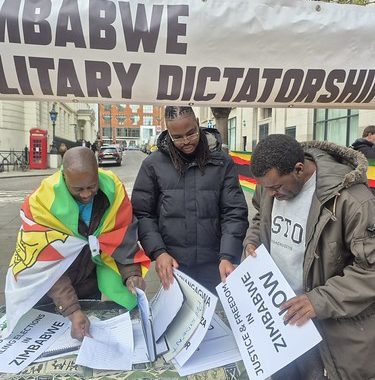
The
Vigil,
outside
the
Zimbabwe
Embassy,
429
Strand,
London
meets
regularly
on
Saturdays
from
14.00
to
17.00
to
protest
against
gross
violations
of
human
rights
in
Zimbabwe.
The
Vigil
which started
in
October
2002
will
continue
until
internationally-monitored,
free
and
fair
elections
are
held
in
Zimbabwe.
Drawing
on
more
than
a
decade
of
data,
the
report
equips
law
firms
and
corporate
legal
teams
with
actionable
insights
to
better
assess
risk,
refine
strategy,
and
anticipate
outcomes
in
today’s
evolving
workplace
disputes.