Filevine’s
LOIS
is
the
first
platform
to
embed
intelligence
into
the
DNA
of
legal
work
and
unite
people,
processes,
and
data
for
unmatched
speed,
strategy,
and
outcomes.
In
this
on-demand
webinar,
our
friends
at
Filevine
share
what
the
future
of
legal
work
looks
like
with
LOIS.
View
it
for concrete
examples
of: •
Instant
insight
from
your
case
data:
LOIS
analyzes
patterns,
risks,
and
opportunities
across
your
caseload
—
surfacing
insights
you’d
otherwise
miss.
•
Documents
that
think
with
you:
Draft,
summarize,
transform,
and
connect
documents
with
greater
context
and
accuracy,
powered
by
LOIS.
•
Adaptive
workflows
shaped
by
your
firm:
LOIS
orchestrates
routine
tasks
automatically
—
and
learns
from
your
team’s
preferences
over
time.
•
AI
answers,
grounded
in
your
firm’s
data:
Ask
complex
legal
questions
and
get
actionable,
Filevine-aware
answers
in
seconds.
Built
into
Filevine, LOIS is
the
Legal
Operating
Intelligence
System
that
embeds
intelligence
into
the
DNA
of
your
legal
work.
Here’s
who
you
can
thank
for
your
prestige
scores
slipping.
(Image
via
ChatGPT)
What
do
associates
at
major
law
firms
care
about
more
than
money?
Prestige.
But
it
sure
is
hard
to
maintain
that
prestige
when
your
firm
has
spent
the
last
year
tying
its
brand
to
Trump
—
all
while
insisting
it
was
heroically
attempting
to
save
itself
from
his
unconstitutional
executive
orders
—
a
narrative
that
hasn’t
exactly
stopped
the
reputational
damage
from
setting
in
and
may
have
permanently
damaged
how
the
market
(and
the
future
talent
pipeline)
sees
the
firm.
The
new
Vault
100
rankings
have
arrived,
and
after
several
firms
kissed
Trump’s
ring,
perceptions
appear
to
have
shifted
—
and
not
in
the
most
flattering
direction.
Prestige,
it
seems,
has
its
limits.
In
last
year’s
Vault
100
rankings,
Cravath
—
the
firm
that
brought
the
associate
salary
scale
all
the
way up
to
$415,000 back
in
February
2022
—
managed
to
retain
its
number
1
spot,
while
Wachtell
Lipton
held
steady
in
second
place.
Was
Cravath
able
to
keep
its
cachet
as
the
most
prestigious
Biglaw
firm
in
the
country
in
this
year’s
Vault
rankings?
Of
course
it
was.
Cravath
has
now
claimed
the
top
spot
in
the
Vault
100
for
more
than
a
decade
(11
years),
which
is
a
remarkable
milestone.
There
was
some
movement
when
it
came
to
the
most
elite
firms
in
the
rankings
—
including
one
Trump-allegiant
firm
getting
the
boot
from
the
Top
10
entirely.
That
said,
here
are
the
Top
10
Most
Prestigious
Law
Firms,
based
on
Vault’s
Annual
Associate
Survey
for
2027.
Cravath
Swaine
&
Moore
Wachtell
Lipton
Rosen
&
Katz
Skadden
Latham
&
Watkins
Sullivan
&
Cromwell
Kirkland
&
Ellis
Davis
Polk
&
Wardwell
Gibson
Dunn
Milbank
Simpson
Thacher
This
is
the
ninth
year
in
a
row
that
the
majority
of
these
firms
have
been
in
the
Top
10.
As
you
can
see,
however,
there
were
not
only
some
fluctuations
in
rank
among
them,
but
one
firm
is
also
missing
from
the
usual
suspects,
while
a
new
one
has
entered
to
take
its
place.
It’s
worth
noting
that
each
of
the
five
firms
in
the
Top
10
that
made
deals
with
Trump
—
Skadden,
Latham,
Kirkland,
Milbank,
and
Simpson
Thacher
—
saw
their
average
scores
drop.
SullCrom
switched
places
with
Kirkland,
and
Gibson
Dunn
is
back
in
the
Top
10
now
that
Paul
Weiss,
the
very
first
firm
to
bow
to
Trump,
has
been
kicked
to
the
curb.
The
firm
now
finds
itself
at
No.
13
after
an
eight-year
stint
at
the
top.
Three
other
firms
in
this
ranking
made
deals
with
Trump
—
A&O
Shearman,
Cadwalader,
and
Willkie
Farr
—
and
only
A&O
Shearman
managed
to
see
a
rankings
jump
(thanks
to
a
megamerger),
while
the
other
two
saw
their
rankings
drop.
In
fact,
Cadwalader
had
the
largest
drop
of
all
firms
(8
spots),
thanks
to
partners
fleeing
the
firm
in
the
wake
of
its
Trump
deal.
On
the
flip
side
of
the
coin,
as
we
predicted,
the
firms
that
are
fighting
the
Trump
administration
in
court
are
being
rewarded
with
rankings
gains.
Jenner
&
Block
had
the
greatest
increase
of
all,
moving
up
17
spots.
Also
moving
up
are
WilmerHale
(2
spots),
Perkins
Coie
(4
spots),
and
Susman
Godfrey
(4
spots,
and
now
in
the
Top
20
of
the
ranking).
That
outcome
on
the
Vault
prestige
rankings
shouldn’t
raise
any
eyebrows.
We
noted
last
year
that
these
decisions
were
unlikely
to
be
consequence-free,
and
the
latest
rankings
bear
that
out.
Making
deals
with
Trump
was
an
absolutely
horrible
idea.
Associates
have
now
said
their
piece,
and
the
message
is
clear:
some
reputational
mistakes
stick,
and
dedication
to
the
rule
of
law
is
the
most
prestigious
currency
in
the
legal
profession
right
now.
Click here to
see
the
rest
of
Vault’s
prestige
rankings.
Congratulations
to
all
of
the
Biglaw
firms
that
made
the
latest
edition
of
the
Vault
100
rankings.
How
did
your
firm
do
this
time
around? Email
us,
text
us
at
(646)
820-8477,
or
tweet
us @atlblog to
let
us
know
how
you
feel.
Staci
Zaretsky is
the
managing
editor
of
Above
the
Law,
where
she’s
worked
since
2011.
She’d
love
to
hear
from
you,
so
please
feel
free
to email her
with
any
tips,
questions,
comments,
or
critiques.
You
can
follow
her
on Bluesky, X/Twitter,
and Threads, or
connect
with
her
on LinkedIn.
*
In
first
press
conference
since
learning
that
he
would
soon
be
the
Acting
Attorney
General,
Todd
Blanche
explains
that
the
DOJ’s
official
stance
is
that
Trump
has
a
“right”
to
direct
criminal
investigations
of
his
enemies.
[Reuters]
*
Pam
Bondi
isn’t
technically
gone
yet,
but
Todd
Blanche
already
updated
his
title.
[Daily
Beast]
*
DOJ
Civil
Rights
Division
launches
investigation
of
Cassidy
Hutchinson
for
testifying
to
the
January
6
Committee.
It’s
not
a
potential
charge
the
Civil
Rights
Division
would
normally
handle,
but
it’s
not
like
they’re
doing
anything
else
these
days.
[NY
Times]
*
ICE
currently
arresting
domestic
violence
survivors
when
they
go
to
court
to
testify
against
their
abusers.
[The
Atlantic]
Police
in
Manicaland
Province
have
warned
the
public
against
boarding
unregistered
or
private
vehicles,
following
a
series
of
robberies
targeting
passengers
in
Mutare
and
Headlands.
Acting
provincial
police
spokesperson,
Wiseman
Chinyoka,
said
that
the
suspects
are
posing
as
taxi
drivers
to
prey
upon
unsuspecting
commuters.
“The
armed
robbers
are
usually
in
pairs
or
groups
of
four,
and
they
are
mostly
operating
along
highways,”
he
said.
In
one
instance,
27-year-old
Bradley
Runoza
of
Natview
Park,
Mutare,
was
robbed
of
US$400
and
a
Samsung
A05
mobile
phone
on
Monday.
Runoza
had
boarded
a
Toyota
Mark
X
at
the
Wengezi
bus
stop
at
approximately
6
pm,
intending
to
travel
from
Chimanimani
to
Mutare.
The
vehicle
already
contained
four
occupants.
Upon
reaching
the
16
Miles
area
in
Zimunya,
the
driver
diverted
from
the
main
road
under
the
pretext
of
collecting
a
relative.
Once
off
the
highway,
one
suspect
reportedly
grabbed
Runoza
by
the
neck
while
the
others
searched
him,
seizing
his
wallet
and
phone
before
abandoning
him
by
the
roadside.
No
property
has
yet
been
recovered.
In
a
separate
incident
on
Sunday,
police
in
Headlands
launched
an
investigation
into
a
robbery
along
the
Harare–Mutare
Highway.
Taurai
Kayeruza
(40),
of
Phase
2,
Mutare,
boarded
a
silver
Toyota
Runx
with
two
male
occupants
at
the
Macheke
bus
terminus.
When
the
vehicle
reached
the
130km
peg,
one
of
the
suspects
allegedly
produced
a
knife
and
demanded
cash
and
valuables.
The
assailants
made
off
with
a
Samsung
M14
mobile
phone,
a
wallet
containing
US$33,
a
leather
belt,
and
a
denim
jacket.
Kayeruza
was
ordered
out
of
the
vehicle
before
the
suspects
sped
off.
HARARE
–
Zimbabwe’s
human
rights
watchdog
has
raised
the
alarm
over
widespread
intimidation
and
harassment
of
opponents
of
Constitutional
Amendment
Bill
No.
3
during
parliamentary
public
hearings,
including
the
use
of
men
armed
with
whips
to
vet
participants
in
Mashonaland
West.
The
Zimbabwe
Human
Rights
Commission
(ZHRC)
deployed
monitoring
teams
across
all
provinces
from
March
30
to
April
4,
2026,
to
observe
the
Parliament
of
Zimbabwe’s
CAB3
consultation
exercise.
In
a
press
statement
issued
on
Tuesday,
the
Commission
said
that
while
attendance
at
the
hearings
was
generally
high
and
inclusive,
a
serious
pattern
of
rights
violations
had
been
recorded
at
multiple
venues.
“The
commission
observed
instances
where
participants
with
divergent
views
to
the
proposed
amendments
were
threatened,
silenced,
denied
opportunities
to
contribute
and
in
some
instances
physically
attacked,”
the
ZHRC
said.
It
said
entry
points
at
venues
were
frequently
controlled
by
youths
who
vetted
participants,
with
supervised
sign-in
registers
that
effectively
restricted
who
could
gain
access.
In
Mashonaland
West’s
Mhondoro
Ngezi,
men
holding
whips
were
involved
in
screening
participants
at
the
door.
“Individuals
and
groups
opposed
to
CAB3
were
denied
audience,”
the
commission
said.
“Whilst
those
in
support
of
the
Constitutional
Amendment
were
able
to
give
their
views,
the
Commission
noted
the
harassment
and
intimidation
of
dissenting
voices.”
The
ZHRC,
which
is
chaired
by
lawyer
Jessie
Majome,
said
the
conduct
violated
constitutionally
protected
rights
including
freedom
of
expression
under
section
61,
freedom
of
conscience
under
section
60,
the
right
to
human
dignity
under
section
51,
personal
security
under
section
52,
and
the
right
to
equality
and
non-discrimination
under
section
56.
CAB3,
tabled
as
House
Bill
1
of
2026,
is
the
most
far-reaching
constitutional
amendment
since
the
2013
constitution
was
adopted.
Among
its
most
contested
proposals
are
the
extension
of
presidential
and
parliamentary
terms,
replacing
a
direct
popular
vote
with
an
election
of
the
president
by
Members
of
Parliament,
and
the
transfer
of
the
voters’
roll
from
the
Zimbabwe
Electoral
Commission
to
the
Civil
Registry.
Other
proposals
include
the
appointment
of
additional
senators
by
the
president,
the
merging
of
the
Zimbabwe
Gender
Commission
into
the
ZHRC,
and
provisions
allowing
traditional
leaders
to
participate
in
politics.
The
ZHRC
said
these
were
among
the
changes
that
drew
the
most
participation
at
the
hearings
it
observed.
The
commission
said
most
venues
were
too
small
relative
to
the
turnout,
resulting
in
large
numbers
of
would-be
participants
being
unable
to
enter
the
halls
to
follow
or
contribute
to
proceedings.
The
ZHRC
called
on
all
stakeholders
to
exercise
tolerance
and
to
respect
divergent
views,
and
reiterated
the
state’s
duty
to
guarantee
the
full
enjoyment
of
human
rights
by
all
citizens
regardless
of
the
views
they
hold.
“The
constitutional
amendment
process
must
align
with
obligations
under
international
and
regional
human
rights
law,”
the
commission
said,
citing
the
International
Covenant
on
Civil
and
Political
Rights,
which
guarantees
participation
in
public
affairs,
freedom
of
expression,
and
equality
before
the
law.
CAB3
has
faced
mounting
opposition
from
civil
society,
religious
leaders
and
retired
military
figures
since
it
was
gazetted,
and
several
legal
challenges
have
been
filed
in
the
Constitutional
Court.
Not
Very
Far,
But
It
Still
Counts!:
Read
the
newest
law
school
rankings
here.
How
Much
Do
Rankings
Actually
Matter
Though?:
Legal
academia
shares
their
thoughts.
Losing
And
Winning
Go
Hand
In
Hand:
Pam
Bondi
wins
ATL’s
disbar
bracket!
Jones
Day
Should
Have
Bumped
Up
Cybersecurity:
The
Biglaw
firm
acknowledges
a
cyber
attack.
Temple
Law
Students
Can
Do
Without
ICE:
They’re
demanding
their
administration
keep
ICE
off
campus.
According
to
the
U.K.’s
Solicitors
Regulation
Authority,
fraud
alerts
where
scammers
impersonate
law
firms
where
up
how
much
in
the
first
quarter
of
2026
compared
with
the
same
period
last
year?
Hint:
Skadden,
Hogan
Lovells,
Sullivan
&
Cromwell,
Linklaters,
Travers
Smith,
Clifford
Chance,
Herbert
Smith
Freehills
Kramer,
Mayer
Brown,
White
&
Case,
and
Taylor
Wessing
were
all
impersonated
by
scammers.
The
right
coach
can
collapse
years
of
trial
and
error
into
a
focused,
strategic
path
forward,
but
only
if
you
are
wired
to
take
advantage
of
it.
Let’s
get
something
straight.
Hiring
a
coach
is
not
for
everyone.
In
fact,
some
lawyers
would
be
far
better
off
saving
their
money.
After
years
of
working
with
attorneys
around
the
world,
I’ve
seen
a
clear
pattern.
The
lawyers
who
struggle
with
coaching
are
not
lacking
intelligence
or
talent.
They’re
lacking
something
far
more
important,
the
mindset
required
to
actually
benefit
from
it.
Before
you
invest
in
a
coach
to
grow
your
practice,
it’s
worth
asking
a
tougher
question.
Are
you
even
coachable?
Here
are
five
signs
the
answer
might
be
no.
1.
You
Already
Think
You
Have
All
the
Answers
There
is
a
certain
type
of
lawyer
who
walks
into
every
room
convinced
they
are
the
smartest
person
in
it.
Confidence
is
one
thing.
Being
closed
off
to
new
ideas
is
something
else
entirely.
Coaching
requires
openness.
It
demands
the
ability
to
admit
there
are
gaps,
blind
spots,
or
habits
that
are
holding
you
back.
If
your
default
position
is
to
dismiss
outside
input
or
assume
you
know
better,
the
process
breaks
down
before
it
even
begins.
You
cannot
improve
what
you
refuse
to
examine.
2.
You
Argue
with
Everything
Lawyers
are
trained
to
challenge,
question,
and
push
back.
That
skill
is
valuable
in
the
courtroom.
It
becomes
a
liability
in
a
coaching
relationship.
If
every
suggestion
turns
into
a
debate,
progress
stalls.
Coaching
is
not
about
winning
arguments.
It
is
about
testing
new
approaches,
even
when
they
feel
uncomfortable
or
unfamiliar.
If
your
instinct
is
to
object
instead
of
exploring,
you
are
going
to
spin
your
wheels.
3.
You
Are
a
Built-In
Excuse
Machine
Accountability
is
one
of
the
biggest
advantages
of
working
with
a
coach.
But
it
only
works
if
you
follow
through.
If
missed
deadlines
are
always
someone
else’s
fault,
if
commitments
keep
slipping,
or
if
“busy”
becomes
a
permanent
excuse,
no
system
in
the
world
will
help
you.
Execution
beats
intention
every
time.
Without
it,
coaching
becomes
a
very
expensive
conversation.
4.
You
Think
Short-Term
and
Play
Small
Many
lawyers
hesitate
to
invest
in
themselves
while
unknowingly
wasting
hundreds
of
hours
on
ineffective
business
development.
They
attend
random
events,
dabble
in
marketing
tactics,
and
hope
something
sticks.
Meanwhile,
opportunities
come
and
go.
Here
is
the
real
issue.
The
cost
of
not
improving
your
business
development
system
is
always
higher
than
the
cost
of
fixing
it.
Every
missed
opportunity,
and
the
time
associated
with
it,
has
a
price
tag.
Not
just
in
the
past,
but
in
the
future
as
well.
If
you
are
focused
only
on
immediate
cost
instead
of
long-term
return,
coaching
will
always
feel
like
an
expense
instead
of
an
investment.
5.
You
Are
Focused
on
Price
Instead
of
Value
This
one
is
simple.
If
your
primary
filter
for
decisions
is
cost,
you
will
struggle
to
see
the
bigger
picture.
Lawyers
routinely
invest
in
technology,
staff,
and
office
space
without
hesitation.
Yet
when
it
comes
to
investing
in
their
own
growth,
they
hesitate.
The
reality
is
this.
The
gap
between
a
service
partner
and
a
true
rainmaker
is
not
subtle.
It
is
significant,
both
in
income
and
in
control
over
your
career.
Closing
that
gap
requires
more
than
effort.
It
requires
guidance,
structure,
and
accountability.
A
Final
Reality
Check
Not
all
coaches
are
created
equal.
And
not
every
coach
will
be
the
right
fit
for
you.
But
even
the
best
coach
cannot
help
someone
who
is
unwilling
to
change,
unwilling
to
act,
or
unwilling
to
look
inward.
On
the
other
hand,
for
lawyers
who
are
open,
committed,
and
ready
to
do
the
work,
coaching
can
be
a
game-changer.
Steve
Fretzin
is
a
bestselling
author,
host
of
the
“Be
That
Lawyer”
podcast,
and
business
development
coach
exclusively
for
attorneys.
Steve
has
committed
his
career
to
helping
lawyers
learn
key
growth
skills
not
currently
taught
in
law
school.
His
clients
soon
become
top
rainmakers
and
credit
Steve’s
program
and
coaching
for
their
success.
He
can
be
reached
directly
by
email
at [email protected].
Or
you
can
easily
find
him
on
his
website
at www.fretzin.com or
LinkedIn
at https://www.linkedin.com/in/stevefretzin.
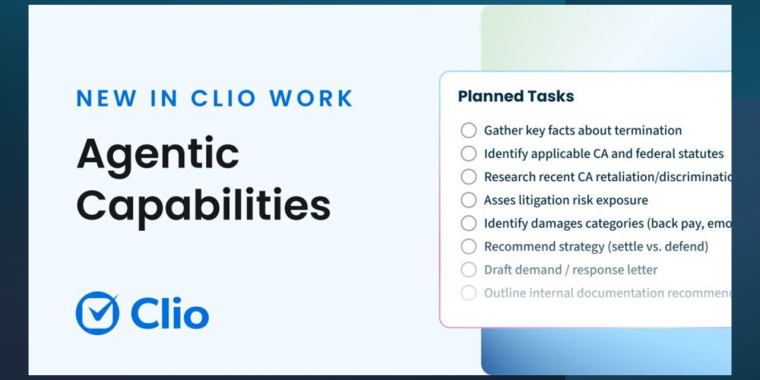
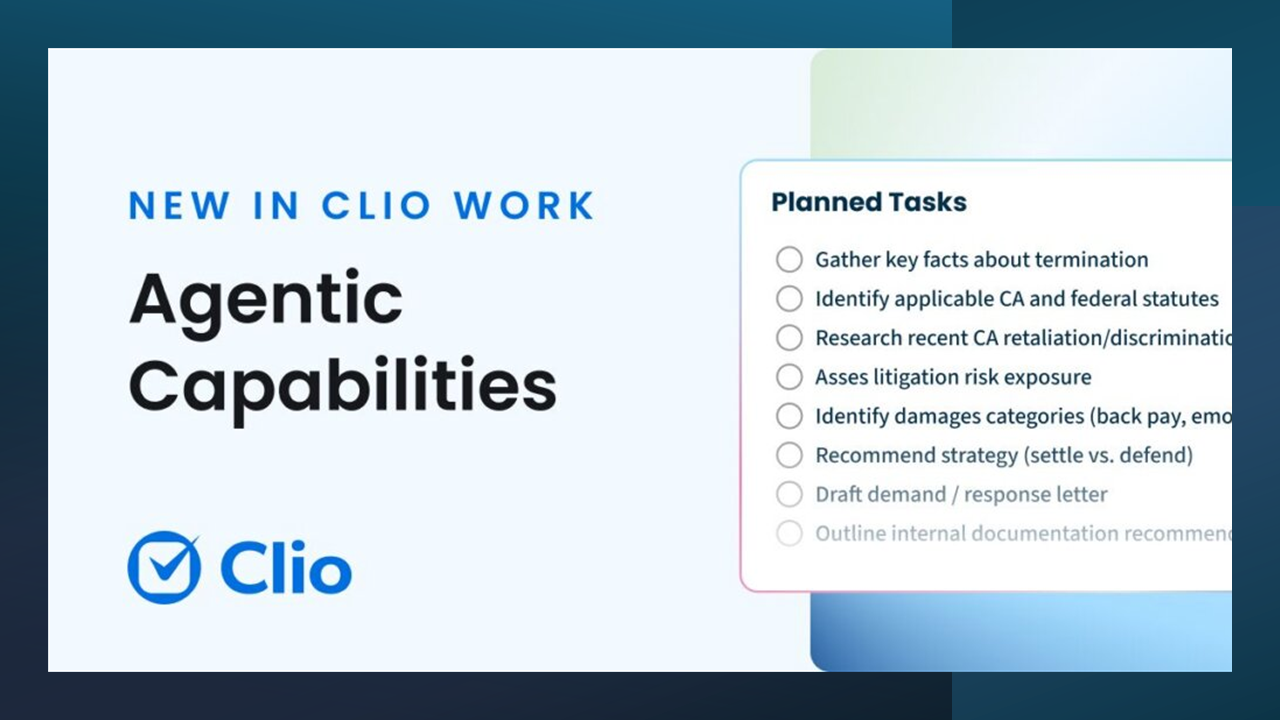
Clio
today
announced
two
notable
updates
to
its
AI
product
line:
the
addition
of
agentic
capabilities
to
Clio
Work,
and
the
launch
of
a
standalone
Vincent
by
Clio
mobile
app
for
iOS
and
Android.
Agentic
Clio
Work
When
Clio
CEO
Jack
Newton
unveiled
Clio
Work
at
ClioCon
last
October
—
in
a
keynote
that
left
attendees
variously
shell-shocked,
thrilled
and
overwhelmed
—
he
described
it
as
the
realization
of
Clio’s
vision
for
an
“intelligent
legal
work
platform”
that
would
dissolve
the
traditional
boundary
between
the
business
and
practice
of
law.
Today’s
update
extends
that
vision
with
the
addition
of
agentic
capabilities,
enabling
Clio
Work
to
handle
complex,
multi-step
legal
tasks
from
a
single
natural-language
prompt.
Rather
than
requiring
users
to
manage
each
step
individually,
Clio
says,
lawyers
can
now
issue
goal-oriented
instructions
—
such
as
“build
a
defense
strategy”
or
“find
everything
that
could
kill
this
deal
before
signing”
—
and
Clio
Work
determines
and
executes
the
sequence
of
steps
needed
to
accomplish
the
task.
The
agentic
capabilities
are
powered
by
what
Clio
calls
a
“skills
infrastructure”
—
a
set
of
legal-aware
capabilities
that
Clio
Work
can
invoke
autonomously
depending
on
what
a
task
requires.
These
skills
evolved
from
Clio
Work’s
existing
workflows
but
no
longer
require
the
user
to
trigger
them
manually.
Clio
Work
understands
the
goal,
determines
which
skills
are
needed,
and
executes
across
them
in
a
single,
continuous
experience.
To
keep
lawyers
in
the
loop,
the
company
says,
Clio
Work
displays
real-time
thinking
traces
so
users
can
see
how
work
is
progressing,
and
can
interrupt,
redirect,
or
refine
directions
mid-task.
“Clio
Work’s
agentic
capabilities
allow
legal
practitioners
to
delegate
complex,
multi-step
tasks
to
a
truly
collaborative
AI
assistant,
without
sacrificing
control
or
visibility
into
workflows,”
said
John
Foreman,
Clio’s
chief
product
officer.
Clio
says
84
percent
of
AI
queries
on
the
platform
are
already
submitted
as
freeform,
goal-based
requests,
suggesting
that
lawyers
are
naturally
inclined
to
interact
with
AI
the
same
way
they
would
describe
work
to
a
colleague.
The
agentic
capabilities
are
applied
automatically
for
all
Clio
Work
users
with
no
setup
or
configuration
required.
Vincent
Mobile
App
Separately,
Clio
also
announced
today
the
launch
of
the
Vincent
by
Clio
mobile
app,
which
extends
Vincent’s
legal
AI
capabilities
to
iPhone
and
Android
for
the
first
time.
Clio
says
that
the
app
lets
lawyers
ask
questions,
upload
and
analyze
documents,
and
get
answers
grounded
in
cited
legal
authority
—
all
from
their
phones.
Users
can
upload
complaints,
motions,
briefs,
and
transcripts
directly
from
their
devices
to
quickly
surface
key
risks,
arguments,
and
next
steps.
For
Clio
Work
subscribers,
the
mobile
app
also
draws
on
the
full
context
of
a
matter
—
including
client
communications,
deadlines,
and
case
activity
—
so
that
analysis
reflects
what
is
actually
happening
in
the
case.
Work
started
on
mobile
can
be
continued
on
desktop
without
losing
context.
The
Vincent
by
Clio
mobile
app
is
available
now
on
iOS
and
Android.