The
hospital’s
biomedical
technician,
Vulindlela
Dube,
confirmed
the
development
to ZBC
News,
saying
the
work
is
being
done
carefully
to
ensure
the
facility
is
properly
prepared
for
the
new
technology.
Said
Dube:
“We
are
safely
decommissioning
the
old
machines
that
have
reached
the
end
of
their
operational
life.
“This
process
ensures
the
facility
is
prepared
for
the
installation
of
the
new
low
and
high-energy
radiotherapy
machines,
which
will
significantly
improve
efficiency
and
reliability
in
cancer
treatment.”
Medical
Physicist
Charles
Matope
said
the
new
machines
will
improve
the
hospital’s
capacity
to
treat
cancer.
He
said:
“With
the
current
equipment
that
is
being
decommissioned,
we
were
constrained
in
terms
of
patient
numbers
and
downtime.
With
the
new
machines,
we
anticipate
treating
between
30
and
40
patients
daily,
compared
to
about
10
to
20
patients
after
a
fortnight
previously,
which
represents
a
significant
improvement
in
access
to
life-saving
care.”
This
is
expected
to
cut
waiting
times
for
treatment,
something
many
cancer
patients
have
struggled
with
in
the
past.
Phineas
Sithole,
Director
of
Operations
at
Mpilo
Central
Hospital,
said
the
new
radiotherapy
machines
come
with
backup
battery
systems,
allowing
them
to
keep
running
even
during
power
outages.
He
added
that,
combined
with
the
solar
power
system
already
in
place
at
the
hospital,
cancer
treatment
services
will
now
operate
without
interruption.
The
machines
were
purchased
using
funds
raised
from
the
sugar
tax
introduced
in
2024,
which
has
collected
over
US$60
million
cumulatively
since
its
launch,
according
to
government
officials.
The
disruption
occurred
during
a
gathering
organised
by
the
MDC
Women’s
Assembly
to
commemorate
a
belated
International
Women’s
Day. According
to
Mwonzora,
about
20
suspected
Zanu
PF
supporters
attempted
to
force
their
way
into
the
meeting,
which
was
addressed
by
Women’s
Assembly
chairperson,
Constance
Chihururu
and
the
party’s
national
organiser
for
women,
Nomatter
Munyayi.
“The
group
that
attacked
the
MDC
sometime
last
year
is
the
one
that
came,
only
that
they
were
more
than
the
people
that
attacked
us.
They
were
about
20,”
Mwonzora
said.
“They
tried
to
get
in
to
disturb
the
meeting
held
by
the
Women’s
Assembly.
The
MDC
Women’s
Assembly
was
holding
a
commemoration
for
International
Women’s
Day
Saturday
in
Bulawayo.”
Mwonzora
alleged
the
disruption
happened
in
the
presence
of
police
officers
who
did
not
intervene.
“So
the
Zanu
PF
people
came
and
attacked
the
meeting
in
the
presence
of
the
police.
The
police
did
nothing.
There
were
more
than
13
police
details
but
they
did
not
do
anything,
they
just
kept
quiet
and
let
things
happen,”
he
alleged.
Police
later
instructed
MDC
members
to
disperse
from
the
premises
before
2pm,
resulting
in
the
cancellation
of
a
press
briefing
that
had
been
scheduled
for
that
afternoon.
When
a
CITE
news
crew
arrived
at
the
venue,
police
vehicles
and
officers
were
stationed
outside
the
building
while
the
area
was
filled
with
onlookers
curious
about
the
developments.
Mwonzora
claimed
the
incident
was
part
of
broader
efforts
to
block
opposition
mobilisation
against
a
proposed
constitutional
amendment
that
could
pave
the
way
for
President
Emmerson
Mnangagwa
to
remain
in
power
until
2030.
“We
know
this
is
an
attempt
by
them
to
stop
our
fight
against
2030
but
we
will
not
be
deterred,
we
will
not
be
perturbed,
we
will
not
relent.
We
will
continue
to
fight
against
this
injustice,”
he
said.
The
MDC
leader
accused
authorities
of
selectively
applying
the
law
by
preventing
opposition
gatherings
while
allowing
the
ruling
party
to
campaign
freely.
“Zanu
PF
is
campaigning
for
the
2030,
they
are
mobilising
their
people
to
take
part
in
the
outreach
process
that
has
been
announced
by
Parliament
but
other
people
are
not
being
allowed,
so
we
will
not
relent,
we
will
not
allow
ourselves
to
be
discriminated
against,”
Mwonzora
said.
“But
what
is
good
is
that
the
meeting
took
place
and
our
people
were
spoken
to
and
the
struggle
continues.”
This
incident
comes
days
after
another
press
meetings
was
blocked
in
the
city. On
Thursday,
police
also
stopped
a
press
conference
that
was
scheduled
to
be
held
by
the
National
Democratic
Working
Group
(NDWG)
in
Bulawayo.
The
movement
accused
authorities
of
blocking
meetings
by
groups
opposing
the
proposed
Constitutional
Amendment
Bill
No.
3
of
2026,
which
has
been
gazetted
by
Parliament.
The
NDWG
said
police
were
preventing
gatherings
by
voices
critical
of
the
2030
agenda
while
allowing
Zanu
PF
meetings
to
proceed
without
interference.
Zimbabwe
agreed
a
compensation
deal
to
pay
$3.5bn
for
infrastructure
improvements
to
land
that
was
seized
Desperate
and
ageing
white
farmers
whose
land
was
seized
during
Robert
Mugabe’s
rule
more
than
two
decades
ago
hope
Donald
Trump
may
be
able
to
help
them
get
billions
of
dollars
in
unpaid
compensation
owed
to
them
by
Zimbabwe’s
government.
After
all,
some
of
them
argue,
the
US
president
intervened
last
year
to
fight
for
the
rights
of
white
farmers
in
neighbouring
South
Africa,
where
he
feels
they
are
being
“persecuted”
because
of
their
race
–
claims
that
have
been
widely
discredited.
Trump
has
offered
members
of
South
Africa’s
white
Afrikaner
community,
many
of
whom
are
farmers,
refugee
status
in
the
US.
Most
of
the
Zimbabwean
farmers
are
not
keen
to
go
down
that
route
–
they
just
want
their
government
to
honour
a
deal
made
in
2020
by
Mugabe’s
successor,
and
former
deputy,
President
Emmerson
Mnangagwa.
And
some
see
Zimbabwe’s
vast
and
untapped
deposits
of
rare-earth
minerals
and
the
transactional
nature
of
Trump’s
politics
as
key
to
unlocking
the
cash.
After
Mnangagwa
took
over,
he
was
eager
to
heal
the
wounds
of
the
chaotic
land
reform
programme
of
the
early
2000s
when
4,500
mainly
white-owned
farms
–
half
of
the
country’s
best
farmland
–
were
taken
over
by
black
Zimbabweans
and
around
2,500
white
farmers
evicted.
The
seizures
–
meant
to
redress
a
colonial-era
land
grab
–
led
to
the
collapse
of
Zimbabwe’s
economy.
The
agricultural
sector
had
been
its
backbone
–
and
was
further
crippled
by
sanctions
slapped
by
Western
nations
outraged
by
the
disorderly
nature
of
the
redistribution
of
the
land
to
black
farmers.
Mnangagwa,
as
part
of
his
mission
to
reform
Zimbabwe’s
tarnished
reputation
following
the
toppling
of
Mugabe,
promised
to
pay
the
white
farmers
for
infrastructure
and
improvements
to
the
land
–
a
package
that
came
to
$3.5bn
(£3bn).
The
hitch
has
been
that
Zimbabwe,
grappling
with
a
debt
burden
of
a
whopping
$23bn,
cannot
afford
to
settle
up
with
the
former
farmers.
AFP
via
Getty
Images
President
Emmerson
Mnangagwa
(R)
has
made
efforts
to
reconcile
with
Zimbabwe’s
white
community
Instead
it
offered
a
compromise
deal
last
year
–
those
who
signed
up
for
it
got
1%
of
their
total
compensation,
while
the
rest
was
issued
as
treasury
bonds
that
mature
in
10
years,
with
2%
interest
paid
twice
a
year.
“Most
farmers
won’t
be
around
in
10
years’
time,”
said
one
of
them,
who
spoke
to
the
BBC
on
condition
of
anonymity
–
adding
that
there
was
no
guarantee
the
government
would
be
able
to
honour
the
future
payments.
This
ex-farmer’s
mother
–
who
had
been
a
co-owner
of
their
farm
–
is
well
over
90
years
old
and
has
spent
the
last
25
years
awaiting
hundreds
of
thousands
of
dollars
in
compensation.
She
is
now
being
supported
by
British-based
charity
Zimbabwe
A
National
Emergency
(Zane),
which
provides
a
twice-yearly
stipend
to
struggling
pensioners.
Only
around
17%
of
the
former
farmers
have
taken
up
the
government’s
new
offer
–
representing
700
farms.
The
beneficiaries
told
the
BBC
that
although
sometimes
late,
the
government
was
honouring
its
commitment
with
interest
payments.
But
what
was
a
tightly
knit
community
is
now
divided
in
its
approach
to
compensation
–
and
some
see
Trump
as
key
to
speeding
things
up.
To
that
end
a
Washington-based
lobby
group
Mercury
Public
Affairs
LLC,
which
has
ties
to
the
Trump
administration,
has
been
engaged.
This
was
done
via
OB
Projects
Management,
a
South
African
business
consultancy
firm
that
has
said
it
is
representing
the
Zimbabwean
farmers.
This
came
to
light
because
of
a
declaration
filed
by
Mercury
in
late
December
with
the
Department
of
Justice
–
US
law
requires
those
engaged
in
political
activity
on
behalf
of
foreign
organisations
to
disclose
the
relationship.
Bloomberg
via
Getty
Images
Zimbabwe
has
some
of
Africa’s
largest
lithium
reserves
It
said
Mercury’s
services,
to
be
provided
free
of
charge,
would
include
“contacting
appropriate
officials
in
the
current
administration
and
Congress
to
promote
paying
the
Zimbabwean
farmers
the
remaining
balance
of
$3.5bn”.
The
letter
explained
that
it
envisioned
this
would
happen
by
the
US
government
supporting
the
clearance
of
Zimbabwe’s
debt
and
new
financing
arrangements
via
institutions
“including
the
World
Bank”.
It
would
be
quite
a
feat
if
Zimbabwe
was
able
to
refinance
its
debts,
as
the
southern
African
nation
has
not
received
loans
from
the
World
Bank
in
more
than
25
years
after
it
defaulted
on
interest
payments.
This
is
also
linked
to
US
legislation
enacted
in
2001
as
a
consequence
of
the
land
reform
programme.
It
also
says
the
president
should
impose
targeted
economic
and
travel
sanctions
on
those
responsible
for
the
violence
and
the
breakdown
in
law.
Since
2024
this
has
only
affected
11
individuals,
including
President
Mnangagwa,
and
three
companies
–
now
applied
under
a
separate
US
law
known
as
the
Global
Magnitsky
Act.
Sponsored
by
Republican
Brian
Mast,
who
is
chair
of
the
House
Foreign
Affairs
Committee,
it
has
a
key
proviso
that
any
future
international
funding
be
contingent
on
Zimbabwe
settling
the
outstanding
compensation
for
farmers
within
12
months.
The
bill
has
yet
to
be
considered
by
the
two
houses
of
Congress
–
so
there
is
a
long
way
to
go
before
it
becomes
law,
but
the
timing
is
propitious
for
the
lobbyists,
who
have
key
White
House
contacts.
Susie
Wiles,
now
Trump’s
chief
of
staff,
served
as
Mercury’s
co-chair
for
several
years
before
her
appointment
at
the
start
of
the
president’s
second
term.
OB
Projects
said
it
was
representing
the
Zimbabwean
farmers
on
behalf
of
four
groups
–
though
some
of
them
have
disputed
this.
Zimbabwe’s
Property
and
Farms
Compensation
Association
(Profca)
chairman
Bud
Whittaker
confirmed
to
the
BBC
that
his
organisation
had
written
to
an
American
firm
“a
month
or
two
ago”
asking
them
to
“look
into”
the
matter.
But
the
main
farming
organisation,
the
Commercial
Farmers
Union
(CFU),
has
distanced
itself
from
the
US
lobby
group,
according
to
a
report
by
the
Bloomberg
news
agency.
Its
members
represent
the
larger
faction
of
farmers,
who
have
rejected
the
government
bonds
offer.
A
CFU
member,
not
authorised
to
speak
for
the
group,
cited
concerns
that
the
OB
Projects’
letter
to
Mercury
was
sent
on
their
behalf
without
consulting
them.
He
told
the
BBC:
“We
would
support
anything
that
can
support
compensation
in
a
fair
way
in
accordance
with
international
standards.”
The
CFU
was
speaking
not
only
to
US
diplomats
in
Harare
but
to
other
Western
embassies
for
support
to
secure
outright
payment,
he
added.
Some
farmers
fear
that
involving
Trump
could
lead
to
worsening
relations
between
Washington
and
Harare
–
as
has
happened
in
South
Africa.
They
feel
Trump’s
approach
there
was
too
racialised
and
say
the
white
community
still
wants
to
make
a
go
of
it
in
Zimbabwe,
with
some
who
went
to
live
overseas
during
the
economic
crash
returning
to
take
up
business
opportunities.
AFP
via
Getty
Images
AFP
via
Getty
Images
New
farming
arrangements
are
being
made
in
Zimbabwe.
This
white
farmer
is
leasing
his
land
from
its
black
owner…
The
two
are
neighbours
on
an
estate
near
Kwekwe
in
central
Zimbabwe…
This
includes
hundreds
of
young
white
farmers
going
home
to
lease
farms.
Any
threat
of
more
sanctions
or
tariffs
to
bring
Zimbabwe’s
government
to
heal
could
lead
to
further
economic
collapse
and
political
instability,
they
argue.
Another
53-year-old
shareholder
in
a
family
farmtold
the
BBC
she
was
wary
of
getting
another
foreign
government
to
“meddle”
in
Africa,
saying
that
the
UK
–
the
former
colonial
power
–
“should
resolve
it”.
At
one
stage
one
farmer
said
contacts
in
South
Africa
had
attempted
to
set
up
meetings
with
South
African-born
tech
billionaire
Elon
Musk
to
see
if
he
was
interested
in
a
deal
to
finance
the
$3.5bn
debt.
Whittaker
from
Profca
said
his
group
had
also
contracted
a
US
company
to
find
money
to
buy
up
the
government
bonds
already
issued
to
farmers.
This
is
one
part
of
a
multipronged
strategy
that
also
seeks
to
attract
the
US
government
hungry
for
new
investments
in
critical
minerals
in
exchange
for
a
commitment
to
settle
the
debt
owed
to
former
farmers.
Zimbabwe
has
some
of
Africa’s
largest
lithium
reserves,
as
well
as
chromium,
cobalt
and
rare
earth
minerals.
This
is
not
Mercury’s
first
involvement
with
Zimbabwe
–
and
it
is
well
aware
of
its
mining
potential.
Following
Mugabe’s
downfall,
it
represented
the
country’s
foreign
affairs
and
international
trade
ministry
for
several
years
to
improve
US
relations.
A
document
was
filed
by
Mercury
with
the
Department
of
Justice
in
2020
that
described
Zimbabwe’s
potential
for
undiscovered
rare
earth
elements.
The
BBC
has
reached
out
to
the
Zimbabwe
government
for
comment
about
the
latest
development
involving
Mercury.
Previously,
Finance
Minister
Mthuli
Ncube
said
the
bonds
were
the
last
chance
to
settle
the
compensation.
But
he
recently
told
the
AFP
news
agency
that
outside
intervention
was
“not
necessarily
a
bad
thing”.
“We
are
committed
to
paying
and
if
they
are
trying
to
get
other
people
to
get
us
to
pay,
we
have
no
problems
with
that.
We
are
paying
anyway
and
we
would
like
to
pay
faster,”
he
is
quoted
as
saying.
A
former
farmer
in
his
80s
agreed
that
big
offshore
finance
would
have
to
be
involved
to
foot
the
compensation
bill
quickly,
though
he
said
involving
Trump
was
like
walking
a
tightrope.
“With
Trump
who
knows?
Things
might
go
sideways,”
he
laughed.
This
week,
Zimbabwe
took
a
historic
step
to
protect
its
own
value
chains
from
external
exploitation
by
fast-tracking
a
ban
on
raw
lithium
exports,
effective
until
further
notice
–
and
the
impacts
have
been
widespread
both
domestically
and
abroad.
The February
25
ban was
immediate
and
unexpected,
as
were
its
impacts
on
global
battery
supply
chains
and
local
mining
operations.
Originally,
the
export
ban
was
planned
for
January
2027,
with
the
intent
of
incentivizing
the
local
processing
and
refining
of
lithium
instead
of
leaving
value
additions
–
and
their
associated
profits
–
to
importing
nations.
Zimbabwe
is
the
largest
producer
of
lithium
in
Africa,
and
has
some
of
the
largest
proven
lithium
reserves
in
the
world,
according
to figures from
the
US
Geological
Survey
(USGS).
Africa
is
rich
in
resources
central
to
the
clean
energy
transition.
While
this
opens
up
a
world
of
opportunity
for
many
developing
economies
around
the
continent,
it
also
comes
with
significant
tradeoffs,
including
energy
autonomy
and
the
ability
to
keep
the
profits
from
African
primary
resources
within
Africa,
where
they
are
sorely
needed. African
leaders
are
faced
with
a
dilemma –
accepting
international
investment
in
exchange
for
exporting
energy
resources
needed
within
Africa,
or
taking
the
much
more
difficult,
costly,
and
time-consuming
option
of
building
up
homegrown
value
chains.
Unfortunately,
Zimbabwe’s
surprise
ban
has
had
some
unintended
negative
consequences
on
the
ground.
“Regrettably,
in
the
period
following
that
announcement,
we
witnessed
an
unprecedented
and
unacceptable
scramble,”
Zimbabwe
information
ministry’s
Nick
Mangwana
said
in
a
statement
on
social
media.
“Instead
of
preparing
for
value
addition,
some
actors
engaged
in
a
frenzy
of
mining
activity,
seeking
to
extract
and
export
as
much
raw
lithium
as
possible
before
the
deadline,”
he
went
on
to
say.
According
to
a report from
Africa
News,
some
insiders
also
report
that
large
quantities
of
lithium
have
been
“illicitly
stockpiled
in
a
neighbouring
country.”
Mangwana
has
denounced
this
tactic
as
a
“plunder”
of
Zimbabwe’s
“economic
future”.
The
move
has
also
had
immediate
ramifications
for
Chinese
battery
manufacturers
and
global
lithium-ion
battery
value
chains,
especially
already-volatile
EV
markets.
Historically,
most
of
Zimbabwe’s
lithium
exports
have
gone
to
Chinese
markets,
and
the
South
African
nation
has
become
“a
critical
supplier
to
China’s
lithium
ecosystem”
according
to
Business
Insider
Africa.
“For
China,
which
dominates
global
lithium
processing
and
battery
manufacturing,
the
policy
shift
represents
a
direct
supply
shock,”
the
Business
Insider
report
states.
“Despite
its
midstream
dominance,
China
remains
dependent
on
imported
hard-rock
spodumene
concentrate,
sourced
largely
from
Africa
and
Australia,
to
feed
its
vast
refining
capacity.”
China
has
been
working
hard
to
establish
dominance
in
clean
energy
supply
chains
in
emerging
economies
for
years
now.
Influence
in
developing
countries
rich
in
primary
energy
manufacturing
materials
is
a
central
pillar
of
China’s
energy
security
strategy
and
its
mission
to
become
the
world’s
first
electro-state
as
well
as
the
“center
of
gravity
for
global
energy
markets.”
The
spread
of
China’s
influence has
been
rapid,
extreme,
and
shadowy
across
the
African
continent.
A 2025
report from
the
China
Global
South
Project
(CGSP)
revealed
that
“in
the
years
between
2020
and
2024,
Chinese
companies
and
financiers
have
been
involved
in
84
energy
projects
across
the
continent,
with
a
combined
capacity
of
more
than
32
gigawatts
–
enough
electricity
to
light
up
over
135
million
urban
African
homes,
or
more
than
half
a
billion
rural
homes,
every
year,”
CGSP
summarizes.
But
exporting
all
that
potential
to
China
presents
a
huge
issue
for
Africa’s
energy
future.
Today,
approximately 600
million
people in
Africa
lack
access
to
electricity,
and
the
continent’s
energy
demand
is
expected
to
increase
by
a
factor
of
three
over
the
next
decade
as
sub-Saharan
Africa
grows,
develops,
and
industrializes.
Meeting
projected
demand
will
require
power
generation
capacity
to increase
tenfold
by
2065.
Some
critics
argue
that
Zimbabwe’s
decision
to
try
to
homeshore
value
chains
has
come
too
late,
but
the
move
is
in
line
with
a
much
larger
shift
in
global
geopolitics.
“While
China
maintains
a
commanding
position
in
refining
and
battery
production,
upstream
resource
holders
are
increasingly
asserting
leverage,”
reports
Business
Insider
Africa.
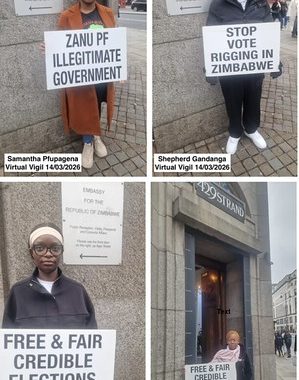
Next
Vigil
meeting
outside
the
Zimbabwe
Embassy. Saturday
21st March
2026
from
2
–
5
pm.
We
meet
on
the
first
and
third
Saturdays
of
every
month.
On
other
Saturdays
the
virtual
Vigil
will
run.
The
Restoration
of
Human
Rights
in
Zimbabwe
(ROHR) is
the
Vigil’s
partner
organisation
based
in
Zimbabwe.
ROHR
grew
out
of
the
need
for
the
Vigil
to
have
an
organisation
on
the
ground
in
Zimbabwe
which
reflected
the
Vigil’s
mission
statement
in
a
practical
way.
ROHR
in
the
UK
actively
fundraises
through
membership
subscriptions,
events,
sales
etc
to
support
the
activities
of
ROHR
in
Zimbabwe.
The
Vigil’s
book
‘Zimbabwe
Emergency’ is
based
on
our
weekly
diaries.
It
records
how
events
in
Zimbabwe
have
unfolded
as
seen
by
the
diaspora
in
the
UK.
It
chronicles
the
economic
disintegration,
violence,
growing
oppression
and
political
manoeuvring
–
and
the
tragic
human
cost
involved. It
is
available
at
the
Vigil.
All
proceeds
go
to
the
Vigil
and
our
sister
organisation
the
Restoration
of
Human
Rights
in
Zimbabwe’s
work
in
Zimbabwe.
The
book
is
also
available
from
Amazon.
The
Vigil,
outside
the
Zimbabwe
Embassy,
429
Strand,
London
meets
regularly
on
Saturdays
from
14.00
to
17.00
to
protest
against
gross
violations
of
human
rights
in
Zimbabwe.
The
Vigil
which started
in
October
2002
will
continue
until
internationally-monitored,
free
and
fair
elections
are
held
in
Zimbabwe.
Van
Dyke’s
Dissent
Makes
Everyone
Else
Immature
By
Association:
Why
didn’t
more
judges
call
out
his
shenanigans?
4th
Circuit
Upholds
Gender
Discrimination
Against
Adults:
Skrmetti
was
just
the
beginning.
Student
Makes
Charlie
Kirk
Flyer
Removal
A
Free
Speech
Issue:
Campbell
Law
has
a
chance
to
update
their
policies.
Will
that
resolve
the
issue?
Be
On
The
Lookout
For
Fake
Attorneys:
Here
are
the
signs.
The
U.S.
District
Court
for
the
Western
District
of
Virginia
declined
to
extend
the
term
of
which
acting
U.S.
Attorney
after
his
term
ends
March
18th?
Hint:
The
attorney
now
joins
the
ranks
of
Alina
Habba,
John
Sarcone,
and
Brad
Schimel
as
U.S.
Attorneys
who
failed
to
get
their
terms
extended
by
the
courts.
In
our
last
article,
we
explored
how
gathering
and
utilizing
feedback
can
enhance
your
CLE
presentations.
Now,
it’s
time
to
look
at
the
next
critical
step:
providing
additional
resources
that
deepen
your
connection
with
attendees.
Think
of
this
as
the
afterparty
—
a
continuation
of
the
initial
success
that
allows
you
to
solidify
and
expand
your
network.
By
offering
valuable
takeaways
and
continued
engagement,
you
turn
a
single
presentation
into
an
ongoing
dialogue
that
strengthens
your
professional
network
and
opens
doors
to
future
opportunities.
Creating
Valuable
Takeaways:
More
Than
Just
a
Handout
Attendees
appreciate
when
they
walk
away
from
a
CLE
with
more
than
just
a
notepad
full
of
scribbled
notes.
Supplementary
materials
can
reinforce
your
key
messages
and
provide
ongoing
value
long
after
the
session
ends.
•
Developing
Rich
Content:
Consider
creating
whitepapers,
comprehensive
slide
decks,
or
recorded
sessions
that
expands
on
the
points
covered
in
your
CLE.
These
materials
serve
as
reference
guides
that
attendees
can
revisit,
ensuring
your
insights
stay
top
of
mind.
•
Tailored
Resources:
Personalize
the
takeaways
to
your
audience.
For
instance,
if
your
CLE
covered
a
broad
topic,
offer
specialized
resources
that
delve
deeper
into
specific
areas
relevant
to
different
segments
of
your
audience.
This
targeted
approach
demonstrates
your
understanding
of
their
needs
and
positions
you
as
a
valuable
resource.
Offering
Consultations:
Turning
Interest
into
Action
Not
every
question
can
be
answered
during
a
CLE,
and
some
attendees
might
have
unique
situations
that
require
more
personalized
advice.
Offering
one-on-one
consultations
is
a
powerful
way
to
provide
this
tailored
guidance
while
deepening
your
professional
relationships.
•
Invite
Continued
Discussion:
At
the
end
of
your
CLE,
invite
attendees
to
reach
out
for
further
discussions.
Offer
brief,
complimentary
consultations
to
help
them
apply
what
they’ve
learned
to
their
specific
circumstances.
This
personal
touch
not
only
reinforces
your
expertise
but
also
builds
goodwill
and
opens
the
door
to
potential
client
relationships.
•
Structured
Follow-Up:
Create
a
structured
follow-up
plan
with
specific
timelines
and
objectives.
Schedule
these
sessions
promptly
and
use
them
as
an
opportunity
to
explore
how
you
can
assist
them
further,
turning
initial
interest
into
ongoing
collaboration.
Staying
Top
of
Mind:
Keep
the
Connection
Alive
The
key
to
a
successful
follow-up
strategy
is
staying
connected.
By
keeping
in
touch
with
your
attendees
through
regular
updates,
you
ensure
that
they
remember
you
long
after
the
CLE
has
ended.
Consistency
is
key
—
regular
communication
helps
keep
you
at
the
forefront
of
their
minds
when
they
need
expertise
in
your
area.
•
Newsletters
and
Email
Updates:
Send
out
periodic
newsletters
or
email
updates
that
provide
valuable
insights,
updates
in
your
field,
or
even
upcoming
events.
This
not
only
keeps
you
on
their
radar
but
also
reinforces
your
role
as
a
thought
leader
in
your
area
of
expertise.
•
Leverage
Social
Media:
Engage
with
your
audience
on
social
media
platforms
like
LinkedIn.
Share
relevant
articles,
comment
on
industry
trends,
and
participate
in
discussions
that
matter
to
your
network.
This
active
presence
helps
maintain
the
relationships
you’ve
started
during
your
CLE.
Setting
the
Stage
for
Ongoing
Impact
Providing
additional
resources
is
more
than
just
an
afterthought
—
it’s
a
strategic
move
that
turns
a
single
CLE
into
a
sustained
relationship.
By
offering
valuable
takeaways,
personalized
consultations,
and
staying
in
touch
through
regular
updates,
you
ensure
that
your
impact
extends
far
beyond
the
initial
presentation.
In
the
next
two
articles
of
this
series,
we’ll
explore
how
to
leverage
your
CLE
content
for
broader
impact
and
the
importance
of
staying
connected
with
your
audience.
We’ll
dive
into
strategies
for
repurposing
your
presentation
into
articles,
blogs,
and
social
media
posts,
ensuring
that
your
CLE
continues
to
serve
as
a
cornerstone
of
your
professional
relationships.
Creating
Valuable
Takeaways:
✔️ Develop
comprehensive
materials
like
whitepapers
or
recorded
sessions
that
reinforce
your
CLE
content.
✔️ Tailor
resources
to
address
the
specific
needs
of
different
audience
segments.
Offering
Consultations:
✔️ Invite
attendees
to
follow
up
with
one-on-one
consultations
for
personalized
advice.
✔️ Implement
a
structured
follow-up
plan
to
turn
initial
interest
into
ongoing
collaboration.
Staying
Top
of
Mind:
✔️ Use
newsletters
and
email
updates
to
maintain
regular
contact
and
share
valuable
insights.
✔️ Engage
with
your
audience
on
social
media
to
keep
the
conversation
going
and
build
your
professional
presence.
By
implementing
these
strategies,
you’ll
turn
your
CLE
into
a
lasting
connection
that
continues
to
grow
and
benefit
your
practice
long
after
the
session
ends.
Sejal
Bhasker
Patel is
a
Rainmaking
Consultant
and
Author
of Rainmaker:
Unleashed
—
a
sharp,
strategic
playbook
for
attorneys
who
don’t
fit
the
traditional
mold.
She’s
the
founder
of
Sage
Ivy,
a
consulting
firm
that
works
directly
with
law
firms
and
attorneys
to
turn
relationships
into
revenue
—
without
selling
their
soul.
Her
work
is
blunt,
tailored,
and
built
on
one
core
belief:
Authenticity
isn’t
a
liability
—
it’s
your
strongest
competitive
edge. www.sageivyconsulting.com
This
column
has
previously
discussed
how
lawyers
can
be
the
victims
of
scams,
and
how
people
can
use
threats
of
legal
process
to
scam
unsuspecting
victims. I
recently
became
aware
that
scammers
sometimes
present
themselves
as
lawyers
to
commit
scams. People
can
use
available
tools
to
verify
the
credentials
of
lawyers
and
make
sure
they
are
not
dealing
with
scammers
claiming
to
be
legal
professionals.
I
recently
encountered
someone
that
was
seeking
to
recover
money
that
was
allegedly
frozen
in
a
bank
account. This
person
was
approached
by
someone
claiming
to
be
a
lawyer
that
specialized
in
asset
recovery. This
supposed
lawyer
told
the
victim
that
they
could
recover
assets
for
the
victim
in
exchange
for
a
percentage
of
the
money
recovered.
The
scam
made
money
because
the
scammer
told
the
victim
that
in
order
to
release
funds
that
were
allegedly
owed
to
the
victim,
the
victim
needed
to
pay
the
scammer
sums
for
taxes,
bank
charges,
and
other
fees. As
the
scammer
told
the
victim
more
fees
were
due,
the
victim
felt
compelled
to
pay
the
fees
since
the
victim
had
already
paid
significant
sums
to
the
scammer
and
did
not
want
this
money
to
go
to
waste.
Eventually,
the
scammer
told
the
victim
that
the
bank
account
in
which
the
money
was
stored
had
been
frozen
and
that
this
was
the
reason
why
payment
was
not
remitted.
The
victim
of
this
scam
showed
me
the
retainer
agreement
and
other
materials
that
had
been
provided
by
this
fake
lawyer. It
was
evident
to
me
in
10
seconds
that
the
retainer
agreement
was
not
legitimate. The
agreement
seemed
AI-generated
and
included
content
that
would
not
be
in
a
retainer
agreement
generated
by
a
law
firm.
The
victim
also
showed
me
an
image
from
the
fake
law
firm’s
website. This
website
looked
like
any
other
law
firm
website,
but
the
URL
had
nothing
to
do
with
the
name
of
the
fake
firm. When
I
looked
up
the
URL
for
the
website
in
the
ICANN
registry,
I
discovered
that
it
had
only
been
registered
a
few
days
before
the
scammers
contacted
the
victim
for
the
first
time
—
a
significant
red
flag
that
this
was
a
scam
and
not
a
real
law
firm.
In
order
to
confirm
whether
the
lawyers
listed
on
the
fake
law
firm
website
were
real,
I
cross-checked
the
names
against
the
attorney
registry
for
the
state
in
which
the
law
firm
was
allegedly
located. I
discovered
that
the
names
of
the
fake
lawyers
did
not
appear
in
the
attorney
registry. Even
if
the
names
did
indeed
appear
in
the
attorney
registry,
I
would
have
seen
if
the
contact
information
in
the
attorney
registry
matched
the
contact
information
the
scammers
were
using
to
contact
the
victim
since
they
could
conceivably
be
using
the
names
of
real
attorneys. From
a
quick
Google
search,
I
discovered
that
other
people
had
been
the
victims
of
a
scam
perpetrated
by
people
claiming
to
be
from
this
fake
law
firm,
which
also
supported
my
thesis
that
this
was
all
a
scam.
It
was
really
hard
for
this
victim
to
conclude
that
he
was
the
victim
of
a
scam,
and
it
was
difficult
to
hear
how
this
would
negatively
impact
his
life. However,
people
can
take
steps
to
verify
the
legitimacy
of
lawyers.
If
there
is
ever
a
question
about
a
lawyer’s
credentials,
members
of
the
public
can
research
attorney
registries
to
see
if
contact
information
matches
the
information
presented. Also,
speaking
with
a
contact
who
is
a
lawyer
can
help
ascertain
if
a
lawyer
is
legitimate
or
if
scammers
are
pretending
to
be
legal
professionals.
Jordan
Rothman
is
a
partner
of The
Rothman
Law
Firm,
a
full-service
New
York
and
New
Jersey
law
firm.
He
is
also
the
founder
of Student
Debt
Diaries,
a
website
discussing
how
he
paid
off
his
student
loans.
You
can
reach
Jordan
through
email
at jordan@rothman.law.