Social reproduction and land reform: introducing a blog series


Social
reproduction
refers
to
the
maintenance
and
sustenance
of
people
through
care,
education,
health,
kinship
and
environmental
relations.
It
encompasses
the
often-invisible
work
of
nurturing
children,
supporting
the
elderly,
providing
food
and
water,
managing
illness
and
maintaining
households,
all
roles
disproportionately
carried
by
women.

Placing
social
reproduction
at
the
centre
of
our
analysis
shifts
how
we
understand
the
outcomes
of
land
reform.
Success
is
not
only
measured
in
terms
of
yields,
income,
or
accumulation
but
also
in
whether
households
can
reproduce
themselves
from
one
generation
to
the
next.
This
requires
examining
how
caregiving,
education,
health
shocks,
and
access
to
water
and
energy
shape
livelihoods.
As Ben
Cousins
 points
out
in
the
Oxford
Handbook
of
Land
Politics,
“the
character
of
social
reproduction shapes change,
but
that
change
is
mostly driven by
the
restless
and
relentless
forces
of
capital
in
one
guise
or
another.”
The
shaping
of
patterns
of
accumulation
and
the
success
of
land
reform,
however,
are
vital
foci
for
analysis.

To
explore
this
theme
as
part
of
our
25
years
after
Zimbabwe’s
land
reform
project,
we
interviewed
27
women
of
different
ages,
both
married
and
single
(divorced/separated;
widowed),
and
some
in
polygamous
unions,
across
our
A1
(smallholder
land
reform)
sites
in
Mvurwi,
Gutu,
Masvingo
and
Matobo.
These
were
extended
interviews,
sometimes
lasting
several
hours,
that
very
often
touched
on
sensitive
issues
and
elicited
intense
emotions.
It
was
clear
that
our
informants
wanted
to
talk
about
these
themes.
Very
often,
their
role
as
women
in
supporting
processes
of
agrarian
transformation
had
not
been
taken
into
account,
despite
the
lip
service
paid
to
‘women’s
empowerment’
or
‘gender-sensitive’
development
approaches.
These
core
interviews,
focusing
exclusively
on
issues
of
social
reproduction,
were
complemented
by
around
100
biographical
interviews
with
both
men
and
women,
where
some
of
the
themes
were
touched
on.
These
also
explored
how
gender,
generation,
class,
technology
and
environment
intersect
in
everyday
life.
Through
a
very
open-ended
interview
process,
guided
by
some
themes
we
identified
beforehand,
we
explored
a
huge
range
of
issues.
The
interview
transcripts
from
our
focused
sample
of
27
women
stretch
to
67
pages
and
44,000
words.

Our
interviews
explored
the
following
themes:
Gendered
pathways
to
land
access
and
ownership;
accumulation
patterns
and
gendered
work;
gendered
social
roles;
changing

cultural
norms
and
patterns
of
marriage/divorce;
everyday
caring
labour
in
households;
gendered
patterns
of
leisure
and
women
in
leadership
roles.
By
analysing
themes
such
as
unpaid
care
work,
access
to
social
services,
extended
family
obligations,
changing
institutions
of
marriage
and
inheritance,
technological
innovation
and
gender
dimensions
of
leadership
and
governance,
this
blog
series
shows
how
the
hidden
labour
of
social
reproduction
is
central
to
understanding
both
the
possibilities
and
limits
of
accumulation,
shaping
agrarian
transformations
in
the
process.

Social
reproduction
encompasses
the
practices,
relations
and
institutions
that
support
daily
survival
and
revitalise
communities
across
generations.
In
agrarian
environments,
such
processes
go
beyond
wages
and
markets
to
include
unpaid
and
undervalued
labour,
such
as
food
preparation,
childcare,
livestock
care
and
reciprocal
exchange.
Important
recent
literature
from
the
fields
of
 feminist
political
economy,
agrarian
studies
and
social
reproduction
theory
highlights
these
dynamics
(see herehere and here and
earlier
classics, here and here).
These
often-hidden
forms
of
labour
sustain
livelihoods
and
farming.
They
also
expose
inequality
as
women
bear
disproportionate
care
responsibilities
while
men
dominate
land
and
cash
crops.
In
this
context,
the
endurance
of
colonial
legacies
in
African
rural
life
is
highlighted,
along
with
the
persistence
of
outdated
calls
to
‘tradition’.

Using
social
reproduction
as
a
framework
allows
us
to
move
beyond
simply
material
analyses
of
farming,
focusing
on
production,
sales
and
income.
It
situates
agrarian
life
in
the
invisible
work
of
sustaining
households,
the
temporal
reproduction
of
inequality,
the
reach
of
institutions
and
the
lived
experience
of
power
relations.
Together,
the
seven
blogs
that
follow
show
how life
is
made
and
remade
in
agrarian
communities:
through
everyday
practices,
narratives
around
gendered
roles,
intergenerational
shifts
in
relationship
norms
and
power
dynamics
played
out
in
different
domestic
and
organisational
spheres.

A
focus
on
social
reproduction,
therefore,
highlights
that
the
story
of
land
reform
cannot
be
understood
through
a
focus
on
production
alone.
The
interviews
demonstrate
that
households
sustain
themselves
both
through
processes
of
accumulation
from
agriculture
and
livestock
rearing,
and
through
the
interwoven
practices
of
caregiving,
education,
health
management,
and
kinship
obligations.
These
practices
are
deeply
gendered,
with
women
carrying
disproportionate
responsibilities
for
unpaid
care
and
reproduction,
even
as
they
also
play
leading
roles
in
farming
and
accumulation,
increasingly
so
in
the
larger
farms
of
the
land
reform
areas.

The
result
is
that
livelihood
success
and
accumulation
patterns
are
uneven,
shaped
as
much
by
social
reproduction
as
by
production.
Families
who
could
draw
on
remittances,
drill
boreholes,
or
access
schools
and
health
services
are
better
able
to
reinvest
and
expand,
while
those
facing
illness,
widowhood
or
caregiving
burdens
often
slide
into
precarity.
Class
differentiation,
therefore,
cannot
be
separated
from
gendered
and
generational
patterns
of
social
reproduction.
Research
must
ask
how
care-giving
responsibilities
constrain
or
enable
farming;
how
environmental
change
reshapes
reproductive
labour,
and
how
education
and
health
access
determine
opportunities
for
accumulation.
By
centring
social
reproduction,
we
can
develop
a
more
complete
and
nuanced
understanding
of
agrarian
change
and
the
long-term
impacts
of
land
reform
in
Zimbabwe.


This
is
the
first
blog
in
the
series
on
social
reproduction
and
land
reform.
The
blog
was
written
by
Sandra
Bhatasara
and
Ian
Scoones,
with
inputs
from
Tapiwa
Chatikobo
and
Felix
Murimbarimba.
The
photo
was
taken
by
Alport
Ndebele
as
part
of
the
2025
exchange
visit.
It
was
first
published
on Zimbabweland.

Post
published
in:

Agriculture
Jeanine Pirro Crashes Out – Above the Law

On
Friday,
Jeanine
Pirro,
the
improbable
US
Attorney
for
DC,
lost
her
shit
on
live
television.

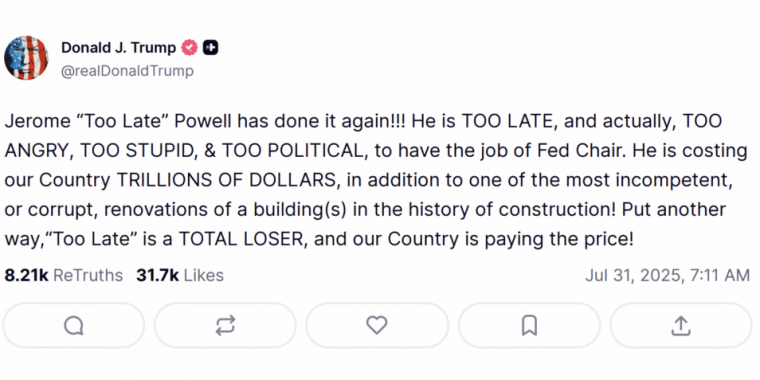
Independence?
Schmindependence!

Trump
has
brayed
for
Chairman
Powell’s
head
for
over
to
a
year
now.
He
wants
interest
rates
at
zero
and
seems
to
think
it’s
his
rightful
due
for
“saving”
the
economy.
This
is
economically
illiterate

zero
interest
rates
are
a
tool
to
stimulate
an
economy
that
is
contracting

although
his
Iran
misadventures
may
wind
up
changing
the
math.

At
any
rate,
Trump
seems
to
have
grasped
that
trying
to
fire
Powell
would
be
more
trouble
than
it’s
worth,
both
politically
and
legally.
But
that
hasn’t
stopped
Trump’s
minions
from

targeting
Powell

in
an
effort
to
gin
up
justification
to
terminate
the
chair
“for
cause.”

Trump’s
chief
instigator
is
Bill
Pulte,
director
of
the
Federal
Housing
Finance
Agency
and
the
chairman
of
Fannie
Mae
and
Freddie
Mac,
who
spends
his
days
spelunking
through
confidential
financial
documents
looking
for
dirt
on
Trump’s
enemies.
He’s
the
one
who
came
up
with
the
allegation
that
Federal
Reserve
Board
Member
Lisa
Cook
had
lied
on
a
mortgage
application,
justifying
her
termination
“for
cause”
and
freeing
up
Trump
to
install
someone
more
pliant.
With
Powell,
Pulte
seems
to
have
settled
on
cost
overruns
in
the
renovation
of
the
Federal
Reserve
buildings
as
a
convenient
excuse.

Pulte’s
tweet
soon
became
the
official
Trumpland
line,
and
White
House
officials,
including
Deputy
Chief
of
Staff
James
Blair,
posted
memes
of
Powell
as
Marie
Antoinette

which
does
double-duty
as
homophobia,
too.

In
DC,
Pirro
answered
Pulte’s
call.
She
served
grand
jury
subpoenas
on
the
Fed
in
January
demanding
information
about
the
renovation
and
Powell’s
testimony
to
Congress.
Powell
immediately
took
to
the
airwaves
to
denounce
this
blatant
attack
on
the
independence
of
the
Federal
Reserve.

He
also
moved
to
quash
the
subpoenas
in
the
US
District
Court
for
the
District
of
Columbia.

The
case
landed
on
the
docket
of
Chief
Justice
James
Boasberg,
himself
the
target
of
a
judicial
ethics
complaint,
an
impeachment
push,
and
an
unending
stream
of
vitriol
from
the
Trump
administration.
Last
Wednesday,
Judge
Boasberg

granted

Powell’s
motions
to
quash,
unsealing
much
of
it
on
the
public
docket
Friday.

“Too
late?”
Or
right
on
time?

Judge
Boasberg
began
his
order
by
quoting
a
few
of
Trump’s
dozens
of
attacks
on
Powell.

“Being
perceived
as
the
President’s
adversary
has
become
risky
in
recent
years,”
he
observed
wryly.
“In
his
second
term,
Trump
has
urged
the
Department
of
Justice
to
prosecute
such
people,
and
the
Department’s
prosecutors
have
listened.”

The
judge
noted
that,
after
Trump
called
to
prosecute
members
of
Congress
for
reminding
active
duty
service
members
of
their
duty
to
refuse
unlawful
orders,
Pirro’s
office
tried
to
indict
them.
He
omitted
to
mention
that


zero

grand
jurors

voted
to
charge
the
legislators.

Judge
Boasberg
says
that
he
invited
the
US
Attorney’s
Office
to
submit
evidence

ex
parte

that
there
is
any
reason
at
all
to
suspect
that
Powell
committed
a
crime.
The
government
declined,
other
than
to
gesture
vaguely
toward
cost
overruns
in
the
Fed
renovation
and
the
fact
that
Powell’s
testified
before
the
Senate
Banking
Committee.

“The
Government
might
as
well
investigate
him
for
mail
fraud
because
someone
once
saw
him
send
a
letter,”
he
judge
scoffed.

And
so,
the
subpoenas
were
quashed.

Take
the
L,
Ma’am

This
would
be
an
ideal
opportunity
for
the
Trump
administration
to
declare
victory
and
go
home.

Powell’s
term
as
Fed
Chair
is
up
in
May,
although
his
tenure
on
the
Board
of
Governors
extends
through
2027.
It’s
traditional
for
the
Fed
Chair
to
resign
at
the
end
of
his
term,
leaving
space
for
the
president
to
leave
his
stamp
on
the
Board
with
his
own
nominee.
But
Powell
has
refused
to
say
whether
he’ll
depart,
and
the
DOJ
claims
in
its

opposition

that
Powell
refused
to
resign
while
this
investigation
was
pending.

“By
making
this
peculiar
suggestion,
the
Board
morphed
the
Subpoenas
into
the
exact
thing
about
which
they
complain

a
mechanism
by
which
Chair
Powell
could
be
removed,”
the
prosecutors
whined.
I
believe
this
is
meant
to
suggest
that,
by
offering
to
leave
if
the
case
goes
away,
Powell
himself
is
politicizing
the
prosecution.
But
if
Pirro’s
office
could
simply
STFU
up
for
10
minutes,
she
could
solve
a
bunch
of
the
president’s
political
issues.

Specifically,
Senator
Thom
Tillis,
a
Republican
on
the
Senate
Banking
Committee,
was
so
incensed
by
Pirro’s
attack
on
Powell
that
he

vowed
to
block

any
confirmation
to
the
Fed
until
it
resolves.
That
includes
Kevin
Warsh,
Trump’s
pick
to
replace
Powell
as
chair.
On
Friday,
Senator
Tillis
encouraged
the
Trump
administration
to
just
take
the
off-ramp.

“This
ruling
confirms
just
how
weak
and
frivolous
the
criminal
investigation
of
Chairman
Powell
is
and
it
is
nothing
more
than
a
failed
attack
on
Fed
independence,”
Sen.
Tillis

said
.
“We
all
know
how
this
is
going
to
end
and
the
D.C.
U.S.
Attorney’s
Office
should
save
itself
further
embarrassment
and
move
on.
Appealing
the
ruling
will
only
delay
the
confirmation
of
Kevin
Warsh
as
the
next
Fed
Chair.”

But
Jeanine
Pirro
didn’t
get
where
she
is
in
this
life
by
making
rational
choices.
After
foamily
fulminating
about
her
own
track
record
prosecuting
child
sex
crimes,
she
promised
to
appeal.

“By
inserting
himself
and
preventing
the
grand
jury
from
even
obtaining,
let
alone
hearing
evidence,
he
has
neutered
the
ability
of
the
grand
jury
to
investigate
crime,”
she
ranted.
“As
a
result,
Jerome
Powell
today
is
now
bathed
in
immunity,
preventing
my
office
from
investigating
the
Federal
Reserve.
This
is
wrong,
and
it
is
without
legal
authority.”

These
two
things
are
the
same

Pirro’s
hissy
fit
comes
on
the
heels
of
the

revelation

that
her
predecessor
is
under
investigation
by
the
DC
bar.
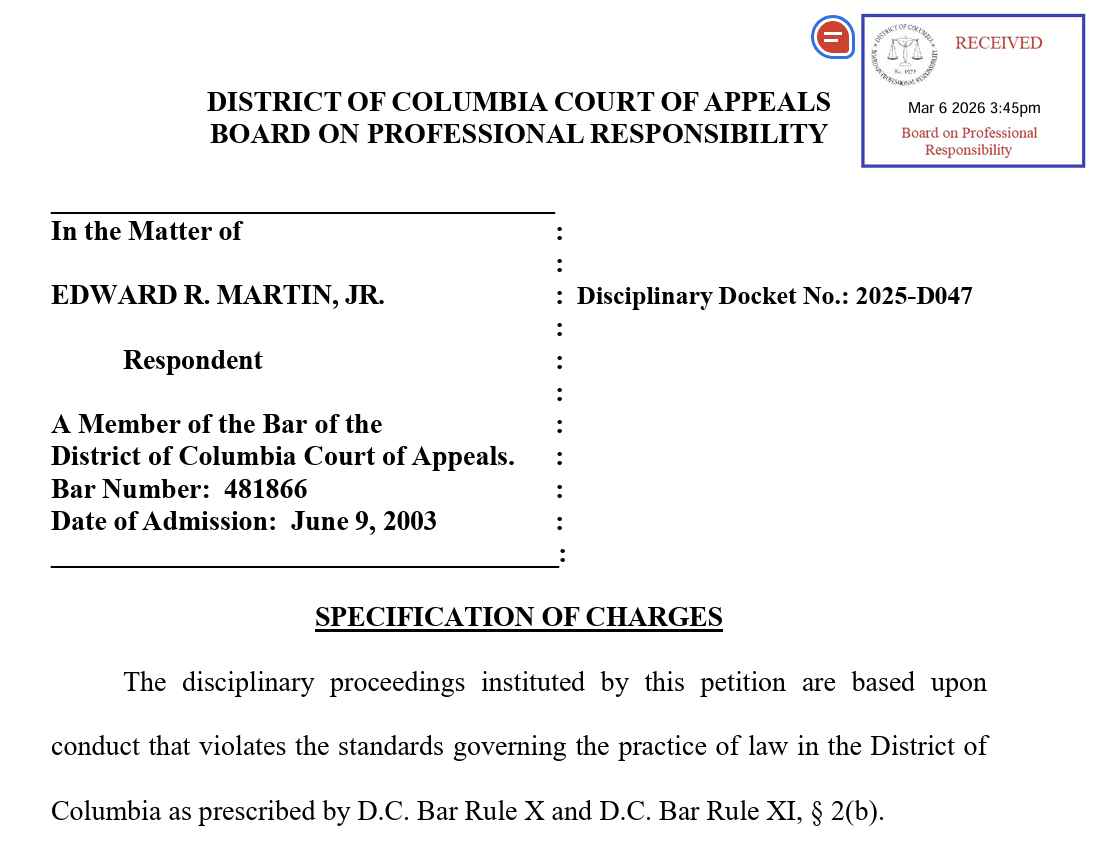
Ed
Martin
publicly
harassed
the
Georgetown
University
Law
Center
for
its
First
Amendment
protected
speech,
and
then,
when
called
out
for
it,
privately
spammed
the
District
of
Columbia
Court
of
Appeals
with

ex
parte

communications
demanding
that
the
judges
rein
in
the
DC
Bar.

Martin
enjoys
the
dubious
distinction
of
being
one
of
the
only
Trump
nominees
rejected
by
the
Senate.
This,
too,
was
thanks
to
Tillis,
who
said
he
wasn’t
going
to
put
a
January
6
protester
in
charge
of
the
US
Attorneys
Office
in
DC.
Martin
was
then
folded
into
the
Justice
Department
and
given
several
titles
to
soothe
his
wounded
ego.
Eventually,
he
appears
to
have
worn
out
his
welcome
and
gotten

turfed
out

after
sharing
confidential
grand
jury
materials
with
some
rando
on
Twitter.
But
it’s
worth
asking
what
would
be
different
at
the
US
Attorneys
Office
in
DC
if
Tillis
had
knuckled
under
and
voted
for
Martin.

Because,
for
all
Pirro’s
histrionics
about
having
“cleaned
up
this
city,”
violent
crime
in
DC
has
declined
at
roughly
the
same
rate
as
every
other
major
city,
including
neighboring
Baltimore.
Despite
having
an
actual
resume
as
a
prosecutor,
Pirro’s
tenure
has
been
marked
by
an

embarrassing
string
of
defeats
.
She
routinely
gets
no-billed
by
grand
juries
and

laughed
out
of
court

by
petit
jurors.
Her
political
prosecutions
have
come
to
naught.
And
on
Friday,
even
as
she
was
inveighing
against
Judge
Boasberg,
her
office
was

abandoning

the
prosecution
of
veteran
Jay
Carey
for
burning
a
flag
in
Lafayette
Park
to
protest
Trump’s
executive
order
purporting
to
ban
it.
That
case
was
also
presided
over
by
Judge
Boasberg,
who

refused

to
dismiss
Carey’s
case
on
statutory
grounds,
but
did
grant
him
discovery
on
the
question
of
vindictive
prosecution.
Rather
than
explain
herself,
Pirro
dropped
the
case.

Ed
Martin
couldn’t
have
done
better!
But
then
again,
he
probably
couldn’t
have
done
worse,
either.


Liz
Dye
 produces
the
Law
and
Chaos Substack and podcast.
 You
can
subscribe
by
clicking
the
logo:


Alarming escalation of attacks against journalists


The
IPI
global
network
expresses
deep
concern
over
a
series
of
recent
incidents
in
Zimbabwe
that
signal
an
alarming
escalation
of
pressure,
intimidation,
and
violence
targeting
journalists.
In
recent
weeks,
individual
journalists
in
Zimbabwe
have
faced
threats
from
senior
government
officials,
criminal
prosecution
linked
to
their
reporting,
and
physical
attacks
while
carrying
out
their
work.
IPI
urges
the
Zimbabwe
authorities
to
reaffirm
their
commitment
to
media
freedom
and
ensure
that
journalists
can
report
freely
on
matters
of
public
interest
without
intimidation
or
harassment. 

In
February
2026,
following
a
speech
by
journalist
Blessed
Mhlanga
at
the
Geneva
Summit
for
Human
Rights
and
Democracy,
Zimbabwe’s
information
minister threatened Mhlanga
with
criminal
prosecution
and
described
his
speech
as
“an
act
of
hostility
against
his
homeland”. 
At
the
summit,
Mhlanga
spoke
about
his
73-day
pre-trial
detention
in
2025
over
his
reporting
and
the
deteriorating
press
freedom
situation
in
Zimbabwe.

Following
the
minister’s
remarks, media
reports
 indicated
that
authorities
had
issued
an
arrest
warrant
against
Mhlanga,
accusing
him
of 
violating
Section
22A
of
the
Criminal
Law
Codification
and
Reform
Act
for
“wilfully
injuring
the
sovereignty
and
national
interest
of
Zimbabwe
by
actively
participating
in
meetings,
communication
or
cooperation
with
foreign
governments
or
their
agents”.
Media
have
also reported that
authorities
deployed
a
counterintelligence
team
at
the
airport
in
Harare
to
arrest
Mhlanga
upon
his
return
to
Zimbabwe.

Mhlanga
was
due
to
appear
in
court
on
March
9
for
continuation
of
this
trial.
His
defence
lawyers
have
told
the
court
that
Mhlanga
is
currently
in
South
Africa
seeking
medical
treatment.

In
a
separate
case,
journalist
Golden
Madzikatidze
from
online
media
outlet
Bulawayo24
has
been detained since
February
18
on
allegations
of
cyberbullying
and
broadcasting
without
a
license.
Madzikatidze’s
arrest
followed
Bulawayo24’s
publication
of
a
story
on
alleged
corruption
involving
a
local
waste
management
company.
Madzikatidze
was denied
bail
 on
March
2
and
is
due
to
reappear
in
court
on
March
17.

In
yet
another
incident,
journalist
Effort
Manono
was assaulted on
March
1
while
covering
a
meeting
of
the
National
Constitutional
Assembly
in
Harare.
The
meeting
was
violently
disrupted
by
unidentified
assailants,
who
also
attacked
Manono
as
well
as
other
participants.
Manono
told
IPI
that
he
sustained
several
injuries
and
had
to
seek
medical
attention.
It
is
unclear
who
was
responsible
for
the
attack,
which
occurred
despite
the
presence
of
police.

These
recent
incidents
point
to
a
troubling
pattern
of
journalists
in
Zimbabwe
facing
intimidation,
criminal
prosecution,
and
violence
while
performing
their
professional
duties.

IPI
calls
on
the
Zimbabwean
authorities
to
take
urgent
steps
to
reverse
the
current
climate
of
intimidation
and
harassment
and
uphold
the
country’s
constitutional
guarantees
of
freedom
of
expression
and
media
freedom,
as
well
as
international
human
rights
commitments.
Authorities
should
immediately
drop
charges
against
journalist
Blessed
Mhlanga
and
ensure
that
laws
on
national
security
and
national
sovereignty
are
not
used
to
retaliate
against
journalism
and
free
expression.

Authorities
should
also
release
journalist
Golden
Madzikatidze
and
take
steps
to
prevent
the
abuse
of
cybercrime
laws
and
other
legal
provisions
in
response
to
media
reporting
in
Zimbabwe.
We
also
call
on
officials
to
ensure
a
prompt,
independent,
and
thorough
investigation
into
the
attack
against
Effort
Manono.


Source:


Zimbabwe:
Alarming
escalation
of
attacks
against
journalists


ipi.media

Legalweek 2026: The AI Bubble Literally Pops – Above the Law

As
Legalweek
kicked
off
its
furious
four-day
legal
tech
bonanza,
legal
AI
darling

Harvey

festooned
the
annual
awards
gathering
with

black
balloons
emblazoned
with
the
Harvey
logo
.
I
didn’t
go
to
the
awards,
but
I
heard
that
attendees
were
asked
to
pop
these
balloons
to
find
one
containing
a
prize.

If
I
were
a
legal
AI
wrapper
with
a
valuation
somewhere
around
the
GDP
of
Liechtenstein,
I’m
not
sure
I’d
invite
the
optics
of
a
literal
AI
bubble
pop.
Indeed,
I
might
steer
away
from
the
imagery
of
empty
inflation
altogether.
But
I
guess
they
need
to
find
some
way
to
spend
all
that
money
they’ve
raised
and
I
guess
it’s
going
straight
into
that
Party
City
balloon
budget.

It’s
symbolism
that
a
novelist
might
dismiss
as
too
heavy
handed.
Luckily,
reality
doesn’t
have
to
worry
about
literary
critics.

Harvey
is
certainly
riding
high.
As
is
its
chief
rival

Legora
,
which

raised
another
$550
million
this
week
.
But
we’re
barely
more
than
a
month
removed
from

Anthropic
crashing
the
legal
tech
industry

by
vibecoding
a
“Legal”
plugin
that
scans
Wikipedia.
Anthropic’s
new
tool
didn’t
turn
out
to
be
ready
for
primetime,
but
as
a
warning
shot,
it
put
the
legal
sector
on
notice
that
the
big
AI
players
can
swoop
in
and
drink
this
milkshake
whenever
they
decide
to
get
serious
about
it.

Something’s
got
to
give,
right?
One
theory
I’d
overlooked,
but
that
might
make
sense
of
it
all,
is
that
investors
might
be
betting
that
these
companies

will
get
sucked
up
by
OpenAI
or
Anthropic
once
they
cash
in
at
the
stock
market
.
Under
this
logic,
money
keeps
flowing
into
these
companies
because
investors
see
it
as
backdoor
access
to
the
big
player
gravy
train.
An
intriguing
possibility…
because
if
and
when
one
of
the
leading
AI
manufacturers
wants
to
get
into
the
legal
market,
incumbent
clients
could
prove
key.
But
is
it
billions
upon
billions
of
dollars
key?

A
decade
ago,

Legalweek


then
called
Legaltech
NY

was
derisively
called
“eDiscovery
week”
because
document
review
drowned
out
most
other
legal
tech
applications.
In
2026,
it’s
undeniably
“AI
week”
(and

there’s
a
word
cloud
to
prove
it
).
Though
after
an
intense
week
of
AI
talk,
there
aren’t
really
any

answers
.

The
literal
bubble
may
have
popped,
but
the
figurative
one
still
grows
tantalizingly
larger
by
the
day,
raising
questions
up
and
down
the
market.

Many
of
my
interviews
talked
like
betters
gearing
up
for
March
Madness,
except
instead
of
points
scored,
the
over/under
line
was
set
at
how
many
of
the
vendors
in
the
exhibit
hall
won’t
exist
in
24
months.
Whether
a
product
of
consolidation
or
losing
out,
most
people
envision
the
majority
of
the
exhibit
hall
roster
will
be
the
answer
to
a
trivia
question
a
couple
years
from
now.
But
what
about
the
foundation
of
this
market?
Whenever
I
would
ask
about
the
fact
that
that
hundreds
of
billions
of
dollars
in
value
seem
to
be
entirely
supported
by
a
closed
loop
of
IOUs
between
NVIDIA,
Oracle,
Microsoft,
etc.
not
unlike
a
6th
grade
science
textbook
explaining
the
water
cycle,
the
standard
response
was
a
nervous
chuckle.

And
that’s
with
no
one
even
mentioning
that
the
federal
government
has
declared
a
holy
war
against
Anthropic
and
claims

dubiously,
but
nonetheless

that
any
company
dealing
with
the
government
has
to
cut
ties
with
arguably
the
best
model
out
there.

On
that
note,
more
providers
openly
talked
about
using
smaller
language
models,
citing
cost
and
improved
precision
to
the
task
at
hand.
But
one
was
willing
to
come
right
out
and
say
“to
control
our
own
destiny.”
Even
if
the
provider
wasn’t
touting
small
models,
the
days
of
“we
have
an

exclusive

relationship
with
[insert
AI
big
dog
here]”
are
gone.
Two
years
ago,
that
was
the
flex,
but
now
it
reads
as
a
liability.
Everyone
plays
the
field…
or
at
least
wants
customers
to
know
they
are
capable
of
playing
the
field.

Because
whatever
happens
with
the
top
level
of
the
industry,
the
lawyers
are
starting
to
get
too
dependent
upon
AI
for
it
to
disappear.
In
the
latest
installment
of
the

General
Counsel
Report

from
Relativity
and
FTI,
GenAI
adoption
among
corporate
legal
departments
jumped
from
44
percent
to
87
percent
in
a
single
year.
That’s
a
Blackberry-level
adoption
rate.

But
Blackberry
isn’t
around
anymore,
even
if
emailing
associates
with
urgent
requests
at
4
a.m.
remains.

In
this
way,
Legalweek
was
a
tale
of
two
AI
conferences.
Half
the
conversation
excitedly
speculated
about
agent
swarms
or
the
promise
of
vibecoding,
while
the
other
half
more
or
less
took
all
the
bleeding-edge
stuff
as
beyond
their
control,
instead
talking
about
what
makes
for
a
working
legal
application.
It’s
a
bit
of
a

Braveheart

outlook:
“they
may
take
our
specific
workflow
tasks,
but
they
will
never
take…
our
DATA
MOAT!”

Or
whatever
it
is.
The
catalog
of
vetted
research,
or
the
informed
data
structuring,
or
just
the
human
intelligence
oversight

there’s
something
they
claim
imbues
the
model
with
the
soul
of
a
lawyer.
Or
whatever
the
equivalent
of
“a
soul”
is
for
a
lawyer.


HeadshotJoe
Patrice
 is
a
senior
editor
at
Above
the
Law
and
co-host
of

Thinking
Like
A
Lawyer
.
Feel
free
to email
any
tips,
questions,
or
comments.
Follow
him
on Twitter or

Bluesky

if
you’re
interested
in
law,
politics,
and
a
healthy
dose
of
college
sports
news.
Joe
also
serves
as
a

Managing
Director
at
RPN
Executive
Search
.

Sinomine in talks with Zimbabwe to resume lithium exports

<br /> Sinomine<br /> in<br /> talks<br /> with<br /> Zimbabwe<br /> to<br /> resume<br /> lithium<br /> exports


16.3.2026


18:24

The
​company
is
in
communication
with
​Zimbabwean
authorities
over
a
new
export
application

March
13
(Reuters)

Sinomine
Resource
Group (002738.SZ),
opens
new
tab
 is
in
talks
with
​Zimbabwean
authorities
to
resume
‌its
lithium
exports,
the
Chinese
mining
group
said
on
​Friday,
weeks
after
the
​African
country
halted
the
export
⁠of
lithium
concentrates.

“The
​company
is
in
communication
with
​Zimbabwean
authorities
over
a
new
export
application,”
Sinomine
said,
in
​response
to
investors’
queries
​on
a
platform
affiliated
to
the
‌Shenzhen
⁠Stock
Exchange.

Post
published
in:

Business


Manage
consent

Pauline Newman Petitions Supreme Court To Hear Her Case – Above the Law

(Photo
by
Bill
O’Leary/The
Washington
Post
via
Getty
Images)

Despite
their
disagreements,
judges
tend
to
keep
things
pretty
tame
with
their
colleagues:
differing
opinions
weren’t
enough
to
stop
Scalia
and
Ginsburg
from

attending

(or

being
)
the
opera
and
all
that.
We
have
seen
some
spats
though:
VanDyke
calling
his
co-workers

possessed
,
hermeneutic
back
and
forth
over
the
word
seek,”
and
a


taxing

Supreme
Court
dissent

that
shows
there
was
a
no-holds-barred
wrestling
match
of
ideas
behind
the
tidy
6-3.
But
the
workplace
dispute
to
cap
them
all
has
to
be
the
last
three
years
over
at
the
United
States
Court
of
Appeals
for
the
Federal
Circuit.
While
the
wording
of
the
back
and
forth
has
been
pretty
tame

nowhere
near
a
break
in
decorum
like
VanDyke’s
unnecessary

“swinging
dicks”
comment
and
his
peers
compelling
him
to
be
better


the
nature
of
Judge
Newman’s
case
has
high
stakes
for
judicial
independence
and
constitutional
interpretation.

In
short,
Article
III
judges
can
hold
their
office
as
long
as
they
are
in
good
behavior.
Most
read
that
to
mean
that
if
they
commit
a
crime
or
act
in
ways
unbecoming
of
a
judge,
Congress
can
oust
them
by
vote.
The
Federal
Circuit
seems
to
read
good
behavior
to
mean
not
being
too
disagreeable.
I
say
this
with
my
conspiratorial
hat
on

the
court’s
given
reason
is
that
they
accused
Judge
Newman
of
being
physically
and/or
mentally
unfit
for
the
job
and
are
punishing
her
for
not
being
evaluated
by
doctors
they’ve
selected

but
her
tendency
to
naysay
has
made
her
stand
out.
When
she
tried
to
appeal
her
court’s
decision,
she
was
met
with
a
shoulder
shrug.
Even
though
she
raised
important
questions
about
due
process,
the
appellate
court
was
bound
by
prior
precedent.
But
you
know
who
isn’t?
The
Supreme
Court!

IP
Watchdog

has
coverage:

The
NCLA’s
Supreme
Court
petition,
filed
Thursday
night,
poses
two
questions
to
the
Court:


  1. Does
    28
    U.S.C.
    §
    357(c)’s
    bar
    on
    judicial
    review
    of
    previously
    issued
    “orders”
    and
    “determinations”
    apply
    to
    ultra
    vires
    acts
    that
    exceed
    the
    scope
    of
    authority
    conferred
    by
    the
    Disability
    Act
    and
    the
    Constitution?

  2. Does
    28
    U.S.C.
    §
    357(c)’s
    bar
    on
    judicial
    review
    of
    previously
    issued
    “orders”
    and
    “determinations”
    deprive
    a
    court
    of
    jurisdiction
    to
    consider
    claims
    that
    seek
    forward-looking
    relief
    to
    enjoin
    future
    unlawful
    actions?

The
clarity
matters
for
far
more
than
just
Newman’s
sake.
Since
she’s
been
shadow
impeached,

the
number
of
federal
dissents
has
noticeably
decreased
.
There’s
the
obvious
drop
you’d
expect
from
her
not
penning
dissents
for
the
time
she’s
been
on
suspension,
but
the
numbers
suggest
that
other
judges
may
be
chilled
out
of
breaking
from
their
colleagues’
opinions.

Most
of
the
recent
calls
to
protect
judges
have
been
in
response
to
political
violence
for
obvious
reasons,
but
job
security
matters
too.
Pauline
Newman
is
one
of
the
most
respected
and
well-known
circuit
judges.
If
she
can
be
sidelined
like
this,
every
other
judge
who
loses
a
popularity
contest
risks
being
punished
in
the
same
way.
If
the
Supreme
Court
decides
to
take
up
this
case,
it
could
bring
some
much-needed
clarity
to
judicial
self-policing
processes
and
how
secure
their
jobs
really
are.


NCLA
Revives
Newman
Case
Against
Moore
with
Supreme
Court
Petition

[IP
Watchdog]


Earlier
:

Federal
Circuit
Dissents
Plummet
After
Pauline
Newman’s
Ersatz
Impeachment


Judicial
Conduct
Committee
Passes
Ball
On
Glaring
Due
Process
Issue
In
Newman
Case


U.S.
Appeals
Court
Denies
Pauline
Newman’s
Bid
To
Challenge
Suspension


Chris
Williams
became
a
social
media
manager
and
assistant
editor
for
Above
the
Law
in
June
2021.
Prior
to
joining
the
staff,
he
moonlighted
as
a
minor
Memelord™
in
the
Facebook
group Law
School
Memes
for
Edgy
T14s
.
 He
endured
Missouri
long
enough
to
graduate
from
Washington
University
in
St.
Louis
School
of
Law.
He
is
a
former
boat
builder
who
is
learning
to
swim
and
is
interested
in
rhetoric,
Spinozists
and
humor.
Getting
back
in
to
cycling
wouldn’t
hurt
either.
You
can
reach
him
by
email
at [email protected]
and
by
tweet
at @WritesForRent.

Top 10 Biglaw Firm Shuts Down Back-Office Location As Restructuring – And Staff Cuts – Continue – Above the Law

Global
megafirm
Baker
McKenzie
is
continuing
its
push
to
streamline
operations

and
this
time,
the
cuts
are
hitting
bricks
and
mortar.

According
to
a
report
from
the

American
Lawyer
,
the
firm
is
shutting
down
its
Tampa,
Florida
back-office
facility
as
part
of
a
broader
restructuring
effort
that
shifts
more
business
services
work
to
remote
operations.

“Baker
McKenzie
will
no
longer
maintain
a
traditional
office
footprint
in
Tampa
beginning
later
this
year
and
will
transition
to
a
remote
working
environment,”
a
firm
spokesperson
said.
“The
firm
will
leverage
flexible
collaboration
spaces
as
needed
to
support
in-person
connection
and
teamwork.”

The
spokesperson
said
Tampa-based
employees
will
continue
to
partner
with
colleagues
across
the
globe
to
provide
full-service
support
to
its
business
and
clients. 

The
move
follows
a
wider
shakeup
within
the
firm’s
professional
staff
ranks.
Just
last
month,
Baker
McKenzie
announced
that
it
was

planning
sweeping
cuts
to
its
global
business
services
teams


potentially
affecting
more
than
700
employees
across
functions
like
IT,
marketing,
admin,
and
knowledge
management

as
the
firm
reviewed
how
it
delivers
internal
services
and
leaned
more
heavily
on
technology
and
AI-driven
efficiencies.

The
Tampa
closure
now
looks
less
like
an
isolated
real
estate
decision
and
more
like
another
piece
of
a
much
larger
restructuring
puzzle.
As
firms
experiment
with
automation,
remote
work,
and
centralized
operations,
support
staff

and
the
offices
they
once
worked
in

may
increasingly
find
themselves
on
the
chopping
block.
If
the
firm’s
latest
move
is
any
indication,
the
changes
we
flagged
earlier
may
only
be
the
beginning.

If
your
firm
or
organization
is
reducing
the
ranks
of
its
lawyers
or
staff,
whether
through
deferrals,
open
layoffs,
stealth
layoffs,
or
voluntary
buyouts,
please
don’t
hesitate
to
let
us
know.
Our
vast
network
of
tipsters
is
part
of
what
makes
Above
the
Law
thrive.
You
can email
us
 or
text
us
(646-820-8477).
Thank
you
for
your
assistance.

If
you’d
like
to
sign
up
for
ATL’s
Layoff
Alerts,
please
scroll
down
and
enter
your
email
address
in
the
box
below
this
post.
If
you
previously
signed
up
for
the
layoff
alerts,
you
don’t
need
to
do
anything.
You’ll
receive
an
email
notification
within
minutes
of
each
layoff
announcement
that
we
publish.


Baker
McKenzie
Shutters
Tampa
Back
Office
as
Part
of
Restructuring
Push

[American
Lawyer]


Earlier
:

Top
10
Biglaw
Firm
To
Conduct
‘Massive’
Layoff,
Leaving
Hundreds
Jobless
Thanks
To
AI


Staci
Zaretsky
 is
the
managing
editor
of
Above
the
Law,
where
she’s
worked
since
2011.
She’d
love
to
hear
from
you,
so
please
feel
free
to email her
with
any
tips,
questions,
comments,
or
critiques.
You
can
follow
her
on BlueskyX/Twitter,
and Threads, or
connect
with
her
on LinkedIn.

How Some Law Departments Are Winning Law Firm Rate Negotiations – Above the Law

Where
do
legal
teams
still
have
meaningful
leverage
in
rate
negotiations?

Even
where
legal
teams
negotiate
aggressively 
and
achieve
apparent
“wins,”
net
year-over-year
increases
frequently
remain
in
the
high
single
to
double
digits,
according
to
proprietary
Persuit
data
detailed
in
a
recent
report. 

Join
us
as
our
expert
panel
will
share
real-world
negotiation
and
rate
data
across
more
than
500
law
firms,
multiple
geographies,
and
thousands
of
timekeeper
rate
submissions.

You’ll
learn:

  • How
    leading
    legal
    departments
    are
    shifting
    from
    reactive
    negotiation
    to
    proactive
    pricing
    design,
    setting
    guardrails
    before
    rates
    are
    proposed
    rather
    than
    responding
    after
    the
    fact.
  • Which
    levers
    still
    work
    in
    2026,
    including
    standard-rate
    governance,
    role
    clarity,
    senior
    lawyer
    approvals,
    and
    matter-level
    staffing
    controls.
  • How
    portfolio-level
    data
    and
    visibility
    change
    negotiation
    dynamics,
    enabling
    more
    consistent,
    defensible
    outcomes
    across
    firms,
    geographies,
    and
    practice
    areas.
  • Why
    manual,
    ad
    hoc
    approaches
    fail
    to
    scale,
    particularly
    as
    rate
    dispersion
    widens
    and
    global
    portfolios
    become
    more
    complex.


Sign
up
to
join
the
discussion.
1
hr
CLE
credit
is
available
.


Lawyers And Cybersecurity: Talk To An Expert – Before It’s Too Late – Above the Law

All
too
often
at
Legalweek
and
other
legal
tech
conferences,
I
am
inundated
with
meetings
with
vendors
who
want
to
tout
their
shiny
new
AI
product
or
enhancement.
Often
these
shiny
new
tools
are
neither
shiny
nor
new.
So,
it’s
a
treat
when
I
get
to
talk
to
someone
about
substantive
issues
and
what’s
going
on
in
the
real
world.
And
right
now,
one
of
the
biggest
things
going
on
that’s
not
talked
about
much
is
cybersecurity,
its
risks,
and
accelerating
frequency
of
attacks.

So
my
recent
conversation
with

Michel
Sahyoun
,
the
Chief
Solutions
Architect
of

NopalCyber
,
was
a
welcome
chance
to
learn.
NopalCyber
is
a
cybersecurity
consulting
firm
that
Sahyoun
heads.
I
also
spoke
with
him
at
a
recent
ILTA
conference
and
found
him
not
only
knowledgeable
but
also
capable
of
explaining
things
in
a
way
I
can
understand.
From
experience,
I
know
the
latter
is
a
skill
in
short
supply
in
the
cyber
world.

I
got
a
chance
to
chat
with
him
at
Legalweek
and
catch
up
on
ongoing
cyber
threats
in
the
age
of
AI.


AI
Risks

If
we
didn’t
have
enough
cybersecurity
issues
and
bad
guys
lurking,
AI
brings
a
whole
new
dimension
to
the
risks.
Add
to
this
the
complacency
and
disinterest
of
many
business
leaders,
particularly
(as
I
well
know)
those
in
law
firms,
and
you
have
a
perfect
storm
brewing.

Like
I

have
discussed
,
Sahyoun
too
has
noted
the
widespread
use
of
GenAI
for
all
sorts
of
things.
This
of
course
creates
a
discovery
trail,
but
it
also
creates
cyber
breach
risk.
Often
people
get
in
a
rush
to
get
deliverables
from
AI
tools
and
cut
corners.
They
don’t
take
the
necessary
steps
to
adequately
protect
confidential
and
private
data.

A
far
bigger
threat
though,
says
Sahyoun,
is
how
good
and
fast
AI
tools
can
create
a
breach.
According
to
Sahyoun,
the
average
time
to
exploit
a
breach
is
now
only
29
minutes.
Reacting
at
that
speed,
particularly
while
trying
to
run
a
business,
is
difficult.

Moreover,
AI
bots
can
automatically
launch
repeated
automated
attacks
to
probe
for
and
exploit
vulnerabilities.
This,
combined
with
automation,
have
increased
the
numbers
of
attacks
to
“crazy”
levels,
notes
Sahyoun.

The
attacks
can
also
target
certain
kinds
of
information
once
they
are
ingrained.
AI
tools
can
be
used
to
pull
out
such
things
as
bank
account
numbers,
social
security
numbers,
passwords,
and
the
like.
No
more
time-consuming
searching

time
that
the
exposed
party
historically
had
to
remediate
and
cut
off
the
breach.
AI
tools
can
also
infiltrate
an
entity’s
own
AI
system,
exposing
even
more.

Sahyoun
also
believes
that
one
protection
on
which
many
rely,
cyber
insurance,
is
getting
much
more
expensive.
Moreover,
carriers
are
looking
carefully
at
what
insureds
say
in
their
applications
and
reviews
versus
what
they
are
actually
doing.
If
there
is
discrepancy,
insurers
then
use
that
to
deny
claims.
So,
what
many
believe
is
a
safe
harbor
may
not
be.

Sahyoun
is
seeing
overreliance
on
what
internal
IT
teams
are
saying
when
that
advice
isn’t
exactly
right.
Says
Sahyoun,
“there
is
little
oversight
between
risk
and
technology.” 
Entities
may
have
certain
software
protections
but
if
they
aren’t
implemented
correctly,
they
not
only
fail
to
protect,
but
they
also
can
nullify
insurance
coverage.

Sahyoun
reiterated
for
me
that
entities
often
think
that
because
they
have
backup
systems,
they
are
safe.
But
as
I
have

also
written
,
failure
to
read
the
fine
print
of
software
protection
platforms
results
in
a
bitter
surprise
when
a
breach
happens
and
there
is
in
fact
no
backup
provided.

Finally,
he
says,
too
many
entities
are
driven
by
compliance
standards
to
overly
focus
on
data
leak
protections
but
ignore
the
ever-expanding
potential
for
attacks.


Some
Protections

To
combat
this
and
deliver
at
speed,
NopalCyber
keeps
track
of
known
and
potential
vulnerabilities
identified
by
government
agencies.
Once
it’s
disclosed,
NopalCyber
will
give
notice
to
its
clients
of
the
vulnerability
and
the
need
to
be
on
the
lookout
and
immediately
capture
it.
NopalCyber
will
also
provide
responding
software
from
its
inventory,
if
there
is
some,
that
enables
prompt
capture
or,
if
needed,
remediation.

Sahyoun
and
his
company
has
also
been
working
with
their
clients
to
respond
much
faster
to
attacks
given
the
abilities
and
speed
of
AI
tools
to
initiate
and
exploit
vulnerabilities.

On
the
proactive
side,
NopalCyber
provides
continuous
white
hat
attacking
to
expose
weakness
in
client
systems.
This
will
expose
the
potential
for
known
attacks
that
are
in
existence
but
can
also
demonstrate
misconfiguration
and
attack
paths
so
they
can
be
shut
down
before
something
happens.


Why
Am
I
Telling
You
All
This?

So,
why
am
I
devoting
space
to
cybersecurity
and
Sahyoun
in
particular?
It’s
because
I
continue
to
believe
that
law
firms
are
particularly
exposed.
Law
firms
have
all
sorts
of
valuable
information
that
belong
to
clients
or
even
other
parties.
The
bad
guys
know
this.
They
know
how
embarrassing
it
will
be
for
firms
to
report
a
breach
to
clients.
Not
to
mention
the
fact
that
such
an
event
is
a
good
way
for
a
client
relationship
to
be
abruptly
terminated.
And
law
firms
may
have
made
certain
security
representations
to
clients
that
they
unknowingly
can’t
meet.

Complacency
and
disinterest
are
particularly
acute
among
law
firms.
All
too
often
law
firm
leaders
rely
on
IT
who
don’t
speak
the
same
“language.”
The
leaders
don’t
understand
what
IT
is
saying
but
figure
they
must
know
what
they
are
talking
about.
They
then
conclude
with
little
additional
investigation
that
they
are
protected
by
software,
backup,
and
insurance.
All
too
often,
none
of
the
three
hold
up.

And
to
be
honest,
law
firm
leaders
are
not
that
interested
to
begin
with.
Cybersecurity
is
nothing
more
than
a
cost
and
not
a
revenue-producing
one,
at
that.
So,
lawyers
ignore
or
don’t
apply
the
same
investigatory
zeal
to
their
own
security
as
they
do
to
their
clients.
In
the
age
of
GenAI,
that’s
a
huge
mistake
waiting
to
happen.

So,
investigate
and
ask
questions.
Talk
to
people
like
Sahyoun.
Before
it’s
too
late.


Stephen
Embry
is
a
lawyer,
speaker,
blogger,
and
writer.
He
publishes TechLaw
Crossroads
,
a
blog
devoted
to
the
examination
of
the
tension
between
technology,
the
law,
and
the
practice
of
law
.

Legal Ethics Roundup: New DOJ Attorney Rule Sparks Opposition, Rebuke For Judge’s ‘Vulgar Barroom Talk,’ Invisible Ethics For Lawmakers & More – Above the Law


Ed.
note
:
Please
welcome
Renee
Knake
Jefferson
back
to
the
pages
of
Above
the
Law.
Subscribe
to
her
Substack,
Legal
Ethics
Roundup, here.


Welcome
to
what
captivates,
haunts,
inspires,
and
surprises
me
every
week
in
the
world
of
legal
ethics.

Happy
Monday!

And
happy
early
St.
Patrick’s
Day!

I’m
writing
you
from
Chicago,
where
I
attended
a
board
meeting
on
Saturday
and
enjoyed
one
of
the
great
holiday
traditions

a
walk
along
the
dyed-green
Chicago
River.


The
Chicago
River
(photo
by
Renee
Jefferson)

Highlights
from
Last
Week

Top
Ten
Headlines


#1
“The
Justice
Department
Wants
to
Make
it
Safe
for
Lawyers
to
Lie.” 
Op-Ed
from Deborah
Perlstein 
(Princeton)
in The
New
York
Times: 
“For
presidents,
broadly
speaking,
lying
is
not
against
the
law.
For
lawyers
pursuing
a
president’s
agenda,
however,
it’s
a
very
different
story.
Like
all
other
lawyers
licensed
to
practice
in
the
United
States,
if
they
violate
legal
ethics
rules,
they
can
face
sanctions
in
court
or
professional
discipline,
up
to
and
including
the
permanent
loss
of
their
license
to
practice.
Efforts
to
overturn
the
2020
election
foundered
in
court
more
than
60
times,
before
judges
of
both
parties,
in
part
because
lawyers
arguing
President
Trump’s
case often
feared
 telling
a
court
the
same
extravagant
lies
that
the
president
was
telling
the
American
people.
That
was
then.
Now,
under
pressure
to
ignore
a
range
of
ethics
rules,
a
large
number
of
Department
of
Justice
attorneys
have
quit,
opting
to
lose
their
jobs
but
save
their
careers.
Between
these
departures
and
a
purge
of
legal
staff
members
seen
as
insufficiently
loyal
to
the
president’s
agenda,
the
department
has
lost
thousands
of
lawyers.
It
shows:
Briefs
are
riddled
with
errors.
Attorneys
come
to
court
grossly
unprepared.
Worst,
court
orders
stand
violated

in
some
cases,
it
seems,
because
there
weren’t
enough
lawyers
available
to
ensure
they
were
carried
out.”
Read
more here (gift
link).
(For
more
on
lawyer
lies
and
the
first
amendment,
see
my Yale
Law
Journal
Forum
 article.)


#2
“LDF
Denounces
Proposed
Rule
Shielding
DOJ
Lawyers
From
Accountability
and
Ethics
Enforcement.” 
From
the Legal
Defense
Fund: 
“Last
week,
the
Department
of
Justice
(DOJ) published
a
proposed
rule
 in
the
Federal
Register
that
would
allow
the
Attorney
General
to
intervene
in
state
bar
disciplinary
investigations
and
demand
that
those
investigations
be
suspended
while
the
DOJ
conducts
its
own
internal
review.
The
proposal
threatens
to
undermine
independent
oversight
by
state
ethics
committees,
fails
to
protect
the
public
from
unethical
acts,
and
risks
shielding
DOJ
attorneys
from
meaningful
accountability. ”
Read
more here.


#3
“ISBA
Files
Comment
Opposing
Proposed
Department
of
Justice
(DOJ)
Rule
Seeking
to
Interfere
With
State
Disciplinary
Investigations
Involving
DOJ
Attorneys.” 
From
the Illinois
State
Bar
Association: 
“On
Thursday,
March
12,
2026,
the
Illinois
State
Bar
Association
formally
filled
its comment in
opposition
to
the
Department
of
Justice’s
(‘DOJ’)
Proposed
Rule
concerning
Review
of
State
Bar
Complaints
and
Allegations
Against
Department
of
Justice
Attorneys
.’
The
Proposed
Rule,
which
was
filed
by
the
DOJ
last
week,
relates
to
state
disciplinary
agencies’
investigations
and
prosecutions
of
DOJ
attorneys.
It
would
establish
a
process
for
the
DOJ
to
review
bar
complaints
and
allegations
against
its
attorneys.
Under
the
Proposed
Rule,
before
a
current
or
former
DOJ
attorney
could
participate
in
any
disciplinary
investigation
by
a
state
disciplinary
authority,
the
DOJ
would
have
the
right
to
review
the
misconduct
allegations
in
the
first
instance
and
request
the
state
disciplinary
authority
to
suspend
its
investigation
until
the
completion
of
the
DOJ’s
review.”
Read
more here.


#4
“The
Legal
Ethics
Issue
That
Will
Never
Die.” 
From Brad
Wendel’s
Legal
Ethics
Stuff: 
“There
has
been
a
lot
of
reporting
and
commentary
recently
about
a
Notice
of
Proposed
Rulemaking
(NPRM)
from
the
Department
of
Justice,
the
main
thrust
of
which
is
to
interpose
the
DOJ
into
the
process
of
disciplining
DOJ
lawyers
for
violations
of
the
rules
of
professional
conduct.
Unlike
some
of
the
more
bumptious
actions
of Pam
Bondi’s
 DOJ,
this
NPRM
actually
looks
reasonable
well
thought
out
and
put
together
by,
you
know,
actual
lawyers
in
the
DOJ.
For
one
thing,
it’s
actually published
in
the
Federal
Register
 as
a
formal
rulemaking.
It’s
also,
in
some
ways,
less
aggressive
than
it
might
have
been
if
it
had
simply
been
dashed
off
by Boris
Epshteyn
,
like
the
law
firm
executive
orders.
Bottom
line
up
front
(BLUF):
I
think
this
is
mostly
for
show
and
won’t
change
much.
However,
there
has
been
a
lot
of
discussion
about
it
that
exposes
some
confusion
about
the
issues
at
stake.
This
is
nothing
new.

When
I
first
came
into
this
area
as
a
lawyer
and
then
as
a
graduate
student
in
the
mid
to
late
1990s,
the
conflict
between
the
DOJ
and
state
rules
of
professional
conduct
was
already
old
news,
having
been
aired
out
during
the George
H.W.
Bush
 and Clinton administrations,
but
going
back
even
farther
to
an OLC
opinion
in
1980
,
during
the Carter administration,
which
concluded
that
‘[s]tate
bar
associations
may
not,
consistent
with
the
Supremacy
Clause,
impose
sanctions
on
a
government
attorney
who
has
acted
pursuant
to
his
federal
law
enforcement
responsibilities.’
One
theme
of
this
history
is
that
Attorneys
General
of
both
parties
uniformly
resent
what
they
take
to
be
the
meddling
of
state
disciplinary
authorities
in
the
functioning
of
the
DOJ
and
the
conduct
of
its
lawyers.”
Read
more here.


#5
“Ed
Martin
Faces
Disciplinary
Proceedings
Over
Actions
as
D.C.
U.S.
Attorney.” 
From The
Washington
Post: 
“The
senior
Justice
Department
official
faces
disciplinary
proceedings
over
a
letter
he
sent
to
Georgetown
University’s
law
school
about
its
DEI
practices.”
Read
more here (gift
link).


#6
“Trump
Lawyer
Rebuked
at
ABA
for
Saying
DOJ
in
a
‘Better
Place’.”
 From Bloomberg
Law: 
“A
typically
collegial
white
collar
legal
conference
turned
testy
when
one
of
the
president’s
defense
attorneys
faced
incredulous
and
at
one
point
rancorous
pushback
for
praising
Trump’s
Justice
Department. John
Lauro
,
who
represented President
Donald
Trump
 in
special
counsel Jack
Smith’s
 2020
election
interference
case,
offered
a
starkly
opposing
view
to
his
co-panelists
Friday
at
an
American
Bar
Association-hosted
discussion
in
San
Diego
on
threats
to
the
rule
of
law.
Veteran
department
officials
and
a
former
judge
described
a
constitutional
crisis
playing
out
under Attorney
General
Pam
Bondi
.
But
Lauro
said
DOJ
is
‘in
a
better
place’
than
a
year
earlier
‘because
I
have
the
unique
experience
of
representing
a
political
figure
who
was
probably
more
abused
by
the
criminal
justice
system
in
America
than
any
other
political
figure
ever.’
… Retired
US
District
Court
Judge
Nancy
Gertner
,
who
now
teaches
at
Harvard
Law
School,
later
retorted:
‘Whatever
the
issues
were
with
respect
to
the
Trump
prosecution,
they
do
not
justify
the
fracture
of
American
democracy.’”
Read
more here.


#7
“Arizona
Supreme
Court
Makes
Modest
Changes
to
Law
License
Program.” 
From AZ
Central: 
“The
Arizona
Supreme
Court
took
another
step
to
change
the
state’s
experiment
with
law
licensing,
but
set
aside
advice
from
the
State
Bar
that
the
reforms
may
not
do
enough
to
keep
ordinary
legal
clients
safe.”
Read
more here.


#8
“US
Judges
Condemn
Trump
Appointee’s
‘Vulgar
Barroom
Talk’
in
Transgender
Bias
Case.” 
From Reuters: “Nearly
30
U.S.
appeals
court
judges
have
issued
unusual
written
rebukes
to
a
colleague
over
his
coarsely
worded
dissent
in
a
case
involving
a
spa
for
women
that
refused
​service
to
a
transgender
woman.
The
judges
on
the
9th
U.S.
Circuit
Court
of
Appeals
were
writing
late
Thursday
in
response
to Circuit
Judge
Lawrence
VanDyke’s
 dissent
from
‌the
full
court’s
decision
not
to
review
the
spa’s
claims
that
a
Washington
state
anti-discrimination
law
violated
its
constitutional
rights.”
Read
more here.


#9
“Who
Holds
Congress
Accountable?
A
Look
at
the
Invisible
Ethics
System
for
Lawmakers.” 
From PBS: “Congress
is
charged
with
writing
the
laws
that
govern
the
rest
of
us,
but
who
holds
lawmakers
accountable
when
they
break
the
rules?
We
take
a
closer
look
at
the
number
of
sitting
members
of
Congress
facing
active
ethics
investigations,
and
the
largely
invisible
system
designed
to
police
them.”
Read
more
and
listen here.


#10
“98-Year-Old
Federal
Judge
Suspended
for
Mental
Fitness
Appeals
to
Supreme
Court.” 
From The
Hill: 
Pauline
Newman
,
a
98-year-old
federal
appeals
judge
suspended
by
her
colleagues
over
concerns
about
her
mental
fitness,
has
asked
the
Supreme
Court
to
step
into
her
fight
to
resume
hearing
cases,
her
lawyers
said
Thursday.
Three
years
ago,
Newman’s
fellow
judges
at
the
U.S.
Court
of
Appeals
for
the
Federal
Circuit
prevented
her
from
taking
on
new
cases
indefinitely.
Newman
has
sued
them,
arguing
it’s
unconstitutional.”
Read
more here.

Get
Hired

Did
you
miss
the
450+
job
postings
from
previous
weeks?
Find
them
all here.


Upcoming
Ethics
Events
&
Other
Announcements
️

Did
you
miss
an
announcement
from
previous
weeks?
Find
them
all here.


Keep
in
Touch


Do
you
have
colleagues
who
care
about
legal
ethics?
 Please
share
the
Roundup
with
them.
I’d
love
to
see
our
community
continue
to
grow!


News
tips?
Announcements?
Events?
 A
job
to
post?
 Reading
recommendations?
 Email

[email protected]


but
be
sure
to
subscribe
first,
otherwise
the
email
won’t
be
delivered.


Renee
Knake
Jefferson
holds
the
endowed
Doherty
Chair
in
Legal
Ethics
and
is
a
Professor
of
Law
at
the
University
of
Houston.
Check
out
more
of
her
writing
at
the Legal
Ethics
Roundup
.
Find
her
on
X
(formerly
Twitter)
at @reneeknake or
Bluesky
at legalethics.bsky.social