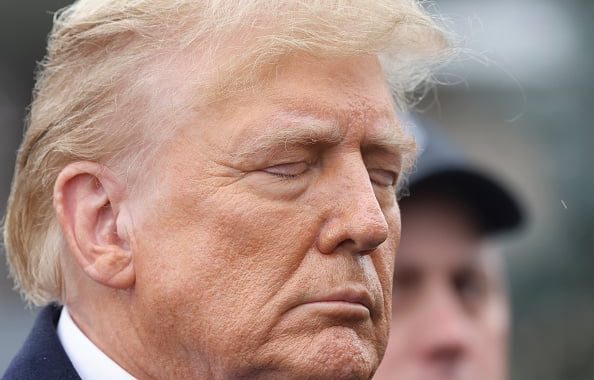
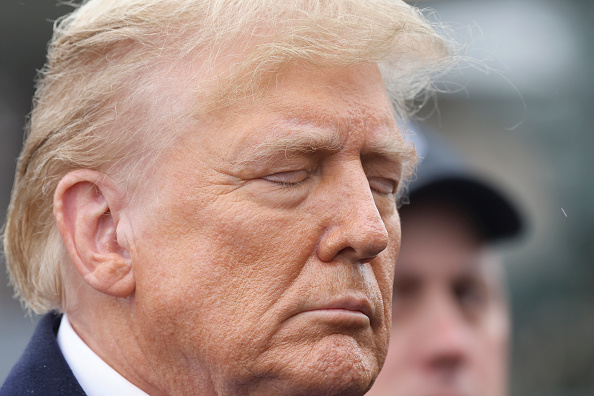
Virtually
all
of
our
clients
at
our
firm
are
interested
in
this,
and
the
firm
has
thousands
of
clients.
Every
single
one
of
them
is
following
this
issue.
It’s
more
important
to
some
than
to
others.
— Aaron
Cummings,
a
shareholder
at
Brownstein,
Hyatt,
Farber
&
Shreck,
in
comments
given
to
the
National
Law
Journal,
concerning
client
inquiries
about
tariff
refund
litigation
in
the
wake
of
the
Supreme
Court
striking
down
President
Donald
Trump’s
signature
tariffs
on
imports.
In
fact,
clients
are
so
interested
in
recouping
their
money
that
Quinn
Emanuel
has
created
a
tariff
refund
litigation
task
force
to
advise
clients
on
their
legal
options.
Dennis
Hranitzky,
a
partner
at
Quinn
Emanuel,
said
the
firm
has
been
“deluged
with
inbounds
from
clients
and
prospective
clients.”
Staci
Zaretsky is
the
managing
editor
of
Above
the
Law,
where
she’s
worked
since
2011.
She’d
love
to
hear
from
you,
so
please
feel
free
to email her
with
any
tips,
questions,
comments,
or
critiques.
You
can
follow
her
on Bluesky, X/Twitter,
and Threads, or
connect
with
her
on LinkedIn.
The
Supreme
Court
struck
down
Donald
Trump’s
effort
to
use
IEEPA
to
impose
arbitrary
tariffs
across
the
world
and
in
the
process
delivered
around
170
pages
of
epic
shade.
Meanwhile,
the
administration
informed
prospective
military
lawyers
that
they’re
no
longer
allowed
to
attend
the
top
law
schools
in
the
country,
presumably
because
the
Pentagon
is
getting
tired
of
lawyers
who
can
actually
identify
a
war
crime
when
they
see
one.
Finally,
the
public
got
another
look
at
how
lawyers
do
their
job
and
predictably
overreacted.
Les
Wexner’s
attorney
got
caught
on
a
hot
mic
giving
his
client…
blunt
advice
and
a
court
ruled
that
“wings”
don’t
mean
“wings.”
Every
GC
I
know
is
preparing
AI
updates
for
their
board.
Some
send
quarterly
decks.
Others
prepare
deep-dive
strategy
sessions.
Many
scramble
to
distill
fast-moving
regulatory
developments
into
digestible
talking
points.
Yet
the
same
problem
keeps
surfacing.
Boards
walk
away
overwhelmed,
underinformed,
or
unsure
what
to
do
next.
The
issue
is
not
expertise.
The
issue
is
the
communication
structure.
AI
is
not
a
single
topic.
It
is
a
category
of
technologies,
risks,
opportunities,
and
governance
challenges
that
shift
every
quarter.
Boards
expect
GCs
to
make
sense
of
that
ambiguity,
but
most
legal
teams
still
present
AI
the
way
they
present
other
legal
updates.
They
start
with
the
complexity
and
hope
the
board
can
extract
the
insight.
This
is
backward.
Boards
need
a
narrative
spine
that
orients
them.
They
need
a
clear
answer
to
three
questions
before
anything
else.
What
is
happening?
Why
it
matters.
What
they
should
do.
This
is
where
many
well-intentioned
updates
fall
apart.
How
Complexity
Crowds
Out
Board-Level
Judgment
Boards
do
not
have
infinite
cognitive
bandwidth.
When
legal
teams
walk
in
with
dense
memos,
long
lists
of
risks,
or
technical
descriptions
of
model
behavior,
directors
lose
the
plot.
They
stop
hearing
what
they
need
and
start
trying
to
reconcile
details
that
are
irrelevant
to
their
role.
This
is
not
a
board
failure.
It
is
a
communication
failure.
The
board’s
job
is
not
to
understand
every
model
parameter,
regulatory
nuance,
or
implementation
detail.
Their
job
is
to
understand
what
the
company
is
trying
to
achieve
with
AI,
the
level
of
exposure
that
strategy
creates,
and
the
quality
of
the
decision-making
process
behind
it.
Anything
that
does
not
help
them
do
that
job
becomes
noise.
The
challenge
for
GCs
is
that
AI
produces
a
lot
of
noise.
Without
a
disciplined
way
to
structure
the
conversation,
the
board
gets
a
firehose
instead
of
a
signal.
That
is
how
misalignment
builds.
It
is
how
companies
end
up
with
boards
that
either
overreact
to
AI
risk
or
treat
it
as
a
passing
technical
curiosity.
Both
outcomes
hurt
the
business.
A
Simple
Principle:
Don’t
Communicate
AI
Until
You
Know
The
Story Before
you
brief
the
board,
the
GC
must
answer
one
foundational
question.
What
is
the
story
of
AI
in
this
company
right
now?
Are
you
using
AI
to
improve
internal
efficiency?
Are
you
integrating
AI
into
customer-facing
products?
Are
you
navigating
heightened
regulatory
scrutiny?
Are
you
trying
to
get
ahead
of
competitors
who
are
moving
quickly?
If
you
cannot
articulate
the
story
in
one
sentence,
the
board
will
not
grasp
it
either.
Once
the
story
is
clear,
you
can
translate
it
into
the
governance
conversation.
But
most
lawyers
never
get
the
chance,
because
they
start
with
information
instead
of
meaning.
They
walk
the
board
through
the
activity
instead
of
the
direction.
They
overindex
on
what
legal
teams
are
seeing
rather
than
what
directors
need
to
understand.
This
is
where
the
What,
So
What,
Now
What
model
becomes
indispensable.
Why
The
What,
So
What,
Now
What
Model
Works
For
AI The
model
forces
clarity.
It
requires
you
to
explain
the
situation,
the
significance,
and
the
next
steps
without
drowning
the
board
in
unnecessary
complexity.
It
aligns
the
GC’s
instinct
for
thoroughness
with
the
board’s
need
for
strategic
focus.
And
it
forces
the
GC
to
make
a
judgment
call,
not
a
data
dump.
AI
is
moving
too
quickly
for
meandering
updates.
Boards
want
to
understand
whether
AI
is
creating
opportunity,
introducing
exposure,
or
reshaping
operational
assumptions.
They
want
to
know
where
the
company
is
positioned
relative
to
peers.
They
want
to
feel
confident
that
management
is
not
only
aware
of
the
risks
but
is
actively
shaping
the
company’s
future.
The
model
helps
you
do
that
by
building
a
pathway
from
information
to
meaning
to
action.
It
guides
the
conversation
so
the
board
can
govern
with
clarity
rather
than
react
with
confusion.
How
GCs
Lose
Credibility
Without
a
Framework Even
sophisticated
legal
teams
unintentionally
overwhelm
the
board
when
they
treat
AI
like
a
traditional
compliance
topic.
They
include
too
much
detail
about
regulations
that
have
not
been
finalized,
too
many
definitions,
or
too
many
examples
of
model
failure.
They
confuse
breadth
with
credibility.
They
think
thoroughness
builds
trust.
It
does
the
opposite.
Boards
trust
clarity.
They
trust
judgment.
They
trust
the
GC
who
can
walk
into
a
meeting
and
say
something
simple
and
true.
Here
is
what
is
changing.
Here
is
why
it
matters.
Here
is
what
we
recommend.
That
kind
of
communication
signals
maturity
and
strategic
leadership.
It
also
demonstrates
that
the
GC
understands
what
the
board
needs,
not
only
what
the
legal
team
knows.
This
is
the
difference
between
a
legal
update
and
a
governance
moment.
AI
Requires
A
Governance
Lens,
Not
A
Technical
Lens AI
is
transforming
business
models,
cost
structures,
customer
expectations,
and
competitive
dynamics.
It
is
also
attracting
political
scrutiny,
regulatory
fragmentation,
and
public
uncertainty.
Boards
want
to
know
how
those
changes
affect
the
company’s
risk
profile
and
long-term
health.
They
do
not
need
a
technical
seminar.
They
need
a
governance
frame.
The
What,
So
What,
Now
What
model
shifts
the
GC
into
that
governance
posture.
It
distills
complexity
down
to
the
elements
directors
use
to
exercise
oversight.
It
keeps
the
conversation
grounded
in
business
impact,
not
technical
curiosity.
It
also
helps
the
GC
anticipate
the
kinds
of
questions
directors
will
ask.
How
exposed
are
we?
How
does
this
affect
our
strategy?
What
safeguards
have
we
built?
What
decisions
require
board-level
engagement?
Without
this
structure,
conversations
drift.
With
it,
conversations
sharpen.
A
Better
Path
Forward
For
AI
Board
Communication The
resource
you
shared,
What,
So
What,
Now
What:
Effectively
Communicating
With
Your
Board
About
Transformative
Technology
Such
as
Artificial
Intelligence,
lays
out
this
communication
method
in
depth.
It
gives
GCs
a
repeatable
way
to
brief
boards
with
clarity,
conciseness,
and
credibility.
It
breaks
down
how
to
diagnose
the
core
message,
separate
operational
detail
from
governance
insight,
and
close
the
conversation
with
a
clear
recommendation.
It
is
a
practical
tool
for
every
in-house
lawyer
navigating
AI
conversations
with
directors,
and
you
can
access
it
here.
The
model
does
not
oversimplify
AI.
It
helps
you
explain
it
in
a
way
that
empowers
better
oversight.
For
boards,
that
is
the
real
value.
The
GC’s
Role
Is
Evolving,
And
Communication
Is
Now
A
Core
Skill AI
is
accelerating
the
evolution
of
the
GC
role.
Directors
expect
legal
leaders
to
steward
risk,
influence
strategy,
and
communicate
with
clarity
in
environments
that
lack
stable
answers.
Frameworks
like
What,
So
What,
Now
What
help
GCs
deliver
that
clarity
consistently.
They
also
help
legal
teams
build
stronger,
more
confident
relationships
with
their
boards.
And
they
prepare
the
organization
for
a
future
in
which
the
pace
of
technological
change
will
continue
to
accelerate.
If
you
want
to
sharpen
your
ability
to
communicate
about
complex
emerging
technologies,
start
with
a
structure
that
makes
meaning
out
of
complexity
instead
of
amplifying
it.
Boards
do
not
need
more
information.
They
need
a
signal.
And
the
GC
who
delivers
it
becomes
indispensable.
Olga
V.
Mack
is
the
CEO
of
TermScout,
where
she
builds
legal
systems
that
make
contracts
faster
to
understand,
easier
to
operate,
and
more
trustworthy
in
real
business
conditions.
Her
work
focuses
on
how
legal
rules
allocate
power,
manage
risk,
and
shape
decisions
under
uncertainty.
A
serial
CEO
and
former
General
Counsel,
Olga
previously
led
a
legal
technology
company
through
acquisition
by
LexisNexis.
She
teaches
at
Berkeley
Law
and
is
a
Fellow
at
CodeX,
the
Stanford
Center
for
Legal
Informatics.
She
has
authored
several
books
on
legal
innovation
and
technology,
delivered
six
TEDx
talks,
and
her
insights
regularly
appear
in
Forbes,
Bloomberg
Law,
VentureBeat,
TechCrunch,
and
Above
the
Law.
Her
work
treats
law
as
essential
infrastructure,
designed
for
how
organizations
actually
operate.
Over
the
past
decade
plus
of
extreme
political
polarization
(not
originated
by,
though
dramatically
worsened
through,
Donald
Trump),
boycotts
have
been
deployed
by
activists
on
both
ends
of
the
political
spectrum
to
mixed
results.
Turns
out
it
is
really
hard
to
get
enough
Americans
to
give
up
convenience
in
acquiring
the
real-world
products
they
need
such
that
you
can
make
a
meaningful
political
statement
to
the
intended
recipient.
This
month,
however,
podcast
host,
author,
and
marketing
professor
Scott
Galloway
has
been
waging
a
unique
campaign
to
strike
back
in
the
face
of
ICE’s
lawless
operations.
Called
Resist
and
Unsubscribe,
Galloway’s
initiative
“targets
tech
and
AI
companies
and
inflicts
maximum
damage
with
minimum
impact
on
consumers.”
Resist
and
Unsubscribe
is
premised
on
the
idea
that
the
president
is
unfazed
by
citizen
outrage,
the
courts,
or
the
media.
Rather,
Trump
responds
to
only
one
thing:
the
market.
Galloway
correctly
recognizes
that
boycotting,
say,
certain
retailers
is
unlikely
to
have
a
significant
enough
effect
on
the
broader
stock
market
to
move
the
president.
On
the
other
hand,
seven
tech
companies
alone
account
for
more
than
a
third
of
the
S&P
500
index,
many
of
them
propped
up
by
massive
spending
on
AI
of
late.
Hurting
the
bottom
line
of
the
largest
tech
firms,
as
well
as
the
sycophantic
CEOs
running
them
in
accordance
with
Trump’s
whims,
would
actually
be
noticed.
Tech
companies
also
have
the
unique
flaw
(or
in
this
case,
advantage)
of
often
being
highly
reliant
on
speculative
measures
of
future
potential
revenues,
like
number
of
subscribers,
as
opposed
to
companies
selling
tangible
goods
that
are
valued
on
more
established
metrics.
Forgoing
a
few
of
many
available
subscriptions
is
also
a
relatively
easy
sacrifice
to
ask
of
the
individual
consumer.
All
this
means
that
consumers
like
ourselves
can
have
a
much
bigger
influence
on
market
capitalization
by
canceling
Amazon
Prime
than
we
can
by
skipping
a
few
trips
to
Target.
It
also
means
that
the
market
is
uniquely
vulnerable
to
consumers
who
are
willing
to
shun
AI
products.
The
first
step,
according
to
Galloway,
is
unsubscribing
from
OpenAI’s
ChatGPT
and
Anthropic’s
Claude
(if
you
are
among
these
platforms’
few
paying
users).
The
next
line
of
attack
consists
of
unsubscribing
from
other
tech
services
provided
by
companies
that
have
“outsized
influence
over
the
national
economy
and
our
president”
—
including
the
services
offered
by
Amazon,
Apple,
Google,
Microsoft,
Paramount+,
Meta,
Uber,
Netflix,
and
Twitter
(X).
Lastly,
Galloway
identifies
a
number
of
consumer-facing
companies
as
“active
enablers
of
ICE”
which
may
not
be
susceptible
to
the
standard
tech
industry
subscription
revenue
multiplier
of
10x
in
calculating
the
implied
market
capitalization
effect,
but
are,
nonetheless,
also
obviously
worth
avoiding
(I
will
provide
a
link
directly
to
Galloway’s
website
in
the
final
paragraph
so
you
can
easily
access
the
full
list
of
companies
along
with
convenient
“unsubscribe”
links).
Well,
I’m
a
little
late
to
this
party.
I
also
don’t
have
many
services
that
I
can
unsubscribe
from
to
begin
with
(two,
to
be
precise).
Nevertheless,
in
the
spirit
of
solidarity,
I
just
jettisoned
50%
of
my
subscriptions.
Goodbye
Netflix,
and,
hopefully,
hello
to
a
future
where
we
all
have
something
more
concrete
to
look
forward
to
than
the
next
season
of
“3
Body
Problem.”
The
Resist
and
Unsubscribe
campaign
runs
(at
least)
through
the
end
of
February.
If
this
is
the
first
you’re
hearing
of
it,
let
me
be
the
first
to
welcome
you
aboard.
I
have
friends
everywhere
(if
you
need
something
to
watch
now
that
you’ve
completed
your
unsubscribing
mission,
check
out
“Andor”
on
Disney+,
that
one’s
not
on
Galloway’s
list).
As
to
whether
or
not
this
is
working,
well,
all
I
can
say
for
now
is
that
as
of
market
close
on
February
24,
the
NASDAQ
and
the
S&P
500
are
definitely
down
for
the
month.
Jonathan
Wolf
is
a
civil
litigator
and
author
of Your
Debt-Free
JD (affiliate
link).
He
has
taught
legal
writing,
written
for
a
wide
variety
of
publications,
and
made
it
both
his
business
and
his
pleasure
to
be
financially
and
scientifically
literate.
Any
views
he
expresses
are
probably
pure
gold,
but
are
nonetheless
solely
his
own
and
should
not
be
attributed
to
any
organization
with
which
he
is
affiliated.
He
wouldn’t
want
to
share
the
credit
anyway.
He
can
be
reached
at [email protected].
Photo
by
Collection
of
the
Supreme
Court
of
the
United
States
via
Getty
Images
There
was
a
refreshing
change
of
pace
during
recent
Supreme
Court
oral
arguments,
when,
instead
of
the
barely
concealed
hostility
and
opinion-by-opinion
sniping
that
defined
the
Court’s
sprawling
tariffs
decision,
a
few
justices
decided
to
take
a
beat,
crack
a
joke,
and
acknowledge
the
absurdity
of
their
own
output.
During
arguments
in
Enbridge
Energy
v.
Nessel,
the
Court
briefly
stepped
away
from
the
now-familiar
dynamic
of
public
judicial
feuding
and
leaned
into
something
far
rarer
—
self-deprecating
humor
about
the
institution
itself.
For
a
Court
that
recently
used
some
170
pages
to
yell
at
itself
in
formal
legal
prose,
the
levity
landed
as
a
small
but
welcome
palate
cleanser.
“Well,
if
—
well
—”
Alito
began,
pausing
just
long
enough
for
the
room
to
sense
where
this
was
going.
(laughter) “That’s
certainly
a
goal
to
aim
for.”
(more
laughter)
And
then,
because
the
Court
cannot
resist
a
little
intra-chambers
meta
commentary,
Alito
added:
“I
felt
very
left
out
in
the
tariffs
case.
Justice
Sotomayor
didn’t
write
and
I
didn’t
write
opinions.
But,
if…”
At
which
point
Sonia
Sotomayor
swooped
in
to
land
the
punchline:
“Maybe
we’ll
have
a
chance
here.”
This
is
what
passes
for
Supreme
Court
comedy.
When
advocates
are
openly
begging
for
brevity
and
the
justices
are
cracking
jokes
about
who
didn’t
get
to
write,
you
know
the
Court
is
at
least
dimly
aware
that
maybe,
just
maybe,
170
pages
is
a
lot.
To
be
fair,
this
is
about
as
close
as
the
Supreme
Court
ever
gets
to
admitting
excess.
For
a
fleeting
moment,
the
justices
acknowledged
what
every
clerk,
practitioner,
and
long-suffering
reader
already
knows:
judicial
maximalism
is
exhausting
(even
—
or
maybe
especially
—
when
it’s
filled
with
judicial
sniping).
Will
Enbridge
Energy
v.
Nessel
be
a
case
that
produces
a
tight,
elegant
opinion
that
clocks
in
under
triple
digits?
Who
knows!
But
hope
springs
eternal.
After
all,
as
Justice
Alito
put
it,
it’s
“certainly
a
goal
to
aim
for.”
Kathryn
Rubino
is
a
Senior
Editor
at
Above
the
Law,
host
of
The
Jabot
podcast,
and
co-host
of
Thinking
Like
A
Lawyer.
AtL
tipsters
are
the
best,
so
please
connect
with
her.
Feel
free
to
email
her
with
any
tips,
questions,
or
comments
and
follow
her
on
Twitter
@Kathryn1 or
Mastodon
@[email protected].
The
Department
of
Justice
and
the
state
of
Ohio
filed
an
antitrust
lawsuit
against
OhioHealth
this
week,
alleging
the
health
system
used
“all-or-nothing”
contracting
practices
to
force
payers
to
include
every
hospital
and
physician
affiliated
with
OhioHealth
in
their
networks.
Essentially,
the
lawsuit
claims
that
the
Ohio-based
health
system
has
used
its
market
dominance
to
impose
restrictive
payer
contracts
that
harm
competition
and
drive
up
healthcare
costs
for
patients
and
employers.
According
to
the
lawsuit,
OhioHealth
requires
payers
to
include
all
of
its
hospitals
and
employed
physicians
in
their
networks
if
they
want
access
to
any
of
them,
which
has
prevented
payers
from
selectively
contracting
with
lower-cost
facilities
or
excluding
higher-priced
ones.
The
DOJ
argues
this
has
left
payers
with
little
negotiating
leverage,
as
well
as
hurt
their
ability
to
design
more
affordable
health
plans.
“Americans
deserve
low-cost,
high-quality
healthcare
—
not
anticompetitive
hospital
system
contracts
that
make
healthcare
less
affordable,”
Attorney
General
Pam
Bondi
said
in
a
statement.
The
DOJ
and
Ohio
contend
that
OhioHealth’s
provisions
violate
federal
and
state
antitrust
laws
by
suppressing
competition
among
hospitals
and
physician
groups
in
central
Ohio.
The
complaint
alleges
that
foreclosing
rivals
from
competing
for
inclusion
in
payer
networks
helped
OhioHealth
maintain
its
dominant
market
position
while
insulating
it
from
price
competition.
OhioHealth
is
one
of
the
largest
healthcare
systems
in
Ohio,
spanning
16
hospitals,
three
joint
venture
hospitals
and
more
than
200
ambulatory
care
sites.
It
has
a
significant
presence
in
the
Columbus
region,
where
regulators
say
its
scale
gives
it
substantial
bargaining
power
over
commercial
insurers.
The
lawsuit
comes
amid
heightened
federal
scrutiny
of
hospital
consolidation
and
contracting
practices,
as
lawmakers
seek
to
rein
in
healthcare
costs
that
continue
to
rise
faster
than
wages
and
inflation.
The
government
is
asking
the
court
to
block
OhioHealth
from
using
the
disputed
contract
provisions
and
to
restore
competition
in
the
affected
markets.
The
health
system
has
denied
the
allegations,
saying
that
its
contracting
practices
are
lawful
and
benefit
patients
by
ensuring
broad
access
to
care.
This
type
of
lawsuit
is
part
of
a
broader
wave
of
antitrust
enforcement
targeting
hospital
consolidation
and
restrictive
contracts
nationwide.
In
recent
years,
the
DOJ
and
state
attorneys
general
have
challenged
similar
“all-or-nothing”
or
“full-service”
contracting
practices
in
markets
from
California
to
Florida,
arguing
that
such
terms
harm
payer
competition
and
increase
healthcare
prices.
Outcomes
in
those
cases
may
influence
how
courts
view
OhioHealth’s
contracts.
*
Majority
of
Supreme
Court
justices
skip
out
on
Trump’s
State
of
the
Union.
[Daily
Beast]
*
Isaac
Hayes
estate
secures
settlement
in
copyright
dispute
with
Trump
campaign
over
unauthorized
use
of
the
singer’s
work.
[Rolling
Stone]
*
Judges
want
control
of
crumbling
judicial
infrastructure.
[ABA
Journal]
*
Court
blocks
government
access
to
Washington
Post
reporter’s
devices
it
seized.
[Reuters]
*
SEC
announces
new
enforcement
approach.
[Law360]
*
As
technology
provides
a
better
picture
of
a
company’s
real-time
situation,
the
whole
concept
managing
legal
risk
needs
to
change
along
with
it.
[Catylex]
*
Inquiries
about
tariff
refunds
have
made
life
“chaotic”
for
trade
attorneys.
[National
Law
Journal]
The
International
Conference
on
Agrarian
Reform
and
Rural
Development
(ICARRD
+20)
starts
this
week
in
Cartagena
in
Colombia,
hosted
by
the
Colombian
government
and
technically
supported
by
the
UN
Food
and
Agriculture
Organisation.
The
conference
comes
20
years
after the
first
ICARRD held
in
Porto
Alegre,
Brazil
in
2006.
This
gave
rise
to
the Voluntary
Guidelines
on
Responsible
Governance
of
Tenure,
an
ambitious
framework
for
land
governance
taken
up
by
governments
around
the
world.
Government
delegations,
civil
society
groups,
social
movements
and
academics
will
come
together
this
week
to
debate
what
are
the
new
challenges
for
land,
forests,
fisheries
and
food
in
today’s
world?
In
a
talk
at
the
Institute
for
Poverty,
Land
and
Agrarian
Studies
(PLAAS)
at
the
University
of
the
Western
Cape
in
South
Africa,
I
made
the
case
that
a
core
focus
must
be
on
land
redistribution,
as
a
route
to
linking
agrarian
reform
and
rural
development.
You
can
watch
the 30-minute
talk and
the
discussion
that
followed
through
the
following
video
link.
Estimates
suggest
that
the
largest
1%
of
farms
now
occupy
over
70%
of
the
world’s
agricultural
land
while
the
bottom
40%
hold
just
3%.
This
threatens
the
livelihoods
of
the
2.5
billion
people
who
depend
directly
on
land
and
it
produces
a
global
food
system
skewed
towards
a
handful
of
commodity
crops
grown
at
scale
for
distant
markets.
I
argued
that,
“Redistributing
control
of
farms,
farming
and
land
ownership,
as
part
of
a
wider
commitment
to
reducing
inequality
at
all
scales,
must
be
a
major
policy
priority.”
Given
the
on-going
concentration
of
wealth
–
including
land
–
addressing
inequality
is
a
core
challenge
of
development.
This
was
the
point
also
made
by
a
leading
group
of
economists
in
advance
of
the
G20
meeting
in
South
Africa
in
October.
They observed that,
“extreme
concentrations
of
wealth
translate
into
undemocratic
concentrations
of
power,
unravelling
trust
in
our
societies
and
polarizing
our
politics.”
The
issue
of
global
inequality
is
such
a
threat
to
global
prosperity,
they
asserted,
that
an
international
panel
on
inequality
needs
to
be
established
parallel
to
the
IPCC
on
climate.
Yet
land
redistribution
was
not
even
mentioned
in their
G20
report,
despite
many
countries
around
the
world
having
large
agrarian
populations.
This
is
surprising,
given
the
experience
of
other
nations
in
achieving
more
equitable
development
on
the
back
of
land
reform.
The
East
Asian
experience
of
industrialisation
and
sustained
economic
growth
was
based
on
land
reform
as
an
early
impetus.
Japan,
Korea,
Taiwan
and
China,
for
example,
all
benefited
from
land
reform.
In a
2017
article, The
Economist,
perhaps
surprisingly,
sung
the
praises
of
land
reform
as
the
‘path
to
prosperity’.
Speaking
about
Taiwan
after
1945,
it
noted,
“Yields
on
sugar
and
rice
leapt.
New
markets
sprang
up
for
exotic
fruits
and
vegetables.
Household
farmers
dominated
early
exports.
Crucially,
income
inequality
shrank
thanks
to
the
new
farmer-capitalists.
Less
spent
on
imports
of
food,
more
money
in
Taiwanese
pockets,
a
new
entrepreneurialism:
farming
was
the
start
of
Taiwan’s
economic
miracle.”
While
not
immediately
replicable,
the
East
Asian
lessons
are
important,
I
argued
in
the
talk.
Centring
land
redistribution
in
debates
about
inequality
and
longer-term
economic
development
is
essential.
The
talk
drew
from
a
forthcoming
edited
book
– Redistributive
land
reform:
challenging
inequality
in
the
21st century –
that
will
be
published
by
Bloomsbury.
This
includes
case
study
chapters
on
Bolivia,
Brazil,
Colombia,
India,
the
Philippines,
South
Africa,
Zimbabwe
and
Scotland.
In
all
these
countries,
land
redistribution
has
occurred.
Often
in
particular
periods,
and
not
always
in
ways
that
have
generated
major
structural
changes
in
the
economy.
But,
despite
the
general
view
often
heard
that
land
reform
is
a
thing
of
the
past,
there
are
many
types
of
land
reform
that
are
happening,
often
in
surprising
contexts.
Drawing
on
the
chapters
from
the
forthcoming
book,
the
talk
made
the
case
that:
There
have
been
some
major
redistributive
land
reform
efforts
in
the
last
few
decades,
even
in
the
midst
of
neoliberal
policy.
Redistribution
to
smallholder
farms
can
boost
productivity
(the
inverse
relationship)
and,
if
well
supported
with
a
wider
policy
of
agrarian
reform,
can
have
wider
economic
impacts
on
economic
growth.
Redistribution
efforts
can
offer
alternatives
to
large-scale
corporate
agriculture,
supporting
local
experiments
in
alternative
food
systems
and
revived
rural
areas.
Echoing
the Cape
Town
Declaration from
last
October,
the
IPC
for
Food
Sovereignty
argues
in
their position
paper
for
ICARRD+20,
there
is
a
need
for
governments
“to
move
beyond
voluntary
commitments
and
adopt
binding,
measurable
actions
to
ensure
redistributive
land
reform.”
The
coming
days
in
Cartegna
will
show
whether
a
bold,
forward-looking
agenda
on
land
inequality
and
redistribution
can
emerge.
Zimbabwe
Vigil
activists
were
happy
to
receive
veteran
human
rights
activist,
Peter
Tatchell,
who
made
a
special
visit
as
he
always
does
whenever
he
has
the
chance.
In
buoyant
mood,
Peter
congratulated
the
Vigil,
describing
it
as
arguably
the
longest
campaign
in
British
history. The
Zimbabwe
Vigil,
which
started
in
October
2002,
will
reach
24
years
in
existence
this
year,
a
milestone
achieved
by
few.
Peter
cited
the
resilience,
commitment
and
courage
displayed
by
activists
to
have
come
this
far
commenting,
‘no
dictatorship
stays
forever
and
even
that
of
Mnangagwa
will
fall
one
day’.
He
added,
‘it
only
takes
activists
like
you
to
remain
standing
and
pushing,
giving
those
trapped
in
Zimbabwe
a
voice,
victory
is
yours’.
Poignantly,
Peter
reminded
activists
that
he
had
participated
in
the
1970s
liberation
war,
fundraising
for
ZANU
and
securing
medicare
for
the
ZANLA
cadres,
then
in
the
bush. He
said
it
was
sad
and
hypocritical
that
today’s
ZANU
PF
had
a
strong
aversion/dislike
of
its
1970s
manifesto,
which
had
human
rights
and
democracy
as
central
to
the
war.
In
support,
Vigil
activist
Samantha
Pfupajena
remarked,
‘power
corrupts!’.
Another
Vigil
long-time
activist,
Phillip
Maponga
said,
‘that’s
why
we
remain
standing
here
to
say
no
to
the
2030
agenda’,
which
was
described
as
a
ploy
by
Mnangagwa
to
buy
time
for
his
boys,
so
they
are
in
a
position
to
take
over
at
the
end
of
ED
Mnangagwa’s
reign,
thereby
establishing
the
Mnangagwa
dynasty’.
Peter
ended
his
visit
by
chanting
‘aluta
continua!’
Next
Vigil
meeting
outside
the
Zimbabwe
Embassy. Saturday
7th March
from
2
–
5
pm.
We
meet
on
the
first
and
third
Saturdays
of
every
month.
On
other
Saturdays
the
virtual
Vigil
will
run.
The
Restoration
of
Human
Rights
in
Zimbabwe
(ROHR) is
the
Vigil’s
partner
organisation
based
in
Zimbabwe.
ROHR
grew
out
of
the
need
for
the
Vigil
to
have
an
organisation
on
the
ground
in
Zimbabwe
which
reflected
the
Vigil’s
mission
statement
in
a
practical
way.
ROHR
in
the
UK
actively
fundraises
through
membership
subscriptions,
events,
sales
etc
to
support
the
activities
of
ROHR
in
Zimbabwe.
The
Vigil’s
book
‘Zimbabwe
Emergency’ is
based
on
our
weekly
diaries.
It
records
how
events
in
Zimbabwe
have
unfolded
as
seen
by
the
diaspora
in
the
UK.
It
chronicles
the
economic
disintegration,
violence,
growing
oppression
and
political
manoeuvring
–
and
the
tragic
human
cost
involved. It
is
available
at
the
Vigil.
All
proceeds
go
to
the
Vigil
and
our
sister
organisation
the
Restoration
of
Human
Rights
in
Zimbabwe’s
work
in
Zimbabwe.
The
book
is
also
available
from
Amazon.
The
Vigil,
outside
the
Zimbabwe
Embassy,
429
Strand,
London
meets
regularly
on
Saturdays
from
14.00
to
17.00
to
protest
against
gross
violations
of
human
rights
in
Zimbabwe.
The
Vigil
which started
in
October
2002
will
continue
until
internationally-monitored,
free
and
fair
elections
are
held
in
Zimbabwe.
Tonight’s
Rambling
Will
Be
Legendary:
Empty
your
cups
and
mental
health
listening
to
the
President
our
country
deserves.
ABA
Tells
Trump
To
Mind
His
Manners:
It
is
rude
to
badmouth
the
Court
just
for
doing
their
jobs,
Mr.
President.
Does
Sharing
With
Chat-GPT
Make
It
Discoverable?:
Great
question!
Read
to
find
out!
Judge
VanDyke’s
Dissent
Looks
Like
A
Job
Application:
Pick
me
to
replace
Alito!
Pick
me!
Judge
Takes
Leave
From
The
Bench:
A
sober
decision
to
make
during
trying
times.









 Kathryn